 Skip to content
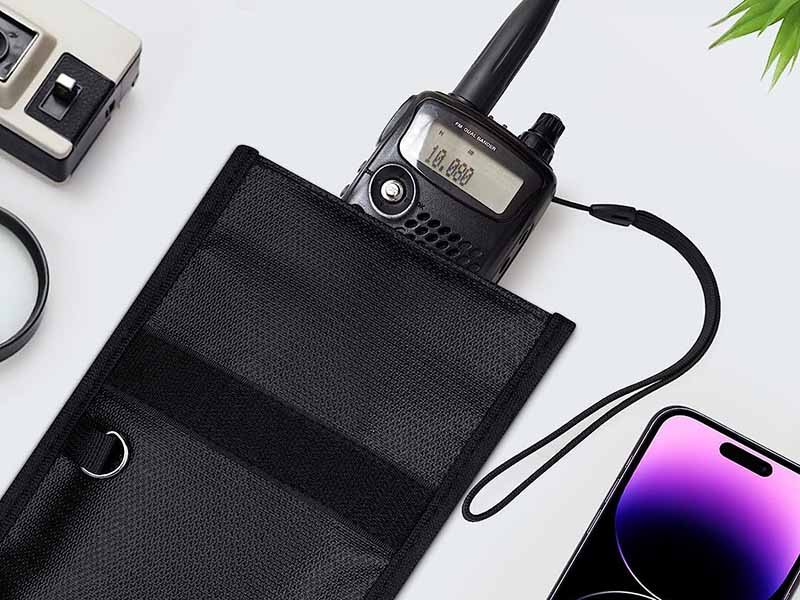
In a world where smartphones, vehicles, and personal devices are constantly emitting and receiving signals, the idea of “going offline” has quietly become a security feature rather than a lifestyle choice. Phones broadcast cellular, GPS, Wi-Fi, Bluetooth, and NFC signals. Car key fobs communicate wirelessly with vehicles. Even credit cards and access badges can be scanned remotely under the right conditions.
This invisible connectivity is convenient—but it also introduces real privacy and security risks. From phone tracking and data leakage to keyless car theft and unauthorized RFID scanning, modern electronics are vulnerable precisely because they are always connected.
This is where Faraday bags enter the conversation.
A Faraday bag is not a gadget, software, or electronic device. It is a passive shielding solution, rooted in electromagnetic theory, that physically blocks signals from entering or leaving a device. When used correctly, a Faraday bag can isolate a phone, key fob, or electronic device from the outside world—no tracking, no wireless communication, no signal exchange.
A Faraday bag is a signal-blocking pouch designed to prevent electronic devices from sending or receiving wireless signals such as cellular, GPS, Wi-Fi, Bluetooth, NFC, and RFID. It works by enclosing devices in conductive shielding materials that disrupt electromagnetic fields. When properly designed, a Faraday bag can prevent phone tracking, remote key fob attacks, and unauthorized data scanning.
Imagine a phone that cannot be tracked, a car key that cannot be relayed, or a device that remains digitally silent until you decide otherwise. That level of control is why Faraday bags are now used not only by security professionals, but also by everyday consumers, brands, and e-commerce sellers worldwide.
What Is a Faraday Bag

A Faraday bag is a signal-blocking pouch designed to prevent electronic devices from sending or receiving wireless signals such as cellular, GPS, Wi-Fi, Bluetooth, NFC, and RFID. It works by enclosing devices in conductive shielding materials that disrupt electromagnetic fields. When properly designed and fully sealed, a Faraday bag can stop phone tracking, wireless communication, and remote electronic attacks without damaging the device.
What is a Faraday bag in simple terms?
In simple language, a Faraday bag is a physical privacy shield for electronics. When you place a phone, key fob, or electronic device inside a Faraday bag and close it properly, the device becomes digitally invisible.
No signals go out. No signals come in.
Unlike apps or software settings, a Faraday bag works at the physics level, not the software level. That means it cannot be hacked, overridden, or bypassed remotely. The device inside still functions normally—but only once it is removed from the bag.
Where does the Faraday bag concept come from?
The Faraday bag is based on the Faraday cage principle, discovered by scientist Michael Faraday in the 1830s. He proved that an enclosure made from conductive material could block external electric fields.
Modern examples of Faraday cages include:
- MRI rooms
- aircraft cabins
- shielded server rooms
A Faraday bag is simply a portable, flexible Faraday cage, engineered for personal electronics rather than rooms or buildings.
What exactly does a Faraday bag block?
A properly designed Faraday bag blocks a wide range of electromagnetic frequencies, including:
- Cellular signals (2G, 3G, 4G, 5G)
- GPS / GNSS signals
- Wi-Fi
- Bluetooth
- NFC
- RFID
This makes Faraday bags far more comprehensive than basic RFID wallets, which usually block only low-frequency signals.
Is a Faraday bag the same as an RFID-blocking pouch?
No. This is one of the most common misunderstandings.
| Feature | RFID-Blocking Pouch | Faraday Bag |
|---|---|---|
| Blocks RFID / NFC | Yes | Yes |
| Blocks cellular & GPS | No | Yes |
| Blocks Wi-Fi & Bluetooth | No | Yes |
| Shielding layers | 1 (often thin) | Multiple |
| Use case | Cards & passports | Phones, keys, devices |
All Faraday bags block RFID, but not all RFID blockers are Faraday bags. The difference lies in frequency range and shielding effectiveness.
What devices are commonly placed in Faraday bags?
Faraday bags are used to protect:
- smartphones
- car key fobs
- tablets
- laptops
- external hard drives
- access cards and badges
- small electronic devices
Each device type requires different size, shielding strength, and closure design, which is why professional Faraday bag manufacturing is not “one-size-fits-all.”
Why are Faraday bags becoming more popular?
Faraday bags are no longer niche tools for law enforcement or military use. Their popularity has increased due to:
- rising concerns about phone tracking and location privacy
- keyless car theft via relay attacks
- increased use of contactless payments and RFID
- awareness of data security and digital privacy
As everyday devices become more connected, the need for intentional disconnection grows.
How is a Faraday bag different from signal jammers?
This distinction is critical.
- Signal jammers actively transmit interference and are illegal in many regions.
- Faraday bags are passive shielding products. They emit nothing and simply block signals physically.
Because they are passive, Faraday bags are legal in most countries when used responsibly.
Does using a Faraday bag damage electronics?
No. A Faraday bag does not affect device hardware or software. It does not interfere with memory, batteries, or internal systems.
Once the device is removed from the bag, it reconnects normally to all networks.
What determines whether a Faraday bag actually works?
A Faraday bag’s effectiveness depends on:
- quality of shielding materials
- number of shielding layers
- seam and closure design
- full enclosure with no gaps
- proper manufacturing and testing
Many low-quality Faraday bags fail not because of materials, but because of poor construction—especially around openings and seams.
Common misconceptions about Faraday bags
- “Any metallic pouch is a Faraday bag”
- “RFID wallets block phone tracking”
- “If it blocks Wi-Fi, it blocks everything”
In reality, frequency coverage matters, and only well-designed Faraday bags offer reliable, full-spectrum protection.
How Do Faraday Bags Work
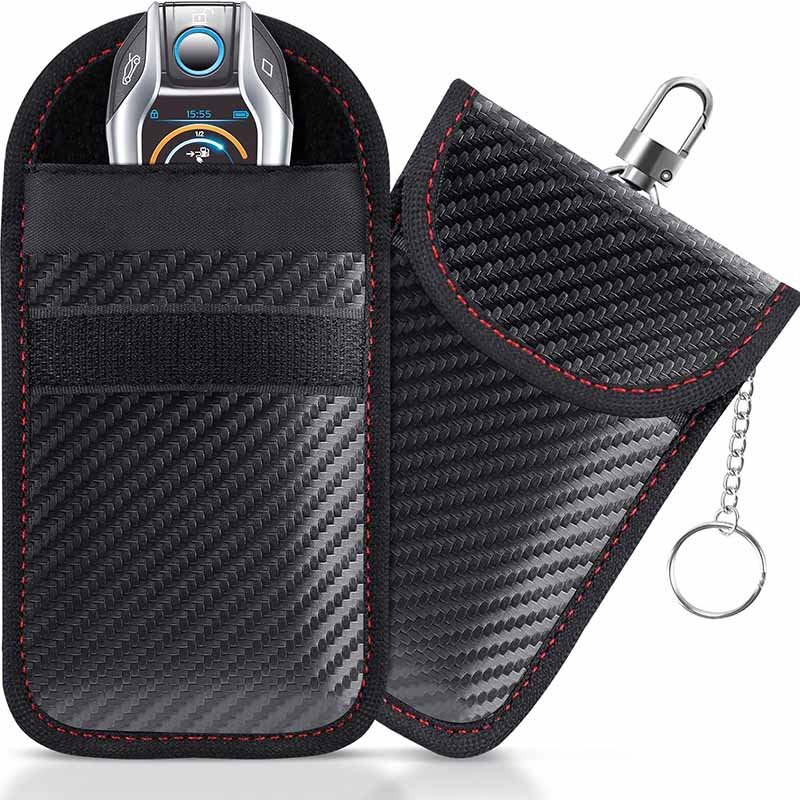
Faraday bags work by enclosing electronic devices in conductive shielding materials that block electromagnetic signals. These materials reflect, absorb, and dissipate wireless signals such as cellular, GPS, Wi-Fi, Bluetooth, NFC, and RFID. When the enclosure is continuous and properly sealed, signals cannot enter or leave the bag, effectively isolating the device from all wireless communication.
What is the basic scientific principle behind Faraday bags?
Faraday bags are based on the Faraday cage principle, which states that an enclosed conductive surface can block external electromagnetic fields. When radio waves encounter a conductive layer, electrical charges redistribute across the surface, canceling the field inside the enclosure.
In practical terms, this means:
- incoming signals are reflected or absorbed
- internal signals cannot escape
- the space inside becomes electromagnetically isolated
A Faraday bag applies this principle in a portable, flexible form, designed for personal electronics instead of rooms or buildings.
How do conductive materials block wireless signals?
Wireless signals are electromagnetic waves that travel through space. Faraday bags use conductive materials—such as metal-coated fabrics or foil composites—to interfere with these waves.
When signals hit the conductive layer:
- part of the signal is reflected
- part is absorbed and dissipated as heat
- the remaining signal loses strength rapidly
This combination prevents the signal from maintaining enough power to pass through the enclosure. The result is signal attenuation rather than active interference.
Why multiple shielding layers matter
Single-layer shielding can block some frequencies but often fails against others. High-quality Faraday bags use multi-layer constructions, where each layer targets different frequency ranges.
Benefits of multi-layer designs include:
- broader frequency coverage
- higher overall attenuation (measured in dB)
- reduced leakage through seams and folds
For example, one layer may be effective against RFID, while another improves blocking of cellular or GPS signals. Layering ensures consistent performance across modern wireless technologies.
How Faraday bags block different signal types
Different wireless signals operate at different frequencies, which affects how easily they are blocked.
| Signal Type | Frequency Range | Blocking Difficulty |
|---|---|---|
| RFID / NFC | Low | Easy |
| Bluetooth | Medium | Moderate |
| Wi-Fi | Medium | Moderate |
| Cellular | High | More challenging |
| GPS | Very high | Most challenging |
This is why many low-quality Faraday bags appear to work at first (blocking Wi-Fi or Bluetooth) but fail to block GPS or cellular tracking. Effective Faraday bags are engineered to handle the full spectrum, not just one band.
Why seams and closures are critical to performance
A Faraday bag is only as effective as its weakest opening. Even a small gap in the shielding allows signals to leak.
Common failure points include:
- stitched seams without overlap
- zippers without shielding continuity
- incomplete flap closures
High-quality designs use:
- overlapping flaps
- conductive seam integration
- closure systems that maintain continuous shielding
This is why construction quality matters as much as material choice.
How complete enclosure determines success or failure
For a Faraday bag to work, the device must be fully enclosed. If any part of the device is exposed—even slightly—signals can escape or enter.
Key requirements include:
- correct bag size for the device
- full insertion before closure
- proper closure every time
User error is a common reason Faraday bags “don’t work,” even when the bag itself is well designed.
How signal attenuation is measured
Faraday bag effectiveness is typically measured in decibels (dB), which indicates how much signal strength is reduced.
| Attenuation (dB) | Approximate Signal Reduction |
|---|---|
| 30 dB | 99.9% |
| 60 dB | 99.9999% |
| 90 dB+ | Near total isolation |
Professional-grade Faraday bags often achieve 60–90 dB attenuation across key frequencies. Consumer-grade products may achieve far less.
Why some Faraday bags fail in real use
Faraday bags may fail due to:
- insufficient shielding layers
- poor seam or closure design
- wear and tear over time
- improper use by the user
This explains why two Faraday bags that look similar can perform very differently in real-world tests.
How Faraday bags differ from signal jammers
Faraday bags are passive. They do not transmit or interfere with signals. They simply block signals physically.
Signal jammers, by contrast:
- actively emit interference
- are illegal in many regions
- affect nearby devices
This distinction makes Faraday bags legal and safe for responsible use in most countries.
How professional manufacturers design Faraday bags
Experienced manufacturers design Faraday bags by:
- selecting materials with proven conductivity
- layering for frequency coverage
- engineering seam and closure continuity
- testing against multiple signal types
This engineering-focused approach is what separates reliable Faraday bags from low-quality imitations.
What Can a Faraday Bag Protect

A Faraday bag protects electronic devices from wireless communication, tracking, and remote access by blocking cellular, GPS, Wi-Fi, Bluetooth, NFC, and RFID signals. Common protected items include smartphones, car key fobs, tablets, laptops, access cards, and small electronic devices. Protection depends on shielding quality, frequency coverage, and full enclosure, not just the bag’s appearance.
Can a Faraday bag protect smartphones from tracking?
Yes—a properly designed Faraday bag can prevent a smartphone from being tracked in real time.
When a phone is fully enclosed inside an effective Faraday bag:
- GPS signals cannot reach satellites
- cellular towers cannot communicate with the device
- Wi-Fi and Bluetooth connections are blocked
As a result, location data cannot be transmitted while the phone remains inside the bag. This makes Faraday bags highly effective for privacy protection, travel security, and sensitive situations. However, effectiveness depends on full enclosure and proper closure—any gap can allow tracking signals to leak.
What types of phone signals are blocked?
A high-quality Faraday bag blocks all major wireless communication channels, including:
- Cellular networks (2G, 3G, 4G, 5G)
- GPS / GNSS
- Wi-Fi
- Bluetooth
- NFC
- RFID
This full-spectrum blocking is what differentiates a true Faraday bag from basic RFID wallets, which typically block only short-range, low-frequency signals.
Can Faraday bags protect car key fobs from relay attacks?
Yes. This is one of the most practical and widely adopted uses of Faraday bags today.
Modern keyless-entry vehicles are vulnerable to relay attacks, where thieves amplify the key fob’s signal to unlock and start the car remotely. When a key fob is placed inside a Faraday bag:
- the signal cannot be transmitted
- relay amplification becomes impossible
- the vehicle remains locked
For this use case, consistent low- and high-frequency blocking is critical, as key fobs transmit intermittently and unpredictably.
Do Faraday bags protect RFID cards and contactless items?
Yes. Faraday bags effectively protect:
- credit cards
- passports
- access badges
- hotel key cards
By blocking RFID and NFC signals, Faraday bags prevent unauthorized scanning and data theft. While RFID-blocking wallets can offer basic protection, Faraday bags provide broader coverage by also blocking higher-frequency signals from nearby devices.
Can Faraday bags protect tablets, laptops, and storage devices?
Yes, with proper sizing and construction.
Faraday bags are commonly used to protect:
- tablets
- laptops
- external hard drives
- USB storage devices
In these cases, protection focuses on:
- blocking wireless communication
- preventing remote access
- preserving data isolation
Because larger devices require larger enclosures, seam design, material overlap, and closure integrity become even more important to maintain shielding effectiveness.
Are Faraday bags used in professional or sensitive environments?
Yes. Faraday bags are widely used in:
- law enforcement and forensic investigations
- corporate security and IP protection
- government and defense-related work
- research and testing environments
In these contexts, Faraday bags help ensure devices remain digitally silent, preserving evidence integrity or preventing data leakage.
What Faraday bags do NOT protect against
It’s important to understand the limits.
Faraday bags do not protect against:
- physical damage (unless padded)
- data already stored on the device
- malware or internal software threats
- user error (improper closure or partial enclosure)
They are signal-blocking tools, not antivirus software or physical armor.
Why protection depends on design, not just material
Many Faraday bags fail not because of poor shielding fabric, but because of:
- incomplete enclosure
- weak seams
- poorly designed closures
True protection comes from engineering discipline, not just metallic-looking materials. This is why professional manufacturing and testing are essential for reliable performance.
Which Types of Faraday Bags Are There

Faraday bags are available in different types based on the devices they protect, including phone Faraday bags, key fob Faraday pouches, tablet and laptop Faraday bags, multi-device Faraday cases, and document or card Faraday sleeves. Each type is engineered for specific sizes, signal frequencies, and usage scenarios, requiring different shielding layers, closures, and construction methods.
Phone Faraday bags and pouches
Phone Faraday bags are the most widely used type. They are designed to fully enclose smartphones and block all wireless communication, including cellular, GPS, Wi-Fi, Bluetooth, NFC, and RFID.
Key characteristics:
- slim, pocket-sized form
- multi-layer shielding fabric
- flap or fold-over closure for full enclosure
These bags are commonly used for privacy protection, travel security, and digital detox scenarios. A well-designed phone Faraday bag should cause the phone to immediately lose signal once sealed.
Key fob Faraday bags for car security
Key fob Faraday bags are purpose-built to prevent relay attacks on keyless-entry vehicles. Unlike phones, key fobs transmit signals intermittently, which makes consistent shielding even more critical.
Design priorities include:
- compact size for daily carry
- strong low- and high-frequency blocking
- fast-access yet secure closure
Even small signal leaks can defeat their purpose, so professional designs focus heavily on closure overlap and seam continuity.
Tablet Faraday bags
Tablet Faraday bags scale up phone designs but introduce new challenges. Larger surface areas mean more seams and a higher risk of signal leakage.
Typical use cases include:
- corporate data protection
- travel security
- device isolation during sensitive meetings
Successful tablet Faraday bags rely on reinforced seams, layered shielding, and careful sizing to maintain performance across all frequencies.
Laptop Faraday bags and sleeves
Laptop Faraday bags are among the most demanding products in this category. They must block wireless communication while accommodating larger devices and heavier usage.
Key requirements:
- multi-layer shielding with high attenuation
- durable outer structure
- precise seam engineering
These are often used in corporate security, government, and research environments, where data isolation is critical.
Multi-device Faraday bags and storage cases
Multi-device Faraday bags are designed to store multiple electronics at once, such as phones, drives, tablets, or key fobs.
They are commonly used by:
- law enforcement
- forensic teams
- security professionals
Because multiple devices increase internal signal complexity, these bags require robust shielding, structured design, and tested performance consistency.
Faraday sleeves for cards, passports, and documents
These include:
- RFID card sleeves
- passport Faraday holders
- document shielding envelopes
They focus mainly on low-frequency RFID and NFC protection, although some premium versions also block higher frequencies. While smaller and simpler, their effectiveness still depends on material quality and closure design.
Hybrid Faraday bags (shielding + padding or carry features)
Some Faraday bags combine signal shielding with:
- impact protection
- water resistance
- everyday carry features
These hybrid designs are popular with consumer brands and e-commerce sellers, but they require careful balancing. Added features must not compromise shielding continuity.
How Faraday bag types differ by shielding focus
Different Faraday bags prioritize different frequencies:
| Type | Primary Signals Blocked |
|---|---|
| Phone bags | Cellular, GPS, Wi-Fi, Bluetooth |
| Key fob bags | Low + high frequency automotive signals |
| Laptop bags | Wi-Fi, Bluetooth, cellular |
| Card sleeves | RFID, NFC |
| Multi-device cases | Full-spectrum blocking |
Understanding this helps buyers choose the right product instead of over- or under-specifying.
Why “one-size-fits-all” Faraday bags often fail
A common mistake is assuming one Faraday bag design works for all devices. In reality:
- different devices emit different signals
- size affects enclosure integrity
- usage frequency changes wear points
Professional Faraday bag manufacturing treats each type as a distinct engineering problem, not a simple size variation.
How Do You Choose the Right Faraday Bag

To choose the right Faraday bag, you must match the bag to the device, signals to be blocked, and real usage scenario. The best Faraday bag fully encloses the device, blocks all relevant frequencies, uses multi-layer shielding, and has well-designed seams and closures. Choosing based on appearance alone often leads to signal leakage and poor protection.
Step 1: What device are you trying to protect?
The first and most important question is the device itself. Different devices emit different signals and require different enclosure designs.
Common devices include:
- smartphones
- car key fobs
- tablets
- laptops
- RFID cards and passports
A Faraday bag must be specifically sized and engineered for the device. A phone bag that is “almost big enough” or a key fob bag with excess space can allow signal leakage due to poor enclosure geometry.
Key rule:
The Faraday bag should fit the device comfortably but tightly, without forcing folds or gaps.
Step 2: Which signals must be blocked?
Not all Faraday bags block all signals. You must identify which frequencies matter for your use case.
| Use Case | Signals That Must Be Blocked |
|---|---|
| Phone tracking | Cellular, GPS |
| Digital privacy | Cellular, Wi-Fi, Bluetooth |
| Car theft prevention | Automotive key fob signals |
| Card security | RFID, NFC |
| Corporate data isolation | Wi-Fi, Bluetooth, cellular |
Many low-cost Faraday bags only block RFID or Wi-Fi. A true Faraday bag should provide full-spectrum shielding if privacy or security is the goal.
Step 3: How and where will the bag be used?
Usage environment determines design priorities.
Ask:
- Will the bag be opened frequently?
- Is it used daily or occasionally?
- Is portability more important than durability?
Examples:
- Daily carry → slim design, fast-access closure
- Travel or storage → stronger shielding, less frequent opening
- Professional use → durability and consistent performance
A bag designed for storage may be inconvenient for daily use, while a lightweight daily bag may not meet professional requirements.
Step 4: Why enclosure and closure design matter more than material
Many buyers focus only on “shielding fabric,” but closure design is often the weakest point.
Reliable Faraday bags use:
- overlapping flaps
- fold-over closures
- conductive continuity across openings
Zippers, if used, must be shielded and precisely installed. A single unshielded opening can allow signals to escape—even if the rest of the bag is well made.
Step 5: How do you evaluate shielding effectiveness?
Professional Faraday bags are tested for signal attenuation, often measured in decibels (dB).
| Attenuation Level | Practical Meaning |
|---|---|
| 30 dB | Basic blocking |
| 60 dB | Strong consumer protection |
| 90 dB+ | Professional-grade isolation |
Ask whether the product has been tested across:
- cellular networks
- GPS
- Wi-Fi and Bluetooth
- RFID / NFC
If no testing data is available, performance claims should be treated cautiously.
Step 6: Why durability and wear matter
A Faraday bag must maintain shielding performance over time.
Common failure points include:
- worn seams
- frayed conductive layers
- degraded closures
For daily-use products, reinforced stitching, durable outer fabrics, and quality control during manufacturing are essential.
Step 7: Should you choose off-the-shelf or custom OE/ODM Faraday bags?
For individual users, off-the-shelf products may be sufficient. For brands and e-commerce sellers, custom OE/ODM Faraday bags offer major advantages:
- device-specific sizing
- optimized shielding layers
- brand differentiation
- consistent quality across batches
Custom development ensures performance matches marketing claims, reducing returns and customer complaints.
Common mistakes when choosing a Faraday bag
- Choosing based on looks instead of performance
- Assuming RFID blockers equal Faraday bags
- Ignoring closure design
- Buying “one-size-fits-all” solutions
- Not testing before real use
Avoiding these mistakes leads to far better real-world protection.
Are There Legal or Safety Considerations
Faraday bags are generally legal to own and use because they are passive signal-blocking products, not active jamming devices. However, they block all wireless communication, including emergency calls, which raises safety considerations. Responsible use, clear user awareness, and compliance with local regulations are essential, especially in public, professional, or safety-critical environments.
Are Faraday bags legal to use?
In most countries, Faraday bags are legal because they do not transmit or interfere with radio signals. They work by physically blocking signals, not by emitting interference.
This distinction is crucial:
- Faraday bags = passive shielding → generally legal
- Signal jammers = active interference → often illegal
Because Faraday bags are passive, they are widely sold and used for personal privacy, vehicle security, and data protection without regulatory restrictions in most regions.
How are Faraday bags different from illegal signal jammers?
Signal jammers actively broadcast radio noise to disrupt communication networks, which can affect nearby devices and infrastructure. This is why they are restricted or banned in many countries.
Faraday bags, by contrast:
- emit no signals
- affect only the device inside
- do not disrupt surrounding networks
From a legal standpoint, this makes Faraday bags non-invasive and compliant when used appropriately.
Do Faraday bags block emergency calls and alerts?
Yes—and this is the most important safety consideration.
When a phone is inside a Faraday bag:
- it cannot make or receive emergency calls
- it cannot receive alerts, messages, or warnings
- it cannot be located via GPS
This is expected behavior, not a malfunction. Users must understand that placing a device in a Faraday bag is equivalent to turning off all wireless communication physically.
When is it unsafe to use a Faraday bag?
Faraday bags should not be used in situations where immediate communication may be critical, such as:
- driving or navigation-dependent travel
- emergency response scenarios
- medical or health-monitoring contexts
- environments requiring constant connectivity
Using a Faraday bag responsibly means choosing when to isolate, not keeping devices blocked at all times.
Are there legal risks if Faraday bags are misused?
While owning a Faraday bag is legal, misuse can carry legal consequences.
Examples include:
- using Faraday bags to obstruct lawful investigations
- violating workplace or institutional communication policies
- interfering with mandatory safety communication requirements
The product itself is legal, but intent and context matter.
Are Faraday bags safe for electronic devices?
Yes. Faraday bags do not damage electronics.
They:
- do not affect memory or storage
- do not interfere with batteries
- do not alter device software
Once removed from the bag, devices reconnect normally. The shielding only blocks signals while enclosed.
Should brands include safety and usage disclaimers?
Absolutely. For brands and sellers, clear communication is both a legal and trust-building necessity.
Recommended disclaimers include:
- warning that emergency communication is blocked
- guidance on appropriate use scenarios
- clarification that Faraday bags are not signal jammers
This protects both users and brands from misunderstandings and liability.
How do professional users handle safety concerns?
In professional environments (law enforcement, corporate security, research), Faraday bag use is governed by strict protocols, such as:
- designated usage zones
- controlled access policies
- training on when devices must remain accessible
These protocols ensure safety while maintaining privacy or security objectives.
Why transparency matters for consumer trust
One of the biggest mistakes brands make is marketing Faraday bags as **“**always safe” without context.
Honest messaging that explains:
- what the bag does
- what it blocks
- when not to use it
results in higher customer trust, fewer returns, and better long-term brand reputation.
Conclusion
Faraday bags are no longer niche security tools—they are becoming essential privacy and protection accessories in a highly connected world.
But not all Faraday bags are equal. True performance depends on:
- shielding materials
- layer design
- seam and closure engineering
- consistent testing
At Lovrix, we bring over 19 years of experience in fabrics, webbings, and bag manufacturing to Faraday bag development.
If you are looking to develop high-performance Faraday bags for phones, key fobs, or electronic devices—and want a manufacturing partner who understands both materials and real-world signal shielding—contact Lovrix today.
Privacy is not just a feature. It’s a design decision.


