Skip to content
Cotton Fabric Manufacturer & Developer | Custom Cotton Fabrics by Lovrix
From fiber selection and yarn engineering to weaving, dyeing, coating and bulk production — Lovrix develops and manufactures cotton fabrics for bags, apparel, industrial and functional applications.
Lovrix is a vertically integrated cotton fabric manufacturer based in Shenzhen, China, with over 18 years of experience in textile R&D, fabric engineering and scalable production.
We do more than supply cotton fabrics — we engineer them.
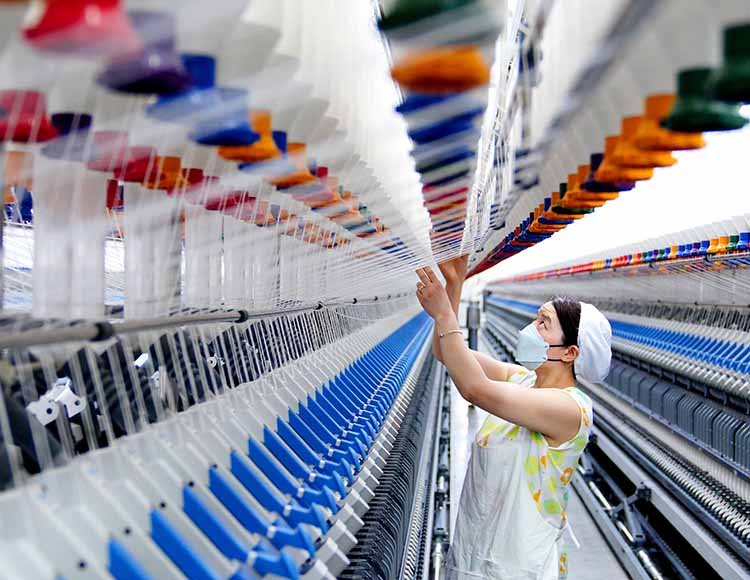
Our in-house capabilities cover yarn twisting, weaving, dyeing, finishing, printing and functional coating, supported by six imported production lines and an annual capacity exceeding 200 million meters. From lightweight cotton poplin to heavy-duty cotton canvas, from natural breathable fabrics to water-resistant, flame-retardant or anti-microbial cotton textiles, our team develops cotton fabrics that perform reliably in real products.
Lovrix cotton fabrics are widely used by global brands across bags, apparel, baby products, footwear, industrial textiles and protective equipment.
Types of Cotton Fabrics We Manufacture
Lovrix produces a wide range of cotton fabrics including canvas, twill, high-density cotton, brushed cotton, and blended cotton. All materials can be customized in GSM, weaving structure, color, dyeing method, and functional finishing such as waterproof, flame-retardant, or anti-mildew coatings.


Fabric Catalogue
What Is Cotton Fabric?
Cotton fabric is a natural cellulose textile known for breathability, softness, durability, and high moisture absorption. It is widely used across apparel, bags, home textiles, medical supplies, and industrial applications. High-performance cotton fabrics can be further enhanced through weaving, dyeing, coating, and finishing to achieve waterproof, flame-retardant, anti-UV, anti-bacterial, and high-tensile properties.


Why Cotton Fabric Is Still Widely Used
Cotton fabric continues to be widely adopted across global markets due to several structural advantages:
Natural breathability suitable for apparel, bags and baby products
Excellent moisture absorption improving comfort and usability
High dye affinity, enabling rich and stable colors
Good mechanical strength when engineered with proper yarn and weave
Compatibility with functional finishes, such as waterproof or flame retardant treatments
Lovrix enhances these natural advantages through controlled weaving density, finishing chemistry and strict QC systems.
Cotton Fiber Grades & Yarn Engineering
Lovrix works with multiple cotton fiber grades, including:
Long-staple cotton
Combed cotton
Recycled cotton blends (GRS-certified)
Yarn parameters we control:
Yarn count (Ne)
Twist per inch (TPI)
Ply structure
Tensile strength consistency
These directly impact fabric durability and stability in mass production.


Functional Cotton Fabric Finishes
Lovrix-developed cotton fabrics can include:
Water-resistant / oil-resistant finishes
Flame-retardant (EN & industrial standards)
Anti-mold & anti-bacterial treatments
UV resistance & color fastness enhancement
Anti-static & anti-odor solutions
All finishes are tested to meet REACH, RoHS and EN-71 requirements.
Cotton Fabric Specifications & Parameters
| Parameter | Typical Range |
|---|---|
| Weight (GSM) | 120–600 GSM |
| Width | 110–160 cm |
| Yarn Count | 7s – 40s |
| Weave Density | Custom |
| Color Fastness | ≥ Grade 4 |
| Shrinkage | ≤ 3% |
Specifications are adjusted per application.

Quality Control in Cotton Fabric Production
Lovrix applies multi-stage QC:
Raw cotton fiber inspection
Yarn tensile & evenness testing
In-process weaving density control
Dyeing color consistency checks
Final fabric inspection & lab testing
ISO9001-based management ensures batch consistency.
Why Choose Lovrix
Your Certified Partner for Custom Cotton Fabric Manufacturing
Choosing a cotton fabric supplier is not just about price or material availability. It is about whether the manufacturer can engineer the fabric to match real product use, maintain stable quality across bulk production, and support long-term development with technical understanding.
Lovrix is not a trading company or a simple fabric wholesaler. We operate as a development-oriented cotton fabric manufacturer, integrating material engineering, controlled production, and application-driven problem solving.
Engineering-Driven Cotton Fabric Development
Most cotton fabric suppliers offer standard constructions with limited flexibility.
Lovrix works differently.
We start cotton fabric development from fiber selection, yarn structure, and weave density, not from finished fabric samples alone. This allows us to:
- Adjust yarn count and twist for strength or softness
- Optimize weave structure based on abrasion and load requirements
- Balance hand feel, durability and cost for real products
This approach is especially important for bags, industrial textiles, uniforms and functional cotton fabrics, where performance matters more than appearance alone.
Vertically Integrated Production for Consistent Quality
Lovrix operates an integrated textile manufacturing base in Guangdong, China, covering:
- Yarn twisting & preparation
- Weaving
- Dyeing & setting
- Printing & functional coating
With 6 imported dyeing, finishing and coating lines and an annual capacity exceeding 200 million meters, we maintain tighter control over:
- Color consistency
- Shrinkage rate
- Fabric density
- Batch-to-batch stability
This vertical structure reduces quality risks commonly caused by multi-supplier outsourcing.
Strong Functional Finishing Capability for Cotton Fabrics
develops and applies functional finishes such as:
- Water-resistant & oil-resistant treatments
- Flame-retardant finishes for industrial and protective use
- Anti-mold, anti-bacterial and odor-resistant solutions
- UV resistance and color fastness enhancement
All functional cotton fabrics are developed with compliance feasibility in mind, ensuring they meet REACH, RoHS, EN-71 and related standards required by international markets.
Proven Experience Across Multiple Application Fields
Lovrix cotton fabrics are not limited to a single industry.
They are widely used in:
Bags & luggage (tote bags, backpacks, tool bags)
Apparel & uniforms
Baby products & strollers
Footwear components
Industrial and protective textiles
This cross-industry experience allows our team to anticipate application risks early and adjust fabric construction before mass production.
Dedicated R&D Team with Real Manufacturing Background
Lovrix maintains a professional R&D team accounting for approximately 10% of total staff.
Unlike purely laboratory-based development, our R&D team works directly with:
- Production lines
- Quality inspection teams
- Packaging and end-product manufacturing processes
This ensures cotton fabric development remains manufacturable, scalable and cost-controlled, rather than theoretical.
Flexible Customization, Low MOQ & Fast Response
We understand that cotton fabric projects vary in scale and maturity.
Lovrix supports:
- Low MOQ development orders
- Free technical consultation
- Fast sampling (typically 7–10 days)
- Short and reliable lead times
- Free design and sample support (project-based)
This flexibility makes Lovrix a reliable partner for both brand development projects and growing custom wholesale programs.
Certified Manufacturing with Global Compliance Readiness
Lovrix operates under internationally recognized systems and standards:
- ISO9001 Quality Management
- ISO14001 Environmental Management
- OEKO-TEX® STANDARD 100
- GRS (Global Recycled Standard)
Our cotton fabrics are engineered to meet regulatory and environmental expectations from the start, reducing compliance risks during market entry.

Customization Options
OEM/ODM Cotton Fabrics Made to Order
Every cotton fabric project is different.
Fabric weight, yarn structure, weave density, finishing requirements and compliance standards must all align with the final product’s real usage.
Lovrix provides OEM/ODM cotton fabric customization based on application-driven engineering rather than off-the-shelf specifications. From initial concept to bulk production, our team supports tailored cotton fabric development with controlled processes, technical validation and scalable manufacturing.
Fiber & Yarn Customization
Cotton fabric performance starts at the fiber and yarn level.
Lovrix customizes cotton fabrics by selecting and engineering:
Cotton fiber grade (standard, long-staple, recycled blends)
Yarn count (Ne) based on strength and hand feel targets
Yarn twist and ply structure for durability and stability
Blended yarn solutions when performance enhancement is required
This stage is critical for controlling fabric strength, softness, abrasion resistance and long-term consistency.


Weave Structure & Fabric Construction Customization
Different products place different mechanical demands on cotton fabrics.
Lovrix customizes fabric construction through:
Plain, twill, canvas and custom weave structures
Density adjustment (EPI / PPI)
Fabric thickness and weight (GSM control)
Structural reinforcement for load-bearing applications
Construction choices are validated against actual product stress points, especially for bags, uniforms and industrial textiles.
Color, Dyeing & Printing Customization
Color consistency is a common challenge in cotton fabric production.
Lovrix offers:
Custom color matching based on Pantone or physical samples
Reactive and vat dyeing options
Color fastness optimization for washing, rubbing and sunlight
Printing options for patterns, camouflage or branding elements
All dyeing processes are managed under controlled conditions to ensure batch-to-batch color stability.


Functional Finishing Customization
Cotton fabrics can be engineered beyond basic properties.
Lovrix develops functional finishes including:
Water-resistant and oil-resistant treatments
Flame-retardant finishes for protective applications
Anti-mold, anti-bacterial and odor-control solutions
UV resistance and surface durability enhancement
Each functional finish is evaluated for durability, wash resistance and regulatory compliance before bulk production.
Compliance-Oriented Custom Development
Different markets require different standards.
Lovrix custom cotton fabrics can be developed to meet:
OEKO-TEX® STANDARD 100
GRS (for recycled cotton fabrics)
REACH & RoHS
EN-71 and other application-related standards
Compliance considerations are integrated from the development stage, reducing approval risks later.


Sampling, Testing & Iteration Support
Customization does not stop at the first sample.
Lovrix supports:
Rapid sample development (typically 7–10 days)
Physical performance testing and feedback
Iterative refinement based on real product testing
Pre-production sample confirmation before bulk
This ensures that the final cotton fabric is ready for mass production, not just visually acceptable.
OEM/ODM Cotton Fabrics for Bag Manufacturing
Beyond fabric supply, Lovrix understands how cotton fabrics behave in finished products.
We support OEM/ODM projects where cotton fabrics are used for:
Tote bags, backpacks and tool bags
Apparel and uniforms
Baby and stroller products
Industrial and functional textile applications
This product-level understanding helps avoid fabric–product mismatch issues during production.

Consult With Us The Suitable Material for Your Project
Partner with Lovrix to choose the right materials for your product—customized fabrics, durable webbings, and sustainable solutions designed to elevate quality, reduce costs, and speed up production.
Applications
Versatile cotton Fabrics for Everyday and Professional Use
Lovrix cotton fabrics are developed with end-use performance in mind.
Instead of offering one-size-fits-all materials, we engineer cotton fabrics to match the mechanical, environmental and compliance requirements of different industries and product types.

Bags & Luggage
Cotton fabrics are widely used in bags and luggage where strength, durability and surface texture matter.
Lovrix cotton fabrics are commonly applied in:
- Tote bags and shopping bags
- Backpacks and daypacks
- Tool bags and utility bags
- Travel and promotional bags
Key fabric requirements in this category include:
- High tear and tensile strength for load-bearing
- Controlled fabric density to prevent deformation
- Abrasion resistance for daily use
- Optional water-resistant or oil-resistant finishes
For bag applications, Lovrix often recommends high-density cotton canvas or twill constructions, optimized for sewing performance and long-term durability in finished bags.

Apparel & Uniforms
Cotton remains a core material in apparel and uniforms due to its comfort, breathability and dye affinity.
Lovrix supplies cotton fabrics for:
Workwear and industrial uniforms
Casual and functional apparel
Training and operational garments
Typical performance considerations include:
Breathability and moisture absorption
Fabric softness balanced with durability
Color fastness to washing and friction
Shrinkage control after repeated laundering
For uniforms and workwear, Lovrix often engineers twill or blended cotton fabrics to improve abrasion resistance while maintaining comfort.

Baby & Stroller Products
Baby-related products place higher demands on safety, softness and compliance.
Lovrix cotton fabrics are used in:
Baby strollers and seat covers
Baby carriers and soft accessories
Child-related textile components
Critical requirements in this field include:
Skin-friendly and breathable surfaces
Low chemical residue and odor control
Compliance with EN-71 and relevant safety standards
Stable fabric structure to prevent distortion
Lovrix integrates OEKO-TEX® and EN-71 compliance considerations early in cotton fabric development for baby applications.

Footwear Components
Cotton fabrics play a functional role in footwear beyond appearance.
They are commonly used for:
Shoe linings and inner layers
Canvas uppers for casual footwear
Reinforcement layers and structural components
Key fabric requirements include:
Dimensional stability during cutting and stitching
Abrasion resistance in high-friction areas
Breathability for comfort
Compatibility with adhesives and lamination processes
Lovrix customizes fabric density and finishing to ensure consistent performance during footwear manufacturing.

Industrial Textiles
In industrial environments, cotton fabrics must deliver functional reliability rather than aesthetics.
Lovrix supplies cotton fabrics for:
Industrial covers and protective layers
Equipment wrapping and lining materials
Functional textile components
Typical performance requirements include:
High mechanical strength
Resistance to abrasion and tearing
Optional flame-retardant or anti-static finishes
Long-term durability under repeated use
For industrial uses, Lovrix develops reinforced cotton fabrics with controlled weave density and functional treatments.

Protective & Military-Related Materials
Cotton fabrics are still widely used in protective and military-related applications where infrared control, flame resistance and durability are required.
Lovrix cotton fabrics have been developed for:
- Training and camouflage textiles
- Protective clothing layers
- Specialized functional textile components
Key performance factors include:
- Flame-retardant capability
- High tear and tensile strength
- Resistance to sunlight and environmental exposure
- Compliance with specific military or industrial standards
Lovrix’s experience in functional finishing and controlled production supports cotton fabric development for demanding protective environments.
Key Performance Features of Lovrix Cotton Fabric
Cotton fabric performance is not defined by material name alone.
At Lovrix, each cotton fabric is engineered around specific mechanical, physical and environmental performance targets, ensuring the fabric performs reliably in real products and real usage conditions.
High Tensile & Tear Strength
Lovrix cotton fabrics are engineered to maintain structural strength under load, especially for bags, industrial textiles and protective applications.
How we achieve this:
- Optimized yarn count and twist level
- Controlled weave density (EPI / PPI)
- Reinforced canvas and twill constructions
Why it matters:
- Prevents tearing at stress points
- Supports heavier loads without deformation
- Improves long-term durability of finished products
Controlled Fabric Density & Dimensional Stability
Fabric instability leads to sewing issues, deformation and inconsistent bulk quality.
Lovrix controls:
- Fabric weight (GSM)
- Thickness and compactness
- Shrinkage rate after washing or finishing
Performance benefits:
- Predictable cutting and stitching behavior
- Reduced distortion during manufacturing
- Consistent size and shape in bulk production
This is especially critical for bag panels, uniform components and footwear parts.
Excellent Breathability & Moisture Absorption
As a natural fiber, cotton offers inherent breathability — but engineering determines how effectively it performs.
Lovrix optimizes cotton fabrics to:
- Maintain air permeability
- Absorb moisture without feeling heavy
- Balance comfort and durability
Typical applications include:
- Apparel and uniforms
- Baby and stroller products
- Footwear linings
High Abrasion Resistance for Daily Use
Abrasion resistance is critical for products exposed to repeated friction.
Lovrix enhances abrasion performance through:
- Tight weave structures
- Reinforced yarn selection
- Surface finishing optimization
Results:
- Longer product lifespan
- Reduced surface pilling and wear
- Better appearance retention over time
Commonly required for bags, workwear and industrial textiles.
Functional Performance Enhancement
Beyond basic properties, Lovrix cotton fabrics can be enhanced with functional finishes.
Available performance upgrades include:
- Water-resistant & oil-resistant finishes
- Flame-retardant treatments
- Anti-mold, anti-bacterial and odor control
- UV resistance and color stability improvement
Each finish is evaluated for durability, wash resistance and regulatory compliance.
Color Stability & Appearance Consistency
Color inconsistency is one of the most common bulk production risks.
Lovrix controls color performance by:
- Precision dyeing processes
- Standardized color matching protocols
- Batch-to-batch color consistency monitoring
Performance outcomes:
- Stable color across production lots
- Reduced rejection rates
- Improved brand visual consistency
Compliance & Safety-Oriented Performance
Performance also includes regulatory and safety reliability.
Lovrix cotton fabrics are developed to support:
- OEKO-TEX® STANDARD 100
- GRS (for recycled cotton)
- REACH & RoHS
- EN-71 (for baby-related products)
Compliance considerations are integrated from material selection to finishing, not added afterward.

Production & Quality Control
From Raw Yarn to Certified Nylon Fabrics

Step 1
Raw Yarn Sourcing & Incoming Inspection
Lovrix works with a stable raw material supply chain and applies strict incoming inspection before yarn enters production.
Key control points include:
- Yarn count and specification verification
- Tensile strength and evenness checks
- Twist consistency and cleanliness inspection
Only approved yarns are released into production, reducing downstream quality risks.

Step 2
Yarn Preparation & Engineering Control
Before weaving, yarns are prepared and engineered based on fabric performance targets.
Lovrix controls this stage by:
- Adjusting twist levels for strength or softness
- Stabilizing yarn tension for consistent weaving
- Eliminating weak points that may cause breakage
This step directly impacts fabric strength, abrasion resistance and durability.

Step 3
Weaving & Fabric Structure Control
Weaving defines the fabric’s physical structure.
Lovrix controls weaving through:
- Precise loom setup for EPI / PPI accuracy
- Real-time monitoring of fabric density and thickness
- On-loom inspection to detect defects early
This ensures the fabric structure matches the intended application before finishing.

Step 4
Dyeing, Setting & Functional Finishing
Appearance and functional performance are developed during finishing.
With 6 imported dyeing, setting and coating lines, Lovrix controls:
- Color accuracy and batch consistency
- Shrinkage control through proper heat setting
- Application of functional finishes such as water resistance, flame retardancy or anti-mold treatments
All parameters are documented to ensure repeatability in bulk production.

Step 5
In-Process & Final Quality Inspection
Quality is monitored throughout production, not only at the end.
Lovrix applies inspection at multiple stages, including:
- Fabric weight (GSM) and width checks
- Surface defect and appearance inspection
- Mechanical and functional performance testing
Only fabrics meeting internal and project-specific standards move forward.

Step 6
Certification, Compliance & Traceability
Compliance is integrated from development through production.
Lovrix cotton fabrics are produced under systems supporting:
- ISO9001 & ISO14001
- OEKO-TEX® STANDARD 100
- GRS (for recycled cotton fabrics)
- REACH, RoHS and EN-71 requirements
Complete documentation ensures traceability from raw yarn to finished fabric rolls.
Try Before You Order – Free Sample Program
We offer free custom samples for qualified clients. Whether you’re testing a new market or validating design quality, our samples help you move forward with confidence.
Everything You Need to Know About Our Cotton Fabric
What is cotton fabric mainly used for in manufacturing?
Cotton fabric is widely used in bags, apparel, uniforms, baby products, footwear components, and industrial textiles. Its breathability, dye affinity, and structural versatility allow manufacturers to engineer cotton fabrics for both comfort-focused and durability-driven applications.
Is cotton fabric suitable for bag and luggage production?
Yes. High-density cotton canvas and twill cotton fabrics are commonly used for tote bags, backpacks, tool bags, and promotional bags. When properly engineered, cotton fabrics provide strong load-bearing performance, good abrasion resistance, and reliable sewing behavior.
Can cotton fabric be made water-resistant or functional?
Yes. Cotton fabric can be treated with functional finishes such as water resistance, oil resistance, flame retardancy, anti-mold, and antibacterial coatings. These finishes are commonly used in industrial, outdoor, and protective textile applications.
What GSM is commonly used for cotton fabric?
Cotton fabric GSM typically ranges from 120 to 600 GSM depending on application. Lightweight fabrics are used for apparel and linings, while medium to heavy GSM cotton is preferred for bags, uniforms, and industrial textiles.
Is cotton fabric environmentally friendly?
Cotton fabric is a natural textile and can be environmentally friendly when produced under controlled processes. Many manufacturers offer OEKO-TEX® certified cotton and GRS-certified recycled cotton fabrics to meet sustainability requirements.
How is cotton fabric different from polyester fabric?
Cotton fabric offers better breathability and moisture absorption, while polyester fabric provides higher water resistance and dimensional stability. The choice depends on product usage, comfort requirements, durability needs, and cost targets.
Can cotton fabric meet international compliance standards?
Yes. Cotton fabrics can be developed to meet standards such as OEKO-TEX® STANDARD 100, REACH, RoHS, EN-71, and GRS, depending on material selection, dyeing, finishing, and quality control processes.
What factors affect cotton fabric quality?
Key factors include cotton fiber grade, yarn count, yarn twist, weave structure, fabric density, dyeing quality, finishing processes, and quality control consistency throughout production.
How do you choose the right cotton fabric for bag manufacturing?
Choosing the right cotton fabric for bag manufacturing requires more than selecting a fabric by appearance or weight. Bags are structural products that experience continuous mechanical stress, abrasion, and load-bearing during daily use. As a result, cotton fabric selection must be approached from an engineering and application-driven perspective.
The first factor to consider is fabric construction. Plain weave cotton fabrics are generally too lightweight for load-bearing bags unless reinforced. For most bag applications, twill cotton or cotton canvas constructions are preferred because they provide higher tear strength and better abrasion resistance. Canvas fabrics with tighter weave density are especially suitable for tote bags, backpacks, and tool bags where durability is critical.
The second key consideration is fabric density and GSM. Cotton fabrics used for bags typically range from 280 to 600 GSM, depending on the intended load capacity and bag structure. A higher GSM does not automatically mean better quality; instead, density uniformity and yarn quality determine whether the fabric maintains its shape over time. Poor density control can lead to fabric deformation, seam distortion, or inconsistent panel sizes during mass production.
Yarn engineering also plays a crucial role. Yarn count, twist level, and ply structure directly affect tensile strength and tear resistance. For bag manufacturing, cotton yarns are often engineered with higher twist levels or reinforced structures to improve mechanical stability without making the fabric excessively stiff.
Another important factor is sewing performance. Cotton fabrics must maintain dimensional stability during cutting, stitching, and assembly. Fabrics with high shrinkage or unstable weave structures can cause misalignment, puckering, or inconsistent bag dimensions. Pre-setting and shrinkage control during finishing are essential for reliable manufacturing outcomes.
Functional finishing should also be evaluated based on real usage scenarios. Many bags require water resistance, oil resistance, or stain resistance to extend product lifespan. These finishes must be durable and compatible with sewing and washing processes. Poor-quality coatings may crack, peel, or lose effectiveness after repeated use.
Finally, compliance and safety requirements should not be overlooked. Bags used for baby products, promotional programs, or international markets may need to meet OEKO-TEX®, REACH, or EN-71 standards. Integrating compliance considerations early in fabric development reduces risks during product launch.
In summary, selecting cotton fabric for bag manufacturing requires balancing structure, strength, density, sewing behavior, functional performance, and compliance. Working with a development-oriented manufacturer ensures that the cotton fabric is engineered for real-world bag applications rather than selected solely based on appearance.
What quality control processes are important in cotton fabric production?
Quality control in cotton fabric production is a systematic process that begins long before fabric weaving and continues until finished rolls are approved for shipment. Unlike commodity textiles, cotton fabrics used in bags, apparel, and industrial products require stable performance, appearance consistency, and compliance reliability.
The first critical stage is raw yarn inspection. Cotton fabric quality is directly linked to yarn quality. Incoming yarns should be checked for yarn count accuracy, tensile strength, evenness, twist consistency, and contamination. Poor-quality yarns introduce defects that cannot be corrected later in production.
The second stage involves yarn preparation and engineering. Yarn tension, twist level, and preparation quality affect weaving stability and final fabric strength. Inconsistent yarn preparation often leads to breakage during weaving or weak points in the fabric structure.
Weaving control is the next essential step. During weaving, manufacturers must monitor loom settings, fabric density (EPI/PPI), thickness, and surface appearance in real time. Early detection of broken ends, uneven density, or surface defects prevents large-scale quality issues.
Dyeing and finishing control play a major role in both appearance and performance. Cotton fabrics must be dyed under controlled conditions to ensure color accuracy and batch-to-batch consistency. Improper dyeing can result in color variation, poor color fastness, or fabric damage. Finishing processes such as setting, coating, or functional treatment must also be tightly controlled to ensure durability and repeatability.
In-process inspection is essential for preventing defect accumulation. Regular checks of GSM, width, shrinkage, and surface quality allow corrective actions before issues escalate. This approach reduces waste and improves bulk consistency.
Finally, final inspection and laboratory testing validate fabric readiness for shipment. This includes visual inspection under standardized lighting, mechanical testing for strength and tear resistance, color fastness testing, and functional performance verification. Documentation and traceability ensure that fabrics meet both internal standards and customer requirements.
Effective cotton fabric quality control is not about catching defects at the end; it is about preventing them throughout the production process. A structured QC system ensures consistent performance, reliable bulk production, and long-term customer confidence.
What is the difference between OEM and ODM cotton fabric development?
OEM and ODM cotton fabric development represent two different approaches to material sourcing and customization, each suited to different stages of product development and business strategy.
OEM (Original Equipment Manufacturer) cotton fabric development is typically based on customer-provided specifications. In this model, the customer defines key parameters such as fiber type, yarn count, weave structure, fabric weight, color, finishing requirements, and compliance standards. The manufacturer’s role is to execute production accurately according to these specifications.
OEM cotton fabric development is commonly used by experienced brands or product teams with established material knowledge. The advantage of OEM is greater control over material details and easier alignment with existing products. However, it requires the customer to have sufficient technical understanding to define feasible and manufacturable specifications.
ODM (Original Design Manufacturer) cotton fabric development, on the other hand, involves a higher level of manufacturer participation. In this model, the manufacturer contributes to material design, engineering decisions, and performance optimization based on the customer’s application requirements rather than fixed specifications.
ODM cotton fabric development is particularly valuable when customers know their product usage scenarios but are unsure how to translate those needs into fabric parameters. The manufacturer analyzes load conditions, environmental exposure, durability expectations, and compliance requirements, then proposes suitable cotton fabric constructions and finishes.
The key difference lies in responsibility and expertise allocation. OEM relies more on customer-defined inputs, while ODM leverages the manufacturer’s engineering and production experience to shape the material solution.
In practice, many cotton fabric projects fall between OEM and ODM. Manufacturers may provide technical suggestions within an OEM framework or gradually shift toward ODM support as product requirements evolve.
Choosing between OEM and ODM cotton fabric development depends on the customer’s internal capabilities, project complexity, and risk tolerance. For new products, complex applications, or markets with strict compliance requirements, ODM development often reduces trial-and-error and accelerates time to market. For mature products with stable specifications, OEM production offers efficiency and consistency.
Certifications & Quality Assurance
Lovrix holds internationally recognized certifications including OEKO-TEX® Standard 100, ISO 9001, GRS, and more. Our in-house quality control teams conduct rigorous inspections at every stage, from raw material to finished product. This ensures our clients receive products that meet both global standards and their unique specifications.

Talk to Our Specialists
- For Military & Defense: Discuss MIL-SPEC fabrics, IR-compliant webbings, and ballistic-grade coatings.
- For Outdoor & Sports: Ask about UV-proof, waterproof, and mildew-resistant textiles.
- For Industrial Applications: Explore flame-retardant and chemical-resistant materials. Dedicated account managers ensure your queries are handled by experts familiar with your market requirements.