 Skip to content
Canvas Manufacturer — Engineered Canvas Materials & Custom OEM Production by Lovrix
Selecting a canvas manufacturer requires more than finding a factory that sews heavy fabric. It demands controlled fabric engineering, stable GSM, shrinkage reduction, dye consistency, seam reinforcement and coordinated multi-factory production. Lovrix delivers these capabilities through an integrated manufacturing system.
Why Global Brands Work With Lovrix
1. In-House Fabric & Webbing R&D That Guarantees Stability
2. Four Specialized Factories Working as One Production System
3. Rapid Sampling With Engineering-Validated Construction
4. Robust OEM/ODM Development Capabilities
5. Multi-Stage Quality Control System for Consistent Results
Opening Summary: Understanding Buyer Problems in the Canvas Supply Chain
Many sourcing problems originate from unstable canvas material, inconsistent finishing, irregular dyeing, poor reinforcement and communication gaps between suppliers. Understanding these structural issues helps buyers evaluate whether a manufacturer can deliver sustained, repeatable quality.
Common Buyer Pain Points
1. GSM Instability Between Sampling and Bulk Orders
Many suppliers rely on market-purchased canvas rather than controlled weaving. GSM variations of ±30–50 g/m² are common. This results in noticeable differences in stiffness, durability and perceived product quality. For brands and e-commerce sellers, this inconsistency directly impacts customer reviews and return rates. Lovrix prevents this through controlled fabric production and independent fabric testing.
2. Shrinkage, Deformation & Wrinkling After Use
Canvas fibers can shrink by 5–10% if not properly pre-washed or finished. Products made with untreated canvas easily distort: lids no longer align, pockets warp, and the overall structure softens. This is especially problematic for tool bags, structured totes and industrial covers. Lovrix uses pre-shrunk or pre-finished canvas for all structure-critical applications to control shrinkage below 3–5%.
3. Dyeing Issues: Color Fading, Uneven Tones & Low Color Fastness
Canvas requires deep dye penetration to maintain consistent color. Low-cost suppliers often use rapid dyeing cycles, resulting in color shifts between batches or fading under UV exposure. For retail brands, inconsistent color lots are unacceptable. Lovrix follows controlled dyeing processes that achieve Grade 4–5 color fastness, suitable for outdoor and lifestyle products.
4. Sample–Bulk Inconsistency
One of the most frequent complaints in the industry is that samples and bulk goods are not identical. This usually occurs because suppliers switch to cheaper fabric sources during mass production. With Lovrix’s vertically controlled factories and R&D teams, the same material formula and finishing methods are used from sample to final shipment.
5. Lack of Technical Capability to Modify or Engineer Canvas
Most factories cannot adjust weave density, finishing chemistry, coating thickness or fiber blend ratios. This severely limits product performance. Lovrix’s internal R&D enables us to engineer fabrics to match load-bearing needs, softness requirements, abrasion resistance or waterproofing levels—based on real technical data rather than trial-and-error.

Why Choosing the Right Canvas Manufacturer Matters
Canvas products rely on controlled fabric engineering, structural reinforcement and consistent production systems. Choosing an inadequate manufacturer leads to shrinkage, color shifts, premature tearing, high defect rates and unpredictable supply. This section explains the technical reasons behind these risks.
1. Material Engineering Controls Real-World Performance
Most factories merely “buy canvas”; very few can “engineer canvas.” This distinction changes everything.
Fiber Composition Impacts Durability
Different fiber blends have different levels of elasticity, shrinkage, tear strength and color retention. For example:
- 100% cotton → natural texture but high shrinkage
- polyester canvas → stable but may feel synthetic
- poly-cotton blend → engineered balance
A manufacturer without R&D capability cannot optimize these trade-offs, leading to products that behave inconsistently across environments.
Lovrix Advantage: Our fabric R&D teams adjust yarn count, blend ratio, loom tension and finishing methods to match specific use cases—totes, tool bags, outdoor covers, organizers, aprons, etc.
2. Shrinkage Behavior Is One of the Most Overlooked Risks
Canvas fibers react strongly to moisture and heat. A poorly finished canvas can shrink 5–10%, creating the following issues:
- misaligned lids
- warped panels
- pocket distortion
- handle pulling
- uneven stitching tension
- overall loss of shape
This affects structured products the most—tool bags, organizers, backpacks, etc.
Why Most Factories Fail
They avoid pre-shrunk finishing due to cost, time and required machinery.
Lovrix’s Approach
Every canvas lot is tested for shrinkage performance, and pre-shrunk finishing is mandatory for structure-critical goods. Shrinkage is controlled to <3–5%, ensuring dimensional accuracy.
3. GSM, Weave Density & Finishing Determine Structural Stability
Canvas thickness isn’t the only variable—how it’s woven and finished matters equally.
GSM Inconsistency = Product Failure
Factories sourcing canvas externally often receive:
- ±30–50 g/m² GSM fluctuations
- varying stiffness
- color absorption differences
This leads to bags that collapse, aprons that wrinkle excessively, and storage bins that lose structure.
Weave Density Determines Strength
Loose weave = easier tearing Tight weave = stable, load-bearing structure
Most low-cost suppliers cannot measure weave density accurately or control loom settings.
Finishing Determines Long-Term Behavior
Finishing affects:
- shrinkage
- smoothness
- dye absorption
- water resistance
- surface friction
Improper finishing is why many canvas products deform after washing or outdoor use.
Lovrix Advantage: We control loom density, finishing chemistry, pre-shrunk treatment and coating adhesion to maintain consistency.
4. Color Consistency & Fastness Testing Protect Your Brand
Canvas dyeing is extremely sensitive to:
- dye ratios
- temperature curve
- dye bath time
- drying process
Low-tier factories cut dyeing time by 20–40% to reduce cost. The result?
Common Problems:
- batch-to-batch color differences
- uneven tones
- rapid fading
- UV discoloration
- color bleeding during washing
For retail brands or Amazon sellers, this means:
- negative reviews
- high return rate
- ruined brand reputation
- mismatched replenishment batches
Lovrix’s Solution
We use deep-dye penetration and controlled dye formulas to achieve Grade 4–5 color fastness, suitable for outdoor and lifestyle applications.
5. Seam Strength & Reinforcement Logic Are Critical for Durability
Canvas is stiff and thick, meaning seam failure is common without proper engineering.
Critical Construction Variables:
- SPI (Stitches Per Inch)
- thread tensile strength
- bartack placement
- reinforcement panel thickness
- webbing anchoring
- binding methods
- load direction mapping
If any one of these is wrong, the product’s durability declines by 30–60%.
Frequent Failures in Low-Quality Factories
- handles tear because reinforcement is too short
- seams open due to low SPI
- webbing detaches due to insufficient bartacks
- thread breaks under load because incorrect gauge is used
Lovrix Engineering Standard
We apply load simulation tests and assign reinforcement logic based on product function, achieving stable performance for heavy-duty and high-frequency-use goods.
6. Coating Adhesion & Waterproofing Determine Outdoor Performance
Coated canvas requires precise control of:
- coating thickness
- adhesion strength
- drying time
- coating uniformity
- temperature conditions
Otherwise the coating:
- cracks
- peels
- becomes sticky
- loses waterproof ability
Lovrix Advantage: We test coating adhesion and simulate long-term environmental exposure for industrial or outdoor product lines.
7. Hardware Integration Must Match Canvas Strength
Canvas is strong, but if paired with weak hardware, the entire product fails.
Examples of Hardware Failure:
- buckles snapping
- rivets pulling out
- rust development
- zipper malfunction
Many factories buy hardware from unstable low-cost suppliers.
Lovrix Standard
We perform:
- hardware tensile testing
- anti-rust salt spray tests
- 2× safety factor pull tests
Which ensures alignment between canvas strength and hardware performance.
8. Multi-Factory Coordination Determines Scalability
Canvas product lines grow fast. A single-factory supplier cannot support:
- consistent replenishment
- multiple colorways
- diversified product lines
- seasonal production cycles
Lovrix’s Integrated System
With four specialized factories, we synchronize:
- fabric development
- dyeing
- coating
- bag assembly
- printing
- packaging
This prevents the chaos caused by outsourcing-based factories.
9. Long-Term Replenishment Stability Is a True Differentiator
For growing brands, replenishment matters more than initial development.
Risks with Weak Manufacturers
- color shifts each season
- GSM differences between orders
- inconsistent shrinkage
- new hardware supplier every batch
- fluctuating production capacity
These problems destroy product continuity.
Lovrix Advantage
We retain material samples and formulas for years and maintain production consistency across long-term cycles.
10. Compliance Requirements Can Block Market Access
Markets like the EU, Japan and the U.S. require:
- REACH
- ROHS
- AZO-free
- color fastness
- heavy metal testing
A factory lacking compliance experience may lead to shipment holds or listing removals.
Lovrix provides full compliance documentation and testing support.
11. Engineering-Level Communication Reduces Project Risks
Canvas development requires:
- clear tech packs
- reinforcement mapping
- SPI specifications
- shrinkage records
- material BOM charts
- hardware compatibility checks
Without technical communication, projects suffer multiple revisions and delays.
Lovrix’s sales engineers provide structured updates, draft verification, and clear timeline management.

Key Factors in Canvas Product Development
Developing canvas products requires coordinated decisions across fiber composition, GSM range, weave type, coating, finishing, shrinkage control, reinforcement structure and hardware compatibility. These engineering factors determine durability, aesthetics and product longevity.
Fiber Composition: Cotton, Polyester or Blended Options
Each composition offers different performance characteristics.
- Cotton canvas delivers natural texture but requires shrinkage control.
- Polyester canvas offers dimensional stability and consistent color.
- Blended canvas combines strength and comfort. Lovrix adjusts fiber ratios based on target performance, such as stiffness for tool bags or softness for aprons.
GSM Selection (300–600 GSM for Most Products)
GSM defines thickness, rigidity and load capacity.
- 300–360 GSM suits lightweight lifestyle bags.
- 400–480 GSM fits daily totes, aprons and organizers.
- 500–600 GSM is ideal for tool bags and industrial covers. Lovrix maintains GSM tolerance within ±10 g/m² for consistent batch control.
Weave Structure: Plain, Twill or Oxford Weave
Weave density influences visual character, abrasion resistance and coating adhesion.
- Plain weave is stable with a classic look.
- Twill weave offers smoother drape and flexibility.
- Oxford weave provides increased strength and a technical appearance. Lovrix selects weave structures based on mechanical requirements and aesthetic direction.
Finishing Techniques and Their Impact
Finishing determines how canvas behaves in production and real use.
- Pre-shrunk canvas controls deformation.
- Softened canvas improves wearer comfort.
- Deep dyed canvas ensures color stability. Lovrix uses controlled finishing lines to ensure consistent finishing parameters.
Coating Options: PU, PVC, Acrylic or Wax
Coating choice significantly affects water resistance, stiffness, longevity and cost.
Lovrix conducts adhesion tests to ensure coating durability across temperature ranges and friction environments.
Color Fastness Requirements
Canvas for outdoor, lifestyle and industrial markets should achieve Grade 4–5 color fastness. Lovrix uses deep dyeing processes and controlled dye recipes to meet these requirements.
Shrinkage Control (<3–5%)
Canvas must be pre-shrunk or finished to reduce shrinkage. Lovrix monitors shrinkage with laboratory testing to meet dimensional accuracy for structured products.
Stitching, Thread and Reinforcement Logic
Seam construction defines load capacity and durability. Lovrix specifies SPI density, thread type, bartack positions and reinforcement panels based on product function (e.g., 20–30 kg load tool bags).

Canvas Engineering Reference Table
| Factor | Specification Options | Engineering Impact | Notes |
|---|---|---|---|
| Fiber Composition | Cotton / Polyester / Blended | Strength, shrinkage, tactile feel | Selected per product use |
| GSM | 300–600 GSM | Rigidity, load capacity | Tight GSM tolerance required |
| Weave Type | Plain / Twill / Oxford | Texture, durability | Influences dye penetration |
| Coating | PU / PVC / Acrylic / Wax | Waterproofing, stiffness | Requires adhesion testing |
| Finishing | Pre-wash / Pre-shrink | Dimensional stability | Essential for structured bags |
| Color Fastness | Grade 3–5 | UV & washing resistance | Grade 4–5 recommended |
| Shrinkage | <3–5% | Structural accuracy | Lab tested at Lovrix |
| Stitch System | SPI 6–8 / bartacks | Seam strength & lifespan | Critical for load-bearing areas |
Lovrix’s Professional Solution
Lovrix’s End-to-End Canvas Development Framework
Lovrix supports brands through an engineering-led development system that integrates fabric R&D, multi-material production, structured sampling, cost optimization and full-scale mass production. Each project follows a transparent, traceable workflow to guarantee consistent quality.
Step 1
Requirement Mapping & Functional Engineering Analysis
Lovrix begins each project by aligning technical requirements with material feasibility. Our engineering team collaborates with clients to define:
- intended use environment (outdoor, industrial, lifestyle, retail)
- required load capacity (10–30 kg for bags; higher for industrial covers)
- stiffness vs. flexibility levels
- finishing expectations (softened, pre-shrunk, deep-dyed)
- waterproofing or coating needs
- acceptable shrinkage tolerance
- color fastness requirements (Grade 4–5 for outdoor/lifestyle brands)
A full internal engineering assessment is prepared before sampling begins. This eliminates misalignment between client expectations and manufacturability.
Step 2
Canvas Material Engineering & Fabric Development
Unlike suppliers who purchase material from fabric markets, Lovrix develops canvas internally through our fabric R&D team.
We control the following variables:
- fiber blend ratios (cotton/poly/poly-cotton)
- yarn count and twist level
- weave density
- loom tension settings
- dye penetration depth
- shrinkage pre-treatment
- coating adhesion level
- GSM tolerance (typically ±10 g/m²)
Our fabric lab uses tensile testing, abrasion tests and color fastness evaluation to determine whether the canvas meets the required standards.
Clients can request:
- custom GSM ranges
- exclusive color formulas
- waterproof PU/PVC/coating finishes
- deep-dye canvas for long-term UV stability
- recycled canvas with GRS-compliant processes
Step 3
Tech Pack Support & Engineering-Led Sampling
Lovrix’s 15+ designers and pattern engineers build complete technical documentation, including:
- precise pattern shape
- reinforcement layout
- SPI density guidelines
- hardware load mapping
- bartack positioning
- binding or edging requirements
- material orientation (warp/weft direction)
Sampling is not a trial—it is an engineering validation process.
Each sample undergoes:
- seam strength test
- warp/weft tension test
- GSM verification
- shrinkage simulation
- color fastness rub test
- hardware pull test
This ensures sample performance equals bulk production performance.
Step 4
Cost Engineering & Material Optimization
Lovrix’s cost engineers review:
- fabric consumption yield
- cutting layout optimization
- reinforcement material alternatives
- hardware grade options
- stitching time efficiency
- packaging method impacts
Our goal is cost transparency—not price cutting. We adjust structure and material selection so brands receive the best performance-to-cost ratio.
For example:
- switching from 100% cotton canvas to 80/20 blended canvas reduces cost by 12–15% while improving shrinkage stability
- using nylon core-spun thread improves seam strength by up to 35%
- optimized bartack placements reduce reinforcement costs by 8–10%
Step 5
Trial Production & Pre-Mass Quality Simulation
Before mass production, a controlled trial run is executed. This verifies:
- sewing machine calibration
- stitching consistency
- reinforcement panel accuracy
- color lot stability
- hardware alignment accuracy
- coating thickness uniformity
Trial production prevents bulk errors, especially for large orders.
Step 6
Mass Production & Full QC System
Lovrix’s four factories allow large-scale capacity and coordinated output. Our QC system includes:
- IQC: raw fabric, webbing, hardware inspection
- IPQC: in-line stitching checks, SPI monitoring
- FQC: measurement and load testing
- OQC: final appearance, function and packaging checks
We take batch photos, load-test samples and retain QC records for traceability.
Step 7
Packaging, Export-Grade Logistics & Replenishment
Lovrix provides:
- export-grade packaging
- barcode/FBA labeling
- optimized carton size configuration
- consolidated container loading
- replenishment control for consistent color lots
- long-term supply scheduling
For brands with seasonal launches or new product cycles, Lovrix coordinates production timelines in advance to ensure stable replenishment.

Canvas Types & Technical Specifications Guide
Canvas comes in multiple compositions, weights, weave structures and finishes. Lovrix engineers each canvas type to match specific applications, balancing durability, stiffness, water resistance, tactile feel and cost.

1. Cotton Canvas (10oz–24oz / 340–650 GSM)
Natural texture, strong load capacity, premium appearance
Cotton canvas remains the most widely used category and is the foundation of most lifestyle, fashion and craft applications.
Technical Specifications (Deep Version)
| Parameter | Lovrix Standard | Notes |
|---|---|---|
| GSM | 340–650 GSM | Adjusted by yarn count & weave tension |
| Yarn Type | 100% cotton high-twist | Improves tear resistance |
| Weave | Plain / Twill | Plain for stability, twill for flexibility |
| Shrinkage | <5% (after pre-shrunk) | Without finishing shrinkage may reach 8–12% |
| Color Fastness | Grade 3–5 | Grade 4–5 for outdoor/lifestyle |
| Printability | Excellent | Deep-dye treatment available |
Lovrix Engineering Notes
- We use high-twist cotton yarn for improved durability and better resistance to abrasion.
- Pre-shrunk finishing is applied for structured products to prevent deformation.
- Our dyeing process uses deep-penetration formulas to achieve consistent color lots critical for retail.
Best Applications
- Canvas shopper bags
- Retail tote bags
- Aprons (barista, workshop, culinary)
- Craft & hobby goods
- Home storage bins
Advantages
- Rich texture
- Strong body structure
- Premium aesthetic
- Excellent for printing & embroidery
2. Polyester Canvas (300–600 GSM)
Dimensional stability, low shrinkage, consistent color lots
Poly canvas is ideal for products needing high stability under load, moisture exposure or outdoor environments.
Technical Specifications
| Parameter | Lovrix Standard | Notes |
|---|---|---|
| GSM | 300–600 | Good for heavy bags |
| Shrinkage | <2–3% | Highly stable |
| Color Fastness | Grade 4–5 | Even under UV exposure |
| Coating Compatibility | Excellent | PU/PVC/acrylic |
| Weave | Plain / Oxford | Oxford for increased tensile strength |
Lovrix Engineering Notes
- We engineer the filament denier for strength and balanced stiffness.
- Polyester canvas is often paired with PU coating for water resistance.
- Ideal for heavy-duty applications requiring predictable structural behavior.
Applications
- Tool bags
- Backpacks
- Outdoor gear
- Industrial covers
- Tactical/utility gear


3. Blended Canvas (Poly-Cotton / Cotton-Poly Systems)
Balanced performance: strength of polyester + texture of cotton
Lovrix develops blended canvas formulas based on industry-specific requirements.
Technical Specifications
| Parameter | Lovrix Standard | Notes |
|---|---|---|
| Cotton/Poly Ratio | 70/30, 60/40, 50/50 | Customizable |
| GSM | 320–580 | Medium to heavy duty |
| Shrinkage | 3–5% | Better than pure cotton |
| Color Fastness | Grade 4 | More stable than cotton |
| Texture | Semi-natural | Smooth surface |
Lovrix Engineering Notes
- Popular with eco brands and fashion brands seeking durability without sacrificing aesthetics.
- Superior for printing compared to polyester.
- Very stable for structured storage bins or fashion bags.
Applications
- Retail tote bags
- Daily carry backpacks
- Storage organizers
- Craft products
- Corporate merchandise
4. Recycled Canvas (GRS-Certified)
Sustainable, stable, ideal for eco-conscious brands
Lovrix uses GRS-compliant recycled fibers and maintains full traceability throughout production.
Technical Specifications
| Parameter | Lovrix Standard | Notes |
|---|---|---|
| GSM | 340–550 | Medium-heavy |
| Fiber Source | Recycled cotton / poly | GRS-certification available |
| Shrinkage | 3–5% | Controlled stability |
| Color Fastness | Grade 3–4 | Depends on recycled fiber quality |
| Texture | Coarser | Ideal for eco aesthetic |
Lovrix Engineering Notes
- We blend recycled fibers with stabilizing filaments for improved strength.
- Eco-friendly printing methods available.
- Especially popular for EU/US retail chains with sustainability goals.
Applications
- Eco tote bags
- Promo merchandise
- Sustainable packaging
- Lifestyle bags
- Home storage lines


5. Waxed Canvas (Water-Repellent, Vintage Appeal)
Premium, long-lasting, weather resistant
Waxed canvas is a specialty material requiring controlled wax absorption.
Technical Specifications
| Parameter | Lovrix Standard | Notes |
|---|---|---|
| Base GSM | 350–600 | Cotton base |
| Wax Type | Paraffin or natural wax | Customizable |
| Water Repellency | High | Water beads on surface |
| Aging Behavior | Patina effect | Enhances premium look |
Lovrix Engineering Notes
- Wax absorption level is precisely controlled to avoid cracking or uneven stiffness.
- Waxed canvas ages naturally, gaining character over time.
- We use reinforced stitching systems to handle stiff materials.
Applications
- Outdoor travel bags
- Heritage-style backpacks
- Camera bags
- Premium fashion goods
- Motorcycle bags
6. Coated Canvas (PU, PVC, Acrylic, TPU)
Technical waterproofing and heavy-duty performance
Lovrix applies industrial coatings under precise temperature and adhesion control.
Technical Specifications
| Parameter | Lovrix Standard | Notes |
|---|---|---|
| Base GSM | 300–650 | Before coating |
| Coating Thickness | 0.05–0.30 mm | Application-specific |
| Waterproofing | Excellent | Depends on coating |
| Abrasion Resistance | High | PVC strongest |
| Crack Resistance | Tested | Temperature-controlled |
Lovrix Engineering Notes
- Coating adhesion is tested through peeling and bending simulations.
- PU for flexible backpacks; PVC for industrial covers; Acrylic for economical waterproofing.
- TPU available for high tensile and environmental performance.
Applications
- Industrial equipment covers
- Outdoor seating covers
- Heavy-duty bags
- Waterproof travel bags
- Specialty utility gear


7. Specialty Canvas Types Developed by Lovrix
A. Laminated Canvas
Canvas fused with inner PE/EVA/PVC layers for structure. Ideal for:
- storage bins
- collapsible organizers
- structured lifestyle goods
B. Fire-Retardant Canvas
For industrial & safety needs. Certified performance depends on national standards.
C. Anti-Mildew Canvas
For humid climates & outdoor storage.
D. UV-Resistant Canvas
Long-lasting color stability for outdoor covers and tents.
Technical Comparison Table
| Canvas Type | GSM Range | Strength | Shrinkage | Coating Compatibility | Typical Use |
|---|---|---|---|---|---|
| Cotton Canvas | 340–650 | High | Medium–High | Good | Lifestyle bags, aprons |
| Polyester Canvas | 300–600 | High | Low | Excellent | Backpacks, tool bags |
| Blended Canvas | 320–580 | Medium–High | Low–Medium | Good | Totes, organizers |
| Recycled Canvas | 340–550 | Medium | Low | Good | Sustainable products |
| Waxed Canvas | 350–600 | High | Medium | Limited | Outdoor & fashion |
| Coated Canvas | 300–650 | Very High | Low | Excellent | Industrial bags/covers |
Canvas Construction & Workmanship Engineering
Canvas product durability depends on structural engineering—stitching density, reinforcement logic, thread selection, hardware integration and stress mapping. Lovrix applies industrial sewing standards to ensure long-lasting performance across categories.
Stitch Density (SPI) Calibration
SPI determines seam strength and fabric tension stability. Lovrix guidelines:
- SPI 6–8 for heavy-duty canvas
- SPI 8–10 for lifestyle bags
- SPI 10–12 for lightweight products
We calibrate sewing machines to maintain SPI across different operators and shifts.
Thread Type Selection
Lovrix uses nylon or poly core-spun thread for load-bearing areas to ensure high tensile strength (20–35 kg depending on gauge). Thread selection affects:
- seam integrity
- abrasion resistance
- load capacity
- environmental stability
Cotton thread is limited to decorative or low-load uses.
Bartack Reinforcement Engineering
Bartacks are placed at structural stress points—handle attachment, pocket corners, strap bases. Lovrix determines bartack density through:
- load simulation tests
- fabric stretch analysis
- webbing anchoring requirements
This prevents seam tearing under load.
Webbing Integration & Load Mapping
Webbing carries weight better than canvas alone. Lovrix often integrates:
- high-tension polyester webbing
- reinforced X-pattern stitching
- box-and-cross reinforcement This increases load capacity by 25–40%.
Edge Binding & Seam Sealing
Binding prevents fraying and improves product lifespan. Lovrix uses:
- folded binding tape
- canvas edge fusing
- TPU reinforcement (if required)
For coated canvas or industrial covers, seam sealing may be applied for waterproof performance.
Hardware Selection & Stress Compatibility
Lovrix evaluates hardware tensile strength to match canvas performance:
- steel or alloy buckles for heavy-duty bags
- zinc alloy for lifestyle products
- anti-rust coating for outdoor applications
Hardware is pull-tested to ensure 2× load safety.
Coating, Waterproofing & Surface Treatment
For waterproof products, Lovrix applies:
- PU or PVC coatings
- acrylic finishing
- water-repellent spray coatings
- wax treatment
Each coating undergoes adhesion tests, abrasion tests and temperature resistance checks.

Buyer Checklist: How to Evaluate a Canvas Manufacturer
The Complete Canvas Manufacturer Evaluation Checklist
Choosing a canvas manufacturer requires a structured evaluation of material control, construction capability, QC systems, sampling accuracy, communication quality and long-term supply reliability. This checklist helps brands assess whether a supplier can support real business growth.
Material Control & Fabric Engineering
What to Check:
- Does the factory weave or develop its own canvas?
- Can it control GSM tolerance, weave density and shrinkage levels?
- Are dyeing and finishing processes done in a controlled environment?
- Can the factory engineer new canvas formulas when needed?
Why It Matters:
Without material control, suppliers often switch fabric sources each batch. This creates differences in stiffness, weight, color tone, and shrinkage—disasters for Amazon sellers and retail brands.
Lovrix Advantage: Our internal fabric R&D team and weaving partners maintain consistent specifications, supported by batch-level lab testing.
Sampling Accuracy & Engineering Validation
What to Check:
- Is the sample built according to a formal tech pack?
- Does the sample undergo seam strength testing and GSM verification?
- Can the supplier provide shrinkage and color fastness test results?
Why It Matters:
Factories that “rush samples” often rely on patchwork methods that cannot be repeated in bulk production.
Lovrix Advantage: Every sample passes through engineering validation, ensuring 1:1 alignment with mass production.
Construction Standards & Stitching Engineering
What to Check:
- SPI density consistency
- Thread tensile strength
- Bartack placement
- Webbing integration
- Reinforcement mapping
Why It Matters:
Canvas is thick and load-bearing; even a minor construction flaw can reduce lifespan by 40–60%.
Lovrix Advantage: We follow industrial-grade construction parameters used in tactical gear and workwear manufacturing.
Quality Control System (QC / IQC / IPQC / FQC / OQC)
What to Check:
- Is there a documented QC process?
- Do they test fabric GSM, coating adhesion, color fastness and shrinkage?
- Are in-line inspections performed or only final inspections?
Why It Matters:
Canvas production requires multiple checkpoints; skipping one typically results in high defect rates.
Lovrix Advantage: Our QC teams operate across four factories with full traceability.

Production Capacity & Multi-Factory Coordination
What to Check:
- Can the manufacturer scale production without compromising quality?
- Does it operate multiple facilities or rely on outsourcing?
- Can replenishment orders be matched to earlier batches?
Why It Matters:
Growing brands need consistency and repeatability.
Lovrix Advantage: Four specialized factories enable high-volume, stable capacity.
Compliance & International Standards
What to Check:
- REACH, ROHS, AZO-free compliance
- Color fastness grade
- Heavy metal testing
- Fabric chemical safety
Why It Matters:
Regulatory issues can block shipments or remove listings from marketplaces.
Lovrix Advantage: We provide compliance documentation and batch-level testing when required.
Communication, Development Speed & Professionalism
What to Check:
- Does the supplier understand technical drawings?
- Can they suggest cost engineering alternatives?
- Do they respond clear and fast?
- Do they manage timelines systematically?
Why It Matters:
Fast, accurate communication reduces development time and avoids expensive misunderstandings.
Lovrix Advantage: Our international sales engineers deliver structured communication and weekly project updates.
Long-Term Partnership Reliability
What to Check:
- Will the supplier support your brand as you scale?
- Do they provide stable replenishment cycles?
- Will they maintain consistent materials year after year?
Why It Matters:
Rebuilding supply chains every year is costly and slows brand growth.
Lovrix Advantage: We build 3–5 year product cycle partnerships with global brands.
Canvas Product Range Manufactured by Lovrix
Lovrix manufactures a wide range of canvas products using engineered fabrics and industrial-grade construction. Our capabilities cover lifestyle, outdoor, workwear, home storage and industrial-use applications.

Canvas Tote Bags (Lifestyle & Retail)
Lovrix produces cotton, blended and recycled canvas totes with reinforced handles, internal pockets, edge binding and custom printing. Common specs:
- 340–450 GSM
- color fastness Grade 4–5
- SPI 8–10 stitching
- deep-dye or coated options
Applications: fashion retail, corporate gifting, eco programs.

Heavy-Duty Canvas Tool Bags
Designed for durability, load-bearing capacity and structural integrity. Lovrix engineering features:
- 500–600 GSM canvas
- polyester tension webbing
- bartack reinforcement at stress points
- steel or alloy hardware
- box-and-cross stitching
Applications: woodworking, electricians, technicians, industrial brands.

Canvas Backpacks & Daypacks
Lovrix’s backpack team integrates hybrid materials (canvas + leather, canvas + webbing). Features:
- structured reinforcement
- molded EVA panels (if needed)
- padded straps
- coated canvas for water resistance
Applications: fashion lines, outdoor lifestyle, retail collections.

Canvas Duffel Bags & Travel Bags
Produced using blended canvas or heavy cotton canvas. Options include:
- waxed canvas exterior
- PU-coated canvas for water resistance
- leather trims
- metal zippers

Canvas Aprons (Workwear & Culinary)
Lovrix manufactures aprons for baristas, chefs, workshops and studios. Key traits:
- 360–450 GSM cotton or blended canvas
- adjustable straps
- reinforced pockets
- tool-loop integration

Canvas Storage Bins & Organizers
One of Lovrix’s high-volume categories. Engineering features:
- structured walls
- reinforced seams
- laminated canvas options
- leather or webbing handles
Applications: home storage brands, retail chains.

Industrial Canvas Covers & Utility Products
For factories, logistics and outdoor environments. Lovrix supports:
- coated canvas
- UV-resistant formulas
- heavy-duty stitching
- rust-resistant hardware
Applications: equipment covers, tent components, automotive accessories.

Canvas Pet Accessories
Lovrix produces durable canvas pet carriers, beds and outdoor gear using abrasion-resistant fabric and reinforced seam logic.

Custom OEM/ODM Canvas Product Lines
Lovrix provides full development for brands looking to launch new canvas product lines.
Examples:
- canvas camera bags
- canvas messenger bags
- outdoor utility pouches
- tactical canvas gear
- corporate merchandise lines
Lovrix Experience & Case Studies
Lovrix has supported global brands, retailers and private-label businesses across lifestyle, outdoor, industrial and home storage categories. Our project experience demonstrates stability, engineering capability and long-term partnership reliability.

Case 1
European Outdoor Brand: Heavy-Duty Tool Bag Line
The brand required 25–30 kg load capacity with strict seam reinforcement standards. Lovrix delivered:
- 600 GSM polyester canvas
- reinforced webbing architecture
- bartack density optimized through load simulation
- PU-coated base for abrasion resistance
- steel hardware pull-tested at 50+ kg Results: defect rate <0.8% across 5 consecutive orders.

Case 2
U.S. Lifestyle Retailer: Canvas Tote & Daily Carry Series
Retailer needed consistent color lots for nationwide stores. Lovrix controlled:
- dye penetration depths
- GSM tolerance ±10 g/m²
- Grade 4–5 color fastness We delivered 12 seasonal colors with zero color deviation issues between batches.

Case 3
Japanese Home Storage Brand: Structured Canvas Bins
The brand required crisp structure and long-term shape retention. Lovrix engineered:
- laminated blended canvas
- reinforced vertical panels
- edge binding system
- dimensional shrinkage controlled <2.5% Result: stable shape integrity after 500+ usage cycles.

Case 4
Middle East Distributor: Industrial Canvas Covers
Customer needed heavy-duty coated canvas for desert climates. Lovrix provided:
- UV-resistant PVC-coated canvas
- rust-proof hardware
- heat-sealed seams
- strict tensile and abrasion testing
Case 5
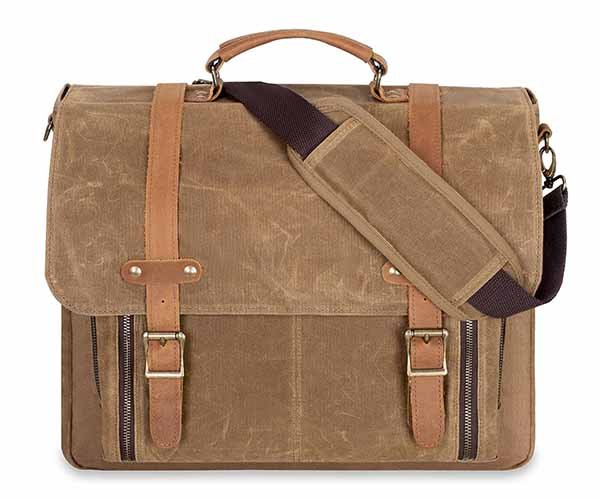
U.K. Boutique Brand: Waxed Canvas Fashion Bags
Requirements: premium texture + vintage effect. Lovrix delivered:
- controlled wax absorption
- multiple wax tone variations
- brass hardware
- real leather trims Brand used the line for their premium retail collection.

Case 6
Amazon Private Label Seller: Fast Development Cycle
Seller needed quick sample turnaround + stable replenishment supply. Lovrix provided:
- 72-hour sampling
- improved structural design
- packaging optimization
- steady replenishment with zero GSM deviation This improved listing reviews and repeated orders.
Quality & Certifications
Certified by ISO9001, OEKO-TEX100, GRS, and Higg Index, Lovrix ensures every bag product meets global compliance standards. We implement strict QC at every stage, from yarn to final packaging.
FAQ — Canvas Manufacturing & OEM/ODM Development
These FAQs address the most common questions from global brands, retailers and private label clients when developing custom canvas products. Each answer reflects Lovrix’s engineering-based approach and real production experience.
1. What is the typical MOQ for canvas products?
Lovrix offers flexible MOQs depending on fabric type and product complexity. For standard canvas totes and aprons, MOQs start around 300–500 units. For engineered items like tool bags or coated canvas covers, MOQs may start from 800–1,000 units. We balance MOQ with material efficiency and provide options for pilot runs.
2. How long does sampling take?
Sampling generally takes 3–7 days, depending on material availability and structural complexity. Lovrix’s design and pattern team complete tech packs, reinforcement layouts and hardware selection before sewing the prototype. All samples undergo GSM verification, seam strength testing and shrinkage simulation to ensure mass-production accuracy.
3. How is pricing calculated for canvas products?
Pricing is based on fabric GSM, reinforcement level, stitching time, hardware grade, printing method and packaging. Lovrix performs cost engineering to optimize material consumption and structural efficiency. We provide transparent itemized quotations so brands understand how each specification influences the final cost.
4. Can Lovrix help improve an existing design?
Yes. Our engineers frequently refine client designs by adjusting reinforcement logic, material orientation, hardware selection and SPI density. Many brands approach us to solve durability issues or reduce production cost without compromising strength. We provide revised tech packs and updated structural diagrams as needed.
5. What types of canvas does Lovrix produce?
Lovrix produces cotton canvas (10oz–24oz), polyester canvas, poly-cotton blends, recycled canvas and waxed or coated canvas. We control GSM, weave density, finishing and dyeing. This ensures consistent performance across seasonal replenishments and long-term product cycles.
6. How does Lovrix ensure bulk quality remains stable?
Quality is controlled through IQC, IPQC, FQC and OQC systems across four factories. We test fabric batches for GSM, shrinkage, color fastness and coating adhesion. Stitching teams follow standardized SPI settings, and reinforcement areas are cross-checked with approved tech packs. All shipments include QC documentation.
7. Can Lovrix handle rush orders or peak-season production?
Yes. With independent sewing lines, multi-factory capacity and experienced scheduling teams, Lovrix can support accelerated timelines. For urgent projects, we prioritize fabric preparation and run parallel stitching lines. Delivery windows depend on material type and order volume.
8. Are Lovrix’s canvas products compliant with international regulations?
Lovrix supports REACH, ROHS, AZO-free, color fastness and heavy metal testing. We provide testing reports when required and ensure that materials meet environmental and safety standards for markets including the EU, U.S., Japan and Australia.
9. Can Lovrix develop private label product lines from scratch?
Yes. Lovrix offers end-to-end ODM development for brands needing complete collections: bags, aprons, organizers, travel goods and industrial covers. We create concept boards, tech packs, material libraries and prototypes. Clients receive a fully ready-for-production product line.
10. What information should I prepare before requesting a quotation?
To accelerate development, please prepare dimensions, intended use, load requirements, preferred materials, color plan, printing needs, estimated order quantity and packaging requirements. Lovrix will analyze your specs and propose optimized materials, construction solutions and cost-efficient alternatives.
Trusted By 1000+ Brands And Innovative Startups






Contact Us for Custom canvas products Development
If you are evaluating canvas suppliers or planning to develop new canvas products, Lovrix can help analyze feasibility, propose optimized materials and provide engineering-led development support.
Whether you are refining an existing design or planning a new canvas collection, our team can review your requirements and provide clear technical recommendations.
Share your project details with us:
- product type
- intended use
- load or durability requirements
- material preferences
- estimated order quantity
Our engineering and production teams will prepare a structured proposal, including suggested materials, construction improvements, development timelines and cost options.
We look forward to supporting your next canvas project with dependable engineering and consistent manufacturing quality.
- (+86) 13823134897
- info@lovrix.com