 Skip to content
How to Choose a Reliable Cotton Manufacturer for Stable Bulk Supply
A practical guide to sourcing cotton fabrics that stay consistent from sampling to long-term reorders
Finding a cotton manufacturer is easy. Finding one that can deliver consistent bulk quality across colors, batches, and reorders is not.
For brands, importers, and product teams, the real challenge lies in controlling shrinkage, GSM tolerance, dye-lot variation, and long-term repeatability — not just getting a low initial quote.
Why Teams Work with Lovrix as Their Cotton Manufacturing Partner
Engineering-driven cotton development
Cotton is treated as a controlled material system, not a commodity — with defined specs, tolerances, and validation before bulk production.
Integrated fabric & webbing capability
Cotton fabrics can be coordinated with webbings, trims, and printing to ensure visual and functional consistency across products.
Sampling-to-bulk process discipline
Clear workflows for sampling, testing, pilot runs, and bulk production help prevent “sample vs bulk” discrepancies.
Multi-factory manufacturing coordination
Specialized facilities for fabric, webbing, printing, and product manufacturing reduce handoff risk and improve process control.
Long-term reorder stability focus
Development decisions are made with future reorders in mind — minimizing shade drift, feel changes, and performance variation over time.
Understanding the Real Problems Buyers Face When Sourcing Cotton
Before discussing solutions, it is important to clearly define the problems that buyers, brand owners, and sourcing managers commonly face when working with cotton manufacturers.
Most cotton sourcing issues do not come from a lack of suppliers — they come from unclear specifications and weak process control.
From our daily communication with overseas clients, we frequently hear concerns such as:
- “The sample looked perfect, but the bulk fabric feels different.”
- “The GSM is close, but not consistent across rolls.”
- “The first shipment was fine, but the reorder shade doesn’t match.”
- “Shrinkage was acceptable in testing, but customers complain after washing.”
- “The factory says cotton is ‘natural’ and variation is normal — but returns are increasing.”
These problems are especially common for teams sourcing cotton for apparel, home textiles, canvas bags, promotional items, and soft goods, where appearance, hand feel, and dimensional stability directly affect end-user perception.
In many cases, the root issue is not the cotton itself, but the absence of a clear technical framework:
- No defined GSM tolerance range
- No agreed shrinkage target
- No dye-lot control rules
- No documented reordering standards
At Lovrix, we see cotton sourcing as a communication and engineering challenge, not a simple buying decision. This is why our process always begins with helping clients articulate their real requirements — including use scenario, washing conditions, expected lifecycle, and visual sensitivity — before any quotation is finalized.
Only when these expectations are translated into measurable parameters can cotton production remain stable at scale.

Why Choosing the Right Cotton Manufacturer Truly Matters
Choosing a cotton manufacturer is not only about fabric cost. It affects bulk consistency, reorder stability, production efficiency, and how easily quality issues can be prevented or corrected over time.
In real production, cotton-related problems almost never come from one single mistake. They come from small, unmanaged variables accumulating over time. Below are six reasons why the right cotton manufacturer makes a measurable difference.
1. Cotton Is Highly Sensitive to Process Control
Unlike synthetic fabrics, cotton reacts strongly to changes in yarn quality, weaving tension, dyeing conditions, and finishing methods.
Two fabrics can share the same name and GSM on paper, yet behave very differently in bulk. If a manufacturer lacks stable process control, variation becomes “normal,” and that variation is passed directly to the buyer.
A reliable cotton manufacturer understands that consistency is achieved through repeatable processes, not experience alone.
2. Most Cotton Problems Appear in Bulk, Not in Samples
Sampling is done in small quantities, often under controlled conditions. Bulk production is where reality starts.
This is why many teams experience:
- samples that feel right
- bulk fabric that feels “close, but not the same”
The difference is usually not intentional — it comes from uncontrolled changes in yarn sourcing, machine settings, or finishing. A qualified manufacturer plans for bulk from the beginning, not after sampling is approved.
3. Reorder Stability Is Harder Than First-Time Production
The first order often gets the most attention. Reorders are where weak systems fail.
Without clear documentation of:
- yarn standards
- weaving density
- dye-lot rules
- finishing parameters
each reorder becomes a “new version” of the fabric. This is why brands often say, “The first order was fine, but the second one changed.”
The right cotton manufacturer builds reorders into the system from day one.
4. Cotton Variation Quickly Becomes a Business Risk
Once fabric issues move beyond the factory, they stop being technical problems.
At that stage, brands face:
- delayed product launches
- inconsistent SKUs on shelves
- customer complaints after washing
- forced discounts or write-offs
What started as a fabric tolerance issue becomes a cost, reputation, and planning problem. Choosing a manufacturer who understands this chain reaction is critical.
5. Fabric Issues Multiply in Finished Products
Cotton rarely exists alone. It is cut, sewn, printed, washed, or combined with other materials.
Small fabric deviations lead to:
- cutting inefficiencies
- sewing tension problems
- mismatched panels
- visible differences in finished products
Manufacturers with downstream product experience are better at anticipating these effects and controlling fabric behavior before it reaches production lines.
6. Long-Term Supply Depends on Documentation, Not Memory
Many cotton suppliers rely on experience stored in people’s heads. That works — until staff changes, volumes grow, or production shifts.
Stable cotton supply requires:
- written specifications
- defined tolerances
- recorded approvals
- repeatable inspection standards
The right cotton manufacturer treats cotton development as a documented system, not a one-time transaction.
Key Factors for Evaluating Cotton Fabric Supply
A professional cotton sourcing decision depends on measurable technical factors rather than general descriptions. Understanding how fiber, yarn, construction, finishing, and quality control interact is essential for stable bulk production and long-term reordering.
Choosing a cotton manufacturer starts with understanding that cotton quality is not defined by a single parameter. Instead, it is the result of multiple interconnected variables, each influencing how the fabric performs in real-world use and in repeated production cycles.
1. Fiber Type & Yarn Quality
Cotton fabric performance begins at the fiber and yarn level. Even when two fabrics share the same GSM and construction name, differences in yarn quality can lead to noticeably different outcomes.
- Carded cotton yarn is cost-efficient and suitable for basic applications, but it typically has more short fibers, which increases pilling risk.
- Combed cotton yarn removes short fibers, resulting in smoother hand feel, improved strength, and better long-term appearance.
- Blended yarns (such as cotton/polyester) improve dimensional stability and drying speed, often reducing shrinkage-related complaints.
At Lovrix, yarn selection is not treated as a supplier default. We review yarn type based on end use, washing frequency, and expected product lifespan, especially for brands planning long-term reorders.
2. Fabric Construction & Weaving Density
Fabric construction determines how cotton behaves under stress, washing, and daily use.
- Canvas provides structure and durability but requires careful density control to avoid stiffness or excessive weight.
- Twill balances strength and drape, making it suitable for garments and soft goods.
- Poplin and oxford prioritize smoothness and breathability but are more sensitive to yarn quality and weaving precision.
We pay close attention not just to construction name, but to weaving density and consistency, as small deviations here can cause bulk fabric to feel different from samples.
3. GSM, Width & Tolerance Control
GSM (grams per square meter) and width are two of the most misunderstood cotton specifications.
Many suppliers quote a nominal GSM but fail to define acceptable tolerance. In bulk production, this leads to:
- inconsistent cutting yield
- unexpected cost changes
- visible differences in drape and thickness
Lovrix always clarifies:
- target GSM
- allowed tolerance range
- inspection method and frequency
This ensures all parties share the same technical expectation before production begins.
4. Shrinkage & Dimensional Stability
Shrinkage is one of the most common causes of post-sale complaints.
Shrinkage behavior depends on:
- yarn quality
- weaving tension
- finishing and pre-shrinking method
Rather than relying on generic claims, we define warp and weft shrinkage targets based on actual product use. For washable products, we strongly recommend validating shrinkage through pre-production wash testing, not assumptions.
5. Dyeing, Printing & Shade Consistency
Color is where many cotton programs fail during reorders.
Cotton reacts strongly to dyeing conditions, and shade differences between dye lots can be obvious — especially for darker colors or large flat surfaces.
Our approach emphasizes:
- shade band approval
- clear reordering rules
- controlled dye-lot management
This is especially important for brands planning seasonal replenishment or multi-color collections.
6. Performance Testing & Compliance
Professional cotton supply requires verification, not promises.
Depending on the application, we often review:
- colorfastness to washing and rubbing
- pilling resistance
- tear strength
- compliance documentation for target markets
Lovrix integrates testing considerations early, so compliance is built into development, not added as an afterthought when issues appear.
7. Commercial Factors: MOQ, Lead Time & Reorder Logic
Finally, technical quality must align with commercial reality.
We help clients balance:
- minimum order quantities per color
- sampling vs bulk timelines
- reorder consistency over time
This ensures the cotton program remains viable not just for launch, but for long-term operation.

Our Professional Solution: How Lovrix Engineers Cotton Supply
Rather than treating cotton as a commodity, Lovrix follows an engineering-driven workflow that aligns specifications, testing, and production control. This structured approach minimizes bulk risk and improves consistency across colors and reorders.
Over years of working with international clients, we have refined a five-step cotton engineering workflow designed to reduce uncertainty before bulk production begins.
Step 1
Requirement Definition & Use-Case Mapping
Every cotton project starts with understanding how the fabric will actually be used.
We discuss:
- end product type
- washing and maintenance conditions
- visual sensitivity
- expected annual volume and reorder frequency
This allows us to translate abstract needs into technical targets, rather than vague descriptions.
Step 2
Material & Construction Recommendation
Based on the defined requirements, our fabric and webbing R&D team proposes multiple viable fabric options, not just one.
For each option, we explain:
- performance differences
- cost implications
- long-term stability considerations
This comparison-based approach helps clients make informed decisions instead of committing blindly to the first suggestion.
Step 3
Sampling, Testing & Specification Lock
Sampling is treated as a validation phase, not a formality.
During this stage, we:
- produce sample yardage or panels
- conduct wash and performance testing where required
- document final specifications and tolerances
Only after this step do we consider a fabric “production-ready.”
Step 4
Trial Order & Process Verification
Before full bulk production, we often recommend a trial run.
This allows us to verify:
- weaving and dyeing consistency
- roll length and packaging
- inspection workflow effectiveness
Trial orders significantly reduce the chance of large-scale issues during bulk manufacturing.
Step 5
Bulk Production & Quality Control Integration
Once production begins, quality control is integrated throughout the process.
We monitor:
- incoming materials
- in-process parameters
- final inspection results
For projects involving additional components or finished products, Lovrix coordinates across its specialized manufacturing resources to maintain consistency from fabric to final delivery.

Lovrix vs Typical Cotton Supplier: What’s the Real Difference?
On paper, many cotton suppliers look similar. The real difference appears when bulk production starts, reorders follow, and problems need to be prevented rather than explained.
From our experience working on long-term cotton programs, the gap between a typical cotton supplier and Lovrix is not about capability claims, but about how decisions are made and controlled.
Side-by-Side Comparison
| Dimension | Typical Cotton Supplier | Lovrix Approach |
|---|---|---|
| Starting point | Starts from fabric name or customer reference | Starts from end use, wash conditions, and product behavior |
| Yarn selection | Uses default or price-driven yarn | Selects yarn based on pilling risk, hand feel, and reorder stability |
| Specification clarity | GSM and construction listed without tolerance | GSM, width, shrinkage, and tolerance ranges clearly defined |
| Sampling mindset | Sampling treated as a formality | Sampling treated as technical validation |
| Bulk preparation | Moves directly from sample to bulk | Uses pilot runs when risk is identified |
| Reorder control | Relies on memory or past habits | Relies on documented specs and approval records |
| Dye-lot management | Limited or undefined | Shade band approval and dye-lot rules discussed early |
| Problem handling | Issues addressed after bulk delivery | Risks identified and reduced before bulk production |
| Downstream awareness | Focused only on fabric delivery | Considers cutting, sewing, printing, and final product impact |
| Long-term view | Transaction-based | Program-based, built for repeat orders |
Why Lovrix Works Differently
Lovrix was founded in 2007 in Guangdong, and our work spans fabric development, webbing systems, printing coordination, and finished product manufacturing.
With 25+ R&D engineers and 15+ designers, we are frequently involved before specifications are finalized — not after problems appear.
Cotton Types, Constructions & Finishes for Real Products
Choosing cotton correctly means matching yarn type, construction, and finishing parameters to real product behavior. The values below reflect practical manufacturing ranges used to control shrinkage, hand feel, durability, and reorder consistency.
In real projects, cotton selection fails not because parameters are missing, but because the wrong parameters are chosen for the product scenario. At Lovrix, we define cotton by how it performs after cutting, sewing, washing, and long-term use, not by fabric name alone.


A. Cotton Yarn Types — Performance Starts at the Yarn Level
1. Carded Cotton
Typical yarn range:
- Yarn count: 10s – 21s
- Fiber length: shorter, mixed
Typical fabric parameters:
- GSM: 180–350 gsm
- Shrinkage (after wash): ≤6–8%
- Pilling resistance: Grade 2–3
Common product scenarios:
- promotional tote bags
- giveaway bags
- short-term retail programs
- items with low washing frequency
Practical limitation: Carded cotton is more sensitive to pilling and surface inconsistency. It should not be used for products expecting frequent washing or long-term appearance stability.
Lovrix guidance: We only recommend carded cotton when price sensitivity is clearly prioritized over longevity.
2. Combed Cotton
Typical yarn range:
- Yarn count: 16s – 40s
- Cleaner fiber alignment
Typical fabric parameters:
- GSM: 160–320 gsm
- Shrinkage (after wash): ≤3–5%
- Pilling resistance: Grade 3–4
Common product scenarios:
- branded canvas or twill tote bags
- repeat-order apparel
- washable home textiles
Why it performs better: Combed cotton maintains smoother surface and more consistent hand feel across reorders.
Lovrix guidance: For programs with planned reorders, combed cotton significantly reduces customer complaints and reorder disputes.
3. Cotton Blends
Typical blend ratios:
- Cotton / Polyester: 65/35 or 60/40
- Cotton / Elastane: 95/5 or 97/3
Typical fabric parameters:
- GSM: 200–350 gsm
- Shrinkage: ≤2–3%
- Dimensional stability: improved vs 100% cotton
Common product scenarios:
- uniforms
- workwear
- washable storage products
- bags requiring shape retention
Trade-off: Slightly reduced “natural cotton” perception, but much better stability and durability.
Lovrix guidance: We recommend blends when shrinkage or deformation has caused issues in previous pure-cotton programs.
B. Cotton Construction Types — How Structure Affects Use
1. Cotton Canvas
Typical parameters:
- Weight: 8–16 oz (≈270–540 gsm)
- Width: 140–160 cm
- Shrinkage target: ≤4–6%
- Abrasion resistance: high
Typical product scenarios:
- tote bags
- tool & utility bags
- aprons
- home storage bins
Common mistake: Over-specifying weight (e.g. 18 oz+) for “premium feel,” leading to stiffness, higher shipping cost, and sewing difficulty.
Lovrix practice: We balance canvas weight with structure needs and test wash behavior early for bag and storage products.
2. Cotton Twill
Typical parameters:
- GSM: 220–360 gsm
- Yarn count: 16s – 32s
- Shrinkage target: ≤3–5%
- Colorfastness to rubbing: Dry ≥3–4 / Wet ≥2–3
Typical product scenarios:
- workwear
- uniforms
- structured apparel
- premium soft goods
Risk area: Dark-colored twill is sensitive to rubbing fastness if dyeing is not well controlled.
Lovrix practice: We always define rubbing fastness targets early for twill-based programs.
Typical parameters:
- GSM: 90–150 gsm
- Yarn count: 30s – 50s
- Shrinkage target: ≤3–4%
Typical product scenarios:
- shirts
- linings
- lightweight home textiles
Key limitation: Poplin shows visual differences quickly if yarn or finishing changes between batches.
Lovrix practice: Poplin fabrics are paired with tighter spec documentation and visual reference control.
4. Cotton Oxford
Typical parameters:
- GSM: 150–220 gsm
- Yarn count: 20s – 40s
- Shrinkage target: ≤4–5%
Typical product scenarios:
- casual shirts
- breathable accessories
- light uniforms
Key risk: Texture variation between mills or batches can be visually noticeable.
5. Knit Cotton (Jersey / Interlock / Rib)
Typical parameters:
- GSM: 140–260 gsm
- Shrinkage target: ≤5–8% (must be defined clearly)
- Dimensional stability: sensitive to finishing
Typical product scenarios:
- T-shirts
- casual apparel
- close-to-skin products
Manufacturing challenge: Knit cotton is more prone to dimensional drift and edge curling during sewing.
Lovrix practice: We apply stricter shrinkage and finishing controls when knit cotton is used in branded programs.


C. Finishing Processes — Parameters That Prevent Complaints
1. Pre-Shrinking / Compacting
Target result:
- Post-wash shrinkage reduced by 30–50% compared to untreated fabric
Recommended for:
- apparel
- home textiles
- washable bags
2. Softening / Enzyme Finish
Effect:
- improved hand feel
- slightly reduced surface fuzz
Risk: Inconsistent hand feel between batches if finishing recipe is not locked.
3. Anti-Pilling Finish
Typical target:
- Pilling resistance improved to Grade 3–4
Recommended for:
- daily-use bags
- apparel
- products exposed to friction
4. Functional Finishes (Water Repellent, etc.)
Typical performance:
- light water resistance
- reduced absorbency
Trade-off: May affect breathability and hand feel.
Specs & Tolerance: What to Lock Before Bulk
Stable bulk cotton supply comes from locking the right specs and tolerances before production begins. The goal is not to overcomplicate the RFQ, but to define what “acceptable” means so samples and reorders stay consistent.
A common problem in cotton sourcing is that teams specify “GSM 300” or “100% cotton canvas” and assume that’s enough. It isn’t.
The question is: how much variation is acceptable, and which variations will cause real product issues?
Table 1 — Cotton RFQ Spec Template
| Spec Item | What to Write in RFQ | Why It Matters in Real Products |
|---|---|---|
| Fiber / blend | 100% cotton / cotton-poly / organic cotton | Impacts shrinkage, drying, stability, positioning |
| Yarn standard | carded vs combed (if required) | Drives pilling risk and surface quality |
| Construction | canvas / twill / poplin / oxford / jersey | Defines structure, drape, abrasion behavior |
| GSM target | e.g., 280 gsm (± tolerance) | Impacts yield, feel, shipping cost, stiffness |
| Width | e.g., 150 cm (± tolerance) | Affects cutting efficiency and consumption |
| Shrinkage | warp ≤X%, weft ≤Y% | Prevents size complaints and pattern mismatch |
| Color system | Pantone / swatch / custom dye | Sets shade approval process |
| Fastness targets | wash/rub Grade target | Prevents staining, fading, dark-color issues |
| Finish | pre-shrunk / enzyme / anti-pilling | Controls hand feel + stability |
| Packaging | roll length, labels, palletizing | Prevents damage and simplifies warehouse handling |
How Lovrix uses it: We use a similar template during requirement mapping. It’s not “more paperwork”—it’s how you stop bulk disputes later.
Table 2 — Practical Ranges
| Application | Typical GSM Range | Key Specs to Prioritize | Common Failure if Ignored |
|---|---|---|---|
| Tote bags / aprons | 250–450 gsm | GSM stability, abrasion, shrinkage control | bag feels inconsistent; seams distort |
| Apparel (woven) | 110–220 gsm | hand feel, shrinkage, wash fastness | size drift; customer complaints after washing |
| Linings / light home | 90–160 gsm | smoothness, shade stability | visible shading; poor tactile feel |
| Heavy-duty soft goods | 300–500 gsm | tear strength, rub fastness | dark color rub-off; edge wear |
Table 3 — Supplier Comparison: “What They Claim” vs “What You Should Confirm”
| Supplier Claim | What to Ask to Confirm | Why It’s Important |
|---|---|---|
| “No color difference” | Dye-lot control rules? shade band approval? | Reorders fail without system |
| “Low shrinkage” | Warp/weft targets + wash method + proof report | Shrinkage depends on process |
| “High quality cotton” | Yarn type? combed/carded? | Quality must be defined, not stated |
| “Fast delivery” | Sample lead time vs bulk lead time breakdown | Prevents unrealistic timeline promises |
Practical Advice: How to Avoid Over-Specifying
Not every project needs the strictest lab package. The practical approach is:
- If the product is washable and long-life: lock shrinkage + fastness + pilling targets early.
- If the product is visual-sensitive (solid colors): lock dye-lot rules and shade band approval.
- If the product is cost-sensitive (promo): define “minimum acceptable” tolerances so you don’t get surprises.
Quality Control in Cotton Manufacturing
At Lovrix, cotton quality is controlled through defined checkpoints across yarn sourcing, fabric production, finishing, and shipment. These controls are based on real production experience, not generic inspection slogans.
Lovrix has been working with cotton-related products since 2007 in Guangdong, supporting fabric development alongside webbing systems and finished product manufacturing. From that experience, we learned one thing very clearly: most cotton problems start earlier than people expect.

Yarn Input Control — Setting the Baseline Correctly
Before fabric production starts, our fabric R&D team at Lovrix reviews yarn inputs against the approved project requirements.
We check:
- yarn type (carded, combed, or blend)
- yarn count consistency
- basic yarn cleanliness and surface condition
In repeat programs, we pay close attention to avoiding silent yarn substitutions, which are a common source of pilling and hand-feel changes when cotton prices fluctuate.
Because Lovrix supports long-term programs rather than one-off orders, yarn consistency is treated as a locked starting condition, not a flexible cost variable.

Weaving / Knitting Control — Preventing Structural Drift
During weaving or knitting, small adjustments can easily change fabric behavior.
Lovrix monitors:
- fabric density staying within the agreed construction range
- tension stability across the fabric width
- consistency between early and later production runs
We have seen many cases where fabric still “looks acceptable” but behaves differently during cutting or sewing because structure drifted during production. Our role here is to catch those shifts before they reach bulk volume.
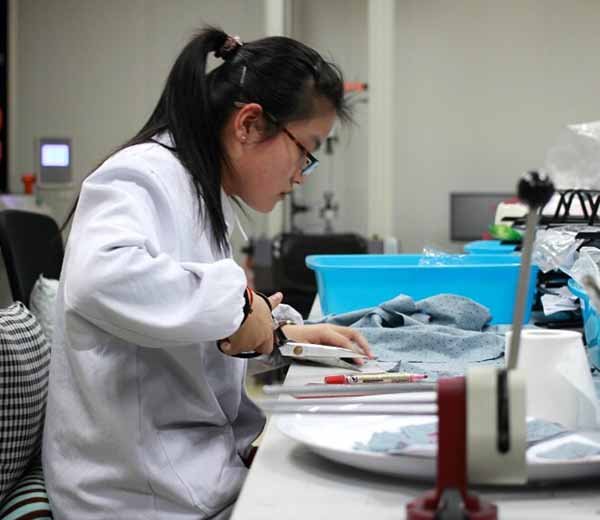
GSM and Width Checks — Protecting Yield and Product Feel
At Lovrix, GSM and width are not treated as paperwork values. They are production controls that directly affect yield, cost, and finished product consistency.
We routinely verify:
- actual GSM against target range
- usable width after selvedge
- consistency across rolls and lots
This is especially important for cotton used in bags, home textiles, and structured products, where even small deviations are felt immediately by end users.

Dyeing & Shade Control — Managing What Customers Actually See
Most cotton color complaints do not come from one batch being “wrong.” They come from differences between batches.
Lovrix addresses this by:
- aligning bulk dyeing to approved shade references
- defining acceptable visual variation ranges early
- discussing dye-lot handling rules before reorders begin
Because we often support multi-color or seasonal reorder programs, shade consistency is managed as part of the overall specification, not handled case by case.

Finishing Verification — Where Fabric Behavior Is Locked In
Finishing is where cotton’s real-world behavior is decided.
At this stage, Lovrix checks:
- effectiveness of pre-shrinking or compacting
- consistency of softening or enzyme treatments
- performance of anti-pilling finishes when required
Many “sample vs bulk” issues we encounter trace back to finishing differences rather than weaving itself. That is why finishing outcomes are reviewed against approved samples, not just process settings.

Shrinkage & Wash Testing — Matching Real Use Conditions
Lovrix evaluates shrinkage and wash behavior based on how the product will actually be used, not just standard lab assumptions.
We look at:
- warp and weft shrinkage separately
- performance after defined wash conditions
- alignment with downstream product requirements
This approach is especially important for apparel, bags, and home products that customers wash repeatedly.

Roll Inspection & Packaging — Avoiding Late-Stage Damage
Before shipment, fabric condition still matters.
Lovrix checks:
- roll edges and surface integrity
- contamination or handling damage
- labeling for traceability and lot identification
Damage introduced at this stage often appears later as “random defects” during cutting, when tracing the root cause becomes difficult.

Pre-Shipment Review — Confirming Alignment, Not Finding Surprises
Before dispatch, Lovrix conducts a final review to confirm:
- alignment with agreed specifications and tolerances
- consistency across the shipment
- documentation matches what was approved
At this point, the goal is confirmation, not discovery. If a surprise appears here, the control system has already failed earlier.
Buyer Checklist: What You Should Ask a Cotton Manufacturer
A good cotton sourcing decision depends on the questions you ask before placing an order. This checklist explains not only what to ask a cotton manufacturer, but why each question protects you from common bulk and reorder risks.
Many sourcing failures do not happen because the supplier lied — they happen because the right questions were never asked.
Below is the checklist we often walk through with clients before confirming cotton development or bulk production. Each question has a purpose.
1. “What exact yarn standard are you using?”
Terms like “high quality cotton” are meaningless without yarn definition. Carded vs combed yarn directly affects pilling, strength, and long-term appearance. Without clarity, reorders may quietly downgrade.
2. “What GSM tolerance do you control in bulk?”
A quoted GSM without tolerance creates room for dispute. Even ±5–8% variation can change drape, stiffness, cutting yield, and shipping cost.
3. “How do you manage dye-lot shading across reorders?”
Most shade issues happen between orders, not within one shipment. Without dye-lot rules or shade band approval, seasonal replenishment becomes risky.
4. “What shrinkage target do you guarantee, and how is it tested?”
Shrinkage is process-dependent. If warp/weft targets and wash methods are not defined, test results become non-repeatable.
5. “Do you recommend pre-shrinking or compacting for this use case?”
This reveals whether the supplier understands end use, not just fabric production.
6. “What lab or performance tests do you routinely support?”
A supplier who talks confidently about testing usually integrates quality earlier. Those who avoid specifics often rely on assumptions.
7. “What is your MOQ per color, and how flexible is it for pilot runs?”
Rigid MOQ policies force you to commit before validation. Pilot-friendly suppliers reduce risk.
8. “How do you package fabric rolls for export?”
Poor packaging leads to edge damage, contamination, and unusable fabric — issues often blamed on logistics rather than manufacturing.
9. “How do you handle confirmed quality claims?”
This question tests accountability. Clear corrective-action processes indicate long-term cooperation potential.
10. “Who reviews technical decisions — sales or engineers?”
If sales makes all decisions, technical consistency suffers. Engineering involvement signals process discipline.
How Lovrix fits into this checklist
Lovrix routinely participates in these discussions with clients because our teams span fabric development, webbing systems, printing coordination, and finished product manufacturing. This allows us to answer not just what is possible, but what is stable over time.
Lovrix Experience & Case Scenarios
Cotton sourcing challenges rarely appear in isolation. The following case scenarios reflect real situations where fabric consistency, reorder stability, and production control made a measurable difference in project outcomes.
Rather than listing customer names, we focus on situations that repeat across industries. These examples show how cotton issues actually arise—and how they are resolved in practice.

Case 1 — Multi-Color Cotton Canvas for a Lifestyle Tote Program
Product scenario: Branded cotton canvas tote bags for a European lifestyle brand, sold year-round with seasonal color updates.
Initial challenge: The brand planned more than 12 solid colors, with uneven volumes per color. Visual consistency across reorders was critical, as bags were displayed side by side in retail.
Common risk: Canvas weight and color shade drifting between dye lots, leading to bags that “look similar but not identical.”
Lovrix approach: We defined canvas weight (oz), GSM tolerance, usable width, and shrinkage targets early, then introduced shade band approval rules before the first bulk order. Dye-lot management was treated as part of the specification, not an afterthought.
Result: Reorders across multiple seasons stayed visually consistent, reducing retail rejection and eliminating the need for mid-season replacements.
Case 2 — Cotton Twill for Wash-Heavy Home Textile Products
Product scenario: Cotton twill fabric used in washable home textile items sold in the U.S. market.
Initial challenge: Samples passed internal checks, but bulk products generated customer complaints after washing, including size change and surface distortion.
Root cause: Shrinkage behavior was not validated under real wash conditions during sampling, and finishing parameters varied in bulk.
Lovrix approach: We re-evaluated shrinkage targets (warp and weft separately), aligned finishing methods, and validated performance through pre-production wash testing before restarting bulk.
Result: Post-wash performance stabilized, complaint rates dropped significantly, and the client continued with repeat orders using the updated spec.


Case 3 — Cotton Fabric Integrated with Webbing and Printing
Product scenario: Cotton-based soft goods combining printed panels and cotton webbing trims.
Initial challenge: When sourcing fabric and webbing separately, colors failed to match under natural light, creating visible inconsistency in finished products.
Common risk: Different dye systems and tolerance standards across suppliers.
Lovrix approach: Because Lovrix supports both cotton fabric and webbing development, we aligned color standards across materials and coordinated printing tests before bulk production.
Result: Finished products achieved consistent visual appearance across fabric, webbing, and printed elements, simplifying quality control and brand presentation.
Case 4 — Lightweight Cotton Poplin for Repeated Apparel Reorders
Product scenario: Lightweight cotton poplin used for seasonal apparel collections with planned reorders.
Initial challenge: The first order met expectations, but reorders showed noticeable differences in smoothness and visual uniformity.
Root cause: Poplin’s sensitivity to yarn quality and finishing was underestimated, and reference controls were insufficient.
Lovrix approach: We tightened yarn count requirements, documented finishing parameters, and retained approved reference samples for comparison during reorders.
Result: Subsequent orders maintained consistent surface appearance, allowing the brand to scale the style across multiple seasons.


Case 5 — Knit Cotton for Comfort-Focused Casual Apparel
Product scenario: Knit cotton jersey used for casual, close-to-skin apparel.
Initial challenge: Bulk garments experienced dimensional drift and sewing inconsistencies, despite acceptable sample results.
Common risk: Knit fabrics reacting differently under extended production runs and finishing variation.
Lovrix approach: We defined stricter shrinkage ranges, adjusted finishing processes, and aligned fabric behavior with sewing requirements before bulk continuation.
Result: Garment dimensions stabilized, sewing efficiency improved, and production loss was reduced in later runs.
Case 6 — Cost-Sensitive Cotton Program with Controlled Trade-Offs
Product scenario: High-volume promotional cotton products with strict cost targets.
Initial challenge: The client needed to control price aggressively without triggering quality complaints or visible inconsistency.
Lovrix approach: Instead of defaulting to the lowest-cost option, we presented multiple cotton constructions with clear trade-offs, allowing the client to choose a controlled balance between cost and performance.
Result: The final selection met budget targets while maintaining acceptable appearance and performance, avoiding post-delivery disputes.

Quality & Certifications
Certified by ISO9001, OEKO-TEX100, GRS, and Higg Index, Lovrix ensures every bag product meets global compliance standards. We implement strict QC at every stage, from yarn to final packaging.



FAQ — Common Questions About Working with a Cotton Manufacturer
These are the most common questions we receive from international clients when sourcing cotton fabric. The answers focus on practical decisions that affect bulk stability, cost control, and long-term cooperation.
Q1. What is a reasonable MOQ for cotton fabric?
MOQ depends on construction, color count, and finishing requirements. In many cases, starting with a pilot quantity per color is the safest approach before scaling to full bulk.
Q2. How long does cotton sampling usually take?
Sampling timelines depend on whether new weaving, dyeing, or finishing is required. A realistic process includes sampling, testing, and at least one revision cycle.
Q3. Why does bulk fabric sometimes feel different from samples?
This usually results from uncontrolled variables such as yarn source changes, finishing differences, or tolerance gaps not defined during sampling.
Q4. Is combed cotton always better than carded cotton?
Not always. Combed cotton improves appearance stability, but carded cotton can be acceptable for cost-sensitive or short-lifecycle products.
Q5. How can I reduce color difference risk in reorders?
By defining shade band approval rules, dye-lot management, and reorder standards before the first bulk order.
Q6. Do I always need lab testing?
Not for every product. Testing should match end use. Wash-heavy or premium products require stricter validation than one-time promotional items.
Q7. Can cotton fabric performance be optimized for cost?
Yes. Adjusting GSM, width, or construction slightly can improve yield and cost without sacrificing performance if done carefully.
Q8. How do you handle quality disputes?
The most effective way is preventing them through clear specs and documentation. When issues occur, corrective actions should be based on agreed standards.
Q9. Can cotton be part of a finished product supply program?
Yes. Many clients prefer fewer suppliers. Cotton fabric can be coordinated with webbing, printing, and product assembly.
Q10. What information should I prepare before contacting a supplier?
End use, target specs, color requirements, expected volumes, and reorder plans. Clear input leads to clear recommendations
Trusted By 1000+ Brands And Innovative Startups











Contact Us for Custom cotton products Development
Choosing a cotton manufacturer usually starts with a price request — but the most successful projects start with clarity. Before numbers are discussed, aligning on use scenarios, performance expectations, and production realities often saves weeks of revision and prevents avoidable bulk issues.
At Lovrix, we treat the first conversation as a technical alignment, not a sales step. Our goal is to help you understand whether your cotton program is ready, feasible, and stable for scale.
What You Can Share to Start the Conversation
You don’t need a perfect specification. Even partial information is enough to begin.
- Intended product type (apparel, bags, home textiles, soft goods, etc.)
- Expected usage and washing conditions
- Target fabric type or reference sample (if available)
- Performance concerns (shrinkage, hand feel, appearance, durability)
- Estimated order quantity and timeline
- Whether long-term reorders are planned
Based on this, our team reviews feasibility and highlights potential risks, trade-offs, and optimization opportunities before any commitment is made.
What You Can Expect from Us
- Practical feedback from a manufacturing perspective
- Clear explanation of what should be locked early — and what can stay flexible
- Suggestions to improve stability without unnecessary cost
- An honest assessment of whether Lovrix is the right fit for your program
If a project is not suitable, we will say so early. If it is, we will explain how to move forward with confidence.
- (+86) 13823134897
- info@lovrix.com