 Skip to content
Recycled Fabric Manufacturer for Global Brands
RPET · Recycled Nylon · GRS-Certified Sustainable Textiles
Lovrix develops and supplies engineered recycled fabrics for bags, luggage, outdoor gear, home storage, and consumer products. With GRS-certified yarn partners, in-house weaving capability, advanced dyeing control, and full coating/finishing systems, we help brands build sustainable product lines without compromising performance. Share your requirements and our textile engineers will recommend the most suitable RPET or recycled nylon construction, color system, and coating plan for your application.
Why Recycled Fabric Development Is More Complex Than Most Brands Expect
Brands shifting toward sustainability often assume that replacing virgin materials with recycled alternatives—RPET polyester, recycled nylon, recycled blends—will be a simple substitution. In reality, recycled fabrics involve an entirely different engineering and production logic.
Recycled fibers differ in molecular structure, dyeing behavior, polymer purity, and coating absorption. Batch-to-batch variations are more common, pastel shades are more difficult, and tensile strength is strongly affected by the quality of the recycled raw materials. Without a controlled supply chain and technical capability, recycled fabric projects easily suffer from:
- inconsistent colors between dye lots
- observable shade bands in larger cuts
- decreased tensile and tear strength
- unpredictable shrinkage after finishing
- coating adhesion issues especially on RPET
- mildew or odor caused by recycled impurities
- missing or invalid GRS chain-of-custody documentation
These issues increase return rates, cause delays in production, and may lead to failure in retailer audits—particularly for Europe, Japan, and US markets.
Lovrix provides a complete recycled-material development system covering GRS sourcing, weaving, dyeing, coating, calendering, lamination, QC testing, documentation, and long-term program stability—designed for brands that require both sustainability and performance.

Understanding Recycled Fabrics: Structure, Behavior & Technical Requirements
Recycled fabrics are not a single category; they vary widely depending on the recycled source, spinning method, yarn grade, and finishing process. Below is the engineering-level breakdown Lovrix uses during product development.
1. RPET Polyester (100% Recycled PET Bottle Filament)
Lovrix develops RPET fabrics through verified GRS-certified spinning partners who convert post-consumer bottles into flakes → chips → filament yarns.
Technical Characteristics:
- Strength close to virgin polyester when polymerization is stable
- Slightly less predictable dye uptake
- More sensitive to dye curve deviations
- May contain microscopic impurities that affect coating
- Requires high-pressure dyeing to maintain color stability
Lovrix Typical RPET Product Lines:
- RPET Oxford: 150D, 210D, 300D, 600D
- RPET canvas-style weaves
- RPET dobby and small-pattern jacquard
- RPET with PU / PVC / W/R / FR coatings
- RPET laminated systems for structured bags
These fabrics are commonly used for luggage, outdoor accessories, storage bins, fashion bags, and lifestyle organizers.


2. Recycled Nylon (Industrial Waste / Fishnet → Nylon 6/6.6)
Recycled nylon offers excellent strength but brings additional challenges:
Technical Characteristics:
- More difficult dyeing behavior compared to polyester
- Sensitive to temperature and pH variations
- More expensive and less widely available
- Potential shrinkage deviation after finishing
- Mechanical performance directly tied to recycling purity
Lovrix only partners with traceable nylon recycling systems, ensuring consistent polymer quality.
Common applications include premium backpacks, performance bags, pet products, outdoor gear, and protective covers.
3. Recycled Blends (RPET/Cotton, RPET/Nylon, RPET/Spandex)
Blended recycled fabrics create unique aesthetics and tactile sensations but require more engineering work.
Technical considerations:
- dyeing inconsistency across fiber types
- varied shrinkage rates
- hand-feel adjustment with finishing
- weaving tension calibration
Lovrix supports blended recycled fabrics for:
- lifestyle bags
- decorative storage products
- fashion accessories
- eco home products


4. Certified vs Uncertified Recycled Fabrics
Many suppliers claim “recycled” without documented traceability. This is where certification distinguishes real sustainability from marketing language.
Lovrix GRS System Covers:
- raw material sourcing
- spinning partners
- weaving and dyeing factories
- chemical usage logs
- transaction certificates
- batch reports
- packaging labeling
Each roll can be traced back to its recycled origin.
Challenges When Developing Recycled Fabrics
Developing recycled fabrics requires navigating dyeing inconsistency, mechanical performance variation, coating challenges, and strict GRS documentation demands.
1. Shade Variability Across RPET Dye Batches
RPET fibers absorb dyestuff differently because of polymer purity, recycled content ratio, and slight impurities.
Common problems:
- 5–10% shade difference between lots
- more visible in pastel colors
- uneven absorption leading to streaks
- difficulty matching accessory components
Lovrix Solutions:
- spectrophotometer-controlled color matching
- small-lot dye testing
- locked dyeing curves for RPET
- dyestuff quality from Huntsman / Archroma / Longsheng
2. Decreased Tensile, Tear, and Abrasion Strength
Some recycled yarns can be weaker when polymerization is unstable.
Typical issues:
- easy fabric distortion
- lower tear strength
- difficulty passing brand testing standards
Lovrix Ensures:
- yarn sourcing from premium GRS mills
- tensile and tear testing for every batch
- optimized weaving density for strength compensation
3. Coating Adhesion Failure on Recycled Surfaces
Because recycled fibers can hold residues, coatings may:
- peel easily
- crack under bending
- develop bubbles
- fail hydrostatic pressure tests
Lovrix Coating System Includes:
- pre-washing
- controlled lamination temperature
- adhesion tests
- solvent ratio adjustments
- stiffness calibration
4. Dyeing Difficulty in Recycled Nylon
Recycled nylon can behave unpredictably, requiring:
- revised temperature ramps
- modified dye recipes
- longer circulation
Lovrix uses advanced dyeing vessels and temperature monitoring to ensure consistency.
5. Raw Material Contamination or Mixed Content
Non-professional suppliers sometimes mix virgin yarns to stabilize color—this invalidates GRS claims.
Lovrix Prevents This Through:
- chain-of-custody control
- batch-level verification
- GRS transaction certificates for each shipment
6. Missing or Incorrect Documentation for Retailer Audits
For brands selling to Europe/US/Japan retailers, incomplete documents cause shipment delays.
Lovrix provides:
- full GRS documentation
- batch files
- dyeing/finishing logs
- chemical usage reports
- testing reports
Why Choosing the Right Recycled Fabric Manufacturer Matters
Recycled fabrics are not forgiving of process mistakes. Choosing the wrong manufacturer can lead to:
- high color deviation
- unstable finishing
- weak coating adhesion
- incorrect recycled percentage
- documentation issues
- unrepeatable mass production
Lovrix differentiates itself through:
1. Full GRS-Certified Manufacturing Chain
From yarn → weaving → dyeing → finishing → coating → packaging.
Every step is traceable.
2. Multi-Factory Production Capability
Lovrix operates:
- a weaving mill in Guangdong
- a dyeing & coating facility in Jiangsu
- multiple GRS spinning partners
This ensures capacity, flexibility, and stable programs.
3. Color & Dyeing Engineering for RPET / Recycled Nylon
- spectrophotometers
- controlled dye curves
- auto-dosing machines
- ±1°C temperature tolerance
- controlled liquor ratios
4. Specialized RPET Coating & Finishing
Lovrix adjusts coating stacks to counter RPET’s higher absorbency.
- PU / PVC / W/R / anti-UV / anti-mildew
- lamination
- calendering
- hydrostatic calibration
5. Full Laboratory Testing System
Lovrix performs:
- tensile
- tear
- abrasion
- hydrostatic pressure
- colorfastness (wash, rub, UV)
- shrinkage
All following ISO/ASTM protocols.
6. Long-Term Repeatability for Global Brands
Lovrix locks parameters for multi-year programs:
- fixed yarn source
- fixed dyeing recipes
- locked finishing formulas
- consistent QC logs
This is critical for storage brands, luggage groups, outdoor companies, and eco lifestyle brands.

Key Factors to Consider When Developing Recycled Fabrics
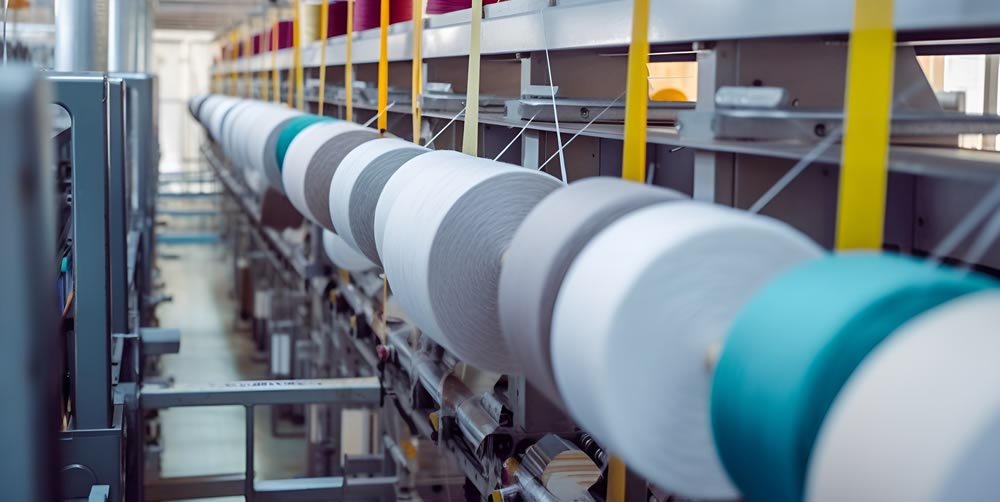
Developing recycled fabrics requires understanding GSM control, weave selection, dyeing behavior, finishing combinations, and compliance requirements.

Yarn Source, Recycled Percentage & GRS Traceability
Recycled yarn quality varies significantly by supplier.
Lovrix only works with GRS-certified yarn mills and verifies:
- recycled percentage (typically 80–100%)
- filament grade & uniformity
- tensile baseline of raw yarn
- chip-cleanliness & impurity rate
- denier deviation range
- draw ratio & spinneret quality

Weave Structure & Visual Appearance
Lovrix supports:
- Oxford
- plain weave
- twill
- ripstop
- dobby
- jacquard
Each affects durability, coating strength, and visual texture.

GSM & Thickness Planning
GSM (grams per square meter) affects:
- hand-feel
- stiffness
- product structure
- cost structure
- sewing performance
Lovrix controls GSM within ±5–8% using:
- calibrated loom tension
- controlled coating thickness
- finishing-line weight checks
- continuous rolling-weight measurement

Dyeing Requirements & Colorfastness Expectations
Important factors:
- pastel shades require more control
- RPET holds color differently
- recycled nylon requires high-temp vessels
Lovrix pre-tests sensitive colors before mass production.

Finishing Options (PU, PVC, W/R, FR, Anti-UV, Lamination)
Different applications require different functional layers.
Lovrix coating library:
- PU 0.02–0.06 mm → flexible, lightweight
- PVC 0.15–0.40 mm → stiff, waterproof, heavy-duty
- WR (water-repellent) → surface liquid protection
- Anti-UV → color protection for outdoor products
- Anti-Mildew → essential for storage products in humid markets
- Softening → lifestyle products with hand-feel requirement
We test each coating for:
- adhesion strength
- bending resistance
- hydrostatic pressure
- scratch performance

Mechanical & Functional Requirements
Recycled fabrics often start with slightly lower mechanical strength.
Lovrix compensates through:
- higher pick density
- reinforced weave structures
- optimized coating formulations
- ripstop design options
Typical Lovrix targets:
- Tensile strength: 350–900N
- Tear strength: 10–30N
- Abrasion (Martindale): 8,000–40,000 cycles
Lovrix’s Engineering-Driven Solution for Recycled Fabric Development
Developing recycled fabrics requires more than weaving and dyeing. It requires an end-to-end engineering system that anticipates the natural instability of recycled fibers and compensates for them through controlled processes.
PHASE 1 — Requirement Analysis & Material Matching
Lovrix begins every recycled fabric project by dissecting what the customer really needs—beyond the basic spec sheet.
Key technical considerations:
- Product type — bags, storage bins, outdoor covers, apparel accessories.
- Mechanical requirements — tensile, tear, burst, abrasion cycles.
- Functional needs — waterproof, W/R, stiffness, FR, anti-UV.
- Color requirements — pastel, neon, dark shades.
- Brand compliance — GRS, REACH, Prop 65, AZO-free, heavy metals.
- Target cost range — recycled materials vary significantly in cost.
Lovrix delivers:
- suitable RPET or recycled nylon yarn grades
- suggested weave structure
- estimated GSM range
- coating recommendations
- expected testing results
- dyeing difficulty evaluation
This phase ensures no surprises later.


PHASE 2 — Yarn Source Lock-In & GRS Verification
Recycled yarn quality determines 80% of final performance.
Lovrix uses a fixed pool of GRS-certified spinning mills, each with:
- controlled PET bottle flake purity
- polymerization consistency
- reliable color response
- recyclable chemical lists
- traceable TC documentation
For each project, Lovrix locks:
- yarn batch number
- recycled percentage
- spinning method
- filament grade
- denier & filament count
- raw-material QC reports
This ensures stable mechanical performance across multiple production batches.
PHASE 3 — Weaving & Construction Engineering
Recycled yarn behaves differently under weaving tension.
Lovrix applies:
- automatic warp tension control
- calibrated pick density
- optimized yarn path to reduce breakage
- GSM real-time monitoring
- surface flatness inspection
Depending on customer needs, Lovrix adjusts:
- weave tightness
- structural stiffness
- smoothness vs. texture level
- ripstop reinforcement
- dobby detailing
This step defines the core “body” of the fabric.


PHASE 4 — Dyeing Engineering & Color Stability Control
Color consistency is the biggest challenge in recycled fabrics.
Lovrix uses a multi-step dyeing control system:
- high-pressure dyeing machines
- automated dosing system
- ±1°C dye curve control
- spectrophotometer shade monitoring
- brightness/undertone calibration
- dyestuff from Huntsman / Archroma / Longsheng
- pastel-color stabilization methods
For RPET:
- slower temperature ramps
- stronger leveling agents
- extended diffusion time
For recycled nylon:
- special acid dyes
- controlled pH adjustment
- longer dwell times
This system produces stable, reproducible shades even across separate batches.
PHASE 5 — Finishing, Coating & Performance Optimization
Recycled fibers require customized coating stacks.
Lovrix engineers:
- PU coating (soft, flexible, breathable)
- PVC coating (structured, heavy-duty, waterproof)
- W/R finishing (high-repellency performance)
- Anti-UV finishing (for outdoor)
- FR finishing (for industrial applications)
- Anti-mildew finishing (for storage bins & containers)
- Laminations (RPET+foam, RPET+EVA, RPET+PP board)
Each finishing or coating is tested for:
- adhesion
- bending resistance
- hydrostatic pressure
- surface smoothness
- stiffness tolerance


PHASE 6 — QC Testing, Documentation & Batch Repeatability
Lovrix’s textile lab is equipped for:
- tensile / tear / burst
- Martindale abrasion
- colorfastness (wash, rub, UV)
- hydrostatic pressure
- coating thickness
- W/R spray test
- shrinkage test
- odor evaluation
All results follow ISO / ASTM standards.
For every batch, Lovrix completes:
- QC report
- shade card
- GSM sheet
- coating test
- GRS transaction certificate
- chemical list documentation
This ensures multi-year consistency and smooth retailer audits.
Recycled Fabric Technical Specification Guide
Yarn Denier Options (RPET / Recycled Nylon)
| Yarn Type | Common Denier Options | Notes |
|---|---|---|
| RPET Polyester | 75D, 150D, 210D, 300D, 450D, 600D, 900D | most common for bags & storage |
| Recycled Nylon | 70D, 100D, 210D, 420D, 840D | stronger but harder to dye |
| RPET Blends | custom | used for fashion + tactile effects |
GSM (Weight) Range
| Category | GSM Range | Applications |
|---|---|---|
| Lightweight RPET | 80–140 GSM | linings, small pouches |
| Medium-weight RPET | 150–260 GSM | bags, organizers |
| Heavy RPET | 280–400 GSM | luggage, outdoor gear |
| Coated RPET | 310–650 GSM | covers, structured products |
Lovrix keeps GSM deviation within ±5–8%.
Weave Structures
Lovrix supports:
- Oxford (150D/300D/600D RPET)
- Plain weave (smooth & clean look)
- Twill (stronger mechanical performance)
- Ripstop (reinforced for tear resistance)
- Jacquard / Dobby (premium patterns)
- Canvas-style weaves (textured eco look)
Dyeing Requirements
Consider:
- color levelness
- fastness grade (4–5 recommended for outdoor)
- pastel colors → higher difficulty
- neon colors → stronger dyestuff loading
Lovrix pre-tests every sensitive shade.
Coating & Finishing Options
| Coating Type | Benefits | Notes |
|---|---|---|
| PU Coating | soft hand-feel, durable | stable for RPET |
| PVC Coating | stiff & waterproof | used for luggage |
| W/R Finishing | water-repellent | backpacks, organizers |
| FR Finishing | flame resistance | industrial goods |
| Anti-UV | outdoor stability | sun exposure |
| Anti-Mildew | storage bins | humid warehouses |
| Lamination | structure enhancement | RPET + EVA/foam |
Performance Requirements
Lovrix tests for:
- tensile (warp/weft)
- tear strength
- abrasion cycles
- hydrostatic pressure
- colorfastness
- shrinkage
All based on product use-case.
Types of Recycled Fabrics & Real Applications
Recycled fabrics are used across bags, storage, outdoor products, apparel accessories, pet products, and industrial covers.

RPET Oxford Fabrics (150D/210D/300D/600D)
Applications:
- backpacks
- travel bags
- storage bins
- organizers
- drawstring bags
- cosmetic bags
Lovrix advantages:
- stable color
- strong coating adhesion
- excellent GSM consistency

RPET Canvas-Style Woven Fabrics
Applications:
- lifestyle bags
- tote bags
- eco-shoppers
- home textiles
Features:
- natural look
- premium texture
- suitable for pastel colors

Recycled Nylon Fabrics
Applications:
- technical backpacks
- pet carriers
- performance accessories
- outdoor covers
Advantages:
- higher tensile
- more durable
- premium hand-feel

RPET Ripstop Fabrics
Applications:
- outdoor gear
- lightweight bags
- protective covers
Features:
- tear-resistant
- structured
- good abrasion

RPET Coated Fabrics (PU, PVC, W/R)
Applications:
- heavy-duty storage
- industrial covers
- luggage
- protective gear
Lovrix strength:
- strong adhesion
- hydrostatic control
- deep coating experience

RPET Laminated Fabrics (RPET + Foam / EVA / TPU)
Applications:
- soft coolers
- lunch bags
- protective panels
- structured bags
Advantages:
- added cushioning
- improved stiffness
- customizable structures

Recycled Blended Textiles (RPET + Cotton / RPET + Nylon)
Applications:
- fashion bags
- decor items
- lifestyle organizers
Features:
- tactile textures
- unique blends
- softer hand-feel
How to Choose a Reliable Recycled Fabric Manufacturer
Choosing a recycled fabric factory is fundamentally different from sourcing ordinary polyester or nylon. You must verify whether the supplier can manage stability, documentation, and technical risks that naturally come with recycled materials.
1. Do they have a real GRS Scope Certificate (not “shared” or borrowed)?
Red flag: many small suppliers claim GRS certification but actually rely on third-party partners.
Lovrix maintains:
- its own GRS Scope Certificate
- yearly audits
- full chain-of-custody control
2. Can they provide a Transaction Certificate (TC) for every shipment?
Without a TC, the fabric cannot pass retailer audits.
Lovrix provides TC documents covering:
- yarn → weaving → dyeing → coating → packaging
- recycled content verification
- batch references
3. Do they control yarn source directly?
Recycled projects collapse when yarn is unstable.
Lovrix locks:
- spinning partner
- recycled percentage
- filament grade
- batch tracking
4. Can they maintain color consistency across batches?
Recycled fibers create unpredictability.
Lovrix controls color using:
- spectrophotometer matching
- small-lot pre-dyeing tests
- auto dosing
- dye curve tracking
5. Do they have RPET-specific coating engineering capabilities?
Most failures come from coating peeling or cracking.
Lovrix uses:
- humidity-controlled coating rooms
- customized adhesion formulas
- solvent-ratio calibration
- hydrostatic pressure testing
6. Do they conduct performance testing internally?
Many suppliers outsource testing, delaying QC and increasing risk.
Lovrix’s in-house lab performs:
- tensile / tear
- abrasion
- colorfastness
- hydrostatic
- W/R
- shrinkage
7. Do they support pastel or sensitive color matching?
This is extremely difficult for RPET.
Lovrix uses premium dyestuffs and controlled curves to stabilize sensitive shades.
8. Can they produce both RPET polyester and recycled nylon?
Only advanced manufacturers support both, because nylon dyeing is more complex.
Lovrix produces:
- RPET Oxford
- RPET canvas-style
- recycled nylon 420D/840D
- blended RPET textiles
9. Do they offer coating, lamination, and finishing in-house?
Outsourcing increases errors.
Lovrix controls all finishing steps internally.
10. Do they provide batch documentation automatically?
Critical for EU + US + JP compliance.
Lovrix includes:
- QC reports
- chemical usage logs
- dyeing records
- GRS paperwork
- shade cards
11. Do they guarantee long-term repeatability?
Many recycled suppliers fail after 2–3 batches.
Lovrix maintains:
- locked yarn sources
- fixed recipes
- parameter logs
- machine-setting archives
12. Can they scale production for urgent orders?
Lovrix’s multi-factory ecosystem supports:
- high-volume projects
- multi-color programs
- urgent replenishment cycles


Lovrix Recycled Fabric Quality Control System
Lovrix operates a multi-stage QC system covering raw materials, weaving, dyeing, coating, finishing, and final inspection, supported by a full in-house textile laboratory following ISO and ASTM standards.
Recycled fabric QC must be significantly more strict than virgin material QC. Therefore,Lovrix uses a 6-stage QC framework designed to control recycled fiber variability.
Stage 1
Raw Material QC (Yarn Level)
Lovrix checks:
- recycled percentage verification
- filament evenness
- tensile strength of yarn
- moisture content
- impurity inspection
- lot number + TC certification
Only yarn that passes all items enters weaving production.
Stage 2
On-Loom QC (Weaving Level)
Every weaving line includes:
- automatic warp tension control
- broken-yarn monitoring
- pick density sensors
- on-loom fabric surface cameras
Lovrix inspectors check:
- GSM stability
- warp/weft alignment
- surface flatness
- weaving marks
- ripstop grid accuracy
Stage 3
Greige Fabric Inspection
Before dyeing, Lovrix inspects:
- loom oil stains
- weaving lines
- slubs
- contamination
- surface unevenness
Greige is graded before entering dyeing.
Stage 4
Dyeing QC (Color Engineering)
Lovrix’s dyeing QC focuses on:
- dye curve tracking
- dyestuff dosage verification
- circulation rate
- temperature stability
- liquor ratio
- pH balance
Lab tests include:
- ΔE color difference
- light fastness
- wash fastness
- rub fastness
Pastel shades undergo stricter review.
Stage 5
Finishing & Coating QC
Lovrix checks:
- coating thickness
- adhesion strength
- surface smoothness
- stiffness
- hydrostatic pressure
- bending performance
- W/R spray rating
Coating failure is the most common recycled-fabric defect, so this stage is strict.
Stage 6
Final Inspection & Roll Packaging QC
Lovrix performs:
- full roll inspection (100%)
- width measurement
- GSM verification
- lot numbering
- shade card generation
- batch documentation
- GRS labeling
Each roll is tagged with production date, loom number, and QC inspector ID.
Compliance, Sustainability & GRS Documentation System
Lovrix maintains complete GRS documentation, chemical management, batch traceability, and compliance support for brands selling to Europe, the United States, and Japan. Every recycled fabric shipment includes verified paperwork.
For recycled fabrics, documentation is as important as the material itself. Lovrix operates a full GRS compliance system aligned with international retailer requirements.
GRS Scope Certificate (Factory-Level Certification)
Lovrix’s GRS certificate covers:
- weaving
- dyeing
- finishing
- coating
- logistics
This ensures the entire process is compliant—not just the yarn.
Transaction Certificates (TC) for Each Shipment
Without a TC, the product cannot legally claim “recycled”.
Lovrix issues TCs covering:
- yarn supplier
- recycled percentage
- lot numbers
- production date
- buyer name
- destination
Retailers such as Decathlon, Target, Aeon, and Muji check this rigorously.
Chemical Management & Restricted Substance List (RSL)
Lovrix ensures compliance with:
- REACH
- California Prop 65
- CPSIA (children’s products)
- OEKO-TEX guidelines
- EU azo-dye restrictions
- heavy-metal limits
Chemical logs include:
- dyestuff sources
- auxiliaries
- finishing chemicals
- solvent tracking
Batch Traceability System
Every Lovrix roll has:
- loom number
- dyeing batch
- coating batch
- QC record
- operator ID
- testing results
This allows full backward and forward traceability.
Documentation Package for Each Shipment
Lovrix provides:
- GRS TC
- QC report
- shade card
- GSM sheet
- chemical usage sheet
- MSDS (if required)
- invoice + packing list
This aligns with retailer compliance programs in EU/US/JP.
Support for Sustainability Storytelling
Lovrix can help brands:
- quantify carbon savings
- describe bottle-to-fiber process
- explain recycled content
- prepare sustainability statements for websites
- provide visuals for marketing use
Application-Based Development Guide for Recycled Fabrics
Developing recycled fabrics is never a one-spec-fits-all process. Every application—bags, storage, outdoor gear, luggage, pet products, industrial covers—requires a different engineering approach because recycled yarn behaves differently in weaving, dyeing, coating, and finishing.
Lovrix’s role is to translate real-world usage into precise technical decisions:
- denier → GSM → weave density → coating stack → finishing → QC so the fabric truly matches its end application.
Below is Lovrix’s application-driven development guide, based on hundreds of real programs.
1. Bags & Backpacks (RPET Oxford 150D / 300D / 600D)
Typical Requirements:
- tensile strength (warp/weft) meeting ≥550N depending on denier
- tear strength stability
- abrasion performance above 8,000–15,000 cycles
- surface uniformity for clean aesthetics
- consistent color across panels
- waterproof or water-repellent functions
Lovrix Engineering Logic:
- Use 150D/300D for lightweight bags; 600D for structure and load-bearing.
- Maintain GSM within ±5–8% to avoid panel distortion.
- Use PU coating (0.03–0.05mm) or W/R finishing depending on usage.
- Calender surface for smoother touch and reduced pilling.
- Run colorfastness tests (wash/rub/light) for brand standards.
- Perform tensile & tear tests on every batch before shipment.
Applications: backpacks, totes, cosmetic bags, travel accessories, drawstring bags.


2. Home Organization & Storage (RPET 150D–300D + Anti-Mildew)
Typical Requirements:
- anti-mildew finishing for humid storage
- pastel color accuracy
- lightweight but structured
- minimal odor
- compatibility with lamination (PP board, foam)
Lovrix Engineering Logic:
- Apply specialized anti-mildew finishing (tested in 72-hour humidity chamber).
- Use brightness/undertone control for pastel tones (common in home décor).
- Pre-shrink greige fabric before dyeing to avoid distortion after lamination.
- Evaluate odor (organic volatile compounds) with Lovrix’s in-house test.
- Use RPET 210D/300D with stable warp tension to avoid surface waving.
Applications: foldable bins, wardrobe organizers, storage cubes, drawer inserts.
3. Outdoor Gear & Portable Equipment (RPET 300D/600D + Anti-UV)
Typical Requirements:
- UV resistance (grade 4–5)
- waterproof performance (800–1500+ mm hydrostatic pressure)
- strong abrasion performance (≥15,000 cycles)
- stable stiffness in extreme temperatures
- colorfastness to sunlight
Lovrix Engineering Logic:
- Use anti-UV dyestuffs from Huntsman or Archroma.
- Apply anti-UV finishing to extend outdoor lifespan.
- Use PU or PVC coating depending on weight and stiffness needs.
- Employ ripstop reinforcement when tear strength must exceed 15–20% above standard.
- Conduct xenon-lamp UV accelerated tests for all outdoor programs.
Applications: outdoor chairs, canopies, picnic mats, UV-exposed covers.


4. Luggage & Travel Goods (RPET 600D/900D & Recycled Nylon 420D/840D)
Typical Requirements:
- rigid structure for load-bearing parts
- high abrasion resistance (20,000–40,000+ cycles)
- coating integrity under repeated bending
- multi-panel color uniformity
- strong tear resistance
Lovrix Engineering Logic:
- Use RPET 900D with calendering for stiffness.
- Apply PVC coating (0.26–0.35 mm) for structured luggage panels.
- Adjust pick density to improve fabric body.
- Maintain ΔE color deviation under 2.5% for panel alignment.
- Test bending and flex endurance for coated fabrics.
Applications: suitcases, trolley bags, duffle bags, packing cubes.
5. Pet Carriers & Pet Accessories (Recycled Nylon 420D/840D)
Typical Requirements:
- scratch resistance for claw interactions
- high tear strength (≥15–20 N)
- odor-resistant finishing
- abrasion cycles beyond 20,000
Lovrix Engineering Logic:
- Use high-tenacity recycled nylon for resistance against claw pressure.
- Develop ripstop or reinforced weaves depending on product geometry.
- Apply PU coating that withstands repetitive scratching.
- Conduct metal claw simulation tests + abrasion tests.
Applications: pet backpacks, travel cages, protective mats.


6. Industrial Covers & Protective Equipment (RPET 600D/900D + FR/UV/WP)
Typical Requirements:
- flame-retardant performance (vertical burn test)
- hydrostatic pressure >1500 mm
- UV grade 4–5
- multi-layer coating
- high stiffness retention
Lovrix Engineering Logic:
- Use composite coating stacks (PVC + FR + anti-UV).
- Conduct hydrostatic pressure testing for heavy-duty applications.
- Reinforce with ripstop where tear propagation is a risk.
- Perform accelerated aging tests under UV/heat simulations.
Applications: industrial machine covers, heavy-duty tarps, protective outdoor gear.
Recycled Fabric Case Studies
These case studies demonstrate how Lovrix solves real engineering challenges in recycled fabrics—color variability, coating failure, UV resistance, mildew control, tear strength, printing clarity, and multi-year program stability.
Case 1 — European Outdoor Brand: UV-Stable RPET 600D for Sun-Exposed Products
Background: Produced outdoor chairs and canopy accessories; fabrics faded within 10–12 weeks. Challenge: Severe UV fading + coating yellowing. Lovrix Diagnosis:
- dyestuff lacked UV stability
- no UV stabilizer in coating
- dye curve inconsistent
- insufficient finishing
Engineering Solution:
- Used UV-grade dyestuffs (Huntsman)
- Added anti-UV finishing, grade 4–5
- Optimized PU coating with anti-yellowing additives
- Fixed dye curve parameters for repeatability
- Conducted xenon-lamp tests
Results:
- ΔE < 2.5 after UV exposure
- coating yellowing reduced by >70%
- fabric lifespan extended 2–3×
Outcome: Adopted by 11 SKUs with multi-year repeat orders.


Case 2 — US Storage Brand: Anti-Mildew RPET 300D for Long Warehousing
Background: Storage bins often stayed months in humid warehouses. Challenge: Mold spots during shipment. Lovrix Diagnosis:
- no anti-mildew finishing
- fabric moisture retention too high
- insufficient drying after dyeing
Engineering Solution:
- Applied industrial-grade anti-mildew finishing
- Controlled brightness for pastel tones
- Implemented pre-drying protocol
- Conducted humidity chamber test (72 hours)
Results:
- Zero mildew formation
- odor significantly reduced
- stable shade consistency
Outcome: Customer launched 40+ eco storage SKUs.
Case 3 — German Luggage Brand: Stiff RPET 900D for Premium Suitcases
Challenge: Needed nylon-like performance but with lower cost & recycled content. Lovrix Diagnosis:
- standard RPET too soft
- abrasion insufficient
- PVC adhesion weak
Engineering Solution:
- Switched to RPET 900D HT yarn
- PVC coating 0.28–0.35 mm
- calendering for structure
- abrasion target >40,000 cycles
Results:
- stiffness increased 28%
- abrasion reached nylon-level performance
Outcome: Used in a 2024 premium luggage collection.


Case 4 — Japanese Print Studio: Sublimation-Ready RPET 150D
Challenge: Ghosting, bleeding, poor clarity. Diagnosis:
- surface lacked ink anchoring
- shrinkage during printing
- whiteness index unstable
Engineering Solution:
- special printing-friendly finishing
- heat-set process to reduce shrinkage
- optical brightener calibration
- ICC color profile support
Results:
- clarity improved by 30%
- shrinkage <1%
- ICC profile optimized color accuracy
Outcome: Monthly 10,000+ meters supply.
Case 5 — Pet Gear Brand: Scratch-Resistant Recycled Nylon 420D
Challenge: Pet claws damaged regular fabrics. Diagnosis:
- low tear strength
- insufficient surface hardness
Engineering Solution:
- recycled nylon 420D high-tenacity yarn
- ripstop reinforcement
- durable PU coating
- metal claw scratch simulation test
Results:
- tear +22%
- abrasion +35%
- passed scratching simulation
Outcome: Return rate significantly reduced.


Case 6 — Industrial Client: FR + UV RPET 600D for Outdoor Machinery Covers
Challenge: Required FR, UV, waterproof performance simultaneously. Diagnosis:
- coating too thin for hydrostatic requirement
- FR finishing insufficient
- UV grade too low
Engineering Solution:
- PVC triple-layer coating
- FR finishing according to EN/US standards
- anti-UV grade 4–5
- hydrostatic pressure >1500 mm
Results:
- FR passed vertical burn test
- waterproof exceeded target
- UV shade deviation minimal
Outcome: Adopted for long-term industrial protection series.
Case 7 — Korean Lifestyle Brand: RPET Canvas-Style Weave with Soft Hand-Feel
Challenge: Desired natural canvas appearance with eco-friendly claims. Diagnosis:
- hand-feel too rough
- shade unevenness in light colors
Engineering Solution:
- RPET slub-like textured yarn
- softening finishing protocol
- whiteness/brightness tuning
- calendering for refined surface
Results:
- hand-feel noticeably smoother
- shade uniformity improved
Outcome: Successfully launched as a sustainable lifestyle collection.


Case 8 — Travel Accessories Brand: Lightweight RPET 210D Ripstop
Challenge: Needed lightweight fabric but with structural integrity. Diagnosis:
- standard 210D RPET too soft
- risk of tearing under load
Engineering Solution:
- increased pick density
- fine ripstop grid reinforcement
- micro PU coating
Results:
- tensile +18%
- ripstop prevented tear propagation
Outcome: Used for packing cubes and lightweight travel organizers.
Buyer Checklist
This expanded checklist helps brands evaluate recycled fabric suppliers across GRS compliance, yarn source stability, dyeing accuracy, coating performance, QC capability, and long-term repeatability—ensuring dependable recycled material partnerships.
Certification & Traceability
- Can the supplier provide a valid, up-to-date GRS Scope Certificate?
- Do they issue a Transaction Certificate (TC) for every shipment?
- Is the yarn origin traceable with batch numbers and recycled percentages?
- Can they provide chain-of-custody documentation for the full process?
Yarn & Weaving Stability
- Do they source RPET or recycled nylon from stable, audited spinning mills?
- Is weaving tension controlled automatically to avoid surface waviness?
- Can they maintain GSM within ±5–8%?
- Do they support multiple weave structures for different applications?
Dyeing & Color Consistency
- Do they use spectrophotometer color matching?
- Can they handle pastel, neon, or sensitive colors on RPET?
- Do they adjust dye curves specifically for recycled nylon?
- Do they test ΔE for every dye lot?
Finishing & Coating Performance
- Do they offer PU, PVC, W/R, anti-UV, FR, anti-mildew, and lamination?
- Do they perform coating adhesion tests on each batch?
- Do they measure coating thickness consistently?
QC & Testing Capability
- Do they test tensile, tear, abrasion, hydrostatic pressure, and shrinkage in-house?
- Are QC reports, shade cards, and chemical logs included automatically?
- Do they test odor, mildew resistance, and UV performance?
Long-Term Program Stability
- Do they lock yarn sources, dyeing recipes, and finishing formulas across batches?
- Are they operating their own facilities rather than subcontracting?

Full Technical Specification Matrix for Recycled Fabrics
Lovrix develops RPET Oxford, RPET canvas-style weaves, recycled nylon, and composite-coated materials for global brands. To support structured product development, here is a full engineering matrix covering all major specifications—from denier to weave density to coating thickness, GSM tolerance, and recommended usage.
1. Master Specification Table (Recycled Fabrics Overview)
Below is the most complete RPET & recycled nylon specification table used by sourcing teams, designers, and technical developers:
Table: Recycled Fabric Specification Matrix (Lovrix Standard Engineering Values)
| Category | Denier | GSM (±5–8%) | Weave | Coating Options | Key Performance Targets | Recommended Applications |
|---|---|---|---|---|---|---|
| RPET Oxford 150D | 150D | 140–165 gsm | Plain / Oxford | W/R, PU 0.02–0.03mm | Tensile ≥ 350N, Tear ≥ 10N, ΔE < 2.5 | Lightweight bags, organizers, sublimation printing |
| RPET Oxford 210D | 210D | 180–220 gsm | Plain / Oxford | W/R, PU 0.02–0.04mm | Tensile ≥ 420N, tear stability | Cosmetic bags, packing cubes, home storage |
| RPET Oxford 300D | 300D | 220–260 gsm | Oxford | PU 0.03–0.05mm | Abrasion >8000 cycles | Backpacks, totes, travel accessories |
| RPET Oxford 600D | 600D | 380–450 gsm | Oxford | PU 0.04–0.06mm, PVC 0.15mm | Tensile ≥ 550N, tear ≥ 12N | Outdoor bags, pet bags, structured organizers |
| RPET Oxford 900D | 900D | 500–580 gsm | Oxford | PU/PVC composite | Abrasion >15,000 cycles | Premium luggage, duffle bags, equipment covers |
| Recycled Nylon 210D | 210D | 160–190 gsm | Plain / Ripstop | PU 0.02–0.04mm | Lightweight but strong | Travel accessories, apparel lining |
| Recycled Nylon 420D | 420D | 220–260 gsm | Plain / Ripstop | PU 0.03–0.05mm | High tear strength | Pet carriers, protective covers |
| Recycled Nylon 840D | 840D | 360–420 gsm | Plain | PU/PVC available | Abrasion >20,000 cycles | High-load bags, tactical gear |
| RPET Canvas-Style Weave | 300D–600D | 280–500 gsm | Canvas-texture | W/R, softening | Natural look, stable shade | Lifestyle products, totes, décor |
| Heavy-Duty RPET PVC Composite | 600D–900D | 450–700 gsm | Oxford | PVC 0.25–0.40mm | Hydrostatic >1500mm | Industrial covers, tarps, seating |
2. Detailed Mechanical Testing Standards (Lovrix Internal Lab)
Lovrix operates its own testing lab inside the Dongguan facility. Every recycled fabric batch undergoes:
| Test Category | Standard / Method | Lovrix Target Thresholds |
|---|---|---|
| Tensile Strength | ISO 13934-1 | 350–900N depending on denier |
| Tear Strength | ISO 13937-2 | 10–30N depending on denier |
| Abrasion (Martindale) | ISO 12947 | 8,000–40,000 cycles |
| Hydrostatic Pressure | ISO 811 | 600–1500+ mm |
| Colorfastness to Rubbing | ISO 105-X12 | Grade 4–5 |
| Colorfastness to Washing | ISO 105-C06 | Grade 4–5 |
| Colorfastness to Light | ISO 105-B02 | Grade 4–5 |
| Odor Test | Lovrix Internal | No chemical/ VOC smell |
| Anti-Mildew Chamber Test | 72-hour humidity simulation | No mold formation |
| UV Resistance | Xenon lamp test | ΔE < 2.5 after UV exposure |
3. Coating Specification Matrix
Lovrix offers a complete coating and finishing library:
| Coating Type | Thickness | Benefits | Applications |
|---|---|---|---|
| PU (0.02–0.06mm) | Soft, flexible, lightweight | Bags, storage, apparel | |
| PVC (0.15–0.40mm) | High stiffness, strong waterproof | Luggage, covers, tarps | |
| W/R (Water-Repellent) | No thickness change | Light rain protection | All recycled fabrics |
| Anti-UV Finishing | Chemical layer | Prevents fading & yellowing | Outdoor products |
| Anti-Mildew Finishing | Topcoat additive | Prevents mold in humid regions | Storage, organizers |
| Softening Finishing | Hand-feel modification | Smooth, lifestyle products | RPET canvas-like fabrics |
4. Color Reproduction & Dyeing Tolerances
We apply a strict color management protocol:
- ΔE control: <2.5
- Shade card preserved for 3 years
- Every dye lot has its own internal recipe code
- Recycled nylon uses different dye curves from virgin nylon
- Pastel tones tested under daylight and LED boxes
Lovrix uses Datacolor spectrophotometers for every batch.

Recycled Fabric FAQ
1. What is RPET fabric?
RPET fabric is a textile made from recycled PET bottles that are washed, processed into chips, melted, and spun into yarn. It offers durability, low environmental impact, and consistent quality when produced with controlled dyeing, weaving, and finishing systems like those used at Lovrix’s facilities.
2. How does recycled nylon differ from virgin nylon?
Recycled nylon maintains similar tensile and tear strength to virgin nylon but may require adjusted dye curves and controlled heat-setting. At Lovrix, recycled nylon is sourced from certified mills and tested to ensure colorfastness, coating adhesion, and mechanical stability across multiple production cycles.
3. What certifications should a recycled fabric manufacturer have?
A reliable recycled fabric manufacturer should provide an up-to-date GRS Scope Certificate and issue Transaction Certificates (TC) per shipment. Lovrix maintains full GRS compliance, with traceable yarn batches, documented dyeing recipes, and chain-of-custody controls for every order.
4. Is RPET strong enough for backpacks and luggage?
Yes—when engineered correctly. RPET 300D–900D can reach tensile strengths of 450–900N and abrasion resistance above 8,000–40,000 cycles. Lovrix adjusts denier, weave density, and coating thickness to ensure RPET fabrics match the demands of backpacks, duffle bags, or travel cases.
5. Does RPET fade easily under sunlight?
Standard RPET can fade under UV exposure, but Lovrix uses UV-grade dyes and anti-UV finishing to achieve colorfastness levels of grade 4–5. Xenon-lamp accelerated testing ensures the fabric maintains color over long outdoor use.
6. Why does recycled fabric sometimes have odor?
Odor often comes from inadequate washing or finishing. Lovrix uses multi-stage washing, controlled drying, and low-VOC chemical systems to eliminate this issue. Every batch undergoes internal odor evaluation to ensure neutral smell.
7. Can recycled fabrics match pastel or light colors?
Yes, but dyeing must be precisely managed. Lovrix controls whiteness index, dye curve profiles, and brightness adjustment to produce clean pastel colors. We also run ΔE shade testing to ensure repeatability across batches.
8. What is the typical MOQ for recycled fabric?
MOQs vary by construction. Lovrix supports 500–1000 meters for development orders and 2000–3000 meters per color for stable production. For long-term programs, we lock yarn sources to guarantee consistency.
9. What coating should I choose for waterproofing?
PU coating offers lightweight protection, while PVC provides higher hydrostatic pressure resistance for heavy-duty products. Lovrix tests hydrostatic pressure (ISO 811) on every coated batch to match your usage environment.
10. Can recycled fabrics be used for sublimation printing?
Yes—Lovrix offers RPET 150D and 210D with special printing-friendly finishing. Heat-set stabilizing reduces shrinkage, and the surface coating improves ink anchoring for crisp sublimation prints.
11. How does Lovrix ensure color consistency?
We store master shade standards, use Datacolor spectrophotometers, control ΔE < 2.5, and document dye curve parameters for every color. Our dyeing system is engineered to remain stable across multi-year programs.
12. What is the lead time for recycled fabric production?
Sampling usually takes 3–7 days depending on complexity. Bulk production takes 15–28 days. Lovrix shortens lead time by using locked yarn suppliers, automated looms, and centralized dyeing within our integrated supply chain.
Trusted By 1000+ Brands And Innovative Startups







How Lovrix Works With You
Lovrix’s recycled fabric development system is not a “buy-and-resell” trading model. It is a fully engineered workflow built on:
- in-house textile teams
- GRS-verified supply chain
- fixed recycled-yarn partners
- our own weaving factory
- controlled dyeing houses
- in-house laboratory & QC team
Below is the full professional workflow (each step with deep detail).
Step 1
Requirement Clarification (Technical Discovery Session)
We begin by clarifying your application, expected performance, budget range, and visual direction. Lovrix will ask for:
- expected bag type or product category
- required durability level (tensile, tear, abrasion)
- waterproofing expectations
- color requirements / Pantone codes
- certification needs (GRS, FR, anti-UV, anti-mildew)
- production quantity and long-term usage plan
Why this matters: recycled yarns behave differently from virgin yarns; the correct technical planning prevents shade variation, coating peeling, or insufficient mechanical strength.
Step 2
Yarn Source & Batch Locking (Recycled Supply Alignment)
To avoid the common issue of shade inconsistency, Lovrix locks:
- the yarn mill
- yarn batch number
- recycled percentage
- filament grade (for nylon & polyester)
- draw ratio & spinneret spec
Each yarn batch receives its own internal code, which is used through weaving, dyeing, and finishing.
Step 3
Weaving Structure Engineering
Lovrix engineers the weaving parameters based on your requirements:
- denier selection (RPET 150D → recycled nylon 840D)
- pick density
- warp/weft tension
- Oxford / plain / ripstop / canvas-style weaving
- loom speed calibration
This ensures:
- fabric stability
- consistent GSM tolerance (±5–8%)
- minimized diagonal lines
- improved tear strength
Our Dongguan weaving facility uses modern looms to ensure consistency across multiple seasons.
Step 4
Dyeing Plan Development (Color Engineering)
Recycled fibers absorb dyes differently. Lovrix creates a dye curve plan for every color, including:
- dye type selection
- temperature curve
- immersion duration
- liquor ratio
- bath pH control
- auxiliary chemical selection
- brightness calibration
Every color gets:
- a “master shade standard”
- Datacolor reading (ΔE target < 2.5)
- 3-level shade-variation test
This ensures multi-year color repeatability.
Step 5
Finishing & Coating (Performance Engineering)
Based on the application, Lovrix applies finishing systems:
- PU coating (0.02–0.06 mm)
- PVC coating (0.15–0.40 mm)
- W/R coating
- anti-UV
- anti-mildew
- softening
- heat-setting
Each finish undergoes:
- coating adhesion test
- hydrostatic pressure test
- surface scratch evaluation
- hand-feel calibration
This step determines how well the fabric performs in real usage.
Step 6
Prototype Fabric Production (Small-Batch Testing)
Before mass production, Lovrix creates a pilot run:
- 20–150 meters
- full coating & finishing
- shade review
- mechanical testing
The sample batch goes through:
- tensile test
- tear test
- abrasion test
- washing test
- odor evaluation
This ensures client approval before scaling.
Step 7
Bulk Production (Stable & Repeatable)
Once approved, we begin bulk production. Lovrix controls:
- weaving schedule
- dyeing lot creation
- finishing QC
- coating thickness uniformity
- yarn batch matching
- random roll inspection
Bulk fabric is shipped with:
- GRS Transaction Certificate
- QC report
- ΔE color report
- GSM sheet
- lab test sheet (when required)
Step 8
Long-Term Supply Management (2–5 Year Program Stability)
For clients with long-term programs (e.g., bag brands, luggage brands, storage brands), Lovrix:
- locks dyeing recipes
- secures yarn contracts
- stores master shade standards
- maintains repeatability logs
- sets seasonal QC checkpoints
This ensures your recycled fabric series remains visually and mechanically consistent for years.

Start Your Recycled Fabric Project with Lovrix
Choosing the right recycled fabric partner is essential for product quality, sustainability goals, and long-term supply stability. Lovrix works with global brands, Amazon sellers, design studios, and product teams to turn their concepts into reliable recycled fabric solutions with clear engineering logic and repeatable production.
We are happy to review your project details and provide technical suggestions.
Let’s Evaluate Your Recycled Fabric Project Together
You can share:
- your intended product type
- expected mechanical performance
- Pantone colors
- required certifications
- size of initial order
- desired finishing (W/R, PU, PVC, UV, mildew, softening)
- sample timeline
- long-term purchasing plan
Lovrix will respond with:
- recommended fabric construction
- proposed denier & weave
- coating system options
- estimated cost tiers
- sampling steps
- development timeline
- compliance requirements
- technical risks & suggestions
- (+86) 13823134897
- info@lovrix.com