 Skip to content
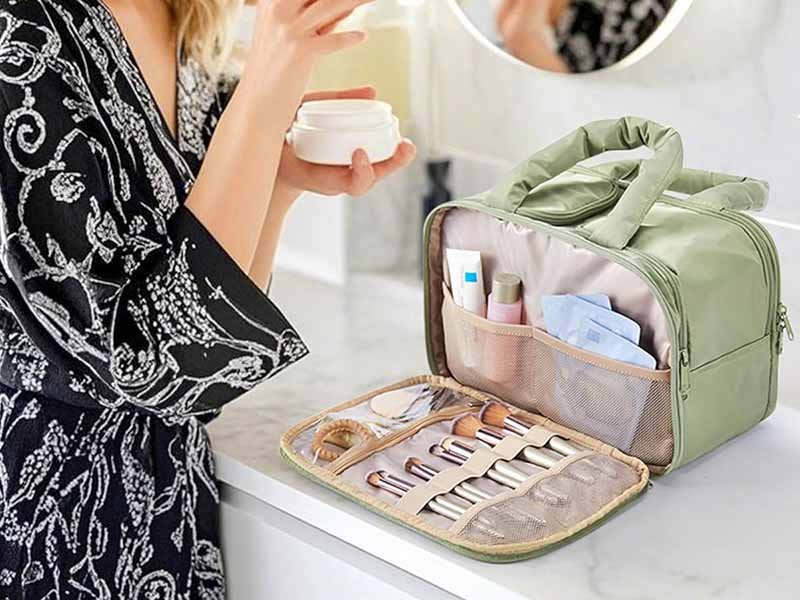
Few travel accessories seem as simple—and yet cause as much confusion—as the toiletry bag. Almost everyone owns one, but not everyone agrees on what it should contain, how it differs from cosmetic bags, or why some versions are better suited for travel, business, or daily use than others. For brands and sellers, the confusion goes even deeper: toiletry bags look easy to make, but small design or material mistakes often lead to leaks, poor usability, and negative reviews.
Part of the challenge is that a toiletry bag sits at the intersection of function, hygiene, and personal habit. It must organize liquid and solid items, resist spills, handle frequent opening and closing, and often survive airport security checks and cramped luggage. A good toiletry bag quietly solves these problems. A bad one amplifies them.
A toiletry bag is a compact storage bag designed to hold personal hygiene items such as toothpaste, shampoo, razors, and skincare products. It helps organize toiletries, prevent leaks, and keep personal items separate during travel or daily use. Toiletry bags come in various sizes, materials, and layouts, and are commonly used for travel, business trips, gym routines, and home organization.
Behind this everyday item is a surprisingly wide range of design choices, material technologies, and user expectations. In the sections below, we’ll break down what a toiletry bag really is, what goes inside it, how it differs from similar bags, and how to choose or develop the right one—whether you’re a consumer, a brand, or a product developer.
What Is a Toiletry Bag

A toiletry bag is a compact storage bag designed to organize and carry personal hygiene and grooming items such as toothpaste, shampoo, razors, skincare products, and travel-size liquids. Its primary purpose is to keep toiletries separated from clothing, prevent leaks, and provide easy access during travel or daily routines. Toiletry bags are commonly used for travel, business trips, gym use, and home organization.
What does “toiletry bag” mean in practical terms?
In practical use, a toiletry bag is not defined by its shape or size, but by what it is designed to handle. Toiletries are often liquid, semi-liquid, or moisture-sensitive items, which creates unique functional requirements.
A true toiletry bag is expected to:
- contain spills or leaks
- resist moisture and humidity
- separate hygiene items from personal belongings
- allow frequent opening and closing without damage
This is why a basic pouch or fabric bag often fails as a toiletry bag, even if it looks similar. The function comes first; appearance is secondary.
What is considered a toiletry item?
Toiletry items generally include products used for personal hygiene, grooming, and basic health care. Common examples include:
- toothpaste, toothbrush, floss
- shampoo, conditioner, body wash
- deodorant and perfume
- razors, shaving cream
- skincare products such as cleansers and lotions
- travel-size liquids and gels
Because many of these items can leak or spill, toiletry bags must be designed with interior protection and easy-clean surfaces in mind.
What do Americans call a toiletry bag?
In American English, the most widely used term is “toiletry bag.” However, several alternative terms are also common, depending on context:
- Dopp kit – often used for men’s grooming bags
- Travel kit – a more generic retail term
- Wash bag – less common in the U.S., more British
For brands and online sellers, understanding these terms is important for SEO and product naming. Many U.S. consumers search for “dopp kit” even when they want a standard toiletry bag.
How is a toiletry bag different from a general pouch or organizer?
While a pouch is a general-purpose container, a toiletry bag is purpose-built.
Key differences include:
- leak-resistant or coated interior linings
- stronger seams and reinforced stress points
- layouts designed for bottles and hygiene tools
A pouch may work temporarily, but only a properly designed toiletry bag performs reliably over time—especially during travel.
Why are toiletry bags considered an essential travel item?
Toiletry bags help travelers:
- comply with travel and security rules
- keep liquids contained
- access hygiene items quickly
- maintain cleanliness in shared or unfamiliar spaces
Because they solve multiple small problems at once, toiletry bags are considered a travel essential, not an optional accessory.
Who typically uses toiletry bags today?
Toiletry bags are used by:
- frequent travelers and business professionals
- gym and fitness users
- students and commuters
- families organizing shared items
This wide user base explains why toiletry bags remain a stable, high-demand product category across travel, lifestyle, and promotional markets.
Which Toiletry Bag Types Are Available

There are several common toiletry bag types, including standard travel toiletry bags, cosmetic bags, dopp kits, hanging toiletry bags, waterproof toiletry bags, and compact daily-use pouches. Each type differs in size, structure, and purpose. Choosing the right type depends on how often you travel, what toiletries you carry, and whether spill protection, visibility, or portability is the priority.
What is a standard travel toiletry bag?
A standard travel toiletry bag is the most widely used type. It is designed to carry a full set of personal hygiene items for short or long trips.
Typical features include:
- medium to large capacity
- zippered main compartment
- interior pockets or elastic loops
- leak-resistant lining
This type works well for travelers who need flexibility and enough space for bottles, tubes, and grooming tools. It is also the most common base style for custom and private label production.
What is the difference between a toiletry bag and a cosmetic bag?
While they may look similar, the purpose is different.
- Toiletry bags focus on hygiene items, liquids, and spill control
- Cosmetic bags focus on makeup, brushes, and beauty tools
Cosmetic bags often prioritize appearance and organization, while toiletry bags prioritize durability, moisture resistance, and easy cleaning. Using a cosmetic bag as a toiletry bag often leads to leaks and damage.
What is a dopp kit, and how is it different from a toiletry bag?
A dopp kit is a traditional term, especially in the U.S., referring to a compact men’s toiletry bag.
Key characteristics:
- smaller and more structured
- simple internal layout
- durable materials such as leather or heavy fabric
In modern usage, dopp kits are essentially a subtype of toiletry bag, often marketed toward men’s grooming or premium travel segments.
What is a hanging toiletry bag?
A hanging toiletry bag includes a hook or strap that allows it to hang on a door, towel bar, or wall.
Advantages:
- easy access to items
- saves counter space
- ideal for hotels, hostels, or shared bathrooms
Hanging designs usually include multiple compartments and mesh pockets. However, they require stronger stitching and hardware to handle the weight when fully loaded.
What is a waterproof or leak-proof toiletry bag?
Waterproof toiletry bags are designed with coated fabrics, sealed linings, or welded seams to prevent leaks from spreading.
Common materials include:
- TPU or PU-coated fabrics
- PVC-free laminated linings
- waterproof zippers
These bags are popular for travel, beach use, and gym routines. True waterproof performance depends more on interior construction than exterior fabric alone.
What is a compact or daily-use toiletry pouch?
Compact toiletry pouches are designed for:
- gym use
- office drawers
- short overnight trips
They hold only essentials and prioritize portability over capacity. While convenient, they are not suitable for users carrying multiple liquid items or full-size bottles.
How do toiletry bag types differ by capacity and structure?
| Type | Capacity | Best Use |
|---|---|---|
| Travel toiletry bag | Medium–Large | Trips, vacations |
| Dopp kit | Small–Medium | Men’s grooming |
| Hanging toiletry bag | Medium–Large | Hotels, shared bathrooms |
| Waterproof toiletry bag | Medium | Travel, gym |
| Compact pouch | Small | Daily essentials |
Choosing the wrong type often results in wasted space or poor usability.
Which toiletry bag type is best for custom or private label brands?
For brands and sellers, the most flexible options are:
- standard travel toiletry bags
- dopp kits
- hanging toiletry bags
These styles allow easy customization of:
- fabrics and linings
- webbings and zippers
- logos and packaging
Manufacturers like Lovrix, with in-house fabric, webbing, and bag production, can adapt these base types efficiently for different markets.
How Is a Toiletry Bag Made

A toiletry bag is made through a structured manufacturing process that includes material selection, pattern design, cutting, sewing, lining installation, zipper and webbing attachment, finishing, and quality inspection. High-quality toiletry bags require reinforced seams, leak-resistant linings, and durable hardware to handle liquid contents and frequent use. Each step affects durability, usability, and long-term performance.
How does the toiletry bag design and pattern process begin?
Manufacturing starts with use-case–driven design, not aesthetics alone. Designers first define:
- what types of toiletries the bag will carry
- bottle sizes and orientation
- required capacity and access points
- expected weight when fully packed
Based on this, patterns are created to balance structure and flexibility. Poor pattern planning leads to common complaints such as tipping bottles, wasted space, or difficult access. For OEM and private label projects, pattern accuracy directly impacts usability and return rates.
How are fabrics, linings, and webbings selected?
Material selection is one of the most critical steps. A toiletry bag typically combines:
- exterior fabric (polyester, nylon, canvas, PU, leather)
- interior lining (PU-coated, TPU-laminated, PEVA, or wipeable polyester)
- webbing and handles for carrying and hanging
The exterior affects durability and appearance, while the interior lining determines leak resistance and cleanability. Integrated suppliers like Lovrix, with in-house fabric and webbing production, can optimize material combinations early instead of fixing problems after sampling.
How are toiletry bag panels cut accurately?
Once materials are approved, panels are cut using:
- manual cutting for small runs
- die cutting for consistency
- CNC cutting for precision and scalability
Cutting accuracy is crucial because toiletry bags must align precisely at seams and corners to prevent leaks. Misaligned cuts create weak points that fail under the weight of liquid items.
How are toiletry bags sewn and assembled?
Assembly involves multiple sewing stages:
- interior lining is sewn or bonded
- pockets and elastic loops are added
- zippers are installed
- exterior panels are joined
High-stress areas—such as zipper ends and handle bases—are reinforced with bar tacks or double stitching. Stitch type and thread strength are selected based on expected load and frequency of use.
How are leak-resistant interiors constructed?
Leak protection depends on more than just fabric choice. Effective construction includes:
- coated or laminated linings
- seam binding or seam sealing
- minimized needle holes in wet zones
Many failures happen when a bag uses waterproof fabric but ignores seam treatment. A professional toiletry bag is designed to contain leaks, not just resist them.
How are zippers, hardware, and details installed?
Zippers are installed with careful alignment to ensure smooth operation. Hardware such as hooks, D-rings, and sliders must support the bag’s full weight when loaded.
Low-quality zippers and hardware are one of the most common sources of customer complaints, making component selection as important as fabric choice.
How is quality controlled during toiletry bag production?
Quality control occurs at multiple stages:
- incoming material inspection
- in-process stitching and alignment checks
- zipper and hardware testing
- final inspection for appearance and function
Factories that rely only on final inspection often miss structural problems. Process-based QC reduces defects and ensures consistency across production batches.
How does factory production differ from handmade toiletry bags?
Handmade toiletry bags allow flexibility but lack consistency. Factory production focuses on:
- repeatable quality
- standardized construction
- stable performance across units
For brands, factory-made toiletry bags offer scalability without sacrificing reliability.
What Materials Are Best for Toiletry Bags

The best materials for toiletry bags are durable, water-resistant, and easy to clean. Common choices include polyester, nylon, canvas with coated linings, PU or TPU-laminated fabrics, and leather or PU leather for premium designs. The ideal material depends on how the bag is used—travel, gym, or daily organization—and how much protection against leaks and moisture is required.
Why material choice matters more for toiletry bags than other bags
Toiletry bags face unique stress compared to backpacks or tote bags. They must handle:
- liquid weight from bottles
- frequent moisture exposure
- repeated opening and closing
- tight spaces inside luggage
A visually attractive fabric can still fail quickly if it absorbs moisture or lacks structural stability. That’s why performance-oriented materials are more important than appearance alone in this category.
What are the most commonly used fabrics for toiletry bags?
The most widely used exterior materials include:
| Material | Key Benefits | Typical Use |
|---|---|---|
| Polyester | Lightweight, affordable | Mass-market travel |
| Nylon | Strong, abrasion-resistant | Frequent travelers |
| Canvas | Premium feel with structure | Lifestyle brands |
| PU-coated fabric | Water-resistant, easy-clean | Travel & gym |
| Leather / PU leather | Premium appearance | Gift & luxury lines |
Each material balances cost, durability, and branding potential differently.
Which materials offer the best water and leak resistance?
Leak resistance depends on both exterior fabric and interior lining. Effective solutions include:
- PU or TPU-laminated fabrics
- PVC-free coated textiles
- welded or sealed interior linings
A common mistake is focusing on exterior waterproofing while ignoring the lining. A toiletry bag’s real performance is defined by how well it contains spills internally.
How do linings affect hygiene and ease of cleaning?
Interior lining materials are critical because they come into direct contact with liquids.
Preferred lining options:
- PU-coated polyester
- TPU-laminated fabric
- PEVA or similar wipeable materials
These linings allow users to clean spills easily and prevent odor buildup. Uncoated linings absorb moisture and degrade quickly, leading to hygiene complaints.
Are canvas and fabric toiletry bags practical?
Canvas toiletry bags can work well only when properly lined. Without a coated lining, canvas absorbs moisture and stains easily.
High-quality canvas toiletry bags typically include:
- thick cotton canvas exterior
- fully coated or laminated lining
- reinforced seams
This combination delivers both durability and premium aesthetics, making it popular for lifestyle and gifting markets.
When are leather or PU leather toiletry bags a good choice?
Leather and PU leather are chosen primarily for appearance and brand positioning, not moisture resistance.
Pros:
- premium look and feel
- strong brand perception
- suitable for gifts and corporate use
Cons:
- heavier weight
- less tolerant of leaks
- requires careful lining selection
For leather toiletry bags, lining quality is especially important to protect the exterior material.
How do webbings, zippers, and hardware affect material performance?
Materials don’t work alone. Supporting components matter:
- Webbing must resist moisture and weight
- Zippers should be corrosion-resistant and smooth
- Hardware must support hanging and carrying
Cheap components often fail before the fabric does, creating user dissatisfaction even when the main material is good.
Which materials are best for custom and private label toiletry bags?
For OEM and private label projects, the most flexible materials are:
- polyester and nylon with coated linings
- PU or TPU-laminated fabrics
These materials support consistent color matching, scalable production, and cost control. Integrated manufacturers like Lovrix, with in-house fabric and webbing capabilities, can tailor materials to brand requirements more efficiently.
How Do You Choose the Right Toiletry Bag

To choose the right toiletry bag, you should consider how it will be used, what items it needs to carry, the required size and layout, material durability, water resistance, and ease of cleaning. Travel users often prioritize leak protection and organization, while daily or gym users prefer compact size and quick access. The best toiletry bag matches real usage habits rather than appearance alone.
How does usage scenario determine the right toiletry bag?
The first step is identifying where and how the bag will be used. Toiletry bags are not one-size-fits-all.
- Travel (short or long trips) → need spill control, compartments, durability
- Business travel → structured shape, clean look, easy access
- Gym or daily use → compact size, lightweight, quick open/close
- Family or shared use → larger capacity, visibility, separation
Most dissatisfaction happens when a bag designed for one scenario is used in another. Choosing based on real habits dramatically improves long-term satisfaction.
What size and capacity should you choose?
Size should be based on actual toiletry items, not assumptions.
Ask:
- Do you carry full-size bottles or travel sizes?
- Do you need space for electric shavers or tools?
- Will liquids stand upright or lie flat?
Oversized bags waste luggage space and feel bulky. Undersized bags force overpacking and increase spill risk. Well-designed toiletry bags match internal volume to real item dimensions, not just external size.
How important is internal layout and compartment design?
Layout often matters more than size.
Effective toiletry bags usually include:
- elastic loops for bottles
- mesh pockets for visibility
- separate wet/dry zones
- flat pockets for small tools
A simple open cavity may look clean but becomes messy quickly. Thoughtful internal organization improves daily usability and reduces frustration—especially during travel.
Why should material and lining be chosen together?
Many buyers focus on the exterior material, but the lining determines real performance.
A good toiletry bag combines:
- durable exterior fabric (nylon, polyester, canvas, PU, leather)
- wipeable, leak-resistant interior lining
Without a coated or laminated lining, even premium exteriors fail in real use. For frequent travelers, cleanability and moisture resistance matter more than fabric texture.
How does water resistance affect real-world experience?
Toiletry bags deal with liquids daily. Water resistance should be evaluated at three levels:
- Exterior fabric – resists splashes
- Interior lining – contains leaks
- Seams and zipper areas – prevent seepage
A bag is only as waterproof as its weakest point. Many “waterproof” bags fail because seam treatment is overlooked.
How important are zippers, handles, and hardware?
These small components have outsized impact.
Look for:
- smooth, durable zippers
- reinforced zipper ends
- strong webbings or handles
- rust-resistant hardware for hanging styles
Cheap hardware often fails before fabric does, leading to early replacement and negative reviews.
How should brands choose toiletry bags for private label or OEM?
For brands and sellers, selection goes beyond personal preference.
Key questions include:
- Can materials be customized consistently?
- Is the structure scalable for volume production?
- Are MOQs flexible for market testing?
- Can samples be produced quickly and accurately?
Working with an integrated supplier like Lovrix, which controls fabric, webbing, and bag production, allows brands to refine design, materials, and branding before scaling.
What mistakes should be avoided when choosing a toiletry bag?
Common mistakes include:
- choosing based only on appearance
- ignoring lining and seam quality
- selecting the wrong size for real items
- misunderstanding the intended use
Avoiding these errors leads to better user experience and lower return rates.
Is It Profitable to Make Toiletry Bags

Yes, making toiletry bags can be profitable when material selection, design efficiency, production scale, and quality control are well managed. Toiletry bags have stable demand, relatively low development risk, and strong customization potential. Profitability depends on cost structure, defect rates, order volume, and brand positioning. Brands working with experienced OEM manufacturers often achieve healthier and more predictable margins.
Why are toiletry bags considered a low-risk product category?
Toiletry bags are functional accessories with consistent, year-round demand. Unlike seasonal fashion items, they are:
- not trend-dependent
- not size-sensitive
- suitable for multiple user groups
This stability reduces inventory risk for brands and sellers. Even simple designs continue to sell over long periods, making toiletry bags a reliable entry product for new brands and a steady SKU for established ones.
What are the main cost components in toiletry bag manufacturing?
Understanding costs is key to profitability.
| Cost Component | Impact on Margin |
|---|---|
| Exterior fabric & lining | High |
| Zippers & hardware | Medium |
| Labor & sewing complexity | High |
| Design complexity | Medium |
| Packaging & branding | Medium |
| Defect & return rate | Critical |
Lowering unit cost at the expense of quality often increases returns and replacement costs—reducing overall profit.
How does material choice affect profit margins?
Material selection directly influences both unit cost and customer perception.
- Polyester and nylon offer strong cost-performance balance
- PU-coated fabrics add value through water resistance
- Canvas and leather increase perceived value but raise costs
The most profitable products are not always the cheapest to make, but the ones where material performance matches customer expectations, minimizing complaints and returns.
How does design-for-manufacturing improve profitability?
Simple, production-friendly designs are more profitable.
Design-for-manufacturing (DFM) focuses on:
- minimizing unnecessary panels
- standardizing seam types
- using scalable materials
Overdesigned toiletry bags increase labor time, defect risk, and production inconsistency. Streamlined designs reduce cost while maintaining usability.
How do order volume and MOQ influence unit cost?
Like most sewn products, toiletry bags benefit from economies of scale.
- Small batches → higher unit cost, market testing phase
- Medium volumes → stabilized cost and quality
- Large volumes → optimized material yield and margin
Manufacturers like Lovrix support flexible MOQs, allowing brands to test the market before committing to higher volumes.
How does customization increase profitability?
Customization significantly improves perceived value:
- logo printing or embroidery
- color matching
- branded packaging
These upgrades add modest production cost but allow higher retail pricing. Private label toiletry bags often outperform generic products in margin, especially in e-commerce and corporate gifting markets.
Why are defect rates and returns the hidden profit killers?
Many sellers focus on factory price but overlook post-sale costs.
Common quality issues include:
- zipper failure
- lining leakage
- seam splitting
Each return or replacement erodes profit. Manufacturers with strong process control and QC systems reduce these hidden losses, resulting in higher net margins—even at slightly higher unit cost.
Is manufacturing toiletry bags in China still profitable?
Yes. China remains highly competitive due to:
- mature fabric and accessory supply chains
- skilled labor
- integrated production capabilities
Factories like Lovrix, with in-house fabric, webbing, and bag manufacturing, reduce coordination costs and improve consistency—key factors for profitability at scale.
When does making toiletry bags become unprofitable?
Toiletry bags become unprofitable when:
- material quality is mismatched to use case
- designs are not production-ready
- volumes are too low for complexity involved
- quality issues lead to frequent returns
Most failures stem from planning and execution, not market demand.
What Are Common Toiletry Bag Mistakes
Common toiletry bag mistakes include choosing materials without leak resistance, using weak zippers and hardware, poor internal layout, incorrect sizing, and prioritizing appearance over function. These issues often lead to spills, fast wear, inconvenience, and negative user feedback. Most mistakes can be avoided through better material selection, practical design, and quality-focused manufacturing.
Why is ignoring leak protection the most serious mistake?
Many toiletry bags fail not because they look bad, but because they cannot contain spills. Common problems include:
- uncoated fabric linings
- needle holes at seams without sealing
- zippers without protective flaps
Even a small shampoo leak can damage clothing and electronics. Users remember this failure clearly and rarely give second chances. A proper toiletry bag must be designed to manage accidents, not assume perfect use.
How do weak zippers and hardware ruin user experience?
Zippers are used every time the bag is opened. Common mistakes include:
- low-quality zipper tape
- weak zipper stops
- rust-prone metal hardware
When zippers snag or break, the entire bag becomes unusable—even if the fabric is intact. Investing slightly more in zipper quality significantly improves product lifespan and customer satisfaction.
Why does poor internal layout lead to frustration?
A single open compartment may look minimal but quickly becomes messy.
Typical layout mistakes:
- no separation for liquids
- bottles tipping over
- small items getting lost
Effective layouts include elastic loops, mesh pockets, or divided zones. Organization reduces spills and speeds up daily routines—something users appreciate more than decorative details.
How does choosing the wrong size cause dissatisfaction?
Size mistakes happen in both directions:
- bags too small → items don’t fit
- bags too large → wasted luggage space
Designers often guess instead of measuring real toiletries. Good sizing is based on actual item dimensions, not abstract volume.
Why does prioritizing appearance over function backfire?
Stylish fabrics and colors attract attention, but function determines satisfaction.
Common aesthetic-first errors:
- absorbent fabrics without lining
- light-colored interiors that stain easily
- stiff materials that are hard to pack
Customers may buy based on looks, but reviews are based on use. Functional design protects brand reputation.
How do poor seams and construction shorten product life?
Toiletry bags carry weight and experience stress at:
- zipper ends
- handle bases
- corners
Weak stitching leads to tearing and shape collapse. Reinforced seams and stress-point bartacks are essential for durability.
Why does unclear product positioning create negative reviews?
When a bag is marketed as “travel-ready” but performs like a basic pouch, expectations are broken.
Unclear positioning leads to:
- mismatched user expectations
- perceived poor quality
- negative feedback
Clear communication about intended use reduces dissatisfaction—even when the design is simple.
How can brands and buyers avoid these mistakes early?
The most effective prevention methods include:
- defining real use scenarios
- testing materials with liquids
- validating size and layout through sampling
- working with experienced manufacturers
Suppliers like Lovrix, with in-house fabric, webbing, and bag production, help identify and correct issues before mass production.
Conclusion
A toiletry bag may look simple, but making a reliable, user-approved, and scalable product requires more than basic sewing. It demands the right materials, thoughtful structure, and consistent manufacturing control.
Lovrix brings over 19 years of experience .
With free design support, low MOQs, fast sampling, free samples, and short lead times, Lovrix helps brands turn toiletry bag ideas into market-ready products—whether for custom branding, private label, or OEM/ODM programs.
Have a toiletry bag concept or need to improve an existing design?
Reach out to Lovrix to discuss materials, structure, and customization options—and get a solution built for real-world use.


