 Skip to content
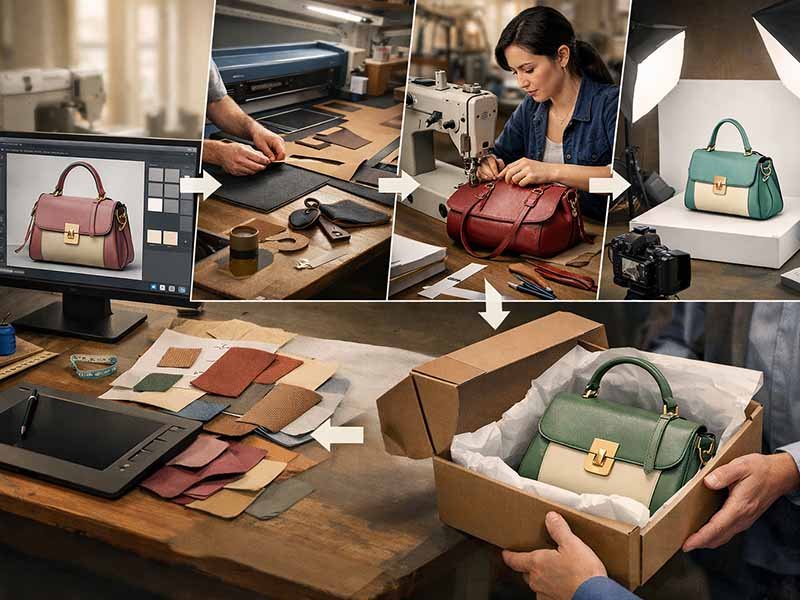
Most custom bag problems don’t start on the production line. They start much earlier—when expectations are vague, decisions are rushed, or the manufacturing process is treated as a black box. Brands often focus on price or speed, but overlook how the entire custom bags workflow actually functions behind the scenes.
In reality, a well-run custom bags workflow is not about moving fast. It’s about making the right decisions in the right order. When materials, structure, sampling, and production planning are aligned early, costs stabilize, lead times shorten, and quality becomes repeatable instead of accidental. When they aren’t, projects drift—extra samples, inconsistent batches, and missed launch windows become normal.
A complete custom bags workflow is the coordinated process that connects product definition, material sourcing, sampling, bulk production, quality control, and delivery into one continuous system. Its purpose is simple: reduce uncertainty while protecting product quality, cost control, and delivery timing.
Behind every bag that sells well and scales smoothly is a workflow most customers never see. The difference between a smooth launch and a painful one usually comes down to whether that workflow was understood—or ignored—from day one.
What Is a Custom Bags Workflow?

A custom bags workflow is the practical, step-by-step system that turns a bag idea into a repeatable, shippable product—without losing control over cost, quality, or delivery time. It defines what decisions are made, in what order, and by whom, so the project does not rely on guesswork or last-minute fixes.
For brands and e-commerce sellers, the workflow matters because custom bags are not made once—they are made again and again. A good workflow ensures that the first approved sample can be reproduced in bulk, reordered months later, and adjusted without starting from zero.
At its core, a custom bags workflow answers three questions customers care about most:
- Can this bag be made consistently at scale?
- Will the final cost stay within expectation?
- Will bulk production match the approved sample?
If a workflow cannot answer these clearly, the project carries hidden risk—no matter how good the sample looks.
What a Custom Bags Workflow Includes in Real Projects
In real manufacturing, a custom bags workflow is not a single timeline. It is a linked decision system where early choices limit or enable later ones.
Below is how a complete workflow is structured from a factory execution point of view:
| Workflow Phase | What Is Decided | What Customers Gain |
|---|---|---|
| Product definition | Use case, size range, target price | Prevents over- or under-design |
| Material framework | Fabric level, webbing type, trims | Controls durability & cost |
| Structure planning | Pattern logic, reinforcement zones | Avoids bulk failures |
| Sampling validation | Repeatability, tolerances | Reduces sample–bulk gap |
| Production setup | Line balance, labor time | Stabilizes lead time |
| Quality control | Defect limits, inspection points | Protects brand reputation |
| Packing & shipping | Carton logic, transit method | Reduces damage & delays |
Customers often see only the sample and the final shipment. The workflow connects everything in between.
Why Custom Bags Projects Fail Without a Workflow
From factory-side experience, most failed or delayed projects do not fail because of poor sewing or low-quality machines. They fail because decisions are made in the wrong order.
Common examples include:
- Fabric changed after sampling
- Structure adjusted during bulk production
- Target price discussed only after quotation
- Quality expectations never clearly defined
These issues force factories to “patch” problems instead of controlling them, which leads to:
- Extra sampling rounds
- Missed delivery windows
- Inconsistent quality between batches
A workflow exists to prevent these problems before they become expensive.
How a Custom Bags Workflow Controls Cost
Many customers focus on unit price, but factories manage cost through workflow discipline.
| Cost Risk | Workflow Control Point |
|---|---|
| Material waste | Early fabric selection & pattern planning |
| Labor overruns | Structure complexity locked early |
| Rework | Clear sample approval standards |
| Defect losses | In-line QC checkpoints |
Internal production data across standard bag categories shows that projects with a locked workflow before sampling typically achieve:
- 10–20% lower total project cost
- Fewer emergency changes during bulk production
- More stable pricing for repeat orders
The workflow doesn’t make bags cheaper—it makes costs predictable.
What Customers Often Misunderstand About Workflow
From a customer perspective, these assumptions are very common—and risky:
- “If the sample is approved, bulk will be fine.”
- “Small changes won’t affect production.”
- “Packaging can be decided later.”
- “Quality issues can be fixed at final inspection.”
In reality:
- Bulk production exposes problems samples cannot
- Small changes often affect patterns and labor
- Packaging affects shape, freight cost, and damage rate
- Final inspection can only detect problems, not prevent them
A proper workflow shifts problem-solving earlier, where it is cheaper and faster.
Who Needs a Custom Bags Workflow the Most
While any custom project benefits from a workflow, it is especially important for:
- Brands planning repeat orders or line extensions
- E-commerce sellers managing multiple SKUs or colors
- Mid- to high-end products where consistency defines value
- Overseas customers working without on-site factory access
For these customers, the workflow is not just a production tool—it is a risk management system.
Why Integrated Factories Execute Workflows Better
Factories that control fabric, webbing, and bag production under one group structure—like Lovrix—have a natural advantage in workflow execution:
- Material decisions are aligned early
- Sampling feedback loops are shorter
- Production adjustments don’t rely on external suppliers
For customers, this means fewer surprises, fewer revisions, and smoother scaling.
How Does a Custom Bags Workflow Start?

A custom bags workflow starts long before sampling or pricing. It begins when the factory can clearly understand what problem the bag is meant to solve, how it will be sold, and what limits cannot be crossed. Projects that start with clear inputs move faster, cost less, and require fewer revisions. Projects that start vaguely almost always pay for it later—through delays, re-sampling, or compromised quality.
In practical terms, the workflow starts the moment key decisions are fixed: use case, structure direction, material level, and target cost. Once these are aligned, the factory can design the right solution instead of guessing.
What Inputs Start a Custom Bags Workflow
From a factory perspective, only a small set of inputs is truly essential at the beginning. Providing more than necessary often slows things down instead of helping.
| Input Type | Required? | Why It Matters |
|---|---|---|
| Intended use (daily, travel, promo) | Yes | Determines structure & materials |
| Target price range | Yes | Sets material & process limits |
| Approximate size / capacity | Yes | Affects pattern & consumption |
| Logo method preference | Yes | Impacts sampling & tooling |
| Reference sample or image | Helpful | Aligns expectations faster |
| Full tech pack | Not required | Can be built later |
Factories regularly see projects delayed because customers focus on details like exact stitch count or zipper brand before the basic direction is set. A good workflow starts broad, then locks details step by step.
Which Early Decisions Shape the Entire Workflow
Certain decisions, once made, are difficult or expensive to reverse. These are the points where experienced factories spend the most time asking questions—because mistakes here echo through the entire workflow.
1. Usage scenario
How the bag will be used affects almost everything:
- Daily carry → lighter fabric, comfort-focused straps
- Travel → reinforced seams, abrasion resistance
- Promotional use → cost-driven materials, simplified structure
Skipping this discussion often results in overbuilt bags that cost too much—or underbuilt bags that fail in use.
2. Target price range
Factories don’t need an exact number, but they do need a range. For example:
| Target FOB Range | Realistic Material Direction |
|---|---|
| USD 3–5 | Basic fabrics, simple construction |
| USD 6–10 | Mid-weight fabrics, branded trims |
| USD 11+ | Premium materials, complex structure |
Without this anchor, quotations become meaningless and sampling drifts.
3. Structure direction
Even without drawings, the factory needs to know whether the bag is:
- Soft or semi-structured
- Stand-up or collapsible
- Minimal or multi-compartment
Structure decisions affect pattern complexity, labor time, and failure points.
How a Clear Brief Speeds Up the Workflow
A “clear brief” does not mean a long document. In fact, the most efficient briefs are often one page or less.
A strong brief answers five questions clearly:
- Who will use this bag?
- How often will it be used?
- What problem does it solve?
- What price level must it stay within?
- What must not go wrong? (quality red lines)
Projects with this level of clarity typically see:
- Faster quotation (1–2 days instead of 4–5)
- Fewer sample revisions
- Less back-and-forth during production
Factories can move confidently instead of repeatedly asking for confirmation.
What Information Is Often Overestimated Early On
From experience, these items are often pushed too early and slow down the workflow:
- Exact zipper brand or model
- Final packaging design
- Precise stitch density numbers
- Detailed carton specs
These details matter—but not at the start. In a healthy workflow, they are finalized after structure and materials are confirmed.
How Factories Internally Translate Early Inputs
Once the initial inputs are clear, the factory converts them into internal controls:
| Customer Input | Factory Translation |
|---|---|
| Target price | Material ceiling + labor budget |
| Usage scenario | Reinforcement & stress mapping |
| Reference image | Pattern direction & construction |
| Logo preference | Sampling method & tooling |
This internal translation step is invisible to most customers, but it’s where a workflow either stabilizes—or starts to drift.
Integrated groups like Lovrix benefit here because fabric teams, webbing teams, and bag engineers can align quickly without external delays.
Where Early Workflow Mistakes Usually Happen
The most common starting mistakes include:
- “Let’s sample first and decide later”
- No target price guidance
- Changing usage definition mid-sampling
- Treating the sample as decoration, not a test unit
These lead to longer timelines and higher costs—not because factories are slow, but because decisions keep moving.
How Are Materials Handled in the Custom Bags Workflow?

Materials are where most custom bag projects quietly succeed—or quietly fall apart. In a real custom bags workflow, material selection is not about choosing what “looks good” in isolation. It is about balancing performance, cost, consistency, and manufacturability across sampling and bulk production.
For factories, materials are the largest cost driver and the hardest variable to correct later. For customers, materials directly shape how the bag feels, performs, and ages in real use. That’s why material decisions sit at the center of the entire workflow, not as a decorative step.
Which Fabrics Drive the Custom Bags Workflow
Fabric choice sets the foundation for everything that follows: structure, durability, labor time, and even packaging. From a workflow perspective, fabrics are evaluated on four practical dimensions, not marketing names.
| Fabric Factor | What Factories Evaluate | Why Customers Should Care |
|---|---|---|
| Weight (GSM / Denier) | Load capacity & seam stress | Affects durability & comfort |
| Surface finish | Abrasion & stain resistance | Impacts lifespan & returns |
| Coating / backing | Water resistance & stiffness | Determines use environment |
| Roll consistency | Shade & thickness tolerance | Controls batch-to-batch match |
For example:
- A 600D polyester may look similar to an 800D nylon in photos, but their abrasion resistance and seam holding power differ significantly.
- Washed canvas and raw canvas behave very differently during cutting and sewing, affecting shape retention.
In a healthy workflow, the factory does not just offer fabric options—it maps fabric behavior to the bag’s real use scenario.
How Fabric Choices Affect Cost and Lead Time
Customers often focus on fabric price per meter, but factories look at total fabric impact, including waste, sewing difficulty, and defect risk.
| Fabric Decision | Hidden Impact |
|---|---|
| Thicker fabric | Slower sewing speed |
| Soft fabric | Needs more reinforcement |
| Inconsistent rolls | Higher rejection rate |
| Special coatings | Longer sourcing time |
In many projects, a slightly more stable fabric reduces total cost by lowering rework and defects—even if the material itself is marginally more expensive.
This is why experienced factories push back when a fabric choice looks “cheap” on paper but risky in production.
How Webbings Fit into the Custom Bags Workflow
Webbing is often underestimated, yet it is one of the highest-stress components in most bags. In the workflow, webbing selection is tied directly to load, comfort, and safety.
Key webbing factors factories consider:
- Width vs. load requirement
- Weave density and elongation
- Dye penetration and color fastness
- Edge hardness against fabric panels
| Webbing Type | Best Use Case | Common Risk |
|---|---|---|
| Polypropylene | Promotional bags | Stretch under load |
| Polyester | Daily-use bags | Heat sensitivity |
| Nylon | Heavy-duty bags | Color variation |
In integrated workflows like Lovrix’s, webbing production is controlled in-house, which allows tighter color matching with fabrics and faster adjustments during sampling.
Which Trims Matter Most in the Workflow
Zippers, buckles, hooks, and thread may seem secondary, but they often cause the highest complaint rates if poorly matched to the bag’s function.
From factory data, the most common trim-related issues include:
- Zippers waviness on soft panels
- Buckle breakage under dynamic load
- Thread abrasion on coated fabrics
Instead of choosing trims by brand name alone, factories evaluate:
| Trim Factor | Why It Matters |
|---|---|
| Pull strength | Prevents failure in use |
| Finish compatibility | Avoids fabric damage |
| Supply stability | Ensures repeat orders |
| Assembly tolerance | Reduces sewing defects |
In a proper workflow, trims are tested together with fabrics, not separately.
How Color Consistency Is Controlled at Scale
Color issues rarely appear in samples—they appear in bulk. That’s because color control is a process, not a single approval.
In structured workflows, factories use multiple checkpoints:
- Lab dip or color card approval
- Roll-to-roll shade grouping
- Cutting panel shade control
- Final visual inspection under standard light
| Control Step | Purpose |
|---|---|
| Shade banding | Avoids visible patchwork |
| Lightbox checks | Standardizes evaluation |
| Lot separation | Prevents mixed batches |
Customers who skip or rush this stage often receive bags that are “technically correct” but visually inconsistent.
What Customers Often Get Wrong About Materials
From a factory-side view, these are common misunderstandings:
- “Heavier fabric is always better”
- “If the sample looks good, bulk will match”
- “Trims don’t affect lead time”
- “Color issues are easy to fix later”
In reality, materials are the least flexible part of the workflow once bulk production begins.
How Does Sampling Work in a Custom Bags Workflow?
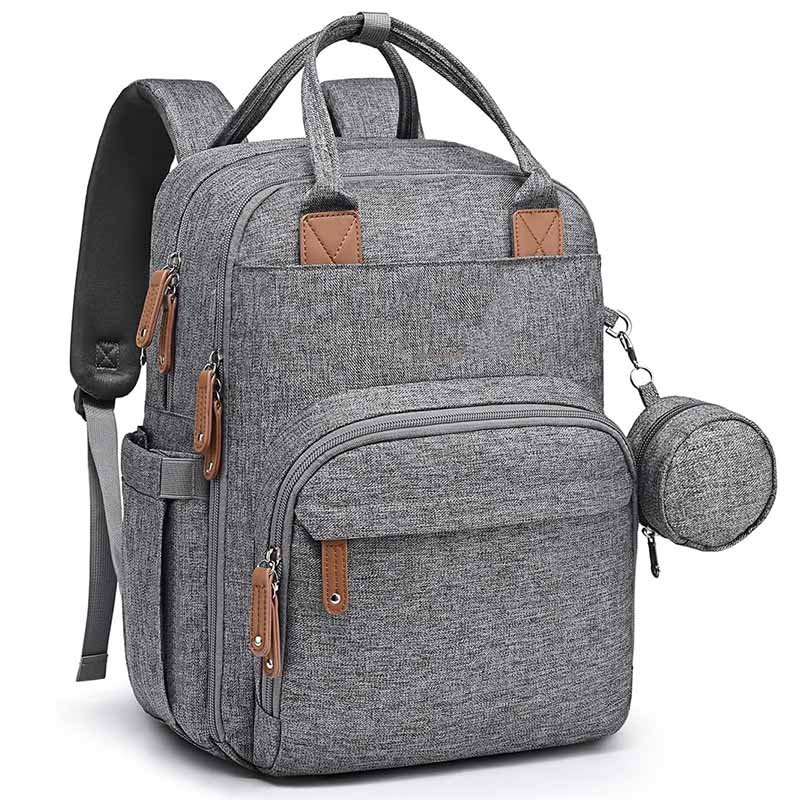
Sampling is not a decoration stage. In a serious custom bags workflow, sampling exists for one reason only: to prove that a bag can be produced repeatedly, within cost, and without hidden risks. A sample that looks good but cannot be replicated reliably in bulk is not a successful sample—it is a warning.
For factories, sampling is where assumptions are tested. For customers, sampling is the moment where ideas must survive contact with reality. Projects that treat samples as marketing pieces often struggle later. Projects that treat samples as technical tests move faster and scale better.
What Sample Stages Exist in a Custom Bags Workflow
In a structured workflow, sampling is not “one sample.” It is a sequence, with each stage answering a different question.
| Sample Stage | Main Purpose | What Should Be Checked |
|---|---|---|
| Mock-up / Fit sample | Confirm size & proportions | Capacity, ergonomics |
| Prototype sample | Validate materials & structure | Stitching, reinforcements |
| Pre-production sample | Lock mass-production standard | Consistency & repeatability |
Skipping stages may save days at the start, but usually costs weeks later.
For example, jumping directly to a “final-looking” sample without testing structure often leads to bulk issues like sagging panels, zipper waves, or strap tearing under load.
What a Factory Is Actually Testing During Sampling
While customers focus on appearance, factories are quietly checking deeper issues that affect bulk production:
- Pattern balance Are panels stable after sewing, or do they twist?
- Seam stress distribution Do load points spread force, or concentrate it?
- Material behavior under sewing Does the fabric creep, shrink, or ripple?
- Assembly tolerance Can operators reproduce this consistently?
Many of these problems only show up after the bag is assembled, not when parts are cut. That’s why sampling time is rarely wasted time.
How Customers Should Review Samples
The biggest mistake customers make is reviewing samples the way an end user would. A better approach is to review them the way a production manager would.
Here is a practical checklist customers should use:
| Area | What to Look For | Why It Matters |
|---|---|---|
| Stitching | Straight, even, no skipped stitches | Sewing stability |
| Corners & edges | No puckering or collapse | Pattern accuracy |
| Stress points | Reinforcement present | Load durability |
| Zippers | Smooth travel, no wave | Panel tension |
| Logos | Position & adhesion | Repeatability |
If a problem appears once on a sample, it usually appears many times in bulk unless corrected at this stage.
How Revisions Affect the Custom Bags Workflow
Not all changes are equal. Some revisions are safe. Others quietly reset the workflow.
Low-risk revisions:
- Logo size adjustments
- Color tone fine-tuning
- Packaging changes
High-risk revisions:
- Fabric thickness change
- Structure modification
- Pocket repositioning
- Strap width change
High-risk revisions often require:
- Pattern redraw
- Material re-testing
- Cost recalculation
This is why experienced factories push back when customers request “small changes” late in sampling. They’re not resisting—they’re protecting the workflow.
When a Sample Is Truly Ready for Mass Production
A sample is production-ready only when three conditions are met:
- Materials are fully locked (fabric, webbing, trims)
- Construction details are repeatable, not handcrafted
- Quality standards are clearly defined and accepted
Factories often ask customers to confirm not just the sample, but also:
- Reference photos
- Approved measurements with tolerances
- Agreed defect limits
This transforms a sample from a one-off item into a production reference, which is essential for consistent bulk output.
Why Sampling Saves More Money Than It Costs
From factory-side data across repeat customers, projects that invest properly in sampling show:
- Fewer bulk defects
- Less rework during production
- Faster repeat orders
Sampling is often seen as a cost, but in reality, it is the cheapest place to fix problems. Once bulk production starts, every mistake multiplies.
How Integrated Factories Improve the Sampling Stage
Factories with in-house fabric, webbing, and bag production—like Lovrix—can adjust faster during sampling because:
- Material teams can tweak specs immediately
- Webbing colors and widths can be aligned quickly
- Engineers and sample makers work side by side
For customers, this means fewer sample rounds and faster decisions.
What Happens in Bulk Production and QC?

Bulk production is where a custom bags workflow is truly tested. Sampling proves that a bag can be made. Bulk production proves whether it can be made hundreds or thousands of times, by different operators, on different days, with the same result.
From a factory perspective, bulk production is not a single action—it is a controlled sequence. From a customer perspective, this is the stage where cost, lead time, and quality risks converge. A strong workflow turns production into a repeatable process. A weak workflow turns it into a gamble.
How a Custom Bags Workflow Moves Into Bulk Production
Before cutting starts, a professional factory does not “just follow the sample.” Internally, several checks must be completed to ensure the sample can survive scale.
| Pre-Production Step | What the Factory Confirms | Why It Matters |
|---|---|---|
| Material re-check | Fabric, webbing, trims match sample | Prevents batch mismatch |
| Pattern finalization | Measurements & tolerances locked | Controls size consistency |
| Process routing | Sewing order & workstation flow | Avoids bottlenecks |
| Labor time review | Target output per operator | Keeps delivery on track |
If any of these steps are rushed or skipped, problems usually appear mid-production—when fixing them becomes expensive.
What Actually Happens on the Production Line
A typical custom bag production line follows a strict order, even if customers never see it:
- Material cutting Fabric and webbing are cut in controlled batches to avoid shade mixing.
- Sub-assembly Handles, pockets, straps, and reinforcements are prepared separately.
- Main assembly Panels are joined in a fixed sequence to control tension and shape.
- Finishing Trimming threads, checking zippers, cleaning surfaces.
- Pre-QC holding Bags rest briefly to reveal shape or tension issues.
This sequence exists to reduce compound errors. Changing the order often leads to distortion, uneven seams, or missed reinforcements.
Where Defects Most Commonly Appear in Bulk Production
Even with good samples, bulk defects tend to cluster in predictable areas:
| Defect Area | Common Cause | What It Looks Like |
|---|---|---|
| Strap joints | Inadequate reinforcement | Early tearing |
| Zipper panels | Uneven fabric tension | Zipper wave |
| Corners & bases | Soft fabric + no support | Collapse or wrinkling |
| Logo areas | Adhesion inconsistency | Peeling or misalignment |
| Stitch lines | Operator fatigue | Skipped or crooked stitches |
These issues are rarely random. They usually point back to structure, material choice, or process control, not operator skill alone.
How In-Line QC Protects the Workflow
The most important quality checks happen during production, not at the end.
In-line QC focuses on catching trends early:
- Stitch consistency across operators
- Reinforcement placement accuracy
- Fabric behavior under load
- Trim functionality after assembly
| QC Stage | What Is Checked | Risk Prevented |
|---|---|---|
| Early line | First 10–20 units | Pattern errors |
| Mid-production | Random sampling | Drift over time |
| End of line | Visual + function | Obvious defects |
When problems are found early, adjustments can be made without stopping the entire line.
Final Inspection: What Customers Should Expect
Final inspection is not meant to “fix” problems—it is meant to confirm standards were followed.
A serious final QC checks:
- Measurement tolerance
- Visual consistency
- Functional performance (zippers, straps)
- Cleanliness and packing readiness
Many factories work with an AQL-based inspection, but experienced customers often request custom checkpoints aligned with their brand priorities (e.g., logo alignment tolerance or strap load limits).
Why Bulk QC Is Not Just About Rejecting Defects
From a workflow standpoint, QC data is feedback. It tells the factory:
- Which processes need tightening
- Which materials behave unpredictably
- Which designs scale smoothly
Factories that track QC results across orders can improve future re-orders, not just the current shipment. This is how long-term suppliers become more efficient over time.
How Integrated Factories Reduce Bulk Production Risk
In integrated groups like Lovrix, bulk production benefits from:
- Faster material feedback if issues appear
- Webbing and trim adjustments without supplier delays
- Engineering support on the production floor
For customers, this means fewer surprises mid-order and more reliable delivery windows.
How Are Packaging, Shipping, and Delivery Managed?
Packaging and logistics are often treated as “afterthoughts,” but in a real custom bags workflow, they are part of product quality itself. A well-made bag can lose its shape, surface finish, or perceived value if packaging is wrong—or arrive late if shipping is poorly planned.
For customers, this final stage determines when the product can be sold and in what condition. For factories, it determines whether months of work arrive intact or generate avoidable claims. That’s why packaging and shipping decisions must be aligned with the workflow, not handled at the last minute.
How Packaging Is Planned in a Custom Bags Workflow
Packaging is not one-size-fits-all. It depends on structure, material softness, logo placement, and sales channel.
Factories usually plan packaging based on three risk factors:
| Risk Factor | Packaging Focus | Why It Matters |
|---|---|---|
| Shape deformation | Inner support / folding method | Prevents collapse |
| Surface damage | Polybag / tissue / protection | Avoids scuffs & marks |
| Moisture & dust | Sealed bags / desiccants | Protects during transit |
Common packaging options include:
- Individual polybag with warning label
- Tissue wrapping for printed or leather surfaces
- Inner cardboard support for stand-up or boxy bags
For e-commerce customers, packaging must also balance protection vs. shipping volume, as oversized cartons increase landed cost.
How Carton Packing Affects Cost and Damage Rate
Carton planning is one of the most underestimated cost levers in bag production.
| Carton Decision | Impact |
|---|---|
| Overpacked cartons | Higher damage risk |
| Underpacked cartons | Higher freight cost |
| Mixed SKUs | Sorting delays |
| Poor carton strength | Transit failure |
Experienced factories calculate carton optimization based on:
- Bag compression tolerance
- Maximum safe stacking height
- Target container utilization
Well-planned cartons can reduce shipping cost by 5–12% without changing the product itself.
How Shipping Is Chosen in the Custom Bags Workflow
Shipping is selected based on time sensitivity, order size, and budget, not habit.
| Shipping Method | Best For | Key Trade-Off |
|---|---|---|
| Air freight | Urgent launches | Highest cost |
| Sea LCL | Small to mid orders | Longer transit |
| Sea FCL | Large volumes | Best unit cost |
| Rail / multimodal | Regional routes | Route limits |
In a healthy workflow, shipping is discussed before bulk production ends, not after packing is finished. This allows cartons, labels, and documents to match the chosen method.
What Documents Are Prepared Before Shipment
Delays at customs usually come from documentation gaps, not inspections.
Standard export documents include:
- Commercial invoice
- Packing list
- HS code declaration
- Certificate of origin (if required)
For branded or regulated markets, additional requirements may apply:
- Label compliance
- Material declarations
- Testing reports
Factories experienced in export workflows prepare these in parallel with production, not after.
How Delivery Timelines Are Really Controlled
From a customer’s point of view, “lead time” is not just production days. It is the sum of:
| Stage | Typical Range |
|---|---|
| Sampling & approval | 1–3 weeks |
| Bulk production | 20–45 days |
| Packing & booking | 3–7 days |
| Transit | 5–40 days |
A realistic delivery plan accounts for buffer time, especially around peak seasons. Brands that plan logistics early rarely miss launches. Those that wait often do.
Why the Final Stage Is Still Part of Quality Control
A bag that arrives:
- Deformed
- Scratched
- Mixed by color or SKU
is effectively a quality failure—even if production was perfect.
That’s why professional factories treat packaging and shipping as the last quality gate, not an admin task.
Integrated groups like Lovrix benefit here because production, packing, and logistics teams coordinate under one system, reducing last-minute surprises.
Starting Your Custom Bags Project with Lovrix
A successful custom bags project is not built on luck. It is built on a clear, end-to-end workflow—from the first idea to the moment cartons are delivered and opened.
Lovrix operates as an integrated manufacturing group with:
- In-house fabric production
- Dedicated webbing factories
- Professional bag manufacturing lines
This structure allows us to control materials, sampling, production, quality, and delivery as one continuous process—not disconnected steps.
Whether you are launching a new bag line, scaling an existing product, or refining quality for repeat orders, our team works with you to build the right workflow first, then execute it reliably.
If you’re ready to discuss your custom bag project, share your idea, target price range, and use case with the Lovrix team. We’ll help you turn it into a production-ready product—with fewer surprises, clearer timelines, and consistent quality.
Start your custom bags workflow with Lovrix today.


