 Skip to content
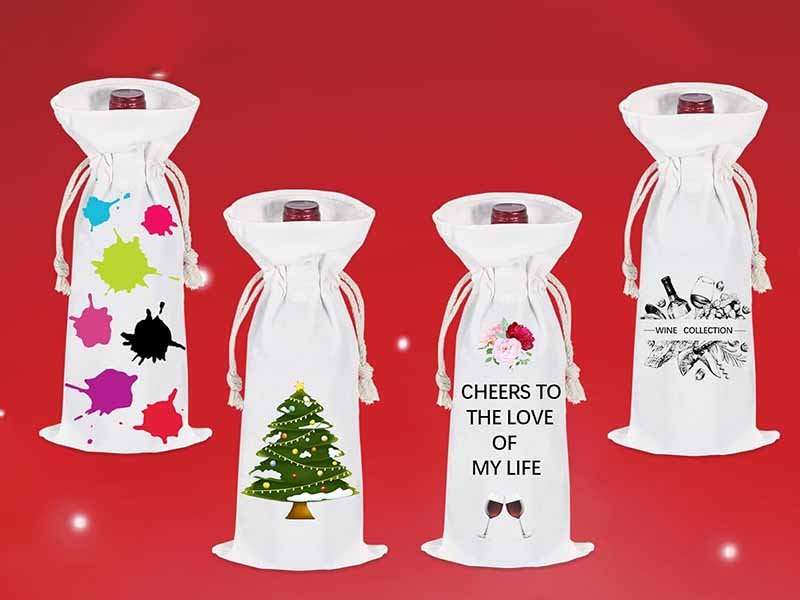
Wine bags are no longer just “something to carry a bottle.” For many brands, a wine bag is the first touch before the wine is opened—gift-ready, photo-ready, and expected to survive transport. That’s why production issues with wine bags hurt more than people think: if the bottle doesn’t fit, if the handle cuts into the hand, if the print is off-color, or if the insulation doesn’t work, customers blame the brand—not the factory.
The fastest way to prevent that is not “more sampling rounds.” It’s a clear Wine Bags Tech Pack Template that makes every requirement measurable: materials, thickness, stitching, load, dimensions, tolerances, logo position, packaging, and QC checkpoints. When the tech pack is done right, a factory can quote correctly, sample faster, and keep batch-to-batch consistency even when you scale.
A Wine Bags Tech Pack Template is a structured specification document that tells the factory exactly how to build your wine bag—what materials to use, the exact size and tolerances, how to stitch and reinforce, how to apply your logo, and how to pack and inspect the product. It reduces sampling revisions, avoids material substitution, and keeps quality consistent across repeat orders.
Here’s the part most brands only learn after paying for mistakes: a wine bag is a “small product” with “big failure points.” If you’re launching for retail or e-commerce, you want to be sure your first production run arrives sellable, consistent, and ready to ship—without rework drama.
What Is a Wine Bags Tech Pack Template?

A Wine Bags Tech Pack Template is the “build manual” for your wine bag. It turns your design into a factory-ready file that includes: drawings, measurements, materials, BOM, stitching rules, reinforcement points, logo specs, packaging instructions, and inspection standards. When factories have this, they don’t guess—and you don’t pay for guessing.
Wine Bags Tech Pack Template Definition
Think of the tech pack as a single document that answers every factory question in advance. If you don’t answer those questions, the factory will still decide something—based on their habit, their available materials, or their cost target. That’s how “your sample looks right” but “production looks different.”
A complete Wine Bags Tech Pack Template usually contains:
- Product overview: target use (gift, retail, delivery, travel), capacity (1/2/4/6 bottles), insulation goal, target cost range
- Drawings: front/back/side, inside structure, callouts for seams, piping, binding, padding, dividers
- Size chart: all key measurements with tolerance
- Material spec: fabric type, composition, thickness/GSM, coating, color reference
- BOM: every component (fabric, lining, foam, zipper, webbing, thread, labels, PE board)
- Construction rules: stitch type, seam allowance, reinforcement zones, edge finishing
- Branding: logo method, artwork file format, placement coordinates, allowable shift tolerance
- Packaging: polybag, hangtag, carton, barcode/label positions
- QC: inspection points, test method, defect standards
Why this matters for wine bags specifically: bottle shape and weight make wine bags more sensitive to small errors than many other bag types.
Wine bag “small errors” that cause big problems
| Small spec mistake | What happens in real life | Result |
|---|---|---|
| +5–8 mm too narrow | Bottle gets stuck, stress on seams | Returns + bad reviews |
| Foam too soft/thin | No protection, bottle knocks | Damage risk |
| Handle stitch not reinforced | Handle tears under load | Safety + refund |
| Divider too short | Bottles collide | Noise + break risk |
| Logo off by 5 mm | Looks “cheap” in photos | Brand trust drops |
| Wrong lining | Sweating, odor, mold | Complaints |
Why a Wine Bags Tech Pack Template Matters
Most delays in custom wine bag projects are not “factory speed problems.” They are communication problems.
A practical way to measure this: the number of “clarification messages” and “revisions” between you and the factory. Each revision typically adds:
- 3–7 days for a new sample (often more if materials must be re-sourced)
- extra cost for wasted materials and labor
- higher risk of inconsistent results between sample and mass production
When the tech pack is clear, you reduce rework. You also improve quoting accuracy because the factory knows exactly what you want.
What changes when you provide a proper tech pack
| Production stage | Without a tech pack | With a tech pack |
|---|---|---|
| Quotation | Price changes after sampling | More stable quote upfront |
| Sampling rounds | Often 3–6+ rounds | Often 1–3 rounds |
| Material substitution risk | Higher (unclear specs) | Lower (spec locked) |
| Logo consistency | “Close enough” | Measurable placement rules |
| Repeat orders | Variation between batches | Controlled repeatability |
This is why mid-to-high-end brands treat the tech pack as a “quality contract.” It doesn’t just help the factory—it protects you.
What Should a Wine Bags Tech Pack Template Include?

A strong Wine Bags Tech Pack Template includes three layers: materials (what it’s made of), structure (how it’s built), and execution rules (how to print, stitch, pack, and inspect). If any layer is missing, sampling may look okay, but mass production often drifts.
Wine Bags Tech Pack Material Details
Wine bags can be premium or value-priced, insulated or non-insulated, rigid or soft. Materials decide cost and performance. Your tech pack should specify measurable parameters, not vague words like “thick” or “high quality.”
Include these fields:
- Outer fabric: composition (cotton/poly/RPET), weight (GSM or oz), weave type, finish (PU coating, water resistance)
- Lining: material (PEVA, aluminum film, polyester), thickness, heat-seal requirement
- Padding/insulation: foam type (EPE/PE/Neoprene), thickness (mm), density if needed
- Webbing: width (mm), thickness (mm), breaking strength expectation
- Thread: size and type (bonded nylon/poly), color code
- Labels: woven label / heat transfer / leather patch, size and placement
Common material stacks
| Wine bag type | Outer | Insulation | Lining | Best for |
|---|---|---|---|---|
| Gift tote (non-insulated) | 12–16 oz canvas | None or thin foam | Polyester | Retail gifting |
| Cold-chain/e-commerce | Polyester | EPE foam 3–6 mm | PEVA | Delivery + longer transit |
| Premium protective sleeve | Neoprene 3–5 mm | Built-in | Jersey or nylon | Shock protection |
| Eco-focused | RPET felt | Optional foam | RPET lining | Sustainability story |
Practical spec ranges most brands care about
| Parameter | Useful range |
|---|---|
| Canvas weight | 340–500 GSM (10–15 oz) |
| Neoprene thickness | 3–5 mm common |
| Foam thickness | 3–6 mm for insulation/protection |
| Webbing width | 25–38 mm (handle comfort) |
| Stitch length | ~3–4 mm for strength & neat look |
(These ranges are guidance; your final specs should match your price point and use case.)
Wine Bags Tech Pack Size & Structure
Sizing is not only “height × width.” For wine bags, you must design for bottle diameter, shoulder shape, base stability, and handle clearance.
Your tech pack should include:
- Internal size (the real bottle space)
- External size (including padding and seams)
- Bottom gusset (stability)
- Divider thickness/height (for 2/4/6 bottles)
- Handle drop (how it feels on the hand/shoulder)
- Load target (how much weight the bag must hold)
Wine bottle size reference
| Bottle type | Height (approx.) | Diameter (approx.) | Notes |
|---|---|---|---|
| Standard 750 ml | 300–320 mm | 70–76 mm | Most common |
| Champagne | 310–330 mm | 85–90 mm | Needs wider base |
| Burgundy | 300–315 mm | 80–86 mm | Rounder shoulder |
| 1.5 L Magnum | 340–360 mm | 95–105 mm | Reinforcement needed |
Fit rule many brands use:
Leave 5–10 mm clearance around bottle diameter after padding to avoid tight insertion.
Structural reinforcement suggestions
| Capacity | Reinforcement focus | Suggested solution |
|---|---|---|
| 1 bottle | bottom stability | PE board 1.5–2 mm |
| 2 bottles | divider + handle points | stitched divider + bartack |
| 4–6 bottles | load-bearing frame | wrap-around webbing + thicker board |
| E-commerce shipping | anti-impact | thicker foam + seam tape (if needed) |
Wine Bags Tech Pack Hardware & Printing
For a wine bag, the “luxury feeling” comes from small details: zipper smoothness, metal finish, label edges, print sharpness. The tech pack must lock these down.
Hardware specs to include:
- Zipper: size (#5/#8), material (nylon/metal), tape color, slider type
- Puller: custom shape? laser logo? finish (matte black, brushed nickel)
- Rings/buckles: material, plating, thickness
- Buttons/magnets: strength, placement, safety notes
Branding/print specs to include:
- Method: screen print / heat transfer / embroidery / woven label / patch
- Artwork format: AI/PDF, outlines, min stroke width
- Color system: Pantone reference + acceptable delta (if you control strict color)
- Placement rule: coordinate from seam or edge + tolerance
Logo placement rules that prevent “looks cheap” photos
| Item | Good practice | Suggested tolerance |
|---|---|---|
| Center logo | measure from seam, not from edge | ±2–3 mm |
| Heat transfer | define temperature/time guidance | factory controlled |
| Screen print | define ink type + rub resistance goal | add QC test |
| Embroidery | define stitch count density | stable look |
How to Create a Wine Bags Tech Pack Template

To create a Wine Bags Tech Pack Template, define the bag’s purpose, confirm bottle size and capacity, record exact materials and construction rules, prepare clear drawings with measurements, build a full BOM list, and include packaging plus quality-control standards so a factory can sample and produce without guesswork.
Creating a tech pack is not a design exercise—it is a manufacturing translation process.
The goal is simple: any qualified factory should be able to build the same wine bag from your document alone, even without speaking to you.
Most production delays happen because the document is incomplete, not because the factory lacks skill.
That is why experienced brands treat the tech pack as the foundation of timeline, cost, and quality control.
Wine Bags Tech Pack Drawing Steps
A correct drawing does not need to be artistic.
It only needs to be clear, labeled, and measurable.
Start with three basic views:
- Front view – overall look, logo position, handle drop
- Side/bottom view – gusset depth, reinforcement board, divider layout
- Inside structure view – padding thickness, stitching path, lining type
Each drawing must include numeric measurements, not visual proportions.
Measurement checklist to include beside drawings
| Area | What to measure | Why it matters |
|---|---|---|
| Internal width | Bottle fit clearance | Prevent tight insertion |
| Internal height | Bottle neck coverage | Avoid exposure damage |
| Gusset depth | Base stability | Prevent tipping |
| Divider height | Bottle separation | Stop collision |
| Handle length & drop | Carry comfort | Reduce strain |
| Logo distance from seam | Visual alignment | Keep branding consistent |
Important practical rule:
Factories follow numbers first, drawings second.
If numbers and drawings conflict, production errors occur.
Always double-check consistency.
Another common oversight is missing tolerance.
Every soft product needs an allowed variation.
Typical tolerance ranges used in bag production:
| Dimension type | Suggested tolerance |
|---|---|
| Length / width | ±3–5 mm |
| Foam thickness | ±0.5 mm |
| Webbing length | ±5 mm |
| Logo placement | ±2–3 mm |
Without tolerance, factories cannot judge pass/fail during inspection.
Wine Bags Tech Pack Tools to Use
You do not need complex software to create a usable tech pack.
What matters is clarity and completeness, not design sophistication.
Common tools used by brands
| Tool | Best use | Skill level |
|---|---|---|
| Hand sketch + notes | Early concept | Beginner |
| Adobe Illustrator | Clean technical drawing | Intermediate |
| CAD pattern software | Precise pattern making | Advanced |
| Excel / Google Sheets | BOM, measurements, QC | Essential |
| PDF tech pack file | Final factory document | Required |
For many small and mid-size brands, the most efficient workflow is:
Sketch → Illustrator drawing → Excel spec sheet → Combined PDF tech pack
This approach balances speed, cost, and factory readability.
File package factories usually expect
- Vector artwork (AI/PDF) for logo
- Measurement sheet (Excel or PDF)
- Material list with thickness and color
- Packaging instructions
- Reference photo or 3D mockup (optional but helpful)
Providing all files together can reduce one full sampling round in many projects.
Wine Bags Tech Pack Common Mistakes
Across hundreds of soft-goods projects, the same problems appear repeatedly.
Avoiding them can save weeks of delay and significant cost.
Most frequent tech pack errors
| Mistake | Real production impact |
|---|---|
| Only providing appearance sketch | Factory guesses structure |
| Missing material thickness | Protection level changes |
| No tolerance defined | QC disputes during shipment |
| Logo size without placement rule | Crooked branding in bulk |
| Divider height not specified | Bottles collide in transit |
| Packaging not defined | Carton damage or wrong labeling |
One of the most expensive mistakes is approving a beautiful sample that has no documented specs.
When bulk production starts, the factory may rebuild using “standard” materials—causing differences from the approved sample.
Key lesson:
If it is not written in the tech pack, it is not guaranteed in production.
Do You Need a Wine Bags Tech Pack Template for OEM Orders?

Yes. A Wine Bags Tech Pack Template is essential for OEM and private-label wine bag production because it ensures accurate quoting, faster sampling, controlled materials, and consistent bulk quality across repeat orders.
OEM production involves distance, language, and scale.
Clear documentation replaces constant communication.
Without a tech pack, factories must:
- Estimate materials
- Guess reinforcement strength
- Interpret logo placement
- Assume packaging method
Each guess introduces risk.
Wine Bags Tech Pack for Factory Communication
In international production, clarity equals speed.
Factories schedule sampling, order materials, and assign workers based on your document.
A clear tech pack improves communication in three ways:
1. Faster quotation accuracy
Factories can calculate:
- Fabric consumption
- Foam usage
- Hardware cost
- Labor complexity
This prevents price increases after sampling, which frustrate many brands.
2. Reduced misunderstanding across languages
Numbers, tables, and diagrams communicate better than long text.
Even when English is not the factory’s first language, measurable data remains clear.
3. Stable repeat production
When reordering months later, the factory can follow the same tech pack version, keeping quality consistent.
Brands that skip this step often experience:
- Color drift
- Size variation
- Different stitching appearance
These inconsistencies harm retail trust.
Wine Bags Tech Pack for Faster Sampling
Sampling speed directly affects time-to-market.
For seasonal wine promotions or holiday gifting, timing is critical.
How a clear tech pack shortens sampling
| Stage | Without tech pack | With tech pack |
|---|---|---|
| Material confirmation | Multiple emails | Immediate |
| Pattern adjustment | Several revisions | Often first sample OK |
| Logo test | Repeated corrections | One approval |
| Final approval | 4–6 weeks | 2–3 weeks common |
Even saving two weeks can determine whether a product launches before or after a sales season.
Where to Get a Wine Bags Tech Pack Template

You can obtain a Wine Bags Tech Pack Template from free online resources, internal design teams, freelance product developers, or directly from experienced wine bag manufacturers. The most reliable option is usually a factory-supported custom template, because it aligns real production capability with your design requirements from the beginning.
Choosing the right source affects sampling speed, cost accuracy, and bulk consistency.
A generic template may look complete but still miss critical production details such as reinforcement structure, insulation density, or stitching strength.
Free Wine Bags Tech Pack Template Options
Free templates are widely available and useful for early planning.
They help organize ideas, define measurements, and prepare initial communication with factories.
Common free template sources
| Source | Strength | Limitation |
|---|---|---|
| Design blogs / downloads | Easy starting point | Often too generic |
| Excel spec sheets | Good for BOM & sizing | No construction detail |
| Illustrator mockups | Clear visuals | Missing QC standards |
| Packaging templates | Helpful for labeling | Not bag-specific |
Free templates work best when:
- You are testing a concept
- Production volume is still uncertain
- Structural complexity is low
However, as soon as insulation, dividers, or reinforcement become important,
generic templates usually lack the engineering detail needed for stable manufacturing.
Custom Wine Bags Tech Pack Template Services
A custom-built Wine Bags Tech Pack Template is created specifically for:
- Your target bottle type
- Your price level
- Your brand appearance
- Your shipping method
- Your factory production process
This alignment prevents the most common OEM problem:
a beautiful design that cannot be produced efficiently.
What professional tech pack development usually includes
| Step | Output |
|---|---|
| Requirement discussion | Capacity, insulation, budget |
| Structural engineering | Divider, base board, reinforcement |
| Material confirmation | Fabric, foam, lining, hardware |
| Technical drawings | Measured multi-view diagrams |
| BOM creation | Full component list |
| QC definition | Inspection and tolerance rules |
Because factories understand real sewing limits and material behavior,
their involvement often reduces:
- Sampling rounds
- Hidden costs
- Production risk
For brands planning retail or large e-commerce sales,
this step is usually the safest investment.
How Lovrix Supports Wine Bags Tech Pack Projects
Lovrix supports Wine Bags Tech Pack projects by providing material expertise, structural engineering guidance, precise technical documentation, rapid sampling, and controlled mass production—helping brands move efficiently from concept to stable OEM delivery.
With more than 18 years of experience in fabrics, webbing, and bag manufacturing,
Lovrix operates integrated production resources that simplify the entire workflow.
Instead of managing separate suppliers for fabric, accessories, and sewing,
brands can coordinate development through a single technical team.
Lovrix Wine Bags Tech Pack Design Help
Lovrix begins most projects with a practical feasibility review.
This step ensures the design can meet:
- Load strength requirements
- Insulation expectations
- Shipping durability
- Target price range
Early design validation checklist
| Area | Questions Lovrix helps answer |
|---|---|
| Bottle compatibility | Does the size fit global bottle variations? |
| Carry comfort | Is the handle width sufficient for weight? |
| Insulation level | Is foam thickness matched to usage time? |
| Structure strength | Are reinforcement points adequate? |
| Branding method | Which logo process fits the budget and look? |
Catching these issues before sampling prevents expensive redesign later.
Lovrix also prepares clear technical drawings and BOM sheets,
so production instructions remain consistent from sample to bulk order.
Lovrix Wine Bags Tech Pack Sampling & Production
After the tech pack is confirmed, Lovrix moves into rapid sampling.
Typical development timeline:
| Stage | Estimated time |
|---|---|
| Tech pack confirmation | 1–3 days |
| Material preparation | 3–7 days |
| Sample production | 5–10 days |
| Sample revision (if needed) | 3–7 days |
| Mass production | 20–35 days |
(Actual timing varies by complexity and order quantity.)
Quality control during production
Lovrix applies multi-stage inspection:
| Phase | Control focus |
|---|---|
| Incoming materials | Fabric weight, foam thickness, color |
| In-line sewing | Stitch density, reinforcement accuracy |
| Semi-finished check | Size tolerance, divider position |
| Final inspection | Appearance, function, packaging |
| Carton audit | Quantity, labeling, drop safety |
This layered control helps ensure bulk goods match the approved sample,
which is one of the biggest concerns for international buyers.
Final Practical Checklist Before Ordering Custom Wine Bags
Before confirming production, brands should verify:
Product definition
- Bottle size and capacity confirmed
- Insulation requirement defined
- Target cost range realistic
Technical documentation
- Full Wine Bags Tech Pack Template completed
- Materials and thickness clearly listed
- Logo artwork and placement approved
- Packaging and barcode requirements included
Sampling validation
- Real bottle fit tested
- Handle strength checked under load
- Divider protection verified
- Print and color approved in natural light
Completing this checklist dramatically reduces production surprises.
Start Your Custom Wine Bag Project with Lovrix
A well-prepared Wine Bags Tech Pack Template is the difference between:
- Smooth sampling vs. repeated revisions
- Stable bulk quality vs. inconsistent shipments
- On-time launch vs. missed selling season
Lovrix combines material manufacturing, webbing production, and bag assembly into one coordinated system—helping brands transform an idea into a reliable, retail-ready wine bag with clear timelines and controlled quality.
If you are planning a custom wine bag collection, promotional packaging, or private-label retail product, the next step is simple:
Send your concept, sketch, or requirements to Lovrix.
The team can help you build a precise Wine Bags Tech Pack Template, create fast samples, and move confidently into production.
Your wine deserves packaging that protects the bottle, represents your brand, and arrives exactly as expected.
Lovrix is ready to help you make that happen.


