 Skip to content
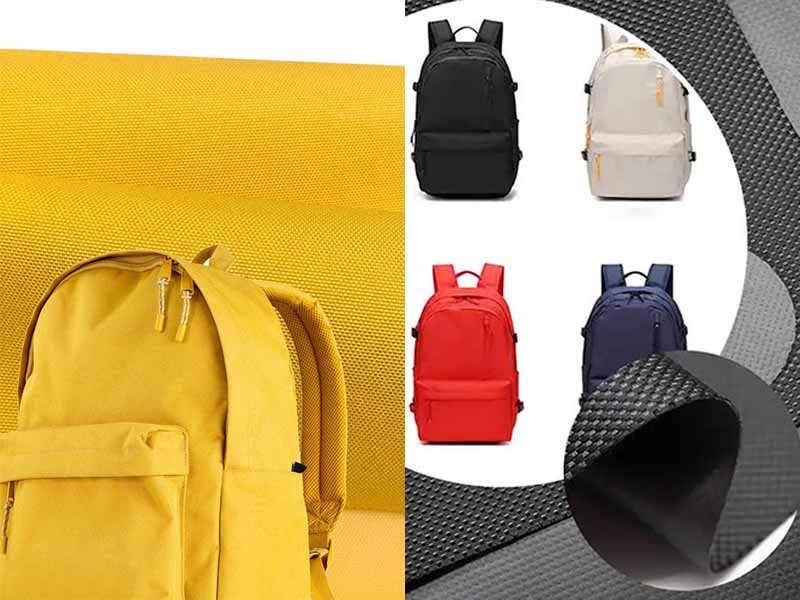
Choosing between 600D and 1680D polyester looks simple until a real bag project moves into sampling. On paper, 1680D sounds stronger because the number is higher. In actual manufacturing, the better material depends on the bag type, expected load, target price, coating, lining, stitching, reinforcement, brand positioning, and how the customer will use the product day after day. A school backpack, a promotional tote, a power-tool bag, and a premium travel duffel should not follow the same fabric logic.
600D polyester is usually the better choice for lightweight, cost-controlled, everyday custom bags, while 1680D polyester is better for heavy-duty, high-abrasion, premium-structured bags. The right choice is not only about denier. Coating, weave density, yarn quality, sewing structure, reinforcement, and testing decide final bag performance.
Many sourcing teams only discover the difference after the first sample arrives. The bag may be strong but too heavy, cheap but too soft, premium-looking but hard to sew, or durable on the surface but weak at the seams. That is why professional bag development starts with one practical question: what does this bag need to survive in real use?
What Is 600D Polyester?

600D polyester is a medium-weight woven polyester fabric widely used in backpacks, tote bags, cooler bags, sports bags, cosmetic bags, and general custom bag projects. It is popular because it balances durability, cost, weight, coating flexibility, and production efficiency, making it suitable for many daily-use and commercial bag applications.
What 600D Means
The “D” in 600D stands for denier, a measurement related to yarn thickness. In simple terms, 600D polyester uses yarn with a 600-denier rating. A higher denier usually means thicker yarn, but denier alone does not fully define fabric quality. The final performance also depends on weave density, yarn quality, coating, backing, dyeing, finishing, and how the material is sewn into a finished bag.
In custom bag production, 600D polyester is often treated as a practical workhorse material. It is not the lightest fabric, and it is not the strongest polyester option, but it sits in a useful middle range. It can be durable enough for school backpacks, event bags, cooler bags, light travel bags, sports bags, pet bags, storage bags, and many promotional products.
A common sourcing mistake is assuming all 600D polyester is the same. One 600D fabric may feel thin, soft, and budget-oriented, while another may feel tighter, firmer, and more reliable because it has better yarn, stronger coating, or denser weaving. For serious custom bag projects, buyers should confirm actual swatches instead of relying only on the material name in a quotation.
Common Bag Uses
600D polyester is widely used because it can be developed into many bag types. It can be cut, folded, stitched, printed, embroidered, laminated, and combined with lining, foam, foil, webbing, zippers, buckles, and private label details. This gives brands flexibility when developing multiple SKUs under one material direction.
For a daily backpack, 600D can be used as the main body fabric with 210D or 190T polyester lining inside. For a cooler bag, 600D may serve as the outer shell with PE foam and aluminum foil lining. For a promotional tote or corporate gift bag, it gives better structure than very thin nonwoven material while still keeping cost under control.
600D is also useful when a brand needs many colors, repeated orders, or logo variations. Compared with heavier fabrics, it is usually easier to source in common colors and easier to process in bulk production. That matters for repeat orders, multi-SKU programs, and private label bag collections.
Practical Advantages
The biggest advantage of 600D polyester is balance. It gives enough durability for many commercial products without making the finished bag too heavy, stiff, or expensive. This is why many brands use it when they want a product that feels stronger than lightweight fabric but does not need a heavy-duty price tier.
From a manufacturing point of view, 600D is relatively friendly. It can be sewn with common bag-making equipment, handles curved panels better than very thick materials, and works with many branding methods. Screen printing, embroidery, woven labels, rubber patches, heat transfer labels, and custom zipper pulls can all be considered depending on the coating and product design.
It also supports reasonable shipping and packing efficiency. A bag made from 600D polyester is usually lighter than the same design made fully from 1680D polyester. For e-commerce, corporate gifting, or retail programs, that difference may influence freight cost, carton quantity, user comfort, and final product margin.
Real Limitations
600D polyester is not the best choice for every bag. If the product must carry heavy tools, metal accessories, sharp equipment, or industrial parts, 600D may need reinforcement or a heavier fabric. If it is used for the bottom of a travel bag that often touches rough floors, it may show wear faster than heavier materials.
The fabric can also feel too soft for some premium categories. A structured business backpack, professional tool case, or high-end travel duffel may need a firmer material to hold shape and create a more premium hand feel. In those cases, 600D may still work in selected panels, but not necessarily across the whole bag.
The safest approach is to match 600D with the actual stress areas of the bag. It can perform well when the structure is well designed, but it should not be expected to solve problems caused by weak handles, poor stitching, thin thread, cheap zippers, or missing reinforcement.
| Application | Typical Use of 600D Polyester | Practical Reason |
|---|---|---|
| Backpacks | Main shell, front pocket, side panels | Balanced strength and weight |
| Cooler bags | Outer shell with insulation lining | Easy to laminate and sew |
| Promotional bags | Main body fabric | Cost-effective and logo-friendly |
| Sports bags | Outer shell and pockets | Flexible and lightweight enough |
| Cosmetic bags | Outer fabric or structured panels | Good surface for branding |
| Pet bags | Outer body or accessory panels | Moderate durability with manageable cost |
What Is 1680D Polyester?

1680D polyester is a heavy-duty woven polyester fabric used when bags need stronger abrasion resistance, firmer structure, and a more rugged appearance. It is commonly selected for tool bags, travel bags, laptop backpacks, tactical-style bags, luggage panels, protective cases, and high-wear reinforcement zones where 600D may not be enough.
What 1680D Means
1680D polyester uses much thicker yarn than 600D polyester. The higher denier gives the fabric a heavier, stronger, and more structured feel. In many commercial bag materials, 1680D polyester is associated with heavy-duty Oxford-style fabric, often used when buyers want the finished bag to feel tough before it is even loaded.
However, 1680D should not be treated as a magic number. Fabric performance still depends on construction. A good 1680D polyester should have stable yarn, even weaving, proper coating, consistent color, and reliable backing. A poor-quality 1680D fabric may look thick but still perform badly if the coating peels, the weave is loose, or the finishing is unstable.
In hand feel, 1680D is noticeably different from 600D. It usually feels firmer, denser, heavier, and more resistant to surface abrasion. That is why it is often used in products where the user expects a strong structure, such as tool bags, equipment bags, business travel bags, and rugged backpacks.
Common Bag Uses
1680D polyester is often used when the bag faces heavier stress. Tool bags are a typical example. They may carry drills, pliers, measuring tools, hardware, cables, and metal accessories. These items create pressure, friction, and sharp contact points inside the bag. A heavier fabric helps reduce surface wear and gives the bag a stronger body.
Travel bags also benefit from 1680D in selected areas. The bottom, corners, side panels, and handle zones often face repeated rubbing against floors, car trunks, luggage racks, and airport surfaces. Using 1680D in these zones can improve perceived and practical durability without always making the entire bag too heavy.
For laptop backpacks and premium business bags, 1680D can add structure and a more solid appearance. It is especially common in darker colors such as black, grey, navy, and charcoal, where the dense texture gives a clean, professional look. It can also pair well with PU leather, EVA panels, foam padding, metal hardware, and heavy-duty webbing.
Strength and Structure
The main value of 1680D polyester is not only strength, but structure. It gives a bag more body. A backpack made from 1680D may stand better than a softer 600D version. A tool bag made from 1680D may hold pocket shapes better and resist deformation when loaded.
In many projects, this structure improves user experience. A technician wants tools to stay organized. A traveler wants the bag to keep shape during handling. A laptop user wants the bag to protect electronics and look professional. A stronger fabric can support these goals, but only when the rest of the structure is designed correctly.
The important point is that fabric strength does not replace product engineering. Heavy fabric still needs strong seams, proper thread, reinforced handles, reliable zippers, strong webbing, and stable bottom construction. If a 1680D bag fails, the failure often happens at the seam, handle joint, zipper end, or pocket opening rather than in the middle of the fabric panel.
Trade-Offs
1680D polyester brings trade-offs that buyers should consider early. It is heavier, usually more expensive, and harder to sew than 600D. It can create bulky seams where several layers overlap. It may also make small pockets, curved edges, tight corners, and detailed binding more difficult to finish cleanly.
For lightweight consumer bags, full 1680D construction may be unnecessary. A school backpack or promotional event bag made entirely from 1680D may feel too heavy for the user and too expensive for the buyer. In these cases, a better solution may be 600D for the main body and 1680D for stress zones.
The cost difference varies by supplier, color, coating, order quantity, and market conditions, but 1680D commonly sits in a higher material cost range than 600D. Buyers should not only compare fabric price per meter. They should also consider sewing efficiency, cutting waste, shipping weight, packaging volume, and final retail price.
How Do 600D and 1680D Polyester Compare?

600D polyester is lighter, more flexible, and more cost-effective, while 1680D polyester is heavier, firmer, and generally more abrasion-resistant. 600D is better for everyday and value-focused bags. 1680D is better for heavy-duty, premium, structured, and high-wear applications. The smartest choice often combines both fabrics strategically.
Durability and Abrasion
1680D polyester generally offers stronger abrasion resistance than 600D polyester because it uses thicker yarn and usually has a denser structure. If the bag will be dragged, rubbed, loaded with tools, placed on rough floors, or used in outdoor and industrial environments, 1680D is usually the safer choice for exposed areas.
600D polyester can still be durable enough for daily use. For backpacks, sports bags, cosmetic bags, cooler bags, and promotional products, it often performs well when the bag is properly structured. Most daily-use failures do not happen because the 600D fabric suddenly tears across the panel. They happen at handles, seams, zippers, corners, or poorly reinforced stress points.
This is why a direct fabric comparison is useful but incomplete. A well-designed 600D bag can outperform a badly designed 1680D bag in normal use. The fabric should be evaluated together with seam construction, thread size, stitch density, reinforcement patches, lining, webbing, hardware, and bottom support.
Weight and Flexibility
The difference in weight is easy to feel. 600D polyester is more flexible and easier to fold, making it comfortable for daily bags and easier to pack for shipping. 1680D polyester is heavier and stiffer, which improves structure but may reduce comfort in lightweight products.
Common commercial finished fabric weights may vary, but 600D polyester often falls around 180-260 gsm after coating, while 1680D polyester may fall around 340-480 gsm depending on backing and finishing. These are not fixed standards, but useful planning ranges for buyers comparing material direction.
For brands, this affects more than material price. A heavier bag may increase perceived quality for tool users, but it may reduce comfort for commuters. A lighter bag may sell better in high-volume retail, but it may not satisfy users who expect industrial strength.
Cost and Production
600D polyester usually gives better cost control. It is easier to source, easier to sew, and suitable for many mass-production bag projects. For buyers who need stable pricing across multiple colors or repeat orders, 600D can be a practical base material.
1680D polyester increases both material and production considerations. It may require stronger needles, heavier thread, adjusted sewing settings, and more careful seam planning. If the design includes foam, lining, webbing, zipper tape, binding, and reinforcement layers, the total thickness at seam intersections can become a real production challenge.
This does not mean buyers should avoid 1680D. It means it should be used where the extra value is clear. For a tool bag bottom, travel bag corner, or premium backpack panel, the added cost may be justified. For a simple giveaway tote, it may not be the right use of budget.
Coating and Backing
PU and PVC coatings can change both 600D and 1680D performance. PU coating is commonly used when the buyer wants moderate water resistance, flexibility, and a cleaner hand feel. PVC backing adds stiffness, weight, and stronger body, but it can also make the fabric harder to fold and sew.
A quotation that only says “600D polyester” or “1680D polyester” is incomplete. Buyers should ask about coating type, coating thickness, finished weight, water resistance, colorfastness, and whether the fabric is suitable for the selected logo method.
Coating also affects product aging. A strong outer fabric with poor backing can still disappoint customers if the coating cracks, peels, smells bad, or becomes sticky over time. For commercial bag programs, coating quality should be reviewed during sampling, especially for bags that will be stored, shipped, or sold in warm and humid markets.
| Comparison Factor | 600D Polyester | 1680D Polyester |
|---|---|---|
| Common finished weight range | About 180-260 gsm | About 340-480 gsm |
| Hand feel | Medium body, flexible | Firm, thick, structured |
| Abrasion resistance | Suitable for normal use | Better for heavy-wear areas |
| Sewing difficulty | Easier | More difficult at thick seams |
| Relative material cost | Lower | Higher |
| Best role | Main fabric for daily bags | Heavy-duty shell or reinforcement |
| User comfort | Better for lighter carry | Better for rugged feel |
Which Fabric Is Better for Different Bags?

600D polyester is better for lightweight, everyday, promotional, and cost-sensitive bags. 1680D polyester is better for tool bags, rugged travel bags, premium backpacks, and high-abrasion zones. Many successful custom bags use both: 600D for the main shell and 1680D for bottoms, corners, and stress areas.
Backpacks and School Bags
For general backpacks and school bags, 600D polyester is often the better starting point. It provides enough strength for books, clothing, lunch boxes, accessories, and everyday carry while keeping the bag light enough for regular use. It also allows good color variety, logo customization, and cost control.
A 600D backpack can be improved with smarter construction. Reinforced shoulder strap anchors, padded back panels, proper lining, bar-tacked stress points, strong zipper tape, and bottom reinforcement can make a big difference. Many buyers focus only on the outer fabric, but the shoulder strap attachment is often more important in real use.
1680D polyester is suitable for premium backpacks, laptop backpacks, tactical-style backpacks, and backpacks designed for heavy daily use. It gives a firmer shape and more rugged appearance. However, using 1680D across the full backpack may increase weight. A mixed design is often better: 600D for the body, 1680D for the base and front wear zones, and reinforced webbing at load points.
Tool Bags and Work Bags
For tool bags, 1680D polyester is usually the stronger option. Tool bags face rough use: metal tools rub against pockets, handles carry concentrated weight, and the bottom sits on workshop floors, trucks, concrete, or construction sites. A heavier fabric gives better protection and a more professional feel.
That said, fabric alone does not make a tool bag reliable. A proper tool bag also needs reinforced webbing handles, strong thread, bar tacks, durable zipper, firm bottom support, pocket reinforcement, and careful load-path design. If the handles are only stitched into one fabric layer, even heavy 1680D may not prevent failure.
600D polyester can still be used for light tool pouches, small organizers, hardware kits, and promotional utility bags. For professional trades, electrician bags, technician cases, and industrial storage bags, 1680D or other heavy-duty materials are usually safer.
Travel and Duffel Bags
Travel bags sit between daily-use bags and heavy-duty bags. A lightweight gym duffel or weekend bag may work well in 600D polyester. It keeps the bag flexible, affordable, and easy to carry. If the bag is mainly used for clothes and soft items, full 1680D construction may not be necessary.
For travel bags that will be placed on airport floors, car trunks, luggage racks, and rough surfaces, 1680D is better for the bottom and side panels. These zones receive more abrasion than the upper body of the bag. Adding reinforcement where the bag touches the ground is usually more efficient than making every panel heavy.
A strong travel bag also needs good handle construction. The fabric can be excellent, but if the handle webbing does not wrap properly or the stitching is weak, the bag may still fail. For duffels, the handle system, shoulder strap hardware, zipper opening, end panels, and bottom support should be reviewed together with fabric choice.
Promotional and Retail Bags
For promotional bags, 600D polyester is usually the more practical option. Buyers often need controlled cost, stable color, visible logo placement, and reliable delivery. 600D supports these needs better than heavier fabric in most cases. It is strong enough to make the product feel useful without pushing it into an unnecessary premium range.
For retail bags, the answer depends on positioning. A value backpack, cooler bag, or sports bag can use 600D effectively. A premium tool bag, business backpack, or rugged travel bag may need 1680D to match customer expectations. The material must support the product story.
Promotional buyers should also consider logo methods. 600D usually works well with screen printing, embroidery, woven patches, rubber badges, and heat transfer depending on coating. 1680D can also support branding, but its surface texture, thickness, and coating may influence how clean the logo looks. Logo testing during sampling is important, especially for large or detailed artwork.
| Bag Type | Better Fabric Direction | Practical Reason |
|---|---|---|
| School backpack | 600D | Good balance of weight, cost, and durability |
| Laptop backpack | 600D + 1680D zones | Structure without unnecessary weight |
| Tool bag | 1680D | Better abrasion and heavy-load image |
| Travel duffel | 600D body + 1680D base | Stronger wear zones, controlled weight |
| Cooler bag | 600D | Works well with foam and foil lining |
| Promotional tote | 600D | Better cost control and logo flexibility |
| Tactical-style bag | 1680D or mixed | Rugged hand feel and stronger structure |
Is Higher Denier Always Better?
Higher denier is not always better. It often means thicker yarn and stronger fabric, but bag quality also depends on weave density, coating, backing, stitching, reinforcement, hardware, lining, and actual use. A higher-denier fabric can be overbuilt, too heavy, or poorly matched to the product’s real purpose.
Denier Is Not Everything
Denier helps buyers understand yarn thickness, but it does not measure the entire fabric system. It does not directly show coating quality, tear strength, abrasion test results, colorfastness, water resistance, or sewing performance. That is why choosing fabric only by denier can lead to poor decisions.
A bag made from 1680D polyester can still fail if the seams are weak. A bag made from 600D polyester can perform well if stress areas are reinforced correctly. The real question is not “Which fabric has the bigger number?” but “Which material and structure match the user’s load, handling, and price expectation?”
For example, a cosmetic pouch does not become better just because it uses 1680D. It may become too stiff, too heavy, and too expensive. A tool bag, on the other hand, may feel underbuilt if it uses only basic 600D without reinforcement. Context decides quality.
Weave and Yarn Quality
Weave density and yarn quality have a major effect on performance. A tighter, more even weave usually improves strength, appearance, and shape stability. Better yarn helps reduce weak spots, uneven texture, and color inconsistency. Lower-quality yarn may produce fabric that looks acceptable at first but performs poorly during sewing or use.
For 600D polyester, a stable weave and good coating can make the fabric suitable for many daily-use bags. For 1680D polyester, the fabric must be dense and consistent enough to justify its heavier category. If the fabric is thick but uneven, it may create wrinkles, bulky seams, or inconsistent appearance in finished products.
Buyers should review material swatches in the actual color and coating they plan to use. A supplier’s stock black swatch does not always represent the final custom-dyed fabric. Color, coating, surface finish, and thickness should all be confirmed before sampling or bulk approval.
Sewing and Reinforcement
In bag manufacturing, many failures happen at stress points rather than across the fabric surface. Handles tear away, shoulder straps loosen, bottom seams split, zipper ends open, or pockets pull apart. These problems are usually related to construction, not just fabric denier.
Important structural details include seam allowance, thread size, stitch density, bar tacks, box stitching, binding tape, reinforcement patches, webbing layout, bottom panels, and hardware attachment. A heavy fabric without these details may only give a false sense of strength.
This is especially important for 1680D projects. Because the fabric is thick, the factory must manage seam bulk carefully. Too many layers can make stitching uneven or create hard corners. For 600D projects, reinforcement may be added only where needed, which can produce a lighter and more efficient bag.
Mixed Materials
Many well-designed bags use mixed materials because one fabric rarely solves every problem. A full 1680D bag may be strong but heavy and costly. A full 600D bag may be lightweight but may need help in high-wear zones. Combining materials lets the product balance durability, comfort, appearance, and price.
A daily backpack may use 600D polyester for the main body and 1680D for the bottom. A travel duffel may use 600D or 900D for large panels and 1680D at corners. A tool bag may use 1680D for the shell, PVC-coated fabric for the base, and heavy webbing for handles. A cooler bag may use 600D outside, foam in the middle, and foil lining inside.
This approach is often more professional than simply choosing the highest denier. It shows that the product has been engineered around real use, not just built around a material number.
| Quality Factor | Why It Matters | What Buyers Should Check |
|---|---|---|
| Denier | Indicates yarn thickness | Do not use it as the only quality measure |
| Finished weight | Shows real material substance | Confirm gsm with coating included |
| Coating | Affects water resistance and hand feel | Check PU, PVC, or other backing details |
| Weave density | Influences strength and appearance | Review fabric swatch and surface uniformity |
| Stitching | Controls stress-point durability | Check bar tacks, seam allowance, and thread |
| Reinforcement | Protects high-load areas | Review handles, base, corners, and straps |
How Should Brands Choose the Right Fabric?
Brands should choose between 600D and 1680D polyester by looking at real use, expected load, target price, user comfort, branding needs, coating requirements, and production feasibility. The best material is not always the strongest one; it is the one that helps the finished bag perform reliably and sell successfully.
Start With Use Case
The first question should always be: how will the bag be used? A bag for students, a technician bag, a grocery tote, a travel duffel, and a laptop backpack all face different stress. If the use case is light and daily, 600D may be enough. If the use case is heavy, rough, or premium, 1680D becomes more relevant.
Buyers should describe the product clearly before asking for fabric advice. Useful details include target user, carrying weight, selling channel, retail price range, expected life cycle, branding method, weather exposure, packing method, and whether the product needs repeat orders.
Without this information, a supplier may quote a fabric that sounds good but does not fit the project. A material-driven development process avoids that problem by matching fabric to function, not just to a keyword.
Check Load and Stress
Expected load is one of the clearest ways to decide fabric direction. A lightweight promotional backpack does not need the same material as a technician tool bag. A cooler bag carrying food and drinks has different stress from a laptop backpack carrying electronics.
The shape of the load also matters. Books, tools, bottles, laptops, and loose metal parts all create different pressure points. A well-packed soft load is easier on a bag than sharp, dense, moving objects. For high-load projects, sample testing is necessary because fabric swatches alone cannot show finished-bag performance.
Load should be reviewed together with handles, shoulder straps, zipper openings, bottom panels, pocket layout, lining, and reinforcement patches. When a bag fails in real use, the problem is often located where load and movement meet: strap bases, handle joints, pocket mouths, zipper ends, and bottom corners.
Match Price and Market
Fabric choice must match the product’s market position. If the bag is designed for value retail or promotional use, 600D often gives the best balance. It keeps the bag useful, attractive, and affordable. If the bag is designed for professionals, premium retail, outdoor use, or heavy-duty markets, 1680D may better support the expected price point.
The wrong fabric can damage both margin and customer experience. Using 1680D on a low-cost giveaway bag may waste budget. Using basic 600D on a premium tool bag may create quality complaints. The material should support how the product will be sold, priced, photographed, described, and reviewed.
For custom projects, buyers should also think about repeat orders. A fabric that is easy to source, stable in color, and practical to sew may be better for long-term supply than a special material that looks impressive but creates sourcing delays.
Confirm Before Bulk
Before bulk production, brands should confirm the actual fabric swatch, finished sample, coating, lining, zipper, webbing, hardware, logo method, stitch details, packaging, and carton plan. The approved sample should represent real bulk production as closely as possible.
Important checks include fabric hand feel, finished gsm, coating adhesion, water resistance, abrasion behavior, seam strength, handle pull, zipper smoothness, pocket usability, logo durability, color consistency, and packing volume. For 1680D projects, seam bulk and edge finishing should be checked carefully. For 600D projects, stress-point reinforcement should be reviewed closely.
Lovrix supports material selection, structure review, sampling, private label details, mass production, quality inspection, packaging, and global delivery for custom bag projects. For buyers comparing 600D and 1680D polyester, the value is not simply getting a quote. The value is reducing material mistakes before they become sample problems, bulk delays, or customer complaints.
| Expected Load | Fabric Direction | Construction Focus |
|---|---|---|
| 1-3 kg | 600D polyester | Basic lining, light webbing, clean stitching |
| 3-8 kg | 600D with reinforcement | Stronger handles, better zipper, reinforced base |
| 8-15 kg | 1680D or mixed heavy-duty fabric | Bar tacks, thick webbing, stronger hardware |
| 15 kg+ | 1680D plus structural reinforcement | Load testing, base support, full stress review |
Ready to Choose the Right Polyester Fabric for Your Custom Bags?
600D and 1680D polyester are both useful materials, but they solve different problems. 600D is usually the smarter choice for lightweight, daily-use, promotional, and cost-controlled custom bags. 1680D is better for heavy-duty, premium, high-abrasion, and structured bag projects. In many cases, the best answer is not one or the other, but a balanced combination of 600D main panels and 1680D reinforcement zones.
For buyers, the most important decision is not “Which fabric sounds stronger?” It is “Which material system will make this bag reliable, attractive, manufacturable, and profitable?” A strong custom bag comes from the full chain: fabric, coating, structure, stitching, reinforcement, hardware, logo process, inspection, packaging, and delivery.
Send your product drawing, reference image, sample photo, material requirement, target quantity, logo file, and delivery plan to Lovrix. The team can review your bag structure, compare 600D and 1680D options, recommend coatings and reinforcements, develop samples, and provide a clear OEM/ODM manufacturing proposal for your custom bag project.


