 Skip to content
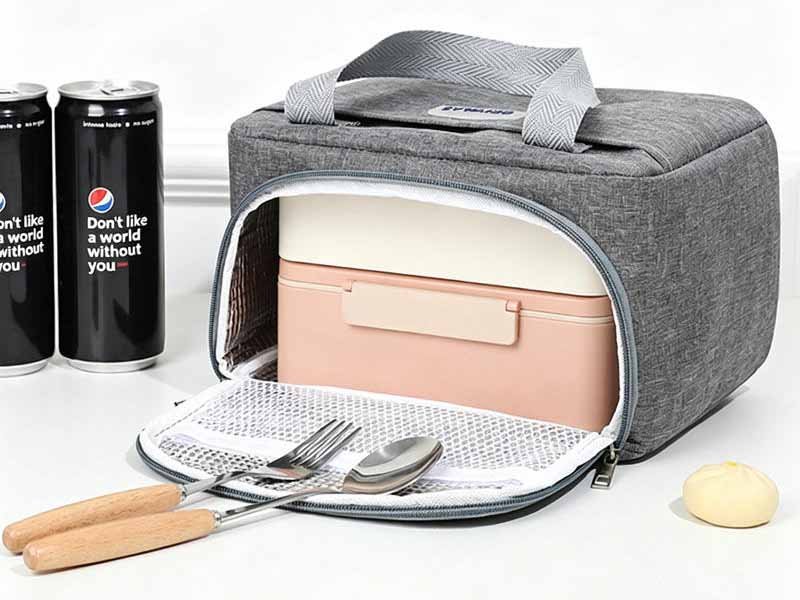
A cooler bag can look excellent in a product photo and still disappoint the first time someone leaves it in a warm car, carries it across a sunny car park, or opens it repeatedly during a picnic. Much of the difference comes from the insulation hidden between the outer fabric and the liner. That makes insulation thickness an important specification, but it is not a number that should be selected in isolation. Foam material, density, compression, bag size, zipper construction, liner, loading method, cold packs, ambient temperature, and even how often the lid is opened all influence the finished result.
For many sewn cooler bags, 3–5 mm insulation is a practical starting range for lightweight lunch and promotional products, 5–8 mm is commonly suitable for everyday cooler bags and insulated totes, while 8–12 mm or thicker constructions are more relevant to outdoor, delivery, and premium soft coolers. These ranges are useful development references rather than guaranteed cold-retention ratings. Finished performance should be validated using representative samples under defined conditions.
That distinction becomes important as soon as a product enters real development. A brand may spend more money increasing wall insulation from 8 mm to 10 mm and still gain less than expected because the lid is poorly insulated or the zipper leaks warm air. Another product may use slightly thinner foam but perform more consistently because the insulation surrounds the entire compartment and the closure is better designed. The useful question is therefore not simply how thick the foam should be, but how the complete insulated structure should be built for the way customers will actually use the bag.
How Thick Should Cooler Bag Insulation Be?
For most soft cooler bags, 3–5 mm insulation works well as a starting point for lightweight lunch and promotional products, 5–8 mm is a practical range for everyday coolers, and 8–12 mm or more is often evaluated for outdoor, delivery, or premium applications. Thickness should always be considered together with foam type, density, capacity, closure design, weight, target cost, and actual thermal testing.
Typical Thickness Ranges
There is no single cooler bag insulation thickness that can be treated as correct for every product. A small office lunch bag, a supermarket insulated tote, a food-delivery backpack, and a premium camping cooler may all use foam insulation, but their operating conditions are completely different. One product may only need to protect an already chilled meal during a commute, while another may sit outdoors for hours and carry several kilograms of drinks and ice packs.
In commercial development, approximately 3–5 mm is often evaluated for compact lunch bags, promotional insulated totes, beverage carriers, and short-duration applications where foldability and low weight matter. Moving toward 5–8 mm gives many everyday cooler bags a more substantial wall while still keeping the product relatively easy to manufacture and carry. Larger grocery, picnic, outdoor, and delivery products commonly justify evaluating 8–12 mm or thicker structures when thermal performance has greater commercial importance.
| Cooler Bag Type | Practical Development Range | Main Design Priority |
|---|---|---|
| Promotional insulated bag | 3–5 mm | Cost, foldability, low weight |
| Lunch bag | 3–6 mm | Compact size, portability, cleaning |
| Everyday cooler bag | 5–8 mm | Balanced performance and bulk |
| Grocery insulated tote | 5–10 mm | Capacity, load strength, insulation |
| Picnic cooler | 6–10 mm | Outdoor exposure and usable capacity |
| Cooler backpack | 6–10 mm | Thermal performance and carrying comfort |
| Delivery cooler | 8–12 mm+ | Opening frequency and structure |
| Premium soft cooler | 10 mm+ | Stronger thermal enclosure and sealing |
These figures should be used as prototype ranges rather than universal specifications. A 5 mm XPE structure and a 5 mm low-density EPE structure may not behave the same way after sewing, loading, and repeated use. Likewise, a 10 mm side panel cannot compensate for a thin lid, compressed corners, or a poorly designed zipper opening. The correct thickness becomes clear only after the whole bag has been developed and tested as a system.
When Is 3–5 mm Enough?
Three to five millimeters can be completely appropriate when the cooler bag is designed for light-duty daily use rather than long-duration outdoor cooling. A school or office lunch bag may travel for less than an hour before reaching an indoor environment. The customer may also use one or two small gel packs and load the bag with food that is already refrigerated. In that situation, making every wall extremely thick can reduce useful space and make the product awkward without solving a meaningful customer problem.
The same logic applies to many promotional products. A beverage company or corporate gifting program may order thousands of lightweight insulated bags for campaigns, employee gifts, events, or seasonal promotions. These programs often place strong emphasis on print quality, unit cost, carton volume, ease of distribution, and convenient storage. A well-constructed 3–5 mm insulated bag can be more commercially appropriate than a much heavier product designed for a level of thermal performance that customers do not expect.
Thin insulation becomes more questionable when the product is large, frequently opened, used in high ambient temperatures, only partly loaded, or expected to protect frozen goods for longer periods. In those situations, the lower thickness range provides less margin for heat gain and less tolerance for compression around seams and corners. Product teams should therefore decide whether the bag is mainly a convenient insulated carrier or a performance-focused cooler before approving a thin construction.
When Does 8–12 mm Make Sense?
Eight to twelve millimeters becomes more useful when thermal performance is one of the main reasons the customer is buying the product. Larger grocery coolers, family picnic bags, outdoor soft coolers, insulated backpacks, and delivery bags all operate under conditions where additional insulation can produce meaningful value. These products usually carry more cold mass, have a larger surface area, and remain away from refrigeration for longer periods than a basic lunch bag.
The additional thickness also changes the physical design. A thick side wall consumes space, affects panel turning, changes the way corners are sewn, makes zipper installation more demanding, and can increase carton volume. If a bag is sold as a 24-can or 30-liter cooler, adding several millimeters to every panel may reduce the finished capacity unless the external dimensions are adjusted. That is why internal capacity should be confirmed after the insulation specification is finalized rather than relying only on the original drawing.
For commercial projects, the most useful comparison is not whether 10 mm is theoretically better than 5 mm. It is whether a finished 10 mm construction provides enough measurable improvement over a 5 mm or 8 mm construction to justify the increased material cost, weight, body stiffness, shipping volume, and manufacturing complexity. A controlled prototype comparison usually gives a much clearer answer than a thickness number alone.
Why More Is Not Always Better
A cooler bag can be over-insulated for its intended market. If a compact lunch bag already performs satisfactorily with 5 mm foam under the brand’s intended use conditions, moving to 10 mm may create a product that feels unnecessarily thick, loses internal capacity, costs more to produce, and takes up more space in retail or fulfillment cartons. Customers may receive very little practical benefit from the additional material.
There is also a point where weak areas elsewhere in the bag become more important than the main side-wall thickness. Heat may enter through a lightly insulated lid, a long zipper, compressed bottom corners, or gaps between foam panels. Increasing every side panel by another 2 mm will not necessarily solve those problems. In many cases, correcting insulation continuity around the opening or base can produce more value than simply increasing the nominal foam thickness.
The best design is therefore not the bag with the greatest amount of foam. It is the bag with enough insulation to meet the real use case while still maintaining suitable capacity, comfort, appearance, production efficiency, price, and shipping profile. That balance is especially important for commercial product lines that need to be reordered consistently over several seasons.
Which Insulation Material Should You Choose?

EPE is widely used for cost-effective cooler bags, XPE offers stronger resilience and dimensional stability, EVA can add a denser and more structured feel, and PU may suit more demanding insulation constructions. The right material depends on thickness, density, compression resistance, product shape, sewing method, target price, and the level of thermal performance expected from the finished bag.
EPE and XPE Foam
EPE, or expanded polyethylene foam, is one of the most common materials used in sewn cooler bags because it is lightweight, flexible, moisture resistant, relatively economical, and easy to integrate into standard bag production. It works well in lunch bags, insulated grocery totes, picnic bags, promotional coolers, and many mainstream retail products where the brand wants a practical balance between cost and performance.
The limitation is that “5 mm EPE” is not a complete material specification. Density, cell structure, compression resistance, thickness tolerance, and lamination quality can vary from one source to another. Two pieces of foam may measure the same nominal thickness but feel completely different after the bag is sewn. A soft low-density material may compress considerably at the base and seam areas, while a more resilient grade may retain its shape better throughout the finished product.
XPE is cross-linked polyethylene foam. The cross-linked structure generally provides improved dimensional stability and recovery compared with basic EPE, making it useful for products that need a more consistent body and stronger resilience under compression. XPE is often evaluated for mid-range and premium insulated products where a brand wants improved structure without moving to a much heavier construction.
| Material | General Characteristics | Typical Applications | Main Checks |
|---|---|---|---|
| PE foam | Lightweight and economical | Basic insulated bags | Thickness, compression |
| EPE foam | Flexible and cost-effective | Lunch, grocery, promotional coolers | Density, tolerance, coverage |
| XPE foam | Resilient and dimensionally stable | Mid-to-premium cooler bags | Material grade, cost difference |
| EVA foam | Dense with stronger structural feel | Premium or shaped cooler products | Weight, stiffness, sewing behavior |
| PU foam | Strong insulation potential depending on grade | Specialized or premium constructions | Density, processing, consistency |
For long-term production, material records should include more than the generic foam name. Nominal thickness, approved grade or density, sample reference, and key construction details can significantly reduce variation between the original production run and later repeat orders.
EVA for Structured Products
EVA foam becomes useful when the insulation layer also contributes to the physical shape of the product. A denser EVA structure can make a lunch case, premium insulated tote, or outdoor cooler feel more substantial in the hand and hold its form better than a lightweight soft-foam build. That can be valuable for products positioned at a higher retail price where customers expect both performance and a more controlled appearance.
The trade-off is that denser material can make the product heavier and more difficult to sew. Thick EVA affects seam allowances, curved zipper paths, piping, corner construction, and the ease with which the finished bag can be folded. These effects are difficult to judge from a small foam swatch because the material behaves differently once it becomes part of a complete three-dimensional product.
A finished prototype should therefore be reviewed for more than insulation. The development team should confirm that the zipper still operates smoothly, the body is not excessively stiff, the bag remains comfortable to carry, and the interior still holds the intended containers or cans. If EVA improves both structure and thermal performance without creating those problems, it can be a strong choice for premium products.
When to Consider PU Foam
PU foam can be relevant when a project requires stronger insulation potential or a construction that benefits from polyurethane-based material. However, PU foam varies widely in density, flexibility, cell structure, resilience, and processing method, so the material name alone is not enough to predict how it will behave inside a sewn cooler bag.
The manufacturing environment also matters. A foam that performs well in a controlled laboratory setting must still survive cutting, lamination, sewing, compression during packing, international shipping, warehouse storage, and repeated flexing by the customer. If the material loses significant thickness or shape during those stages, the theoretical advantage may not translate into the finished product.
PU is therefore more appropriate for projects where the performance requirement and market positioning justify closer control of the insulation system. A premium outdoor cooler may have a reason to compare PU against XPE or EVA, while a low-cost promotional lunch bag probably does not need that level of material complexity. The commercially strongest material is the one that achieves the required performance without creating unnecessary weight, cost, or production risk.
Why Density Matters
Thickness is easy to communicate, but density and resilience are often just as important in the finished product. Two cooler bags can both claim to contain 8 mm foam even though one material maintains most of its thickness after sewing and loading while the other compresses substantially under pressure. The nominal specification looks similar, but the thermal path through the finished bag is not the same.
Density also changes how the product feels. A more resilient or denser foam can give a premium cooler a controlled structure, while a lower-density foam may be better for a foldable promotional product that needs to pack flat. There is no reason to pay for unnecessary structure if the customer expects a lightweight bag, just as there is little value in using a very soft foam when the product is meant to look substantial on a retail shelf.
A practical production specification should therefore combine foam type, nominal thickness, approved material grade or density, panel location, and sample reference. Lovrix’s documented cooler-bag material system includes PE, EPE, XPE, EVA, and PU foam options, as well as PEVA, aluminum foil, TPU, and PVC liners, which allows the insulation to be evaluated as part of the complete bag structure rather than as a single isolated material.
How Does Thickness Affect Cold Retention?

Thicker insulation generally slows heat transfer, but thickness cannot be converted reliably into a fixed number of cold-retention hours. Real performance is also affected by foam properties, bag surface area, closure leakage, cold-pack quantity, loading ratio, starting temperature, opening frequency, ambient temperature, sunlight, and the amount of insulation around the lid, base, seams, and corners.
Heat Transfer in Real Use
Insulation does not produce cold. It slows the movement of heat from the warmer environment toward the colder interior. When foam thickness increases, heat has a longer path through the insulating material, so under controlled conditions the rate of conductive heat transfer will generally decrease. This basic principle explains why larger or higher-performance cooler bags often use thicker insulation than simple lunch products.
Real bags introduce several additional heat-transfer paths. Warm air can enter when the zipper opens. The lid may receive direct sunlight. The base may sit on a hot surface. Foam can become thinner around seams and corners. A large partially filled cooler can also contain a substantial volume of warmer air, while the same cooler filled tightly with chilled drinks and frozen packs has much more cold thermal mass inside.
This is why thickness comparisons are most useful when the other variables remain the same. A brand comparing 5 mm and 8 mm foam should ideally use the same bag dimensions, liner, zipper, outer fabric, test load, cold-pack weight, ambient temperature, and opening pattern. If everything changes at once, the test may show which sample performs better, but it becomes difficult to identify what caused the improvement.
Ice Packs and Loading
The amount of cold mass inside the bag has a major influence on how long the contents remain cool. Frozen gel packs, ice, refrigerated drinks, frozen food, or chilled meal containers absorb incoming heat while the insulation slows the rate at which that heat reaches them. A bag with excellent insulation but almost no cold mass may warm faster than customers expect.
Loading ratio is equally important. A cooler filled efficiently with cold products and ice packs generally behaves differently from the same bag when it is mostly empty. Empty internal space can increase air movement, and the smaller amount of chilled material provides less thermal mass to absorb incoming heat. This explains why customer experiences with the same product can vary substantially even when the foam construction has not changed.
| Test Variable | Example Controlled Condition |
|---|---|
| Bag capacity | 18 L |
| Foam | 8 mm XPE |
| Cold packs | 2 × 500 g |
| Product load | Identical test bottles |
| Starting temperature | Recorded before closing |
| Ambient temperature | Recorded throughout test |
| Opening schedule | Closed or opened at fixed intervals |
| Reading interval | Every 30–60 minutes |
| Sensor location | Same location in each sample |
These values illustrate how a controlled comparison can be structured; they should not be interpreted as a universal industry performance standard. The main purpose is to make sure Sample A and Sample B experience the same conditions so that the development team can draw meaningful conclusions.
Ambient Temperature and Sunlight
A cooler tested inside a 22°C office has a much easier task than the same bag sitting in a vehicle or outdoor area at 35–40°C. The greater the temperature difference between the inside and outside, the stronger the thermal load on the insulation. Direct sunlight can raise the surface temperature even further, particularly on dark-colored or highly heat-absorbing exterior materials.
Products should therefore be validated in conditions that resemble their intended market. A beach cooler or outdoor camping bag should not be judged solely on a mild indoor test if customers are likely to leave it on warm ground or inside a vehicle. Likewise, a lunch bag designed for a short office commute does not automatically require an extreme outdoor testing program that would add cost without improving the intended customer experience.
Outer fabric can also influence the surface environment seen by the insulation. Dark polyester, heavy-duty Oxford, tarpaulin, TPU-coated fabrics, and light-colored shells can behave differently under solar exposure. This does not make the outer fabric the primary insulation, but it reinforces the idea that thermal performance comes from the interaction of the entire structure.
Opening Frequency Changes Everything
Opening the bag can have a greater effect than many people expect because warm ambient air enters the insulated compartment every time the lid or zipper is opened. A picnic cooler that remains closed for 90 minutes operates differently from a food-delivery bag that is opened every 15 minutes throughout a working shift.
This is why delivery products should be tested with realistic opening cycles rather than using only a static closed-bag test. A development team can open the bag for a defined period, such as 20 or 30 seconds, close it again, and repeat that cycle at scheduled intervals. This gives a better indication of how insulation and closure design work together during actual use.
In some designs, improving lid overlap, reducing the size of the access opening, or changing the zipper path can produce more meaningful gains than increasing every insulation panel by another 2 mm. Strong thermal performance comes from controlling all the major heat-transfer routes rather than relying on foam thickness alone.
What Else Affects Cooler Bag Insulation?

Foam is only one part of a cooler bag’s thermal structure. Liner material, zipper design, lid fit, seam compression, base construction, panel coverage, outer shell, bag geometry, and opening frequency all influence performance. A carefully balanced 8 mm construction may perform better than a thicker product if the thicker bag contains weak closures, uninsulated gaps, or heavily compressed foam around critical areas.
Liner Choice
The liner is one of the most visible components inside a cooler bag, which is why it is often mistaken for the main insulation layer. In most sewn soft coolers, however, the foam hidden behind the liner provides the primary resistance to conductive heat transfer. The liner contributes other important functions, including cleanability, moisture management, durability, appearance, and sometimes radiant heat management.
Common liner materials include PEVA, aluminum-foil-based or metallized structures, TPU, and PVC. PEVA is widely used in mainstream lunch bags and grocery coolers because it can provide a smooth, wipeable interior. Reflective metallic liners are visually associated with thermal products and can contribute to radiant-heat control, but a thin reflective layer should not be treated as a substitute for a properly selected foam core.
Higher-specification products may use TPU or more advanced liner constructions when durability, flexibility, or seam-sealing requirements justify the additional cost. The useful way to understand the wall is as a layered system consisting of the outer shell, any reinforcement, the insulation foam, and the inner liner. Each layer has a different job, and the finished performance depends on how well they are integrated.
Zippers and Closures
The zipper creates a deliberate opening through the insulated enclosure, making it one of the most important areas to review when thermal performance matters. A large three-sided zipper around a wide lid presents a different challenge from a short top zipper on a small lunch bag because the total opening length and air-exchange area are much greater.
Not every cooler needs a waterproof or highly specialized zipper. Those options can increase stiffness, opening force, and unit cost. For a compact office lunch bag, a standard reliable zipper may be more appropriate. For a premium outdoor cooler or demanding delivery product, stronger sealing, better lid overlap, and a more robust closure can become more valuable because the thermal and environmental requirements are higher.
Closure design should therefore be reviewed together with zipper type, zipper length, lid geometry, insulation around the opening, ease of operation, repeated cycling, and any water-resistance requirement. A difficult-to-open product is not automatically a better cooler simply because the zipper is more expensive. The closure must fit the actual way customers use the bag.
Seams and Compression
Sewn cooler bags do not maintain exactly the same insulation thickness at every point. In the center of a side panel, an 8 mm foam sheet may remain close to its original thickness. At seams, piping, zipper edges, corners, and reinforcement points, several layers are pulled together and compressed through a relatively narrow area. The effective insulation thickness in those zones can become much smaller.
Typical high-compression locations include side seams, lid edges, bottom corners, zipper ends, binding, piping, and handle attachment areas. If the product underperforms during testing, these points deserve attention before the entire foam specification is increased. A weak thermal bridge can sometimes be corrected by improving pattern design or foam coverage rather than adding material everywhere.
Cut-open analysis of a development sample can be particularly useful. It can reveal folded foam, gaps, over-trimmed corners, poorly aligned panels, or unexpected compression that cannot be seen from the outside. Lovrix’s documented cooler-bag development guidance also treats foam thickness, sealing, liner material, bag shape, loading, and environmental conditions as interconnected factors rather than relying on thickness alone.
Shape and Base Design
Bag shape influences both thermal behavior and usability. A wide pizza-delivery bag has a large lid and broad exposed surfaces, while a cooler backpack has a smaller top opening but must integrate insulation with a load-bearing back panel. A grocery tote may have a wide mouth and a heavy load concentrated on the base. These products should not automatically use the same insulation layout simply because they all fall under the cooler-bag category.
The base deserves special attention because drinks, bottles, frozen foods, or meal containers can create significant downward pressure. Soft foam may compress under several kilograms of load. A PP or PE board can be added for structure, but that reinforcement needs to be incorporated carefully so that it does not create a poorly insulated area or uncomfortable edge.
Finished samples should therefore be tested under realistic loads. An empty cooler standing neatly on a photography table does not reveal how the base behaves when carrying 8 kg of drinks or how the shoulder straps feel when the entire insulated structure is full. Realistic loading exposes problems with capacity, compression, balance, opening access, and thermal construction before they become production issues.
Which Thickness Fits Each Cooler Bag?

Different cooler products require different insulation strategies. Lunch bags usually prioritize compactness, while grocery and picnic coolers need larger capacity and greater resistance to outdoor heat. Cooler backpacks must balance insulation with carrying comfort, while delivery bags and premium soft coolers may justify thicker walls because opening frequency, rough use, and customer performance expectations are higher.
Lunch and Everyday Bags
Lunch bags are among the products most likely to be over-engineered because the customer’s normal use is often simpler than a premium outdoor cooler. A student or office worker may carry food from home for a relatively short period and then store the bag in a controlled indoor environment. Compact dimensions, easy cleaning, attractive appearance, and convenient storage can be more important than extreme ice retention.
For many of these products, approximately 3–6 mm is a sensible range to prototype. A small single-compartment lunch bag may work well near the lower end of that range, while a larger double-deck lunch bag or insulated tote may benefit from moving toward 5–8 mm. The final decision depends on product size, the amount of cold mass normally used, and whether the bag is expected to remain outdoors.
Internal dimensions should always be checked after the foam construction is approved. Thick walls can significantly reduce usable space in small products. If the packaging or marketplace listing promises that the bag fits two standard meal containers or a certain number of cans, that capacity should be physically verified with the finished sample rather than calculated only from the external dimensions.
Grocery and Picnic Coolers
Grocery and picnic coolers usually justify thicker insulation because they carry more product, have larger exposed surfaces, and spend more time in vehicles, car parks, parks, campsites, or outdoor environments. A practical development range of roughly 5–10 mm is often worth comparing, with the exact thickness adjusted according to size, target price, and the level of thermal performance expected.
The mechanical structure is just as important as the insulation. Several kilograms of bottles, chilled food, and frozen items place substantial stress on the base and handles. Webbing width, reinforcement patches, stitch patterns, and fabric tear resistance should therefore be developed together with the thermal system. An insulated tote that keeps food cool but develops handle failure after repeated grocery trips is still a poor product.
Picnic products also experience repeated opening. Family members may reach for drinks every few minutes while the bag remains in direct sunlight. In that environment, lid design, zipper construction, and the organization of the contents can become nearly as important as side-wall thickness. Successful development requires the bag to survive both realistic thermal use and realistic carrying use.
Cooler Backpacks
Cooler backpacks create a special engineering challenge because the user carries the entire insulated enclosure against the body. Increasing foam thickness can improve thermal resistance but can also make the backpack wide, stiff, heavy, and uncomfortable. The insulation system therefore needs to work together with shoulder straps, back padding, reinforcement, and the overall center of gravity.
Around 6–10 mm is a useful range to evaluate for many commercial cooler backpacks, although premium outdoor designs may move thicker depending on the performance target. The back panel deserves particular attention because it has several jobs at once: it forms part of the thermal wall, provides structural support, and influences carrying comfort.
Loaded testing is essential. A cooler backpack can look well-proportioned while empty but become uncomfortable after 8–12 kg of drinks, food, and cold packs are added. Developers should check shoulder-strap angle, strap padding, back-panel stiffness, top-handle reinforcement, zipper access, internal capacity, and foam compression under load. The ideal result should still behave like a comfortable backpack rather than feeling like a rigid cooler that happens to have straps attached.
Delivery and Premium Soft Coolers
Delivery coolers and premium soft coolers usually have the strongest reason to explore 8–12 mm or thicker insulation because their commercial value is more closely tied to performance. Delivery products may be opened repeatedly throughout a shift, carried in vehicles, exposed to weather, and cleaned frequently. Premium outdoor coolers may remain closed longer but face sunlight, warm ground, heavy ice loads, and rough handling.
These applications need more than thicker foam. Delivery products benefit from stable box structures, easy-clean liners, reinforced handles, controlled opening geometry, and strong bottom construction. Premium outdoor designs may use coated fabrics, tighter closures, resilient foam, structured bases, heavier webbing, and improved liner systems to create a more complete enclosure.
For both product types, thermal testing becomes increasingly important because customers are paying for performance. If cold-retention claims will appear prominently on packaging, retailer presentations, advertisements, or marketplace listings, the finished product should be tested under clearly defined conditions. Foam thickness by itself does not provide enough evidence for a specific performance promise.
How Should Brands Specify and Test Insulation?
A professional cooler-bag specification should define foam material, nominal thickness, material grade or density, panel location, liner, closure, dimensions, and an approved sample reference. The finished product should then be tested using controlled loading, cold packs, ambient temperature, and opening conditions. Bulk production should also be checked to confirm that the approved insulation system has not changed.
Measure the Right Things
Raw foam thickness and finished wall thickness are two different measurements. Foam should first be inspected before assembly. Depending on the project, the material record may include foam type, nominal thickness, measured thickness range, material code, approved grade or density, lamination condition, and batch information. Several measurements across the sheet are more useful than checking only one convenient edge.
After sewing, the wall includes outer fabric, insulation, lining, seam allowances, binding, and sometimes reinforcement. The insulation may be compressed in critical areas, so the finished product should not be judged only by placing a ruler against the outside wall. A more useful specification describes the raw insulation material and then defines how and where it must be installed.
Instead of writing only “8 mm insulation,” a production record might specify “8 mm XPE foam, approved grade, with full side-wall and lid coverage, matching the approved pre-production sample.” If the base uses 10 mm or an additional reinforcement board, that should be listed separately. Clear records make repeat orders far easier to control because teams do not need to rely on memory.
Build Controlled Prototypes
Sampling becomes more valuable when each sample is designed to answer one clear question. If the foam material, thickness, liner, zipper, dimensions, and outer fabric all change at once, the product team may learn which overall sample performs better but will not know what caused the difference. Controlled comparison reduces this uncertainty.
A practical sequence might begin with a 5 mm EPE baseline sample, followed by the same bag using 8 mm EPE. A third version could use 8 mm XPE while keeping the other construction unchanged. A fourth sample could retain the XPE insulation but improve lid overlap or closure design. This approach shows whether the performance improvement comes mainly from thickness, foam material, or the opening structure.
Cost should be reviewed beside test performance. The coldest sample is not automatically the best commercial option. If one version adds significant unit cost, weight, or shipping volume but only produces a small improvement under realistic conditions, the market may not reward the additional expense. The best sample is the one that meets the target use case at a cost and construction the product line can support.
Specify the Whole Construction
A cooler-bag tech pack should describe the thermal structure with the same level of care used for outer fabric, hardware, logo, or packaging. Useful fields include external dimensions, required internal capacity, outer fabric, foam material, foam thickness, material grade or density, liner, lid insulation, base insulation, reinforcement, closure type, zipper specification, webbing, seam details, logo process, packaging, and testing requirements.
Different panels do not always need the same construction. A product might use 8 mm XPE around the side walls and lid, 10 mm XPE together with a structural board in the bottom, and no insulation in a decorative external pocket. Writing these details directly into the BOM and drawing reduces interpretation during sampling and bulk production.
The approved physical sample is also part of the specification because soft goods contain details that are easier to evaluate physically than on a drawing. Body stiffness, zipper feel, liner fit, seam compression, handle position, and overall shape can all be compared against a sealed reference. Lovrix’s long-term project system includes product-version, material, BOM, approved-sample, and packaging records to support repeat production and multi-SKU development.
Test Before Making Strong Claims
If cold retention is central to the product’s selling point, the finished bag should be tested before specific performance claims are published. The test does not need to become unnecessarily complicated for every simple promotional bag, but it should be reproducible enough that the same procedure can be repeated on another sample or production lot.
A basic test record should identify the bag model, internal capacity, foam construction, cold-pack quantity, product load, starting temperature, ambient temperature, sensor position, opening schedule, measurement intervals, and total duration. Comparison samples should be tested under the same conditions. Testing one bag at 24°C and another at 35°C does not provide a meaningful direct comparison.
The test scenario should also match the use case. Delivery bags can include repeated opening cycles, outdoor coolers can be exposed to higher ambient temperatures, and everyday lunch bags can use a shorter daily-use scenario. Lovrix’s cooler-bag QC scope includes foam-thickness checks, lining inspection, zipper cycling, handle and strap checks, seam-strength checks, leakage checks, capacity checks, AQL inspection, pre-shipment inspection, and insulation-performance reference testing when required.
A responsible product specification should avoid turning a foam thickness into a guaranteed number of hours without evidence. Cooler performance depends on insulation, lining, sealing, capacity, loading, and environment, so stronger marketing claims require stronger test documentation.
Final Thoughts
The right cooler bag insulation thickness is not the largest number that can fit between the outer fabric and the liner. It is the thickness that gives the intended customer enough thermal performance without making the bag unnecessarily heavy, bulky, expensive, difficult to manufacture, or inefficient to ship. For a lightweight lunch or promotional bag, 3–5 mm may be completely appropriate. Many everyday cooler products work well as development candidates around 5–8 mm, while outdoor, delivery, and premium products often justify testing 8–12 mm or thicker constructions.
The most reliable development process starts with the use case rather than the foam. Define what the customer carries, where the bag will be used, how often it opens, how much capacity is required, and how important cold retention is to the retail promise. Then select a suitable foam material and thickness, develop the liner, lid, zipper, seams, and base around it, build representative prototypes, and compare them under controlled conditions.
For brands developing a new cooler or improving an existing model, this approach also makes sourcing discussions much more productive. Instead of asking a manufacturer to “make the insulation thicker,” the product team can compare EPE, XPE, EVA, or other constructions against clear performance, capacity, cost, and manufacturing targets. Lovrix supports cooler-bag development across outer fabrics, insulation layers, liners, structure, sampling, production control, and quality inspection, allowing these decisions to be evaluated before a bulk specification is locked.
Customers will probably never see the foam hidden inside the finished bag. They may never know whether it is 5 mm, 8 mm, or 10 mm. What they notice is whether their food remains cool, whether the zipper works smoothly, whether the liner is easy to clean, whether the handles survive repeated use, and whether the product performs the way the brand promised. That is ultimately the standard an insulation specification needs to meet.
Frequently Asked Questions
Is 5 mm insulation enough for a cooler bag?
Five millimeters can be enough for many lunch bags, small beverage coolers, promotional insulated bags, and lightweight everyday products, especially when the contents begin chilled and ice packs are used. It should not automatically be assumed suitable for large outdoor coolers or demanding delivery applications. Foam material, density, liner, closure, bag size, loading ratio, and environmental temperature all affect the finished thermal performance.
Is 10 mm foam better than 5 mm foam?
Ten millimeters generally provides greater resistance to conductive heat transfer than 5 mm of the same material under the same conditions, but the finished bag is also thicker, heavier, and more difficult to manufacture. If heat is mainly entering through the lid, zipper, or compressed seams, doubling the side-wall insulation may provide less improvement than expected. Controlled prototype comparison is the most useful way to decide whether the added thickness is worthwhile.
What foam is best for cooler bags?
There is no single best foam for every cooler. EPE is widely used for economical and flexible products, XPE can provide stronger resilience and structural consistency, EVA can suit premium or shaped constructions, and PU-based options may be considered for more demanding designs. The material should be selected together with thickness, density, compression behavior, target cost, finished weight, production method, and the actual performance required from the bag.
Does aluminum foil lining keep a cooler bag cold?
Aluminum or metallized lining can contribute to radiant-heat management and provides the reflective appearance commonly associated with cooler products, but it should not be treated as the main insulation layer. In most soft cooler bags, closed-cell foam behind the liner performs the main conductive insulation work. A strong thermal design combines a suitable foam core with the liner, closure, seams, base, and overall bag structure rather than relying on reflective film alone.
How can I make a cooler bag stay cold longer?
Improving insulation thickness can help, but several other changes may be equally important. Use appropriately sized frozen packs, load already chilled products, minimize unused internal space, keep the bag closed as much as possible, avoid direct sunlight, and make sure the lid and base are properly insulated. In product development, improving zipper sealing, foam coverage, liner construction, or opening geometry can sometimes produce more value than simply adding thicker foam.
How should cooler bag insulation be tested?
A useful test should record the bag capacity, foam construction, product load, cold-pack weight, starting temperature, ambient temperature, sensor position, opening schedule, measurement intervals, and test duration. Comparison samples should be tested under the same conditions so the results can be interpreted fairly. Delivery coolers should ideally include realistic opening cycles, while outdoor products should be evaluated under temperatures that resemble their intended environment.
Can insulation thickness guarantee a specific number of cold-retention hours?
No. Thickness alone cannot responsibly guarantee that a cooler will stay cold for a specific number of hours. Thermal performance depends on foam material, density, insulation coverage, liner, zipper, seam construction, bag capacity, loading method, amount of cold mass, opening frequency, starting temperature, and ambient conditions. Any specific time-based performance claim should therefore be supported by a defined finished-product test rather than inferred from the nominal foam thickness.


