 Skip to content
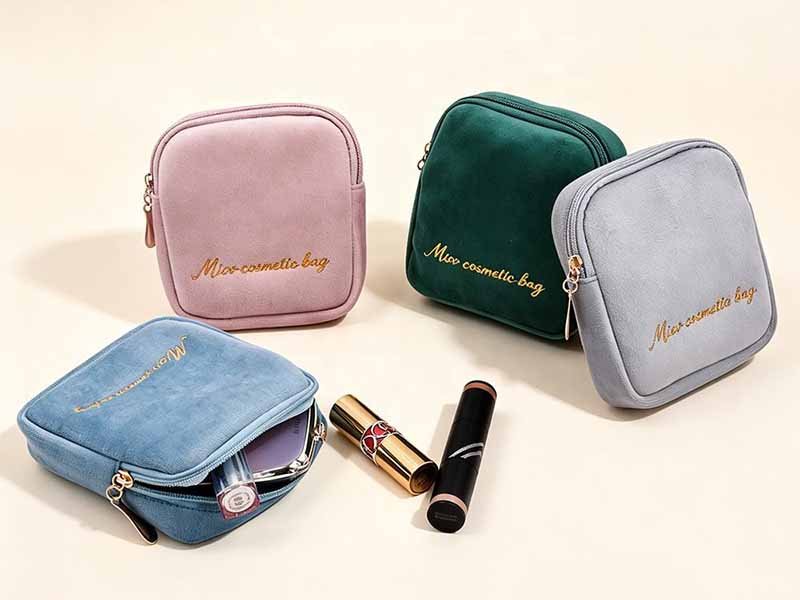
A logo may occupy only a few centimeters on a cosmetic bag, but it often has a much bigger influence on how the finished product feels. The same brand mark can look understated and refined when debossed into matte PU, tactile and warm when embroidered on terry cloth, crisp and commercial when screen printed on polyester, or noticeably more premium when incorporated into a custom metal plate. The process you choose affects not only appearance, but also cost, sampling time, durability, minimum quantities, production consistency, and even how the bag looks after it has been filled and used.
The best logo method for a beauty brand bag depends on the bag material, artwork complexity, desired brand image, expected use, order quantity, and budget. Screen printing works well for simple graphics, heat transfer suits detailed multicolor artwork, embroidery adds texture, woven labels create subtle branding, debossing and foil stamping suit many PU styles, while metal plates and custom zipper pullers are better suited to premium programs.
The important point is that there is no single process that is best for every bag. A beautiful logo shown on a digital rendering can still fail during sampling if the material reacts badly to heat, if embroidery makes small lettering unreadable, or if a metal plate pulls on a soft front panel. Good logo development starts much earlier than final decoration. It begins with the material, the construction, the sales channel, and the type of experience the brand wants the customer to have when the bag is first opened.
Which Logo Methods Are Best for Beauty Brand Bags?

The strongest logo method is the one that gives the intended visual effect without creating unnecessary production risk. For most beauty bag projects, the practical options include screen printing, heat transfer, embroidery, woven labels, debossing, foil stamping, metal logo plates, and custom zipper pullers. The final decision should always be made on the actual production material rather than from artwork alone.
| Logo Method | Best For | Common Materials | Visual Effect | Cost Pressure | Main Risk to Check |
|---|---|---|---|---|---|
| Screen Printing | Simple 1–3 color logos | Canvas, cotton, polyester, Oxford | Clean and graphic | Low | Adhesion and registration |
| Heat Transfer | Detailed or multicolor artwork | Polyester and compatible synthetics | Sharp and colorful | Low–Medium | Heat response and edge lift |
| Embroidery | Textile-focused branding | Canvas, cotton, velvet, terry, quilted fabric | Tactile and crafted | Medium | Puckering and small text |
| Woven Label | Subtle private-label branding | Most sewn materials | Consistent and understated | Low–Medium | Edge finish and placement |
| Debossing | Minimal premium logos | Suitable PU and leather-like materials | Quiet and refined | Medium | Grain definition |
| Foil Stamping | Metallic premium branding | Compatible PU surfaces | Polished and decorative | Medium–High | Foil transfer and abrasion |
| Metal Logo Plate | Prestige retail programs | PU and structured textiles | Strong luxury detail | High | Plating and attachment |
| Custom Zipper Puller | Signature brand hardware | Zippered bags | Distinctive and reusable | High | Mold, weight and zipper function |
Screen Printing and Heat Transfer
Screen printing remains one of the most widely used branding methods for cosmetic bags because it is relatively straightforward, scalable, and compatible with many common materials. It works best with logos that contain solid shapes, clean lettering, and a limited number of colors. One-color or two-color wordmarks are usually easier to control than artwork with several closely registered colors because every additional color adds another printing step, registration point, and potential source of variation.
Canvas, cotton, polyester, and many Oxford fabrics are common candidates for screen printing, although the finished result depends on the actual weave, coating, and surface texture. A smooth polyester panel can produce a sharper edge than a coarse canvas weave. On a heavily textured fabric, the underlying structure remains visible through the printed surface, which can look natural and intentional for some beauty brands but less suitable for very fine graphics.
Heat transfer becomes useful when the artwork contains gradients, multiple colors, small details, or illustrations that would be difficult to reproduce through conventional screen separation. The process can produce very sharp graphics on compatible fabrics, particularly polyester-based materials. However, because heat and pressure are involved, the material itself must be tested. Coated Oxford, soft-touch polyester, PU-coated fabrics, TPU, and PVC should not be treated as if they were identical simply because they are all synthetic materials.
A transfer that looks excellent on one fabric may create gloss marks, edge lift, surface distortion, or adhesion problems on another. For that reason, the safest approval method is to produce the logo on the exact face material planned for bulk production. The final test should not stop at appearance immediately after application. The sample should also be flexed, rubbed, packed, and handled in a way that reflects normal use.
Embroidery and Woven Labels
Embroidery gives beauty bags a very different character because the branding becomes part of the textile surface rather than a flat layer of color. Thread creates depth, shadow, and texture, which is especially effective on canvas cosmetic bags, cotton pouches, velvet makeup bags, terry cloth styles, quilted organizers, and other products where the fabric itself contributes strongly to the brand image.
The most successful embroidered logos are usually relatively simple. Clear lettering, bold icons, and uncomplicated outlines tend to reproduce more reliably than very small words, narrow gaps, or complicated line art. As a logo becomes smaller, thread diameter and stitch density become limiting factors. Artwork that looks perfectly legible at 50 mm wide on a computer screen can become difficult to read once stitched at 25–30 mm. Dense embroidery can also stiffen soft panels or cause puckering if the fabric and backing are not balanced correctly.
Woven labels solve another common branding challenge. Instead of asking the bag material itself to carry the logo, the logo is woven into a separate component and then sewn into a seam, lining, or exterior panel. This makes woven labels particularly useful when a brand develops several products using different materials. The same label design can appear on a canvas pouch, nylon organizer, quilted makeup case, and velvet beauty bag, giving the collection a more consistent identity.
For minimalist or premium beauty brands, a small side label can sometimes look more refined than a large front logo. A compact woven label of roughly 20–40 mm may work well on many cosmetic pouches, although final dimensions should always be determined by the bag size, logo proportions, seam allowance, and visual balance. The goal is not to hide the brand, but to create recognition without making the product look like generic promotional merchandise.
Debossing and Foil Stamping
Debossing is one of the most effective choices for beauty brands that want quiet, integrated branding. A die presses the logo into a suitable PU or leather-like surface, creating a recessed impression that relies on depth and shadow rather than contrasting ink. The result can feel sophisticated because the logo appears to belong to the material itself. This approach is often well suited to skincare, fragrance, wellness, and premium cosmetic accessories.
Embossing uses a similar principle but raises the logo above the surface rather than pressing it inward. Both methods depend strongly on the material construction. Smooth PU, fine-grain PU, pebbled PU, soft-touch synthetic leather, and heavily textured surfaces do not produce identical results. Fine lettering can appear crisp on one material but lose definition on another if the grain is too deep or the surface recovers after pressure is released.
Foil stamping adds a metallic or colored layer during the pressing process. Gold, champagne, silver, rose gold, and related finishes are common in beauty packaging because they can coordinate with cartons, caps, closures, zipper hardware, or printed labels. However, the appearance on a digital rendering cannot confirm the final result. Surface texture, heat sensitivity, foil chemistry, and pressure all influence how cleanly the mark transfers.
For high-visibility branding, sample approval should include edge definition, coverage, color, and appearance after normal handling. A foil logo that looks excellent immediately after stamping may still need to be checked for rubbing or pressure marks after packing. If the bag uses a very soft panel, the logo should also be viewed when the bag is filled because surface curvature can change how the metallic detail reflects light.
Metal Logos and Custom Pullers
Metal logo plates and custom zipper pullers turn branding into part of the hardware system rather than a surface decoration. They work especially well on structured makeup cases, premium toiletry bags, fragrance gift pouches, and beauty organizers that are intended to remain useful long after the original cosmetic products have been consumed. Every time the customer opens the bag, a branded zipper pull can create another physical interaction with the brand.
The visual impact comes with more development work. Custom metal parts may require a mold, plating selection, dimensional confirmation, attachment design, and independent component quantities. A front logo plate also adds local weight and tension to the bag panel. If the outer material is thin or very soft, reinforcement behind the plate may be necessary to keep the panel from sagging or pulling around the fixing points.
Custom zipper pullers require functional evaluation as well as visual approval. A puller that is too large or too heavy may change the way the zipper moves. Sharp corners, uncomfortable edges, plating consistency, and connection strength all need to be considered. For this reason, branded hardware should be developed at the same time as the zipper and bag construction rather than added as a late cosmetic decision.
Lovrix’s documented branding capability includes screen printing, heat transfer, digital printing, embroidery, woven labels, leather patches, rubber patches, silicone patches, metal logo plates, embossing, debossing, foil stamping, laser engraving, jacquard webbing, and other custom branding processes. The company’s internal technical framework also states that logo selection should depend on material, product type, logo complexity, durability requirements, MOQ, sampling time, target cost, and sales channel instead of applying the same method to every product.
Which Logo Method Works Best for Each Bag Material?
Material should narrow the branding options before visual preference or price is compared. Canvas, polyester, PU, TPU, PVC, velvet, terry cloth, and quilted fabrics react differently to ink, heat, pressure, needles, and hardware. A reliable development process starts with the exact production material, including coating and surface finish, and then tests the logo methods that are technically suitable for that material.
| Material | Logo Methods to Test First | Processes Needing More Caution | Key Production Check |
|---|---|---|---|
| Canvas | Screen print, embroidery, woven label | Fine transfers on coarse weave | Edge sharpness and distortion |
| Cotton | Screen print, embroidery, woven label | Dense embroidery on light fabric | Puckering and ink penetration |
| Polyester | Screen print, heat transfer, embroidery | High heat on coated versions | Adhesion and heat response |
| Oxford | Screen print, embroidery, patch | Transfers on specialty coatings | Coating stability |
| PU | Deboss, foil, metal plate, selected print | High heat on sensitive finishes | Grain and surface change |
| TPU | Selected print, compatible transfer, label | Unverified heat processes | Flexing and adhesion |
| PVC | Selected print, patch, label | Heat-sensitive applications | Surface reaction |
| Velvet | Embroidery, woven label | Fine flat printing | Pile direction |
| Terry | Embroidery, patch | Small detailed printing | Loop distortion |
| Quilted Fabric | Embroidery, woven label | Logos crossing quilt seams | Placement and puckering |
Canvas and Cotton
Canvas and cotton offer some of the broadest branding flexibility in beauty bag development. Screen printing, embroidery, woven labels, PU or leather patches, and selected heat-transfer methods can all be considered depending on the fabric weight and surface. These materials are frequently used by wellness, clean beauty, natural skincare, spa, and lifestyle brands because the textile itself creates a softer and more reusable feel than many coated synthetics.
Screen printing works particularly well on relatively smooth canvas and cotton when the artwork uses bold shapes or simple lettering. On coarse canvas, the weave remains visible through the print and can break up extremely fine edges. That is not automatically a defect. For brands that want a more tactile or natural look, the slight interaction between ink and fabric texture can actually reinforce the desired style.
Embroidery can add more perceived value, but it places mechanical stress on the fabric. Lightweight cotton may wrinkle or pucker when dense stitching is concentrated in a small area. Backing, thread density, stitch direction, and logo size should all be reviewed during sampling. A 30 mm embroidered wordmark may require very different digitizing from a 70 mm icon, even if both use the same artwork.
Woven labels are particularly useful when the brand wants a consistent identity across several fabrics. Instead of redesigning the branding process for every material, the same label can be sewn into the side seam or front panel of multiple products. This is also a practical route for brands that want the surface of a canvas pouch to remain visually simple.
Polyester, Oxford and RPET
Polyester and Oxford are common materials for cosmetic organizers, travel pouches, beauty gift bags, and multipurpose accessories because they are available in many weights, constructions, colors, and coatings. Screen printing, heat transfer, embroidery, labels, and patches are all commonly considered, but the term “polyester” is too broad to approve a logo process on its own.
A lightweight 210D lining fabric, a 300D recycled polyester, a 600D Oxford, and a PU-coated polyester can all behave differently under heat or ink. Heat transfer should be checked for gloss change, surface deformation, coating marks, or edge lifting. Screen printing should be checked for adhesion and consistent coverage. Embroidery works well on many heavier Oxford fabrics but can distort thinner panels unless the fabric is stabilized properly.
RPET can usually use many of the same branding routes as conventional polyester, although sustainability claims should be handled separately from the logo process. The logo may communicate recycled content, but the environmental claim itself should be supported by appropriate material documentation. A recycled label does not automatically prove the composition of the bag material.
For multi-SKU beauty programs, polyester also offers an advantage because the material family can often support a wide range of colors and product forms. A brand may use similar outer materials across a cosmetic pouch, travel organizer, drawstring gift bag, and makeup case while keeping the same printing or label system. This can reduce visual variation and make repeat orders easier to control.
PU, TPU and PVC
PU is particularly useful for beauty brands because it supports both minimalist and decorative branding. Debossing, embossing, foil stamping, metal plates, selected printing methods, and sewn labels can all be considered. A matte PU bag with a small tonal deboss can look quiet and sophisticated, while the same basic construction with gold foil or plated hardware can move toward a more traditional premium accessory look.
The most important variable is the surface finish. Smooth PU, pebbled PU, wrinkled PU, high-gloss PU, matte PU, and soft-touch finishes respond differently to heat and pressure. A debossed logo can appear crisp on one material and vague on another. Fine foil lines may not transfer cleanly across a deep grain. The material can also change sheen if the temperature is too high.
TPU and PVC create different branding challenges because transparency is often part of the product design. A large opaque logo can reduce the visual value of a clear pouch, while a weakly bonded print can become obvious very quickly because scratches are easy to see on transparent surfaces. Printing, compatible heat-applied processes, labels, or patches may all be considered, but the exact material formulation should be tested rather than assumed.
For clear bags, normal bending and packing are especially important during approval. The logo should be checked after the panel is flexed, not only while it lies flat. If hardware touches the transparent surface during shipping, protection may also be needed to reduce visible scratching.
Velvet, Terry and Quilted Fabrics
Velvet, terry cloth, and quilted materials have become more common in beauty accessories because they create a tactile and lifestyle-oriented appearance. Their surface structure, however, makes certain flat printing processes harder to control. Velvet has pile direction, terry cloth has loops, and quilting creates raised and recessed zones across the panel. The same logo can therefore look very different depending on where and how it is applied.
Embroidery is often a practical choice because the thread sits above the textile texture and remains visually distinct. Woven labels and patches provide another controlled branding surface independent of the underlying pile. On velvet, pile direction should be reviewed before the logo position is finalized because light reflects differently when the fabric is brushed in opposite directions.
On quilted bags, placement needs careful attention. A small logo crossing a quilting line can appear uneven because part of the mark sits on a raised padded area while another part lies inside a seam channel. Whenever possible, important text should remain within one relatively stable panel area.
Terry cloth also requires realistic sampling. Fine screen printing can lose definition as the ink interacts with the loops, while overly dense embroidery can compress the fabric around the logo. The goal is to preserve the soft character of the material while still creating enough contrast and structure for the logo to remain recognizable.
How Do Logo Methods Compare in Cost and Performance?

Logo methods should be compared by total project impact rather than decoration price alone. Setup costs, tooling, labor, artwork preparation, component quantities, defect risk, durability, and future repeat orders all affect the real commercial result. Basic printing often creates less development pressure, while metal hardware, molded patches, custom pullers, and specialty finishes can justify higher investment when they materially improve retail value and long-term brand use.
Cost Is More Than Unit Price
A screen-printed logo can appear inexpensive on a per-piece basis, but the real process includes artwork preparation, screen setup, ink mixing, position control, printing, curing, and inspection. When the design uses several solid colors, each additional color normally creates another production step and another registration point. A one-color logo and a five-color graphic may therefore have very different cost structures even when they occupy the same physical area.
Embroidery is driven by other factors. The design must first be digitized into a stitch file. Machine time increases as stitch count, coverage, and size increase. A simple 40 mm wordmark can be much more efficient than a large, fully filled 100 mm emblem. Thread changes and complicated detailing also affect production efficiency.
Woven labels are produced separately from the bag. Their cost includes label development, weaving, cutting or folding, delivery, and sewing. Metal plates, silicone badges, rubber patches, and custom zipper pullers add another layer because molds, plating, molded colors, or special attachment methods may be required before the bag itself is assembled.
This is why the lowest decoration quote is not always the lowest project cost. A slightly more expensive method that performs consistently on the selected material may create fewer rejects and less rework than an apparently cheaper process that is difficult to control. Brands should compare total production stability, not only the decoration line on the quotation.
Performance Depends on Real Use
Asking which logo is “most durable” is not enough because every bag experiences different types of stress. A cosmetic pouch kept inside a handbag is repeatedly rubbed against other objects. A travel organizer is compressed inside luggage. A clear makeup bag may be wiped frequently. A gift-with-purchase pouch may only be used for a few months, while a prestige beauty case may remain in use for several years.
Each situation creates a different failure mode. Printed logos can experience abrasion, cracking, or color transfer. Heat-applied graphics may lift at the edges if the surface is not compatible. Embroidery can develop loose threads or distort lightweight fabrics. Foil may wear in high-contact areas. Metal plates can scratch or loosen if attachment points are poorly designed.
Durability testing should therefore match actual use. A logo near the zipper should be checked for repeated finger contact. A metal plate on a soft pouch should be checked after the bag is filled. A clear TPU panel should be inspected after bending and rubbing. A beauty travel case intended for frequent cleaning should be evaluated differently from a pouch designed mainly for gift packaging.
Lovrix’s documented process guidance specifically recommends sampling before bulk production, physical confirmation of final color and texture, and avoiding blanket claims that any branding process is suitable for every material or automatically resistant to all washing, rubbing, or outdoor conditions.
MOQ Changes With the Branding Package
The minimum quantity for a finished bag and the minimum quantity for a custom logo component are not always the same. A sewing factory may be able to produce a certain number of bags, while the supplier producing a custom metal plate, molded silicone badge, jacquard webbing, or branded puller may have a different production threshold because of tooling, plating, yarn setup, or mold economics.
Lovrix’s documented standard MOQ for custom bag projects is around 500 pieces per design, while the actual quantity can vary depending on material, structure, branding process, packaging, and project complexity. Basic methods such as screen printing, heat transfer, embroidery, woven labels, and standard patches generally create less MOQ pressure than custom metal plates, molded rubber or silicone badges, jacquard webbing, and custom zipper pullers, which may involve additional development cost or higher component quantities.
This becomes especially important when one order is divided across several colors. A 2,000-piece program using one common metal finish is commercially different from 2,000 pieces split into four custom plating colors. The total number of bags has not changed, but every hardware variation becomes a smaller production batch.
Brands planning a product line can sometimes reduce this pressure by standardizing key components. One zipper-puller design or one neutral woven label may work across several pouch colors and sizes. If the same branding element is reused on future cosmetic bags, vanity cases, and travel organizers, the initial development investment can make more commercial sense.
How Should Beauty Brands Match Logo Style to Positioning?

A beauty bag is part packaging, part accessory, and part brand communication. Luxury, clean beauty, wellness, natural skincare, promotional campaigns, and retail gift programs need different levels of branding. Logo size, texture, color, material, hardware, and placement should support the brand’s existing visual language so that the finished bag feels like a natural extension of the product line rather than an unrelated promotional item.
Luxury and Prestige
Prestige beauty programs usually benefit from controlled branding rather than simply adding more decorative elements. Debossing, fine foil stamping, restrained embroidery, custom hardware, and small metal logo plates can all create a premium impression when the base material and construction already support the look. A poorly structured bag will not suddenly feel luxurious because a heavy logo plate has been added to the front.
Proportion matters particularly on small cosmetic products. A 60 mm metal plate may look balanced on a large vanity case but dominate a compact 180 mm-wide pouch. Logo size should therefore be reviewed on the finished physical sample rather than only on an isolated component drawing.
Metal finishes also need coordination. “Gold” is not one universal appearance. Bright gold, pale gold, champagne, antique gold, and warmer yellow finishes can look noticeably different when placed together. If the product uses zipper teeth, a puller, rivets, and a logo plate, it is worth reviewing the components under the same lighting before approval.
Foil stamping creates a similar issue. A carton may use one metallic foil while the bag uses another supplier and substrate. Both can be called champagne gold but still reflect light differently. Premium execution comes from the relationship among the materials rather than the price of one individual component.
Clean and Minimal
Clean beauty brands often look stronger when the logo is restrained. Small debossed marks, compact woven labels, tonal printing, and low-contrast embroidery can create recognition without overwhelming the material. Instead of centering a large logo on every pouch, brands can use lower-corner placement, side labels, inner branding, or custom zipper details to create a quieter visual system.
Minimal branding still needs to remain recognizable. A tonal logo that looks elegant from 20 cm away may disappear completely in an e-commerce thumbnail. During sampling, the logo should therefore be viewed at several distances and under different lighting. Product photography, marketplace listings, social-media video, and retail display all change how much contrast is needed.
Material choice becomes especially important in this type of positioning because the surface itself carries more visual responsibility. A matte PU pouch with a subtle deboss depends on clean cutting, good edge construction, controlled color, and consistent stitching. If those elements are weak, the minimal logo has nothing to support it.
The goal is not to make the branding invisible. It is to let the customer notice the bag as a well-designed product first and recognize the brand naturally through proportion, texture, and detail.
Natural and Lifestyle
Natural skincare, wellness, spa, and lifestyle brands often use canvas, cotton, recycled polyester, terry cloth, or other textile materials because the surface texture supports a softer and more human visual language. Embroidery, woven labels, small prints, and soft patches usually fit these materials better than highly polished hardware when the brand wants a relaxed or tactile appearance.
That does not mean every natural brand should automatically use beige fabric, brown labels, or green thread. The branding should still follow the company’s established color system. A clinical wellness brand may look stronger with black embroidery on off-white cotton, while a younger skincare line may use bright thread on terry cloth. Material style and brand color are separate decisions that should support each other rather than follow clichés.
Photography also matters. Many beauty brands sell through their own websites, social platforms, short-form video, creators, and subscription programs. A side label may look refined in person but disappear from the front-facing hero photograph. A small lower-front embroidery can remain visible without dominating the product.
This is one reason physical sample review should include photography. Taking simple phone photos from the angles customers are likely to see can reveal whether a subtle logo remains recognizable before the brand invests in professional content.
Promotional and Gift Programs
Promotional beauty bags have a different commercial job. They may support product launches, seasonal campaigns, gift-with-purchase programs, subscription boxes, retailer events, or sampling activity. Visibility, quantity, cost, and fixed delivery dates often matter as much as perceived luxury. Screen printing and heat transfer can be very effective because they support clear branded graphics without introducing the same tooling pressure as fully customized hardware.
Even so, a promotional bag does not need to feel disposable. A good zipper, clean lining, useful size, and well-controlled print can create a product that customers continue using after the original campaign ends. This gives the brand much more exposure than a pouch that looks and feels like temporary packaging.
Retail gift sets sit somewhere between promotional and permanent products. They often justify a slightly more elevated branding package, such as a printed logo combined with a custom woven label, foil detail, or standard premium hardware. The key is to spend development effort where the customer will actually notice it.
Timing deserves special attention. A campaign linked to a holiday, retailer launch, or limited-edition collection has very little tolerance for late molds, multiple plating revisions, or custom hardware delays. A simpler logo method that samples quickly and reproduces consistently can be a stronger commercial decision than a more complicated process that creates unnecessary schedule risk.
What Should Brands Check During Logo Sampling?
Logo sampling should confirm the full physical result rather than simply prove that the artwork can be placed on the bag. The approval should cover artwork version, logo dimensions, position, color, surface quality, attachment or stitching, hardware function, filled-bag appearance, and packaging interaction. The most reliable sample uses the same material, color, construction, and branding process planned for the final bulk order.
Artwork and Scale
Production artwork should be reviewed separately from the master brand file. A corporate logo may contain very small text, narrow gaps, fine outlines, gradients, or trademark elements that work perfectly in print or on a screen but become difficult to reproduce at cosmetic-bag scale. Simply shrinking the artwork proportionally does not guarantee that the process can reproduce all the details.
For embroidery, artwork must be converted into a stitch file. Very small lettering may need to be enlarged or simplified so that thread does not close the spaces between letters. Woven labels also translate graphics into yarn, which creates its own detail limits. Debossing and metal molding convert artwork into physical depth, so narrow recesses and fine gaps may lose definition.
When logo size is uncertain, sampling two or three physical versions is often much more useful than endlessly reviewing digital mockups. Comparing a 25 mm, 35 mm, and 45 mm logo directly on the actual bag panel can quickly show which proportion feels balanced.
The final production record should keep the approved artwork version associated with that specific SKU. This helps prevent repeat orders from accidentally using a newly revised marketing logo, different spacing, or a similar but technically different file.
Position and Color
Logo placement should be recorded from stable physical references rather than described with vague instructions such as “approximately centered.” Soft bags can change shape, and panels may not remain perfectly rectangular after sewing. Measuring from a seam, zipper line, panel edge, or center axis gives production teams a clearer reference.
A useful specification can record the logo width and height in millimeters, the distance from the zipper or upper seam, the horizontal alignment, the artwork version, and the color reference. The acceptable tolerance should be agreed according to the construction and process rather than copied from an unrelated product.
Color requires physical approval as well. Pantone references are useful for inks, but embroidery thread, metallic foil, electroplated hardware, woven yarn, and PU material all reflect light differently. A Pantone code cannot force five different manufacturing systems to appear visually identical.
For premium programs, all color-sensitive parts should therefore be compared together. The zipper, puller, logo plate, foil, lining, and packaging may each look acceptable on their own but still feel inconsistent when combined. The final judgment should be made as a complete product system.
Handling and Packaging
The logo should be checked after the bag is filled because soft products often change shape under load. A front panel that appears flat during initial inspection may curve once makeup bottles, brushes, travel containers, or skincare products are placed inside. This can make a centered logo appear tilted or cause metallic hardware to pull on the surface.
Different processes create different local effects. Embroidery can make part of a panel stiffer. Metal plates can create concentrated weight. Foil and printing near a fold may experience repeated flexing. Labels positioned too close to a seam can twist after the bag is filled.
Packaging can also damage an otherwise acceptable logo. Metal plates may rub against neighboring bags in a carton. Clear TPU panels can scratch against zipper pullers. Foil can develop pressure marks if products are tightly stacked. Embroidery may collect loose fibers from certain packing materials.
Protective film, tissue, PE bags, paper separators, or a different packing orientation can solve many of these problems. Logo approval therefore should not stop at the production table. The sample should be packed in the same general way expected for shipment and checked again after handling.
First-Piece Approval
A strong production process includes first-piece or early-production approval before the entire order has been completed. The goal is to confirm that the production line is reproducing the approved sample rather than gradually creating its own interpretation of the specification. Logo placement, color, embroidery quality, print registration, metal attachment, and surface appearance are all worth checking early.
This becomes especially important when several specialist processes are coordinated into one bag. Printing, embroidery, labels, custom hardware, and packaging may come from different production partners before final assembly. The approved specification needs to remain consistent across all of those steps.
For repeat orders, written records and physical approved samples become even more valuable. A photograph cannot accurately communicate embossing depth, foil reflection, plating tone, thread texture, or surface handfeel. If the product is reordered several months later, the original approval standard gives the production team something objective to compare against.
| Sample Check | Record to Keep | Risk Reduced |
|---|---|---|
| Artwork | Approved file and version | Wrong logo revision |
| Logo Size | Width × height in mm | Incorrect scale |
| Placement | Distance from seam, edge or zipper | Position drift |
| Print Color | Pantone or approved physical swatch | Color mismatch |
| Embroidery | Thread code and stitch file | Stitch variation |
| Foil | Approved foil sample | Metallic inconsistency |
| Hardware | Plating reference and attachment method | Color or fixing issues |
| Filled Appearance | Photos with realistic contents | Distortion after use |
| Packaging | Protection method and orientation | Scratching and pressure marks |
How Do You Choose the Right Logo Method?

The most reliable selection process follows a fixed order: confirm the bag material, define the desired brand impression, review the artwork, identify real durability needs, compare MOQ and development cost, approve a physical sample, and keep the final specification for bulk production and future repeat orders. This sequence reduces the chance that an attractive branding idea creates unnecessary technical or commercial problems later.
Start With Material and Artwork
The first two questions should always be simple: what surface are you branding, and what does the artwork actually contain? These questions quickly eliminate many unsuitable processes before cost discussions even begin.
If the bag uses coarse canvas and the logo is a bold one-color wordmark, screen printing and embroidery are obvious processes to review. If the same logo contains gradients and tiny detail, heat transfer or a woven label may be more practical. If the bag uses smooth PU and the brand direction is restrained, debossing may fit both the material and the visual identity. If a stronger metallic effect is needed, foil stamping or a metal plate becomes more relevant.
The wrong sequence is to choose a process from a competitor photograph and then force the entire product around that decoration. A particular foil, patch, or logo plate may look excellent on another brand’s bag because the underlying material and construction were designed for it.
Material should define the technical boundaries. Artwork should determine which processes can reproduce the mark clearly. Brand positioning should then decide which of those technically workable options creates the right customer impression.
Compare Commercial Requirements
Once two or three technically viable methods remain, compare their impact on quantity, development cost, sampling time, and future orders. A beauty brand testing 500 pieces may find that screen printing, embroidery, or a woven label makes more sense than opening a completely custom metal-hardware program. A larger seasonal program may justify tooling because the same mold or puller can be reused over several colors and SKUs.
SKU structure matters as much as total order quantity. Consider a 2,000-piece project divided among four colors. If every color uses a different logo plate, zipper finish, label, and packaging detail, the supply chain becomes much more complex than a 2,000-piece single-color order. The final bag quantity is unchanged, but each custom component is now divided into smaller production batches.
Standardizing certain branding parts can reduce this pressure. One neutral woven label may work across several bag colors. One zipper-puller mold may support multiple products. A common metal finish can connect a cosmetic pouch, vanity case, and travel organizer into one visual family.
When evaluating a real program, it is useful to provide the manufacturer with the complete SKU plan rather than asking only for the MOQ of one product. This gives the development team a better opportunity to identify shared components and avoid unnecessary tooling.
Approve the Physical Sample
Digital mockups are useful for proportion, internal communication, and early color planning, but they cannot prove final logo quality. Physical sampling answers questions that a screen cannot: whether foil covers the grain, whether embroidery puckers the fabric, whether a metal plate feels too heavy, whether heat transfer changes the surface sheen, or whether the logo remains visible after the bag is filled.
A sample should therefore be treated as a functional approval, not just a visual preview. Open and close the zipper repeatedly. Rub the printed area. Check the embroidery from the front and back. Fill the bag with realistic contents. Pack the product and inspect it again after handling.
For brands comparing several methods, Lovrix can review the material, artwork, quantity, positioning, and production requirements together instead of treating the logo as an isolated decoration step. This reflects the company’s documented approach of considering branding as part of product identity, production stability, and repeat-order consistency.
The most useful approval decision is therefore not simply “the logo looks good.” It is “the logo looks right, works with the material, can be produced consistently, and fits the commercial structure of the order.”
Lock the Repeat-Order Standard
A strong logo specification becomes part of the product record after approval. At minimum, the brand and manufacturer should retain the final artwork version, physical dimensions, placement measurements, material reference, color standard, print or embroidery reference, foil or plating sample, attachment method, approved physical sample, and packaging protection method.
This information becomes increasingly valuable as the product line grows. Six months later, the purchasing team may reorder the same cosmetic bag in two additional colors. A year later, the logo may be extended to a vanity case, organizer, or gift pouch. Team members can change at both the brand and the manufacturer, and memories of the original sample become less reliable.
Without controlled records, every repeat order risks becoming another development project. A slightly different gold tone, changed logo position, new stitch density, or revised artwork file can create inconsistency across batches even when the change appears small.
The strongest logo method is therefore not only the one that looks best in the first sample. It is the one that can be manufactured reliably, inspected objectively, reproduced in future orders, and carried consistently across an expanding beauty product line.
Conclusion
Choosing a logo process for a beauty brand bag is much easier when the decision starts with the product rather than the decoration. The material establishes what is technically possible. The artwork determines which processes can reproduce the logo clearly. Brand positioning decides whether the result should feel promotional, natural, minimal, fashion-oriented, or premium. Quantity, cost, and lead time then determine which of those options makes commercial sense.
Screen printing and heat transfer are practical choices for many graphic applications. Embroidery and woven labels work especially well when textile character matters. Debossing and foil stamping can make PU cosmetic bags feel more refined, while custom metal logos and zipper pullers can create stronger premium details when the order size and product positioning justify additional development.
The most important step comes before bulk production: approve the logo on the actual material, in the actual position, and on a real finished bag. Check how it looks after the bag is filled, handled, packed, and opened. Then keep that approved specification for future orders. Beauty bags are often reused long after the cosmetics originally packed inside them are gone, so a well-developed logo can continue representing the brand for months or even years after the initial sale.
FAQ
What is the best logo method for cosmetic bags?
There is no single method that works best for every cosmetic bag. Screen printing is practical for simple logos on canvas, cotton, polyester, and many Oxford fabrics, while heat transfer is useful for more detailed or multicolor artwork. Embroidery works well on textile-led products such as canvas, terry, velvet, and quilted bags. Debossing and foil stamping are strong options for suitable PU, while metal plates and custom zipper pullers are better suited to premium programs where the additional development cost is justified.
Is embroidery better than screen printing for beauty bags?
Embroidery is not automatically better than screen printing; the two methods create different results. Embroidery adds texture and can make canvas, cotton, velvet, terry, and quilted bags feel more crafted or premium. Screen printing usually reproduces simple graphics more economically and can be easier to scale across promotional or high-volume programs. Very small text may lose clarity in embroidery, while highly textured fabrics can reduce the sharpness of printing. The best choice depends on material, artwork size, brand positioning, and the expected use of the bag.
What logo method works best on PU cosmetic bags?
Suitable PU cosmetic bags can support debossing, embossing, foil stamping, metal logo plates, selected printing methods, and sewn labels. Debossing is often effective for minimalist branding because it creates a tonal impression without adding another color. Foil stamping can create a stronger metallic effect, while a small metal plate suits more structured premium designs. The exact PU finish should always be tested because smooth, pebbled, soft-touch, and heavily textured PU can respond differently to heat, pressure, and foil transfer.
Can heat transfer logos be used on PVC or TPU bags?
Heat-applied branding may be possible on some PVC and TPU constructions, but it should never be assumed to work on every formulation. Heat, pressure, surface coating, thickness, and transparency can all affect the result. Some materials may develop gloss changes, marks, deformation, weak adhesion, or edge lifting. For clear beauty bags, the logo should be sampled on the exact production material and checked after flexing, rubbing, packing, and normal opening and closing before the method is approved for bulk production.
Do metal logo plates increase the MOQ of custom beauty bags?
They can. The minimum quantity for a custom metal logo plate or zipper puller may be different from the minimum quantity for the sewn bag because the component may require a mold, plating setup, custom color, or independent production run. This becomes more important when an order is split across several plating colors or hardware variations. Reusing one mold or hardware finish across several SKUs can make the investment more practical and may simplify future replenishment and product-line expansion.
How should a beauty brand test logo durability before production?
The test should reflect how the bag will actually be used. Printed logos can be checked for adhesion, abrasion, cracking, and color transfer. Heat-transfer graphics should be examined around the edges after flexing. Embroidery should be reviewed for loose threads and fabric distortion. Foil needs inspection for incomplete transfer and rubbing, while metal logos should be checked for scratching, secure attachment, and rough edges. The finished bag should also be filled and packed because shape changes and packaging contact can reveal issues that are not visible on a flat sample.
How can brands keep logo quality consistent on repeat orders?
Consistency depends on keeping a controlled production record. The approved artwork version, logo size, exact placement, material article, bag color, print or thread reference, foil or plating finish, label specification, attachment method, tooling reference, and packaging protection should all be recorded. A physical approved sample is particularly valuable because photographs cannot reproduce embossing depth, metallic tone, thread texture, or surface feel accurately. Repeat orders can then be checked against the approved standard rather than relying on memory or old photographs.


