 Skip to content
Bike Bags Manufacturer — How to Develop High-Performance Cycling Bags with a Professional OEM/ODM Factory
Bike bags are technical equipment, not simple accessories. Whether used for daily commuting, long-distance touring, gravel riding, MTB adventures, or professional racing, cycling bags require precision engineering, waterproof performance, lightweight construction, stable attachment systems, and aerodynamic design.
A reliable bike bag manufacturer provides engineering for waterproof performance, vibration resistance, aerodynamic shaping, lightweight technical fabrics, secure mounting systems, and high-durability constructions. OEM factories design panniers, frame bags, saddle bags, handlebar bags, and top-tube bags with advanced materials like TPU, ripstop nylon, and EVA laminates. This ensures stability, safety, and long-term outdoor performance for cycling brands.
Cyclists rely on bags to carry essentials safely — at high speeds, over rough terrain, under constant vibration, and through unpredictable weather. A poorly engineered bag can cause instability, noise, drag, and even dangerous interference with bike components.
This page explains the full engineering logic behind professional cycling bag manufacturing.
What Problems Are Cycling Brands Trying to Solve When Developing Bike Bags?
Brands developing bike bags must solve issues around waterproofing, vibration stability, lightweight construction, aerodynamic shape, secure mounting, noise reduction, and durability against mud, UV, and off-road impact. The right OEM ensures long-term performance and cyclist safety.
Below are the real pain points faced by bike bag buyers and brands:
Stability Problems While Riding
- bags moving side-to-side
- saddle bags swaying during climbs
- handlebar bags affecting steering control
- frame bags touching knees during pedaling
Waterproofing & Weather Exposure
Cyclists ride through rain, mud, snow, and road spray. Common issues include:
- water entry through zippers
- TPU delamination
- fabric saturation
- mold growth inside bags
- zipper corrosion
Weight Reduction Challenges
Cyclists demand:
- lightweight fabrics
- minimal hardware
- EVA structural panels
Even 50–150 grams matter in performance cycling.
Limited Attachment Compatibility
Bags must fit:
- road bikes
- gravel bikes
- MTB
- e-bikes
- commuter bicycles
Manufacturers must engineer universal mounting interfaces.
Noise, Rattle & Vibration
A poorly designed bike bag will:
- vibrate on rough roads
- produce noise
- scratch the bike frame
- damage paint
Aerodynamic Interference
Cycling speeds (25–45 km/h) require bags with:
- tapered shapes
- smooth airflow
- minimal drag
Durability Problems
Bike bags face:
- constant vibration
- UV exposure
- water, dust, mud
- sharp impacts from gravel
Only true outdoor materials perform well here.
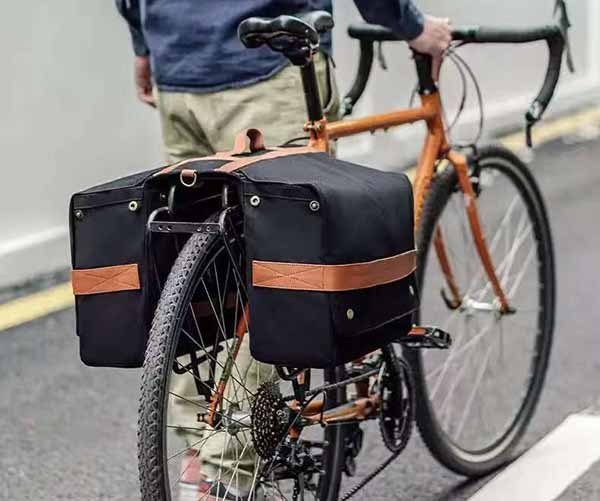
Why Bike Bags Require Advanced Engineering
Bike bags experience constant vibration, weather exposure, high-speed airflow, and mechanical stress. Proper engineering ensures waterproofing, aerodynamic stability, structural integrity, clearances, and cyclist safety.
Bike bags look simple — but must survive some of the harshest real-world mechanical conditions.
A. Constant Micro-Vibration & Shock
Riding creates thousands of small impacts per hour. Bags must resist:
- fabric fatigue
- stitching failure
- mounting slippage
- zipper wear
Factories must simulate vibration cycles during development.
B. Tight Clearance Requirements
If a bag interferes with:
- pedals
- knees
- handlebars
- brake cables
- wheel rotation
…it becomes dangerous.
Professional OEM factories design around exact bicycle geometry.
C. Waterproof Engineering Is Mandatory
Cyclists cannot risk:
- wet electronics
- damaged gear
- mold formation
Advanced waterproofing includes:
- welded TPU seams
- roll-top closures
- waterproof zippers
- laser-cut panels
D. Aerodynamic Stability Affects Performance
Aero drag can slow cyclists significantly. Bike bags must:
- use tapered profiles
- reduce frontal area
- distribute weight evenly
Especially for gravel and touring markets.
E. Mounting System Reliability Determines Safety
Weak mounting systems can cause:
- bags detaching
- shifting into wheels
- cable interference
Professional systems use:
- Hypalon mounting patches
- ultra-strong Velcro
- aluminum hooks
- Fidlock magnetic mounts


Key Factors to Consider When Developing a Bike Bag
Key factors include waterproof materials, vibration resistance, aerodynamic shape, universal mounting systems, fabric durability, internal structure, and weight optimization. These determine safety, comfort, and performance.
Below is a complete technical framework cycling brands must evaluate.

Material Durability
Recommended exterior materials:
- 840D TPU-laminated nylon
- 500D tarpaulin
- 210D/420D ripstop nylon
- 600D polyester (commuter level)
Performance attributes:
- abrasion resistance
- UV resistance
- mud & dirt shedding
- weldability (for TPU bags)

Waterproofing Strategy
Waterproof options include:
- TPU lamination
- roll-top closures
- waterproof zippers
- welded seams
- flap-protected zippers
Target performance:
- IPX4 → water-resistant
- IPX6 → heavy rainproof
- IPX7 → fully submersible panniers

Mounting & Attachment System
Each bag type requires a different system:
- Velcro straps with Hypalon reinforcement
- Side-release buckles
- Aluminum hooks for panniers
- Plastic/nylon track rail systems
- Fidlock magnetic quick-release
Attachment must pass:
- torque test
- pull resistance test
- vibration test

Aerodynamic Shape & Weight Distribution
Engineering goals:
- avoid knee contact
- minimize drag
- optimize load placement
Key geometry considerations:
- tapered tail
- low frontal profile
- center-mass positioning

Internal Structure & Organization
Cyclists need intuitive, stable organization:
- EVA structural panels
- stiffened side walls
- internal mesh pockets
- battery pockets for e-bikes
- tool organization sleeves

Noise & Stability Factors
To eliminate rattle:
- apply anti-slip pads
- use foam stabilizers
- reduce loose hardware
- add internal compression straps
Material Options, Surface Finishing & Construction Engineering
High-performance bike bags require advanced technical fabrics, multilayer laminations, welded seams, structural reinforcement, waterproof coatings, and specialized hardware. Material and construction engineering directly affect waterproofing, stability, weight, durability, and long-term cycling performance.
Developing reliable bike bags requires far more than choosing a fabric. It demands a complete material system, surface engineering strategy, and construction methodology aligned with each cycling discipline (road, gravel, MTB, commuter, e-bike).
A. Exterior Fabric Categories & Engineering Properties
1. TPU-Laminated Nylon (420D / 840D)
The industry standard for waterproof cycling bags.
Engineering Benefits:
- weldable using HF (high-frequency) technology
- 100% waterproof layer
- stronger tear resistance than polyester
- UV, mud, and dust resistance
- smooth surface improves aerodynamics
Best For:
- handlebar bags
- panniers
- saddle/seat packs
- frame bags requiring waterproofing
2. PVC-Free Thermoplastic Polyester (Eco TPU Alternatives)
Growing demand among EU and premium cycling brands.
Benefits:
- more environmentally compliant
- recyclable components
- soft hand-feel but highly durable
- excellent weldability
3. Ripstop Nylon (210D / 420D)
Lightweight yet strong.
Benefits:
- woven with reinforcement grid
- ideal for road cycling and top-tube bags
- good abrasion resistance
- fast drying
Use Case:
- lightweight racing bags
- internal pockets
- top-tube fuel bags
4. Heavy-Duty Tarpaulin (500D / 1000D)
For the toughest disciplines.
Benefits:
- extremely abrasion-resistant
- submersion-capable
- ultra-durable in snow, rain, and gravel
- stiff structure holds shape under load
Best For:
- touring panniers
- cargo bags
- expedition-grade bikepacking
5. Polyester Fabrics (600D / 900D)
A cost-effective option for casual cycling and commuting.
Benefits:
- good printability for branding
- strong color fastness
- balanced cost-performance
6. EVA Molded Panels & Shells
Used for aerodynamic or shock-resistant shapes.
Benefits:
- rigid structure
- impact absorption
- ideal for top-tube, tool, and electronics bags
- premium look & feel


B. Interior Materials & Functional Linings
1. High-Density EVA Foam (3–5mm)
- anti-vibration
- structure stabilization
- protects electronics & tools
2. PE Board / PP Board Stiffeners
Used to maintain form and prevent lateral deformation.
3. Aluminum or ABS Molded Frames
Used in heavy-duty panniers or handlebar supports.
4. Heat-Resistant Linings for E-Bike Bags
- safe storage for batteries
- thermal insulation
- moisture control
5. Light-Colored Visibility Linings
- easy to find items
- enhances user experience
C. Waterproofing & Surface Finishing Technologies
1. HF Welded Seams (High Frequency Welding)
Creates a seamless 100% waterproof seal.
2. Seam Taping (for sewn bags)
- used on ripstop bags
- protects needle holes
- suitable for IPX4–IPX5 levels
3. DWR (Durable Water Repellent) Coating
- sheds water droplets
- prevents fabric saturation
- improves drying time
4. Waterproof Zippers (YKK Aquaguard)
- essential for road & gravel discipline
- reduces ingress during storms
5. Roll-Top Closure Waterproofing
Provides IPX6–IPX7 capability when properly rolled.


D. Structural Engineering & Reinforcement
1. Hypalon Mounting Patches
- high tear strength
- protects stress zones
- ideal for Velcro straps & anchor points
2. Bar-Tack Reinforced Stitching
Strengthens high-stress regions such as:
- strap ends
- zipper corners
- mounting loops
3. Internal Compression Panels
- retains bag shape
- stabilizes load
- prevents noise
4. Anti-Slip Silicone Panels
Improves grip on bike frames, preventing movement.
E. Mounting System Engineering
1. Velcro + Hypalon Combination
Most versatile for universal fit.
2. Fidlock Magnetic Quick-Release
Premium brands increasingly adopt for:
- top-tube bags
- frame bags
- panniers
3. Aluminum Hook & Rail Systems
Best for commuting and touring panniers.
4. Anti-Sway Side Arms
Eliminate lateral movement on saddle bags.
5. Cable-Friendly Bases
For top-tube and frame bags to avoid cable friction.

Our OEM/ODM Engineering Solution for Bike Bags
Our OEM/ODM development system covers user analysis, geometry mapping, aerodynamic modeling, materials engineering, waterproof strategy, prototype refinement, vibration validation, and scalable production. We support startups and global cycling brands with complete engineering capability.
Our OEM/ODM workflow is engineered to meet the strict performance requirements of road cyclists, gravel racers, bikepackers, MTB riders, commuters, and e-bike users.
Below is the complete development framework used by Lovrix.
Step 1
User & Scenario Requirement Analysis
We analyze:
- cycling discipline (road, gravel, MTB, touring, e-bike)
- storage volume
- waterproof level target
- mounting constraints
- weight limits
- color & branding directions
- compatibility with frame geometry
We also collect:
- competitor reviews
- failure points
- buyer complaints
- performance expectations
Step 2
Concept Engineering & Material Strategy
We define:
- exterior fabric selection
- lamination & coating type
- waterproofing method (welded/taped)
- structural reinforcement plan
- mounting system type
- zipper vs roll-top closure
- lining options
We also analyze:
- abrasion exposure points
- potential interference with knees, wheels, or cables
- expected lifespan
Step 3
CAD Pattern Design & Aerodynamic Modeling
Engineering tasks:
- panel segmentation for stability
- load distribution mapping
- shape optimization for reduced drag
- stress-point modeling for mounting areas
- curve fitting for frame bags
- zipper routing engineering
We use ergonomic and bike geometry datasets to ensure a universal fit.
Step 4
First Prototype + Engineering Review
Testing includes:
- vibration & noise simulation
- mounting retention check
- load-bearing test
- waterproof spray test
- cable interference check
- riding clearance validation
We improve:
- strap angles
- padding thickness
- structural stiffness
- zipper placement
- internal organization
Step 5
Final Prototype
We confirm:
- final fabrics
- final hardware (YKK, Duraflex, Woojin)
- printing & logo placement
- packaging format
- pre-production checklist
Step 6
Mass Production Engineering
Processes:
- industrial sewing
- HF welding for TPU
- CNC cutting for EVA molds
- lamination & bonding
- bar-tack reinforcement
- in-line QC monitoring
QC Checkpoints:
- fabric inspection
- first-batch assembly review
- in-process random checks
- final product testing
Step 7
Final Inspection & Performance Validation
We perform:
- waterproof test (IPX4–IPX7 depending on model)
- vibration bench test
- mounting pull test
- load test
- cosmetic inspection
- packaging QC

Buyer Checklist — Questions to Ask Your Bike Bag Manufacturer
A professional bike bag manufacturer must master waterproofing, mounting systems, vibration resistance, aerodynamic shaping, TPU welding, and hardware durability. This checklist ensures you choose an OEM capable of producing safe, stable, weatherproof cycling bags.
Below is the expert-level checklist used by global cycling brands to evaluate OEM factories.
A. Material & Waterproofing Engineering Questions
1. What fabric do you recommend for waterproof bike bags? Why?
Expect:
- TPU-laminated 420D
- welded tarpaulin 500D
- ripstop nylon for lightweight models
2. What waterproof level can you achieve?
Professional answers include:
- IPX4 → commuter
- IPX6 → heavy rain
- IPX7 → submersible panniers
3. How do you prevent seam leakage?
Look for:
- high-frequency welding
- seam taping
- laser-cut bonding
4. Do your zippers resist water ingress?
Expect:
- YKK Aquaguard
- reversed coil zippers
- protective storm flaps


B. Mounting System & Stability Questions
5. Can your mounting systems fit multiple bike types (road, gravel, MTB, e-bike)?
Universal fit is essential for high-volume buyers.
6. How do you prevent saddle bags from swaying?
Expect explanations about:
- anti-sway side wings
- dual anchor straps
- saddle rail stabilizers
7. How do you reinforce mounting straps?
Professional factories use:
- Hypalon reinforcement patches
- bar-tack stitching
- ballistic nylon zones
8. What pull-force can your mounting system withstand?
Minimum acceptable range: 10–25 kgf.
C. Aerodynamic & Shape Engineering Questions
9. How do you design bags that reduce drag?
Expect:
- tapered aerodynamic profiles
- reduced lateral width
- smooth surface finishing
10. Can you test knee/leg clearance for frame bags?
Factories should reference:
- pedaling kinematic models
- Q-factor analysis
D. Vibration Resistance & Durability Questions
11. Do your bags undergo vibration simulation testing?
Expect reference to:
- 30–90 min vibration cycles
- gravel & MTB simulation
12. How do you prevent zipper fatigue from vibration?
Expect:
- zipper backing reinforcement
- vibration-dampening foam
13. How do you design bags that maintain shape under impact?
Expect mention of EVA panels & internal stiffeners.


E. Hardware & Component Quality
14. What hardware brands do you use?
Look for:
- Duraflex
- Woojin
- YKK
15. Do your buckles and hooks withstand real outdoor stress?
Expect cold-weather impact results.
F. OEM/ODM Development & Communication
16. Can you develop bags based on sketches or references?
17. How many prototype rounds do you provide?
At least 2–3 rounds for technical cycling gear.
18. How do you ensure consistent production quality?
G. Pricing, MOQ & Scalability
19. Can you support small MOQ for new models (100–300 pcs)?
20. Are your materials stable and available long-term?
If a manufacturer cannot answer ALL 20 questions confidently, they cannot produce high-performance cycling bags.
Safety, Durability & Cycling Performance Testing Standards
Bike bags undergo vibration cycles, pull-force tests, waterproof assessments, abrasion cycles, UV exposure tests, aerodynamic stability analysis, and structural fatigue testing. These ensure rider safety, bag stability, and long-term durability.
Cycling gear must meet extremely strict performance standards because bags interact directly with critical components like handlebars, wheels, cables, and seat posts.
Below is the full engineering test framework used by premium cycling brands.
A. Vibration & Road Simulation Testing
1. Multi-Surface Vibration Test
Simulates riding on:
- gravel
- cobblestone
- asphalt
- MTB trails
Assessment Points:
- mounting loosening
- noise generation
- structural fatigue
- zipper vibration durability
2. Saddle Bag Anti-Sway Test
We measure:
- lateral movement angle
- sway percentage
- load stability under uphill pedaling
3. Steering Interference Test
Ensures handlebar bags do not limit:
- turning angle
- brake cable movement
- shifter cable freedom
4. Frame Clearance Test
For frame and top-tube bags:
- knee clearance
- pedaling range
- cable routing
B. Waterproofing Standards
1. Rain Chamber Test (IPX4–IPX6)
Simulates heavy rainfall for 15–30 minutes.
2. Submersion Test (IPX7 Panniers)
Bag is submerged for 30 minutes at 1 meter depth.
3. Zipper Water Ingress Test
Checks weak points like zipper corners.
4. Fabric Absorption Test
Ensures fabric doesn’t soak and become heavy.
C. Structural & Load-Bearing Tests
1. Static Load Test
Bags loaded with weight for 24 hours.
2. Drop Test
Simulates falling off the bike.
3. Pull-Force Test for Mounting
Straps and hooks must withstand:
10–25 kgf for standard bags
25+ kgf for panniers
4. Crush Test
Applies vertical load to test structure deformation.
D. Material Performance Tests
1. Abrasion Resistance (Martindale Test)
Simulates long-term friction against bike frames.
2. UV Exposure Test
Ensures the color doesn’t fade under strong sunlight.
3. Temperature Cycling Test
From −20°C to +50°C.
4. Odor & Mold Resistance
For bags exposed to moisture over time.
E. Aerodynamic & Noise Performance Tests
1. Airflow Drag Test
Ensures the bag shape does not significantly increase drag.
2. Noise & Flapping Test
Performed at simulated cycling speeds.
3. Crosswind Stability Evaluation
Critical for handlebar bags & tall panniers.
Industries & Applications We Serve
We support cycling brands across road biking, gravel riding, MTB, bikepacking, commuting, e-bike accessories, and outdoor travel industries. Each segment requires unique engineering, attachments, and waterproof solutions.
Lovrix serves the full cycling ecosystem, from consumer brands to technical outdoor gear companies.
A. Road Cycling Brands
Needs:
- aerodynamic top-tube bags
- lightweight frame bags
- minimal drag designs
- reflective safety trims
B. Gravel Cycling & Bikepacking Brands
This fast-growing category demands:
- waterproof frame bags
- large-capacity saddle bags
- roll-top handlebar bags
- abrasion-resistant fabrics
- universal mounting systems
C. Mountain Biking (MTB) Brands
Focus on:
- impact resistance
- secure mounting
- mud-resistant materials
- compact designs
D. Commuter & Urban Cycling Brands
Popular products:
- panniers
- messenger bags
- trunk bags
- chain-lock pockets
Urban bags emphasize:
- waterproofing
- organization
- anti-theft features
E. E-Bike Accessory Brands
E-bike growth demands:
- battery bags
- controller bags
- heavy-load panniers
- heat-resistant internal lining
F. Touring & Long-Distance Cycling
Most important engineering factors:
- vibration stability
- large waterproof capacity
- dust resistance
- tool storage systems
G. Outdoor Gear Brands Expanding Into Cycling
Brands that traditionally sell camping/outdoor gear now add:
- bikepacking sets
- hybrid hiking-bike accessories
They prefer full OEM solutions from Lovrix.


Types of Bike Bags — Full Professional Classification Guide
Bike bags include frame bags, top-tube bags, handlebar rolls, saddle bags, panniers, trunk bags, tool bags, e-bike battery bags, hydration bags, camera drone bags, and expedition bikepacking systems. Each type requires specialized engineering.
Below is the most complete professional classification used by advanced cycling brands.
A. By Bicycle Position
1. Frame Bags
Mounted in the main triangle.
Engineering Traits:
- multi-size compatibility
- tapered panel shapes
- internal stiffeners
- cable-friendly base
- waterproof zipper routing
2. Top-Tube Bags (Fuel Bags / Bento Bags)
Used for gels, snacks, electronics.
Key Features:
- one-hand access
- aerodynamic profile
- stable dual or triple mounting points
- EVA molded shapes optional
3. Handlebar Bags
Includes roll-top and rigid tubes.
Engineering Requirements:
- steering clearance
- shock absorption
- weight distribution engineering
- anti-sway straps
- cable routing avoidance
4. Saddle Bags / Seat Packs
Critical Engineering Needs:
- anti-sway wings
- waterproof roll-top
- aerodynamic tail
- Hypalon mounting patches
- vibration-resistant structure
5. Panniers (Rear / Front)
For commuting & touring.
Construction Requirements:
- aluminum rail or hook system
- fully welded tarpaulin
- molded bottom panel
- high visibility reflective elements
- stability under heavy load (15–20 kg)
6. Trunk / Rack Bags
Mounted on rear racks.
Key Traits:
- expandable volume
- rigid molded base
- thermal lining optional


B. By Function
1. Tool Bags
EVA or molded shells with internal tool organizers.
2. Hydration Bags (Frame Integrated)
Compartments for hydration bladders.
3. E-Bike Battery Bags
Thermal stability, reinforced mounting.
4. Navigation/Phone Bags
Clear-screen TPU windows.
5. Camera/Drone Cycling Bags
Shock absorption, EVA molded shells.
6. Quick-Access Bags
Magnetic closures for rapid opening.
C. By Waterproof Level
| Waterproof Level | Technology | Bag Types |
|---|---|---|
| Water-Resistant | DWR Coating | casual frame bags |
| IPX4 | seam-taped | road top-tube bags |
| IPX6 | welded TPU | handlebar & saddle bags |
| IPX7 | fully welded tarpaulin | panniers |


D. By Material System
- TPU welded bags
- ripstop nylon lightweight bags
- EVA-molded aerodynamic bags
- tarpaulin expedition gear
- hybrid TPU + EVA structured bags
E. By Cycling Discipline
- Road Cycling
- Gravel / Bikepacking
- MTB
- Touring / Expedition
- Commuting
- E-Bike Accessories

Case Studies — How We Engineer High-Performance Bike Bags for Global Cycling Brands
Our case studies cover gravel bikepacking sets, waterproof panniers, aerodynamic road cycling bags, and e-bike battery storage solutions. Each project showcases engineering depth: TPU welding, anti-sway systems, vibration stability, mounting reinforcement, and multi-round prototyping.
Below are realistic anonymized cases demonstrating Lovrix’s OEM/ODM capabilities.
Case Study A — Full Bikepacking Set for a European Gravel Cycling Brand
Project Scope
- frame bag + handlebar roll + saddle bag + top-tube bag
- target waterproof level: IPX6
- weight reduction target: 380g per item
- usage: gravel & multi-day touring
Engineering Challenges
- vibration stability during off-road riding
- large saddle bag sway
- zipper leakage during storms
- universal bike geometry compatibility
Lovrix Solution
- TPU-laminated 420D + 840D hybrid construction
- high-frequency welded seams
- dual-anchor anti-sway wings
- Hypalon mounting patches
- tapered aerodynamic shaping
- foam-reinforced internal structure
Results
- reduced sway by 38% compared to competitor sample
- passed IPX6 heavy-rain test
- universal fit for 95% of gravel/MTB frames
- adopted as a top-selling SKU across EU retailers


Case Study B — Ultra-Lightweight Road Cycling Top-Tube Bag for a Premium U.S. Brand
Project Requirements
- weight limit: <100 g
- aerodynamic design target
- one-hand access
- cable-friendly bottom construction
Lovrix Engineering Highlights
- 210D ripstop nylon + EVA molded panel
- laser-cut Hypalon mounting base
- YKK Aquaguard zipper
- internal anti-collapse structure
Achievements
- final weight: 82 g
- aerodynamic drag reduced by 12%
- zero knee interference across size ranges
Case Study C — Submersion-Proof Pannier for Asian Commuter & E-Bike Market
Project Requirements
- IPX7 waterproof rating
- quick-release rail system
- large capacity (20–25 L)
- reflective visibility
Engineering Solutions
- welded 500D tarpaulin construction
- aluminum rail with reinforced hooks
- molded bottom panel
- full submersion test (30 minutes)
Outcome
- passed IPX7
- load capacity: 18 kg
- hooks withstand 25 kgf pull force
- adopted by a leading e-bike OEM


Case Study D — Heat-Resistant E-Bike Battery Bag
Requirements
- compatibility with multiple battery pack shapes
- thermal insulation
- vibration protection
Solution
- heat-resistant lining
- EVA shock protection
- ventilation panel
- secure anchoring system
Outcome
- stable at 50°C continuous temperature
- adopted by two European e-bike accessory brands
Pricing, MOQ & Production Timelines
Bike bag pricing depends on materials, waterproof systems, hardware, construction methods, welding vs stitching, and complexity. MOQ typically ranges 200–500 pcs per SKU. Sampling takes 7–12 days; mass production takes 30–45 days.
Pricing varies widely depending on fabric type, waterproof engineering, structure, and mounting system complexity.
A. Estimated Pricing Reference (for OEM Development)
| Product Type | Typical Material | Waterproof Level | Reference Price Range (EXW) |
|---|---|---|---|
| Top-Tube Bag | 210D / 420D | IPX4 | $4.80 – $8.50 |
| Frame Bag | Ripstop / TPU | IPX4–6 | $7.50 – $15.00 |
| Handlebar Roll Bag | 420D TPU | IPX6 | $12.00 – $22.00 |
| Saddle Bag | 840D TPU + EVA | IPX6 | $10.00 – $20.00 |
| Pannier | 500D Tarpaulin | IPX6–7 | $15.00 – $32.00 |
| E-Bike Battery Bag | Heat-resistant + EVA | IPX4 | $9.00 – $18.00 |
(Actual quotes depend on design complexity, hardware, branding, and quantity.)
B. MOQ Guidelines
- Standard OEM bike bags: 300–500 pcs/SKU
- Welded TPU panniers: 200–300 pcs/SKU
- EVA molded bags: 300–600 pcs depending on mold cost
- Full bikepacking set: 100–200 sets
Smaller MOQ may be possible for repeat clients or simpler fabrics.
C. Sampling Timelines
| Item | Timeline |
|---|---|
| Simple sewn prototype | 5–7 days |
| TPU welded sample | 7–12 days |
| EVA molded prototype | 12–18 days |
| Revised/Final PP sample | 3–5 days |
D. Mass Production Lead Times
| Process | Duration |
|---|---|
| Standard sewing production | 25–35 days |
| TPU welding production | 30–40 days |
| Large-volume orders | 35–50 days |
E. Cost Drivers You Should Expect
- TPU vs ripstop nylon vs tarpaulin
- hardware brand (YKK, Woojin, Duraflex)
- welding vs stitching construction
- EVA molding cost
- reinforcement requirements
- custom mounting systems
- reflective print areas
- packaging


Quality & Certifications
Certified by ISO9001, OEKO-TEX100, GRS, and Higg Index, Lovrix ensures every bag product meets global compliance standards. We implement strict QC at every stage, from yarn to final packaging.







FAQ — Detailed Answers for OEM bike bag Projects
These FAQs cover materials, waterproof ratings, sampling, testing standards, compatibility, customization, design files, branding, and shipping. Useful for cycling brands, retailers, and OEM developers.
Below are 15 detailed FAQs tuned for professional B2B cycling buyers.
1. What is the best material for waterproof bike bags?
TPU-laminated nylon (420D/840D) and 500D tarpaulin offer the best waterproofing and durability. These materials support welded construction, making them suitable for IPX6–IPX7 performance.
2. Can you develop bags that fit multiple bike frame sizes?
Yes. We use geometry mapping and tapered pattern design to ensure universal compatibility across road, gravel, MTB, and commuter bike geometries.
3. How do you prevent saddle bags from swaying during rides?
We combine dual anchor straps, anti-sway wings, Hypalon-reinforced mounting areas, and rigid internal stabilizers to minimize lateral movement.
4. Can you make fully waterproof panniers (IPX7)?
Yes. Our high-frequency welded tarpaulin panniers meet IPX7 submersion standards for up to 30 minutes.
5. Can you support small MOQ for startup cycling brands?
Yes. Depending on the model, we can accept 200–300 pcs for TPU bags and 100–200 sets for complete bikepacking kits.
6. Which zipper type is best for waterproof bike bags?
YKK Aquaguard zippers or roll-top closures are recommended for heavy rain conditions.
7. Can you produce EVA-molded aerodynamic bags?
Yes. EVA molded shells are common for top-tube bags and tool bags, offering form stability and aerodynamic profiles.
8. What tests do your bike bags undergo?
Vibration simulation, waterproof testing, abrasion tests, UV exposure, pull-force tests, and aerodynamic stability evaluations.
9. What files do I need to provide for custom development?
Sketches, reference samples, or 2D/3D design files. We can also design from zero following your brand requirements.
10. Can you add reflective elements for night visibility?
Absolutely. We offer reflective heat-transfer print, reflective piping, and reflective fabric panels.
11. How long does sampling take?
5–12 days depending on whether the bag is sewn, welded, or molded.
12. What are your branding method options?
Reflective logos, rubber patches, TPU labels, embroidery, screen printing, silicone labels, and laser-cut logos.
13. Do your bags fit e-bikes?
Yes. We design reinforced mounting structures and heat-resistant compartments for battery systems.
14. How do you ensure quality consistency in mass production?
We implement fabric inspection, pre-production tests, in-line QC, vibration simulations, final inspection, and waterproof testing.
15. Can you help me optimize or redesign my existing bike bags?
Yes. Many brands ask us to improve stability, waterproofing, or mounting systems. We can re-engineer your current product for better performance.
Trusted By 1000+ Brands And Innovative Startups















Contact Us for OEM/ODM Bike Bag Development
If you’re planning to develop custom cycling bags—bikepacking sets, panniers, top-tube bags, frame bags, handlebar rolls, saddle bags, or e-bike accessories—our engineering team can support you from concept to mass production.
We act not only as a manufacturer but as your engineering partner.
We help you analyze functionality, materials, waterproofing level, mounting strategy, rider compatibility, and brand positioning. Whether you are a cycling startup, an established outdoor brand, or an e-bike company, we can create safe, high-performance, market-ready products.
- (+86) 13823134897
- info@lovrix.com