 Skip to content
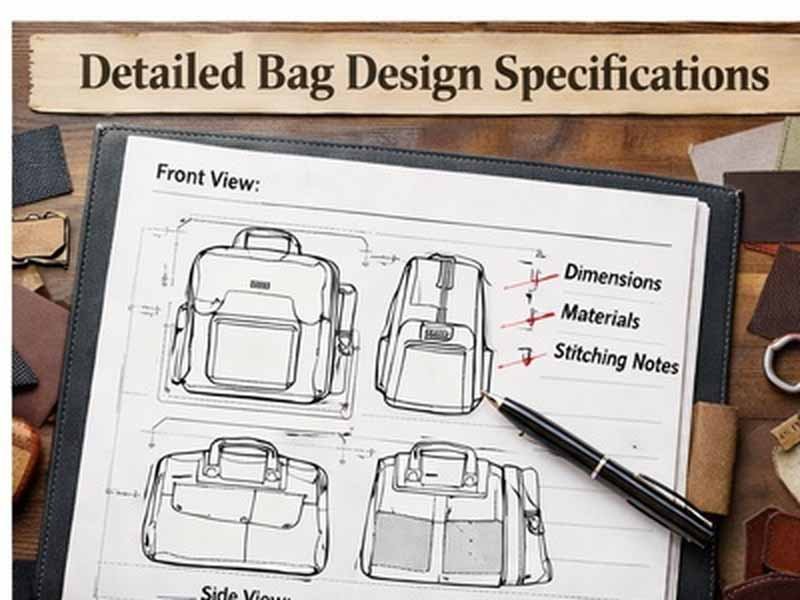
When you’re designing a custom bag, whether it’s a travel bag, backpack, or tote, one of the most important steps in the production process is ensuring the design specifications are communicated clearly to your manufacturer. The tech pack is the tool that ensures this communication is clear, precise, and detailed.
A tech pack is not just a collection of random information—it’s a blueprint for manufacturing your custom bags. It specifies everything from the materials and hardware to the dimensions and stitching techniques that must be used. A complete tech pack ensures that your design is produced exactly as you imagined it.
What is a custom bags tech pack, and why is it crucial?
A custom bags tech pack is a detailed document that outlines every aspect of the bag’s production, from design sketches and measurements to materials, trims, and packaging instructions. It serves as a guide that allows the manufacturer to replicate the design accurately and efficiently. The more detailed your tech pack, the less likely you are to encounter errors or delays during the manufacturing process.
This article will walk you through what a custom bags tech pack is, why it’s essential for your production process, and how to create one that guarantees quality, consistency, and efficiency.
What Is a Custom Bags Tech Pack?

A custom bags tech pack is a comprehensive document that contains all the technical specifications and details needed to produce a custom bag, ensuring that manufacturers understand exactly what the designer wants. Think of it as the blueprint for the bag’s design, materials, and construction. It acts as a guide that both you and your manufacturer can reference throughout the entire production process, from the initial design phase to final production.
Why Do You Need a Tech Pack?
Without a tech pack, manufacturers would have to guess or make assumptions about your design, which can lead to mistakes, delays, and increased costs. A detailed tech pack ensures that the final product matches your vision exactly and avoids costly errors. Whether you’re working with a local manufacturer or outsourcing to a factory abroad, the tech pack is your primary communication tool.
What Does a Custom Bags Tech Pack Include?
A custom bags tech pack is a detailed collection of all the technical details related to the design and production of a bag. These details ensure that manufacturers know exactly what to do at every step of the production process. The following sections are typically included in a custom bags tech pack:
1. Design Sketches and Technical Drawings
Design sketches are crucial as they visually represent the bag’s shape, dimensions, and key features. These can either be hand-drawn sketches or digital drawings, but the goal is to ensure that the manufacturer clearly understands the overall design.
Key Details to Include:
- Multiple views: Include front, side, back, and top views of the bag.
- Label key features: Such as zippers, pockets, straps, handle placement, and logos.
- Dimensions: Specify the exact measurements for key components like the width, height, and depth of the bag and its compartments.
Why It’s Important:
Clear design sketches help the manufacturer understand how the bag should look and what its features are, reducing the chance of mistakes. These sketches also serve as a visual reference during the sampling and production process.
2. Materials and Fabrics
The materials section of the tech pack is extremely important because the type of fabric and hardware will determine the look, feel, and durability of the bag. The tech pack should specify exactly what materials to use for both the exterior and interior of the bag.
Key Details to Include:
- Fabric Type: Specify whether the bag should be made from nylon, leather, canvas, or other materials.
- Fabric Weight: For example, 12 oz canvas or 600D polyester. This helps determine the durability of the material.
- Material Colors: Include Pantone color codes or RGB values to ensure color accuracy.
- Finishes: Mention any finishes required, such as waterproofing, UV resistance, or stain resistance.
Why It’s Important:
Providing specific material details ensures the manufacturer uses the right fabrics and hardware to produce your bags according to your exact standards. Using the wrong material can lead to durability issues or a finished product that looks different from your design.
3. Dimensions and Measurements
Every component of the bag, from the main body to the smallest pocket, must be measured accurately. This section provides all the dimensions for the bag and its components, ensuring that everything fits together perfectly.
Key Details to Include:
- Overall Bag Size: For example, length = 40 cm, width = 12 cm, height = 30 cm.
- Pocket Dimensions: Specify the size of each pocket, whether it’s for a laptop, water bottle, or phone.
- Handle/Strap Measurements: Indicate the length, width, and attachment points for handles or shoulder straps.
Why It’s Important:
Dimensions are critical to ensuring that the bag functions as intended. For example, if you design a bag with a laptop compartment, the tech pack needs to include precise dimensions for the compartment to ensure it fits the laptop size intended.
4. Hardware and Trims
Hardware components such as zippers, buckles, rivets, and straps add both functionality and aesthetic value to the bag. This section should specify exactly what hardware is needed, including brands and sizes.
Key Details to Include:
- Zippers: Specify the brand (e.g., YKK zippers), size, and type (e.g., metal, plastic).
- Buckles and Rivets: Indicate the material (e.g., brass, plastic), size, and placement.
- Straps and Handles: Include details about width, length, and attachment method (e.g., riveted or stitched).
Why It’s Important:
Hardware selection is crucial for both functionality and aesthetic appeal. Using the wrong type of hardware can affect the durability and user experience of the bag. For example, a low-quality zipper can break after a few uses, compromising the entire product.
5. Packaging Instructions
Packaging is often overlooked, but it’s an important part of the tech pack. Proper packaging ensures that the bags arrive safely at the warehouse or to customers without damage.
Key Details to Include:
- Folding Instructions: For example, fold the bag along the main compartment seam, or roll the straps inside to prevent creasing.
- Protective Materials: Specify whether the bag should be wrapped in plastic, bubble wrap, or another protective material.
- Shipping Box Dimensions: Include the size of the shipping box and how many bags will fit inside (e.g., 20 bags per box).
Why It’s Important:
Proper packaging ensures that the bags are protected during transit, preventing damage such as creases, scratches, or broken hardware.
What Happens Without a Custom Bags Tech Pack?
Without a detailed tech pack, the production process becomes much riskier and less predictable. Manufacturers may make assumptions about materials, dimensions, or features, leading to quality issues or a final product that doesn’t meet your expectations. Here’s what can go wrong:
- Wrong materials: The manufacturer may use a cheaper or incorrect fabric.
- Incorrect dimensions: Pockets may be too small, handles too short, or the bag may not fit its intended purpose.
- Inconsistent quality: Without clear specifications, manufacturers may deviate from your design, resulting in variations in quality or functionality.
In short, a custom bags tech pack is essential for making sure your bags are produced accurately, on time, and with consistent quality.
Why Is a Custom Bags Tech Pack Important
| Benefit | Impact |
|---|---|
| Eliminates Miscommunication | Ensures that designers and manufacturers are on the same page with clear, detailed instructions. |
| Speeds Up Production | Clear instructions reduce the back-and-forth between the designer and manufacturer, speeding up the timeline. |
| Reduces Errors and Revisions | Precise details in the tech pack minimize costly errors and the need for additional sample revisions. |
| Ensures Product Quality | By specifying quality control standards, it ensures the durability and functionality of the final product. |
| Improves Cost Management | Helps manufacturers accurately estimate costs, preventing price fluctuations during production. |
Why Do You Need a Custom Bags Tech Pack?

A tech pack is crucial for several reasons:
- Eliminates Miscommunication: It provides a clear set of instructions that ensure both you and the manufacturer are on the same page.
- Speeds Up Production: By giving the manufacturer all the details upfront, the need for constant clarification is minimized, allowing for faster production timelines.
- Ensures Quality Control: A comprehensive tech pack ensures that the materials used, dimensions followed, and hardware chosen align with your design specifications, resulting in a consistent product.
- Reduces Costs: By providing all necessary information at the start, manufacturers can accurately estimate production costs and avoid surprises.
Why Is a Tech Pack Crucial for Custom Bags?
When designing custom bags, particularly for OEM or private-label production, clear communication with your manufacturer is essential. Here’s why a tech pack is a crucial tool:
1. Prevents Errors and Misunderstandings
Without a tech pack, a manufacturer might misinterpret your design, leading to errors such as:
- Incorrect dimensions
- Wrong materials
- Hardware issues (wrong zippers, buttons, or straps)
A detailed tech pack removes any ambiguity and ensures that the manufacturer has all the information they need to produce the bag exactly as you envision it.
For example, imagine you specify a nylon material for the bag but accidentally omit this in the tech pack. The manufacturer could use polyester instead, resulting in a different texture, durability, and price.
2. Streamlines the Manufacturing Process
A complete tech pack not only provides the manufacturer with the right details but also helps to streamline the entire production process. It allows the manufacturer to:
- Plan ahead for sourcing materials
- Organize resources efficiently
- Stick to a timeline without unnecessary delays
For instance, a tech pack that includes the exact fabric weights, thread count, and trim details enables the manufacturer to prepare materials before production begins, ensuring a smoother workflow and faster delivery times.
3. Helps with Cost Management
Tech packs also provide a clear breakdown of materials and labor costs. When you specify everything from the fabric weight to the hardware type, the manufacturer can give you a precise production cost estimate, helping you manage your budget better.
If you have a tech pack that outlines the exact components needed, the manufacturer can provide an accurate quote without any hidden costs. This prevents unexpected expenses from cropping up later in the production process.
4. Ensures Consistent Quality
Quality control is vital when producing custom bags. Tech packs ensure that every bag produced meets your quality standards by specifying:
- Stitch density
- Material strength
- Hardware quality
- Color accuracy
For instance, if your travel bags need double-stitched seams for extra durability, the tech pack will ensure that this requirement is met in every batch. This level of detail ensures consistency and prevents quality variations.
5. Helps with Revisions and Updates
Once your custom bags go into production, any changes or updates to the design can be easily tracked in the tech pack. If you want to update the color, material, or hardware, you can simply revise the relevant sections of the tech pack. This keeps everything organized and ensures that the manufacturer is aware of the new requirements.
For example, if you decide to change the strap length after reviewing the first sample, the manufacturer can refer to the updated tech pack to make the necessary adjustments before full-scale production begins.
| Production Situation | Without a Tech Pack | With a Tech Pack | Real Impact on Your Project |
|---|---|---|---|
| Design communication | Factories interpret photos or emails | Factories follow written specs | Fewer misunderstandings |
| Material selection | Substituted or wrong fabrics used | Exact fabric type & weight defined | Stable quality & feel |
| Bag dimensions | Size varies between samples | Measurements + tolerances fixed | Consistent sizing |
| Hardware choice | Zippers/buckles downgraded | Brand, size, finish specified | Better durability |
| Sampling rounds | 3–5 rounds common | 1–2 rounds typical | 2–6 weeks saved |
| Sampling cost | Repeated sampling fees | Fewer corrections | Lower development cost |
| Factory quotation | Estimated pricing | Accurate cost breakdown | No surprise price changes |
| Bulk production quality | Quality drifts after sample | Sample = bulk reference | Predictable results |
| Quality disputes | Based on opinions | Based on documented specs | Easier problem resolution |
| Packaging & shipping | Inconsistent folding/packing | Packing method defined | Fewer damages |
| Repeat orders | Each order starts over | Same tech pack reused | Faster reorders |
| Scaling product line | High risk of inconsistency | Controlled version updates | Easier expansion |
What to Include in a Custom Bags Tech Pack

Creating a custom bags tech pack involves compiling all the essential information required to produce the bag exactly as you envision it. This document is more than just a design plan—it’s a comprehensive set of instructions for manufacturers to follow to ensure accuracy, consistency, and quality in production.
Let’s break down the key components you need to include in a custom bags tech pack. Each section has specific data that can make the design process clearer and the manufacturing process smoother.
1. Design Sketches and Technical Drawings
The first and most important part of a custom bags tech pack is the design sketches. These sketches are the visual roadmap for your product, allowing the manufacturer to understand the look and structure of the bag.
What to Include:
- Multiple Views: Provide front, side, and back views of the bag. If necessary, include top-down views for compartments or detailing.
- Detailed Annotations: Highlight important features such as zippers, pockets, compartments, logos, and handles. Annotate these elements with specifics like measurements and material types.
- Materials and Texture: If the bag has a unique texture or specific material patterns, show how those should be integrated into the design.
Why It’s Important:
The design sketches are critical because they set the tone for the entire production process. If the manufacturer doesn’t understand the design clearly, even the best materials and dimensions won’t result in the final product you envision.
2. Materials and Fabrics
One of the most important sections of the tech pack is the materials section. Materials define both the look and function of the bag, making it crucial to specify exact fabrics and finishes. This ensures that the manufacturer uses the correct materials, which directly impacts the durability, aesthetic, and cost of the final product.
What to Include:
- Fabric Type: Specify the exact fabric types (e.g., nylon, canvas, leather). For example, for a waterproof duffel bag, you might specify PVC-coated polyester or polyurethane leather for the exterior.
- Fabric Weight: Indicate the weight of the fabric in grams per square meter (GSM). For example, 600D polyester or 12 oz canvas. This ensures that the bag will have the right amount of strength and stability.
- Colors: Include Pantone color codes or RGB color codes for fabrics to ensure consistency. For example, specify Pantone 2945 C for navy blue.
- Material Finish: If you require any special finishes, such as waterproofing, UV protection, or flame resistance, ensure these are clearly listed.
- Swatches or Samples: Attach fabric swatches or photos of the materials you want to use, especially if the material is custom or hard to find.
Why It’s Important:
Without clear material specifications, manufacturers might choose substitute materials that don’t match your expectations. This could lead to issues with quality, performance, and cost, and could significantly delay production if the wrong material is used.
3. Dimensions and Measurements
Clear and precise measurements are a must-have for a custom bags tech pack. The size and fit of each part of the bag, including the compartments, handles, and straps, should be carefully outlined.
What to Include:
- Overall Dimensions: Specify the overall length, width, and height of the bag. For example, a backpack might measure 40 cm (height) x 30 cm (width) x 15 cm (depth).
- Compartments and Pockets: Include the dimensions for each compartment, pocket, or section. If your bag has a laptop compartment, for example, specify the exact size needed to fit a 15-inch laptop.
- Straps and Handles: Define the length and width of shoulder straps, handles, and webbing, as well as the attachment points.
- Tolerance Levels: It’s important to specify the tolerance for each measurement. For example, ±0.5 cm for small parts or ±1 cm for larger parts to allow for minor manufacturing variations.
Why It’s Important:
Precise measurements are essential to ensure that everything fits properly. Without exact dimensions, you might end up with a bag that’s too large, too small, or has compartments that are unusable. For example, a laptop compartment that’s too tight might not fit the laptop properly, reducing the product’s overall functionality.
4. Hardware and Trims
The hardware and trims section is essential for custom bags, as it includes all the zippers, buckles, buttons, and other functional elements. This section provides the manufacturer with the exact specifications for each hardware piece used in the bag’s design.
What to Include:
- Zippers: Specify the brand, type, and size of zippers (e.g., YKK #5 nylon zipper, black finish). You might also specify whether the zipper should have a water-resistant coating or metal teeth.
- Handles and Straps: Provide details about the type of handles (e.g., padded leather, webbing), the attachment points, and length. For example, specify 5 cm wide adjustable shoulder straps with plastic buckle.
- Buckles and Clasps: Indicate material, size, and finish. For example, you might use brass buckles with a matte finish.
- Custom Components: If you’re using custom trims (e.g., a specific brand logo zipper pull or metal badge), describe the exact design and placement.
Why It’s Important:
Hardware plays a crucial role in both the functionality and appearance of the bag. If you fail to specify the right components, the bag may end up with poor-quality hardware or incorrect functionality (e.g., a non-durable zipper or uncomfortable straps). By detailing each piece of hardware, you ensure that the bag’s performance and aesthetic appeal meet your standards.
5. Packaging Instructions
Once the bags are produced, the next step is packaging. Proper packaging ensures the bags arrive safely and are ready for sale or distribution.
What to Include:
- Folding Instructions: Specify how the bag should be folded to avoid creases or damage. For example, fold the bag with the straps inside, ensuring that they don’t get tangled or bent.
- Protective Materials: If you want the bags to be wrapped in plastic, bubble wrap, or placed in dust bags, ensure this is mentioned in the tech pack.
- Box Dimensions: Include the dimensions of the shipping box and the quantity of bags per box. For example, you might specify that each box holds 20 units and measures 40 cm x 40 cm x 25 cm.
Why It’s Important:
Proper packaging ensures the bags are protected during transit and arrive in good condition. It also helps improve the presentation of the product when it reaches the customer. For example, improper folding can cause permanent creases, while poor packaging can lead to damage during shipping.
How to Create a Custom Bags Tech Pack Template

Creating a custom bags tech pack template is an essential step in the design-to-production process. It ensures that every design detail is captured accurately and clearly communicated to the manufacturer. This not only speeds up production but also prevents costly mistakes, ensuring that the final product matches your design vision.
Step 1: Start with Clear Design Sketches
The first step in creating a custom bags tech pack is to include detailed design sketches or technical drawings. These sketches are essential because they visually communicate the concept of the travel bag to the manufacturer, helping them understand how the bag should be constructed.
What to Include in Design Sketches:
- Multiple Views: Show the bag from all sides: front, back, side, top, and bottom. This will help manufacturers visualize the full design.
- Key Features: Annotate specific features such as zippers, straps, handles, and compartments. For instance, if your design includes a laptop compartment, show its size, position, and any special construction requirements.
- Material References: Indicate which materials are used in which parts of the bag, e.g., leather for the base and nylon for the side pockets.
Pro Tip: Use high-quality CAD (computer-aided design) software to create clean, scalable designs. AutoCAD and Adobe Illustrator are popular options for creating precise and editable design files.
Step 2: Define Materials and Fabrics
The next step is to specify the materials and fabrics you intend to use for the bag. This is a crucial section of the tech pack, as the materials chosen will directly affect the bag’s appearance, durability, cost, and functionality.
What to Include:
- Fabric Types: Specify whether the bag will be made of canvas, nylon, leather, or other materials. For example, a waterproof backpack might use 600D polyester for its exterior.
- Fabric Weight: Mention the GSM (grams per square meter) to ensure the fabric has the right thickness.
- Color Codes: If you have specific colors, include Pantone or RGB color codes to ensure consistency.
- Material Samples: Attach or refer to any material swatches to give the manufacturer a direct reference.
Example:
- Fabric Type: 100% cotton canvas, 12 oz weight, Pantone 532 C (dark navy).
- Interior Lining: 210D polyester with PU coating for water resistance.
By clearly specifying materials and fabrics, you prevent the manufacturer from using an incorrect material or finish, which could result in a mismatch with your original design.
Step 3: Provide Dimensions and Measurements
Dimensions are one of the most crucial aspects of a custom bags tech pack. If the measurements are incorrect, the bag might not fit its intended purpose, or it may not hold up in real-world use.
What to Include:
- Overall Dimensions: Provide the length, width, and height of the bag.
- Individual Components: Measure specific compartments, straps, and handles. For example, specify the width of the laptop compartment, the length of the carry straps, or the depth of an external pocket.
- Tolerance Levels: Include tolerances for each measurement. For instance, allow for ±0.5 cm for small parts and ±1 cm for larger dimensions.
Example:
- Overall Bag Size: Length = 40 cm, Width = 15 cm, Height = 30 cm.
- Laptop Compartment: Length = 38 cm, Height = 28 cm, Depth = 4 cm.
- Handle Length: 50 cm from top edge to center.
Pro Tip: Use measuring tapes or fabric rulers to measure all the components accurately. For the most precise measurements, a caliper can be used for small parts like zippers or buttons.
Step 4: Specify Hardware and Trims
The hardware and trims section is essential to make your travel bags functional and aesthetically pleasing. This section includes all the non-fabric components that are part of the design, such as zippers, buckles, straps, and buttons.
What to Include:
- Type of Hardware: Specify the material (e.g., metal, plastic), brand (e.g., YKK zippers), and size of each hardware component.
- Placement: Indicate where each hardware component will be attached. For example, specify whether the zipper should run along the top edge of the bag or the sides.
- Finish/Color: Specify the finish (e.g., matte, glossy, brushed) and color of each hardware element.
Example:
- Zipper: YKK #5 nylon zipper with black matte finish.
- Buckle: Plastic side-release buckle, 25 mm width, black color.
Hardware specification is key to ensuring that the bag operates properly and looks polished. Inaccurate hardware choices can lead to dysfunctional zippers or inconsistent design elements.
Step 5: Packaging Instructions
The packaging section may seem less critical, but it’s important for ensuring that the finished bags arrive safely and look presentable. This section outlines how each bag should be packed before shipment.
What to Include:
- Folding Instructions: Specify how the bag should be folded to avoid creases or damage during shipment.
- Protective Packaging: Indicate whether the bags need to be wrapped in plastic, bubble wrap, or other protective materials.
- Shipping Box Details: Include the size of the shipping box and the quantity of bags per box.
Example:
- Folding: Fold the bag along the main compartment seam, with handles neatly stacked inside.
- Packaging: Each bag should be individually wrapped in recyclable plastic.
- Shipping Box: Standard cardboard box, 40 cm x 40 cm x 25 cm, with a maximum of 20 units per box.
Packaging instructions are crucial to ensure the bags remain in good condition during transit and that they reach the customer looking their best.
Step 6: Quality Control and Testing
Your tech pack should also include quality control guidelines to ensure that the custom bags meet your standards before they are shipped. Specify the quality tests that the manufacturer should perform, including:
- Fabric strength tests (e.g., tear resistance)
- Zipper testing (e.g., ensuring zippers open and close smoothly)
- Stitching tests (e.g., checking stitch count per inch)
Example:
- Zipper Test: Each zipper must open and close smoothly with no resistance, and it should withstand 500 cycles of use.
- Fabric Strength: Test fabric for tear resistance under 500 grams of pressure.
Including these checks ensures that the final product is durable, functional, and of the highest quality.
Tools for Creating a Custom Bags Tech Pack
To make the process of creating a custom bags tech pack easier and more efficient, here are some tools and software you can use:
1. Tech Pack Software Tools
- Techpacker: A simple, user-friendly platform for creating detailed tech packs with drag-and-drop functionality. It’s perfect for designers who need an easy solution to organize their tech pack.
- Adobe Illustrator: Great for creating professional design sketches and technical drawings. It’s ideal for detailed illustrations and scaling designs.
- CLO 3D: If you want a realistic 3D representation of your custom bags, CLO 3D allows you to simulate how materials interact with each other.
2. File Formats for Tech Packs
- PDF: A standard format for sharing tech packs with manufacturers. It’s compatible with any device and ensures the layout remains intact.
- AI: Best for sharing design sketches and technical drawings.
- Excel/CSV: Perfect for listing dimensions, material specifications, and cost breakdowns.
Common Mistakes to Avoid When Creating a Custom Bags Tech Pack
While creating a custom bags tech pack may seem like a simple task, there are several common mistakes that can hinder the manufacturing process and affect the quality of your final product. By understanding and avoiding these pitfalls, you can ensure a smoother production timeline and a better final product.
1. Lack of Detail in Design Sketches
One of the most common mistakes is failing to include enough detail in the design sketches. While sketches don’t have to be overly complex, they must clearly communicate all aspects of the bag’s design.
What to Do:
- Include multiple views (front, side, top, and bottom) for all components.
- Clearly annotate dimensions, features (e.g., pockets, straps, zippers), and placement.
Why It Matters:
Detailed sketches are essential to ensure the manufacturer understands the design. A vague or incomplete sketch can lead to misinterpretation and delays during production.
2. Not Defining Tolerances
Another mistake is not specifying acceptable tolerances for measurements. Every product will have slight variations during production, but without defined tolerances, there can be major discrepancies in the final product.
What to Do:
- For every key dimension (e.g., bag width, pocket depth), provide a tolerance range (e.g., ±0.5 cm or ±1 cm).
Why It Matters:
Defining tolerances helps the manufacturer understand what’s acceptable and what’s not, ensuring the product is consistent and meets your expectations.
3. Missing Material Specifications
Failing to include specific material specifications is a common mistake that can affect both the functionality and appearance of the bag. Without clear material requirements, manufacturers may use the wrong fabric, leading to quality issues.
What to Do:
- Specify exact materials (e.g., 100% cotton canvas, PVC-backed polyester).
- Include material weights (e.g., 12 oz canvas).
- If you need special finishes, such as waterproofing or UV resistance, make sure they are clearly documented.
Why It Matters:
Clearly specifying the materials in your tech pack ensures that the right fabrics are sourced and used, which directly affects the bag’s quality, durability, and functionality.
4. Not Including Quality Control Guidelines
Quality control is often overlooked in tech packs, but it’s essential to ensure that the final product matches your expectations. Without clear quality control standards, manufacturers might miss important steps, such as testing materials for durability or functionality.
What to Do:
- Specify the testing methods for materials (e.g., tear resistance, water resistance).
- Define the acceptable stitch density and hardware quality (e.g., YKK zippers).
Why It Matters:
By including quality control standards, you ensure that the manufacturer meets your quality expectations and avoids producing defective bags that don’t match the agreed-upon specifications.
5. Ignoring Packaging Instructions
While packaging may seem like a secondary concern, it plays a crucial role in protecting the product during shipping and ensuring the customer receives it in good condition. Failing to include packaging instructions can result in damaged goods.
What to Do:
- Specify folding and packing instructions to avoid creases or damage.
- Indicate if the bag should be wrapped in plastic or protected with bubble wrap.
- Detail the shipping box dimensions and the number of bags per box.
Why It Matters:
Proper packaging prevents damage during transit, which could lead to customer dissatisfaction and returns. It also ensures that your product arrives in the best possible condition.
Guidelines for Manufacturers: What They Need to Know
Once you’ve completed your tech pack, it’s essential to make sure the manufacturer has everything they need to successfully produce your custom bags. Here are some key guidelines manufacturers should follow when working with a custom bags tech pack:
1. Use the Tech Pack as a Single Source of Truth
Manufacturers should always refer to the tech pack as the primary reference document. Any changes or updates should be clearly noted and communicated to the designer. The tech pack should be the first point of reference for all production-related questions.
- Avoid verbal communication about design changes. Always document changes in the tech pack.
- Ensure consistency across all parts of the tech pack—dimensions, materials, hardware, and packaging.
2. Double-Check Measurements and Tolerances
Manufacturers must carefully check all measurements against the tech pack. Tolerances should be kept in mind to avoid over or under-sizing.
- Measure twice, cut once: Verify dimensions during both the sample phase and bulk production.
- Keep all measurements within the specified tolerance ranges to ensure the final product is accurate.
3. Adhere to Material Specifications
Material choices directly impact the look, feel, and durability of the bag. Manufacturers must source and use the exact materials specified in the tech pack.
- Verify material availability before production starts to avoid last-minute sourcing issues.
- Ensure all material qualities, such as weight, texture, and finish, match the tech pack specifications.
4. Perform Quality Control Checks at Every Stage
Quality control should be performed at every key stage of production: during material sourcing, sample creation, and final production.
- Ensure materials pass all required tests (e.g., abrasion resistance, colorfastness).
- Inspect samples before moving to full-scale production to verify that all design elements are correct.
- Perform final checks to ensure the finished bags meet quality standards.
Conclusion
At Lovrix, we specialize in helping brands design, create, and manufacture custom travel bags, backpacks, and other bag types. We work closely with our clients to create detailed, clear tech packs that ensure smooth production and high-quality results.
Ready to Start Your Custom Bag Production?
If you’re ready to create a custom tech pack for your bags or need help manufacturing your custom designs, Lovrix is here to assist. Our team provides everything from detailed tech packs to rapid prototyping and small-batch production. Contact us today to get started on your custom bags project!


