Skip to content
 At Lovrix Webbing, we specialize in producing high-quality flat webbing designed for performance, versatility, and complete customization. Whether you’re in outdoor gear, safety equipment, fashion accessories, or industrial applications, our flat webbing provides the strength and flexibility your project needs — with your brand identity woven in.
Bring your concept to life with end-to-end customization—from fiber selection and weave structure to color, logo, and finishing. Our flat webbing comes in extensive width, thickness, and tensile options to match demanding applications across industries.
Rugged builds in polyester, nylon, cotton, or performance blends
Tailored specs for width, thickness, color, and controlled elongation
Private label branding: silk screen, sublimation, or woven-in logos
Multi-use ready for backpacks, seat belts, straps, slings, pet gear, and more
Certified quality: GOTS, BSCI, ISO, SGS compliance
Want flat webbing dialed to your brand? Partner with Lovrix for customized solutions, low MOQs, rapid sampling, and reliable global delivery.
Why Lovrix custom flat webbing is the smart choice for demanding applications
Engineered for high tensile performance with WLL from 300–6,000+ lb (material/width dependent). Verified by EN ISO 13934 tensile methods and ASTM D6775 strap evaluations. Optional laminated layers or filament reinforcement for ultra-heavy duty builds.
UV-stabilized finishes resist fading and brittleness; moisture/mildew protection supports marine and outdoor use. Chemical/oil-resistant PP/PE options perform in harsh industrial settings.
Heat-sealed cuts minimize fray for a clean feed through hardware. Overlock reinforcement strengthens stress zones. Bound/taped edges add extra abrasion shielding.
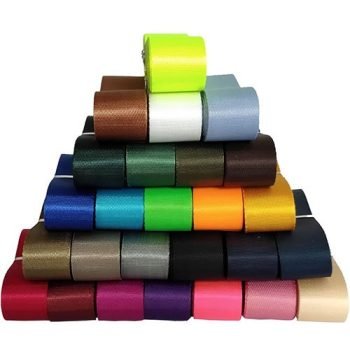
Choose from 30+ standard solids—from high-visibility safety tones to corporate palettes. Pantone® matching ensures brand consistency. Add style with jacquard motifs, stripes, reflective or fluorescent effects.
Multiple mark methods: screen print, heat transfer, woven label, embroidery, laser etch, PVC badges. Integrate barcodes/QR for inventory and batch trace. Full-coverage graphics via sublimation/digital print for photo-level detail.
Works with buckles, tri-glides, D-rings, snap hooks, cam buckles, E-Track fittings. Hardware available in stainless, zinc-plated, black oxide, or powder-coat finishes. Factory-installed assemblies ensure consistent performance.
Samples in 3–5 days for quick validation. MOQs from 100 meters/pieces—ideal for pilots and niche runs. In-house manufacturing streamlines the path from spec to shipment.
Meets global norms including REACH, RoHS, EN 12195-2, DOT FMCSA (as specified). 100% inspections at incoming, in-process, and final stages. Full traceability with test reports, batch IDs, and certifications on request.
Explore Lovrix’s flat webbing range—each built for distinct strength, flexibility, and visual needs. All options support custom widths, colors, edge treatments, and branding.

Lovrix nylon flat webbing delivers very high tensile strength with excellent abrasion resistance and a touch of elasticity; offered in 10–75 mm widths, it’s ideal for heavy-duty straps, safety harnesses, and industrial slings, and can be customized with solid or two-tone colors, reinforced box-X/cross-stitching, heat-sealed edges, and laser-etched logos.

Engineered for low stretch and long outdoor life, our polyester flat webbing (10–100 mm) resists UV, weather, and wear—perfect for cargo restraints, marine tie-downs, and transport gear—available with screen-printed graphics, reflective/fluorescent effects, color-matched tones, and clean heat-cut edges for neat feeding through hardware.

Soft, breathable, and gentle on delicate surfaces, Lovrix cotton flat webbing (10–50 mm) suits bag handles, upholstery details, and pet collars; choose natural or dyed shades, twill or herringbone weaves, bound or folded edges for anti-fray performance, and crisp heat-transfer branding for a premium, eco-forward look.

Lightweight and cost-efficient with strong chemical and mildew resistance, our PP/PE flat webbing (10–50 mm) is great for pipe bundling, nursery ties, and temporary securing; options include raw-cut or sealed ends, mini-ratchet or clip assemblies, hot-melt logo tabs, and bright safety colors for quick identification.

For high-impact branding or functional visibility, Lovrix offers patterned/specialty flats (10–75 mm) featuring decorative jacquard, stripes, reflective or glow-in-the-dark elements; customize with multicolor weaving, woven brand marks, high-definition dye-sublimation (polyester), and tailored finishes to match your product line.
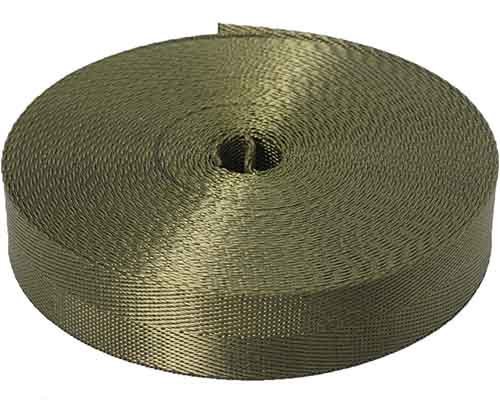
Built with ultra-high-strength fibers and extreme abrasion resistance, our military-grade flat webbing (25–100 mm) is purpose-made for tactical gear, load-bearing backpack straps, and rescue equipment; specify FR options, camo patterns, heavy bar-tack reinforcement, and paired powder-coated hardware for mission-ready performance.
From heavy-duty machinery to daily consumer products, Lovrix custom flat webbing fits an endless range of applications. Select your material, width, weave, and finish to dial in performance, durability, and on-brand presentation for every use case.


Nylon · Polyester · Cotton · PP/PE · Mil-spec fibers · Jacquard/Patterned · Plain weaves
10, 15, 20, 25, 38, 50, 75, 100 mm (other sizes available on request)
30+ standard shades · Pantone matching · Two-tone/striped · Full-surface prints · Reflective · Fluorescent
Silk screen · Heat transfer · Dye-sublimation · Woven labels · Embroidery · Laser etching · PVC badges
Digital printing · Sublimation (polyester) · Jacquard weaving · Reflective yarn integration · Glow-in-the-dark coatings
Heat-cut & sealed · Overlock stitching · Bound-edge tape · UV-sealed edges
Single row · Multi-row parallels · Box-X / cross-stitch reinforcement · Bar-tacks at load points
Buckles, tri-glides, D-rings, snap hooks · Finishes: zinc-plated, black oxide, stainless steel, powder-coated
Bulk rolls · Cut-to-length pieces · Individual polybags · Branded hang tags · Instruction inserts · Barcode/QR labeling
At Lovrix, we prioritize quality at every stage of the production process to ensure our webbing meets the highest industry standards. Our commitment to excellence is backed by rigorous quality control, internationally recognized certifications, and a dedication to sustainability.


We operate a cutting-edge webbing plant delivering high-quality, fully customizable solutions. Through rigorous QC and advanced processes, we reliably serve the requirements of global brands and enterprises.


If you have your own tech packs, logo designs, or even just an idea, please share your project details with us, including preferred fabric, color, and customization options. We’re eager to help bring your webbing designs to life through our sample production process.
From raw material selection to final packaging, our advanced production process ensures premium-quality, high-performance webbing tailored to your needs.


Proudly Partnered With Leading Brands Worldwide


Get quick answers to the most common questions about materials, customization options, durability, applications, and order process.
Flat webbing is a single-layer woven tape with a low profile and broad load-bearing surface, ideal for straps, belts, tie-downs, and assemblies. Compared with tubular webbing, it is generally stiffer, thinner, and less bulky, offering higher abrasion contact area and easier printing/branding. Tubular is softer and better for load distribution over edges; flat excels where dimensional stability, cost efficiency, and clean handling through hardware are priorities.
We manufacture flat webbing in nylon, polyester, polypropylene, cotton, and blends. Nylon: high tensile strength, slight stretch, great for heavy duty; can absorb moisture. Polyester: UV/abrasion resistant, low stretch, stable wet/dry—ideal outdoors. Polypropylene: lightweight, economical, good chemical/water resistance; lower heat/UV tolerance. Cotton: soft, natural look, breathable, favored for eco/fashion; lower wet strength. Recycled/GRS and OEKO-TEX® lines are available on request.
Typical widths: 10–100 mm (wider on request). Thickness is tailored via pick density and yarn count (e.g., 0.8–3.5 mm typical). We can engineer tensile from light duty (<5 kN) to heavy duty (20+ kN) depending on material and weave. Tolerances: width ±1.0 mm (≤50 mm) / ±1.5 mm (>50 mm); thickness ±0.2–0.3 mm. Provide your target WLL/safety factor and we’ll back-solve construction.
Common constructions include plain/basket for stability, twill for flexibility and drape, herringbone for anti-curl aesthetics, ribbed for grip, and low-elongation weaves for tensioned systems. We also offer jacquard flat webbing for woven-in logos/patterns. Edge options include bound, folded, scalloped, or heat-sealed to reduce fray and improve hand-feel.
Options include UV stabilizers, WR (water-repellent), oil/soil release, anti-mildew/anti-microbial, flame-retardant (FR), anti-static, anti-slip coatings, and soft-touch finishing. We can heat-set for low shrink and improved dimensional stability, calender for smoother print surfaces, or add reflective yarns/tapes for visibility. All finishes are specified to application, environment, and regulatory needs.
Yes—Pantone® color matching, sublimation (polyester), silk screen, heat transfer, and woven-in jacquard logos are available. We control color fastness to wash, rub, and light to your spec and can add serial/QR codes for traceability. For heavy abrasion zones, we’ll recommend print systems and topcoats that preserve legibility.
Standard lot tests include tensile/elongation, abrasion, color fastness, dimensional stability, and (if specified) FR/UV/chemical resistance. We can reference ISO/EN/ASTM methods and support ISO 9001, OEKO-TEX®, REACH declarations, and GRS for recycled lines. COA/test reports are provided with shipments; third-party verification available on request.
Typical MOQ: 300–1,000 m per color/spec (lower for stocked colors). Samples: ~5–10 days (custom dye/print may add time). Production: ~20–30 days after sample approval; urgent slots depend on loom and finishing capacity. We also offer cut pieces, sewn assemblies with hardware, private-label packaging, and export-ready cartons/palletizing.
“Stronger” depends on how you define performance—ultimate tensile strength, resistance to edge wear, stability in hardware, or comfort over edges. Both flat and tubular webbing can be engineered to high break strengths, but they behave differently in use.
Structure & Load Path.
Flat webbing is woven as a single-layer tape. Its broad, low-profile cross-section spreads load across hardware (cam buckles, ratchets, D-rings) and contact surfaces. This gives it excellent dimensional stability: it threads smoothly, stacks well on winders, and resists twisting. Tubular webbing is essentially a flattened tube. The hollow “sheath” structure can compress and cushion over edges, which improves load distribution where sharp radii or irregular surfaces exist.
Tensile & Elongation.
For the same fiber, width, and pick density, break strength often favors flat constructions because more fibers are aligned directly in the load path with less structural “give.” Tubular designs may show slightly higher energy absorption (useful in dynamic loading) due to structural deformation under load. In static or tensioned systems—cargo straps, seat systems, fixture tie-downs—flat webbing’s low elongation and predictable stress–strain curve provide more consistent tension.
Abrasion & Edge Behavior.
Edge wear is a key failure mode. Flat webbing presents defined selvedges that can be edge-bound, folded, or heat-sealed to reduce fray and fuzzing. On sharp edges, tubular can outperform by cushioning and spreading pressure, reducing cut risk. If your application sees frequent sliding over corners or hardware, tubular may extend service life—especially when paired with protective sleeves.
Hardware Compatibility.
Flat webbing is easier to feed and clamp in most cargo hardware (ratchets, cams, ladder locks) and gives consistent friction in buckle teeth. Tubular’s bulk can reduce clamp efficiency or slip earlier if not sized precisely. For automated sewing, label application, and printing, flat is simpler and more repeatable.
Comfort & Hand-Feel.
Wearable or contact applications (shoulder straps, harness interfaces) often prefer tubular for its softer hand and rounded edges. Flat can be specified with soft-touch finishes, but tubular generally wins on comfort without added finishing.
Branding & Visibility.
If you need crisp printing or woven logos, flat webbing offers a smoother printable face and supports jacquard more cleanly at thin gauges. Tubular can be branded, but fine detail may bridge or distort when the tube compresses.
Cost & Process.
Flat webbing is typically more economical at scale and faster to process (dyeing, coating, cutting, printing). Tubular may require more yarn and loom time for a given break strength.
Choose Flat When:
You need stable tension, low elongation, and clean interaction with ratchets/cams.
Branding legibility, colorfast prints, and tight tolerances matter.
You want cost-effective, high-throughput production and easy QC.
Choose Tubular When:
Straps run over edges/irregular shapes and you want added cushioning.
Comfort/hand-feel is critical (shoulder, harness interfaces).
You need energy absorption in semi-dynamic applications.
Bottom line: for B2B cargo systems, flat webbing is the default due to hardware compatibility, stability, and cost. Use tubular where edge comfort and cushioning dominate.
Specifying flat webbing is a balancing act between strength, stiffness, fit, and brand/finish requirements. A disciplined spec avoids over-engineering (wasted cost) or under-engineering (safety risk).
Define the Loads First.
Start from the system level: target Working Load Limit (WLL), safety factor (often 3:1–7:1 depending on your industry), and expected peak loads (shock, braking, vibration). Provide use temperature, UV/wet exposure, and chemical contact assumptions. With those, a supplier can back-solve tensile and elongation targets.
Width & Hardware Fit.
Hardware comes in nominal sizes (e.g., 25, 38, 50 mm or 1″, 1.5″, 2″). Specify width to match the buckle/ratchet opening with a tolerance that ensures easy feed yet minimal lateral play (e.g., 50 mm hardware pairs well with 49–50 mm webbing; 2″ with 1.95″–2.00″). Wider webbing spreads load and usually boosts break strength, but may reduce ease of threading or increase part cost.
Yarn & Denier/Tex.
Higher denier (or tex) yarns increase mass per unit length and potential tensile. For polyester, a common path is moving from 1000D to 1500D yarns in the warp, or increasing ends per cm (EPC). Denier changes also affect hand, fold stiffness, and print face smoothness.
Weave Architecture.
Plain/Basket: stable, low elongation, great for buckles and printing.
Twill/Herringbone: improved drape, reduced curling, good edge feel.
Ribbed/Anti-slip: adds surface friction for clamping and hand grip.
Low-elongation variants: tighter picks and heat-setting for tensioned systems.
Thickness & Pick Density.
Thickness is set by yarn size and pick density (weft insertions). Thicker webbing generally increases break strength and abrasion hours but may jam in hardware or demand longer stitch lengths. Typical flat webbing spans 0.8–3.5 mm; keep an eye on your ratchet tooth depth and cam bite to ensure full engagement.
Edge Construction.
Folded/bound edges improve comfort and resist fray; heat-sealed edges reduce fuzzing for automated feed. If the strap will see corner contact, consider edge reinforcement yarns or specify a rounded selvedge.
Elongation Control.
For tie-downs and fixtures, aim for low working elongation (e.g., <5% at WLL) to reduce re-tension cycles. Heat-set polyester excels here; nylon offers higher elongation if shock absorption is desired.
Finish & Post-Treatment.
Select coatings to match environment: UV stabilizers, WR (water-repellent), oil/soil release, anti-mildew, FR (flame-retardant). Finishes can alter stiffness and bite in hardware—request samples to verify handling.
Branding & QC.
If you plan on sublimation (polyester), specify a calendered, smooth face. For screen/transfer prints, request topcoats that improve abrasion life. Lock in tolerances (width/thickness/elongation at load) and test methods for apples-to-apples QC.
Practical path: share your WLL, safety factor, hardware drawings, environment, and branding needs. Your supplier will submit 1–2 constructions with measured tensile/elongation and demo cuts for hardware fit—then you iterate.
Branding longevity depends on fiber, surface preparation, print or weave method, and service environment (UV, abrasion, washing, chemicals). Choosing the right method preserves legibility across the product’s life.
Woven-In (Jacquard) Logos.
Logos are integrated into the webbing structure. Benefits: no peel, excellent abrasion survival, good UV fastness (fiber-dependent). It’s the most durable branding for high-wear straps (tie-downs, luggage). Consider slight increases in thickness and cost; ultra-fine detail may require higher pick densities.
Sublimation (Polyester Only).
Dye gas diffuses into polyester, yielding vivid, high-resolution graphics with excellent wash fastness and good UV resistance (with stabilized inks). The image is in the fiber, not on top, so there’s no cracking. Requires a white or light base for color accuracy and performs best on smooth, calendered webbing. Heavy abrasion will still erode print over time.
Screen Printing / Transfer Printing.
Flexible inks or transfer films bond to the surface of nylon or polyester. Advantages: bold, opaque logos (good on dark colors), low setup cost for simple marks, broad material compatibility. Limitations: surface wear can abrade the ink; add clear topcoats for better rub fastness. Great for serials, QR codes, safety marks with moderate wear.
Woven Labels / Sewn Patches.
Durable and premium-looking; ideal when the strap surface is too textured for print. Stitching adds mechanical security, but placement must avoid buckle bite zones to prevent peel.
Colorfastness Considerations.
Fiber: Polyester generally outperforms nylon under UV for color retention.
Dye Class: Disperse dyes (polyester) offer strong wash/rub fastness; acid dyes (nylon) can be vibrant but may need UV stabilizers for outdoor use.
Finish: UV inhibitors and WR/soil-release finishes protect color and keep the face cleaner, indirectly prolonging legibility.
Environment: High UV, salt, and grit accelerate fade and scuffing; specify UV-stabilized constructions and consider reflective yarns/tapes if night visibility is required.
Testing & Specs.
Request color fastness to light (e.g., ISO 105-B02), wash/rub fastness (ISO 105-C/E/X12), and abrasion (Martindale/Taber) metrics aligned to your use case. For printed marks, include rub-fastness after abrasion cycles and salt-spray exposure if marine.
Selection Guide:
High wear, industrial/outdoor: Jacquard primary; supplement with small screened serials.
Full-color brand stories, retail appeal: Sublimation on polyester with UV-stable inks.
Simple compliance marks, batch IDs: Screen/transfer with protective topcoat.
Premium badge look or textured faces: Woven label/patch, stitched outside clamp paths.
In short, for the toughest environments choose woven-in branding; for vivid graphics on polyester select sublimation; for utility marks use screen/transfer with the right topcoat—and always validate with use-condition testing.
Send us a message if you have any questions or request a quote. We will be back to you ASAP!