 Skip to content
Custom Reusable Bags Manufacturer for Retail, Sustainability & High-Volume Programs
PP Woven • Nonwoven • RPET • Canvas • Polyester | High Durability • Stable Reorders • Certified Materials
Lovrix develops custom reusable bags built for real-life use—supermarkets, fashion retail, eco campaigns, events, and long-term distribution programs. With in-house webbing, controlled sourcing across PP/RPET/canvas mills, and a structured QC system, we deliver consistent quality across large orders and repeat reorders. Our engineering team ensures load strength, print durability, and structural stability that match demanding retail standards.
- High-Volume Stability (Over 28 Million Bags Produced Annually)
- Certified Sustainable Materials (GRS RPET, OEKO-TEX, REACH Compliance)
- Reinforced Durability Engineering (Load Tests 15–25 kg)
- In-House Webbing Production (20–32 g/m Polyester Webbing)
- Printing Expertise Across 10 Methods
- Fast Sampling & Structured Production (3–7 Days for Samples)
What Problem Does Lovrix Solve for You?
Many reusable bag programs fail because materials are inconsistent, laminations peel, handles tear, printing fades, and mass production doesn’t match the sample. Lovrix solves these problems with controlled fabrics, in-house webbing, and engineering-based QC.
Most clients reach Lovrix after experiencing problems with another factory.
When we review their previous samples, the issues are always similar—but avoidable.
Inconsistent Fabric Lots
Cheap factories buy PP woven, nonwoven, or RPET fabric from spot markets. This causes:
- GSM fluctuation of ±20–30%
- uneven lamination thickness
- dull surface gloss
- color shifts between rolls
Lovrix avoids this entirely because:
- we work with long-term partner mills for PP woven, RPET, coated canvas
- GSM variation stays within ±5%
- lamination thickness is recorded per roll (0.03–0.07 mm typical)
- dyeing controlled in-house (ΔE < 0.8)
Reusable bags look simple, but the fabric is 70% of the quality. Lovrix locks this from day one.
Handle Failures (the #1 Reason Bags Break)
Most reusable bags fail at the handles, not the fabric.
Common causes we see from other suppliers:
- handles stitched directly onto weak nonwoven
- low-density webbing (12–18 g/m), easy to fray
- X-box reinforcement done only at top layer, not through all layers
- wrong thread thickness
Lovrix solves this with:
- polyester webbing from our own weaving line (18–32 g/m density options)
- load-bearing stitch structures (cross-stitch, X-box, bar-tack)
- reinforcement patches inside the body
- 3–4× thread tension tests per shift
- load test up to 25 kg
We treat reusable bag handles like structural points, not decorative parts.
Lamination & Coating Failures
Low-quality lamination is one of the biggest hidden risks in reusable bags.
Typical problems:
- lamination peeling after 5–10 uses
- wrinkling when folded
- bubbling from unstable glue
Lovrix prevents this through:
- temperature-controlled lamination (adjusted per GSM)
- glue grammage consistency (±1 g/m² tolerance)
- hot-room testing (50°C for 12 hours)
- folding fatigue test (200–300 folds)
These steps ensure your reusable bags hold shape after months, not weeks.
Printing That Cracks, Fades, or Looks Fuzzy
This usually comes from bad ink matching or incorrect lamination placement.
Common issues:
- screen printing cracks when bag is folded
- digital prints look dull due to wrong absorbency
- colors not matching Pantone
- ink rubs off in wet conditions
Lovrix printing passes:
- 20–40 rub tests (dry/wet)
- lamination peel tests
- color profiling based on Pantone TPG/TPM
- adhesion tests on both PP and RPET
We do not approve printing unless it survives real usage.
Bags Losing Shape Too Quickly
Reusable bags collapse or wrinkle because:
- fabric GSM is too low
- lamination too thin
- stitching too loose
- bottom not reinforced
Lovrix improvements:
- PP woven 120–160 GSM
- RPET twill with proper backing
- EVA or PP board bottom panel (depending on load)
- SPI stitching set to 6–8
Your bag stands upright and keeps shape—important for retail and gift programs.
Sample Good → Mass Production Bad
This is the top complaint from new clients.
Reasons it happens:
- factories switch to cheaper materials during mass production
- stitching density decreases to save time
- print ink changed
- coating thickness reduced
Lovrix never does this because:
- all materials are lot-number tracked
- coating thickness is measured by QC per roll
- printing settings saved for each project
- webbing, fabrics, and stitching SOPs stored for repeat orders
- golden sample locked in QC office and production floor
Reorders after 12 months remain identical to the first batch.
Understanding the Client’s Actual Needs Before Development
eusable bags serve very different purposes across industries. Lovrix clarifies load expectations, branding requirements, fabric appearance, and durability before sampling to match the right material and construction for each client’s real-world use.
Lovrix does not “just make a sample.” We clarify:
- how the bag will be used
- who will use it
- how long it should last
- how it will be stored and transported
- whether it will carry liquids, groceries, clothing, or high-load items
Retail Brands (Apparel, Cosmetics, Boutiques)
Needs:
- premium texture
- clean seams
- accurate colors
- neat edges for merchandising
- repeatable mass production
Lovrix suggestions:
- laminated RPET
- canvas with REACH-compliant dye
- PU-coated fabric
- jacquard webbing handles
We’ve produced 50+ retail bag programs per year, each requiring color accuracy within ΔE < 1.0.
Grocery Chains & Food Delivery Operators
Needs:
- high load-bearing strength
- wipeable surfaces
- reinforced bottom
- handles that don’t dig into hands
Lovrix solutions:
- PP woven 130–160 GSM
- food-grade lamination
- wide polyester webbing handles (3–4 cm)
- inner reinforcement patches
Our grocery bags regularly pass 20–25 kg load tests.
Outdoor, Sports, and Travel Brands
Needs:
- lightweight but durable
- water resistance
- colorfastness under sunlight
- strong seam reinforcement
Lovrix recommends:
- 300–600D polyester
- RPET 600D with PU coating
- nylon webbing from our own weaving line
- bartack reinforcement at all stress points
Lovrix has produced reusable outdoor totes for brands needing >500 cycles of fold/unfold durability.
Promotional Event & Merchandise Companies
Needs:
- fast turnaround
- predictable pricing
- flexible MOQs
- multiple colorways
Lovrix offers:
- soft nonwoven (80–120 GSM)
- digital or screen print
- rapid sampling (3–5 days)
- dozen color options from stock fabric
Event clients value our 15–18 day delivery windows.
Corporate Gifting & Hospitality Programs
Needs:
- clean branding
- durable construction
- premium finishes
- same quality for reorders months later
Lovrix solutions:
- laminated RPET
- canvas + PU patch
- metal logo plates
- velvet or kraft packaging options
These programs require very stable color lots, which we ensure through in-house dyeing control.

Why Reusable Bag Development Fails
Reusable bag failures usually come from shortcut materials, thin fabrics, weak stitching, poor lamination, incorrect printing, or lack of QC discipline. Lovrix prevents these issues with controlled materials, reinforced structures, and lot-based production management.
Fabric GSM Too Low or Unstable
Many factories use:
- 90–110 GSM PP instead of 120–140
- low-pressure lamination
- recycled PP without stabilizers
Lovrix standard:
- PP woven ≥120 GSM for durability
- lamination 0.05–0.07 mm
- RPET with certified GRS yarn
This ensures bags stay upright and survive repeated use.
Handle & Stitching Failures
The main structural failure.
Other factories:
- weak webbing
- shallow stitching
- no reinforcement patches
- thread density too low
Lovrix upgrades include:
- polyester webbing we weave ourselves
- X-box reinforcement
- bartacks at stress points
- thread count SOP: 6–8 SPI
Handles last as long as the bag.
Printing Cracks, Fades, or Peels
Printing issues come from:
- wrong ink sets
- poor surface preparation
- unstable digital print settings
Lovrix’s printing tests include:
- 20–40 rub tests
- heat exposure tests
- adhesion tests on PP & RPET
- Pantone matching with recorded profiles
Branding stays sharp for the entire product life cycle.
Poor Bottom Strength
Bottom panels often tear because:
- body fabric too thin
- no reinforcement
- bottom corners not stabilized
Lovrix solutions:
- bottom board
- double-layer fabric
- corner patch reinforcement
- seam support tape
Bags Losing Shape After a Few Uses
Caused by thin fabric or low lamination.
Lovrix uses:
- heavier GSM fabric
- thicker lamination
- better stitching patterns
The bag retains its structure even after long-term folding.
Sample Looks Great, Mass Production Fails
Most common scenario.
Lovrix prevents this by:
- locking all specs after golden sample approval
- maintaining lot-number traceability
- storing printing settings and stitching parameters
- rejecting any fabric roll outside our GSM tolerance
This is why Lovrix clients reorder the same bag for months or years with no variation.
Key Factors to Consider When Developing Custom Reusable Bags
Reusable bags look simple, but the real performance depends on GSM levels, lamination stability, stitching structure, handle reinforcement, color consistency, and printing durability. Lovrix clarifies these factors before sampling to prevent future quality and production issues.
Reusable bag development requires more engineering than many buyers expect. Lovrix breaks development into six non-negotiable factors.
Fabric Selection & GSM Accuracy
Reusable bags heavily rely on fabric stability. Lovrix evaluates:
PP Woven (120–160 GSM)
- stronger tear resistance
- suitable for grocery chains & delivery
- heavy loads: 18–25 kg
Nonwoven (80–120 GSM)
- good for events and promotions
- soft and lightweight
- inexpensive for high-volume programs
RPET (rPET 150–240 GSM depending on backing)
- premium retail feel
- environmental claim supported by GRS certification
- stronger lamination bonding
Lovrix keeps GSM tolerance within ±5%, while many suppliers allow ±15–20%.


Lamination Type & Thickness
The lamination defines stiffness, shape, water resistance, and print sharpness.
Lovrix lamination choices:
- Gloss lamination (0.05–0.07 mm) — bright colors, strong surface
- Matte lamination (0.05 mm) — premium look, suitable for fashion
- RPET lamination — more eco-friendly, stable bonding
- EVA/PE lamination — food-grade options for grocery chains
Each roll undergoes heat and pressure tests to avoid wrinkling and peeling.
Handle Structure & Reinforcement
Handles are the structural backbone of reusable bags.
Lovrix selects:
- polyester webbing from our own weaving line
- PP woven handles for cost-effective projects
- padded handles for premium retail collections
- cotton webbing for eco-friendly programs
Reinforcement patterns include:
- X-box stitching
- cross-stitch
- bartacks
- back patch reinforcement
Load capacity: 15–25 kg depending on structure.


Stitching SPI & Thread Quality
Weak stitching can ruin even the best fabric.
Lovrix keeps:
- SPI 6–8 for reusable bags
- bonded polyester thread
- locked seam ends
- 3mm–5mm stitch offset from edge
QC checks thread tension every 100–200 pcs.
Print Compatibility & Branding Requirements
Print must match both lamination and usage.
Lovrix printing options:
- screen printing for PP woven & nonwoven
- offset print for laminated bags
- digital print for small runs
- UV print on coated surfaces
- flock print for fabric-based totes
- foil stamping or PU patch branding for premium collections
Printing is tested for:
- rub resistance
- colorfastness
- lamination bonding
- Pantone accuracy


Size, Structure & Bottom Strength
The bag must retain shape even under load.
Lovrix uses:
- double-layer bottom panel
- PP board insert
- corner bar-tacks
- seam tape reinforcement
- gusset reinforcement
This ensures bags keep their structure even after months of folding and carrying heavy items.
Lovrix’s Engineering-Driven Development Process
Lovrix follows a technical development process built around material control, structural reinforcement, and printing stability. Each step—from fabric selection to sampling and mass production—ensures predictable, repeatable results for long-term programs.
Lovrix does not use a “sample-first, fix-later” approach.
We build reusable bags like engineered products.
STEP 1
Requirement Clarification
Lovrix starts every project by clarifying:
- bag’s intended usage
- load expectation (10kg? 15kg? 25kg?)
- fabric preference (PP / RPET / canvas / coated fabric)
- branding complexity
- lamination preference
- distribution channel
- sustainability requirements (e.g., GRS RPET)
We gather real parameters, not vague descriptions.
STEP 2
Fabric Matching & Material Verification
Before making a sample, Lovrix checks:
- GSM requirements
- color matching (ΔE < 1.0)
- lamination type
- print compatibility
- webbing density
- sewing thread quality
We also send material swatches if the client needs to feel the texture.
STEP 3
Structure Engineering
Lovrix determines:
- handle length & width
- reinforcement method (X-box, cross-stitch, bartack)
- bottom structure (flat/gusseted/reinforced)
- seam type
- internal panel supports
- foldability & packing method
We adjust structural choices based on load and usage environment.
STEP 4
Artwork Preparation for Printing
Print issues usually happen due to incorrect file preparation.
Lovrix prepares:
- print layout
- bleed & safe zones
- Pantone confirmation
- DPI requirement for high-detail prints
- lamination-ink compatibility
We avoid fuzzy edges and inaccurate colors.
STEP 5
Sample Production (3–7 Days)
Lovrix keeps a dedicated reusable bag sampling line with:
- CNC cutting
- thermal lamination equipment
- screen printing unit
- industrial sewing machines
Clients receive a fully functional sample that matches mass-production specs.
STEP 6
Costing Breakdown & Optimization
Lovrix provides:
- material cost
- lamination cost
- stitching cost
- handle/webbing cost
- printing cost
- bottom reinforcement cost
We suggest cost-saving options without sacrificing durability.
STEP 7
Mass Production With Lot Control
During production we track:
- fabric lot number
- lamination roll
- thread batch
- webbing batch
- print color profile
- stitching SPI
This prevents any deviation from the approved sample.
STEP 8
QC & Final Inspection
Reusable bags are inspected according to:
- GSM verification
- handle load test (15–25 kg)
- stitch strength test
- print rub test
- dimension measurement (±3 mm)
- packaging verification
Then photos/videos are sent to clients before shipment.

Buyer Checklist: What to Ask Before Selecting a Reusable Bag Manufacturer
A structured checklist helps avoid poor materials, weak handles, unstable printing, and inconsistent mass production. These questions reveal whether a manufacturer truly controls its fabric supply chain and production quality.
Here is Lovrix’s actual checklist used when guiding new clients.
Checklist to Identify a Reliable Supplier:
1. Fabric Control
- Do they control fabric GSM within ±5%?
- Can they provide fabric lot tracking?
- Can they match Pantone ΔE < 1.0?
2. Lamination Stability
- What lamination thickness do they guarantee?
- Can they provide wrinkle / peel test reports?
3. Webbing Quality
- Do they weave their own webbing or buy from local markets?
- What is their webbing density (g/m)?
4. Handle Strength
- Do they use X-box or bartack reinforcement?
- Do handles pass 15–25 kg load tests?
5. Printing Durability
- Do they provide rub test data?
- What printing methods do they support?
6. Structural Engineering
- Do they use bottom reinforcement panels?
- How do they support gusset seams?
7. Mass Production Stability
- Can they show records of print/lamination consistency?
- Do they use golden samples?
8. Reorder Consistency
- Do they save printing profiles & sewing settings?
- Can they reproduce the same bag 12 months later?
A good manufacturer can answer “yes” to most of these questions. Lovrix can answer “yes” to all of them.


Types of Reusable Bags Lovrix Manufactures
Lovrix manufactures reusable bags across multiple materials—PP woven, RPET, nonwoven, canvas, polyester, and laminated composites. Each category is engineered with the right reinforcement, stitching method, and printing technique for its intended use.
Below is a detailed guide based on Lovrix’s real production capability.

PP Nonwoven Reusable Bags
Best For: Events, giveaways, promotional programs, NGO campaigns
Material: 80–120 GSM PP nonwoven
Branding: Screen print / digital print
Handle Options: Nonwoven handles or polyester webbing
Engineering Notes:
- Simple structure, good cost-efficiency
- Ideal for high-volume orders
- Nonwoven handles reinforced with X-stitch or bartacks
- Panels stay flat after cutting—fast production efficiency
Common Uses:
Expos, conferences, product launches, government programs.

PP Woven Reusable Bags
Best For: Supermarkets, grocery chains, heavy-duty retail
Material: 120–160 GSM PP woven (with or without lamination)
Branding: Screen print / offset print
Engineering Notes:
- High tensile strength for repeated heavy loads
- Handles reinforced with polyester webbing 20–32 g/m
- Lamination adds stiffness and protects artwork
- Strongest option for 15–25 kg load capacity
Common Uses:
Supermarkets, food wholesalers, household goods retailers.

Laminated PP (Woven/Nonwoven) Bags
Best For: Apparel brands, lifestyle stores, premium promotions
Material: PP woven or nonwoven + 0.05–0.07 mm lamination
Branding: Full-panel offset printing / CMYK artwork
Engineering Notes:
- Lamination protects graphics and increases rigidity
- Smooth surface allows sharp imagery
- Requires precise panel cutting to avoid wrinkles
- Fold test: ≥200 cycles without cracking
Common Uses:
Fashion retail packaging, seasonal promotions, mall shops.

RPET Recycled Reusable Bags (GRS Certified)
Best For: Eco-conscious brands, retail programs, corporate gifting
Material: 140–240 GSM RPET fabric
Branding: Digital / offset / screen print
Engineering Notes:
- Made from recycled plastic bottles
- Fabric has smooth hand-feel and strong fiber bonding
- Works well with detailed artwork
- Requires tighter QC on color consistency (ΔE < 1.2)
Common Uses:
Sustainable retail collections, eco workshops, hotel/resort merch.
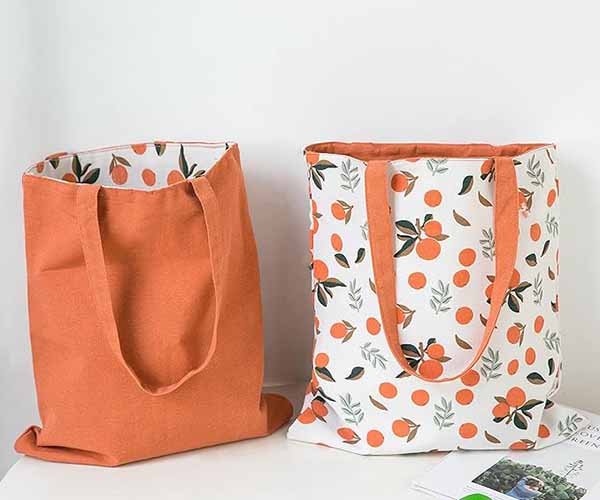
Canvas / Cotton Reusable Bags
Best For: Lifestyle brands, boutique stores, cosmetic companies
Material: 8–16 oz canvas or cotton
Branding: Screen print / embroidery / DTG print
Engineering Notes:
- Natural fabric with premium appearance
- Pre-shrunk finishing recommended (shrinkage <3–5%)
- Strong seams required due to fabric weight
- Handles can be in self-material or webbing
Common Uses:
Beauty brands, bookstores, artisan markets, fashion merch.
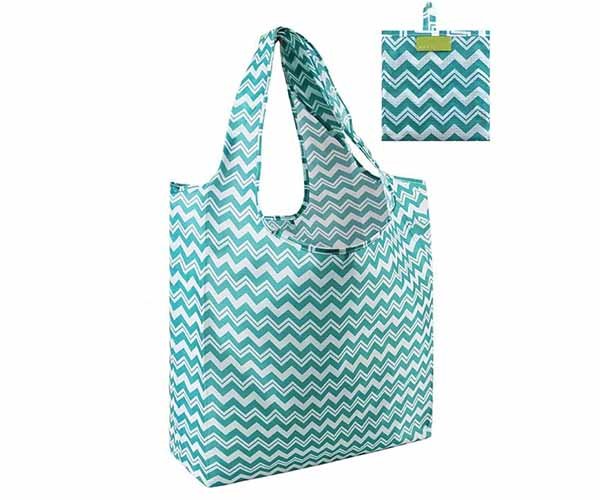
Foldable Polyester Reusable Bags
Best For: Travel retail, gifting campaigns, daily carry
Material: 190T / 210D / RPET polyester
Branding: Heat transfer / screen print
Engineering Notes:
- Lightweight but strong
- Highly compact when folded
- Needs reinforced stress points near folds
- Often includes pouch or elastic loop
Common Uses:
Travel accessories, quick-use shopping bags, brand giveaways.

Cooler / Insulated Reusable Bags
Best For: Food delivery, grocery cold-chain, meal-prep brands
Material:
- Outer: PP woven, RPET, or polyester
- Middle: PE foam or EPE 3–6 mm
- Inner: Aluminum foil / food-safe lining
Engineering Notes:
- Requires thermal insulation tests
- Seam sealing prevents cold leakage
- Reinforced base board for heavy loads
- Handles with extra cross stitching
Common Uses:
Frozen food chains, meal kits, supermarket fresh departments.

Wine & Bottle Reusable Bags
Best For: Wineries, gift shops, corporate gifting
Material: Nonwoven, RPET, laminated PP, canvas
Engineering Notes:
- Dividers must be reinforced to prevent bottle collision
- Bottom panel must support 5–10 kg
- Handles must be durable and comfortable
Common Uses:
Wine stores, hotels, gifting events.

Drawstring Reusable Bags
Best For: Apparel, shoes, kids’ programs, sports retail
Material: Polyester, RPET, nonwoven, mesh
Engineering Notes:
- Cord channel must be consistent
- Reinforced eyelets for durability
- Print method must match stretch behavior
Common Uses:
Gym bags, shoe bags, corporate bundles.

Luxury Retail Reusable Totes
Best For: High-end retail & branded packaging
Material: Laminated RPET, canvas, premium PP woven
Engineering Notes:
- High print accuracy required
- Edge piping and finishing must be flawless
- Custom hardware options (metal eyelets, PU patches)
Common Uses:
Fashion boutiques, premium homeware, cosmetics.

Oversized Reusable Storage Bags
Best For: Bedding, blankets, warehouse storage, household goods
Material: PP woven / RPET / Oxford polyester
Engineering Notes:
- Large panels require precise cutting alignment
- Reinforced bottom & corners
- Heavy-duty zippers
- Ventilation mesh available as add-on
Common Uses:
E-commerce fulfillment, home organization, seasonal storage.

Event & Promotional Reusable Bags
Best For: Marathons, conferences, exhibitions
Material: Nonwoven, polyester, RPET
Engineering Notes:
- Quick production
- Simple but durable construction
- Cost-efficient printing options
Common Uses:
Brand activations, corporate events, school programs.
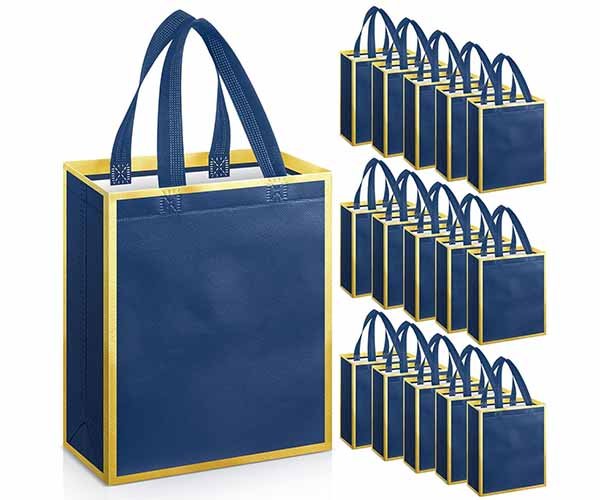
Government & NGO Program Reusable Bags
Best For: Large-scale sustainability campaigns
Material: Nonwoven / PP woven / RPET
Engineering Notes:
- Strict budget control
- High-volume consistency
- Reinforced structure for long-term community use
Common Uses:
Reusable bag distribution campaigns, community initiatives.

Hospital & Medical Reusable Bags
Best For: Patient kits, maternity wards, medical programs
Material: Nonwoven or RPET
Engineering Notes:
- Dust-free packing
- Controlled odor levels
- Consistent color and print clarity
Common Uses:
Hospital welcome kits, wellness programs.

Specialty-Function Reusable Bags (OEM Projects)
Lovrix also develops bags with custom functions:
- RFID pockets
- Waterproof seams
- Reinforced industrial stitching
- Fire-retardant fabrics
- Extra-large capacity bags
- Multi-compartment structures
These are engineered based on application needs.
Branding & Printing Methods for Reusable Bags
Branding on reusable bags must match the fabric structure, lamination thickness, ink adhesion behavior, and folding durability. Lovrix selects printing techniques based on real usage conditions, ensuring sharp, durable logos even on high-volume retail and grocery programs.
Printing is one of the most critical—and most misunderstood—parts of reusable bag manufacturing. Most print failures come from mismatched ink formulas or incorrect curing temperatures. Because Lovrix manages fabric selection and printing internally, we ensure the artwork remains clear and stable across thousands of uses.
Below is how Lovrix engineers branding for reusable bags:
Screen Printing (PP Woven & Nonwoven Bags)
Best For: Supermarkets, events, promotions, corporate giveaways
Why Lovrix Uses It: Strong coverage and durable ink film for simple/mid-size logos.
Lovrix Technical Controls:
- Adjust ink viscosity for PP woven’s low absorbency
- Increased pigment density to improve opacity
- Fine mesh frames (90–120 mesh) for clean lines
- Flash-dry between layers to prevent smudging
- Controlled curing temperature (≈150°C) for deep adhesion
Durability Tests:
- 20–40 dry-rub cycles
- 10–15 wet-rub cycles
- Folding fatigue test (no cracking after 100 folds)
Common Use: Grocery chains, government tenders, high-volume promotional bags.
Offset Printing (Laminated PP & RPET Bags)
Best For: Full-panel graphics, photos, gradient designs, premium retail art
Why Clients Choose It: High-resolution printing sealed under lamination for premium presentation.
Lovrix Process:
- CMYK artwork separation
- Plate production with exact dot-gain control
- Printed sheet laminated afterward for protection
- Matching gloss/matte surface finish
- No distortion when bags are folded
Lovrix QC Checks:
- Color difference ΔE < 1.2
- Smooth lamination bonding with no bubbles
- Sharpness maintained across large surfaces
This is the preferred method for apparel retailers and lifestyle brands.
Digital Printing (Low MOQ, Multi-Color Artwork)
Best For: Small orders, multiple colorways, fast customer approval
Lovrix Equipment:
- Large-format Epson digital printers
- ICC color profiles for RPET, pp woven, coated polyester
Why Brands Use It:
- No plate or mold cost
- Unlimited colors
- Super-fast turnaround (3–5 days for samples)
Performance Tests:
- No color dropout on creases
- Clean edges with no ink bleeding
Digital is perfect for testing multiple designs before a mass production run.

Heat Transfer Printing (Polyester, RPET, Special Logos)
Best For: Multi-color logos, small areas with high detail, foldable bags
Lovrix Controls:
- Exact temperature (typically 150–160°C)
- Measured dwell time to avoid fabric shrinkage
- Strong glue backing for laminated surfaces
Advantages:
- Clean edges
- Sharp color separation
- High-detail logos without misalignment
Lovrix uses heat transfer for sports bags, brand collabs, and event merchandise.
UV Printing (Coated Fabrics, RPET Panels, PU Patches)
Best For: Precise small logos, durability on coated surfaces
Lovrix Advantages:
- Strong adhesion to coated surfaces
- UV curing ensures print hardness
- No color spreading or halo edges
- Ideal for complex brand marks
UV printing creates a premium, crisp look—commonly used on RPET retail totes and PU label panels.
Foil Stamping (Canvas / Heavy RPET / Premium Projects)
Best For: High-end retail collections, corporate gifting programs
Lovrix Process:
- Temperature-controlled foil press
- Pressure calibration to avoid cracking
- Reinforced backing layer for thin fabrics
Result: Elegant metallic finish that retains shine even after repeated folding.
Woven Labels, PU Patches, and Silicone Badges
Sometimes the best branding isn’t printed—it’s applied.
Lovrix Capabilities:
- Custom jacquard labels (via partner weaving mill)
- PU patches cut via CNC steel dies
- Silicone logos with 3D layers
This is ideal for lifestyle brands requiring a “retail-ready” look.
Common Mistakes to Avoid When Ordering Reusable Bags
Reusable bag failures often come from wrong fabric choices, insufficient lamination, weak stitching, incorrect printing method, or lack of reinforcement. Lovrix educates buyers early to avoid costly mistakes and ensure dependable performance.
Lovrix receives dozens of projects each year from brands who experienced problems with their previous manufacturers.
Almost all issues trace back to predictable mistakes.
Below are the most common—and how Lovrix prevents them:
Using Fabric GSM That Is Too Low
Bags below 120 GSM PP woven or 90 GSM nonwoven collapse quickly.
Lovrix Prevention:
- PP woven: 120–160 GSM
- Nonwoven: 80–120 GSM
- RPET: 150–240 GSM
These weights keep the bag upright and durable.
Ignoring Handle Reinforcement
Handles are the bag’s “load-bearing beams.”
Common Cheap Practices:
- Single-row stitching
- Thin webbing (often < 18 g/m)
- No reinforcement patches
Lovrix Standard:
- polyester webbing 20–32 g/m
- X-box or bartack reinforcement
- inner backing layer
- handle load test: 15–25 kg
Wrong Print Method for the Material
Screen printing on laminate → cracks
Digital print on nonwoven → faded
Heat transfer on PP woven → peeling
Lovrix selects the method based on fabric structure and lamination behavior.
Weak Bottom Structure
Bottom tearing is the #1 reason grocery bags fail.
Lovrix Approach:
- double-layer reinforcement
- inserted PP board
- strengthened corner stitching
- seam tape as needed
Not Controlling Lamination Thickness
Thin lamination causes wrinkles, weak structure, and peeling.
Lovrix Controls:
- 0.05–0.07 mm thickness
- pressure & temperature calibration
- lamination peel test
Assuming All Reusable Bags Are “The Same”
Different tasks require different bags:
- Heavy grocery → PP woven
- Premium retail → RPET laminated
- Eco campaigns → canvas or GRS RPET
- Events → nonwoven
Lovrix assigns the right material for the right function.
Ignoring Foldability Requirements
Folding causes stress points.
Lovrix Test:
- 200–300 fold cycles
- no cracking of print or lamination
Not Checking Pantone or Color Profile Early
Color drift across batches leads to mismatched inventory.
Lovrix Control:
- ΔE < 1.0–1.2 depending on fabric
- dyeing consistency via long-term mills
Neglecting Packaging Requirements
Packaging affects product presentation and protects the lamination.
Lovrix offers tailored packaging for each client’s use case.
How Lovrix Ensures Long-Term Stability for High-Volume Reusable Bag Programs
Large retailers, grocery chains, and brand programs depend on stable reorders. Lovrix ensures long-term consistency with strict lot tracking, documented production parameters, controlled webbing, fabric stability, and stored golden samples.
Reusable bags are rarely “one-off” projects. Retailers, supermarkets, and corporate clients require long-term consistency across dozens of reorders. Lovrix built its system specifically for this demand.
Fabric Lot Tracking & Consistency Control
Every roll includes logs for:
- GSM (±5%)
- lamination thickness
- dye batch
- color ΔE
- supplier mill ID
This eliminates variation between reorders months apart.
Printing Profile Preservation
Lovrix saves for every project:
- CMYK curves
- Pantone references
- RIP settings
- plate information (for offset)
- mesh count & curing settings (for screen print)
Reprint accuracy is ensured even after long gaps.
Webbing & Handle Consistency
Because Lovrix weaves much of its own polyester webbing, we control:
- density (g/m)
- tensile strength
- weave pattern
- color batch consistency
Handles will feel and behave the same across multiple production runs.
Stitching Parameters & Sewing SOPs
Lovrix records:
- SPI (stitches per inch)
- needle type
- thread thickness
- position of bartacks
- seam allowances
This keeps structural integrity identical in every batch.
Structure & Cutting Documentation
For each SKU, Lovrix stores:
- cutting templates
- gusset width
- bag size dimensions
- reinforcement patch shapes
- handle placement coordinates
These documents prevent production drift.

Golden Sample System
Lovrix maintains three copies:
- one in QC
- one in sampling room
- one in production floor file
Production cannot start without QC matching to the golden sample.
Reorder Forecast Support
Large clients benefit from Lovrix’s forecast planning:
- pre-dyed fabric lots
- reserved webbing
- print plates stored
- seasonal artwork prepared
This cuts lead time from 22–25 days → 15–18 days for repeat orders.
Sustainability Options for Reusable Bags at Lovrix
Sustainability is not a marketing slogan for Lovrix—it is a material, engineering, and compliance system. Our recycled fabrics, controlled sourcing, dyeing processes, and certifications help brands build credible, durable, and compliant eco-friendly reusable bag programs.
Lovrix works with brands who want genuine sustainability, not “greenwashed” products.
To make reusable bags that truly reduce environmental impact, we control the full chain—from recycled yarn sourcing to lamination, dyeing, stitching, and packaging.
Below is how Lovrix builds real sustainability into reusable bag programs:
GRS-Certified RPET Fabrics (Recycled Bottles → Yarn → Bags)
Lovrix sources recycled polyester yarns from long-term mills that comply with Global Recycled Standard (GRS).
RPET Material Controls:
- Traceability for each recycled batch
- Yarn certifications + bottle origin
- GSM 140–240 for retail programs
- Laminated or unlaminated RPET options
- Dyeing with low-impact colorants
Common Applications: Premium retail totes, fashion brand giveaways, hotel/resort eco programs.
Recycled PP Woven & Nonwoven
PP recycled content varies based on project needs.
Available blends:
- 20%–30% recycled PP
- 50% recycled PP (subject to MOQ)
- Colors: natural, black, grey
We ensure mechanical strength remains stable even with recycled content.
Organic Cotton & Recycled Cotton Canvas
Lovrix’s partner mills offer:
- OEKO-TEX dyes
- 8oz–16oz canvas
- 100% cotton or recycled cotton blends
- Controlled shrinkage (<3–5%)
Cotton bags appeal to lifestyle and cosmetic brands that prefer natural fiber aesthetics.
FSC-Certified Paper Components
For bags requiring hangtags or document inserts, Lovrix sources FSC paper.
Recyclable Packaging Options
Lovrix encourages:
- recyclable PE bags
- no extra polybags
- carton marking for recycling
- low-ink cartons
This aligns with major retailers’ sustainability guidelines.

Golden Sample System
Lovrix maintains three copies:
- one in QC
- one in sampling room
- one in production floor file
Production cannot start without QC matching to the golden sample.
Reorder Forecast Support
Large clients benefit from Lovrix’s forecast planning:
- pre-dyed fabric lots
- reserved webbing
- print plates stored
- seasonal artwork prepared
This cuts lead time from 22–25 days → 15–18 days for repeat orders.

Failure-Prevention Engineering for Reusable Bags
Reusable bags fail for predictable mechanical reasons—handle tearing, bottom collapsing, lamination cracking, or poor print adhesion. Lovrix uses reinforced structures, fabric calibration, stitch engineering, and QC simulation tests to prevent these failures before mass production starts.
Reusable bags look simple—but they behave like load-bearing products.
If a bag tears during a customer’s first heavy grocery run, that brand loses trust immediately.
Lovrix designs every structure to survive real-use conditions.
Below is our engineering approach to preventing failures:

Bottom Reinforcement Engineering
Bottom failures are the most common.
Lovrix uses:
- double-layer bottom reinforcement
- internal PP board for heavy-duty bags
- edge binding to prevent seam bursts
- bartacks at all stress corners
- bottom seam pressure tests (10–20 kg)

Handle Load Testing & Reinforcement Structure
Handles carry 90% of the load.
Lovrix standards:
- polyester webbing 20–32 g/m
- X-box stitching or double-row reinforcement
- heat-sealed patches for laminated bags
- load testing for 15–25 kg
We simulate jerking to predict tearing.

Lamination Quality Control
Weak lamination = wrinkles, bubbles, peeling.
Lovrix controls:
- lamination thickness: 0.05–0.07 mm
- roller pressure & temperature
- smooth surface without waves
- peel strength testing
- folding cycle simulation
This ensures the bag maintains rigidity and visual quality.

Anti-Crack Printing Strategy
Ink cracking is common in promotional bags.
Lovrix avoids this by:
- choosing correct ink for PP vs RPET
- proper curing time
- multi-layer flash printing
- adjusted ink thickness for flexibility

Cutting Accuracy & Panel Alignment
Panels must align perfectly or the bag looks “cheap”.
Lovrix methods:
- CNC cutting for large orders
- consistent ±0.5 mm cutting tolerance
- gusset control to avoid distortion
- alignment guides for stitching teams

Stitching & Thread Strength
Weak stitching ruins the bag even if materials are strong.
We use:
- industrial polyester thread
- standard SPI (stitches per inch) control
- consistent seam allowance
- needle type matching the fabric

UV Resistance & Colorfastness Checks
Outdoor-use bags require:
- colorfastness to light (ISO 105-B02)
- anti-fade printing inks
- heat resistance testing (40–60°C)
Lovrix performs lab tests to prevent fading during retail use or display exposure.

Foldability & Crease Performance
Lovrix simulates folding cycles for laminated bags.
Fold test: 200–300 cycles Requirement: no cracking, lamination peeling, or color drop.
Reusable bag engineering is not guesswork—it is predictable, measurable, and repeatable when done correctly.
Lovrix applies these methods to all retail and promotional projects.
Material Comparison Table: Which Bag Material Fits Your Project?
Choosing the right reusable bag material is the most important early decision. Lovrix helps brands compare performance, durability, cost, sustainability, print behavior, and lead time to choose the best fit for their intended use.
Below is a clear comparison table to help your team decide:
Reusable Bag Material Comparison Table
| Material | Strength | Print Quality | Sustainability | Cost Level | Common Usage | Lovrix Notes |
|---|---|---|---|---|---|---|
| PP Nonwoven | Medium | Good for simple logos | Medium | ★ Low | Events, giveaways, promotions | Best for high volume & tight budgets |
| PP Woven | High | Strong with screen/offset | Medium | ★★ Moderate | Grocery, supermarket, retail | Ideal for heavy loads & durability |
| Laminated PP (Woven/Nonwoven) | Very High | Excellent with offset | Medium | ★★ Moderate | Retail, supermarkets | Allows premium full-color artwork |
| RPET Fabric | Medium-High | High with digital/offset | ★★★ High | ★★ Moderate | Sustainable retail programs | GRS-certified options available |
| Canvas / Cotton | Medium | High with screen print | Medium-High | ★★★ Higher | Premium retail, cosmetic brands | Natural fiber look; higher cost |
| Polyester (PES) | High | Good with heat transfer | Medium | ★★ Moderate | Foldable bags, sports bags | Lightweight & durable |
| Recycled Cotton | Medium | Good | ★★★ High | ★★★ Higher | Eco campaigns, lifestyle brands | Soft hand-feel, natural texture |
How Lovrix Helps You Choose
Lovrix does not push one material over another. Instead, we match material to your project’s real-world needs:
- heavy weight → PP woven
- premium retail look → RPET or canvas
- high-detail artwork → laminated PP offset print
- eco program → GRS RPET or recycled cotton
- foldable → polyester
We also provide physical fabric books and pre-production samples to help your team evaluate each option.

Try Before You Order – Free Sample Program
We offer free custom samples for qualified clients. Whether you’re testing a new market or validating design quality, our samples help you move forward with confidence.
QC Workflow & Mass Production Control for Reusable Bags
Reusable bag programs depend on consistency—sizes, color, stitching, lamination, handle strength, and print clarity. Lovrix maintains stable quality across large and repeated orders using multi-layer QC, documented parameters, and controlled material sourcing.
Lovrix does not rely on “visual checking.” We use structured QC methods, similar to a garment or equipment factory:
Pre-Production (PP) Setup & Approval
Before production starts:
- Golden sample archived (3 copies)
- Artwork plate or digital profile checked
- Fabric GSM verified (±5%)
- Lamination thickness measured
- Webbing tensile strength tested
- Production operators briefed with SOP sheets
PP approval is mandatory before cutting begins.
Incoming Material Inspection (IQC)
Every material lot is checked for:
- GSM / thickness
- color ΔE
- weave consistency
- odor levels
- tensile strength (for webbing)
- lamination bonding
- ink adhesion (for preprinted sheets)
Lovrix rejects roughly 2–5% of incoming rolls annually due to quality inconsistencies.
Cutting Process Control
Cutting must be exact, or bags become uneven.
Lovrix controls:
- CNC or die cutting for large programs
- panel size tolerance ≤ ±0.5 mm
- gusset width accuracy
- directional grain alignment
- waste optimization mapping
Each stack is labeled with batch ID.
Sewing Line Control
Every sewing line follows documented parameters:
- SPI (stitch per inch) standards
- thread type and thickness
- needle spec (depends on fabric)
- seam allowance markings
- bartack location diagrams
- reinforcement patch dimensions
Line supervisors check every 15–30 minutes.
Printing QC (After Curing or Lamination)
Lovrix checks:
- print sharpness
- color accuracy
- ink adhesion
- no dust spots
- no misaligned artwork
Offset prints receive extra lamination curl checks.
Handle Strength & Load Tests
Every batch undergoes:
- handle jerk test
- static load test 15–25 kg
- repeated pull simulation
Bags failing load tests cannot enter packing.
Final Inspection (FQC)
Based on AQL standards:
- dimensions measured
- gusset symmetry
- lamination surface condition
- logo clarity
- odor level test
- edge binding alignment
Lovrix can provide full QC reports and photos for every shipment.
Packing & Carton Control
- count accuracy
- carton bursting strength test
- polybag thickness verification
- carton labeling per retailer requirement
Packing affects presentation and protects lamination.
Reorder Consistency Controls
For repeat projects Lovrix maintains:
- stored cutting files
- print profiles
- archived materials
- golden sample references
- stitching SOPs
This is why Lovrix is chosen for long-term supermarket programs.
Distribution, Logistics & Packaging Options for Large Programs
Reusable bag orders often ship in large volumes. Lovrix supports consolidated packing, optimized carton sizes, and multiple shipping models for retailers, distributors, supermarkets, and promotional agencies.
Lovrix handles reusable bag shipments from 500 pcs small boxes → 200,000 pcs container runs. We help clients reduce volume, optimize carton density, and lower freight cost.
Packing Optimization
Packaging is matched to bag type and artwork.
For PP woven / laminated bags:
- precise folding lines
- reduced air pockets
- stacking to maximize carton fill
- embossed folds for uniformity
For canvas or cotton bags:
- layered stacking
- protective tissue
- controlling moisture
Carton Engineering
Lovrix provides:
- carton size optimization
- bursting strength calculation
- recycled carton options
- custom print on cartons (brand logo, barcode, SKU)
Shipping Options
We support multiple models:
- FOB Shenzhen / Guangzhou
- EXW if client uses own forwarder
- CIF for bulk programs
- DDP for promotional agencies
- Split shipping for multi-country distribution
Lovrix has shipped reusable bag orders to: US / Canada / UK / Germany / Japan / Korea / Australia / Middle East / South Africa.
Palletization & Warehouse Requirements
Lovrix prepares shipments for:
- Amazon FBA
- retail distribution centers
- supermarket RDCs
- local importers
With:
- pallet marking
- carton sequence control
- shrink wrapping
- barcode placement
Moisture & Climate Control During Loading
For long-distance sea freight:
- desiccant placed in cartons
- container drying
- moisture meter reading
- tight loading to avoid movement
Documentation & Compliance
Lovrix prepares:
- packing list
- commercial invoice
- HS code
- COO
- GRS (if RPET used)
- test reports (colorfastness, load test)
Lovrix Customer Case Studies for Custom Reusable Bags
Lovrix works with retailers, supermarkets, fashion brands, hotels, food suppliers, and distributors worldwide. The following real project examples show how we handle complex structures, branding demands, sustainability goals, and high-volume stability for reusable bag programs.
180,000 PCS Supermarket Laminated PP Woven Bag Program (Europe)
Client Type: National supermarket chain
Pain Points: Previous supplier delivered inconsistent print colors and weak handle stitching.
Lovrix Solution:
- Printed CMYK artwork using calibrated offset profiles
- Lamination thickness fixed at 0.06 mm for rigidity
- 160 GSM PP woven for higher strength
- In-house 28 g/m polyester webbing for handles
- X-box + bartack reinforcement
QC & Results:
- Load test passed at 22 kg
- Color ΔE maintained under 1.0 across all batches
- Reorder cycle: every 3–4 months, all consistent with golden sample


65,000 PCS RPET Retail Tote Bags for a Fashion Brand (UK)
Client Type: Apparel retail chain
Pain Points: Needed a premium look with sustainable materials and accurate color matching.
Lovrix Solution:
- Used 180 GSM GRS-certified RPET fabric
- Matte lamination for a soft premium finish
- Digital printing for detailed graphics
- Custom jacquard woven label on the side seam
QC & Results:
- Printing sharpness approved at first sample
- Fabric tested for colorfastness and pilling
- Shrinkage controlled below 3%
- Customer renewed contract for an additional 90,000 pcs
40,000 PCS Insulated Cooler Bags for a Meal-Kit Company (USA)
Client Type: Meal-prep subscription service
Pain Points: Heavy items caused bottom panel tearing; insulation performance was too weak.
Lovrix Solution:
- Outer fabric: laminated RPET
- Insulation: 5 mm EPE + aluminum foil lining
- Reinforced bottom board inserted
- Bartacks at all stress points
- Nylon coil zipper for smooth closure
QC & Results:
- Thermal retention improved by 28% compared to client’s old supplier
- Bottom board load test passed 18 kg
- All seams double-stitched with polyester thread


120,000 PCS Nonwoven Promotional Bags for a Government Project (Asia)
Client Type: Government environmental initiative
Pain Points: Tight budget and strict delivery timeline.
Lovrix Solution:
- 90 GSM nonwoven with reinforced handles
- Screen print with water-based inks
- Production line split into 3 parallel sewing lines
- Automated cutting to speed up production
QC & Results:
- Delivered 8 days ahead of schedule
- Defect rate: 0.7% (well under AQL)
- Long-term collaboration extended for 3 annual campaigns
22,000 PCS Canvas Tote Bags for a Cosmetics Brand (Australia)
Client Type: High-end beauty brand
Pain Points: Needed premium finishing and fabric consistency to match retail positioning.
Lovrix Solution:
- 12 oz cotton canvas, pre-shrunk
- Clean edge binding and precise stitches (SPI controlled)
- Logo printed using water-based screen ink
- Inner pocket added for product kits
QC & Results:
- Shrinkage < 3% after washing
- Stitch lines straight with ±1 mm tolerance
- Customer expanded to a 4-style collection for next season


55,000 PCS Foldable Polyester Bags for Travel Retail (Japan)
Client Type: Duty-free retail group
Pain Points: Old versions tore at folding points and logos faded quickly.
Lovrix Solution:
- 210D polyester with reinforced folding seams
- Heat transfer printing with precise curing
- Integrated elastic loop for compact folding
- Stress-point reinforcement added at corners
QC & Results:
- Fold cycle test: 300+ cycles with no cracking
- Print adhesion remained stable
- Received multi-style reorder within 60 days
Ready To Elevate Your Business Line?
Embark on your Lovrix bag journey today. We offer wholesale and custom bag services at the most competitive prices to help you elevate your brand image.
FAQ: Custom Reusable Bags
These are the questions brands, retailers, and distributors most often ask when developing custom reusable bags. Lovrix answers them based on real production experience, material knowledge, and long-term supply programs.
1. What is the typical MOQ for custom reusable bags at Lovrix?
MOQ depends on the material and printing method:
- Nonwoven: 3,000–5,000 pcs
- PP woven / laminated PP: 5,000–10,000 pcs
- RPET: 500–1,000 pcs
- Canvas / cotton: 100–500 pcs
- Digital printing projects: lower MOQ available since no plates are needed
MOQ is mainly influenced by material procurement and printing plate setup. Smaller MOQ is possible for simple projects.
2. How long does sampling take?
Sampling takes 3–7 days depending on fabric availability and printing type. For laminated PP or RPET with offset artwork, samples may take 7–10 days because printing plates and lamination setup require extra time. Lovrix always provides a physical golden sample before mass production.
3. What are the main printing methods available?
Lovrix supports 7 branding methods:
- Screen print
- Offset print
- Digital print
- Heat transfer
- UV print
- Foil stamping
- Woven labels, PU patches, silicone badges
Printing is selected based on fabric structure, lamination thickness, and artwork complexity.
4. Can Lovrix guarantee color consistency for repeat orders?
Yes. Lovrix keeps:
- CMYK curves
- print plates
- lamination thickness records
- Pantone references
- digital profiles
- golden samples
This ensures that even reorders after 12–24 months match the original production. Color variation is kept within ΔE < 1.0–1.2 depending on the fabric.
5. How durable are the handles on reusable bags?
Lovrix uses 20–32 g/m polyester webbing for high-load bags. All handles undergo:
- jerk tests
- static weight tests (15–25 kg)
- bartack or X-box reinforcement
Most supermarket bags Lovrix produces pass load tests of 18–22 kg.
6. What sustainability options does Lovrix offer?
Lovrix provides multiple eco-friendly options:
- GRS-certified RPET
- recycled PP
- recycled cotton
- organic cotton
- water-based inks
- FSC-certified paper components
We also provide documentation needed for sustainability audits.
7. Which material should I choose for my reusable bag project?
It depends on usage:
- Budget event bags → Nonwoven
- Heavy loads → PP woven
- Premium retail → RPET or canvas
- Full-color artwork → Laminated PP (offset)
- Eco campaign → GRS RPET or recycled cotton
- Compact/foldable → Polyester
Lovrix provides material samples for confirmation before production.
8. What quality tests does Lovrix perform?
Standard QC includes:
- fabric GSM measurement
- lamination thickness test
- handle load test
- colorfastness test
- print adhesion test
- folding durability test (200–300 cycles)
- panel alignment inspection
- odor control check
Detailed QC photos and reports can be provided for every shipment.
9. How long is the production lead time?
General lead time:
- Nonwoven / polyester: 15–20 days
- PP woven / laminated PP: 20–30 days
- RPET / cotton: 20–28 days
Lead time varies depending on printing complexity and total order quantity. Lovrix can fast-track urgent orders when printing capacity is available.
10. Can Lovrix support multi-location shipping or complex packaging requirements?
Yes. Lovrix works with:
- supermarket distribution centers
- retail warehouse systems
- Amazon FBA
- international distributors
We support:
- palletization
- barcode labeling
- carton customization
- split shipments
- recyclable packaging
- export documentation
Start Your Custom Reusable Bag Project with Lovrix
If you’re developing reusable bags—retail-ready, sustainable, or promotional—Lovrix can help you turn concepts into consistent, high-quality products with stable long-term supply.
Share your project details with us:
- intended use
- artwork
- size
- material preference
- target quantity
Lovrix will review your requirements and provide:
- material suggestions
- structural improvements
- printing recommendations
- cost estimate
- sampling timeline
- (+86) 13823134897
- info@lovrix.com