
 Skip to content
 At Lovrix Webbing, we manufacture heavy-duty lifting and rigging slings built to handle the toughest industrial demands. From precision-woven polyester and nylon to aramid and blended constructions, our slings deliver maximum load capacity, abrasion resistance, and compliance with international safety standards.
At Lovrix, we manufacture a complete range of webbing sling styles designed for lifting, rigging, and load-securement across multiple industries. Each sling is fully customizable—from fiber composition and weave structure to safety labeling, edge reinforcement, and branded ID tags—ensuring both maximum performance and brand consistency under demanding conditions.
Engineered for industrial performance, tested for safety, and tailored to your lifting standards
Every Lovrix sling is tested and certified to EN 1492-1/2, ASME B30.9, and ISO 4878 standards. Each sling includes a detailed load tag showing working load limit (WLL), safety factor (SF 7:1 or 8:1), and batch traceability—ensuring full compliance for lifting, towing, or cargo applications.
We use high-tenacity polyester, nylon, and aramid fibers (Kevlar®/Nomex®) for maximum tensile strength, flexibility, and resistance to abrasion, oil, and UV. Each material is selected to match your specific industry—construction, logistics, offshore, or firefighting.
Our slings feature 2–4 woven plies with reinforced eyes, wear sleeves, and stitched guards. This structure distributes load evenly, minimizes elongation under tension, and enhances durability across thousands of lift cycles—even under harsh industrial conditions.
Start production with as little as 50 meters or 10 sets per design. Get a free physical sample within 3–5 days to validate color, strength, and label placement before mass production. Ideal for OEM trials or distributor-level customization.
All Lovrix slings are woven, stitched, and inspected in-house under ISO 9001 protocols. Our testing covers tensile, abrasion, UV, and temperature resistance to guarantee consistency and eliminate defects before shipment.
Enhance your professional image with woven or printed brand logos, laser-engraved serial numbers, and color-coded tags for load classification. Every sling can include private-label packaging with QR-coded tracking for easy inventory and authenticity verification.
Our webbing slings support loads from 500 kg to over 10 tons, with color-coded ratings per EN 1492-1/2 standards. Whether for light rigging or heavy cargo handling, each sling is engineered for optimal safety margins.
Constructed with 2–4 woven plies, reinforced eyes, and protective wear sleeves, our slings distribute weight evenly, reduce elongation, and extend service life under repetitive lifting cycles.
Choose from high-tenacity polyester, nylon, or aramid blends (Kevlar®/Nomex®) for your performance needs—balancing flexibility, minimal stretch, and chemical resistance to suit industrial, marine, or firefighting applications.
Customize sling ends for your lifting setup: flat eyes, reversed eyes, folded eyes, or endless loop designs. Each configuration provides secure load engagement and compatibility with hooks, shackles, and cranes.
Specialized coatings and dense weaves protect the fibers against friction, cuts, sunlight, and moisture, maintaining tensile integrity in both indoor warehouses and outdoor construction environments.
Engineered to withstand temperatures from −40 °C to +200 °C, our slings resist oils, fuels, and mild acids—ideal for refineries, foundries, or chemical facilities where exposure conditions are extreme.
Each sling carries a durable ID tag displaying WLL, safety factor, date, and batch number. Laser engraving or woven labels ensure information remains legible even after long-term industrial use.
Select exact lengths, eye sizes, and factory-fitted hardware such as D-rings, shackles, or hooks. All fittings are strength-rated and securely stitched or looped for immediate use upon delivery.
From construction sites to offshore platforms, Lovrix webbing slings deliver secure, efficient, and reliable lifting solutions across industries worldwide.


Fine-tune every technical and visual detail to meet your lifting, safety, and branding requirements.

Choose working load limits from 500 kg to 10 tons, with single-, double-, triple-, or quadruple-ply construction. Each ply increases strength, durability, and load distribution for heavy-duty industrial use.
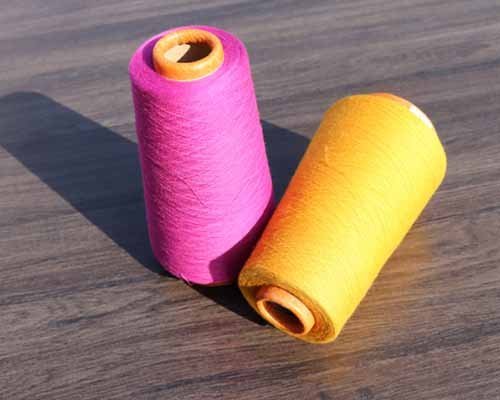
Select from high-tenacity polyester, nylon, or aramid fibers (Kevlar®/Nomex®). Optional coatings include UV-blocking, flame-retardant, waterproof, or oil-resistant finishes to enhance environmental protection.
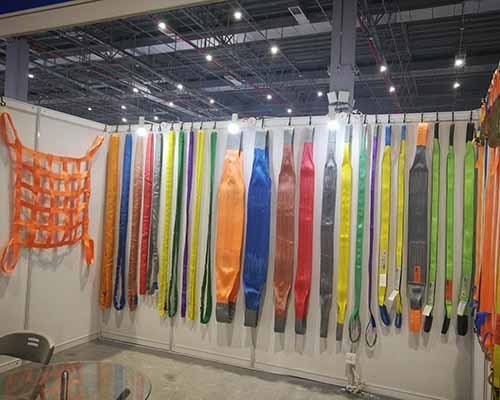
Customize sling types such as flat, endless, or eye-to-eye designs with precise lengths from 0.5 m to 30 m. Endless loops provide 360° contact, while eye-type slings allow secure hook attachment.
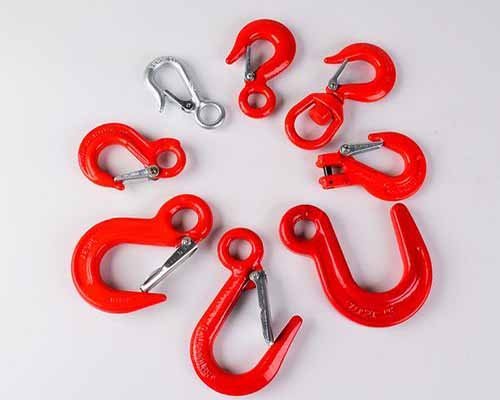
Reinforce sling ends with leather, polyester, or aramid sleeves to prevent abrasion. Add D-rings, shackles, snap hooks, or master links for a complete lifting solution that’s ready to use on arrival.
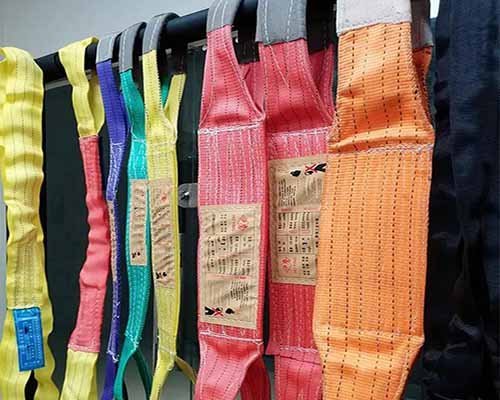
Follow EN 1492 color codes for load classification or create custom brand colors. Each sling includes a durable ID tag with WLL, safety factor, production date, and optional logo or QR tracking.

Delivered in private-label cartons or poly-wrapped bundles with clear labeling. Full export documentation—CO, CI, packing list, and test certificates—is included for traceable, compliant international shipping.
Follow these eight precise steps to ensure every sling meets the highest standards of safety, strength, and reliability.
We begin by reviewing your lifting requirements, SWL (Safe Working Load) targets, and desired sling configuration—whether eye-to-eye, endless, basket, or choker. Our engineering team then prepares detailed CAD mockups and technical drawings for your approval before production begins.
High-tenacity nylon, polyester, or aramid blends (Kevlar®/Nomex®) are selected from verified suppliers. Each batch is tested for tensile strength, elongation, and weave uniformity to ensure consistent performance and compliance with EN 1492 and ASME standards.
Depending on load requirements, the webbing is woven or laminated into 1- to 8-ply constructions under controlled tension. This guarantees precise thickness, enhanced load distribution, and superior abrasion resistance across all lifting operations.
Webbing ends are looped to form lifting eyes and then heat-sealed, stitched, or fitted with wear sleeves. Reinforced stitching and leather or aramid padding protect against friction damage, extending the sling’s service life.
Industrial sewing machines apply bar-tack or box-X stitch patterns for maximum joint integrity. If required, we pre-install hooks, shackles, D-rings, or master links, creating a ready-to-use lifting system that reduces assembly time.
Each sling is color-coded by capacity (per EN 1492-1/2) and fitted with a durable label displaying WLL, safety factor, batch code, and manufacturing date. Woven or UV-resistant printed labels ensure traceability throughout the sling’s lifecycle.
Every production batch undergoes break-load, elongation, fatigue, and dynamic stress testing. Certified inspectors issue documentation in compliance with EN 1492-1, ASME B30.9, and ISO 4878, verifying safety and performance standards.
Finished slings are coiled, labeled, and packed in export-grade cartons or shrink-wrapped bundles. We handle palletizing, documentation (CO, CI, packing list), and global DDP/FOB shipping. Post-delivery support ensures your long-term satisfaction and smooth reordering.
At Lovrix, we prioritize quality at every stage of the production process to ensure our webbing meets the highest industry standards. Our commitment to excellence is backed by rigorous quality control, internationally recognized certifications, and a dedication to sustainability.


Our state-of-the-art webbing manufacturing facility ensures high-quality, fully customizable webbing solutions. With strict quality control and advanced production techniques, we meet the needs of global brands and businesses.


If you have your own tech packs, logo designs, or even just an idea, please share your project details with us, including preferred fabric, color, and customization options. We’re eager to help bring your webbing designs to life through our sample production process.
From fiber selection and weaving techniques to customization, quality assurance, and care—get all the insights on our premium webbing sling.
A webbing sling is a flexible, woven lifting strap made from high-strength fibers such as polyester or nylon. It’s designed to safely lift, move, or secure heavy loads in industries like construction, logistics, manufacturing, and shipping. Unlike metal chains or wire ropes, webbing slings are lightweight, non-abrasive, and gentle on loads with polished or painted surfaces.
Lovrix manufactures webbing slings from polyester (PES), nylon (PA), and aramid blends (Kevlar®/Nomex®). Polyester offers low stretch and chemical resistance, nylon provides high elasticity and shock absorption, and aramid fibers add exceptional heat and cut resistance for critical applications.
Our slings support working load limits (WLL) ranging from 500 kg to 10,000 kg, with safety factors of 7:1 or 8:1 depending on usage. Each sling is color-coded according to EN 1492-1 standards and includes a durable label indicating capacity, batch number, and inspection data.
Lovrix offers multiple sling configurations:
Flat webbing slings for general lifting and secure load distribution.
Endless (round) slings for 360° load contact and reduced wear.
Eye-to-eye slings with reinforced loops for versatile lifting angles.
Cargo & tow straps for transport and recovery operations.
Each batch undergoes tensile, elongation, fatigue, and break-load tests under ISO and EN standards. We simulate real-world lifting cycles to confirm performance and inspect stitching, lamination, and labeling before final certification.
Yes. Lovrix supports OEM/ODM customization for length, width (25–300 mm), ply count, eye shape, and logo branding. We also provide Pantone color matching, custom labeling, and private packaging for distributor or brand use.
Our slings are tested and certified to meet EN 1492-1/2, ASME B30.9, and ISO 4878 standards. Optional CE or third-party verification is available upon request to satisfy export or project-specific requirements.
Store slings in a dry, cool area away from direct sunlight and chemicals. Inspect regularly for cuts, burns, or broken stitches before use. Avoid sharp edges without corner protectors, and always follow rated capacity guidelines to maintain safety and lifespan.
Selecting the correct webbing sling is crucial for ensuring both lifting safety and operational efficiency. The right sling balances strength, flexibility, and environmental compatibility. Here’s how professionals determine the optimal configuration step by step.
1. Determine the Load Weight and Type
Start by knowing the exact weight and shape of your load. Slings are rated by Working Load Limit (WLL), which must exceed the load’s total weight. For irregular or shifting loads (such as machinery or beams), apply a safety factor of at least 7:1, in compliance with EN 1492-1/2 or ASME B30.9.
2. Choose the Correct Sling Type
Lovrix provides multiple sling configurations:
Flat Webbing Sling – Best for evenly distributed loads such as pallets or pipes.
Endless Sling – Flexible and allows 360° load contact, reducing wear.
Eye-to-Eye Sling – Ideal for choker or basket hitches, giving multiple lifting angles.
Round Sling – Tubular design offers soft load contact, perfect for fragile or polished materials.
Cargo/Tow Strap – Designed for restraint and vehicle recovery rather than vertical lifting.
3. Consider the Material Composition
Polyester (PES): Low stretch, chemical resistance, and ideal for general lifting.
Nylon (PA): Slight elasticity provides shock absorption, suitable for dynamic loads.
Aramid (Kevlar®/Nomex®): High-temperature and cut resistance for extreme or hazardous conditions.
Each material reacts differently to moisture, acids, and temperature—so the work environment should guide your selection.
4. Select Width and Ply Count
The width determines the surface contact with the load, while ply count affects strength. Lovrix slings range from 25 mm to 300 mm in width and can be single- to quadruple-ply. Thicker constructions distribute stress evenly and minimize elongation.
5. Environmental & Chemical Conditions
If you’re operating outdoors or near chemicals, select slings with UV-resistant, waterproof, or oil-repellent coatings. Polyester resists most acids, while nylon is better suited to alkaline exposure.
6. Labeling & Traceability
Always ensure your sling includes a permanent label with WLL, safety factor, and certification marks (EN 1492, ASME B30.9, CE). Lovrix provides woven or laser-engraved ID tags for traceable documentation.
7. Inspect Before Use
Before every lift, check for cuts, burns, or distortion. Replace any sling showing 10 % or more fiber damage or missing labels.
In summary:
The ideal webbing sling is one that matches your load weight, configuration, and environment, while complying with international safety codes. Lovrix assists clients with free technical consultation and sampling to guarantee proper sling selection before production.
When selecting lifting equipment, the debate often comes down to webbing slings vs. chain slings. Both are safe and effective, but each has unique advantages depending on the industry, load type, and budget.
1. Material & Structure
Webbing Sling: Made from woven synthetic fibers (polyester, nylon, aramid), offering flexibility and lightweight handling.
Chain Sling: Constructed from high-grade alloy steel links, designed for maximum rigidity and heat resistance.
2. Weight & Portability
Webbing slings are up to 80 % lighter than chains of equivalent capacity. This reduces operator fatigue and improves productivity in repetitive lifting operations.
3. Surface Protection
Webbing slings are non-abrasive, making them ideal for delicate or coated loads such as painted beams, glass panels, or machinery casings. Chain slings, while stronger, can scratch or deform fragile surfaces without padding.
4. Strength & Temperature Resistance
Chain slings outperform synthetic webbing in extreme heat environments—handling up to 400 °C—whereas polyester slings operate safely up to about 120 °C. For high-temperature or abrasive lifting, chain slings remain superior.
5. Maintenance & Inspection
Webbing slings require visual inspection for cuts and fraying, while chain slings need magnetic crack detection and lubrication. Although chains last longer, their maintenance costs are higher.
6. Cost & Replacement
Webbing slings are more economical initially and can be replaced easily in bulk. Chains are an investment for long-term use but come with higher inspection and repair costs.
7. Typical Applications
Webbing: Construction, logistics, manufacturing, and aerospace (light to medium loads).
Chain: Foundries, steelworks, heavy machinery, and high-temperature environments.
Conclusion:
For most medium-duty industrial applications, webbing slings provide the best combination of safety, handling ease, and cost efficiency. For high-temperature, abrasive, or extremely heavy lifting, chain slings are the better choice. Lovrix helps customers combine both systems where hybrid lifting solutions are required.
Certification is the key to safe lifting operations and global trade compliance. Lovrix follows strict testing and documentation procedures to ensure every sling meets international safety requirements.
1. Standards & Compliance
Our slings conform to EN 1492-1/2 (Europe), ASME B30.9 (USA), and ISO 4878 (International). Upon request, we also provide CE, GS, or DNV certification for maritime and offshore use.
2. Laboratory Testing
Every production batch is tested under the following parameters:
Tensile Strength Test: Measures breaking load using calibrated hydraulic testers.
Elongation Test: Verifies extension under 50 % and 100 % of WLL.
Fatigue Test: Simulates 10,000 load cycles to confirm long-term durability.
Abrasion & UV Resistance Test: Ensures coating stability under repeated environmental exposure.
3. Quality Assurance Process
Incoming Inspection: Fiber and yarn batches are tested for linear density and elasticity.
In-Process QC: Weaving tension, stitching patterns, and ply uniformity are monitored digitally.
Final Inspection: Each sling is tagged and load-tested before shipment.
4. Documentation & Traceability
Every sling includes a serial number and batch code. Customers receive:
Test reports with load graphs.
Material data sheets.
Certificate of Conformity (COC).
Optional third-party audit results (TÜV, SGS, BV).
5. Global Logistics & Certification Access
Lovrix maintains a digital certification database, allowing clients to verify authenticity online. Our packaging includes barcode tracking and QR links for instant access to test data—essential for global OEM partnerships.
In summary:
Certified webbing slings ensure legal compliance, consistent safety, and easier customs clearance. With Lovrix’s ISO-certified production and transparent quality documentation, you can export confidently and lift safely anywhere in the world.
From custom polyester straps to eco-friendly bands, Lovrix is your trusted webbing manufacturer, supplier, and wholesale factory in China. With certified quality, fast sampling, and scalable production, we help global brands achieve personalized, bulk-ready solutions.
Send us a message if you have any questions or request a quote. We will be back to you ASAP!


