Skip to content
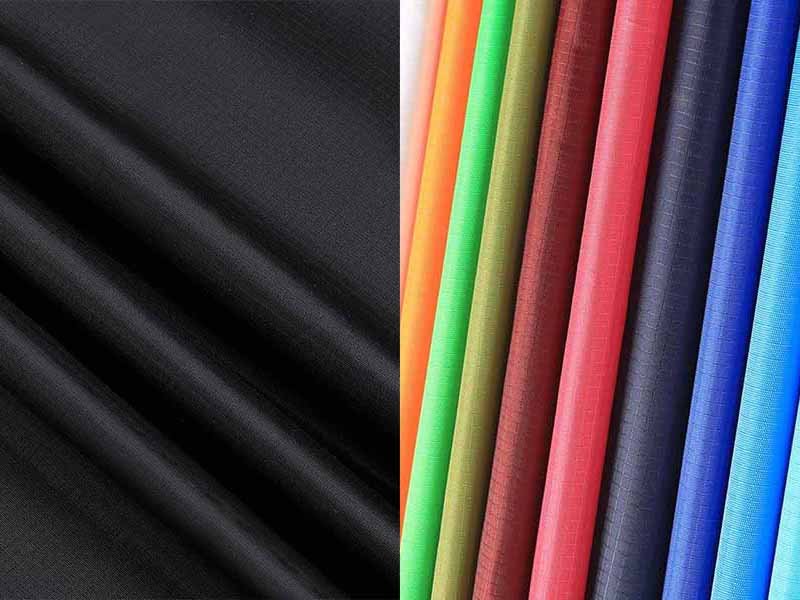
When people talk about nylon fabric, numbers like 210T and 210D often get thrown around as if they describe the same thing. In reality, they represent two completely different measurement systems, and misunderstanding them is one of the most common reasons for fabric mismatch, unexpected product failures, and rising return rates in bags and outdoor gear.
In real production, this confusion shows up everywhere. A brand wants a “lightweight but durable” backpack and specifies 210T, expecting toughness—only to discover later that the fabric feels too soft. Another buyer chooses 210D assuming waterproof performance, but never clarifies coating specs, leading to leakage complaints after launch. The fabric number was right, but the logic behind it wasn’t.
210T and 210D nylon differ in what they measure. 210T refers to thread count (fabric density), while 210D refers to denier (yarn thickness). 210D nylon is typically stronger and more durable, making it suitable for bags and backpacks. 210T nylon is lighter and smoother, often used for linings or tents. They are not interchangeable and must be chosen based on performance needs, not numbers alone.
The real challenge is not knowing which is “better,” but understanding which one fits your product’s job—weight, load, feel, waterproofing, and lifespan. In the sections below, we break this down step by step, the same way Lovrix does internally before approving any custom fabric for mass production.
What do 210T and 210D mean in nylon fabric

In nylon fabric specifications, 210T and 210D look similar, but they describe two completely different technical properties. Confusing them is one of the most common sourcing mistakes in bag and outdoor product development. To choose the right material, it is critical to understand what each number actually measures, what it does not measure, and how it affects real-world performance.
What is 210D fabric and how is denier defined?
210D nylon refers to yarn thickness, not fabric density.
Denier (D) is a standardized textile unit that measures the linear mass of fibers. Specifically, it indicates how many grams a yarn weighs per 9,000 meters. A 210D nylon yarn weighs 210 grams per 9,000 meters, making it a medium-denier filament widely used in bag manufacturing.
In practical terms, higher denier means:
- Thicker individual yarns
- Greater resistance to tearing and abrasion
- Better performance under load and repeated stress
That is why 210D nylon is commonly used for bag exteriors, backpacks, totes, organizers, and outdoor gear. In Lovrix production data, uncoated 210D nylon fabrics typically range from 110–160 GSM, depending on weave structure and filament count.
Importantly, denier correlates strongly with durability, not softness or surface smoothness.
What does 210T mean in nylon material?
210T refers to thread count, not yarn thickness.
Thread count (T) describes how many warp and weft threads are packed into a defined fabric area (usually per square inch). A 210T nylon fabric has a relatively dense weave, meaning more threads are interlaced closely together.
However, thread count does not indicate:
- Yarn thickness
- Tensile strength
- Tear resistance
A 210T fabric can be made from very fine yarns, resulting in a material that feels smooth, soft, and lightweight, but not necessarily strong. This is why 210T nylon is frequently used for:
- Bag linings
- Tent walls and flysheets
- Windbreakers and lightweight shells
- Dust covers and storage bags
In real production, uncoated 210T nylon typically falls between 65–90 GSM, significantly lighter than 210D fabrics.
What is the difference between 210T and 210D material at a technical level?
The key difference lies in what the number controls.
| Parameter | 210T Nylon | 210D Nylon |
|---|---|---|
| Measurement type | Thread density | Yarn thickness |
| Primary function | Surface smoothness | Structural strength |
| Typical feel | Soft, flexible | Firm, structured |
| Load resistance | Low–moderate | Moderate–high |
| Common use | Linings, tents | Bags, backpacks |
A high thread count improves fabric uniformity and hand feel, while higher denier improves mechanical strength. Because they measure different properties, 210T and 210D are not interchangeable, even if they appear similar in listings or supplier catalogs.
What is the difference between 210T and 20D nylon, and why are they often confused?
This confusion comes from mixing T (thread count) with D (denier).
- 20D nylon refers to an extremely fine yarn, commonly used in ultralight outdoor gear.
- 210T nylon refers to weave density, not yarn thickness.
A 20D fabric may be lighter than 210T, but also far weaker. A 210T fabric may feel dense, but still lack structural strength. Comparing them directly is technically incorrect, yet it is a frequent error in RFQs and online sourcing.
At Lovrix, this is one of the first points clarified during material confirmation to avoid misaligned performance expectations and post-production issues.
Which fabric is stronger: 210T or 210D nylon

210D nylon is significantly stronger than 210T nylon in most real-world applications.
This is because denier measures yarn thickness and mass, which directly determine tensile strength, tear resistance, and long-term durability. Thread count (210T) improves surface density and smoothness, but it cannot compensate for thin yarns when a fabric is placed under load.
Why strength in nylon fabric depends more on denier than thread count
Fabric strength is not defined by how tightly threads are packed, but by how much material resists force at the point of stress. When a bag is lifted, dragged, or pulled, the load concentrates on individual yarns—especially near seams, corners, and handles.
- 210D nylon uses thicker yarns that absorb and distribute stress more effectively
- 210T nylon may look dense but often relies on finer filaments that break sooner under tension
In controlled textile testing, standard 210D nylon fabrics typically show 30–60% higher tear strength than lightweight 210T fabrics made from fine yarns.
Tensile strength vs tear resistance
Many buyers focus on tensile strength, but tear resistance is often the real failure point.
- Tensile strength measures straight-line pulling force
- Tear resistance measures how easily a cut or puncture spreads
In bag and outdoor products, failure rarely happens in a clean pull. It happens when:
- Stitch holes concentrate force
- A corner scrapes against the ground
- Fabric flexes repeatedly near a zipper
Because 210D nylon has thicker yarns, it resists tear propagation far better than 210T. This is why 210D is consistently chosen for external bag shells.
Can a high thread count (210T) ever match the strength of 210D?
In limited, controlled situations—such as low-load, static applications—a dense 210T fabric may appear sufficient. However, once movement, weight, or abrasion is introduced, the difference becomes clear.
Thread count improves:
- Surface uniformity
- Smoothness
- Fabric appearance
It does not significantly improve:
- Load-bearing capacity
- Abrasion resistance
- Seam durability
No amount of thread density can fully replace the mechanical strength provided by thicker yarns.
Is 210D nylon good enough for bags and backpacks?
Yes. In fact, 210D nylon is widely considered the minimum safe strength level for most everyday and outdoor bags.
At Lovrix, 210D nylon is commonly used for:
- Daypacks and travel backpacks
- Tote bags with reinforced bases
- Utility pouches and organizers
- Lightweight outdoor gear bags
For these applications, 210D offers an optimal balance of:
- Durability
- Weight
- Cost efficiency
Going below 210D for exterior panels often leads to higher warranty claims and customer dissatisfaction within the first year of use.
How coatings affect strength
Coatings such as PU or TPU can add stiffness and abrasion resistance, but they do not increase yarn strength.
- A coated 210T fabric may feel stiff initially
- Under repeated folding or stress, thin yarns still fail first
In contrast, a moderately coated 210D fabric maintains structural integrity longer, especially around seams and stress points. This is why Lovrix evaluates base fabric strength first, then adds coatings to meet waterproof or aesthetic goals.
210T vs 210D nylon
| Performance Aspect | 210T Nylon | 210D Nylon |
|---|---|---|
| Yarn thickness | Thin | Thick |
| Tear resistance | Low–medium | Medium–high |
| Abrasion resistance | Limited | Strong |
| Load-bearing ability | Poor | Reliable |
| Best use | Linings, tents | Bags, backpacks |
How do 210T vs 210D differ in weight, thickness, and hand feel

210T nylon is lighter, thinner, and softer, offering excellent drape and flexibility.
210D nylon is heavier, thicker, and more structured, providing better shape retention and durability.
Even with similar coatings, the base yarn difference means 210D will always feel firmer and perform more reliably in bag exteriors.
Weight differences
Weight is usually measured in grams per square meter (GSM), and this is where the difference becomes immediately visible.
| Fabric Type | Typical GSM (Uncoated) | Typical GSM (PU Coated) |
|---|---|---|
| 210T Nylon | 65–90 GSM | 85–120 GSM |
| 210D Nylon | 110–160 GSM | 140–220 GSM |
In practical product design:
- 210T nylon helps reduce total product weight, especially in tents and linings
- 210D nylon adds weight but improves durability and perceived quality
For bags, the added weight of 210D is often a necessary tradeoff to prevent premature wear.
Thickness differences: why coatings don’t tell the whole story
Fabric thickness is influenced by:
- Yarn diameter
- Weave structure
- Coating type and thickness
Even before coating, 210D nylon uses thicker filaments, giving it greater inherent bulk. Coatings can make a 210T fabric feel stiffer initially, but they do not change the underlying yarn size.
- Coated 210T may feel rigid at first, then soften and weaken over time
- Coated 210D maintains thickness and structure longer, especially at seams
This difference becomes noticeable after repeated folding, stitching, and abrasion.
how the fabric feels in the hand and why it matters
Hand feel directly affects perceived quality.
- 210T nylon feels smooth, soft, and flexible. It produces less fabric noise and drapes easily, making it ideal for inner compartments or garments.
- 210D nylon feels firmer, more textile-like, and slightly textured. It gives bags a structured, reliable feel.
In customer testing conducted by Lovrix, consumers consistently associate firmer fabrics with durability and value, especially in backpacks and travel bags.
Structure and shape retention in finished products
One of the most overlooked differences is shape behavior.
- Bags made from 210T nylon tend to collapse when empty
- Bags made from 210D nylon hold their form better, even without internal padding
For branded products, shape retention is critical. A bag that loses structure quickly is often perceived as low quality, regardless of fabric density.
How finishing and coatings modify hand feel
Coatings can adjust hand feel:
- PU adds body and water resistance
- PA preserves softness
- TPU adds stiffness and cold resistance
However, coatings modify surface behavior, not yarn strength. This is why Lovrix always evaluates fabric before and after coating to ensure long-term performance matches design intent.
210T vs 210D
| Attribute | 210T Nylon | 210D Nylon |
|---|---|---|
| Weight | Very light | Moderate |
| Thickness | Thin | Thicker |
| Hand feel | Soft, smooth | Firm, structured |
| Drape | High | Low–medium |
| Shape retention | Weak | Strong |
| Best use | Linings, tents | Bag shells |
What about water resistance and coatings for 210T and 210D nylon

Both 210T and 210D nylon can be made water-resistant or waterproof through coatings, but 210D nylon holds coatings more reliably and maintains waterproof performance longer. While 210T nylon can achieve similar initial waterproof ratings, its thinner yarn structure makes it more prone to coating fatigue, seam leakage, and performance loss after repeated use.
How water resistance in nylon fabric actually works
Nylon itself is not waterproof. Water resistance comes from:
- Coatings applied to the fabric back side
- Weave density, which slows water penetration
- Finishing quality, especially at seams and folds
This means waterproof performance depends not only on the coating type, but also on how well the base fabric supports that coating over time.
Common coatings used on 210T and 210D nylon
Both fabrics can use similar coating systems, but results differ due to yarn structure.
| Coating Type | Characteristics | Typical Use |
|---|---|---|
| PU (Polyurethane) | Cost-effective, flexible | Bags, tents |
| PA (Acrylic) | Light, soft hand feel | Linings, covers |
| TPU | Durable, cold-resistant | Outdoor & premium bags |
| Silicone | High water repellency | Tents, ultralight gear |
Thicker yarns in 210D nylon provide better mechanical anchoring for coatings, reducing cracking and delamination during use.
Waterproof ratings (PU mm)
Waterproof performance is often measured as hydrostatic head (mm).
| Fabric | Typical PU Rating |
|---|---|
| 210T Nylon | 800–2000 mm |
| 210D Nylon | 1000–3000 mm |
However, lab values do not reflect long-term performance.
- 210T nylon often loses 15–30% of waterproof rating after repeated folding and stitching
- 210D nylon retains waterproofing longer, especially in high-stress areas
Lovrix evaluates waterproofing after sewing, because seams are where water failure usually begins.
Why 210D nylon performs better after abrasion and aging
Waterproof failure rarely happens on flat fabric. It starts at:
- Stitch holes
- Fold lines
- Base panels rubbing against surfaces
Because 210D nylon has thicker yarns:
- Coatings crack less during flexing
- Abrasion exposes fewer micro-gaps
- Seam areas maintain integrity longer
A coated 210T fabric may feel stiff initially, but once the coating fatigues, thin yarns offer little backup protection.
DWR treatments vs coatings
Some fabrics use DWR (Durable Water Repellent) finishes instead of heavy coatings.
- DWR causes water to bead and roll off
- It does not make fabric waterproof
- Performance degrades after washing or abrasion
210T nylon often relies on DWR for lightweight applications.
210D nylon commonly combines DWR + PU/TPU coating for functional bags.
Understanding this difference prevents unrealistic expectations in product performance.
How coatings affect hand feel and flexibility
Coatings change how a fabric feels:
- PU adds body and slight stiffness
- TPU adds firmness and cold resistance
- PA preserves softness
But coatings do not increase yarn strength. This is why Lovrix always selects the base fabric first, then adjusts coating type and thickness to meet waterproof and tactile goals.
Practical recommendations for sourcing
- Choose 210T + light PU or DWR for tents, linings, and lightweight covers
- Choose 210D + PU or TPU for bags, backpacks, and outdoor gear
- Always confirm coating type, thickness, and test standards with your supplier
At Lovrix, every coated nylon fabric is evaluated as a system—base yarn, weave, coating, and construction—before mass production.
water resistance comparison
| Aspect | 210T Nylon | 210D Nylon |
|---|---|---|
| Initial waterproof rating | Medium | Medium–high |
| Long-term durability | Limited | Strong |
| Coating adhesion | Moderate | Strong |
| Best use | Lightweight protection | Functional bags |
Where are 210T and 210D nylon used most often

210T nylon is most often used in lightweight, non-structural applications such as linings, tents, and protective covers.
210D nylon is widely used in functional, load-bearing products including backpacks, travel bags, and outdoor gear.
The key difference is whether the fabric’s role is protection or structure.
Typical applications of 210T nylon fabric
210T nylon is chosen when low weight, flexibility, and smooth hand feel matter more than strength.
Common applications include:
Bag linings and inner compartments
210T nylon is one of the most popular lining fabrics for backpacks, duffel bags, and totes. It protects contents, reduces friction, and keeps interior weight low. Because it is not load-bearing, its lower tear strength is not a drawback.
Tents, rainflys, and lightweight outdoor shelters
In camping gear, 210T nylon is widely used for tent walls and flysheets. Its dense weave combined with light PU or silicone coating provides good initial water resistance while keeping packed weight minimal.
Windbreakers and lightweight outer shells
For garments and soft shells, 210T nylon offers good wind blocking and comfort without stiffness, making it suitable for apparel that prioritizes movement.
Dust covers, storage sacks, and protective wraps
210T is frequently used for dust bags, shoe covers, and promotional storage pouches where abrasion exposure is limited.
210T nylon works best when the fabric does not carry weight or resist heavy friction.
Typical applications of 210D nylon fabric
210D nylon is selected when durability, structure, and reliability are required.
Common applications include:
Backpacks and daypacks
210D nylon is widely used as the main shell fabric for everyday backpacks. It withstands abrasion from clothing, floors, and outdoor surfaces while maintaining shape over time.
Travel bags and duffel bags
In travel products, 210D offers a good balance between durability and weight. It resists tearing at seams and handles, where stress is highest during transport.
Tote bags and shopping bags
For reusable totes and branded bags, 210D nylon improves load capacity and prevents deformation, especially in the base panel.
Outdoor and utility gear bags
Fishing bags, camping organizers, tool pouches, and cooler bags often use 210D nylon because it performs well under repeated use and environmental exposure.
At Lovrix, over 60% of custom bag projects specify 210D nylon as the starting shell material, adjusted only when heavier deniers are required.
combining 210T and 210D in one product
Many well-designed products use both fabrics strategically.
Examples:
- 210D nylon for the exterior shell
- 210T nylon for the interior lining
- Reinforced panels in higher denier where stress is concentrated
This hybrid approach reduces weight while preserving durability—an approach Lovrix frequently recommends during product engineering.
Application suitability comparison
| Product Type | 210T Nylon | 210D Nylon |
|---|---|---|
| Bag lining | Excellent | Acceptable |
| Backpack shell | Not recommended | Excellent |
| Tent fabric | Common | Occasional |
| Tote bag | Limited | Excellent |
| Outdoor gear bag | Limited | Excellent |
| Dust cover | Excellent | Overbuilt |
How to choose 210T or 210D nylon for your project and sourcing plan
Choose 210T nylon for lightweight, non-structural applications such as linings, tents, and covers.
Choose 210D nylon for bags, backpacks, and products that must carry weight, resist abrasion, or hold shape.
Final selection should always be based on fabric role, stress exposure, coating requirements, and lifecycle expectations, not on the number alone.
Step 1: Define the fabric’s role in the finished product
Before comparing fabrics, clarify what the fabric is expected to do.
Ask these questions:
- Is the fabric carrying weight or just covering contents?
- Will it be pulled, dragged, or rubbed during daily use?
- Is it visible and linked to brand perception?
Guideline:
- Structural or external roles → start with 210D
- Protective or internal roles → consider 210T
At Lovrix, fabric selection always starts from function mapping, not price or weight alone.
Step 2: Evaluate stress points and failure risks
Most fabric failures happen at:
- Handle attachments
- Zipper edges
- Corners and base panels
210D nylon performs better in these zones because thicker yarns resist tear propagation.
Using 210T in high-stress areas often leads to:
- Seam tearing
- Shape collapse
- Early customer complaints
A common strategy is panel-based selection—210D where stress is highest, 210T elsewhere.
Step 3: Match coating and waterproof requirements to fabric type
Water resistance is achieved through coatings, not the nylon itself.
- 210T supports light PU or DWR for weight-sensitive products
- 210D supports heavier PU or TPU coatings for long-term durability
If waterproof performance must last after folding, abrasion, and stitching, 210D is the safer base fabric.
Lovrix evaluates waterproofing after sewing, not just on flat fabric, to ensure real-world performance.
Step 4: Consider weight targets and user experience
Weight matters—but so does feel and structure.
- 210T offers softness, drape, and low noise
- 210D offers firmness, shape retention, and durability
For branded bags, customers often associate firmer hand feel with quality.
If a bag feels too soft or collapses when empty, perceived value drops—even if specs look good on paper.
Step 5: Confirm measurable specifications before sampling
Never approve fabric based on “210” alone. Confirm:
- Denier or thread count (clearly stated)
- GSM before and after coating
- Coating type and thickness
- Tear, abrasion, and colorfastness results
Lovrix provides full specification sheets and lab-tested samples to avoid misinterpretation during mass production.
Step 6: Align fabric choice with cost, MOQ, and production scale
210T nylon is generally:
- Lower cost
- Easier to source
- Faster to sample
210D nylon may cost slightly more, but reduces:
- Redesign cycles
- Warranty issues
- Brand damage from quality complaints
For long-term programs, total lifecycle cost matters more than fabric price per meter.
Step 7: Work with a supplier who understands system-level design
Fabric is only one part of the system. Stitching, reinforcement, webbing, and construction quality matter just as much.
With over 19 years of integrated fabric, webbing, and bag manufacturing experience, Lovrix supports:
- Custom fabric development
- Private label and OEM/ODM programs
- Low-MOQ sampling
- Fast prototyping and quality validation
Our team evaluates fabric choices in the context of real use, not just lab numbers.
| If your product needs… | Choose |
|---|---|
| Lightweight lining or tent fabric | 210T |
| External bag shell | 210D |
| Load-bearing durability | 210D |
| Soft hand feel | 210T |
| Long-term waterproofing | 210D |
| Cost-sensitive, low stress | 210T |
Conclusion
210T and 210D nylon are not competitors—they are tools with different purposes. Problems start only when they’re misunderstood or misapplied.
If you’re developing a new bag, outdoor product, or private-label collection and want fabric choices that actually hold up in real use, Lovrix is ready to help.
Share your product idea, target market, and performance goals.
Our team will recommend the right nylon structure, coating, and construction—before production begins.
Contact Lovrix today to start your custom nylon fabric and bag project.