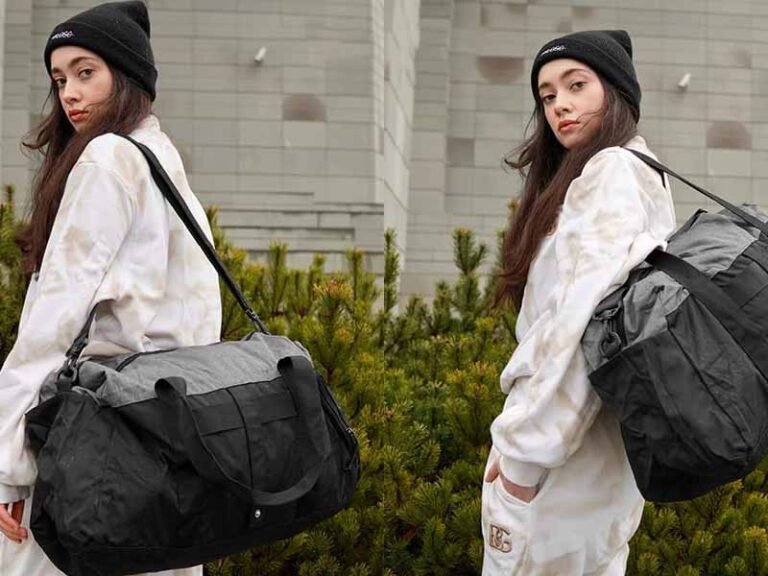
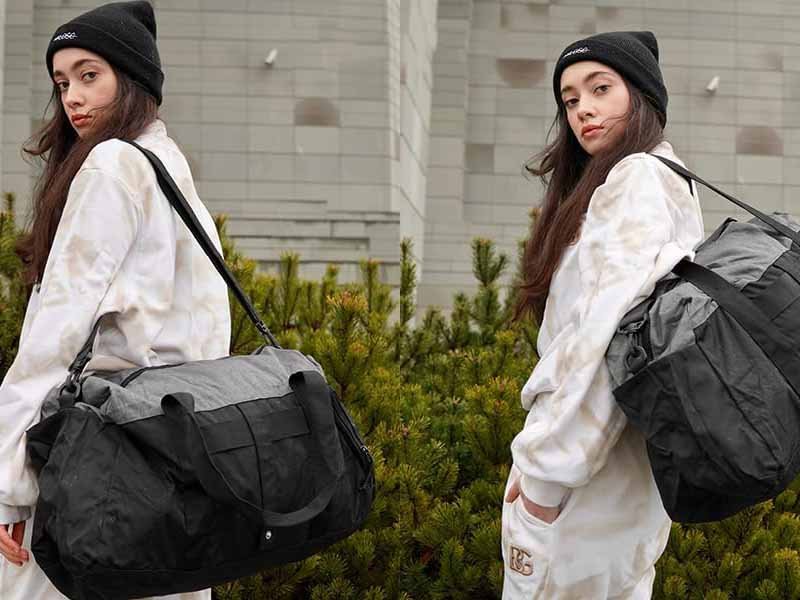
Duffel-Style Gym Bags look simple, but they’re one of the easiest products to “get wrong” in real life. The bag may feel roomy at home, then suddenly struggle to fit shoes plus a towel. The strap may look strong, but after a month of carrying 8–10 kg, the shoulder area hurts and the webbing starts to twist. The zipper may glide smoothly when empty, then catch when the bag is packed tight. These aren’t rare issues—most negative reviews for gym duffels come from size mismatch, comfort problems, and durability weak points, not from style.
Duffel-Style Gym Bags are soft-structured gym bags with a wide main opening, a horizontal packing layout, dual carry handles, and usually an adjustable shoulder strap. Most popular duffel gym bags sit around 30–45 liters for daily use, while travel-ready duffels often reach 45–60 liters. The best choice depends on what you carry (especially shoes and wet gear), how far you walk, and whether the bag’s materials and reinforcement match the load.
Here’s a simple truth: a good duffel disappears in your routine. You don’t think about it. You just throw in your gear, zip it, and move. A poor duffel keeps interrupting you—digging for items, leaking moisture, slipping off your shoulder. The difference is almost never “brand name.” It’s design decisions you can measure. Let’s break them down in a way that’s useful for real customers and for brands developing custom duffels with Lovrix.
What Are Duffel-Style Gym Bags?
Duffel-Style Gym Bags are gym bags built around a main horizontal compartment with a wide top zipper opening, flexible interior space, and carry options (handles + shoulder strap). They are designed for fast packing, bulky gear storage, and durable everyday use across gym, commute, and short travel.
A duffel is about access and flexibility. Unlike backpacks that stack gear vertically (often making you “dig down”), a duffel lays items out side-by-side. That layout is why duffels remain popular for gym users who pack quickly and want to see everything at once.
What defines Duffel-Style Gym Bags?
Duffel-Style Gym Bags are defined by a few structural features that repeat across almost all successful models:
- Wide opening (often 70–90% of bag length) so packing is quick
- Horizontal base that holds shoes and clothing without folding too tightly
- Short handles for quick grab + shoulder strap for longer carry
- Soft body with reinforcement zones (handle roots, strap anchors, base corners)
- End pockets or side pockets for separation (shoes, bottle, toiletries)
To help customers visualize what “duffel size” actually means, here is a clear size reference:
| Duffel-Style Gym Bags Size | Common Length | Common Capacity | What It Usually Holds |
|---|---|---|---|
| Compact | 40–45 cm | 20–30 L | Clothes + towel + bottle |
| Daily Standard | 48–55 cm | 30–45 L | Full gym kit + shoes |
| Travel / Team | 58–65 cm | 45–60 L+ | Extra clothing + gear |
Practical note:
A duffel with a wide base often feels more usable than a taller duffel of the same liters because shoes and toiletry kits sit flat instead of stacking.
What makes Duffel-Style Gym Bags popular?
People choose Duffel-Style Gym Bags because they solve daily problems quickly.
1) Packing speed
- Wide opening = you can pack in seconds
- You can see items without “digging”
2) Bulky gear friendly
Duffels handle:
- shoes (especially larger sizes)
- hoodies and jackets
- lifting belts, wraps, gloves
- shower kits
3) Flexible for many routines
A duffel works for:
- gym + commute
- gym + sauna/shower
- gym + overnight
- team sports
4) Simple design, fewer failure points
Compared to complex multi-panel bags, a clean duffel often has fewer seams and fewer rigid pieces—less to crack or deform.
Here’s a direct comparison users care about:
| User Concern | Duffel-Style Gym Bags | Backpacks |
|---|---|---|
| Pack fast | Strong advantage | Slower |
| Fit bulky shoes | Strong advantage | Sometimes tight |
| Carry comfort | Depends on strap + load | Usually better for long walk |
| Quick access | Very easy | Medium |
| Locker fit | Good (horizontal) | Depends on height |
So duffels “win” when people value speed and flexibility, but comfort depends heavily on strap design and load control.
Which Duffel-Style Gym Bags Fit Daily Use?
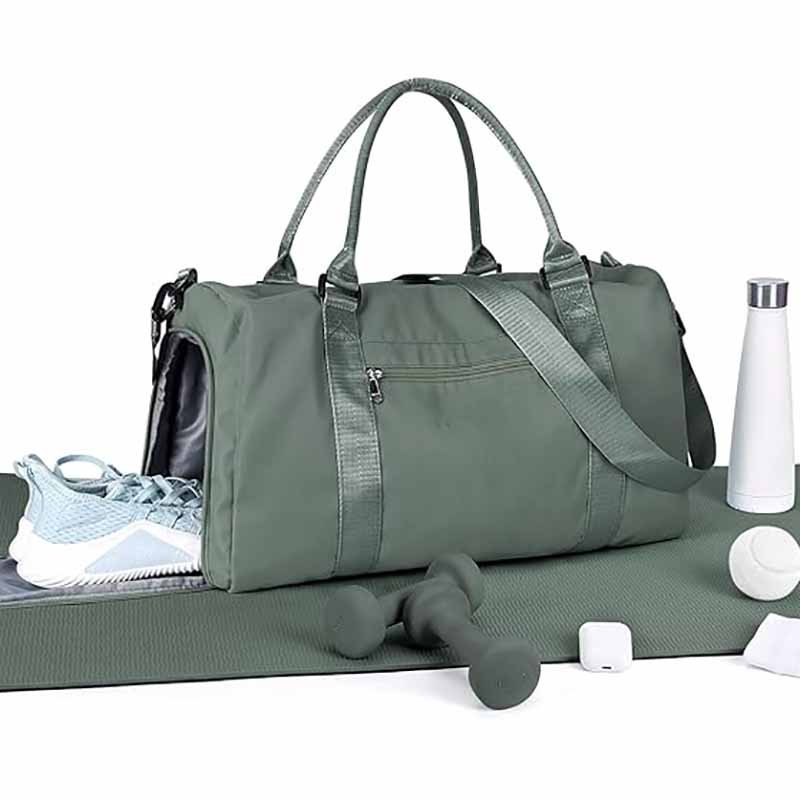
For everyday gym use, Duffel-Style Gym Bags in the 30–45 L range are the safest choice. They fit shoes, clothing, towel, and toiletries without becoming too heavy or bulky for commuting. Smaller duffels suit minimal routines, while larger duffels suit travel and team sports but may feel oversized for daily carry.
Daily use depends on two variables:
- what you pack (shoes and towel change everything)
- how far you carry (5 minutes vs 25 minutes matters)
Which Duffel-Style Gym Bags suit light workouts?
If your routine is simple—short training, yoga, quick cardio—20–30 L is usually enough.
Typical light-workout packing list
| Item | Space Demand | Notes |
|---|---|---|
| Clothes (1 set) | Medium | Thin fabric saves space |
| Small towel | Low–Medium | Microfiber compresses |
| Bottle/shaker | Low | Side pocket helps |
| Wallet/keys | Low | Inner zipper pocket |
| Light shoes | Medium | Optional |
Why compact duffels feel “easy”
- light on shoulder
- fast to carry on transport
- fits small lockers
- encourages packing only what you need
If you want a compact duffel to still feel premium, focus on:
- zipper quality
- strap comfort
- base durability
Which Duffel-Style Gym Bags fit full training gear?
For most people, “real gym day” includes shoes, towel, extra clothing, toiletries. That’s why 30–45 L is the most common daily range.
Here’s a very practical gear-fit guide:
| Gear Set | Recommended Duffel-Style Gym Bags Size |
|---|---|
| Clothes + towel + bottle | 25–35 L |
| Add shoes (US 9–12) | 30–40 L |
| Add toiletries + extra layer | 35–45 L |
| Add lifting belt + wraps | 40–45 L |
Important customer detail: shoe compartments
If the bag has a dedicated shoe pocket, it can reduce “main space feel” by 6–10 L, depending on pocket depth and stiffness.
That’s why some users prefer:
- shoe pocket on the end (separate)
- rather than shoe pocket cutting into the main compartment
Which Duffel-Style Gym Bags work for travel?
If you want one bag for gym + overnight travel, you’re usually looking at 45–60 L.
But travel duffels create a comfort tradeoff.
Yes, they fit more. But they also get heavy fast.
Travel sizing guide
| Travel Type | Best Duffel-Style Gym Bags Size | Why |
|---|---|---|
| 1 night + gym | 45–50 L | Enough clothing + shoes |
| Weekend trip | 50–60 L | Extra outfits + toiletries |
| Team / bulky gear | 60 L+ | Equipment + clothing |
Comfort warning (real use):
Once loaded, a 55–60 L duffel often reaches 10–15 kg, which is tiring if carried on one shoulder for long distances. If the user walks a lot, backpack-style carry or a more ergonomic strap becomes important.
Quick “Pick Your Duffel” Table
| Daily Routine | Best Duffel-Style Gym Bags Capacity |
|---|---|
| Quick workout, minimal gear | 20–30 L |
| Standard gym day with shoes | 30–40 L |
| Gym + shower kit + layers | 35–45 L |
| Gym + overnight travel | 45–55 L |
| Team sports / bulky gear | 55–60 L+ |
How Do You Choose Duffel-Style Gym Bags?
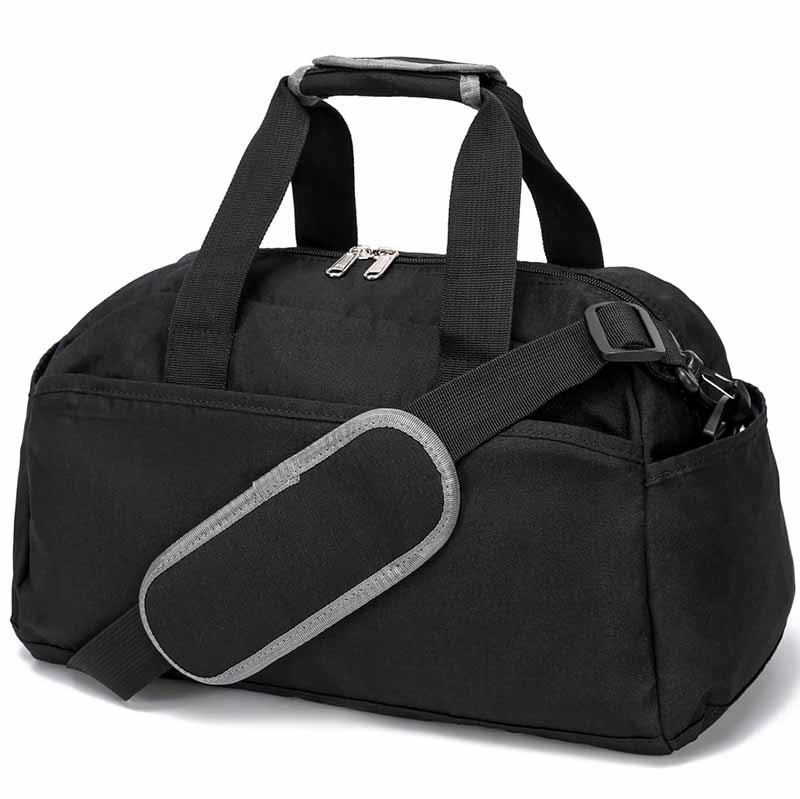
Choosing Duffel-Style Gym Bags should focus on three measurable factors: correct capacity, real carrying comfort, and long-term durability. A bag that looks attractive but ignores these fundamentals often feels inconvenient within weeks of daily use.
Many users pick a duffel based only on color or brand.
In practice, long-term satisfaction depends on fit to routine, weight distribution, and construction strength.
The following sections break these down into clear, usable checks.
How to check size in Duffel-Style Gym Bags?
Capacity must match what you actually carry, not what you imagine carrying.
A simple method:
- Place all your real gym items on a table.
- Estimate total space using the chart below.
- Choose the smallest duffel that fits comfortably with slight extra room.
Real gear volume reference
| Item | Approx. Space Use |
|---|---|
| Training shoes | 8–12 L |
| Clothing set | 6–10 L |
| Towel | 3–5 L |
| Toiletry pouch | 2–4 L |
| Bottle & accessories | 2–3 L |
Total daily requirement:
Most full gym routines land between 28–40 L, which explains why 30–45 L Duffel-Style Gym Bags dominate global sales.
Choosing larger than needed often creates:
- unnecessary shoulder strain
- unstable movement while walking
- wasted internal space
So correct sizing improves both comfort and usability.
How to judge comfort in Duffel-Style Gym Bags?
Comfort is influenced less by bag shape and more by strap engineering and load control.
Key comfort factors include:
- Shoulder strap width:
- 25 mm feels narrow under load
- 38–50 mm distributes weight better
- Padding thickness:
- 3–5 mm for light loads
- 8–12 mm for heavy duffels
- Handle wrap softness: Prevents palm pressure during short carry.
Comfort vs weight relationship
| Loaded Weight | Comfort Requirement |
|---|---|
| 3–5 kg | Basic strap acceptable |
| 6–8 kg | Wider padded strap recommended |
| 9–12 kg | Thick padding + reinforced anchors |
| 12 kg+ | Backpack carry or dual-strap design preferred |
A common reason users abandon large duffels is single-shoulder fatigue, not lack of storage.
Good comfort design extends real usability far more than increasing liters.
How to test durability of Duffel-Style Gym Bags?
Durability is determined by materials, stitching strength, and hardware quality, not just fabric thickness.
Key structural checkpoints:
1. Fabric strength
| Fabric Type | Common Use | Durability Level |
|---|---|---|
| 600D polyester | Daily gym | Balanced |
| 900D polyester | Heavy use | High |
| Nylon ripstop | Premium lightweight | High strength-to-weight |
| TPU-coated fabric | Waterproof sports | Very high |
2. Zipper size
| Zipper Code | Best Use |
|---|---|
| #5 | Small pockets |
| #8 | Daily duffel main opening |
| #10 | Heavy or travel duffels |
Using a small zipper on a large duffel is one of the most common early failure causes.
3. Reinforcement stitching
Critical stress zones:
- handle attachment
- shoulder strap anchor
- base panel corners
- zipper ends
Typical reinforcement methods:
- Box-X stitching for handles
- Bartack stitches at stress points
- Double seam lines along the base
These hidden details often decide whether a duffel lasts months or years.
Are Duffel-Style Gym Bags Easy to Organize?
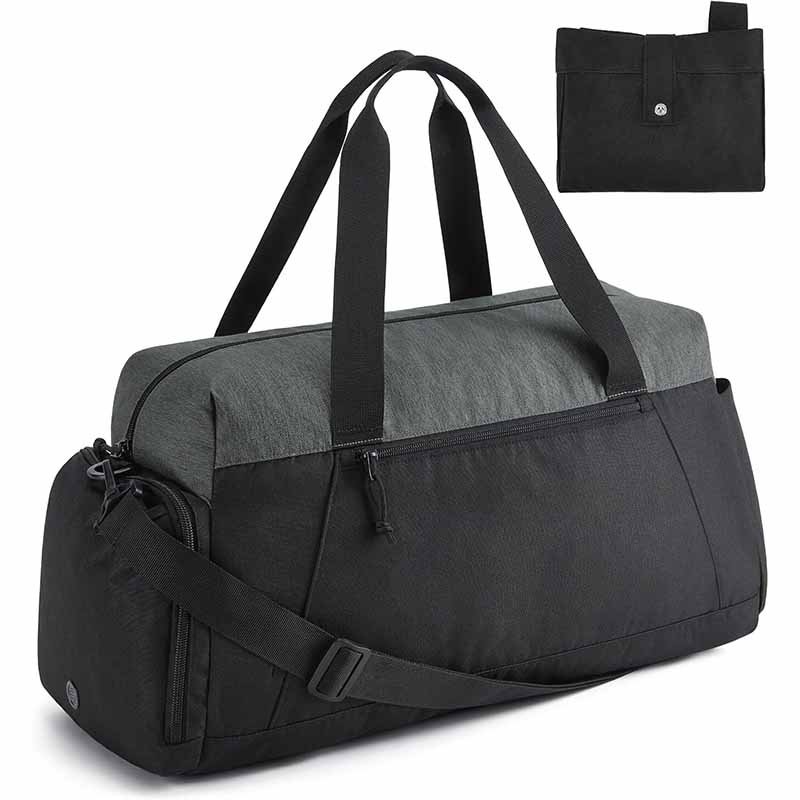
Yes—when designed correctly. Well-structured Duffel-Style Gym Bags use smart pockets, ventilation zones, and wet-dry separation to keep gear clean, visible, and easy to access. Poor organization leads to odor buildup, cluttered interiors, and faster material wear.
Organization is not about adding more pockets.
It is about placing the right storage in the right location.
Are pockets useful in Duffel-Style Gym Bags?
Effective pocket design improves daily speed and cleanliness.
Essential pocket types:
| Pocket Type | Purpose |
|---|---|
| Shoe compartment | Separates dirt and odor |
| Wet pocket | Stores sweaty clothing |
| Bottle pocket | Prevents spills inside |
| Small zip pocket | Protects valuables |
However, too many pockets can reduce usable main space.
Balanced layout is more important than quantity.
A practical rule:
One main compartment + 3–5 functional pockets works well for most daily duffels.
Are wet zones needed in Duffel-Style Gym Bags?
Wet storage is one of the most requested features in modern gym bags.
Without separation:
- moisture spreads to clean clothes
- odor develops faster
- fabric coating degrades sooner
Common wet-zone solutions:
| Method | Advantage |
|---|---|
| Waterproof lining pocket | Simple and effective |
| TPU zipper compartment | Strong moisture control |
| Mesh ventilation panel | Faster drying |
For swimmers or high-sweat training, wet zones are almost essential, not optional.
Are Duffel-Style Gym Bags simple to pack?
Packing simplicity is one of the strongest advantages of duffel design.
Reasons duffels feel easy:
- wide opening shows all items at once
- horizontal layout prevents deep stacking
- flexible sides adapt to different gear shapes
Packing speed comparison
| Bag Type | Average Packing Effort |
|---|---|
| Duffel | Fast |
| Backpack | Moderate |
| Multi-compartment rigid bag | Slow |
This speed matters in real life—especially for early morning or late-night workouts when convenience becomes critical.
How Do Duffel-Style Gym Bags Compare to Other Bags?
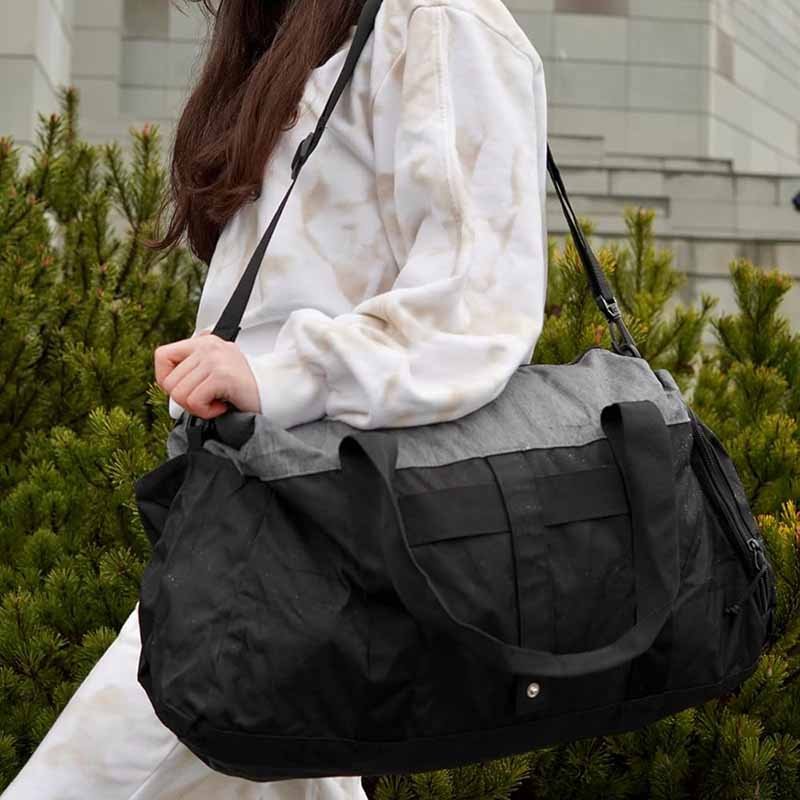
Duffel-Style Gym Bags stand out for fast packing, flexible storage, and simple structure, while backpacks offer better weight balance and wheeled bags reduce carrying strain. The best option depends on how far the user walks, how much gear is carried, and whether speed or comfort is the priority.
No single gym bag style is perfect for every routine.
Understanding the strengths and limits of each design helps customers avoid buying a bag that looks right online but feels wrong in daily life.
How do Duffel-Style Gym Bags differ from backpacks?
The biggest difference is how weight is carried.
- Duffel-Style Gym Bags:
- Usually carried by one shoulder or by hand
- Faster to open and pack
- Better for bulky or irregular gear
- Less comfortable for long walking distances
- Gym Backpacks:
- Distribute weight across both shoulders
- Better for commuting or cycling
- Often have vertical compartments
- Slower to access main contents
Comfort comparison by walking distance
| Walking Distance | Better Choice |
|---|---|
| Under 5 minutes | Duffel-Style Gym Bags |
| 5–20 minutes | Either option works |
| Over 20 minutes | Backpack usually more comfortable |
This explains why many urban users prefer backpacks for commuting, while gym-focused users still prefer duffels for speed and space.
How do Duffel-Style Gym Bags compare with totes?
Tote-style gym bags focus on lightweight convenience, but they sacrifice structure and durability.
Key differences
| Feature | Duffel-Style Gym Bags | Tote Gym Bags |
|---|---|---|
| Structure | Reinforced base and seams | Soft, minimal structure |
| Capacity range | Medium to large | Small to medium |
| Durability | Higher | Lower under heavy load |
| Gear separation | Easier to design | Limited pockets |
Totes work well for light fitness, yoga, or short visits, but they are rarely ideal for heavy shoes, wet towels, or strength-training gear.
For brands building long-term sports product lines, duffels usually provide broader market coverage.
How to pick between Duffel-Style Gym Bags and rollers?
Rolling gym bags remove shoulder strain but introduce size, weight, and storage trade-offs.
Decision factors
| Situation | Better Option |
|---|---|
| Daily gym + short walk | Duffel-Style Gym Bags |
| Airport or long distance travel | Rolling gym bag |
| Team sports equipment | Rolling gym bag |
| Limited locker space | Duffel-Style Gym Bags |
Rollers are practical for heavy transport, but many users return to duffels for daily simplicity.
This pattern appears frequently in repeat-purchase data across sports retail channels.
What Mistakes Do People Make When Buying Duffel-Style Gym Bags?
The most common mistakes include choosing the wrong size, ignoring strap comfort, overlooking reinforcement quality, and selecting poor compartment layouts. Avoiding these errors greatly improves long-term satisfaction and reduces replacement frequency.
Most dissatisfaction appears after several weeks of use, not on the first day.
That’s why understanding real-world mistakes is valuable.
Choosing size based only on appearance
Photos can mislead.
Camera angles and soft fabric shapes often make duffels appear larger than their real capacity.
Typical result of wrong sizing
| Size Error | Daily Impact |
|---|---|
| Too small | Tight packing, zipper stress |
| Too large | Heavy carry, unused space |
The safest approach is to estimate gear volume first, then select liters—not the other way around.
Ignoring strap comfort and load balance
Users often focus on bag capacity but forget carrying comfort.
Key comfort mistakes:
- narrow shoulder strap under heavy load
- thin padding that compresses quickly
- weak strap anchors causing twisting
These issues usually appear when total weight exceeds 8–10 kg, which is common in medium-to-large duffels.
Comfort problems are one of the top reasons customers stop using a gym bag, even if the bag is still structurally intact.
Overlooking durability details
Durability failures rarely start with fabric tearing.
They usually begin at stress concentration points.
High-risk areas
- zipper ends
- handle roots
- shoulder strap anchors
- base corners touching the floor
Common construction upgrades that extend lifespan
| Feature | Benefit |
|---|---|
| Box-X handle stitching | Prevents tearing under load |
| Bartack reinforcement | Strengthens stress points |
| Thick base fabric or coating | Reduces abrasion damage |
| Large #8 or #10 zipper | Improves long-term smoothness |
These hidden details often matter more than visible styling.
Ready to Develop Custom Duffel-Style Gym Bags with Lovrix?
Understanding Duffel-Style Gym Bags is only the first step.
Turning that understanding into a reliable, market-ready product requires strong experience in materials, structure engineering, sampling control, and production consistency.
Lovrix integrates:
- 18+ years of fabric, webbing, and bag manufacturing expertise
- In-house coordination from material sourcing → sampling → bulk production
- Support for custom design, private label, and OEM/ODM development
- Low minimum order quantities for testing new product lines
- Fast sampling timelines to shorten launch cycles
- Stable quality control to maintain consistent sizing and durability
For brands and retailers, the real objective is simple:
Right structure → correct size → strong durability → satisfied end users → repeat sales
Whether you are planning a new duffel-style gym bag collection, improving an existing product, or exploring custom capacity and material combinations, Lovrix can help convert practical usage insight into production-ready gym bags.
You are welcome to contact Lovrix to discuss.
A well-designed duffel is more than storage.
It becomes part of a person’s daily rhythm—and the right manufacturing partner ensures that rhythm stays reliable.