 Skip to content
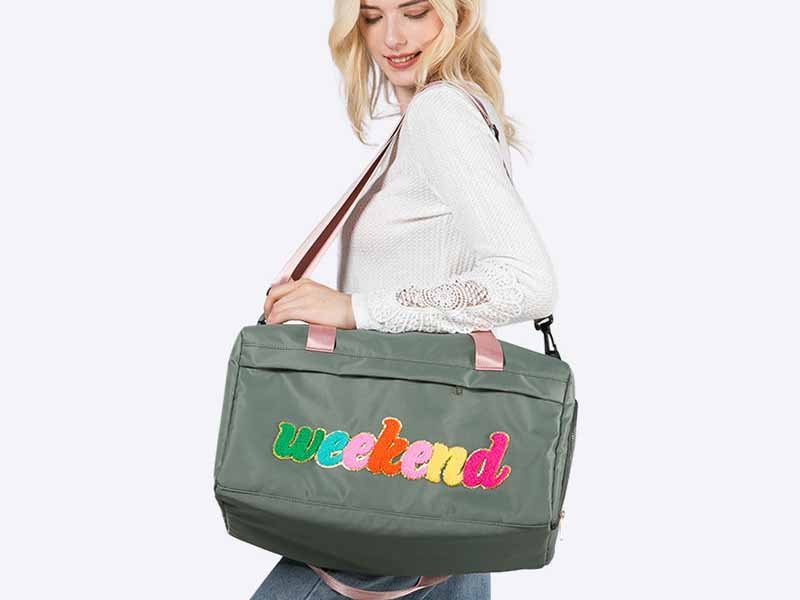
Most duffle bags follow the same basic shape: a cylinder body, top zipper, side handles, and maybe a shoulder strap. In a crowded market, that shape alone doesn’t make a bag memorable. What makes people stop, look, and remember is often the branding—especially when it’s stitched. Embroidery gives a duffle bag something printing struggles to deliver: texture you can feel, edges that look crisp up close, and a premium “built-to-last” impression. For fitness brands, sports clubs, corporate gifting, and travel accessories, embroidery is one of the quickest ways to make a product line look established.
Embroidery on duffle bags means stitching logos, text, or graphics directly onto the bag fabric using embroidery machines, durable threads, and stabilizers (backing). Compared with printed logos, embroidery usually holds up better under rubbing, bending, and repeated handling. The best results depend on fabric choice, stitch density, thread type, logo size, and placement—small decisions that strongly affect how the logo looks after months of real use.
If you’ve ever seen a duffle bag where the logo looks “expensive” even when the bag design is simple, that’s usually embroidery done correctly. The interesting part is that the “correct” method changes depending on the bag fabric and the logo itself.
What Is Embroidery on Duffle Bags?
Embroidery on duffle bags is the process of sewing a brand logo, text, or design into the bag surface using controlled stitch patterns. It is valued because it creates a raised, textured finish that resists fading and peeling. Good embroidery requires proper digitizing (converting artwork into stitch paths), correct thread selection, and stabilizing backings to prevent puckering or distortion on soft bag fabrics.
Why embroidery is chosen (what customers actually care about)
Customers usually ask the same practical questions before choosing embroidery:
- Will it stay clean and sharp after daily use?
- Will it crack, peel, or fade like some prints?
- Will it look premium in product photos?
- Will the logo area warp or wrinkle on soft fabric?
- How does embroidery affect cost and production time?
Below is a quick decision table that brands often use in product planning.
| Branding Method | Look & Feel | Wear Resistance | Best Use |
|---|---|---|---|
| Embroidery | textured, premium | high | sports, travel, premium gifting |
| Screen print | flat, bold color | medium | promo items, large simple logos |
| Heat transfer | photo-like detail | medium-low | small runs, complex graphics |
| Woven/embroidered patch | clean edges | high | thick fabrics, tactical look |
What Makes Embroidery on Duffle Bags Stand Out?
Embroidery stands out because it creates depth and texture. Even a small logo can look premium when thread catches light and creates natural highlights. This effect matters in real sales situations:
- Product photos: embroidery reads as “higher quality” on listing images
- Retail handling: customers feel the raised surface and trust durability
- Brand recognition: stitched logos are easy to notice from distance
What creates that “premium” look is not luck—it’s controlled production choices:
Key factors that improve appearance:
- Clean digitizing with correct stitch direction
- Proper stitch density (not too loose, not too tight)
- Thread color matching and consistent tension
- Stable backing to stop fabric distortion
Common stitch styles customers request:
| Embroidery Style | Look | Best for |
|---|---|---|
| Flat embroidery | clean, classic | most brand logos + text |
| 3D puff | raised, bold | sporty, streetwear feel |
| Satin stitch borders | sharp edges | logos with outlines |
| Fill stitch blocks | solid areas | large logo shapes |
Very small details (thin lines, tiny text) can become unclear if the stitch size is too big compared to logo detail. Many brands solve this by increasing the logo size slightly or simplifying fine lines.
What Fabrics Affect Embroidery on Duffle Bags?
Fabric is one of the biggest factors in embroidery success. A logo that looks perfect on canvas may look uneven on slippery nylon. Soft fabrics can pucker. Coated fabrics can cause needle heat marks if not handled correctly. That’s why factory testing and sampling matter so much.
Here’s how common duffle bag materials behave under embroidery:
| Duffle Bag Fabric | Embroidery Result | Main Risk | Recommendation |
|---|---|---|---|
| Polyester (600D/900D) | crisp and stable | minimal | excellent for most logos |
| Canvas | premium texture | heavy thickness | great, use strong needle/backing |
| Nylon (smooth) | clean but slippery | stitch shifting | use stronger backing + tension control |
| PU-coated fabric | can be tricky | needle holes visible | prefer patch or reinforced panel |
| Neoprene | bold, clean | stretch distortion | use stable backing + test stitch density |
How fabric weight changes results:
- Lightweight fabrics may need stronger backing to prevent puckering.
- Heavy fabrics need stronger needles and slower stitching to avoid thread breaks.
For brands, a good strategy is to use a dedicated embroidery panel (a slightly firmer fabric piece) on the bag body, especially on soft nylon or lightweight polyester. This protects logo quality and reduces rejects.
Is Embroidery on Duffle Bags Durable?
Embroidery is generally more durable than printing because thread is physically locked into the fabric. But durability depends on how it’s made. The most common durability problems come from:
- Low-quality thread that fades in sunlight
- Stitch density that is too high (causes stiffness and cracking feel)
- Weak backing that lets fabric stretch and distort
- Poor placement on high-fold or high-rub zones
Real durability factors customers should ask about:
- Thread type
- Polyester thread: better UV resistance and abrasion resistance
- Rayon thread: softer shine, but UV resistance can be lower
- Stitch density
- Too low: logo looks loose and wears faster
- Too high: fabric pulls and puckers; logo becomes stiff
- Backing
- Proper backing prevents wrinkling and improves long-term shape
Expected performance in daily life (practical reference):
| Use Scenario | Embroidery Performance |
|---|---|
| Gym daily carry | holds up well for years |
| Travel + luggage friction | strong if placement avoids rubbing edges |
| Frequent washing | good with polyester thread + stable backing |
| Outdoor sun exposure | best with UV-stable thread |
If the goal is a long-lasting branded product, embroidery is one of the safest choices—especially when paired with the right fabric and backing system.
Which Embroidery on Duffle Bags Looks Best?

The “best-looking” embroidery on duffle bags is not only about artistic taste.
It depends on logo structure, stitch style, viewing distance, fabric texture, and product positioning. A logo that looks sharp on a small cosmetic pouch may look weak on a large gym duffle, while a bold sports emblem may feel too heavy for a minimalist travel brand.
From real product development experience, brands usually compare three things:
- Visual impact in photos and retail display
- Clarity after months of use
- Balance between decoration cost and retail price
Understanding how different embroidery styles behave on duffle bags helps avoid costly redesigns after sampling.
Which Logos Suit Embroidery on Duffle Bags?
Logos with clean shapes, moderate detail, and clear spacing perform best in embroidery.
Because thread has physical thickness, extremely thin lines or tiny lettering can lose clarity when stitched.
Logo structure vs embroidery clarity
| Logo Feature | Embroidery Result | Recommendation |
|---|---|---|
| Bold shapes | Very clear | Ideal for most duffle bags |
| Medium text | Clear if ≥4–5 mm height | Safe for branding |
| Thin lines | May break visually | Thicken during design |
| Very small text | Hard to read | Use print or patch instead |
Practical design rule:
If a logo detail is thinner than the embroidery thread width, it should be simplified before production.
This small adjustment often improves both visual quality and stitching efficiency.
Another key factor is contrast.
High-contrast thread colors against bag fabric improve readability from distance, which is important for:
- Sports teams
- Gym brands
- Promotional merchandise
Which Text Styles Fit Embroidery on Duffle Bags?
Text embroidery works best when letter spacing and stroke thickness are designed specifically for stitching. Fonts that look elegant on screens may stitch poorly if strokes are too thin.
Text readability guidelines for embroidery
| Text Height | Readability After Stitching | Best Use |
|---|---|---|
| < 4 mm | Often unclear | Avoid for main branding |
| 5–8 mm | Readable | Small taglines |
| 10–25 mm | Very clear | Brand names |
| > 30 mm | Strong visual impact | Sports or team logos |
Font style matters too:
- Sans-serif fonts stitch cleanly and consistently
- Script fonts require thicker strokes and careful digitizing
- Block lettering gives the strongest durability and clarity
For duffle bags used in team sports or travel retail, large clean lettering often performs better in customer perception than complex decorative fonts.
Which Sizes Work for Embroidery on Duffle Bags?
Embroidery size influences visibility, stitching time, and overall cost.
Too small, and the logo disappears. Too large, and the fabric may wrinkle or production cost rises quickly.
Common embroidery size ranges on duffle bags
| Placement Area | Typical Logo Size | Visual Effect |
|---|---|---|
| Front panel center | 6–12 cm width | Balanced branding |
| End panel | 5–10 cm | Subtle identity |
| Top lid | 8–15 cm | High visibility in travel use |
| Shoulder strap label | 2–4 cm | Minimal branding |
Embroidery pricing is closely related to stitch count, which increases with size and detail.
Doubling logo width can more than double stitching time, so size decisions directly affect product margin.
How Is Embroidery on Duffle Bags Produced?

Embroidery production on duffle bags follows a controlled sequence:
- Artwork preparation
- Digitizing into stitch paths
- Fabric hooping and stabilizing
- Machine stitching
- Thread trimming and inspection
Each step influences final appearance, durability, and rejection rate.
Skipping precision in early stages often leads to visible defects later.
How Does Digitizing Shape Embroidery on Duffle Bags?
Digitizing converts a logo image into machine stitch instructions.
This is one of the most critical technical steps because poor digitizing cannot be fixed by good stitching alone.
What digitizing controls
- Stitch direction and layering
- Density and spacing
- Thread color sequence
- Pull compensation to prevent distortion
Typical digitizing cost logic (OEM reference)
| Logo Complexity | Digitizing Effort | Cost Level |
|---|---|---|
| Simple text | Low | Low |
| Medium logo | Moderate | Medium |
| Complex multi-color logo | High | Higher |
Many factories charge digitizing once, then reuse the file for repeat orders.
For brands planning long-term production, accurate digitizing early reduces future sampling cost.
How Do Threads Affect Embroidery on Duffle Bags?
Thread choice determines color brightness, UV resistance, and abrasion durability.
Most duffle bag embroidery uses polyester thread because it balances shine and strength.
Common embroidery thread comparison
| Thread Type | Appearance | Durability | Best Application |
|—|—|—|
| Polyester | Bright, stable | High | Sports & travel bags |
| Rayon | Softer shine | Medium | Fashion bags |
| Nylon | Very strong | Very high | Heavy-duty gear |
Colorfastness is especially important for:
- Outdoor travel bags
- Gym bags exposed to sweat
- Bags washed repeatedly
Poor thread quality is one of the fastest ways to create customer complaints after purchase.
How Do Backings Support Embroidery on Duffle Bags?
Backing (stabilizer) sits behind the fabric during stitching.
It prevents stretching, puckering, and distortion, especially on soft materials like nylon or lightweight polyester.
Common backing types
| Backing Type | Strength | Best For |
|---|---|---|
| Tear-away | Light support | Thick fabrics like canvas |
| Cut-away | Strong support | Stretch or thin fabrics |
| Heat-seal backing | Clean finish | Premium retail bags |
Choosing the wrong backing often leads to:
- Wrinkled logo edges
- Uneven stitch tension
- Fabric deformation after washing
Because duffle bags experience heavy pulling and bending, stable backing selection is essential for long-term appearance.
Are There Issues with Embroidery on Duffle Bags?

Embroidery is durable and visually strong, but it is not immune to problems.
Most defects seen in real products are not caused by embroidery machines. They usually come from incorrect fabric selection, poor digitizing, weak backing, or unrealistic logo design.
Understanding these predictable risks helps brands:
- Reduce sampling delays
- Avoid mass-production defects
- Protect retail reputation
- Lower return rates
When embroidery problems appear in the market, they are often visible within the first few weeks of customer use, which makes prevention during development extremely important.
Why Does Embroidery on Duffle Bags Pucker?
Puckering is one of the most common embroidery complaints.
It appears as wrinkles or waves around the stitched logo, making the bag look low quality even if the stitching itself is accurate.
Main technical causes of puckering
- Fabric too thin or flexible for stitch density
- Insufficient or incorrect backing stabilizer
- Stitch density set too high during digitizing
- Thread tension not balanced during production
Fabric stability vs puckering risk
| Fabric Type | Puckering Risk | Prevention Method |
|---|---|---|
| Lightweight polyester | Medium | Use cut-away backing |
| Stretch nylon | High | Strong stabilizer + lower density |
| Canvas | Low | Standard backing usually enough |
| PU-coated fabric | Medium | Reduce stitch density |
Practical prevention rule:
If the fabric can easily wrinkle when pinched by hand, it usually needs stronger backing or reduced stitch density before embroidery.
Correcting puckering after production is difficult, which is why sampling and testing are critical steps before bulk manufacturing.
Do Thick Fabrics Affect Embroidery on Duffle Bags?
Yes. Thick or heavily coated fabrics create different challenges from thin fabrics.
Instead of puckering, the risk becomes:
- Needle deflection or breakage
- Uneven stitch height
- Thread abrasion during sewing
Thickness impact on embroidery performance
| Fabric Thickness | Common Issue | Adjustment Needed |
|---|---|---|
| Thin (<0.5 mm) | Wrinkling | Strong backing |
| Medium (0.5–1.0 mm) | Stable | Standard settings |
| Thick (>1.0 mm) | Needle stress | Strong needle + slower speed |
For premium canvas or multi-layer travel duffle bags, factories often:
- Reduce machine speed
- Increase needle strength
- Adjust stitch length
These small adjustments protect thread integrity and logo clarity during mass production.
How Can Embroidery on Duffle Bags Stay Clean?
Clean embroidery edges are essential for retail presentation and long-term customer satisfaction.
Messy thread trimming or loose stitches quickly reduce perceived quality.
Common cleanliness issues
- Loose thread ends after trimming
- Color bleeding from low-quality thread
- Dust or oil marks during handling
Quality control checkpoints used in production
| QC Step | Purpose |
|---|---|
| Thread trimming inspection | Remove loose ends |
| Colorfastness testing | Prevent fading or bleeding |
| Wash simulation | Check long-term clarity |
| Visual alignment check | Ensure centered logo |
Factories producing for mid-to-high-end brands usually include multiple inspection stages before packaging to maintain consistent appearance.
How to Order Embroidery on Duffle Bags?

Ordering embroidered duffle bags for OEM production is not complicated, but clear preparation saves time, cost, and sampling cycles.
Successful projects usually begin with complete technical information, not only a logo image.
What Specs Matter for Embroidery on Duffle Bags?
Providing accurate specifications helps factories create correct samples on the first attempt.
Essential embroidery specifications
| Item | Why It Matters |
|---|---|
| Logo size (cm) | Controls stitch count and cost |
| Thread colors | Ensures brand consistency |
| Placement position | Affects visibility and sewing difficulty |
| Fabric type | Determines backing and density |
| Stitch style | Changes appearance and durability |
Incomplete information often leads to extra sampling rounds, increasing both development time and expense.
Which Placements Sell Embroidery on Duffle Bags Best?
Logo placement strongly influences visual impact and retail appeal.
Some positions are proven to perform better in real sales environments.
Common placement performance
| Placement | Visibility | Retail Preference |
|---|---|---|
| Front center panel | Very high | Most popular |
| End panel | Medium | Subtle branding |
| Top lid | High in travel use | Premium feel |
| Shoulder strap tag | Low | Minimalist look |
Front-panel embroidery remains the most widely chosen because it balances brand exposure and production simplicity.
How Do MOQ and Sampling Work for Embroidery on Duffle Bags?
Most OEM embroidery projects follow a predictable process:
- Confirm artwork and specifications
- Create digitizing file
- Produce physical sample
- Review quality and placement
- Approve for bulk production
Typical production structure (industry reference)
| Stage | Time Range |
|---|---|
| Digitizing | 1–3 days |
| Sample making | 5–10 days |
| Bulk production | 25–45 days |
Minimum order quantities vary depending on fabric sourcing, color complexity, and packaging, but professional factories often provide flexible MOQ for brand testing.
Final Section: Custom Embroidery on Duffle Bags from Lovrix
For brands, embroidery is more than decoration.
It directly affects:
- Product value perception
- Retail pricing potential
- Brand recognition in crowded markets
- Long-term customer satisfaction
Choosing the right manufacturing partner is therefore just as important as choosing the embroidery style.
Lovrix is a China-based group manufacturer with over 18 years of experience.
We support custom embroidered duffle bag projects.
Our workflow helps brands move smoothly from:
idea → sample → testing → mass production
Start Your Custom Embroidered Duffle Bag Project
If you are planning to launch or upgrade a duffle bag product line with embroidery, Lovrix can provide:
- Low minimum order quantities for testing
- Fast and reliable sample development
- Consistent bulk production quality
- Global export support
Contact Lovrix today to request samples, discuss customization, or receive a quotation tailored to your market.
A well-stitched logo may look like a small detail, but in real retail competition, it often becomes the detail customers remember most.


