 Skip to content
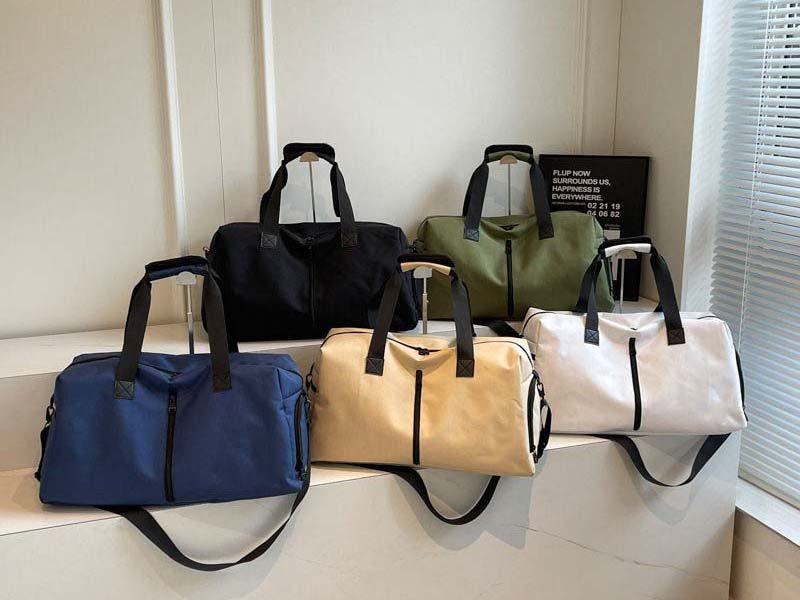
AI has made the first ten minutes of product development dramatically faster. A team can describe a new commuter backpack, travel bag, cosmetic pouch, pet carrier, or technical organizer and receive several polished visual directions almost immediately. That speed is useful, but it can also create a false sense that the difficult part of development has already been completed. A convincing image still cannot define the finished gusset depth, confirm which reinforcement sits behind a handle, determine whether a zipper path can be sewn efficiently, or prove that the selected material will behave as expected in production.
AI can support custom bag product development by accelerating research, concept visualization, controlled design variation, requirement organization, and early decision-making. Its greatest value comes before and around technical development. To become a commercial product, an AI concept still needs confirmed dimensions, materials, construction details, hardware, branding specifications, costing, physical sampling, engineering review, quality criteria, and a controlled production standard.
That distinction is what makes AI useful rather than distracting. Imagine approving an elegant AI-generated travel tote with a hidden side pocket, a perfectly clean top opening, and almost invisible handle attachments. The image may look ready for a catalog, yet the first pattern review could reveal that the pocket interferes with the lining, the opening leaves too little sewing access, and the handles have nowhere reliable to transfer load. The interesting part of AI-assisted development begins after the image looks good.
What Can AI Do in Bag Development?

AI can shorten early custom bag development by organizing research, visualizing ideas, comparing controlled alternatives, and turning scattered project information into a clearer brief. These tasks can remove repetitive work and improve communication between design, merchandising, sourcing, and manufacturing teams. AI is less reliable for decisions involving exact dimensions, material behavior, sewing construction, hardware performance, tolerances, testing, or production feasibility.
Faster Concept Research
A custom bag project rarely begins with one clean document. More often, information arrives through competitor screenshots, customer reviews, internal meeting notes, retail targets, reference products, feature requests, color directions, packaging requirements, and comments from several people. AI can help sort this material into practical themes, making it easier to see which problems repeatedly appear and which ideas may deserve further investigation.
Consider a commuter backpack. Raw research may mention laptop protection, bottle storage, luggage attachment, hidden pockets, strap comfort, rain resistance, opening access, charging cables, weight, capacity, and airline use. AI can group these observations so the product team can compare functional themes instead of reading hundreds of unstructured comments repeatedly. That can save substantial preparation time when the team is working across several products or markets.
The important limit is source quality. Twenty negative reviews from one marketplace do not automatically represent every user or every price level. A feature that performs poorly in a low-cost product may work well when better materials or construction are used. Teams should therefore treat AI summaries as research maps rather than conclusions. Important claims still need to be checked against the original reviews, product listings, technical references, customer feedback, or other reliable sources.
Research becomes more useful when the questions are narrow. Instead of asking for “popular backpack features,” a development team can investigate recurring complaints around 20–30 liter commuter backpacks, access problems in camera bags, cleaning concerns in pet carriers, or storage problems in makeup organizers. AI performs much better when it is helping organize a defined product problem rather than being asked to invent a successful product from almost no evidence.
Rapid Concept Visualization
Visual generation is one of the most practical uses of AI during early bag development. A product description such as “a structured work tote with a padded 14-inch laptop section, hidden bottle storage, removable shoulder strap, matte hardware, and minimal front branding” can be explored through several visual directions before detailed technical drawing begins. This gives internal teams something concrete to discuss much earlier.
That matters because people often interpret the same written brief differently. One designer may imagine a soft tote with relaxed corners, while the product manager expects a clean rectangular body with stronger structure. Generating visual references can expose those differences before pattern development, sample cutting, or custom hardware work begins. Correcting the overall direction at this stage is usually easier than correcting it after a physical prototype has already been made.
The image should still be treated as a visual reference rather than a production drawing. Generative systems may change a pocket between views, alter the handle position, hide a seam that would be required in reality, or create a zipper path without explaining how the opening is assembled. A rendering can appear completely believable while containing details that cannot coexist physically.
A useful practice is to classify visible elements into three groups: confirmed design intent, details still open for engineering, and purely visual suggestions. The overall silhouette may already be confirmed, while base reinforcement or zipper construction remains open for technical review. A decorative metal element may be only a visual suggestion until an appropriate component is found. This prevents the attractiveness of the image from giving unfinished details accidental technical authority.
Controlled Design Variations
AI can make variation work much faster when the team decides which variables are allowed to change. The same bag can be explored with different color combinations, handle treatments, webbing arrangements, logo positions, pocket openings, quilting patterns, hardware finishes, or trim details without redrawing the whole concept from the beginning. This is particularly useful before technical development, when major visual changes are still relatively inexpensive.
The process becomes less useful when everything changes at once. If silhouette, pocket count, dimensions, fabric texture, hardware, colors, and opening construction all vary between images, it becomes difficult to understand what the team is actually comparing. A more disciplined method changes one design layer at a time. Shape can be reviewed first, followed by color blocking, branding, trim, and feature details after the preferred form has been selected.
This type of control also limits decision fatigue. Generating thirty attractive variations may feel productive, yet it often creates slower approvals because every new image introduces another direction to discuss. Three to six serious alternatives built around clear variables are usually more useful than a large gallery of loosely connected images. AI creates value when it reduces repetitive rendering work while leaving the actual product decision understandable and traceable.
The same principle works for product families. A backpack, tote, organizer, duffel, and pouch can be explored with a common visual language while selected proportions and functions change by SKU. When the shared elements are deliberately controlled, AI can support range planning rather than simply generating unrelated products that happen to use the same logo.
Better Product Briefs
One of the less visible but highly practical uses of AI is organizing incomplete project information into a structured development brief. Many custom projects do not begin with a perfect tech pack. A manufacturer may receive a reference image, target dimensions, an approximate quantity, preferred materials, a logo file, desired functions, packaging notes, and several messages explaining what should be changed from the reference product.
AI can sort those inputs into consistent fields and identify missing information. That makes the first technical conversation much more efficient because the development team can concentrate on unresolved points instead of repeatedly reconstructing what has already been decided. The same approach is useful after meetings, where long notes can be converted into a development checklist and compared against the current version of the brief.
| Development Item | Useful Starting Information | What Still Needs Confirmation |
|---|---|---|
| Product purpose | Travel, outdoor, cosmetic, pet, tool, retail | Real use conditions and user priorities |
| Overall size | Approximate W × H × D | Finished dimensions and tolerances |
| Carry system | Handles, shoulder strap, backpack straps | Width, length, adjustment and reinforcement |
| Storage | Main sections and pocket ideas | Actual pocket sizes and opening access |
| Material | Nylon, polyester, canvas, PU, TPU, EVA | Construction, weight, coating, finish and color |
| Branding | Print, embroidery, patch, metal logo | Size, position and production method |
| Order plan | Approximate quantity | Final colors, SKUs and quantity split |
| Packaging | Protective or retail packaging | Channel-specific labels and packing details |
The critical rule is that AI should expose missing information rather than silently invent it. If the required load is unknown, the document should state that it is still open instead of inserting a convenient number. If the fabric construction has not been selected, the brief should identify the material direction without pretending the final specification already exists. Visible uncertainty produces better engineering decisions than false precision.
How Can AI Improve Bag Concepts?

AI can improve bag concepts by allowing teams to test more shapes, colors, functions, brand treatments, and range variations before money is committed to physical development. Improvement should not be judged only by visual impact. A stronger concept also needs to suit the intended user, actual use case, sales channel, target cost, material system, and manufacturing process.
Shape and Color Exploration
A bag’s proportions influence much more than appearance. Width, height, depth, base area, opening geometry, and handle position affect usable capacity, stability, packing efficiency, access, comfort, and how the product sits when filled. AI makes it easier to compare these visual relationships before the team invests in pattern making. A narrow commuter tote can be compared with a broader base version, or a rounded backpack can be tested against a straighter technical silhouette.
Early proportion changes are valuable because they are relatively inexpensive. Once patterns, samples, custom components, photography, packaging, and production planning are underway, altering the basic silhouette can affect several connected parts of the project. Using AI to narrow the preferred direction before those downstream decisions are made can therefore reduce avoidable redevelopment.
Color exploration works in a similar way. A product can be tested in tonal combinations, contrast webbing, seasonal colors, high-visibility trims, or several coordinated shades for a product range. These visual studies can help determine whether a design is too busy, too plain, too sporty, or too far from the existing brand language before physical color matching begins.
Digital color is still only a direction. Fabric weave, coating, surface gloss, pile, printing, lighting, and photography can all change how the same nominal color appears. A navy shown in an AI rendering is not a production standard. Final approval normally needs a defined color reference and, depending on the material and process, a physical swatch, lab dip, printed strike-off, coated sample, or other suitable production reference.
Functional Feature Planning
AI can quickly suggest functional ideas because it can combine patterns commonly found across related products. A gym bag may be shown with a shoe section, wet pocket, bottle storage, key clip, phone pocket, ventilated panel, luggage sleeve, and removable shoulder strap. A medical organizer may include transparent pockets, elastic loops, color coding, label areas, and wipe-clean surfaces. That breadth can be useful during brainstorming.
The problem begins when every suggested feature is treated as an improvement. Each pocket, divider, zipper, flap, buckle, or reinforcement increases material use, sewing operations, handling time, weight, and the number of points where something can go wrong. A new compartment may also consume space needed by the main section. A hidden zipper may improve appearance but reduce opening convenience. More features do not automatically create a better product.
A practical review should ask whether the feature solves a known user problem, how frequently it will be used, whether it interferes with another function, what extra materials and operations it requires, and whether it can remain consistent in production. Features that perform poorly against those questions can be removed before they become embedded in the sample.
Dimensions also matter. A bottle pocket should be reviewed with a real target bottle inserted, not only as a flat pocket on a rendering. A laptop sleeve needs clearance for the device, padding, seams, and the angle of insertion. A shoe compartment must be evaluated against the intended footwear range. AI can generate the idea, but physical use determines whether the idea deserves to remain.
Brand Consistency
AI can help extend an existing brand language across a wider bag collection when the company defines the visual rules first. A backpack, tote, wash bag, travel organizer, and duffel might share selected webbing widths, zipper pull shapes, logo proportions, hardware finishes, panel geometry, colors, or surface treatments. AI can then explore how those elements carry across different products without making every SKU look identical.
This is particularly useful for range development because product families often fail through small inconsistencies rather than major design errors. A glossy buckle used on one SKU beside matte hardware on another may weaken the sense of a coordinated collection. A different webbing texture or logo scale can make products feel unrelated even when the color palette is the same.
Physical material approval remains essential because many brand cues depend on touch and finish. Matte black metal, painted alloy, molded plastic, rubberized components, and coated zipper pulls can all appear similar in a digital image while giving a very different impression in hand. The same applies to canvas texture, PU grain, webbing density, embroidery height, print sharpness, and lining quality.
For products intended to remain in the range for several seasons, brand consistency also becomes a record-keeping problem. Approved material references, color standards, artwork, hardware details, patterns, BOM versions, packaging files, and sealed samples need to stay controlled so that future production does not gradually drift away from the original product.
Concept Selection
The ability to create more concepts makes selection discipline more important. When a team can produce dozens of plausible images in one afternoon, the challenge is no longer generating ideas; it is identifying which ideas deserve expensive development work. The most visually dramatic option is not always the strongest commercial choice because production, sourcing, usability, and price constraints may be hidden behind the rendering.
A simple internal scorecard can help. Teams can rate serious concepts on user usefulness, brand fit, structural feasibility, material feasibility, target-cost fit, and meaningful differentiation. A 1–5 scoring system is not scientific evidence, but it forces the same questions to be applied to each candidate rather than allowing one impressive image to dominate the discussion.
Concepts that score well visually but poorly on manufacturability may need further engineering before sampling. Designs that are easy to manufacture but offer little useful differentiation may not justify a new SKU. Strong products usually sit between these extremes, combining a recognizable reason to exist with realistic construction and commercial logic.
The team should also identify which design elements are protected before engineering begins. If the wide opening is the main product benefit, that function may remain non-negotiable while internal construction changes. If the clean exterior is central to brand positioning, reinforcement may need to be hidden rather than simply added on the surface. Clear priorities allow the manufacturer to solve technical problems without accidentally removing the feature that made the concept commercially interesting.
Which Decisions Need Human Engineering?
Human engineering remains essential whenever a bag has to work as a physical object rather than a digital image. Material construction, stiffness, seam logic, reinforcement, pattern geometry, hardware attachment, load transfer, sewing access, tolerances, cost, and production sequence all require real-world judgment. These decisions determine whether a concept can be comfortably used, repeatedly manufactured, inspected, packed, shipped, and reordered.
Material Selection
Material selection should begin with product requirements instead of a material name. Saying that a bag should use nylon, polyester, canvas, PU, or TPU does not define how the product will behave. Each material family includes many weights, yarn constructions, coatings, laminations, finishes, thicknesses, and surface characteristics. Two fabrics sold under the same general description can perform very differently during cutting, sewing, printing, folding, abrasion, or daily use.
Common synthetic bag fabrics are often described using yarn-denier categories such as 210D, 420D, 600D, 900D, or 1680D, while woven natural or blended materials may be discussed more often through fabric weight in grams per square meter or ounces per square yard. These figures help identify constructions, but they do not prove strength, durability, or quality on their own. Weave, yarn quality, backing, coating, finishing, and supplier consistency also affect performance.
The outer fabric is only one part of the material system. Lining, foam, reinforcement boards, mesh, binding, webbing, thread, zipper tape, coatings, adhesives, and other components interact with the shell. Increasing foam thickness may improve protection while making seam intersections bulky. A stiffer coating may improve shape while making curved seams harder to turn. Material choices need to be evaluated as a combination rather than individually.
Physical swatches remain important because experienced developers learn a great deal by bending, folding, compressing, stitching, rubbing, and comparing materials. AI can help narrow candidate families and organize technical information, but a swatch and a sample reveal how the real construction behaves. For complex projects, that difference is often what separates a promising concept from a production-ready material decision.
Structural Feasibility
A bag is a network of soft panels that carry forces through seams, webbing, reinforcement, zippers, and hardware. The exterior may look simple while the internal construction is doing most of the mechanical work. Shoulder straps pull against the body, handles transfer load into anchor zones, heavy zippers affect lightweight openings, and broad bases may collapse if the material and internal support do not work together.
A structural review therefore asks what exists behind every visible detail. If a handle appears to disappear cleanly into the body, where does the webbing terminate and how is the load distributed? If an internal divider appears suspended inside the product, which seams carry it? If the base remains flat when the bag is loaded, what material or reinforcement gives it that stability?
Pattern geometry creates another layer of reality. Smooth curves shown in a rendering may require separate panels, notches, piping, binding, clipping, or additional seam allowance. Tight corners become difficult when outer fabric, lining, foam, reinforcement, and binding meet in the same location. A highly skilled sample maker may be able to make one piece slowly, yet that does not automatically mean the design is suitable for stable repeated production.
Finished tolerance must also be appropriate to the product. A small fitted case and a large soft duffel should not automatically use the same dimensional tolerance. Sewn products contain flexible materials, seam take-up, padding, and handling variation, so tolerances need to be set according to size, structure, use, measurement method, and customer requirement. Engineering turns an attractive shape into a sequence of operations that can be repeated without relying on constant improvisation.
Hardware and Sewing
Hardware deserves more attention than most concept images give it. Buckles, D-rings, sliders, swivel hooks, rivets, magnetic closures, zipper pulls, frames, and molded parts need dimensions, materials, finishes, attachment methods, expected loads, and suitable compatibility with the fabric and webbing around them. A component may be visually attractive but too heavy, too expensive, difficult to source, or poorly matched to the surrounding construction.
Webbing and hardware also need dimensional compatibility. A nominal 25 mm strap, for example, should be paired with hardware whose internal dimensions work with the actual finished webbing thickness and any folded layers passing through it. A buckle that looks correct in a rendering can become awkward if clearance is too tight, while excess clearance can make the strap sit poorly or move more than intended.
Sewing creates similar relationships. A structural point may combine outer fabric, lining, foam, webbing, binding, and reinforcement in one seam. The machine and operator must pass through the real layer stack, not the simplified edge visible on screen. High-stress areas such as handle anchors, backpack strap roots, D-ring tabs, bottom corners, equipment pockets, trolley sleeves, and tool compartments generally deserve closer engineering review.
Additional stitching is not automatically the answer to every load problem. Poorly positioned reinforcement can still fail, while excessive stitching may weaken coated material through repeated needle perforations or produce an unnecessarily rigid area. The construction should spread load into a stable part of the product. Physical pull checks, zipper cycling, loading trials, and category-specific tests can then be selected according to the intended use and agreed performance requirements.
Cost and Supply
Cost engineering works best while the design is still flexible. At concept stage, replacing a custom buckle with an available component may require only a small visual change. After tooling, sampling, photography, packaging, and internal approval have been completed, the same change may affect several departments and require another development cycle. Early cost visibility therefore protects both schedule and product positioning.
A custom bag’s cost is rarely determined by the outer fabric alone. Lining, foam, webbing, zippers, hardware, logo processes, component count, sewing complexity, cutting efficiency, finishing, inspection, packaging, order quantity, color split, SKU count, testing, and special material requirements may all influence the final price. Several individually reasonable decisions can combine into a product that no longer fits the intended commercial range.
| Cost Driver | Lower-Complexity Direction | Higher-Complexity Direction | Likely Project Impact |
|---|---|---|---|
| Outer material | Available standard construction | Custom-dyed or functional construction | Material MOQ and lead time |
| Hardware | Existing standard component | Custom mold or special finish | Tooling and component MOQ |
| Compartments | Open or simple pocket | Multi-layer zipped organizer | Labor and material count |
| Branding | Standard print or embroidery | Molded badge or custom metal logo | Setup and application work |
| Color plan | One or two colors | Many colors across several SKUs | Material splitting and planning |
| Packaging | Basic protective packaging | Custom retail-ready packaging | Packing labor and unit cost |
| Construction | Straightforward seams | Piping, curves and heavy multilayers | Sewing time and consistency |
Supply continuity is just as important as initial cost, particularly for repeat-order products. A component that is easy to obtain for the first production run may become a problem if the design depends on an unusual finish or a supplier with unstable availability. Materials, colors, coatings, trims, zipper types, and custom hardware should be evaluated for repeatability when the product is expected to remain in the range.
Good cost engineering does not simply remove expensive features. It identifies which elements customers actually notice and which construction details can be simplified with minimal effect on appearance or function. That is also where cooperation with an experienced development manufacturer becomes useful: alternatives can be compared before the design is locked rather than after the sample has already absorbed the original cost structure.
How Does an AI Concept Become Production-Ready?

An AI concept becomes production-ready when visual ideas are converted into controlled information that design, purchasing, sampling, production, and quality teams can interpret consistently. This normally includes measurements, materials, construction details, components, branding, BOM information, tolerances, packaging, revision status, and an approved physical sample. The standard must describe something that can be reproduced, not merely a picture that looks convincing.
Technical Files
An AI rendering cannot tell a cutting team how large each pattern panel should be or tell purchasing which zipper, fabric, buckle, or webbing to order. Technical documentation fills that gap. Depending on the complexity of the product, development files may include front, back, side, top, bottom, and internal views; measurement points; construction notes; component callouts; color references; logo artwork; BOM information; packaging details; and revision status.
The AI image can remain useful inside the package as a visual reference for intended proportion, style, color placement, or general appearance. When the rendering conflicts with an approved dimension or controlled technical detail, however, the production file needs to take precedence. Otherwise different departments may build different interpretations of the same product.
Documentation does not need to be equally complicated for every item. A straightforward drawstring bag may require a relatively compact specification, while a technical backpack with multiple compartments, molded elements, padded zones, custom hardware, and equipment-fit requirements needs a much more detailed package. The right question is whether two competent people reading the same files would understand essentially the same product.
File status also needs to be obvious. Concept drawings, first-sample files, revision files, and production-approved documents should not circulate without clear identification. Once a project reaches production release, old uncontrolled artwork should not remain in active use. Version control is a practical manufacturing requirement, not simply administrative housekeeping.
Measurement Control
Overall width, height, and depth are only the beginning of measurement control. Depending on the product, teams may also need opening width, gusset depth, base dimensions, handle drop, shoulder-strap adjustment range, pocket height, zipper length, webbing width, laptop compartment dimensions, divider positions, foam thickness, logo position, buckle dimensions, and other points tied to function or appearance.
Measurement terms must be defined clearly because the same word can mean different things. “Width” might refer to the widest finished point, the base width, the opening width, or a flat panel measurement before sewing. Drawings should show where important points begin and end rather than relying on text descriptions that allow several interpretations.
Functional clearance deserves extra attention. If a compartment is intended to hold a device measuring 330 × 230 × 18 mm, making the internal specification exactly those dimensions usually ignores foam, lining, seam allowance, insertion angle, zipper opening, and real user handling. The appropriate clearance has to be determined through product logic and sample evaluation rather than copied directly from the dimensions of the object being stored.
AI can help generate a checklist of likely measurement points and identify omissions between versions, but it should not create final dimensions simply because a value looks plausible. Confirmed values should come from the project brief, pattern development, technical calculations, sample measurement, real-item fit checks, or another controlled source.
Materials and BOM
The bill of materials converts visual descriptions into purchasing and production instructions. “Black nylon, metal zipper, and webbing strap” may communicate the appearance of a product, but it leaves many manufacturing choices unresolved. Production may need fabric construction, finish, color reference, coating, webbing width and density, zipper size and tape color, slider type, hardware finish, logo method, thread details, labels, packaging materials, and approved supplier references.
A structured BOM also makes sample revision easier to control. If the first prototype changes from one foam construction to another, from a standard zipper pull to a custom puller, or from one lining color to another, the approved file can show precisely which component changed. That reduces the chance that purchasing, sampling, and production work from different assumptions.
| BOM Area | Information Commonly Controlled |
|---|---|
| Outer material | Type, construction, finish, coating and color |
| Lining | Material, weight or construction and approved color |
| Foam/support | Type, thickness and application location |
| Webbing | Width, construction, hand feel and color |
| Zippers | Size, teeth, tape color, slider and puller |
| Hardware | Dimensions, material, finish and attachment |
| Branding | Method, size, artwork and position |
| Thread | Application and color reference |
| Packaging | Protective pack, labels, inserts and carton details |
| Revision | Approved version and date |
Component coding becomes especially valuable for long-running products. Descriptions such as “same navy webbing as last year” become unreliable when team members change or the product returns after a long gap. Material records, approved swatches, BOM versions, and physical references provide a stronger basis for repeat production and reduce the amount of historical knowledge that exists only in someone’s memory.
Lovrix can accept AI drawings, sketches, reference images, technical files, and existing samples as starting material for development, but those inputs still need to pass through material, structure, sampling, and production review before they can become a controlled manufacturing standard. That is the difference between accepting an idea and treating the idea as ready for production.
Manufacturability Review
A manufacturability review asks whether the selected design can be produced repeatedly at the intended quality, cost, quantity, and schedule. The standard is therefore higher than “a sample maker can build one.” A design may be technically possible but inefficient, difficult to inspect, overly dependent on one operator, vulnerable to material variation, or too complicated to repeat consistently across a larger production run.
The review looks at panel geometry, sewing access, seam bulk, reinforcement positions, material behavior, zipper installation, component availability, process sequence, tolerance sensitivity, finishing, packaging, and inspection points. Some risks can be seen before sampling, while others become visible only after the first physical prototype has been handled and measured.
It is useful to classify findings by consequence. Critical issues affect safety, core structure, primary function, or production viability. Functional issues affect usability but may have several solutions. Cosmetic issues relate mainly to appearance. Commercial issues affect price, MOQ, sourcing, lead time, or packaging rather than the physical function of the bag.
The classification keeps development discussions practical. A weak strap anchor should not compete for attention with a minor decorative alignment preference. Good engineering feedback also explains alternatives instead of simply rejecting a detail. A manufacturer might identify a seam with excessive layer buildup and recommend moving reinforcement slightly inward while preserving the visible shape. That gives the product team a real trade-off to evaluate rather than a vague statement that the design is difficult.
How Do Samples Validate AI Bag Designs?

Samples reveal whether assumptions made in digital concepts work with real dimensions, real materials, real hardware, and real handling. A first sample can expose problems in proportion, capacity, opening access, comfort, structural stability, sewing construction, branding, component interaction, and packaging. It should be treated as a development instrument and engineering checkpoint rather than merely a visual preview of the bulk order.
First-Sample Findings
The first sample often changes how the team understands the product. A pocket that looked generous in a rendering may be difficult to access once the bag is filled. A structure that seemed firm may collapse because the selected outer fabric is softer than expected. A strap can look proportionally correct on screen yet feel uncomfortable after several kilograms are placed inside the product.
Sample review should therefore involve actual handling rather than only photographs. The bag can be filled with representative contents, opened and closed repeatedly, carried using different handles, placed on a surface, adjusted, loaded, and viewed from the angles a user will actually encounter. These actions reveal relationships that are difficult to judge from a flat drawing.
A practical first-sample review often covers overall proportion, finished dimensions, usable capacity, material hand feel, structural stability, opening access, pocket usability, strap comfort, zipper operation, hardware movement, logo appearance, stitching, edge finishing, and packaging fit. Additional checks depend on the category. Cooler bags, equipment cases, pet carriers, medical bags, and tool bags each create different performance questions.
This is also the point where material specifications become easier to judge. A 600D fabric, foam layer, zipper size, or webbing width may appear suitable on paper, yet the finished assembly can still feel too stiff, too soft, too heavy, or visually unbalanced. The sample turns isolated specifications into a complete physical system and gives the development team evidence for the next decision.
Revision Priorities
Useful sample feedback needs to describe the problem precisely enough for another person to correct it without guessing. Comments such as “pocket too small,” “strap uncomfortable,” or “shape wrong” may capture a reaction but do not create a controlled change. Better comments identify the location, current condition, requested result, reason, priority, and any related measurement or material change.
For example, “Increase the finished front-pocket opening from approximately 150 mm to 175 mm while retaining the current pocket height to improve one-handed access” gives the pattern and sample teams something measurable. Photographs with numbered annotations can support the comment, while the master revision file records the final approved instruction.
Dependencies should be reviewed at the same time. Increasing foam thickness can alter seam bulk and usable capacity. Widening a side pocket may change the overall silhouette. Replacing a zipper may affect seam allowance, opening stiffness, puller compatibility, and cost. Moving a handle can require reinforcement changes inside a panel that looks unchanged from the outside.
Experienced developers therefore investigate the cause of a problem rather than treating every comment as an isolated adjustment. If the bag collapses, adding foam everywhere may not be the best solution. The issue may be panel proportion, material stiffness, base support, reinforcement placement, or the relationship between lining and outer shell. Solving the cause usually creates a more stable product than repeatedly correcting symptoms.
Version Control
Bag development becomes unreliable when approved decisions are distributed across messages, emails, screenshots, drawings, sample labels, and verbal conversations without one controlled record. One person may receive a revised zipper specification while another still uses the previous BOM. A logo may move during sample revision while the measurement drawing continues to show the old position.
Every meaningful change should therefore update the documents affected by that change. Depending on the issue, this can include the pattern, measurement sheet, BOM, material standard, hardware specification, logo artwork, packaging instruction, inspection checklist, or sample identification. A simple revision record can show version number, date, change description, affected file, responsible person, and approval status.
AI can assist by summarizing long comment threads, comparing written revisions, identifying duplicate instructions, or flagging contradictions between notes. It should not replace the master approval record unless the information feeding that record has already been verified. The controlled files remain the source of truth for production.
The same rule applies to later AI-generated imagery. Once the physical product has been developed and approved, a newly generated marketing-style image should not quietly change seam lines, pockets, hardware, proportions, or colors and then become the new reference. Creative visualization can continue, but production needs to remain anchored to the approved version.
Production Reference
An approved physical sample, often called a sealed or golden sample, gives production and quality teams a common reference for characteristics that are difficult to describe completely in text. It communicates overall shape, degree of structure, material combination, hand feel, logo appearance, pocket behavior, lining finish, and the way the different components sit together in the finished product.
The sample should work with controlled documentation rather than replace it. Before production release, the team needs to confirm that the approved sample, current measurement sheet, BOM, artwork, packaging files, and inspection criteria all describe the same revision. A perfect sample supported by outdated documents still creates production risk.
If the approved sample uses a 32 mm buckle but the BOM still calls for a 25 mm component, purchasing can easily order the wrong item. If a pocket moved during the second sample but the drawing was never updated, quality inspectors may use an incorrect measurement reference. The approval package needs to eliminate these contradictions before large quantities are produced.
This discipline becomes even more valuable when the product is likely to be reordered. Lovrix’s development approach is built around turning accepted samples into repeatable production references rather than treating sampling as a one-time appearance exercise. For a brand planning multiple seasons or several related SKUs, a controlled sample and file history can save considerable reconstruction work when the product returns to production months later.
What Are the Limits of AI in Bag Development?
AI cannot reliably confirm physical construction, material behavior, component availability, exact specifications, engineering performance, compliance, intellectual-property status, or production consistency by itself. It can produce persuasive images and confident technical language even when information is incomplete. The safest development method treats AI output as proposed information until controlled files, physical samples, supplier data, testing, or responsible human approval confirms it.
Impossible Details
AI-generated bag concepts often fail through small inconsistencies rather than obviously impossible shapes. A backpack may look convincing until someone notices that a zipper disappears into a seam, two pockets occupy the same internal volume, a handle has no clear reinforcement path, or a buckle appears connected without any realistic way for the webbing to pass through it.
Perspective can hide these problems because a rendering only needs to look correct from one visible angle. A real product must make sense from every direction simultaneously. Every panel has another side, every pocket consumes space, every opening needs construction, and every load-bearing component needs an attachment path into the body of the bag.
A useful physical-logic review asks where each part attaches, what material supports it, how it will be cut and sewn, whether the hardware exists in an appropriate size, whether the operator can reach the seam, whether the user can operate the feature comfortably, and what happens when the product is loaded.
Multiple AI views also need to be reconciled. Generating a front, side, back, and open view does not guarantee that all four images describe the same object. Pocket counts, gusset depth, handle position, seam lines, zipper orientation, and hardware may change subtly between views. The development team needs to resolve those differences before pattern work begins rather than allowing the sample maker to guess which image is correct.
Unverified Specifications
AI can produce technical numbers that sound credible, which makes unverified use more dangerous than an obviously incomplete answer. A model may suggest a fabric weight, stitch density, dimensional tolerance, load value, zipper cycle count, hardware specification, or testing requirement even though it does not know the actual product, customer’s standard, supplier construction, or applicable test protocol.
Critical numbers should therefore have a traceable source. Customer-defined values come from approved requirements. Manufacturer-defined values come from engineering decisions and validated production practice. Supplier-defined values come from material or component specifications. Test-defined values come from agreed methods, laboratories, or recognized standards. AI-proposed values remain suggestions until one of these sources confirms them.
This distinction is particularly important when AI is used to help assemble a tech pack. A neatly formatted specification table can create the appearance of authority even when several entries were generated from context rather than supplied by the project. Missing fields should remain visibly open instead of being filled with convenient assumptions.
AI is much safer when it organizes verified data, identifies missing fields, compares controlled versions, or summarizes existing documents. When measurements, performance requirements, compliance, safety, contractual quality, or durability are involved, verification matters more than how quickly a number can be produced.
IP and Confidentiality
Custom bag development often includes information that a brand would never publish openly: unreleased designs, CAD drawings, proprietary hardware, target cost structures, supplier details, packaging artwork, launch plans, sales forecasts, customer information, or future collection concepts. Before using external AI systems, companies should decide which categories of information may be uploaded and which require stricter internal or enterprise controls.
Reference imagery also deserves careful judgment. Studying established category conventions, common pocket arrangements, or widely used construction approaches is different from deliberately reproducing distinctive logos, artwork, branded patterns, or proprietary visual signatures. AI can make imitation extremely easy, which increases the importance of documenting where inspiration ends and original product development begins.
Teams should retain records of human creative decisions, original sketches, selected directions, revisions, artwork sources, development comments, and approvals. These records are useful not only for intellectual-property questions but also for ordinary project management because they show how the final product evolved and which elements were deliberately changed during development.
Manufacturers need similar discipline when handling customer information. A customer’s drawings, Tech Packs, BOMs, samples, logo files, custom hardware, packaging, and proprietary construction details should remain within the relevant project workflow rather than becoming informal references for unrelated programs. Faster digital tools should increase information discipline rather than weaken it.
Human Review
Human review remains essential because physical product development is a chain of decisions with real consequences. Someone must decide whether the material feels appropriate, whether the bag is comfortable, whether the opening works, whether a reinforcement is sufficient, whether a cost increase is commercially justified, whether a sample represents the brand correctly, and whether the product is ready for bulk production.
AI is well suited to high-volume information tasks such as organizing research, comparing alternative concepts, producing controlled visual variations, identifying missing information, summarizing revision notes, and drafting structured documentation. These tasks can reduce repetitive administrative and visual work, particularly when several departments need to work from the same evolving project information.
Experienced people should continue to control material approval, structural engineering, pattern and measurement decisions, component selection, costing trade-offs, intellectual-property review, sample approval, testing requirements, quality criteria, and production release. These decisions rely on context, responsibility, physical evidence, commercial judgment, and knowledge of how materials and processes behave outside the computer screen.
The most productive relationship between AI and manufacturing is therefore collaborative rather than competitive. AI makes the beginning of development faster and can keep complex information easier to manage. Product developers, pattern makers, material specialists, sample technicians, sourcing teams, quality staff, and production engineers convert that information into something physically repeatable. A concept can appear in seconds; a dependable commercial bag still needs to survive materials, machines, real use, inspection, packing, shipping, and the next reorder.
Conclusion
AI is changing custom bag development most effectively at the point where ideas need to become clearer before expensive physical work begins. Research can be organized faster, visual options can be compared earlier, internal discussions can start with better references, and incomplete project information can be turned into a more usable brief. Those gains are meaningful because they reduce uncertainty before patterns, samples, customized components, and production resources are committed.
The technology becomes less reliable when a visual concept is treated as if it already contains engineering knowledge. Bags still need defined dimensions, suitable materials, realistic seam construction, available hardware, controlled costing, physical sampling, revision records, approved production files, and quality standards. AI can help teams reach those decisions with better information, but it cannot remove the need to make them.
For brands already experimenting with AI-generated product concepts, the strongest next step is not producing more images. It is building a reliable bridge from visual idea to manufacturable specification. When a project reaches that stage, sharing the concept together with intended dimensions, functions, target materials, branding requirements, sales channel, quantity plan, and available technical information allows an experienced custom bag development team such as Lovrix to evaluate what needs to be engineered, sampled, verified, or adjusted before production.
Frequently Asked Questions
Can an AI-generated bag image be sent directly to a manufacturer?
Yes, an AI-generated image can be a useful starting reference, especially when the overall style, silhouette, colors, or feature direction are already clear. It should not normally be treated as a complete manufacturing file. The manufacturer will still need enough information to determine dimensions, materials, construction, hardware, pockets, branding, packaging, expected quantities, and other project requirements before an accurate sample and reliable production plan can be developed.
Do I need a Tech Pack if I already have an AI bag design?
A formal Tech Pack is highly useful for complex products, although the exact document format can vary. What matters is that the project eventually contains controlled measurements, materials, components, construction notes, colors, artwork, branding, BOM information, tolerances, packaging requirements, and revision status. An AI image can communicate appearance, but production requires information that remains consistent when designers, pattern makers, purchasing teams, sample technicians, and inspectors interpret the product independently.
Can AI choose the best material for a custom bag?
AI can compare broad material families and help explain common differences between nylon, polyester, canvas, PU, TPU, EVA, mesh, webbing, coatings, and related materials. It cannot physically verify hand feel, stiffness, coating quality, seam behavior, color appearance, supplier consistency, or how several layers work together. Final material selection is stronger when technical requirements, supplier data, physical swatches, actual samples, cost targets, and expected production conditions are reviewed together.
How does a manufacturer turn an AI design into a physical sample?
The manufacturer first identifies which parts of the image represent confirmed design intent and which details still need technical definition. Dimensions, materials, structure, pocket layout, opening construction, hardware, reinforcement, logo methods, and packaging are then clarified. Pattern development converts the product into cuttable panels and assembly logic. A first physical sample is produced and reviewed for proportion, function, material behavior, comfort, construction, appearance, cost implications, and production feasibility before further revisions are approved.
What problems commonly appear when AI bag designs are sampled?
Common problems include inconsistent dimensions between views, pockets that interfere with internal space, unrealistic zipper paths, missing reinforcement, unavailable hardware, overly thick seam intersections, insufficient opening access, unexpected changes in shape caused by real materials, and proportions that look different once the bag is filled. These issues do not necessarily mean the concept is poor. They usually indicate that visual information still needs to be translated into practical material, pattern, and construction decisions.
Can AI reduce custom bag development time?
AI can reduce time spent on research organization, early visualization, variation work, meeting summaries, comparison of alternatives, and preparation of structured briefs. The amount saved varies widely because project complexity, team workflow, material availability, decision speed, and revision count matter more than the technology alone. Physical pattern development, material sourcing, sample sewing, testing, approval, and production preparation still require real execution time and should not be compressed simply because the concept stage became faster.
Will AI replace bag designers and product developers?
AI is more likely to change how designers and developers spend their time than remove the need for their judgment. It can automate repetitive visualization, information sorting, comparison, and documentation work, while experienced people remain responsible for product positioning, material behavior, construction, usability, cost trade-offs, sampling, approvals, and manufacturing decisions. In practical custom bag development, the strongest result comes from combining faster digital exploration with people who understand how a physical product must actually be built and repeated.


