 Skip to content
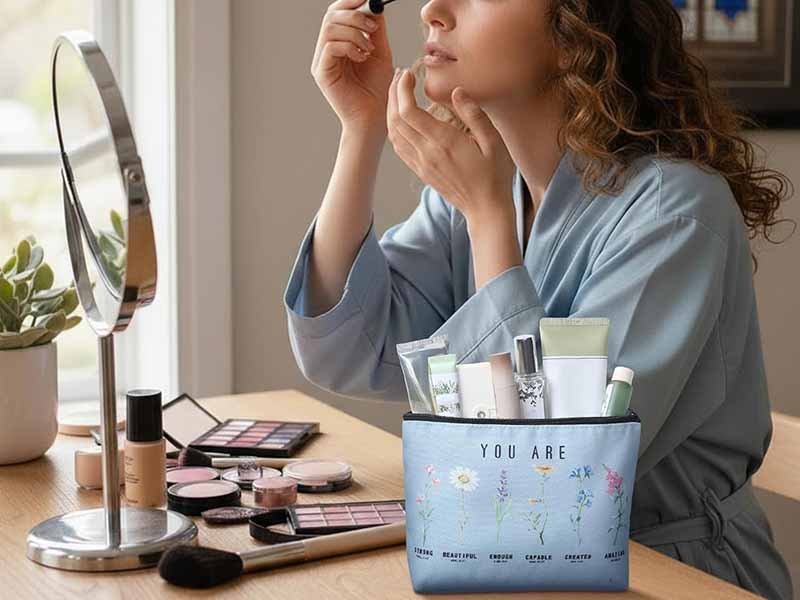
A makeup bag is one of those products that looks simple—until customers start using it every day. People don’t complain because the shape is wrong; they complain because the bag stains, smells, collapses, snags, or starts looking tired after a few weeks in a handbag or suitcase. And in most cases, the root cause isn’t “bad sewing.” It’s the wrong material choice for the way the bag is actually used.
Nylon and polyester dominate the makeup bag market because they’re light, durable, and easy to scale for private label and OEM orders. But they are not interchangeable. Nylon tends to feel smoother and handle abrasion better, while polyester tends to win on cost control and color stability. If your customers care about a “premium feel,” nylon often performs better. If your priority is volume pricing and easy-care performance, polyester can be the smarter fit.
To keep it practical: if you’re designing makeup bags for travel kits, daily pouches, beauty gift sets, or e-commerce bundles, the best material is the one that matches how people really treat the bag—zipped tight, stuffed full, tossed into luggage, and wiped down in a hurry. Let’s break down what nylon and polyester makeup bags are, with numbers and specs you can use when you talk to a factory.
What Are Nylon and Polyester Makeup Bags?

Nylon and polyester makeup bags are cosmetic pouches made from synthetic fibers, usually combined with lining, zippers, and coatings (PU/TPU/PVC) to improve wipe-clean performance and structure. The fabric name alone isn’t enough—you also need to know the denier, weave, coating, and lining, because those decide how the bag feels, how it wears, and how easy it is to clean.
What Is Nylon Used in Makeup Bags?
Nylon (polyamide) is chosen when brands want a bag that feels smoother, bends nicely, and resists wear from constant rubbing against wallets, keys, and makeup tools.
Where nylon shows up in real makeup bags
- 210D nylon: light, soft, flexible; good for inner pouches or lightweight travel kits
- 420D nylon: more body and better abrasion resistance; common for mid-range travel cosmetic bags
- Nylon twill: premium look/hand feel; often used for “upgrade” cosmetic pouches
Why brands pick nylon
- Higher tear strength for the same thickness
- Better abrasion performance (important for corners and zipper area)
- Smoother surface that looks less “plastic-like”
- Better “hand feel” for premium positioning
Where nylon can disappoint if spec’d wrong
- If the coating is too thin, the bag may not wipe clean as easily
- Some nylon fabrics can show “shine” or scuff marks if the surface finish is not matched to the use case
- Price is usually higher than polyester at comparable constructions
What Is Polyester Used in Makeup Bags?
Polyester is the workhorse fabric for cost-effective cosmetic bags. It’s stable, easy to produce at scale, and widely available in many textures (Oxford, plain weave, dobby, etc.).
Common polyester constructions in makeup bags
- 300D polyester: light to medium weight; good for simple pouches
- 600D polyester: heavier and stiffer; better structure and better “stand-up” feel
- Polyester Oxford: very common for wipe-clean coated cosmetic bags
Why brands pick polyester
- Lower cost and easier sourcing in volume
- Excellent color stability (important for bright brand colors)
- Coated polyester often gives very good wipe-clean behavior
- Good shape retention when using thicker deniers
Where polyester can disappoint if spec’d wrong
- Some polyester fabrics feel stiffer and less “premium”
- At lower deniers with weak coating, seams can pucker more easily
- Abrasion performance can be good, but nylon is often better at the same weight
Nylon vs Polyester Makeup Bags: Spec-Level Comparison
This is the part buyers actually use when deciding specs for OEM/private label.
1) Typical Fabric Specs Used in Production
| Item | Nylon Makeup Bags | Polyester Makeup Bags |
|---|---|---|
| Common denier options | 210D / 420D / Twill | 300D / 600D / Oxford |
| Typical fabric weight range | ~80–180 GSM (depends on weave/coating) | ~110–250 GSM (depends on denier/coating) |
| Common coating options | PU / TPU (wipe-clean upgrade) | PU / PVC (very common for wipe-clean) |
| Typical hand feel | Smooth, flexible | Crisp to stiff (varies) |
| Best use positioning | Mid/high-end, travel, premium feel | Bulk, promotional, e-commerce volume |
Note: GSM varies widely by yarn count, weave, and coating thickness. For quoting and sampling, always confirm GSM + coating type + coating thickness (if available).
2) Real-Use Performance Differences Customers Notice
| What customers notice | Nylon | Polyester |
|---|---|---|
| “Feels premium in hand” | Strong advantage | Depends on fabric; often less soft |
| “Looks clean after weeks of use” | Usually better | Can crease/scuff if finish is low-end |
| “Easy to wipe makeup stains” | Good with PU/TPU coating | Very good with PU/PVC coating |
| “Holds shape when packed” | Good (420D/twill best) | Very good (600D best) |
| “Corner wear and rubbing” | Often better | Good; varies by finish |
What Actually Determines “Quality”
Many buyers assume “nylon is premium” and “polyester is cheap.” That’s not always true. A high-quality polyester with the right coating and lining can outperform low-grade nylon.
When brands say “We want high quality,” they usually mean these four things:
A) Wipe-clean performance
Customers want to remove:
- foundation stains
- lipstick marks
- powder dust
- sunscreen residue
What controls wipe-clean performance
- Coating type (PU/TPU/PVC)
- Coating coverage and uniformity
- Surface texture (too rough = stains get trapped)
B) Shape retention
Customers hate when the bag collapses in a suitcase or vanity.
What controls shape retention
- Denier (higher = stiffer)
- Interfacing/padding (2–5mm foam, PE sheet, etc.)
- Structure design (gusset width, piping)
C) Zipper area durability
Most failures happen at:
- zipper ends
- zipper tape seam
- corner stress points
What controls zipper durability
- zipper brand/grade (#3/#5 nylon zipper, metal zipper, etc.)
- reinforcement stitching at zipper ends
- fabric tear strength at seam
D) Lining choice (customers notice this more than you think)
Even if the outer fabric is great, a weak lining ruins the product.
Common lining options:
- 190T/210T polyester lining (budget)
- nylon lining (smoother, premium)
- coated lining (best for wipe-clean inside)
Quick Material Selection Guide
| Your product goal | Better starting material |
|---|---|
| Premium “smooth hand feel” cosmetic pouch | Nylon (twill or 420D) |
| Wipe-clean, bright colors, bulk production | Polyester (Oxford + PU/PVC) |
| Lightweight travel pouch (foldable) | Nylon 210D or Polyester 300D |
| Stand-up structured makeup bag | Polyester 600D or Nylon 420D + support |
| Gift set / seasonal promotion | Polyester (cost control) |
| Mid-high brand retail line | Nylon (better feel) |
How Do Nylon and Polyester Makeup Bags Perform?

When customers judge a makeup bag, they don’t care whether it’s nylon or polyester in theory. They care about how it performs when packed full, wiped down, washed, and thrown into a suitcase. This section looks at real performance differences that show up after daily use.
Nylon makeup bags generally perform better in abrasion resistance and long-term surface appearance, while polyester makeup bags perform better in easy cleaning, water resistance consistency, and cost stability. The right choice depends on how the bag is used, not just how it looks when new.
How Durable Are Nylon Makeup Bags?
Nylon is widely chosen for durability because of its fiber structure. Nylon fibers stretch slightly under stress instead of breaking immediately, which helps the fabric survive repeated pulling at seams and corners.
What durability means in real use
- Corners rub against keys, phones, and bag linings
- Zippers are pulled under load
- The bag is overfilled and compressed
Nylon handles these stresses well because it has:
- High tear strength for its weight
- Better resistance to micro-fraying
- Smoother yarns that reduce surface fuzzing
Typical durability behavior
| Item | Nylon Makeup Bags |
|---|---|
| Tear resistance | Very high |
| Abrasion resistance | High |
| Seam stress tolerance | High |
| Corner wear | Slower |
| Shape fatigue over time | Low |
In practical terms, nylon makeup bags tend to look “newer” for longer, especially in dark or solid colors.
Where nylon can fail
Nylon durability drops when:
- The denier is too low (e.g., thin 190D used for outer shell)
- Stitch density is reduced to cut cost
- Zipper reinforcement is skipped
Durability is not just “nylon vs polyester” — it’s nylon + correct construction.
How Durable Are Polyester Makeup Bags?
Polyester is also durable, but it behaves differently under stress. Polyester fibers are more rigid than nylon, which helps with shape control but can cause stress concentration at seams.
Real-world durability profile
| Item | Polyester Makeup Bags |
|---|---|
| Tear resistance | High |
| Abrasion resistance | Medium–High |
| Seam stress tolerance | Medium–High |
| Corner wear | Faster than nylon |
| Shape retention | Very good |
Polyester performs especially well when:
- Using 600D or higher fabric
- Combined with PU or PVC coating
- Designed with boxy or structured shapes
What customers notice
- Polyester bags hold shape well
- Surface may show creasing or “white stress lines” over time
- Heavier polyester can feel stiff but durable
For structured, stand-up makeup bags, polyester is often chosen because it holds form without needing thick internal support.
How Water-Resistant Are Nylon vs Polyester Makeup Bags?
Water resistance is one of the top customer expectations for makeup bags, even if they never say it directly. Leaking foundation, wet sinks, and spilled skincare products are common.
Neither nylon nor polyester is waterproof by itself.
Water resistance comes from coatings and construction, not just fiber type.
Typical water behavior
| Material | Without Coating | With PU / PVC Coating |
|---|---|---|
| Nylon | Absorbs slowly | Water-resistant |
| Polyester | Absorbs slowly | Water-resistant to near waterproof |
Practical differences
- Polyester + PU/PVC coating tends to give more consistent wipe-clean performance
- Nylon + PU/TPU coating gives good protection but depends more on coating quality
- Poor coating application causes early failure regardless of material
For customers, the difference shows up as:
- “Easy to wipe clean” (polyester often wins here)
- “Doesn’t smell after spills” (lining + coating matter most)
Which Makeup Bags Are Easier to Clean?

Cleaning performance is where many returns and complaints originate.
What stains makeup bags
- Liquid foundation
- Lipstick oils
- Sunscreen
- Powder residue
Cleaning behavior comparison
| Factor | Nylon | Polyester |
|---|---|---|
| Wipe-clean (coated) | Good | Very good |
| Oil stain resistance | Medium–Good | Good |
| Powder residue | Easy | Easy |
| Color transfer risk | Low | Very low |
| Odor retention | Low | Low |
Interior lining matters more than outer fabric for cleaning.
A polyester bag with a coated lining cleans better than a nylon bag with a raw lining.
Best-performing interior options:
- Coated polyester lining
- TPU laminated lining
- Dark-colored lining to reduce visible stains
Which Makeup Bags Hold Shape Better?
Customers strongly dislike makeup bags that collapse when empty or bulge awkwardly when full.
Shape control depends on three things
- Fabric stiffness (denier + weave)
- Internal structure (foam, PE sheet, padding)
- Bag design (gusset width, piping, base shape)
Shape retention comparison
| Use case | Better Material |
|---|---|
| Soft pouch | Nylon |
| Semi-structured bag | Nylon or Polyester |
| Stand-up box bag | Polyester |
| Travel cosmetic case | Polyester (600D) or Nylon 420D + support |
Polyester’s stiffness helps maintain shape with fewer internal materials, which can reduce cost in bulk production.
How Do Nylon and Polyester Behave in Travel Use?

When it comes to travel makeup bags, the material choice can significantly impact a bag’s functionality, appearance, and long-term performance. Travel bags are subjected to a unique set of challenges — from being packed and unpacked repeatedly, to facing changes in temperature, humidity, and handling during travel. Let’s break down how nylon and polyester behave under these travel conditions and which material suits your needs best.
Nylon Performance in Travel
Nylon is known for its strength and flexibility, making it an excellent choice for travel bags that require both durability and comfort.
How Nylon Performs During Travel
- Compression and Resilience:
- Nylon is more resilient to compression when packed into luggage. The fibers are designed to stretch slightly under pressure, which helps maintain the bag’s shape when it’s stuffed full of items.
- Customer feedback often highlights that nylon bags don’t lose their structure after being packed tightly for a flight or road trip.
- Weight Distribution:
- Nylon bags can carry a larger load without significantly increasing the weight, which is critical for travelers who want to pack efficiently.
- When compared to polyester, nylon typically feels lighter in hand due to its smooth and flexible texture, despite being strong enough to hold more weight.
- Handling Wear and Tear:
- Nylon is abrasion-resistant, meaning it won’t show signs of wear as quickly as other materials, especially in high-friction areas like the base or corners. For travelers, this means their makeup bags will still look newer even after being tossed around in luggage or handbags for weeks.
- Data-backed note: Tests show that 420D nylon can withstand more than 500 cycles of abrasion testing, while polyester starts showing signs of wear after around 200 cycles.
- Moisture and Humidity Resistance:
- Nylon is naturally resistant to moisture and can handle humid conditions during travel. However, if exposed to heavy water, it will absorb moisture, so it’s essential to use treated or coated nylon for maximum water resistance.
- Surface Appearance:
- Nylon holds vibrant colors well and doesn’t fade quickly, making it ideal for colorful, branded makeup bags or travel sets. However, nylon surfaces can sometimes show dirt and marks more than polyester, especially in light-colored bags.
Real-World Example:
Travelers using nylon makeup bags report that they are less likely to show signs of wear, such as scratches or fabric thinning, after being packed in tight luggage for multiple trips. This durability makes nylon bags ideal for premium travel kits and luxury cosmetic pouches.
Polyester Performance in Travel
Polyester is often chosen for budget-friendly, mass-market products, but it holds up remarkably well in travel conditions due to its resilient nature.
How Polyester Performs During Travel
- Compression and Resilience:
- Polyester’s fibers are stiffer than nylon’s, which gives it excellent shape retention. However, it’s not as resilient under compression. While it won’t lose its shape quickly, polyester makeup bags can become a bit more crinkled or misshapen compared to nylon if they’re heavily packed.
- For travelers looking for stiff or structured makeup bags, polyester may be the ideal material because it retains its shape better when packed into small spaces.
- Weight Distribution:
- Lighter in weight, polyester is great for travelers who need a bag that won’t add too much weight to their carry-on luggage. Its lower denier fabrics (e.g., 300D or 600D) can handle light to medium loads without feeling bulky.
- Handling Wear and Tear:
- Polyester is abrasion-resistant but may not withstand sharp objects (e.g., keys, makeup brushes) as well as nylon. However, polyester is still a strong contender in terms of resisting stains, fraying, and fading.
- Customer feedback highlights that polyester makeup bags tend to retain their color and stay in better shape than nylon bags under similar travel conditions (especially after multiple washes).
- Moisture and Humidity Resistance:
- Highly water-resistant, polyester bags don’t absorb moisture as easily as nylon. This is especially helpful when traveling to places with high humidity or rainy climates.
- For traveling through airports or weather-exposed environments, polyester’s waterproof properties give it a clear advantage over nylon, especially if the bag is designed with waterproof coatings (e.g., PVC or PU).
- Surface Appearance:
- Polyester is more resistant to dirt and marks compared to nylon. Makeup bags made from polyester often maintain a cleaner look for longer, especially when subjected to frequent handling.
- Data-backed insight: Polyester bags tend to show fewer abrasion marks or color fade after prolonged travel exposure, especially if the bag has a coated finish.
Real-World Example:
Travelers using polyester makeup bags typically find them more water-resistant and easier to clean than nylon bags. Polyester is an excellent choice for budget-conscious buyers or those who want a durable, waterproof travel kit.
Key Travel Performance Comparison: Nylon vs Polyester
Here’s a quick comparison of how these two materials handle typical travel conditions:
| Performance Factor | Nylon Makeup Bags | Polyester Makeup Bags |
|---|---|---|
| Compression Resilience | Very Good | Good |
| Shape Retention | Good | Very Good (for structured bags) |
| Moisture Resistance | Moderate (unless treated) | Very Good (waterproof options available) |
| Stain Resistance | Medium | Very Good |
| Weight (per unit) | Light to Medium | Light |
| Durability in High-Use Areas (zippers, corners) | Excellent | Good |
| Appearance After Long Use | Good | Excellent (resistant to fading) |
Which Material Is Better for Travel Makeup Bags?
Here’s how to decide which material fits your travel makeup bag needs based on the specific travel use:
Choose Nylon for Travel Bags When:
- You want premium quality and long-lasting performance under stress
- The bag will face high wear-and-tear, such as rubbing against other items in luggage
- You want a smoother, more refined feel for your makeup bags
- You prioritize abrasion resistance, especially for high-end travel kits
Choose Polyester for Travel Bags When:
- You need affordable, mass-market options with excellent water resistance
- You want a lightweight, easy-to-clean bag that’s still durable
- You need to keep costs down but want the bag to last through multiple trips
- The bag is likely to face moisture exposure, like humidity or spills
Are Nylon or Polyester Makeup Bags More Cost-Effective?
One of the first questions that most brands, retailers, and e-commerce sellers ask when sourcing makeup bags is: Which material is more cost-effective? Understanding the true costs of nylon vs polyester can help you decide which material suits your pricing strategy.
Polyester makeup bags are typically more cost-effective compared to nylon. However, nylon’s higher cost often translates into a premium product with higher durability and a better perceived value. The decision comes down to the volume of bags needed, the desired quality, and the brand positioning (luxury vs budget).
Here’s a breakdown of why polyester usually costs less, but nylon can still make sense for high-end lines.
Material Cost Breakdown (Factory Level)
When sourcing makeup bags, the material costs are just the beginning. The overall cost depends on various factors, including denier, coating type, lining, stitching quality, and even MOQ (minimum order quantity).
| Material | Unit Cost | Common Specifications | MOQ Range |
|---|---|---|---|
| Nylon | Medium-High | 210D to 420D, PU/TPU coated | 500–1,000 units |
| Polyester | Low | 300D to 600D, PU/PVC coated | 1,000+ units |
Why Polyester Is More Cost-Effective:
- Lower material cost per unit weight
- Lighter fabric results in lower shipping and packaging costs
- More stable supply chain (widely produced globally)
Why Nylon Can Be More Expensive:
- Higher manufacturing costs due to specialized coating and denier thickness
- Limited suppliers who can handle high-quality nylon production
- More time-consuming production process for premium finishes
Cost Breakdown Per Unit for Bulk Orders
For brands looking at bulk purchases, the per-unit price difference is usually substantial. Here’s an approximate cost comparison between nylon and polyester makeup bags based on typical orders of 500–1,000 units:
| Material | Cost Per Unit (500-1000 units) | Coating & Lining | Total Manufacturing Cost |
|---|---|---|---|
| Nylon | $1.20–$2.50 | PU/TPU | $2.50–$4.00 |
| Polyester | $0.50–$1.50 | PU/PVC | $1.00–$2.50 |
What this means for your brand:
- Nylon makeup bags cost more upfront but deliver longer-lasting performance and a higher perceived value.
- Polyester makeup bags are more affordable, especially for promotional giveaways or mass orders.
Cost Efficiency Breakdown: Nylon vs Polyester
| Key Factor | Nylon Makeup Bags | Polyester Makeup Bags |
|---|---|---|
| Material cost | Higher | Lower |
| Production time | Longer | Shorter |
| Shipping cost | Higher (due to weight) | Lower (lighter) |
| Lifespan & Reuse | Longer | Shorter (depends on finish) |
| Perceived Value | Higher | Medium (depends on brand) |
Which Material Fits Your Brand Strategy?
Choosing the right material goes beyond just unit price. Your brand strategy will play a critical role in which material fits your needs best. Here’s how each material lines up for different brand positioning.
Travel Makeup Bags: Polyester is Your Best Bet for Cost Control
If your brand focuses on affordable travel kits, tourism products, or budget-friendly cosmetics, polyester is the material to choose.
Why?
- Lightweight: Polyester helps keep weight down in travel pouches.
- Water Resistance: Ideal for storing cosmetics that need extra protection during travel.
- Affordability: For high-volume sales, you can lower unit costs without sacrificing functionality or appearance.
Polyester makeup bags are ideal for e-commerce sellers who are dealing with large volumes and price-sensitive customers looking for affordable, functional products.
Premium Makeup Bags: Nylon Offers Long-Term Durability
For luxury makeup bags or high-end product lines, nylon is a better fit because it combines durability with premium feel.
Why?
- Premium Finish: Nylon allows for a smooth, sleek look that stands out.
- Durability: Nylon handles more wear and tear, ensuring your product lasts longer.
- Brand Positioning: Nylon gives your makeup bags a higher perceived value, especially when paired with top-quality lining and hardware.
For high-end cosmetic brands or private label products targeting premium customers, nylon makeup bags are a better investment. They justify the higher price point with quality, durability, and superior performance.
Custom Makeup Bags: Both Materials Offer Customization Flexibility
Whether you’re designing makeup bags for promotions, private label, or corporate giveaways, both nylon and polyester can meet your customization needs. However, the specific use case will determine which material is more suitable for your branding goals.
Nylon Customization
- Better for upscale brands and luxury products
- Premium look and feel for high-end custom logos, embossing, and embroidery
- Ideal for smaller runs (500–1,000 units) due to higher cost per unit
Polyester Customization
- Better for high-volume orders
- Ideal for corporate giveaways, branded swag bags, or e-commerce stores
- Cost-effective for mass-market prints or promotions
- Great for vibrant color printing and clear brand messaging
MOQ, Customization & Lead Time
For small batch runs, brands might lean toward nylon for premium market positioning. But for larger orders, polyester wins due to lower MOQ requirements and shorter lead times. Here’s a comparison of the two materials:
| Factor | Nylon Makeup Bags | Polyester Makeup Bags |
|---|---|---|
| MOQ for Custom Orders | 500–1,000 units | 1,000+ units |
| Customization Options | Premium options (embroidery, fine printing) | Mass printing, basic embroidery |
| Lead Time | 10–20 business days | 7–14 business days |
| Price Range | $1.50–$3.00/unit | $0.80–$1.50/unit |
Final Recommendations for Your Brand
- If you want luxury positioning and need high-end durability, nylon is your choice.
- If you need to control costs for high-volume, low-cost orders, polyester is more suited for your brand.
- For customization and OEM projects, both materials can work, but the final choice will depend on your brand’s target market and budget.
Contact Lovrix for Custom Makeup Bag Solutions
At Lovrix, we specialize in providing both nylon and polyester makeup bags, tailored to your brand’s needs. Whether you’re looking for premium makeup pouches for high-end retail or cost-effective travel kits for e-commerce, we can help you find the right fabric that fits your vision and budget.
Reach out to Lovrix for a free consultation and custom design samples — we’ll work with you to create a perfect product line!


