 Skip to content
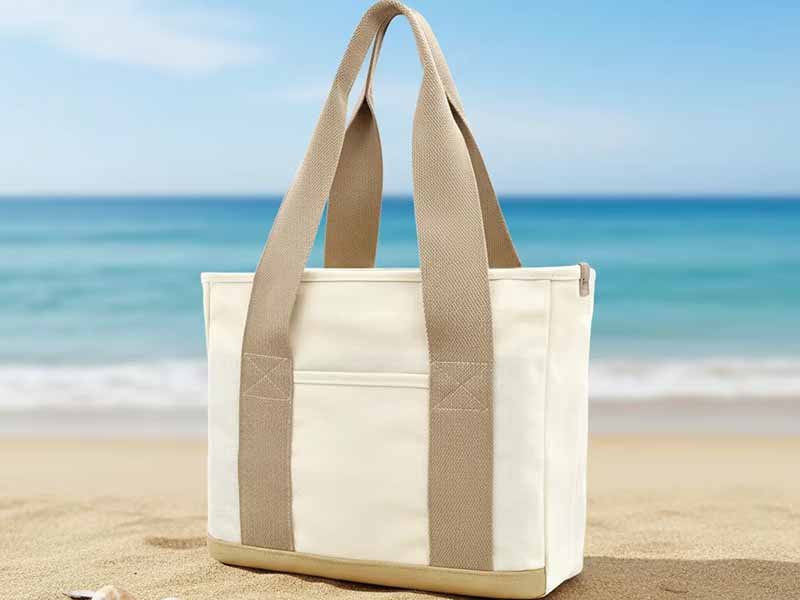
A bag rarely fails because of its color, shape, or logo. In most cases, it fails where daily stress keeps repeating: at the strap root, the handle joint, the zipper end, or the bottom seam. That is why experienced product teams do not judge a bag only by fabric weight or appearance. They pay close attention to stitching structure. For custom bags, stitching is not just part of assembly. It is part of the product’s load-bearing system, service life, return rate, and long-term reputation in the market.
Reinforced stitching techniques for custom bags are sewing methods used to strengthen areas that carry repeated pulling, weight, bending, and friction. These methods include structural patterns such as bar tack, box X, double stitching, edge reinforcement, and backstitch locking. When correctly matched with fabric, webbing, and bag use, they improve load stability, reduce seam opening, and make the product more durable over time.
A bag that carries 8 kg every day for six months does not fail by accident. It fails because dozens of small technical decisions were made well or made poorly. That is why strong stitching often separates a bag that generates repeat orders from one that creates complaints. Once you understand how reinforcement really works, the difference between a low-cost bag and a reliable bag becomes much easier to see.
What Are Reinforced Stitching Techniques for Custom Bags?

Reinforced stitching techniques for custom bags are sewing methods designed to protect the bag’s highest-stress areas from tearing, seam splitting, strap pull-out, and long-term wear. They are used to increase strength, stabilize construction, and help the bag perform better under repeated use and higher loads.
What Is Reinforced Stitching in Bags?
Reinforced stitching in bags means using specific stitch structures, sewing paths, thread specifications, and anchoring methods to strengthen areas that take the most force during real use. It is not simply “adding more stitches.” In good manufacturing, reinforcement is planned according to bag type, carrying weight, fabric thickness, webbing structure, and how the customer will actually use the product.
For example, a lightweight cosmetic pouch and a laptop backpack may both look neat from the outside, but their stitching requirements are completely different. A simple pouch may only need clean seam joining and secure zipper finishing. A backpack with shoulder straps, laptop compartments, and daily commuting pressure needs stitching that can resist repeated downward pull, side force, and impact from movement. That is where reinforced stitching techniques for custom bags become essential.
In production, reinforcement usually involves one or more of the following:
- Higher-strength thread, often bonded polyester or nylon
- Locking stitch starts and ends to prevent unraveling
- Multiple stitch lines on key seams
- Structural patterns at strap and handle joints
- Better stitch density control
- Webbing-to-body attachment reinforcement
- Stress-point stitching matched to load direction
The real goal is not to make the bag look “heavier.” The goal is to make force move more safely through the bag structure. When that is done well, the bag lasts longer, feels more solid in use, and holds up better after thousands of lift-and-carry cycles.
Why Do Custom Bags Need Reinforced Stitching?
Custom bags need reinforced stitching because bags are used dynamically, not statically. A bag is lifted, swung, dragged, folded, packed unevenly, and overloaded. The stress on the seams is rarely balanced. One side may take more force than the other. A shoulder strap may jerk suddenly when the user turns. A tote handle may carry a laptop, charger, water bottle, and documents all at once. Reinforced stitching helps prevent these everyday actions from becoming product failures.
From a customer’s point of view, stitching quality affects several commercial results directly:
- How long the product lasts
- Whether straps stay secure
- Whether the bag keeps its shape
- Whether seams begin to open after repeated use
- Whether the product feels premium enough for the selling price
- Whether users leave positive or negative reviews
- Whether the brand sees reorders or claims
In practical bag production, weak stitching is one of the most common hidden reasons behind:
- Strap detachment
- Broken handles
- Split side seams
- Bottom corner tearing
- Zipper-end damage
- Uneven product performance between production lots
The table below shows why reinforcement matters in commercial terms.
| Performance Area | Basic Stitching | Reinforced Stitching |
|---|---|---|
| Recommended daily load | 3-6 kg | 8-20 kg |
| Strap stability over repeated use | Medium to low | High |
| Risk of seam opening | Higher | Lower |
| Product lifespan in daily use | Shorter | Longer |
| Complaint risk on load-bearing bags | Higher | Lower |
| Suitability for premium positioning | Limited | Strong |
For brands selling through e-commerce or retail, durability is not only a technical matter. It affects return cost, customer trust, and gross margin. A bag that looks good in photos but fails after 30 to 90 days can quickly damage product ratings. In contrast, a bag with sound reinforcement is more likely to earn trust through use, which matters even more for private label and repeat orders.
Where Are Reinforced Stitching Points on Bags?
Reinforced stitching points on bags are the areas where force concentrates again and again during lifting, loading, opening, closing, or dragging. These are the areas most likely to fail first when engineering is weak, thread selection is poor, or sewing execution is inconsistent.
The most important reinforcement points usually include:
- Shoulder strap attachment points
- Tote handle roots
- Side seams near the upper opening
- Zipper ends and zipper box areas
- Bottom seams and bottom corners
- Webbing anchor points
- Buckle connection areas
- Internal divider attachment points
- Pocket corners on functional bags
- D-ring or hardware connection zones
Each point experiences stress in a different direction. Some take downward force. Some take outward pulling force. Some take repeated bending. Some take sharp impact from sudden movement. That is why one reinforcement method cannot solve every problem. Good factories do not use one universal sewing pattern on all bags. They match the stitching technique to the stress pattern.
The table below shows common high-stress zones and why they need attention.
| Bag Area | Main Stress Type | Common Failure Risk | Reinforcement Need |
|---|---|---|---|
| Strap root | Downward pull + swing force | Strap pull-out | Very high |
| Handle base | Repeated lifting | Stitch breakage | Very high |
| Bottom corner | Weight concentration + abrasion | Corner seam split | High |
| Zipper end | Opening tension | End seam damage | Medium to high |
| Webbing joint | Sudden force + twisting | Webbing separation | Very high |
| Pocket corner | Local pull stress | Corner tearing | Medium |
One mistake often seen in low-cost production is visually neat stitching without structural planning. The seams may look straight, but the wrong reinforcement point or wrong stitch pattern leaves the bag weak where it matters most. For custom projects, this is especially risky because every bag design has its own force map. A lunch bag, gym bag, travel duffel, and school backpack do not fail in the same places.
How Does Reinforced Stitching Work in Real Bag Use?
The value of reinforced stitching becomes clearer when you look at what happens after the bag leaves the factory. Real-life bag use creates repeated force cycles. Every time a person lifts a tote by one handle first, drops a backpack on a chair, or carries a duffel with one shoulder, the bag experiences uneven stress. That is where reinforcement earns its value.
There are three main ways reinforced stitching techniques for custom bags improve performance:
- They spread force across a larger area A well-designed stitch pattern prevents one short seam line from taking the entire load. This helps reduce concentrated stress and lowers the chance of sudden tearing.
- They improve joint stability High-stress parts such as webbing-to-body connections move slightly during use. Reinforced stitching helps those joints resist repeated movement without loosening too quickly.
- They slow failure progression In weak construction, one broken stitch can quickly lead to full seam opening. In reinforced construction, the structure can still hold longer even if partial wear begins.
This is why reinforcement often matters more in daily-use bags than in display samples. A pre-production sample may look acceptable after a short check, but only well-engineered reinforcement performs well after weeks and months of real use.
The difference becomes even more important for products such as:
- Laptop bags
- Tool bags
- Travel duffels
- Delivery bags
- School backpacks
- Cooler bags
- Tote bags used for books or groceries
These products are not only opened and closed. They are loaded, carried, pressed, and moved constantly. Reinforcement helps them survive that rhythm.
Why More Stitching Does Not Always Mean Better Strength
A common misunderstanding in bag development is the idea that more stitching automatically means a stronger bag. In reality, too many stitches in the wrong place can weaken the material. Every needle penetration creates a hole. If the stitch line is too dense for the fabric or coating, the seam area can become perforated and more likely to tear under tension.
That means stronger construction depends on balance:
- Correct stitch density
- Correct thread thickness
- Correct seam allowance
- Correct reinforcement position
- Correct pattern for the force direction
- Correct match between fabric and webbing
For example, using a dense stitch pattern on lightweight coated fabric may damage the material and reduce tear resistance. On the other hand, using a loose stitch pattern on thick canvas or heavy polyester may not provide enough holding power. This is why reinforced stitching techniques for custom bags must be chosen carefully instead of copied from another product without adjustment.
The table below highlights the difference between over-sewing and engineered sewing.
| Sewing Approach | Result |
|---|---|
| Too few stitches | Weak holding power, seam opening risk |
| Too many stitches | Fabric perforation, material weakening |
| Wrong thread size | Breakage or poor seam balance |
| Right stitch + right density | Better strength and longer service life |
| Reinforcement without stress analysis | Higher cost, uneven results |
| Reinforcement planned by bag use | Better performance and cost control |
This is also why experienced development teams start from application first. They ask practical questions. Will the bag carry electronics? Will it hold frozen goods? Will it be used by students? Will it be packed flat for shipping? Will the handle be cotton webbing, PP webbing, or leather? Good stitching decisions begin with those details.
How Lovrix Supports Stronger Bag Construction
For custom bag development, reinforcement should be considered at the beginning of the project, not after a failure appears. Lovrix has more than 18 years of experience across fabric, webbing, and bag manufacturing, which gives the company a strong advantage in structural coordination. Reinforcement decisions do not need to be made in isolation. The team can evaluate fabric thickness, webbing strength, bag shape, sewing feasibility, and production efficiency together.
That integrated approach helps customers solve common development problems such as:
- A bag design that looks attractive but carries weight poorly
- Handles that cut into the seam area after repeated use
- Webbing attachments that are visually clean but structurally weak
- Overbuilt stitching that raises cost without adding real value
- Samples that look fine but do not perform consistently in bulk production
Lovrix supports custom, private label, OEM, and ODM projects with practical manufacturing advantages:
- Free design support for structure optimization
- Low MOQ development for new product testing
- Rapid sampling for faster validation
- Free sample support in suitable cases
- Short lead times for production planning
- 100% quality-focused manufacturing process
For customers developing mid- to high-end bag products, these details matter. A durable bag is rarely the result of one expensive material. More often, it is the result of many correct technical decisions working together. Reinforced stitching is one of the most visible examples of that principle.
Which Reinforced Stitching Techniques for Custom Bags Work Best?

Reinforced stitching techniques for custom bags work best when the stitch type matches the bag’s load, structure, and usage scenario. Common techniques such as bar tack, box X stitching, and double stitching are widely used because they provide strong anchoring, better load distribution, and long-term durability in high-stress areas.
What Is Bar Tack Stitching?
Bar tack stitching is a dense series of closely spaced stitches used to reinforce small, high-stress areas. It is typically applied at strap attachment points, pocket openings, and zipper ends.
This technique is highly effective because it locks multiple layers of material together in a compact zone. Instead of spreading stitches across a long seam, bar tack concentrates strength in a short section where force is most intense.
In real production, bar tack parameters are carefully controlled:
- Stitch density: typically 28–42 stitches per tack
- Length: usually 6–12 mm depending on application
- Thread: high-strength polyester or nylon
- Machine type: programmable bar tack sewing machines
Common applications:
- Backpack shoulder strap roots
- Tote bag handle anchors
- Webbing attachments
- Reinforced pocket corners
Performance advantage: Bar tack can increase localized strength by 2–4 times compared to a single straight stitch.
Important note: Overuse of bar tack in lightweight fabrics can cause material damage. It must be matched to fabric thickness and coating.
What Is Box X Stitching?
Box X stitching is one of the most recognized reinforced stitching techniques for custom bags. It forms a square or rectangular shape with diagonal cross stitches inside, creating a structural reinforcement pattern.
This pattern works by distributing force across both horizontal and diagonal stitch lines. Instead of force pulling directly on a single seam, the load is shared across multiple directions.
Typical structure:
- Outer square frame
- Internal diagonal “X” pattern
- Multiple stitch passes
Common use cases:
- Heavy-duty tote bags
- Duffel bags
- Tool bags
- Military-style bags
- Load-bearing handles
Load performance comparison:
| Stitch Type | Load Distribution | Strength Level |
|---|---|---|
| Single stitch line | Linear | Low |
| Double stitch | Parallel lines | Medium |
| Box stitch | Surface distribution | High |
| Box X stitch | Multi-directional | Very high |
Why it works well:
- Reduces concentrated stress
- Prevents seam tearing at corners
- Improves stability under dynamic movement
Limitation: Box X requires more sewing time and higher production cost, but it is often necessary for mid- to high-end products.
What Is Double Stitching?
Double stitching refers to two parallel rows of stitches applied along the same seam line. It is one of the most cost-effective reinforcement methods in custom bag production.
This method improves seam strength by:
- Increasing holding points
- Providing backup if one stitch line fails
- Improving seam stability under repeated stress
Typical applications:
- Side seams
- Bottom seams
- Zipper attachment areas
- Inner structure seams
Technical considerations:
- Stitch spacing between rows: usually 2–5 mm
- Thread consistency between lines
- Balanced tension to avoid puckering
Performance comparison:
| Feature | Single Stitch | Double Stitch |
|---|---|---|
| Strength | Basic | Moderate |
| Cost | Low | Slightly higher |
| Durability | Limited | Improved |
| Application range | Light-duty bags | Medium-duty bags |
Double stitching is widely used because it offers a good balance between cost and durability. However, it is not sufficient alone for high-load areas like strap attachments.
Which Stitch Is Strongest for Bags?
There is no single “strongest stitch” for all bags. The best reinforced stitching technique for custom bags depends on the product’s purpose.
However, for high-load applications:
- Bar tack + box X combination is considered one of the strongest solutions
- Multi-layer reinforcement with webbing + box X + bar tack offers maximum durability
Strength ranking (general use):
| Stitch Method | Strength Level | Best Use Case |
|---|---|---|
| Single stitch | Low | Light cosmetic bags |
| Double stitch | Medium | Daily-use bags |
| Bar tack | High (localized) | Strap anchors |
| Box stitch | High | Medium load bags |
| Box X stitch | Very high | Heavy-duty bags |
| Combined methods | Maximum | Professional-grade bags |
For example:
- A fashion tote may use double stitching + light bar tack
- A laptop backpack may use box X + bar tack + reinforced webbing
- A travel duffel may require multiple reinforcement layers
The key is not choosing the strongest stitch alone, but choosing the right combination.
How Do Different Techniques Compare in Real Production?
In actual manufacturing, choosing reinforced stitching techniques for custom bags involves balancing several factors:
- Product positioning (low-end vs premium)
- Target price range
- Expected load capacity
- Fabric type and thickness
- Production efficiency
- Brand quality expectations
Below is a practical comparison used in development decisions:
| Technique | Cost Impact | Strength | Production Speed | Best Use |
|---|---|---|---|---|
| Double stitch | Low | Medium | Fast | General seams |
| Bar tack | Medium | High (local) | Medium | Stress points |
| Box stitch | Medium | High | Medium | Handles |
| Box X stitch | Higher | Very high | Slower | Heavy-duty bags |
| Combined reinforcement | Highest | Maximum | Slower | Premium products |
Why Stitch Selection Should Start at the Design Stage
One of the most common mistakes in custom bag development is deciding stitching too late—after the design is finalized. This often leads to:
- Structural weaknesses discovered during sampling
- Rework of patterns and materials
- Increased sampling cost
- Delayed production timeline
Instead, reinforced stitching techniques for custom bags should be planned early, alongside:
- Material selection
- Webbing specification
- Bag structure
- Target use scenario
For example:
- If a bag is designed for 15 kg load, stitching must be planned accordingly from the beginning
- If a bag uses soft PU leather, reinforcement must avoid over-perforation
- If a bag requires clean aesthetics, hidden reinforcement techniques may be used
How Lovrix Selects Stitching Techniques for Different Projects
Lovrix approaches stitching selection as part of a complete engineering process rather than a single decision. With in-house fabric, webbing, and bag production capabilities, the team can optimize reinforcement from multiple angles.
Key advantages include:
- Matching stitching methods with fabric and webbing strength
- Testing different reinforcement combinations during sampling
- Providing cost-performance optimization suggestions
- Supporting low MOQ development for new brands
- Ensuring consistency from sample to bulk production
For example:
- A mid-range e-commerce tote may use double stitch + bar tack
- A premium outdoor backpack may use box X + multi-layer reinforcement + heavy thread
- A cooler bag may require reinforced seams + leak-proof structure coordination
This integrated approach helps reduce trial-and-error and ensures the final product performs as expected in real use.
How Do Reinforced Stitching Techniques for Custom Bags Improve Strength?

Reinforced stitching techniques for custom bags improve strength by distributing load more evenly, securing high-stress points, and preventing progressive seam failure. These techniques allow bags to handle heavier weight, repeated use, and long-term stress without structural damage.
How Do Stitches Strengthen Bag Straps?
Straps are the most failure-prone component of any bag because they carry dynamic loads. The force applied to straps is not constant—it changes with movement, weight shifts, and user behavior.
Reinforced stitching improves strap performance in several ways:
- Load spreading: Instead of force pulling on a single stitch line, reinforced patterns like box X distribute load across multiple directions.
- Anchoring strength: Bar tack stitching locks webbing firmly into the bag body, preventing pull-out.
- Movement resistance: Reinforced stitching reduces micro-movements between layers, which are a major cause of long-term wear.
Real-world test data:
| Strap Construction | Max Load Before Failure |
|---|---|
| Single stitch | 6–8 kg |
| Double stitch | 10–12 kg |
| Bar tack reinforced | 18–25 kg |
| Box X + bar tack | 25–35 kg |
For brands selling laptop bags, travel bags, or gym bags, this difference directly affects product reliability and customer satisfaction.
How Do They Improve Load Capacity?
Load capacity is not determined by fabric alone. Many bags use strong materials but fail because the stitching cannot handle the load.
Reinforced stitching techniques for custom bags increase load capacity by:
- Strengthening connection points between components
- Preventing seam elongation under weight
- Reducing stress concentration
For example:
- A canvas tote with basic stitching may hold 5–7 kg safely
- The same bag with reinforced stitching can hold 12–20 kg
Key influencing factors:
- Stitch type (bar tack, box X, etc.)
- Thread strength
- Stitch density
- Webbing integration
Load capacity comparison:
| Bag Type | Basic Stitching | Reinforced Stitching |
|---|---|---|
| Tote bag | 5–7 kg | 12–20 kg |
| Backpack | 8–12 kg | 20–30 kg |
| Duffel bag | 10–15 kg | 25–40 kg |
This is why reinforcement is critical for bags intended for daily or heavy use.
Do Reinforced Stitches Reduce Damage Over Time?
Yes, reinforced stitching significantly reduces long-term damage. Most bag failures are not sudden—they develop gradually.
Common failure progression:
- Small stitch loosening
- Thread breakage
- Seam opening
- Structural failure
Reinforced stitching slows or prevents this process.
Key benefits:
- Reduces seam fatigue
- Improves resistance to repeated bending
- Prevents thread break under tension
- Maintains structural integrity longer
Wear resistance comparison:
| Factor | Basic Stitching | Reinforced Stitching |
|---|---|---|
| Resistance to repeated use | Medium | High |
| Seam fatigue rate | Faster | Slower |
| Product lifespan | Shorter | Longer |
| Return/defect risk | Higher | Lower |
For e-commerce brands, longer product lifespan often leads to:
- Better reviews
- Lower return rates
- Higher repeat purchase rates
How to Choose Reinforced Stitching Techniques for Custom Bags?
Choosing reinforced stitching techniques for custom bags depends on fabric type, bag structure, usage scenario, and cost target. The goal is to balance durability, appearance, and production efficiency.
How Does Fabric Affect Stitch Choice?
Different fabrics respond differently to stitching.
- Canvas / heavy polyester: Suitable for box X, bar tack, and dense stitching
- Nylon / lightweight fabric: Requires balanced stitching to avoid tearing
- PU / leather materials: Limited stitch density to avoid perforation damage
Fabric vs stitching match:
| Fabric Type | Recommended Stitching |
|---|---|
| Canvas | Box X + bar tack |
| Polyester | Double + bar tack |
| Nylon | Moderate density + reinforcement |
| PU leather | Controlled stitching + reinforcement |
Choosing the wrong combination can reduce durability instead of improving it.
How Does Bag Design Affect Stitching?
Bag design determines where and how reinforcement is applied.
Examples:
- Backpacks: need strong strap reinforcement
- Tote bags: focus on handle attachment
- Duffel bags: require multi-point reinforcement
- Cooler bags: need both structural and sealing support
Design factors include:
- Load direction
- Weight distribution
- Number of compartments
- Use frequency
A well-designed bag integrates stitching into the structure from the beginning.
Which Stitch Fits Different Bag Types?
Different bag categories require different reinforcement strategies.
| Bag Type | Recommended Reinforcement |
|---|---|
| Tote bag | Double stitch + bar tack |
| Backpack | Box X + bar tack |
| Duffel bag | Multi-layer + box X |
| Cooler bag | Reinforced seams + structure |
| Tool bag | Heavy-duty box X + bar tack |
Using the same stitching across all products is inefficient and risky.
How to Balance Strength and Cost?
Reinforced stitching increases cost, but the right balance improves overall profitability.
Cost factors:
- Sewing time
- Machine type
- Labor complexity
- Thread consumption
However, under-reinforcement leads to:
- Returns
- Negative reviews
- Brand damage
Cost vs value comparison:
| Approach | Short-Term Cost | Long-Term Result |
|---|---|---|
| Minimal stitching | Low | High risk |
| Moderate reinforcement | Balanced | Stable |
| High reinforcement | Higher | Premium quality |
Most successful brands choose targeted reinforcement, not maximum reinforcement everywhere.
How Are Reinforced Stitching Techniques for Custom Bags Controlled in Production?

Reinforced stitching techniques for custom bags are controlled through machine precision, testing standards, and strict quality inspection processes to ensure consistency from sampling to mass production.
What Machines Are Used for Stitching?
Modern bag factories use specialized equipment:
- Computerized sewing machines
- Bar tack machines
- Pattern sewing machines
- Heavy-duty industrial machines
These machines ensure:
- Consistent stitch density
- Accurate reinforcement patterns
- Repeatable quality
How Is Stitch Strength Tested?
Professional factories perform multiple tests:
- Tensile strength test: measures load capacity
- Pull test: checks strap attachment strength
- Fatigue test: simulates repeated use
- Visual inspection: ensures stitch consistency
Example testing standards:
| Test Type | Standard |
|---|---|
| Strap pull test | 20–30 kg |
| Seam strength test | No break under load |
| Fatigue test | 5,000+ cycles |
Testing ensures the product performs as expected before shipping.
What Quality Checks Are Required?
Quality control focuses on:
- Stitch alignment
- Thread tension
- Reinforcement accuracy
- No skipped stitches
- Clean finishing
Inspection happens at:
- Material stage
- Sampling stage
- Inline production
- Final inspection
How Do Factories Ensure Consistency?
Consistency is critical in bulk production.
Key methods:
- Standardized sewing procedures
- Worker training
- Production line checks
- Random sampling inspections
Without consistency, even a good design can fail in mass production.
Final Thoughts: Why Reinforced Stitching Defines Bag Quality
Reinforced stitching techniques for custom bags are not just a technical detail—they are a key factor in product success.
They directly impact:
- Durability
- Customer satisfaction
- Brand reputation
- Long-term profitability
A bag may look similar on the outside, but its internal construction determines whether it lasts weeks or years.
Start Your Custom Bag Project with Confidence
If you are developing custom bags for your brand, choosing the right manufacturing partner is just as important as choosing materials or design.
Whether you are launching a new product or improving an existing one, reinforced stitching can make a measurable difference in performance and customer satisfaction.
Contact Lovrix today to get free design support and start your custom bag development with confidence.


