 Skip to content
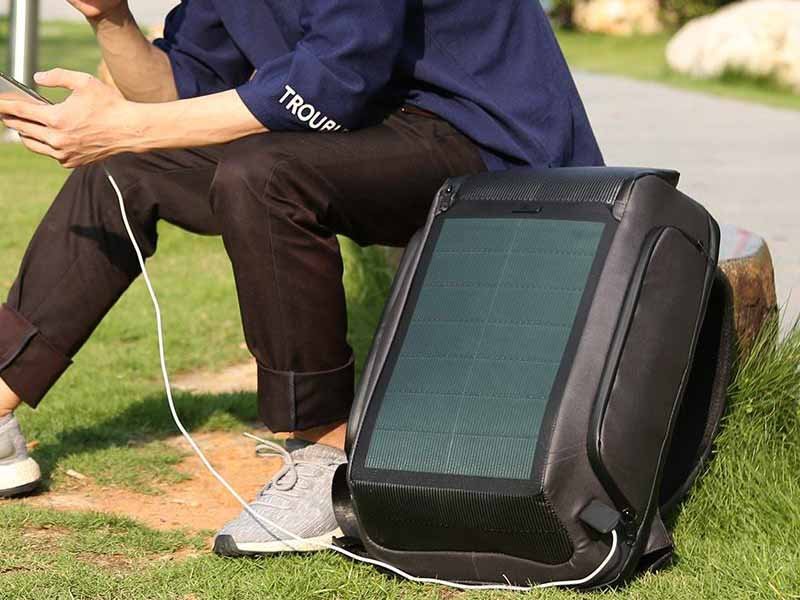
A smart backpack can look almost identical to an ordinary commuter or travel backpack, yet its specification may include USB charging, tracker storage, RFID shielding, concealed access, electronic locks, laptop protection, cable routing, power-bank pockets, wireless charging, or other technology-related functions. The difficult part is that “smart backpack” has never meant one standardized technical configuration. A simple bag with an external charging port may use the same label as a product containing active electronics, so counting features rarely tells the whole story.
A smart backpack is best understood as a backpack designed to support modern electronics, charging, security, tracking, or connected use while still performing the basic jobs of carrying, protecting, organizing, and comfortably distributing a load. The features that matter most are not necessarily the most advanced ones; they are the functions that solve frequent problems reliably without creating unnecessary weight, complexity, maintenance, or failure points.
That distinction becomes obvious in everyday use. Imagine two backpacks sitting beside each other in an airport lounge. One advertises eight smart functions, yet its power bank moves around, the charging socket twists when a cable is inserted, and the shoulder straps become uncomfortable once a laptop is added. The other offers only a few carefully integrated functions, but every pocket, cable, zipper, protective layer, and load-bearing point works naturally. In real use, the second backpack is usually the smarter product.
What Is a Smart Backpack?

A smart backpack combines conventional backpack construction with features that support electronics, charging, tracking, security, or modern device organization. These features can be passive, mechanical, or electronic. What makes the product useful is not the presence of one particular technology, but how effectively the added functions work with the backpack’s capacity, structure, access, comfort, durability, and intended use.
What Makes a Backpack Smart?
There is no single requirement stating that a backpack must contain Bluetooth, GPS, a lithium battery, or an app before it qualifies as a smart backpack. At the simpler end of the category, a backpack may have a USB charging connection, a removable power-bank pocket, dedicated cable routing, a concealed tracker compartment, or a highly organized electronics section. At the more complex end, products may integrate wireless charging, electronic locks, alarms, location modules, sensors, lighting systems, or other powered hardware.
A useful way to understand the category is to look at the problem each feature solves rather than the technology used to solve it. Charging systems reduce the inconvenience of accessing portable power. Tracking functions help locate misplaced belongings. Security structures make unauthorized access more difficult. Laptop compartments protect expensive devices. Cable channels and accessory pockets prevent chargers, adapters, batteries, and headphones from becoming a tangled mass inside the main compartment.
From a manufacturing perspective, these functions cannot be considered in isolation. The internal pocket layout changes when a power bank is added. The panel construction changes when a charging socket must be mounted. Shoulder loading changes when users regularly carry several kilograms of electronics. A tracking device needs a location that is concealed but still serviceable. Smart design begins when all of these requirements are resolved together rather than attached to an already finished backpack.
Smart Features vs. Functional Features
Many features described as smart do not contain electronics at all. A hidden zipper is a mechanical security feature. RFID protection is created through specialized material construction. A suspended laptop compartment relies on foam, lining, pattern design, and structural positioning. A tracker pocket may simply provide a secure location for a removable device that the backpack owner purchases separately. These solutions can still be extremely valuable because they support the way people carry technology today.
The distinction becomes more important as complexity increases. A technology-supporting feature is mainly a textile and structural engineering problem, while an active electronic feature may introduce additional sourcing, certification, electrical, software, battery, antenna, serviceability, and after-sales requirements. A brand considering smart-backpack development should therefore decide how much technology is genuinely needed before committing to a feature list.
| Feature Level | Common Examples | Main Development Questions |
|---|---|---|
| Technology-supporting | Power-bank pocket, cable route, tracker pocket, laptop sleeve | Dimensions, accessibility, reinforcement, pocket layout |
| Passive functional | RFID lining, reflective material, slash-resistant layer | Material specification, construction, performance testing |
| Active electronic | Tracker module, alarm, electronic lock, wireless charger | Power, electronics, component sourcing, testing, serviceability |
A practical product often combines the first two levels effectively and uses active electronics only where they provide clear value. More technology creates more interfaces that can fail, and every additional component must eventually survive packing, bending, vibration, drops, rain exposure, repeated opening, and bulk-production variation.
How Smart Backpacks Differ from Regular Backpacks
A conventional backpack already has to solve a surprisingly large number of engineering problems. It must distribute weight across the shoulders, hold its intended capacity, allow comfortable access, protect contents, resist repeated zipper use, maintain important dimensions, and keep handles and strap attachment points secure. Adding technology does not remove any of these responsibilities. It adds new ones.
Electronic devices also create concentrated loads. A laptop may weigh roughly 1.3–2.2 kg, while a tablet, charger, power bank, headphones, water bottle, notebook, and personal items can push an everyday load well beyond 4 kg. Larger mobile work setups can easily bring a commuter backpack into the 5–7 kg range. Those numbers vary greatly by device and user, but they illustrate why structure matters when a backpack is designed specifically for technology.
A smart backpack therefore needs more than additional pockets. The designer must consider where the center of gravity sits, whether hard objects press against the wearer, how the laptop is isolated from impact, where the charging battery is positioned, and which seams carry the greatest load. Lovrix’s documented backpack-development framework similarly treats backpack design as a three-dimensional structural problem involving capacity, load distribution, pocket layout, bottom stability, reinforcement, laptop protection, zipper paths, and production repeatability.
Which Features Matter Most?
The features that matter most tend to be the ones users interact with repeatedly. A good laptop compartment may protect a device every day. A well-positioned tracker pocket remains useful without changing the way the backpack feels. A removable power-bank compartment can make charging easier while allowing the battery to be replaced independently. Hidden pockets can improve security without asking the user to learn a complicated electronic system.
A useful feature should satisfy several practical conditions before it earns a place in the product. It should solve a real and reasonably frequent problem, remain comfortable when the backpack is fully loaded, survive repeated use, be understandable without complicated instructions, and be practical to reproduce consistently during manufacturing. If it includes hardware, the product should also have a realistic plan for replacement or service if that component fails before the textile body reaches the end of its useful life.
This is particularly important in commercial development. A technician can spend extra time making one prototype work perfectly, but the final design eventually needs to reproduce the same charging-port position, cable path, reinforcement, tracker pocket, laptop clearance, zipper behavior, and padding location across hundreds or thousands of units. Repeatability is one of the less visible but most important measures of whether a smart feature has truly been engineered into a backpack.
How Do Smart Backpack Charging Features Work?

Most charging backpacks do not generate electricity themselves. A common construction uses a removable power bank placed inside the backpack, connected through an internal cable to an external USB or USB-C interface. The backpack mainly provides organized access and cable routing. Wireless charging, solar panels, and integrated batteries are possible, but they require additional engineering, testing, heat management, and service planning.
How Does a USB Charging Port Work?
The basic USB charging backpack has a straightforward architecture. A socket or connector module is installed in an outer panel, an internal lead extends into the backpack, and the user connects that cable to a portable battery stored in a dedicated compartment. A phone or another compatible device can then be connected to the external port without opening the main compartment every time charging is required.
Although the concept is simple, the physical execution has a major effect on reliability. The external connector should be positioned where the charging cable does not constantly rub against the user’s arm or catch on nearby objects. The surrounding panel may require reinforcement because inserting and removing a cable repeatedly applies concentrated force to a very small area. If the socket is installed directly into a soft unsupported panel, it can rotate, sag, or loosen long before the rest of the backpack wears out.
The internal cable deserves similar attention. It needs enough length to prevent a sharp bend where it meets the power bank, yet excess cable should not hang inside the compartment where it can become tangled. A well-designed system also allows the charging cable or port module to be accessed for replacement. A connector permanently buried behind several sewn lining panels can turn a small component failure into an unnecessarily difficult repair.
Power Bank Size and Capacity
Most pass-through charging backpacks work best with a removable power bank. This allows the owner to replace an aging battery, choose a different capacity, remove it when required during travel, or keep electronics separate when the backpack is being cleaned or repaired. It also prevents the useful life of the backpack from being completely tied to the useful life of one rechargeable battery.
Battery dimensions should still be considered during pattern development. A common 10,000 mAh power bank may weigh approximately 180–300 g, while many 20,000 mAh units fall closer to roughly 300–500 g. Exact dimensions and weights differ substantially between brands, battery chemistries, housing materials, charging outputs, and designs, so the finished pocket should be developed around a defined dimensional envelope rather than one sample battery.
A power-bank pocket should provide enough depth to avoid excessive pressure while preventing the battery from bouncing around inside the bag. The connection side also needs clearance so plugs are not continuously pushed against the pocket wall. If the battery is relatively heavy, positioning it close to the wearer’s back usually creates a more controlled load than placing it toward the front outer panel, where the same weight can make the backpack feel more backward-heavy.
USB-A, USB-C, and Charging Speed
The familiar rectangular USB-A connector remains common in older and lower-cost charging backpacks, while USB-C has become increasingly useful because many current phones, tablets, laptops, and portable batteries use the reversible connector. The important point is that a USB-C-shaped port does not automatically guarantee high-speed or high-wattage charging. Actual performance depends on the power source, cable specification, control electronics, charging protocol, and receiving device.
For a custom backpack program, the charging specification should therefore identify more than the visible connector type. The technical file should define the intended cable, power capability, connector orientation, replacement approach, compatible battery arrangement, and any charging protocols that are actually supported. If a backpack is intended only to provide convenient phone charging, its requirements may be considerably simpler than a product expected to supply meaningful power to tablets or laptops.
The physical dimensions of charging hardware also affect the textile design. A larger or more rigid connector may require a backing plate or reinforcement layer. The mounting position needs enough clearance from zippers, binding, foam, and internal pockets. These details should be verified in an actual packed prototype because components that appear perfectly positioned on a flat technical drawing can become awkward once the bag takes on its three-dimensional shape.
Wireless and Solar Charging
Wireless charging removes the visible cable between the backpack and the device, but it introduces an alignment problem. The charging coil and the receiving device must remain reasonably aligned, so the phone usually needs a dedicated compartment that limits movement. Thick padding, excessive distance, certain phone cases, and changes in device position can reduce charging efficiency or interrupt charging entirely.
A wireless charging pocket therefore needs more dimensional control than an ordinary phone pocket. Device size, pocket tension, charging-coil position, foam thickness, heat behavior, and accessibility all need consideration. A prototype that charges successfully while lying flat on a workbench should also be evaluated while packed and carried because movement changes how the phone sits against the charging surface.
Solar charging creates another set of limitations. Backpack-mounted solar panels have limited surface area and rarely remain perfectly oriented toward sunlight while the user walks. Cloud cover, shading, angle, temperature, panel efficiency, storage battery capacity, and conversion losses affect usable output. Solar technology can make sense for certain outdoor concepts, but realistic claims should be based on defined panel specifications and testing rather than implying that a small backpack panel provides unlimited mobile power.
How Do Tracking and Security Features Work?
Tracking and security features perform different jobs. GPS-based systems can determine geographic position but require a way to communicate that location, while Bluetooth trackers rely on short-range communication or compatible device networks. RFID shielding is passive and requires no battery, while anti-theft construction controls physical access. Choosing between these features requires understanding what kind of risk the backpack is supposed to address.
GPS and Bluetooth Tracking
The phrase “GPS backpack” can be misleading because positioning and communication are separate technical functions. A GPS receiver can use satellite signals to determine a position, but a system that needs to report that position remotely usually requires another communication channel, such as cellular connectivity. That can introduce an antenna, battery consumption, coverage dependence, data plans, electronic controls, subscription costs, and additional compliance considerations.
Bluetooth trackers operate differently. Their direct connection range is relatively limited, but compatible crowdsourced location networks can expand their practical usefulness. Apple currently describes its Find My network as a crowdsourced network of more than one billion Apple devices that can use Bluetooth to detect compatible accessories and anonymously report their approximate location to the owner. That architecture is fundamentally different from placing a dedicated cellular GPS system inside a backpack.
For many backpack products, a concealed pocket designed around an external tracking accessory may therefore be more practical than embedding proprietary tracking electronics. The backpack remains independent of one technology generation, users can choose their preferred platform, and a worn-out tracker can be replaced without altering the textile product. Dedicated embedded tracking can still be appropriate where the product concept justifies the additional electronics, power, connectivity, certification, and maintenance requirements.
Tracker Placement
A tracker should not simply be placed in whichever internal pocket has spare room. The position influences accessibility, concealment, physical protection, and sometimes wireless performance. A location directly behind very dense padding, conductive shielding, or large metal components may not behave in the same way as a location separated by ordinary fabric and lining.
The device should remain reasonably hidden so that it is not immediately visible during casual inspection, yet it should not be so deeply buried that battery replacement requires opening permanent stitching. It also needs protection from repeated impact. A hard tracking device sitting directly behind a laptop can create a pressure point, while a tracker left loose inside a large pocket can move constantly and eventually damage surrounding contents.
The cleanest approach is usually a dedicated internal location with dimensions based on the intended tracker category. The opening can be small and discreet while still allowing controlled removal. Brands designing for external tracker compatibility should also consider future dimensional differences instead of creating an extremely tight cavity around one current-generation accessory.
RFID Blocking
RFID-blocking compartments use conductive or shielding materials intended to reduce radio-frequency communication between compatible RFID-enabled items and an outside reader. The feature is passive and does not require a battery, which makes it very different from active tracking technology. In backpacks, RFID materials are commonly used in small passport pockets, card compartments, travel organizers, or document sleeves.
The effectiveness of an RFID compartment depends on more than purchasing material labeled “RFID.” Construction continuity, seams, pocket openings, material wear, and the frequency range being tested can all influence actual shielding behavior. When a product intends to make a defined performance claim, appropriate testing should establish what the finished construction does rather than assuming that material data alone proves the performance of the completed backpack.
This cautious approach is important in functional products. Lovrix’s documented development guidelines similarly distinguish between using RFID-related materials and making guaranteed shielding claims, requiring the intended material and testing requirements to be defined instead of presenting unverified performance as absolute. A travel-security backpack may benefit from RFID protection, but the feature should still compete with other priorities such as zipper quality, laptop padding, strap comfort, and overall product cost.
Anti-Theft Construction
Anti-theft construction is better understood as a collection of deterrence and access-control measures than as a guarantee that theft cannot happen. A backpack may use hidden zipper tracks, rear-facing pockets, lock-compatible zipper pullers, covered openings, slash-resistant layers, reinforced straps, concealed tracker storage, or limited-access main compartments to make unauthorized entry more difficult or less convenient.
Usability needs to remain part of the equation. A zipper placed completely against the wearer’s back may be difficult for someone standing behind the user to reach, but it can also mean that the backpack must be removed whenever the main compartment is opened. That tradeoff may be reasonable for a travel-security product but frustrating for someone who needs documents or electronics several times during a commute.
Security features therefore need to survive normal use as well as resist unwanted access. Zippers, locks, pullers, and reinforced panels are repeatedly opened, twisted, pulled, and loaded. Lovrix’s documented anti-theft product framework includes hidden zippers, back pockets, RFID pockets, cut-resistant panels, lockable zipper structures, and reinforced functional materials while specifically avoiding absolute “theft-proof” claims. That is a useful distinction because good security reduces opportunity and access without pretending that a textile product can eliminate every possible risk.
Which Materials and Structures Support Smart Features?

Smart-backpack reliability still begins with ordinary bag engineering. Outer fabrics, coatings, foam, lining, webbing, zippers, reinforcement panels, and pocket geometry must protect electronics while keeping the backpack comfortable and durable. Even an excellent electronic module can become frustrating when it is mounted in weak fabric, placed beside an unprotected laptop, exposed to rain, or combined with poorly reinforced shoulder straps.
Outer Materials
Nylon and polyester are widely used for technology-focused backpacks because they can provide useful combinations of abrasion resistance, weight, appearance, coating compatibility, sewing performance, and cost. However, the material name tells only part of the story. Yarn size, weave density, backing, coating, lamination, finishing, and the final construction can change performance substantially.
Backpack fabrics are commonly discussed in denier values such as 300D, 420D, 600D, 900D, or higher, but a larger denier number does not automatically mean a better backpack. A lightweight commuter product may benefit from a well-specified 420D material, while a heavy-duty application may justify a much heavier fabric. The correct decision depends on expected load, abrasion, structure, appearance, coating requirements, target weight, price position, and desired hand feel.
Material decisions also affect manufacturing. Lovrix’s material documentation identifies appearance, weight, abrasion behavior, water resistance, tear performance, bag stability, printing, embroidery, coating, cost, lead time, and repeat-order consistency as interconnected material considerations. A smart backpack adds another question to that list: how well does the selected material support ports, device compartments, hard components, and the reinforcement required around them?
Water-Resistant Construction
A water-resistant textile does not automatically create a water-resistant finished backpack. Moisture can enter through zipper teeth, slider openings, seam holes, external pockets, top openings, stitching, and component interfaces. Smart backpacks create additional potential entry points because an external charging port, cable pass-through, electronic lock, or accessory mount may interrupt an otherwise continuous outer panel.
When moderate rain protection matters, designers can combine coated or laminated fabrics with appropriate zipper construction, covered openings, protective zipper garages, reduced seam exposure, or internal separation between sensitive electronics and the outer shell. Some more demanding products may use specialized seam or welding methods, but the right construction depends on the intended performance level and manufacturing process.
The language used to describe water performance should match the evidence. “Water-resistant,” “highly water-resistant,” and “waterproof” should not be treated as interchangeable marketing phrases. Lovrix’s structural documentation likewise notes that finished water performance depends on the combined behavior of fabric, coating, seams, zippers, openings, stitching holes, lining, construction method, and testing rather than the fabric name alone.
Laptop Protection and Padding
Laptop protection is one of the most valuable features in a smart backpack because the device being protected can be worth far more than the bag itself. Foam thickness is important, but it is only one variable. Foam density, compression recovery, coverage, compartment geometry, seam placement, side clearance, lining, and bottom position all affect how the device behaves when the backpack is loaded or put down.
A suspended laptop compartment can reduce direct contact between the laptop and the ground. During development, designers sometimes create approximately 20–40 mm of bottom clearance, depending on the backpack size, device dimensions, construction, and intended level of protection. That range is not a universal standard; the final distance needs to be validated in the physical sample because excessive suspension can reduce usable capacity while too little clearance provides limited impact separation.
The compartment should also be tested with actual device dimensions rather than relying solely on retail labels such as “15.6-inch laptop compatible.” Two laptops with the same nominal display size may have different body dimensions, thicknesses, and corner shapes. A well-designed technology backpack therefore defines the maximum device envelope, closure clearance, foam structure, and relationship between the laptop and nearby hard objects such as power banks, adapters, trackers, and charging modules.
Load and Reinforcement
Technology-focused backpacks often carry a relatively dense load for their external size. A laptop, tablet, power bank, charger, water bottle, notebook, and accessories can concentrate several kilograms inside a 20–25 liter commuter bag. Strength therefore depends on how that weight travels through shoulder straps, webbing anchors, seams, handles, bottom panels, zippers, and reinforcement patches.
Using heavier fabric alone does not create a strong load path. Reinforcement may include webbing extended deeper into body panels, bartacks at strap connections, Box-X stitching, double-layer fabric, stronger seam allowances, local reinforcement patches, supportive bottom construction, and hardware selected for the intended load. Each part needs to work with the surrounding textile rather than simply having an impressive standalone specification.
Product testing should also reflect actual use rather than only static material strength. Lovrix’s documented load-testing framework includes static loading, shoulder and handle loading, bottom-deformation checks, seam observation, webbing movement, hardware deformation, and adjustment of reinforcement when problems appear. Static testing remains useful, but a backpack should also be carried, picked up, placed down, opened, and handled under realistic loads because walking and abrupt lifting introduce dynamic forces that are not represented by an unmoving weight.
Are Smart Backpacks Safe for Travel?

Smart backpacks can generally be used for air travel, but the battery configuration deserves close attention. Passive features such as RFID pockets, hidden zippers, laptop padding, or an empty charging port are not normally the central aviation concern. Lithium batteries and power banks have specific baggage rules, so travelers should identify the battery type, watt-hour rating, removability, physical condition, and airline requirements before flying.
Battery Rules
Under current U.S. FAA guidance, power banks and portable chargers containing lithium-ion batteries are treated as spare batteries. They must be carried in carry-on baggage, protected from damage and short circuit, and cannot simply remain in checked baggage. Lithium-ion batteries are generally limited to a rating of 100 watt-hours per battery, while up to two larger spare batteries in the 101–160 Wh range may be permitted with airline approval. TSA likewise states that power banks containing lithium batteries belong in carry-on baggage rather than checked luggage.
The relationship between milliamp-hours and watt-hours is useful when evaluating portable batteries, although the battery manufacturer’s printed Wh rating should always be treated as the reference. For a simplified example using a nominal 3.7 V cell system, watt-hours can be estimated by multiplying nominal voltage by amp-hours. A 10,000 mAh battery equals 10 Ah, so 3.7 × 10 produces approximately 37 Wh.
| Typical Battery Label | Approx. Energy at 3.7 V | General U.S. Air-Travel Context |
|---|---|---|
| 5,000 mAh | 18.5 Wh | Below 100 Wh |
| 10,000 mAh | 37 Wh | Below 100 Wh |
| 20,000 mAh | 74 Wh | Below 100 Wh |
| 27,000 mAh | 99.9 Wh | Very close to 100 Wh |
| 101–160 Wh | Varies | Airline approval required for qualifying spares |
These calculations are illustrative rather than regulatory labels. Battery voltage, internal configuration, and manufacturer specifications matter, and travelers should verify current airline and destination requirements before departure because policies and operational restrictions can change.
Removable Power Banks
A removable power bank is particularly practical in a travel backpack because it separates battery life from backpack life. Rechargeable batteries gradually lose capacity, while a well-constructed textile backpack may remain useful for years. When the battery can be replaced independently, the owner can upgrade it without discarding a structurally sound bag.
Removability also becomes important when cabin baggage must unexpectedly be checked. FAA guidance requires spare lithium batteries and power banks to remain with the passenger in carry-on baggage, so a battery that can be removed quickly is easier to manage when a bag is gate-checked. A backpack designed for frequent flying should therefore avoid burying the power bank beneath the laptop or behind a compartment that requires the whole bag to be unpacked.
The pocket itself should balance accessibility with stability. A loose battery can shift during walking and stress the cable connection, while an excessively tight pocket can place constant pressure on the plug. A short, controlled route between the battery and external charging interface usually provides a cleaner arrangement than running a long cable across multiple compartments.
Traveling with Trackers
Small Bluetooth trackers can provide another layer of visibility when baggage or backpacks are misplaced. Their practical performance depends on the tracking ecosystem rather than the backpack itself. Apple’s current Find My system, for example, relies on Bluetooth and a crowdsourced network of more than one billion participating Apple devices to detect compatible items and return an approximate location to the owner.
A custom backpack should distinguish clearly between including tracking electronics and providing a concealed pocket for a user-supplied tracker. The second option is much simpler from a product-development perspective because users remain free to choose or replace their preferred device. Including an active tracker may introduce battery specifications, software compatibility, radio requirements, user instructions, repair responsibilities, and technology lifecycle questions.
Privacy behavior also belongs in the discussion. Modern tracking systems include measures intended to detect unwanted tracking; Apple, for example, provides notifications and instructions for identifying and disabling unknown compatible tracking accessories moving with a person. That is another reason brands should avoid treating tracker integration as simply adding a small electronic component without considering the broader user experience.
Before Flying
A useful pre-flight check begins by ignoring the marketing term “smart backpack” and looking at what is physically inside the bag. Two products with identical external USB ports may be completely different from an aviation perspective if one contains no battery and the other includes a large rechargeable power module.
Travelers should confirm the following before departure:
- Whether the backpack contains a lithium battery.
- Whether the battery or power bank is removable.
- The watt-hour rating printed by the manufacturer.
- Whether the battery is damaged, swollen, or unusually hot.
- Whether spare batteries are protected from short circuit.
- Whether the backpack will remain in the cabin.
- Whether a battery can be removed quickly if the bag is gate-checked.
- Whether the specific airline publishes additional restrictions.
These same questions are valuable during product development because travel convenience begins in the pattern room, not at the airport. Battery access, pocket dimensions, user instructions, cable removal, and labeling can all be designed before the sample is approved. Current FAA and TSA rules should always be checked close to travel because transportation regulations can change over the commercial life of a backpack.
Which Smart Backpack Features Are Worth Adding?
The features worth adding are those that solve frequent problems without creating disproportionate weight, cost, maintenance, or failure risk. For many backpacks, laptop protection, organized charging, removable battery storage, tracker compatibility, secure pockets, comfortable load distribution, and weather-conscious construction provide greater everyday value than a long list of rarely used electronics. Feature selection should start with the user scenario rather than the technology catalog.
Travel, Work, and School
A travel backpack and a school backpack may use some of the same technology, but they should not automatically use the same feature package. Frequent travelers may care about passport security, removable charging batteries, tracker storage, lock-compatible openings, luggage-handle attachment, protected electronics, and easy access during security checks. Office commuters may prioritize slim laptop protection, quick-access pockets, cable organization, rain resistance, clean styling, and comfortable straps during public-transport journeys.
Students and university users often need a slightly different balance. Laptop and tablet protection, charger storage, bottle pockets, simple internal organization, durable shoulder attachments, and manageable empty weight can matter more than sophisticated electronic locks. The product should reflect what the user actually reaches for during a normal day rather than what produces the longest specification list.
A practical product-development team can evaluate candidate features using a simple internal scoring system, rating frequency of use, customer value, differentiation, reliability, cost efficiency, and production repeatability from one to five. The exact score is not an industry certification, but the exercise forces the team to compare features on more than novelty. A highly visible function that receives weak scores for reliability and repeated use may deserve less attention than an invisible structural improvement customers benefit from every day.
Cost vs. User Value
The purchase price of an electronic component rarely represents the true cost of adding it to a backpack. A small charging module can require a new pattern panel, reinforcement, an additional cable, another assembly operation, different packaging, extra inspection, user instructions, and eventually after-sales support. A feature costing only a few dollars at component level can therefore influence the product much more widely.
Four cost layers are worth considering during development. Hardware cost covers the actual module, connector, cable, lock, or tracker. Construction cost includes extra sewing, reinforcement, pockets, pattern changes, or assembly. Quality cost includes additional tests and inspection points. After-sales cost appears later when a component stops working, becomes incompatible, or needs replacement.
This broader view frequently changes feature priorities. Spending the same development budget on higher-quality laptop foam, a better zipper, stronger shoulder construction, or more abrasion-resistant material may create more long-term satisfaction than another electronic function. Smart design is therefore partly an exercise in restraint. A product becomes more convincing when every feature has a clear job and the rest of the backpack is strong enough to support it.
Testing Before Production
A smart-backpack prototype should be evaluated while packed and used rather than displayed empty on a sample-room table. Charging ports, tracker pockets, laptop sleeves, zippers, straps, and security features behave differently once the product contains several kilograms of real equipment. The prototype should therefore be loaded with representative devices and accessories and handled in the way the finished product will actually be used.
Useful checks can include:
- Repeated charging-cable insertion and removal.
- External-port movement or loosening.
- Power-bank fit and removal.
- Internal cable bending and abrasion.
- Laptop fit and bottom clearance.
- Tracker accessibility and retention.
- Zipper operation while fully packed.
- Shoulder-strap stability under realistic load.
- Handle and webbing attachment behavior.
- Hard-component pressure against the wearer or laptop.
- Water exposure around external interfaces.
- Pocket accessibility while the main compartment is full.
The textile side of quality control should also remain rigorous. Lovrix’s documented QC framework includes incoming fabric and webbing checks, zipper and hardware verification, dimensional inspection, load-bearing evaluation, strap testing, packing inspection, final AQL inspection, and coordination of project-specific or third-party testing when required.
Active electronic products need another layer beyond normal bag inspection. Electrical safety, batteries, radio modules, charging performance, software compatibility, and certification should be defined with qualified component suppliers and compliance specialists. The backpack manufacturer can engineer the physical integration, but the performance and compliance responsibilities of the electronics should never be assumed merely because the module has been sewn into a textile product.
Design for Long-Term Use
Technology and backpacks often age at different speeds. A well-built backpack may remain structurally sound long after its original cable, battery, charging interface, or tracker generation has become outdated. Designing every electronic component as a permanently sealed part of the product can therefore shorten the practical life of an otherwise durable bag.
Modular construction can reduce that problem. Removable batteries, replaceable internal cables, accessible charging modules, and independent tracker pockets allow the technology to change without forcing the owner to replace the complete backpack. Service access does not need to be visually obvious, but it should be considered during pattern development so common components are not permanently trapped behind unrelated structural panels.
This approach also makes commercial production more resilient. If one cable or tracker specification changes, the manufacturer may be able to update a small component or pocket rather than rebuilding the entire backpack pattern. Lovrix’s documented product-development approach emphasizes manufacturable structures, sample validation, controlled production, and repeatability rather than developing samples that work only once.
The most mature smart backpacks rarely feel overloaded with technology. The charging access is simply where the user expects it to be. The laptop remains protected when the bag touches the ground. The tracker does not interfere with storage. Security features are difficult for strangers to access but natural for the owner. The straps remain comfortable when several kilograms of electronics are added. When these details disappear into everyday use, the technology has been integrated successfully.
Conclusion
A smart backpack is not defined by the number of electronics printed on its packaging. Its real value comes from how well technology, materials, structure, comfort, security, and everyday access work together. USB charging should remain convenient and serviceable, tracking should match the intended use, RFID and anti-theft claims should reflect actual construction and testing, and travel-oriented battery systems should accommodate current transportation rules. Most importantly, the bag underneath the technology still needs strong straps, dependable zippers, protected devices, sensible pockets, appropriate materials, and repeatable production.
For brands developing a custom smart backpack, the strongest starting point is therefore not a long wishlist of gadgets. It is a clear description of who will use the product, what they will carry, where they will use it, which problems occur most frequently, and which functions justify additional complexity. Once those questions are clear, material selection, structural engineering, sampling, component integration, testing, and production control can turn a technology concept into a backpack that people actually enjoy carrying.
Frequently Asked Questions
What features does a smart backpack usually have?
Smart backpacks commonly combine several categories of functionality rather than following one fixed specification. Typical features include USB or USB-C charging access, power-bank storage, laptop and tablet protection, tracker pockets, Bluetooth or other tracking systems, RFID compartments, hidden or lock-compatible zippers, cable organization, weather-resistant construction, and specialized electronics pockets. More advanced products may include wireless charging, alarms, electronic locks, lighting, sensors, or integrated location modules. The right combination depends on whether the backpack is intended for commuting, business travel, school, outdoor use, or another specific scenario.
Do smart backpacks come with a power bank?
Some do, but many USB charging backpacks provide only the charging port, internal cable, and battery compartment, leaving the user to supply a compatible power bank. That arrangement can be beneficial because batteries have shorter technology and replacement cycles than textile backpacks. A removable battery can also be replaced when capacity declines, selected according to the user’s charging needs, and removed when air-travel rules require it. Product specifications should make it clear whether a power bank is included instead of assuming customers will understand the charging architecture.
Can a smart backpack charge a laptop?
A smart backpack can support laptop charging only when the entire charging system provides the power and protocol required by the laptop. The presence of a USB-C connector alone does not guarantee laptop charging or a particular fast-charging level. The battery, cable, connector, controller, and receiving device must all support the required power profile. For custom development, the intended device category and wattage should therefore be specified before selecting charging hardware, rather than marketing any USB-C-equipped backpack as automatically suitable for laptop charging.
Is GPS tracking better than Bluetooth tracking in a backpack?
Neither technology is universally better because they solve the locating problem differently. Dedicated GPS systems can determine geographic position but normally require another communication method, such as cellular connectivity, to report that position remotely. Bluetooth trackers use lower-power short-range communication, while ecosystems such as Apple Find My can extend practical locating through crowdsourced networks of nearby devices. A concealed pocket for a removable tracker is often sufficient for general travel and commuting, whereas specialized products may justify a more complex embedded tracking system.
Are smart backpacks allowed on airplanes?
Smart backpacks are generally not prohibited simply because they contain USB ports, tracking pockets, or other technology-related features. The important issue is usually the battery. Under current U.S. FAA rules, spare lithium batteries and power banks must remain in carry-on baggage, and standard lithium-ion batteries are generally limited to 100 Wh without the additional approval that applies to certain larger batteries. Travelers should verify current airline rules before flying, especially when a backpack contains an integrated or unusually large battery system.
Are RFID-blocking backpack pockets really useful?
RFID pockets can be useful when the product is specifically designed around travel documents, contactless cards, or other RFID-enabled items, but their usefulness depends on the user scenario and the actual shielding performance of the finished pocket. Conductive lining alone should not be treated as proof of a particular performance level because seams, openings, construction, material continuity, and tested frequency range can matter. Brands making measurable RFID claims should establish appropriate test requirements rather than relying only on a supplier’s material description.
What should a brand test before mass-producing a smart backpack?
Before bulk production, the backpack should be packed with representative equipment and tested as a complete system rather than inspected only for appearance. Key checks include laptop fit, realistic load behavior, shoulder and handle reinforcement, charging-port retention, cable bending, power-bank access, tracker placement, zipper operation, water exposure around interfaces, pocket accessibility, and durability of added components. Electronically active designs should also have a defined electrical, battery, radio, compliance, and component-quality plan because ordinary textile inspection does not validate the performance of electronic modules.


