 Skip to content
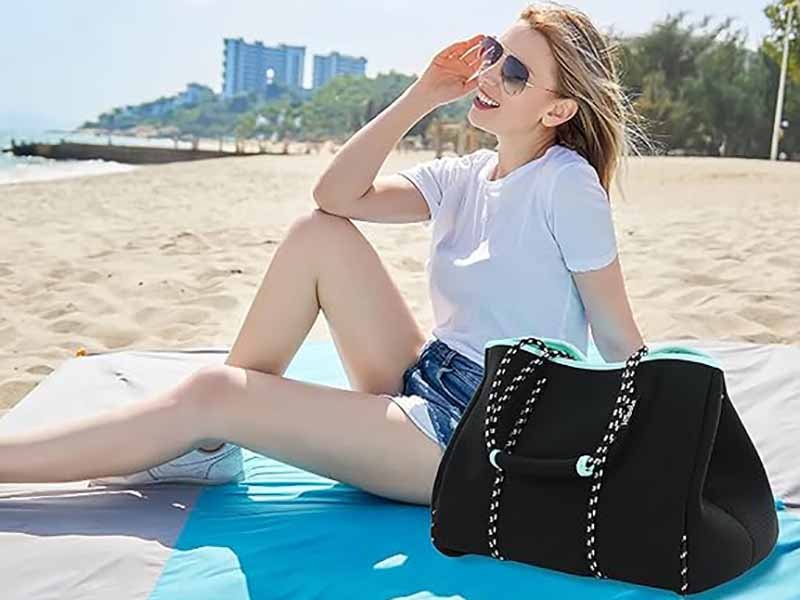
Neoprene bags look tough—thick material, soft touch, good cushioning—so many brands assume stitching is a “small detail.” In real production, stitching is one of the biggest reasons neoprene bags get returns. A bag can use premium neoprene and still fail if the seam is wrong: threads pop when the bag stretches, corners split after repeated opening, the edge curls, or water creeps into needle holes and leaves odors inside.
Neoprene is not like canvas or nylon. It’s a foam core laminated with fabric skins. When you sew it, you’re compressing foam, piercing laminated layers, and asking the seam to stay stable while the material flexes and rebounds. That’s why neoprene bags usually rely on three seam systems—flatlock, overlock, and blind stitch—each solving a different problem: comfort and flexibility, speed and edge control, or reduced needle penetration for better water resistance.
The best stitching method for neoprene bags depends on how the bag will be used. Flatlock is preferred when flexibility, smooth seams, and a clean look matter. Overlock is chosen for fast, cost-efficient production and durable edge wrapping. Blind stitch is used when limiting needle holes is important, improving water resistance and seam durability—often paired with glue or seam tape in higher-end builds.
If you’ve ever seen a neoprene bag that “looks fine” but starts splitting at the handle base or leaking near the zipper after a few weeks, the cause is usually here. Let’s break down the seam options the same way a factory and a serious brand developer would.
What Stitching Methods Are Used for Neoprene Bags?

Neoprene bags are usually constructed using three primary stitching methods: flatlock stitching, overlock stitching, and blind stitching. Each method is designed to address the unique structural behavior of neoprene materials, which are thicker, more elastic, and more compressible than most textile fabrics.
In neoprene bag manufacturing, stitching is not simply about connecting panels. It directly affects:
- seam strength
- flexibility of the product
- resistance to tearing
- appearance of the bag
- production efficiency and cost
Choosing the correct seam construction can significantly influence the product’s durability and user experience.
For example, a neoprene laptop sleeve that uses an unsuitable seam type may begin to split along the edges after repeated stretching. Similarly, cooler bags exposed to moisture may allow water penetration if seam construction is not optimized.
Because of these factors, manufacturers typically evaluate seam construction early in the product development process.
What stitching methods are most commonly used in neoprene bags?
The majority of neoprene bags use one of three seam types. Each method performs differently depending on the product’s requirements.
Common stitching methods used in neoprene bag manufacturing
| Stitching Method | Construction Style | Main Advantage | Typical Products |
|---|---|---|---|
| Flatlock stitching | panels joined edge-to-edge | flexible and smooth seam | laptop sleeves, sports gear |
| Overlock stitching | thread wraps around panel edges | fast production and edge protection | lunch bags, koozies |
| Blind stitching | needle penetrates partially into neoprene | improved water resistance | cooler bags, wetsuits |
These seam constructions are widely used because they accommodate the physical characteristics of neoprene.
Neoprene consists of a foam rubber core laminated with textile layers, which means the material behaves differently from woven fabrics when stitched.
Why neoprene bags require specialized stitching methods
Neoprene material has several properties that influence how it must be sewn.
Key properties of neoprene materials
| Material Property | Impact on Stitching |
|---|---|
| elasticity | seams must allow controlled stretching |
| foam core | compression affects stitch formation |
| laminated surfaces | thread tension must be carefully balanced |
| thickness | requires stronger needles and threads |
For instance, if a standard sewing stitch is used with incorrect tension, the foam core may compress unevenly. This can cause the seam to appear wavy or distorted.
Another common issue occurs when stitch spacing is too tight. Excessive needle penetration can weaken the neoprene around the seam line, increasing the risk of tearing over time.
Manufacturers therefore adjust several parameters when sewing neoprene:
- stitch density
- needle type
- thread strength
- presser foot pressure
- machine feed speed
These adjustments ensure the seam maintains both structural strength and flexibility.
How stitching methods influence neoprene bag durability
Different seam constructions distribute stress differently across the neoprene panels.
When a bag is used repeatedly—opening, closing, carrying weight—the seams experience constant tension.
Areas of highest stress in neoprene bags
| Location | Stress Source |
|---|---|
| handle attachment points | load-bearing tension |
| zipper ends | repeated opening forces |
| bottom corners | weight concentration |
| opening edges | stretching during use |
If seams in these areas are not designed correctly, they may fail even if the material itself is strong.
For example:
- a seam that is too rigid may tear when the bag stretches
- a seam that is too loose may separate under load
- excessive needle holes may weaken the material
This is why experienced manufacturers often combine seam types within the same product.
Stitch density and seam strength in neoprene bags
Another important parameter is stitch density, which refers to how many stitches are placed within a given length of seam.
Typical stitch density used in neoprene bag manufacturing
| Neoprene Thickness | Recommended Stitch Density |
|---|---|
| 2 mm neoprene | 4–5 stitches per cm |
| 3 mm neoprene | 3–4 stitches per cm |
| 4–5 mm neoprene | 3 stitches per cm |
Higher stitch density may increase seam strength initially, but excessive needle penetration can damage neoprene over time.
A balanced stitch density ensures that:
- the seam remains strong
- the material is not weakened by excessive holes
- the seam retains flexibility
Manufacturers usually perform seam testing during product development to determine the optimal settings.
Comparing stitching methods for neoprene bag construction
Each seam type provides different performance characteristics.
Performance comparison of neoprene bag stitching methods
| Performance Factor | Flatlock | Overlock | Blind Stitch |
|---|---|---|---|
| seam flexibility | high | medium | medium |
| seam thickness | low | medium | low |
| durability | medium-high | medium | high |
| water resistance | low | low | medium-high |
| production efficiency | medium | high | low |
These differences explain why certain seam types are associated with particular products.
For example:
- Flatlock seams are preferred when comfort and flexibility are important.
- Overlock seams are widely used in large-volume production because of their efficiency.
- Blind stitched seams are often selected when moisture resistance is required.
How manufacturers select stitching methods during product development
When brands develop neoprene bags, manufacturers typically evaluate several design factors before choosing the seam construction.
Key decision factors
| Factor | Example Consideration |
|---|---|
| product type | laptop sleeve vs cooler bag |
| expected load | lightweight accessories vs heavy items |
| exposure to moisture | indoor use vs outdoor environments |
| product price target | promotional product vs premium brand item |
For example:
A promotional neoprene tote designed for high-volume distribution may prioritize cost-efficient overlock seams.
In contrast, a premium neoprene laptop sleeve designed for retail sale may use flatlock seams to improve aesthetics and comfort.
Outdoor sports equipment bags may incorporate blind stitching combined with adhesive bonding to reduce water penetration.
Practical recommendation for neoprene bag development
Many successful neoprene bag designs combine multiple seam types in different areas of the product.
Example hybrid seam structure
| Bag Section | Recommended Stitch |
|---|---|
| opening edge | flatlock |
| internal body panels | overlock |
| moisture-sensitive areas | blind stitch |
This approach allows manufacturers to optimize the product for performance while keeping production costs under control.
For brands developing new neoprene bag products, discussing seam construction with the factory early in the design process can prevent structural issues and improve long-term durability.
What Is Flatlock Stitching for Neoprene Bags?

Flatlock stitching for neoprene bags joins panels with a seam that lies flat and stretches with the material. It reduces bulky ridge seams and improves comfort at touch points like openings and straps. Flatlock is popular in neoprene products because it handles flex and repeated movement better than many basic seams, while also giving a clean, “technical sports” look.
What is flatlock stitching in neoprene bags?
Flatlock is designed to create a low-profile seam that can flex. In neoprene bags, it’s often used where the user’s hand touches the seam or where the bag must stretch slightly during use.
What flatlock seams do well
- keep seam ridges low (less rubbing)
- allow better movement without thread popping
- improve finished appearance on exposed seams
Stitch density matters more than people think
Too tight and the neoprene can tear around the needle. Too loose and seam strength drops.
A practical factory range many projects start from:
- 3–5 stitches per cm for typical neoprene bag seams (then adjusted based on thickness, lamination, and stress zones)
Why use flatlock stitching for neoprene bags?
Flatlock earns its reputation on three things customers actually feel:
1) Better comfort at openings
Laptop sleeves, bottle holders, and small pouches are handled constantly. A bulky seam can feel rough. Flatlock keeps it smoother.
2) Better “stretch tolerance”
Even if the bag is not meant to stretch, neoprene flexes during loading, grabbing, and carrying. Flatlock handles that flex more gracefully.
3) More premium look
Many brands want neoprene products to look sporty and clean. Flatlock provides that visual identity.
Where flatlock can be a poor fit
Flatlock is not the best choice if:
- the product is extremely price-sensitive
- the seam is hidden and doesn’t need premium appearance
- the seam needs high water resistance by itself
Which neoprene bags use flatlock stitching?
Flatlock shows up most often in neoprene bags that are handled frequently or where seam appearance matters.
Strong matches for flatlock stitching
| Neoprene bag type | Why flatlock fits |
|---|---|
| laptop sleeves | smooth opening + clean seam lines |
| camera pouches | comfort + neat appearance |
| bottle holders | repeated flex and compression |
| tote-style neoprene bags | better stretch tolerance at side panels |
| sports accessory bags | matches “athletic technical” look |
Recommended build notes (what brands should specify to factories)
If you want flatlock seams to hold up, specify:
- neoprene thickness range (commonly 2–5 mm)
- seam location (opening edge vs internal seams)
- whether the seam will carry load (handles vs body seams)
- expected product weight (empty vs loaded)
Flatlock is great for body seams and openings, but handle roots usually need extra reinforcement (webbing anchor + bartack), regardless of stitch type.
Quick decision table (customers love this)
| Your neoprene bag goal | Best starting seam choice |
|---|---|
| smooth feel + clean look | Flatlock |
| lowest cost + fastest production | Overlock |
| better water control at seams | Blind stitch (often with glue/tape) |
| premium feel + mixed requirements | Flatlock + targeted reinforcements |
How Does Overlock Stitching Work for Neoprene Bags?

Overlock stitching joins neoprene panels by wrapping thread loops around the raw edge of the material. The stitching trims and binds the edge simultaneously, preventing fraying and stabilizing the seam. Overlock seams are widely used in neoprene bag production because they are fast to sew, durable enough for everyday products, and cost-efficient for large-volume manufacturing.
What is overlock stitching in neoprene bags?
Overlock stitching is produced using an overlock machine, sometimes called a serger. The machine uses multiple threads and loopers to form a stitch that wraps around the edge of the neoprene panel.
Unlike flatlock seams, which connect panels edge-to-edge, overlock seams usually involve slight overlap or edge binding.
Overlock seam structure
| Feature | Description |
|---|---|
| thread loops | wrap around panel edges |
| multi-thread system | 3–5 thread construction |
| edge trimming blade | cuts clean seam allowance |
The blade on an overlock machine trims the edge while sewing, which produces a consistent seam width.
This integrated trimming and stitching process is one reason why overlock seams are widely used in high-volume production.
Why do many neoprene bags use overlock stitching?
Overlock stitching is one of the most common seam types in neoprene products because it combines speed, reliability, and cost efficiency.
Factories producing thousands of neoprene bags per day often rely on overlock machines because they allow rapid assembly while maintaining consistent seam quality.
Advantages of overlock stitching
| Advantage | Benefit |
|---|---|
| high sewing speed | improves production efficiency |
| reinforced edges | reduces seam unraveling |
| simple seam structure | easier quality control |
| lower labor cost | suitable for large orders |
Because the stitch wraps around the material edge, it helps protect the foam core and laminated surface layers of neoprene.
How strong are overlock seams for neoprene bags?
Overlock seams provide moderate structural strength. They are not as flexible as flatlock seams, but they offer reliable durability when used correctly.
Seam strength comparison
| Seam Type | Strength Level | Flexibility |
|---|---|---|
| Flatlock | medium-high | high |
| Overlock | medium | medium |
| Blind stitch | high | medium |
The actual strength of the seam depends on several variables, including:
- thread quality
- stitch density
- neoprene thickness
- seam reinforcement
For example, thicker neoprene materials may require stronger thread and reduced stitch spacing.
When should neoprene bags use overlock stitching?
Overlock stitching is especially useful for neoprene bags where speed and cost efficiency are important.
Products commonly using overlock seams include:
- neoprene lunch bags
- neoprene koozies
- promotional neoprene bags
- neoprene tablet sleeves
- simple tote bags
These products typically do not require waterproof seams, so the small needle holes created by overlock stitching are acceptable.
Typical stitch density for neoprene overlock seams
| Neoprene Thickness | Recommended Stitch Density |
|---|---|
| 2 mm | 4–5 stitches per cm |
| 3 mm | 3–4 stitches per cm |
| 4–5 mm | 3 stitches per cm |
Adjusting stitch density ensures the seam maintains adequate strength without weakening the neoprene.
What Is Blind Stitching for Neoprene Bags?
Blind stitching joins neoprene panels without the needle passing completely through the material. Instead, the needle penetrates only partially into the neoprene foam layer. This technique reduces the number of holes that penetrate the full thickness of the material, improving water resistance and seam durability. Blind stitching is commonly used in high-performance neoprene products.
What is blind stitching in neoprene bags?
Blind stitching is a specialized sewing technique that partially penetrates neoprene rather than stitching through both sides of the material.
The needle enters the neoprene foam layer but does not fully exit the opposite side.
Blind stitch seam structure
| Feature | Description |
|---|---|
| partial needle penetration | reduces through-holes |
| hidden seam | improves water resistance |
| strong seam bonding | often combined with glue |
Because the needle does not fully pierce the material, fewer holes exist for water to pass through.
For waterproof neoprene products, blind stitching is often combined with adhesive bonding or seam tape.
Why use blind stitching for neoprene bags?
Blind stitching offers significant advantages when water resistance is important.
For example, neoprene cooler bags and sports gear bags may encounter water exposure during outdoor activities.
Benefits of blind stitch seams
| Benefit | Result |
|---|---|
| fewer needle holes | reduced water penetration |
| strong seam structure | improved durability |
| smooth internal surface | better product comfort |
In some cases, blind stitching is combined with glued seams, creating a construction method often called “GBS” (glued and blind stitched).
This technique is widely used in wetsuits and high-end neoprene gear.
Which neoprene bags benefit from blind stitching?
Blind stitching is often selected for neoprene products that require greater water resistance or durability.
Examples include:
- neoprene cooler bags
- insulated lunch bags
- waterproof gear pouches
- sports equipment bags
These products may be exposed to moisture, so reducing seam holes helps improve performance.
Seam water resistance comparison
| Seam Type | Water Resistance |
|---|---|
| Flatlock | low |
| Overlock | low |
| Blind stitch | medium-high |
While blind stitching improves water resistance, it does not make the seam completely waterproof.
Additional seam sealing techniques may be required for full waterproof performance.
Which Stitching Methods Are Best for Neoprene Bags?

The best stitching method for neoprene bags depends on the product’s intended use. Flatlock stitching works best when flexibility and comfort are priorities. Overlock stitching is ideal for high-volume production and cost efficiency. Blind stitching provides improved seam durability and better resistance to water penetration. Many well-designed neoprene bags combine two stitching methods to balance durability, appearance, and manufacturing cost.
Which stitching methods make neoprene bags stronger?
Strength in neoprene bag seams is influenced by more than the stitch pattern itself. Several factors contribute to the final durability of the seam.
Factors affecting seam strength
| Factor | Influence |
|---|---|
| thread quality | stronger threads increase seam durability |
| stitch density | too loose weakens seams, too tight damages neoprene |
| material thickness | thicker neoprene requires stronger seam construction |
| seam placement | high-stress areas require reinforcement |
For example, handle attachment points and bottom seams usually experience the highest stress.
Manufacturers often reinforce these areas with additional techniques such as:
- bartack reinforcement
- webbing reinforcement
- seam binding
- multi-layer panel construction
These reinforcements prevent the seam from tearing when the bag carries heavier loads.
How do cost and durability affect neoprene bag stitching choices?
Product developers must balance performance requirements with production cost.
Different stitching methods vary in labor time, machine requirements, and overall manufacturing cost.
Stitching cost comparison
| Stitch Method | Production Speed | Labor Cost | Typical Use |
|---|---|---|---|
| Overlock | Fast | Low | Promotional neoprene products, koozies, simple bags |
| Flatlock | Medium | Medium | Premium sleeves, laptop cases, sports pouches |
| Blind Stitch | Slow | Higher | Technical neoprene gear, water-resistant products |
Overlock stitching is often the least expensive option because machines operate quickly and require fewer adjustments.
Flatlock stitching requires more careful alignment of neoprene panels, increasing sewing time slightly.
Blind stitching generally requires skilled operators and slower machine speed, which increases labor cost.
However, the final product price difference may still be small relative to the overall product value.
For brands targeting premium markets, the improved performance and appearance of higher-quality seams often justify the additional cost.
Seam performance comparison
Understanding the performance differences between seam types helps brands make better design decisions.
| Performance Factor | Flatlock | Overlock | Blind Stitch |
|---|---|---|---|
| flexibility | high | medium | medium |
| seam thickness | low-medium | medium | low |
| durability | medium-high | medium | high |
| water resistance | low | low | medium-high |
| appearance | premium | basic | premium |
In practice, many successful neoprene bag designs combine different seams.
Example hybrid construction:
- overlock seams on internal panels
- flatlock seams on visible edges
- blind stitch seams in water-sensitive areas
This combination approach allows manufacturers to optimize performance without significantly increasing production cost.
How Does Lovrix Develop Custom Neoprene Bags?
Developing neoprene bags for brands requires more than simply choosing materials and sewing them together. It involves a structured process that integrates product design, material engineering, and manufacturing expertise.
Lovrix, with more than 18 years of experience in fabric, webbing, and bag manufacturing, supports brands throughout the entire development process.
Step 1: Product concept and design
The process begins with understanding the client’s product concept.
Brands typically provide:
- sketches or reference products
- functional requirements
- target market positioning
- estimated order quantity
The Lovrix design team then evaluates the product concept and proposes technical improvements.
For example:
- adjusting seam placement for strength
- optimizing neoprene thickness
- selecting appropriate stitching methods
This early-stage engineering helps avoid production problems later.
Step 2: Material selection and engineering
Neoprene bags may use different material constructions depending on the application.
Common neoprene specifications
| Specification | Typical Range |
|---|---|
| neoprene thickness | 2 mm – 6 mm |
| fabric lamination | polyester or nylon |
| density | 180–220 kg/m³ |
Material selection affects not only the feel of the product but also how it must be sewn.
For example, thicker neoprene materials may require:
- stronger thread
- reduced stitch density
- larger sewing needles
Selecting the right materials ensures the seams perform properly over the product’s lifespan.
Step 3: Sampling and prototyping
Before mass production begins, prototype samples are created.
Typical sampling timeline:
| Stage | Time Required |
|---|---|
| design evaluation | 1–2 days |
| pattern development | 1–3 days |
| sample production | 3–7 days |
Samples allow brands to evaluate several factors:
- seam quality
- product shape
- material feel
- stitching durability
Adjustments can be made before large production orders begin.
Step 4: Manufacturing and quality control
During production, strict quality control procedures ensure consistent results.
Important quality checks include:
- seam strength testing
- stitch density verification
- alignment inspection
- material defect detection
Quality control teams inspect products at multiple stages of the production process.
This approach reduces defects and ensures that finished products meet the client’s quality standards.
Why Brands Choose Lovrix for Custom Neoprene Bags
Lovrix has built a strong reputation among international brands and e-commerce companies because of its integrated manufacturing capabilities.
Lovrix manufacturing advantages
| Capability | Benefit |
|---|---|
| fabric factory | stable neoprene material supply |
| webbing factory | custom handles and straps |
| bag factory | experienced sewing teams |
| design team | product engineering support |
Because Lovrix controls multiple stages of the supply chain, it can provide:
- faster sampling
- stable production schedules
- consistent product quality
This integrated manufacturing model helps brands bring products to market more efficiently.
Final Thoughts
Choosing the right stitching method for neoprene bags is an important step in product development. Flatlock, overlock, and blind stitching each provide unique advantages depending on the product’s design goals.
Flatlock seams offer flexibility and comfort.
Overlock seams provide fast, cost-efficient production.
Blind stitching improves seam durability and water resistance.
The best solution often combines these techniques to achieve the right balance of performance, appearance, and manufacturing efficiency.
Start Your Custom Neoprene Bag Project with Lovrix
If you are developing a new neoprene bag product, working with an experienced manufacturing partner can significantly improve the success of your project.
Whether you are launching a new product line or scaling an existing brand, Lovrix can help transform your ideas into high-quality neoprene bags.
Contact the Lovrix team today to discuss your custom neoprene bag project and receive a professional manufacturing quotation.


