 Skip to content
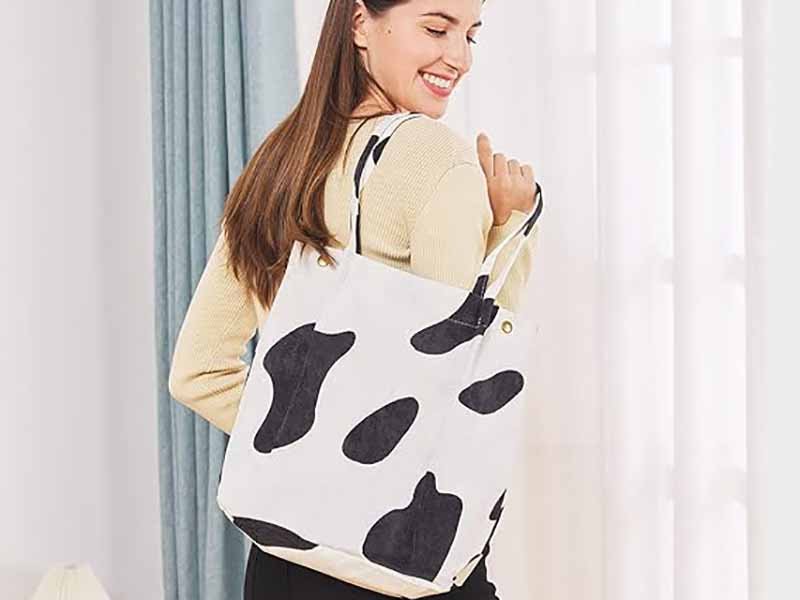
Most tote bags don’t fail because of the fabric or the print—they fail because they feel annoying to carry. A strap that’s slightly too short makes you keep adjusting it on your shoulder. A strap that’s too long makes the bag hit your hip and swing. After a week of real use, customers stop thinking about “style” and start thinking: “Why is this bag uncomfortable?” In many cases, the hidden cause is one simple measurement: handle drop.
Handle drop is not a “designer detail.” It’s a comfort decision. It affects whether the tote stays on the shoulder, whether the opening is easy to reach, and whether the bag feels stable when loaded with a laptop, groceries, or daily essentials. If you’re building a private label tote line, handle drop is one of the easiest ways to improve user satisfaction without changing the whole product.
Tote bags handle drop is the vertical distance from the top of the handle to the top edge of the bag. It decides whether a tote works best for hand carry, forearm carry, or shoulder carry. For most everyday shoulder totes, a handle drop around 20–30 cm (8–12 in) is common, adjusted by body size, bag weight, strap width, and winter clothing.
One more thing: handle drop also shapes your product reviews. The best-looking tote can still get “2 stars” if it keeps slipping off the shoulder. And that’s where this guide becomes practical.
What Is Tote Bags Handle Drop?

Tote bags handle drop is the vertical measurement from the highest point of the handle to the top opening of the tote. It’s different from handle length (which follows the strap curve). Handle drop matters because it determines how the tote sits on the body and how easy it is to carry when loaded.
What does Tote Bags Handle Drop mean?
Handle drop is the “real-life fit” measurement. In sampling, two totes can look almost identical on a flat table—but once worn, they feel totally different because of handle drop.
Handle drop vs handle length (people often confuse them):
| Term | What it measures | Why it matters |
|---|---|---|
| Handle Drop | Vertical distance from handle top to bag top | Predicts how the bag sits on arm/shoulder |
| Handle Length | Total length along the handle curve | Affects sewing pattern and attachment spacing |
A simple way to visualize it:
If you can slide your shoulder under the strap comfortably while wearing a jacket, the handle drop is likely within a workable shoulder range.
Factory note (important for OEM):
Handle drop should be controlled with measurement tolerance. A difference of just ±1 cm can change how a tote feels, especially on smaller users.
How Tote Bags Handle Drop affects carrying style
Carrying style isn’t “preference”—it’s mostly geometry + load. The same tote can feel fine empty and terrible when filled.
Typical handle drop ranges by carry method:
| Carry style | Comfortable handle drop | Best for |
|---|---|---|
| Hand carry | 8–12 cm | Gift totes, structured fashion totes |
| Forearm carry | 12–18 cm | Light daily use, city totes |
| Shoulder carry | 20–30 cm | Work totes, shopping totes, campus totes |
| Thick winter coat shoulder carry | 26–34 cm | Cold markets, oversized totes |
What customers usually complain about (and what it really means):
- “It slips off my shoulder.” → Drop too short or strap too narrow/smooth
- “It bumps my hip.” → Drop too long for the user’s height
- “Hard to reach inside.” → Bag sits too high under arm (drop short) or opening collapses
Why Tote Bags Handle Drop matters in design
Handle drop affects comfort, but also affects bag behavior when loaded:
- Stability: Longer drop increases swing if the load is heavy and the strap is thin
- Access: Too short = arm presses opening shut; too long = bag hangs low and is slower to open
- Appearance: Shorter drop can look “cleaner,” but reduces shoulder usability
- Returns and reviews: Discomfort issues are more damaging than minor visual issues
Real-world load reality:
Many “everyday” totes regularly carry 2–6 kg (laptop + charger + bottle + cosmetics + notebook). If handle drop is wrong, that weight makes the problem obvious fast.
Practical design balance:
For most consumer totes targeting daily use, a handle drop around 22–28 cm paired with strap width 25–38 mm is a strong baseline for comfort.
Why Tote Bags Handle Drop Matters

Tote bags handle drop matters because it controls comfort, shoulder fit, and weight balance. If drop is too short, the tote feels tight and slips. If it’s too long, the bag swings and hits the hip. The right drop reduces pressure points, makes the tote easier to access, and improves the “fits my life” feeling that drives repeat use.
How Tote Bags Handle Drop affects comfort
Comfort comes from three things working together:
- Drop length (how the bag sits)
- Strap width (how pressure spreads)
- Load weight (how much force hits your shoulder)
A narrow strap with heavy load concentrates pressure. Even a “correct” drop feels painful if strap width is too small.
Comfort guidance by weight and strap width:
| Typical load | Suggested strap width | Why it works |
|---|---|---|
| 1–2 kg | 20–25 mm | Light loads don’t need wide straps |
| 2–5 kg | 25–38 mm | Best everyday comfort range |
| 5–8 kg | 38–50 mm | Reduces shoulder pressure noticeably |
| 8 kg+ | 50 mm + padding | Needed for travel/gear style totes |
Customer-facing truth:
If your tote is sold as “work tote” or “laptop tote,” users will judge comfort more harshly. Handle drop has to match that claim.
Do longer Tote Bags Handle Drop fit shoulder carry better?
Longer drops can improve shoulder fit, but “longer” is not always “better.”
What happens if drop is too long:
- Bag hangs low → hits thigh/hip
- Bag swings more → feels unstable
- Carry feels tiring faster
Good starting ranges by user height (for shoulder carry):
| User height | Recommended handle drop |
|---|---|
| Under 160 cm | 20–24 cm |
| 160–175 cm | 22–28 cm |
| Over 175 cm | 24–30 cm |
Seasonal factor (important for export markets):
In cold regions, thicker jackets take up space under the strap. Many brands add +2–4 cm for winter comfort.
Are short Tote Bags Handle Drop better for hand carry?
Yes—short drops work well when:
- The tote is meant to look structured and “clean”
- The bag is small/medium and used for light items
- The product is a gift tote or boutique tote
But short drops reduce “daily versatility.” If customers try to wear it on the shoulder and can’t, they’ll feel tricked, even if the bag is beautiful.
A common strategy for premium brands:
- Keep handles shorter (style)
- Add a removable shoulder strap (function) This gives customers choice without changing the tote silhouette.
Mini Data Sheet: “Best-Selling” Handle Drop Targets
| Tote category | Main carry style | Strong handle drop target |
|---|---|---|
| Daily shopping tote | Shoulder | 24–28 cm |
| Work / laptop tote | Shoulder | 24–30 cm |
| Boutique / gift tote | Hand/forearm | 10–16 cm |
| Beach tote (large) | Shoulder | 26–32 cm |
| Travel tote | Shoulder | 26–34 cm |
Common Tote Bags Handle Drop Lengths

Common tote bags handle drop lengths usually fall between 20–30 cm (8–12 inches) for shoulder carry, 12–18 cm for forearm carry, and 8–12 cm for hand carry. The correct range depends on tote size, load weight, user height, and seasonal clothing thickness. Everyday work and shopping totes most often succeed with a 24–28 cm handle drop.
Standard Tote Bags Handle Drop Sizes in cm and inches
Across global retail markets, tote bags tend to cluster around a few repeatable size ranges. These ranges appear again and again because they match real human body movement rather than fashion trends.
Industry-observed handle drop ranges:
| Handle Drop (cm) | Handle Drop (in) | Typical Tote Type | Comfort Level |
|---|---|---|---|
| 8–12 | 3–5 | Gift / boutique tote | Hand carry only |
| 12–18 | 5–7 | Small daily tote | Forearm friendly |
| 20–24 | 8–9.5 | Medium shoulder tote | Good for light loads |
| 24–28 | 9.5–11 | Work / shopping tote | Most widely accepted |
| 28–34 | 11–13.5 | Large travel / beach tote | Better over coats |
Two important observations from production data:
- 24–28 cm appears most frequently in repeat orders because it balances reach, comfort, and stability.
- Drops above 30 cm are usually paired with larger tote bodies; otherwise the bag hangs too low.
For brands entering new markets, starting within these proven ranges reduces sampling risk and speeds up approval.
Best Tote Bags Handle Drop for Daily Use
Daily-use totes must work in multiple situations: commuting, shopping, short walks, and indoor movement. Because of this, comfort tolerance is lower—small mistakes become noticeable quickly.
Daily tote performance priorities:
- Easy shoulder carry for 10–30 minutes continuous use
- Stable position when walking quickly
- Comfortable reach into the bag without removing it
- Works with light jackets and thin coats
From field feedback and reorder patterns, the most reliable specification for daily totes is:
- Handle drop: 24–26 cm
- Strap width: 25–32 mm
- Recommended load: under 5 kg
This combination keeps pressure reasonable while preventing excessive swing.
Why not shorter?
Below 22 cm, many adults cannot comfortably place the tote on the shoulder while wearing outerwear.
Why not longer?
Above 28 cm, medium totes begin to hit the hip during fast walking, which customers often describe as “annoying.”
Tote Bags Handle Drop for Work, Travel, and Shopping
Different use cases demand different ergonomic priorities. Treating all totes the same often leads to poor product reviews.
1) Work / Laptop Totes
Work totes usually carry 3–7 kg. Comfort becomes critical.
Recommended configuration:
- Handle drop: 25–30 cm
- Strap width: 32–45 mm
- Reinforcement: bartack + box stitch
- Optional: detachable shoulder strap for long walks
A slightly longer drop allows the tote to sit lower, reducing shoulder compression from heavier weight.
2) Shopping Totes
Shopping totes face variable weight and frequent lifting.
Recommended configuration:
- Handle drop: 24–28 cm
- Strap width: 30–40 mm
- Material: cotton webbing or reinforced polyester
- Load tolerance: up to 8 kg briefly
Here, durability + comfort matter more than visual elegance.
3) Travel / Beach Totes
These are large-volume bags often used with thick clothing.
Recommended configuration:
- Handle drop: 28–34 cm
- Strap width: 38–50 mm
- Padding: optional foam or folded webbing
- Reason: prevents tight shoulder pressure over jackets
Travel totes fail quickly if handle drop is too short, because users carry them longer and heavier.
How to Choose the Right Tote Bags Handle Drop

Choosing the right tote bags handle drop requires balancing user height, carry weight, tote size, strap width, and clothing thickness. Most brands begin with a 24–28 cm drop for shoulder totes, then adjust slightly based on target market and usage. Testing with real load conditions before mass production is essential to avoid comfort complaints and product returns.
How Body Size Affects Tote Bags Handle Drop Choice
Human body variation is one of the least discussed but most important factors in tote design.
Key influences:
- Shoulder width
- Arm length
- Walking stride
- Clothing thickness
A drop that feels perfect for a 175 cm user may feel tight for someone broader or shorter.
Simple sizing logic used in sampling:
| Target user group | Safe handle drop range |
|---|---|
| Petite users | 20–24 cm |
| Average adults | 22–28 cm |
| Tall or broad users | 24–32 cm |
Brands selling globally often choose the middle range to cover the widest audience.
Does Bag Weight Change the Ideal Tote Bags Handle Drop?
Yes—weight changes everything.
Heavier loads compress the shoulder and reduce effective drop height during use.
This means a tote carrying 6 kg may feel 2–3 cm shorter than its measured drop.
Weight-adjusted design rule:
| Average load | Suggested drop adjustment |
|---|---|
| Under 3 kg | No change needed |
| 3–6 kg | Add +1–2 cm |
| 6–10 kg | Add +2–4 cm and widen strap |
Ignoring this relationship is a common reason why laptop totes feel tight, even when measurements look correct on paper.
Are Adjustable Tote Bags Handle Drop Designs Useful?
Adjustable handles can solve multi-user comfort problems, but only when designed carefully.
Advantages:
- Fits different heights
- Works across seasons
- Adds perceived product value
Challenges:
- Extra hardware cost
- Potential strap slippage
- More complex production
Because of this, adjustable drops are most suitable for:
- Premium travel totes
- Convertible fashion totes
- Outdoor or utility bags
For everyday canvas totes, a well-chosen fixed drop often performs better and costs less.
Materials That Affect Tote Bags Handle Drop

Handle materials influence how tote bags handle drop feels in real use. Strap width, softness, stretch resistance, and reinforcement all affect comfort and durability. Cotton webbing, polyester webbing, and leather are the most common materials, each suited to different load levels and product positioning.
Which Handle Materials Support Heavy Tote Bags Handle Drop?
Material strength determines whether the designed drop stays consistent over time.
| Material | Stretch resistance | Best load range | Common use |
|---|---|---|---|
| Cotton webbing | Medium | 3–6 kg | Daily totes |
| Polyester webbing | High | 5–10 kg | Work/shopping totes |
| Nylon webbing | Very high | 8–15 kg | Outdoor/gear totes |
| Leather straps | Low stretch but flexible | 3–8 kg | Premium fashion totes |
Polyester and nylon maintain shape stability, preventing the drop from lengthening after months of use.
How Leather, Cotton, and Nylon Change Comfort
Comfort depends on surface feel + pressure distribution.
- Cotton: soft, breathable, casual appearance
- Polyester/Nylon: smoother, stronger, thinner under load
- Leather: premium look, molds to shoulder over time
However, leather without internal reinforcement may stretch slightly, changing drop length after extended carrying.
High-end designs often add hidden webbing inside leather straps to control deformation.
How Stitching and Structure Protect Tote Bags Handle Drop Durability
Even perfect materials fail without correct reinforcement.
Common reinforcement methods:
| Method | Strength level | Typical use |
|---|---|---|
| Single stitch line | Low | Light gift totes |
| Box stitch | Medium | Daily totes |
| Bartack reinforcement | High | Work/shopping totes |
| X-box + bartack | Very high | Heavy-duty totes |
Testing shows reinforced handles can increase load durability by 40–120% compared to simple stitching.
How to Measure Tote Bags Handle Drop

To measure tote bags handle drop, place the tote on a flat surface, hold the handle upright at its natural highest point, and measure the vertical distance from the top of the handle to the top edge of the bag opening. Accurate measurement ensures correct shoulder fit, consistent production sizing, and fewer comfort-related returns.
Tools to Measure Tote Bags Handle Drop Correctly
Precise measurement does not require complex equipment, but it does require consistency.
In both sampling rooms and factories, small measurement errors can lead to large comfort differences once the bag is worn.
Recommended measuring tools:
| Tool | Accuracy level | Best use scenario |
|---|---|---|
| Soft measuring tape | Medium | Quick sampling checks |
| Rigid ruler | High | Prototype verification |
| Pattern board scale | Very high | Factory standard control |
| Digital measuring jig | Precision | Large-scale production QC |
For most brands, a rigid ruler on a flat table already provides reliable results.
The real issue is usually method inconsistency, not tool quality.
Common real-world problems:
- Measuring along the strap curve instead of vertically
- Compressing soft handles while measuring
- Measuring before final stitching tension is set
Each of these can change the result by 1–3 cm, enough to affect shoulder comfort.
Step-by-Step Tote Bags Handle Drop Measuring Method
A repeatable measuring process is the only way to ensure that samples, pre-production pieces, and bulk goods all match.
Standard 5-step measurement process
- Place the tote upright on a completely flat surface
- Lift the handle gently to its natural highest position (do not stretch)
- Keep the handle centered—tilting changes vertical height
- Measure straight down vertically to the top seam of the bag opening
- Record the value in cm and inches for international consistency
Visual logic behind the method:
- The user experiences vertical distance, not curved strap length
- Natural lift simulates real shoulder positioning
- Dual-unit recording prevents export miscommunication
Recommended production tolerance
Even with strict control, textile products always include minor variation.
Setting the right tolerance is critical.
| Product level | Suggested tolerance |
|---|---|
| Basic promotional tote | ±1.5 cm |
| Standard retail tote | ±1.0 cm |
| Premium brand tote | ±0.5 cm |
Tighter tolerance improves fit consistency and reduces mixed customer feedback.
Mistakes to Avoid When Measuring Tote Bags Handle Drop
Many comfort problems begin long before mass production, usually during early sampling.
Frequent development mistakes:
- Approving samples without load testing
- Measuring before final reinforcement stitching
- Ignoring material stretch after weight is applied
- Testing only on one body size
These issues explain why a tote can feel perfect in the sample room but uncomfortable in real use.
Simple real-use validation method
Before confirming production, a quick field test can prevent costly redesigns:
48-hour carry test checklist
- Load tote with target real weight (e.g., laptop + bottle ≈ 4–6 kg)
- Walk continuously for 10–15 minutes
- Sit, stand, and reach inside repeatedly
- Wear both thin clothing and thick outerwear
If discomfort appears during this short test, mass production will multiply the problem
Tote Bags Handle Drop FAQ
Most tote comfort questions relate to ideal drop length, shoulder strain, and customization options. In general, a 24–28 cm drop suits everyday shoulder totes, wider straps reduce pressure, and custom handle sizing significantly improves user satisfaction—especially for work, travel, or premium retail markets.
What Is the Best Tote Bags Handle Drop Length?
There is no single universal number, but strong real-world averages exist.
Best-performing ranges by category:
| Tote type | Strong handle drop range |
|---|---|
| Everyday canvas tote | 24–26 cm |
| Work / laptop tote | 25–30 cm |
| Large shopping tote | 24–28 cm |
| Travel / beach tote | 28–34 cm |
The safest starting point for new product lines is around 25–27 cm, then adjusting after user testing.
Can Tote Bags Handle Drop Reduce Shoulder Strain?
Yes—when combined with correct strap width and material strength.
Shoulder strain is influenced by:
- Drop length
- Strap width
- Load weight
- Carry duration
Comfort improvement example:
| Change | Result |
|---|---|
| Increase drop by 2 cm | Easier shoulder entry |
| Increase strap width from 25 → 38 mm | Noticeable pressure reduction |
| Add soft folded edge | Less skin friction |
Small structural improvements often create large comfort gains.
Do Custom Tote Bags Handle Drop Improve Usability?
In many cases, yes—especially for:
- Brand-specific target audiences
- Heavy-load work totes
- Cold-climate markets
- Premium retail positioning
Custom handle drop allows brands to:
- Match real user height distribution
- Align with regional clothing thickness
- Differentiate from generic competitors
This is one of the lowest-cost upgrades with the highest perceived value in tote development.
Final Section — Start Your Custom Tote Development with Lovrix
Designing a successful tote bag is rarely about one feature alone.
But handle drop is one of the few technical details customers immediately feel—even if they never know the measurement.
At Lovrix, tote development is approached from a real-use perspective, not just drawings:
- Target market body-size analysis
- Load scenario simulation
- Strap material and reinforcement matching
- Precise handle drop tolerance control
- Fast sampling with measurable comfort feedback
Because Lovrix operates fabric, webbing, and bag manufacturing together, handle performance can be optimized from raw material to final stitching, ensuring:
- Stable comfort across production batches
- Reliable durability under daily weight
- Clean visual design aligned with brand positioning
If you are planning a custom tote collection, private label program, or OEM production, sharing just a few details is enough to begin:
- Target market (US, EU, JP, etc.)
- Tote size and expected load
- Preferred material or price level
- Intended usage scenario
From there, Lovrix can propose tested handle drop specifications, matching materials, and reinforcement structures—helping your tote feel right the very first time a customer carries it.
Send an inquiry to Lovrix today and turn a simple tote idea into a product people truly enjoy using every day.


