 Skip to content
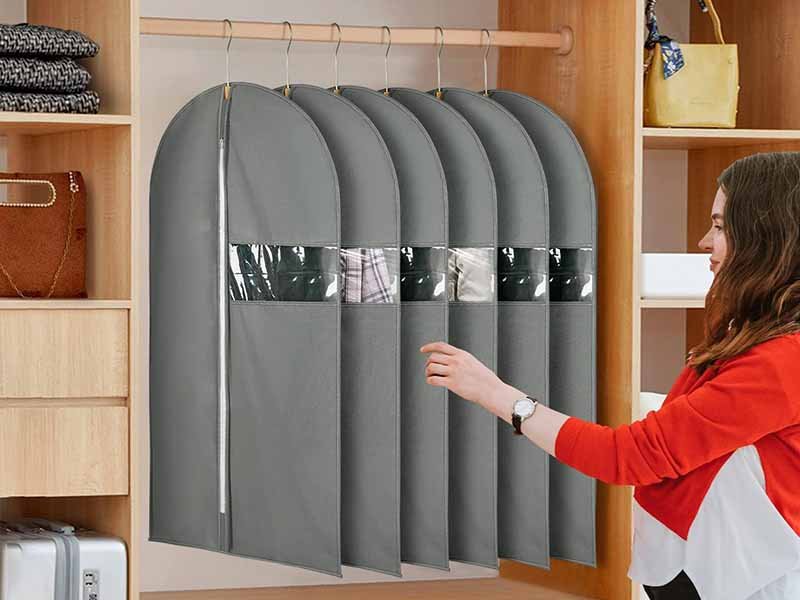
Garment bags are one of those products people often use without fully understanding. Many travelers own one. Many brands include them with suits or dresses. Many retailers sell them quietly as “accessories.” Yet when buyers, brands, or sourcing teams ask what exactly a garment bag is, the answers are often vague. Is it just a plastic cover? Is it luggage? Is it for travel or storage? And why do some garment bags last years while others tear or trap moisture within months?
The reality is that garment bags sit at the intersection of clothing protection, logistics, and brand presentation. A well-designed garment bag does far more than cover clothes. It protects shape, prevents wrinkles, manages airflow, reduces dust and odor, and—in branded scenarios—becomes part of the product experience. A poorly designed garment bag, on the other hand, can damage garments, trap humidity, or reflect badly on the brand that provides it. A garment bag is a protective cover designed to store or transport clothing such as suits, dresses, and coats while keeping them clean, wrinkle-free, and breathable. Garment bags typically feature a long vertical shape, hanger access, and lightweight materials like non-woven fabric or polyester. They are used for travel, retail packaging, wardrobe storage, and professional garment protection.
At Lovrix, garment bags are not treated as simple covers. They are engineered textile products—built using the right fabrics, webbings, and structures to match how garments are actually stored, shipped, and used. To understand how to choose or customize the right one, we need to start with the fundamentals.
What Is a Garment Bag

A garment bag is a protective bag designed to store or transport clothing in a hanging or extended position to prevent wrinkles, dust, moisture, and fabric damage. Garment bags are commonly used for suits, dresses, coats, and uniforms, and typically feature a long vertical shape, zipper closure, hanger opening, and breathable materials. They are used for wardrobe storage, travel, retail packaging, and professional garment protection.
Many users assume a garment bag is simply “a long bag for clothes.” That definition is incomplete and often misleading. From a professional sourcing and product-engineering perspective, a garment bag is defined by how it protects clothing, not how it looks.
A true garment bag is designed to preserve garment structure, control environmental exposure, and support real-world handling, whether in closets, during transport, or through logistics chains.
What is considered a garment bag
A product is considered a garment bag when it meets three functional criteria:
- Vertical or extended storage The bag allows garments to hang naturally on a hanger without folding at stress points such as shoulders, waistlines, or hems.
- Protective enclosure It shields clothing from dust, friction, light moisture, and contact with other items.
- Airflow or moisture management The bag either uses breathable materials or engineered ventilation to prevent trapped humidity and odor buildup.
If a bag does not preserve garment length or requires folding the garment tightly, it is not considered a true garment bag—regardless of size or marketing name.
What garments are typically stored in garment bags
Garment bags are designed for clothing that loses value or appearance when folded.
Common examples include:
- business suits and blazers
- formal dresses and gowns
- coats and overcoats
- uniforms (hotel, airline, corporate)
- performance costumes and stage wear
These garments rely on structured tailoring or delicate fabrics. Folding them into standard luggage introduces creases, distortion, and fiber stress that garment bags are designed to avoid.
What garment bags are used for
Garment bags are not limited to travel. In fact, storage and logistics account for a large share of real usage.
Typical use scenarios include:
- Wardrobe storage in homes, hotels, and retail backrooms
- Retail presentation for suits and dresses at point of sale
- Travel for business professionals and formal events
- Shipping protection during factory-to-store or store-to-customer delivery
Each scenario prioritizes different features (breathability, durability, branding), which is why garment bags are produced in many material and construction variations.
Are garment bags different from suit covers or clothing covers
Yes. While the terms are often mixed, they are not technically the same.
| Item | Garment Bag | Suit Cover / Clothing Cover |
|---|---|---|
| Purpose | Storage + transport | Short-term dust protection |
| Structure | Reinforced, zipper, hanger access | Simple sleeve |
| Breathability | Designed intentionally | Often limited |
| Durability | Medium to high | Low |
| Brand use | Common | Limited |
A suit cover may protect a jacket briefly. A garment bag is designed to protect a garment over time and through movement.
Why material and construction matter in defining a garment bag
A garment bag’s performance depends heavily on material choice and construction, not just shape.
Key design elements include:
- breathable non-woven, polyester, cotton, or blended fabrics
- smooth internal surfaces to reduce abrasion
- reinforced hanger openings
- full-length or partial zippers that avoid pressing directly on fabric
Poorly designed garment bags—especially plastic or fully sealed ones—can trap moisture, causing odor, mildew, or fabric yellowing over time.
How professionals evaluate garment bags
Professional buyers and brands evaluate garment bags using criteria such as:
- garment safety over long periods
- resistance to tearing and zipper failure
- breathability vs protection balance
- suitability for branding or repeated use
- consistency across production batches
This is why experienced manufacturers like Lovrix treat garment bags as engineered textile products, not disposable accessories.
Garment Bag vs Other Bag Types
| Feature | Garment Bag | Luggage / Duffel | Plastic Cover |
|---|---|---|---|
| Hanging storage | ✅ Yes | ❌ No | ⚠️ Limited |
| Wrinkle prevention | High | Low | Medium |
| Breathability | Medium–High | Low | Very Low |
| Long-term storage | Yes | No | Risky |
| Professional use | Yes | No | Limited |
Which Materials Are Best for Garment Bags

The best materials for garment bags are breathable, lightweight, and durable. Non-woven fabric is ideal for cost-effective storage and retail use, polyester or oxford fabric works best for travel and repeated use, and cotton or cotton blends are preferred for premium or eco-focused garment bags. The right material depends on how the garment bag will be used—storage, travel, shipping, or brand presentation.
Choosing material is the most important decision in garment bag design. Zippers, size, and features matter—but fabric choice determines whether garments stay clean, fresh, and wrinkle-free over time. Many low-quality garment bags fail because they trap moisture, tear easily, or abrade delicate fabrics.
Professional buyers evaluate garment bag materials based on five core criteria:
- Breathability
- Durability
- Weight
- Cost stability
- Brand positioning
Below is a clear breakdown of the most commonly used materials—and when each one makes sense.
Non-woven fabric: best for storage and retail
Non-woven fabric (usually PP spunbond) is the most widely used garment bag material.
Why it’s popular:
- naturally breathable
- lightweight
- low cost
- easy to print logos
Best use cases:
- suit covers for retail delivery
- wardrobe storage
- hotel and uniform programs
Limitations:
- lower tear strength than woven fabrics
- not ideal for frequent travel or folding
Non-woven garment bags are excellent for protecting garments from dust while allowing airflow, but they are not designed for heavy handling.
Polyester & oxford fabric: best for travel and durability
Polyester and oxford fabrics (typically 150D–600D) are the go-to choice for travel garment bags.
Key advantages:
- strong abrasion resistance
- better zipper support
- longer service life
- smoother surface that resists snagging
Best use cases:
- business travel garment bags
- foldable garment bags
- repeated use by professionals
Trade-off:
- less breathable than non-woven unless engineered with vents or panels
High-quality travel garment bags often combine polyester strength with breathable inserts to balance protection and airflow.
Cotton & cotton blends: best for premium positioning
Cotton garment bags are chosen primarily for brand image and garment safety.
Why brands choose cotton:
- natural, breathable fiber
- soft handfeel that won’t damage delicate fabrics
- premium and eco-friendly perception
Best use cases:
- luxury apparel brands
- bridal and formalwear
- long-term wardrobe storage
Limitations:
- higher cost
- heavier than synthetic fabrics
- less resistant to moisture if untreated
Cotton garment bags are not always practical for travel but are highly valued in high-end retail and home storage.
Recycled & eco-friendly materials
Sustainability is becoming a key material driver.
Common eco options include:
- recycled polyester (rPET)
- recycled non-woven fabrics
- unbleached cotton
These materials allow brands to:
- reduce environmental impact
- meet sustainability commitments
- align packaging with eco-conscious customers
Eco materials typically cost slightly more but add significant brand value when communicated clearly.
Plastic and fully sealed materials: why they are risky
Plastic garment covers are still used—but mostly as temporary transport protection.
Major drawbacks:
- no breathability
- traps moisture after dry cleaning
- increases mildew and odor risk
- can cause fabric yellowing over time
For long-term storage or premium garments, plastic is generally not recommended.
How material choice affects cost, MOQ, and branding
Material selection influences:
- unit cost
- minimum order quantity
- printing or embroidery methods
- shipping weight
| Material | Cost Level | Breathability | Durability | Typical MOQ |
|---|---|---|---|---|
| Non-woven | Low | High | Medium | Low |
| Polyester | Medium | Medium | High | Medium |
| Cotton | Medium–High | High | Medium | Medium |
| rPET | Medium | Medium | High | Medium |
Smart buyers select materials that match garment value, not exceed it.
How professional manufacturers source materials
Factories with integrated supply chains manage:
- fabric selection and testing
- color and batch consistency
- cost stability over time
This reduces sourcing risk for brands—especially when repeat orders are required.
What Types of Garment Bags Exist

Garment bags come in several main types, including hanging garment bags for storage, travel garment bags for business trips, foldable garment bags for compact transport, and retail garment covers for presentation and delivery. Each type differs in structure, material, size, and durability. Choosing the correct type depends on whether the garment bag is used for storage, travel, retail, or logistics protection.
Many buyers assume garment bags are a single product category with minor variations. In reality, garment bags are function-driven products. Each type is engineered to solve a specific problem—dust prevention, wrinkle control, portability, or brand presentation.
Understanding these categories helps avoid two common mistakes:
- buying an overbuilt bag that wastes cost, or
- choosing a lightweight bag that fails in real use.
Below is a clear, professional breakdown of the main garment bag types used globally.
Hanging garment bags (storage-focused)
Hanging garment bags are the most common type, designed primarily for closet and wardrobe storage.
Key characteristics:
- long vertical structure
- hanger opening at the top
- lightweight, breathable materials (non-woven or cotton)
- full or partial zipper
Typical use cases:
- home wardrobes
- hotels and serviced apartments
- retail backroom storage
- uniform programs
These bags focus on breathability and dust protection, not durability under movement. They are not designed to be folded or carried frequently.
Travel garment bags (business and frequent use)
Travel garment bags are built for mobility and repeated handling.
Key characteristics:
- stronger fabrics (polyester or oxford)
- reinforced seams and hanger areas
- carry handles or shoulder straps
- sometimes foldable or tri-fold designs
Typical use cases:
- business travel
- formal events
- airline carry-on or checked luggage
Travel garment bags trade some breathability for strength and structure, ensuring garments remain protected during transport.
Foldable garment bags (compact transport)
Foldable garment bags are a sub-category of travel bags, optimized for space efficiency.
Key characteristics:
- designed folding points (bi-fold or tri-fold)
- internal straps to secure garments
- compact folded size
Typical use cases:
- short business trips
- combined use with rolling luggage
- carry-on focused travel
These bags reduce bulk while still keeping garments extended enough to minimize creasing.
Suit bags and dress bags (garment-specific)
Suit bags and dress bags are sized and proportioned for specific garment types.
Suit bags:
- shorter length (typically 100–120 cm)
- optimized for jackets and trousers
Dress bags:
- longer length (130–150 cm or more)
- designed for gowns, coats, or formal dresses
Using the wrong size is one of the biggest causes of wrinkles. Garment-specific sizing prevents unnecessary folding or bunching.
Retail garment covers (presentation-focused)
Retail garment covers are designed for point-of-sale delivery and brand presentation.
Key characteristics:
- lightweight construction
- smooth printable surfaces
- logo printing or branding
- lower cost per unit
Typical use cases:
- suit shops and boutiques
- bridal and formalwear brands
- e-commerce order fulfillment
These covers emphasize appearance and branding, not long-term durability.
Garment bags for logistics and shipping
Some garment bags are engineered specifically for logistics protection.
Key characteristics:
- stronger tear resistance
- sealed or semi-sealed designs
- compatibility with cartons or racks
Typical use cases:
- factory-to-store transport
- bulk garment distribution
- uniform supply chains
These bags prioritize protection during handling, often sacrificing aesthetics.
How different types compare at a glance
| Garment Bag Type | Main Purpose | Durability | Breathability | Typical Materials |
|---|---|---|---|---|
| Hanging storage bag | Closet storage | Low–Medium | High | Non-woven, cotton |
| Travel garment bag | Transport | High | Medium | Polyester, oxford |
| Foldable garment bag | Compact travel | High | Medium | Polyester blends |
| Suit / dress bag | Specific garments | Medium | Medium–High | Non-woven, polyester |
| Retail garment cover | Presentation | Low | Medium–High | Non-woven |
| Logistics garment bag | Shipping | High | Low–Medium | Reinforced synthetics |
How professionals choose the right type
Professional buyers start with usage frequency and handling intensity, not appearance.
- Storage only → hanging garment bag
- Frequent travel → travel or foldable garment bag
- Retail branding → retail garment cover
- Distribution → logistics garment bag
Manufacturers like Lovrix often help clients refine the type based on real-world scenarios, preventing overdesign or underperformance.
How Do You Choose the Right Garment Bag

To choose the right garment bag, match the bag to how it will be used—storage, travel, retail, or shipping—then select the correct size, material, and construction quality. The best garment bag balances breathability, protection, durability, and cost. Overbuilt or underbuilt garment bags often fail in real use, so function should always come before appearance.
Many buyers ask “Which garment bag is the best?” The more accurate question is: “Best for what situation?”
A garment bag that performs perfectly in a closet may fail during travel. A travel garment bag may be unnecessary for retail delivery. The right choice depends on use case, garment type, frequency of use, and brand expectations.
Below is a professional, step-by-step decision framework used by apparel brands, hotels, and sourcing teams.
How to match a garment bag to its primary use
Always start with the primary use scenario, not material or price.
- Wardrobe storage: Prioritize breathability and dust protection. Lightweight non-woven or cotton garment bags work best.
- Retail presentation: Focus on appearance, branding surface, and consistency. Non-woven or smooth polyester is common.
- Business or event travel: Choose reinforced polyester or oxford fabrics with handles and strong zippers.
- Logistics or distribution: Durability and tear resistance matter more than aesthetics.
Choosing the wrong category leads to either unnecessary cost or garment damage.
How to choose the correct size and length
Incorrect sizing is one of the most common garment bag mistakes.
Best practice:
- Measure the longest garment including hanger hook clearance.
- Add enough length so garments hang freely without bending.
- Avoid “one-size-fits-all” solutions if multiple garment types exist.
Typical guidelines:
- 100–110 cm → jackets, short coats
- 110–120 cm → suits
- 130–150 cm → dresses, gowns, long coats
A garment bag that is even slightly too short will cause creasing over time.
How to choose the right material
Material choice should reflect use frequency and garment value.
- Non-woven fabric: best for storage and retail, breathable and cost-effective.
- Polyester / oxford: best for travel and repeated use, stronger and longer-lasting.
- Cotton or cotton blends: best for premium garments and long-term storage.
Avoid fully sealed plastic materials for long-term use—they trap moisture and can damage fabrics.
How to evaluate construction and quality
A good garment bag is not defined by fabric alone.
Key quality indicators:
- reinforced hanger opening
- smooth, aligned zippers
- straight seams with consistent stitching
- no sharp edges that contact garments
Poor construction leads to zipper failure, tearing, or fabric abrasion—often before the garment itself shows wear.
How to decide which features actually matter
More features do not equal better performance.
Useful features:
- full-length zipper for easy access
- hanger opening reinforcement
- ventilation panels for airflow
Often unnecessary:
- excessive pockets
- heavy padding for storage-only use
- decorative elements that increase cost
Choose features based on real use, not marketing appeal.
How to balance cost with performance
The best garment bag is not the cheapest—it is the one that costs less over its usable life.
Cheap garment bags may:
- tear quickly,
- trap moisture,
- require replacement,
- damage garments.
Professional buyers focus on total value, not unit price. Spending slightly more on the right material and construction often reduces replacement and garment care costs.
How brands and buyers choose garment bags at scale
For brands, choosing a garment bag also means considering:
- MOQ and reorder consistency
- branding compatibility (printing, labeling)
- packaging and shipping efficiency
- long-term supply stability
Manufacturers like Lovrix support clients by matching garment bag designs to actual garment categories, usage scenarios, and brand positioning—rather than pushing one generic solution.
Common Garment Bag Selection Mistakes
| Mistake | Result |
|---|---|
| Choosing by appearance only | Poor performance |
| Using storage bags for travel | Tearing, wrinkles |
| Choosing sealed plastic for storage | Odor, mildew |
| Ignoring garment length | Permanent creases |
| Overdesigning features | Unnecessary cost |
Are Garment Bags Useful for Travel

Yes, garment bags are useful for travel when carrying suits, dresses, or formalwear that wrinkle easily. They help keep garments flat, protected, and ready to wear by reducing creases, friction, and fabric stress. Their usefulness depends on design—travel garment bags with durable materials, foldable structures, and secure closures perform far better than simple storage garment covers.
A common misconception is that garment bags are either always necessary for travel or completely outdated. The truth lies in what you’re traveling with and how you’re traveling.
Garment bags solve a very specific travel problem: how to move structured or delicate clothing without folding damage. When that problem exists, garment bags are extremely effective. When it doesn’t, they can feel bulky or unnecessary.
When garment bags are genuinely useful for travel
Garment bags are most useful when traveling with clothing that:
- loses shape or appearance when folded,
- requires professional pressing,
- is worn immediately upon arrival.
Typical examples include:
- business suits and blazers,
- formal dresses and gowns,
- uniforms or costumes,
- tailored coats.
In these cases, garment bags reduce:
- deep creases at fold points,
- fabric shine caused by pressure,
- shoulder deformation,
- time and cost spent on ironing or steaming after arrival.
For professionals attending meetings or events, this convenience often outweighs the extra luggage consideration.
When garment bags are less useful
Garment bags are not always the best solution.
They are less useful when:
- traveling with casual or wrinkle-resistant clothing,
- space or mobility is the top priority,
- trips are very short and garments can be packed loosely.
Modern fabrics like stretch blends or knit garments often tolerate folding well. In such cases, packing cubes or rolling methods may be more practical.
Understanding this distinction prevents overpacking and unnecessary bulk.
How travel garment bags differ from storage garment bags
Not all garment bags are suitable for travel.
Storage garment bags:
- prioritize breathability,
- are lightweight,
- lack reinforcement,
- tear easily when carried.
Travel garment bags:
- use stronger polyester or oxford fabrics,
- have reinforced seams and hanger openings,
- include handles or straps,
- often feature foldable designs.
Using a storage garment bag for travel often results in tearing, zipper failure, or garment exposure. Travel use requires purpose-built construction.
Are garment bags airline-friendly
Most travel garment bags are airline-compatible, but details matter.
Key considerations:
- Folded dimensions: many foldable garment bags meet carry-on size limits.
- Handles and straps: improve maneuverability in airports.
- Closure security: prevents garments from shifting when folded.
Some travelers choose to check garment bags; others carry them onboard. Either way, bags designed specifically for travel handle airline handling far better than basic garment covers.
Garment bags vs suitcases vs packing cubes
Each travel method has strengths and weaknesses.
| Travel Method | Wrinkle Control | Convenience | Best For |
|---|---|---|---|
| Garment bag | Excellent | Medium | Suits, dresses |
| Suitcase | Medium | High | Mixed clothing |
| Packing cubes | Low–Medium | High | Casual wear |
Garment bags excel at presentation and readiness, not at maximizing luggage efficiency.
Are garment bags worth the cost for travelers
For travelers who regularly carry formalwear, garment bags are usually cost-effective.
Consider:
- reduced dry-cleaning costs,
- less time spent steaming,
- lower risk of garment damage.
For occasional use, a simple foldable travel garment bag is often sufficient. For frequent business travelers, investing in a durable travel garment bag pays off over time.
How brands and professionals approach travel garment bags
Professional users and brands evaluate travel garment bags based on:
- durability under repeated folding,
- garment protection consistency,
- weight-to-strength ratio,
- long-term usability.
Manufacturers like Lovrix support brands by engineering garment bags specifically for travel scenarios—balancing strength, breathability, and foldability—rather than adapting storage designs for travel.
Common Misconceptions About Travel Garment Bags
| Myth | Reality |
|---|---|
| “Garment bags are outdated” | Still essential for formalwear |
| “Any garment bag works for travel” | Only travel-designed ones do |
| “They take too much space” | Foldable designs reduce bulk |
| “Suitcases are always better” | Not for tailored garments |
How Do You Maintain and Care for Garment Bags
To maintain garment bags properly, keep them clean, dry, and well-ventilated. Cleaning methods depend on the material—non-woven and polyester bags are usually wipe-clean, while cotton bags can be gently hand-washed. Proper storage, avoiding moisture buildup, and timely repair of zippers or seams significantly extend the life of garment bags and help protect the clothing inside.
Many people focus on caring for garments but overlook the garment bag itself. In reality, a poorly maintained garment bag can damage clothing just as easily as no protection at all. Odor transfer, trapped moisture, dust buildup, and fabric abrasion often originate from neglected garment bags—not from the garments.
Proper maintenance keeps both the bag functional and the garments safe.
How to clean different garment bag materials
Cleaning must always match the fabric type.
- Non-woven garment bags Wipe with a damp cloth. Avoid soaking or machine washing, as non-woven fibers lose structure when saturated.
- Polyester / oxford garment bags Spot clean or gently hand wash with mild detergent. Air dry fully before reuse. Avoid heat drying, which weakens coatings and stitching.
- Cotton or cotton-blend garment bags Hand wash in cold water with mild soap. Rinse thoroughly and air dry completely. Cotton absorbs moisture easily, so drying is critical.
Never use bleach or harsh chemicals—they weaken fibers and may leave residue that transfers to clothing.
How often garment bags should be cleaned
Cleaning frequency depends on usage:
- Closet storage: every 3–6 months
- Travel use: after several trips or visible dirt
- Retail / hotel / uniform use: on a scheduled rotation
Even if a garment bag looks clean, oils, dust, and humidity can accumulate over time. Light, regular cleaning is more effective than infrequent deep cleaning.
How to dry garment bags correctly
Drying is as important as cleaning.
Best practices:
- always air dry fully before storing or reuse,
- hang bags open to allow airflow,
- avoid direct sunlight for long periods (can fade or weaken fabric),
- never store garment bags damp.
Storing a slightly damp garment bag is one of the fastest ways to cause odor, mildew, and fabric degradation.
How to store garment bags properly
Proper storage protects both the bag and the garments.
- Hang garment bags in well-ventilated areas.
- Avoid overcrowding in closets; compressed bags restrict airflow.
- Keep away from humid environments unless dehumidified.
- Do not fold storage-only garment bags long-term unless designed for folding.
Breathable garment bags work only when air can circulate around them.
How to prevent odor and moisture buildup
Odor is usually caused by trapped humidity, not dirt.
Prevention tips:
- ensure garments are fully dry before bagging,
- allow airflow after dry cleaning before storage,
- avoid fully sealed plastic bags for long-term storage,
- periodically open garment bags to refresh air.
For long-term storage, breathable fabrics are always safer than sealed materials.
How to inspect and maintain zippers, seams, and openings
Small issues often become big failures if ignored.
Regularly check:
- zipper smoothness and alignment,
- seam integrity at stress points,
- hanger opening reinforcement.
Lubricate zippers lightly if needed. Repair small seam issues early—once tearing spreads, replacement is often safer.
When garment bags should be repaired or replaced
Replace garment bags when:
- fabric tears compromise protection,
- zippers fail repeatedly,
- odor persists despite cleaning,
- fabric loses structural integrity.
For brand, hotel, or retail use, replacement is often preferable to repair once appearance or function declines—because garment bags also represent brand image.
How brands and bulk users manage garment bag care
Professional users manage garment bag care systematically.
Common practices include:
- standardized cleaning schedules,
- rotation of garment bags in use,
- clear care instructions for staff or customers,
- selecting materials designed for repeated cleaning.
Manufacturers like Lovrix help clients choose materials and constructions that tolerate repeated handling, cleaning, and long-term use—reducing replacement frequency and total cost.
Common Garment Bag Care Mistakes
| Mistake | Result |
|---|---|
| Storing bags while damp | Odor, mildew |
| Using plastic for long-term storage | Fabric damage |
| Ignoring zipper issues | Sudden failure |
| Overcrowding closets | Poor airflow |
| Harsh chemical cleaning | Fiber degradation |
Conclusion
Garment bags may look simple, but the right design requires thoughtful choices in materials, sizing, construction, and use-case alignment. For brands, garment bags are more than accessories—they are part of the product experience, logistics process, and brand image.
Share your garment bag use case, target price, or reference style with Lovrix. Our team will help you select the right materials, optimize construction, and deliver garment bags that protect garments—and strengthen your brand.


