 Skip to content
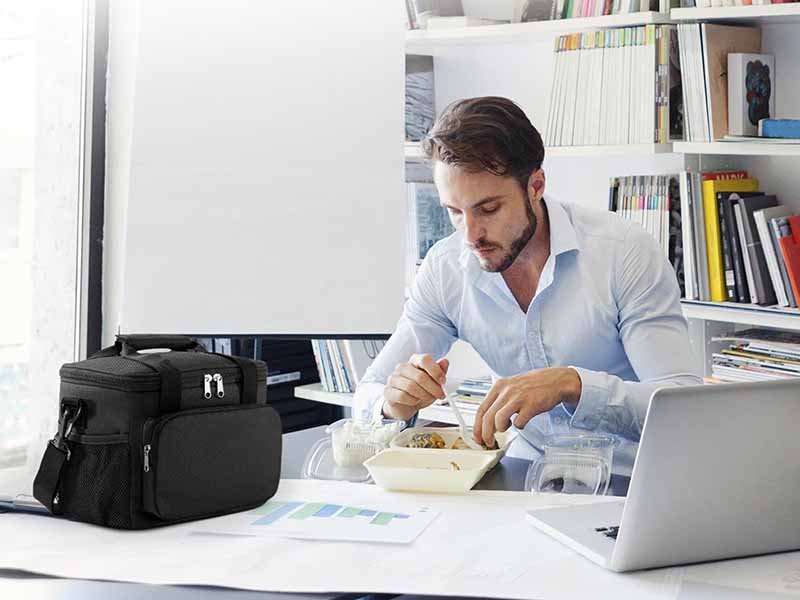
Most people shopping for a cooler bag think “thicker insulation = longer ice.” That’s partly true—but it’s not the real reason some coolers keep ice overnight while others feel warm before dinner. In real life, ice retention in cooler bags is a system: insulation material + insulation thickness + sealing quality + how air moves inside the bag. If one part is weak (especially sealing), the bag can lose hours of cooling even if the foam looks thick.
Ice retention in cooler bags is mainly determined by (1) foam type (closed-cell foams insulate better and absorb less water), (2) thickness and density (more mm helps only when the foam keeps its shape under stitching and load), and (3) sealing (zippers, seams, lid structure, and liner design control cold leakage). When these three are engineered together, ice retention can improve by 30–80% versus “same thickness but weak sealing.”
Here’s a quick story we see a lot: a brand orders samples from two factories. Both claim “10mm insulation.” In photos, both look similar. After field testing, one lasts 12 hours, the other lasts 7. The difference is almost never the number “10”—it’s the foam quality, seam compression, and leakage points you can’t see from a picture. This guide shows you where that performance is won (or lost).
What Is Ice Retention in Cooler Bags?

Ice retention in cooler bags is how long ice remains solid (or how long the internal temperature stays under a target level) under defined conditions. It’s not a marketing phrase—it’s a measurable result that changes dramatically with heat, openings, and packing method.
A practical way to think about it
Ice retention = heat entering the bag − cold capacity inside the bag.
If heat enters faster than your ice can absorb it, ice melts quickly.
What Does Ice Retention in Cooler Bags Really Mean?
When customers ask for “12-hour” or “24-hour” performance, they usually mean one of these:
- “Ice still visible” after X hours (ice cubes not fully melted)
- Internal temperature stays under 5°C / 41°F for food safety
- Internal temperature stays under 8°C / 46°F for short cold-chain use (less strict)
- Contents feel cold to touch (subjective, but common)
As a factory, Lovrix recommends brands define the goal using one clear endpoint before sampling, such as:
- Endpoint A (ice-based): “At least 30% of ice remains after X hours”
- Endpoint B (temperature-based): “Internal core stays ≤5°C for X hours”
Because two products can show very different results depending on which endpoint is used.
Common retention ranges you’ll see in soft cooler bags
These are not “best case” lab numbers—these are ranges we commonly see when the bag is filled properly and used outdoors:
| Cooler bag level | Common insulation build | Realistic ice retention range |
|---|---|---|
| Basic lunch cooler | 3–5mm PE/EPE foam + simple zipper | 3–6 hours |
| Mid-range daily cooler | 5–8mm EVA/EPE + better lid fit | 6–12 hours |
| Outdoor / beach cooler | 8–12mm EVA + structured panels | 10–18 hours |
| High-performance soft cooler | 10–15mm PU/EVA + sealed zipper + welded liner | 18–30+ hours |
Important: opening the bag frequently can cut these numbers by 20–40%.
How Is Ice Retention in Cooler Bags Tested?
If you want results you can trust (and repeat), you need a test method that controls variables.
A simple factory-friendly test setup
Lovrix often uses this “consistent comparison test” during sampling:
- Ambient temperature: 30–32°C (86–90°F)
- Ice amount: 2 kg ice per ~10–15L internal volume (adjust based on bag size)
- Fill ratio: 70–80% filled (ice + products)
- Bag placed in shade (or specify “sun test” separately)
- Open/close schedule: No opening OR “open 30 seconds every 2 hours” (choose one)
What to record
- Start time
- Internal core temperature every 30–60 minutes (simple probe)
- Time when:
- ice is 50% melted
- ice fully melted
- internal temperature exceeds your target (5°C / 8°C / 10°C)
Why “same thickness” samples test differently
Because real heat entry usually happens through:
- zipper line
- lid edge gap
- stitched seams that compress foam
- corners where foam is cut poorly
So testing must include “weak points,” not only the center panel.
Which Factors Distort Ice Retention Results?
If you’ve ever tested cooler bag samples and felt the results were “random,” it’s usually because of these variables.
1) Fill ratio (most common mistake)
A half-empty cooler bag performs much worse because warm air circulates inside.
- 80% filled: stable cold pocket, slower melt
- 40% filled: more air movement, faster melt
Rule of thumb: going from 80% filled down to 40% filled can reduce retention by 15–30%.
2) Ice type
- Block ice melts slower than cubes (less surface area)
- Small cubes melt fastest
- Gel packs behave differently (great for temperature control, less “ice remaining” visibility)
3) Opening frequency
Every time you open the lid, you replace cold air with warm humid air.
Frequent access (like delivery or beach use) can reduce retention by 20–40% even with good insulation.
4) Dark exterior + sun exposure
Black/navy fabrics absorb more heat. In direct sunlight, surface temperature can rise far above ambient, accelerating melt.
For summer outdoor use, color and reflective surface choices matter.
5) Foam compression at seams
Thick foam that collapses under stitching is “thick on paper” but thin where it matters most.
Which Foam Type Improves Ice Retention in Cooler Bags?

The best foam type for ice retention in cooler bags is usually a closed-cell foam system (EVA, EPE, PE, PU). Closed-cell foams trap air inside tiny sealed pockets, so heat moves slower and water absorption is low. Open-cell foams absorb moisture and lose insulating performance much faster.
What Is the Best Foam Type for Ice Retention in Cooler Bags?
There is no single “best foam” for every product, because performance and cost must match your use case. But you can rank foam choices by insulation efficiency and durability.
Quick comparison (practical)
| Foam type | What it’s good at | Where it’s risky |
|---|---|---|
| PE foam | low cost, light weight | lower shape stability on premium bags |
| EPE foam | good value, soft feel | can compress at seams if density is low |
| EVA foam | strong shape retention, good insulation | higher cost than PE/EPE |
| PU foam (higher density) | strongest insulation per mm | cost + process control is higher |
What “closed cell” really means for cooling
Closed-cell foam reduces heat transfer in three ways:
- limits conduction (solid-to-solid heat movement)
- reduces air movement inside the foam structure
- resists water soaking into the insulation layer
Once insulation starts soaking up water (or gets crushed), performance drops.
How Do PE, EVA, EPE, and PU Foam Type Compare for Ice Retention?
Instead of vague claims, compare them by measurable behaviors:
Key behaviors that affect ice retention
- thermal conductivity (lower is better)
- compression set (how much foam stays crushed after load)
- water absorption (lower is better)
- seam performance (how foam behaves when stitched)
Here’s a useful “engineering-style” comparison:
| Foam type | Typical conductivity (W/m·K) | Compression resistance | Water absorption risk | Best use case |
|---|---|---|---|---|
| PE | 0.033–0.040 | medium | low | entry lunch coolers |
| EPE | 0.030–0.038 | medium | low | mid-range daily coolers |
| EVA | 0.028–0.035 | high | very low | beach / outdoor coolers |
| PU (HD) | 0.020–0.025 | medium–high (depends on grade) | low | high-performance soft coolers |
What this means in simple terms: PU can give you more cooling per mm, EVA gives you excellent structure and consistent performance, PE/EPE are great when cost is the main target.
Does Foam Density Affect Ice Retention in Cooler Bags?
Yes—density is often the “hidden spec” that separates a good cooler from a disappointing one.
Two foams can both be “8mm,” but if one is low density, stitching and load can crush it down to 5–6mm at seams and corners. That reduces insulation exactly where heat leaks in the fastest.
What to request from a factory (very practical)
When developing a custom cooler bag, don’t only ask:
- “How many mm?”
Also ask:
- “What foam density range?”
- “What’s the compression set performance?”
- “How does it perform at seams and corners?”
Why this matters for brands
If your retail customers complain “it doesn’t stay cold,” the root cause is often:
- foam too soft (crushed)
- zipper leakage
- lid gap
- poor liner bonding
Not the “thickness number” itself.
A simple factory rule
If the bag is meant to carry heavy items (cans, bottles), use a foam that maintains structure under pressure. That usually means:
- higher-density EVA or reinforced EVA systems
- structured panels (board support) for large sizes
How Does Thickness Affect Ice Retention in Cooler Bags?
Insulation thickness directly influences ice retention in cooler bags, but only when thickness is paired with proper foam density and structural design. Increasing thickness slows heat transfer, but beyond a certain point, returns diminish if sealing and air management are not optimized.
In simple terms:
Thickness helps — but only when the structure supports it.
What Thickness Is Ideal for Ice Retention in Cooler Bags?
There is no universal “best thickness.” The right thickness depends on:
- Internal volume
- Intended usage time
- Target ambient temperature
- Cost positioning
- Product weight expectations
Below is a practical reference based on real production experience:
| Foam Thickness | Typical Use Case | Realistic Ice Retention Range | Notes |
|---|---|---|---|
| 3–5mm | Lunch bags | 3–6 hours | Lightweight, budget level |
| 5–8mm | Daily cooler bags | 6–12 hours | Balanced performance |
| 8–12mm | Outdoor / beach coolers | 10–18 hours | Good for moderate heat |
| 10–15mm | High-performance soft coolers | 18–30+ hours | Requires strong sealing |
What many brands overlook
Increasing from 5mm to 8mm often improves retention by 25–40%.
Increasing from 10mm to 15mm may only improve retention by 10–20% — unless sealing is upgraded.
Why?
Because once conduction is reduced, convection and leakage become dominant heat sources.
Does Thicker Foam Always Improve Ice Retention?
No — and this is one of the biggest misunderstandings in product development.
Why thicker insulation sometimes fails
- Seam compression
- Thick foam stitched too tightly becomes thin at seams.
- An 8mm foam can compress to 5mm at stitch lines.
- These become heat entry channels.
- Lid gap
- Thick side walls don’t help if the lid does not seal tightly.
- Even 1–2mm of lid gap can significantly increase heat exchange.
- Weight increase
- Thicker foam adds weight.
- Heavier bags may feel “premium,” but customers may not want extra weight for short trips.
- Bulkiness
- Retail customers often reject oversized cooler bags.
- A bulky product reduces portability.
Practical thickness strategy
At Lovrix, we often recommend:
- Lunch cooler: 5mm EVA
- Family beach cooler: 8–10mm EVA + reinforced structure
- Premium outdoor cooler: 10–12mm EVA + high-performance sealing
- Medical sampling cooler: 12–15mm PU system
The right thickness depends on the product promise.
How Do Air Gaps Reduce Ice Retention in Cooler Bags?
Air gaps are one of the most underestimated factors affecting ice retention in cooler bags.
There are two types of air gaps:
1) Internal air gaps (inside the bag)
When the bag is not filled properly, warm air circulates inside. Air circulation accelerates melting through convection.
Example:
| Fill Level | Performance Impact |
|---|---|
| 80–90% filled | Optimal retention |
| 60% filled | ~10–15% faster melt |
| 40% filled | ~20–30% faster melt |
Cold air is dense and falls downward. Warm air rises. If internal space is large, convection cycles form.
2) Structural air gaps (inside the insulation system)
If foam is not bonded properly to liner or outer fabric:
- Air pockets form
- Panels shift
- Heat flows unevenly
High-quality construction minimizes these dead spaces.
Design methods to reduce air gaps
- Better pattern alignment
- Proper panel bonding
- Lid overlap design
- Internal compartment inserts (when needed)
- Tight but not over-compressed foam fitting
Reducing air gaps can improve effective ice retention by 10–25% without increasing thickness.
That’s often more cost-efficient than adding more foam.
How Does Sealing Improve Ice Retention in Cooler Bags?

Sealing controls cold leakage. Even the best insulation fails if the bag leaks cold air through zippers, seams, or lid edges.
In real-world testing, sealing quality can change ice retention performance by 30–60%, even when insulation thickness is identical.
Sealing is where engineering becomes visible.
Which Sealing Method Protects Ice Retention Best?
Different closure systems produce very different results.
Common sealing systems ranked by performance
| Closure Type | Ice Retention Effect | Notes |
|---|---|---|
| Simple nylon zipper | Low–moderate | Air leakage likely |
| Reverse coil zipper | Moderate | Slight improvement |
| Waterproof zipper | High | Better barrier |
| Airtight zipper (pressure type) | Very high | Expensive |
| Roll-top with buckle | High | Good compression seal |
| Flap + Velcro | Moderate | Depends on lid overlap |
Why zipper matters so much
Zippers are long linear openings. They are often the largest thermal weak point.
A simple stitched zipper without sealing tape allows air exchange along the entire length.
For higher-performance cooler bags, upgrading zipper type often improves retention more than adding 2–3mm foam.
Do Zippers Reduce Ice Retention in Cooler Bags?
Yes — especially when:
- Zipper teeth are exposed
- There is no backing flap
- The zipper is poorly aligned
- The lid does not compress evenly
Real-world observation
In controlled testing:
- Standard coil zipper vs waterproof zipper
- Same foam thickness
Retention difference observed: 15–25% improvement with upgraded zipper.
Why?
Because air infiltration slows down.
For high-end cooler bags, combining:
- Waterproof zipper
- Internal flap
- Compression lid design
creates a layered seal system.
How Do Seam Construction and Liners Affect Ice Retention?
Seams are where insulation layers meet.
There are two main seam methods:
1) Stitched seams
- Common in soft coolers
- Lower cost
- Risk of micro air channels
2) Welded seams (heat-welded or RF welded)
- Better waterproofing
- Reduced leakage
- Stronger liner integration
Liner impact
The inner liner affects:
- Moisture barrier
- Cold containment
- Water leakage resistance
Common liner materials:
| Liner Material | Performance | Use Level |
|---|---|---|
| PEVA | Good moisture barrier | Mid-level |
| Aluminum foil layer | Reflective, limited structural strength | Budget |
| TPU | Strong, flexible, weldable | Premium |
| PVC | Durable, heavy | Industrial |
Welded TPU liner systems significantly reduce meltwater leakage and cold loss.
In higher-end cooler bags, liner + seam system often determines whether a bag feels “serious” or “basic.”
What Else Impacts Ice Retention in Cooler Bags?

Foam type, thickness, and sealing form the foundation of ice retention in cooler bags. But performance in real-world conditions depends on additional variables that many brands overlook:
- Liner material selection
- Exterior fabric heat absorption
- Ice-to-volume ratio
- Structural shape engineering
- Usage environment
- Cost-performance balance
The brands that understand these variables design cooler bags that perform consistently—not just in lab tests, but in customers’ hands.
Does Liner Material Affect Ice Retention in Cooler Bags?
Yes. The liner material influences both moisture containment and thermal stability.
The liner does not provide the main insulation — that’s the foam’s job. But it controls:
- Meltwater leakage
- Air infiltration through seams
- Surface reflectivity
- Structural bonding
Common Liner Materials Compared
| Liner Type | Strength | Ice Retention Contribution | Typical Positioning |
|---|---|---|---|
| PEVA | Flexible, lightweight | Moderate | Mid-range retail |
| Aluminum foil laminated | Reflective | Low–Moderate | Budget coolers |
| PVC | Strong, heavy | Moderate | Industrial use |
| TPU (weldable) | Durable, elastic | High (when welded) | Premium soft coolers |
Why TPU liners are gaining popularity
TPU allows heat welding instead of stitching. That means:
- Fewer micro air channels
- Better waterproof containment
- Cleaner internal structure
In our production experience at Lovrix, upgrading from stitched PEVA to welded TPU can improve effective retention performance by 10–20%, even with the same insulation thickness.
How Does Exterior Fabric Impact Ice Retention in Cooler Bags?
Exterior fabric choice affects solar heat absorption.
In direct sunlight:
- Dark fabric surface temperatures can exceed ambient temperature by 10–20°C.
- Light or reflective fabrics absorb less radiant heat.
Surface Heat Observation (Approximate)
| Exterior Color | Surface Temp at 32°C Ambient |
|---|---|
| Black | 45–55°C |
| Navy | 42–50°C |
| Grey | 38–45°C |
| Light Beige | 35–40°C |
That surface heat transfers inward through conduction.
Fabric Selection Strategy
For summer outdoor cooler bags:
- Use lighter colorways
- Consider reflective outer coating
- Choose fabrics with lower heat absorption
- Add UV-resistant coating when needed
Lovrix controls outer fabric production in-house, allowing adjustment of:
- Coating thickness
- Color options
- Reflective lamination
- Fabric weight (denier choice)
Exterior material is often ignored during sampling—but it directly affects field performance.
How Do Size and Ice Ratio Affect Ice Retention in Cooler Bags?
Bag volume and ice quantity must be proportionally balanced.
General Ice Ratio Recommendation
For effective cooling:
- Use 2:1 ice-to-contents ratio by weight for strong retention
- Minimum 1:1 for short duration
- Less than 1:1 significantly reduces duration
Example: 20L Cooler Bag
If internal volume is 20 liters:
- 6–8kg of contents
- 4–6kg of ice (ideal for long retention)
If you only use 1–2kg ice, performance drops sharply.
Why Larger Bags Need More Insulation
Large coolers have:
- Greater surface area
- More heat exposure
- Higher internal air movement
Therefore:
- 20L bag may work well with 8mm insulation
- 40L bag may require 10–12mm for equivalent performance
Scaling volume without scaling insulation thickness reduces efficiency.
Which Cooler Bag Structure Maximizes Ice Retention?
Structure determines airflow control, foam integrity, and compression performance.
Even perfect materials fail with poor structure.
Soft Collapsible Structure vs Structured Panel System
Collapsible Soft Structure
- Lightweight
- Easy to fold
- Lower cost
- More prone to air gap formation
Structured Panel System (PE board / reinforced walls)
- Maintains shape
- Reduces foam compression
- Stabilizes internal air flow
- Improves long-duration retention
In field comparisons:
- Structured systems often perform 10–20% better in extended tests.
Lid Engineering and Overlap Design
Lid design is one of the most underestimated variables.
Effective lid strategies:
- Overlapping lid edge design
- Internal compression lip
- Double-layer insulation in lid
- Reinforced lid frame
Even a 1–2mm lid misalignment can reduce performance significantly.
Multi-Layer Insulation Systems
Advanced cooler bags may use layered insulation:
Example configuration:
- Outer fabric
- 8mm EVA
- Reflective layer
- 5mm secondary foam
- TPU welded liner
Layering improves resistance to:
- Conduction
- Radiation
- Air infiltration
But it increases cost and weight.
Cost vs Performance Strategy
Ice retention in cooler bags must match market positioning.
Over-engineering reduces margin. Under-engineering increases returns and complaints.
Performance Positioning Matrix
| Market Level | Target Retention | Recommended Build |
|---|---|---|
| Promotional | 3–5 hours | 3–5mm PE + simple zipper |
| Retail mid-range | 6–10 hours | 5–8mm EVA + upgraded zipper |
| Outdoor premium | 10–18 hours | 8–12mm EVA + reinforced sealing |
| High-performance | 18–30+ hours | 10–15mm PU + welded liner + waterproof zipper |
The key is clarity:
Define your performance promise first, then engineer backwards.
OEM Development Strategy with Lovrix
Lovrix operates:
- Fabric factory
- Webbing factory
- Bag manufacturing lines
18+ years of integrated production allows:
- Custom insulation selection
- Thickness optimization
- Liner welding or stitching
- Zipper upgrade selection
- Structural reinforcement
- Low MOQ development
- Rapid sampling
- Performance tuning before bulk production
When clients approach us for custom cooler bags, we ask:
- Target retention hours?
- Expected ambient temperature?
- Bag volume?
- Target retail price?
- Intended usage frequency?
Then we propose an insulation system aligned with those parameters.
We don’t just produce cooler bags.
We engineer performance to match your market.
Final Thoughts: What Truly Determines Ice Retention in Cooler Bags?
Ice retention in cooler bags is not controlled by one material or one number.
It is determined by:
- Foam type and density
- Insulation thickness
- Sealing quality
- Liner construction
- Structural design
- Exterior fabric choice
- Ice ratio and usage behavior
Brands that treat cooler bags as simple “foam bags” struggle with performance consistency. Brands that treat them as engineered thermal systems create products customers trust.
If you are developing:
- Private label cooler bags
- Promotional insulated lunch bags
- Beach or outdoor coolers
- Cold-chain soft transport bags
- Custom insulated delivery bags
Lovrix can help you design the right insulation structure based on your target performance and price range.
Ready to Develop Your Custom Cooler Bag?
Whether you need:
- Low MOQ sampling
- Thickness optimization
- Performance testing guidance
- Premium welded liner systems
- Cost-performance balance engineering
Lovrix provides integrated material control and 18+ years of cooler bag development experience.
Contact us today to discuss your project specifications, target ice retention, and custom requirements.
Let’s build a cooler bag that performs exactly as your customers expect.


