 Skip to content
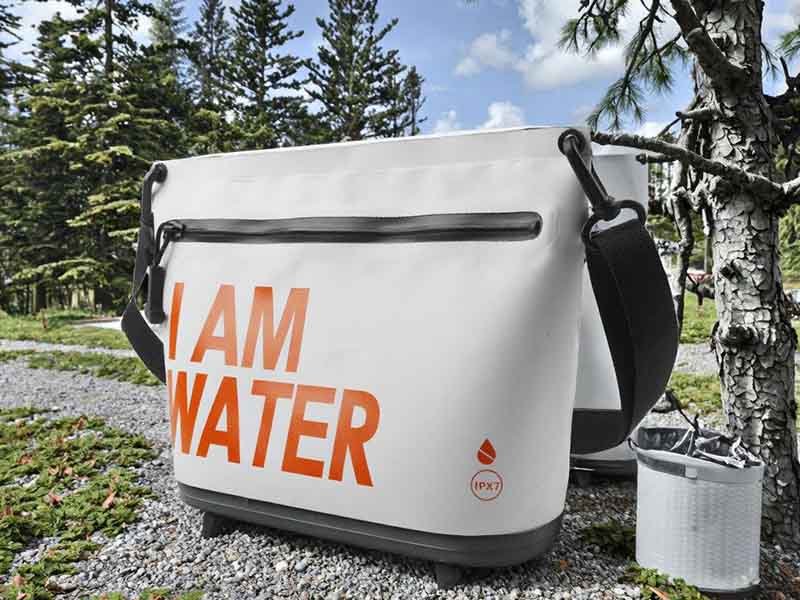
A waterproof bag can look perfectly intact and still leave a phone, jacket, medical kit, document, or electronic device damp after one wet trip. That apparent contradiction usually comes from the way waterproof performance is described. Buyers often focus on one visible feature: a TPU or PVC material, a coated fabric, a waterproof-looking zipper, or a roll-top closure. Water, however, does not evaluate individual features. It finds the weakest path through the complete bag.
Waterproof bags leak when one or more parts of the waterproofing system fail. Common causes include damaged coatings, needle holes, unsealed seams, incomplete welds, leaking zipper ends, incorrectly folded roll-tops, poorly designed attachment points, abrasion damage, and exposure beyond the bag’s tested limits. Moisture may also come from condensation or wet contents rather than external leakage.
For brands and commercial buyers, leakage is therefore not just a fabric problem. It is a product-definition, material-selection, structural-design, manufacturing, testing, and quality-control problem. A bag designed for rain protection should not automatically be marketed as submersible. A fabric test report should not be treated as proof that the completed product will remain dry.
Imagine examining a returned waterproof backpack that has no visible tear. The main fabric passes a water-pressure test, the zipper has a glossy coating, and the sewing appears neat. Yet one unsealed stitch line beneath a handle reinforcement may explain dozens—or even hundreds—of customer complaints. That is where a professional leak investigation begins.
What Does Waterproof Really Mean?

A waterproof bag is not defined by its fabric alone. True waterproof performance depends on the material, seams, closures, attachment points, construction method, exposure time, and water pressure. A bag may handle heavy rain yet fail during immersion, so every waterproof claim should be connected to a clear use condition and a repeatable finished-product test.
Waterproof Is a Performance Claim
The word “waterproof” is often used too broadly. In real applications, there is a major difference between a backpack that keeps its contents dry during a 20-minute walk in the rain and a dry bag expected to protect equipment after falling into a river.
A useful product specification should state exactly what the bag is expected to resist:
- Occasional splashes
- Light or moderate rain
- Prolonged heavy rain
- Water pooling on the surface
- Short accidental immersion
- Continuous immersion at a defined depth
These conditions create different engineering demands. Rainwater may move across the outer surface and enter gradually through a zipper, seam, or opening. Immersion surrounds the entire product and applies pressure to the panels, seams, corners, attachments, and closure at the same time.
A waterproof statement without a test condition is difficult for a buyer to verify. Procurement teams should ask how long the product was tested, whether it was loaded, how the closure was operated, what water depth or spray level was used, and whether the test covered the completed bag or only a piece of fabric.
| Term | Practical meaning | Typical use | Main limitation |
|---|---|---|---|
| Water-repellent | Water beads on the outer surface | Short exposure to moisture | Surface treatment may wear away |
| Water-resistant | Delays penetration from rain or splashes | Commuting, travel, daily outdoor use | Seams and zippers may still leak |
| Waterproof | Prevents penetration under defined conditions | Outdoor, cycling, marine and protective storage | Does not automatically mean submersible |
| Watertight | Controls water entry through the complete enclosure | Wet work environments and equipment protection | Assembly and closure quality are critical |
| Submersible | Designed for immersion at a stated depth and duration | Marine, rescue and electronic protection | Depth and time limits still apply |
The most credible language is specific. “Designed for prolonged heavy rain” is more useful than a general waterproof claim. “Tested under controlled immersion for 30 minutes” is more meaningful than printing “100% waterproof” without defining the test.
Fabric Is Only One Layer
A waterproof fabric can lose much of its protective value once it is converted into a finished bag. Cutting, stitching, folding, embroidery, printing, riveting, zipper installation, hardware attachment, and reinforcement can all interrupt the original water barrier.
Consider a PU-coated polyester panel. The coating may resist water effectively when tested as a flat, uncut specimen. Once the panel is sewn to a zipper, every needle hole creates a potential entry path. If a logo patch is stitched through the front panel, another group of penetrations is created. If shoulder webbing passes directly through the shell, water may travel along the thread or between compressed material layers.
Finished-product waterproofing depends on a connected system:
- Base fabric construction
- Coating or laminated film
- Seam design
- Closure type
- Zipper installation
- Handle and shoulder-strap attachments
- Pattern geometry
- Reinforcement method
- Production consistency
A single weak component can reduce the performance of the whole bag. A strong waterproof fabric combined with an ordinary zipper and exposed stitching may provide only moderate rain protection. A properly welded construction using compatible materials and a well-designed roll-top may provide much stronger protection, even when its material specification appears less impressive on paper.
Pressure Changes the Result
Water penetration is affected by pressure as well as exposure time. A fabric may resist surface rain for several hours but begin to leak when water is held against it or when the material is submerged.
Hydrostatic head testing measures the water pressure a fabric can resist before droplets begin passing through. Results are commonly expressed in millimetres of water column. Higher values generally indicate stronger fabric-level water resistance, but they do not prove that the finished bag will perform at the same level.
As a general purchasing reference, fabrics below approximately 1,500 mm are usually associated with light moisture resistance. Values around 3,000 to 5,000 mm may support moderate rain applications, while higher values are often selected for more demanding outdoor exposure. These ranges are indicative rather than universal because material structure, coating type, test method, ageing, and product construction all affect performance.
A fabric rated at 10,000 mm may still leak quickly if it is assembled using unsealed stitching. A lower-rated material may perform adequately in a splash-resistant pouch when the structure keeps water away from seams and openings.
The correct purchasing question is not simply, “What is the fabric’s waterproof rating?” It is, “What exposure must the completed product survive, and has the complete bag been tested under that condition?”
Where Do Waterproof Bags Usually Leak?

Waterproof bags usually leak at construction transitions rather than through the centre of an undamaged panel. The most common failure points are stitched seams, zipper ends, corners, gusset intersections, roll-top closures, handle anchors, valves, transparent windows, external pockets, and worn bottom panels. These areas combine changes in material, thickness, stress, geometry, or manufacturing method.
Seams and Needle Holes
Conventional sewing is suitable for many water-resistant bags, but every stitch punctures the outer material. A single needle hole may look insignificant. A long seam containing hundreds of stitches can create hundreds of possible water-entry points.
Thread can also transport moisture through capillary action. Once the exposed seam becomes wet, water may move along the fibres and through the needle holes. The risk is influenced by:
- Needle diameter
- Stitch density
- Thread construction
- Thread tension
- Seam allowance
- Coating condition
- Seam position
- Seam-tape adhesion
Increasing stitch density does not necessarily improve waterproof performance. More stitches may create more perforations and weaken the coating along the seam line. A larger needle may improve sewing stability on thick layers, but it can also create larger holes.
For rain-resistant backpacks and travel bags, leakage risk can often be reduced through storm flaps, reverse seams, covered zippers, compatible seam tape, internal binding, and careful seam placement. Products intended for immersion normally require more comprehensive sealing or a welded construction.
A seam must be assessed as both a mechanical and waterproof component. It should carry load without tearing while also limiting water penetration. Strength alone is not enough, and water resistance alone is not enough.
Corners and Junctions
Corners are among the most difficult parts of a waterproof bag to manufacture consistently. Several material layers may meet in a small space, and each additional layer changes the pressure, heat, folding behaviour, and seam thickness.
Typical high-risk zones include:
- Bottom corners
- Sidewall-to-base seams
- Curved gussets
- Folded roll-top ends
- Zipper start and stop points
- Reinforcement intersections
- Handle and shoulder-strap bases
- External pocket junctions
In welded construction, a small wrinkle can form a narrow channel that allows water to pass. In seam-taped construction, tape may not follow a tight curve evenly. In sewn construction, thick layer transitions may cause skipped stitches, enlarged needle holes, or unstable thread tension.
Pattern engineering is just as important as operator skill. A sharp three-dimensional corner may be difficult to weld repeatedly, while a larger radius can provide more stable pressure and material flow. Simplifying a complex seam junction often improves both appearance and leak resistance.
The most economical time to solve corner leakage is during pattern and sample development. Once tooling, seam allowance, and production methods have been fixed, corrective changes become slower and more expensive.
Attachments and Accessories
Handles, shoulder straps, D-rings, buckles, valves, patches, windows, and other accessories can become leak paths even when the main body is properly sealed.
A handle attachment illustrates the engineering conflict. The area must carry weight and resist repeated pulling. Adding more stitches may improve load distribution, but it also creates more perforations. A welded reinforcement can reduce needle holes, but only when the material is thermoplastically compatible and the weld area is large enough to distribute stress.
Logo applications also require careful selection. Embroidery through a waterproof panel may create an attractive premium appearance, but every stitch breaks the water barrier. Depending on the product, a welded patch, surface print, heat transfer, moulded label, or separately mounted badge may be more suitable.
| Leak location | Typical symptom | Likely cause | Practical response |
|---|---|---|---|
| Stitched seam | Wet line follows the seam | Needle holes or failed seam tape | Seal, tape, cover, reposition, or redesign seam |
| Zipper end | Water collects near one end | Poor end-stop sealing | Extend cover or redesign zipper termination |
| Bottom corner | Local pooling or slow seepage | Wrinkle, weld channel, or worn coating | Improve corner radius and reinforcement |
| Handle base | Wetness appears around attachment | Stitch penetration or layer gap | Move anchor or use sealed reinforcement |
| Flat panel | Small isolated wet spot | Puncture, pinhole, or abrasion | Patch and review material durability |
| Roll-top opening | Water appears near the top | Too few folds or uneven closure | Increase roll height and improve instructions |
| Clear window edge | Moisture follows the perimeter | Incomplete weld or weak adhesive bond | Increase bonding area and inspect continuity |
A professional leak investigation follows the complete water path instead of automatically blaming the fabric. The first visible wet area is not always the original entry point because water may travel between the outer shell and lining before appearing inside.
How Do Materials and Coatings Fail?

Waterproof materials fail when the coating or laminated film cracks, separates, wears away, develops pinholes, or loses adhesion to the base textile. Long-term performance depends on coating chemistry, film thickness, flexibility, abrasion resistance, temperature, storage conditions, repeated folding, and compatibility with welding or seam-sealing processes.
Different Materials, Different Risks
There is no single best waterproof material for every bag. Material selection should begin with the product’s intended use, expected weight, service life, flexibility, appearance, seam method, environmental conditions, target price, and retail position.
PU-coated polyester is widely used because it is flexible, printable, and cost-efficient. It is suitable for many rain-resistant backpacks, travel bags, covers, and outdoor accessories. Its limitations may include coating abrasion, hydrolysis, and the need for seam sealing.
PVC tarpaulin is robust and generally easy to weld. It is widely used for dry bags, marine products, industrial covers, and heavy-duty outdoor equipment. Depending on formulation, its disadvantages may include weight, stiffness, odour, and reduced flexibility at low temperatures.
TPU-laminated nylon or polyester can provide good flexibility, a cleaner surface, and strong performance for premium waterproof products. It may offer better cold-weather flexibility than some PVC structures, but material and processing costs are usually higher.
| Material system | Common construction | Typical strengths | Common concerns |
|---|---|---|---|
| PU-coated polyester | Sewn, taped, sometimes bonded | Cost-efficient, printable, flexible | Hydrolysis, abrasion, seam leakage |
| PU-coated nylon | Sewn and taped | Lightweight, strong, flexible | Higher cost and coating wear |
| PVC tarpaulin | RF or hot-air welded | Durable, economical, easy to clean | Weight, stiffness and cold performance |
| TPU-laminated polyester | Hot-air or RF welded | Stable, flexible, good surface quality | Film consistency and bonding control |
| TPU-laminated nylon | Welded technical construction | Lightweight, premium and flexible | Higher material and process sensitivity |
| Coated Oxford fabric | Sewn and seam-sealed | Familiar appearance and broad specification range | Usually unsuitable for immersion without added sealing |
Denier is frequently misunderstood. A 600D fabric is not automatically more waterproof than a 300D fabric. Denier describes yarn mass, while waterproof performance is more directly influenced by coating or film quality, thickness, adhesion, continuity, pinholes, and finished-product construction.
Coating Breakdown
Coatings can deteriorate even when the woven base fabric remains mechanically strong. Heat, humidity, ultraviolet exposure, chemicals, repeated folding, surface contamination, and abrasion all influence the life of the water barrier.
PU coatings may experience hydrolysis. Over time, moisture and heat can cause the coating to become sticky, powdery, brittle, cracked, or separated from the textile. This is especially relevant when finished bags or material rolls are stored for long periods in warm, humid warehouses or shipping containers.
PVC can provide strong water resistance, but poor formulation may lead to hardening, cracking, noticeable odour, or reduced low-temperature flexibility. TPU laminates generally offer good flex performance, but inconsistent adhesive bonding, contamination, excessive processing heat, or unsuitable welding settings can damage the film or cause delamination.
Common warning signs include:
- Surface tackiness
- White stress lines
- Cracks along repeated folds
- Peeling film
- Surface bubbling
- Uneven gloss
- Pinholes
- Local thinning
- Powdering
- Reduced flexibility
Material inspection should therefore cover more than colour and hand feel. For demanding waterproof products, buyers should also consider film thickness, coating adhesion, hydrostatic performance, abrasion resistance, fold resistance, and low-temperature behaviour.
Thickness and Durability
Thicker coatings and films can improve puncture resistance and provide a greater margin against abrasion, but excessive thickness can create new problems. Heavy materials are more difficult to fold, harder to weld around corners, less comfortable to carry, and more expensive to transport.
The correct thickness depends on the application. A lightweight waterproof running pouch does not require the same material as a 40-litre rafting dry bag. A tool bag needs greater resistance to sharp internal objects, while a waterproof cosmetic pouch may mainly require easy cleaning and temporary liquid containment.
Material selection should consider at least eight variables:
- Expected product load
- Contact with sharp objects
- Frequency of folding
- Surface abrasion
- Low-temperature exposure
- Required flexibility
- Product size and geometry
- Target retail positioning
A common development mistake is testing only a new prototype. A bag may pass an immersion test before launch but develop microcracks after repeated folding or abrasion. Flex testing, abrasion testing, low-temperature evaluation, and accelerated ageing can provide a more realistic view of long-term performance.
The best waterproof material is not automatically the one with the highest laboratory rating. It is the material system that maintains suitable performance after cutting, assembly, packaging, transport, storage, repeated handling, and real use.
How Do Seams and Closures Fail?

Seams and closures fail when they cannot maintain a continuous barrier under water, folding, pressure, load, and repeated use. Needle holes may leak, seam tape may lift, welded seams may contain channels, and water-resistant zippers may admit water around sliders or end stops. Roll-top closures may also fail when overfilled or folded incorrectly.
Seam Tape Failure
Seam tape is commonly used to seal stitched seams on coated or laminated fabrics. When correctly selected and applied, it can provide effective protection against rain and moderate water exposure. When poorly matched, it may begin peeling after production, storage, transport, or repeated use.
Reliable tape application depends on:
- Tape chemistry
- Fabric coating type
- Surface cleanliness
- Application temperature
- Roller pressure
- Machine speed
- Seam geometry
- Cooling time
- Tape width
One frequent mistake is assuming that the same seam tape works on every PU-coated fabric. Coating formulas vary between suppliers and even between different material series. A tape that bonds strongly to one coating may have poor adhesion to another surface that looks almost identical.
Curved seams are especially demanding. Tape must follow the shape without wrinkling, stretching excessively, or bridging across a recessed area. Thick seam intersections can reduce pressure and create partially bonded sections. Oil, dust, release agents, moisture, and repeated handling can also reduce adhesion.
Peel or adhesion testing should be performed on the actual production material rather than relying only on a tape supplier’s standard laboratory sample. For demanding markets, the sealed seam may also need to be checked after flexing, heat ageing, humidity exposure, or low-temperature conditioning.
Welded Seam Failure
Welded seams avoid needle holes by fusing compatible thermoplastic layers. Common processes include hot-air welding, hot-wedge welding, ultrasonic methods for selected applications, and high-frequency or RF welding.
A welded seam can still fail because of:
- Insufficient heat or welding energy
- Excessive heat
- Uneven pressure
- Incorrect machine speed
- Narrow overlap
- Wrinkled material
- Surface contamination
- Film thinning
- Poor tooling
- Difficult corner geometry
- Incompatible material layers
Low energy can produce a seam that looks complete but separates under load. Excessive energy can thin, distort, burn, or embrittle the film. A visually wide weld may still contain an unbonded internal channel.
Production control should define the seam overlap, approved machine settings, weld appearance, strength-testing method, and inspection frequency. Settings may need adjustment when material thickness, colour, coating batch, factory temperature, humidity, or product geometry changes.
Welding is a controlled manufacturing process rather than an automatic guarantee. Consistent results depend on the relationship between material chemistry, tooling, pressure, time, energy, temperature, and operator technique.
Zipper Limitations
Many products described as waterproof use coated reverse-coil zippers. These zippers can provide effective rain resistance, but most are not designed for prolonged immersion.
Water can enter through:
- Small gaps near the slider
- Zipper start and end stops
- Curved installations
- Stitching beside the zipper tape
- Damaged surface coating
- Debris in the chain
- A partially closed slider
- Poorly sealed zipper garages
Water-resistant and watertight zippers should not be treated as the same component. A fully watertight zipper typically uses a specialised profile, sealing surface, slider, installation method, and end treatment. It may require greater opening force, stricter maintenance, and a higher product budget.
The zipper must match the intended use. A coated zipper may be appropriate for a cycling backpack designed for heavy rain. It may not be suitable for a medical or electronic case expected to remain dry during immersion.
Installing an expensive zipper without redesigning the surrounding seams and end stops is a common mistake. Waterproof performance is determined by the complete opening system rather than the zipper chain alone.
Roll-Top Problems
Roll-top closures work by folding several layers of material to create a long, indirect water path. Their performance depends on both engineering and user behaviour.
Many roll-top products require at least three complete, tight rolls, although the exact number should be validated for the individual structure. Overpacking reduces the available material and often results in one or two shallow folds.
Common causes of roll-top failure include:
- Misaligned edges
- Trapped webbing
- Sand, hair, or debris
- Wrinkled material
- Weak buckle tension
- Insufficient roll height
- Excessively stiff fabric
- Downward-facing immersion
- Internal air pressure
- Incorrect user instructions
A good roll-top design makes correct closing easy to understand. The material should fold cleanly, the buckle position should guide the user, and the opening should leave sufficient height above the maximum fill level.
Clear instructions also matter. Even a properly engineered dry bag may leak when customers do not understand the required number of rolls, maximum loading level, or limits of the closure.
Is the Moisture Really a Leak?
Moisture inside a waterproof bag is not always caused by external penetration. Condensation, damp equipment, wet hands, cold bottles, humid air, or opening the bag in rain can introduce water internally. The difference can usually be identified by examining the moisture pattern, location, timing, exposure condition, and repeatability.
Condensation Inside the Bag
Waterproof materials usually have low air and water-vapour permeability. This helps block external water, but it also traps moisture already present inside.
Condensation forms when warm, humid air cools below its dew point. For example, a bag packed in warm coastal air may develop internal droplets after being placed in cold water. The same effect can occur when a bag moves from a humid outdoor environment into an air-conditioned vehicle or cold storage space.
Common condensation conditions include:
- Warm air sealed inside
- Cold-water exposure
- Damp clothing
- Wet towels
- Cold beverage bottles
- Humid storage
- Moist equipment
- Repeated temperature changes
Condensation usually appears as fine droplets or a thin film spread across a broad area. External leakage more often creates a concentrated wet line near a seam, zipper, corner, puncture, or attachment.
This distinction is particularly important for electronics, documents, optical equipment, and medical supplies. A waterproof outer shell may prevent direct water entry, but it cannot remove humidity already sealed inside. Moisture-sensitive products may require desiccant packs, humidity indicators, waterproof internal pouches, or sealed secondary packaging.
Condensation should not be used as an automatic explanation for every complaint. Controlled testing is still necessary before concluding that the bag itself did not leak.
Water Carried Inside
Users often introduce water into a bag without realising it. Wet clothing, swimwear, bottles, fishing tools, rain jackets, towels, shoes, and damp hands can transfer moisture to the interior.
This is particularly common in mixed-use outdoor bags. A customer may place a wet jacket beside a dry phone or document. When the dry item becomes damp, the outer shell is blamed even though the moisture originated inside.
Other internal moisture sources include:
- Washing the bag without allowing it to dry fully
- Packing the bag in rain
- Closing the opening with wet hands
- Storing the bag while damp
- Carrying chilled bottles
- Placing wet footwear inside
- Reopening the bag during exposure
Product descriptions should explain whether a bag is designed to keep external water out, contain internal liquid, or perform both functions. These requirements involve different seam designs and testing methods.
A waterproof backpack may resist rain from outside but still allow water from wet contents to move between internal compartments. A leak-resistant liner may contain liquid temporarily but may not be suitable for submersion.
Clear product language helps reduce unrealistic expectations and makes complaints easier to investigate.
User Closing Errors
Many apparent leakage cases are related to incorrect closing rather than a defective material.
Common errors include:
- Too few roll-top folds
- Partly closed zipper
- Overfilled bag
- Debris inside the seal
- Misaligned opening edges
- Trapped shoulder straps or fabric
- Buckle not fully engaged
- Opening the bag during rain
This does not remove the manufacturer’s responsibility. The closure should be intuitive enough for ordinary users. A structure that requires perfect handling every time will produce predictable misuse.
Usability testing can reveal these problems early. Give a prototype to people who have not seen the design and observe how they pack and close it. Do they naturally create enough folds? Do they understand the maximum fill level? Do they notice whether the zipper is completely closed?
Small design improvements can reduce complaints:
- Add a visible maximum fill line.
- Increase usable roll height.
- Use contrasting closure surfaces.
- Add concise closing instructions.
- Improve buckle positioning.
- Reduce stiffness at the opening.
- Prevent straps from crossing the sealing area.
Waterproof performance includes human interaction. A product that only works when closed by a trained technician is not ready for normal retail use.
Reading the Moisture Pattern
The location and shape of the wet area provide useful diagnostic evidence.
A line of moisture following a seam suggests needle-hole penetration or seam-seal failure. A localised spot on a flat panel may indicate a puncture, pinhole, or coating defect. Water concentrated near a zipper end often points to the end treatment rather than the zipper surface itself.
Fine, evenly distributed droplets are more consistent with condensation. If absorbent test paper remains dry while a wet garment transfers moisture to another item, the outer shell may not be leaking.
A controlled investigation should follow a consistent sequence:
- Dry the bag completely.
- Place clean absorbent paper inside.
- Close the bag according to the instructions.
- Apply only the intended water exposure.
- Inspect the first visible wet location.
- Repeat the test to confirm the result.
The first internal wet area may not be the original entry point. Water can move between the outer shell and lining before appearing in another location. In difficult cases, opening part of the construction may be necessary to identify the real path.
How Can Brands Test and Prevent Leaks?
Brands can prevent waterproof-bag failures by defining the intended exposure, selecting compatible materials, validating seams and closures, testing complete prototypes, and controlling bulk production. Hydrostatic testing, seam-strength checks, spray tests, air-pressure tests, bubble tests, controlled immersion, and absorbent-paper inspections each identify different types of weakness.
Material Testing
Material testing should reflect the actual risks of the product. Hydrostatic pressure testing measures resistance to water penetration, but it does not evaluate seam quality, zipper installation, closures, or final bag assembly.
Other useful tests may include:
- Coating adhesion
- Lamination peel strength
- Abrasion resistance
- Tear strength
- Tensile strength
- Repeated flexing
- Low-temperature cracking
- Heat and humidity ageing
- UV exposure
- Film-thickness measurement
A bag intended for boating may need strong abrasion and UV resistance. A winter cycling bag may require low-temperature flexibility. A waterproof tool bag needs puncture, tear, and abrasion performance in addition to water resistance.
Acceptance values should be agreed according to the approved material, intended use, target market, and relevant test standard. Results from a supplier’s unrelated sample should not replace testing on the actual production material.
Batch traceability is also important. Coating weight, film thickness, colour, lamination quality, and surface performance can vary between production lots. Retaining approved material swatches and recording material batch information makes later investigation more efficient.
Seam and Closure Testing
Seams should be evaluated for both strength and leakage. A seam may prevent water penetration but fail under load. Another seam may carry high load while allowing slow leakage.
Useful process and validation controls include:
- Weld peel testing
- Seam shear testing
- Seam-tape adhesion checks
- Visual inspection for channels
- Corner and junction inspection
- Repeated flex testing
- Leak testing after mechanical loading
- Zipper and closure cycle testing
Zippers should be tested after installation in the final product shape. A zipper that performs well in a straight laboratory sample may behave differently when sewn around a curve. End stops, zipper garages, sliders, flaps, and nearby stitching must be included in the test.
Roll-top closures should be tested with realistic product loads. An empty bag may close perfectly, while a fully packed bag may leave too little material for adequate folding. Testing should include the recommended maximum fill level and the same closing method communicated to customers.
The complete closure system should also be evaluated after repeated cycles. Materials soften, crease, become contaminated, and change with use. One test on a new prototype does not show long-term behaviour.
Finished-Product Tests
Finished-product testing shows how materials, seams, closures, attachments, and workmanship perform as a complete system.
| Test | Main purpose | Typical controlled variables | Best suited to |
|---|---|---|---|
| Spray test | Simulates rain exposure | Spray rate, angle and duration | Backpacks, travel bags and cycling bags |
| Absorbent-paper test | Locates internal moisture | Paper position and exposure time | Most rain-resistant or waterproof bags |
| Air-pressure test | Finds open channels or punctures | Internal pressure and hold time | Welded bags and sealed compartments |
| Bubble test | Identifies the exact leak point | Water coverage and pressure level | Pouches, dry bags and sealed products |
| Fill-and-hold test | Checks internal liquid containment | Water volume and 30–60 minute hold | Cooler liners, wet bags and compartments |
| Controlled immersion | Evaluates seam and closure performance | Depth, duration, orientation and load | Dry bags and submersible products |
| Closure-cycle test | Measures repeated-use durability | Number of cycles and inspection interval | Zippered and roll-top bags |
| Loaded field test | Reproduces real handling | Load, movement, weather and carrying method | Outdoor and commercial-use bags |
A rain-resistant backpack does not need to be tested in the same way as a submersible dry bag. Applying an inappropriate test may produce results that do not reflect the product’s promised use.
Repeatability is essential. “We poured water over it and it seemed fine” is not a reliable test record. The test plan should identify sample quantity, exposure condition, duration, loading, pass criteria, inspection points, and corrective action.
Production Control
Many waterproof failures begin before the bag reaches the assembly line. Incoming materials may contain inconsistent coatings, incorrect film thickness, contamination, pinholes, delamination, or surface damage. These issues should be identified before cutting.
A practical production-control plan may include:
- Incoming material verification
- Approved swatch comparison
- First-piece inspection
- Welding or taping parameter confirmation
- In-process seam inspection
- Corner and zipper-end checks
- Selected leak testing
- Final functional inspection
- Packaging review
- Batch traceability
For welded products, machine settings should be recorded and checked when material batches change. For seam-taped products, adhesion should be verified on actual production material. For roll-top products, closure height, buckle alignment, and maximum fill position should be compared with the approved sample.
Final inspection can combine workmanship review, measurement, functional checks, selected water tests, packaging verification, and AQL-based sampling. General workmanship may be inspected using an AQL plan, while critical waterproof locations may require a separate test frequency.
The strongest quality system does not depend only on catching defects at final inspection. It reduces defects by connecting material approval, pattern engineering, sample validation, controlled production parameters, operator training, traceability, and corrective action.
Build Waterproof Bags Around Evidence, Not Claims
A waterproof bag should be developed backward from its intended use. First define the water exposure. Then select the material, coating or laminate, seam method, closure, reinforcements, attachments, test plan, and commercial wording needed to support that use.
The most important lessons are straightforward:
- Waterproof fabric does not guarantee a waterproof finished bag.
- Water-resistant zippers are not automatically watertight.
- Needle holes, corners, attachments, and zipper ends need specific control.
- Welded seams still require compatible materials and stable process settings.
- Roll-top performance depends on design and correct user operation.
- Moisture may come from condensation or wet contents.
- Material tests and finished-product tests answer different questions.
- Waterproof claims should be tied to defined, repeatable conditions.
- Bulk-production consistency matters as much as one successful sample.
For established brands, retailers, importers, outdoor-product companies, and commercial buyers, these decisions directly affect product reviews, warranty costs, returns, replacement orders, and brand credibility. The goal should not be to add the word “waterproof” to product packaging. The goal should be to manufacture a bag whose material, structure, testing, instructions, and production controls support an honest performance claim.
Lovrix is a material-driven OEM/ODM manufacturer based in Shenzhen, Guangdong, China, supporting custom waterproof bags, dry bags, waterproof backpacks, cycling bags, outdoor bags, travel bags, leak-resistant compartments, and engineered soft-goods projects.
Project support can cover:
- Waterproof material evaluation
- PVC, TPU, coated nylon, polyester, and tarpaulin selection
- Sewn, seam-taped, hot-air-welded, or RF-welded construction
- Roll-top and zipper closure development
- Pattern and structural optimisation
- Prototype sampling and modification
- Finished-product leak testing
- Bulk-production quality control
- Private-label branding and packaging
- Worldwide shipping preparation
The standard MOQ for custom bag projects is generally 500 pieces, although the final requirement depends on product structure, material availability, welding or sewing process, customised components, logo method, packaging, and testing requirements.
To receive a structured quotation, send the following project information:
- Product drawing, Tech Pack, sample, or reference image
- Intended use and target market
- Required capacity and dimensions
- Preferred waterproof material
- Rain, splash, liquid-containment, or immersion requirement
- Seam and closure preference
- Logo and packaging requirements
- Estimated order quantity
- Required test or compliance information
- Delivery destination and expected schedule
Share your product concept, existing sample, or current leakage problem with the Lovrix team. The project can be reviewed from material compatibility, seam construction, closure design, manufacturing feasibility, testing requirements, cost structure, and mass-production risk before a formal OEM/ODM proposal is prepared.


