 Skip to content
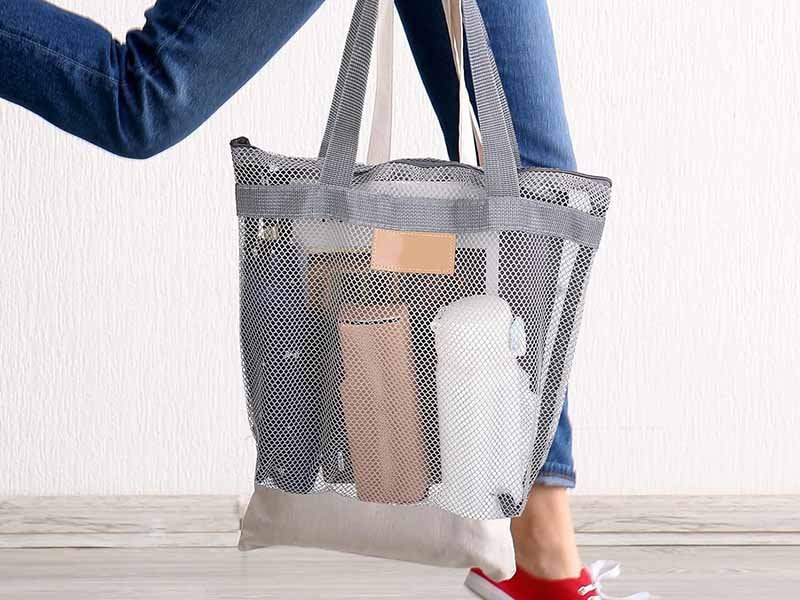
Mesh fabric has quietly become one of the most essential materials in modern bag design—yet it is often misunderstood. From breathable gym sacks and backpack side pockets to beach totes and technical travel gear, mesh plays a role far beyond simple ventilation. The reality is that not all mesh fabrics are the same, and choosing the wrong type can lead to premature tearing, deformation, poor load support, or even customer complaints after launch.
For brands and sellers, mesh fabric decisions directly affect product lifespan, user comfort, and perceived quality. A lightweight polyester mesh that works well for laundry bags may completely fail in a tactical backpack. Meanwhile, a high-density nylon mesh with reinforced yarns could significantly increase cost—but also unlock premium positioning. Understanding mesh fabric is no longer optional; it is a material strategy decision.
Mesh fabric for bags includes several types such as nylon mesh, polyester mesh, PVC-coated mesh, and 3D spacer mesh. Each type differs in strength, breathability, mesh count, and durability. The best mesh fabric depends on bag use—sports, travel, laundry, or fashion—along with load requirements, airflow needs, and cost targets. Selecting the right mesh improves performance, longevity, and user satisfaction.
Behind every successful mesh bag is a series of material trade-offs—airflow versus strength, softness versus structure, cost versus durability. In the sections below, we’ll break down mesh fabric from a practical, real-world perspective, helping you see how small material choices shape the final product experience.
What Is Mesh Fabric for Bags

Mesh fabric for bags is a textile with intentionally spaced openings that allow air, water, and heat to pass through while reducing weight. In bag manufacturing, mesh is used for pockets, panels, linings, and sometimes full bag bodies. Different mesh fabrics vary greatly in strength, hole size, yarn thickness, and durability, which directly affects how long a bag lasts and how it performs in real use.
In everyday conversation, mesh fabric is often treated as a single material. In reality, “mesh” is not a fabric type—it’s a fabric structure. This distinction matters because two mesh fabrics that look similar can perform very differently once they are sewn into a bag and put into daily use.
At its core, mesh fabric is defined by controlled open space between yarns. These openings reduce fabric weight, improve airflow, and allow moisture or debris to pass through. That is why mesh is widely used in gym bags, backpacks, beach bags, and laundry bags. But openness alone does not determine quality or suitability.
From a bag buyer’s perspective, the real questions are:
- Will this mesh stretch or deform over time?
- Will it tear when the pocket is fully loaded?
- Will it survive abrasion from bottles, shoes, or tools?
- Will it still look good after months of use?
Those answers depend on structure, yarn material, and mesh density, not just the word “mesh” on a spec sheet.
What Defines Mesh Fabric Compared to Solid Woven Fabrics?
The biggest difference between mesh fabric and solid woven fabric is intentional openness. Solid fabrics like canvas or oxford rely on tight yarn interlacing to block air and light. Mesh fabrics do the opposite—they sacrifice enclosure to gain breathability and weight reduction.
In practical terms:
- Mesh fabric can weigh 30–60% less than a solid fabric at the same surface area
- Mesh dries significantly faster, often 2–3× quicker than woven fabrics
- Mesh allows continuous airflow, reducing odor buildup in enclosed compartments
However, this openness also introduces risk. Large openings reduce resistance to snagging and tearing unless compensated by thicker yarns or reinforcement at stress points. This is why mesh is rarely used as a primary load-bearing panel in quality bags.
For most well-designed bags, mesh works best as a functional component, not a structural replacement.
What Are the Different Types of Mesh Fabric by Structure?
In bag manufacturing, mesh fabrics are typically categorized by how they are constructed, not just what they are made of.
The most common structures include:
- Knitted mesh Flexible, slightly elastic, and comfortable. This is the most widely used mesh for backpacks, gym bags, and pockets because it adapts well to curved shapes and movement.
- Woven mesh More rigid and dimensionally stable. Often used in industrial or utility bags where stretch is undesirable.
- Monofilament mesh Made from single, stiff filaments. Holds shape well and is commonly used in beach bags or utility totes.
- Spacer (3D) mesh A layered structure that creates thickness and airflow. Used for padding zones such as back panels and shoulder straps.
Each structure serves a different purpose. Choosing the wrong one often leads to early wear or customer complaints—even if the material itself is high quality.
How Is Mesh Fabric Manufactured for Bag Applications?
Most mesh fabrics used in bags are produced on warp knitting or circular knitting machines, where yarn tension, knitting pattern, and speed control the final hole size and elasticity.
For bag use, raw mesh fabric usually goes through additional processes, such as:
- Heat setting to stabilize size and reduce deformation
- Coating (PVC, PU, TPU) to improve strength or water resistance
- UV treatment to reduce color fading in outdoor environments
Before mesh fabric is approved for bag production, professional manufacturers typically test:
- Tear strength
- Abrasion resistance
- Seam slippage
- Color fastness
At Lovrix, mesh fabrics intended for bags are evaluated as part of the bag system, not as standalone textiles—because how mesh performs after stitching matters more than lab numbers alone.
Which Materials Are Mesh Fabrics Made Of

Mesh fabrics for bags are mainly made from nylon, polyester, polypropylene, and coated synthetic yarns. Nylon mesh offers higher strength and abrasion resistance, while polyester mesh provides better UV stability and cost control. Polypropylene mesh is lightweight and chemical-resistant but less durable. Coated meshes add rigidity and water resistance but reduce breathability. The best material depends on load, environment, and price expectations.
When buyers ask “which materials are mesh fabrics made of?”, they are rarely asking out of curiosity. They want to know how the mesh will behave after months of use—whether it will stretch out, tear, fade, or hold its shape.
In bag manufacturing, material choice directly affects:
- How much weight the mesh can safely carry
- How it reacts to friction from bottles, shoes, or tools
- Whether it deforms permanently after stretching
- How the bag looks after sun exposure and washing
Below are the most common mesh materials used in real bag production, along with the trade-offs that matter in daily use.
Is Nylon Mesh or Polyester Mesh Better for Bags?
Nylon and polyester account for over 80% of mesh fabrics used in bags, but they behave very differently.
Nylon mesh is chosen when strength matters. Nylon fibers have higher tensile strength and better abrasion resistance. In practical terms, nylon mesh pockets can hold heavier items without tearing and recover better after repeated stretching.
Polyester mesh is chosen when stability and cost control matter. Polyester resists UV exposure better, fades less, and holds shape more consistently in outdoor or beach environments. It is also more cost-efficient.
| Property | Nylon Mesh | Polyester Mesh |
|---|---|---|
| Tensile Strength | High | Medium |
| Abrasion Resistance | Excellent | Good |
| UV Resistance | Moderate | High |
| Shape Recovery | Very Good | Good |
| Cost Level | Higher | Lower |
For backpack side pockets or sports bags, nylon mesh often performs better long term. For beach bags, laundry bags, and casual totes, polyester mesh is usually sufficient and more economical.
What About Polypropylene (PP) Mesh?
Polypropylene mesh is less discussed but still widely used in utility and industrial-style bags. It is extremely lightweight and resistant to moisture and chemicals.
However, PP mesh has lower abrasion resistance and can become brittle over time, especially in cold environments. It is rarely used in premium bags but works well for:
- Laundry bags
- Storage sacks
- Short-term or disposable-use bags
PP mesh is attractive when low weight and low cost are the top priorities, but it is not ideal for long-term daily-use products.
Are Coated Mesh Fabrics Used for Bags?
Yes, and for very specific reasons. Coated mesh fabrics—usually polyester or nylon mesh with PVC, TPU, or PU coating—are designed to add rigidity, strength, and water resistance.
Coated mesh is commonly used in:
- Beach totes
- Utility carry bags
- Gear organizers exposed to water or sand
The coating increases durability and shape retention but significantly reduces breathability. It also increases fabric weight and stiffness, making it unsuitable for wearable areas like back panels or straps.
This trade-off is acceptable when drainage and structure matter more than comfort.
Are Recycled and Eco Mesh Fabrics Reliable?
Recycled polyester (rPET) mesh is increasingly used by brands with sustainability goals. When produced properly, rPET mesh can achieve 85–95% of the strength of virgin polyester mesh.
The key factor is yarn quality and processing, not the recycled label itself. Poorly processed recycled yarns may show higher fuzzing or lower tear resistance.
For many lifestyle and e-commerce brands, rPET mesh offers a good balance between sustainability and performance—especially for light to medium-duty bags.
What Type of Fabric Is Best for Bags When Strength Matters Most?
When mesh must handle weight, movement, and abrasion, high-denier nylon mesh or reinforced coated mesh performs best. However, strength should always be paired with proper bag construction.
In real-world use, mesh failure often occurs at seams, not in the fabric itself. Reinforced stitching, binding tape, and correct mesh placement are just as important as material choice.
What Types of Mesh Fabrics Are Used in Bags

Mesh fabrics used in bags include nylon mesh, polyester mesh, monofilament mesh, coated mesh, and 3D spacer mesh. Each type serves a different purpose—ventilation, load support, structure, drainage, or cushioning. The right mesh depends on where it is used in the bag, how much weight it carries, and how often the bag is used in real life.
When buyers search “what are the different types of mesh?”, they are often shown generic textile lists that don’t help with real product decisions. In actual bag manufacturing, mesh fabrics are selected based on function inside the bag, not textbook definitions.
Below are the mesh types most commonly used in commercial bag production, explained from a use-first perspective.
Nylon Mesh — For Load, Stretch, and Abrasion
Nylon mesh is the workhorse mesh for performance bags. It is widely used in:
- Backpack side pockets
- Sports and gym bags
- Tactical or outdoor bags
Why? Because nylon mesh handles repeated stretching and abrasion better than most alternatives. When a water bottle pushes outward day after day, nylon mesh is more likely to recover instead of permanently deforming.
Typical characteristics:
- Medium to high denier yarns (210D–420D equivalent)
- Mesh count usually between 80–120
- Slight elasticity that absorbs stress
In long-term use tests, nylon mesh pockets generally last 30–40% longer than standard polyester mesh in high-friction areas.
Polyester Mesh — For Cost Control and Visual Stability
Polyester mesh is the most widely used mesh fabric in bags sold online and in retail. It balances acceptable durability with better price control and appearance consistency.
Common uses include:
- Laundry bags
- Beach bags
- Casual backpacks and totes
Polyester mesh resists UV exposure better than nylon, meaning it fades less in sunlight. It also holds its shape well when not overloaded.
However, polyester mesh does not tolerate abrasion as well. In areas with constant rubbing (metal bottles, tools), it may fuzz or thin faster.
For many brands, polyester mesh becomes the default choice because it meets 80–90% of use needs at a lower cost.
Monofilament Mesh — For Structure and Shape
Monofilament mesh is made from single, stiff filaments instead of soft multi-filament yarns. It feels firmer and holds its shape, even without lining.
This type of mesh is often used in:
- Beach tote bodies
- Utility carry bags
- Storage and organization bags
Key advantages:
- Strong shape retention
- Easy cleaning
- Good drainage
The downside is comfort. Monofilament mesh is not ideal for wearable areas or soft bags. It works best when structure and drainage matter more than flexibility.
Coated Mesh — For Water, Sand, and Heavy Use
Coated mesh (PVC, TPU, or PU coated) is used when plain mesh is not strong enough. The coating fills part of the mesh openings, increasing rigidity and water resistance.
You’ll often see it in:
- Beach and pool bags
- Boat and marine bags
- Heavy-duty utility totes
Compared to uncoated mesh:
- Strength increases significantly
- Breathability drops sharply
- Weight increases by 15–30%
This mesh is chosen deliberately for harsh environments, not for comfort-driven designs.
3D Spacer Mesh — For Comfort and Airflow
3D spacer mesh is a layered mesh structure with thickness, commonly 3–8 mm. It is not used as a main bag fabric but as a comfort component.
Typical applications:
- Backpack back panels
- Shoulder straps
- Laptop compartments
Spacer mesh improves airflow and reduces pressure points, especially in warm climates. Because it is expensive and bulky, it is used selectively rather than across the whole bag.
How These Mesh Types Are Combined in One Bag
Most well-designed bags use more than one type of mesh:
- Nylon mesh for load-bearing pockets
- Polyester mesh for internal organization
- Spacer mesh for comfort zones
This mixed approach allows brands to control cost while improving user experience. Using a single mesh type everywhere is usually a compromise, not an optimization.
How Do Mesh Fabric Properties Differ

Mesh fabric properties differ mainly by mesh count, yarn thickness, material type, and finishing. Higher mesh counts create finer surfaces but reduce airflow. Lower mesh counts improve ventilation but may sacrifice appearance or snag resistance. Strength depends more on yarn denier and material than mesh count alone. The right balance depends on where the mesh is used and how much stress it takes.
One of the most common buyer mistakes is assuming that two mesh fabrics with similar hole size will perform the same. In real bag use, mesh failure rarely happens because of airflow—it happens because of stretching, abrasion, and seam stress.
Mesh fabric performance is the result of four variables working together:
- Mesh count (hole size)
- Yarn thickness (denier)
- Fiber material (nylon, polyester, etc.)
- Surface finishing or coating
Changing just one of these can completely change how the mesh behaves after six months of use.
What Is Mesh Count and Why Does It Matter for Bags?
Mesh count refers to how many openings appear per linear inch. The higher the number, the smaller the holes.
In practical bag terms:
- Low mesh count (50–80) → large holes, maximum airflow, easy drainage
- Medium mesh count (90–120) → balanced airflow and strength
- High mesh count (150–200) → fine appearance, limited airflow
Mesh count mainly affects breathability and appearance, not strength. Many buyers assume higher mesh count means stronger fabric, which is not true.
For most bags, medium mesh count is the safest choice.
What Is Finer, 100 Mesh or 200 Mesh—and Is Finer Always Better?
200 mesh is finer than 100 mesh.
It has smaller openings and a smoother surface.
But finer is not always better.
| Mesh Count | Visual Feel | Airflow | Typical Bag Use |
|---|---|---|---|
| 60–80 | Coarse | Very High | Beach, laundry |
| 100 | Balanced | Good | Sports, backpacks |
| 150–200 | Fine | Limited | Fashion, inner pockets |
Fine mesh looks premium, but it traps heat and moisture more easily and is less forgiving when overloaded. This is why high-mesh fabrics are rarely used in gym or outdoor bags.
How Yarn Thickness (Denier) Changes Mesh Strength
Yarn thickness often matters more than mesh count.
Two 100-mesh fabrics can behave very differently if:
- One uses thin yarns
- The other uses thicker, high-denier yarns
Higher denier yarns:
- Resist abrasion better
- Tear less easily
- Stretch less permanently
For load-bearing mesh pockets, denier matters more than hole size.
How Material Choice Alters Real-World Performance
Material defines how mesh reacts to stress:
- Nylon mesh stretches slightly, absorbs shock, and recovers well
- Polyester mesh holds shape but abrades faster
- PP mesh is light but degrades sooner under friction
This is why nylon mesh often lasts longer in backpacks, even if polyester mesh looks similar at first.
How Coatings and Finishes Change Behavior
Coatings like PVC or TPU:
- Increase stiffness and tear resistance
- Reduce breathability
- Add weight
Heat setting improves dimensional stability and reduces long-term deformation.
These treatments matter most in harsh environments—beach, marine, utility bags.
What Mesh Fabrics Suit Specific Bag Uses

Different bag uses require different mesh fabrics. Sports and gym bags need abrasion-resistant, breathable mesh. Backpacks require stronger mesh with controlled stretch for pockets. Beach and laundry bags benefit from large-hole or coated mesh for drainage. Fashion bags use fine mesh for appearance rather than strength. Matching mesh type to actual use prevents early wear and customer complaints.
Many buyers select mesh fabric based only on bag category—gym bag, backpack, beach bag. In real use, how the bag is used matters more than what the bag is called.
Key factors that determine the right mesh:
- Does the mesh carry weight or just allow airflow?
- Is it constantly rubbed by hard objects?
- Is it exposed to sun, water, or sweat?
- Is comfort or appearance more important?
Below, we break down common bag uses based on what actually happens during daily use, not marketing labels.
Which Mesh Fabric Works Best for Sports and Gym Bags?
Gym and sports bags are one of the harshest environments for mesh fabric. Mesh areas are often exposed to:
- Sweat and moisture
- Repeated friction from shoes
- Frequent stretching and compression
Recommended mesh characteristics:
- Medium mesh count (90–120) for airflow without weakening structure
- Nylon mesh or reinforced polyester
- Medium-to-high denier yarns
In real projects, nylon mesh pockets typically last 30%+ longer than standard polyester mesh in shoe compartments. Edge binding and bar-tack reinforcement are critical, as most failures start at the seams—not the fabric body.
Which Mesh Is Used for Backpack Pockets and Organizers?
Backpack mesh pockets often look simple, but they handle constant point load—especially from water bottles.
What matters most here is:
- Controlled stretch (too much stretch = sagging)
- Abrasion resistance
- Shape recovery after load removal
Best options:
- Nylon mesh with thicker yarns
- Mesh count around 100
- Reinforced stitching at stress points
For backpacks sold above mid-price ranges, brands often avoid very soft mesh, as it deforms visibly after long-term use, even if it doesn’t tear.
Which Mesh Fabrics Suit Beach Bags and Pool Bags?
Beach and pool bags prioritize drainage, cleaning, and UV resistance over softness.
Typical conditions include:
- Sand abrasion
- Saltwater exposure
- Strong sunlight
Recommended mesh types:
- Low mesh count polyester mesh (60–80)
- Monofilament mesh for shape retention
- PVC-coated mesh when structure is required
Coated mesh reduces breathability but improves durability. Weight increases, but for beach bags this is usually acceptable.
Which Mesh Works Best for Laundry and Storage Bags?
Laundry bags are often underestimated, but mesh here must survive:
- Repeated washing cycles
- Chemical detergents
- Mechanical tumbling
Best choices:
- Polyester mesh or PP mesh
- Medium to large hole size for water flow
- Heat-set fabric to reduce deformation
For long-term use, polyester mesh outperforms PP mesh in abrasion resistance, though PP mesh is cheaper and lighter.
Which Mesh Fabrics Are Used in Fashion and Retail Bags?
In fashion bags, mesh is often used for visual effect, not performance. Transparency, texture, and softness matter more than load capacity.
Typical characteristics:
- High mesh count (150–200)
- Thin yarns
- Polyester or blended fibers
These meshes look refined but should never be used in load-bearing zones. Smart designs limit them to decorative panels or inner layers with backing support.
Which Mesh Fabrics Improve Comfort in Wearable Bags?
Comfort-focused bags—especially backpacks—use 3D spacer mesh in contact areas.
Spacer mesh advantages:
- Reduces heat buildup
- Improves airflow
- Distributes pressure
Common uses:
- Back panels
- Shoulder straps
- Laptop compartments
Spacer mesh is rarely used alone; it is laminated or stitched onto foam or structural layers.
How to Choose the Right Mesh Fabric for Custom Bags
Choosing the right mesh fabric for custom bags depends on how the bag is used, how much load the mesh carries, and how often it is exposed to friction, moisture, or sunlight. Mesh count alone is not enough. Brands should evaluate material type, yarn thickness, reinforcement methods, and sample testing together to avoid early wear and costly redesigns.
Most mesh problems do not come from poor-quality fabric. They come from choosing the wrong mesh for the wrong job.
A mesh that works perfectly in one bag can fail quickly in another.
Below is a step-by-step decision framework used in real custom bag development—not theory.
Step 1 — Define What the Mesh Actually Does
Before discussing mesh count or material, answer this first:
- Does the mesh carry weight or just allow airflow?
- Is it constantly stretched or mostly static?
- Does it touch the body, or is it external?
- Will it be exposed to sand, sweat, detergent, or UV?
If mesh carries weight (water bottles, shoes), strength and recovery matter more than appearance.
If mesh is decorative or internal, softness and look may matter more.
This step alone eliminates most wrong choices.
Step 2 — Match Material to Stress Level
Use material based on stress, not habit.
| Stress Level | Recommended Mesh Material |
|---|---|
| High load & friction | Nylon mesh |
| Medium daily use | Polyester mesh |
| Light / short-term use | PP mesh |
| Water & sand exposure | Coated or monofilament mesh |
Many brands overspend by using nylon everywhere. Others underspend and face returns. Balanced selection keeps cost and performance aligned.
Step 3 — Choose Mesh Count Based on Function, Not “Finer Is Better”
Mesh count affects airflow and appearance—not strength.
General guidance:
- 60–80 mesh → drainage, beach, laundry
- 90–120 mesh → backpacks, sports bags
- 150–200 mesh → fashion, inner layers
For most custom bags, 100 mesh ±20 covers the majority of functional needs.
Step 4 — Don’t Ignore Yarn Thickness
Two meshes with the same mesh count can perform very differently.
Higher denier yarns:
- Abrade slower
- Tear less easily
- Hold shape longer
If mesh will stretch daily, denier matters more than hole size.
Step 5 — Design Reinforcement Before Blaming the Fabric
In real-world failure analysis, over 70% of mesh failures start at seams, not in the mesh body.
Smart design includes:
- Binding tape on edges
- Bar-tacks at stress points
- Load transfer to woven fabric panels
Good mesh + poor construction still fails.
Step 6 — Sample Test Under Real Conditions
Lab data helps, but real-use sampling matters more.
Effective tests include:
- Load pockets with real items
- Repeated stretching cycles
- Abrasion against bottles or tools
- Exposure to moisture and drying
This step often reveals issues that specs cannot predict.
Step 7 — Balance Customization, MOQ, and Lead Time
Custom mesh (color, hole size, coating) affects:
- MOQ
- Sampling time
- Production lead time
Using stock mesh speeds up launches. Custom mesh makes sense when volume or branding justifies it.
Conclusion
Choosing the right mesh fabric is more than just selecting materials; it’s a strategic product performance decision. The right mesh fabric enhances comfort, durability, and customer confidence, while the wrong choice can lead to wear, deformation, and customer complaints.
Lovrix is a vertically integrated group with over 19 years of experience in fabric, webbing, and bag manufacturing. It possesses its own R&D capabilities for mesh fabric and bag production, as well as material testing.
Contact Lovrix today to request samples, discuss custom mesh fabric solutions, or launch your OEM/ODM bag development project.


