 Skip to content
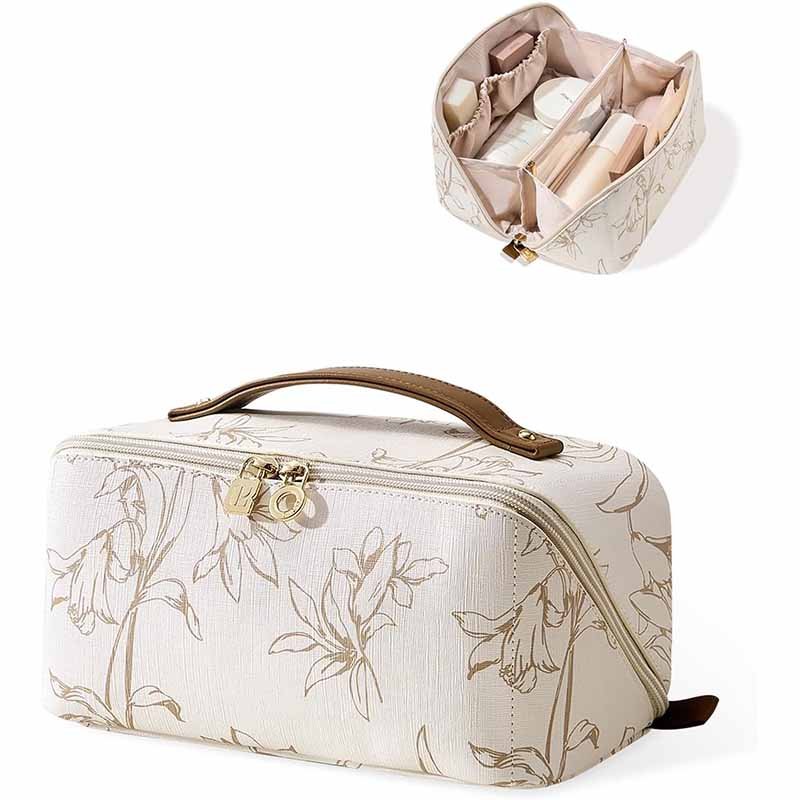
Most makeup bag production problems don’t start in the factory. They start on paper.
Brands often focus on colors, logos, or inspiration images, assuming the manufacturer will “figure out the rest.” But in custom manufacturing, especially for makeup bags, assumptions are expensive. Missing dimensions, unclear materials, or vague structure descriptions lead to repeated samples, unexpected cost increases, and long delays—sometimes turning a simple cosmetic pouch into a frustrating project.
This is exactly where a makeup bags tech pack becomes critical. A tech pack is not a design sketch or a mood board. It is a technical instruction document that translates design intent into manufacturing reality. For OEM and private label projects, a clear tech pack is often the difference between smooth sampling and endless revisions.
A makeup bags tech pack is a technical document that defines size, structure, materials, construction, and branding details for manufacturing. It helps factories quote accurately, produce samples correctly, and scale production consistently. Brands use tech packs to reduce errors, control costs, and ensure custom makeup bags match design intent from sample to mass production.
Behind every well-made makeup bag—clean seams, practical compartments, reliable zippers—there is a detailed tech pack guiding the process. In this guide, we’ll break down what a makeup bag tech pack really includes, how to create one step by step, and how brands work with manufacturers like Lovrix to turn specs into scalable products.
What Is a Makeup Bags Tech Pack
A makeup bags tech pack is a practical instruction file that tells a factory exactly how to make a makeup bag. It defines the bag’s size, structure, materials, construction details, and branding requirements. A real tech pack removes guesswork, prevents repeated sampling, and ensures the finished product matches the original design from sample to mass production.
What does a tech pack mean in real bag manufacturing?
On the factory floor, a tech pack is not a “design document”—it’s a production rulebook.
When production starts, operators don’t see your mood boards, brand story, or Pinterest references. They see measurements, stitch lines, material layers, and notes. If the tech pack is clear, production runs smoothly. If it’s vague, workers make assumptions—and assumptions are where defects come from.
In real manufacturing terms, a tech pack answers five questions:
- What size is this bag?
- What materials are used, and where?
- How is it constructed?
- Where are the stress points?
- What does “acceptable” look like?
If any of these are unclear, quality becomes inconsistent—especially in bulk production.
What information is included in a makeup bag tech pack?
A usable makeup bag tech pack includes only what the factory needs to execute, not marketing language.
Core sections usually include:
- Flat drawings (front, back, side, interior)
- Exact dimensions (in mm) with tolerances
- Material specs (outer, lining, padding)
- Zippers, pullers, labels, accessories
- Stitch type and reinforcement points
- Logo size, placement, and method
From a buyer’s perspective, each missing line item usually equals:
- One extra sample round
- One pricing adjustment
- One delayed decision
That’s why experienced brands treat tech packs as cost-control tools, not paperwork.
How is a tech pack different from sketches, drawings, or mood boards?
This is where many first-time buyers get stuck.
| Item | Purpose | Can a factory produce from it? |
|---|---|---|
| Mood board | Visual inspiration | No |
| Sketch | Basic shape idea | Risky |
| Reference photo | Style direction | Risky |
| Tech pack | Manufacturing instructions | Yes |
A sketch might show what the bag looks like. A tech pack explains how it is made. Factories need the second, not the first.
Why do brands think they have a tech pack when they don’t?
Because they often confuse visual clarity with technical clarity.
Common “almost tech packs” include:
- CAD drawings with no measurements
- Measurement tables without structure notes
- Material lists without thickness or weight
- Logo files without placement instructions
These documents help communication—but they don’t replace a complete tech pack. Factories still need to fill in the gaps, which leads to inconsistent results.
How does a tech pack protect buyers during sampling and bulk production?
A tech pack becomes the reference standard throughout the project.
During sampling:
- It defines whether a sample is “correct”
- It limits subjective interpretation
During bulk production:
- It guides QC checks
- It prevents silent spec changes
- It ensures reorders match previous batches
Many disputes happen because there was no single, agreed-upon reference. A tech pack prevents that by putting expectations in writing.
What level of detail is “enough” for a makeup bag tech pack?
Enough detail means:
- Another factory could make the same bag
- A new production team could follow it
- The same bag could be reordered next year
If your tech pack can support those three scenarios, it’s ready.
If it only works because “this factory understands us,” it’s not.
Why Is a Tech Pack Important for Custom Makeup Bags
A tech pack is important because it removes guesswork from custom makeup bag production. It helps factories quote accurately, reduce sample revisions, control costs, and maintain consistent quality from first sample to bulk orders. Without a tech pack, brands face delays, price changes, and inconsistent results—especially in OEM and overseas manufacturing.
Why does a tech pack reduce sample revisions so dramatically?
Most sample revisions don’t happen because factories make mistakes—they happen because the instructions were incomplete.
Without a tech pack, factories must interpret:
- Pocket depth
- Lining thickness
- Zipper length
- Stitching style
Each interpretation creates a potential mismatch. Brands with a detailed tech pack often finalize samples in 1–2 rounds. Brands without one commonly go through 4–6 rounds, adding weeks and extra cost.
From a buyer’s perspective, fewer sample rounds mean:
- Faster launch
- Lower development cost
- Less back-and-forth communication
How does a tech pack protect your budget and pricing?
Pricing is built on specs. When specs change, costs change.
A tech pack locks:
- Material types and thickness
- Hardware models
- Construction methods
This allows factories to calculate material usage and labor time accurately. Without it, quotes are estimates—and estimates tend to rise once details become clear.
Many buyers experience “unexpected” price increases after sampling. In reality, those costs were always there—they just weren’t defined early enough.
Why do factories rely on tech packs for OEM and ODM projects?
In OEM and ODM manufacturing, the factory is responsible for turning your idea into a physical product. A tech pack is the only objective reference both sides can agree on.
Factories use tech packs to:
- Check manufacturability
- Identify risk points early
- Standardize production across teams
Without a tech pack, factories often simplify designs to reduce risk, which can dilute brand intent. Clear tech packs protect the original design.
How does a tech pack improve consistency in bulk production?
Bulk production involves many operators, not one sample maker.
A tech pack:
- Defines acceptable tolerances
- Guides QC inspections
- Prevents silent spec changes
Without documented tolerances, small variations accumulate. Over thousands of units, this leads to inconsistent size, uneven stitching, or misaligned logos.
Consistency is what allows reorders to feel “the same” to customers.
What happens when brands skip the tech pack stage?
Common outcomes include:
- Longer development cycles
- Higher sampling fees
- Disputes over “what was agreed”
- Bulk goods that differ from samples
In worst cases, brands accept compromised products simply to avoid restarting production. The cost of skipping a tech pack is often far higher than the cost of creating one.
When is a tech pack absolutely necessary—and when is it optional?
A tech pack is essential when:
- The design is new or complex
- The bag has multiple compartments
- The brand plans long-term reorders
It may be optional for:
- Simple stock cosmetic pouches
- One-time promotional items
However, even a simplified tech pack improves communication and reduces risk.
Which Sections Should a Makeup Bags Tech Pack Include
A complete makeup bags tech pack should include bag dimensions and structure, material and component specifications, construction and stitching details, internal layout, and branding instructions. These sections ensure factories can quote accurately, produce correct samples, and maintain consistency in mass production. Missing any core section often leads to delays, cost changes, or quality disputes.
Which size, structure, and dimension details are required?
This is the foundation of the entire tech pack.
If dimensions are unclear, everything else becomes unstable.
A usable tech pack must include:
- Overall length × width × height (mm)
- Gusset depth
- Opening width
- Pocket dimensions (if any)
Equally important are tolerances:
- Exterior dimensions: ±3 mm (typical)
- Internal pockets: ±2 mm
Without tolerances, factories don’t know what variation is acceptable. This often leads to disputes where both sides feel “right.” Experienced buyers always define tolerances up front to protect bulk consistency.
Which materials, hardware, and components must be specified?
Vague material descriptions are one of the biggest cost and quality risks.
Instead of writing:
“PU leather” or “polyester lining”
A real tech pack specifies:
- Material type (PU, PVC, nylon, cotton, etc.)
- Weight or thickness (e.g., 0.6 mm PU, 210D lining)
- Finish (matte, glossy, coated)
- Color reference (Pantone or sample)
Hardware should include:
- Zipper size (#3, #5)
- Puller type
- Metal or plastic
- Label material and size
Clear specs prevent material substitution, especially on reorders.
Which construction and stitching details matter most?
Two makeup bags can use the same materials and still feel completely different because of construction.
A tech pack should clearly define:
- Stitch type (lockstitch, binding, folded edge)
- Stitch density (e.g., 8–10 stitches per inch)
- Reinforcement areas (zipper ends, handle joins)
- Edge finishing method
These details directly affect durability and appearance.
Factories rely on these notes to train production workers—not just sample makers.
Which internal layout and compartment details should be included?
Internal structure is where many samples go wrong.
A proper tech pack documents:
- Pocket count and location
- Pocket size and depth
- Elastic bands, mesh, or dividers
- Attachment method (stitched, bound, elastic)
Visual diagrams are strongly recommended here.
Without them, factories often default to “simpler” layouts that don’t match original intent—especially in OEM projects.
Which logo, printing, and branding instructions are needed?
Branding must be precise, not descriptive.
A production-ready tech pack includes:
- Logo placement (distance from edges)
- Logo size (mm)
- Printing method (screen print, heat transfer, embroidery)
- Color references (Pantone codes)
- Inside labels, hangtags, and packaging notes
Most rejected samples happen because logo instructions were unclear—not because printing quality was poor.
Which quality standards and notes should be documented?
Advanced tech packs include basic QC expectations:
- Handle load requirements (if applicable)
- Zipper smoothness standard
- Visual defect tolerance
Even simple notes like “no visible glue marks” or “clean stitching lines” help align expectations between brand and factory.
Which files and formats should a tech pack include?
Factories typically expect:
- PDF (for reference)
- Editable files (AI, CAD, or Excel tables)
- Clear version control (V1, V2, etc.)
Sending multiple unclear versions is a common cause of production mistakes. Experienced buyers always confirm which version is final before sampling.
What happens when one of these sections is missing?
| Missing Section | Common Result |
|---|---|
| Dimensions | Size inconsistency |
| Materials | Cost changes |
| Construction | Weak durability |
| Internal layout | Poor usability |
| Branding | Sample rejection |
Each missing section usually adds time, cost, or both.
How Do You Create a Makeup Bags Tech Pack Step by Step
To create a makeup bags tech pack, start from real use (what the bag must hold), then lock structure, measurements, materials, and construction details before adding branding and packaging requirements. A good tech pack makes quoting predictable, reduces sample rounds, and ensures bulk production matches the approved sample. The goal is clarity—so a factory can build the same bag without guessing.
Step 1 — How do you define the bag’s purpose and user scenario?
Before any drawing, write a short “use brief” the factory can understand in 30 seconds:
- Who uses it? (travel user / daily commuter / makeup artist / gift set buyer)
- Where is it used? (handbag / suitcase / bathroom / studio)
- What pain point does it solve? (leak-proof, brush protection, quick access, compact)
This step prevents the #1 mistake: designing a bag that looks good but doesn’t match real use. A factory can only recommend the right structure after they understand the scenario.
Step 2 — What essentials must fit, and how do you translate that into capacity?
Instead of guessing size, list the items the bag must hold. This becomes your capacity logic.
Typical item list:
- 1–2 foundation bottles (height + weight)
- 1 palette (flat area)
- 5–12 brushes (length + protection)
- small items (lipstick, pencil, tools)
| Item Type | What to measure | What it affects |
|---|---|---|
| Bottles | height + base width | bag height + gusset |
| Brushes | length | internal bands / sleeves |
| Palettes | length × width | flat panel area + padding |
Step 3 — How do you lock the structure (shape, opening, compartments)?
Now choose one clear structure. Factories need a decision, not options.
Common makeup bag structures:
- Simple pouch (fastest to produce)
- Boxy zip pouch (best for capacity)
- Two-layer organizer (more premium)
- Brush compartment + main cavity (pro use)
For internal layout, don’t just say “add pockets.” Specify:
- pocket count
- pocket dimensions
- pocket material (mesh / lining / elastic)
Step 4 — How do you create drawings that factories can actually use?
Your drawings don’t need to be artistic. They need to be readable.
Minimum drawing set:
- Front view
- Back view
- Side view (shows gusset depth)
- Interior view (pocket layout)
- Exploded view (optional but helpful for complex designs)
Tip: label panels like A, B, C so factories can reference notes precisely.
Step 5 — How do you add measurements and tolerances (the “no guessing” part)?
Measurements must be in mm and must include tolerances.
Typical tolerance guidelines:
- Overall bag: ±3 mm
- Pockets: ±2 mm
- Logo placement: ±2 mm
Include:
- overall L × W × H
- gusset
- zipper opening length
- pocket sizes
Step 6 — Which materials should you specify (and how detailed is “enough”)?
Avoid vague terms like “high-quality PU” or “thick lining.”
Specify:
- outer material (type + thickness/weight + finish)
- lining (type + weight)
- padding/foam (type + thickness)
- zipper (size #3/#5, color, puller)
- labels (woven, PU patch, heat transfer, etc.)
Example level of detail factories can quote from:
- Outer: PU 0.6 mm, saffiano texture, Pantone color
- Lining: 210D polyester, black
- Foam: EPE 2 mm (or EVA 1.5 mm for premium feel)
Step 7 — How do you define construction and stitching so bulk matches the sample?
This is where “premium feel” usually comes from.
Specify:
- seam allowance (e.g., 8–10 mm)
- edge finish (binding / turned edge)
- stitch density (e.g., 8–10 SPI)
- reinforcement points (zipper ends, handle area)
- whether lining is fully turned/clean finish
Step 8 — How do you document branding (logo) so samples don’t get rejected?
Most rejected samples are logo-related—placement and size, not print quality.
You should define:
- logo method (screen print / heat transfer / embroidery)
- size in mm
- placement distance from edges
- Pantone colors
- file type (AI/PDF vector preferred)
Step 9 — How do you add packaging, labeling, and compliance notes?
If the bag is for retail or e-commerce, packaging specs matter early.
Add:
- hangtag / barcode / care label placement
- polybag spec (thickness, warning label)
- carton packing method (flat or stuffed)
- any testing needs (colorfastness, needle detection)
Step 10 — How do you finalize, version-control, and send to factories?
This step avoids “wrong version” disasters.
Best practice:
- V1 for first quote
- V2 after first sample changes
- V3 “Production Approved” (final)
Send:
- PDF for viewing
- editable files (AI/CAD/Excel)
- one folder with clear naming
A Simple Tech Pack Checklist
| Section | If missing, what happens? |
|---|---|
| Measurements + tolerance | size inconsistency |
| BOM materials | cost changes / substitutions |
| Pocket layout | wrong interior |
| Construction notes | weak durability |
| Logo placement | sample rejection |
| Packaging notes | delays at shipment |
What Common Mistakes Should You Avoid in a Tech Pack
Common tech pack mistakes include missing measurements, vague material descriptions, unclear construction notes, and incomplete branding instructions. These errors cause repeated sample revisions, unexpected cost changes, and inconsistent bulk production. Avoiding them early saves more time and money than negotiating unit price later.
What missing measurements cause the most problems?
The most expensive tech pack mistakes are usually what’s not written down.
Commonly missing measurements:
- Internal pocket depth
- Gusset width
- Zipper opening length
- Panel seam allowance
Factories will fill these gaps themselves. Each factory fills them differently. The result is samples that “look okay” but feel wrong in use.
One missing dimension often equals one extra sample round (5–10 days + extra cost).
Why do vague material descriptions lead to cost disputes?
Words like:
- “High-quality PU”
- “Thick lining”
- “Premium zipper”
mean nothing in production.
Without thickness, weight, or reference samples, factories must guess. When guesses change, prices change. This is why many buyers feel factories “raised prices later”—in reality, specs were never locked.
Fix: always specify material type + thickness/weight + finish.
How do unclear construction notes weaken durability?
Two bags with identical materials can fail very differently.
Common missing construction details:
- Stitch type and density
- Edge finishing method
- Reinforcement at zipper ends
Without these notes, factories default to the fastest construction method—not the strongest. This often shows up only after customers start using the product.
What internal layout mistakes ruin usability?
Internal structure is often under-documented.
Typical mistakes:
- “Add pockets” without size or placement
- No notes on elastic strength
- No drawing for interior layout
Factories may simplify the interior to reduce risk, resulting in a bag that technically meets specs—but doesn’t meet user expectations.
Why do logo and branding mistakes cause most sample rejections?
Most rejected samples fail on logo placement, size, or color, not print quality.
Common errors:
- Logo size not specified
- Placement not measured
- No Pantone reference
- Wrong print method assumed
Each rejection adds time and cost. A simple logo placement map prevents this.
How does ignoring tolerances break bulk consistency?
No tolerance = no agreement on what variation is acceptable.
Without tolerances:
- QC becomes subjective
- Bulk goods vary more
- Reorders don’t match previous batches
Even simple tolerances (±2–3 mm) dramatically improve consistency.
What version-control mistakes cause production errors?
Multiple file versions are a hidden risk.
Common issues:
- Old drawing used for production
- Mixed V1/V2 specs
- Changes discussed by email but not updated
Best practice is one final “Production Approved” version—nothing else.
What mistakes do first-time brands make most often?
First-time brands often:
- Over-focus on appearance
- Assume factories will “fix details”
- Skip documentation to save time
These shortcuts usually cost more later.
Mistake vs. Consequence
| Mistake | Result |
|---|---|
| Missing dimensions | Extra sample rounds |
| Vague materials | Price changes |
| No construction notes | Weak durability |
| Unclear logo specs | Sample rejection |
| No tolerances | Inconsistent bulk |
| Poor version control | Wrong production |
Are Tech Packs Necessary for OEM and Private Label Makeup Bags
Yes—tech packs are essential for OEM makeup bag projects and strongly recommended for private label programs. OEM designs cannot be produced consistently without a tech pack. Private label projects may start with simplified specs, but brands that plan reorders, supplier changes, or long-term growth will still need a proper tech pack to control quality and cost.
What is the real difference between OEM and private label makeup bags?
On paper, the difference looks simple. In practice, it’s critical.
OEM (Original Equipment Manufacturing)
You define the design, structure, materials, and details.
The factory’s job is to execute your specifications.
Private Label
The factory provides an existing design.
You customize logo, color, or minor details.
The moment you change structure, materials, size, or internal layout, a private label project starts behaving like an OEM project. And OEM projects do not work without tech packs.
Why are tech packs mandatory for OEM makeup bag projects?
OEM means the factory has no reference product to fall back on.
Without a tech pack, factories must decide:
- Pocket sizes
- Stitch methods
- Padding thickness
- Zipper specs
- Reinforcement points
Each decision affects cost, durability, and appearance.
If these decisions are not written by the brand, the factory will make them—and different factories will make them differently.
This is why OEM projects without tech packs almost always suffer from:
- Multiple sample rounds
- Price changes
- Bulk production inconsistencies
Can private label makeup bags be made without a tech pack?
Yes—but only in very limited situations.
A private label project can start without a full tech pack if:
- You are using a factory’s existing makeup bag model
- You only change logo and color
- The order is one-time or low risk
Even then, experienced buyers still document:
- Dimensions
- Materials
- Logo placement
Because the moment you reorder—or change supplier—you will need those specs.
Why do private label brands eventually regret not having a tech pack?
This happens all the time.
Common private label problems without tech packs:
- Reordered bags feel “slightly different”
- Factory changes materials quietly
- New supplier cannot copy the same product
- Costs increase with no clear explanation
Without a tech pack, the factory owns the product knowledge—not the brand.
With a tech pack, the brand controls the product and can move production if needed.
At what point does a private label project require a tech pack?
A tech pack becomes necessary the moment:
- You add internal compartments
- You change materials or thickness
- You care about consistency across batches
- You plan long-term sales, not just one campaign
In other words, as soon as the product matters to your brand, documentation matters too.
What level of tech pack is enough for private label projects?
Not every private label project needs a 20-page tech pack.
A lean tech pack is often sufficient, including:
- Dimensions + tolerances
- BOM (materials, lining, zipper)
- Logo placement
- Construction notes (basic)
This already prevents 80% of future problems.
How do factories like Lovrix support brands without tech packs?
Many brands don’t have in-house technical designers—and that’s normal.
Lovrix supports brands by:
- Reviewing sketches and reference samples
- Creating or optimizing tech packs
- Translating brand ideas into factory-ready specs
- Flagging risk points before sampling
This is especially valuable for:
- Startups
- E-commerce brands
- Brands transitioning from private label to OEM
What do experienced buyers do differently?
Experienced buyers:
- Never start OEM projects without tech packs
- Use simplified tech packs even for private label
- Update tech packs after every approved change
- Treat tech packs as long-term assets, not paperwork
They understand one thing very clearly:
the tech pack is not for the factory—it’s for protecting the brand.
How Do You Use a Tech Pack to Work With a Manufacturer
A tech pack is used as the shared reference for quoting, sampling, quality control, and reorders. Brands send the tech pack to manufacturers to get accurate pricing, guide sample development, approve production standards, and ensure bulk orders match approved samples. In practice, the tech pack becomes the “contract” everyone works from.
How do you share a tech pack with manufacturers correctly?
The first mistake many buyers make is sending too much or too little.
Best practice:
- Send one clear version only (V1, V2, etc.)
- Highlight which sections are fixed and which are open for suggestion
- Ask the factory to confirm understanding, not just receipt
A good factory response includes:
- Confirmation of specs
- Notes on feasibility or risk
- Questions about unclear areas
If a supplier gives a price without asking any questions, that’s usually a warning sign.
How do manufacturers quote from a tech pack?
Factories do not “guess” pricing. They calculate.
A tech pack allows them to estimate:
- Fabric consumption (based on dimensions + pattern)
- Lining, foam, and hardware usage
- Labor time (construction complexity)
- Packaging and handling cost
When tech packs are vague, quotes are padded with risk buffers.
When tech packs are clear, pricing is more competitive and more stable.
How is the tech pack used during sample development?
During sampling, the tech pack is the pass/fail standard.
Factories use it to:
- Build the first prototype
- Compare sample vs specs
- Log changes and revisions
Smart buyers:
- Mark feedback directly on the tech pack
- Update to V2 / V3 after each revision
- Avoid “verbal-only” changes
This keeps the project controlled instead of emotional or subjective.
How does a tech pack support quality control in bulk production?
Once production starts, the tech pack shifts from design tool to QC reference.
QC teams check:
- Dimensions vs tolerances
- Materials vs BOM
- Logo size and placement
- Construction details
Without a tech pack, QC becomes “this looks okay.”
With one, QC becomes measurable and enforceable.
How do tech packs make reorders faster and cheaper?
Reorders fail when specs drift.
A locked tech pack:
- Prevents silent material changes
- Ensures size and structure stay consistent
- Allows faster quoting and production
Many brands only realize the value of a tech pack on the second or third order—when they don’t have to explain everything again.
Conclusion
If you’re developing custom makeup bags, a clear tech pack is the fastest way to reduce risk and speed up production.
Lovrix has over 19 years of experience in fabric, webbing, and bag manufacturing, supporting brands.
Contact Lovrix today to request a quote, sample, or free tech pack consultation—and turn your ideas into production-ready makeup bags.


