 Skip to content
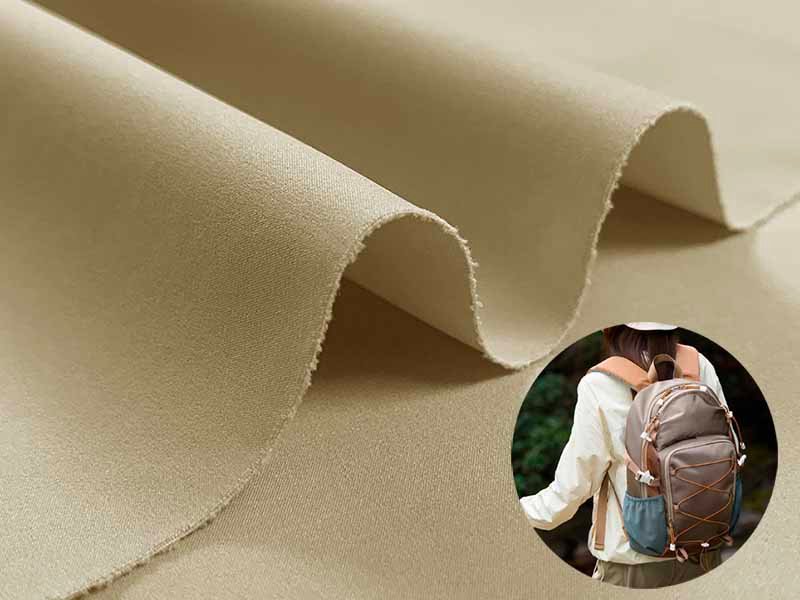
The lightest hiking bag is not always the best hiking bag. A pack may feel impressive when lifted from a retail shelf, yet fail after several trips because the base fabric is too thin, the coating cracks, or the shoulder-strap seams cannot handle the load. Weight matters, but weight without durability creates returns, complaints, and damaged brand trust.
Lightweight hiking bag fabrics are woven or laminated materials developed to reduce backpack weight while maintaining suitable tear strength, abrasion resistance, seam strength, shape retention, and weather protection. Common choices include ripstop nylon, high-tenacity nylon, polyester, Robic-type nylon, Cordura, X-Pac, Ultra, and Dyneema-based composites. The right fabric depends on bag capacity, carrying load, terrain, climate, product life, and target price.
A 20-liter hiking daypack and a 65-liter trekking backpack should not use the same fabric plan. The daypack may work well with a soft 70D or 100D ripstop body. The trekking pack often needs 210D high-tenacity nylon, a stronger base, and reinforced suspension areas.
One outdoor bag project can explain the difference clearly. Two prototypes may share the same size, pattern, and appearance. One uses a heavy fabric across every panel. The other uses light fabric on low-wear areas and stronger material only on the base, corners, and load points. The second design can weigh less, cost less to ship, and perform better on the trail. Smart fabric placement often saves more weight than simply choosing the thinnest cloth.
What Are Lightweight Hiking Bag Fabrics?

Lightweight hiking bag fabrics are materials with a low finished weight and enough mechanical strength for outdoor carrying. Their performance comes from the yarn, weave, coating, lamination, backing, and sewing structure working together. A fabric should be judged by its complete construction, not only by the fiber name or denier number printed on a specification sheet.
A hiking bag fabric must deal with several forces at the same time:
- Pulling force from shoulder straps and handles
- Repeated rubbing against clothing, rocks, trees, and the ground
- Pressure from sharp or hard items packed inside
- Folding and creasing during storage or transport
- Rain, moisture, sweat, dust, and ultraviolet exposure
- Stress around zippers, pockets, buckles, and compression straps
- Needle holes and seam tension created during sewing
A low fabric weight is useful only when the material can survive the intended use. A very light woven fabric may suit an upper body panel, yet fail quickly on the bottom of a backpack. A heavier cloth can be unnecessary on a lining or internal pocket.
The table below shows general material ranges used during early hiking bag development. Finished weight can change according to weave density, coating thickness, backing, and surface treatment.
| Fabric Construction | Common Denier | Approximate Weight | Suitable Areas |
|---|---|---|---|
| Fine ripstop nylon | 40D–70D | 45–95 g/m² | Linings, packable bags, upper panels |
| Light high-tenacity nylon | 100D–150D | 80–140 g/m² | Ultralight bodies, pockets, daypacks |
| Medium high-tenacity nylon | 210D | 120–190 g/m² | Main hiking backpack bodies |
| Reinforced nylon or polyester | 300D–420D | 170–280 g/m² | Bases, corners, high-wear panels |
| Lightweight laminated fabric | Varies | 90–220 g/m² | Technical packs, roll tops, front panels |
| UHMWPE composite fabric | Varies | 50–180 g/m² | Premium ultralight backpacks |
These figures are useful for comparison, but they should not replace physical testing. Two 210D fabrics can have noticeably different weights, surface textures, tear strengths, and coating quality.
How Are Lightweight Hiking Bag Fabrics Made?
Most lightweight woven backpack fabrics begin with nylon or polyester yarn. The yarn is woven into a plain, oxford, dobby, or ripstop structure. Fine yarn lowers weight, while high-tenacity yarn helps maintain strength without making the cloth excessively thick.
Ripstop fabrics use thicker reinforcement yarns at regular intervals. The grid may be square, diamond-shaped, or customized. Its purpose is to slow the spread of a small cut. Ripstop does not prevent all tearing, and a visible grid does not automatically mean the fabric is strong. Base yarn quality and weave density remain important.
After weaving, the fabric may receive one or more finishing processes:
- Calendering smooths and compresses the surface.
- PU coating adds water resistance and supports seam taping.
- Silicone treatment improves water shedding and tear performance.
- TPU lamination adds a continuous waterproof film.
- DWR treatment helps rain bead on the outer face.
- Backing layers improve stability and reduce fraying.
- Printing or yarn dyeing creates colors and patterns.
Every process changes the fabric. A thicker coating may improve water resistance but add weight and stiffness. A softer finish may improve hand feel but reduce structural support. Lovrix evaluates these trade-offs during material selection and sampling rather than recommending fabric from appearance alone.
Why Use Lightweight Hiking Bag Fabrics?
A lighter backpack reduces the amount of dead weight carried before water, food, clothing, tools, and shelter are added. The benefit becomes more noticeable during long hikes, steep climbs, and warm-weather use.
For a 30-liter hiking pack, fabric may account for a meaningful share of the shell weight. Replacing a 250 g/m² fabric with a 150 g/m² fabric across one square meter can remove about 100 grams before changes to lining, webbing, foam, hardware, or reinforcement are considered.
Weight reduction can also affect commercial performance:
- Lower product weight can reduce freight cost.
- Smaller packed volume can improve carton utilization.
- Clear pack-weight data helps customers compare products.
- A lighter hand feel can support a technical or premium position.
- Lower material bulk can make a bag easier to fold and store.
- Reduced weight can improve comfort during long periods of use.
Weight should not be removed evenly from every area. The top panel, front panel, internal divider, and lining may use lighter materials. The base, lower corners, shoulder-strap anchors, hip-belt connections, and compression points often need stronger fabric or reinforcement.
A well-engineered 800-gram backpack can outperform a poorly engineered 650-gram backpack because the stronger model places material where stress actually occurs.
Are Lightweight Hiking Bag Fabrics Strong?
Many lightweight hiking bag fabrics are strong enough for demanding use, but strength has several meanings. Tensile strength measures how much pulling force the fabric can withstand. Tear strength measures how easily a cut grows. Abrasion resistance measures surface wear. Seam strength measures how well the material holds stitching under load.
A fabric can perform well in one test and poorly in another. Laminated material may resist stretching and water penetration, yet show visible face wear after scraping against rock. Woven nylon may handle repeated flexing well, yet absorb more moisture than a film-backed fabric.
Product developers should examine at least five areas:
- Tensile strength in warp and weft directions
- Tear resistance after cutting or puncture
- Abrasion resistance on the face and backing
- Seam slippage around load-bearing stitches
- Coating adhesion after folding, heat, and moisture exposure
Finished bag testing is equally important. Shoulder straps can fail even when the outer fabric remains intact. Common causes include narrow seam allowance, excessive stitch density, weak reinforcement, or poor load distribution.
Lovrix can adjust fabric placement, seam structure, webbing direction, bartack position, and reinforcement size during sampling. Strength comes from the complete bag structure, not from a fabric label alone.
Is Lower Denier Always Lighter?
Lower denier usually means a finer yarn, but it does not always mean a lighter finished fabric. Denier measures the weight of 9,000 meters of yarn. It does not include weave density, coating, lamination, backing, or finishing.
A densely woven 100D nylon with a heavy PU coating can weigh more than a lightly coated 210D fabric. A 210D high-tenacity nylon may also provide better strength at a similar finished weight than a lower-grade 210D material.
When comparing materials, customers should request more than a denier number. Useful information includes:
- Finished weight in grams per square meter
- Yarn type and fiber content
- Weave construction
- Coating or lamination type
- Coating weight
- Tear and tensile test data
- Abrasion result
- Hydrostatic pressure result
- Colorfastness
- Recycled content, when required
Denier remains useful, but finished performance determines whether the fabric suits the product.
Which Lightweight Hiking Bag Fabrics Are Best?

High-tenacity ripstop nylon offers the most balanced choice for many hiking backpacks. Polyester suits price-sensitive products and strong sunlight exposure. Cordura-type fabrics work well in abrasion zones. X-Pac, Ultra, and Dyneema-based materials suit technical or ultralight products where lower stretch, water resistance, and reduced weight justify a higher material cost.
No fabric is best for every hiking bag. Material selection should match the product’s volume, load, terrain, closure, construction, and price position.
A sensible material plan may combine several fabrics:
- 100D or 210D nylon for the main shell
- 420D fabric for the base
- Stretch woven fabric for bottle pockets
- Lightweight polyester for the lining
- Laminated material for a front panel or roll top
- Reinforcement patches under straps and handles
Using a single heavy fabric across the complete bag can simplify sourcing, but it may add unnecessary weight. Using one very light fabric everywhere creates a different risk: early wear at the base, corners, and suspension points.
| Fabric | Weight Efficiency | Abrasion Resistance | Water Protection | UV Stability | Cost Level |
|---|---|---|---|---|---|
| Ripstop nylon | High | Good | Good with coating | Moderate | Medium |
| High-tenacity nylon | High | Very good | Good with coating | Moderate | Medium |
| Polyester | Medium to high | Moderate | Good with coating | Very good | Low to medium |
| Cordura-type nylon | Medium | Excellent | Good with coating | Moderate | Medium to high |
| X-Pac | High | Depends on face layer | Very good | Good | High |
| Ultra fabric | Very high | Very good | Very good | Good | High |
| Dyneema composite | Excellent | Depends on construction | Excellent | Good | Very high |
Is Nylon a Lightweight Hiking Bag Fabric?
Nylon is one of the most widely used lightweight hiking bag fabrics because it offers a strong balance of weight, flexibility, abrasion resistance, and sewing performance. High-tenacity nylon provides greater yarn strength than standard nylon, allowing designers to reduce fabric weight without sacrificing as much durability.
Common options include:
- 70D ripstop nylon for linings and packable bags
- 100D nylon for lightweight daypacks
- 210D high-tenacity nylon for general hiking backpacks
- 420D nylon for bases and high-wear areas
Nylon bends and folds well, making it suitable for curved panels and bags that need to compress into a small volume. It also performs well around sewn seams when the weave and coating are correctly selected.
Its main limitations are moisture absorption and lower natural resistance to long-term sunlight exposure compared with polyester. Wet nylon can feel softer and slightly heavier. Appropriate coatings, finishes, and storage instructions can reduce these issues.
For many 20- to 45-liter hiking bags, 100D to 210D high-tenacity nylon is a reliable starting point.
Is Polyester a Lightweight Hiking Bag Fabric?
Polyester is a practical option for lightweight hiking bags that need stable color, low moisture absorption, good UV resistance, and controlled cost. It is especially useful for daypacks, outdoor travel bags, promotional hiking collections, and products sold in bright or sunny climates.
Polyester absorbs less water than nylon and tends to keep its dimensions more consistently in wet conditions. It also accepts printing well, which helps when a collection requires custom patterns, camouflage, graphics, or repeated brand colors.
Compared with high-tenacity nylon at a similar weight, standard polyester may provide lower abrasion and tear performance. Higher-density weaving, stronger yarns, ripstop structures, and reinforcement can improve the result.
Polyester can be a strong commercial choice when:
- The retail price needs tight control.
- Color consistency is important.
- The bag will receive frequent sunlight exposure.
- Custom printing is required.
- The carrying load is moderate.
- The design uses reinforced base and strap areas.
Customers should avoid selecting polyester only because it is cheaper. A low-priced fabric with weak coating adhesion or loose weaving can create higher costs through rejected goods, repairs, and returns.
Is Ripstop a Lightweight Hiking Bag Fabric?
Ripstop is a woven reinforcement structure rather than a fiber type. It can be made from nylon, polyester, recycled yarn, or blended material. Stronger yarns are woven into the base cloth at regular intervals to form a grid.
The main benefit is tear control. When a branch, rock, or sharp object creates a small cut, the reinforced grid can slow further damage. Ripstop also gives hiking bags a technical outdoor appearance.
Several factors affect performance:
- Grid yarn thickness
- Distance between reinforcement lines
- Base yarn quality
- Weave density
- Coating adhesion
- Finished fabric weight
- Direction of load during use
A large visible grid may look rugged but perform poorly if the base weave is weak. A smaller grid with high-tenacity yarn can produce better strength at a lower weight.
Ripstop works well for main shells, upper panels, roll tops, linings, packable bags, and bottle pockets. It still needs reinforcement where webbing, straps, buckles, and handles connect to the bag.
Is X-Pac a Lightweight Hiking Bag Fabric?
X-Pac is a laminated material family used in technical hiking, cycling, climbing, and travel bags. Different constructions may combine a woven face fabric, reinforcing yarn layer, waterproof film, and internal backing.
The material offers several useful properties:
- Low stretch under load
- Strong shape retention
- Low water absorption
- Good resistance to water passing through the fabric
- Distinctive technical appearance
- Clean structure for roll-top and panel-based designs
X-Pac is not one single specification. Face fabric, reinforcement pattern, backing, weight, and abrasion resistance vary between versions. A light version may suit an ultralight pack body, while a heavier version may work better on commuting or technical outdoor bags.
The material usually costs more than standard nylon or polyester. Cutting and sewing also require careful control because needle holes, fold lines, and panel stress can affect long-term appearance.
X-Pac works best when the product needs structural stability, premium material value, and strong weather resistance rather than only a fashionable surface.
Is Dyneema a Lightweight Hiking Bag Fabric?
Dyneema-based fabrics use ultra-high-molecular-weight polyethylene fibers known for an exceptional strength-to-weight ratio. Depending on the construction, reinforcing fibers may be laminated between films or combined with woven face materials.
These fabrics are used in premium ultralight backpacks because they can provide:
- Very low material weight
- Minimal water absorption
- High tensile strength
- Low stretch
- Strong resistance to water penetration
- A clear technical selling point
The material cost is considerably higher than conventional nylon or polyester. Development also requires careful attention to seams, folds, pocket attachments, hardware contact, and concentrated loads.
A light Dyneema-based fabric may resist pulling force extremely well but still develop surface damage when repeatedly rubbed against sharp rock. Heavier woven-face constructions improve abrasion resistance but reduce part of the weight advantage.
Dyneema-based material is most suitable for specialist ultralight products, premium outdoor collections, and bags where the lowest possible finished weight supports the selling price. For mainstream hiking products, high-tenacity nylon may deliver a better balance of durability, cost, and production efficiency.
How Do Lightweight Hiking Bag Fabrics Compare?

Lightweight hiking bag fabrics should be compared by finished weight, tensile strength, tear resistance, abrasion resistance, water protection, UV stability, stretch, sewing behavior, and material cost. High-tenacity nylon provides balanced performance, polyester offers stable color and competitive pricing, while laminated fabrics deliver low stretch and stronger water protection for technical backpack designs.
Material comparison becomes more useful when it starts with the finished product rather than the fabric name. A 25-liter daypack used on maintained trails does not face the same stress as a 55-liter trekking backpack carrying camping gear. The daypack may prioritize softness, packability, and low weight. The trekking pack needs stronger seams, better abrasion resistance, and controlled stretch under load.
A complete comparison should answer the following questions:
- How much weight will the backpack carry?
- Which panels will touch the ground or rocks?
- How long will the pack remain outdoors?
- Will the fabric face heavy rain or only light showers?
- Does the bag need to fold into a small pouch?
- Is a structured shape required?
- What retail price must the product support?
- Will the same fabric be used for several colors or collections?
- Does the material need recycled content or special testing?
- Can the fabric be sewn with the planned equipment and seam structure?
The figures below are working ranges used during early product planning. Actual performance must be checked against the selected fabric sample.
| Material | Common Finished Weight | Main Advantage | Main Limitation | Suitable Pack Type |
|---|---|---|---|---|
| 70D ripstop nylon | 60–100 g/m² | Very light and packable | Limited abrasion resistance | Foldable daypacks and linings |
| 100D high-tenacity nylon | 80–140 g/m² | Strong for its weight | Needs reinforcement at wear points | Ultralight daypacks |
| 210D high-tenacity nylon | 120–190 g/m² | Balanced strength and weight | Higher cost than basic polyester | Hiking and trekking packs |
| 300D polyester | 160–230 g/m² | Color stability and value | Lower strength-to-weight ratio | Entry and mid-range packs |
| 420D nylon | 180–280 g/m² | Strong abrasion resistance | Adds weight | Bases and lower panels |
| X-Pac-style laminate | 100–220 g/m² | Low stretch and water resistance | Higher material cost | Technical roll-top packs |
| Ultra-style fabric | 90–200 g/m² | High strength and low water uptake | Specialized sewing needs | Premium trekking packs |
| Dyneema composite | 50–180 g/m² | Extremely low weight | Very high cost | Specialist ultralight packs |
The right answer is often a combination rather than a single material. A 35-liter hiking pack may use 100D or 210D nylon on the upper shell, 420D fabric on the base, stretch fabric on the side pockets, and a lightweight lining inside. This structure keeps weight under control while protecting the areas most likely to fail.
Which Lightweight Hiking Bag Fabrics Are Lightest?
Dyneema-based composites, fine-denier laminated materials, and 40D to 100D ripstop nylon are among the lightest options used in hiking bags. Their finished weights can range from below 60 g/m² to around 150 g/m², depending on the construction.
Fabric weight should be evaluated across the total surface area of the backpack. A 30-liter pack may require around 0.8 to 1.2 square meters of shell material, depending on pocket layout, seam allowance, panel shape, and cutting efficiency.
A simple comparison shows the possible difference:
| Fabric Weight | Fabric Area | Estimated Shell Weight |
|---|---|---|
| 90 g/m² | 1.0 m² | 90 g |
| 150 g/m² | 1.0 m² | 150 g |
| 220 g/m² | 1.0 m² | 220 g |
Moving from 220 g/m² to 150 g/m² could remove about 70 grams from the shell. Moving from 150 g/m² to 90 g/m² could remove another 60 grams.
These savings look attractive, but lighter cloth may require extra reinforcement, seam tape, protective patches, or thicker binding. The final product may save less weight than the fabric calculation suggests.
Customers should compare complete prototypes, including:
- Shell fabric
- Lining
- Reinforcement layers
- Shoulder straps
- Back foam
- Webbing
- Zippers
- Buckles
- Frame parts
- Seam tape
- Labels and trims
A lighter shell does not guarantee a lightweight backpack when heavy hardware, thick foam, or excessive webbing remains unchanged.
Which Lightweight Hiking Bag Fabrics Are Strongest?
High-tenacity nylon, Ultra-style woven fabrics, Dyneema-based composites, and selected laminated materials provide high strength at relatively low weight. However, there is no single strength measurement that fully predicts backpack performance.
Tensile strength measures resistance to pulling. Tear strength measures how easily damage grows from an existing cut. Abrasion resistance measures surface wear. Puncture resistance measures damage from sharp objects. Seam strength measures how well the fabric holds stitching.
A useful material review should include all five areas.
For example:
- A laminate may show excellent tensile strength but moderate surface abrasion.
- A woven nylon may resist repeated rubbing but stretch more under load.
- A composite may weigh very little but require larger reinforcement patches at seams.
- A heavy polyester may feel strong yet offer lower tear resistance than a lighter high-tenacity nylon.
Strength also depends on panel direction. Woven fabric may perform differently along the warp and weft. Load-bearing panels should be oriented carefully during pattern cutting.
The shoulder-strap connection is one of the most critical areas. A strap carrying 8 kilograms does not create only 8 kilograms of force. Walking, jumping, and setting down the bag create repeated impact loads. Reinforcement should spread this force across a larger section of the back panel.
Lovrix can build reinforcement with:
- Internal fabric patches
- Webbing extensions
- Multiple stitch rows
- Box stitching
- Bar tacks
- Wider seam allowance
- Folded load-bearing panels
- Foam-backed support layers
A strong fabric can still fail when these structural details are overlooked.
Which Lightweight Hiking Bag Fabrics Are Waterproof?
Laminated fabrics with continuous films usually provide the best water resistance through the fabric surface. PU-coated nylon and polyester also offer useful protection, while silicone-treated fabrics provide strong water shedding and low weight.
Water protection is commonly discussed through hydrostatic pressure. This measurement indicates how much water pressure the fabric can resist before leakage occurs.
General development ranges may include:
| Hydrostatic Pressure | General Use Level |
|---|---|
| Below 500 mm | Light splash resistance |
| 500–1,500 mm | Light rain protection |
| 1,500–3,000 mm | Moderate rain protection |
| 3,000–10,000 mm | Strong fabric-level waterproofing |
| Above 10,000 mm | High waterproof performance |
A strong laboratory result does not make the complete bag waterproof. Water can still enter through:
- Needle holes
- Zipper teeth
- Zipper ends
- Binding seams
- Pocket openings
- Hydration ports
- Drawcord channels
- Unsealed logo stitching
Customers should decide which performance level is required before development:
- Water-repellent for light outdoor use
- Rain-resistant for normal hiking
- Highly water-resistant for long exposure
- Waterproof for specialized use
Each level changes the material, closure, seam, zipper, and production cost.
A rain-resistant daypack may use coated nylon, a covered zipper, and a rain flap. A waterproof roll-top bag may require laminated fabric, sealed seams, welded sections, and waterproof closure construction.
Clear performance targets prevent unnecessary cost and avoid claims that the finished product cannot support.
Which Lightweight Hiking Bag Fabrics Last Longer?
High-quality nylon often provides strong long-term abrasion and flex resistance. Polyester generally performs well under sunlight and repeated color exposure. Laminated fabrics resist water absorption and stretching, but their service life depends on face fabric wear, film quality, fold lines, and bonding strength.
Several conditions influence durability:
- Rough ground contact
- Repeated folding
- High temperature
- Long sunlight exposure
- Sweat and body oils
- Salt water
- Mud and sand
- Washing chemicals
- Poor storage
- Heavy overloading
The base panel usually receives the most severe wear. Lower corners also rub against rocks, transport surfaces, and vehicle interiors. Bottle pockets face repeated stretching and sharp bottle edges. Shoulder-strap connections experience constant pulling.
A longer-lasting pack often uses material zoning:
- Light fabric on the upper body
- Medium-strength fabric on side panels
- Heavy fabric on the base
- Reinforcement behind shoulder straps
- Double layers beneath handles
- Stronger material around compression straps
- Protective binding on exposed seams
This arrangement may add 50 to 100 grams, but it can significantly improve the useful life of the bag.
Durability should also be checked after environmental exposure. A coating that performs well when new may weaken after heat, humidity, folding, or aging. Lovrix can review coating adhesion, seam stability, and surface appearance during sampling before production.
Which Lightweight Hiking Bag Fabrics Offer Better Value?
Polyester offers competitive cost for entry and mid-range hiking bags. High-tenacity nylon usually provides stronger weight efficiency at a moderate cost. Laminated fabrics support technical and premium products, while Dyneema-based materials suit specialized collections with a high retail position.
The lowest fabric price is not always the lowest finished-product cost. Material cost should be considered together with:
- Cutting waste
- Minimum order quantity
- Color minimums
- Coating minimums
- Sewing speed
- Needle and thread requirements
- Seam-taping labor
- Defect rate
- Reinforcement needs
- Expected product returns
A low-cost fabric may stretch during sewing, causing uneven panels and zipper waves. A stiff laminate may reduce sewing speed. A thin material may require extra reinforcement. A custom coating may increase minimum order quantity.
The following comparison shows how the same bag can change according to material level:
| Product Position | Main Shell | Reinforcement | Main Benefit |
|---|---|---|---|
| Entry level | 300D polyester | 420D polyester base | Competitive cost |
| Mid-range | 210D ripstop nylon | 420D nylon base | Balanced durability and weight |
| Premium | High-tenacity nylon | Cordura-type base | Strong field performance |
| Technical | X-Pac or Ultra-style fabric | Laminated reinforcement | Shape retention and weather protection |
| Ultralight | Dyneema-based composite | Targeted woven patches | Lowest possible weight |
Customers should choose the fabric level according to intended retail price, expected use, warranty policy, and product life rather than material trend alone.
What Affects Lightweight Hiking Bag Fabrics?

The performance of lightweight hiking bag fabrics is controlled by yarn strength, denier, weave density, ripstop grid, coating, backing, lamination, finish, seam design, and panel placement. Two fabrics with the same fiber and denier can perform very differently when their weave, coating, and finishing processes are not the same.
A material name gives only a basic description. “210D ripstop nylon” does not reveal:
- Whether the yarn is standard or high-tenacity
- The finished fabric weight
- The number of yarns per inch
- The reinforcement grid size
- The coating type
- The coating thickness
- The waterproof rating
- The abrasion result
- The tear strength
- The backing structure
Customers often receive several material options that look similar in photos. Physical samples reveal differences in thickness, stiffness, surface texture, sound, fold recovery, coating feel, and color.
A complete material specification should include enough information for repeat production. Without a controlled specification, a future order may use fabric that carries the same general name but behaves differently.
What Denier Suits Lightweight Hiking Bag Fabrics?
Denier measures the weight of yarn. One denier equals one gram per 9,000 meters of yarn. A lower denier generally means a finer yarn, while a higher denier indicates a thicker yarn.
Common hiking bag applications include:
| Denier Range | Common Application |
|---|---|
| 20D–40D | Linings, internal covers, very light pockets |
| 40D–70D | Packable daypacks, lightweight liners |
| 70D–100D | Ultralight shells and upper panels |
| 100D–210D | Main bodies of lightweight hiking packs |
| 210D–420D | Trekking packs and reinforced panels |
| 420D–600D | Bases, corners, equipment packs |
| Above 600D | Heavy-duty outdoor and transport bags |
Denier selection should consider load and abrasion rather than bag volume alone. A 20-liter climbing pack may need stronger fabric than a 30-liter trail daypack because it contacts rough rock more often.
A useful starting point is:
- 70D to 100D for packable and light-duty products
- 100D to 210D for general hiking
- 210D to 420D for trekking
- 420D or higher for severe abrasion zones
The final decision should be based on finished weight and test data. A high-quality 210D high-tenacity nylon may outperform a basic 420D fabric while keeping the bag lighter.
How Does Weave Affect Lightweight Hiking Bag Fabrics?
Weave controls how yarns cross, how tightly they are held, and how the surface reacts to pulling, abrasion, and sewing.
Plain weave offers a stable and balanced structure. Oxford weave uses grouped yarns to create a textured surface. Dobby weave creates small geometric patterns and can improve visual depth. Ripstop weave adds reinforcement lines that help control tear growth.
Weave density affects performance in several ways:
- Tight weaving improves surface stability.
- Dense construction supports coatings more evenly.
- Loose weaving can allow seam slippage.
- Strong grids help restrict tears.
- Textured surfaces may hide scratches better.
- Smooth surfaces may shed dirt more easily.
Very tight fabrics can become stiff and noisy. Very loose fabrics may feel soft but lose shape under load.
The weave should match the bag construction. A roll-top pack benefits from fabric that folds without cracking. A structured panel bag needs better dimensional stability. Stretch pockets need controlled elasticity without permanent deformation.
Lovrix can compare several weave options during sampling and check how each one behaves after cutting, folding, sewing, and loading.
Which Coatings Protect Lightweight Hiking Bag Fabrics?
PU coating is widely used because it provides water resistance, supports seam tape, and works with many nylon and polyester fabrics. TPU films offer stronger waterproofing and can support heat welding. Silicone treatments improve water shedding, tear behavior, and flexibility.
Each coating has different characteristics:
| Finish | Main Benefit | Main Consideration |
|---|---|---|
| PU coating | Good water resistance and broad use | Quality varies by formulation |
| TPU lamination | Strong waterproofing and weldability | Higher cost and added stiffness |
| Silicone treatment | Low weight and strong water shedding | Harder to bond and print |
| Acrylic coating | Surface stability and economical use | Lower flexibility in some constructions |
| DWR treatment | Helps water bead on the face | Does not seal the fabric alone |
Coating quality can affect more than rain protection. Poor coating may become sticky, crack, peel, discolor, or separate from the fabric after storage.
Customers should confirm:
- Coating material
- Coating side
- Coating weight
- Waterproof level
- Adhesion strength
- Hydrolysis resistance
- Cold-crack resistance
- Seam-tape compatibility
- Environmental requirements
A fluorine-free water-repellent finish may be required for some markets or product policies. The finish should be tested against the desired water-beading performance because different formulations can produce different results.
Do Lightweight Hiking Bag Fabrics Need Seam Sealing?
Lightweight hiking bag fabrics need seam sealing when the product must provide strong rain protection or waterproof performance. Sewing creates needle holes that allow water to pass through coated or laminated material.
Seam sealing can be completed with:
- Heat-applied seam tape
- Hot-air taping
- Liquid seam sealant
- Welded seams
- Bonded construction
- Internal waterproof covers
The seam tape must match the coating. A tape designed for PU may not bond properly to silicone-treated material. Incorrect temperature or pressure can cause weak adhesion, bubbling, shine marks, or damaged fabric.
Full seam sealing also affects product design. Curved seams, thick reinforcement, multiple fabric layers, and bulky corners are more difficult to tape. Simple panel lines and roll-top openings make waterproof construction easier.
Customers should define the required level before sample development:
- No seam sealing for dry-use products
- Partial sealing for top seams and major rain-entry points
- Full sealing for high rain resistance
- Welded construction for specialized waterproof bags
Seam sealing increases labor and production time, but it is necessary when strong waterproof claims are part of the product. Lovrix can review panel layout, coating compatibility, tape width, sealing temperature, and finished appearance during development.
How Do You Choose Lightweight Hiking Bag Fabrics?
Choose lightweight hiking bag fabrics by matching the material to the bag’s capacity, load, terrain, weather exposure, carrying system, expected service life, and retail position. A fabric should not be selected only because it is light or popular. It must support the complete product, including seams, reinforcement, webbing, zippers, foam, pockets, and hardware.
A useful material decision begins with the actual use environment. A 15-liter pack for short weekend walks may prioritize low weight, soft hand feel, and easy storage. A 45-liter hiking backpack needs stronger fabric around the base, back panel, shoulder straps, and compression points. A 65-liter trekking pack must control stretching and distribute heavy loads through reinforced construction.
Customers should first define the following product conditions:
- Bag capacity in liters
- Expected carrying weight
- Hiking duration
- Trail conditions
- Rain exposure
- Abrasion level
- Required empty bag weight
- Closure type
- Back support structure
- Target retail range
- Expected warranty period
- Order quantity
- Market compliance requirements
These details help determine whether the product needs a single main fabric or a combination of several materials.
A complete hiking bag may contain more than ten textile components. The main shell attracts the most attention, but the reinforcement fabric, lining, mesh, foam laminate, binding, webbing, zipper tape, and thread also affect performance.
| Bag Area | Main Requirement | Recommended Material Direction |
|---|---|---|
| Upper shell | Low weight and flexibility | 70D–210D nylon or polyester |
| Lower shell | Abrasion resistance | 210D–420D high-tenacity nylon |
| Base panel | Ground contact resistance | 420D–600D reinforced fabric |
| Side pockets | Stretch and recovery | Nylon-spandex stretch woven |
| Front pocket | Tear control and drainage | Ripstop or mesh |
| Back panel | Shape and load support | Laminated fabric with foam |
| Shoulder-strap anchor | Seam holding strength | Reinforced nylon with webbing |
| Lining | Low weight and clean finish | 70D–150D polyester |
| Rain-sensitive panels | Water protection | Coated or laminated fabric |
| Internal reinforcement | Load distribution | Woven nylon, polyester, or webbing |
A strong product does not always need heavy material across the entire surface. Weight can be reduced more effectively by using a lighter shell and adding controlled reinforcement only where force or abrasion occurs.
Which Lightweight Hiking Bag Fabrics Suit Daypacks?
Daypacks normally range from around 10 to 30 liters and carry water, clothing, food, small electronics, and personal items. Their loads are often lower than trekking packs, allowing the main shell to use lighter fabrics.
Suitable materials include:
- 70D ripstop nylon for foldable daypacks
- 100D high-tenacity nylon for lightweight trail packs
- 150D to 210D nylon for structured hiking daypacks
- 200D to 300D polyester for cost-controlled collections
- Lightweight laminates for technical roll-top designs
The upper body can often use lighter fabric, while the base and lower corners need additional protection. A 20-liter bag may feel light with a 100D shell, but repeated ground contact can quickly damage the bottom if no stronger panel is added.
The following construction works well for many 20- to 25-liter hiking daypacks:
- 100D or 210D nylon main body
- 210D or 420D reinforced base
- Stretch woven bottle pockets
- 70D polyester lining
- 20–25 mm shoulder webbing
- EVA or polyethylene foam in shoulder straps
- Reinforcement behind the top handle
- Bar tacks at strap ends and compression points
A daypack designed for casual trails may target comfort and appearance. A daypack designed for climbing, scrambling, or rocky terrain needs stronger fabric on the front and sides because these areas frequently scrape against rough surfaces.
The zipper layout also affects material choice. A large curved zipper places tension on the surrounding panels. A roll-top closure reduces zipper length and can improve rain protection, but it changes the way the user accesses the bag.
Which Lightweight Hiking Bag Fabrics Suit Trekking?
Trekking backpacks normally carry more equipment and remain outdoors for longer periods. A 40- to 70-liter pack may hold clothing, food, cooking equipment, shelter, sleeping gear, water, and tools. The fabric must support heavier loads while resisting abrasion and weather exposure.
A common material direction includes:
- 210D high-tenacity nylon for the main body
- 420D or 500D nylon for the base
- 420D reinforcement around the frame and suspension
- Stretch woven fabric for side pockets
- Coated polyester or nylon for the lining
- Laminated reinforcement beneath strap anchors
The back system deserves special attention. Internal frames, aluminum stays, plastic sheets, foam, and load lifters transfer force into the bag body. When reinforcement is too small, the fabric can wrinkle, stretch, or tear around the attachment point.
Trekking packs should distribute load through a connected structure:
- Shoulder-strap webbing should extend into the back panel.
- Hip-belt attachments should connect with internal reinforcement.
- Load lifters should pull against a stable frame area.
- Compression straps should anchor into reinforced seams.
- The top handle should not rely on one thin fabric layer.
- Base fabric should wrap slightly upward to protect lower corners.
A common mistake is increasing only the denier of the outer shell while leaving the internal load structure unchanged. This adds weight without solving the real weakness.
For a medium trekking pack, the empty bag weight may range from below 1 kilogram for minimalist construction to more than 2 kilograms for a full frame, thick padding, and multiple compartments. Material choices should be evaluated together with the carrying system rather than separately.
Which Lightweight Hiking Bag Fabrics Suit Rain?
Rain performance depends on the shell fabric, coating, seam construction, closure, zipper design, and opening layout. A waterproof fabric cannot protect the contents when water enters through zipper teeth, seam holes, hydration openings, or uncovered pockets.
Suitable fabric options include:
- PU-coated ripstop nylon
- TPU-laminated nylon or polyester
- X-Pac-style laminated fabric
- Ultra-style woven laminate
- Dyneema-based composite
- Silicone-treated nylon
- Recycled polyester with waterproof backing
The intended rain level should be defined clearly.
| Rain Exposure | Construction Direction |
|---|---|
| Occasional drizzle | DWR finish and light PU coating |
| Short rain showers | Coated shell and covered zipper |
| Long hiking in rain | Higher waterproof coating and protected seams |
| Frequent wet environments | Laminate, roll top, and partial seam sealing |
| Waterproof product claim | Waterproof fabric, sealed seams, protected openings |
| River or marine exposure | Welded structure and waterproof closure |
A rain-resistant hiking backpack may not need full seam tape. A coated shell, storm flap, reverse-coil zipper, and separate rain cover may provide enough protection at a lower cost.
A technical wet-weather pack may require:
- Roll-top closure
- Laminated shell
- Waterproof zipper on small access pockets
- Heat-sealed major seams
- Reduced seam quantity
- Covered hydration opening
- Drainage holes in external pockets
- Non-absorbent webbing
- Water-resistant thread treatment
Waterproofing must also consider long-term use. Repeated folding, heat, humidity, dirt, and washing can weaken coatings. A material should be checked after flexing and aging rather than only when it is new.
Which Lightweight Hiking Bag Fabrics Suit Heavy Loads?
Heavy-load backpacks require fabrics with strong tensile performance, controlled stretch, good seam holding, and abrasion resistance. The main shell may use 210D to 420D high-tenacity nylon, while the base and suspension areas may require 420D to 600D reinforcement.
Load capacity cannot be determined by fabric alone. A pack may use strong Cordura-type material and still fail if the shoulder straps are attached to one thin layer.
Critical heavy-load areas include:
- Shoulder-strap connections
- Hip-belt attachment
- Load-lifter anchors
- Frame sleeve
- Compression-strap bases
- Top handle
- Bottom panel
- Lower side seams
- Equipment loops
- External carry straps
A strong reinforcement method spreads force over a larger area. Instead of ending webbing directly at the seam, the webbing may extend 80 to 150 millimeters into the back panel. Internal patches can be cut larger than the visible attachment point.
Stitching also needs control. Too few stitches reduce holding strength, while excessive needle holes can weaken lightweight fabric. The stitch length, thread size, needle type, seam allowance, and number of fabric layers should be matched during sampling.
A heavy-load bag should be tested with more than its normal carrying weight. Development testing may include static loading, repeated lifting, drop testing, strap pulling, zipper cycling, and walking trials.
For example, a backpack designed to carry 15 kilograms may be tested at a higher controlled load to observe:
- Fabric stretching
- Seam movement
- Strap deformation
- Frame stability
- Buckle performance
- Handle strength
- Base distortion
- Noise from rubbing components
The test method should reflect how the bag will actually be used rather than relying only on a single pull test.
What Should Brands Confirm Before Sampling?
Before sampling, the development team needs enough information to build the correct material and construction plan. A reference image alone may show shape and color, but it does not reveal the expected load, waterproofing level, internal structure, or fabric performance.
Customers should prepare the following information when available:
- Backpack type
- Dimensions
- Capacity
- Target empty weight
- Expected load
- Main use
- User group
- Target market
- Main fabric preference
- Lining preference
- Waterproof requirement
- Color reference
- Logo artwork
- Pocket layout
- Zipper type
- Back system
- Shoulder-strap structure
- Hardware preference
- Packaging method
- Estimated order quantity
- Target delivery date
A technical drawing is useful, but Lovrix can also begin from sketches, reference samples, photographs, or a written product idea.
Fabric selection should be confirmed through physical swatches whenever possible. Photos may not show stiffness, texture, coating quality, sound, thickness, or color under natural light.
During material approval, customers can review:
- Surface texture
- Hand feel
- Fabric weight
- Color accuracy
- Ripstop grid size
- Backing appearance
- Coating smell
- Folding behavior
- Scratch visibility
- Water beading
- Transparency
- Noise during movement
- Compatibility with logo methods
Logo development should also be completed early because branding can affect the fabric. Embroidery creates needle holes and adds backing. Screen printing needs suitable surface energy. Heat transfer requires temperature resistance. Silicone labels add weight and may stiffen a thin panel.
The main logo options include:
| Logo Method | Suitable Fabric | Main Benefit |
|---|---|---|
| Embroidery | Nylon and polyester woven fabric | Durable and textured |
| Screen printing | Smooth woven fabric | Clean color and efficient volume |
| Heat transfer | Many coated fabrics | Fine detail and low surface weight |
| Woven label | Most fabrics | Consistent brand appearance |
| Rubber patch | Reinforced panels | Strong outdoor look |
| Silicone label | Technical and lifestyle packs | Soft raised finish |
| Reflective transfer | Nylon and polyester | Visibility in low light |
| Debossed patch | Synthetic or leather trims | Premium subtle appearance |
Each method should be tested on the actual fabric. A heat-transfer logo can damage a coating when the temperature is too high. Embroidery can distort a lightweight panel when the backing is insufficient.
What Should Be Tested Before Production?
A hiking bag should be reviewed as a complete system before mass production. Fabric test reports are useful, but finished-product testing reveals interactions between material, sewing, hardware, foam, and structure.
Important checks include:
- Finished dimensions
- Empty bag weight
- Capacity
- Fabric color
- Color difference between panels
- Logo position
- Stitch density
- Seam allowance
- Reinforcement size
- Zipper operation
- Buckle strength
- Webbing slippage
- Strap symmetry
- Back-panel shape
- Load balance
- Water resistance
- Abrasion at high-contact areas
- Carton packing method
A structured sample evaluation may include the following tests:
| Test | Purpose |
|---|---|
| Static load test | Checks deformation under constant weight |
| Dynamic lifting test | Checks handles and straps under repeated movement |
| Drop test | Checks seams, hardware, and base impact |
| Abrasion test | Checks surface wear |
| Zipper cycle test | Checks slider and zipper durability |
| Buckle cycle test | Checks repeated opening and closing |
| Spray test | Checks water beading |
| Water-entry check | Finds leakage around seams and zippers |
| Strap pull test | Checks anchor strength |
| Field wear trial | Checks comfort and real-use behavior |
Test duration and load should match the product level. A simple daypack does not need the same program as a technical expedition pack, but both should be checked before production.
Customers should also approve a final pre-production sample. The approved sample becomes the reference for fabric, color, size, workmanship, logo, hardware, and packaging.
How Can Lovrix Customize Lightweight Hiking Bag Fabrics?
Lovrix combines fabric development, webbing production, and bag manufacturing within one group. This structure allows the material, load system, webbing, sewing, and finished appearance to be developed together.
With more than 18 years of manufacturing experience, Lovrix supports custom, private-label, OEM, and ODM projects for established companies, growing outdoor labels, retailers, and e-commerce operations.
Customization can cover the following areas:
- Nylon and polyester denier
- High-tenacity yarn
- Ripstop grid size
- Weave pattern
- Fabric weight
- Custom color
- Recycled content
- PU coating
- TPU lamination
- Water-repellent finish
- Printed patterns
- Reflective details
- Custom webbing
- Webbing width and thickness
- Buckles and adjusters
- Zipper type
- Puller design
- Lining
- Mesh pockets
- Foam thickness
- Logo method
- Labels
- Packaging
Lovrix can help compare several fabric directions before the first sample. For example, a customer planning a 25-liter hiking pack may receive three material proposals:
| Option | Main Shell | Base | Position |
|---|---|---|---|
| Light | 100D ripstop nylon | 210D nylon | Low weight |
| Balanced | 210D high-tenacity nylon | 420D nylon | General hiking |
| Technical | Lightweight laminate | Reinforced laminate | Premium outdoor |
The comparison can include material weight, hand feel, abrasion level, waterproofing, sewing complexity, and estimated cost impact.
Customers do not always need to provide a complete technical package. Lovrix can assist with:
- Product structure review
- Fabric recommendation
- Free design support
- Pattern development
- Prototype production
- Logo placement
- Hardware selection
- Packaging design
- Material comparison
- Cost optimization
- Production planning
Low-MOQ development can support new collections, market testing, limited launches, and e-commerce projects. The exact minimum depends on fabric availability, custom dyeing, coating, printing, hardware, packaging, and the number of colors.
Standard stock materials generally allow greater flexibility than custom-developed fabrics. Custom color, custom weaving, special coatings, or exclusive printed designs may require higher material quantities because the fabric mill must prepare yarn, dye, coating, or printing equipment.
Sampling time also depends on the project. A bag using available materials and common hardware can be developed faster than a product requiring custom fabric, molded parts, special buckles, waterproof welding, or new printing.
The development process may include:
- Product information review
- Fabric and component proposal
- Cost evaluation
- Pattern development
- Sample production
- Sample inspection
- Customer review
- Construction adjustment
- Material confirmation
- Pre-production sample
- Bulk production
- Final inspection and shipment
Throughout development, the goal is not to make every panel as thin as possible. The goal is to reach the required finished weight without weakening the parts that carry load, touch the ground, or receive repeated movement.
What Is the Best Lightweight Hiking Bag Fabric?
The best lightweight hiking bag fabric is the material that delivers the required strength, weather protection, service life, appearance, and cost at the lowest suitable finished weight. For many general hiking bags, 100D to 210D high-tenacity ripstop nylon provides the strongest overall balance. Polyester works well for value-driven products, while laminates and UHMWPE-based fabrics suit technical and premium collections.
A successful material plan often uses several fabrics rather than one.
A lightweight daypack may use:
- 100D nylon shell
- 210D reinforced base
- Stretch woven pockets
- 70D lining
A trekking backpack may use:
- 210D high-tenacity nylon body
- 420D or 500D base
- Reinforced suspension panels
- Coated lining
- Strong custom webbing
A technical rain pack may use:
- Laminated shell
- Roll-top closure
- Waterproof zipper
- Sealed major seams
- Low-absorption webbing
A premium ultralight pack may use:
- Dyneema or Ultra-style shell
- Minimal lining
- Targeted woven reinforcements
- Lightweight hardware
- Simplified pocket structure
Material names attract attention, but the finished result depends on hundreds of small decisions. Panel shape, seam position, webbing direction, reinforcement size, thread, zipper length, foam thickness, and hardware all contribute to the final weight and durability.
Lovrix helps customers make these decisions before mass production. Material samples, prototype testing, and construction review reduce the risk of selecting a fabric that looks suitable on paper but does not work well in the finished backpack.
Start Your Lightweight Hiking Bag Project with Lovrix
A lightweight hiking bag should feel easy to carry without feeling delicate. Achieving that balance requires more than choosing a low-denier fabric. The shell, base, straps, back system, webbing, pockets, seams, and coatings must work together.
Send Lovrix your product idea, sketch, reference sample, fabric preference, or target bag weight. The team can recommend suitable materials, compare construction options, create a prototype, and prepare a production quotation.
For a more accurate quotation, include:
- Bag dimensions or capacity
- Expected carrying load
- Main use environment
- Preferred fabric
- Required waterproof level
- Color quantity
- Logo method
- Estimated order quantity
- Destination market
- Required delivery schedule
Lovrix provides free design support, flexible customization, fast sampling, sample assistance, short production planning, and quality control throughout development and manufacturing.
Contact Lovrix to request fabric swatches, compare lightweight hiking bag materials, develop a custom sample, or receive an OEM and ODM quotation for your next hiking backpack collection.


