 Skip to content
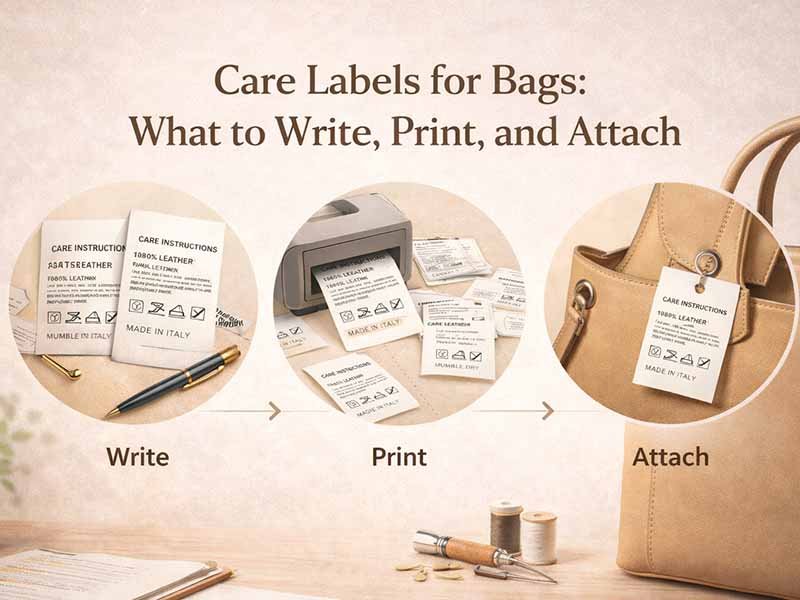
Care labels look small, but they do big work. When a customer takes a bag home, your photos, your product page, and your salesperson are gone. What stays is the product—and the label. That label becomes the one piece of guidance that helps people avoid mistakes like throwing a canvas tote into a hot wash, soaking a leather bag in water, or using alcohol wipes on PU coatings. Most “quality complaints” in bags are not factory defects. They are care mistakes caused by vague or missing instructions.
Care labels for bags are permanent instructions that tell customers how to clean, dry, and maintain a bag based on its materials and construction. They prevent avoidable damage (shrinkage, peeling, fading, deformation), reduce returns, and protect brands from disputes. For suppliers, accurate care labels also standardize product performance and reduce after-sale issues across different markets and user habits.
If you sell to e-commerce customers, care labels matter even more. Online shoppers can’t touch the product before buying. When the bag arrives, they immediately test it in real life—rain, sweat, coffee spills, machine washing. One wrong action can damage the bag, and the brand often gets blamed. A clear care label quietly protects your reputation.
I’ve seen brands lose weeks dealing with complaints that could have been prevented by two extra lines on a label. That’s why this topic is not “small details.” It’s risk control.
What Are Care Labels?

Care labels are sewn-in, printed, or attached instructions that explain how to clean and maintain a bag safely. They usually include cleaning method, drying rules, chemical warnings, and storage notes. Good care labels match the bag’s real materials (outer, lining, coating, hardware) and tell customers what actions will damage the bag so they can avoid it.
Why care labels are more than “washing instructions”
A useful care label is designed for real-world behavior. People do not read long instructions. They scan.
So an effective care label must be:
- Short enough to read quickly
- Clear enough to avoid interpretation
- Specific enough to match materials
- Durable enough to stay readable
Care labels also protect brands because they define what is “normal use.” If a customer uses the bag outside the label guidance (hot wash, bleach, tumble dry), the brand has a clear basis to respond.
What do care labels show?
A strong care label answers the “what can go wrong” questions customers don’t think about until damage happens.
Most effective care labels cover 5 areas:
- Cleaning method
- wipe clean / spot clean / hand wash only / do not wash
- Water and heat limits
- cold water only
- do not soak
- do not tumble dry
- keep away from heat sources
- Chemicals to avoid
- no bleach
- no alcohol solvents
- no strong detergents
- Drying method
- air dry in shade
- do not wring
- do not expose to direct sunlight
- Storage and usage notes
- store dry
- avoid long-term moisture
- do not overload
Care label content checklist (what customers actually need):
| Content block | Prevents which damage |
|---|---|
| Clean method | coating peeling, stains |
| Heat rules | warping, melting |
| Chemical warning | discoloration, cracking |
| Drying rule | deformation, mildew |
| Storage note | odor, mold |
When any one block is missing, customers fill the gap with guesswork.
What materials need care labels?
All bags benefit from care labels, but some materials absolutely require them because the damage risk is high.
Materials with high care sensitivity:
- Cotton / canvas: shrinkage, dye bleeding, wrinkling
- Washed fabrics: fading differences, uneven shade loss
- PU leather: peeling from heat, cracking from solvents
- Genuine leather: drying, staining, mold risk
- Coated fabrics (PU/PVC/TPU): heat and abrasion sensitivity
- Recycled fabrics: heat distortion, surface pilling
Material risk map (what customers do wrong most often):
| Material | Common wrong action | Typical result |
|---|---|---|
| Cotton canvas | hot wash | shrinkage 3–8% |
| Dyed fabric | strong detergent | color fading |
| PU leather | alcohol wipes | cracking/peeling |
| Genuine leather | soaking | stiffening, stains |
| TPU/PVC | heat drying | warping |
| Recycled poly | high heat | melting, shine marks |
These numbers are not theoretical. Shrinkage and peeling are two of the most common “complaints” brands deal with—especially for tote bags and fashion bags.
What forms do care labels take?
The best care label format depends on how the bag is used and how long you expect the instructions to remain readable.
Common formats:
- Woven label (durable, premium, hard to fade)
- Printed fabric label (soft, cost-effective, easy to produce)
- Heat transfer label (clean look, no edge, good for minimal design)
- Hangtag (good for retail, but often removed)
Format comparison for bags:
| Label type | Best use case | Durability | Notes |
|---|---|---|---|
| Woven | daily-use bags | high | premium feel |
| Printed fabric | most tote bags | medium–high | ink depends on process |
| Heat transfer | minimal interior design | medium | may fade with friction |
| Hangtag | retail info | low | discarded quickly |
Best practice for brands:
Use a permanent care label inside the bag and optionally a hangtag for retail storytelling. The care guidance must stay with the product, not disappear at checkout.
Why Care Labels Matter

Care labels matter because they reduce misuse, returns, and disputes after sale. Clear care instructions tell customers how to clean and handle bags correctly, preventing damage caused by washing, heat, chemicals, or overloading. For brands and manufacturers, care labels define proper use, protect quality claims, and reduce responsibility for damage caused by incorrect handling.
Why most bag problems are not “quality defects”
In real after-sales situations, many reported “defects” are actually care mistakes.
Common scenarios:
- Tote bags washed in hot water and shrink
- PU bags wiped with alcohol and peel
- Canvas bags dried under direct sun and fade
- Leather bags stored damp and develop mold
Without care labels, customers assume the product is fragile or poorly made. With care labels, expectations are clear.
After-sales issue breakdown (based on factory feedback):
| Issue type | Root cause |
|---|---|
| Shrinkage | hot wash |
| Color fading | strong detergent |
| Peeling | heat / solvents |
| Deformation | tumble drying |
| Mold odor | damp storage |
Clear care labels shift responsibility from brand to correct usage.
Why customers read care labels
Customers usually don’t read care labels at purchase — they read them after something goes wrong.
That’s why labels must be:
- Easy to understand
- Specific, not generic
- Focused on “do not” rules
What customers look for:
- Can I wash this?
- Can I use detergent?
- Can I dry it quickly?
- What ruins this bag?
If the label answers these clearly, frustration drops.
Customer behavior reality:
| Customer action | Label role |
|---|---|
| First wash | prevent shrinkage |
| Stain cleaning | prevent chemical damage |
| Drying | prevent shape loss |
| Long-term storage | prevent odor/mold |
Care labels don’t need to teach everything — they need to stop the most damaging mistakes.
Why brands rely on care labels
For brands, care labels are risk control tools, not decoration.
They help brands:
- Reduce refund requests
- Respond to complaints with clear reference
- Protect “normal wear and tear” standards
- Align customer use with product design limits
Without care labels, brands are often forced to:
- Replace bags damaged by misuse
- Accept blame for avoidable issues
- Damage brand reputation online
Brand risk comparison:
| Situation | Outcome |
|---|---|
| With clear care label | misuse clearly defined |
| Without care label | brand blamed |
| Vague wording | disputes increase |
Well-written care labels quietly protect brand margins.
Why care labels reduce disputes
Disputes usually arise when expectations differ.
Customers think:
“I treated it normally.”
Brands think:
“That use was incorrect.”
Care labels create a shared reference point.
They clearly define:
- Acceptable cleaning methods
- Actions that void normal wear expectations
- Material limitations
Dispute prevention logic:
| Scenario | Without label | With label |
|---|---|---|
| Hot wash | argument | clear misuse |
| Bleach use | unclear fault | clear warning |
| Tumble dry | refund request | label reference |
| Overloading | seam failure blamed | usage limit defined |
This is especially important for e-commerce, where physical inspection is not possible before purchase.
How Care Labels Protect Bags

Care labels protect bags by guiding users away from actions that cause damage. They prevent shrinkage, fading, peeling, deformation, and mold by explaining correct cleaning, drying, and storage methods. When care labels match the bag’s materials and construction, product lifespan increases and unnecessary replacements decrease.
Why bags fail faster without care guidance
Most bags are designed for normal daily use, not extreme cleaning.
When customers:
- Wash instead of wipe
- Use heat instead of air drying
- Apply chemicals instead of mild cleaning
Damage happens quickly — often within the first month.
Care labels slow this process by setting boundaries.
How care labels prevent damage
Care labels work best when they focus on prevention, not explanation.
Effective labels emphasize:
- What not to do
- What causes permanent damage
- What is safe as a default option
Damage prevention mapping:
| Label instruction | Damage prevented |
|---|---|
| Do not machine wash | shrinkage |
| Do not tumble dry | deformation |
| No bleach | color loss |
| Avoid heat | coating peel |
| Keep dry | mold |
Simple rules protect complex materials.
How care labels guide cleaning
Most bag cleaning is done under pressure — stains, spills, odor.
Care labels should guide safe cleaning choices, not leave customers guessing.
Good cleaning guidance:
- “Wipe clean with soft cloth”
- “Spot clean only”
- “Use mild soap, cold water”
- “Test on hidden area”
Poor guidance:
- “Clean gently”
- “Handle with care”
Cleaning clarity comparison:
| Wording | Risk level |
|---|---|
| “Wipe with damp cloth only” | low |
| “Spot clean with mild soap” | low |
| “Clean carefully” | high |
| “Wash if needed” | very high |
Specific wording reduces damage.
How care labels extend bag lifespan
A bag’s lifespan is often determined by its first few cleaning attempts.
With proper care labels:
- Canvas bags retain shape
- PU bags avoid cracking
- Leather bags stay flexible
- Coated fabrics keep waterproof layers intact
Estimated lifespan impact (field feedback):
| Bag type | Without label | With proper label |
|---|---|---|
| Cotton tote | 6–12 months | 18–24 months |
| PU bag | <1 year | 2+ years |
| Leather bag | mold risk | stable use |
| Coated bag | peeling | intact surface |
Care labels don’t make materials better — they help customers use them correctly.
Which Care Labels Fit Which Bags?

Different bags require different care labels because materials react differently to water, heat, chemicals, and friction. Fabric bags need washing and drying guidance, leather bags need moisture and chemical warnings, and technical fabric bags need heat and abrasion limits. Matching care labels to bag materials prevents damage and reduces misuse.
Why “one label fits all” does not work
A common mistake is using the same care label text across all bag styles. This creates confusion and increases damage because customers treat all bags the same way.
The right question is not “Do we have a care label?”
It is “Does this care label match how this bag will actually be used?”
Below is a practical, material-based breakdown.
Which care labels suit fabric bags
Fabric bags are the most frequently misused because customers assume they are washable like clothing.
Common fabric bags:
- Cotton totes
- Canvas bags
- Washed fabric bags
- Recycled polyester bags
Key risks:
- Shrinkage
- Color bleeding
- Deformation
- Surface pilling
Recommended care label guidance for fabric bags:
| Instruction area | Suggested wording |
|---|---|
| Washing | Hand wash cold / Spot clean only |
| Machine wash | Do not machine wash |
| Drying | Air dry only, reshape while damp |
| Chemicals | Do not bleach |
| Heat | Do not tumble dry |
For washed or dyed fabrics, adding “Color may fade over time” sets correct expectations and reduces complaints.
Which care labels suit leather bags
Leather bags fail quickly when treated like fabric bags. Care labels are critical here.
Leather types:
- Full-grain / top-grain leather
- Split leather
- PU / vegan leather
Key risks:
- Cracking from dryness
- Peeling from heat
- Staining from water
- Damage from alcohol or solvents
Recommended care label guidance for leather bags:
| Instruction area | Suggested wording |
|---|---|
| Cleaning | Wipe with dry or slightly damp cloth |
| Water | Avoid prolonged moisture |
| Chemicals | Do not use alcohol or solvents |
| Drying | Air dry away from heat |
| Storage | Store in dry, ventilated area |
For PU or vegan leather, always include “Keep away from heat sources” to prevent peeling.
Which care labels suit technical bags
Technical bags often look durable, which leads customers to over-clean them.
Technical bag materials:
- Coated fabrics (PU / TPU / PVC)
- Waterproof laminates
- Insulated linings
Key risks:
- Coating breakdown
- Loss of waterproof layer
- Seam tape failure
Recommended care label guidance for technical bags:
| Instruction area | Suggested wording |
|---|---|
| Cleaning | Wipe clean only |
| Washing | Do not wash |
| Heat | Do not expose to high heat |
| Abrasion | Avoid sharp objects |
| Storage | Dry completely before storage |
Clear limits protect performance features that customers expect to last.
How to Make Good Care Labels
Good care labels are clear, durable, and matched to real bag usage. They use simple language, focus on prevention, and stay readable for the life of the product. For brands, good care labels reduce after-sale issues and protect quality claims.
Why wording matters more than design
Care labels are read under stress—after spills, stains, or damage.
That means:
- Short sentences work better than symbols alone
- “Do not” rules prevent more damage than “Handle carefully”
- Plain language beats technical terms
Effective wording examples:
- “Do not machine wash”
- “Do not tumble dry”
- “Avoid alcohol cleaners”
- “Air dry only”
Ineffective wording:
- “Clean gently”
- “Handle with care”
- “Wash when needed”
Ambiguous wording creates disputes.
How to write care label text
Care label text should follow a clear order so users can scan it quickly.
Recommended text order:
- Cleaning method
- Washing restrictions
- Drying rules
- Chemical warnings
- Storage notes
Example (fabric tote):
- Spot clean only
- Do not machine wash
- Air dry only
- Do not bleach
- Do not tumble dry
This structure works across languages and markets.
How to choose care label materials
The label itself must survive the bag’s lifespan.
Common care label materials:
| Label material | Durability | Best for |
|---|---|---|
| Woven polyester | High | daily-use bags |
| Printed fabric | Medium–high | most tote bags |
| Heat transfer | Medium | minimalist interiors |
| Paper hangtag | Low | retail info only |
Best practice:
Use a permanent internal label for care instructions. Hangtags should never be the only source of care guidance.
How to place care labels correctly
Placement affects whether labels are read—or cut off.
Recommended placement options:
- Inside side seam
- Inside pocket lining
- Near brand label (but separate)
Avoid:
- Bottom corners (friction damage)
- Exterior placement
- Places that irritate users
Placement impact:
| Placement | User behavior |
|---|---|
| Inside seam | read, kept |
| Inside pocket | read, accepted |
| Exterior | removed |
| Too large | cut off |
Comfort and visibility matter.
Final Section: Build Better Bags with the Right Care Labels
Care labels are not decoration. They are part of product design.
They:
- Prevent avoidable damage
- Reduce returns and complaints
- Protect brand reputation
- Clarify responsibility
- Extend product lifespan
At Lovrix, care labels are developed alongside the bag itself—not added as an afterthought.
With over 18 years of experience.
Whether you are building a promotional tote line, a retail bag collection, or a long-term e-commerce brand, correct care labels protect your product long after it leaves the factory.
Contact Lovrix to discuss:
- Custom bag development
- Care label design and wording
- Material-specific care solutions
- OEM / private label production
Good care labels don’t just protect bags.
They protect brands.


