 Skip to content
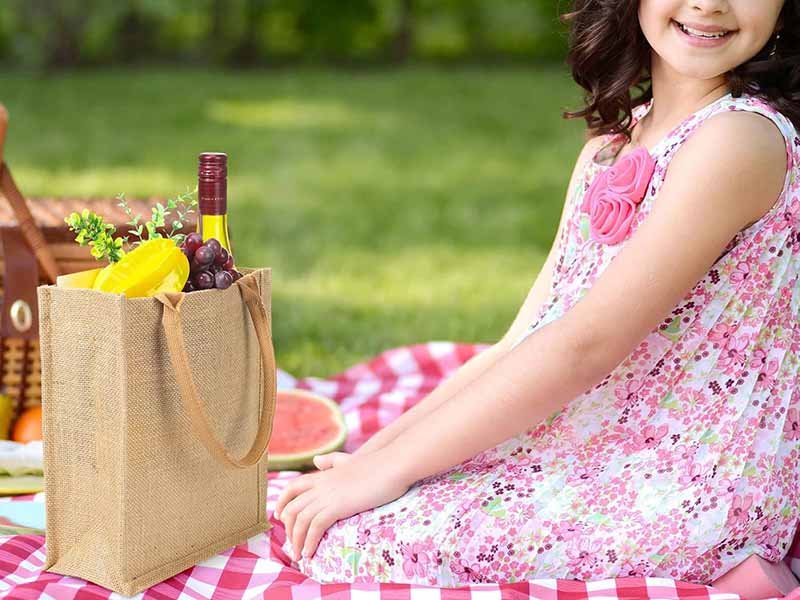
A jute bag may look simple at first glance, but the real quality is often hidden in the handle. Customers do not only judge a bag by its fabric color, logo printing, or natural texture. They judge it when they pick it up. If the handle feels thin, loose, rough, or weak, the whole bag feels less reliable. If the handle feels firm, balanced, and comfortable, the bag immediately feels more valuable.
Reinforced handles in jute bags make the bag stronger by improving the connection between the handle and the bag body. Stronger handle materials, wider contact areas, reinforced stitch patterns, inner backing, and proper load testing help reduce tearing, loosening, stretching, and early handle failure. For retail, grocery, gift, promotional, and private label use, reinforced handles help jute bags carry more weight, last longer, and create a better customer experience.
This matters because a jute bag is rarely used empty. It may carry groceries, books, wine bottles, cosmetics, clothing, trade show materials, food packaging, holiday gifts, or daily essentials. The bag body can be thick and beautiful, but once the handle fails, the whole product fails. For brands, that small detail can decide whether the bag is reused many times or thrown away after one disappointing experience.
What Are Reinforced Handles in Jute Bags?

Reinforced handles in jute bags are handle structures strengthened through better materials, stronger stitching, wider attachment areas, inner backing, or added support layers. Their purpose is to make the bag easier to carry, harder to tear, and more suitable for repeated use. For custom jute bags, handle reinforcement directly affects product safety, customer satisfaction, and brand value.
What Do Reinforced Handles Mean?
Reinforced handles in jute bags mean the handles are designed to carry real weight, not just complete the bag’s appearance. A basic handle may be stitched directly onto the top edge of the bag with a simple sewing line. A reinforced handle uses a stronger construction method to reduce pressure on the jute fabric and improve carrying performance.
In manufacturing, reinforcement can include cotton webbing, jute tape, rope handles, padded grips, extra stitching, inner patches, lining support, or thicker thread. The goal is not simply to make the handle look bigger. The goal is to make the handle area more stable when the bag is lifted, pulled, swung, or carried for a longer time.
A good reinforced handle system usually focuses on four areas:
- Handle material strength: The handle must match the bag’s expected carrying weight.
- Stitching strength: The sewing pattern must resist pulling from different directions.
- Fabric support: The jute panel around the handle should not tear easily.
- Carrying comfort: The handle should feel comfortable in the hand or on the shoulder.
For example, a small jute gift bag for candles may only need short cotton handles with neat stitching. A large grocery tote may need wider cotton webbing, cross stitching, and reinforced inner backing. A premium wine bag may need compact handles with strong anchor points because bottles create dense vertical weight.
In custom production, “reinforced” should never be treated as one fixed design. It should be adjusted according to bag size, fabric weight, lamination, lining, product use, target price, and customer expectations. This is where experienced manufacturing becomes important. Lovrix can help customers evaluate the real use scenario before confirming handle material and construction, so the final jute bag does not only look good in photos but also performs well in customers’ hands.
Why Do Jute Bags Need Them?
Jute bags need reinforced handles because the handle area is usually the highest-pressure part of the entire bag. The fabric body holds the goods, but the handles carry the pulling force every time the customer lifts the bag. If the handle connection is weak, the bag may fail even when the fabric itself is strong.
This is especially important for reusable jute bags. A reusable bag is not expected to survive only one shopping trip. It may be used again and again for groceries, retail purchases, work items, events, travel, storage, or daily errands. Every use creates repeated pulling, friction, bending, and pressure around the handle seams.
Without proper reinforcement, several problems can appear:
- The handle starts to loosen after repeated use.
- Stitch holes become larger around the handle joint.
- The top edge of the bag becomes wrinkled or distorted.
- The jute fabric begins to fray near the handle area.
- One side of the handle becomes longer or weaker than the other.
- The handle suddenly tears when the bag is carrying heavy items.
- Customers stop reusing the bag because it feels unsafe.
For brands, the damage is not only functional. It also affects trust. A customer may forgive a small color difference, but a broken handle feels like poor quality. If the bag carries a logo, the problem becomes more visible because the product failure is connected directly to the brand image.
Reinforced handles also support better reuse value. The more often a customer reuses a branded jute bag, the more exposure the brand receives. A strong handle helps the bag stay in circulation longer. This is why handle design should be considered during product development, not after the bag shape and logo are already finished.
A simple rule works well for custom jute bag projects: the more often the bag will be reused, the more attention the handle structure needs. A one-time gift bag, a daily shopping tote, and a heavy grocery bag should not use the same handle construction.
Are They Stronger Than Regular Handles?
Reinforced handles are stronger than regular handles when the material, stitch pattern, and attachment method are correctly matched to the bag’s purpose. A regular handle may be enough for lightweight packaging, but it often becomes risky when the bag is larger, heavier, or intended for repeated use.
The difference is not always visible at first glance. Two jute bags may look similar from the outside, but one may have inner backing, stronger thread, wider handle tape, and cross stitching, while the other only has a simple straight stitch. The difference becomes clear when the bag is loaded with real goods.
A reinforced handle is usually stronger because it improves several performance points:
- It spreads weight over a larger contact area.
- It reduces direct stress on one stitch line.
- It helps the top edge keep its shape.
- It lowers the risk of fabric tearing.
- It improves balance when the bag is carried.
- It supports repeated lifting and movement.
- It gives customers more confidence during use.
The table below shows how different handle structures usually perform in custom jute bag projects:
| Handle Type | Strength Level | Comfort Level | Best Use | Main Concern |
|---|---|---|---|---|
| Simple jute handle | Medium | Medium | Natural gift bags, light shopping bags | May feel rough with heavier loads |
| Cotton webbing handle | High | High | Retail totes, grocery bags, daily reusable bags | Needs good stitching quality |
| Rope handle | Medium | Medium | Boutique bags, gift bags, wine bags | Anchor points must be reinforced |
| Padded handle | High | Very High | Premium shopping bags, heavier grocery bags | Higher material and labor cost |
| Full-length webbing handle | Very High | High | Heavy-duty jute totes, market bags | More visible on bag design |
| Short reinforced handle | High | Medium | Wine bags, gift packaging, compact retail bags | Less suitable for shoulder carry |
A common mistake is judging handle strength only by thickness. A thick rope handle can still fail if the stitching area is too small. A medium-width cotton webbing handle can perform very well if it has box stitching, cross stitching, and inner backing. The real strength comes from the complete structure, not one single material.
For Lovrix custom jute bag development, handle selection can be tested against expected carrying weight, product size, and usage frequency. This helps customers avoid overpaying for unnecessary construction while also avoiding weak designs that may cause complaints after delivery.
What Makes Handles Break?
Handles usually break because the bag structure does not match the real carrying pressure. In many cases, the handle material itself is not the only problem. The failure happens because the handle, stitching, jute fabric, and load capacity were not designed as one system.
The most common reasons include poor stitch placement, weak thread, narrow handles, thin fabric around the joint, lack of backing, and unrealistic loading expectations. A bag may look large enough to carry heavy products, but if the handle attachment is designed for light use, the risk of failure becomes high.
Key causes of handle failure include:
- Small attachment area: The handle is sewn onto too small a section of fabric.
- Weak stitch pattern: A single straight stitch may not resist repeated pulling.
- Low stitch density: Fewer stitches mean less holding strength.
- Poor thread choice: Thin or low-quality thread can break under tension.
- No inner backing: The jute fabric alone may not support heavy pulling.
- Narrow handle tape: Narrow handles concentrate pressure in a smaller area.
- Oversized bag body: Larger bags encourage customers to carry more weight.
- Long handles: Long handles may create more swinging force during movement.
- Uneven sewing tension: One side of the handle may carry more stress.
- Poor inspection: Loose stitches or skipped stitches are not found before shipment.
The most dangerous design issue is a mismatch between capacity and construction. For example, a large jute shopping bag with a wide gusset can hold many items. Customers will naturally fill it. If the handles are designed like a small gift bag, breakage becomes likely. The bag size silently promises strength, but the handle structure does not support that promise.
Professional production should include handle checks before bulk shipment. For custom jute bags, practical inspection may include visual stitch inspection, manual pull testing, load hanging tests, seam tension checks, and random sampling from finished goods. These checks help identify weak handle attachment before the products reach customers.
A useful reference range for many daily jute bag projects is shown below. Exact results depend on fabric weight, lamination, handle material, stitching, lining, and product size.
| Bag Use | Suggested Load Range | Recommended Handle Design |
|---|---|---|
| Small gift bag | 1–3 kg | Short cotton or jute handles with neat reinforced stitching |
| Boutique retail bag | 2–5 kg | Cotton webbing handles with box stitching |
| Grocery jute bag | 5–10 kg | Wider webbing, cross stitching, inner backing |
| Wine bottle jute bag | 2–6 kg | Short reinforced handles with strong anchor points |
| Market tote bag | 8–12 kg | Full-length webbing or padded reinforced handles |
| Premium reusable bag | 5–12 kg | Padded handles, lining support, reinforced top edge |
These ranges should not replace actual testing, but they help brands think more clearly during product planning. The better question is not “Can this bag carry heavy goods?” but “How heavy, how often, and under what conditions?” That is the question Lovrix usually helps customers clarify before sample development.
Why Reinforced Handles Matter in Jute Bags

Reinforced handles matter because they decide whether a jute bag feels reusable, safe, and worth keeping. They improve carrying strength, reduce tearing, support heavier items, and make the bag more comfortable in real use. For brands, stronger handles also reduce complaints and help the bag create longer-lasting exposure after purchase.
How Do They Improve Strength?
Reinforced handles improve strength by spreading the carrying pressure across a wider and stronger area. When a customer lifts a loaded jute bag, the weight does not only pull downward. It also creates tension around the top edge, handle joints, stitch holes, and side panels. Reinforcement helps these areas work together instead of forcing one weak point to carry all the pressure.
A strong handle structure usually includes both material strength and construction strength. The handle material must be durable enough, but the sewing method must also lock it firmly to the bag. A cotton webbing handle with poor stitching can still fail. A well-stitched medium-weight handle can sometimes outperform a thicker handle with weak attachment.
The main strength improvements come from:
- Wider force distribution: Wider handles and larger stitch areas reduce concentrated pressure.
- Stronger stitch locking: Box stitching and cross stitching create more holding points.
- Better fabric stability: Inner patches or lining reduce tearing around stitch holes.
- Top edge support: A reinforced top hem helps the bag keep its shape.
- Reduced seam distortion: Balanced handle placement prevents twisting and uneven pulling.
- More consistent performance: Quality inspection reduces random weak points in bulk production.
The table below shows how reinforcement methods affect bag performance:
| Reinforcement Method | What It Improves | Suitable Bag Type | Cost Impact |
|---|---|---|---|
| Box stitching | Handle joint strength | Retail bags, gift bags, tote bags | Low |
| Cross stitching | Pull resistance | Grocery bags, heavier totes | Low to Medium |
| Inner backing patch | Fabric tear resistance | Large jute bags, wine bags | Medium |
| Wider handle webbing | Load distribution and comfort | Shopping bags, market bags | Medium |
| Reinforced top hem | Shape stability | Open-top totes, grocery bags | Low to Medium |
| Full-length webbing | Heavy-load performance | Large reusable bags | Medium to High |
| Padded grip | Carrying comfort | Premium bags, heavy shopping bags | Medium to High |
For custom projects, the best solution depends on the balance between strength, price, appearance, and target market. Not every bag needs the most expensive reinforcement. A promotional jute bag for light giveaways may only need neat box stitching and good thread. A premium grocery bag should use wider handles, stronger stitching, and possibly inner backing.
Lovrix can help customers choose the right level of reinforcement based on the actual product use. This is important because overbuilding a bag can increase cost unnecessarily, while underbuilding it can create quality problems after delivery.
How Do They Support Heavy Loads?
Reinforced handles support heavy loads by increasing the bag’s resistance to pulling, swinging, and repeated lifting. Heavy loads do not only mean high weight. They also include movement. A bag carrying 6 kg of groceries may experience much more stress when the customer walks, lifts it into a car, places it on the floor, or carries it upstairs.
Different products create different stress patterns. Books create dense and stable weight. Bottles create concentrated vertical pressure. Groceries shift inside the bag. Clothing is lighter but may fill the full volume. Gift boxes may press against the sides. Trade show kits may combine brochures, bottles, samples, and small boxes. A good handle design should consider these real conditions.
Common heavy-load use cases include:
- Grocery bags for supermarkets and organic stores
- Wine bottle bags and beverage packaging
- Farmers’ market tote bags
- Retail shopping bags for clothing and accessories
- Event gift bags with brochures and samples
- Bookstore and stationery bags
- Corporate gift packaging
- Premium reusable shopping bags
- Food delivery or takeaway packaging bags
- E-commerce gift sets and seasonal bundles
For heavier loads, the handle system should be upgraded in several ways:
- Use wider cotton webbing or full-length webbing.
- Add box stitching with cross reinforcement.
- Strengthen the top edge of the jute bag.
- Add lining or backing behind the handle area.
- Keep handle placement balanced on both sides.
- Choose thread suitable for repeated pulling.
- Test samples with the intended product weight.
- Review the bag after loading, lifting, and carrying tests.
A practical load-planning table can help customers make better decisions before sampling:
| Expected Use | Common Products Inside | Handle Risk | Suggested Upgrade |
|---|---|---|---|
| Light retail | Scarves, small cosmetics, candles | Low | Standard reinforced stitching |
| Medium retail | Shoes, clothing, boxed gifts | Medium | Cotton webbing with box stitching |
| Grocery | Fruit, jars, canned food, bottles | High | Wide webbing, cross stitching, backing |
| Wine and beverage | Bottles, cans, drink sets | High | Short reinforced handles, dense stitching |
| Events | Brochures, samples, gifts | Medium to High | Webbing handles, reinforced top hem |
| Market tote | Mixed goods, daily items | High | Full-length webbing or padded handles |
For Lovrix customers, heavy-load planning can begin before the first sample. Customers can provide the expected product weight, bag size, carrying method, and use environment. Lovrix can then recommend handle width, stitch pattern, lining option, and reinforcement method. This reduces trial-and-error and helps the final product feel more reliable.
How Do They Improve Comfort?
Reinforced handles improve comfort by making the bag easier to hold, especially when it carries weight. A handle that is too narrow, rough, stiff, or poorly positioned can press into the hand and make the bag unpleasant to use. A comfortable handle spreads pressure more evenly and gives customers a better carrying experience.
Comfort is not only about softness. It is also about handle length, width, texture, balance, and how the bag sits when loaded. A short handle may work well for gift packaging but may not fit comfortably over the shoulder. A long handle may be convenient for tote bags but can swing too much if used for heavy bottles. A rope handle may look elegant but can become uncomfortable with dense products. A cotton webbing handle often gives a better balance between strength and comfort.
Important comfort factors include:
- Handle width: Wider handles reduce pressure on the hand.
- Handle texture: Cotton feels softer than rough jute tape.
- Handle length: Longer handles support shoulder carry; shorter handles support hand carry.
- Handle thickness: Moderate thickness improves grip without feeling bulky.
- Handle placement: Balanced placement prevents twisting.
- Bag structure: A stable bag body makes carrying feel easier.
- Padding: Padded handles help when the bag carries heavier goods.
- Edge finishing: Smooth handle edges reduce friction.
The table below gives a practical comparison:
| Handle Choice | Hand Comfort | Shoulder Comfort | Visual Style | Best For |
|---|---|---|---|---|
| Jute tape handle | Medium | Medium | Natural and rustic | Eco gift bags, light retail bags |
| Cotton webbing handle | High | High | Clean and versatile | Retail totes, grocery bags, daily bags |
| Rope handle | Medium | Low to Medium | Boutique and decorative | Gift bags, wine bags, premium packaging |
| Padded handle | Very High | High | Premium and functional | Heavy shopping bags, market bags |
| Long webbing handle | High | Very High | Casual and practical | Tote bags, daily reusable bags |
For customer experience, comfort has a direct effect on reuse. If a branded jute bag feels comfortable, customers are more likely to use it again. If it hurts the hand when loaded, it may stay at home. That means less brand exposure and lower product value.
Lovrix can customize handle length, width, material, color, and structure based on how the final bag will be used. For example, a fashion retail bag may need a clean cotton handle that matches the logo color. A grocery bag may need a wider handle for comfort. A gift bag may need a shorter decorative handle that keeps the shape elegant. These details help the bag feel more intentional and less generic.
How Do They Add Product Value?
Reinforced handles add product value because they make the jute bag feel stronger, more reusable, and more carefully made. Customers often judge quality through touch. When they lift a bag and the handles feel secure, the whole product feels more trustworthy. This is especially important for branded packaging, where the bag becomes part of the customer’s impression of the company.
A stronger handle can improve value in several ways:
- It makes the bag feel more premium.
- It supports repeated use.
- It reduces the chance of handle failure.
- It protects the brand from quality complaints.
- It improves customer confidence when carrying heavier items.
- It helps the bag stay useful for longer.
- It increases the chance that the customer keeps and reuses the bag.
- It makes logo exposure last beyond the first purchase.
For retail and promotional projects, the handle is part of the brand experience. A customer may reuse a jute bag for grocery shopping, weekend markets, travel, storage, books, office items, beach trips, or casual daily carry. Each reuse gives the printed logo or woven label more visibility. A weak handle shortens this value. A reinforced handle extends it.
The value difference can be seen clearly below:
| Bag Quality Factor | Weak Handle Result | Reinforced Handle Result |
|---|---|---|
| First impression | Feels light and temporary | Feels stable and reliable |
| Reuse potential | Low to medium | Medium to high |
| Customer confidence | Reduced when loaded | Improved during carrying |
| Brand exposure | Shorter product life | Longer product life |
| Complaint risk | Higher | Lower |
| Perceived price value | Lower | Higher |
| Suitability for premium use | Limited | Stronger |
For custom jute bag orders, reinforced handles can also help brands position the bag at a higher level. The bag no longer feels like a low-cost giveaway. It feels like a useful product. This is especially valuable for eco-conscious retail, natural food brands, organic stores, gift packaging, fashion shops, trade shows, tourism products, and private label reusable bag collections.
Lovrix’s advantage is that handle customization can be connected with fabric, webbing, printing, sewing, packaging, and bulk production. Customers can develop a complete bag solution instead of choosing from a fixed handle option. Whether the project needs low MOQ customization, fast sampling, free design support, private label branding, or OEM/ODM production, Lovrix can help build a jute bag that looks natural, carries safely, and supports the brand’s long-term customer experience.
Which Reinforced Handles Suit Jute Bags?

The best reinforced handles for jute bags depend on bag size, carrying weight, product positioning, customer use, and visual style. Cotton webbing handles are often the most balanced option for strength and comfort. Jute handles create a natural look. Rope handles suit gift packaging. Padded and full-length webbing handles are better for heavier reusable bags.
Which Handle Material Is Best?
The best handle material is the one that matches the bag’s purpose, not simply the one that looks the strongest. A custom jute bag used for lightweight gift packaging does not need the same handle as a large grocery tote. A retail fashion bag does not need the same handle as a wine bottle bag. Handle material should be chosen according to weight, comfort, reuse frequency, cost, and brand style.
For most custom jute bags, cotton webbing is one of the most practical choices. It feels softer than jute tape, carries weight well, supports color customization, and works with many bag shapes. Cotton webbing is especially suitable for retail shopping bags, tote bags, grocery bags, promotional bags, and daily reusable bags. It gives the bag a cleaner and more comfortable hand feel without making the design too complicated.
Jute handles are better when the customer wants a natural, rustic, or fully eco-style appearance. They visually match the jute body and create a consistent material language. However, jute handles may feel rougher than cotton handles, especially when the bag carries heavier products. For light retail bags, organic product packaging, handmade-style gift bags, and natural food brands, jute handles can work very well.
Rope handles are often chosen for gift bags, wine bags, boutique packaging, and premium presentation bags. They can make a jute bag look more decorative and refined. The important point is that rope handles must have strong anchor points. If the rope is inserted through eyelets or sewn into the top edge without enough support, the joint area may become weak under pressure.
Padded handles and full-length webbing handles are more suitable for heavier use. They cost more, but they also improve comfort and strength. For supermarket bags, farmers’ market totes, reusable grocery bags, and premium shopping bags, this extra investment can reduce complaints and increase reuse value.
| Handle Material | Strength | Comfort | Visual Style | Best Use |
|---|---|---|---|---|
| Cotton webbing | High | High | Clean, modern, versatile | Retail, grocery, daily reusable bags |
| Jute tape | Medium | Medium | Natural, rustic, eco-style | Gift bags, organic packaging, light retail |
| Cotton rope | Medium | Medium | Soft, casual, decorative | Boutique bags, gift bags, lifestyle packaging |
| Jute rope | Medium | Low to Medium | Raw, natural, handmade feel | Eco gift bags, rustic product packaging |
| Padded cotton | High | Very High | Premium, comfortable | Heavy shopping bags, market bags |
| Full-length webbing | Very High | High | Functional, strong, visible | Heavy-duty totes, reusable grocery bags |
For Lovrix custom projects, the best handle material can be selected after confirming the bag’s actual use. If the customer wants a low-cost promotional jute bag, the handle structure should be efficient and stable. If the customer wants a premium reusable retail bag, comfort and long-term durability should be given more attention. A good handle choice saves cost where possible and strengthens quality where necessary.
Are Cotton Handles Better?
Cotton handles are often better for custom jute bags that need both strength and comfort. They are softer than jute tape, easier to carry for longer periods, and more suitable for repeated use. Cotton webbing also supports many design options, including different widths, colors, textures, and logo-matching effects.
One major advantage of cotton handles is hand comfort. Jute has a natural coarse texture. That texture is part of its charm, but it may not always feel comfortable when used as a handle. Cotton webbing is smoother and softer, so customers usually feel better carrying the bag, especially when it contains groceries, books, clothing, or boxed gifts.
Cotton handles also perform well visually. They can be dyed to match a brand color, made in natural beige for a clean eco look, or selected in black, white, brown, navy, green, or custom shades. For many retail brands, this makes cotton handles more flexible than natural jute handles. A simple color change can make the same jute bag feel more modern, premium, playful, or minimalist.
Cotton handles are especially suitable for:
- Retail shopping jute bags
- Fashion boutique jute bags
- Grocery and supermarket jute bags
- Exhibition and event tote bags
- Corporate gift bags
- Daily reusable bags
- Private label eco tote collections
- Premium branded packaging
- Organic food store bags
- Lifestyle and homeware retail bags
However, cotton handles are not automatically better in every case. If the brand wants a fully natural and rougher handmade look, jute tape may be more suitable. If the bag is a small decorative gift bag, rope handles may create a more elegant appearance. If the bag needs to carry very heavy goods, wider webbing or full-length webbing may be better than narrow cotton handles.
For manufacturing, cotton handle quality also depends on webbing density, width, thickness, colorfastness, shrinkage control, stitch strength, and edge finishing. A low-density cotton handle may stretch or deform after repeated use. A well-made cotton webbing handle with strong stitching can significantly improve bag performance.
| Cotton Handle Option | Common Width | Best Use | Key Benefit |
|---|---|---|---|
| Narrow cotton tape | 15–20 mm | Small gift bags | Clean look, lower cost |
| Standard cotton webbing | 25–30 mm | Retail bags, tote bags | Balanced comfort and strength |
| Wide cotton webbing | 35–40 mm | Grocery bags, heavier bags | Better pressure distribution |
| Padded cotton handle | 30–50 mm | Premium and heavy-load bags | Higher carrying comfort |
| Full-length cotton webbing | 25–40 mm | Heavy-duty reusable bags | Stronger load transfer |
Lovrix can help customers compare cotton webbing types during sampling. Instead of choosing only from photos, customers can evaluate hand feel, width, stiffness, color, and strength. This helps the final custom jute bag look right and feel right in real customer use.
Are Jute Handles More Natural?
Jute handles are more natural in appearance because they match the bag body and create a consistent eco-style look. For brands that want a raw, organic, handmade, or plastic-free visual impression, jute handles can be an excellent choice. They make the whole bag feel closer to nature and more connected to sustainable product positioning.
Jute handles are often used for natural product packaging, organic food bags, handmade gift packaging, craft product bags, farmers’ market bags, eco event bags, and rustic retail packaging. Their visual language is direct: simple, earthy, honest, and natural. For some customers, this natural feeling is more important than a perfectly smooth hand feel.
The main advantages of jute handles include:
- Natural material appearance
- Strong visual match with jute fabric
- Rustic and handmade-style character
- Good fit for organic and eco product lines
- Simple and honest product feeling
- Suitable for earth-tone brand designs
- Lower visual contrast with the bag body
- Stronger natural packaging identity
However, jute handles also have limitations. They may feel rougher in the hand, especially if the bag carries heavy products. They may also be less flexible for bright color matching compared with cotton webbing. If the handle is too narrow or not softened properly, it may reduce comfort. For heavier use, jute handles should be reinforced with better stitching, wider attachment areas, or inner backing.
The choice between jute handles and cotton handles should be based on the customer’s priority:
| Priority | Better Handle Choice | Reason |
|---|---|---|
| Natural appearance | Jute handle | Matches the bag body and eco style |
| Softer hand feel | Cotton handle | More comfortable for daily carrying |
| Heavy reusable use | Wide cotton webbing or full-length webbing | Better load support |
| Gift packaging look | Jute rope or cotton rope | More decorative |
| Brand color matching | Cotton webbing | Easier to customize colors |
| Rustic product image | Jute tape | More handmade and natural |
For example, a natural soap brand may prefer jute handles because the rough texture supports the product story. A boutique fashion store may prefer cotton handles because the bag needs a more polished finish. A grocery brand may prefer wide cotton webbing because customers will carry heavier items.
Lovrix can support both natural jute handle styles and more comfortable cotton handle solutions. Customers can also combine natural jute fabric with cotton handles in earth-tone colors, creating a balance between eco appearance and carrying comfort.
Are Rope Handles More Stylish?
Rope handles can make jute bags look more stylish, especially for gift packaging, wine bags, boutique retail bags, festival bags, and premium product presentation. They add a decorative detail that feels different from flat webbing handles. A rope handle can make a simple jute bag look more crafted, more elegant, or more gift-ready.
The style of rope handles depends on material, diameter, color, and attachment method. Cotton rope feels softer and cleaner. Jute rope feels more rustic and natural. Twisted rope creates a traditional handmade feeling. Smooth rope gives a more polished appearance. Some brands choose dyed cotton rope to match their logo or seasonal packaging theme.
Rope handles are often suitable for:
- Wine bottle jute bags
- Holiday gift bags
- Boutique product packaging
- Cosmetic gift sets
- Organic product gift bags
- Wedding welcome bags
- Tourism souvenir bags
- Small retail shopping bags
- Festival promotional bags
- Premium food packaging
However, rope handles are not always the best choice for heavy everyday bags. Because the rope is usually attached at smaller points, the pressure can concentrate around the anchor holes or stitched ends. If the reinforcement is weak, the rope may pull through the fabric or loosen over time. For this reason, rope handles should be used carefully when the bag is expected to carry dense or heavy products.
A good rope-handle jute bag should consider:
- Rope diameter suitable for the bag size
- Strong anchor points or stitched ends
- Reinforced fabric behind the attachment area
- Eyelets if needed for cleaner finishing
- Balanced handle length on both sides
- Smooth rope surface for hand comfort
- Strong knotting or secure sewing method
- Load testing based on actual product weight
| Rope Handle Type | Style Feeling | Strength Level | Best Use |
|---|---|---|---|
| Cotton rope | Soft, clean, modern | Medium | Gift bags, boutique packaging |
| Jute rope | Rustic, natural, eco-style | Medium | Organic and handmade product bags |
| Thick rope | Premium, decorative | Medium to High | Wine bags, gift bags |
| Thin rope | Light, elegant | Low to Medium | Small gift bags |
| Dyed rope | Brand-focused, colorful | Medium | Seasonal and custom retail bags |
For Lovrix projects, rope handles can be developed with reinforced stitching, inner support, and custom color options. If the customer wants a stylish jute bag that still performs well, Lovrix can test different rope thicknesses and attachment methods before confirming bulk production.
Are Padded Handles Worth It?
Padded handles are worth choosing when the jute bag is expected to carry heavier products or when the brand wants a more premium user experience. They improve comfort by reducing pressure on the hand and making the bag feel softer during carrying. For reusable grocery bags, market totes, premium retail bags, and heavy shopping bags, padded handles can make a clear difference.
A normal flat handle may feel fine when the bag is light. But when the bag carries bottles, groceries, books, or boxed products, the handle can press into the hand. Padded handles reduce this discomfort by spreading pressure and adding cushioning. This can encourage customers to reuse the bag more often.
Padded handles are especially useful for:
- Heavy grocery jute bags
- Farmers’ market shopping bags
- Large retail tote bags
- Premium reusable bags
- Wine and beverage bags
- Corporate gift bags with heavier items
- Bookstore bags
- Travel and lifestyle bags
- High-end promotional bags
- Private label reusable shopping collections
The main concern is cost. Padded handles require more material and more labor. They may also change the visual style of the bag. For a low-cost promotional bag, padded handles may not be necessary. For a premium reusable bag, the added comfort can support a higher product value.
| Bag Positioning | Padded Handle Need | Reason |
|---|---|---|
| Low-cost giveaway | Low | Bag may be used lightly or temporarily |
| Light gift packaging | Low to Medium | Style may matter more than comfort |
| Retail shopping bag | Medium | Comfort improves customer experience |
| Grocery bag | High | Heavy loads need better hand comfort |
| Premium reusable tote | High | Comfort supports higher perceived value |
| Wine or beverage bag | Medium to High | Dense weight can pressure the hand |
Padded handles should also be well-constructed. A padded handle that is soft but poorly attached can still fail. The padding should not interfere with strong stitching. The handle ends should be securely sewn to the bag body, and the top edge should be supported if the bag carries heavy loads.
Lovrix can help customers decide whether padded handles are necessary by reviewing product weight, customer use, target price, and desired quality level. Sometimes a wider cotton webbing handle is enough. Sometimes padding is the better choice. The goal is not to add expensive features blindly, but to make the bag feel right for the user.
How Are Reinforced Handles Made?

Reinforced handles are made by combining suitable handle materials with strong sewing methods, stable attachment areas, and extra support where pressure is highest. The most common methods include box stitching, cross stitching, wider webbing, reinforced top hems, inner backing patches, lining support, and full-length handle structures for heavier custom jute bags.
How Does Stitching Help?
Stitching helps reinforced handles stay firmly connected to the jute bag body. It controls how the handle resists pulling, lifting, twisting, and repeated movement. Good stitching turns separate materials into one stable structure. Poor stitching can make even a strong handle material fail quickly.
In custom jute bag manufacturing, stitching is one of the most important quality details because it directly affects strength and appearance. The thread must pass cleanly through the handle material and jute fabric without damaging the fabric. Stitch density must be consistent. The stitch line should not be too close to the fabric edge. The tension should be balanced so the bag does not wrinkle or loosen after use.
Strong stitching should achieve several goals:
- Hold the handle firmly in place
- Spread pressure across the attachment area
- Prevent the handle from tilting or twisting
- Reduce tearing around stitch holes
- Keep the top edge stable
- Improve durability during repeated use
- Maintain a clean appearance from outside
- Support consistent performance in bulk production
Different bags need different stitching levels. A small jute gift bag may only need neat reinforced straight stitching. A large grocery tote may need box stitching, cross stitching, and inner backing. A wine bottle bag may need dense stitching at compact handle anchor points because the load is concentrated.
Common stitch quality problems include skipped stitches, loose thread, uneven tension, misaligned handle placement, broken thread ends, and stitch lines too close to the edge. These issues may look small during inspection but can become serious after the customer loads the bag.
For Lovrix production, handle stitching can be reviewed during sample development and bulk quality control. Customers can confirm not only how the handle looks, but also how it performs when the bag is loaded. This makes the final product more stable and reduces the risk of quality complaints.
What Is Box Stitching?
Box stitching is a reinforcement method where the handle end is sewn in a square or rectangular pattern. It increases the holding area between the handle and the bag body. Compared with a single straight stitch, box stitching provides more contact points and better pull resistance.
Box stitching is common in tote bags, shopping bags, reusable bags, backpacks, straps, and other carry products because it is simple, efficient, and strong. On jute bags, it is often used where cotton webbing or jute tape handles attach to the main body. The rectangular stitch shape helps spread pressure over a wider area.
The benefits of box stitching include:
- Better handle stability
- Stronger pull resistance
- Clear and professional appearance
- Low to moderate production cost
- Suitable for many handle materials
- Easier quality inspection
- Good balance between strength and efficiency
- Useful for both light and medium-load jute bags
A standard box stitch may be enough for lightweight or medium-use bags. For heavier bags, box stitching can be combined with cross stitching or inner backing. The size of the box stitch should match the handle width and expected load. A small box on a wide handle may not provide enough holding strength. A larger box usually spreads force better.
| Box Stitch Use | Suitable Bag Type | Strength Level |
|---|---|---|
| Small box stitch | Gift bags, light retail bags | Medium |
| Standard box stitch | Shopping bags, tote bags | High |
| Box stitch with cross stitch | Grocery bags, heavier totes | Very High |
| Box stitch with backing patch | Large reusable bags | Very High |
| Full-length webbing with box stitch | Heavy-duty market bags | Very High |
From a visual perspective, box stitching also looks clean and intentional. It shows that the handle was designed for use, not just attached for decoration. For many branded jute bags, this small detail can make the product look more professional.
Lovrix can adjust box stitch size, thread color, stitch density, and placement according to the bag design. For example, matching thread can create a clean and subtle look, while contrast stitching can add a crafted visual detail. The final choice depends on brand style and product positioning.
What Is Cross Stitching?
Cross stitching is a reinforcement method where diagonal stitch lines are added inside the handle attachment area. It is often used together with box stitching to create a stronger “box-X” structure. This method improves resistance against pulling from different directions and helps the handle remain stable under load.
When a jute bag is carried, the handle does not only pull straight upward. It may pull forward, backward, sideways, or at an angle depending on how the customer holds the bag. Cross stitching helps resist these mixed forces. The diagonal stitches lock the handle more firmly and reduce movement inside the attachment area.
Cross stitching is especially useful for:
- Grocery jute bags
- Large shopping totes
- Farmers’ market bags
- Wine bottle bags
- Event bags with heavy samples
- Bookstore bags
- Premium reusable bags
- Bags with wider gussets
- Bags designed for frequent reuse
The biggest advantage of cross stitching is improved load security. It adds more thread paths across the handle end, making it harder for the handle to pull away from the bag body. When combined with inner backing, it can significantly improve the strength of the handle joint.
However, cross stitching must be done carefully. If the stitch tension is too tight, it may wrinkle the jute fabric. If the stitch placement is messy, it may affect appearance. If the needle or thread is not suitable, it may damage the fabric. Good sewing control is important, especially for natural jute materials.
| Stitch Type | Strength | Appearance | Best Use |
|---|---|---|---|
| Straight stitch | Low to Medium | Simple | Light gift bags |
| Double straight stitch | Medium | Clean | Light retail bags |
| Box stitch | High | Professional | Shopping bags, tote bags |
| Box-X stitch | Very High | Strong and functional | Grocery bags, heavier reusable bags |
| Dense bar tack | High | Compact | Rope ends, stress points |
For Lovrix custom jute bags, cross stitching can be used when the bag needs stronger functional performance. Customers can also choose whether the stitching should be hidden, matched with the handle color, or shown as a visible construction detail. This allows the bag to balance strength and appearance.
How Does Webbing Add Strength?
Webbing adds strength by giving the handle a wider, denser, and more stable structure than thin fabric strips or narrow cords. Webbing is usually woven tightly, which helps it resist stretching, twisting, and tearing. When used as a handle, it spreads the carrying force over a larger area and improves both strength and comfort.
In jute bags, webbing can be made from cotton, polyester, jute, or blended materials. Cotton webbing is popular for comfort and natural appearance. Polyester webbing can offer higher abrasion resistance and color stability, though some brands prefer natural fibers for eco positioning. Jute webbing creates a rustic look but may feel rougher. The right choice depends on the bag’s market position and use.
Webbing can strengthen a jute bag in several ways:
- It creates a wider handle surface.
- It reduces pressure on the hand.
- It provides better stitch holding.
- It lowers the risk of handle stretching.
- It supports larger or heavier bag sizes.
- It can run deeper into the bag body for extra strength.
- It offers consistent width and thickness in bulk production.
- It supports color customization for brand matching.
Webbing handle structure can be designed in different ways. A short webbing handle is sewn only near the top part of the bag. A longer webbing handle can extend further down the bag body. Full-length webbing can run from the bottom area up to the handle loop and back down again, transferring load through a larger part of the bag. This is much stronger for heavy-duty tote designs.
| Webbing Structure | Strength Level | Best Use | Visual Impact |
|---|---|---|---|
| Top-attached webbing | Medium to High | Retail bags, gift bags | Clean and simple |
| Extended webbing | High | Shopping bags, event bags | More visible |
| Full-length webbing | Very High | Heavy-duty totes, market bags | Functional and bold |
| Hidden reinforced webbing | High | Premium bags | Cleaner outside look |
| Padded webbing | High | Grocery and daily carry bags | More premium feel |
The width of webbing also matters. Narrow webbing may look elegant but may not be comfortable for heavier loads. Wider webbing improves pressure distribution but can change the bag’s appearance. For many reusable jute bags, 25–40 mm webbing is a practical range, depending on product size and target load.
Lovrix’s advantage includes experience in fabric, webbing, and bag production. This helps customers develop handles not only as sewing parts, but as integrated performance components. Webbing color, width, texture, density, and stitching can all be customized to support the final bag design.
How Does Lining Support Handles?
Lining supports handles by adding another layer of strength inside the jute bag. When handles are sewn only into one layer of jute fabric, the pulling force is concentrated in that fabric. When lining or backing is added, the force can be shared across more material layers, reducing the risk of tearing and distortion.
Lining is especially useful for larger jute bags, laminated jute bags, grocery bags, premium retail bags, and bags that carry products with sharper edges or heavier weight. It can also improve the inside appearance of the bag, making it feel more finished and higher quality.
Handle support from lining can work in several ways:
- The handle stitches pass through both jute fabric and lining.
- Inner patches reinforce the handle attachment area.
- The top edge becomes thicker and more stable.
- The bag body resists stretching better.
- The inside surface looks cleaner.
- The bag feels more structured when loaded.
- The handle area becomes less likely to tear.
Common lining options for jute bags include cotton lining, polyester lining, non-woven lining, laminated inner layers, or reinforced patches only at stress points. The best option depends on budget, appearance, bag use, and sustainability requirements.
| Lining Option | Strength Support | Appearance | Best Use |
|---|---|---|---|
| No lining | Low | Simple and natural | Light gift bags |
| Local backing patch | Medium to High | Mostly hidden | Handle stress points |
| Cotton lining | High | Natural and premium | Retail and lifestyle bags |
| Polyester lining | High | Clean and durable | Shopping and event bags |
| Laminated inner layer | Medium to High | Structured | Grocery and promotional bags |
| Reinforced top band | High | Strong top edge | Large reusable bags |
Lining also helps with product protection. If the bag is used for cosmetics, gifts, books, or packaged food, a cleaner inside finish can improve customer perception. For private label bags, lining can also support custom colors, printed patterns, labels, or inner pockets.
However, lining adds cost and may affect the bag’s eco message depending on material choice. Some brands want the most natural structure possible, while others prefer a more polished and durable product. Lovrix can help customers compare lined and unlined samples so they can decide based on real appearance, hand feel, strength, and budget.
For reinforced handles in jute bags, lining should not be seen as decoration only. It can be a structural support layer. When combined with proper stitching and suitable handle material, it helps the bag perform better in real use.
How Strong Are Reinforced Handles?

Reinforced handles in jute bags are strong enough when their material, stitching, width, attachment area, and bag structure match the real carrying purpose. A small gift bag may only need light reinforcement, while a grocery tote or market bag may need wider webbing, inner backing, stronger stitching, and load testing before production.
How Much Weight Can They Hold?
The weight reinforced handles can hold depends on the complete bag structure, not only the handle itself. Handle material, fabric weight, stitch density, thread strength, lining, bag size, and product shape all influence the final load capacity. A thick handle does not automatically mean a strong bag. If the stitch area is weak, the handle may still pull loose.
For many custom jute bag projects, a practical load range can be planned during sampling. Light gift bags may be designed for 1–3 kg. Standard retail jute bags may support around 3–6 kg. Grocery jute bags often need to carry 5–10 kg. Heavy-duty reusable market bags may require stronger construction for 8–12 kg or more, depending on material and testing.
A realistic weight plan should consider how customers actually use the bag. A bag may carry 5 kg safely when hanging still, but the pressure becomes higher when the customer walks quickly, swings the bag, lifts it into a car, or carries it up stairs. Dynamic movement creates more stress than static weight.
| Bag Type | Common Use | Suggested Load Planning | Recommended Handle Structure |
|---|---|---|---|
| Small jute gift bag | Candles, soaps, small gifts | 1–3 kg | Short cotton or jute handles, reinforced straight stitch |
| Boutique jute bag | Clothing, accessories, cosmetics | 2–5 kg | Cotton webbing, box stitching |
| Standard jute tote | Daily shopping, retail products | 3–6 kg | Cotton webbing, box-X stitching |
| Grocery jute bag | Food, jars, fruit, bottles | 5–10 kg | Wide webbing, inner backing, reinforced top edge |
| Wine jute bag | Bottles, drink sets | 2–6 kg | Short handles, dense stitching, strong anchor points |
| Market jute bag | Mixed goods, repeated use | 8–12 kg | Full-length webbing or padded handles, lining support |
For Lovrix custom jute bags, customers can provide the expected product weight and usage scene before sampling. Lovrix can then recommend handle width, stitching method, reinforcement level, and suitable materials. This helps avoid two common problems: handles that are too weak for real use, or overbuilt handles that add unnecessary cost.
What Affects Handle Strength?
Handle strength is affected by several connected details. The most important factors are handle material, handle width, stitching method, attachment area, fabric quality, lining support, and production consistency. If one part is weak, the entire handle system becomes weaker.
A strong handle design should start with the question: what will the customer carry? A jute bag for cosmetics packaging has very different needs from a jute bag for canned food or beverage bottles. The heavier and denser the load, the more important the handle structure becomes.
Key factors that affect handle strength include:
- Handle material: Cotton webbing, jute tape, rope, padded handles, and full-length webbing perform differently.
- Handle width: Wider handles spread pressure better than narrow handles.
- Handle thickness: Thicker material may improve strength, but only when stitched correctly.
- Stitch pattern: Box stitching and cross stitching improve pull resistance.
- Stitch density: More consistent stitches usually provide better holding strength.
- Thread quality: Strong thread helps resist breakage under repeated tension.
- Attachment area: Larger contact areas reduce pressure on one small zone.
- Fabric weight: Heavier jute fabric often supports stronger handle attachment.
- Inner backing: Backing patches or lining help reduce tearing around stitch holes.
- Bag size: Larger bags encourage heavier loading, so handles must be upgraded.
- Use frequency: Daily reusable bags need stronger construction than one-time packaging.
- Quality control: Even good materials can fail if sewing consistency is poor.
| Strength Factor | Low-Strength Risk | Better Practice |
|---|---|---|
| Narrow handle | Hand pressure, tearing risk | Use wider webbing for heavier bags |
| Simple stitch | Easier loosening | Add box or cross stitching |
| No backing | Jute fabric may tear | Add inner patch or lining |
| Long handle | More swinging force | Match length with load type |
| Thin thread | Thread may break | Use stronger sewing thread |
| Oversized bag | Customer overloads bag | Upgrade handle structure |
| Uneven sewing | One side fails first | Inspect stitch tension and alignment |
For custom manufacturing, handle strength should not be guessed from appearance. A sample should be loaded, lifted, carried, and checked after stress. If the handle begins to tilt, stretch, wrinkle, or loosen, the design should be improved before bulk production. This saves time, reduces customer complaints, and protects the brand’s reputation.
Does Handle Width Matter?
Handle width matters a lot because it affects both strength and comfort. A narrow handle concentrates pressure in a smaller area. This can make the bag uncomfortable to carry and may increase stress on the stitch area. A wider handle spreads the load better and usually feels more stable in the hand or on the shoulder.
For small jute gift bags, narrow handles can work well because the bag carries light items. For grocery bags, market bags, and large tote bags, narrow handles are usually not ideal. When the bag becomes heavy, a narrow handle can dig into the hand and make the product feel cheap, even if the fabric looks good.
Practical handle width planning can follow these general ideas:
| Handle Width | Best Use | Carrying Feel | Notes |
|---|---|---|---|
| 10–15 mm | Small gift bags | Light and delicate | Not suitable for heavy loads |
| 20–25 mm | Light retail bags | Clean and simple | Good for small to medium products |
| 25–30 mm | Standard jute totes | Balanced comfort | Common choice for retail bags |
| 30–40 mm | Grocery and reusable bags | More comfortable | Better for repeated carrying |
| 40 mm+ | Heavy-duty or padded bags | Strong and premium | Higher material cost, stronger visual impact |
A wider handle also gives more space for stitching. This allows stronger box stitching or cross stitching at the handle joint. It can also improve the bag’s appearance when designed properly. For example, a wide cotton webbing handle in a matching color can make a jute bag look cleaner and more premium. A wide natural jute tape handle can make the bag feel more rustic and handmade.
However, wider is not always better. A very wide handle may look too heavy on a small bag. It may also increase cost and affect the visual balance. For boutique gift packaging, a slim handle may look more elegant. For a large grocery tote, a slim handle may look weak and feel uncomfortable. The best width is the one that matches the bag size, product weight, and brand style.
Lovrix can help customers compare different handle widths during sampling. This is especially useful for private label and retail projects, because the same jute bag body can feel completely different when paired with different handle widths.
Does Handle Length Matter?
Handle length matters because it affects how customers carry the jute bag and how much stress the handle joint receives. Short handles are better for hand carry and compact packaging. Long handles are better for shoulder carry and tote-style use. If the length does not match the bag’s purpose, the bag may feel awkward or less durable.
A short handle gives better control. It keeps the bag close to the hand and reduces swinging. This is useful for wine bags, gift bags, small retail bags, and dense products. A long handle gives more convenience because the user can carry the bag on the shoulder. This is suitable for shopping totes, beach bags, grocery bags, and daily reusable bags.
The challenge is that longer handles can create more movement. When customers walk, the bag may swing more. If the bag is heavy, this movement increases pressure at the handle attachment area. That does not mean long handles are bad. It simply means long handles should be reinforced properly when the bag is designed for heavier loads.
| Handle Length Style | Best Use | Advantage | Risk |
|---|---|---|---|
| Short hand carry | Gift bags, wine bags, small retail bags | Stable, compact, controlled | Not suitable for shoulder carry |
| Medium hand carry | Boutique bags, standard shopping bags | Flexible and neat | Limited comfort for long carrying |
| Long shoulder carry | Tote bags, grocery bags, daily bags | Convenient and comfortable | More swinging force |
| Adjustable-style design | Special custom projects | More flexible use | Higher development cost |
| Full-length carry strap | Heavy-duty totes | Strong load transfer | More visible on design |
Handle drop length should also match the bag height. A small jute bag with very long handles may look unbalanced. A large tote with short handles may feel inconvenient. For shoulder carry, the handle opening must be large enough to fit comfortably over clothing, especially in colder markets where customers may wear coats or jackets.
For Lovrix custom bag development, handle length can be confirmed during sampling through real carrying checks. A sample should be tested by hand carry and shoulder carry if both uses are expected. This helps ensure the final product feels natural, not just technically correct.
How Are Handles Tested?
Handles are tested by checking stitch quality, pulling strength, load performance, balance, comfort, and durability after repeated use. Testing does not need to be complicated at the beginning, but it should be practical. The goal is to find problems before the bag reaches customers.
A professional handle test should review both appearance and performance. Appearance checks include stitch alignment, thread ends, handle symmetry, color consistency, and clean finishing. Performance checks include pulling the handles, loading the bag, carrying it, hanging it, and checking whether the handle joints loosen or deform.
Common handle testing methods include:
- Visual inspection: Check skipped stitches, loose threads, crooked handles, and uneven placement.
- Manual pull test: Pull the handles firmly to check attachment stability.
- Static load test: Fill the bag with a planned weight and hang it for a set period.
- Dynamic carry test: Carry and swing the loaded bag to simulate real movement.
- Repeated lift test: Lift and place the bag many times to check stitch durability.
- Edge stress check: Review the fabric around the handle joint after loading.
- Comfort test: Carry the bag by hand or shoulder and evaluate pressure.
- Balance test: Check whether both handles share weight evenly.
- Finished goods sampling: Randomly inspect bulk production before shipment.
| Test Item | What It Checks | Why It Matters |
|---|---|---|
| Stitch inspection | Sewing consistency | Prevents loose handle failure |
| Pull test | Joint strength | Finds weak attachment points |
| Load hanging | Weight support | Simulates heavy carrying |
| Repeated lifting | Durability | Tests reuse performance |
| Handle alignment | Balance | Prevents twisting |
| Comfort check | User experience | Improves reuse potential |
| Fabric distortion | Stress control | Prevents tearing around handle area |
For custom orders, testing should match the real product use. If the bag will carry wine bottles, test it with bottle-like weight. If it will carry grocery items, test it with mixed weights. If it will be used as a retail fashion bag, test both appearance and comfort. A bag that passes a light test may still fail under real market conditions.
Lovrix can support sample evaluation before bulk production. Customers can review handle material, stitch structure, carrying feel, and load performance at the sample stage. If improvement is needed, the handle design can be adjusted before mass production begins.
How to Customize Reinforced Handles in Jute Bags
Reinforced handles in jute bags can be customized by material, color, width, length, stitching, padding, logo style, and attachment method. Good customization should balance strength, comfort, cost, and brand appearance. For Lovrix customers, handle customization can be developed together with fabric, printing, lining, packaging, and final bag structure.
Can Handle Colors Be Customized?
Yes, handle colors can be customized for jute bags. Color customization helps the bag match a brand identity, seasonal collection, product line, retail campaign, or packaging theme. The handle color may look like a small detail, but it can strongly change the whole feeling of the bag.
Natural jute fabric usually has a beige, tan, or golden-brown tone. This gives brands many design directions. A natural cotton handle can create a soft eco look. A black handle can make the bag feel more modern. A white handle can look clean and minimal. A dark green handle can support organic or outdoor positioning. A red or navy handle can connect with seasonal or corporate branding.
Common handle color directions include:
- Natural beige for clean eco-style bags
- White or off-white for minimalist retail bags
- Black for modern fashion packaging
- Brown for coffee, bakery, and rustic brands
- Green for organic, garden, and wellness products
- Navy for corporate or premium retail use
- Red for holiday, gift, and promotional campaigns
- Custom Pantone-style matching for brand identity
| Handle Color | Visual Feeling | Suitable Brands |
|---|---|---|
| Natural beige | Soft, eco, simple | Organic, handmade, lifestyle |
| Black | Modern, strong, premium | Fashion, beauty, corporate |
| White | Clean, fresh, minimal | Cosmetics, wellness, gift |
| Brown | Warm, rustic, natural | Coffee, bakery, craft products |
| Green | Organic, fresh, sustainable | Food, garden, health brands |
| Navy | Stable, professional | Corporate, retail, travel |
| Red | Festive, eye-catching | Holiday, gift, promotion |
Color customization should also consider production consistency. Dyed cotton webbing may have color tolerance between batches. Dark handles may show less dirt during use. Light handles may look cleaner but may need better packaging during shipping. Natural jute handles may have color variation due to fiber characteristics.
Lovrix can help customers match handle colors with logo printing, fabric tone, label design, and packaging requirements. For private label projects, a small color detail can make the bag feel much more customized and less like a standard market product.
Can Logos Be Added?
Logos can be added to reinforced handles, but the best method depends on handle material, width, texture, and order quantity. In many cases, the main logo is printed on the jute bag body, while the handle supports the overall brand color and product style. For premium projects, logo details can also be added to the handle itself.
Common logo options for handles include woven labels, printed webbing, jacquard webbing, heat transfer marks, leather patches, cotton labels, or small sewn tags near the handle joint. The handle does not always need a large logo. Sometimes a small label creates a more refined result.
Logo options include:
- Printed logo on cotton webbing
- Jacquard woven logo on handle tape
- Small woven label near the handle
- Sewn brand tag on the handle joint
- Leather or PU patch with logo
- Cotton label on the inner side
- Contrast stitch detail matching brand color
- Printed slogan along the handle
| Logo Method | Best For | Visual Effect | Notes |
|---|---|---|---|
| Printed webbing | Simple branding | Clear and direct | Best on smooth handles |
| Jacquard webbing | Premium projects | Integrated and durable | Higher MOQ and cost |
| Woven label | Retail and private label | Professional and neat | Flexible placement |
| Leather patch | Premium gift bags | High-value look | Needs material matching |
| Contrast stitching | Subtle branding | Decorative detail | Good for minimal designs |
| Inner label | Private label bags | Clean outside look | Useful for retail collections |
Adding logos to handles should be done carefully. If the handle is too narrow, the logo may look crowded. If the texture is too rough, fine logo details may not be clear. If the bag already has a large front print, too many logo elements may make the design look busy. A clean design often works better than over-branding.
For Lovrix customers, logo placement can be tested during sampling. Customers can choose whether the logo should be bold and visible, subtle and premium, or mainly placed on the bag body while the handles remain clean. The right choice depends on retail positioning, product price, and brand personality.
Can Brands Choose Handle Length?
Brands can choose handle length based on how customers are expected to carry the bag. Handle length is one of the most important customization details because it affects comfort, appearance, and function. A jute bag for hand carry, shoulder carry, and heavy grocery use should not use the same handle length.
Short handles are often used for small gift bags, wine bags, and boutique packaging. They keep the bag compact and easy to control. Medium handles are suitable for general retail shopping bags. Long handles work better for tote bags and grocery bags because customers can carry them on the shoulder.
Practical handle length choices include:
| Handle Style | Approximate Use Direction | Best For |
|---|---|---|
| Short handle | Hand carry | Gift bags, wine bags, compact retail bags |
| Medium handle | Hand carry with more space | Boutique bags, standard shopping bags |
| Long handle | Shoulder carry | Tote bags, grocery bags, daily reusable bags |
| Extra-long handle | Casual shoulder carry | Beach bags, market totes, lifestyle bags |
| Full-length strap | Heavy-duty carry | Strong reusable shopping bags |
When choosing handle length, customers should consider:
- Bag height and width
- Expected product weight
- Customer carrying habit
- Whether shoulder carry is needed
- Target market climate and clothing thickness
- Bag visual proportion
- Handle material stiffness
- Packaging and shipping method
- Cost and sewing complexity
For example, a European grocery tote may need longer handles because customers may carry it over a coat. A wine bag needs short handles because the bottle should remain stable. A small cosmetic gift bag may look awkward with long handles. A farmers’ market bag may need long, wide, reinforced handles for repeated shoulder carry.
Lovrix can develop samples with different handle drops so customers can compare real carrying comfort. This is much better than deciding only from a flat design drawing. A handle may look right on paper but feel wrong in the hand. Sampling helps avoid that problem.
Can Handles Match Packaging Style?
Handles can and should match the packaging style. A jute bag is not only a carrier. It is part of the customer’s first impression. If the handle style does not match the bag body, logo, product category, or retail environment, the whole bag may feel inconsistent.
A natural jute bag with a raw jute handle creates a handmade eco feeling. A laminated jute bag with black cotton webbing feels more modern. A small wine bag with rope handles feels more gift-ready. A grocery tote with wide padded handles feels practical and reliable. Each handle choice sends a message.
Handle style can match packaging through:
- Material selection
- Color matching
- Handle width
- Handle length
- Stitch color
- Logo detail
- Edge finishing
- Padding level
- Rope or webbing style
- Inner label or tag placement
| Packaging Style | Recommended Handle Direction | Product Example |
|---|---|---|
| Natural eco-style | Jute tape or natural cotton webbing | Organic food, handmade soap |
| Premium retail | Cotton webbing, matched color, neat stitching | Fashion, cosmetics, gifts |
| Rustic handmade | Jute rope or raw jute handles | Craft products, farmers’ market |
| Modern minimalist | Black, white, or neutral cotton handles | Lifestyle retail, homeware |
| Heavy reusable | Wide webbing or padded handles | Grocery, market, daily tote |
| Holiday gift | Rope handles, contrast color | Christmas, wedding, events |
| Corporate promotional | Custom color webbing, logo label | Trade shows, company gifts |
A strong bag can still look unattractive if the handle design feels wrong. A beautiful bag can still disappoint customers if the handle is uncomfortable. Good customization should combine both sides: appearance and use.
Lovrix supports customers from concept to sample development, including handle style, material choice, color matching, logo placement, and bag construction. This helps brands create jute bags that look aligned with their product image and perform well after purchase.
How Does Lovrix Support Custom Bags?
Lovrix supports custom jute bags through material development, handle customization, design support, sampling, production, quality control, and private label service. With experience in fabric, webbing, and bag manufacturing, Lovrix can help customers develop jute bags from a basic concept into a finished product ready for retail, promotion, gifting, or e-commerce packaging.
For reinforced handles in jute bags, Lovrix can support several customization areas:
- Jute fabric selection
- Fabric weight and texture comparison
- Laminated or unlaminated structure
- Cotton webbing handle development
- Jute tape or rope handle options
- Padded handle solutions
- Full-length webbing structures
- Handle width and length adjustment
- Box stitching and cross stitching
- Inner backing and lining support
- Logo printing and label placement
- Color matching for handles and body fabric
- Low MOQ customization
- Fast sample development
- Private label and OEM/ODM production
- Bulk quality inspection
- Export packaging support
| Custom Area | Lovrix Support | Customer Benefit |
|---|---|---|
| Handle material | Cotton, jute, rope, padded, webbing options | Better match with use and budget |
| Handle strength | Stitching, backing, load planning | Lower failure risk |
| Visual design | Color, logo, label, packaging style | Stronger brand presentation |
| Sampling | Fast sample development | Easier decision before bulk order |
| MOQ | Flexible order planning | Suitable for new and growing brands |
| Quality control | Handle and seam inspection | More stable bulk production |
| Production | Fabric, webbing, and bag resources | More integrated customization |
For customers who are not sure which handle is best, Lovrix can help compare options based on product weight, target market, budget, and brand style. This is especially useful for e-commerce sellers, retail brands, gift companies, supermarkets, event planners, organic product brands, and private label reusable bag collections.
The goal is not only to make a jute bag. The goal is to make a jute bag that customers want to keep using.
Are Reinforced Handles in Jute Bags Worth It?

Reinforced handles in jute bags are worth it when the bag needs better strength, comfort, reuse value, and customer trust. They may slightly increase production cost, but they can reduce handle failure, improve user experience, support heavier products, and make the bag feel more valuable for retail, gift, grocery, and brand use.
Are They Better for Retail Bags?
Reinforced handles are better for retail jute bags because retail customers judge packaging by both appearance and feeling. A retail bag is handled at checkout, carried through the street, placed in a car, reused at home, and sometimes photographed or shared online. If the handle feels weak, the bag loses value quickly.
Retail bags often carry clothing, shoes, accessories, cosmetics, books, candles, packaged food, gifts, or lifestyle products. These items may not always be extremely heavy, but they need a stable and pleasant carrying experience. A reinforced handle helps the bag feel more reliable from the first touch.
For retail brands, stronger handles can bring several advantages:
- Better customer impression at checkout
- Higher chance of reuse after purchase
- More visible brand exposure in daily life
- Lower risk of handle-related complaints
- More premium packaging feel
- Better support for seasonal gift sets
- Stronger alignment with sustainable packaging goals
- Better performance for heavier product bundles
| Retail Product Type | Handle Need | Recommended Handle Style |
|---|---|---|
| Clothing | Medium | Cotton webbing, medium length |
| Cosmetics | Medium | Clean cotton handles, neat stitching |
| Shoes | Medium to High | Wider webbing, reinforced attachment |
| Books | High | Wide webbing, box-X stitching |
| Candles | Medium | Cotton or jute handles with backing |
| Gift sets | Medium to High | Rope or cotton handles with reinforcement |
| Food products | High | Wider handles, lining support |
| Lifestyle goods | Medium | Customized color webbing |
A retail jute bag with reinforced handles feels more like a reusable product and less like disposable packaging. This changes how customers treat it. They are more likely to keep it, fold it, reuse it, and carry it again. That longer use creates more value for the brand.
Lovrix can support retail customers with custom handle color, logo printing, label placement, private label packaging, and quality control. For brands selling through shops, online stores, pop-ups, exhibitions, or seasonal campaigns, reinforced handles can help turn a simple jute bag into a stronger part of the customer experience.
Are They Good for Gift Bags?
Reinforced handles are very good for jute gift bags because gift packaging must look attractive and feel secure. Gift bags may carry candles, wine bottles, food sets, cosmetics, handmade products, wedding favors, holiday gifts, and corporate items. Many of these products are small but dense, so handle strength matters.
A gift bag is often judged before the gift is even opened. If the bag looks natural and the handles feel strong, the whole gift feels more thoughtful. If the handles feel loose or uncomfortable, the packaging feels rushed. For premium gifting, small construction details can change the perceived value of the entire product.
Reinforced handles are useful for gift bags because they:
- Support dense or fragile items
- Improve the feeling of quality
- Help the bag keep its shape
- Reduce risk during handover or transport
- Make the packaging reusable
- Support premium logo presentation
- Work well with seasonal colors and labels
- Improve customer confidence
Gift bags can use different handle styles depending on the product:
| Gift Bag Type | Suggested Handle | Reason |
|---|---|---|
| Wine jute bag | Short rope or reinforced webbing | Better bottle stability |
| Candle gift bag | Cotton webbing or jute tape | Supports dense weight |
| Cosmetic gift bag | Soft cotton handles | Cleaner and more refined |
| Wedding welcome bag | Cotton or rope handles | Decorative and comfortable |
| Holiday gift bag | Colored rope or webbing | Seasonal visual impact |
| Corporate gift bag | Reinforced cotton webbing | Professional and durable |
| Handmade product bag | Jute tape or jute rope | Natural and crafted look |
For gift packaging, the handle should not only be strong. It should also match the mood of the gift. A rustic handmade gift may look better with jute rope. A luxury cosmetic gift may look better with smooth cotton webbing. A holiday promotional gift may need red, green, gold, or custom-colored handles.
Lovrix can help customers develop gift jute bags with custom size, logo, handle material, handle color, inner label, and packaging details. For seasonal orders, sampling and production planning are especially important because gift campaigns often have fixed launch dates.
Are They Suitable for Grocery Bags?
Reinforced handles are highly suitable for jute grocery bags because grocery bags usually carry heavier and more irregular items than standard retail bags. Fruits, vegetables, glass jars, canned food, drinks, bread, frozen goods, and household items all create different types of pressure. A weak handle can quickly become a problem.
Grocery use is one of the most demanding scenarios for jute bags. The bag may be filled close to its maximum capacity. It may be carried by hand, placed in a shopping cart, lifted into a car, taken upstairs, and reused many times. Each movement tests the handle joints.
For grocery jute bags, recommended handle features include:
- Wide cotton webbing
- Reinforced box-X stitching
- Inner backing patches
- Strong top edge construction
- Comfortable handle width
- Suitable handle length for hand or shoulder carry
- Lining support if needed
- Load testing with real product weights
- Strong bottom and side seam construction
- Easy-to-clean laminated surface if required
| Grocery Bag Requirement | Why It Matters | Handle Recommendation |
|---|---|---|
| Heavy load | Groceries can become dense | Wide webbing or full-length handles |
| Repeated use | Customers reuse weekly | Strong stitching and backing |
| Comfort | Heavy bags hurt hands | Wider or padded handles |
| Shape stability | Products shift inside | Reinforced top edge and gusset |
| Durability | Bag may touch floor, cart, car | Strong seams and quality control |
| Brand exposure | Grocery bags are reused often | Durable logo and color-matched handles |
A grocery bag should not only pass a light sample check. It should be tested with real weight. For example, a sample can be filled with jars, bottles, or weighted objects and carried repeatedly. After testing, the handle area should be checked for stitch loosening, fabric tearing, top edge deformation, and handle stretching.
Lovrix can support grocery jute bag customization with stronger webbing, reinforced stitching, laminated jute, lining, custom size, logo printing, and bulk inspection. For supermarkets, organic stores, farmers’ markets, food brands, and reusable bag sellers, reinforced handles are not optional decoration. They are central to product performance.
Are They Better for Brand Use?
Reinforced handles are better for brand use because they help the jute bag last longer, feel more valuable, and create better customer interaction. A branded bag is not just a container. It carries the company’s logo, product image, and customer promise. If the handle fails, the brand experience fails with it.
For brand use, the bag should support three goals:
- It should look aligned with the brand image.
- It should carry the intended products safely.
- It should be reused enough to create lasting exposure.
Reinforced handles support all three goals. They improve functional trust, support stronger product presentation, and encourage customers to keep using the bag. A bag with comfortable handles may travel from a retail store to a home, then to a grocery store, office, gym, beach, or weekend market. That repeated use gives the logo more life.
Brand-focused handle decisions may include:
- Matching handle color to logo color
- Choosing premium cotton webbing for better hand feel
- Adding woven labels or small logo tags
- Using contrast stitching as a design detail
- Selecting padded handles for premium reusable bags
- Using natural jute handles for eco-positioned products
- Choosing rope handles for gift-focused packaging
- Adjusting handle length for customer lifestyle
| Brand Position | Handle Direction | Product Feeling |
|---|---|---|
| Eco natural | Jute tape, natural cotton | Honest, organic, simple |
| Premium retail | Soft cotton webbing, clean stitching | Polished and reliable |
| Grocery and market | Wide reinforced handles | Practical and strong |
| Gift and holiday | Rope or colored handles | Decorative and memorable |
| Corporate | Custom color webbing, logo label | Professional and consistent |
| Lifestyle brand | Long cotton handles | Casual and reusable |
| Luxury craft | Rope, leather patch, neat finishing | Handcrafted and refined |
For Lovrix customers, the handle can be part of the brand story. A natural product brand may want plastic-free materials and earthy tones. A fashion brand may want black webbing and sharp logo printing. A food brand may want strong grocery-style handles. An e-commerce seller may want low MOQ, fast sample testing, and attractive packaging for online customers.
Strong handles make the branded bag more useful. Useful bags stay in customers’ lives longer. That is the real value.
Why Choose Lovrix Jute Bags?
Lovrix is a Chinese group company with more than 18 years of experience in fabric, webbing, and bag research, development, manufacturing, and sales. With fabric product factories, webbing factories, and bag factories, Lovrix can support custom jute bag projects from material selection to finished production. This integrated structure is especially useful for reinforced handle development because handle quality depends on both webbing and bag sewing expertise.
Lovrix supports domestic and international medium-to-high-end brand customers, e-commerce sellers, private label projects, and OEM/ODM custom orders. For reinforced handles in jute bags, Lovrix can help customers solve common development questions, such as:
- Which handle material should we choose?
- What handle width is suitable for our products?
- Should we use cotton webbing, jute tape, rope, or padded handles?
- How much weight should the bag carry?
- Should the handle be short, medium, or long?
- Do we need inner backing or lining?
- Which stitch method is safer?
- Can the handle color match our brand?
- Can we add labels or logos?
- How can we keep cost reasonable while improving quality?
Lovrix’s custom support can include:
| Service Area | What Lovrix Can Provide | Customer Value |
|---|---|---|
| Design support | Free design assistance and structure advice | Faster project start |
| Material selection | Jute fabric, webbing, lining, handle options | Better product matching |
| Handle development | Width, length, color, stitching, padding | Stronger and more comfortable bags |
| Sampling | Fast sample development and adjustment | Lower risk before bulk production |
| MOQ planning | Low MOQ customization | Suitable for new and growing projects |
| OEM/ODM service | Custom structure, private label, packaging | More complete product solution |
| Quality control | Handle, seam, fabric, and finished bag checks | More stable bulk quality |
| Production lead time | Shorter delivery support | Better campaign and launch planning |
For customers developing retail jute bags, grocery jute bags, gift jute bags, promotional jute bags, wine jute bags, or private label reusable bags, Lovrix can help turn a rough idea into a manufacturable product. Customers can provide a design sketch, product size, logo file, target weight, reference photo, packaging idea, or budget range. Lovrix can then recommend a practical handle structure and sample direction.
The strongest jute bag is not always the most expensive one. It is the one designed correctly for its use. A light gift bag needs beauty and neat finishing. A grocery bag needs comfort and load support. A retail bag needs both appearance and durability. A private label collection needs consistency across repeated orders. Lovrix helps customers find that balance.
Conclusion: Build Stronger Custom Jute Bags with Lovrix
Reinforced handles in jute bags may look like a small detail, but they have a big influence on product quality. They affect strength, comfort, safety, appearance, reuse value, and customer trust. A well-made handle helps the bag carry real products, survive repeated use, and feel good in the customer’s hand. A weak handle can ruin the whole experience, even if the fabric and logo look beautiful.
For brands, retailers, e-commerce sellers, supermarkets, gift companies, organic product brands, and promotional project teams, handle reinforcement should be considered early in product development. The right handle material, width, length, stitch method, backing, and testing process can make the final jute bag much more reliable.
Lovrix can support custom jute bag projects with integrated fabric, webbing, and bag manufacturing resources. Whether you need cotton webbing handles, jute handles, rope handles, padded handles, full-length reinforced webbing, private label branding, low MOQ customization, fast sampling, or OEM/ODM production, Lovrix can help you develop a stronger and more market-ready product.
If you want your jute bags to look natural, carry safely, feel comfortable, and support your brand for longer, reinforced handles are a smart place to start. Contact Lovrix to develop custom jute bags with stronger handles, better details, and manufacturing support built around your real product needs.


