 Skip to content
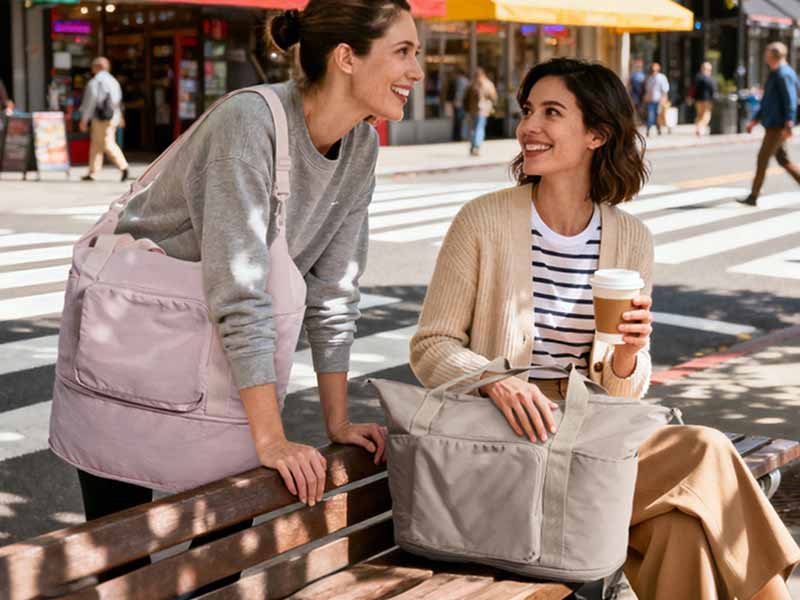
A large travel bag looks simple from the outside, but good design is never simple. A bag may look big in product photos, yet still feel frustrating when people actually use it. If the opening is too narrow, packing becomes awkward. If the handles are weak, the bag becomes uncomfortable under load. If the compartments are poorly planned, shoes mix with clothing, cables disappear into corners, and heavy items slide to one side. This is why large capacity travel bag design is not only about making a bag bigger. It is about making a big bag work in real life.
For travel brands, sports brands, and e-commerce sellers, this matters a lot. Customers buying a large capacity travel bag expect more than space. They expect structure, balance, comfort, and durability. They want one bag that can handle a weekend trip, a gym routine, a short business journey, or a family getaway without feeling bulky or disorganized. In other words, they do not just buy liters of storage. They buy convenience.
A large capacity travel bag works when size, materials, weight, compartments, zippers, handles, and carrying comfort are designed together. The best designs usually balance 40L to 80L storage with strong fabrics, reinforced stress points, practical compartments, and comfortable straps. When these elements match the real travel scene, the bag becomes easier to pack, easier to carry, and more valuable to the end user.
This is also why some travel bags get used for years while others are abandoned after one trip. The difference is rarely one single feature. It is the quality of the whole design logic behind the product.
What Is a Large Capacity Travel Bag?

A large capacity travel bag is a travel bag designed to carry more gear than everyday bags while still remaining portable, comfortable, and easy to organize. In most product categories, this usually means a capacity range of around 40L to 100L, depending on the intended use. It is widely used for weekend travel, gym use, sports training, business trips, outdoor activities, and short-haul flights.
What Defines a Large Capacity Travel Bag?
A large capacity travel bag is defined by three things working together: storage volume, load-bearing structure, and practical usability. Many bags look large when laid flat, but that does not automatically make them useful. Real capacity is not only about outer dimensions. It also depends on usable inner space, opening shape, depth, compartment layout, and whether the bag can hold weight without collapsing.
From a product development view, a travel bag normally enters the “large capacity” category when it can carry multiple categories of items at once, such as:
- clothing
- shoes
- toiletries
- electronics
- workout gear
- accessories
That is why brands usually evaluate large capacity travel bags by both dimensions and use scenarios.
A practical classification looks like this:
| Capacity Range | Common Use | Packing Ability |
|---|---|---|
| 30L–40L | Gym, overnight trip | Basic clothing and shoes |
| 40L–50L | Weekend travel | 2–3 days of travel items |
| 50L–70L | Short business or family trip | 3–5 days of mixed items |
| 70L–100L | Long trip, training, outdoor use | High-volume packing |
But numbers alone are not enough. A bag can technically measure 50L and still feel inefficient if the structure wastes internal space. For example, thick wall padding, poor opening design, and unnecessary internal panels can reduce the real usable volume.
A well-designed large capacity travel bag usually includes the following structural basics:
| Core Element | Why It Matters |
|---|---|
| Wide main opening | Easier packing and unloading |
| Reinforced base | Better weight support |
| Strong handles | Safer lifting |
| Adjustable shoulder strap | Better carrying flexibility |
| Multiple storage zones | Cleaner organization |
For brands planning private label or OEM travel bags, this matters because customers judge the product after packing it, not just after seeing it online. A strong design should feel intuitive from the first use.
Why Choose a Large Capacity Travel Bag?
People choose large capacity travel bags because they want flexibility. A suitcase is useful, but it is not always the best choice. It takes more space in the car, feels harder to carry up stairs, and often becomes inconvenient for short trips. A backpack is comfortable, but many styles do not offer enough volume or clean separation for shoes, clothing, and accessories. A large capacity travel bag sits in the middle. It gives users more freedom in how they pack, store, and carry their gear.
For end users, the attraction usually comes down to these benefits:
- one bag can handle multiple travel situations
- soft structure makes storage easier when not in use
- large opening allows faster packing
- lighter weight than hard luggage
- easier loading into cars, train racks, and overhead spaces
From a market perspective, this versatility is one of the biggest reasons the category performs well. One large capacity bag can be sold into several customer groups:
| Customer Group | Main Use |
|---|---|
| Weekend travelers | Short city or family trips |
| Gym users | Clothing, shoes, towel, bottles |
| Sports teams | Uniforms and training gear |
| Business travelers | Short trips with flexible packing |
| E-commerce consumers | Multipurpose lifestyle use |
This multi-use demand is important for brands because it widens the selling angle. A single product can be marketed as a weekend bag, travel duffel, gym bag, overnight bag, or carry-on style bag depending on the structure.
There is also a strong value argument. Many customers prefer products that can do more than one job. If a bag can move from airport to gym to hotel to car trunk without feeling out of place, it becomes easier to justify the price. This is especially useful for mid-range and premium product lines where brands need stronger product storytelling.
For custom brands, the question is not just “Why choose a large capacity travel bag?” The better question is “What problem does this bag solve better than backpacks or rigid luggage?” The answer usually lies in portability, packing flexibility, and everyday usability.
How Big Is a Large Capacity Travel Bag?
Size is one of the most misunderstood parts of travel bag design. Many clients initially ask for a “bigger bag,” but bigger is not always better. If the bag becomes too large, it can lose shape, feel heavy even when partially filled, or exceed practical carry limits for travel. The right size depends on what the bag is meant to carry, how it will be transported, and which market it is targeting.
Most successful large capacity travel bags fall into a moderate but useful size range. Here is a practical volume guide:
| Capacity | Suggested Travel Length | Most Common Use |
|---|---|---|
| 35L–45L | 1–2 days | Gym, overnight, short business trip |
| 45L–55L | 2–3 days | Weekend travel |
| 55L–70L | 3–5 days | Short vacation, sports travel |
| 70L–90L | 5–7 days | Family or gear-heavy travel |
| 90L+ | Extended trip | Outdoor, team, or specialty use |
In terms of product dimensions, many medium-to-large travel bags are developed roughly within the following range:
| Size Type | Length | Height | Width |
|---|---|---|---|
| Weekend bag | 45–50 cm | 25–30 cm | 20–25 cm |
| Standard large duffel | 50–60 cm | 28–35 cm | 25–30 cm |
| Extra-large travel bag | 60–70 cm | 30–40 cm | 28–35 cm |
These numbers help, but volume alone should never drive development. A 60 cm bag with a poor opening may feel harder to use than a better-designed 50 cm bag. A very deep bag may hold more, but can also make small items difficult to find. Some customers want maximum storage. Others want airline-friendly proportions. Others want a bag that looks compact but expands effectively.
That is why real bag sizing should start from the packing list. If the intended user usually carries 2 outfits, one pair of shoes, toiletries, and a laptop, the design target will differ from a bag meant for sports uniforms, towels, and training gear.
At Lovrix, brands that develop custom travel bags usually get better results when size is discussed through real use scenarios rather than abstract liters alone. It is much easier to design the right bag when the factory knows what the end user is actually carrying.
Are Large Capacity Travel Bags Practical?
Yes, they are highly practical when designed properly. But practicality does not come from size by itself. It comes from how the bag behaves when packed, carried, opened, closed, stored, and moved between different travel scenes. A bag that looks large but becomes uncomfortable at 12 kg is not practical. A bag with lots of volume but no separation for shoes or wet clothing is not practical either.
A practical large capacity travel bag usually performs well in five areas:
| Practical Factor | What Good Design Should Do |
|---|---|
| Packing efficiency | Use internal space well |
| Carrying comfort | Reduce shoulder and hand strain |
| Organization | Separate major item groups |
| Durability | Handle repeated heavy use |
| Travel adaptability | Fit different transport situations |
Let’s look at this from the user side. A person packing for a weekend trip often carries mixed items: clothing, shoes, toiletries, charger, headphones, documents, maybe even snacks or a water bottle. If all of these are dumped into one large cavity, the bag technically has capacity, but the user experience is poor. Practicality starts when the bag helps control that chaos.
This is why features such as the following matter so much:
- shoe compartments
- wet and dry separation
- quick-access pockets
- padded shoulder straps
- reinforced grab handles
- trolley sleeves
- compression straps
A simple comparison shows the difference:
| Bag Type | Storage Volume | User Convenience | Repeat Use Potential |
|---|---|---|---|
| Basic large bag | High | Medium to low | Lower |
| Structured travel bag | High | High | Stronger |
| Travel bag with compartments | Medium to high | High | Strongest |
From a B2B point of view, this has a direct impact on product success. Consumers may be attracted by “large capacity” in the first click, but they decide whether the product deserves a good review after real use. That is why practical design is closely tied to return rate, customer satisfaction, and repeat purchase behavior.
For brands, the lesson is simple: do not sell size alone. Sell a better travel experience built around size. That is the point where large capacity travel bag design starts to work.
Which Materials Fit Large Capacity Travel Bag Design?

Material selection is the foundation of a reliable travel bag. Many travel bags may look similar on the outside, but their performance can vary dramatically depending on the fabrics, coatings, reinforcement layers, and hardware used during production. For brands planning a large capacity travel bag, the goal is not simply choosing a strong material. The real challenge is balancing durability, weight, appearance, cost, and production stability.
Large capacity travel bags must handle heavier loads than most everyday bags. Clothing, shoes, electronics, and accessories can easily bring the total packed weight to 10–18 kilograms, sometimes even more. Because of this, the fabric system must support repeated stress while maintaining its shape and appearance.
A well-engineered travel bag material system usually combines several components working together.
| Material Component | Function in Travel Bag |
|---|---|
| Outer fabric | Main durability and appearance |
| Inner lining | Protects contents and improves structure |
| Reinforcement layers | Strengthen stress points |
| Coating or lamination | Water resistance |
| Hardware materials | Zippers, buckles, and rings |
When brands select materials carefully, they improve both the user experience and the long-term product reputation.
What Fabrics Build a Large Capacity Travel Bag?
The outer fabric determines how durable and professional a travel bag feels. Travel bags designed for large storage capacity usually rely on technical fabrics that resist tearing, abrasion, and repeated folding.
Some of the most widely used fabrics include:
| Fabric Type | Strength | Weight | Common Use |
|---|---|---|---|
| Polyester 600D | Good | Medium | Entry-level travel bags |
| Polyester 900D | Very good | Medium | Mid-range travel bags |
| Nylon 420D | Good | Light | Lightweight travel bags |
| Nylon 1680D | Excellent | Medium-heavy | Premium travel bags |
| Canvas | Durable | Heavy | Vintage style travel bags |
Among these options, polyester 600D and nylon 1680D are two of the most commonly used fabrics in commercial travel bag production.
Polyester fabrics are popular because they offer stable performance and good color consistency. They are also cost-effective for large production runs. Nylon fabrics, especially high-denier versions, are preferred when brands want a more premium product with improved abrasion resistance.
For example, sports brands often use 1680D ballistic nylon because it can withstand heavy loads and rough travel conditions. Lifestyle brands may prefer 600D or 900D polyester because it balances durability with affordability.
The key is choosing a fabric that matches the intended product positioning rather than automatically selecting the strongest material available.
How Durable Is a Large Capacity Travel Bag?
Durability depends on more than fabric strength alone. A travel bag may use a strong material but still fail if its construction is weak or if stress points are poorly reinforced.
Large capacity travel bags experience several types of stress during normal use:
- lifting heavy loads
- dragging the bag across surfaces
- compression during packing
- repeated zipper opening and closing
- friction against clothing and luggage
For this reason, durability usually comes from a combination of fabric density, reinforcement, and stitching techniques.
A practical durability structure might include the following elements:
| Structural Element | Purpose |
|---|---|
| Reinforced bottom panel | Supports heavy loads |
| Double stitching | Strengthens seams |
| Bar-tack reinforcement | Protects stress points |
| Webbing handles | Distributes lifting force |
| Durable zipper tape | Prevents tearing |
A travel bag designed to hold 50–70 liters of gear may experience daily load cycles that are significantly higher than smaller bags. Without reinforcement at key locations such as handle joints and zipper ends, even strong fabrics can fail over time.
Professional travel bag factories therefore focus heavily on stress testing during product development.
Are Waterproof Large Capacity Travel Bags Better?
Water resistance is an important feature for travel bags, but not every travel bag needs to be fully waterproof. Most brands prefer water-resistant fabrics rather than completely waterproof constructions because they offer better flexibility and comfort.
Water resistance is usually achieved through coatings applied to the back of the fabric.
Common coating options include:
| Coating Type | Water Protection | Flexibility |
|---|---|---|
| PU coating | Good | Flexible |
| PVC coating | Very strong | Less flexible |
| TPU lamination | Excellent | Premium option |
PU coatings are widely used because they provide reliable water resistance without making the fabric too stiff. PVC coatings are stronger but can increase weight and reduce flexibility. TPU laminations are used in premium travel gear where higher waterproof performance is required.
For most travel bags designed for daily travel or gym use, a PU-coated polyester fabric provides sufficient protection against light rain and accidental spills.
Which Lightweight Materials Fit Large Capacity Travel Bag Design?
Weight management is critical for large travel bags. If the empty bag is too heavy, users may feel uncomfortable even before packing it.
Lightweight fabrics help solve this problem while still maintaining structural strength.
Popular lightweight materials include:
| Material | Weight Advantage | Typical Use |
|---|---|---|
| Nylon 420D | Very light | Compact travel bags |
| Ripstop nylon | Strong for weight | Outdoor travel bags |
| Polyester 300D | Balanced | Budget travel bags |
Ripstop nylon is particularly interesting because it uses a special woven structure that prevents small tears from spreading. This makes it useful for lightweight travel bags that still need good durability.
For brands targeting airline carry-on travelers or urban commuters, lightweight fabrics can make the bag significantly more comfortable to carry.
How Is a Large Capacity Travel Bag Designed?

Design structure determines how easy a travel bag is to use. A bag may have high storage capacity, but if its compartments are poorly arranged or its straps are uncomfortable, the bag will quickly disappoint users.
Good travel bag design focuses on three major areas:
- internal organization
- load distribution
- carrying comfort
When these areas work together, the bag becomes easier to pack, easier to carry, and more enjoyable to use.
How Many Compartments Does a Large Capacity Travel Bag Need?
The number of compartments in a travel bag directly influences how well users can organize their belongings. Too few compartments create clutter, while too many compartments reduce usable space.
Most well-designed travel bags include a balanced structure.
| Compartment Type | Function |
|---|---|
| Main compartment | Store clothing |
| Shoe compartment | Separate footwear |
| Interior pockets | Organize small items |
| Exterior pockets | Quick access storage |
This layout allows users to separate different item categories without sacrificing packing space.
For example, a shoe compartment can prevent dirt from transferring to clothing, while small interior pockets can hold chargers, toiletries, or travel documents.
The goal is not simply adding compartments but making sure they match real packing behavior.
What Zippers Fit a Large Capacity Travel Bag?
Zippers play a major role in durability and convenience. Large travel bags require strong zippers because they handle higher tension than small bags.
The most common zipper types include:
| Zipper Type | Durability | Appearance |
|---|---|---|
| Nylon coil zipper | Flexible | Clean look |
| Resin zipper | Durable | Modern style |
| Metal zipper | Very strong | Premium feel |
Many travel bags use nylon coil zippers because they remain smooth even when the bag is slightly overpacked.
For premium designs, brands sometimes choose larger zipper sizes such as #8 or #10, which provide stronger performance for heavy loads.
How Do Straps Support a Large Capacity Travel Bag?
Carrying comfort becomes extremely important when a travel bag holds significant weight.
Large capacity bags usually include several carrying options:
| Strap Type | Purpose |
|---|---|
| Dual handles | Quick lifting |
| Shoulder strap | Comfortable long carry |
| Adjustable strap | User customization |
Shoulder straps are often padded to reduce pressure during extended carrying.
The width of the strap also matters. Wider straps distribute weight better across the shoulder, which improves comfort.
Do Shoe Compartments Help a Large Capacity Travel Bag?
Shoe compartments are one of the most requested features in travel bag design. They allow users to separate footwear from clothing, which improves hygiene and organization.
A good shoe compartment usually includes:
- ventilated panels
- waterproof lining
- reinforced structure
These features prevent odor buildup and protect other contents inside the bag.
For gym users and athletes, shoe compartments are especially valuable because they allow quick packing after training sessions.
How Do Brands Customize a Large Capacity Travel Bag?

Customization is one of the most important reasons brands develop their own travel bags instead of buying generic products from wholesale markets. A customized bag allows a company to control design style, functionality, branding, and product positioning. For travel brands, sports brands, and e-commerce sellers, customization also helps differentiate products in competitive marketplaces.
A custom large capacity travel bag usually involves several layers of development. These include structural design, material selection, brand identity elements, and accessory choices. When all of these elements are coordinated properly, the bag becomes not just a storage product but a recognizable extension of the brand itself.
From a product development perspective, the most common customization areas include:
| Customization Area | What Brands Adjust |
|---|---|
| Size and volume | Overall bag capacity |
| Compartment layout | Internal organization |
| Materials | Fabric durability and appearance |
| Logo placement | Brand visibility |
| Accessories | Handles, straps, and hardware |
When brands approach customization strategically, the resulting product can support both practical travel needs and long-term brand recognition.
What Logos Fit a Large Capacity Travel Bag?
Logo presentation plays a key role in how a travel bag represents a brand. A well-executed logo can transform a simple travel bag into a recognizable brand product. On the other hand, poorly applied branding may weaken the perceived quality of the bag.
Several logo techniques are commonly used in travel bag production.
| Logo Method | Appearance | Best Use |
|---|---|---|
| Screen printing | Clean graphic logo | Sports or promotional bags |
| Embroidery | Textured premium look | Outdoor or lifestyle brands |
| Rubber patch | Modern technical style | Athletic travel bags |
| Woven label | Subtle branding | Minimalist products |
| Metal plate | Premium finish | High-end travel accessories |
The choice of logo method often depends on brand positioning. Athletic brands may prefer rubber patches or screen prints, while lifestyle brands may favor embroidered logos or subtle woven labels.
Positioning is equally important. Logos can appear on the front panel, near the zipper line, or on the handle area. Some brands also add branded zipper pullers to reinforce identity without making the logo overly large.
Which Colors Work for a Large Capacity Travel Bag?
Color choice influences both brand perception and product appeal. Travel bags are usually designed to look clean and practical, but they can still express a strong brand identity.
Common color strategies include:
| Color Approach | Effect |
|---|---|
| Neutral colors | Professional and versatile |
| Brand signature colors | Strong brand recognition |
| Two-tone combinations | Sporty modern appearance |
| Seasonal color releases | Marketing campaigns |
Neutral colors such as black, gray, navy, and olive remain the most widely used because they hide dirt and maintain a professional appearance. These colors also work well across different travel scenarios.
However, some brands intentionally introduce bold colors to differentiate their products. For example, fitness brands may release bright seasonal colors to attract younger customers.
The important consideration is color consistency during production. Reliable manufacturers ensure that bulk production batches match approved color samples, which protects brand image.
What Accessories Improve a Large Capacity Travel Bag?
Accessories play a significant role in improving usability and perceived product value. While the main structure determines storage capacity, accessories determine how convenient the bag feels during daily use.
Several accessory features are commonly added during customization.
| Accessory Feature | Function |
|---|---|
| Padded shoulder strap | Improve carrying comfort |
| Reinforced handle grip | Easier lifting |
| Adjustable strap system | Adapt to different users |
| Trolley sleeve | Attach bag to luggage |
| External compression straps | Stabilize packed items |
Some travel bags also include expandable sections that allow users to increase storage space when needed.
From a design perspective, these accessories should complement the overall product structure rather than complicate it. Too many add-ons can make a bag heavy or confusing to use. The most successful travel bags usually focus on a few well-executed features rather than dozens of unnecessary components.
Do Brands Launch Custom Large Capacity Travel Bags?
Yes, many brands launch custom travel bags as part of their product strategy. In fact, custom travel bags are one of the fastest-growing categories in travel accessories.
Several market segments actively invest in customized travel bag products.
| Brand Type | Why They Develop Travel Bags |
|---|---|
| Travel brands | Expand luggage product lines |
| Fitness brands | Offer gym travel solutions |
| Outdoor companies | Provide gear transportation |
| Lifestyle brands | Create everyday travel products |
| E-commerce brands | Launch private label accessories |
Custom development allows these brands to tailor the product to their specific audience. For example, a fitness brand may prioritize shoe compartments and ventilation panels, while a lifestyle brand may focus more on aesthetics and lightweight construction.
Custom travel bags also help brands build long-term product lines instead of relying on generic items available to competitors.
How Do You Choose a Large Capacity Travel Bag Manufacturer?
Choosing the right manufacturer is a crucial step in product development. A capable factory does more than produce bags; it helps refine design details, improve production efficiency, and maintain consistent product quality.
Brands usually evaluate potential suppliers based on several important factors.
What MOQ for Large Capacity Travel Bags?
Minimum order quantity varies depending on bag complexity and customization requirements.
A typical MOQ range may look like this:
| Product Type | Typical MOQ |
|---|---|
| Basic travel bag | 200–300 pieces |
| Custom travel bag | 300–500 pieces |
| Complex design | 500–1000 pieces |
Factories such as Lovrix often offer flexible MOQ options to support brands that are testing new products or launching small collections.
Lower MOQs allow companies to validate product demand before committing to large production runs.
How Fast Is a Large Capacity Travel Bag Sample?
Sampling speed has a direct impact on product launch timelines. Faster sample development allows brands to test designs, adjust structures, and finalize materials more efficiently.
Typical sampling stages include:
| Stage | Time |
|---|---|
| Design confirmation | 1–2 days |
| Material preparation | 2–3 days |
| Sample production | 5–7 days |
In many projects, the first development sample can be completed within 7–10 working days depending on product complexity.
This process gives brands an opportunity to review size, structure, and usability before full production begins.
What Quality Standards for Large Capacity Travel Bags?
Quality control ensures that travel bags meet durability and performance expectations.
Professional factories inspect several areas during production.
| Inspection Area | Checkpoints |
|---|---|
| Stitching quality | Reinforced seams |
| Fabric inspection | No defects or damage |
| Zipper testing | Smooth operation |
| Hardware durability | Strong attachment points |
Factories may also perform stress testing to simulate real travel conditions.
This ensures that handles, straps, and base panels can withstand heavy loads without failure.
Why Work With a Large Capacity Travel Bag Factory?
Working with an experienced manufacturer brings several advantages for brands developing travel products.
Factories that specialize in travel bags typically offer:
| Advantage | Benefit |
|---|---|
| Material expertise | Better fabric selection |
| Product engineering | Stronger bag structures |
| Production efficiency | Faster lead times |
| Quality systems | More consistent results |
These capabilities help brands launch reliable travel products while minimizing production risk.
Why Brands Work With Lovrix
Lovrix is a Chinese manufacturing group with more than 18 years of experience in fabric development, webbing production, and bag manufacturing. The company operates integrated production resources including fabric factories, webbing production lines, and bag manufacturing facilities.
This integrated structure allows Lovrix to control multiple parts of the production process.
Lovrix supports a wide range of custom travel products including:
- travel duffel bags
- large capacity travel bags
- gym bags
- outdoor travel bags
- sports equipment bags
Lovrix Manufacturing Advantages
| Capability | Benefit for Brands |
|---|---|
| Fabric development | Greater material flexibility |
| Integrated supply chain | Faster production cycles |
| Low MOQ options | Accessible for smaller brands |
| Rapid sampling | Faster product validation |
| OEM & ODM services | Full customization support |
These capabilities allow Lovrix to support both growing brands and established companies seeking reliable manufacturing partners.
Start Developing Your Large Capacity Travel Bag With Lovrix
Large capacity travel bags remain one of the most versatile and commercially attractive products in the travel accessory market. When designed properly, they combine large storage volume with portability, durability, and everyday convenience.
For brands, a well-developed travel bag can serve multiple product roles. It can function as a weekend bag, gym bag, carry-on bag, or sports gear carrier. This versatility allows a single product to reach multiple customer groups while maintaining strong brand identity.
However, achieving this balance requires careful design decisions and experienced manufacturing support.
Lovrix works with global brands, wholesalers, and e-commerce companies to develop customized travel bags that match their product strategy and market positioning.
If you are planning to launch a custom large capacity travel bag, the Lovrix team can help you evaluate materials, refine structural design, and produce high-quality products with stable lead times.
You are welcome to contact Lovrix to discuss your project and receive a quotation for custom travel bag development.


