 Skip to content
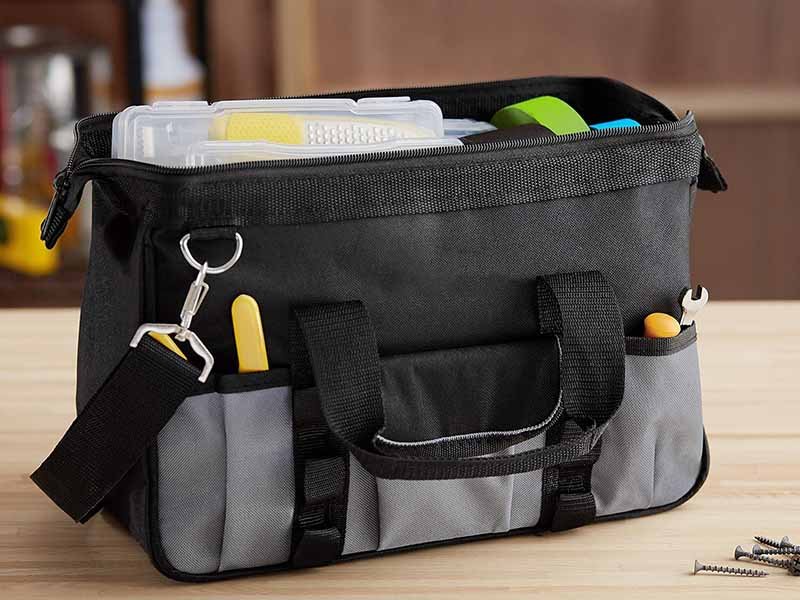
A tool bag is one of those products that looks simple until it fails in real use. On paper, many bags seem strong enough. In reality, the material at the bottom starts wearing thin, the corners get scraped on concrete, the seams take repeated shock from heavy steel tools, and the handles begin to pull against the body day after day. For a professional user, that failure is not a small inconvenience. It can damage tools, slow down work, create safety problems, and quickly turn a low-cost bag into a bad investment.
Reinforced canvas matters because it solves the exact problems that ordinary fabrics cannot handle well over time. It gives tool bags more body, more resistance to tearing, better abrasion performance, and more reliable structural strength at the places that fail first. A good reinforced canvas tool bag does not depend on one factor alone. It depends on the right fabric weight, the right fiber blend, the right coating, the right seam construction, and the right reinforcement at stress points.
Reinforced canvas for tool bags is a strengthened heavy-duty fabric designed to carry weight, resist abrasion, and hold its structure under repeated hard use. It usually combines higher fabric weight, stronger yarns, tighter weaving, added coatings, and reinforced construction such as double layers or bartack stitching. The result is a tool bag that lasts longer, carries more safely, and performs better in demanding work environments.
The difference becomes obvious in use. Two tool bags may look similar on a sales page, but after a few months on job sites, one may still hold its shape while the other already shows corner wear, seam stress, and bottom-panel damage. That gap often starts with the material choice. This is why serious importers, brand owners, and Amazon sellers pay close attention to reinforced canvas before they approve development, sampling, or mass production.
What Is Reinforced Canvas for Tool Bags?

Reinforced canvas for tool bags is a heavy-duty fabric system designed to handle real working conditions—high weight, sharp tools, rough surfaces, and repeated daily use. It is not just “thicker canvas.” It is a combination of higher fabric weight, stronger yarns, tighter weave, coatings, and structural reinforcement that work together to prevent early failure.
In actual use, the difference shows up quickly. A standard canvas bag may start wearing at the bottom within weeks under daily use, while a properly reinforced canvas bag can maintain structure and function for years. For importers and brand owners, this directly affects return rates, customer reviews, and repeat orders.
What is reinforced canvas in tool bags?
Reinforced canvas is a canvas material that has been upgraded to improve load-bearing capacity, tear resistance, and wear performance. It is specifically developed for products like tool bags that face higher stress than normal bags.
A standard canvas fabric might work fine for tote bags or backpacks, but tool bags create very different pressure conditions:
- Tools are heavy (often 10–30 kg total weight)
- Weight is uneven (metal tools create pressure points)
- Movement inside the bag causes internal friction
- External surfaces (concrete, ground) create abrasion
Because of this, reinforced canvas is built to solve three core problems:
- Prevent tearing under load
- Reduce abrasion damage at the bottom and corners
- Maintain shape under repeated use
From a material standpoint, reinforced canvas usually starts at 16 oz (≈550 GSM) and goes up to 24 oz+ (800+ GSM) depending on the application.
What makes canvas “reinforced”?
Canvas becomes reinforced when its structure and performance are improved beyond basic fabric. This is achieved through a combination of material upgrades and construction methods.
Here are the key reinforcement elements used in tool bag production:
| Reinforcement Element | What It Does | Practical Impact |
|---|---|---|
| Higher GSM fabric | Increases thickness and density | Improves tear resistance and durability |
| Stronger yarn (polyester/blend) | Increases tensile strength | Handles heavier loads without stretching |
| Tighter weave | Reduces yarn movement | Improves stability and wear resistance |
| Coating (PU/PVC) | Adds surface protection | Reduces water absorption and abrasion |
| Double-layer panels | Adds extra material at key areas | Extends lifespan in high-wear zones |
| Reinforced stitching | Strengthens seams | Prevents failure at stress points |
In real production, these elements are combined rather than used individually. For example:
- A heavy-duty tool bag may use 18 oz polyester canvas + PVC coating + double-layer bottom + bartack stitching
- A mid-range tool bag may use 16 oz blended canvas + PU coating + reinforced seams
The goal is not just to make the fabric stronger, but to make the entire bag system more reliable.
What types of reinforced canvas are used?
Different reinforced canvas types are used depending on the product positioning, target market, and working environment.
Below is a practical comparison used in product development:
| Canvas Type | Strength Level | Key Advantage | Best Use |
|---|---|---|---|
| Cotton canvas | Medium | Natural look, flexible | Lifestyle or retail tool bags |
| Polyester canvas | High | Strong, stable, water-resistant | Professional tool bags |
| Poly-cotton blend | Medium–high | Balanced cost and performance | General-purpose bags |
| PU-coated canvas | Medium–high | Water-resistant, flexible | Mid-range tool bags |
| PVC-coated canvas | High | Abrasion + water resistance | Construction/industrial use |
| Waxed canvas | Medium | Premium appearance, water resistance | High-end niche products |
From a business perspective:
- Cotton canvas is often chosen for appearance and branding
- Polyester canvas is chosen for performance and consistency
- Coated canvas is chosen for durability and environment resistance
For most B2B clients, especially those selling on Amazon or supplying contractors, polyester or coated reinforced canvas delivers the best long-term results in terms of durability and customer satisfaction.
How does reinforced canvas differ from standard canvas?
Many customers initially assume that all canvas fabrics perform similarly. In reality, the difference between standard canvas and reinforced canvas is significant, especially over time.
| Performance Factor | Standard Canvas | Reinforced Canvas |
|---|---|---|
| Fabric weight | 10–12 oz (300–400 GSM) | 16–24 oz (550–800+ GSM) |
| Load capacity | Limited | High (20–30 kg typical) |
| Abrasion resistance | Low–moderate | Moderate–high |
| Shape retention | Soft, collapsible | Structured, stable |
| Lifespan (heavy use) | Months | 1.5–3+ years |
| Failure points | Bottom, seams, handles | Much less frequent |
The biggest difference is not visible at first—it appears after repeated use.
Standard canvas tends to:
- Soften and deform
- Wear through at the bottom
- Tear at stress points
Reinforced canvas tends to:
- Hold shape under load
- Resist abrasion longer
- Maintain structural integrity
This difference is critical for customer satisfaction. A product that looks good but fails quickly will generate negative reviews, while a durable product builds trust and repeat purchases.
What should buyers focus on when choosing reinforced canvas?
From a buyer’s perspective, the key is not just selecting “reinforced canvas,” but selecting the right specification for the target market.
Here are the most important factors to evaluate:
- Fabric weight (GSM): Determines base strength
- Material type (cotton vs polyester): Affects durability and consistency
- Coating type: Impacts water resistance and wear performance
- Reinforcement design: Determines real-world durability
- Supplier capability: Ensures consistency across orders
A common mistake is focusing only on price per meter of fabric. In reality, the total product performance depends on:
- How the fabric is used
- Where reinforcement is applied
- How the bag is constructed
For example, a slightly more expensive reinforced canvas can reduce:
- Customer complaints
- Product returns
- Negative reviews
This often results in higher overall profit, even if the initial material cost is higher.
Real-world insight from manufacturing perspective
In actual production projects, many customers start with lower-spec canvas to reduce cost. After testing or early sales feedback, they often upgrade to reinforced canvas.
The most common reasons are:
- Bottom wear issues after short use
- Handle tearing complaints
- Poor shape retention affecting user experience
- Negative reviews impacting sales
After upgrading to reinforced canvas, improvements typically include:
- Better durability perception
- Higher customer ratings
- Lower return rates
- Increased repeat orders
This is why experienced manufacturers do not treat reinforced canvas as an “upgrade option,” but as a baseline requirement for serious tool bag products.
Why Use Reinforced Canvas in Tool Bags?

Reinforced canvas is used in tool bags because ordinary fabric fails too quickly under heavy load, abrasion, and repeated stress. It helps the bag carry more weight safely, resist floor wear, protect seams, and maintain its shape through long-term use.
Why do tool bags need reinforced canvas?
Tool bags face a much harsher working environment than backpacks, tote bags, or cosmetic bags. They are expected to carry dense, heavy, irregular objects, and those objects do not sit gently inside the bag. Hammers, pliers, wrenches, screwdrivers, drill accessories, measuring tools, and fasteners create concentrated pressure points. Many tools also have hard edges or corners that increase wear from the inside out.
The working environment adds another layer of pressure. Tool bags are often used in places where the ground is rough, dirty, wet, dusty, oily, or uneven. Bags may be dragged short distances, placed on concrete, stacked in vehicles, or lifted quickly with one hand. These are all conditions that punish weak materials.
The main reasons tool bags need reinforced canvas include:
- Higher weight load than daily-use bags
- More concentrated pressure from dense metal tools
- Frequent abrasion at the base and corners
- More stress at handles and seam junctions
- Greater exposure to dirt, moisture, and oil
- Higher customer expectation for service life
The table below shows where tool bags most often fail and how reinforced canvas helps.
| Common Failure Area | What Usually Happens | How Reinforced Canvas Helps |
|---|---|---|
| Bottom panel | Wears thin, tears, or punctures | Heavier fabric and double layer improve wear life |
| Corner edges | Surface breaks down from friction | Coating and layered construction reduce abrasion damage |
| Handle connection | Fabric stretches or tears | Webbing reinforcement and bartack stitching distribute load |
| Main seams | Stitch holes enlarge under weight | Stronger fabric and tighter construction improve seam support |
| Side panels | Bag loses shape and sags | Heavier canvas holds form better under load |
For customers selling tool bags online, especially on Amazon or through B2B distribution, these failure points directly affect reviews and return rates. A bag may still look attractive in listing photos, but if the bottom fails after a few weeks of use, the end user will judge the product as poor quality. Reinforced canvas helps reduce that gap between first impression and actual long-term performance.
How does reinforced canvas improve durability?
Durability is not only about whether the bag breaks. It is about how slowly the product loses performance under repeated use. Reinforced canvas improves durability by increasing resistance to tearing, abrasion, distortion, seam stress, and environmental wear.
A useful way to think about durability is to separate it into five working dimensions:
- Tear resistance
- Abrasion resistance
- Seam holding strength
- Shape retention
- Surface protection
Reinforced canvas improves each one in a different way.
Heavier fabric weight and stronger yarn help increase tear resistance. This matters when tools shift inside the bag and put sudden force on the fabric. Tighter weave and higher density also help prevent the tear from spreading once damage starts.
Surface coatings such as PU or PVC improve abrasion resistance and reduce direct yarn exposure. This matters most at the bottom of the bag and at external wear points. In many test situations, a coated canvas panel will maintain usable appearance and structure much longer than an uncoated panel under the same rubbing conditions.
Shape retention improves when the fabric has enough body to resist collapse. This makes the bag easier to load, easier to open, and less likely to fold around tools in a way that increases internal stress. A bag that holds its structure usually also feels more premium to the user.
The comparison below gives a simple sourcing-level view.
| Performance Area | Standard Canvas | Reinforced Canvas |
|---|---|---|
| Tear resistance | Moderate | High |
| Abrasion performance | Low to moderate | Moderate to high |
| Seam support | Basic | Stronger under load |
| Shape retention | Often soft and collapsible | More structured |
| Moisture resistance | Often limited | Better when coated or blended |
| Service life in hard use | Shorter | Longer |
In practical product development, durability should be measured against the intended use. A homeowner’s tool organizer used twice a month does not need the same material level as a daily-use electrician bag. But once the product is positioned as professional, heavy-duty, commercial, or industrial, reinforced canvas becomes much harder to replace with lower-spec materials without sacrificing product credibility.
Does reinforced canvas increase load strength?
Yes, reinforced canvas can significantly increase load strength, but only when the material and bag construction work together. Fabric alone does not carry the full load. The real strength of a tool bag comes from the interaction between the canvas, the handles, the webbing, the seam construction, and the reinforcement at load transfer points.
Still, the canvas plays a major role. If the body fabric is too weak, even strong handles and heavy stitching cannot fully compensate. Under repeated lifting, the fabric around the handle base or seam line begins to deform, and once that happens, failure usually accelerates.
A reinforced canvas structure improves load strength in several ways:
- It reduces stretching around handle attachment points
- It distributes weight more evenly across the bag body
- It supports seams more effectively under repeated lifting
- It improves bottom-panel stability under concentrated load
- It lowers the chance of sudden tear propagation
For customers comparing samples, load strength should not be judged only by one lifting test. A bag may survive one heavy lift in a factory, but still fail early in repeated real-world use. A better development method is to test:
- Static load capacity
- Repeated lift cycles
- Bottom abrasion after loading
- Seam stress after full loading
- Shape deformation under stored weight
This matters because many tool bags are marketed with bold claims such as “heavy duty” or “industrial strength,” but the actual load margin may be small. A better supplier will explain not just what fabric is used, but how the full structure supports real weight safely.
How long can reinforced canvas tool bags last?
The service life of reinforced canvas tool bags depends on the fabric specification, reinforcement design, work environment, and frequency of use. There is no single number that fits every case, but in real commercial use, reinforced canvas can extend product life dramatically compared with standard canvas.
The table below gives a practical range.
| Usage Level | Standard Canvas Tool Bag | Reinforced Canvas Tool Bag |
|---|---|---|
| Light home use | 1 to 2 years | 3 to 5 years |
| Weekly professional use | 6 to 12 months | 2 to 4 years |
| Daily industrial use | A few months to under 1 year | 1.5 to 3 years |
These ranges are not promises. They are realistic working estimates based on the fact that tool bags fail more from repeated stress and abrasion than from age alone. The key point for importers and brand owners is not whether every bag lasts the same number of years, but whether the material choice meaningfully reduces early failure.
That is often where good reinforced canvas creates business value. A longer-lasting bag supports stronger reviews, fewer complaints, lower replacement costs, and better trust in the brand. For customers building custom tool bag lines, those outcomes matter far more than saving a small amount on fabric at the quotation stage.
Is reinforced canvas always the best choice?
Reinforced canvas is an excellent choice for many tool bags, but it is not automatically the best choice for every project. The right answer depends on the product position, target customer, price strategy, visual style, and required performance level.
Reinforced canvas may not be the best fit when:
- Ultra-light weight is the top priority
- The product is a low-cost promotional tool bag
- The design depends on a softer or foldable structure
- The target market uses the bag only occasionally
- A molded or highly waterproof material is needed instead
For example, some heavy industrial environments may benefit more from synthetic fabrics with very high denier ratings or specialized coated materials designed for chemical resistance. On the other side, some retail tool totes are sold partly on visual appeal, where a premium waxed canvas or cotton-rich canvas makes more sense than a heavily coated industrial fabric.
This is why good product development should start with use conditions, not only with material trends. The best supplier does not simply push one fabric for every project. They help the customer compare the real trade-offs among durability, weight, price, appearance, and production consistency.
For custom OEM and private label programs, this is especially important. The smartest material decision is usually the one that fits the product promise accurately. If a tool bag is positioned as rugged and long-lasting, reinforced canvas is often the right foundation. If it is positioned as entry-level and occasional-use, the material strategy may be different. What matters is alignment between the product claim and the product reality.
Which Reinforced Canvas Specs Matter Most?

Choosing reinforced canvas is not just about “thick or thin.” The real difference comes from how multiple specifications work together—fabric weight, yarn strength, weave density, and coating type. These factors directly affect durability, load capacity, and long-term performance.
Which GSM is best for reinforced canvas tool bags?
GSM (grams per square meter) is one of the most important indicators when selecting reinforced canvas. It determines how heavy, dense, and structurally stable the fabric is.
In tool bag development, GSM is often more meaningful than just saying “heavy-duty.” A small difference in GSM can significantly change how the bag performs under load.
Here is a practical reference used in manufacturing:
| GSM Range | Fabric Weight (oz) | Performance Level | Recommended Use |
|---|---|---|---|
| 300–400 GSM | 9–12 oz | Light duty | Promotional or home-use tool bags |
| 400–550 GSM | 12–16 oz | Medium duty | General-purpose tool bags |
| 550–700 GSM | 16–20 oz | Heavy duty | Professional tool bags |
| 700–900+ GSM | 20–26 oz | Industrial grade | Construction, daily heavy load |
For most B2B clients, especially Amazon sellers and brand owners, the optimal range is usually 16–20 oz (550–700 GSM). This level provides a strong balance:
- Enough thickness to resist wear
- Enough flexibility for usability
- Controlled cost for scaling production
However, increasing GSM also increases:
- Material cost (by 15%–40%)
- Bag weight (affects shipping and user comfort)
- Sewing difficulty (requires stronger machines and needles)
At Lovrix, we often recommend testing two GSM levels during sampling, instead of relying on assumptions. Many customers initially choose heavier fabric, but after comparing samples, they realize a slightly lower GSM with reinforcement can deliver similar durability at a better cost-performance ratio.
Which weave makes reinforced canvas stronger?
Weave structure is often overlooked, but it plays a critical role in how reinforced canvas behaves under stress.
Most canvas used for tool bags uses a plain weave, but within that category, density and yarn thickness vary significantly. The tighter the weave, the less movement between yarns, which improves strength and stability.
There are three main weave-related factors to consider:
- Yarn thickness (denier or count)
- Thread density (ends per inch / picks per inch)
- Weave tightness
Here is a simplified comparison:
| Weave Type | Structure | Strength | Flexibility | Use Case |
|---|---|---|---|---|
| Standard plain weave | Balanced | Moderate | High | Light-duty bags |
| High-density plain weave | Tighter yarn packing | High | Medium | Reinforced tool bags |
| Double weave / layered | Multi-layer structure | Very high | Low–medium | Industrial applications |
In reinforced canvas tool bags, high-density plain weave is the most common choice because:
- It increases tear resistance
- It reduces fabric deformation under load
- It improves stitching stability
Another key point is how the weave interacts with coating. A tighter weave allows coatings (PU or PVC) to bond more evenly, which improves water resistance and abrasion performance.
From a production perspective, poorly controlled weave density can lead to:
- Inconsistent fabric thickness
- Uneven coating adhesion
- Visible quality variation between batches
That’s why stable suppliers control weave consistency across large production runs, especially for repeat orders.
Which coatings improve reinforced canvas?
Coatings are one of the most effective ways to upgrade reinforced canvas performance without dramatically increasing fabric weight.
The most commonly used coatings in tool bag manufacturing are:
- PU (polyurethane) coating
- PVC (polyvinyl chloride) coating
- Wax or oil treatment
Each coating type affects performance differently.
| Coating Type | Water Resistance | Abrasion Resistance | Flexibility | Cost Level | Typical Use |
|---|---|---|---|---|---|
| PU coating | Good | Moderate | High | Medium | General tool bags |
| PVC coating | Excellent | High | Medium | Medium–high | Industrial tool bags |
| Waxed finish | Moderate | Moderate | High | High | Premium or lifestyle bags |
PU coating is widely used because it offers a good balance:
- Improves water resistance
- Maintains fabric flexibility
- Keeps cost under control
PVC coating is stronger in harsh environments:
- Better resistance to oil and chemicals
- Stronger abrasion resistance
- Longer lifespan in rough use
However, PVC-coated canvas is heavier and slightly stiffer, which may affect user comfort.
Another important factor is coating thickness. A thin coating improves feel and flexibility, while a thicker coating increases durability but may reduce softness.
For tool bags used in construction or outdoor environments, coated canvas is often not optional—it is necessary. Without coating, moisture absorption and surface wear can reduce fabric performance much faster.
How to balance cost and performance in reinforced canvas?
One of the most common challenges for customers is finding the right balance between durability and cost.
Over-specifying materials can increase product price and reduce competitiveness. Under-specifying materials can lead to complaints, returns, and poor reviews.
A practical decision framework looks like this:
| Priority | Recommended Strategy |
|---|---|
| Low cost entry product | 12–16 oz canvas + basic reinforcement |
| Mid-range Amazon product | 16–20 oz canvas + PU coating + reinforced bottom |
| Premium professional tool bag | 18–24 oz canvas + PVC coating + full reinforcement system |
| Industrial heavy-use bag | 20 oz+ + double layer + high-density weave + heavy coating |
Key cost drivers include:
- Fabric weight (GSM)
- Coating type and thickness
- Reinforcement complexity
- Labor time for stitching
At Lovrix, we often help clients optimize by adjusting structure instead of only increasing fabric weight. For example:
- Adding a reinforced bottom panel instead of upgrading the entire fabric
- Using webbing reinforcement to reduce stress on canvas
- Combining medium GSM with coating instead of choosing ultra-heavy fabric
This approach helps maintain durability while controlling cost, especially for large-volume orders.
How Are Reinforced Canvas Tool Bags Made?

Reinforced canvas tool bags are not defined by fabric alone. The manufacturing process—cutting, layering, stitching, and quality control—determines whether the material performs as expected in real use.
How is reinforced canvas cut and layered?
The manufacturing process begins with fabric cutting, but reinforced canvas requires more planning than standard fabrics.
Key steps include:
- Fabric inspection before cutting
- Pattern optimization to reduce waste
- Layer alignment for reinforced areas
For reinforced tool bags, certain parts are intentionally layered:
- Bottom panels (often double or triple layer)
- Corner reinforcements
- Handle connection zones
Example structure:
| Area | Layering Method | Purpose |
|---|---|---|
| Bottom panel | Double layer + insert board | Prevent wear and deformation |
| Corners | Reinforced patches | Reduce abrasion damage |
| Handle base | Multi-layer + webbing | Support heavy lifting |
Layering is not random. It is based on stress analysis of how the bag will be used.
Incorrect layering can cause:
- Uneven thickness
- Sewing difficulty
- Poor appearance
Correct layering improves both durability and product consistency.
How is reinforced canvas stitched for tool bags?
Stitching is one of the most critical factors in reinforced canvas tool bags. Even strong fabric can fail if stitching is weak or inconsistent.
The most common reinforcement stitching methods include:
- Bartack stitching (dense locking stitches)
- Box stitching (square reinforcement pattern)
- Double stitching (parallel seams)
Here is how they are used:
| Stitch Type | Function | Application |
|---|---|---|
| Bartack | Locks stress points | Handle ends, pocket edges |
| Box stitch | Distributes load | Handle attachments |
| Double stitch | Reinforces seams | Main body seams |
Stitch density (SPI – stitches per inch) is also important. Higher SPI improves strength but increases production time and cost.
Typical ranges:
- 6–8 SPI: basic construction
- 8–10 SPI: standard reinforced bags
- 10–12 SPI: high-end durability
Thread type also matters. Polyester thread is commonly used because it offers:
- Higher tensile strength
- Better resistance to moisture and UV
- Longer lifespan than cotton thread
At Lovrix, reinforced tool bags usually include multi-point reinforcement, meaning that stress is distributed across multiple stitched areas instead of relying on a single seam.
How do factories test reinforced canvas quality?
Quality control is what separates a reliable supplier from an inconsistent one.
Reinforced canvas tool bags typically go through several tests:
- Fabric weight testing (GSM verification)
- Tensile strength testing
- Abrasion resistance testing
- Load-bearing tests
- Stitch strength testing
Here is a simplified QC checklist:
| Test Type | What It Measures | Why It Matters |
|---|---|---|
| GSM test | Fabric weight consistency | Ensures material meets spec |
| Tensile test | Tear resistance | Prevents early failure |
| Abrasion test | Surface durability | Simulates real use wear |
| Load test | Weight capacity | Confirms safe usage |
| Stitch test | Seam strength | Prevents handle or seam break |
For B2B clients, especially those scaling on Amazon or retail, consistency is often more important than peak performance. A product that performs well in one batch but varies in the next batch can damage brand reputation.
That’s why stable factories control:
- Raw material sourcing
- Production parameters
- Quality inspection standards
How does manufacturing affect long-term durability?
Even with the same material, different manufacturing standards can lead to very different results.
Two factories may use:
- The same GSM canvas
- The same coating
- The same design
But the final product durability can still differ due to:
- Stitch accuracy
- Reinforcement placement
- Worker skill
- Quality control discipline
This is why experienced manufacturers focus on:
- Standardized production processes
- Skilled sewing teams
- Consistent QC systems
At Lovrix, the goal is not just to produce samples that look good, but to ensure that mass production matches the sample quality, especially in large-volume orders.
How to Choose Reinforced Canvas for Tool Bags?
Choosing reinforced canvas is not just about picking a fabric—it is about making a series of decisions that directly affect product performance, customer satisfaction, and long-term business results. The right choice reduces returns, improves reviews, and supports repeat orders. The wrong choice often leads to complaints within the first few months of use.
How to select reinforced canvas for heavy tools?
When tool bags are designed for heavy-duty use, the material must be selected based on actual working conditions, not just product positioning.
Start by defining three key factors:
- Average tool weight (kg)
- Usage frequency (daily / weekly / occasional)
- Working environment (indoor / outdoor / construction / workshop)
Based on these, you can match the correct reinforced canvas level.
| Use Scenario | Recommended Canvas Spec | Reinforcement Level |
|---|---|---|
| Light household tools | 12–16 oz canvas | Basic reinforcement |
| Electrician / technician | 16–20 oz canvas + PU coating | Reinforced seams + bottom |
| Construction / contractor | 18–24 oz canvas + PVC coating | Full reinforcement system |
| Industrial heavy-duty | 20 oz+ + double layer | Maximum reinforcement |
In real projects, many customers underestimate the impact of tool shape and movement. Sharp tools create point pressure, which increases the risk of fabric damage.
To solve this, experienced manufacturers often recommend:
- Reinforced bottom panels
- Internal base boards
- Corner patches
These improvements usually increase cost slightly, but they significantly reduce failure risk and improve user experience.
How to compare cotton vs polyester reinforced canvas?
This is one of the most common questions in tool bag development.
Both materials can be used for reinforced canvas, but their performance differs depending on the application.
Here is a clear comparison from a practical product perspective:
| Feature | Cotton Canvas | Polyester Canvas |
|---|---|---|
| Strength | Moderate | High |
| Water resistance | Low | Better |
| Shape stability | Moderate | High |
| Abrasion resistance | Moderate | High |
| Appearance | Natural, classic | Technical, modern |
| Cost stability | Moderate | More stable in bulk |
Cotton canvas is often chosen for:
- Lifestyle tool bags
- Premium visual positioning
- Retail-oriented products
Polyester canvas is preferred for:
- Heavy-duty tool bags
- Industrial use
- High-volume commercial products
From a long-term business perspective, polyester reinforced canvas usually results in:
- Lower return rates
- Better durability reviews
- More consistent production quality
That’s why most Amazon and B2B clients eventually move toward polyester or blended canvas after initial testing.
How to evaluate reinforced canvas samples?
Many buyers rely too much on visual inspection when reviewing samples. However, reinforced canvas must be evaluated through simple but effective tests.
Here are practical ways to test samples before mass production:
1. Load test
Fill the bag with 15–25 kg and lift repeatedly. Check for:
- Fabric deformation
- Seam stress
- Handle stability
2. Abrasion test
Rub the bottom panel against a rough surface:
- Observe coating wear
- Check for yarn exposure
3. Shape test
Place tools inside and observe:
- Does the bag collapse?
- Does it hold structure?
4. Stitch inspection
Check:
- Stitch density (tight and even)
- Reinforcement at stress points
- Loose threads or skipped stitches
5. Water exposure test
Lightly spray water:
- Does the fabric absorb quickly?
- Does coating repel moisture?
These simple tests reveal more than product photos or specifications alone.
At Lovrix, we often encourage customers to compare multiple sample versions side by side, instead of approving the first acceptable sample. This helps identify the best balance between durability, cost, and usability.
How to choose a reliable reinforced canvas supplier?
Material selection is only part of the equation. The supplier determines whether your product can be produced consistently at scale.
A reliable reinforced canvas supplier should be evaluated across several dimensions:
| Evaluation Area | What to Check |
|---|---|
| Material capability | Can they offer multiple canvas options (cotton, polyester, coated)? |
| Development ability | Can they suggest improvements, not just follow instructions? |
| Sampling speed | Can they deliver samples quickly (5–10 days)? |
| Production capacity | Can they handle large orders (10,000+ pcs)? |
| Quality control | Do they have clear QC processes and testing standards? |
| Consistency | Can they match repeat orders accurately? |
One of the most overlooked factors is repeatability. Many factories can produce a good sample, but not all can maintain the same quality across large production runs.
This is especially critical for:
- Amazon sellers (consistent reviews)
- Brand owners (product reputation)
- Distributors (customer trust)
At Lovrix, reinforced canvas production is controlled through:
- Stable raw material sourcing
- Standardized fabric specifications
- Controlled coating processes
- Multi-stage quality inspection
This ensures that every batch matches the approved sample as closely as possible.
How to optimize reinforced canvas for cost and performance?
The best product is not always the most expensive one—it is the one that delivers the right performance at the right cost.
Smart optimization strategies include:
- Using medium GSM with reinforcement instead of ultra-heavy fabric
- Reinforcing only high-stress areas instead of the entire bag
- Combining coating with structural reinforcement
- Selecting cost-effective fiber blends
Here is a practical optimization approach:
| Strategy | Result |
|---|---|
| Reduce overall GSM but add reinforced bottom | Lower cost, similar durability |
| Use PU coating instead of PVC (when possible) | Better flexibility, lower cost |
| Optimize stitching instead of overusing material | Stronger structure without weight increase |
| Standardize fabric specs across products | Better pricing for bulk orders |
For large-volume buyers, these adjustments can reduce total cost by 10%–25% without significantly affecting product performance.
Conclusion: Build Durable Tool Bags That Customers Trust
Reinforced canvas is not just a material choice—it is a long-term product strategy. It determines how your tool bags perform in real use, how customers evaluate your product, and whether your brand earns repeat business.
A well-designed reinforced canvas tool bag delivers:
- Higher load capacity
- Better resistance to wear and tear
- Longer service life
- More reliable user experience
For importers, brand owners, and Amazon sellers, these factors translate directly into:
- Fewer returns
- Better reviews
- Stronger market positioning
Work With Lovrix to Customize Reinforced Canvas Tool Bags
If you are developing or upgrading your tool bag line, choosing the right reinforced canvas is one of the most important decisions you will make.
Whether you are launching a new product or improving an existing one, we can help you select the right reinforced canvas and build tool bags that truly perform in the real world.
Contact Lovrix today to get a custom quote and start developing your reinforced canvas tool bags.


