 Skip to content
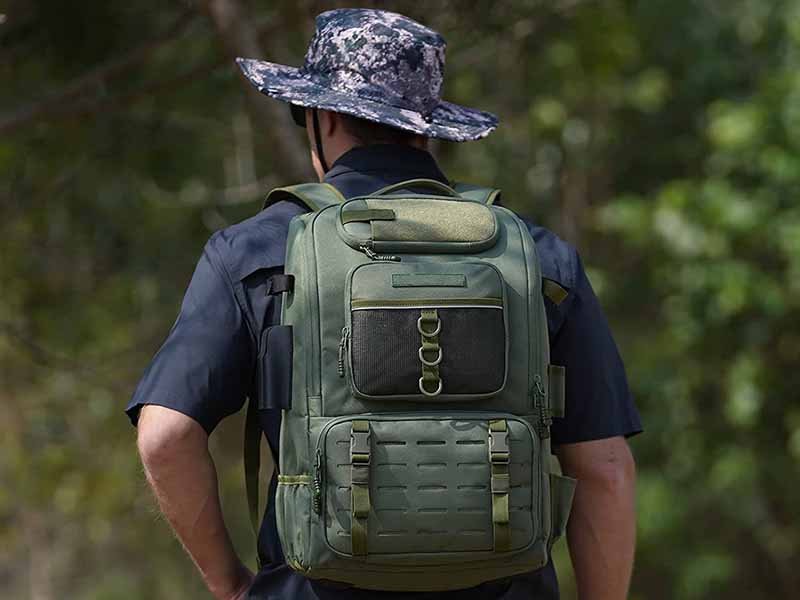
A fishing tackle storage bag is one of those products that looks simple until it fails in real use. A bag may look good in product photos, but once it is exposed to wet docks, muddy ground, salt spray, heavy lure boxes, pliers, reels, and long travel days, weak design choices show up fast. Zippers jam. Compartments sag. The base wears through. Water gets inside. Small tools disappear into dead space. For fishing brands and online sellers, these problems do not stay hidden for long. They quickly turn into poor reviews, repeat complaints, costly returns, and damaged trust.
Great Fishing Tackle Storage Bag Design is built around three things: durable materials, efficient storage structure, and dependable protection against wet and rough outdoor conditions. A strong design helps users organize gear clearly, carry weight comfortably, access tools quickly, and keep tackle safer during transport and use.
That is why the best fishing tackle bags are not designed as ordinary fashion bags with a fishing look. They are developed around real use habits, actual gear sizes, and outdoor stress points. At Lovrix, product development is based on material knowledge, webbing construction, bag manufacturing experience, and custom production for brands that need reliable OEM, ODM, and private label solutions. The difference between an average bag and a strong-selling bag often comes down to design details most end users never notice until they need them. That is where this article starts.
What Is Fishing Tackle Storage Bag Design?

Fishing Tackle Storage Bag Design is the process of building a bag that actually works in real fishing conditions—wet, heavy, messy, and constantly changing. It is not just about appearance or size. It is about how the bag holds gear, protects it, organizes it, and survives repeated outdoor use without failing.
A practical design starts from how anglers use their gear:
- Opening and closing the bag dozens of times per trip
- Carrying 5–15 kg of mixed equipment
- Placing the bag on wet, rough, or uneven surfaces
- Switching lures and tools quickly
- Packing and unpacking frequently
If a bag cannot support these actions smoothly, the design is not effective—no matter how good it looks.
A well-developed Fishing Tackle Storage Bag Design focuses on five key areas:
| Design Aspect | What It Solves | Impact on Product |
|---|---|---|
| Storage layout | Organizes gear logically | Faster access, less frustration |
| Material system | Handles wear, water, and weight | Longer lifespan |
| Structure strength | Keeps shape under load | Better user experience |
| Protection level | Prevents water and damage | Fewer complaints |
| Usability details | Improves daily handling | Higher satisfaction |
What is Fishing Tackle Storage Bag Design?
Fishing Tackle Storage Bag Design is the combination of structure, materials, and functionality that determines how well a bag performs in real use. It defines how gear is stored, how weight is supported, and how easily users can access their equipment.
A common mistake in the market is treating fishing bags like ordinary travel or fashion bags. These products may look clean but fail quickly because they are not built for:
- Sharp tools (hooks, pliers)
- Heavy plastic tackle boxes
- Constant opening and closing
- Exposure to water and dirt
From Lovrix project experience, many redesign requests come from brands that originally sourced “general-purpose bags” and later faced issues such as:
| Problem Found | Root Cause |
|---|---|
| Bag collapses when loaded | Weak internal structure |
| Difficult to remove tackle trays | Incorrect sizing |
| Tools get lost inside | Poor pocket planning |
| Bottom wears out quickly | No reinforcement |
| Water enters main compartment | Weak coating + seams |
A proper Fishing Tackle Storage Bag Design avoids these problems from the beginning by planning dimensions, structure, and materials together—not separately.
Why does Fishing Tackle Storage Bag Design matter?
For customers, a good design makes fishing smoother. For brands, it directly affects sales performance.
In actual market feedback, most negative reviews are not about color or style—they are about performance. Based on Lovrix production and client feedback data:
| Issue Category | Percentage of Complaints |
|---|---|
| Water resistance failure | 28–35% |
| Weak structure / collapse | 20–25% |
| Poor zipper performance | 15–20% |
| Bad internal layout | 15–18% |
| Material wear issues | 10–15% |
These numbers show one thing clearly:
Design problems lead directly to customer dissatisfaction.
For e-commerce sellers, even a small drop in rating can reduce conversion significantly. For example:
| Rating Level | Typical Impact |
|---|---|
| 4.5 – 4.7 | Strong conversion, stable sales |
| 4.2 – 4.4 | Moderate performance |
| Below 4.0 | High return risk, weak conversion |
This is why investing in better design early often saves cost later. A slightly higher production cost can reduce returns, improve reviews, and increase repeat orders.
What defines good Fishing Tackle Storage Bag Design?
A good design is not about adding more features—it is about making the right features work reliably.
From a practical point of view, strong Fishing Tackle Storage Bag Design includes:
1. Clear storage logic
- Main compartment fits standard tackle boxes (3600 / 3700 sizes)
- Pockets are designed for real tools, not decoration
- Internal space is fully usable
2. Durable material combination
- Outer fabric strong enough for abrasion
- Reinforced base for ground contact
- Quality lining to improve internal handling
3. Stable structure
- Bag keeps shape even when half full
- Internal panels prevent collapse
- Load is evenly distributed
4. Reliable protection
- Basic water resistance for most use
- Stronger waterproof solutions for higher-end products
- Seams and openings designed to reduce water entry
5. Practical usability
- Easy to open and close
- Quick access to frequently used items
- Comfortable to carry under load
A simple comparison between weak and strong design:
| Feature | Weak Design | Strong Design |
|---|---|---|
| Storage | Random pockets | Purpose-driven layout |
| Material | Thin fabric | Matched material system |
| Structure | Soft and unstable | Reinforced and stable |
| Protection | Minimal | Designed for real conditions |
| Usability | Inconvenient | Efficient and intuitive |
How does Fishing Tackle Storage Bag Design affect long-term product success?
Many customers focus only on initial cost, but long-term performance is what defines product success.
A well-designed fishing tackle bag can:
- Reduce return rate
- Improve customer reviews
- Increase repeat purchase
- Strengthen brand reputation
A poorly designed bag often leads to:
- Frequent complaints
- High after-sales cost
- Negative feedback affecting future sales
- Difficulty scaling the product
In real business terms, design influences:
| Factor | Poor Design Impact | Good Design Impact |
|---|---|---|
| Return rate | High | Lower |
| Customer satisfaction | Unstable | Consistent |
| Product lifespan | Short | Longer |
| Brand trust | Weak | Strong |
| Reorder potential | Limited | High |
This is why many growing brands choose to redesign their products after initial launch.
How does Lovrix support Fishing Tackle Storage Bag Design?
Lovrix approaches design from a manufacturing-driven perspective. Instead of treating design and production separately, both are developed together.
With over 18 years of experience and integrated production capability, Lovrix supports:
- Fabric development (polyester, nylon, functional fabrics)
- Webbing and accessory production
- Bag structure design and sampling
- OEM, ODM, and private label customization
Key development advantages:
- Free design support
- Low MOQ for testing new products
- Fast sampling (5–7 days)
- Free samples
- Short production lead time
- 100% quality inspection
This allows customers to:
- Test product ideas quickly
- Adjust design before large production
- Maintain stable quality across orders
For brands aiming to build reliable fishing tackle bag products, this integrated approach reduces risk and improves efficiency.
Which Materials Fit Fishing Tackle Storage Bag Design?

The right materials for Fishing Tackle Storage Bag Design are usually polyester, nylon, laminated fabrics, quality lining, and strong webbing selected according to target price, use environment, and durability goals. Material choice affects water resistance, abrasion strength, shape retention, product feel, and long-term customer satisfaction.
Which fabrics suit Fishing Tackle Storage Bag Design?
Fabric is the foundation of the bag. Even a good structure will underperform if the outer fabric cannot handle abrasion, pressure, and wet conditions. Fishing tackle bags are not exposed to soft indoor use. They are placed on rocks, wooden docks, truck beds, muddy ground, boat floors, and wet grass. The right fabric must handle more than appearance.
The most commonly used outer fabrics for fishing tackle bags include polyester, nylon, and Oxford constructions, often with coating or lamination. Each option has a different balance of cost, strength, hand feel, and weather resistance.
A useful material overview looks like this:
| Fabric Type | Common Range | Main Advantages | Limitations | Best Positioning |
|---|---|---|---|---|
| Polyester | 600D–900D | Cost-effective, stable color, widely used | Lower tear strength than nylon | Entry to mid-range |
| Nylon | 840D–1680D | Stronger abrasion and tear resistance | Higher material cost | Mid to premium |
| Oxford fabric | Varies by yarn and weave | Balanced structure and appearance | Performance depends on exact spec | Flexible positioning |
| TPU laminated fabric | Specialty material | Strong water protection, modern feel | Higher cost and more technical production | Premium outdoor |
For commercial development, fabric selection should match the product promise. A value-priced fishing bag sold at a lower retail price may perform well with 600D or 900D polyester plus the right coating. A more premium product designed for serious anglers may need heavier nylon, reinforced base material, and upgraded accessories.
At Lovrix, fabric selection is not treated as a last-minute sourcing step. Because the company has its own fabric finished goods factory and webbing factory, customers can discuss denier, backing, coating thickness, touch, color consistency, and strap matching in a more integrated way. This matters when the goal is not just to make a sample look good, but to keep the final bulk order consistent.
Is nylon or polyester better for Fishing Tackle Storage Bag Design?
This is one of the most practical questions in product development, and the answer depends on target market, retail price, and expected product life.
Polyester is widely used because it gives good visual results at a controlled cost. It usually has good color stability, broad availability, and easier cost management for larger volume programs. For many mid-level outdoor accessories, polyester performs well enough when paired with proper structure and a suitable coating.
Nylon, however, is often chosen when higher durability matters. It generally offers stronger abrasion resistance and better tear strength, especially in heavier specifications. It also gives a more robust feel that many premium customers notice immediately when touching the product.
A commercial comparison helps put this into perspective:
| Material | Cost Level | Abrasion Resistance | Tear Strength | Visual Feel | Common Use |
|---|---|---|---|---|---|
| 600D polyester | Lower | Moderate | Moderate | Clean, practical | Value products |
| 900D polyester | Medium | Better | Better | Stronger body | Mid-range bags |
| 840D nylon | Medium to high | Strong | Strong | Premium | Performance products |
| 1680D nylon | High | Very strong | Very strong | Heavy-duty | Premium heavy-load bags |
For brands selling online, the decision often comes down to the promise made in the listing. If the product claims rugged use, boat use, or long-term outdoor durability, low-grade fabric can create a mismatch between marketing and actual performance. That is where complaints begin.
Many successful products use a mixed strategy instead of only one fabric. For example:
- Main body in 600D or 900D polyester for cost control
- Bottom panel in 1680D nylon for abrasion resistance
- Pocket trim and webbing reinforced for repeated pull force
This kind of layered material planning often gives a better result than choosing the most expensive material everywhere.
How do coatings improve Fishing Tackle Storage Bag Design?
Outer fabric alone does not decide water performance. Coating and lamination play a major role. This is especially important in fishing because exposure to splash, rain, wet surfaces, and stored damp gear is common.
The three most common treatment directions are PU coating, PVC backing, and TPU lamination. Each serves a different product level.
| Treatment Type | Water Protection | Flexibility | Product Feel | Best Use Direction |
|---|---|---|---|---|
| PU coating | Good basic resistance | Good | Light and practical | General outdoor use |
| PVC backing | Higher barrier | Lower | More rigid | Heavy-duty protection |
| TPU lamination | Stronger protection | Good | More premium | Advanced outdoor lines |
PU coating is often enough for fishing bags that mainly need splash resistance and daily outdoor practicality. PVC provides stronger barrier protection, but can feel stiffer and heavier. TPU is more advanced and often selected when brands want a cleaner premium position with stronger weather performance.
However, coating choice should be judged together with construction. A bag with coated fabric but weak seam areas is still vulnerable. A bag with a water-resistant body but standard zipper opening may still allow moisture entry from the top. So coating helps, but it does not solve everything by itself.
At Lovrix, material discussions can include not only fabric face and backing, but also webbing match, zipper pairing, lining thickness, foam selection, and target performance level. This helps customers avoid a common problem in development: upgrading only one material point while leaving the rest of the product too weak to support the claim.
How should customers choose materials for product positioning?
Customers often focus first on unit price, but material decisions should be based on total product positioning, not only purchase cost. A cheaper material can save a small amount up front and create much larger losses later through returns, reshipments, bad reviews, and weakened repeat orders.
A practical way to choose materials is to divide the product into three commercial levels:
| Product Position | Suggested Material Direction | Main Goal |
|---|---|---|
| Entry level | 600D polyester + PU coating | Control cost and launch quickly |
| Mid-range | 900D polyester or 840D nylon + reinforced base | Balance durability and margin |
| Premium | Heavy nylon, laminated panels, upgraded trims | Strong performance and higher perceived value |
Customers should also consider the actual fishing use scene:
- Shore fishing products may prioritize lighter carry and moderate cost
- Boat fishing products usually need stronger water protection and abrasion resistance
- Travel fishing bags need better weight control and shape efficiency
- Cold or humid market products may need better mildew resistance and trim stability
This is where experienced custom development becomes valuable. Lovrix works with domestic and overseas mid-to-high-end brands and e-commerce customers that need custom, private label, OEM, and ODM production. With more than 18 years of experience and integrated production resources, the company can help customers match material choices to market goals more accurately instead of building products around guesswork.
For customers launching a new fishing bag line, the smartest approach is usually not “use the most expensive fabric.” It is “use the right fabric in the right place.” That is how strong products protect margin while still delivering a better user experience.
A Simple Material Planning Table for Custom Projects
| Product Part | Recommended Option | Why It Works |
|---|---|---|
| Main body | 600D or 900D polyester / 840D nylon | Balances cost and durability |
| Base panel | 1680D nylon or reinforced coated fabric | Handles abrasion and loaded weight |
| Lining | Smooth polyester lining | Improves internal cleanliness and assembly |
| Webbing | Dense PP or nylon webbing | Supports handles and shoulder straps |
| Padding | EVA or foam sheet where needed | Adds shape and comfort |
| Exterior treatment | PU, PVC, or TPU based on target use | Improves weather protection |
How to Plan Fishing Tackle Storage Bag Design Structure?

A strong Fishing Tackle Storage Bag Design structure should organize gear clearly, maximize usable space, and allow fast access during real fishing conditions. The best structures balance capacity, accessibility, and stability, ensuring the bag remains functional whether fully loaded or partially filled.
How many compartments in Fishing Tackle Storage Bag Design?
The number of compartments should match real fishing habits rather than marketing expectations. Too few compartments lead to clutter, while too many create confusion and reduce usable space.
From Lovrix product development experience, most successful fishing tackle bags follow this structure:
| Bag Size | Recommended Compartments | Use Scenario |
|---|---|---|
| Small (shoulder bag) | 3–5 compartments | Light shore fishing |
| Medium (tackle backpack / hand carry) | 5–8 compartments | General use |
| Large (multi-layer system) | 8–12 compartments | Professional / boat fishing |
A well-balanced compartment system usually includes:
- Main storage area for tackle trays
- Secondary pockets for soft baits and tools
- Front quick-access pocket for frequently used items
- Side pockets for pliers, bottles, or line spools
- Hidden or inner zip pockets for valuables
The key is not quantity, but clarity of function. Each compartment should have a clear purpose, otherwise it becomes wasted space.
How to organize trays in Fishing Tackle Storage Bag Design?
Tackle trays are the core of most fishing bags. If trays are hard to insert, remove, or stack, the entire product experience suffers.
Standard tray sizes (commonly used in the market):
| Tray Type | Typical Size (cm) | Common Use |
|---|---|---|
| 3600 box | ~27 x 18 x 4 cm | Light tackle |
| 3700 box | ~36 x 23 x 5 cm | Mainstream use |
| Deep box | varies | Bulk storage |
Good tray organization design includes:
- Horizontal or vertical stacking depending on bag shape
- Reinforced inner walls to prevent collapse under load
- Smooth inner lining to reduce friction when sliding trays
- Enough clearance for easy removal (not overly tight fit)
Lovrix often recommends modular tray systems, allowing users to adjust internal layout depending on trip type. This flexibility is especially important for brands targeting both beginners and experienced anglers.
How to design pockets in Fishing Tackle Storage Bag Design?
Pockets are often underestimated, but they strongly influence usability.
A well-designed fishing tackle bag usually includes:
- Front pocket (large opening) → fast access tools
- Mesh pockets → visibility for small items
- Elastic tool holders → secure pliers, scissors
- Zipper pockets → protect small valuables
Key design details:
| Pocket Type | Key Design Point | Common Mistake |
|---|---|---|
| Front pocket | Wide opening angle | Too shallow |
| Side pocket | Reinforced bottom | Weak stitching |
| Mesh pocket | Durable mesh material | Easy tearing |
| Inner pocket | Smooth zipper operation | Hard to reach |
A frequent issue in low-quality designs is “decorative pockets”—they look useful but fail in real use due to poor sizing or weak materials.
How to ensure structure stability in Fishing Tackle Storage Bag Design?
Structure stability determines whether the bag keeps its shape under load.
Important structural elements:
- Reinforced base panel (PE board or EVA sheet)
- Thick padding layers to support shape
- Box-style construction for heavy-duty models
- Load-bearing seams with bartack reinforcement
Without these, common problems occur:
- Bag collapses when partially filled
- Trays tilt or shift
- Bottom wears out quickly
At Lovrix, structure testing includes:
- Load simulation (5–15 kg depending on bag type)
- Drop tests
- Long-term shape retention checks
Structure design from a product development angle
Structure is where many products succeed or fail.
First, capacity planning must be realistic. Many suppliers exaggerate capacity for marketing, but if users cannot comfortably carry the bag or access items, the design loses value. Real capacity should match:
- Average gear load (5–12 kg typical)
- Carrying duration (short trip vs full-day fishing)
- User strength and comfort
Second, accessibility is often more important than capacity. A slightly smaller bag with better access can outperform a larger bag that is difficult to use. Anglers value speed—being able to grab tools or change lures quickly.
Third, internal structure must support weight distribution. If heavy items sit unevenly, the bag tilts or strains certain seams. A well-designed internal frame or panel system can prevent this.
Fourth, modular thinking is becoming more important. Many brands now prefer designs that allow:
- Removable dividers
- Adjustable compartments
- Expandable storage
This flexibility increases product appeal without significantly increasing production cost.
Lovrix supports this type of structural customization through its integrated development process, allowing brands to adjust internal layouts, tray compatibility, and pocket configuration during sampling.
What Features Upgrade Fishing Tackle Storage Bag Design?

Upgraded Fishing Tackle Storage Bag Design features focus on improving durability, water protection, and long-term performance. These features reduce product failure, enhance user confidence, and help brands achieve better market positioning.
What makes Fishing Tackle Storage Bag Design waterproof?
Water protection is one of the most critical features.
A truly water-resistant or waterproof bag depends on:
- Fabric coating or lamination
- Seam construction
- Zipper type
- Opening design
Comparison of protection levels:
| Level | Description | Use Case |
|---|---|---|
| Water-resistant | Handles light rain/splash | General fishing |
| Waterproof (basic) | Resists heavier exposure | Boat use |
| Waterproof (advanced) | Near-sealed protection | Extreme conditions |
Common mistake:
Using waterproof fabric but ignoring seams and zippers.
How to reinforce Fishing Tackle Storage Bag Design?
Reinforcement extends product lifespan significantly.
Key reinforcement areas:
- Handle attachment points
- Shoulder strap anchors
- Bottom panel
- Zipper ends
Common reinforcement techniques:
- Bartack stitching
- Double stitching
- Binding edge reinforcement
- Thick webbing integration
Data from production feedback shows:
| Reinforcement Level | Estimated Lifespan |
|---|---|
| Basic stitching | 6–12 months |
| Reinforced stitching | 1–3 years |
| Heavy-duty construction | 3–5 years |
Are zippers key in Fishing Tackle Storage Bag Design?
Zippers are one of the most failure-prone components.
A good zipper system should include:
- Smooth operation under load
- Corrosion resistance (important for saltwater fishing)
- Large pullers for easy grip
Recommended zipper types:
| Zipper Type | Feature | Use |
|---|---|---|
| Nylon coil zipper | Flexible, cost-effective | General use |
| Waterproof zipper | Sealed design | High-end bags |
| Heavy-duty molded zipper | Strong teeth | Premium durability |
Poor zipper quality often leads to:
- Stuck openings
- Broken teeth
- Increased return rate
Lovrix typically tests zippers through repeated open-close cycles to ensure long-term reliability.
What comfort features improve Fishing Tackle Storage Bag Design?
Comfort is often overlooked but highly valued.
Important comfort features:
- Padded shoulder straps
- Breathable back panels (for backpacks)
- Balanced weight distribution
- Soft handle grips
These features matter especially for:
- Long fishing trips
- Travel use
- Heavy gear loads
Feature upgrades and market competitiveness
Feature upgrades are where brands differentiate.
First, water protection is no longer optional. Even mid-range products are expected to handle wet environments. Products without basic water resistance often struggle in reviews.
Second, durability directly affects brand reputation. Customers may accept a slightly higher price if the product lasts longer. A durable product reduces returns and increases repeat purchases.
Third, small details create large perceived value. For example:
- A smoother zipper can significantly improve user experience
- A reinforced base prevents early wear
- A well-designed handle improves daily usability
These details are relatively low-cost improvements but create strong competitive advantages.
Fourth, testing matters more than claims. Many products claim durability or waterproof performance without real validation. Lovrix integrates:
- Material testing
- Load testing
- Environmental simulation
This helps ensure the final product performs as expected in real conditions.
Finally, brands should think long-term. A well-designed fishing tackle bag is not just a single product—it can become a repeatable product line, with variations in size, color, and configuration.
Lovrix supports this by offering:
- Free design support
- Fast sampling (5–7 days)
- Low MOQ customization
- Consistent bulk production
- 100% quality inspection
How to Customize Fishing Tackle Storage Bag Design?
Custom Fishing Tackle Storage Bag Design should align with target users, fishing scenarios, and brand positioning. A successful customization strategy balances functionality, cost, and differentiation, allowing brands to stand out while maintaining stable production and profit margins.
How to target users in Fishing Tackle Storage Bag Design?
Not all fishing users behave the same way. Designing for “everyone” often leads to average products that fail to impress any specific group. A more effective approach is to clearly define user types and build the design around their habits.
Common user segmentation:
| User Type | Key Needs | Design Focus |
|---|---|---|
| Beginner anglers | Simple organization, lower cost | Lightweight, fewer compartments |
| Hobby anglers | Versatility, comfort | Balanced structure, moderate capacity |
| Professional anglers | Efficiency, durability | Heavy-duty materials, modular system |
| Travel anglers | Portability | Compact, foldable, multi-use design |
For example:
- Beginners prefer intuitive layouts without too many pockets
- Experienced users want faster access and customizable storage
- Professionals care more about durability and long-term reliability
A common mistake is over-designing entry-level products with too many features. This increases cost without improving usability. Instead, successful products focus on matching features to real user expectations.
Lovrix often helps brands refine product direction early by reviewing:
- Target price range
- Sales channel (Amazon, retail, brand store)
- Competitor product positioning
- Expected usage scenarios
This avoids costly redesign later.
Which styles fit Fishing Tackle Storage Bag Design scenes?
Fishing scenarios strongly influence bag style. A design that works well on a boat may not work well for shore fishing or travel.
Main style categories:
| Style Type | Key Characteristics | Best Use Scenario |
|---|---|---|
| Shoulder bag | Compact, easy access | Shore fishing |
| Backpack | Balanced weight, large capacity | Long trips |
| Hard-bottom bag | Strong structure, stable placement | Boat fishing |
| Sling bag | Quick rotation access | Active fishing |
| Trolley bag | Large volume, mobility | Heavy gear transport |
Each style requires different design priorities:
- Shoulder bags → quick access, lightweight
- Backpacks → comfort, ventilation, load distribution
- Boat bags → water resistance, stability
- Travel bags → compactness, airline compatibility
Lovrix supports multi-style development for brands building product lines, allowing consistent design language across different bag types.
How to brand Fishing Tackle Storage Bag Design?
Branding is not just adding a logo—it is about creating a recognizable product identity.
Key branding elements:
- Logo application (print, embroidery, rubber patch)
- Color system (consistent across product line)
- Material texture (matte, glossy, technical feel)
- Hardware details (custom zipper pullers, buckles)
Brand positioning examples:
| Brand Level | Design Direction | Visual Style |
|---|---|---|
| Entry-level | Clean, simple | Neutral colors |
| Mid-range | Functional + stylish | Outdoor tones |
| Premium | Technical + strong identity | Unique textures, bold details |
A strong fishing bag brand often uses:
- 2–3 signature colors
- Consistent trim style
- Recognizable structure
Lovrix provides free design support, helping brands translate ideas into manufacturable products, including:
- Visual mockups
- Material suggestions
- Structure optimization
How to balance cost and performance in Fishing Tackle Storage Bag Design?
Balancing cost and performance is one of the most important decisions in product development.
Instead of reducing cost everywhere, a smarter approach is:
- Invest in high-stress areas (base, handles, zippers)
- Optimize non-critical areas (lining, minor pockets)
- Use material combinations instead of uniform upgrades
Example cost optimization strategy:
| Component | Recommended Approach |
|---|---|
| Main fabric | Mid-level (600D–900D polyester or 840D nylon) |
| Base | Upgrade to heavy-duty material |
| Zippers | Use reliable branded or tested suppliers |
| Pockets | Simplify non-essential pockets |
| Branding | Focus on visible areas |
This approach maintains product performance while keeping pricing competitive.
Customization strategy for long-term product success
Customization is not just about making a different product—it is about building a product that can succeed in a competitive market.
First, clarity beats complexity. Many products fail because they try to include too many features. A focused design with clear strengths performs better than a complex design with weak execution.
Second, consistency is key for scaling. Once a product starts selling, production stability becomes critical. Material consistency, color matching, and construction repeatability all affect reorder success.
Third, speed matters in market competition. Brands that can move from idea to sample quickly have a significant advantage. Lovrix supports:
- Sampling in 5–7 days
- Free samples
- Short production lead times
This allows brands to test and adjust faster.
Fourth, quality control protects brand reputation. A single batch of inconsistent products can damage months of marketing effort. Lovrix provides 100% inspection before shipment to ensure stable quality.
Fifth, product line expansion increases lifetime value. A successful fishing tackle bag design can evolve into:
- Multiple sizes
- Different color options
- Upgraded versions
- Matching accessories
This helps brands build a stronger presence instead of relying on a single product.
Why Brands Choose Lovrix for Fishing Tackle Storage Bag Design
Lovrix is not just a bag manufacturer. It is a fully integrated product development partner with over 18 years.
This integrated capability allows Lovrix to control:
- Material consistency
- Production quality
- Development speed
Which is critical for brands aiming to scale.
Start Your Custom Fishing Tackle Storage Bag Project
A well-designed Fishing Tackle Storage Bag is not just a product—it is a long-term asset for your brand. It improves customer satisfaction, reduces returns, and creates opportunities for repeat purchases and product line expansion.
If you are planning to:
- Launch a new fishing bag product
- Upgrade an existing design
- Develop a private label product
- Improve quality and reduce complaints
Lovrix can help you move from concept to production efficiently.
Send your design idea, target price, or reference product today.The Lovrix team will help you create a fishing tackle storage bag that performs better, lasts longer, and sells more consistently.


