 Skip to content
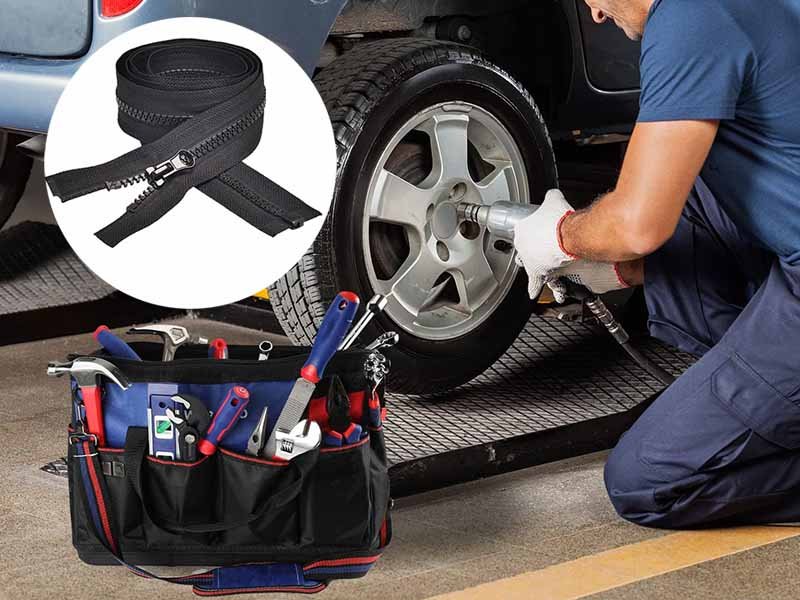
A lot of tool bags look strong from the outside. Thick fabric, heavy webbing, padded handles, reinforced bottoms, and bold color blocking can all make a bag feel ready for hard work. But in actual use, one of the first places customers judge quality is not the fabric. It is the zipper. If the zipper sticks, separates under pressure, feels too light, catches at the corners, or starts failing after a short period of use, the whole bag immediately feels less dependable. That is why serious product teams do not treat the zipper as a small accessory. In tool bags, the zipper is a working component. It has to open under load, close over bulky contents, survive dust, resist friction, and keep performing after hundreds or even thousands of opening cycles.
Industrial zippers used in tool bags are stronger closure systems developed for heavier loads, thicker bag materials, larger opening spans, and tougher working conditions than standard apparel or fashion bag zippers. The most common options are coil zippers, molded plastic zippers, and selected metal zippers. In many tool bag programs, #8 and #10 sizes are the most practical choices because they offer a better balance of strength, operating comfort, and service life for medium to large work bags.
What makes this topic so important is that the “most rugged-looking” zipper is not always the best one. A larger zipper may look tougher in product photos but feel stiff in daily use. A metal zipper may appear premium but add weight and create corrosion risk in damp environments. A coil zipper may run more smoothly but still fail if the tape, slider, and seam structure are not matched correctly. This is where good tool bag development becomes much more technical than many customers expect. Once you start looking closely, you realize the zipper is doing far more than opening and closing the bag. It is helping define durability, user confidence, repair rate, and even whether a customer comes back to reorder.
Why Industrial Zippers Matter

Industrial zippers matter because tool bags create a harder working environment than ordinary consumer bags. The zipper has to cope with wider openings, heavier contents, repeated pulling, dust, vibration, thick surrounding materials, and rough handling. In many products, zipper performance becomes one of the clearest signals of whether the bag feels professional or disposable.
What Makes Industrial Zippers Stronger?
Industrial zippers are stronger because they use more suitable chain structures, heavier gauges, better slider matching, and tougher tape support. Real zipper strength does not come from tooth size alone. It comes from how the whole zipper system works together under tension, movement, and wear.
The first strength factor is the zipper chain itself. The three main zipper families used across bags and equipment are coil, molded plastic, and metal. Coil zippers use spiral synthetic elements and are known for flexibility. Molded plastic zippers use individually formed teeth and are often chosen where a more rugged chain feel is needed. Metal zippers use metal teeth and are selected more carefully depending on use conditions. These chain differences matter because each one reacts differently to load, bending, and environment.
The second strength factor is gauge. In zipper sizing, the number usually reflects the approximate width of the closed chain in millimeters. That is why a #10 chain feels very different from a #5 chain. Heavier tool bags often move toward #8 or #10 because the zipper needs a larger engagement structure and a stronger operating feel. For many medium and large tool bags, these sizes give a safer working margin than smaller chain sizes, especially when the bag opening is long or the contents are heavy.
The third strength factor is slider accuracy. A zipper can have a strong chain and still perform badly if the slider is not matched properly. The slider must match both chain type and size. A molded chain needs a molded slider of the same size. A coil chain needs a coil slider of the same size. When this fit is wrong, customers experience problems such as rough movement, separation, or premature wear. In tool bags, where people often open the bag quickly or while the bag is full, slider mismatch becomes a practical failure point.
The fourth strength factor is the tape and seam environment. Tool bags often use thicker shell fabrics, foam support, binding, piping, and reinforced opening panels. That means the zipper tape must be sewn into a stronger structure without distortion. A zipper may have strong teeth, but if the tape is poorly supported or stitched into an unstable seam, the whole opening can lose performance. In production, this is why skilled factories do not choose a zipper by itself. They develop the zipper together with seam allowance, stitch density, reinforcement tape, and opening construction.
Below is a practical way clients often evaluate zipper strength during development:
| Strength Factor | What to Check | Why It Matters |
|---|---|---|
| Chain type | coil, molded, metal | changes flexibility and ruggedness |
| Gauge | #5, #8, #10 | affects load handling and service life |
| Slider fit | exact type and size match | affects smoothness and separation risk |
| Tape support | tape density, seam holding | affects long-term seam durability |
| End construction | top stops, bottom stops, bartacks | affects opening stability |
For customers developing tool bags, this is the main lesson: a stronger zipper is not just a bigger zipper. It is a better-matched zipper system.
Why Do Industrial Zippers Fit Tool Bags?
Industrial zippers fit tool bags because tool bags are working products, not light personal accessories. The zipper is expected to do more. It has to close over irregular items, survive repeated opening, and continue performing even when the bag is overloaded, dropped, or used in dirty conditions.
One major reason is opening length and opening shape. Many tool bags use long top openings, U-shaped openings, doctor-bag openings, or wide gusseted access panels. These are very useful in real work because they make tools easier to reach, but they also place more mechanical demand on the zipper. A light zipper may feel acceptable during a first sample review and still become unreliable later when the filled bag puts outward pressure on the opening. Heavier industrial zipper sizes are often chosen because they help the opening feel more controlled and secure under real working conditions.
Another reason is cycle count. A fashion backpack may be opened a few times per day. A professional tool bag can be opened again and again during one work shift. That changes what matters. Smooth operation becomes almost as important as raw chain strength. If the zipper feels too stiff, workers notice it immediately. If it catches at corners, they notice it even faster. If it separates under pressure, trust in the whole bag drops. So the best zipper for a tool bag has to balance three things at the same time:
- enough chain strength for the bag size
- smooth enough travel for quick daily use
- enough environmental suitability for the jobsite or service setting
Environmental fit is another important reason industrial zippers are used in tool bags. Molded plastic zippers are often favored where UV exposure, moisture, or corrosion resistance matter more. Coil can be a better answer when the opening needs more flexibility or curves more sharply. This means the right zipper is often chosen by work condition, not just by price or appearance.
Customers evaluating tool bag programs usually focus on the following real-world questions:
- How heavy is the bag when fully packed?
- How wide does the opening need to be?
- Does the zipper have to go around corners?
- Will the bag be used in dry indoor settings, wet outdoor settings, or both?
- Is the target customer a general consumer, a tradesperson, or an industrial user?
Once these questions are clear, zipper selection becomes much more accurate.
Are Industrial Zippers Always Heavy Duty?
Not always. Industrial and heavy duty are closely related, but they are not exactly the same thing. In tool bags, industrial usually means the zipper is selected for repeated use, stronger surrounding materials, and a tougher work environment. That does not always mean the heaviest possible zipper is the smartest option.
A very large zipper can improve closure confidence on a big contractor bag, but it can also add weight, raise cost, and make the opening feel stiffer than necessary on a smaller service bag. Overspecifying the zipper sometimes creates a product that looks strong in a product photo but feels inconvenient in daily use. Customers may describe that kind of bag as bulky, hard to open, or awkward at the corners.
In practice, the most successful tool bags often use the smallest zipper that still gives a comfortable safety margin. That approach usually improves balance. It controls cost better. It avoids unnecessary stiffness. It can also make the bag easier to use with one hand. For example, a compact technician bag may perform very well with a #8 zipper if the opening design, tape support, and slider quality are all done properly. A large framed tool bag may genuinely need #10. The right answer depends on the product architecture, not just the desire to look rugged.
This is one reason experienced manufacturers review the zipper together with the entire bag specification:
| Bag Category | More Suitable Direction | Why |
|---|---|---|
| Small repair pouch | #5 or #8, often coil | lighter structure, easier access |
| Mid-size soft tool bag | #8 coil or molded | balanced strength and usability |
| Large contractor bag | #10 coil or molded | longer opening, higher load |
| Outdoor service bag | molded often preferred | better UV and corrosion behavior |
| Premium workshop bag | depends on design | function plus appearance balance |
So the answer is clear: industrial zippers are not always the biggest or heaviest option. They are the most appropriate option for the bag’s actual working conditions.
Which Industrial Zippers Work Best

The industrial zippers that work best in tool bags are usually coil or molded plastic types in stronger sizes such as #8 and #10. Coil is often selected for smoother running and better flexibility. Molded plastic is often selected for a tougher feel and better resistance to weather-related issues. Metal is used more selectively, usually when appearance and structure justify it.
Which Industrial Zippers Are Most Common?
The most common industrial zippers in tool bags are coil zippers and molded plastic zippers. These two types cover most soft and semi-structured work bag applications because they offer a practical mix of strength, smoother operation, and manufacturing flexibility.
Coil zippers are common because they are versatile. Their spiral structure lets them move through slight curves and shaped opening paths more easily. This makes them useful in soft-sided tool bags, maintenance pouches, technician bags, and products where the opening is not perfectly straight. In day-to-day use, customers often experience coil zippers as smoother and less aggressive. That smoother feel matters in products opened many times a day.
Molded plastic zippers are common because they deliver a more rugged closure character. Their larger individual teeth give a chunkier visual effect and often match the overall language of industrial products well. They are also widely chosen when weather resistance and corrosion resistance matter more. In outdoor service bags, utility storage products, and heavier open-top work bags, molded zippers often feel more aligned with the product’s purpose.
In actual sourcing work, customers often compare these two options side by side because each one solves a different product problem:
- coil helps with flexibility, curves, and smoother use
- molded helps with tougher appearance and exposed-condition confidence
- both can work well in stronger gauges when matched correctly to the bag size
A lot of zipper problems happen because the zipper type is chosen too early based only on appearance. The better approach is to decide after the opening shape, target bag load, and customer use pattern are already clear.
Do Industrial Zippers Use Coil or Molded Teeth?
Yes, and this is usually one of the first meaningful decisions in tool bag development. The choice between coil and molded is not decorative. It changes how the zipper behaves, how the bag feels to the customer, and how the opening performs after repeated use.
Coil works better when flexibility matters. If the tool bag has a rounded top, softer body panels, or a U-shaped access path, coil often makes operation easier. Because the chain is less rigid, it usually handles curves with less resistance. That can reduce stress on the corners and improve the overall opening feel. This is one reason coil is widely used on bags and gear where comfort of use matters as much as raw closure strength.
Molded works better when a tougher chain feel is needed. On a large tool bag, especially one with a straighter opening or a more rugged structure, molded teeth can give the zipper a stronger visual and physical presence. It often feels more substantial to the hand. In addition, molded plastic zipper types are commonly chosen where UV exposure, wet conditions, or corrosion risk are part of the product environment.
For clients comparing both options, the following framework is useful:
| Product Need | Coil Advantage | Molded Advantage |
|---|---|---|
| Curved opening | better flexibility | less ideal on tight curves |
| Smooth feel | often better | good, but usually firmer |
| Rugged visual effect | cleaner, softer | stronger, chunkier look |
| Outdoor exposure | workable | often preferred |
| Large heavy bag | can work in #8/#10 | often strongly suited |
Many strong product lines do not use just one zipper type across everything. They use coil on smaller or more flexible bags and molded on larger or more exposed products. That kind of segmentation usually creates better product performance than forcing one zipper spec across an entire collection.
Are Metal Industrial Zippers Good for Tool Bags?
They can be, but only in more selective situations. Metal zippers look strong and often feel premium, but they are not automatically the best option for a working tool bag.
The biggest question is environment. Metal can bring a strong tactile impression, but it also introduces corrosion risk in wet or humid conditions and usually adds more weight than molded plastic. On a dry indoor workshop bag, a metal zipper may perform well and support a more premium design language. On a field-service bag, vehicle-stored bag, or outdoor work bag, the same zipper may create more long-term risk than benefit.
The second issue is flexibility. Metal chains tend to feel less forgiving than coil when the opening path includes shape or corner movement. That can be acceptable on smaller organizer products or heritage-style work bags, but less ideal on soft, highly used, utility-focused bags. The third issue is tool interaction. Oversized metal parts can scratch nearby hard objects more easily and may create more noise or harder contact in use.
That said, metal is not the wrong choice in every case. It can work very well when the bag is designed around premium positioning, indoor use, and a more classic canvas-and-leather workwear look. The key is to use metal because it improves the actual product, not simply because it looks expensive.
A useful comparison looks like this:
| Zipper Type | Main Strength | Main Watchout | Better Use Direction |
|---|---|---|---|
| Coil | smooth, flexible, curve-friendly | less ideal for harsh exposed weather without suitable spec | compact and soft tool bags |
| Molded Plastic | rugged, weather-resistant feel | stiffer on tight curves | larger and outdoor-oriented tool bags |
| Metal | premium feel, solid look | weight, corrosion, less flexibility | selective premium indoor work bags |
For most medium and large commercial tool bag programs, coil and molded plastic remain the more practical first choices. Metal usually works best as a selective design decision rather than the default standard.
How Industrial Zippers Are Chosen

Industrial zippers are chosen by matching zipper type, gauge, slider function, tape support, and opening structure to the real use of the tool bag. The best choice is not the biggest zipper on paper. It is the zipper system that gives the bag the right balance of strength, smooth opening, durability, and cost control during daily work. Zipper specialists consistently frame selection around chain type, size, slider function, and end-use environment.
Which Industrial Zippers Sizes Work Best?
The zipper sizes that work best in tool bags are usually #8 and #10 for main openings, while lighter secondary pockets may use #5 when the load is lower and the opening is shorter. Size should follow the bag’s actual stress level, not just appearance.
When clients ask about zipper size, the real question is usually about risk. They want to know how small they can go without creating failure, and how large they need to go without making the bag feel heavy or stiff. In practical tool bag development, this usually brings the discussion to three common sizes: #5, #8, and #10.
A #5 zipper can work well on smaller pouches, organizers, and lighter accessory compartments. It is often a reasonable option for interior pockets, front admin pockets, or compact maintenance kits where the opening is short and the stored items are not pressing hard against the chain. But once a bag gets wider, heavier, or more overloaded in real use, #5 often starts to feel less forgiving. It may still close, but it leaves less margin for rough handling, fast pulling, and overstuffing.
A #8 zipper often sits in the most commercially useful middle ground. It gives more closure confidence than #5, but usually stays smoother and less bulky than #10. For many medium-size soft tool bags, technician bags, electrician bags, and service bags, #8 creates a strong balance between usability and durability. This is one reason experienced factories frequently evaluate #8 first before moving straight to #10.
A #10 zipper is often the safer direction for larger contractor bags, oversized open-mouth bags, framed work bags, and heavier kits where the opening span is long and the contents create more outward pressure. It usually gives a more secure feel in the hand and a larger working margin over time. Industry size references consistently place #10 among the stronger options for larger, heavier applications, while smaller sizes are used on lighter products.
The practical size decision usually depends on five product facts:
- finished bag size
- full-load weight
- opening length
- opening shape
- customer use intensity
A useful internal guide for development teams often looks like this:
| Main Opening Use | More Suitable Size Direction | Why |
|---|---|---|
| small repair pouch | #5 or light #8 | keeps opening light and easy |
| mid-size soft tool bag | #8 | better balance of strength and comfort |
| large contractor bag | #10 | handles bigger opening stress |
| rigid-mouth utility bag | #10 | supports structure and repeated pulling |
| exterior accessory pocket | #5 | lower load, lower cost |
Clients usually get the best results when they test zipper size with the actual prototype structure instead of deciding by catalog alone.
How Do Industrial Zippers Affect Strength?
Industrial zippers affect strength by controlling how well the bag opening stays engaged under tension, how reliably the slider travels, and how long the seam area survives repeated use. A stronger zipper does not only help the chain resist separation. It also improves the working stability of the entire bag opening.
There is a common mistake in bag development: treating zipper strength as a tooth issue only. In reality, strength is distributed across the zipper chain, slider, tape, seam, and end-stop area. When a customer says “the zipper failed,” the real cause might be several different things. The teeth may be too small. The slider may be wearing out. The tape may be stretching. The seam may be tearing. The corner angle may be too aggressive. This is why industrial zipper selection should always be discussed as a system.
Larger zipper gauges usually improve load tolerance because the closed chain is wider and the engagement area is stronger. That gives the opening more resistance when the bag is packed tightly or pulled open quickly. But strength is not just about size. A properly matched #8 can outperform a poorly assembled #10 if the bigger zipper is sewn into a distorted opening or uses the wrong slider.
Slider function also affects strength in daily use. YKK explains that an auto-lock slider stays in place unless the pull tab is lifted, which helps prevent the slider from moving on its own when tension pushes against the chain. On tool bags, that matters because packed contents often create pressure from inside the bag. A locking slider can help the zipper stay closed more securely when the opening is under stress.
Tape support is another major factor. Tool bags usually use thicker fabrics such as 600D, 900D, 1200D polyester, coated fabrics, canvas, or laminated constructions. These materials are stronger, but they also create a firmer seam environment. If the zipper tape is not supported properly, the chain may remain intact while the stitching area starts to distort or tear. That is why factories with stronger bag engineering experience often reinforce zipper seams with:
- wider seam allowance
- backing tape or support tape
- bartacks at stress points
- balanced stitch density
- reduced corner distortion
The table below shows how zipper-related strength issues usually appear in the market:
| Failure Area | What Customers Notice | Common Root Cause |
|---|---|---|
| chain separation | teeth no longer stay closed | size too small, slider wear, overload |
| rough opening | zipper drags or catches | poor slider fit, distorted seam, corner stress |
| seam tearing | zipper pulls away from bag | weak tape support, bad stitch structure |
| slider creep | zipper opens by itself | non-lock slider under tension |
| end failure | opening breaks at ends | weak stop area, poor reinforcement |
The strongest tool bags are usually not the ones with the biggest zipper alone. They are the ones where the zipper and the bag structure were developed together from the start.
Do Bigger Industrial Zippers Work Better?
Not always. Bigger industrial zippers often improve closure confidence and service margin, but they can also add stiffness, weight, bulk, and cost. The better zipper is the one that fits the bag’s real working condition and opening geometry.
It is easy to understand why bigger zippers attract product teams. They look tougher, photograph well, and give a more industrial impression. In online selling, that can feel like an advantage. But real use is more complicated. A zipper that looks strong in a marketing image may feel awkward after the customer opens and closes the bag twenty times in one day.
Oversizing creates three common tradeoffs. First, the bag opening becomes stiffer. This is especially noticeable on compact bags or curved openings. Second, the zipper adds more weight. That may not seem important in one unit, but on a full product line it affects hand feel, shipping weight, and overall product balance. Third, the bag may become overbuilt in the wrong place. A huge zipper on a small pocket does not create real value if the fabric, foam, and seam layout are not built to the same level.
There is also a cost tradeoff. Larger zipper chains and heavier sliders cost more, and those costs multiply across higher-volume production. On many projects, the smarter commercial move is to keep the main opening at #8 instead of #10 when testing proves the performance is strong enough. That gives the client more room to improve another part of the bag, such as webbing, base reinforcement, shoulder pad comfort, or packaging.
A more useful comparison looks like this:
| Approach | Upside | Watchout |
|---|---|---|
| choose smaller size | smoother use, lower weight, lower cost | may reduce overload margin |
| choose larger size | more rugged feel, stronger margin | may increase stiffness and cost |
| prototype both | clearer decision from real testing | adds development time but reduces risk |
In real tool bag programs, bigger works better only when the bag actually needs it. Good development is not about choosing the largest part. It is about choosing the most suitable one.
What Improves Industrial Zippers

Industrial zippers improve when the chain, slider, tape, seam structure, and end details are all matched correctly to the bag. The biggest performance gains usually come from the details around the zipper, not just the zipper itself. Slider function, tape support, seam reinforcement, and stress-point control often decide how the zipper feels after months of use.
Which Sliders Match Industrial Zippers Best?
The best sliders for industrial zippers in tool bags are the ones that match the zipper type and size exactly and use the right locking function for the bag’s opening stress. On many main openings, auto-lock sliders are preferred because they help the zipper stay in place when the bag is under tension.
Slider choice affects far more than opening feel. It also affects closure security, service life, user comfort, and repair risk. This is why zipper suppliers place strong emphasis on matching slider type to chain type and size. Sailrite notes that the markings on a slider often indicate the zipper size and sometimes the compatible zipper type, such as coil or molded. It also specifically advises matching slider brand and chain brand when possible, because compatibility matters in real use.
The first decision is matching the slider to the chain. A coil slider must run on coil chain. A molded slider must run on molded chain. Even when two zippers look similar at a glance, the internal geometry may differ enough to create rough travel or weak engagement. On tool bags, this is especially important because the zipper is often operated quickly and under internal load.
The second decision is locking function. YKK explains that auto-lock sliders automatically hold position unless the tab is pulled, while the lock is released only when force is applied to the tab. For tool bags, this often makes auto-lock a practical choice for the main opening because it reduces the chance of zipper creep when the bag is packed tightly. Non-lock sliders can still be useful on lighter pockets where quick access matters more than holding force.
The third decision is puller design. A small sleek pull tab may look clean, but it may not be ideal for gloves, dusty fingers, or cold weather handling. Tool bag users often respond better to pullers that are easier to grip. In some products, adding a cord pull or shaped pull improves the experience more than changing the zipper size.
A practical slider review usually covers:
- chain compatibility
- lock or non-lock function
- puller grip comfort
- metal or non-metal body preference
- replacement and repair practicality
The wrong slider makes even a good zipper feel unreliable. The right slider makes the whole bag feel more controlled and easier to trust.
How Do Tape and Teeth Support Industrial Zippers?
Tape and teeth support industrial zippers by dividing load across the zipper line and helping the chain stay stable inside the bag opening. Teeth do the closing work, but tape and seam support decide whether the zipper system holds together over time.
Many customers focus only on the visible teeth because that is the easiest part to see. But in actual production, tape quality and tape integration are often just as important. The zipper tape is the part sewn into the bag. It takes stitch penetration, seam stress, fabric tension, and repeated movement at the opening edge. If the tape is too weak, too narrow, or poorly anchored, the chain can remain intact while the zipper seam starts to fail.
This becomes more important in tool bags because the surrounding materials are rarely light. Factories are often working with dense polyester, laminated Oxford, canvas, EVA support, foam reinforcement, base boards, and thick binding. These materials increase bag durability, but they also create a more demanding sewing environment. The zipper tape must hold its position without puckering, distorting, or losing seam grip.
Teeth and tape also need to match the product architecture. For example:
- curved openings benefit from chains that can move without corner stress building too quickly
- wide top openings need tape anchoring that resists pull-apart pressure
- rigid-mouth bags need stable attachment so the zipper does not twist at the ends
- outdoor bags may need tape and chain combinations that better resist environmental wear
YKK’s instruction guidance also notes that environmental conditions such as heat, cold, humidity, and storage conditions can affect zipper performance, including discoloration, deterioration, and corrosion in harsh environments. That is a useful reminder that zipper performance is not only mechanical. It is also environmental.
A simple technical comparison helps here:
| Zipper Element | What It Does | What Happens if It Is Weak |
|---|---|---|
| teeth / chain | interlocks the opening | separation, rough opening |
| slider | opens and closes chain | dragging, creep, mismatch failure |
| tape | anchors zipper into bag | seam tearing, distortion |
| end stops | controls end stability | breakage at opening ends |
| stitch support | locks zipper into structure | local failure under repeated pull |
Strong industrial zipper performance comes from this whole structure working as one.
What Causes Industrial Zippers to Fail?
Industrial zippers usually fail because of mismatch, overload, seam distortion, poor slider fit, or weak reinforcement at the ends. In tool bags, failure is rarely random. It usually starts with one technical weakness that gets worse through daily use.
The first common cause is underspecification. The zipper may simply be too small for the bag’s size, opening length, or fill weight. This often happens when development focuses too much on reducing cost or making the bag look slimmer. The zipper may pass an early sample review but start separating or wearing faster once the bag is used in the field.
The second common cause is poor slider-chain compatibility. A worn or mismatched slider is one of the main reasons zippers begin to separate even when the teeth still look fine. This is why accurate slider matching and consistent sourcing matter so much. Sailrite’s replacement guidance makes this point practical: slider markings can indicate size and sometimes type, and replacement should match the zipper system closely.
The third common cause is corner stress. Many tool bags have shaped openings, and when the zipper path is forced too sharply or sewn into an unstable corner, the chain starts taking uneven pressure. Customers experience this as “the zipper always catches here” long before total failure happens. This is a design issue, not just a zipper issue.
The fourth common cause is weak seam reinforcement. A zipper line that is not supported with the right seam allowance, backtacks, support tape, or stitch density may start to pull away from the bag body. In this case, the teeth may still work, but the opening becomes unreliable because the zipper is no longer properly held in the structure.
The fifth common cause is environment and maintenance. Dust, sand, corrosion, UV exposure, and long-term storage conditions all affect zipper life. YKK’s handling guidance notes that harsh environments can contribute to discoloration, deterioration, and corrosion. That matters for service bags kept in vehicles, outdoor jobsite bags, and utility bags stored in uncontrolled conditions.
A practical failure-prevention checklist often includes:
- confirm zipper size against real bag load
- test the zipper on the actual opening shape
- match slider type and size exactly
- reinforce the zipper seam and end areas
- review outdoor or vehicle-storage exposure early
The best zipper failures are the ones prevented during development. Once the product reaches market, zipper problems are expensive because they quickly affect user trust, reviews, and reorder confidence.
How to Source Industrial Zippers
Industrial zippers should be sourced by looking at the full zipper system, not just the chain sample on a color card. For tool bags, the real sourcing decision includes zipper type, size, slider function, tape quality, seam compatibility, supply stability, and how well the zipper performs after it is sewn into the actual bag structure. Good sourcing lowers return risk, improves product feel, and makes repeat orders much easier to control. Major zipper suppliers consistently position chain type, slider matching, and end-use suitability as the core of correct zipper selection.
What Should Brands Check in Industrial Zippers?
Brands should check zipper type, gauge, slider match, tape quality, operating feel, and use-case fit before locking a zipper into a tool bag program. The right zipper is not just the one that looks strongest. It is the one that performs best in the product’s real working environment.
When brands source industrial zippers for tool bags, the first thing to check is whether the zipper specification matches the actual product category. This sounds obvious, but many sourcing mistakes start with a visual decision instead of a performance decision. A zipper may look rugged on a swatch card and still be the wrong answer for a bag with a curved opening, a rigid frame, or a compact body. That is why the zipper should always be reviewed together with the bag’s finished dimensions, target weight, opening shape, and expected user behavior.
The second thing to check is size discipline. For many tool bag programs, #8 and #10 are the most practical sizes for main openings, while #5 may be used on smaller compartments or lighter-access pockets. Industry guidance from Sailrite and general size references from zipper suppliers consistently place #8 and #10 into stronger-use territory, with smaller sizes more common in lighter products. The commercial lesson here is simple: size must be justified by real bag stress, not just by appearance.
The third thing to check is slider compatibility. This is where many avoidable problems happen. A slider must match the zipper type and the zipper size exactly. Sailrite’s slider guidance points out that slider markings often indicate size and sometimes chain type, and that compatibility matters enough that even replacement decisions should be made carefully. In practical product development, that means a brand should never treat the slider as a random accessory part.
The fourth thing to check is tape quality and seam behavior. A zipper might pass an opening-and-closing test while lying flat on a desk, but once it is sewn into thick polyester, canvas, coated fabric, padding, piping, and reinforced bag panels, the stress pattern changes. This is why brands should ask factories specific questions such as:
- What zipper tape construction is being used?
- How wide is the zipper tape?
- How is the zipper seam reinforced?
- Are bartacks used at end points?
- How does the zipper behave after sewing into the final opening?
The fifth thing to check is environmental suitability. YKK’s handling guidance notes that storage and environmental conditions such as heat, cold, humidity, and corrosive environments can influence zipper performance, including deterioration or corrosion. That matters for tool bags stored in vans, used outdoors, or exposed to dust and moisture.
The most useful sourcing checklist often looks like this:
| Check Point | What to Confirm | Why It Matters |
|---|---|---|
| Zipper type | coil, molded, metal | affects feel, flexibility, environment fit |
| Gauge | #5, #8, #10 | affects load margin and product balance |
| Slider | type, size, lock function | affects opening control and failure risk |
| Tape | density, seam behavior | affects long-term seam stability |
| End-use fit | indoor, outdoor, vehicle, workshop | affects durability in real use |
| Supply consistency | repeatability across orders | affects reorders and brand trust |
Strong sourcing starts when brands stop asking only, “Can you use a heavy-duty zipper?” and start asking, “Is this zipper system right for this exact tool bag?”
How Do Samples Help Industrial Zippers?
Samples help industrial zipper decisions by showing how the zipper behaves inside the real product, not just in theory. In tool bags, this matters because zipper performance changes once the chain is sewn into actual fabric, foam, reinforcement, and shaped openings.
The first useful sample stage is a structure sample. At this point, the zipper does not need final branding or packaging. What matters is function. Does the zipper run smoothly around the opening path? Does it catch at the corners? Does the slider feel too small, too stiff, or too loose for the bag scale? Does the opening spread too much when the bag is filled? These questions are much easier to answer when the zipper is installed in a real prototype.
The second useful stage is comparative sampling. This is where many experienced product teams save time and money. Instead of debating endlessly between #8 coil and #10 molded in a meeting room, they test both. One sample might show better smoothness. The other might show better load confidence. In many projects, that side-by-side comparison produces a much faster and more reliable decision than any catalog discussion.
The third useful stage is the pre-production sample. This stage matters because it should reflect the actual zipper source, actual slider, actual seam method, and actual bag material stack. A zipper that worked well in a rough prototype can behave differently once the full material specification is added. Heavier laminated fabric, binding tape, thicker foam, or different seam allowance can all change opening feel.
In practice, brands often get the best information by reviewing zipper samples in four ways:
- empty bag opening and closing
- loaded bag opening and closing
- one-hand operation testing
- repeated cycle testing at corners and end points
Clients also benefit from watching how different teams react to the same sample. A designer may focus on appearance. A product developer may focus on structure. A sourcing manager may focus on cost. A sales team may focus on what customers will notice first. That wider review usually improves the final zipper decision.
Below is a simple sample review framework:
| Sample Stage | Main Goal | Key Questions |
|---|---|---|
| Early prototype | confirm zipper direction | coil or molded, #8 or #10, lock or non-lock |
| Comparative sample | compare options | smoother or stronger, lighter or more rigid |
| Pre-production sample | confirm bulk-ready behavior | same source, same seam method, same feel |
| Stress check | reduce field risk | corners, end points, loaded opening behavior |
The strongest zipper decisions usually come from product testing, not assumption.
Why Does Factory Support Improve Industrial Zippers?
Factory support improves industrial zipper performance because the zipper does not work alone. It works inside a bag construction system. The chain, slider, tape, seam, reinforcement, fabric thickness, and opening geometry all influence each other. A factory that understands this relationship can prevent problems much earlier.
This is one of the biggest differences between a factory that simply assembles bags and a factory that develops them. A basic supplier may accept the zipper code requested by the client and run with it. A stronger factory will stop and ask better questions. Is the opening too curved for this zipper? Is the seam allowance wide enough? Will the slider stay stable under load? Does the bag need a locking slider? Should the end-stop area be reinforced more heavily? Those questions often decide whether the finished bag feels professional.
Factory support also improves zipper sourcing because factories see the production reality. They know which zipper runs more smoothly after sewing, which slider creates fewer complaints, and which zipper types work better with different bag structures. This kind of feedback is difficult to get from a component catalog alone.
Another major benefit is supply coordination. Tool bag programs often run across multiple SKUs, colors, and reorder cycles. If the zipper source is unstable, the brand may face problems such as:
- inconsistent chain appearance between lots
- different slider feel across batches
- delayed production due to missing trims
- quality variation between first order and repeat order
A well-organized factory helps reduce this risk by coordinating zipper sourcing with fabric sourcing, webbing sourcing, sewing planning, and final inspection.
Factory support also matters in quality control. YKK’s own guidance emphasizes handling conditions and proper use, which shows that zipper performance depends on more than just material. In factory terms, this means inspection should include more than visual checks. It should include opening feel, slider function, seam support, end-stop stability, and behavior under realistic bag tension.
A practical comparison is helpful here:
| Factory Level | What Usually Happens | Likely Result |
|---|---|---|
| basic assembly supplier | follows request without deeper review | more risk of mismatch |
| experienced soft goods factory | reviews zipper with bag structure | better functional fit |
| integrated materials + bag factory | coordinates zipper, fabric, webbing, and production together | better consistency and faster refinement |
This is one reason factory support is not an extra service. In many tool bag programs, it is part of the product performance itself.
What Problems Often Happen When Zipper Sourcing Is Weak?
Weak zipper sourcing usually shows up in the market through small failures that customers notice quickly. Tool bag customers may not use technical language, but they are very good at recognizing when a zipper feels wrong.
One common problem is oversimplified spec selection. The zipper may have been chosen only by size or only by appearance, without checking opening geometry, bag weight, or user environment. The result is usually a bag that looks rugged but feels inconvenient or ages too quickly.
Another common problem is unstable repeat supply. The first order may use one zipper source, while the second order uses another with slightly different chain appearance, slider pressure, or tape quality. Even if the difference seems minor at the factory, it can create a visible change in product feel.
A third problem is poor integration with the rest of the bag. The zipper might be good in isolation, but the seam support, edge turning, or reinforcement layout around it may be weak. In these cases, customers often say “the zipper broke,” even though the real issue started in the bag construction.
A fourth problem is underestimating user behavior. Tool bags are often overfilled, opened quickly, dragged, tossed into vehicles, or used with gloves. If sourcing decisions are made around ideal conditions rather than real conditions, the zipper system will not hold up as well as planned.
The most common field complaints usually sound like this:
- “It feels hard to open at the corners.”
- “The zipper started separating.”
- “The top opening doesn’t stay aligned.”
- “The pull feels too small.”
- “The zipper feels rough after a few weeks.”
- “This one doesn’t feel like the last batch.”
These are not just customer-service problems. They are sourcing problems that showed up too late.
How Can Brands Build a Better Tool Bag Zipper Program?
Brands usually build a better zipper program when they treat zipper development as a product-performance decision, not a trim purchase. The strongest programs usually follow a more structured path from the beginning.
A practical development approach often includes:
- define the real use case first
- choose zipper direction after the bag opening is defined
- compare at least two zipper options in sample stage
- test zipper feel when the bag is loaded
- confirm slider lock function on the main opening
- review seam reinforcement around zipper ends
- lock repeat-order sourcing before launch
It also helps to structure the line by bag category. Many brands do better when they do not force one zipper spec across everything. A compact tool pouch, a mid-size service bag, and a large contractor bag often need different zipper solutions. That segmentation usually improves both cost efficiency and product feel.
For teams working with OEM or private-label manufacturers, it is also useful to agree early on a few measurable approval points:
| Approval Point | What to Confirm Before Production |
|---|---|
| zipper type | coil, molded, or metal |
| zipper size | #5, #8, or #10 |
| slider function | lock or non-lock |
| opening feel | empty and loaded operation |
| seam support | reinforcement and end-stop treatment |
| repeat source | same zipper source for reorders |
These small decisions create much bigger stability later.
Why Lovrix Is a Practical Partner for Tool Bag Zipper Projects
For tool bag development, the zipper decision is rarely separate from the rest of the product. It connects directly to fabric weight, webbing strength, bag structure, opening design, and production control. That is exactly why an integrated manufacturing partner creates more value.
Lovrix is not only a bag factory. It is a group company with more than 18 years of experience across fabric development, webbing production, and bag manufacturing. That matters because tool bag performance depends on those systems working together. A zipper sewn into weak fabric support behaves differently from the same zipper sewn into a properly engineered structure. A puller that feels fine on paper may feel wrong once it is combined with thicker webbing handles, reinforced lids, and rigid binding. A supplier that can coordinate fabric, webbing, and bag production in one development flow is in a much stronger position to help clients make better decisions earlier.
For brand clients and e-commerce clients developing custom, private-label, OEM, or ODM tool bags, Lovrix offers practical advantages that matter in real projects:
- coordinated support across fabric, webbing, and bag construction
- product development based on actual use conditions
- lower MOQ customization for testing and launch flexibility
- fast sampling for quicker product validation
- free design support for structure and trim refinement
- free samples in suitable project stages
- short lead times for more responsive business planning
- 100% quality-focused production control
This kind of support is especially useful when a client is still deciding between zipper structures, bag opening directions, or trim standards. Instead of guessing, the project can move through a more reliable development path.
Ready to Develop Better Tool Bags with Lovrix?
If you are planning a new tool bag line, upgrading an existing work bag, or building a private-label product for hardware, workshop, industrial, or e-commerce channels, zipper selection deserves much more attention than it usually gets. The right industrial zipper can improve product feel, reduce complaints, strengthen long-term durability, and make the whole bag feel more serious from the first touch.
Lovrix can help you turn that decision into a more complete product solution. With in-house strength across fabrics, webbing, and bags, the team can support you from concept review to sampling, material matching, zipper selection, production, and quality control. Whether you need a compact repair pouch, a technician bag, a structured utility bag, or a large contractor tool bag, Lovrix can help you develop a closure system and bag structure that fit your target market, price level, and performance needs.
Send Lovrix your drawing, reference photos, target dimensions, loading needs, or sales channel requirements, and start your custom tool bag project with a clearer zipper strategy and a more reliable manufacturing plan.


