 Skip to content

When people first hear the term ripstop nylon, they often imagine a single high-performance fabric that works for everything. In real manufacturing, that is not how it works. Ripstop nylon is not one fixed material with one fixed performance level. It is a category of nylon woven fabrics that use a reinforcing grid structure to improve tear resistance while keeping the fabric relatively light. That sounds simple, but the real performance of ripstop nylon depends on many details: yarn quality, denier, weave density, coating type, fabric weight, finishing process, and the final product structure.
This matters a lot for companies developing bags, travel gear, outdoor products, storage items, and protective carrying solutions. A ripstop nylon used in an ultralight foldable tote is very different from the ripstop nylon used in a hiking backpack, utility pouch, or equipment bag. Two fabrics may both be sold as ripstop nylon, but one may feel soft and flexible while another feels stiff, structured, and far more rugged. That is why serious product development should never stop at the fabric name alone.
Ripstop nylon materials are nylon woven fabrics designed with reinforcement yarns placed at regular intervals in a grid pattern. This structure helps limit tear spread and improves strength-to-weight performance. In practical use, the final result depends on the fabric specification, especially denier, coating, backing, and end-use matching.
For many brands, this is where material choice becomes a business decision. The right ripstop nylon can reduce customer complaints, support a more premium product feel, improve real-world durability, and make a custom bag line easier to sell. The wrong one can lead to weak corners, poor abrasion performance, unnecessary cost, or a product that feels much cheaper than expected. That is why companies like Lovrix do not simply offer “ripstop nylon” as a generic option. With more than 18 years of experience across fabric, webbing, and bag development, Lovrix looks at ripstop nylon as part of a full product system. And once you understand that difference, the topic becomes much more interesting.
What Are Ripstop Nylon Materials?
Ripstop nylon materials are nylon woven fabrics built with a reinforcement grid that helps stop small tears from spreading. They are valued because they offer a practical balance of light weight, durability, packability, and versatility for bags, outdoor gear, and travel products.
Why are ripstop nylon materials popular?
Ripstop nylon materials are popular because they solve a problem that many lightweight fabrics cannot solve well enough on their own: they help control tearing without making the fabric unnecessarily heavy. In real products, this matters more than many people think. A bag may look fine in a showroom or on a website, but once it is stuffed into overhead storage, dragged across rough surfaces, or packed and unpacked over hundreds of use cycles, weak fabrics reveal themselves quickly. Ripstop nylon became popular because it offers a smarter structure rather than relying only on more thickness.
For customers, the popularity of ripstop nylon usually comes down to a few practical reasons:
- It feels lighter than many heavy-duty woven fabrics.
- It gives products a more technical and durable look.
- It folds and packs well, especially in smaller bags and pouches.
- It can be finished for better water resistance.
- It often gives a better strength-to-weight balance than ordinary lightweight woven fabrics.
That last point is important. In many product categories, users do not simply want “stronger.” They want stronger without extra bulk. For example, a foldable travel bag should not feel like luggage fabric. A daypack should feel durable but not overly stiff. A packing cube should stay light because every extra gram affects shipping cost, portability, and user comfort. Ripstop nylon fits these needs because its structure adds protection against tear spread while keeping overall fabric weight more manageable.
There is also a strong commercial reason behind its popularity. Mid-range and premium brands often want materials that support a convincing product story. Ripstop nylon does that well. Customers may not know the technical language of denier, coating thickness, or yarn construction, but they do recognize a fabric that looks engineered, feels purposeful, and performs consistently. That helps the product feel more trustworthy.
From a manufacturing perspective, ripstop nylon is also attractive because it can be used across many categories, including:
- Packable shopping bags
- Travel duffels
- Daypacks
- Outdoor pouches
- Utility organizers
- Cosmetic bags
- Equipment sleeves
- Pet travel accessories
- Sports accessory bags
This wide use range makes it commercially efficient for brands building product families. A company can use related ripstop nylon constructions across several items while adjusting weight, coating, and finish to fit different price levels or applications.
At Lovrix, this flexibility is especially useful because the company works across fabric production, webbing development, and bag manufacturing. That means ripstop nylon is not treated as an isolated raw material. It is matched with straps, trims, zippers, stitching methods, structure requirements, and target market expectations. That is where a material stops being a buzzword and becomes a solid product choice.
What makes ripstop nylon materials different?
What makes ripstop nylon different is not only the nylon itself, but the way the fabric is engineered. The key feature is the reinforcement yarn pattern woven into the base fabric. These stronger yarns appear at regular intervals and create a grid-like structure. If the fabric gets punctured or nicked, that grid helps contain the damage so it does not continue tearing as easily across the full panel.
This difference may sound technical, but for the end customer it shows up in very visible ways. A standard lightweight woven fabric may fail quickly once damaged. A ripstop nylon fabric often has a better chance of keeping the damage local. In products like travel bags, outdoor pouches, or storage items, that can make a major difference in product life.
Still, not all ripstop nylon materials are equally good. That is one of the biggest sourcing misunderstandings in the market. The name alone does not guarantee performance. Two ripstop nylon fabrics can differ greatly in:
- Fabric weight
- Tear strength
- Abrasion resistance
- Surface feel
- Waterproof performance
- Printability
- Structure retention
- Cost per yard or meter
- Suitability for sewing and turning
For example, a 40D or 70D ripstop nylon may be ideal for a lightweight packable product, but it may feel too soft or too thin for a more structured travel bag. A 210D ripstop nylon may offer a better balance for everyday bags. A heavier version may suit rugged applications better, but can increase weight and cost more than the product category really needs.
Another thing that makes ripstop nylon different is the way it gives strength through design instead of only through thickness. Heavy Oxford or ballistic-style fabrics often rely on more mass and denser construction. Ripstop nylon often takes a more efficient route by improving tear control through its weave pattern. That makes it appealing in product categories where strength is important but portability is equally important.
The visual identity also matters. Ripstop nylon often gives a product a more functional, technical appearance. Some grids are obvious, some are subtle, but the fabric often communicates performance. This visual language can be useful for brands targeting outdoor, travel, sports, commuter, or utility-focused customers.
The table below shows how ripstop nylon differs from some other common woven fabric directions used in bags.
| Fabric Type | Main Strength | Main Limitation | Best Use Direction |
|---|---|---|---|
| Ripstop Nylon | Strong strength-to-weight balance, better tear control | Performance varies greatly by denier and coating | Packable bags, outdoor bags, travel pouches |
| Oxford Nylon | Durable and versatile, often more structured | Can be heavier and less compact | School bags, backpacks, utility bags |
| Ballistic Nylon | Excellent abrasion resistance and rugged feel | Higher weight, higher material cost | Heavy-duty travel bags, tool bags, tactical use |
| Polyester Woven | Cost-effective and widely available | Usually lower toughness than nylon at comparable weights | Value-focused bags, promotional products |
| Plain Nylon Woven | Lightweight and smooth | Less tear control if damaged | Linings, simple lightweight applications |
For customers developing custom products, this comparison matters because choosing the wrong material is usually not a “fabric problem.” It becomes a product positioning problem, a cost problem, and sometimes a returns problem.
Are ripstop nylon materials easy to spot?
Many people think ripstop nylon is always easy to identify because of its visible square pattern. Sometimes that is true, but not always. Traditional ripstop nylon often shows a clear reinforcement grid. However, modern ripstop constructions can look much more refined. Some have a very subtle pattern that is difficult to notice unless you look closely under light. Others use grouped yarns or tighter structures that make the grid less visually aggressive.
That means visual inspection alone is not enough when sourcing for serious commercial use. A fabric may look like ripstop nylon and still not perform at the level your product needs. Another fabric may have a faint or almost invisible grid but perform very well because the yarn quality, weave density, and finishing are better controlled.
Customers should usually evaluate ripstop nylon using three levels of observation:
Visual check
Look for the grid, surface consistency, shine level, coating appearance, and overall finish quality.
Hand feel check
Evaluate whether the fabric feels soft, crisp, stiff, papery, slippery, or structured. This tells you a lot about coating and intended use.
Specification check
Confirm denier, gsm, coating type, backing, tear strength, abrasion level, and recommended application.
This is important because the same-looking fabric may perform very differently in actual production. Once the fabric is cut, sewn, turned, bartacked, printed, washed, packed, and loaded with weight, real differences become obvious. A fabric that feels fine in a swatch can behave poorly in a finished bag. It may wrinkle too easily, lose shape, show seam stress, or fail at corners.
For customers working on OEM, private label, or custom development, the best approach is to ask for more than a material name. You should ask for real material data and sample testing direction. Useful questions include:
- What is the exact denier?
- What is the fabric weight in gsm?
- What coating or finish is used?
- Is it designed more for tear resistance or abrasion resistance?
- Is it intended for packable products or structured bags?
- How does it perform after sewing and turning?
- What similar products has it been used for before?
This is where a manufacturer’s experience becomes valuable. Lovrix helps customers move from a broad idea like “we want a durable ripstop nylon bag” to a more useful decision based on size, use scenario, loading level, brand positioning, and budget. That saves time in development and usually leads to better sampling results.
Key information customers care about most
When customers ask about ripstop nylon, they are usually not just curious about the definition. They want to know whether it is the right material for their product. In real projects, the most common concerns are usually the following:
| Customer Concern | Why It Matters | What Should Be Checked |
|---|---|---|
| Is it strong enough? | Affects product durability and customer satisfaction | Tear strength, denier, reinforcement grid |
| Is it too light or too thin? | Affects product feel and structure | Fabric weight, hand feel, backing |
| Will it resist daily wear? | Affects lifespan in travel or outdoor use | Abrasion resistance, coating, end-use fit |
| Is it waterproof? | Affects outdoor and travel performance | PU or silicone coating, seam treatment |
| Will it look premium? | Affects brand positioning and perceived value | Surface finish, texture, grid visibility |
| Is it easy to customize? | Affects printing, labeling, and design execution | Coating compatibility, logo process, color availability |
| Will it fit the target price? | Affects product margin and market strategy | Material cost, waste rate, processing difficulty |
A useful rule in sourcing is this: if the customer question sounds simple, the answer usually needs to go deeper. “Is ripstop nylon good?” is too broad. The real question is whether a specific ripstop nylon construction is good for a specific product.
How Are Ripstop Nylon Materials Made?
Ripstop nylon materials are made by weaving nylon yarns with reinforcing yarns placed at regular intervals to form a tear-limiting grid. After weaving, the fabric may receive coatings, finishes, dyeing, calendaring, or backing treatments that shape water resistance, feel, appearance, and final use performance.
How is ripstop nylon woven?
The weaving stage is where ripstop nylon gets its identity. The fabric is not simply woven as a plain nylon cloth. Instead, stronger or thicker yarns are inserted at planned intervals across the fabric. These reinforcement yarns create the grid structure that gives ripstop nylon its signature performance. If a sharp object damages the fabric, the reinforced sections help slow down further tearing.
This construction sounds straightforward, but in practice it involves several design choices that affect product performance:
- Size of the reinforcement grid
- Thickness of the reinforcement yarns
- Density of the base yarns
- Balance between warp and weft
- Intended end use of the finished fabric
A tighter and finer ripstop may be chosen for lighter products where appearance and flexibility matter. A more robust ripstop structure may be used when the product needs a more technical, rugged feel. This is why two ripstop nylons can both be called “ripstop” and still behave very differently.
In product development, the weave matters because it affects more than tear control. It also influences drape, sewing response, turning performance, and surface appearance. For example:
- A softer weave may work better for packable bags.
- A crisper weave may suit outdoor accessory bags better.
- A denser weave may provide better body and cleaner shape retention.
- A looser lightweight weave may save weight but need careful product positioning.
For customers, the key point is that weaving is not just a textile process. It is part of the product engineering. A strong manufacturer will not recommend ripstop nylon only because it sounds durable. The recommendation should connect to the actual product use.
At Lovrix, this is where material selection becomes more practical. Since the company has direct experience in both material and finished bag development, weaving decisions can be evaluated based on how the fabric will perform in production, not only on paper. That reduces trial-and-error during sample development.
Which fibers are used in ripstop nylon materials?
Ripstop nylon materials mainly use nylon yarns as their fiber base. Nylon is chosen because it offers a strong combination of toughness, light weight, flexibility, and relatively fast drying performance. In bag and outdoor-related applications, nylon is often preferred over many comparable polyester constructions when the goal is better toughness and a more premium technical feel.
However, nylon is still a family, not a single identical material. In commercial textile discussions, customers may come across terms such as nylon 6 and nylon 6,6. For most bag projects, the exact fiber grade matters less than the final fabric performance, but for certain applications it can influence heat resistance, durability expectations, and processing behavior.
What customers should understand is this:
- The fiber matters, but the finished fabric matters more.
- A strong finished product does not come only from the fiber name.
- Yarn quality, weaving, finishing, coating, and bag construction all matter together.
This is a critical point because some suppliers oversimplify material discussions. They may promote a nylon label without properly explaining how the finished fabric performs under real use conditions. For example, a bag fabric should not be judged only by whether it is “nylon.” It should also be judged by how it handles abrasion, load points, seam stress, and long-term handling.
For many customers developing custom bags, the following questions are more useful than asking only about the nylon family:
- Does the fabric feel right for the target market?
- Can it support the intended load?
- Will it crease too much in use?
- Does it hold print and color well?
- Will it feel too stiff or too soft?
- Does it support the product’s target price?
That is why professional development usually focuses on total fabric behavior instead of only raw fiber language. Lovrix helps customers move from broad fiber-level questions to more valuable product-level decisions. This saves time and prevents material choices that look good in theory but do not work well in the finished item.
Do coatings change ripstop nylon materials?
Yes, coatings can change ripstop nylon materials a lot. In fact, many of the qualities customers care about most are shaped not only by the woven base fabric, but also by the finishing layer added after weaving. A base ripstop nylon may already provide tear-control benefits, but coating determines much of its real-world performance in moisture resistance, hand feel, stiffness, surface appearance, and product category fit.
Some of the most common coating or finishing directions include:
DWR finish
Helps water bead on the surface during light exposure.
PU coating
Improves water resistance and often adds body to the fabric.
Multiple coating layers
Can raise protection level and change fabric firmness.
Calendering or surface finishing
Can create a smoother, tighter, or more technical appearance.
For customers, the most important thing is that coatings involve trade-offs. A stronger coating may improve moisture resistance, but it can also make the fabric feel stiffer. A softer hand may feel nicer for daily-use bags, but may not deliver the same protective effect as a heavier finish. A matte finish may look more premium for some lifestyle products, while a shinier technical finish may be better accepted in outdoor categories.
This means the “best” coated ripstop nylon depends on the product. For example:
| Product Type | Material Priority | Coating Direction |
|---|---|---|
| Foldable shopping bag | Low weight, soft hand, compact folding | Light coating or minimal finish |
| Travel pouch | Balance of shape and flexibility | Moderate coating |
| Outdoor accessory bag | Better moisture resistance, technical feel | Stronger PU or technical finish |
| Utility organizer | Durability and structure | Medium to heavier coating |
| Equipment carry bag | Stability, protection, and shape retention | Stronger backing or supportive finish |
This is also where experience matters. Inexperienced sourcing teams may choose the heaviest coating because it sounds safer. But overbuilt material can hurt the product by adding cost, weight, stiffness, and bulk. On the other hand, choosing a finish that is too light can lead to a product that feels weak or underperforming.
Lovrix approaches this from the finished product side. Because the company works across fabric, webbing, and bag manufacturing, coatings are evaluated not only for textile performance, but also for sewing response, edge handling, logo application, and real product use. That makes the final recommendation more practical for brands that want custom, private label, or OEM development.
What customers should compare before choosing a ripstop nylon material
Before confirming a ripstop nylon fabric for production, customers should compare key points carefully. This is where many hidden quality and cost differences appear.
| Check Point | What It Tells You | Why It Matters |
|---|---|---|
| Denier | Yarn thickness level | Affects strength, weight, and product feel |
| GSM | Fabric weight | Helps judge lightness, body, and cost direction |
| Grid structure | Reinforcement layout | Influences tear control and visual identity |
| Coating type | Surface and backing treatment | Affects water resistance and stiffness |
| Hand feel | Soft, crisp, or structured feeling | Affects user experience and product category fit |
| Abrasion level | Resistance to rubbing and wear | Important for backpacks and travel gear |
| Tear control | Resistance to damage spread | Important for lightweight and outdoor products |
| Sewability | How the fabric behaves in production | Affects sample quality and mass production stability |
| End-use match | Suitability for the final product | Prevents overspecification or weak performance |
The best material decision is usually not the most expensive one. It is the one that matches the product, target user, price point, and usage scenario with the least waste and the most reliable result.
Are Ripstop Nylon Materials Waterproof?
Ripstop nylon materials are not automatically waterproof just because they are ripstop. The ripstop grid helps control tearing, but water performance mainly depends on the coating, surface treatment, fabric density, and seam construction. In most commercial bag projects, ripstop nylon is better described as water resistant unless it has a stronger coating system and the finished product is built with waterproof-oriented details.
Are ripstop nylon materials waterproof or water resistant?
This is one of the most important questions customers ask, especially when developing travel bags, outdoor bags, pouches, and protective carrying products. The simple answer is that plain ripstop nylon by itself is usually not fully waterproof. It may resist light moisture better than some untreated fabrics because of weave density and finishing, but full waterproof performance normally requires additional treatment such as PU coating, silicone coating, or laminated construction. Even then, fabric-level waterproofness is only part of the story, because seams, zippers, needle holes, and opening structures can still allow water in.
For customers, the practical difference between water resistant and waterproof matters a lot:
- Water resistant usually means the fabric can handle light rain, splashes, or brief wet exposure.
- Waterproof usually means the material system is designed to block water far more effectively, often with stronger coatings, sealed seams, and a product structure that reduces entry points.
A lot of misunderstandings happen because fabric names are used too loosely in the market. A supplier may say “waterproof ripstop nylon,” but if the bag uses standard stitched seams and non-protected zippers, the final product may perform more like a water-resistant bag than a truly waterproof one. This matters for customer satisfaction. If the end user expects full rain protection and receives only light splash resistance, return risk goes up quickly.
In bag development, it helps to think about moisture performance in three levels:
| Protection Level | What It Usually Handles | Common Product Direction |
|---|---|---|
| Light protection | Drizzle, light splashes, short exposure | Everyday totes, simple pouches, foldable bags |
| Medium protection | Repeated wet handling, travel exposure, outdoor day use | Travel bags, commuter bags, daypacks |
| High protection | Heavy rain, harsh outdoor conditions, demanding gear use | Technical outdoor bags, dry-style gear, specialized equipment bags |
Customers should also remember that nylon absorbs more moisture than polyester when untreated, which is one reason coating choice matters so much in ripstop nylon development. Nylon is often stronger in tear and abrasion performance, but polyester generally has better dimensional stability when wet and stronger inherent UV resistance. That is why ripstop nylon should be selected because it fits the product job, not because it sounds more technical on paper.
For Lovrix customers, this is where material consultation becomes useful. A cosmetic pouch for e-commerce, a lightweight foldable tote, a gym bag, and an outdoor accessory bag may all use ripstop nylon, but they should not use the same waterproof strategy. Lovrix can match the fabric and finish to the real use scenario, which helps avoid the common mistake of overselling moisture protection or underbuilding the final product.
How do coated ripstop nylon materials work?
Once customers move beyond the basic definition, coating becomes the next major decision. The ripstop weave gives the fabric structural support against tearing, but the coating shapes the fabric’s surface behavior, moisture resistance, stiffness, and sometimes even how premium the finished product feels in hand.
The most common directions include:
DWR finish
This helps water bead up and roll off the surface. It is useful for light exposure, but it should not be confused with strong waterproof protection.
PU coating
This is one of the most common choices in commercial bag fabrics. It can improve water resistance and add body, which is helpful when customers want a bag to feel more substantial.
Silicone coating
This is often associated with more technical outdoor applications because it improves water repellency and can support light, performance-oriented constructions.
Multi-layer or stronger coated systems
These may be used when the product needs more protection, more structure, or a stronger technical feel.
The reason coatings matter so much is that they change how the fabric behaves in the real product. Two ripstop nylon materials with the same denier can feel very different after coating. One may feel soft and flexible, better for foldable bags. Another may feel crisp and structured, better for travel pouches or outdoor organizers. One may be easier to sew and turn. Another may offer stronger moisture protection but require more careful handling in production.
From a customer point of view, coating decisions should be linked to actual use, not marketing language. For example:
| Product | What Customers Usually Care About | Better Coating Direction |
|---|---|---|
| Foldable shopping bag | Soft hand, low bulk, light splash resistance | Light finish or light PU |
| Travel pouch | Shape, smooth handling, basic moisture protection | Moderate PU coating |
| Daypack | Better everyday protection, stronger feel | Medium PU or technical finish |
| Outdoor accessory bag | Rain resistance, stronger technical feel | Stronger PU or silicone-oriented approach |
| Equipment carry bag | Protection, body, shape retention | Heavier supportive coating or backing |
This is why coating should not be chosen in isolation. It affects:
- How the fabric folds
- How it feels in hand
- How it accepts logos or printing
- How it performs after sewing
- How premium the bag feels to the end user
- How much the final product weighs
- How much the product costs
At Lovrix, coating decisions are evaluated together with the full bag structure. Since the company develops fabric, webbing, and finished bags, it is easier to recommend a ripstop nylon that works not just on a swatch card, but in a real production sample with straps, piping, zippers, binding, logos, and loading stress.
Do ripstop nylon materials dry fast?
In many cases, yes, ripstop nylon products dry relatively quickly compared with many natural-fiber-based fabrics. This is one reason nylon remains popular in travel and outdoor categories. But there is an important detail customers should understand: quick drying is not the same as zero water absorption. Nylon can absorb moisture into the polymer structure more than polyester, which means untreated or lightly treated nylon may hold some water and feel heavier when soaked. Coatings and finishes help reduce this problem in practical use.
For bag customers, the question is not only whether the fabric dries fast in laboratory terms. The more useful question is how the finished product behaves after getting wet:
- Does the outer fabric shed water quickly?
- Does the bag feel much heavier after rain exposure?
- Does the coating keep internal contents safer?
- Does the fabric wrinkle or lose shape after wetting and drying?
- Does the surface show water marks or coating stress over time?
These are the kinds of issues customers remember after purchase. A bag may technically dry quickly, but if it feels clammy, softens too much, or leaves the user worried about the contents, the product experience is still weak.
This is another reason ripstop nylon works well in the mid- to high-value bag market. With the right coating and construction, it can offer a strong balance of fast handling, lower weight, decent weather performance, and a more technical product image. For travel and active-use categories, that combination is often more commercially useful than chasing “fully waterproof” language that the actual product structure may not support.
Water performance checklist for customers developing custom bags
Before confirming ripstop nylon for a custom or private label project, it helps to review moisture performance in a more structured way.
| Question | Why It Matters | What Lovrix Can Help Confirm |
|---|---|---|
| Will the product face drizzle, splashes, or heavy rain? | Defines the protection level needed | Coating recommendation and fabric direction |
| Is the product for daily use or outdoor use? | Changes performance expectations | Balance of hand feel and protection |
| Does the bag need to stay soft and foldable? | Heavier coatings may reduce flexibility | Best coating level for the target use |
| Are seams and zippers exposed? | Entry points can reduce real protection | Better construction planning |
| Is low weight important? | Stronger coatings add weight | Material selection by use scenario |
| Will the bag carry electronics, garments, or tools? | Content sensitivity affects fabric choice | More accurate protection planning |
A strong ripstop nylon project is not built by choosing the “most waterproof” wording. It is built by matching the real use level with the right fabric, coating, and product design.
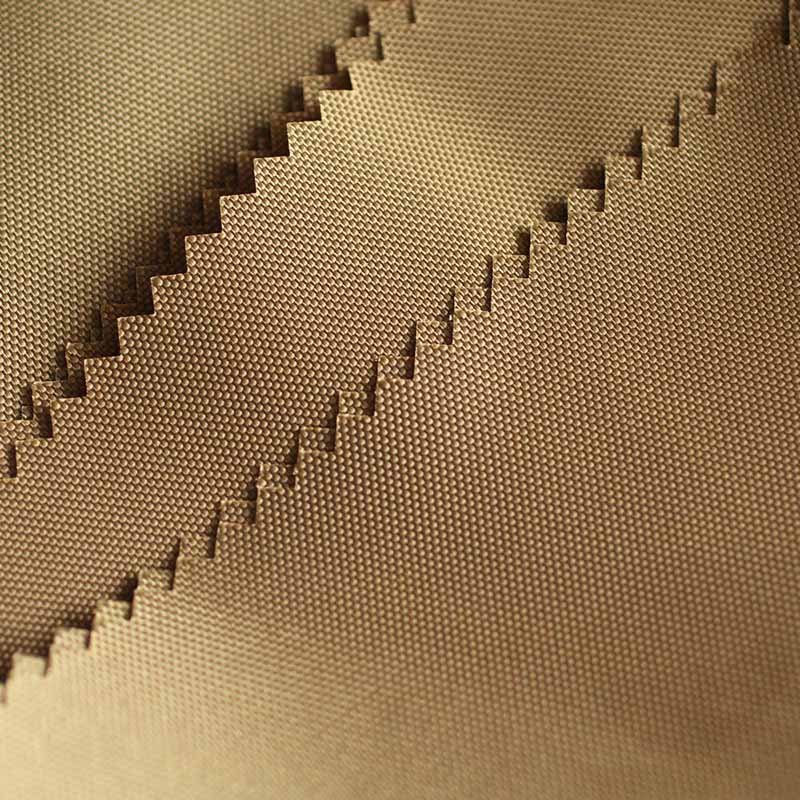
Where Are Ripstop Nylon Materials Used?
Ripstop nylon materials are widely used in bags, outdoor products, travel gear, and utility accessories because they offer a strong balance of low weight, tear control, and flexible finishing options. Their best use cases are products that need durability without the heaviness of more rugged woven constructions.
Which bags use ripstop nylon materials?
Ripstop nylon works across a surprisingly wide range of bag categories. That is one reason it stays relevant year after year. Customers often come to development meetings thinking ripstop nylon is only for camping or hiking products, but in reality it also fits many travel, urban, sports, and e-commerce-oriented product lines.
Some of the most common bag categories include:
- Foldable shopping bags
- Packable backpacks
- Travel duffels
- Lightweight gym bags
- Cosmetic bags
- Toiletry bags
- Packing cubes
- Accessory pouches
- Shoe bags
- Laundry bags
- Pet travel bags
- Outdoor utility organizers
- Small gear sleeves
- Commuter daypacks
- Drawstring bags
- Storage bags for sports or accessories
The reason it works so well in these categories is simple: many of these products are expected to be light, portable, durable enough for repeated use, and easy to ship. Ripstop nylon helps achieve that balance. Compared with heavier fabrics, it can lower finished bag weight and often reduce shipping burden. Compared with very lightweight plain fabrics, it offers better tear control and a more confidence-inspiring feel.
For customers selling online, this can be particularly useful because the fabric supports multiple commercial goals at once:
- Better product story for listings
- Lower shipping weight than heavy structures
- Technical look that photographs well
- Flexible use across several SKUs
- Easier creation of matching bag sets or collections
At Lovrix, ripstop nylon is especially valuable for customers building product families. A brand may start with a daypack, travel pouch, and organizer set, then extend into gym bags, pet products, or storage accessories using related materials. That creates a more consistent product line while still allowing different denier and coating choices for each item.
Are ripstop nylon materials good for outdoor gear?
Yes, ripstop nylon is widely used in outdoor gear because the structure gives good tear control while keeping the fabric relatively light. This makes it useful in products where carrying comfort, packability, and field performance all matter. Outdoor gear categories have used ripstop fabrics for years, including packs, pouches, covers, tents, and performance accessories.
But customers should understand the outdoor category more carefully. “Outdoor use” is a broad term. A ripstop nylon for a casual picnic tote is not the same as a ripstop nylon for a mountain daypack or gear pouch. When outdoor use becomes more demanding, the fabric selection usually has to go deeper into:
- Denier level
- Abrasion resistance
- Coating strength
- UV exposure risk
- Load-bearing stress
- Seam construction
- Reinforcement placement
- Strap and webbing compatibility
This matters because ripstop weave mainly helps with tear spread. It does not automatically solve every outdoor performance need. In rough-use products, abrasion resistance becomes just as important, and in some categories even more important. That is why some outdoor products move toward heavier nylons, higher deniers, or hybrid constructions rather than relying on ripstop alone.
For customers developing outdoor-oriented products, it helps to think in layers:
| Outdoor Product Level | Fabric Need | Ripstop Nylon Role |
|---|---|---|
| Light outdoor use | Low weight, basic weather resistance | Very suitable |
| Active day use | Better tear control, moderate abrasion resistance | Often a strong choice |
| Rugged field use | Higher durability, stronger structure | May need heavier denier or reinforced system |
| Specialized technical use | High protection and performance consistency | Requires more advanced material planning |
This is where Lovrix can create more value than a simple trading supplier. Since the company handles fabric, webbing, and bag manufacturing together, outdoor projects can be developed with more realistic coordination between shell fabric, strap strength, trim selection, and end-use stress points.
Do brands use ripstop nylon materials for travel products?
Yes, very often, and for good reason. Travel products need a different balance than pure outdoor products. In travel, customers usually want:
- Lightweight construction
- Smooth packing experience
- Decent resistance to daily wear
- Better protection from light moisture
- A neat, technical, premium appearance
- Easy carrying without unnecessary bulk
Ripstop nylon answers many of these needs well. It is especially attractive in travel products where the user notices weight every time the bag is lifted, packed, or carried through airports, stations, hotels, and cars. A heavier fabric can look durable, but it can also make the bag feel tiring or less convenient. Ripstop nylon often gives a better compromise between everyday durability and easier handling.
For travel-related custom projects, ripstop nylon is often used in:
- Foldable travel duffels
- Carry-on organizers
- Packing cubes
- Shoe bags
- Laundry bags
- Garment accessory bags
- Tech accessory pouches
- Weekend bags
- Lightweight secondary bags for travel use
Travel customers also care a lot about how a product looks after repeated use. A fabric that feels too thin can reduce confidence. A fabric that feels too heavy can reduce convenience. Ripstop nylon often works because it provides a more engineered middle ground. With the right coating and denier, it can feel crisp enough to suggest quality, but light enough to remain travel-friendly.
For e-commerce clients and mid- to high-end brand clients, this is a strong product direction because it combines user comfort with a clear selling point. “Ripstop nylon” is not just a technical phrase in this case. It becomes part of the product value story when the bag truly feels lighter, stronger, and better finished than low-cost alternatives.
Where ripstop nylon fits best
| Product Category | Why Ripstop Nylon Works | What Customers Usually Prioritize |
|---|---|---|
| Foldable bags | Light weight and easy packing | Compact storage, soft hand, light splash resistance |
| Travel pouches | Good balance of shape and flexibility | Clean finish, neat handling, moderate protection |
| Daypacks | Better tear control than plain lightweight fabrics | Low weight, daily durability, comfort |
| Gym and sports bags | Portable and practical for repeated use | Strength-to-weight balance, easy cleaning |
| Outdoor accessory bags | Technical look and useful weather performance | Tear control, coating, outdoor feel |
| Packing cubes and organizers | Lightweight and efficient for shipping and travel | Thin but reliable fabric, smooth zippers, structure balance |
| Pet travel accessories | Light carrying and easier portability | Moisture handling, easy care, product weight |
The strongest commercial use case for ripstop nylon is where customers want durability, but do not want the bag to feel heavy, overbuilt, or too industrial.
What customers should think about before choosing ripstop nylon for use applications
Before confirming ripstop nylon for a bag project, it helps to review the use scenario carefully.
Questions that matter most include:
- Is the product mainly for daily travel, outdoor activity, or storage?
- Does the user care more about low weight or ruggedness?
- Will the bag be folded often?
- Will it rub against rough surfaces regularly?
- Does it need a technical outdoor look or a softer lifestyle feel?
- Will the product be sold as value-focused, premium, or performance-oriented?
The better these questions are answered early, the easier it becomes to choose the right ripstop nylon construction. This is exactly where Lovrix supports customers well. With more than 18 years of experience across material, webbing, and bag manufacturing, the team can help translate a broad idea into a fabric direction that fits real use, real price targets, and real production needs.
How Do You Choose Ripstop Nylon Materials?
Choosing ripstop nylon materials starts with one simple rule: do not choose by name alone. “Ripstop nylon” only tells you the fabric has nylon yarns and a tear-limiting reinforcement pattern. It does not tell you whether the material is right for a foldable tote, a travel pouch, a school backpack, an outdoor accessory bag, or a protective equipment case. The right choice depends on denier, coating, fabric weight, hand feel, abrasion needs, moisture exposure, sewing behavior, and target price. Nylon 6 is widely used and performs well in many commercial applications, while nylon 6,6 is often selected when higher heat resistance and higher durability are needed. Coating choice also changes performance in a big way: PU-coated nylon is common because it is practical and cost-efficient, while silicone-coated nylon is often used in more technical lightweight applications and tends to hold waterproofness and strength longer under UV exposure than PU-coated fabrics.
For customers developing custom bags, private label collections, or OEM products, the best material is usually not the heaviest one, the cheapest one, or the one with the most technical-sounding name. It is the one that matches the real use case with the least waste, the best user experience, and the most stable production result. This is exactly where Lovrix becomes useful. Because Lovrix works across fabric, webbing, and bag manufacturing, the recommendation can be made from a finished-product perspective, not just from a fabric-roll perspective.
Which ripstop nylon materials are best for bags?
The best ripstop nylon for bags depends on what the bag needs to do every day. A lightweight foldable shopping bag does not need the same material as a travel backpack. A cosmetic pouch does not need the same shell fabric as a utility organizer. In bag development, the fabric has to do more than survive a lab test. It has to support the way the bag is carried, folded, packed, sewn, branded, and priced.
A practical way to think about ripstop nylon for bags is by product tier:
Lightweight bags
These include foldable totes, packable backpacks, simple drawstring bags, and lightweight organizers. Customers usually want lower weight, softer hand feel, and decent resistance to light daily wear. Lower-denier ripstop nylon is often more suitable here.
Everyday travel bags
These include daypacks, travel pouches, weekend accessories, packing cubes, and daily commuter items. Customers usually want a better balance between shape, weight, tear control, and basic weather performance. Mid-range denier ripstop nylon is often a stronger fit.
More rugged bags
These include outdoor organizers, utility bags, heavier daypacks, and gear bags. Customers often want better abrasion resistance, more body, and a more substantial product feel. Higher-denier ripstop nylon, or in some cases a different heavier nylon construction, may be more appropriate.
Denier is one of the most useful starting points because it gives a quick idea of yarn thickness. In the bag market, numbers such as 210D, 420D, and 600D are commonly used to help compare fabric directions. The denier number alone does not tell the full story, but higher denier generally points toward a thicker yarn and a stronger, heavier material direction.
Here is a useful bag-focused comparison:
| Bag Type | What the customer usually wants | More suitable ripstop nylon direction |
|---|---|---|
| Foldable shopping bag | Light weight, compact storage, soft feel | Lower denier, lighter coating |
| Cosmetic or toiletry pouch | Clean appearance, moderate structure, easy handling | Lower to mid denier, light to moderate coating |
| Travel organizer | Better shape, light moisture protection, smooth packing | Mid denier, moderate coating |
| Daypack | Stronger daily durability, better carrying confidence | Mid denier to higher denier, stronger finish |
| Gym or sports bag | Good balance of weight and wear resistance | Mid denier, moderate supportive finish |
| Outdoor utility bag | Tougher use, more technical feel | Higher denier, stronger coating or backing |
| Equipment bag | Better protection, stronger body, shape retention | Higher denier or reinforced fabric system |
The deeper point is this: many customers make mistakes by choosing material from a swatch book without matching it to the real job of the bag. A bag may look attractive in sample form, but if the fabric is too soft, too light, or too lightly coated, it can feel weak after a few months of use. On the other hand, if the fabric is too heavy or too stiff, the product may feel overbuilt, uncomfortable, and unnecessarily expensive. Lovrix helps avoid both extremes by matching the ripstop nylon to the intended use, target price, and product category before sampling moves too far.
How do you compare ripstop nylon materials?
Comparing ripstop nylon materials properly means looking at the fabric as a full performance package. Too many sourcing conversations focus only on one point, usually denier or coating. In reality, a good comparison should include at least six core areas:
- Denier
- Fabric weight
- Tear control
- Abrasion behavior
- Coating or finish
- Hand feel in the finished bag
This matters because fabrics with similar names can behave very differently once they become real products. One ripstop nylon may look technical but crease too easily. Another may feel strong but add too much weight for a travel category. Another may resist tearing well but not handle surface abrasion as well as expected. Nylon is often chosen because it has strong tensile and abrasion performance compared with polyester, while polyester can be attractive for better dimensional stability in wet conditions and often lower cost. That is why the comparison should always return to the use case rather than stopping at material labels.
A useful comparison framework looks like this:
| Comparison Point | What it shows | Why it matters in bag development |
|---|---|---|
| Denier | Yarn thickness direction | Affects weight, body, and strength direction |
| GSM / fabric weight | Real mass per area | Influences carry weight, shipping weight, and product feel |
| Grid visibility | Ripstop reinforcement appearance | Changes technical look and visual positioning |
| Tear performance | Ability to limit damage spread | Important for lightweight bags and outdoor use |
| Abrasion behavior | Surface wear resistance | Important for travel bags, backpacks, and utility bags |
| Coating type | Water resistance and hand feel | Changes structure, softness, and moisture handling |
| Sewing response | How the fabric behaves in production | Affects seam quality, turning, and consistency |
| Finished look | Matte, crisp, soft, shiny, structured | Affects perceived quality and brand image |
There is another practical layer that customers should not ignore: how the fabric behaves after branding is applied. A material that works well for embroidery may not behave the same way for screen printing. A coating that improves water resistance may change how a logo sits on the surface. A crisp technical finish may look strong in solid colors but not behave the same in lighter shades or larger print coverage. This is why material comparison is never only about textile data. It is also about how the final branded product will look and feel to the customer.
At Lovrix, this is one of the most useful parts of development support. Since the company also works with webbing and full bag construction, ripstop nylon can be assessed not just as a fabric sample, but as part of a finished bag system that includes strap balance, zipper line, structure, reinforcement, decoration method, and packaging position. That makes the comparison more commercial and more realistic.
What should customers check before ordering ripstop nylon materials?
Before placing a sample order or production order, customers should slow down and confirm the material from several angles. This step is where many expensive mistakes can still be avoided.
The first thing to check is the real use environment. Will the product be used for commuting, airport travel, gym use, school use, outdoor day use, or protective storage? This one answer already changes what kind of ripstop nylon makes sense. A bag meant for occasional light travel does not need the same shell fabric as one meant for daily commuter wear or rough outdoor handling.
The second thing to check is the balance between tear resistance and abrasion resistance. Ripstop structure is very helpful for stopping tear spread, but customers sometimes overestimate it and forget abrasion. If the bag will scrape against floors, car trunks, walls, benches, or rough surfaces, abrasion may become just as important as tear control. Nylon is often selected because of its stronger abrasion and tensile profile, but the final result still depends on fabric construction, denier, and finish.
The third thing to check is coating fit. A coating that is too light may leave the bag feeling thin or under-protected. A coating that is too heavy may reduce flexibility and add unnecessary weight. PU-coated fabrics are often easier and more cost-efficient in many commercial applications, while silicone-coated fabrics can provide strong lightweight technical performance but may increase complexity depending on the product. PU-coated fabrics can also be seam taped, while silicone-coated fabrics generally require seam sealing instead.
The fourth thing to check is how the material supports the product’s target price. This part is often overlooked. A very advanced ripstop nylon may look impressive in sample form but make the finished bag too expensive for the intended market. On the other side, a low-cost ripstop nylon may help hit a price point but weaken the product story and shorten product life. The strongest product programs usually match material level with market position:
| Market Position | What customers expect | Better ripstop nylon strategy |
|---|---|---|
| Value-focused | Affordable, neat, functional | Controlled cost, lighter coating, practical denier |
| Mid-range | Better feel, better durability, reliable use | Balanced denier, stronger finish, good hand feel |
| Premium | Noticeably better materials and finish | Better yarn quality, better surface control, more refined construction |
| Technical / performance | Clear function, lower compromise | More advanced material planning, stronger coating logic, more testing |
The fifth thing to check is sample realism. A flat swatch is not enough. Customers should ask to see how the ripstop nylon behaves in a real sample with the actual bag shape, zipper opening, webbing width, reinforcement points, branding method, and loading weight. This is where many hidden issues appear: collapse at the opening, weak shape retention, coating stress at folds, seam puckering, poor turning behavior, or a mismatch between expected feel and final bag appearance.
A practical pre-order checklist looks like this:
| Check before ordering | Why it matters |
|---|---|
| Confirm denier and gsm | Avoids guessing from fabric name alone |
| Confirm coating type | Controls moisture performance and hand feel |
| Confirm intended use | Prevents overspec or underspec decisions |
| Review physical sample | Shows real product behavior |
| Review logo method compatibility | Prevents decoration problems later |
| Review webbing and trim match | Keeps the whole product balanced |
| Review target price | Keeps development commercially realistic |
| Review lead time and MOQ | Avoids good material choices that do not fit the business plan |
This is where Lovrix can save customers real time and cost. Because the company integrates fabric development, webbing production, and bag manufacturing, the team can help align material choice with actual production reality. That reduces avoidable sampling rounds and helps customers move toward a product that looks better, performs better, and stays closer to the original commercial goal.
Ripstop Nylon Material Selection Guide
To make sourcing easier, here is a practical decision table customers can use before discussing a project with Lovrix.
| Your product goal | What to prioritize first | What to avoid |
|---|---|---|
| Keep the bag very light | Lower denier, softer hand, controlled coating | Overly heavy coating or rigid finish |
| Improve daily durability | Mid denier, better abrasion balance, moderate structure | Very thin shell fabric for high-use categories |
| Build a more premium feel | Cleaner surface, better finish control, balanced structure | Cheap-feeling coatings or unstable hand feel |
| Handle light outdoor use | Better moisture resistance, technical look, good tear control | Calling it “waterproof” without structure support |
| Build a rugged utility product | Higher denier, stronger reinforcement, stronger finish | Underbuilding corners, base, and load points |
| Reach a target online price | Smart cost-performance balance | Choosing advanced materials with no visible customer value |
A good ripstop nylon decision should answer five practical questions:
- What will the bag carry?
- How often will it be used?
- How rough is the use environment?
- What should the customer feel in hand?
- What price level must the product hit?
Once these questions are clear, the material conversation becomes much easier and far more productive.
Why Many Customers Choose Lovrix for Ripstop Nylon Bag Development
For custom, private label, and OEM projects, customers rarely need only a fabric supplier. They need a development partner who can turn a material idea into a bag that works in production and sells in the market.
Lovrix is positioned well for this because the company brings together more than 18 years of experience across fabric, webbing, and bag development. That gives customers a more complete route from concept to finished product:
- Fabric recommendation based on real use
- Webbing and trim matching
- Faster sample coordination
- Low MOQ customization
- Free design support
- Free samples in selected project stages
- Shorter development communication path
- More stable quality control across material and bag stages
This integrated model matters because many bag problems do not come from one component alone. The shell fabric may be fine, but the webbing is mismatched. The coating may be right, but the bag structure is wrong. The material may be strong, but the product feels unbalanced. A group company like Lovrix can evaluate those decisions together, which is especially useful for brands and e-commerce sellers that want faster development with fewer surprises.
Request a Quote for Custom Ripstop Nylon Products
If you are planning a ripstop nylon bag, pouch, organizer, travel accessory, or private label product line, the fastest way to get better results is to discuss the product as a full system, not just as a fabric name.
When you contact Lovrix, it helps to prepare a few basics:
- Product type
- Target size
- Use scenario
- Target market
- Estimated order quantity
- Desired material feel
- Moisture protection level
- Logo method
- Reference images or sample ideas
With that information, Lovrix can help you narrow down the right ripstop nylon direction, recommend suitable webbing and trims, and move the project toward sampling faster.
Whether you need a lightweight travel pouch, a more durable daypack, a foldable shopping bag, or a custom outdoor organizer, Lovrix can support the development from material selection to finished production. If you want a quote, a material recommendation, or a custom sample plan, now is a good time to send your product brief and start the conversation.


