 Skip to content
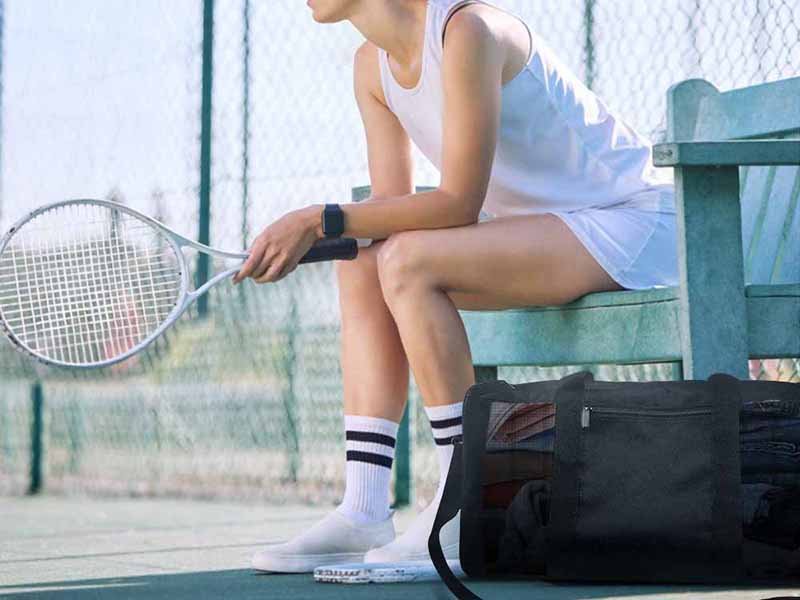
A gym bag may look good on a product page, but the real test starts after a hard workout. Damp shirts, used towels, sweaty gloves, and worn shoes quickly turn a closed bag into a warm, humid space. That is where many ordinary bags disappoint users. They hold moisture for too long, trap odor inside, and make the entire carrying experience unpleasant. For many active people, this is not a small issue. It affects daily convenience, product satisfaction, and whether they will buy the same bag again.
Breathable mesh materials for gym bags solve this problem in a practical way. Instead of sealing moisture inside, they allow air to move through the bag more easily. That simple change improves drying speed, helps control odor, reduces the risk of mildew, and makes the bag feel lighter and more comfortable in real use. In today’s market, customers do not just want a gym bag that can carry things. They want one that feels clean, dries faster, lasts longer, and fits an active lifestyle.
Breathable mesh materials for gym bags are ventilated fabrics made with open structures that let air pass through. They are commonly used to improve airflow, reduce moisture buildup, and help sweaty gear dry more quickly. For gym bags, they are especially useful in shoe compartments, side pockets, wet storage zones, and lightweight body panels where freshness, comfort, and hygiene matter most.
For factories and product developers, mesh is not only a fabric choice. It is a product strategy. The right mesh can improve user experience, lower complaint rates, and create a stronger reason for customers to choose one bag over another. Lovrix, with more than 18 years of experience in fabric, webbing, and bag development and manufacturing, understands that performance comes from combining the right material with the right bag structure. A well-designed mesh gym bag is not only more breathable. It is more marketable, more practical, and more likely to win repeat orders.
Think about a customer who goes to the gym before work, packs damp clothing after training, then leaves the bag in the car for hours. When they open it later, the smell, moisture, and discomfort shape their opinion of the product immediately. That moment often decides whether the bag feels premium or disappointing. This is exactly why breathable mesh matters more than many brands first assume.
What Are Breathable Mesh Materials for Gym Bags?

Breathable mesh materials for gym bags are fabrics built with visible openings or air channels that allow ventilation while still providing enough strength for practical daily use. They are used to help release moisture, improve air circulation, and support faster drying in areas of the bag that store sweaty or damp items.
What defines breathable mesh materials for gym bags?
Breathable mesh materials are defined by one core feature: they let air move through the fabric instead of blocking it. That sounds simple, but in gym bag design, it makes a major difference. A bag used for sports or fitness is often exposed to sweat, humidity, friction, repeated loading, and regular transport. So the mesh used in that bag cannot be judged by appearance alone. It must be evaluated by performance.
The most important performance points usually include:
- Airflow level
- Hole size and openness
- Tear strength
- Shape stability
- Abrasion resistance
- Weight
- Drying speed
- Surface feel
A good breathable mesh for gym bags should allow enough air exchange to reduce trapped humidity, while still being stable enough to avoid sagging, tearing, or losing shape after repeated use. In real products, this balance is very important. If the holes are too open, the mesh may feel weak or expose the contents too much. If the structure is too dense, airflow drops and the bag loses much of its ventilation value.
Many customers care about three practical questions more than technical wording:
- Will the bag smell bad after use?
- Will wet gear dry more quickly?
- Will the mesh break after a few months?
These are the right questions, because they go straight to product satisfaction.
The table below shows how customers often judge breathable mesh in actual use.
| Performance Area | What Customers Notice | Why It Matters |
|---|---|---|
| Air circulation | Bag feels fresher after workouts | Helps reduce trapped moisture |
| Drying speed | Clothes or towels dry faster | Improves daily convenience |
| Odor control | Less smell after repeated use | Raises overall product satisfaction |
| Strength | Mesh does not rip easily | Reduces returns and complaints |
| Comfort | Bag feels lighter and easier to carry | Improves user experience |
| Appearance | Mesh still looks clean and tight | Supports premium brand image |
For gym bags positioned for mid-range and high-end markets, breathable mesh is rarely used randomly. It is placed in high-value areas such as:
- Shoe compartments
- Side pockets for water bottles
- Wet gear compartments
- Back panels
- Top lids
- Large front ventilation windows
This is where experienced manufacturers create real value. Lovrix does not only look at the fabric itself. The team looks at how the mesh will perform once it is sewn, tensioned, loaded, folded, shipped, and used in daily life. That is especially important for custom, private label, and OEM/ODM gym bag projects, where the bag needs to meet both visual goals and long-term use expectations.
Another point customers increasingly care about is appearance. Years ago, some people associated mesh with cheap sports bags. That is changing. Today, breathable mesh can look clean, modern, sporty, and premium when paired with the right structure, color matching, webbing, zipper layout, and logo application. For many brands, mesh is no longer only a function-driven choice. It also supports the visual identity of a performance product line.
How are breathable mesh materials for gym bags made?
Breathable mesh materials are usually made through knitting rather than standard plain weaving. This manufacturing method allows the fabric to form controlled openings, flexible patterns, and stronger performance in lightweight constructions. For gym bag use, the production process needs to deliver more than simple breathability. It must also provide consistency, durability, and stable appearance across different batches.
The production flow often includes the following stages:
| Production Step | What Happens | Why It Matters for Gym Bags |
|---|---|---|
| Yarn selection | Polyester or nylon filaments are chosen | Determines strength, weight, feel, and cost |
| Knitting | Fabric structure is formed with open spaces | Controls airflow and visual texture |
| Heat setting | Fabric is stabilized under heat | Helps keep shape and reduce distortion |
| Dyeing or coloring | Color is applied to match the brand design | Affects appearance consistency |
| Finishing | Added treatments improve performance | Supports odor control, water resistance, or UV stability |
| Inspection | Fabric is checked for flaws and consistency | Reduces production risk |
Two of the most common production methods are:
Warp knit mesh
Warp knit mesh is usually more stable and less likely to deform under tension. It is often used where better structure and cleaner appearance are needed. For gym bags, this can be a strong option for outer panels and larger visible sections.
Weft knit mesh
Weft knit mesh is often softer and more flexible. It can work well in pockets, softer body areas, and lightweight applications where comfort and stretch matter more.
Customers may not ask directly whether a mesh is warp knit or weft knit, but they absolutely notice the results. These results show up in:
- Whether the bag keeps its shape
- Whether the mesh wrinkles too much
- Whether the panel looks loose or refined
- Whether the bag still looks good after months of use
This is why experienced factories pay close attention to fabric finishing and panel testing. A mesh sample can look excellent on a swatch card, but once it is sewn into a bag and placed under load, weaknesses become obvious. Common problems include:
- Edge curling
- Uneven hole distribution
- Poor recovery after stretching
- Surface snagging
- Color inconsistency
- Low seam holding strength
For serious custom projects, brands should not only approve a fabric swatch. They should review a real sample bag. That is the most useful way to judge how the mesh behaves in product form.
Lovrix has an advantage here because the company works across fabric, webbing, and bag development together. That helps reduce the disconnect that often happens when one supplier makes the fabric and another factory tries to convert it into finished bags. In practical terms, this integrated approach can help clients get:
- Faster material-to-sample coordination
- Better control over panel reinforcement
- More reliable color matching across components
- Shorter development cycles
- Better consistency between approved samples and bulk production
For clients serving e-commerce markets, this matters even more. Online customers judge products quickly, and complaints often focus on issues like smell retention, poor ventilation, or weak materials. The mesh choice made during development directly affects those reviews later.
Which fibers are used in breathable mesh materials for gym bags?
The most common fibers used in breathable mesh materials for gym bags are polyester and nylon. Both are widely used in sports bags, but they perform differently in cost, feel, strength, abrasion resistance, and long-term appearance. Choosing between them should depend on product positioning, target users, price range, and the real use environment.
The comparison below gives a clearer picture.
| Fiber Type | Main Strengths | Main Limitations | Suitable Gym Bag Positioning |
|---|---|---|---|
| Polyester mesh | Good value, stable color, solid UV resistance, widely available | Slightly lower abrasion resistance than nylon | Mid-range, mass-market, promotional, private label |
| Nylon mesh | Higher tensile strength, better abrasion resistance, premium feel | Higher material cost, may require tighter cost control | Premium gym bags, performance lines, heavy-use bags |
| Polyester-nylon blend | Balanced performance and cost in some custom developments | Needs careful testing and supplier control | Custom projects needing a cost-performance balance |
For many commercial gym bag programs, polyester mesh remains the most common choice. One reason is cost efficiency. Polyester is easier to source at scale, easier to color consistently, and often more competitive for larger-volume projects. For brands targeting Amazon, Shopify, retail chains, or general fitness users, polyester mesh can deliver a strong balance of function and price.
Nylon mesh is usually chosen when the project places more emphasis on strength and premium performance. It is often a better fit for:
- Heavy gear bags
- Sports training bags
- Team equipment bags
- Higher-end fitness brands
- Bags exposed to frequent friction or rough handling
From a customer point of view, the fiber decision affects more than durability. It can also affect:
- Touch and feel
- Visual sharpness
- Weight perception
- Long-term wear appearance
- Confidence in product quality
Here is a simple way many product teams think about it:
- Choose polyester when price stability, color consistency, and wide commercial use matter most.
- Choose nylon when strength, abrasion resistance, and premium product positioning matter more.
In some cases, a hybrid approach works best. For example:
- Polyester mesh for breathable body panels
- Reinforced nylon or Oxford fabric for stress points
- Strong webbing for handles and shoulder support
- Water-resistant linings in wet compartments
This kind of mixed-material construction is often the most practical solution because mesh alone does not need to do everything. It needs to do its job in airflow, while the rest of the bag handles structure, support, and heavy loading.
Lovrix often develops bags this way for clients who want a good cost-performance ratio without making the product feel basic. That is especially useful for mid-to-high-end brand clients and e-commerce sellers who need a product that looks upgraded but still works within a target price range.
Are breathable mesh materials for gym bags better than solid fabrics?
Breathable mesh materials are not better in every category, but for ventilation, moisture control, and user comfort, they are clearly stronger than solid fabrics. The most effective gym bags are usually not made from only mesh or only solid fabric. They combine both, using each where it performs best.
This is the key point many customers miss. Mesh is excellent for airflow, but solid fabrics are better for structure, protection, and load-bearing support. So the smartest question is not “mesh or solid fabric?” It is “where should each material be used in the bag?”
The comparison below makes that easier to understand.
| Feature | Breathable Mesh | Solid Fabric |
|---|---|---|
| Airflow | Strong | Low |
| Odor reduction support | Strong | Limited |
| Drying speed | Fast | Slower |
| Structure support | Moderate | Strong |
| Privacy of contents | Lower | Higher |
| Weather resistance | Lower unless combined with coatings or layering | Higher depending on fabric type |
| Lightweight feel | Strong | Moderate |
| Heavy-load stability | Moderate | Strong |
If a customer carries sweaty clothing, training gear, and shoes almost every day, mesh offers major lifestyle value:
- The bag feels fresher
- Moisture escapes more easily
- The risk of stale smell drops
- Daily maintenance becomes easier
But if the same customer also carries electronics, paperwork, or valuable personal items, solid fabric still plays an important role. That is why hybrid construction has become the preferred solution in modern gym bag development.
A strong gym bag structure may include:
- Mesh side panel for ventilation
- Solid base fabric for strength
- Reinforced webbing handles for load support
- Coated inner compartment for damp items
- Ventilated shoe section with a structured opening
This layout gives users the benefits of both worlds.
From a business point of view, this also improves sales potential. Bags that combine breathable mesh with durable support fabrics can appeal to a broader range of customers because they feel more practical, more durable, and more thoughtfully designed. For custom projects, this opens more product positioning opportunities:
- Lightweight training bag
- Premium performance duffel
- Team sports bag
- Women’s fitness tote
- Men’s shoe-and-gear gym bag
- Travel-friendly workout bag
Lovrix supports this kind of development well because the company does not treat the bag as only a sewing project. It treats the product as a full material system involving fabric, webbing, construction method, and real-world use. That matters to customers who want fewer quality issues, faster sampling, lower MOQ flexibility, and a more reliable path from idea to finished product.
Why Use Breathable Mesh Materials for Gym Bags?

Breathable mesh materials for gym bags are used because they help solve some of the most common customer complaints in sports bags: trapped odor, dampness, slow drying, and poor comfort. They improve airflow, support hygiene, and make the bag more practical for repeated gym, training, and sports use.
How do breathable mesh materials for gym bags reduce odor?
Odor control is one of the biggest reasons customers prefer breathable mesh gym bags. Bad smell usually does not come from the bag material alone. It comes from trapped sweat, moisture, bacteria growth, and poor air circulation after exercise. When used clothes, socks, towels, or shoes are placed inside a closed bag, humidity rises quickly. If the bag cannot release that moisture, smell becomes stronger over time.
Breathable mesh helps reduce odor by improving air exchange. More airflow means moisture has a better chance to escape instead of staying trapped inside the bag for hours.
This process matters because odor often follows this chain:
| Odor Cause Chain | What Happens |
|---|---|
| Sweat enters the bag | Damp gear raises internal humidity |
| Humidity remains high | The inside environment stays warm and wet |
| Bacteria multiply | Organic residue is broken down |
| Odor compounds build up | The bag starts to smell unpleasant |
Mesh helps interrupt this cycle in several ways:
- It allows air to circulate through the bag wall or compartment
- It speeds up evaporation from damp surfaces
- It reduces long-term moisture retention
- It lowers the chance of stale air staying trapped inside
For customers, the practical benefits are easy to notice:
- Shoes smell less intense
- The bag feels fresher the next day
- There is less need to wash the bag frequently
- The inside environment feels less stuffy
Some factories also add anti-bacterial or odor-management finishes to the mesh. These treatments can support odor control, but they should not replace good airflow. Airflow is still the main foundation. If a bag has poor ventilation, chemical treatments alone will not fully solve the problem.
This is why the best gym bags use odor control as a system, not as one feature. A good system often includes:
- Breathable mesh panels
- Separated shoe compartments
- Wet and dry storage design
- Fast-drying linings
- Durable zippers with good opening access
Lovrix understands that customers shopping for gym bags are often comparing products based on daily comfort, not just technical fabric names. A bag that stays fresher is more likely to earn positive reviews, repeat purchases, and stronger long-term brand trust.
Why do athletes choose breathable mesh materials for gym bags?
Athletes and active users usually have higher expectations than casual bag buyers. They do not only want something that carries gear from one place to another. They want a bag that works with their routine. That means faster drying, better organization, easier cleaning, and less odor after repeated training.
Athletes often choose breathable mesh materials because these materials fit real fitness habits:
- Morning gym before work
- Team practice after school
- Two-a-day training sessions
- Weekend sports events
- Travel between gym, office, and home
In these situations, the bag is not always emptied immediately. Gear may stay inside for hours. That makes breathability much more important.
The features athletes often value most include:
| Athlete Concern | Why Breathable Mesh Helps |
|---|---|
| Damp clothes after training | Supports faster air release and drying |
| Used shoes in enclosed spaces | Improves ventilation in shoe storage |
| Repeated weekly use | Helps keep the bag fresher over time |
| Quick packing and unpacking | Mesh zones make items easier to identify and separate |
| Comfort during carrying | Lightweight mesh can reduce overall bag weight |
Athletes also tend to notice poor bag design quickly. Common complaints include:
- “My bag smells after just a few uses.”
- “The shoe section traps too much moisture.”
- “The bag feels heavy and stuffy.”
- “The material looks worn too soon.”
- “The bag is hard to clean after workouts.”
These are not minor complaints. They affect whether the user feels the product is worth the money.
For premium and performance-oriented gym bags, breathable mesh can also improve the visual language of the product. It communicates sport, movement, and technical function. That is one reason many fitness brands and active lifestyle labels prefer mesh details. The design feels more aligned with the user’s world.
Lovrix works with domestic and international mid-to-high-end brands and e-commerce clients, so the company understands that the final product needs to meet both visual and practical expectations. For athlete-focused projects, mesh is often developed together with:
- Reinforced bottom panels
- Strong webbing systems
- Ventilated shoe compartments
- Lightweight but durable shoulder straps
- Flexible storage layouts for accessories and training gear
This turns the bag from a simple container into a more complete performance product.
Do breathable mesh materials for gym bags dry faster?
Yes, and this matters much more than many sellers realize. Faster drying improves freshness, helps reduce odor, supports hygiene, and makes the bag easier to reuse day after day. For customers with frequent training routines, a faster-drying bag often feels like a better-quality product even if they do not know the technical reason behind it.
The drying advantage comes from two factors:
- Air can move through the mesh openings
- Moisture has more exposed surface area for evaporation
By contrast, solid fabrics often hold moisture inside the compartment longer, especially when the bag is tightly packed.
A simplified comparison looks like this:
| Material Setup | General Drying Behavior |
|---|---|
| Open breathable mesh panel | Fast drying |
| Dense non-ventilated polyester wall | Slower drying |
| Mesh plus separated shoe section | Faster, more controlled drying |
| Fully enclosed compartment with poor airflow | Slowest drying |
In real use, drying speed depends on several conditions:
- Room temperature
- Humidity level
- Size of the mesh area
- Type of gear stored inside
- Whether items are tightly packed
- Whether the bag is left open or closed
Still, breathable mesh almost always gives the product a better chance to dry faster than a fully enclosed design.
This creates value for several customer groups:
- Gym members who work out daily
- Runners and cyclists carrying wet clothing
- School and college athletes
- Sports clubs and training centers
- Fitness brands selling practical lifestyle gear
From a product development angle, drying performance should not be left to chance. The size and placement of the mesh matter a lot. Small decorative mesh areas may look sporty, but they do not always provide strong functional improvement. Real ventilation usually comes from:
- Large mesh windows
- Full-depth mesh pockets
- Vented side panels
- Breathable shoe compartments
- Open-structured front or top zones
Lovrix can help clients develop these details based on target use scenarios. That is important because a gym bag for daily yoga or studio use may need a different mesh layout from a heavy-duty sports duffel or team gear bag.
Are breathable mesh materials for gym bags more hygienic?
In most fitness-related use cases, yes. Breathable mesh materials support a more hygienic bag environment because they help reduce the moist, closed conditions where odor and microbial buildup become more likely. Hygiene in gym bags is mainly connected to one thing: moisture management. When moisture stays too long, cleanliness becomes harder to maintain.
Mesh helps by creating a more breathable storage environment. This is especially useful for:
- Sweat-soaked workout wear
- Used socks
- Damp towels
- Training gloves
- Shoes after exercise
- Swim gear or post-sport clothing
The hygiene value of mesh can be understood in this way:
| Hygiene Factor | Closed Bag with Poor Ventilation | Breathable Mesh Bag |
|---|---|---|
| Moisture release | Slow | Faster |
| Stale air buildup | High | Lower |
| Risk of unpleasant smell | Higher | Lower |
| User cleaning pressure | More frequent | Often reduced |
| Everyday comfort | Lower | Better |
That said, not all mesh bags are equally hygienic. Quality still matters. Cheap mesh with weak finishing or poor structural consistency can create its own problems, such as:
- Dirt collecting in rough surfaces
- Easy snagging and damage
- Distortion after washing
- Poor seam durability
- Hard-to-clean corners or pocket constructions
So hygiene depends on both fabric choice and bag design.
For a more hygienic gym bag, good development usually includes:
- Breathable mesh in the right areas
- Easy-to-clean lining materials
- Smart compartment separation
- Moisture-conscious structure
- Strong seam construction
- Quality zipper openings for access and airing out
Customers today are paying more attention to product hygiene than before, especially in categories related to fitness, sports, and everyday mobility. That makes breathable mesh more than a simple technical feature. It becomes part of the product’s lifestyle value.
For brands and sellers, this can be a strong selling point when presented correctly. Customers do not only want to hear that a bag uses mesh. They want to know what the mesh does for them:
- Keeps the bag fresher
- Helps gear dry faster
- Makes daily use easier
- Supports a cleaner carrying experience
This is where thoughtful manufacturing makes the difference. Lovrix, with its integrated strength in fabric, webbing, and bag production, is well positioned to help clients develop breathable gym bags that are not only functional on paper, but genuinely useful in everyday life.
Which Breathable Mesh Materials for Gym Bags Work Best?

Breathable mesh materials for gym bags work best when they match the bag’s actual use scenario. There is no single “best mesh” for all products. The right choice depends on factors such as durability needs, airflow requirements, price positioning, and brand target market. In most successful gym bag designs, different mesh types are used together to balance performance and cost.
Which polyester breathable mesh materials for gym bags are common?
Polyester mesh is the most widely used material in gym bag production, mainly because it offers a strong balance between cost, performance, and scalability. For brands producing medium to large volumes, polyester mesh is often the most practical choice.
Common polyester mesh types include:
- Standard open mesh
- Hexagonal sports mesh
- Sandwich mesh (double-layer structure)
- Fine-hole mesh (used for smaller pockets)
Each type serves a different purpose in bag design.
| Polyester Mesh Type | Structure | Typical Use in Gym Bags | Key Advantage |
|---|---|---|---|
| Open mesh | Large holes | Side panels, ventilation windows | Maximum airflow |
| Hex mesh | Honeycomb pattern | Sport-style bags | Better strength + airflow balance |
| Sandwich mesh | Double layer with spacer | Back panels, straps | Comfort + cushioning |
| Fine mesh | Small holes | Inner pockets | Better containment of small items |
From a customer perspective, polyester mesh performs well in daily fitness use because:
- It dries relatively fast
- It maintains color well after repeated washing
- It is lightweight and easy to carry
- It offers stable pricing for bulk production
For brands targeting e-commerce platforms or retail chains, polyester mesh is often preferred because it helps control cost without sacrificing essential functionality.
Lovrix typically recommends polyester mesh for:
- Standard gym duffel bags
- Fitness tote bags
- Entry-to-mid level sports bags
- Promotional or private label projects
Another key advantage is supply stability. Polyester mesh is widely available, which helps reduce risks such as production delays or inconsistent material quality.
However, customers should also be aware of limitations:
- Lower abrasion resistance compared to nylon
- Can feel less premium if not combined with stronger materials
- May require reinforcement in high-stress areas
This is why most successful products do not rely on polyester mesh alone, but combine it with stronger base fabrics.
How do nylon breathable mesh materials for gym bags perform?
Nylon mesh is often used in higher-end gym bags where durability and long-term performance are more important than cost alone. Compared to polyester, nylon offers stronger tensile strength and better resistance to wear and tear.
For customers who use gym bags frequently or carry heavier gear, nylon mesh can make a noticeable difference.
Key performance characteristics of nylon mesh:
- Higher strength under tension
- Better resistance to tearing
- Stronger abrasion resistance
- More premium surface feel
- Longer lifespan under heavy use
| Performance Factor | Polyester Mesh | Nylon Mesh |
|---|---|---|
| Strength | Medium | High |
| Abrasion resistance | Moderate | Strong |
| Weight | Light | Slightly heavier |
| Cost | Lower | Higher |
| Premium feel | Standard | Better |
Nylon mesh is commonly used in:
- Professional sports bags
- Team equipment bags
- Premium gym duffels
- Outdoor and training gear bags
From a user point of view, nylon mesh often gives more confidence. The bag feels stronger, more durable, and more reliable over time.
However, nylon mesh also comes with considerations:
- Higher material cost
- Slightly heavier weight
- Requires tighter cost control in production
For brands positioning their products at a higher price point, nylon mesh can help justify that positioning. Customers often associate durability and strong materials with higher value.
Lovrix often suggests nylon mesh when clients are targeting:
- High-end fitness brands
- Professional training products
- Long-term durability-focused markets
- Premium private label lines
In many cases, nylon mesh is used selectively rather than across the entire bag. This helps control cost while still improving key performance areas.
What are spacer breathable mesh materials for gym bags?
Spacer mesh is a more advanced type of breathable mesh that includes a three-dimensional structure. Instead of a flat fabric, spacer mesh has a layered design with a middle space that allows air to move between layers.
This structure creates both ventilation and cushioning.
Spacer mesh is often used in areas where comfort is important, such as:
- Back panels
- Shoulder straps
- Handle padding
- Body-contact areas
Key benefits of spacer mesh include:
- Improved airflow through the layered structure
- Better cushioning for carrying comfort
- Reduced pressure on shoulders and back
- Enhanced breathability in contact areas
| Feature | Standard Mesh | Spacer Mesh |
|---|---|---|
| Structure | Flat | 3D layered |
| Airflow | Good | Very good |
| Cushioning | Low | High |
| Comfort level | Moderate | High |
| Cost | Lower | Higher |
From a customer experience perspective, spacer mesh is often noticed immediately. When carrying the bag, the difference in comfort is clear, especially for heavier loads.
This makes spacer mesh valuable for:
- Gym bags used for commuting
- Fitness bags carried for long periods
- Premium product lines
- Travel-friendly sports bags
However, spacer mesh is not typically used for full bag bodies due to cost and structure. It is best used in targeted areas where comfort matters most.
Lovrix often integrates spacer mesh into custom projects where brands want to improve perceived quality and user comfort without significantly increasing overall material cost.
Which breathable mesh materials for gym bags are most durable?
Durability in breathable mesh materials depends on several factors, not just the fiber type. Customers often assume thicker mesh is always stronger, but this is not always true. Structure, yarn quality, and finishing all play important roles.
Key factors affecting durability:
- Yarn thickness and quality
- Mesh density and pattern
- Knitting method
- Coating or finishing treatments
- Reinforcement at stress points
The table below shows durability comparison across common mesh types:
| Mesh Type | Durability Level | Best Use Case |
|---|---|---|
| Standard polyester mesh | Medium | Light to moderate use |
| Hex mesh | Medium–high | Sports-style bags |
| Nylon mesh | High | Heavy-duty gym bags |
| Spacer mesh | Medium (structure dependent) | Comfort zones |
| Reinforced mesh (with backing) | High | High-stress panels |
For real-world gym bag use, durability issues usually appear in:
- Bottom corners
- Side panels under tension
- Zipper attachment areas
- Handles and strap connections
- Shoe compartments
This is why material selection alone is not enough. Reinforcement design is equally important.
A durable gym bag often includes:
- Double stitching in mesh seams
- Reinforced binding edges
- Strong webbing integration
- Structured fabric panels around mesh zones
- Stress point reinforcement
Customers often judge durability based on early signs of wear:
- Mesh tearing
- Loose threads
- Distorted shape
- Sagging panels
- Broken seams
Reducing these issues directly lowers return rates and improves product reviews.
Lovrix approaches durability as a system, not just a fabric choice. By combining:
- Strong yarn selection
- Controlled mesh density
- Reinforced bag construction
- Integrated webbing support
the final product becomes more reliable for long-term use.
How to Choose Breathable Mesh Materials for Gym Bags?

Choosing breathable mesh materials for gym bags requires balancing airflow, strength, cost, and product positioning. The best choice depends on how the bag will be used, who the target customer is, and what price range the product needs to meet.
What airflow matters in breathable mesh materials for gym bags?
Airflow is one of the most important performance indicators for breathable mesh, but more airflow is not always better. The goal is to achieve the right balance between ventilation and structural stability.
Airflow is influenced by:
- Hole size
- Mesh density
- Fabric thickness
- Yarn structure
| Airflow Level | Mesh Structure | Use Case |
|---|---|---|
| High airflow | Large open holes | Shoe compartments, wet gear zones |
| Medium airflow | Balanced mesh | Side panels, general ventilation |
| Low airflow | Dense mesh | Inner pockets, small item storage |
Customers should focus on practical outcomes:
- Does the bag feel fresh after use?
- Does moisture escape easily?
- Does the mesh maintain shape?
Too much openness can lead to:
- Reduced durability
- Poor shape retention
- Less privacy for stored items
Too little openness reduces the benefit of using mesh in the first place.
Lovrix helps clients define airflow requirements based on product use scenarios, ensuring the mesh supports both function and durability.
How to test breathable mesh materials for gym bags quality?
Testing mesh quality is critical before moving into mass production. A fabric that looks good in a sample may perform poorly in real use if not properly evaluated.
Key testing methods include:
| Test Type | What It Checks | Why It Matters |
|---|---|---|
| Tensile strength test | Resistance to pulling | Prevents tearing |
| Abrasion test | Surface wear resistance | Ensures long-term use |
| Air permeability test | Airflow level | Confirms breathability |
| Color fastness test | Resistance to fading | Maintains appearance |
| Wash test | Stability after cleaning | Prevents deformation |
Customers can also do simple practical checks:
- Pull the mesh slightly to check recovery
- Inspect hole consistency
- Check for loose yarns
- Feel surface smoothness
- Review stitching compatibility
For B2B buyers, requesting a finished sample bag is far more effective than reviewing fabric swatches alone. Real product testing reveals issues that fabric samples cannot show.
Lovrix supports clients with:
- Sample development
- Material testing
- Performance evaluation
- Fast iteration cycles
This reduces development risk and improves final product quality.
Which coatings improve breathable mesh materials for gym bags?
Coatings and finishing treatments can enhance mesh performance, especially in demanding environments. While mesh is mainly used for airflow, certain treatments can add extra functionality.
Common enhancements include:
- Water-repellent coating
- Anti-bacterial treatment
- UV resistance finishing
- Anti-odor treatment
| Coating Type | Benefit | Application Area |
|---|---|---|
| Water-repellent | Reduces water absorption | Outer mesh panels |
| Anti-bacterial | Reduces odor-causing bacteria | Interior mesh zones |
| UV resistant | Prevents fading | Outdoor bags |
| Anti-odor | Enhances freshness | High-sweat areas |
Customers should understand that coatings support performance but do not replace good design. Airflow remains the primary factor for breathability.
Lovrix carefully selects coatings based on product positioning to avoid unnecessary cost increases while maintaining real functional value.
How to balance weight and strength in breathable mesh materials for gym bags?
Weight and strength are often in tension. Lighter mesh improves comfort and portability, but may reduce durability if not properly designed.
The goal is to find the right balance.
| Priority | Recommended Approach |
|---|---|
| Lightweight bag | Use polyester mesh + reinforced structure |
| Heavy-duty use | Use nylon mesh + strong base fabric |
| Premium feel | Combine spacer mesh + structured panels |
| Cost control | Use selective reinforcement strategy |
Customers often evaluate this balance through:
- Carrying comfort
- Perceived quality
- Long-term durability
- Ease of daily use
A well-designed gym bag does not rely on thick materials everywhere. Instead, it uses:
- Lightweight mesh where airflow is needed
- Strong fabrics where load support is required
- Reinforcement only where necessary
Lovrix applies this principle across custom projects, helping clients create gym bags that feel light but remain durable. This approach improves both user satisfaction and product competitiveness.
Are Breathable Mesh Materials for Gym Bags Worth It?
Breathable mesh materials for gym bags are worth it when the goal is to improve real user experience, reduce common product complaints, and create a more competitive product in the market. For both brands and end users, the value is not just in ventilation—it is in how that ventilation translates into comfort, hygiene, durability, and long-term product satisfaction.
Do breathable mesh materials for gym bags improve user experience?
Yes, and the impact is immediate. Users may not always understand fabric specifications, but they quickly notice how a bag feels and performs in daily use.
The most common improvements users experience include:
- Less odor after storing sweaty gear
- Faster drying between workouts
- Lighter and more comfortable carrying
- Easier separation of wet and dry items
- Better airflow in shoe compartments
These improvements directly influence customer satisfaction.
| User Experience Factor | Without Mesh | With Breathable Mesh |
|---|---|---|
| Odor after use | Strong | Reduced |
| Drying time | Slow | Faster |
| Carry comfort | Moderate | Improved |
| Freshness perception | Low | High |
| Daily usability | Basic | Enhanced |
For many customers, these differences are noticeable within the first few uses. That early impression often determines whether they leave a positive review or return the product.
From a business perspective, improving user experience helps:
- Increase product ratings
- Reduce return rates
- Build brand trust
- Encourage repeat purchases
Lovrix focuses on designing mesh placement based on real usage scenarios, ensuring that the performance improvement is not just theoretical but clearly felt by the end user.
How do breathable mesh materials for gym bags help brands stand out?
In a crowded market, many gym bags look similar. Materials, structure, and performance become key differentiators. Breathable mesh provides both functional and visual advantages that help products stand out.
Key differentiation benefits:
- Communicates a “performance” and “sports-ready” look
- Adds visible ventilation features customers can understand
- Supports storytelling around hygiene and freshness
- Enhances perceived product value
Customers today are more informed. They compare products not only on price but also on features that solve real problems.
| Market Factor | Basic Gym Bag | Mesh-Enhanced Gym Bag |
|---|---|---|
| Visual appeal | Standard | Sport-focused |
| Feature clarity | Low | Clear functional benefit |
| Customer perception | Generic | Performance-oriented |
| Competitive advantage | Limited | Stronger |
For e-commerce brands especially, product differentiation is critical. Customers often decide within seconds based on images and key features.
Breathable mesh helps brands answer important customer questions quickly:
- “Will this bag smell after use?”
- “Can it handle sweaty gear?”
- “Is it suitable for daily workouts?”
Lovrix supports brands by combining material selection with product positioning, ensuring that mesh is not just added randomly but integrated into a clear product concept that can be communicated easily in marketing.
Are breathable mesh materials for gym bags cost-effective?
Breathable mesh materials are generally cost-effective when used strategically. They do not necessarily increase overall product cost significantly, especially when compared to the value they add.
Cost considerations depend on:
- Type of mesh (polyester vs nylon vs spacer)
- Coverage area in the bag
- Additional treatments (coatings, finishes)
- Production volume
| Material Type | Cost Level | Typical Use |
|---|---|---|
| Polyester mesh | Low–medium | Standard gym bags |
| Nylon mesh | Medium–high | Premium products |
| Spacer mesh | High | Comfort-focused areas |
The key to cost efficiency is selective application, not full replacement of all materials.
A well-designed gym bag might use:
- Mesh for ventilation zones
- Solid fabric for structure
- Reinforced materials for stress points
This approach allows brands to:
- Control cost
- Improve performance
- Maintain durability
- Increase perceived value
From a return-on-investment perspective, breathable mesh can help reduce:
- Customer complaints about odor
- Product returns due to poor usability
- Negative reviews related to moisture issues
Lovrix works closely with clients to optimize material usage, ensuring that the final product meets both performance and pricing targets.
What custom options exist for breathable mesh materials for gym bags?
Customization is one of the biggest advantages when working with breathable mesh materials. Mesh is highly adaptable and can be integrated into different bag designs, structures, and brand identities.
Common customization options include:
1. Mesh Type Selection
- Open mesh for maximum airflow
- Hex mesh for sport aesthetics
- Spacer mesh for comfort zones
- Fine mesh for internal compartments
2. Color Customization
- Pantone color matching
- Dual-color mesh structures
- Contrast panel designs
- Brand-specific color themes
3. Structural Design
- Ventilated shoe compartments
- Mesh side pockets
- Full mesh panels
- Hybrid mesh + solid fabric layouts
4. Branding Integration
- Screen printing on mesh
- Embroidery on reinforced areas
- Heat transfer logos
- Woven labels combined with mesh panels
5. Functional Enhancements
- Anti-bacterial treatments
- Water-repellent finishes
- Reinforced stitching
- Multi-layer mesh structures
| Custom Area | Options | Brand Benefit |
|---|---|---|
| Material | Polyester / Nylon / Spacer | Performance positioning |
| Color | Custom Pantone | Brand identity |
| Structure | Panel layout | Functional differentiation |
| Logo | Multiple techniques | Brand visibility |
| Features | Coatings, reinforcements | Added value |
For B2B buyers, customization is not just about appearance. It is about creating a product that fits a specific market segment.
Lovrix offers:
- Free design support
- Low MOQ customization (100–500 units)
- Fast sampling
- Integrated fabric, webbing, and bag production
- Stable quality control system
- Short lead times for bulk production
This makes it easier for brands to move from idea to finished product efficiently.
Final Thoughts: Turn Breathable Mesh into a Competitive Advantage
Breathable mesh materials for gym bags are no longer just a technical detail. They are a key factor in how users experience a product and how brands compete in the market.
A well-designed mesh gym bag can:
- Stay fresher after repeated use
- Dry faster between workouts
- Offer better comfort and usability
- Reduce odor-related complaints
- Improve overall product perception
For brands, this translates into stronger positioning, better reviews, and higher customer satisfaction.
However, the real value comes from how mesh is used, not just whether it is used. The right material, structure, and design approach can turn a simple gym bag into a product that stands out in both function and appearance.
Ready to Develop Your Custom Breathable Mesh Gym Bags?
If you are planning to launch or upgrade a gym bag product line, choosing the right materials is one of the most important decisions you will make.
Lovrix, with over 18 years of experience in fabric, webbing, and bag manufacturing, supports brands and e-commerce sellers.
Whether you are developing a new product or improving an existing one, the right partner can help you reduce risk and bring better products to market faster.
Contact Lovrix today to get a custom solution tailored to your brand and start building gym bags that truly perform.


