 Skip to content
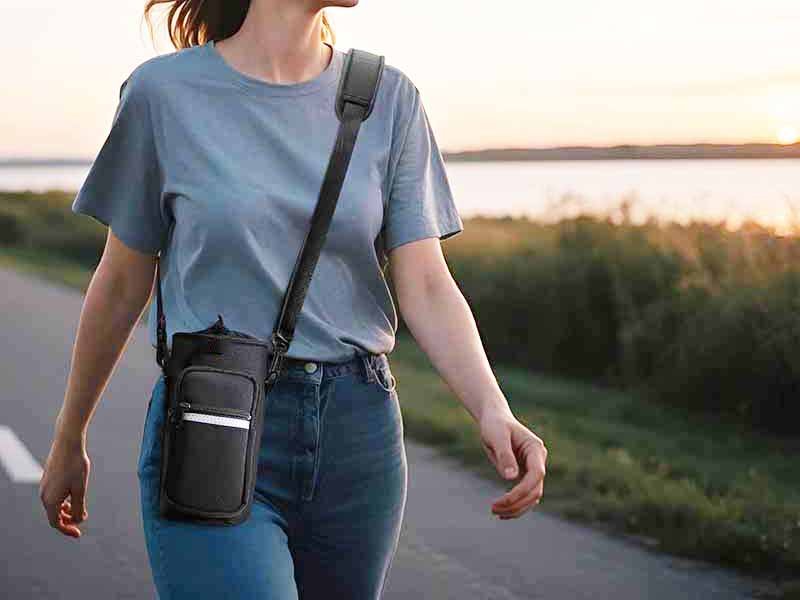
Outdoor customers are carrying less, moving more, and choosing gear that fits both weekend trails and daily life. A full backpack is useful for long trips, but it often feels too much for a short hike, gym class, dog walk, bike ride, picnic, beach day, school run, festival, or city commute. That change in user behavior is one reason bottle carrier bags have become a smart product category for outdoor, sports, travel, wellness, and lifestyle brands.
Bottle carrier bags help outdoor brands solve a very simple but repeated problem: people want water close to them, but they do not always want to carry a bottle by hand or pack it inside a larger bag. A well-designed bottle carrier bag keeps hydration easy, frees the hands, protects the bottle, adds space for small items, and creates a visible place for logo branding. For brands, it is also easier to develop than many large bag products because the structure is smaller, the material cost is more controllable, and the sampling cycle can be faster.
The real value is not only in holding a bottle. It is in turning a bottle into a wearable outdoor accessory. Imagine a customer standing at the entrance of a hiking trail. One option is a large daypack. The other is a lightweight bottle carrier bag with a phone pocket, adjustable strap, and clean brand logo. For a two-hour walk, the second choice often feels more natural. That small decision is exactly where outdoor brands can create a useful, profitable, and easy-to-understand product line.
What Are Bottle Carrier Bags?

Bottle carrier bags are compact bags made to carry water bottles, tumblers, sports bottles, flasks, or drinkware while keeping the user’s hands free. Most designs include a fitted bottle sleeve, shoulder strap, handle, or crossbody strap. Many upgraded versions also add phone pockets, card slots, key hooks, insulation, waterproof fabric, or custom logo details.
Bottle Carrier Bags Explained
Bottle carrier bags may look simple at first, but for outdoor brands they are more than a basic bottle holder. A normal bottle holder only carries the bottle. A good bottle carrier bag improves the full carrying experience: it keeps the bottle stable, protects the surface, makes drinking easier, and gives users a place to carry small daily items.
For product development, several details decide whether the bag feels cheap or retail-ready:
- Bottle fit: The bag should match common bottle sizes such as 500ml, 750ml, 1L, 32oz, and 40oz.
- Body structure: The bottle should stay upright and not swing too much while walking.
- Strap comfort: The strap must support the filled bottle weight without cutting into the shoulder.
- Fabric strength: Outdoor use requires abrasion resistance, color stability, and easy cleaning.
- Pocket layout: A phone pocket, card pocket, or key loop can increase practical value.
- Logo position: The logo should be visible but not forced, especially for premium outdoor brands.
- Edge finishing: Binding, stitching, zipper quality, and reinforcement affect the final product grade.
For brands, bottle carrier bags are attractive because they can be developed in different price levels. A simple neoprene model works for affordable promotions or entry-level retail. A nylon crossbody model with pockets works for outdoor and sports collections. A structured insulated model can be positioned as a higher-value product for camping, travel, wellness, or lifestyle users.
| Bottle Carrier Bag Type | Common Use | Main Feature | Suitable Brand Type |
|---|---|---|---|
| Neoprene bottle bag | Daily use, gym, school, events | Soft, flexible, light padding | Sports, wellness, promotional brands |
| Nylon bottle bag | Hiking, travel, outdoor activities | Durable, water-resistant, strong | Outdoor, travel, adventure brands |
| Canvas bottle bag | Lifestyle, casual outdoor, retail | Natural texture, sturdy look | Eco, fashion, lifestyle brands |
| Insulated bottle bag | Camping, beach, summer use | Helps slow temperature change | Outdoor, picnic, cooler bag brands |
| Crossbody bottle bag | Walking, city, festivals | Hands-free, easy access | Travel, urban outdoor, ecommerce brands |
A bottle carrier bag works best when the design follows the real use scene. A customer walking a dog may need a key hook and waste bag pocket. A gym user may need a phone pocket and washable fabric. A hiker may need reinforced stitching and water-resistant nylon. A festival user may care more about light weight, color, and quick access. These small differences are where custom manufacturing creates real value.
Bottle Carrier Bags vs Backpacks
Bottle carrier bags and backpacks are not direct replacements for each other. They solve different carrying problems. A backpack is designed for higher capacity. A bottle carrier bag is designed for speed, simplicity, and easy hydration.
A backpack is useful when the customer needs to carry jackets, food, cameras, tools, rain gear, or extra clothing. A bottle carrier bag is better when the customer only needs water, phone, keys, cards, and maybe a small snack. This makes bottle carrier bags especially useful for short outdoor activities and daily movement.
For outdoor brands, this difference matters because many customers no longer separate “outdoor gear” and “daily gear” completely. A product may be used on a short trail in the morning, at a campus in the afternoon, and during a city walk at night. Bottle carrier bags fit this mixed lifestyle better than many technical outdoor products.
Key comparison:
| Product | Best For | User Feeling | Product Complexity | Sales Opportunity |
|---|---|---|---|---|
| Bottle carrier bag | Water + small items | Light, easy, casual | Low to medium | Add-on product, gift set, private label |
| Backpack | Larger gear loads | Prepared, heavier, practical | Medium to high | Core product line |
| Waist bag | Small essentials | Sporty, compact | Medium | Trend product, events, running |
| Cooler bag | Food and drinks | Functional, seasonal | Medium to high | Outdoor, picnic, food delivery |
| Tote bag | Casual carry | Simple, open, flexible | Low | Lifestyle, retail, promotions |
From a brand planning angle, bottle carrier bags are easier to test than backpacks. They use fewer components, smaller fabric areas, and simpler patterns. This helps brands launch new colors, limited editions, seasonal designs, or market tests without taking on the same inventory pressure as large bags.
However, “small product” does not mean “low importance.” A poorly made bottle carrier bag can still create customer complaints. Common issues include straps breaking, bottle slipping out, zippers failing, pockets being too small, fabric pilling, printing peeling, or the bag feeling unbalanced when worn. That is why outdoor brands should treat bottle carrier bags as real gear accessories, not simple giveaways.
Bottle Carrier Bags for Daily Use
Daily use is one of the strongest reasons bottle carrier bags have long-term product value. A hiking backpack may only be used several times a month. A bottle carrier bag can be used several times a week, sometimes every day.
Common daily use scenes include:
- Walking to work or school
- Taking public transportation
- Going to the gym or yoga class
- Walking dogs
- Visiting parks
- Shopping or running errands
- Taking kids outdoors
- Going to concerts, festivals, or sports events
- Traveling through airports or train stations
- Carrying reusable bottles during office days
This daily-use potential makes bottle carrier bags especially interesting for ecommerce brands. The product is easy to photograph, easy to explain, and easy for customers to imagine using. It also has strong visual branding value because the bag is worn outside the body, not hidden inside a backpack.
For brands selling reusable bottles, drinkware, wellness products, outdoor accessories, or lifestyle goods, bottle carrier bags can increase the value of the main product. A reusable bottle alone is useful. A reusable bottle with a matching carrier feels more complete. It can become a gift set, bundle offer, seasonal package, or private label product line.
A practical daily-use bottle carrier bag should usually consider:
| Customer Need | Design Response |
|---|---|
| Carry bottle without holding it | Adjustable shoulder or crossbody strap |
| Carry phone safely | Front pocket sized for common smartphones |
| Prevent bottle scratches | Soft lining or padded body |
| Use during light rain | Water-resistant outer fabric |
| Match daily outfits | Neutral colors, lifestyle colors, or custom seasonal colors |
| Clean after use | Washable or wipeable material |
| Avoid shoulder discomfort | Wider webbing, padded strap, or soft strap edge |
Lovrix’s advantage for this kind of product is its combined experience in fabrics, webbing, and bag production. Daily bottle carrier bags often fail not because the body fabric is bad, but because the strap, buckle, stitching, or pocket construction is not developed properly. When fabric, webbing, and finished bag production are coordinated together, the final product can look cleaner and perform more reliably.
Bottle Carrier Bags for Outdoor Gear
When bottle carrier bags are designed for outdoor gear collections, the product standard should be higher than a simple city accessory. Outdoor customers may place the bag on rough ground, use it in light rain, carry heavier bottles, walk for long periods, or expose it to sun, dirt, sweat, and repeated friction.
Important outdoor design requirements include:
- Stronger outer fabric such as nylon, polyester, canvas, Oxford fabric, or laminated fabric
- Reinforced stitching at strap connection points
- Secure bottle opening with drawstring, elastic band, buckle, flap, or zipper
- Water-resistant or easy-clean surface
- Bottom reinforcement to reduce wear
- Comfortable shoulder strap for longer walking
- Balanced body shape to reduce swinging
- Practical pocket structure for phone, keys, cards, tissues, or small tools
- Durable logo method such as embroidery, woven label, rubber patch, heat transfer, or screen printing
Outdoor bottle carrier bags should also match the target activity. A camping bottle bag may need insulation and extra storage. A hiking bottle bag may need lightweight nylon and a tight bottle fit. A beach bottle bag may need bright colors, washable fabric, and sand-friendly construction. A cycling bottle carrier may need compact structure and secure closure.
For brands, the goal is not to add every feature. Too many features can increase cost, weight, and production complexity. The better approach is to match the product structure to the real use scene.
| Outdoor Scene | Recommended Design Focus | Avoid |
|---|---|---|
| Short hiking | Lightweight nylon, adjustable strap, secure opening | Oversized pockets that swing |
| Camping | Insulated lining, large bottle fit, strong handle | Thin fabric without bottom support |
| Beach use | Washable fabric, bright color, quick-dry surface | Heavy cotton lining |
| Gym and fitness | Neoprene, phone pocket, simple strap | Complex outdoor hardware |
| Travel | Crossbody strap, anti-slip bottle fit, zipper pocket | Loose bottle sleeve |
| Brand promotion | Large logo area, simple structure, low MOQ | Expensive unnecessary details |
A good outdoor bottle carrier bag should feel simple but not fragile. Customers may not describe the product with technical language, but they will immediately notice whether it is comfortable, stable, easy to use, and worth keeping. For outdoor brands, this makes quality control especially important. Stitch length, seam strength, fabric weight, strap tension, pocket size, and logo durability all influence customer experience.
Lovrix can support custom outdoor bottle carrier bag projects from fabric selection to strap development, logo application, sampling, production, and packaging. For brands that want private label or OEM/ODM bottle carrier bags, this integrated supply chain can reduce communication gaps and help keep the final product consistent across materials, structure, and branding.
Why Use Bottle Carrier Bags?

Outdoor brands use bottle carrier bags because they solve a simple customer problem with high repeat use: carrying water without carrying too much. They keep hydration close, free the hands, reduce unnecessary load, protect bottles, add small storage, and give brands a visible surface for logo identity, color design, and private label product development.
Bottle Carrier Bags Keep Hydration Easy
Hydration is one of the most basic needs in outdoor activities, but the way people carry water is changing. Many customers now use reusable bottles, stainless steel tumblers, sports bottles, insulated flasks, or branded drinkware. These bottles are useful, but they can become inconvenient when users have to hold them by hand or dig through a backpack every time they want a drink.
Bottle carrier bags make hydration easier by keeping the bottle outside, close, and accessible. The customer can walk, shop, hike, travel, or exercise while keeping water within reach. This sounds simple, but simple convenience is often what turns a product into a daily-use item.
For outdoor brands, easy hydration creates several product opportunities:
- Sell bottle carrier bags as standalone accessories
- Bundle them with reusable bottles or tumblers
- Create matching sets with backpacks, cooler bags, or picnic bags
- Offer seasonal color drops for summer, camping, hiking, or school collections
- Develop private label bottle carrier bags for fitness, wellness, and travel brands
- Use them as branded gifts for outdoor events, sports clubs, or corporate programs
A bottle carrier bag with good hydration access should consider the opening design carefully. If the opening is too tight, users may struggle to take the bottle out. If it is too loose, the bottle may fall during movement. The best solution depends on the bottle shape and use scene.
| Opening Type | Advantage | Suitable Use |
|---|---|---|
| Elastic opening | Quick access, flexible fit | Daily use, gym, school |
| Drawstring opening | Better bottle security | Hiking, travel, outdoor walking |
| Zipper opening | More enclosed protection | Insulated or premium models |
| Buckle strap | Adjustable hold | Large bottles, outdoor bottles |
| Open sleeve | Fastest access | Light daily carry |
For custom projects, Lovrix can help brands test the correct opening size based on bottle diameter, bottle height, fabric stretch, and user movement. This is important because a bottle carrier bag that looks good in photos may still fail if the bottle fit is poor.
Bottle Carrier Bags Free the Hands
Hands-free carry is one of the most powerful selling points of bottle carrier bags. Customers often carry more than they expect: a phone, keys, wallet, dog leash, trekking poles, sunglasses, snacks, shopping bags, or a child’s hand. Holding a bottle may seem minor, but after 30 minutes of walking, it becomes annoying.
A bottle carrier bag allows users to wear the bottle like a small crossbody bag or shoulder pouch. This gives them more freedom of movement and makes the product suitable for many outdoor and lifestyle scenes.
Common hands-free use cases include:
- Walking dogs while carrying water
- Hiking with trekking poles
- Taking photos during travel
- Carrying kids’ items at parks
- Moving through festivals or markets
- Cycling short distances
- Walking on campus
- Shopping while staying hydrated
- Going to gyms or sports fields
- Carrying a bottle during sightseeing
The strap is the key part of hands-free comfort. A good strap should match the bottle weight, body size, and wearing style. For example, a 500ml bottle may work with a narrow strap, but a 1L or 40oz bottle needs a stronger and wider strap. If the strap is too thin, customers may feel shoulder pressure. If the strap is too stiff, the product may feel cheap or uncomfortable.
Important strap details include:
| Strap Detail | Why It Matters |
|---|---|
| Adjustable length | Fits different body heights and wearing styles |
| Wider webbing | Reduces shoulder pressure for heavier bottles |
| Detachable hooks | Allows shoulder, crossbody, or hand carry |
| Reinforced stitching | Prevents strap tearing under bottle weight |
| Soft edge finish | Improves comfort during long use |
| Color matching | Makes the product look more premium |
Lovrix’s webbing production resources can support customized strap width, color, texture, logo weaving, buckle matching, and strength requirements. This is especially helpful for outdoor brands that want the strap to match the bag body, brand color system, or product series.
Bottle Carrier Bags Reduce Carry Weight
Many outdoor customers now prefer lighter, simpler carry options. They do not always want a backpack for short trips. A large bag can feel unnecessary when the customer only needs water and a few small items. Bottle carrier bags meet this need by reducing both physical weight and mental burden.
The appeal is easy to understand:
- Less to pack
- Less to carry
- Faster to leave home
- Easier to move
- Lower heat on the back
- Better access to water
- No need to unpack a large bag
For outdoor brands, this lightweight behavior creates a strong product positioning opportunity. Bottle carrier bags can be promoted as “short-trip gear,” “light hiking accessories,” “daily hydration carry,” “city outdoor bags,” or “festival-friendly bottle bags.”
From a manufacturing view, bottle carrier bags also help brands control product development cost. Compared with large backpacks, they normally require less fabric, fewer panels, simpler hardware, smaller packaging, and lower shipping volume. This can make them suitable for market testing or adding new SKUs.
Estimated product planning comparison:
| Product Category | Material Use | Sampling Complexity | MOQ Flexibility | Inventory Pressure |
|---|---|---|---|---|
| Bottle carrier bags | Low | Low to medium | High | Low to medium |
| Waist bags | Medium | Medium | Medium | Medium |
| Cooler bags | Medium to high | Medium to high | Medium | Medium to high |
| Backpacks | High | High | Lower | High |
| Travel bags | Very high | High | Lower | High |
The lightweight advantage does not mean the product should feel flimsy. Outdoor customers still expect strength. The goal is to remove unnecessary bulk while keeping the right level of durability. For example, a lightweight nylon bottle carrier bag can still use reinforced stress points, strong binding, and quality buckles. A neoprene bottle bag can still use clean stitching and a stable bottom. A canvas version can still feel sturdy without becoming heavy.
Bottle Carrier Bags Add Outdoor Value
Bottle carrier bags add value because they upgrade a daily object into a wearable accessory. A water bottle is useful by itself, but a bottle carrier bag makes it easier to use, easier to carry, and easier to style. For outdoor brands, that means the product can support both function and identity.
This is important because many outdoor customers now buy products for mixed reasons. They want gear that works, but they also care about appearance, color, sustainability, and brand feeling. A bottle carrier bag can carry a logo, match a bottle, coordinate with a backpack, or become part of a full outdoor collection.
Ways bottle carrier bags add product value:
- Turn a bottle into a hands-free carry item
- Add small storage for phone, cards, keys, or snacks
- Protect bottles from scratches and light impact
- Offer insulation for warmer or colder conditions
- Create visible logo exposure during daily use
- Provide a lower-priced product for new customers
- Support gift sets and bundle sales
- Help brands expand into accessories without large development risk
For ecommerce brands, bottle carrier bags are also easy to explain on product pages. The selling points are visual and direct: bottle fit, strap, pocket, insulation, fabric, logo, and use scenes. That makes the product suitable for Amazon, Shopify, brand websites, retail gift sets, and social media product videos.
A well-planned product line can include several levels:
| Product Level | Design Example | Target Use | Brand Position |
|---|---|---|---|
| Entry level | Simple neoprene sleeve with strap | Promotions, gym, school | Affordable and flexible |
| Mid level | Nylon crossbody bag with pocket | Hiking, travel, daily outdoor | Functional retail product |
| Premium level | Insulated bag with custom hardware | Camping, beach, lifestyle | Higher perceived value |
| Eco level | Canvas or recycled fabric version | Lifestyle, sustainable gifts | Natural and responsible |
| Gift set level | Bottle + carrier + branded packaging | Events, ecommerce bundles | Complete product solution |
Lovrix can support brands that want to create these different levels through material selection, custom webbing, logo methods, sample development, low MOQ customization, fast production, and private label packaging. Because Lovrix has fabric, webbing, and bag manufacturing resources, brands can develop the product with better control over fabric texture, strap quality, construction details, and final branding.
For outdoor brands, the smartest bottle carrier bag is not always the most complex one. It is the one that matches the target customer, bottle size, price point, retail channel, and brand style. A simple design with the right fabric, strap, pocket, and logo can perform better than an overloaded design with too many features. This is where experienced product development makes a real difference.
Which Bottle Carrier Bags Sell Best?
Bottle carrier bags sell best when they match a clear use scene. Outdoor customers do not buy only because the product can “hold a bottle.” They buy because the bag makes a specific activity easier: hiking, walking, commuting, gym training, camping, beach trips, travel, school, or outdoor events. The best-selling styles usually combine comfort, bottle stability, small storage, and clean branding.
Insulated Bottle Carrier Bags
Insulated bottle carrier bags are popular because they answer one of the most common outdoor complaints: drinks become warm too quickly in summer or lose their ideal temperature during long outdoor movement. While a bottle carrier bag cannot perform like a heavy-duty cooler box, an insulated structure can slow temperature change and make the product feel more useful for hiking, camping, beach days, picnics, school, and sports events.
For brands, insulation also improves perceived value. A simple bottle sleeve may be seen as a low-cost accessory, but once insulation, lining, zipper closure, and structured padding are added, the product can move into a higher retail position.
Common insulation structures include:
| Insulation Type | Main Feature | Best Use |
|---|---|---|
| PE foam | Lightweight, cost-friendly, easy to shape | Daily use, school, promotions |
| EPE foam | Better cushioning, thicker hand feel | Outdoor, picnic, travel |
| Aluminum foil lining | Reflective surface, easy to wipe | Summer use, beach, camping |
| Pearl cotton lining | Soft protection, thicker structure | Gift sets, premium designs |
| Neoprene body | Flexible insulation, soft touch | Sports, gym, lifestyle |
A good insulated bottle carrier bag should not only focus on temperature. It also needs comfort and usability. If the insulation is too thick, the bag becomes bulky. If the lining is too thin, customers may not feel the upgrade. If the zipper opening is too small, the bottle becomes difficult to remove. These details directly affect customer reviews.
Outdoor brands often choose insulated bottle carrier bags for:
- Summer hiking collections
- Beach and picnic product lines
- Camping accessory sets
- Sports bottle bundles
- Reusable bottle gift sets
- School and kids’ outdoor programs
- Corporate outdoor gifts
- Travel and wellness products
For Lovrix custom projects, insulation can be adjusted based on target price, bottle size, product thickness, and user scene. A brand targeting affordable ecommerce sales may choose light foam with foil lining. A premium outdoor brand may choose a thicker padded body, stronger zipper, reinforced handle, and custom logo patch. The key is not to make the bag as thick as possible, but to create the right balance between temperature support, weight, comfort, and cost.
Crossbody Bottle Carrier Bags
Crossbody bottle carrier bags are one of the most practical styles for outdoor and daily use because they allow the bottle to be worn close to the body while keeping both hands free. This style works well for hiking, walking, shopping, travel, festivals, dog walking, campus use, and light fitness activities.
The main advantage is movement freedom. A hand-carry bottle becomes tiring after a while. A backpack may feel too large for short trips. A crossbody bottle carrier bag sits between both options. It is lighter than a backpack, more secure than hand carrying, and more useful than a simple sleeve.
Key design details for crossbody bottle carrier bags:
| Design Detail | Why It Matters |
|---|---|
| Adjustable strap | Fits different heights and wearing habits |
| Strong strap hooks | Supports bottle weight during movement |
| Reinforced side tabs | Prevents tearing at stress points |
| Stable body shape | Reduces bottle shaking while walking |
| Phone pocket | Makes the bag useful beyond bottle carry |
| Smooth zipper | Improves daily use experience |
| Balanced weight | Keeps the bag from pulling forward |
Crossbody bottle carrier bags are especially suitable for brands that want a product with higher daily-use frequency. Customers can wear them to a park, school, gym, airport, music festival, or short trail. This broad use range helps brands sell the product beyond one single outdoor niche.
A common mistake is making the strap too thin. A 500ml bottle may not feel heavy, but a 1L bottle or 40oz tumbler can create noticeable pressure on the shoulder. If the product is designed for large bottles, the strap should be wider, stronger, and more comfortable.
Another important point is pocket placement. Many brands want to add a large phone pocket, but the pocket must not make the bottle carrier unstable. If the pocket sits too far away from the body or adds too much front weight, the bag may swing while walking. A better design keeps pockets close, flat, and easy to access.
Lovrix can support crossbody bottle carrier bags with custom webbing, adjustable hardware, body fabric, stitching reinforcement, pocket structure, logo details, and packaging. For outdoor brands, this is useful because the strap and body must work together, not as separate parts.
Neoprene Bottle Carrier Bags
Neoprene bottle carrier bags are popular because they are soft, flexible, lightweight, and easy to use. Neoprene naturally gives the bag a padded hand feel, which helps protect bottles from scratches and light bumps. It also has a sporty look, making it suitable for gym brands, wellness brands, school products, promotional gifts, and casual outdoor collections.
One of the biggest advantages of neoprene is flexibility. It can fit slightly different bottle shapes better than rigid fabrics. This helps brands target a wider range of users without making the structure too complicated. Neoprene also works well with colorful printing, simple sewing, and lightweight straps.
Common neoprene bottle carrier bag features include:
- Soft stretch body
- Lightweight shoulder strap
- Simple sleeve design
- Heat transfer logo
- Screen printing
- Sublimation printing for full-color patterns
- Side handle or small strap
- Front pocket for phone or cards
- Matching bottle sleeve gift sets
Neoprene is especially strong for entry-level and mid-range product lines. It is not always the best choice for rugged outdoor hiking products because sharp rocks, rough branches, or heavy abrasion may damage the surface more easily than high-denier nylon or Oxford fabric. However, for city outdoor, gym, yoga, school, campus, beach, and light travel use, it can be a very practical material.
Neoprene product planning guide:
| Target Product | Suggested Neoprene Thickness | Design Focus |
|---|---|---|
| Promotional bottle sleeve | 2mm–3mm | Low cost, clear logo, simple strap |
| Gym bottle carrier | 3mm–4mm | Soft feel, phone pocket, washable surface |
| Daily crossbody bottle bag | 4mm–5mm | Better structure, adjustable strap |
| Gift set bottle bag | 4mm–5mm | Nice printing, packaging, label details |
| Light outdoor bottle bag | 5mm or reinforced structure | Stronger stitching, bottom support |
For brands, neoprene bottle carrier bags also offer strong visual flexibility. Bright colors, gradient patterns, printed graphics, logo panels, contrast stitching, and custom labels can all be developed based on brand style. This makes neoprene suitable for ecommerce brands that rely on strong product photos and social media exposure.
Lovrix can help brands develop neoprene bottle carrier bags from material thickness, pattern size, logo method, stitching type, strap option, and sample testing. The goal is to make the product feel soft and light without looking cheap.
Bottle Carrier Bags with Pockets
Bottle carrier bags with pockets usually sell better than plain bottle sleeves because they solve more daily problems. Customers rarely carry only water. They often need space for a phone, keys, cards, earphones, tissues, snacks, lip balm, sunscreen, dog waste bags, or small outdoor tools.
A pocket turns a bottle carrier bag from a simple holder into a compact outdoor mini bag. This makes the product more attractive for walking, travel, festivals, school, gym, hiking, and casual outdoor use.
Useful pocket types include:
| Pocket Type | Best For | Design Notes |
|---|---|---|
| Front zipper pocket | Phone, keys, cards | Must fit modern phone sizes |
| Mesh side pocket | Snacks, tissues, small items | Good for outdoor casual use |
| Hidden back pocket | Cards, cash, ID | Better for travel safety |
| Elastic pocket | Quick-access items | Good for gym or walking |
| Inner pocket | Small valuables | Works better in zipper models |
| Key hook pocket | Keys, dog walking use | Reduces lost items |
The most important rule is that pockets must be useful, not decorative. A phone pocket that cannot fit common smartphone sizes will create frustration. A zipper pocket placed too low may be hard to reach. A mesh pocket that tears easily will reduce product quality. A hidden pocket that is too tight may not be used at all.
For current product development, phone size is especially important. Many customers use large phones with cases. A pocket designed only for small phones may look fine on the sample table but fail in real use. For brands targeting outdoor, travel, or daily users, a front zipper pocket should usually be tested with larger smartphones.
Pocket design should also match product price. Entry-level models may only need one front pocket. Mid-range models can add a zipper pocket and key hook. Premium models can use layered pockets, waterproof zipper, inner lining, and branded pulls.
Recommended pocket planning:
| Product Level | Pocket Design | Suitable Market |
|---|---|---|
| Basic | One flat pocket | Promotions, low-cost retail |
| Standard | Front zipper pocket | Daily use, ecommerce, sports |
| Outdoor | Zipper pocket + mesh pocket | Hiking, travel, camping |
| Premium | Multi-pocket structure | Lifestyle, travel, high-end outdoor |
| Custom gift | Logo pocket + card slot | Corporate gifts, brand bundles |
Lovrix can help brands develop pocket layouts based on bottle size, customer use scene, phone dimensions, fabric strength, and target price. A well-designed pocket structure can raise perceived value without making the product overly complicated.
How to Design Bottle Carrier Bags?

Bottle carrier bags should be designed around bottle size, wearing comfort, use scene, storage needs, and brand identity. The best designs are not necessarily the most complex. They are the ones that hold the bottle securely, feel comfortable when worn, make small items easy to carry, and match the customer’s daily outdoor lifestyle.
Bottle Carrier Bags Size Guide
Size is the first design decision for bottle carrier bags. If the size is wrong, no logo, fabric, or pocket can fix the product. A bottle carrier bag must fit the bottle securely while still allowing easy removal.
Outdoor brands should start with the target bottle type. Different markets use different bottle sizes: slim 500ml bottles, 750ml sports bottles, 1L hiking bottles, stainless steel tumblers, insulated flasks, and large 32oz or 40oz bottles. Each size affects bag height, diameter, opening structure, bottom support, and strap strength.
Common bottle size references:
| Bottle Size | Approx. Capacity | Common Use | Bag Design Focus |
|---|---|---|---|
| Small bottle | 350ml–500ml | Kids, school, short walks | Light body, simple strap |
| Standard bottle | 600ml–750ml | Gym, daily use, travel | Balanced size, phone pocket |
| Outdoor bottle | 900ml–1L | Hiking, camping, sports | Strong strap, secure opening |
| Large tumbler | 32oz | Daily hydration, commuting | Wider diameter, stable base |
| Oversized tumbler | 40oz | Lifestyle, long-day carry | Reinforced strap, larger sleeve |
The bag should not be too tight. Customers need to insert and remove the bottle easily. However, it should not be too loose either. If the bottle shakes too much, the product feels unstable. The right fit depends on fabric stretch, lining thickness, bottle shape, and opening design.
Important size questions before sampling:
- What bottle capacity should the bag fit?
- What is the bottle height?
- What is the bottom diameter?
- Does the bottle have a handle?
- Is the bottle straight, curved, or tapered?
- Should the bag fit only one bottle type or several common sizes?
- Will the bottle be removed often or stay inside while drinking?
- Does the customer need extra space for ice packs, snacks, or small items?
For private label projects, brands should provide bottle dimensions or reference samples whenever possible. If the brand wants the carrier to fit multiple bottle types, Lovrix can help adjust the pattern with elastic openings, drawcord closures, flexible fabric, or slightly wider sizing. For ecommerce sellers, it is also helpful to list compatible bottle size ranges on the product page to reduce returns and complaints.
Bottle Carrier Bags Strap Design
The strap is one of the most important parts of bottle carrier bag design because it directly affects comfort, safety, and product life. A weak strap can ruin the whole product, even if the bag body looks good.
Customers usually notice strap problems quickly. The strap may feel too thin, twist while walking, slide off the shoulder, rub against the neck, or pull too much when carrying a heavy bottle. For larger bottles, poor strap design can also lead to tearing at the connection points.
Common strap options include:
| Strap Type | Advantage | Suitable Use |
|---|---|---|
| Fixed shoulder strap | Simple, cost-friendly | Basic daily bottle bags |
| Adjustable webbing strap | Fits more users | Outdoor, travel, ecommerce |
| Detachable strap | Flexible carry styles | Premium and multi-use designs |
| Padded strap | Better comfort | Large bottles, long walking |
| Short handle | Quick hand carry | Gym, school, light use |
| Dual strap system | Shoulder + hand carry | Outdoor and travel bags |
For outdoor bottle carrier bags, adjustable webbing straps are usually the safest choice. They allow the same product to fit different body sizes and wearing habits. A customer can wear the bag on one shoulder, across the body, or sometimes shorten it for hand carry.
Strap width should match bottle weight:
| Bottle Type | Suggested Strap Width | Reason |
|---|---|---|
| 350ml–500ml bottle | 1.5cm–2.0cm | Light load, simple carry |
| 600ml–750ml bottle | 2.0cm–2.5cm | Better comfort for daily use |
| 900ml–1L bottle | 2.5cm–3.8cm | Reduces shoulder pressure |
| 32oz–40oz tumbler | 3.8cm–5.0cm | Better load support and premium feel |
Reinforcement is just as important as strap width. The stress point where the strap connects to the bag should use stronger stitching, thicker fabric layers, bartack stitching, or reinforced tabs. This is especially important for outdoor models and larger bottles.
Lovrix can support custom webbing development, including strap width, color, texture, logo weaving, buckle selection, hook type, and reinforcement method. This helps outdoor brands keep the strap consistent with the bag body and overall brand look.
Bottle Carrier Bags Pocket Layout
Pocket layout should be designed around customer behavior, not just appearance. A bottle carrier bag with pockets can be very useful, but only if the pockets are placed in the right position, sized correctly, and easy to open.
The most common mistake is adding a pocket that looks good but cannot hold what the customer actually carries. For example, a narrow pocket may not fit a phone with a protective case. A deep pocket without structure may make keys hard to find. A pocket placed too close to the bottle opening may block access.
Good pocket layout should answer these questions:
- Can the pocket fit a modern smartphone?
- Can the user open the pocket with one hand?
- Will the pocket swing or pull the bag forward?
- Is the zipper smooth enough for daily use?
- Are small items protected from falling out?
- Does the pocket increase weight too much?
- Does the layout still look clean with a logo?
Recommended pocket layout by use scene:
| Use Scene | Pocket Layout |
|---|---|
| Dog walking | Front zipper pocket + small side waste bag pocket |
| Hiking | Front pocket + mesh side pocket + key hook |
| Gym | Phone pocket + card slot |
| Travel | Zipper pocket + hidden back pocket |
| School | Simple front pocket + name label area |
| Festival | Secure zipper pocket + adjustable strap |
| Corporate gift | Logo front pocket + clean flat panel |
For outdoor brands, pocket layout can also support product differentiation. A simple bottle bag may look similar to many competitors. A well-planned pocket structure gives customers a stronger reason to choose one product over another.
Pocket material also matters. Mesh pockets are lightweight and outdoor-friendly, but they may not suit premium lifestyle designs. Zipper pockets feel safer but cost more. Elastic pockets are easy to use but may lose strength over time if low-quality elastic is used. Hidden pockets are useful for travel but may require more careful pattern work.
Lovrix can help brands test pocket placement during sample development. This is important because small changes of 1–2cm can affect usability. A pocket that sits slightly higher may be easier to reach. A zipper that opens from the wrong side may feel awkward. These are small details, but they often decide whether customers use the product often or leave it at home.
Bottle Carrier Bags Color Options
Color is one of the easiest ways to make bottle carrier bags feel different across product lines. Since the product body is small, color has a strong visual effect. A simple shape can look outdoor, sporty, fashionable, eco-friendly, or premium depending on the fabric color, strap color, logo color, and hardware finish.
Outdoor brands usually choose colors based on target customer and use scene.
Common color directions:
| Color Direction | Brand Feeling | Suitable Product Line |
|---|---|---|
| Black, gray, navy | Clean, safe, practical | Outdoor, travel, corporate |
| Khaki, olive, brown | Natural, rugged, camping style | Hiking, camping, eco outdoor |
| Bright orange, blue, green | Sporty, energetic, visible | Gym, school, beach, events |
| Pastel colors | Lifestyle, soft, young | Wellness, campus, women’s outdoor |
| Earth tones | Eco, calm, premium casual | Sustainable and lifestyle brands |
| Contrast colors | Active, eye-catching | Ecommerce, social media products |
For ecommerce, color variety can improve listing attractiveness. However, too many colors can create inventory pressure. Brands often start with 2–4 core colors, then add seasonal colors after sales data becomes clear.
A practical first color plan could be:
| Launch Stage | Suggested Colors | Reason |
|---|---|---|
| First sample test | Black, navy, olive | Safe, widely accepted |
| Ecommerce launch | Black, khaki, blue, pink | Covers neutral and lifestyle users |
| Outdoor line | Black, olive, gray, orange | Practical and visible |
| Summer line | Blue, green, yellow, coral | Bright and seasonal |
| Premium line | Charcoal, sand, dark green | Clean and higher-end |
Logo color should also be planned carefully. A white logo on dark fabric is clear but may feel too promotional. Tone-on-tone embroidery feels premium but may be less visible. Rubber patches look outdoor and modern. Woven labels work well for lifestyle and retail products. Heat transfer logos are clean and flexible but should be tested for durability.
Lovrix can help outdoor brands match fabric color, strap color, zipper color, binding, stitching, logo method, and packaging. For private label bottle carrier bags, this color consistency is important because customers judge product quality quickly through visual details. A mismatched strap or cheap-looking zipper can make the whole product feel lower value, even when the fabric is good.
What Materials Fit Bottle Carrier Bags?

Bottle carrier bags need materials that match real use, not just nice product photos. The best material depends on bottle size, carrying weight, weather exposure, target price, cleaning needs, and brand style. Neoprene, nylon, canvas, polyester, Oxford fabric, recycled fabric, and insulated lining can all work well when they are matched to the right customer scene.
Neoprene Bottle Carrier Bags
Neoprene bottle carrier bags are one of the most common choices for sports, gym, school, wellness, and light outdoor use. The material feels soft, flexible, and slightly padded, which makes it friendly for daily customers. It can protect bottles from scratches, reduce small bumps, and give the product a comfortable hand feel.
For brands, neoprene is attractive because it supports many visual styles. It can be produced in solid colors, contrast stitching, printed graphics, logo patterns, gradient designs, and seasonal collections. A simple neoprene bottle bag can look clean and affordable, while a thicker neoprene structure with a good strap and branded label can feel more retail-ready.
Key advantages of neoprene:
- Soft and flexible body
- Light padding for bottle protection
- Comfortable hand feel
- Good for sports and gym scenes
- Works well with bright colors and prints
- Suitable for simple sleeve designs
- Easy to develop for promotional or private label products
- Can fit slightly different bottle shapes due to material flexibility
However, neoprene is not always the best answer for every outdoor brand. If the target customer is doing rough hiking, camping, fishing, or heavy trail use, neoprene may not offer enough abrasion resistance compared with stronger nylon, polyester, or Oxford fabric. Sharp rocks, rough branches, repeated ground contact, and heavy friction can damage soft surfaces faster.
A practical way to choose neoprene:
| Product Direction | Suggested Neoprene Use | Suitable Customer |
|---|---|---|
| Basic bottle sleeve | 2mm–3mm neoprene | Promotional, school, low-cost retail |
| Gym bottle carrier | 3mm–4mm neoprene | Fitness, yoga, wellness brands |
| Daily crossbody bag | 4mm–5mm neoprene | Lifestyle, campus, ecommerce users |
| Printed bottle bag | Sublimation or heat transfer | Fashion, kids, social media products |
| Light outdoor model | Neoprene + stronger bottom support | Walking, picnic, casual hiking |
For Lovrix custom projects, neoprene bottle carrier bags can be developed with different thicknesses, strap styles, logo methods, pocket structures, and packaging options. If a brand wants a soft, approachable, colorful, and easy-to-sell bottle carrier bag, neoprene is often a smart starting point.
Nylon Bottle Carrier Bags
Nylon bottle carrier bags are a strong choice for outdoor, travel, hiking, and sports brands. Nylon is known for its strength-to-weight balance, which means it can stay relatively light while offering better durability than many soft lifestyle fabrics. For bottle carrier bags that may be used outdoors, nylon often gives a more technical and performance-driven feeling.
A nylon bottle carrier bag can be built as a simple sleeve, a crossbody pouch, an insulated carrier, or a more structured mini outdoor bag with pockets. It pairs well with webbing straps, buckles, drawcords, zippers, mesh pockets, rubber patches, and reinforced stitching.
Why outdoor brands often choose nylon:
- Stronger abrasion resistance than many soft fabrics
- Lightweight for daily and outdoor carry
- Good water-resistant performance when coated
- Suitable for hiking, camping, travel, and sports
- Works well with technical outdoor styling
- Can be paired with mesh, zipper, buckle, and webbing details
- Easy to clean compared with many natural fabrics
- Supports both simple and premium product structures
Common nylon options for bottle carrier bags:
| Nylon Type | Main Feature | Best Use |
|---|---|---|
| 210D nylon | Light, flexible, cost-friendly | Lightweight daily bottle bags |
| 420D nylon | Better durability, still light | Hiking, travel, outdoor use |
| 600D nylon/poly blend | Stronger hand feel, structured | Mid-range outdoor carriers |
| Ripstop nylon | Tear-resistant grid structure | Hiking, camping, active use |
| Coated nylon | Water-resistant surface | Outdoor and travel products |
Nylon works especially well for bottle carrier bags with pockets. Because it has good strength and can hold structure better than very soft materials, it supports front zipper pockets, mesh pockets, inner compartments, and reinforced strap points more reliably.
The main caution is that nylon quality varies. A low-grade nylon may wrinkle, fade, tear, or feel cheap. Coating quality also matters. Some coated fabrics look good at first but may crack, peel, or become sticky after long-term storage or heat exposure. For brands selling outdoor products, fabric testing is important.
Lovrix can help brands select nylon weight, coating, lining, pocket structure, webbing strap, buckle type, and logo application. For outdoor bottle carrier bags, nylon is often the best choice when the brand wants a more durable, practical, and adventure-ready product.
Canvas Bottle Carrier Bags
Canvas bottle carrier bags are a good choice for brands that want a natural, casual, lifestyle, or eco-inspired look. Canvas has a thicker hand feel and a more organic texture than nylon or neoprene. It works well for outdoor lifestyle brands, coffee brands, campus brands, boutique retail, picnic products, and sustainable gift lines.
Canvas does not always feel as technical as nylon, but it has strong emotional value. Customers often connect canvas with durability, simplicity, and natural style. A canvas bottle carrier bag can look less like “equipment” and more like a daily accessory.
Why brands choose canvas:
- Natural texture and casual outdoor style
- Stronger lifestyle feeling
- Good match for eco, vintage, and minimal brands
- Suitable for embroidery, woven labels, and leather-look patches
- Can be paired with cotton webbing or canvas straps
- Works well for gift sets and retail packaging
- Gives a sturdy hand feel
Canvas bottle carrier bags are especially suitable for:
- Reusable bottle brands
- Coffee tumbler brands
- Campus and bookstore merchandise
- Outdoor lifestyle shops
- Boutique travel brands
- Eco gift programs
- Picnic and weekend leisure products
- Private label lifestyle collections
Canvas material planning:
| Canvas Type | Feature | Suitable Product |
|---|---|---|
| 8oz canvas | Lighter, softer, cost-friendly | Simple daily bottle bags |
| 10oz canvas | Balanced weight and durability | Retail bottle carrier bags |
| 12oz canvas | Stronger, more structured | Premium lifestyle models |
| Washed canvas | Softer vintage feeling | Fashion and casual outdoor |
| Organic cotton canvas | Eco-focused positioning | Sustainable brand collections |
The main limitation of canvas is water resistance. Untreated canvas can absorb moisture, stain more easily, and dry slower than synthetic materials. If the product is for beach, rain, hiking, or camping use, canvas may need water-resistant treatment, lining, or a mixed-material structure.
For example, a canvas outer body can be paired with a polyester lining, reinforced bottom, or coated inner layer. This keeps the natural look while improving daily performance. Brands can also use darker colors to reduce visible dirt, especially for outdoor use.
Lovrix can develop canvas bottle carrier bags with custom fabric weight, dye color, embroidery, woven labels, leather-look patches, cotton webbing, reinforced stitching, and private label packaging. For brands that want a warm, natural, and retail-friendly look, canvas is a strong option.
Eco Bottle Carrier Bags
Eco bottle carrier bags are becoming more important because many customers who carry reusable bottles also care about reducing disposable plastic and making better daily choices. A bottle carrier bag naturally connects with sustainability because it supports reusable drinkware. When the bag itself also uses recycled, organic, or lower-impact materials, the product story becomes stronger.
Eco bottle carrier bags can be made with several material directions:
| Eco Material Option | Main Benefit | Suitable Brand Position |
|---|---|---|
| Recycled polyester | Uses recycled plastic-based fibers | Outdoor, sports, ecommerce |
| Recycled nylon | Durable and performance-focused | Premium outdoor products |
| Organic cotton canvas | Natural fiber, eco lifestyle look | Gift, retail, lifestyle brands |
| Jute blend | Rustic, natural texture | Eco gifts, picnic, promotional |
| RPET felt | Soft, structured, recycled story | Corporate gifts, lifestyle products |
| Cork detail | Natural accent material | Premium eco branding |
Eco design should be honest and practical. Customers are more careful now, and brands should avoid making sustainability claims that cannot be supported. If the product uses recycled fabric, it is better to keep the message clear: recycled outer fabric, recycled lining, recycled webbing, or recycled packaging. If only one part is recycled, the product description should not make it sound like the whole bag is fully sustainable.
For outdoor brands, eco bottle carrier bags can work well in several product plans:
- Reusable bottle gift sets
- Sustainable outdoor accessories
- Corporate eco gifts
- Campus hydration programs
- Yoga and wellness products
- Nature event merchandise
- Eco travel collections
- Lifestyle retail products
Sustainability should also include durability. A product that breaks quickly is not truly responsible, even if it uses recycled fabric. For bottle carrier bags, long-term use depends on stitching quality, strap strength, pocket structure, logo durability, and fabric resistance to daily wear.
Eco bottle carrier bags can include:
- Recycled fabric body
- Recycled polyester webbing
- Water-based printing where suitable
- Minimal packaging
- Kraft paper hangtag
- Reusable dust bag
- Replaceable strap design
- Durable stitching for longer use
Lovrix can help brands balance eco materials, cost, MOQ, durability, and brand message. For some projects, recycled polyester may be the best choice. For others, organic canvas or jute-look fabric may fit better. The right choice depends on whether the brand wants a technical outdoor image, natural lifestyle feeling, or cost-friendly eco gift product.
How to Customize Bottle Carrier Bags?
Bottle carrier bags can be customized through size, fabric, strap, pocket layout, insulation, logo method, color, hardware, labels, packaging, and retail presentation. Good customization is not only about placing a logo on the front. It is about making the product fit the brand’s customer, sales channel, target price, and daily use scene.
Bottle Carrier Bags with Logo
Logo customization is one of the most important parts of private label bottle carrier bags because the product is worn outside the body and seen often. Unlike a logo hidden inside a large bag, the logo on a bottle carrier bag can be visible during walking, hiking, commuting, gym training, or travel.
A good logo method should match the fabric, product price, brand style, and expected use life. A cheap logo method on a premium bag can reduce the product’s value. An expensive logo method on a low-cost promotional item may push the price too high. The goal is to choose the method that fits the product.
Common logo methods:
| Logo Method | Best For | Main Advantage |
|---|---|---|
| Screen printing | Neoprene, canvas, polyester | Cost-friendly for simple logos |
| Heat transfer | Neoprene, nylon, polyester | Clean look, flexible color |
| Embroidery | Canvas, thicker fabrics | Premium and durable feeling |
| Woven label | Most fabric types | Retail-ready brand detail |
| Rubber patch | Outdoor nylon bags | Modern, rugged, waterproof look |
| Leather-look patch | Canvas and lifestyle bags | Premium casual style |
| Sublimation printing | Neoprene, polyester | Full-color patterns and graphics |
For outdoor brands, rubber patches, woven labels, embroidery, and heat transfer logos are often attractive because they can make the product feel more finished. For promotional use, screen printing may be enough. For fashion and lifestyle lines, embroidery or leather-look patches can help create a stronger retail feeling.
Logo placement also matters. Common positions include:
- Front center panel
- Front pocket
- Side label
- Strap woven logo
- Zipper pull
- Rubber badge
- Bottom patch
- Hangtag and packaging
The logo should be visible but not overwhelming. Outdoor customers often prefer clean, functional design. A large logo may work for promotional events, but a premium product may benefit from a smaller woven label or tone-on-tone embroidery.
Lovrix can help brands test logo size, placement, color contrast, and durability during sampling. For large orders, logo testing is important because different fabrics react differently to printing, embroidery, heat, and washing.
Private Label Bottle Carrier Bags
Private label bottle carrier bags are a practical way for outdoor, sports, wellness, drinkware, and ecommerce brands to launch their own product without building a factory or managing every material supplier separately. The brand controls the design direction, logo, packaging, and market position, while the manufacturer supports product development and production.
Private label projects usually involve more than adding a logo. A strong private label product should feel like it belongs to the brand’s product family. That means the color, fabric, strap, label, packaging, and product story should be consistent.
Private label customization areas:
| Custom Area | Options |
|---|---|
| Fabric | Neoprene, nylon, canvas, polyester, Oxford, recycled fabric |
| Size | 500ml, 750ml, 1L, 32oz, 40oz, custom dimensions |
| Strap | Shoulder strap, crossbody strap, detachable strap, woven logo strap |
| Phone pocket, zipper pocket, mesh pocket, card pocket, hidden pocket | |
| Logo | Printing, embroidery, woven label, rubber patch, heat transfer |
| Hardware | Buckles, hooks, zipper pulls, drawcord, stoppers |
| Packaging | Polybag, hangtag, retail box, kraft paper band, custom insert card |
| Color | Solid color, contrast color, seasonal color, brand color matching |
Private label bottle carrier bags are suitable for many business types:
- Outdoor gear brands
- Drinkware brands
- Fitness and wellness brands
- Camping and picnic brands
- Ecommerce sellers
- Sports event suppliers
- Corporate gift companies
- School and campus merchandise brands
- Travel accessory brands
- Lifestyle retail stores
For new product launches, brands do not always need to start with too many SKUs. A practical launch plan may include one core size, two or three colors, one strong pocket layout, and one logo method. After sales feedback, the brand can expand into insulated versions, large tumbler versions, eco-material versions, or premium models.
Sample private label launch plan:
| Launch Stage | Product Focus | SKU Suggestion |
|---|---|---|
| First test | One standard bottle size | 2 colors |
| Main launch | Add phone pocket and adjustable strap | 3–4 colors |
| Second launch | Add insulated version | 2 colors |
| Premium line | Add better hardware and logo patch | 2–3 colors |
| Seasonal line | Bright or limited colors | Small batch |
Lovrix supports private label projects with low MOQ customization, free design support, sample development, material sourcing, logo testing, packaging design, and bulk production. For brands that want to test bottle carrier bags without heavy inventory pressure, this flexibility can make the category easier to enter.
OEM Bottle Carrier Bags
OEM bottle carrier bags are suitable for brands that already have a clear product idea, technical file, sample, reference photo, or existing design. In an OEM project, the manufacturer helps turn the brand’s design into a finished product with the correct material, size, structure, logo, and packaging.
This model is useful when a brand wants more control over product details. For example, the brand may already know the exact bottle size, strap length, fabric color, pocket layout, logo method, and retail packaging. The manufacturer’s job is to improve production feasibility, make samples, adjust details, and produce the final order.
OEM bottle carrier bag development usually includes:
- Reviewing product drawing, reference sample, or technical file
- Confirming bottle dimensions and use scene
- Selecting fabric, lining, strap, and hardware
- Making the first sample
- Testing fit, comfort, pocket size, and strap strength
- Adjusting pattern and construction
- Confirming logo method and packaging
- Preparing pre-production sample
- Starting bulk production after approval
- Final inspection and shipment arrangement
For outdoor brands, OEM support is valuable because small design details can create big production problems. A pocket may look good in a drawing but become too tight after sewing. A strap connection may need reinforcement. A fabric may not hold embroidery cleanly. A zipper may need a different size to move smoothly around the bag shape.
Important OEM checking points:
| Checking Point | Why It Matters |
|---|---|
| Bottle fit | Prevents returns and poor reviews |
| Strap strength | Avoids tearing under weight |
| Pocket size | Ensures phone and keys fit properly |
| Stitching quality | Affects durability and appearance |
| Logo durability | Protects brand image |
| Color consistency | Keeps product line professional |
| Packaging size | Controls shipping and retail display |
| Bulk production tolerance | Ensures samples match mass production |
OEM bottle carrier bags are especially suitable for mature brands that already understand their market. These brands often care less about the cheapest option and more about stable quality, consistent delivery, and product detail control.
Lovrix can support OEM projects through its fabric factory, webbing factory, and bag factory resources. This integrated structure helps reduce the risk of mismatched materials, weak straps, delayed sampling, or inconsistent production details.
Lovrix Bottle Carrier Bags Support
Lovrix is positioned to support outdoor brands, ecommerce brands, private label sellers, and mid-to-high-end customers that need custom bottle carrier bags with reliable quality and flexible production. With more than 18 years of experience in fabric, webbing, and bag research, development, manufacturing, and sales, Lovrix can help brands develop bottle carrier bags from concept to finished product.
For brands, the biggest advantage is not only factory capacity. It is the ability to coordinate the parts that make a bottle carrier bag feel complete. The fabric must match the strap. The strap must match the buckle. The pocket must match the bottle size. The logo must match the material. The packaging must match the sales channel.
A professional bottle carrier bag project should usually confirm these details before sampling:
| Project Detail | What Brand Should Provide | What Lovrix Can Support |
|---|---|---|
| Target bottle size | Bottle height, diameter, capacity | Pattern and fit development |
| Use scene | Hiking, gym, travel, school, beach | Material and structure suggestion |
| Brand style | Logo, colors, reference images | Design and color matching |
| Sales channel | Amazon, Shopify, retail, gift | Packaging and product positioning |
| Target price | Budget range or market level | Material and structure optimization |
| Order plan | Estimated quantity and launch time | MOQ and production schedule |
| Quality needs | Durability, waterproof, insulation | Testing and inspection support |
Lovrix can help brands develop different product directions:
| Product Direction | Recommended Lovrix Solution |
|---|---|
| Affordable bottle carrier bags | Simple neoprene or polyester body, printed logo, basic strap |
| Outdoor hiking bottle bags | Nylon/Oxford fabric, reinforced stitching, adjustable webbing strap |
| Lifestyle bottle bags | Canvas body, embroidery or woven label, soft color matching |
| Insulated bottle carrier bags | Foam lining, foil lining, zipper closure, strong handle |
| Premium private label bags | Custom hardware, rubber patch, woven logo strap, retail packaging |
| Eco bottle carrier bags | Recycled fabric, kraft hangtag, minimal packaging |
For outdoor brands, bottle carrier bags are a smart product because they are practical, easy to understand, and suitable for repeat daily use. The product is small, but it gives brands room to build value through material choice, comfort, logo details, pockets, packaging, and product story.
If your brand wants to develop custom bottle carrier bags for outdoor, sports, travel, wellness, retail, or ecommerce markets, Lovrix can help turn your idea into a ready-to-sell product. You can send your bottle size, logo, target market, reference images, preferred material, quantity plan, and packaging ideas. Lovrix will help you review the best structure, material, logo method, sample direction, MOQ, and production solution for your custom bottle carrier bag project.


