 Skip to content
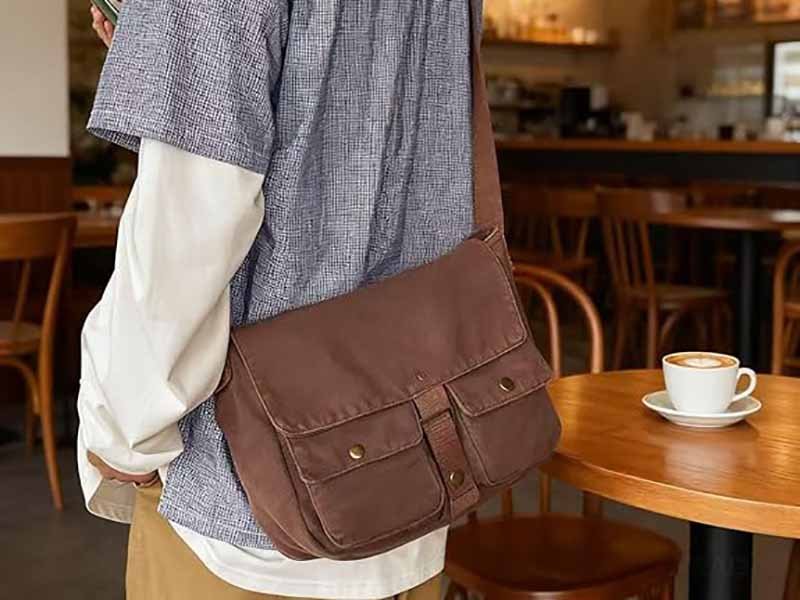
A messenger bag looks simple from the outside. One main compartment, one flap, one strap, maybe a laptop sleeve, a few zipper pockets, and a logo patch. But once a brand begins to develop one for real production, the material choice becomes far more important than expected. The outer fabric decides the first impression. The lining decides how the bag feels inside. The webbing decides carrying comfort. The coating decides water resistance. The trims decide whether the product feels cheap, premium, casual, or outdoor-ready.
For brands building eco-friendly messenger bags, the challenge is not only “finding a green material.” The real challenge is choosing a material that customers will actually use for years. A bag made from a natural fabric but with weak stitching, poor color fastness, or uncomfortable straps will not support a responsible product story. A recycled fabric with better strength, longer wear life, and lower replacement rate may be a smarter choice for many commercial projects.
Eco-friendly messenger bag materials usually include organic cotton canvas, recycled cotton canvas, recycled polyester, hemp blends, linen blends, cork fabric, recycled webbing, RPET lining, water-based coating, low-impact dyed fabric, and recyclable packaging. The best choice depends on product positioning, target retail price, weight load, water resistance, logo method, MOQ, and expected daily use. For most custom brands, recycled polyester and recycled canvas offer stronger performance, while organic cotton, hemp, and cork create a more natural lifestyle look.
Think about a customer who carries the same messenger bag every morning: laptop, notebook, charger, bottle, wallet, keys, sometimes even groceries on the way home. The bag rubs against coats, car seats, subway walls, bicycle frames, office floors, and rainy sidewalks. Sustainability is tested there, not only in a product description. A good eco-friendly messenger bag material must survive real life first. Only then can the brand story feel honest.
What Are Eco-Friendly Messenger Bag Materials?

Eco-friendly messenger bag materials are fabrics and components selected to reduce environmental impact while keeping the finished bag strong, comfortable, attractive, and suitable for repeated use. In custom bag manufacturing, the main material is only one part of the decision. Shell fabric, lining, webbing, binding tape, zipper tape, labels, padding, coatings, trims, and packaging should all be considered together.
For brands, the first mistake is often treating “eco-friendly” as a single material category. It is not. Organic cotton, recycled polyester, hemp, cork, and recycled canvas all belong to different material systems. Each one performs differently in cost, strength, texture, water resistance, dyeing, printing, logo application, MOQ, and lead time.
A messenger bag is different from a tote bag or cosmetic pouch because it carries weight across the shoulder. The fabric needs enough tear strength. The strap must resist stretching. The flap needs shape retention. The bottom panel must handle friction. The lining should protect electronics or daily items. A material can sound sustainable but still fail if it cannot support these basic requirements.
Lovrix works with fabric, webbing, and bag production under one manufacturing group, so eco-friendly material planning can start from the whole bag structure instead of only the surface fabric. This is useful for custom, private label, OEM, and ODM projects because brands often need more than one material option before sampling. One project may need a soft organic cotton canvas for a lifestyle collection. Another may need recycled polyester with stronger abrasion resistance for a commuter product. A third may need recycled canvas with cork trims for boutique retail.
A good material plan should answer several practical questions before sample development:
Can the fabric hold the expected weight of the bag?
Can the material support the desired logo method?
Will the color remain stable after bulk dyeing?
Does the hand feel match the target price level?
Can the fabric be sourced within the required MOQ?
Will the finished bag pass basic quality checks?
Is the sustainability claim clear enough for packaging and product pages?
Does the material match the customer’s daily use?
For messenger bags, eco-friendly material choice should never be separated from function. A beautiful fabric that cannot resist daily pulling may lead to returns. A strong material that feels too stiff may reduce comfort. A certified fabric that pushes the price beyond the market range may stop the project before launch. The right material is not always the most expensive or the most natural. It is the one that fits the product, customer, and business model at the same time.
Eco-Friendly Messenger Bag Materials Meaning
Eco-friendly messenger bag materials refer to fabrics and components that reduce waste, use lower-impact fibers, support recycled or organic sourcing, improve product lifespan, or reduce unnecessary packaging. In real production, the phrase does not only mean “natural fabric.” It can include recycled polyester made from post-consumer plastic bottles, organic cotton canvas grown without conventional synthetic pesticides, recycled cotton made from cutting waste or post-industrial fibers, hemp blends, cork sheets, RPET lining, recycled webbing, and paper packaging from responsible sources.
The meaning becomes clearer when brands connect the material to actual product use. A messenger bag is handled every day, so a longer-lasting bag can be more responsible than a fragile product made from a trendy eco fabric. For example, if a recycled polyester messenger bag lasts three years and a weak natural-fiber bag lasts six months, the stronger product may create less replacement waste in the long run.
Brands should also separate “eco-looking” from “eco-performing.” A beige canvas bag may look sustainable, but if the cotton source, dyeing process, and durability are unclear, the claim may be shallow. A black recycled polyester bag may not look as earthy, but it can still carry a stronger sustainability story when the recycled content, fabric strength, and product lifespan are properly managed.
For Lovrix custom projects, the meaning of eco-friendly material should be tied to the finished product:
Material source: recycled, organic, renewable, or lower-impact fiber
Product performance: tear strength, abrasion resistance, color fastness, load capacity
Customer experience: comfort, weight, softness, cleaning, weather suitability
Brand expression: color, logo, texture, packaging, hangtag explanation
Production reality: MOQ, sample time, lead time, cost stability, bulk consistency
This approach helps brands avoid empty claims and build products customers can trust.
Eco-Friendly Messenger Bag Materials Features
Eco-friendly messenger bag materials need more than a good sustainability label. They need stable performance in cutting, sewing, dyeing, printing, packing, shipping, and daily use. Messenger bags usually carry heavier items than casual shopping bags, so the material must have enough structure and strength from the beginning.
For the outer shell, brands should check fabric weight, weave density, surface texture, coating, shrinkage rate, color fastness, and abrasion resistance. For lining, the focus should be smoothness, tear resistance, color bleeding, and whether the lining can protect electronics or documents. For webbing, tensile strength and edge comfort matter. A rough strap can ruin the carrying experience even when the outer fabric looks excellent.
Common feature requirements for custom messenger bags include:
Outer fabric weight: often around 10 oz to 16 oz for cotton canvas, or 300D to 1200D for polyester-based fabrics
Strap width: commonly 3.8 cm to 5 cm for daily messenger bags, depending on bag size and load
Laptop sleeve padding: often 3 mm to 8 mm foam thickness for light protection
Bag capacity: small daily bags may hold 3 L to 8 L, while larger commuter bags may reach 10 L to 18 L
Color fastness: important for dark colors, especially black, navy, olive, and brown
Logo compatibility: embroidery, woven label, rubber patch, metal plate, screen print, heat transfer, or cork patch
Water resistance: natural fabrics usually need coating or lining support, while recycled polyester can offer better moisture resistance
The best eco-friendly material should also fit the visual style of the brand. Organic cotton canvas gives a soft and familiar look. Recycled polyester feels more modern and performance-driven. Recycled canvas has a casual and slightly rugged style. Hemp feels raw and natural. Cork gives a premium vegan detail. The features should support the product identity, not fight against it.
| Material Feature | Why It Matters | What Brands Should Check |
|---|---|---|
| Fabric Weight | Affects structure, cost, and carrying feel | GSM, oz, denier, thickness |
| Tear Strength | Prevents ripping around seams and stress points | Flap corners, strap joints, bottom panel |
| Abrasion Resistance | Important for daily rubbing and outdoor use | Back panel, bottom, corners |
| Color Stability | Protects brand image in bulk production | Lab dips, bulk color tolerance |
| Logo Compatibility | Decides final branding quality | Embroidery, label, patch, print |
| Water Resistance | Affects commuting and travel use | Coating, lining, seam design |
| MOQ Availability | Controls project feasibility | Stock fabric vs custom dyed fabric |
| Hand Feel | Influences perceived product value | Softness, stiffness, texture |
Eco-Friendly Messenger Bag Materials Benefits
Eco-friendly messenger bag materials help brands create products with stronger emotional value, clearer differentiation, and better long-term customer trust. In crowded markets, many messenger bags look similar. Material choice gives a brand something real to talk about beyond color and price.
A recycled polyester commuter bag can speak to durability and responsible sourcing. An organic cotton canvas messenger bag can speak to natural comfort and daily lifestyle use. A recycled canvas bag can appeal to customers who want a casual product with a lower-waste story. Hemp and cork can support boutique collections with stronger texture and visual character.
The benefit is also commercial. Eco-friendly materials can improve product page content, packaging copy, social media storytelling, retail hangtags, and sales conversations. Instead of saying “high quality bag,” a brand can say:
Made with recycled polyester shell fabric for stronger daily wear
Organic cotton canvas body with reinforced recycled webbing strap
Recycled canvas surface with cork logo patch and RPET lining
Low MOQ custom messenger bags with eco fabric and private label options
Water-resistant recycled fabric designed for commuting and work use
These details help customers understand value before they touch the product. That is especially important for e-commerce brands selling on Shopify, Amazon, Etsy, or their own websites. Clear material details reduce confusion and can make the price feel more reasonable.
For brand teams, eco-friendly materials also support collection planning. A company can create a full product line using the same material story:
Messenger bag
Tote bag
Backpack
Laptop sleeve
Crossbody bag
Travel pouch
Accessory pouch
Drawstring bag
This makes sourcing more efficient and gives the brand a consistent identity. Lovrix can support this type of development because the group works across fabrics, webbing, and finished bags. When shell fabric, strap material, trim selection, and construction are planned together, the final product feels more complete.
Eco-Friendly Messenger Bag Materials Standards
Material standards help brands make more credible claims and reduce risk. They are especially important when selling to mature markets, large retailers, corporate clients, or customers who care about sustainability details. Not every project needs a full set of certificates, but each project should know which proof matters most.
For recycled messenger bags, recycled content proof is usually the most important. For organic cotton canvas bags, organic textile standards matter more. For fabric safety, chemical testing and restricted substance checks may be required. For packaging, responsible paper sourcing can support a cleaner product story.
Brands should also understand that certification can affect cost and MOQ. A certified recycled polyester fabric may have a higher minimum order than a normal stock fabric. A custom dyed organic canvas may require a longer lead time than regular cotton canvas. For small custom orders, it may be more realistic to use available eco materials first, then upgrade certification depth when the product line grows.
Common proof points for eco-friendly messenger bag materials include:
Recycled content documentation for recycled polyester, recycled cotton, RPET lining, and recycled webbing
Organic textile certification for organic cotton fabric
Chemical safety testing for fabrics, lining, and trims
Color fastness testing for dark and bright colors
Tear strength and abrasion testing for daily use bags
Paper sourcing proof for hangtags, boxes, and inserts
Factory quality inspection records for bulk production
Pre-shipment inspection photos and reports
For Lovrix clients, the right standard depends on the sales channel. A boutique brand may need strong product storytelling and good packaging. A corporate gift project may need recycled material proof. A retailer may request test reports. An e-commerce brand may care more about durability, customer reviews, and accurate product descriptions. The material plan should be built around the actual sales path, not around unnecessary paperwork.
| Proof Type | Best Use | Common Project Need |
|---|---|---|
| Recycled Material Proof | Recycled polyester, recycled canvas, RPET lining | Supports recycled content claim |
| Organic Cotton Proof | Organic cotton canvas bags | Supports natural and organic product positioning |
| Chemical Safety Test | Fabric, lining, webbing, trims | Helps meet market safety expectations |
| Color Fastness Test | Dark or bright messenger bags | Reduces fading and staining risk |
| Tear Strength Test | Laptop and commuter bags | Confirms stress-point durability |
| Abrasion Test | Daily carry and outdoor use | Checks long-term surface wear |
| Packaging Proof | Paper boxes, hangtags, inserts | Supports sustainable packaging claim |
| Final Inspection Report | Bulk production | Confirms workmanship before shipping |
Which Eco-Friendly Messenger Bag Materials Work Best?

The best eco-friendly messenger bag materials depend on product use, target price, visual style, and required durability. Organic cotton canvas works well for natural lifestyle bags. Recycled polyester is strong for commuter and laptop bags. Recycled canvas offers a casual recycled story. Hemp suits premium earthy collections. Cork works best for trims, patches, and design details.
There is no single best material for every messenger bag. A brand selling lightweight fashion bags does not need the same fabric as a brand selling laptop bags for daily commuting. A student bag needs good price control. A premium boutique bag needs texture and visual value. A corporate gift bag needs clean branding and stable bulk quality. A travel messenger bag needs water resistance and abrasion performance.
Material choice should start from the customer’s daily scene:
Will the bag carry a laptop or only small items?
Will it be used outdoors, in the city, or mainly indoors?
Does the customer expect a soft natural texture or a performance feel?
Is water resistance important?
Is the product sold online, in retail stores, or as a corporate gift?
Does the brand need low MOQ or full custom fabric development?
Is the target price entry-level, mid-range, or premium?
For many commercial projects, recycled polyester is the most practical eco-friendly messenger bag material because it can combine durability, lighter weight, water resistance, and stable production. Recycled canvas is a strong option when brands want a more casual surface. Organic cotton canvas is excellent for natural-style collections but may need extra lining or coating when used for laptop bags. Hemp is attractive but should be tested carefully for softness and price. Cork is best used as a decorative and branding material rather than the main load-bearing fabric.
Lovrix can help brands compare these options before sampling. A small change in fabric weight, lining, strap width, or coating can affect the finished bag’s cost, appearance, and customer satisfaction. For example, changing from heavy cotton canvas to recycled polyester may reduce weight and improve water resistance. Adding recycled webbing can strengthen the strap story. Replacing a leather patch with cork can make the bag look more eco-conscious without changing the full structure.
Organic Cotton Eco-Friendly Messenger Bag Materials
Organic cotton eco-friendly messenger bag materials are a good choice for brands that want a natural, soft, and familiar product image. They are suitable for lifestyle messenger bags, bookstore bags, campus bags, boutique retail bags, promotional bags, casual work bags, and gift collections. The surface feels honest and easy to understand, which makes it easier for customers to connect with the product.
For custom messenger bags, organic cotton canvas is often selected in medium to heavy weights. A lighter canvas may work for simple crossbody messenger bags, while heavier canvas gives better shape and stronger visual value. When carrying laptops or books, the bag should use reinforced stitching, stronger lining, and possibly a padded sleeve.
Key advantages:
Natural hand feel and strong customer acceptance
Good for embroidery, woven labels, screen printing, and patch branding
Works well with minimal, casual, vintage, or boutique designs
Easy to pair with recycled webbing, cork patches, and paper packaging
Suitable for low to medium structure messenger bags
Main concerns:
Lower natural water resistance than polyester
May shrink if fabric finishing is not controlled
Heavier fabric can increase shipping cost
Dark colors need color fastness control
Not ideal for highly technical or outdoor-performance bags without added treatment
Organic cotton canvas is best when the brand wants a warm, natural story and does not need strong weather protection. It can look premium with the right weight, clean stitching, and simple logo placement. For brands building their first eco messenger bag line, organic cotton canvas is often a safe and easy-to-understand starting point.
Recycled Polyester Eco-Friendly Messenger Bag Materials
Recycled polyester eco-friendly messenger bag materials are one of the most practical options for modern messenger bags. They are especially suitable for commuter bags, laptop bags, school bags, travel bags, work bags, cycling-inspired bags, and outdoor lifestyle bags. Compared with many natural fabrics, recycled polyester usually performs better in water resistance, abrasion resistance, weight control, and cleaning.
Common recycled polyester options may include 300D, 600D, 900D, and 1200D fabrics. The higher the denier, the stronger and more structured the fabric generally feels, though construction, coating, and weave also matter. A 300D recycled polyester can be enough for a lightweight urban bag. A 600D material works well for many daily messenger bags. A 900D or 1200D option may be better for heavier-duty products.
Key advantages:
Good strength-to-weight balance
Better moisture resistance than untreated cotton
Suitable for laptop and commuter messenger bags
Works with PU coating, TPU coating, or water-resistant finishing
Can be paired with RPET lining and recycled webbing
More stable for bulk color consistency than some natural fabrics
Main concerns:
Needs clear recycled-content communication
Can look less natural than cotton or hemp
Low-quality polyester may feel cheap if surface texture is poor
Coating choice affects hand feel, cost, and durability
Heat transfer and printing need proper testing
For e-commerce and commuter-focused brands, recycled polyester often creates fewer product problems than natural fibers. Customers want a bag that survives rain, subway rides, office floors, and daily friction. A well-made recycled polyester messenger bag can deliver that performance while still supporting a responsible material story.
Hemp Eco-Friendly Messenger Bag Materials
Hemp eco-friendly messenger bag materials are suitable for brands looking for a more textured, earthy, and premium natural identity. Hemp has a strong environmental image and a distinct surface that feels different from standard cotton canvas. It works well for outdoor lifestyle brands, wellness brands, slow fashion labels, boutique retailers, travel-inspired collections, and limited-edition eco product lines.
However, hemp needs thoughtful development. Pure hemp fabric can feel rough, stiff, or irregular depending on yarn and finishing. For messenger bags, this can be attractive when the brand wants a raw natural style, but it may not fit customers who expect soft, smooth, lightweight products. Blended hemp fabrics can solve some of these issues by improving softness, stability, and sewing performance.
Key advantages:
Strong natural fiber story
Distinctive texture with premium visual appeal
Good for earthy, minimalist, and outdoor lifestyle styles
Pairs well with cotton, linen, cork, and recycled trims
Suitable for limited collections and higher-value products
Main concerns:
Can be more expensive than common cotton canvas
May have rougher hand feel
Color consistency may be more difficult
MOQ may be higher depending on fabric source
Needs careful testing before bulk production
Hemp is not the easiest material for every messenger bag project, but it can create a strong identity when used well. A hemp-blend messenger bag with recycled webbing, cotton lining, and cork branding can feel highly distinctive. It is best for brands that care more about texture and story than the lowest possible unit cost.
Recycled Canvas Eco-Friendly Messenger Bag Materials
Recycled canvas eco-friendly messenger bag materials are a strong middle-ground choice. They keep the familiar canvas appearance while adding a recycled material story. Depending on the supplier, recycled canvas may include recycled cotton, recycled polyester, or blended recycled fibers. It is suitable for campus messenger bags, streetwear bags, casual office bags, retail bags, event bags, and private label lifestyle collections.
Recycled canvas is attractive because customers already understand canvas. It looks durable, relaxed, and easy to use. For brands that want an eco-friendly messenger bag without making the product feel too technical or too expensive, recycled canvas is often a practical choice.
Key advantages:
Familiar canvas look with recycled material value
Good for casual, vintage, streetwear, and lifestyle designs
Can support embroidery, woven labels, patches, and screen printing
Works well with recycled webbing and RPET lining
Often easier to sell visually than synthetic performance fabrics
Main concerns:
Fiber quality can vary by supplier
Color consistency needs careful review
Shrinkage and hand feel should be tested before bulk production
May need coating or lining for better water resistance
Lower-grade recycled canvas can feel uneven or weak
For Lovrix custom production, recycled canvas can be developed in different weights and finishes depending on project needs. A softer recycled canvas can be used for a relaxed flap bag. A heavier recycled canvas can be used for a more structured messenger bag. The sample stage is important because recycled canvas quality differences may not be obvious from fabric names alone.
Cork Eco-Friendly Messenger Bag Materials
Cork eco-friendly messenger bag materials work best as trims, panels, patches, and decorative details. Cork has a natural pattern that makes every piece look slightly different. It gives a vegan leather alternative feeling and works especially well for boutique, gift, lifestyle, and eco-fashion collections.
For messenger bags, cork is usually not the first choice for the full main body if the bag needs to carry heavy daily loads. It can be used more effectively in selected areas where it adds visual value without taking too much stress. A cork logo patch on recycled canvas, a cork zipper puller on organic cotton, or a cork flap detail on a hemp-blend bag can immediately make the product look more premium.
Key advantages:
Strong natural visual texture
Vegan leather alternative appeal
Good for patches, trims, labels, and decorative panels
Pairs well with canvas, hemp, linen, and recycled polyester
Adds premium detail without changing the full bag material
Main concerns:
Not ideal for every high-stress load-bearing area
Quality varies between suppliers
Repeated folding may affect durability
Needs careful edge finishing
Usually costs more than basic synthetic trims
Cork is most powerful when used with restraint. It should support the design instead of taking over the whole product. For brands that want a clean eco identity, cork can help create a more memorable messenger bag without making the entire structure complicated.
| Material | Best Use | Suggested Bag Type | Main Strength | Main Concern | Suitable Price Level |
|---|---|---|---|---|---|
| Organic Cotton Canvas | Natural lifestyle collections | Casual messenger bag, bookstore bag, boutique bag | Soft, familiar, easy to brand | Lower water resistance | Mid-range |
| Recycled Polyester | Daily performance products | Laptop bag, commuter bag, travel messenger bag | Durable, lighter, water-resistant | Needs clear material story | Mid-range |
| Hemp Blend | Premium eco collections | Outdoor lifestyle bag, slow fashion bag | Strong texture and natural look | Higher cost and rougher feel | Mid to premium |
| Recycled Canvas | Casual custom collections | Campus bag, streetwear bag, retail bag | Recycled story with canvas look | Batch consistency | Mid-range |
| Cork Fabric | Trim and branding details | Logo patch, flap panel, zipper puller | Premium vegan detail | Not ideal for all stress areas | Mid to premium |
| RPET Lining | Inner structure | Laptop sleeve, main lining, pockets | Supports recycled content story | Needs color and tear testing | Mid-range |
| Recycled Webbing | Strap and handles | Shoulder strap, handle, binding | Strong functional component | Edge comfort must be checked | Mid-range |
For brands choosing between these materials, the decision should be based on how the product will be used, not only how it will be described. A commuter bag should favor durability and water resistance. A boutique lifestyle bag can favor texture and natural appearance. A student bag should balance price and strength. A corporate gift bag should focus on clean branding, stable bulk quality, and clear eco communication.
Lovrix can support material selection, design adjustment, low MOQ customization, sampling, and OEM/ODM production for brands that want to develop eco-friendly messenger bags with more control over fabric, webbing, lining, logo, and packaging. The goal is not only to make the bag look sustainable, but to make it useful enough that customers keep carrying it.
How Do Eco-Friendly Messenger Bag Materials Perform?

Eco-friendly messenger bag materials should be judged by daily performance, not only by material names. A good material must handle weight, rubbing, moisture, stitching pressure, color use, and repeated carrying. For custom messenger bags, strength, weight, water resistance, durability, and comfort decide whether the product can earn repeat orders and positive customer reviews.
Many brands start with appearance. They choose a fabric because it looks natural, recycled, soft, rugged, or premium. That is understandable because customers notice the surface first. But messenger bags are more demanding than many other soft goods. They often carry laptops, tablets, notebooks, chargers, bottles, cables, wallets, and personal items. The shoulder strap pulls on the side seams. The flap bends every day. The bottom panel rubs against floors, desks, car seats, and bicycle baskets. The back panel touches clothing for long periods.
Because of this, eco-friendly messenger bag materials need to pass a more practical test: can they hold up after months of use? A material that looks beautiful in product photography may still fail if it pills, fades, wrinkles heavily, absorbs too much rain, or loses shape after packing. A responsible material plan must look at the whole bag, not only the outer shell.
For outer fabrics, brands should compare fabric weight, weave strength, coating, abrasion resistance, color fastness, and hand feel. For inner materials, lining strength, padding thickness, seam finishing, and pocket structure matter. For webbing, the strap must resist stretching and feel comfortable on the shoulder. For trims, the material should match the product’s positioning without creating weak points.
A useful messenger bag does not need to be overbuilt. Too much thickness can make the bag heavy and stiff. Too much coating can make the fabric feel plastic-like. Too much padding can increase shipping volume. The smarter approach is balanced engineering. Use the right material in the right part of the bag. Put stronger fabric at the base. Use reinforced stitching at the strap joints. Add padding only where protection is needed. Choose lining that supports the structure without making the bag bulky.
Lovrix can help custom brands compare these performance details during sampling. Since Lovrix has experience across fabric, webbing, and bag manufacturing, the material plan can be adjusted before bulk production. This helps reduce common problems such as weak straps, poor shape, color mismatch, uncomfortable shoulder feel, and unrealistic cost targets.
Eco-Friendly Messenger Bag Materials Strength
Strength is one of the most important performance factors for eco-friendly messenger bag materials. A messenger bag often carries uneven weight, especially when one side has a laptop, bottle, or charger pocket. The fabric may look fine on a flat sample, but the finished bag places stress on seams, corners, flap edges, strap anchors, and the bottom panel.
For natural fabrics such as organic cotton canvas, recycled cotton canvas, hemp, and linen blends, strength depends heavily on fabric weight, yarn quality, weave density, and finishing. A light cotton canvas can work well for a casual small messenger bag, but it may not be suitable for a laptop messenger bag unless reinforced. Heavier canvas gives better structure but can increase cost and make the finished bag less flexible.
For recycled polyester, strength is often easier to control in bulk production. Materials such as recycled 600D, 900D, or 1200D polyester are commonly considered for commuter, laptop, and travel-style bags. The higher-denier options usually provide stronger surface resistance, though coating, backing, and sewing quality still matter.
For custom projects, strength should be checked in several areas:
Outer shell fabric for tearing and seam holding
Bottom panel for friction and weight pressure
Flap corners for repeated bending
Strap joints for pulling force
Webbing for tensile strength and edge stability
Lining for pocket tearing and laptop sleeve support
Zipper areas for repeated opening and closing
A strong eco-friendly messenger bag does not depend on fabric alone. Stitch density, seam allowance, bar-tack reinforcement, binding tape, padding, and hardware selection all affect the final result. Brands planning to sell mid-range or premium messenger bags should avoid choosing the cheapest eco fabric if the finished product must carry daily weight.
| Bag Area | Common Stress | Recommended Focus |
|---|---|---|
| Shoulder Strap Joint | Pulling and twisting | Reinforced stitching, strong webbing, bar-tack |
| Bottom Panel | Friction and weight | Heavier fabric, extra panel, stronger lining |
| Front Flap | Bending and opening | Shape retention, clean edge finishing |
| Laptop Sleeve | Pressure and impact | Padding, lining strength, elastic band |
| Side Seams | Load tension | Seam allowance, stitching density |
| Zipper Pocket | Repeated use | Zipper quality, fabric reinforcement |
Eco-Friendly Messenger Bag Materials Weight
Weight is a quiet but important detail. Customers may not mention it first, but they notice it after using the bag for several days. If the messenger bag feels too heavy before anything is placed inside, daily use becomes less comfortable. If the fabric is too light, the bag may feel cheap or lose shape. The best eco-friendly messenger bag materials need to find the right balance between strength and carrying comfort.
Organic cotton canvas and recycled canvas can feel solid and reliable, but heavier weights increase finished bag weight. This may be acceptable for small lifestyle bags, but for laptop messenger bags or travel bags, the final weight should be managed carefully. A heavy shell fabric plus thick lining, padded sleeve, metal hardware, and wide webbing can quickly make the bag feel bulky.
Recycled polyester usually has an advantage in weight control. A recycled 600D polyester fabric can provide good daily durability without becoming too heavy. For brands selling commuter bags, this can improve user comfort and shipping efficiency. Lighter bags may also reduce logistics costs when shipped in larger quantities, especially for e-commerce brands handling international fulfillment.
Weight planning should include more than outer fabric:
Outer shell fabric weight
Lining weight
Foam padding thickness
Hardware material
Webbing width and thickness
Number of pockets
Reinforcement panels
Packaging volume
For small messenger bags, brands may aim for a lighter, softer construction. For laptop bags, the product can be slightly heavier if the customer expects protection. For premium eco collections, weight can even become part of perceived quality, as long as it does not feel clumsy.
A useful way to think about weight is by customer scene. A university student may carry the bag for long periods. A city commuter may walk, cycle, and take public transport. A boutique shopper may use it mainly for short daily trips. Each scene needs a different weight target. Lovrix can help adjust fabric, lining, padding, and strap design to match the real use case instead of simply making the bag heavier to look “better.”
Eco-Friendly Messenger Bag Materials Waterproofing
Waterproofing is one of the most common questions brands ask when choosing eco-friendly messenger bag materials. The answer depends on how much water protection the product needs. A messenger bag does not always need to be fully waterproof, but it should usually handle light rain, daily splashes, and short outdoor exposure.
Natural materials such as organic cotton canvas, recycled cotton canvas, hemp, and linen blends are usually not highly water-resistant without treatment. They can absorb moisture, become heavier when wet, and dry more slowly. This does not mean they are poor choices. It means the bag design must match the material. A cotton canvas lifestyle bag can work well for casual use, while a laptop messenger bag may need additional coating, inner lining, flap coverage, or water-resistant zipper choices.
Recycled polyester performs better for water resistance, especially when combined with PU coating, TPU coating, or water-repellent finishing. It is often a better choice for commuter bags, laptop bags, travel bags, and outdoor-style messenger bags. However, coating quality affects both performance and hand feel. A cheap coating may crack, peel, smell unpleasant, or make the fabric feel stiff.
Brands should also understand the difference between water-resistant and waterproof:
Water-resistant materials can handle light rain or splashes.
Water-repellent finishes help water bead off the surface.
Waterproof construction needs coated fabric, sealed seams, waterproof zippers, and special production methods.
Most everyday messenger bags are water-resistant, not fully waterproof.
For custom eco messenger bags, a realistic waterproofing plan may include:
Recycled polyester shell with water-resistant coating
Flap design that covers the main opening well
Inner lining to protect documents and devices
Bottom panel reinforcement to reduce water contact
Water-resistant zipper for exposed pockets
Avoiding open top gaps near the flap edge
Clear product wording that does not overpromise
Overpromising waterproof performance can create customer complaints. If the product is designed for light rain, say light rain. If it is designed for daily commuting, explain the protection level clearly. A good product description builds trust, while exaggerated claims create returns.
Eco-Friendly Messenger Bag Materials Durability
Durability is where eco-friendly messenger bag materials either prove their value or expose weak planning. Customers may buy a bag because it looks good, but they recommend it only if it lasts. For brands, durability affects reviews, returns, repeat orders, and long-term reputation.
Durability is not only about thick fabric. A heavy fabric with poor stitching can still fail. A lighter recycled polyester with smart reinforcement may last longer than a thick canvas bag with weak strap joints. A messenger bag has several high-wear zones: bottom corners, strap connection points, flap edges, zipper pocket openings, laptop sleeve seams, and back panel surface.
For natural materials, durability depends on weave quality, fabric finishing, and construction support. Organic cotton canvas can be durable when properly weighted and stitched. Recycled canvas can be strong, but batch consistency should be checked. Hemp blends can be strong but may need softening to reduce roughness and improve sewing behavior.
For recycled polyester, durability often depends on denier, backing, coating, and abrasion resistance. A 600D recycled polyester can work for many daily-use bags. Heavier 900D or 1200D fabrics may be used for more rugged designs, though they can feel stiffer. If the bag needs a premium appearance, the fabric texture should be selected carefully so it does not look too industrial.
Durability can be improved through design details:
Double stitching at stress points
Bar-tack reinforcement on straps
Binding tape on internal seams
Extra bottom panel or corner reinforcement
Padded laptop compartment with secure stitching
Quality zippers with smooth pulling
Stronger webbing for shoulder straps
Rust-resistant or durable metal/plastic hardware
For Lovrix projects, durability planning can begin during sample development. If the first sample looks good but feels weak at the strap area, the structure can be adjusted before bulk production. This kind of early correction saves time, cost, and future complaints. Eco-friendly material choice should always be paired with reliable workmanship.
Eco-Friendly Messenger Bag Materials Comfort
Comfort is often ignored during material selection, but it directly affects whether customers use the bag every day. A messenger bag sits across the body or shoulder, so comfort depends on fabric feel, strap width, strap edge softness, back panel texture, weight distribution, and padding.
A rough hemp fabric may look beautiful but can feel uncomfortable if placed on the back panel without lining or finishing. A stiff recycled polyester may hold shape well but feel awkward if the bag is too rigid. A heavy cotton canvas bag may look premium but become tiring after long carrying. These are small details in development, but big details in real use.
Comfort-focused material planning includes:
Smooth back panel fabric or lining
Strap width suitable for bag load
Soft but strong webbing
Adjustable strap length
Shoulder pad for heavier bags
Balanced pocket placement
Lightweight lining where possible
Rounded or bound edges to reduce rubbing
For daily commuter messenger bags, a shoulder strap around 3.8 cm to 5 cm wide is often more comfortable than narrow webbing. For heavier laptop bags, a removable or fixed shoulder pad can improve user experience. For smaller lifestyle bags, softer cotton or recycled canvas can feel more relaxed.
Comfort also affects perceived quality. Customers may not know the fabric GSM, denier, or coating type, but they can feel whether a bag sits well on the body. A comfortable eco-friendly messenger bag is more likely to become a daily favorite. This is important for brands because repeated use creates stronger visibility and stronger customer attachment.
How Can Eco-Friendly Messenger Bag Materials Be Customized?

Eco-friendly messenger bag materials can be customized through fabric choice, color, logo method, lining, webbing, pocket structure, trims, hardware, coating, packaging, and size. The best custom plan connects sustainability with real product value. A bag should not only look eco-friendly; it should also match the brand’s customer, price range, daily use, and sales channel.
Customizing eco-friendly messenger bags is not only about placing a logo on a ready-made product. For private label, OEM, and ODM projects, the material system can be built around the brand’s positioning. A streetwear brand may choose recycled canvas with bold embroidery. A commuter brand may prefer recycled polyester with laptop padding and water-resistant coating. A boutique lifestyle label may use organic cotton canvas with cork patches and paper hangtags. A corporate gift project may need clean recycled fabric, simple color, and stable low MOQ production.
The strongest custom messenger bags usually have a clear material story from outside to inside:
Outer fabric: the main visual and performance material
Lining: comfort, protection, and internal finish
Webbing: strength, carrying comfort, and design detail
Trims: logo patch, zipper puller, binding, hardware, label
Packaging: hangtag, dust bag, box, sleeve, or recycled polybag
Each detail should support the same message. If the outer shell uses recycled polyester but the strap, lining, and packaging feel cheap or inconsistent, the product story becomes weaker. If the brand wants a premium eco look, the logo method, stitch color, metal hardware, and packaging need to match that positioning.
Lovrix supports custom, private label, OEM, and ODM messenger bag projects with fabric development, webbing options, bag sampling, free design support, low MOQ customization, and fast sample development. For brands, this means the product can be built around market needs rather than forced into one standard material.
Eco-Friendly Messenger Bag Materials Colors
Color is one of the first custom choices, but with eco-friendly messenger bag materials, it needs practical planning. Natural fabrics and recycled fabrics may behave differently during dyeing. The same color can look different on organic cotton canvas, recycled canvas, recycled polyester, hemp, cork, and lining fabric.
For organic cotton canvas and recycled canvas, earthy colors are often popular because they match the natural material story. Common choices include beige, khaki, olive, brown, black, navy, charcoal, cream, and stone gray. These colors work well for lifestyle brands, boutique collections, and daily carry products.
For recycled polyester, brands often choose black, dark gray, navy, forest green, army green, sand, or technical outdoor tones. The material can also support brighter colors depending on fabric source and dyeing method. For e-commerce brands, consistent color across bulk production is important because product photos must match delivered goods.
Important color points for brands:
Stock colors can reduce MOQ and shorten lead time.
Custom dyed colors usually need higher MOQ.
Dark colors should be tested for color rubbing.
Light colors may show dirt more easily.
Natural fabrics may have slight shade variation.
Recycled fibers may create subtle texture differences.
Cork material has natural pattern variation.
For low MOQ custom messenger bags, using available stock fabric colors is often the most practical route. The brand can still customize logo, lining, strap, zipper puller, patch, and packaging to create a unique product. For larger orders, custom dyeing becomes more realistic and can help build a stronger brand color system.
Eco-Friendly Messenger Bag Materials Logos
Logo method can change the entire feel of an eco-friendly messenger bag. A poor logo application can make a good material look cheap, while the right logo method can make a simple bag look professional and retail-ready.
Different eco-friendly messenger bag materials support different logo techniques. Organic cotton canvas and recycled canvas work well with embroidery, woven labels, screen printing, cotton labels, and cork patches. Recycled polyester can support rubber patches, woven labels, heat transfer, embroidery, and printed details, though testing is needed for coated surfaces. Hemp works well with woven labels, cotton labels, leather-alternative patches, and simple embroidery. Cork itself can be used as a logo patch material.
Common logo options include:
Embroidery: textured, durable, suitable for canvas and cotton-based fabrics
Woven label: clean and cost-effective for most materials
Screen print: good for flat graphics and larger logo areas
Rubber patch: modern and strong for outdoor or commuter styles
Cork patch: eco look with premium natural texture
Metal logo plate: premium but less soft and less natural
Heat transfer: clean for synthetic fabrics, needs testing
Leather alternative patch: good for boutique or fashion positioning
Logo placement also matters. A front flap logo creates strong visibility. A small side label feels subtle. A patch near the bottom corner can look premium. An inner woven label supports private label branding without overwhelming the design.
For Lovrix custom projects, logo method should be decided after material selection. A design that works on cotton canvas may not work the same way on coated recycled polyester. Before bulk production, brands should approve logo size, color, placement, stitching quality, and material compatibility.
Eco-Friendly Messenger Bag Materials Linings
Lining is not always visible in product photos, but customers notice it every time they open the bag. For eco-friendly messenger bag materials, lining can improve structure, protect items, support the material story, and make the product feel more finished.
Common lining choices include RPET polyester lining, recycled cotton lining, standard polyester lining, cotton canvas lining, or lightweight nylon alternatives depending on project requirements. RPET lining is a popular option because it supports recycled content inside the bag without making the structure too heavy. For laptop messenger bags, lining should be paired with padding and pocket reinforcement.
A good lining should provide:
Smooth internal touch
Enough tear resistance
Stable color
Clean pocket construction
Protection for electronics
Support for bag shape
Compatibility with sewing and binding
Brands often overlook lining color. A black lining hides dirt but makes small items harder to find. A light gray or beige lining improves visibility but may show stains. A contrast lining can create a more designed look. For eco collections, natural beige, gray, olive, and recycled-look tones are common.
Lining also affects cost. A fully lined messenger bag usually looks more premium than an unlined one, but it increases material and sewing time. For simple casual bags, partial lining may be enough. For laptop or work bags, full lining with padded compartments is usually expected. Lovrix can help brands choose the lining based on target price, structure, and customer use.
Eco-Friendly Messenger Bag Materials Straps
The strap is one of the most important parts of a messenger bag. Customers may love the fabric, color, and logo, but if the strap is uncomfortable, weak, or difficult to adjust, they will not enjoy using the bag. For eco-friendly messenger bag materials, recycled webbing is a strong option because it adds sustainability to a functional part of the product.
Messenger bag straps are usually made from cotton webbing, polyester webbing, recycled polyester webbing, nylon webbing, jacquard webbing, or blended materials. For eco-friendly projects, recycled polyester webbing and cotton webbing are common choices. The right option depends on weight load, hand feel, appearance, price, and durability.
Strap details to consider:
Width: commonly 3.8 cm to 5 cm for daily messenger bags
Thickness: affects strength and comfort
Edge softness: prevents shoulder irritation
Adjustability: important for different body types
Hardware compatibility: buckle and adjuster must match strap width
Color matching: strap color should match or contrast with shell fabric
Logo weaving: possible for higher-volume custom projects
Shoulder pad: useful for heavier laptop bags
For lightweight lifestyle bags, cotton webbing can feel natural and soft. For commuter or laptop bags, recycled polyester webbing may offer better strength and shape stability. For premium products, jacquard logo webbing can create a strong brand detail, though MOQ and cost will be higher.
Lovrix has webbing production resources, which is useful for brands that want stronger control over strap quality. The strap is not an accessory; it is a load-bearing component. Choosing it carefully can improve both durability and customer comfort.
Eco-Friendly Messenger Bag Materials Packaging
Packaging is part of the eco-friendly messenger bag experience. A sustainable bag packed in excessive plastic or low-quality packaging sends a mixed message. Brands do not always need expensive packaging, but the packaging should match the product story and sales channel.
Common packaging options include recycled paper hangtags, kraft paper sleeves, FSC paper boxes, cotton dust bags, recycled polybags, paper inserts, care cards, and compact shipping cartons. For e-commerce brands, packaging must protect the product during shipping while keeping volume under control. For boutique retail brands, packaging may need stronger visual value. For corporate gift projects, packaging often needs clean presentation and clear branding.
Eco packaging details can include:
Recycled paper hangtag explaining material source
Care card with cleaning instructions
Paper belly band for folded bags
Recycled polybag for moisture protection during shipping
Kraft box for gift or retail presentation
Cotton or recycled fabric dust bag for premium products
Minimal ink printing to reduce visual waste
QR code linking to material story or brand page
Packaging should be designed around customer expectations. A low-price student messenger bag may only need a recycled hangtag and protective bag. A premium organic cotton messenger bag may need a dust bag and printed story card. A corporate order may need individual packaging with logo and barcode label.
Lovrix can support packaging design based on the project’s target market. For custom brands, the goal is not to add packaging for no reason. The goal is to make the product feel complete, protected, and ready to sell.
| Custom Part | Eco-Friendly Option | Best For | Development Note |
|---|---|---|---|
| Shell Fabric | Organic cotton, recycled canvas, recycled polyester, hemp | Main appearance and performance | Choose by use scene and price range |
| Lining | RPET lining, recycled cotton lining | Inner finish and protection | Important for laptop and work bags |
| Strap | Recycled polyester webbing, cotton webbing | Carrying comfort and strength | Width and edge feel must be checked |
| Logo | Woven label, embroidery, cork patch, rubber patch | Brand identity | Match logo method with fabric surface |
| Hardware | Durable metal or quality plastic | Adjustment and closure | Stronger hardware reduces return risk |
| Coating | Water-resistant finishing, PU or TPU coating | Commuting and outdoor use | Avoid overpromising waterproof claims |
| Packaging | Recycled paper, kraft box, care card, recycled polybag | Retail and e-commerce presentation | Keep packaging useful and consistent |
| Hangtag | Recycled paper material card | Material explanation | Helps customers understand value |
How To Choose Eco-Friendly Messenger Bag Materials?

Choosing eco-friendly messenger bag materials should start from the product’s real use, not from the material name alone. Brands need to compare customer needs, load weight, price range, water resistance, logo method, MOQ, sample time, and sales channel before making a final decision. The right material should support both sustainability and daily performance.
Many custom bag projects fail at the material decision stage because the selection is too emotional. A brand sees a beautiful organic cotton canvas and immediately wants to use it for every design. Another brand hears that recycled polyester is popular and assumes it is the safest choice. Another wants cork, hemp, recycled webbing, RPET lining, special coating, and custom packaging all in one product, then realizes the cost is too high for the target retail price.
A better method is to work backward from the customer. A commuter carrying a laptop in light rain needs a different messenger bag from a boutique shopper carrying a notebook and phone. A student wants strength and affordable pricing. A corporate gift customer may care more about logo position, packaging, and delivery time. An outdoor lifestyle brand may care about abrasion resistance and water resistance. A fashion label may care more about texture, color, and brand expression.
For brands developing custom, private label, OEM, or ODM messenger bags, eco-friendly material selection should answer five core questions:
What will the customer carry every day?
Where will the bag be used most often?
What price level must the finished product meet?
What sustainability claim can the brand honestly support?
What material can be produced consistently in the required MOQ?
These questions prevent overdesign. They also help the factory recommend realistic material combinations. A brand may not need the most expensive certified material for the first sample. It may be better to begin with available recycled canvas or recycled polyester, test customer feedback, then improve the next production round with deeper certification, custom color, or upgraded trims.
Lovrix can support this decision process from fabric selection to webbing, sampling, bag construction, logo development, packaging, and bulk production. With more than 18 years of experience in fabric, webbing, and bag manufacturing, Lovrix helps brands turn a sustainable idea into a product that can be made, shipped, sold, and used with confidence.
Eco-Friendly Messenger Bag Materials For Brands
Eco-friendly messenger bag materials for brands should match the brand’s positioning, not only the sustainability trend. A clean office lifestyle brand, a college streetwear brand, a travel accessories brand, and a boutique gift label should not use the same material plan.
For a minimalist lifestyle brand, organic cotton canvas or recycled canvas may feel warmer and more approachable. The product can use soft natural colors, a woven logo label, recycled paper hangtag, and simple cotton webbing. For a commuter brand, recycled polyester may be stronger because customers expect durability, water resistance, and laptop protection. The bag can use RPET lining, padded laptop sleeves, recycled webbing, and a more technical logo patch.
For a boutique eco label, hemp blends and cork trims can help create a distinct visual identity. The material may cost more, but the finished product can support a higher retail price if the design, stitching, packaging, and product story are strong enough.
Brands should compare material choice with product positioning:
Entry lifestyle collection: recycled canvas, cotton canvas, woven label
Commuter collection: recycled polyester, RPET lining, padded structure
Premium eco collection: hemp blend, cork patch, cotton lining
Corporate gift line: recycled polyester or recycled canvas, clean logo, stable color
Fashion retail line: custom color canvas, decorative stitching, branded webbing
Online store launch: stock eco fabric, low MOQ, fast sampling
A strong brand does not need to use every eco material at once. It needs a clear and believable product system. One well-made recycled canvas messenger bag with good stitching, clean branding, and useful pockets can be more convincing than a complicated design with too many sustainability claims.
Lovrix can help brands simplify the decision. Instead of starting with a long material list, the project can begin with product use, budget, target customer, and desired style. From there, Lovrix can recommend suitable fabric, webbing, lining, trims, and packaging options for sampling.
Eco-Friendly Messenger Bag Materials For Retail
Eco-friendly messenger bag materials for retail products need strong visual value, stable quality, and clear shelf communication. In a retail store, customers make fast decisions. They touch the fabric, open the flap, check the pockets, adjust the strap, and look at the price tag. If the material feels weak, stiff, rough, or poorly finished, the eco story will not save the sale.
For retail channels, material appearance is especially important. Organic cotton canvas and recycled canvas often work well because they feel familiar and easy to understand. Customers can recognize the texture immediately. Recycled polyester can also work well for retail when the surface is clean, structured, and supported by a clear material hangtag.
Retail messenger bags should pay attention to:
Clean fabric surface with stable color
Comfortable strap hand feel
Smooth zipper opening
Neat lining and pocket finishing
Strong flap structure
Clear logo placement
Easy-to-read material hangtag
Packaging that does not hide the product
For retail products, the eco-friendly material story should be short and specific. A hangtag does not need to sound complicated. It can explain the shell fabric, lining, webbing, or packaging in simple language. Customers are more likely to trust claims that are easy to verify and easy to understand.
A retail-focused messenger bag may use a structure such as:
Outer shell: recycled canvas or organic cotton canvas
Lining: RPET polyester or cotton lining
Strap: recycled polyester webbing or cotton webbing
Logo: woven label, embroidery, or cork patch
Packaging: recycled paper hangtag and compact carton
Retail also requires consistency. If one bag looks soft and premium but the next has uneven stitching or color variation, the brand image suffers. Lovrix supports quality control from sample confirmation to bulk inspection, helping retail brands maintain a more stable product appearance across production batches.
Eco-Friendly Messenger Bag Materials For E-Commerce
Eco-friendly messenger bag materials for e-commerce need to be easy to explain online. Customers cannot touch the fabric before buying, so product pages must clearly show texture, size, weight, pockets, strap design, lining, water resistance, and material benefits.
For online sales, photos and descriptions carry much of the burden. A recycled canvas messenger bag should show close-up fabric texture. A recycled polyester commuter bag should show water-resistant details, laptop sleeve, zipper pockets, and strap comfort. An organic cotton canvas bag should show softness, stitching, and natural color. If the material story is vague, customers may only compare price.
Good e-commerce product pages should include:
Main material and lining material
Bag dimensions and capacity
Laptop size compatibility
Bag weight
Strap width and adjustable length
Pocket quantity and layout
Water-resistance level
Logo and trim details
Care instructions
Packaging details
For eco-friendly messenger bag materials, data helps customers make decisions. Instead of saying “large capacity,” a product page can say “fits up to a 14-inch laptop” or “main compartment holds notebooks, charger, wallet, and bottle.” Instead of saying “durable strap,” it can say “wide adjustable shoulder strap designed for daily commuting.” Practical details reduce uncertainty.
For e-commerce brands, returns often come from mismatch between expectation and reality. The customer thought the bag was larger, softer, more structured, more waterproof, or lighter than it actually was. Material choice and product copy must work together. If the fabric is natural cotton canvas, do not describe it like a waterproof travel bag. If the bag is recycled polyester with coating, explain the water-resistant function clearly but avoid exaggeration.
Lovrix can help e-commerce brands develop sample bags with product photography and product page needs in mind. This includes choosing materials that look good in photos, hold shape during shooting, support clear branding, and survive shipping without heavy deformation.
Eco-Friendly Messenger Bag Materials Cost
Eco-friendly messenger bag materials cost depends on fiber type, fabric weight, certification, MOQ, dyeing method, coating, lining, webbing, hardware, logo method, packaging, and order quantity. Brands often focus only on the shell fabric price, but the finished bag cost comes from the whole structure.
A messenger bag with recycled polyester shell, RPET lining, padded laptop sleeve, recycled webbing, custom rubber patch, metal buckle, water-resistant zipper, and retail packaging will cost more than a simple recycled canvas shoulder bag with one compartment and woven label. Both can be eco-friendly, but they serve different price levels.
Main cost factors include:
Outer fabric type and weight
Fabric certification or traceability requirements
Stock color versus custom dyed color
Lining material and pocket structure
Padding thickness and laptop protection
Strap material, width, and adjuster quality
Hardware type: plastic, zinc alloy, aluminum, or other metals
Logo method: woven label, embroidery, patch, print, metal plate
Packaging: polybag, recycled paper sleeve, box, dust bag
Order quantity and MOQ
Sample complexity
Inspection and testing requirements
For many custom brands, the smartest first step is not choosing the cheapest material. It is choosing a material that fits the expected retail price. If a bag will retail at a higher price, customers may expect better lining, smoother zippers, stronger strap hardware, and better packaging. If the bag is for entry-level online sales, the design should stay clean and efficient.
| Cost Item | Lower-Cost Direction | Higher-Cost Direction | Impact On Product |
|---|---|---|---|
| Shell Fabric | Stock recycled canvas or polyester | Custom dyed certified fabric | Affects MOQ, lead time, and story |
| Lining | Basic polyester or RPET lining | Custom printed lining | Affects inside appearance and cost |
| Strap | Plain webbing | Custom jacquard or padded strap | Affects comfort and brand detail |
| Logo | Woven label or screen print | Embroidery, rubber patch, cork patch, metal plate | Affects perceived value |
| Hardware | Standard plastic buckle | Metal buckle or custom hardware | Affects durability and style |
| Coating | Basic water-resistant finish | Higher-grade coating or special finish | Affects function and hand feel |
| Packaging | Recycled polybag and hangtag | Box, dust bag, story card | Affects retail presentation |
| Testing | Basic inspection | Material and performance testing | Affects trust and market readiness |
A practical cost strategy is to decide which parts deserve investment. For commuter bags, invest in fabric strength, strap comfort, lining, and hardware. For boutique bags, invest in fabric texture, logo patch, stitching, and packaging. For corporate gifts, invest in clean branding, stable color, and reliable delivery. Lovrix can help brands compare material plans before sample development so the final quotation matches the product’s real market position.
Eco-Friendly Messenger Bag Materials Sampling
Eco-friendly messenger bag materials sampling is where the idea becomes real. A material that looks good in a swatch book may behave differently after cutting, sewing, turning, padding, pressing, and packing. Sampling helps brands check whether the fabric, structure, logo, lining, strap, and packaging work together.
For custom messenger bags, sampling should not only confirm appearance. It should test use experience. The brand should place a laptop inside, adjust the strap, open and close the flap, fill the pockets, check the zipper, inspect the lining, and look at the bag from different angles. The sample should answer whether the material choice is suitable for real daily use.
Key points to check during sampling:
Fabric hand feel and surface texture
Bag shape and structure
Strap comfort and adjustability
Laptop sleeve size and protection
Pocket placement and opening size
Flap coverage and closure strength
Logo size, color, and placement
Stitching quality at stress points
Lining strength and color
Hardware quality
Packing shape after folding
Actual finished weight
For eco-friendly materials, the sample stage also helps confirm sustainability communication. If the brand wants to claim recycled content, the supplier should confirm whether the selected fabric can support that claim. If the brand wants an organic cotton story, material sourcing should be checked before bulk promotion. If the packaging will mention eco material, the wording should match the actual material.
Sampling also prevents cost surprises. Sometimes a brand starts with a complex design and realizes during sampling that too many pockets, trims, or special materials increase sewing time and cost. In that case, Lovrix can help simplify the structure while keeping the product attractive. For example, a bag may keep the recycled fabric shell and strong webbing but reduce unnecessary decorative panels. This protects both the eco story and the target price.
For brands developing with Lovrix, the process can be simple and practical:
Share reference images, target size, target price, and usage scene.
Choose 2-3 suitable eco-friendly material options.
Confirm logo method, color direction, lining, strap, and packaging.
Develop the first sample based on the selected structure.
Review material feel, workmanship, function, and cost.
Adjust details before bulk production.
Confirm final sample, order quantity, lead time, and packaging.
This kind of step-by-step development helps brands avoid rushed decisions. A good eco-friendly messenger bag is usually not created by picking one material and moving straight to mass production. It is built through careful adjustment between material, design, cost, and customer use.
| Sampling Item | What To Check | Why It Matters |
|---|---|---|
| Fabric Swatch | Color, texture, weight, coating | Confirms main material direction |
| First Sample | Shape, size, structure, logo | Shows whether the design works |
| Strap Test | Width, comfort, adjustability | Affects daily carrying experience |
| Pocket Test | Laptop fit, phone pocket, zipper access | Affects practical use |
| Logo Test | Size, color, placement, method | Affects brand appearance |
| Lining Test | Tear strength, color, sewing | Affects inside quality |
| Packing Test | Folding, shape recovery, carton fit | Affects shipping and e-commerce |
| Cost Review | Material, labor, trims, packaging | Confirms market feasibility |
Start Your Custom Eco-Friendly Messenger Bag Project With Lovrix
Eco-friendly messenger bag materials should not be chosen only because they sound sustainable. They should be chosen because they help create a better product: stronger, more useful, more comfortable, more honest, and more suitable for the customer’s daily life. A good messenger bag becomes part of someone’s routine. It carries work, study, travel, small business tools, creative equipment, and personal items. That daily connection is what gives the material real meaning.
For brands, the strongest product decisions usually come from balance. Organic cotton canvas gives a natural and familiar feeling. Recycled polyester offers strength, lighter weight, and better water resistance. Recycled canvas creates a casual look with a responsible material story. Hemp adds texture and premium natural value. Cork brings an eco-conscious detail when used in the right place. Recycled webbing, RPET lining, responsible packaging, and clean workmanship complete the product.
Lovrix is a Chinese manufacturing group with more than 18 years of experience in fabric, webbing, and bag research, development, manufacturing, and sales. With fabric production, webbing production, and finished bag manufacturing resources, Lovrix can support custom, private label, OEM, and ODM messenger bag projects for mid-to-high-end brands, e-commerce brands, retailers, and product companies.
If you are planning an eco-friendly messenger bag collection, share your target product style, size, material preference, logo idea, order quantity, target price, and sales channel with Lovrix. The team can help compare suitable fabric options, develop a sample, adjust details, and prepare a production plan based on your brand’s real needs.
A responsible bag starts with a good material choice, but it succeeds through the whole manufacturing process. Lovrix helps turn eco-friendly messenger bag materials into finished products customers can carry, trust, and remember.


