 Skip to content
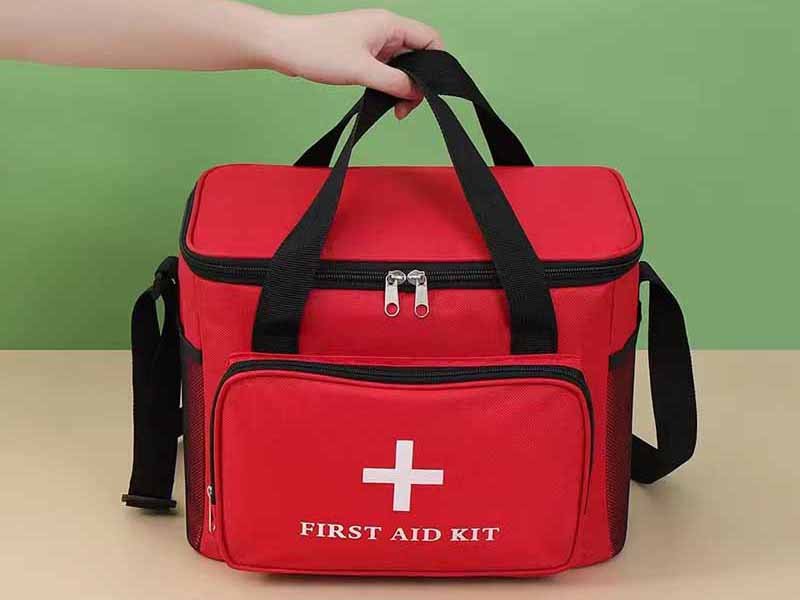
A medical bag can look strong, feel padded, and use heavy fabric, yet still fail after several months of regular work. The problem often begins at a small structural point: a handle attachment starts pulling upward, a shoulder strap slips under load, a divider bends around a rigid device, or the base loses shape after repeated contact with floors and vehicle compartments.
Medical bags do not carry weight in the same way as ordinary travel bags. Their contents may include fluid packs, metal instruments, diagnostic devices, batteries, dressings, medicine boxes, protective equipment, and removable modules. Some items are soft and light. Others create concentrated pressure against one seam or one section of the base.
Load-bearing medical bag design controls how equipment weight passes from the interior compartments into the shell, seams, webbing, handles, shoulder straps, back panel, and base. A reliable design keeps dense equipment close to the carrier, limits internal movement, reinforces force-transfer points, and confirms performance through loaded carrying, lifting, cycling, and drop tests.
A good development process therefore starts with the equipment, not the outer appearance. Before choosing colors, zipper pullers, or logo methods, the design team needs to know what the bag will carry, how often it will be lifted, who will carry it, and how quickly the contents must be reached.
One kilogram stored close to the back panel behaves differently from one kilogram stored in a large front pocket. A bag carried for five minutes from a clinic to a car also needs a different structure from an emergency backpack worn through a complete shift.
The real engineering question is simple: where does the load go every time the bag is packed, lifted, carried, opened, placed down, and lifted again?
What Is Load-Bearing Design?

Load-bearing design is the complete structural plan used to support the intended medical equipment without uncontrolled deformation, seam damage, strap movement, or loss of carrying stability. It covers payload definition, internal layout, shell materials, reinforcement zones, sewing construction, hardware selection, carrying methods, and performance testing.
Many product specifications mention only fabric denier, bag dimensions, and the number of compartments. Those details are not enough to confirm structural performance. A 1200D outer fabric does not automatically create a stronger bag than a 600D fabric. Strength depends on how the material is cut, sewn, reinforced, connected, and tested as a complete product.
What Loads Do Medical Bags Carry?
A medical bag may carry several different load types at the same time. Each load creates a different demand on the product structure.
Soft supplies such as gauze, gloves, masks, and folded textiles spread pressure across a larger area. Rigid items such as diagnostic devices, medicine cases, metal tools, and battery packs create smaller pressure points. Fluid containers may move when the carrier walks. Removable pouches add weight to zipper tracks, hook-and-loop panels, or internal attachment loops.
The equipment list should record more than total weight. Lovrix recommends providing the following information before pattern development:
- Product name and quantity
- Length, width, and height of each item
- Unit weight
- Rigid, flexible, sharp, or fragile construction
- Required storage direction
- Frequency of access
- Need for one-hand removal
- Need for elastic, buckle, hook-and-loop, or foam retention
- Cleaning or contamination-control requirements
- Whether equipment remains inside the bag during transport testing
A 12-kilogram payload made mainly from soft supply packs may need less internal protection than an 8-kilogram payload containing several rigid devices. Total kilograms provide only one part of the answer. Contact area, movement, shape, and access frequency are equally important.
| Load Type | Common Contents | Structural Risk | Recommended Control |
|---|---|---|---|
| Soft distributed load | Gauze, masks, folded textiles | Compartment bulging | Fabric dividers and compression control |
| Dense compact load | Batteries, instruments, fluid packs | Base sagging and concentrated pressure | Board support, foam cradle, reinforced base |
| Rigid equipment | Diagnostic devices, hard cases | Lining wear and impact damage | Shaped compartment and retention strap |
| Moving load | Bottles, loose modules, fluid containers | Balance change while walking | Close-fit pockets and multi-point retention |
| Frequently removed load | Gloves, dressings, emergency tools | Uneven loading during use | Balanced access zones and stable dividers |
| External attached load | Pouches, straps, accessories | Stress on loops and outer panels | Reinforced attachment patches |
The equipment plan should also cover partial-load conditions. Medical consumables are removed during use, so the weight distribution changes during the day. A bag that stands correctly only when completely full may lean, fold, or pull to one side after several modules are emptied.
Which Medical Tools Add the Most Weight?
The heaviest medical equipment often includes fluid packs, portable diagnostic devices, battery-powered equipment, metal instruments, rigid medicine boxes, oxygen-related accessories, and densely packed consumable modules. However, the item with the highest unit weight is not always the item creating the highest structural risk.
Location changes the effect of weight. A dense item stored close to the back panel remains easier to control. The same item placed near the front of a deep backpack creates more pulling force because its center of mass sits farther from the carrier.
Point pressure also matters. A compact metal device may weigh only two kilograms, but a narrow corner can press repeatedly against the same section of lining and foam. Over time, the corner may damage the divider, expose the internal board, or wear through the outer shell.
Heavy or rigid equipment should be reviewed according to five questions:
- Does the item rest on the bag base?
- Does it touch a seam, zipper, or divider edge?
- Can it move when the bag turns?
- Can it strike another item during a drop?
- Can the user remove it without unloading other compartments?
A suitable compartment may require layered protection. A common structure can include an outer shell, foam, structural board, soft lining, and an adjustable retention strap. The final combination depends on equipment weight, sensitivity, dimensions, and cleaning needs.
Lovrix can use physical equipment samples, 3D files, dimension drawings, or cardboard mock-ups to verify the fit. Physical trial packing is valuable for complex devices because catalog dimensions rarely show cable outlets, handles, protruding controls, or accessory attachments.
How Is Load Capacity Calculated?
Load capacity starts with the maximum planned equipment weight, but the calculation must also include the empty bag, removable pouches, external accessories, and any temporary supplies added during actual work.
A basic project calculation can follow the structure below:
Maximum equipment load
- removable module weight
- attached accessory weight
- empty bag weight = total carried weight
A structural test load may then be set above the planned working payload. The extra load provides room to observe seam extension, handle movement, buckle slippage, base deformation, and other early signs of weakness.
The test factor should be confirmed in the project specification. It should not be copied from a school backpack, travel bag, or unrelated medical product. Use frequency, carrying duration, user group, bag size, and sales-market requirements all affect the testing plan.
For example, consider a medical backpack with the following planned contents:
| Component | Quantity | Unit Weight | Total Weight |
|---|---|---|---|
| Diagnostic device | 1 | 2.40 kg | 2.40 kg |
| Fluid packs | 4 | 0.55 kg | 2.20 kg |
| Instrument modules | 2 | 0.85 kg | 1.70 kg |
| Dressing pouches | 3 | 0.40 kg | 1.20 kg |
| Battery and cables | 1 set | 0.75 kg | 0.75 kg |
| Protective supplies | 1 set | 0.65 kg | 0.65 kg |
| Empty backpack | 1 | 2.10 kg | 2.10 kg |
| Total carried weight | 11.00 kg |
A project planned around an 11-kilogram carried weight should not be tested only with an empty shell or a few soft fillers. The test sample should reproduce the real equipment distribution. Hard test blocks or protected dummy weights may be used where actual equipment is too valuable or unsafe to drop.
An engineering review should also define:
- Recommended working payload
- Prototype proof-load target
- Static suspension duration
- Number of lifting cycles
- Drop height and drop direction
- Maximum permitted strap slippage
- Acceptable permanent deformation
- Post-test zipper and buckle function
- Required condition of internal dividers
- Inspection method for seam opening
Without written acceptance criteria, two teams may look at the same tested sample and reach different conclusions.
Do Different Medical Bags Need Different Ratings?
Different medical bags require different payload targets and test plans because they are carried, opened, and loaded in different ways.
A compact first-aid pouch may carry only two or three kilograms, but one small handle may receive all lifting force. A medical shoulder bag may create uneven pulling because the entire load hangs from one side. An emergency backpack can distribute weight across two shoulder straps, a sternum strap, a hip belt, and the back panel. A wheeled equipment bag transfers much of the static load to wheels and the base, while the telescopic handle faces repeated pulling and twisting.
The table below provides useful starting ranges for project discussion. Final values must be based on the actual packed product and agreed testing conditions.
| Bag Category | Project Working Range | Main Load Path | Primary Failure Risk |
|---|---|---|---|
| First-aid pouch | 1–3 kg | Small handle or belt loop | Local seam tearing |
| Clinical visit bag | 4–8 kg | Dual handles and shoulder strap | Handle anchor distortion |
| Medical shoulder bag | 5–10 kg | Shoulder strap and side hardware | Hardware tab tearing |
| EMS backpack | 8–14 kg | Shoulder straps, back panel, base | Strap fatigue and load movement |
| Equipment backpack | 12–18 kg | Full harness and structural shell | Base deformation and user fatigue |
| Wheeled medical bag | 15–25 kg | Base, wheels, frame, pull handle | Wheel housing and frame movement |
| Modular response system | Project-specific | Main bag plus removable modules | Uneven loading and attachment failure |
A product range may use the same colors, logos, and general visual language while requiring different internal structures. Smaller and larger sizes should not automatically share the same webbing width, foam thickness, hardware, and reinforcement layout.
A clear product specification should state how the rating was determined. “Heavy duty” has little engineering value. “Designed around a 12-kilogram working payload and evaluated under an agreed 15-kilogram prototype load” gives the development team and client a measurable target.
How Is Weight Distributed?

Weight distribution controls how stable the medical bag feels during lifting, walking, turning, bending, and opening. Dense equipment should remain close to the structural center of the bag, left and right loading should remain reasonably balanced, and internal modules should prevent sudden movement. Poor distribution can make a structurally strong bag uncomfortable and difficult to use.
The internal layout should be developed with the carrying method in mind. A backpack needs to control front-to-back leverage. A hand-carried case needs weight centered between both handles. A shoulder bag needs stable side panels and strong hardware attachments. A wheeled bag needs a low, balanced center of mass around the wheel base.
Where Should Heavy Equipment Sit?
Heavy equipment should normally sit close to the carrier-facing panel of a backpack and near the central load path of a hand-carried bag. The goal is to reduce leverage, swinging, and panel distortion.
Placing every heavy object at the bottom is not always the best solution. A very low load can cause the bag to sag, strike the user’s lower back, or hit the floor when placed down. A very high load can make the bag feel unstable when the user bends or changes direction.
Equipment location should be reviewed along three axes:
- Front to back
- Left to right
- Top to bottom
Front-to-back placement usually has the greatest effect on backpack stability. Dense devices positioned in large front compartments can pull the bag away from the body. Left-to-right imbalance can cause one shoulder strap to carry more force. Top-to-bottom imbalance affects standing stability and may increase movement during bending.
A practical internal layout often follows the arrangement below:
| Equipment Position | Suitable Contents | Design Reason |
|---|---|---|
| Close to back panel | Dense devices, batteries, fluid packs | Reduces rearward pulling force |
| Central lower zone | Stable rigid equipment | Keeps mass supported by the base |
| Central upper zone | Frequently accessed medium-weight modules | Improves access without excessive top weight |
| Side zones | Balanced pouches of similar weight | Helps control left-right balance |
| Front compartment | Lightweight consumables | Limits leverage away from the body |
| Lid or top pocket | Small urgent-access items | Reduces opening time |
Access priority can require exceptions. A frequently used device may need a higher or more exposed position even when it is relatively heavy. In such cases, the surrounding structure should compensate through stronger dividers, compression control, and closer attachment to the back panel.
How Do Compartments Balance the Load?
Compartments balance the load by controlling where equipment sits and how much it can move. Their role is structural as well as organizational.
A large open cavity may offer flexible storage, but dense equipment can slide toward the lowest corner whenever the bag tilts. The resulting impact reaches the divider seams, outer shell, base, and user’s body. Smaller controlled zones reduce movement and make loading more repeatable.
Compartment design should consider:
- Equipment footprint
- Required clearance for removal
- Weight supported by each divider
- Divider attachment area
- Direction of opening
- Ability to work when partially empty
- Cleaning access
- Need for removable modules
- Color identification
- Replacement of worn components
Visual symmetry does not guarantee weight balance. One side may contain three light consumable pouches while the opposite side holds a compact diagnostic device. The interior can appear symmetrical and still carry unevenly.
For multi-module systems, Lovrix can mark each pouch with a planned maximum content weight. Such marking helps users reload the bag consistently and prevents one removable compartment from becoming overloaded.
A useful sample review compares three packing conditions:
- Full load
- Half load
- Minimum operating load
At full load, the team checks overall shape and carrying stability. At half load, the team looks for divider collapse and equipment movement. At minimum load, the team confirms whether frequently used items remain visible and whether the bag still opens without folding.
Do Dividers Prevent Load Shifting?
Dividers reduce load shifting only when their stiffness, dimensions, and attachment method match the stored equipment. A thin foam wall may organize dressings but cannot safely restrain a dense device during a drop or rapid turn.
The divider should be treated as a small structural panel. Its performance depends on:
- Foam type and density
- Internal board thickness
- Fabric abrasion resistance
- Hook-and-loop attachment area
- Base connection
- Side connection
- Edge binding
- Equipment contact shape
- Direction of expected force
A divider attached only at the top may look stable in an empty sample. Under load, the lower section can move, allowing equipment to lean or strike the side wall. Multi-point attachment along the base and sides provides greater control.
Removable dividers offer flexibility for different equipment sets, but every removable connection introduces tolerance requirements. Hook-and-loop panels need enough surface area, accurate positioning, and suitable peel resistance. If the panel is too small, the divider may detach. If it is too large, reconfiguration becomes slow and cleaning becomes harder.
Rigid devices may need a shaped foam cradle rather than flat dividers. Bottles may need elastic loops plus a lower pocket. Fluid packs may need a compression panel. Metal tools may need individual sleeves to avoid noise and impact.
Loaded movement testing should include:
- Walking at normal speed
- Fast walking
- Turning in both directions
- Climbing stairs
- Bending forward
- Lifting from one handle
- Placing the bag on the floor
- Carrying after several modules are removed
Noise, sudden weight movement, panel bulging, or a change in balance usually indicates insufficient internal control.
Is a Support Frame Necessary?
A full rigid frame is not required for every medical bag. Many products achieve sufficient support through a layered structure using outer fabric, closed-cell foam, plastic board, lining, webbing reinforcement, and a structured base.
A support frame becomes more valuable when the bag:
- Carries dense or sensitive equipment
- Has a tall body
- Must stand open during use
- Uses multiple heavy front modules
- Needs a consistent rectangular shape
- Is frequently loaded into vehicles
- Requires strong protection around electronic devices
- Uses wheels or a telescopic handle
Several structural materials can be combined according to the project:
| Structural Material | Main Benefit | Limitation | Suitable Area |
|---|---|---|---|
| PE board | Low weight and good shape retention | Limited impact absorption | Back and side panels |
| PP board | Higher stiffness | Can create hard edges | Base and structural walls |
| EVA foam | Cushioning and shape support | May compress under heavy loads | Device compartments |
| PE foam | Closed-cell protection | Firmer hand feel | Base and side protection |
| Corrugated plastic | Stiffness with lower weight | Edge finishing needs care | Large removable panels |
| Molded EVA shell | Strong shape and impact control | Tooling cost and less flexibility | Premium equipment cases |
| Aluminum frame | High structural support | Higher weight and cost | Wheeled or high-load systems |
Excessive stiffness can create new problems. A hard back panel may press against the user. A rigid front can limit access in narrow spaces. A solid base may add unnecessary empty weight. The better approach is zoned support.
For example:
- Strong board in the base
- Semi-rigid board in the back
- Foam around sensitive equipment
- Flexible side gussets for opening
- Reinforcement webbing along major load paths
- Softer front panels for fast access
Lovrix can develop the fabric, webbing, foam, board, lining, and sewn structure within one coordinated project. Such control helps reduce incompatibility between materials and makes it easier to revise stiffness, weight, or cost during sample development.
Before approving the final structure, the client should review both empty and loaded samples. Empty-bag appearance can hide balance problems. A loaded sample reveals whether the base stays flat, the back panel remains controlled, the compartments keep their shape, and the carrying system sits correctly on the user.
Which Parts Need Reinforcement?

Medical bags need reinforcement wherever force becomes concentrated, changes direction, or passes from one material into another. The main areas include handle roots, shoulder strap anchors, hardware tabs, base corners, zipper ends, compression straps, divider connections, and trolley-system mounting points. Reinforcement should spread force across a wider area rather than adding several dense stitches to one small location.
A strong outer fabric cannot protect a weak connection. When a 12-kilogram medical bag is lifted, the weight does not remain evenly distributed across the shell. The force travels through the handles or straps, enters the stitching, passes into the backing layer, and continues through the body panels and base. Every connection along that route needs enough strength to support repeated use.
Good reinforcement planning answers four questions:
- Where does the force enter the bag?
- Which seam or panel receives the force next?
- Does one small area carry too much of the load?
- Will repeated bending, pulling, or abrasion weaken the connection?
Reinforcement should be designed before the first sample is sewn. Adding a patch after a test failure may repair one weak point while moving the failure to the next seam.
Handle Reinforcement
Handles often receive the highest short-duration force because users lift the full bag quickly. A medical bag may weigh 8 to 15 kilograms, but the force at the handle can rise above the static weight when the bag is lifted suddenly, pulled from a vehicle, or carried by one handle instead of two.
A durable handle structure normally includes more than visible top stitching. The handle webbing should extend into a larger reinforced area or continue down the side panels. Longer webbing distributes force more effectively than a short attachment sewn only to the top fabric.
Common handle reinforcement methods include:
- Webbing extended beneath the top panel
- Internal backing patches
- Box-and-cross stitching
- Multiple parallel stitch rows
- Bar tacks at controlled positions
- Folded webbing ends
- Reinforcement tape inside the seam
- Webbing continuation toward the base
The webbing width should match the load and hand comfort requirement. Narrow webbing saves space but creates higher hand pressure. Wider webbing spreads force but may become bulky around small handles.
| Handle Type | Common Webbing Width | Suitable Load Range | Main Design Concern |
|---|---|---|---|
| Compact grab handle | 20–25 mm | 1–4 kg | Local seam pressure |
| Standard carry handle | 30–38 mm | 4–9 kg | Grip comfort and anchor length |
| Reinforced medical handle | 38–50 mm | 8–15 kg | Webbing extension and backing support |
| Heavy equipment handle | 50 mm or layered construction | Above 15 kg | Full-body load transfer |
The ranges provide project guidance rather than fixed standards. Webbing material, thickness, weave, stitch pattern, and anchor construction also affect performance.
A padded handle wrap can improve comfort. The padding should maintain its shape after repeated compression. Low-density foam may feel soft during initial inspection but flatten quickly under a heavy payload. EVA, neoprene, or multi-layer foam may be considered according to thickness, cleaning method, and required appearance.
For dual-handle bags, both handles should meet at the center of gravity. If one handle is slightly shorter or positioned farther from the center, one side receives more force. Production templates should control handle length and attachment position within an agreed tolerance.
Seam Reinforcement
Structural seams connect the body panels and transfer force around the complete bag. A strong thread cannot correct a narrow seam allowance, incorrect stitch length, poor material alignment, or an unsupported panel edge.
Medical bag seams can be grouped into three categories:
- Primary structural seams
- Secondary pocket and divider seams
- Decorative or low-load seams
Primary seams include the base-to-body seam, back-panel seam, shoulder strap anchor seam, and handle connection. These areas usually need a wider seam allowance, binding, reinforcement tape, or multiple stitch rows.
Bar tacks work well at short, concentrated stress points, but they are not suitable for every structural seam. Very dense stitching can weaken coated fabric by creating a line of closely spaced needle holes. The material may tear beside the bar tack even while the thread remains intact.
Stitch length should be selected according to fabric thickness and coating. Very short stitches create more needle holes. Very long stitches reduce seam control. Thread size, needle size, tension, and stitch density should be tested together.
Useful seam construction options include:
| Seam Method | Main Use | Benefit | Risk to Control |
|---|---|---|---|
| Single lockstitch | Light pockets and lining | Clean appearance | Limited structural strength |
| Double stitch rows | Body and base seams | Wider force distribution | Requires accurate spacing |
| Bound seam | Internal structural edges | Protects raw edges | Added bulk |
| Webbing-covered seam | High-load body areas | Adds continuous support | Higher weight and stiffness |
| Box-cross stitch | Handle and strap anchors | Controls several pull directions | Needs enough backing area |
| Bar tack | Webbing ends and tabs | Strong local reinforcement | Needle concentration |
Seam placement should avoid direct contact with hard equipment corners whenever possible. A rigid item rubbing against one seam can damage thread and lining over time. Moving the seam several centimeters or adding a protective foam layer may provide better durability than increasing stitch density.
Strap Anchors
Shoulder strap anchors receive repeated angled pulling. Unlike a top handle, which is mainly pulled upward, a shoulder strap moves forward, backward, inward, and outward while the carrier walks. The connection also bends each time the bag is put on or removed.
Upper anchors should connect to the structural back panel rather than only to the outer shell. A short strap end sewn onto one fabric layer may pass a light pull test but loosen after repeated cycling.
A stronger upper anchor may include:
- Extended internal webbing
- A large backing patch
- Connection to side seams
- Connection to top seams
- Layered fabric and board support
- Multiple stitch directions
- Load-spreading reinforcement tape
Lower strap anchors also need careful design. They often sit near corners where the pulling direction changes. A narrow triangular fabric tab may twist under load. Wider folded webbing or a reinforced wing panel can provide more stable force transfer.
Anchor position affects comfort and strength. Upper anchors placed too far apart can pull the shoulder straps toward the arms. Anchors placed too close together can press near the neck. Lower anchors positioned too high may cause the bag to swing, while anchors placed too low may create excessive webbing movement.
The left and right positions should remain consistent during bulk production. A difference of several millimeters may be visible on a structured medical backpack and can affect how evenly the load sits.
For detachable shoulder straps, hardware tabs need their own reinforcement plan. A strong snap hook does not help when the D-ring tab is sewn into a weak side seam. The webbing tab should extend into the body panel and be supported by an internal patch.
Base Protection
The base supports the internal load and receives abrasion, moisture, impact, and concentrated pressure. Medical bags are frequently placed on clinic floors, vehicle platforms, outdoor surfaces, and storage shelves. A weak base can lose shape even when the handles and shoulder straps remain intact.
Base engineering usually involves several layers:
- Abrasion-resistant outer fabric
- Closed-cell foam
- Structural board
- Protective lining
- Reinforced perimeter seam
- Optional feet or corner guards
The outer material should be chosen according to contact conditions. A coated polyester or nylon fabric may provide a good balance of abrasion resistance, weight, and cleaning performance. A molded EVA or plastic base provides stronger shape control but increases weight, cost, and tooling requirements.
The base board should match the footprint of the bag without creating sharp pressure points. Rounded corners and covered edges reduce the risk of cutting through the lining. A board that is too small allows the perimeter to collapse. A board that is too large may press against the zipper or create hard corners.
The table below shows common base structures for different medical bag categories.
| Bag Type | Base Construction | Main Benefit | Main Limitation |
|---|---|---|---|
| Compact first-aid bag | Outer fabric plus thin foam | Lightweight and flexible | Limited support for dense loads |
| Clinical visit bag | Fabric, foam, removable PE board | Better standing shape | Board may shift if pocket is loose |
| EMS backpack | Reinforced fabric, foam, PP board | Strong load support | Higher stiffness |
| Equipment case | Molded EVA or plastic shell | Impact and shape control | Higher cost and tooling |
| Wheeled medical bag | Hard base, frame, wheel mounts | Supports high payload | Increased empty weight |
Base feet can reduce direct fabric contact with the floor. However, feet create local stress around their attachment points. Screw-mounted feet or wheel housings need large backing plates or molded support. Small washers may pull through board or fabric under repeated impact.
Cleaning also affects base design. Deep external grooves, exposed screw heads, and fabric folds can collect dirt. Medical bags intended for frequent wipe-down should use smooth surfaces and controlled seam placement.
Hardware Connections
Buckles, D-rings, snap hooks, ladder locks, compression hooks, and trolley fittings transfer force through small attachment points. Hardware should be evaluated together with the webbing and fabric connection.
A large metal D-ring may look strong but can damage narrow webbing through edge pressure. A lightweight plastic buckle may perform well under straight pulling but release under twisting. The correct hardware depends on the pulling direction, strap width, load, temperature, cleaning method, and required service life.
Important hardware checks include:
- Rated material strength
- Webbing compatibility
- Resistance to twisting
- Resistance to accidental release
- Edge smoothness
- Corrosion resistance
- Cold and heat performance
- Chemical exposure
- Glove operation
- Noise during movement
Metal hardware adds weight and may strike medical devices. Plastic hardware reduces weight but needs suitable impact resistance. Acetal buckles are commonly used for bag applications because of their strength and dimensional stability, but each component should still be tested within the finished product.
The webbing should sit flat inside adjusters and buckles. A buckle designed for 25-millimeter webbing should not be paired with a much narrower strap. Incorrect sizing can cause slipping, folding, or uneven wear.
Hardware tabs should be long enough to spread force into the surrounding panel. Folded tabs often perform better than single-layer fabric extensions. For high-load areas, the tab may need internal webbing running beyond the visible attachment point.
Zipper Support
Zippers should provide access and closure rather than carry the entire load of an overfilled compartment. When internal contents push outward against the zipper chain, stress reaches the teeth or coil, slider, zipper tape, and surrounding seam.
A stable compartment should retain its contents before the zipper closes. Internal compression panels, straps, elastic retainers, or fitted dividers can reduce outward pressure.
Zipper selection should consider:
- Opening length
- Curve radius
- Compartment depth
- Expected packing pressure
- Glove use
- Cleaning requirements
- Water-resistance target
- Opening frequency
- Slider count
- Repair and replacement options
Larger zipper sizes are often suitable for main compartments because they tolerate heavier handling and are easier to operate with gloves. Smaller zippers can be used for lightweight internal pockets.
The zipper ends need reinforcement because slider movement creates repeated impact at the start and stop positions. Folded zipper garages, webbing stops, or reinforced end tabs can reduce stress.
Dual sliders allow access from several directions, but both sliders should meet without leaving a gap. Puller size should remain large enough for fast use without becoming a snag hazard.
Compression straps can protect the main zipper on high-load bags. The strap closes around the body and carries part of the outward force. Positioning matters because straps should not block urgent access or cover important labels.
| Reinforcement Area | Likely Failure | Development Response | Sample Inspection |
|---|---|---|---|
| Handle root | Stitch opening | Extend webbing and add backing patch | Check movement after loaded lifting |
| Upper strap anchor | Panel tearing | Connect anchor to structural back | Compare left and right extension |
| Lower strap tab | Twisting and seam pull | Use wider folded webbing | Pull at several angles |
| Base corner | Abrasion and collapse | Add board, foam, and stronger fabric | Inspect after repeated drops |
| Hardware tab | Local fabric tearing | Increase attachment area | Test straight and angled force |
| Zipper end | Tape damage | Reinforce stops and reduce internal pressure | Cycle under full packing |
| Divider connection | Detachment | Increase base and side attachment | Test with rigid equipment |
| Wheel housing | Board cracking | Use backing plate and frame support | Roll and impact under load |
A reinforcement plan should be recorded in the technical pack. Drawings can mark webbing continuation, hidden backing patches, stitch patterns, board locations, foam layers, and bar-tack positions. Clear documentation helps the sample room and production line maintain the approved structure.
How Does Carry Design Reduce Fatigue?

Carry design reduces fatigue by keeping the load close to the body, controlling movement, spreading pressure, and giving the user enough adjustment. Shoulder straps, back padding, sternum straps, waist support, handles, and bag proportions must operate as one system.
A medical bag may pass every structural test and still be unpleasant to carry. Excessive rearward pull, narrow straps, hard foam edges, unstable modules, and poor back-panel shape can increase discomfort. Users may then carry the bag by one handle, loosen the straps too far, or avoid using the intended carrying system.
The carrying method should be selected according to three factors:
- Packed weight
- Carrying duration
- Working environment
A 6-kilogram bag carried from a vehicle to a treatment room may need a padded shoulder strap and dual handles. A 12-kilogram emergency bag carried for longer distances needs a more developed backpack harness. A 20-kilogram equipment case may require wheels or separable modules rather than thicker shoulder padding.
Shoulder Straps
Shoulder straps should spread pressure without restricting neck, chest, or arm movement. Strap shape, width, foam, edge construction, anchor position, and adjustment range all influence comfort.
Straight shoulder straps are easier to cut and sew. Curved straps often follow the body more closely, especially on larger backpacks. The curve should be tested on several body sizes because an aggressive shape may fit one user while creating pressure for another.
A medical backpack shoulder strap may contain:
- Outer abrasion-resistant fabric
- Internal webbing
- Support foam
- Soft surface fabric or spacer mesh
- Edge binding
- Adjustment buckle
- Webbing keeper
- Reflective or branding details
The internal webbing carries much of the structural load. Foam adds comfort but should not be treated as the main strength layer.
Foam thickness alone does not determine comfort. A 15-millimeter low-density foam may collapse faster than a 10-millimeter multi-density structure. The strap should retain enough support after repeated compression.
Common project ranges include:
| Packed Weight | Padded Strap Width | Foam Structure | Additional Support |
|---|---|---|---|
| 3–6 kg | 45–55 mm | Single or dual-layer foam | Optional sternum strap |
| 6–10 kg | 55–65 mm | Medium-density layered foam | Adjustable sternum strap |
| 10–15 kg | 60–75 mm | Multi-density foam | Sternum strap and structured back |
| Above 15 kg | Project-specific | High-support layered system | Hip belt or wheeled alternative |
The values are development references. Final strap width should be checked against user size, clothing, arm movement, and bag dimensions.
Strap edges should remain smooth. Hard binding, thick seam joins, exposed webbing ends, or uneven foam can create pressure during long wear. A loaded fitting test should continue long enough for small discomfort points to become noticeable.
Strap Adjustment
A useful adjustment system allows users with different torso sizes and clothing layers to position the bag close to the body. Adjustment webbing should move smoothly when required but remain fixed after loading.
Lower adjustment straps often use ladder-lock buckles. The buckle angle should align with the pulling direction. When the webbing enters at the wrong angle, it may fold or slip.
Adjustment range should cover:
- Thin uniforms
- Protective clothing
- Winter jackets
- Smaller users
- Larger users
- Body armor or attached equipment where relevant
Excess webbing should be controlled with elastic keepers, hook-and-loop wraps, or folded ends. Loose webbing can snag equipment, vehicle fittings, or door handles.
The strap end should include a stop fold or reinforcement so it cannot pull through the buckle accidentally. The fold must remain small enough to pass through production equipment and not create a hard edge against the user.
Adjustment slippage should be measured during cycling tests. A strap that lengthens several centimeters during walking changes the bag position and increases movement. Both left and right straps should be evaluated because small differences in buckle friction can create uneven fit.
Sternum Straps
A sternum strap connects the shoulder straps and helps control side-to-side movement. It is useful on tall medical backpacks and during fast walking, stair climbing, or repeated turning.
The strap should remain vertically adjustable. Users have different chest heights, and a fixed position may feel too high or too low. Adjustment can be achieved through:
- Webbing loops at several heights
- Sliding rail systems
- Vertical daisy-chain attachment
- Hook-and-loop channels
- Removable buckle systems
A sternum strap should stabilize rather than pull the shoulder straps aggressively inward. Excessive tension can create neck pressure and deform the harness.
The buckle should be easy to open with one hand and while wearing gloves. At the same time, it should not release under accidental contact. Side-release buckles, magnetic buckles, or specialized quick-release systems can be considered according to cost and intended use.
Some projects include a whistle buckle, elastic section, or small accessory loop. Every added feature should have a clear purpose. Extra hardware increases weight, noise, and inspection requirements.
The sternum strap anchor should remain secure under angled pulling. Sliding systems need end stops so the strap cannot detach from the rail.
Waist Support
A waist strap can serve two different purposes: stabilizing the lower bag or transferring part of the load toward the hips. The project specification should define which function is required.
A narrow webbing waist strap can reduce swinging but provides limited load transfer. A padded hip belt connected to a structured lower back panel can support a larger share of the weight.
A load-transfer belt generally needs:
- Sufficient width
- Firm internal support
- Curved or angled shape
- Strong connection to the back panel
- Adjustable buckle
- Suitable padding
- Correct position relative to the bag length
If the bag is too short or too long for the user, the belt may sit around the waist rather than the hip area. In such a position, tightening can feel restrictive without reducing shoulder load.
Large padded belts can interfere with vehicle seating and storage. Medical response teams may also need to remove the bag quickly. Removable or stowable hip belts provide flexibility for mixed environments.
| Waist System | Main Function | Suitable Use | Limitation |
|---|---|---|---|
| Narrow webbing strap | Swing control | Light or medium backpacks | Little load transfer |
| Light padded wings | Stability and moderate comfort | 8–12 kg packs | Limited support for long carry |
| Structured hip belt | Load transfer | Heavier backpacks | More bulk |
| Removable belt | Flexible use | Vehicle and field work | Extra attachment points |
| Stowable belt | Clean storage | Mixed carrying methods | More complex construction |
The belt attachment should be included in load testing. A wide belt sewn only to the outer fabric may pull the lower panel out of shape.
Back Padding
Back padding protects the user from rigid equipment and manages contact pressure. It also helps control bag shape and can create ventilation channels.
A medical backpack back panel may combine:
- Structural board
- Closed-cell foam
- Softer comfort foam
- Spacer mesh
- Reinforcement webbing
- Lumbar support
- Ventilation channels
Padding should be placed according to contact zones rather than covering the entire back with one thick layer. Zoned pads can support the shoulder blade and lower back areas while leaving controlled channels between them.
Thicker padding is not always more comfortable. Very soft foam allows dense contents to push toward the user. Very firm foam may create hard pressure points. A layered system can combine a stable inner foam with a softer surface layer.
Spacer mesh improves the surface feel and creates limited air space, but it can collect dust and may be harder to wipe clean than a smooth coated fabric. Medical projects with strict cleaning requirements may prefer sealed foam panels or wipeable surfaces.
Back-panel design should also consider:
- Heat buildup
- Clothing abrasion
- Equipment pressure
- Moisture exposure
- Cleaning chemicals
- Foam compression
- Board edge protection
- Stitching against the body
The internal equipment should never rely only on back padding for protection. Dense devices need their own compartment structure. Otherwise, equipment pressure can compress the back foam and become noticeable during carrying.
Load Position
The closer the load remains to the body, the easier it is to control. Deep front compartments can increase rearward pull, especially when filled with dense equipment.
Bag depth should therefore be planned around the actual equipment rather than enlarged to create impressive capacity. Unused depth encourages users to overpack or place heavy items far from the back.
Compression straps can reduce bag depth after loading. Side compression is useful when the interior is partly empty. The straps should pull the load toward the structural back panel rather than only flattening the outer pocket.
Load-lifter straps may be added to larger medical backpacks. They connect the upper shoulder strap to the top of the bag and help control the angle between the pack and the user. Their benefit depends on bag height, frame stiffness, and anchor location. Adding load lifters to a short, soft backpack may provide little improvement.
A loaded prototype should be checked from the side. The bag should not lean sharply away from the user, and the shoulder straps should maintain even contact.
Multiple Carry Modes
Many medical bags use more than one carrying method. A backpack may also include top handles, side handles, a shoulder strap, trolley sleeve, or wheel system. Each mode needs its own load path.
Adding several handles does not automatically improve usability. Every handle adds weight, seams, webbing, and possible snag points. The design team should confirm when and why each handle will be used.
A top grab handle is useful for lifting the bag from the floor. Side handles help move a large bag into a vehicle. Dual carry handles support longer hand carrying. A trolley sleeve allows the bag to sit on rolling luggage, but the sleeve needs enough width and reinforcement.
Convertible backpack straps should store securely when not in use. Loose straps can drag on floors or catch in vehicle doors. Storage panels, hook-and-loop retainers, or zippered harness covers can keep the back surface controlled.
For wheeled medical bags, the carrying handles still need enough strength to lift the complete product over steps or into a vehicle. Wheels reduce rolling effort but do not remove the need for manual lifting.
User Fit Testing
User fit testing should involve a fully loaded sample, not an empty bag. Empty backpacks often feel comfortable because the panels remain soft and the straps carry little force.
A useful fitting session includes users with different heights, shoulder widths, and body sizes. Participants should wear clothing similar to the intended working environment.
The test should include:
- Putting on the bag without assistance
- Adjusting both shoulder straps
- Fastening the sternum strap
- Fastening the waist belt
- Walking for at least 10 to 20 minutes
- Turning quickly
- Bending forward
- Climbing stairs
- Sitting in a vehicle seat
- Removing the bag rapidly
- Accessing key compartments
- Carrying by the top and side handles
Feedback should identify the location and cause of discomfort. Useful comments include:
- Upper strap rubs against the neck
- Lower anchor presses against the arm
- Front compartment pulls the bag backward
- Back board contacts the lower spine
- Sternum strap sits too high
- Waist belt cannot tighten enough
- Shoulder adjustment slips during walking
- Bag swings when one side pocket is full
Such comments give the development team clear directions for pattern changes. General statements such as “not comfortable” are harder to convert into engineering improvements.
Lovrix can revise strap curves, anchor spacing, foam combinations, back-panel zones, bag depth, and internal equipment placement during sample development. A well-tested carry system helps medical brands reduce complaints, returns, and product revisions after market launch.
How Is Load Performance Tested?
Load performance testing checks whether a medical bag remains safe, stable, and usable after repeated lifting, carrying, opening, placing, and impact. A complete test plan should evaluate the finished bag under realistic weight distribution rather than testing fabric alone. Handles, straps, seams, zippers, hardware, dividers, boards, foam, and base panels must continue working after the planned test sequence.
Test conditions need to be written before testing begins. A statement such as “passed a load test” gives little useful information unless the report records the payload, loading method, test duration, cycle count, drop direction, inspection method, and acceptance criteria.
For a custom medical bag project, Lovrix can develop a test plan based on:
- Intended equipment list
- Recommended working payload
- Maximum packed dimensions
- Carrying method
- Expected daily use
- Target service environment
- Required cleaning method
- Sales region
- Client-specific inspection requirements
The figures below are development references rather than universal medical bag requirements. Final values should be confirmed for each model.
Working Load Check
A working load check evaluates the bag under the weight and equipment arrangement expected during normal use. The sample should be packed according to the approved compartment plan, including removable modules, accessories, fluid packs, diagnostic devices, and external attachments.
Using only sandbags or loose metal weights can produce misleading results. Test weights may match the total kilograms but fail to reproduce the size, contact points, and movement of the actual equipment. Hard dummy blocks should therefore match the approximate dimensions and positions of the intended contents.
The working load check should examine:
- Bag shape after packing
- Base flatness
- Left-right balance
- Front-to-back balance
- Divider stability
- Zipper closure pressure
- Handle alignment
- Shoulder strap position
- Hardware angle
- Ease of opening
- Equipment removal speed
- Standing stability
A medical backpack should also be worn under full load. Inspectors should confirm whether the load remains close to the back and whether one shoulder strap carries more force than the other.
The test should be repeated after several items are removed. Partial loading often exposes problems hidden by a completely full bag, including divider collapse, empty-pocket movement, and side-to-side imbalance.
Static Load Test
A static load test keeps the bag under a defined load for a set period. The sample may be suspended from the handles, shoulder straps, side handles, or another intended carrying point.
A useful test plan states:
- Bag model and sample number
- Empty bag weight
- Test load
- Loading position
- Suspension point
- Test duration
- Room temperature
- Pre-test dimensions
- Post-test dimensions
- Observed damage
- Recovery period
For example, a bag designed around a 10-kilogram working payload may be tested at 12.5 or 15 kilograms during development. The selected value depends on the construction, carrying method, and client requirement.
Inspectors should not look only for complete breakage. Early warning signs include:
- Needle holes becoming larger
- Webbing moving inside the seam
- Stitch rows becoming uneven
- Backing patches shifting
- Base board bending
- Handle length changing
- Hardware tabs stretching
- Zipper tape wrinkling
- Panel coating whitening
- Permanent body deformation
Measurements should be taken before loading, immediately after unloading, and after a recovery period. Some foam and fabrics recover slowly, while structural damage remains permanent.
| Planned Working Payload | Example Development Load | Suggested Suspension Time | Main Inspection Areas |
|---|---|---|---|
| 3 kg | 4–4.5 kg | 1 hour | Handle root, zipper, base |
| 6 kg | 7.5–9 kg | 1–2 hours | Handles, side hardware, seams |
| 10 kg | 12.5–15 kg | 2–4 hours | Strap anchors, back panel, base |
| 15 kg | 18–22.5 kg | 2–4 hours | Harness, board, base corners |
| Above 15 kg | Project-specific | Project-specific | Frame, wheels, handles, hardware |
Higher test weight does not automatically create a better product. Excessive proof loading can damage a sample in a way unrelated to normal use. The test level should remain connected to the product specification.
Handle Lift Test
A handle lift test evaluates how the handle system performs during repeated lifting. The bag is loaded, lifted through a controlled distance, lowered, and lifted again for a specified number of cycles.
Medical bags often experience sharp lifting forces when removed from vehicle storage, shelves, or floor level. Repeated cycling provides more useful information than one heavy pull because fatigue develops gradually around the stitch holes, webbing folds, and backing layers.
A development program may use:
- 500 cycles for an early sample check
- 1,000 cycles for a standard prototype
- 2,000 cycles for a frequently handled model
- A higher project-specific count for intensive professional use
Both dual-handle and single-handle conditions should be considered. Users may lift a dual-handle bag by only one side during rushed situations. If single-handle lifting is foreseeable, the anchor should be tested accordingly.
After testing, inspectors should compare:
- Left and right handle length
- Stitch opening
- Webbing distortion
- Grip padding compression
- Top-panel shape
- Reinforcement patch movement
- Seam puckering
- Handle alignment
A difference between the two handles can make the bag tilt and can increase stress during later use. Production tolerances should therefore control both attachment position and finished handle length.
Handle Pull Test
A pull test applies controlled force to the handle while the bag body is held in a fixed position. The test can measure either resistance at a defined force or maximum force before failure.
Development testing does not always need to continue until complete destruction. A controlled proof pull may provide enough information when the purpose is to confirm that the connection does not slip, stretch, or deform under the agreed load.
Pull direction matters. A top handle should be tested upward, but side pulling may also be required when the bag is commonly dragged from a vehicle compartment. Side handles should be tested in the actual lifting direction.
A complete record should include:
- Pull speed
- Peak force
- Holding time
- Direction of force
- Visible deformation
- Failure location
- Whether the damage is permanent
- Whether the bag remains usable
Failure location gives important design information. If the thread remains intact but the outer fabric tears beside the stitch line, denser stitching may make the problem worse. A larger backing patch, longer webbing extension, or different seam path may provide a better correction.
Strap Fatigue Test
A strap fatigue test checks how the shoulder system performs after repeated load application. The upper anchors, lower anchors, adjustment buckles, webbing, foam, sternum strap, and waist belt can all change during repeated use.
The sample is loaded and cycled through controlled movement. Depending on the fixture, the test may reproduce vertical lifting, shoulder movement, or repeated tension and release.
Important measurements include:
- Shoulder strap extension
- Adjustment webbing slippage
- Buckle movement
- Foam thickness before and after cycling
- Anchor seam opening
- Left-right length difference
- Back-panel deformation
- Sternum strap movement
- Waist-belt attachment stability
A strap can remain attached while still failing functionally. For example, a ladder-lock buckle may allow the webbing to slip two centimeters during repeated movement. The bag becomes lower on the user’s back, starts swinging, and feels heavier even though no seam has broken.
| Test Stage | Example Cycle Range | Main Purpose |
|---|---|---|
| Early structure check | 500–1,000 cycles | Identify obvious anchor or buckle problems |
| Prototype validation | 2,000–5,000 cycles | Review fatigue, slip, and foam compression |
| High-use development | 5,000–10,000 cycles | Evaluate intensive repeated handling |
| Client-specific testing | Agreed by project | Match procurement or market requirements |
After cycling, the sample should be worn again under full load. Comfort changes may reveal foam collapse or anchor movement that is difficult to see during visual inspection.
Buckle and Adjuster Test
Buckles and adjusters should be tested within the completed strap system. Component strength data alone cannot show whether the webbing width, weave, angle, and surface finish work correctly together.
A buckle test should evaluate:
- Opening force
- Closing sound and engagement
- Accidental release resistance
- Performance while wearing gloves
- Webbing slippage
- Side loading
- Twisting
- Repeated operation
- Impact after dropping
- Condition after cleaning
Adjusters should hold the webbing under the planned load without gradual movement. Webbing that is too smooth may slip. Webbing that is too thick may become difficult to adjust. A buckle designed for one width may perform poorly with another width, even when the difference appears small.
For critical carrying components, Lovrix can compare several buckle and webbing combinations during sampling. The best selection balances holding strength, ease of adjustment, weight, cost, and availability for future repeat orders.
Zipper Cycle Test
A zipper cycle test repeatedly opens and closes the main compartment to evaluate slider wear, chain separation, tape damage, puller security, and performance under packing pressure.
Medical bags may be opened many times during a single shift. Main zippers therefore need more attention than low-use internal pockets.
The sample should be tested in at least two conditions:
- Empty or lightly packed
- Fully packed at the approved working load
A zipper may operate smoothly when the bag is empty but become difficult when internal contents push outward. Testing under load reveals whether the compartment depth, divider position, and zipper path provide enough clearance.
Inspection points include:
- Slider movement
- Teeth or coil alignment
- Tape wrinkling
- End-stop condition
- Puller attachment
- Stitch damage
- Water-resistant coating wear
- Gap between dual sliders
- Corner operation
- Fabric catching
Curved zipper paths deserve particular attention. Tight radii increase slider resistance and can cause fabric to enter the chain. Pattern adjustment may provide a better solution than selecting a larger zipper.
Drop Test
A loaded drop test evaluates impact on the base, corners, sides, back, and front. Medical bags are often placed down quickly or dropped from vehicle height, trolley height, or hand-carry height.
The sample should contain actual equipment or dimensionally similar dummy loads. The internal arrangement must match the approved packing plan. Loose weights placed randomly inside the bag create inconsistent results and may cause damage unrelated to normal use.
A test sequence may include:
- Flat base drop
- Front lower-corner drop
- Rear lower-corner drop
- Side drop
- Back-panel drop
- Front-panel drop
The height and number of drops should match the product category and client requirement. A compact first-aid bag may use a lower test height than a rugged field-response bag.
| Bag Category | Example Development Height | Suggested Drop Directions | Main Risk |
|---|---|---|---|
| Small first-aid pouch | 0.5 m | Base and corners | Zipper and small handle |
| Clinical carry bag | 0.6–0.8 m | Base, side, corners | Hardware tabs and base |
| EMS backpack | 0.8–1.0 m | Base, back, sides, corners | Divider movement and strap anchors |
| Equipment case | 0.5–0.8 m | Base and protected faces | Device impact and board damage |
| Wheeled medical bag | Project-specific | Wheels, base, corners | Wheel housing and frame |
After each drop, inspectors should check more than the exterior. The bag must be opened and the internal structure examined.
Post-drop checks should cover:
- Zipper operation
- Buckle operation
- Divider position
- Board cracking
- Foam displacement
- Lining tears
- Hardware movement
- Wheel alignment
- Handle extension
- Equipment retention
- Base shape
- Corner damage
A bag may appear acceptable outside while a divider has detached or a board has cracked inside.
Abrasion Test
Abrasion testing evaluates areas that repeatedly contact floors, shelves, vehicles, uniforms, and equipment. The base, lower corners, back panel, shoulder strap edges, and webbing loops often receive the greatest wear.
Material-level abrasion reports can help compare fabrics, but finished-product abrasion tests remain useful because seams, coatings, printed logos, and folded edges behave differently from flat material samples.
Development checks may include:
- Repeated base rubbing
- Corner abrasion
- Strap-edge rubbing
- Webbing-to-hardware contact
- Zipper puller contact
- Internal equipment rubbing
- Printed-logo wear
- Reflective-material wear
High-denier fabric is not automatically more abrasion-resistant. Yarn type, weave, coating, finishing, and surface texture all affect performance.
The test report should describe the contact surface and number of cycles. Results from a smooth laboratory surface cannot be compared directly with results from rough concrete or vehicle flooring.
For bags used around rigid instruments, internal abrasion is as important as external abrasion. A dense device can wear through lining material long before the outer shell shows visible damage.
Base Compression Test
A base compression test examines whether the lower structure remains flat and supportive under the planned payload. The bag is packed, placed on a hard surface, and left under load for a defined period.
Inspectors should measure:
- Base sag
- Board bending
- Corner collapse
- Seam distortion
- Foot or wheel movement
- Standing angle
- Recovery after unloading
A removable board should remain correctly positioned. A loose board pocket can allow the insert to rotate or slide toward one corner. Sharp board edges may also damage the lining under compression.
For wheeled medical bags, the load should be transferred into the wheel housings and frame rather than concentrated only in the fabric base. The test should check whether the wheel mounts remain aligned and whether the bag continues rolling straight.
Wheel and Trolley Test
Wheeled medical bags require additional testing because the wheels, axle system, base, frame, and telescopic handle form a separate load path.
A rolling test can reproduce movement across:
- Smooth indoor flooring
- Thresholds
- Carpet
- Rough pavement
- Small obstacles
- Ramps
- Repeated turns
The test should use the intended payload. An empty wheeled bag places very little stress on the wheel housings and gives limited information.
Inspection points include:
- Wheel rotation
- Wheel noise
- Axle movement
- Housing cracks
- Screw loosening
- Base deformation
- Frame movement
- Trolley-handle play
- Locking-button operation
- Tracking direction
A trolley handle should also be tested under pushing, pulling, and side force. Users often twist the bag around corners rather than pulling only in a straight line.
Wheel diameter affects movement over obstacles. Larger wheels usually roll more easily but require more space and may increase bag dimensions. Recessed wheels protect the hardware but reduce internal capacity.
Compartment Retention Test
Compartment retention testing checks whether equipment remains in the intended position during movement and impact. Dividers, elastic loops, hook-and-loop panels, compression straps, and removable pouches should all be evaluated.
The bag should be fully packed and moved through realistic actions:
- Normal walking
- Fast walking
- Stair climbing
- Repeated turning
- Bending
- Lifting from one side
- Placing the bag vertically
- Placing the bag horizontally
- Loaded drop
- Partial unloading
After each stage, the position of every heavy or fragile item should be checked. A small shift may be acceptable for soft supplies, while a diagnostic device may need to remain within a much tighter area.
Hook-and-loop dividers should be checked for peeling from the base and side walls. Elastic loops should be checked for permanent stretch. Buckled retention straps should remain adjustable and should not press against sensitive controls.
Noise can provide useful information. Repeated knocking or sliding often means a compartment is too large or a retention system is too loose.
Cleaning Durability Test
Medical bags may be wiped frequently with water, detergent, alcohol-based products, or other approved cleaning agents. Cleaning can affect coatings, printing, foam lamination, webbing color, zipper tape, labels, and adhesives.
The exact cleaning agent should be confirmed by the client. A material that tolerates mild soap may react differently to repeated alcohol exposure.
A cleaning durability program can record:
- Cleaning solution
- Concentration
- Application method
- Contact time
- Drying method
- Number of cycles
- Color change
- Coating change
- Odor
- Surface tackiness
- Print damage
- Lamination separation
Hidden areas should also be checked. Liquid may collect around bound seams, board pockets, zipper garages, and foam edges.
Claims such as “chemical resistant” or “easy to disinfect” should be limited to the materials and cleaning procedures actually evaluated. Broad claims without a defined test method can create unnecessary risk.
Temperature and Humidity Check
Medical bags may be stored in hot vehicles, cold warehouses, humid environments, or air-conditioned facilities. Temperature and humidity can change foam firmness, coating flexibility, adhesive strength, buckle behavior, and zipper operation.
A basic environmental check can evaluate samples before and after controlled storage. Inspectors should look for:
- Coating stickiness
- Coating cracks
- Foam hardening
- Foam softening
- Adhesive separation
- Buckle brittleness
- Webbing shrinkage
- Color migration
- Odor development
- Board distortion
Bags intended for vehicle storage deserve additional attention because interior temperatures can rise significantly. Dark colors and enclosed compartments may increase heat exposure around the contents.
Environmental testing should also consider the equipment inside the bag. Structural materials should not transfer excessive pressure or create condensation-sensitive zones around electronics.
Loaded Field Trial
A loaded field trial evaluates the complete product in real working conditions. Laboratory equipment can repeat force accurately, but only users can reveal slow access, poor balance, awkward openings, snag points, and discomfort during real tasks.
The trial group should represent the intended user population. Depending on the project, participants may include nurses, emergency responders, home-care personnel, technicians, trainers, or medical sales teams.
Each user should complete a defined task list:
- Pack the bag from an equipment checklist
- Carry the bag through a normal route
- Walk up and down stairs
- Enter and leave a vehicle
- Place the bag on different surfaces
- Open the main compartment
- Remove selected equipment
- Repack the equipment
- Carry the partially empty bag
- Clean the exterior
- Report pressure or movement problems
Feedback should be recorded in measurable language.
Useful comments include:
- Main zipper requires two hands under full load
- Left strap slips approximately 20 millimeters
- Front module pulls the bag away from the back
- Divider bends when the device is removed
- Top handle presses into the hand after ten minutes
- Base tilts when one fluid pouch is empty
- Buckle is difficult to operate with gloves
- Side pocket blocks vehicle storage
Each problem should lead to a design action, sample revision, or accepted limitation. Field testing has little value when comments are collected but not connected to engineering changes.
How Is Medical Bag Quality Controlled in Production?
Production quality control confirms that bulk medical bags match the approved sample, material specification, reinforcement plan, and test requirements. Inspection should cover incoming materials, cutting, sewing, assembly, packed loading, appearance, and final function. A product can pass sample testing and still develop problems when bulk tolerances, operator methods, or material batches are not controlled.
Material Inspection
Incoming materials should be checked before cutting begins. The inspection plan may cover:
- Fabric color
- Fabric width
- Coating condition
- Surface defects
- Fabric weight
- Abrasion result
- Water-resistance requirement
- Webbing width
- Webbing thickness
- Webbing color
- Foam thickness
- Board thickness
- Buckle fit
- Zipper size
- Slider operation
- Thread specification
- Logo accuracy
Materials from different batches should be compared under consistent lighting. Black, red, navy, and fluorescent colors can show noticeable shade differences between lots.
Webbing and fabric should also be checked together. A slight color difference may become obvious when placed side by side on a finished bag.
Foam and board thickness affect finished dimensions. A change of one or two millimeters across several layers can make a compartment smaller, increase zipper pressure, or change the shape of the back panel.
Cutting Control
Accurate cutting supports both appearance and strength. Incorrect panel dimensions can move handle anchors, shorten seam allowances, distort zipper curves, and change the final equipment fit.
Cutting control should include:
- Pattern revision number
- Material direction
- Panel dimensions
- Notch position
- Reinforcement-patch position
- Webbing length
- Foam dimensions
- Board dimensions
- Logo position
- Left-right matching
High-load components should not be cut with reduced seam allowances. Even a small shortage can leave insufficient material for double stitching or binding.
Cut panels should be bundled by model, color, and order number to avoid mixing similar components from different revisions.
Sewing Control
Sewing inspection should focus on hidden structural details as well as visible appearance.
Critical checkpoints include:
- Handle webbing extension
- Upper strap anchor construction
- Lower strap tab position
- Internal backing patches
- Bar-tack quantity and position
- Stitch-row spacing
- Seam allowance
- Zipper-end reinforcement
- Base-board pocket
- Divider attachment
- Hardware-tab folding
- Thread tension
Photographs or marked technical drawings should show hidden reinforcement before panels are closed. Once the lining is assembled, inspectors may no longer be able to confirm whether an internal patch is present.
For critical operations, first-piece approval should be completed before full-line production begins. A single construction mistake repeated across hundreds of bags becomes expensive to correct.
Dimensional Inspection
Finished dimensions affect equipment fit, balance, and carrying comfort. Inspection should include more than overall length, width, and height.
Important measurements include:
- Main compartment dimensions
- Device-pocket dimensions
- Divider spacing
- Handle length
- Handle spacing
- Shoulder strap length
- Upper anchor spacing
- Lower anchor position
- Sternum strap range
- Waist-belt range
- Back-panel height
- Zipper opening length
- Trolley-sleeve width
- Board size
Tolerances should be set according to function. A large outer panel may allow several millimeters of variation, while a fitted device compartment may require tighter control.
| Measurement Area | Example Control Focus | Functional Risk |
|---|---|---|
| Main body | Length, width, depth | Equipment may not fit |
| Divider position | Spacing and angle | Load may shift |
| Handle position | Left-right alignment | Bag may tilt |
| Strap anchors | Symmetry | Uneven carrying pressure |
| Zipper opening | Usable access size | Equipment removal may slow |
| Back panel | Height and width | Poor body fit |
| Board insert | Panel coverage | Base or wall collapse |
Loaded Function Inspection
A portion of bulk production should be packed with the approved load arrangement. Loaded inspection confirms whether production tolerances have changed the bag’s behavior.
The check can include:
- Full zipper closure
- Handle alignment
- Bag standing shape
- Divider stability
- Equipment clearance
- Strap adjustment
- Hardware position
- Base flatness
- Side-panel bulging
- Access speed
Loaded checks are especially important for fitted medical equipment bags. A small dimension change may not be visible on an empty product but can prevent a device from entering the compartment.
The inspection team should use a standard loading kit or dimensionally controlled dummy set so results remain consistent.
Final Inspection
Final inspection should combine appearance, construction, function, labeling, packaging, and quantity checks.
A complete checklist may cover:
- Correct model and color
- Correct logo
- Correct label language
- Clean surface
- No broken stitches
- No loose thread inside equipment compartments
- Smooth zipper operation
- Secure buckles
- Correct accessories
- Correct removable modules
- Correct packaging
- Barcode readability
- Carton marks
- Packed quantity
- Random loaded test
- Random handle or strap test
Loose needles, sharp components, exposed wire ends, and broken plastic pieces require strict control because they may damage equipment or create a safety concern.
Inspection records should remain linked to the production lot. Traceability helps identify material or process causes when a problem appears after delivery.
How Can Lovrix Develop a Custom Medical Bag?
Lovrix develops custom medical bags around the client’s equipment, carrying method, use environment, appearance requirements, and order plan. With more than 18 years of experience in fabric, webbing, and bag development, Lovrix can coordinate material selection, structural engineering, sampling, private labeling, production, and inspection within one manufacturing group.
A useful inquiry does not need to contain a complete technical pack. Clear equipment information and reference images are enough to begin an engineering discussion.
Project Information
For fitted equipment bags, physical samples or accurate 3D drawings improve development accuracy. Lovrix can also work from photographs and dimension sheets during the early quotation stage.
Material Development
Material selection should balance strength, empty weight, cleaning, appearance, cost, and order quantity. Selecting the heaviest available fabric for every panel often adds weight without improving the weakest structural connection.
Structural Development
Structural drawings can mark hidden patches, webbing extensions, board areas, foam layers, stitch patterns, and critical dimensions.
Sample Development
Lovrix can revise compartment dimensions, reinforcement, strap shape, foam, board, hardware, and material combinations according to sample feedback.
Private Label Options
Branding should not weaken structural areas. Large embroidery placed over a reinforcement seam or waterproof coating may affect performance. Logo position should therefore be reviewed during pattern development.
Production Support
Lovrix can support custom, private-label, OEM, and ODM projects for medical brands, equipment companies, distributors, e-commerce operations, and institutional supply programs.
A well-developed medical bag should remain stable when fully packed, accessible when partly empty, comfortable during carrying, and strong after repeated lifting. Achieving those results requires more than choosing thick fabric. Equipment data, load paths, reinforcement, user fit, and testing must be connected from the first drawing to final inspection.
Send Lovrix your equipment list, expected payload, preferred dimensions, reference images, logo, order quantity, and sales market. The Lovrix development team can prepare a material recommendation, internal layout proposal, reinforcement plan, sample solution, and project quotation for your custom medical bag.


