 Skip to content
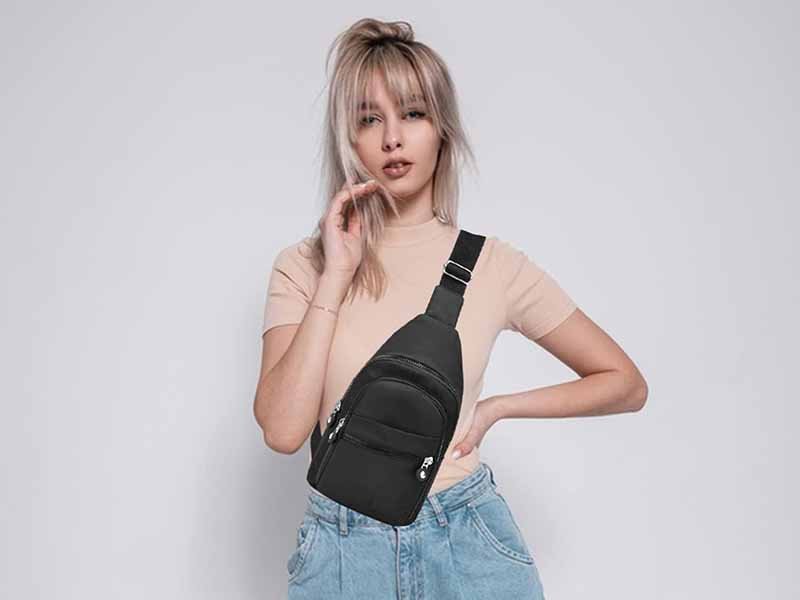
A sling bag often appears uncomplicated: a compact body, one adjustable strap, several pockets, and a zipper running around the main compartment. Yet a production-ready sling bag may contain more than 20 individual fabric, lining, foam, webbing, zipper, binding, reinforcement, and hardware components. Every part must fit the same pattern, follow the same sewing sequence, and remain consistent throughout the production order.
A fashionable shape alone cannot guarantee a commercially successful product. The bag must sit comfortably against the body, remain stable while walking, hold its intended load, provide easy pocket access, and retain its appearance after repeated use. Problems such as slipping straps, wavy zippers, weak anchors, undersized pockets, distorted curves, and uneven logos usually begin during material planning or sample development rather than final sewing.
Sling bags are manufactured through a controlled sequence covering product planning, material selection, technical drawing, pattern development, sample approval, bulk cutting, logo application, component sewing, final assembly, functional inspection, and retail packaging. The approved sample and technical specification guide every stage, helping the factory control size, construction, branding, performance, and production consistency.
A one-centimeter change in a zipper curve can influence opening access, panel tension, sewing difficulty, material consumption, and finished shape. Understanding those connections helps brands avoid expensive corrections after bulk materials have already been cut.
What Are Sling Bags Made Of?

A sling bag is made from an outer shell, lining, webbing, zippers, buckles, thread, foam, reinforcement sheets, labels, and decorative components. Material specifications should be chosen according to capacity, carrying load, wearing environment, target retail position, required appearance, and expected service life. The strongest or thickest material is not always the most suitable choice.
A lightweight phone sling and a padded travel sling may look similar in product photographs, but their internal structures are very different. A small lifestyle design may use a lightweight woven shell, thin lining, narrow webbing, and limited reinforcement. A larger travel or outdoor model may require abrasion-resistant fabric, wider straps, foam-backed panels, stronger buckles, reinforced seams, and more controlled zipper construction.
Material selection also affects sampling speed, sewing efficiency, minimum order requirements, unit cost, printing options, packaging volume, and freight weight. For this reason, Lovrix reviews the complete material system rather than selecting each component separately.
Outer Fabrics
Polyester and nylon remain widely used for sling bag manufacturing because both materials can support a broad range of weights, textures, coatings, prints, colors, and price positions.
Polyester offers good color stability and can be developed with plain weaves, twill textures, ripstop grids, mélange effects, or recycled yarns. It is frequently selected for daily-use, promotional, travel, fashion, and e-commerce sling bags.
Nylon usually provides a smoother surface and strong abrasion performance at a relatively low fabric weight. High-density nylon can create a refined technical appearance, making it suitable for urban, outdoor, cycling, camera, and premium travel collections.
Canvas provides a more natural and structured look. Cotton canvas is often chosen for casual, workwear, heritage, and lifestyle designs. Polyester-cotton blends can improve shape retention and reduce some of the dimensional changes associated with pure cotton.
PU-coated fabrics, laminated textiles, neoprene, recycled polyester, Oxford cloth, and specialty woven materials can also be used when the product requires a distinctive surface, flexible hand feel, water resistance, or a stronger visual identity.
Important fabric specifications include:
- Fiber composition
- Fabric weight
- Yarn density
- Denier or yarn count
- Weave construction
- Surface texture
- Backing material
- Coating type
- Water-repellent finish
- Abrasion resistance
- Colorfastness
- Print compatibility
- Lamination performance
- Sewing stability
Denier numbers should not be treated as a complete quality ranking. A 600D fabric is not automatically better than a 420D fabric. Weave density, yarn quality, coating adhesion, surface finishing, and intended use can have a greater influence on product performance.
| Sling Bag Positioning | Outer Fabric Reference | Construction Direction | Main Concerns |
|---|---|---|---|
| Lightweight phone sling | 210D–420D polyester or nylon | Light lining, limited foam | Low weight, clean shape, cost |
| Daily crossbody sling | 420D–600D woven fabric | Structured front and reinforced strap points | Abrasion, capacity, appearance |
| Urban technical sling | High-density nylon or coated polyester | Smooth curves and concealed reinforcement | Surface finish, zipper alignment |
| Outdoor sling pack | Ripstop nylon or durable Oxford | Reinforced seams and functional pockets | Wear, weather exposure, load |
| Fashion sling bag | Textured woven, PU-coated fabric, canvas | Shape-focused panel construction | Color, hand feel, hardware finish |
| Device or camera sling | Abrasion-resistant shell | Foam body and padded dividers | Impact protection, stability |
| Sustainable collection | Recycled polyester or recycled nylon | Verified material documentation | Traceability, color consistency |
The ranges above are development references rather than fixed rules. Final specifications should be confirmed after evaluating bag size, carrying load, construction, price target, and approved sample performance.
Lining Materials
The lining affects internal appearance, pocket durability, product weight, sewing efficiency, and the way users experience the bag every time they open it.
Lightweight polyester lining works well for many daily-use products. It is available in solid colors, printed patterns, jacquard constructions, and branded designs. A smooth lining also helps users insert and remove items without excessive friction.
Higher-density lining can improve the perceived quality of premium bags. Ripstop lining may be used for travel and outdoor products where internal tear resistance is important. Brushed tricot or microfiber can be placed inside phone, eyewear, camera, or electronic-device pockets to reduce surface scratching.
A lighter lining color makes small items easier to locate, especially inside a deep or narrow sling compartment. Dark lining may look cleaner after regular use but can make keys, cables, cards, and accessories difficult to see.
Several lining problems can appear after bulk production begins:
- Thin lining tears near pocket corners.
- Loose lining becomes trapped in the zipper.
- Stiff lining creates folds inside curved compartments.
- Dark lining transfers color to light-colored contents.
- Printed lining becomes misaligned at visible openings.
- Different dye lots create visible shade changes.
- Insufficient seam allowance causes internal seams to open.
Lovrix evaluates lining together with the outer shell, foam, binding, and sewing construction. A lining material that performs well in a flat tote bag may behave differently inside a compact, curved sling bag.
Zippers and Hardware
The zipper system controls access to the main compartment and often becomes one of the most frequently operated parts of a sling bag.
Coil zippers are flexible and suitable for curved openings. Their flexibility helps the zipper tape follow rounded panels without creating excessive resistance. Molded plastic zippers provide a stronger visual presence and are commonly associated with outdoor or sports designs. Metal zippers can create a premium fashion appearance but add weight and may require more careful handling during sewing and packing.
Zipper selection should include more than zipper size. A complete specification normally covers:
- Zipper type
- Teeth or coil size
- Tape width
- Tape color
- Slider type
- Single or double sliders
- Puller shape
- Puller material
- Opening direction
- End-stop method
- Water-resistant treatment
- Logo engraving or molding
- Required operating feel
A curved main opening often performs better with a flexible coil zipper. A straight front pocket can support a wider range of zipper types. Water-resistant zipper tape may suit outdoor collections, although the surrounding seams and construction must also be designed for water control.
Buckles, D-rings, hooks, adjusters, snaps, and decorative plates should match the bag’s load and positioning. Plastic hardware reduces weight and offers many color options. Metal components can improve perceived value but may increase cost, shipping weight, scratch risk, and corrosion requirements.
The factory should test hardware as an assembled system. A strong buckle can still slip when paired with webbing that is too smooth or thin. A quality zipper can still jam when the opening pattern creates uneven tension.
| Component | Main Decision Points | Frequent Production Risk |
|---|---|---|
| Main zipper | Flexibility, size, opening direction, puller | Wavy installation or difficult movement |
| Pocket zipper | Low bulk, access, tape color | Opening becomes too narrow |
| Strap buckle | Webbing width, release force, load | Strap slipping or accidental release |
| Adjuster | Bar shape, webbing thickness | Adjustment cannot hold position |
| D-ring or hook | Load direction, material, finish | Rotation, scratches, weak attachment |
| Metal logo plate | Weight, backing, position | Fabric sagging or sharp internal edges |
| Snap button | Closing force, reinforcement | Fabric tearing around installation point |
Webbing and Straps
The strap determines how the sling bag sits on the body. A poorly planned strap can make a well-made bag uncomfortable, unstable, or difficult to adjust.
Common webbing materials include polyester, nylon, and polypropylene. Polyester provides good color stability and suits many fashion, daily-use, travel, and promotional products. Nylon offers a smooth hand feel and strong load performance. Polypropylene is lighter and may be considered for cost-sensitive or low-load designs.
Webbing width should follow bag size and expected weight. Compact phone slings may use straps around 15–25 mm wide. Daily crossbody bags often use 25–38 mm webbing. Larger travel or equipment slings may use widths around 38–50 mm. Final dimensions depend on design proportion, buckle availability, comfort requirements, and target load.
A complete webbing specification should include:
- Fiber material
- Finished width
- Finished thickness
- Weave density
- Edge construction
- Surface texture
- Color reference
- Tensile requirements
- Logo method
- Buckle compatibility
- Strap adjustment range
- Folding and stitching method
Custom webbing can carry printed logos, jacquard lettering, reflective yarn, contrast stripes, woven patterns, or brand colors. Decorative webbing must still pass functional review. Large woven logos may change flexibility, while thick jacquard construction may not move smoothly through an adjuster.
Lovrix operates with integrated fabric, webbing, and bag manufacturing resources. Material, strap, and assembly teams can coordinate color, width, buckle fit, sewing thickness, and production feasibility before bulk manufacturing begins.
Padding and Reinforcement
Foam and reinforcement control shape, comfort, protection, and load distribution.
PE foam is often used for lightweight structure and soft protection. EVA foam can provide denser support and improved shape retention. Sponge offers a softer feel and may be used in shoulder pads or back panels. Nonwoven reinforcement, plastic sheets, and laminated backing materials can stabilize larger panels or support hardware installation.
Padding should be concentrated where it adds value:
- Back panels that rest against the body
- Device compartments
- Camera or equipment areas
- Shoulder pads
- Bag bases
- Front panels requiring a defined shape
- Internal dividers
- Areas around hardware
Stress reinforcement should be placed around:
- Strap anchors
- Handle attachments
- Buckle connections
- Zipper ends
- Pocket corners
- D-rings
- Hooks
- Rivets
- Snaps
- Metal plates
Adding thick foam across the entire bag can create several problems. Internal capacity becomes smaller, curved seams become harder to sew, zipper corners become bulky, the bag becomes difficult to turn, and shipping volume increases.
Local reinforcement usually delivers a better balance. A small backing layer around a strap anchor can strengthen the area without making the full body rigid. Foam pieces can also be reduced slightly around seam allowances to keep edges smooth.
Material decisions should therefore be evaluated as a connected system. Outer fabric, foam, lining, webbing, buckles, and seam construction must work together rather than compete for thickness or stiffness.
How Is a Sling Bag Designed?

A sling bag is designed by turning product goals into measurable dimensions, compartments, materials, wearing positions, branding details, and sewing instructions. The development process covers requirement confirmation, technical drawing, bill of materials, pattern creation, prototype production, fitting, loading, functional review, and sample correction before bulk cutting begins.
Strong development work answers several questions early:
- Who will carry the bag?
- What items must fit inside?
- How will the bag be worn?
- Which hand should reach the main zipper?
- How much weight will the strap carry?
- Does the product need weather protection?
- Which details influence retail appearance?
- Which construction choices influence cost?
- How will the bag be packed and shipped?
Ignoring those questions often leads to samples that look acceptable in photographs but feel awkward during use.
Product Requirements
The first development stage converts an idea into a structured product brief.
Reference photographs can communicate style, but photographs cannot confirm internal capacity, seam construction, material thickness, or comfort. A useful project brief gives the development team enough information to make controlled decisions.
Brands should provide as many of the following items as possible:
- Reference drawings or product photographs
- Expected finished dimensions
- Required internal capacity
- Items the bag must carry
- Preferred wearing direction
- Strap length range
- Number and position of pockets
- Outer fabric preference
- Lining preference
- Color references
- Logo artwork
- Hardware finish
- Packaging requirements
- Estimated order quantity
- Sales region
- Target launch schedule
- Target product position
The intended use has a direct influence on construction.
A phone sling may need card slots, a soft screen-facing pocket, and quick one-handed access. A cycling sling may need body stability, reflective details, weather protection, and a buckle position that does not press against the shoulder. A travel sling may require passport organization, hidden pockets, key hooks, and zipper openings positioned for security.
An equipment sling may require thicker foam, stronger anchors, internal dividers, and testing based on the expected load. A fashion sling may place greater emphasis on silhouette, hardware plating, edge appearance, and logo execution.
Lovrix can begin from a complete technical package, a reference sample, a sketch, several photographs, or a written product concept. Free design assistance helps organize incomplete information into a workable development direction.
Technical Specifications
A technical specification gives pattern makers, sample technicians, material teams, sewing supervisors, inspectors, and packaging staff a shared production reference.
The document should show front, back, side, top, bottom, and internal views. Important measurements should be connected to clear measuring points rather than placed as general notes.
Core technical information includes:
- Finished width, height, and depth
- Pocket opening dimensions
- Zipper lengths
- Strap width and adjustment range
- Seam allowances
- Stitching positions
- Fabric and lining codes
- Foam thickness
- Reinforcement locations
- Webbing specifications
- Buckle and hardware references
- Logo size and placement
- Label position
- Color references
- Packing method
- Carton requirements
- Finished tolerances
Small details deserve written confirmation. Examples include whether the main zipper opens from left to right, whether the strap buckle sits near the bag body or shoulder, whether a woven label faces inward or outward, and whether the bag is designed for right-shoulder, left-shoulder, or reversible carrying.
A useful bill of materials may contain 15–30 separate component lines for one sling bag. Complex technical designs can contain more. Each line should state the material name, position, color, size, supplier reference, and required processing method.
| Specification Area | Information to Confirm | Result of Missing Information |
|---|---|---|
| Dimensions | Finished size and measuring points | Different teams measure the bag differently |
| Materials | Fabric code, weight, backing, color | Bulk material does not match the sample |
| Zippers | Type, size, length, direction | Openings become difficult to use |
| Webbing | Width, thickness, adjustment range | Strap slips or feels uncomfortable |
| Hardware | Material, finish, size, position | Visual mismatch or functional failure |
| Logo | Method, artwork, color, location | Branding appears uneven |
| Reinforcement | Material and exact placement | Stress points become weak |
| Packaging | Bag, tag, barcode, carton method | Retail or warehouse delays |
Technical files should be updated after every approved revision. Production teams must not rely on comments spread across emails, chat messages, marked photographs, and old sample notes.
Pattern Development
Pattern making converts a three-dimensional product into flat components for cutting and sewing.
A sling bag pattern set may include:
- Front shell panel
- Back shell panel
- Main gusset
- Zipper facing
- Front pocket
- Pocket gusset
- Internal pocket
- Lining front panel
- Lining back panel
- Lining gusset
- Foam pieces
- Reinforcement patches
- Binding strips
- Webbing sections
- Zipper end tabs
- Shoulder pad parts
- Label backing
- Hardware support pieces
Each pattern needs seam allowance, grain direction, fold lines, notches, center marks, attachment positions, and component references.
Curved openings require careful control. The zipper-facing length must correspond with the connected body panel. A mismatch of several millimeters can create waves, tight corners, an uneven opening, or a twisted final body.
Pattern development also affects material consumption. Efficient nesting can reduce waste, but parts cannot be rotated freely when fabric has a visible grain, directional print, pile, coated face, or one-way texture.
The pattern maker must account for material behavior. A soft nylon panel may stretch during sewing. Thick canvas may require wider turning space. Laminated fabric may resist tight curves. Foam-backed panels may need reduced seam bulk.
Digital pattern systems improve repeatability, grading, marking, and material planning. Experienced judgment remains necessary because software cannot fully predict how every fabric, foam, zipper, and binding combination will behave during sewing and turning.
First Sample
The first sample reveals whether the design works as a physical product.
Sample technicians prepare the material, cut the pattern components, apply branding, assemble pockets, install zippers, build the strap, join the outer body, add the lining, and complete the finishing operations.
The first prototype should be evaluated in several conditions:
- Empty
- Lightly filled
- Loaded with intended items
- Worn on the front
- Worn on the back
- Worn over different clothing
- Adjusted to short and long strap positions
- Opened with one hand
- Carried while walking
- Placed flat on a table
Photographs alone cannot reveal every issue. A bag may look balanced from the front but rotate away from the body during movement. A pocket may look large but become difficult to reach once the bag is filled. A buckle may appear correctly placed but press against the collarbone.
The first sample should also be assessed for manufacturing efficiency. A complex decorative panel may require repeated manual alignment. A concealed zipper may create excessive thickness at the corners. A narrow opening may make turning and cleaning difficult.
Lovrix combines development support with fabric, webbing, and bag production resources, allowing material and construction problems to be reviewed within one coordinated manufacturing structure.
Sample Improvement
Sample revision should be based on measurable observations rather than broad comments.
“Make the bag more premium” can mean several different changes: denser fabric, cleaner topstitching, better hardware, improved structure, softer lining, a more refined logo, or more consistent edge shaping.
Effective revision notes identify:
- The exact area
- The current problem
- The required change
- The new measurement
- The preferred material
- The expected visual result
- The effect on cost or production
- The required approval method
Examples of useful revision instructions include:
- Increase the front pocket opening from 145 mm to 165 mm.
- Move the strap anchor 20 mm toward the center.
- Replace 3 mm soft foam with 2 mm denser foam.
- Increase webbing width from 25 mm to 32 mm.
- Reduce logo width from 65 mm to 55 mm.
- Add backing behind the metal plate.
- Extend reinforcement 30 mm into the side seam.
- Change the main zipper to a smoother coil construction.
- Increase the internal pocket depth by 15 mm.
The development team should identify the cause of each issue before making corrections. Wrinkles may come from pattern imbalance, material stretch, foam dimensions, sewing tension, or turning pressure. Tightening the seam without finding the cause can move the problem to another area.
A pre-production sample should represent the approved outer fabric, lining, foam, webbing, hardware, colors, logos, labels, construction, and packaging. Substitute materials may be acceptable during an early shape trial, but they should not be used for final approval when material behavior affects the finished product.
| Sample Review Item | Questions to Ask | Approval Standard |
|---|---|---|
| Shape | Does the bag remain balanced when empty and loaded? | Matches approved silhouette |
| Capacity | Do all intended items fit without forcing the zipper? | Required objects fit comfortably |
| Comfort | Does the strap distribute weight evenly? | No sharp pressure or excessive slipping |
| Access | Can key compartments be reached easily? | Smooth, natural opening movement |
| Construction | Are stress areas properly reinforced? | No visible separation or distortion |
| Branding | Is the logo centered and proportionate? | Matches approved artwork and position |
| Materials | Do surfaces, colors, and hardware feel consistent? | Matches approved material standard |
| Production | Can the design be repeated efficiently? | Stable sewing sequence and clear workmanship |
Before bulk production, the brand and factory should also confirm which sample becomes the controlling reference. Keeping several different samples without clear approval status can lead to confusion during production and inspection.
Lovrix supports custom, private label, OEM, and ODM sling bag development for mid-to-high-end brands, retailers, and e-commerce operations. The service covers product planning, free design assistance, material coordination, webbing development, rapid sampling, sample support, low-MOQ customization, production, inspection, and packaging.
How Are Sling Bag Parts Prepared?

Sling bag parts are prepared by inspecting bulk materials, controlling color batches, arranging cutting patterns, cutting shell and lining panels, applying logos, preparing foam and reinforcement, and sorting every component into production bundles. Accurate preparation protects finished dimensions, logo position, pocket alignment, material consistency, and sewing efficiency before assembly begins.
Bulk preparation is one of the most important control stages in sling bag manufacturing. Sewing operators can follow the correct method and still produce inconsistent bags when panels were cut in different directions, foam pieces were oversized, zipper lengths were mixed, or logo positions varied between bundles.
Material preparation also affects production cost. A poorly arranged cutting layout increases fabric waste. Incorrect logo processing can destroy finished panels. Missing reinforcement may remain invisible until a strap anchor starts pulling away from the bag body.
For a custom order, the preparation team should work from the approved sample, final pattern set, confirmed bill of materials, color references, and production instructions. Every material must be connected to a specific bag section and operation.
Raw Material Inspection
Bulk fabric should be inspected before cutting, not after sewing has begun. The inspection team compares delivered material with the approved sample for color, texture, weight, width, coating, backing, hand feel, and surface appearance.
Fabric inspection should cover:
- Visible stains, holes, oil marks, broken yarns, and weaving defects
- Uneven coating or lamination
- Creases that cannot recover during sewing
- Color variation within a roll
- Shade variation between different rolls
- Incorrect usable width
- Surface scratches or pressure marks
- Odor from coating, adhesive, dyeing, or storage
- Print misalignment
- Water-repellent finish consistency
- Peeling between laminated layers
- Unstable edges after cutting
Roll width influences material consumption. A pattern layout calculated for 150 cm usable width cannot be applied without adjustment when the delivered fabric provides only 146 cm after edge defects are removed. Even a small width difference can reduce the number of panels cut across each layer and increase consumption across a large order.
Color control should separate materials by dye lot. Front panels, back panels, gussets, and pocket pieces from visibly different shades should not be sewn into one bag. Shade differences become especially noticeable on black, navy, olive, beige, and other solid colors.
Fabric weight can be checked against the approved specification, but weight alone does not confirm quality. The inspection team should also evaluate weave density, coating adhesion, stretch, recovery, and sewing stability.
Webbing, zipper tape, binding, lining, and shell fabric should be checked together under the same lighting. Materials using one color reference can still appear different because woven surfaces, coated surfaces, and plastic hardware reflect light differently.
| Incoming Material | Inspection Points | Production Risk |
|---|---|---|
| Outer fabric | Shade, width, coating, defects, texture | Mixed appearance and cutting loss |
| Lining | Color, tear resistance, surface, width | Internal tearing and visible wrinkles |
| Webbing | Width, thickness, weave, edge condition | Strap slipping or poor buckle fit |
| Zippers | Length, tape color, slider movement | Difficult opening and assembly delays |
| Plastic hardware | Size, molding, release force, color | Cracking, slipping, or color mismatch |
| Metal hardware | Finish, sharp edges, scratches, plating | Surface damage and corrosion complaints |
| Foam | Thickness, density, recovery, odor | Distorted shape and uneven protection |
| Labels | Text, size, color, folding method | Incorrect branding or compliance details |
Hardware inspection should include more than visual appearance. Side-release buckles need to connect and release smoothly. Adjusters should grip the selected webbing. Hooks and rings should move freely without sharp edges. Metal surfaces should be protected from scratches during storage and assembly.
Lovrix coordinates fabric, webbing, and bag production within one manufacturing group. Material communication can therefore cover color, texture, thickness, buckle compatibility, sewing behavior, and finished appearance before bulk assembly begins.
Fabric Cutting
Fabric cutting converts approved patterns into repeatable production components. Accuracy at this stage directly affects bag dimensions, zipper alignment, pocket placement, curved seams, and finished symmetry.
Before cutting, fabric may need to rest in the production environment. Rolled or compressed material can hold tension after storage and transport. Immediate cutting may allow panels to shrink, relax, or distort later. The required relaxation time depends on fiber composition, coating, lamination, roll tension, and storage condition.
The cutting team prepares a marker plan based on:
- Fabric usable width
- Pattern dimensions
- Grain direction
- Surface direction
- Print orientation
- Coating face
- Color batch
- Required order quantity
- Cutting method
- Allowable material waste
Directional materials require controlled placement. Every visible panel should face the same grain, pattern, or texture direction. Rotating pieces to save fabric may create visible color or surface differences after sewing.
Common cutting methods include:
- Hand cutting for development samples and limited quantities
- Straight-knife cutting for stacked woven materials
- Band-knife cutting for controlled component shaping
- Die cutting for repeated small parts
- CNC cutting for complex patterns and flexible quantities
- Laser cutting for compatible synthetic materials and selected details
Laser cutting is not suitable for every fabric. Heat may darken light materials, harden edges, release odor, damage coatings, or leave visible burn marks. A cutting trial should be completed before selecting the method for bulk work.
Panel tolerance should be defined according to component size and function. A small zipper end tab may require tighter dimensional control than a large soft lining panel. Curved zipper facings, gussets, and pocket openings need careful matching because minor differences can create waves or tension during assembly.
Cut parts should include alignment marks where needed. Marks can identify:
- Panel centers
- Pocket positions
- Zipper starting points
- Strap attachment locations
- Logo centers
- Fold lines
- Seam intersections
- Left and right components
Marks should remain clear enough for assembly but should not become visible on the finished bag. Chalk, removable pen, notches, templates, and positioning holes may be used depending on the fabric.
A cutting record should state the fabric roll, shade group, quantity, size, color, and production bundle. Traceability helps the factory isolate a material issue without stopping the entire order.
Logo Application
Most sling bag logos are applied while panels remain flat. Printing, embroidery, heat transfer, patches, and metal plates become harder to position after pockets, zippers, foam, and lining have been assembled.
Logo processing must follow approved artwork rather than a low-resolution image copied from an email or website. Vector formats are preferred for sharp edges, controlled dimensions, and accurate color separation.
Common logo methods include:
- Screen printing
- Heat transfer printing
- Sublimation printing
- Embroidery
- Woven labels
- Printed labels
- Rubber patches
- Silicone patches
- Leather patches
- PU patches
- Metal plates
- Embossing
- Debossing
- Jacquard webbing
- Reflective printing
Every method has production limitations.
Embroidery adds texture and a durable stitched appearance, but dense stitching may distort lightweight fabric. A backing layer may be needed to keep the panel flat. Stitch direction, thread tension, underlay, thread count, and logo size affect the result.
Screen printing works well for bold graphics and solid colors. Ink type must be compatible with the fabric coating. Poor adhesion can lead to cracking, peeling, or color transfer.
Heat transfer can reproduce fine details and multiple colors, but temperature and pressure must be tested. High heat may damage PU coatings, foam laminations, recycled fabrics, or water-repellent finishes.
Rubber and silicone patches create a modern technical appearance. Patch thickness, edge profile, color separation, sewing groove, and attachment method should be confirmed during sampling.
Metal plates need internal reinforcement. Installing a plate directly onto thin fabric may cause sagging, rotation, tearing, or pressure marks. The reverse side should not expose sharp posts or edges to the lining.
Logo placement should be controlled through templates or pattern markings. Inspection points include:
- Finished width and height
- Distance from bag edges
- Alignment with panel center
- Orientation
- Color accuracy
- Surface cleanliness
- Stitching or bonding strength
- Edge quality
- Position after the bag is filled
A centered logo on a flat panel can appear off-center after the panel curves around foam or a gusset. Final placement should therefore be judged on a completed sample, not only on an unassembled piece.
| Logo Method | Suitable Use | Main Control Point |
|---|---|---|
| Screen printing | Bold text and flat graphics | Ink adhesion and color registration |
| Heat transfer | Detailed multicolor artwork | Temperature and edge bonding |
| Embroidery | Premium textile branding | Panel distortion and stitch density |
| Woven label | Internal or external identity | Folding, alignment, and edge finish |
| Rubber patch | Outdoor and technical designs | Mold detail and attachment strength |
| Leather or PU patch | Lifestyle and heritage styles | Surface finish and sewing position |
| Metal plate | Fashion and premium collections | Backing, scratches, and sharp edges |
| Jacquard webbing | Repeated strap branding | Logo clarity and buckle movement |
Lovrix can coordinate logo processing with material selection. Testing the logo on the actual bulk fabric is important because surface coating, texture, color, and heat sensitivity influence the finished result.
Foam Reinforcement
Foam and interlining pieces are prepared separately from the outer fabric because their dimensions and seam behavior are different.
A foam piece should not automatically copy the complete shell pattern. Foam often needs to stop before the seam allowance. Reducing foam around the edge prevents excessive thickness, uneven topstitching, difficult turning, and bulky zipper corners.
Common structural materials include:
- PE foam
- EVA foam
- Polyurethane sponge
- Nonwoven interlining
- Woven reinforcement
- Plastic board
- PP sheet
- Honeycomb support panels
- Mesh-laminated foam
- Adhesive backing layers
Foam thickness may range from light stabilization to dense impact protection. Exact thickness depends on bag size, panel shape, carried items, and required flexibility. A small urban sling may use light foam around the back and front panels, while a camera sling may require denser padding around the body and internal dividers.
Density matters as much as thickness. Two pieces of foam with the same measured thickness can provide very different support. Soft foam compresses easily and improves comfort. Dense foam holds shape and protects contents but may feel rigid.
Reinforcement should follow the load path. Strap anchors often need backing that extends beyond the visible stitch area. A small reinforcement patch placed directly under the stitch line may still allow the surrounding fabric to tear. Extending webbing or backing into a body seam spreads force across a larger area.
Common reinforcement zones include:
- Upper strap connection
- Lower strap connection
- Grab handle
- Buckle tabs
- D-ring tabs
- Zipper ends
- Pocket corners
- Snap buttons
- Rivets
- Metal logos
- Internal key hooks
- Device compartment base
Adhesive lamination must be controlled carefully. Excess adhesive can stiffen the fabric, create stains, produce odor, or show through light colors. Insufficient bonding can cause bubbles and separation after folding.
Foam direction should also be controlled for some materials. Uneven compression or recovery may create different surface appearances across finished panels.
Component Sorting
After cutting, logo processing, foam preparation, and reinforcement work, all parts are grouped for sewing.
One sling bag may require more than 20 individual pieces. A technical model with several pockets, padded dividers, multiple zipper openings, and modular straps can require considerably more. Missing one small zipper tab or reinforcement patch can stop assembly at a later workstation.
A production kit should contain the correct quantity of:
- Outer shell panels
- Lining panels
- Gussets
- Pocket pieces
- Zipper facings
- Foam pieces
- Reinforcement pieces
- Binding
- Webbing
- Buckles
- Rings
- Hooks
- Zippers
- Labels
- Logo panels
- Pullers
- Elastic
- Internal dividers
- Packaging-related attachments
Components should be grouped by product code, color, size, carrying direction, and material batch. Left-shoulder and right-shoulder versions must be clearly separated. Similar navy and black components should not share an unmarked storage area.
Kitting also follows the sewing sequence. Pocket parts may be sent to a pocket preparation station. Strap pieces can move to a webbing assembly station. Main body components remain grouped until subassemblies are completed.
Bundle quantities should be manageable. Very large bundles create handling pressure and increase the risk of missing, damaging, or mixing parts. Smaller controlled bundles make production counting and in-line inspection easier.
Each bundle can carry a production card with:
- Product code
- Color
- Planned quantity
- Material batch
- Operation stage
- Sewing line
- Inspection status
- Rework record
Color shade control continues during sorting. Panels from the same shade group should remain together through sewing. Replacing one damaged panel with a piece from another roll may produce a visible difference on the finished bag.
Lovrix uses coordinated material and production preparation to reduce missing components, mixed specifications, and line interruptions. Clear kitting gives sewing operators the correct parts in the correct sequence, allowing more attention to workmanship.
How Are Sling Bags Sewn and Assembled?

Sling bags are sewn by completing small parts first, including pockets, zipper units, labels, pullers, and strap assemblies. Operators then connect those parts to the front, back, gusset, foam, and lining sections. The completed body is closed, turned, shaped, trimmed, cleaned, and checked against the approved sample.
Sling bag assembly does not begin by sewing the front panel directly to the back panel. Production follows a planned sequence because many seams become inaccessible after the body is closed.
A common order includes:
- Preparing labels and logo panels
- Sewing internal pockets
- Sewing external pockets
- Preparing zipper units
- Preparing strap and buckle assemblies
- Attaching reinforcement pieces
- Joining foam and shell panels
- Connecting pockets to body panels
- Assembling the main gusset
- Joining the front, back, and gusset
- Installing or closing the lining
- Turning and shaping the bag
- Trimming threads and cleaning
- Completing in-line inspection
The exact sequence changes with construction. Concealed seams, bound interiors, separate linings, laminated panels, molded parts, and complex zipper openings all require different methods.
Pocket Assembly
Pockets are usually completed before the main bag body is closed.
Internal organization may include:
- Open slip pockets
- Zipper pockets
- Mesh pockets
- Card slots
- Pen loops
- Key straps
- Elastic holders
- Device sleeves
- Security pockets
- Removable dividers
Pocket dimensions must account for seam allowance, zipper tape, binding, elastic tension, and the thickness of surrounding materials. A pocket with a flat width of 160 mm will not always provide 160 mm of usable opening after assembly.
External pockets often influence the visual balance of the bag. Small differences in position become noticeable because sling bags have compact front panels. Position templates help maintain equal distance from edges and consistent alignment with the logo.
Pocket corners receive concentrated force when users push objects inside. Reinforcement methods may include:
- Backstitching
- Bartacks
- Extra fabric backing
- Folded corner construction
- Binding
- Double stitch lines
- Local interlining
Elastic pockets require controlled tension. Excessive elastic tension causes the panel to gather and distort. Insufficient tension allows contents to fall out.
Mesh pockets need suitable seam coverage because cut mesh edges can fray or pull away. Binding width and stitch position should secure the mesh without creating a stiff edge.
Internal pockets should lie flat against the lining. Poor feeding can cause lining wrinkles, twisted pocket openings, or unequal sides. Operators may use positioning templates, folder attachments, or guide marks for repeated production.
Pocket depth should reflect the object being stored. A passport pocket needs enough height to hold the document securely while leaving room for easy removal. A phone pocket should consider the device size, protective case, and cable access. A key hook should be positioned where keys do not scratch a phone or screen.
The approved sample should be loaded with the intended contents before bulk production. Checking only empty pockets can hide access and capacity problems.
Zipper Installation
Zipper sewing has a major influence on sling bag appearance and usability.
Curved main openings require balanced feeding between zipper tape and fabric. Stretching one side during sewing can create waves, twisted panels, or difficult slider movement. The zipper tape should follow the curve naturally without being forced into an angle beyond its flexibility.
Zipper preparation may include:
- Cutting to length
- Installing sliders
- Adding custom pullers
- Securing end stops
- Sewing zipper tabs
- Preparing waterproof zipper ends
- Joining zipper tape to facing panels
- Marking center points
Center marks are important for long openings. The zipper, gusset, and main panel should meet at matching reference points. Beginning at one end without controlling intermediate positions can leave excess material at the opposite side.
Stitching should remain a consistent distance from the zipper teeth. A stitch line placed too close may block the slider. A stitch line placed too far away may expose excessive tape or weaken the opening edge.
Lining must remain away from the slider path. Loose lining caught in a zipper is a common complaint in compact bags. The lining can be controlled through topstitching, sufficient clearance, backing, or a structured zipper facing.
Double-slider openings require equal alignment. Both sliders should meet at the intended center or side position. Pullers should hang in the same direction and should not strike the bag body excessively during movement.
Water-resistant zipper tape does not make an entire bag waterproof. Needle holes, zipper ends, panel seams, logo attachments, and lining openings can still allow water entry. Product descriptions should match the actual construction and testing level.
Common zipper defects include:
- Wavy zipper lines
- Difficult slider movement
- Unequal zipper ends
- Twisted openings
- Exposed raw tape
- Loose zipper tabs
- Trapped lining
- Incorrect opening direction
- Mismatched pullers
- Scratched hardware
Zippers should be operated during assembly, not only during final inspection. Early checking allows replacement before the zipper becomes enclosed within the finished body.
Strap Assembly
The shoulder strap carries the bag and controls how it rests against the body.
Strap construction can include:
- Main webbing
- Adjustable webbing section
- Side-release buckle
- Ladder-lock adjuster
- D-ring
- Triangle ring
- Swivel hook
- Elastic strap keeper
- Padded shoulder section
- Detachable connection
- Reversible attachment
- Hidden security loop
Webbing ends should be finished to prevent fraying. Synthetic webbing can be heat-cut or carefully sealed, while cotton and blended webbing may require folding, stitching, or edge treatment. Excessive heat can create hard, sharp edges, so sealing quality should be inspected by hand.
The buckle direction must be confirmed before sewing. Reversed buckles are easy to install during fast production and difficult to correct after attachment.
Adjusters should allow smooth movement while holding the selected position under load. Strap slipping often results from an unsuitable combination of webbing thickness, surface texture, adjuster geometry, and threading method.
Strap length should be checked in both minimum and maximum positions. The adjustment range must account for different body sizes, clothing layers, and wearing styles.
A strap keeper controls excess webbing. Without one, a long loose end may hang unattractively or interfere with movement. Keepers can be made from elastic, webbing, molded rubber, or a folded loop.
Padded strap sections require smooth transitions. A thick shoulder pad connected abruptly to narrow webbing may create pressure points or twist during wear.
Anchor placement affects balance. A high anchor may keep the bag close to the body, while an incorrectly angled lower anchor can make the bag rotate outward. Wearing trials should be completed with realistic contents rather than an empty sample.
| Strap Control | Measurement or Check | Problem Prevented |
|---|---|---|
| Webbing width | Matches buckle channel | Slipping or blocked adjustment |
| Strap range | Minimum and maximum length | Poor fit across user groups |
| Anchor angle | Checked on a loaded bag | Bag rotation and unstable carrying |
| Webbing end | Sealed or folded securely | Fraying and sharp edges |
| Buckle direction | Compared with approved sample | Incorrect operation |
| Adjuster grip | Checked under planned load | Strap length changing during use |
| Keeper position | Holds loose webbing | Untidy appearance and interference |
Lovrix can develop custom webbing together with the complete strap system. Color, weave, printed branding, jacquard patterns, reflective details, and buckle fit can be checked before bulk assembly.
Stress Reinforcement
Stress points need structural support because sling bags move continuously during use. The load changes with every step, adjustment, and opening action.
High-stress areas include:
- Upper strap anchors
- Lower strap anchors
- Buckle tabs
- Grab handles
- D-ring loops
- Hook connections
- Zipper ends
- Pocket corners
- Device compartment bases
- Key hooks
- Snap buttons
- Rivets
Reinforcement should spread force into a larger area. Sewing a short webbing tab only onto the outer fabric may look clean, but the shell can tear around the stitch line. Extending the tab into a main seam or adding internal backing gives the load a stronger path.
Common stitching methods include:
- Multiple straight stitch lines
- Box stitching
- Box-and-cross stitching
- Bartacks
- Folded webbing attachment
- Reinforced seam insertion
- Rivet-assisted attachment
Stitch density should match the material. Very dense stitching can weaken coated fabric by creating a line of closely spaced needle holes. Heavy webbing may require a stronger thread, suitable needle, longer stitch, and controlled machine tension.
As a general production reference, lighter bag fabrics may use around 8–12 stitches per inch, while thicker layered areas may require a lower density to avoid material perforation. Final settings should be approved through sewing trials because fabric coating, thread size, needle type, layer count, and seam construction affect the result.
Bartacks should be positioned inside the reinforced area. A bartack extending beyond the backing can concentrate force at the edge and initiate tearing.
Rivets should not replace correct sewing and backing without engineering review. A rivet installed through thin fabric can enlarge the hole during repeated movement. Washers, backing plates, or reinforced tabs may be required.
Thread should match the expected load and appearance. High-tenacity polyester thread is widely used for bag production because it offers strength, abrasion resistance, and color options. Thread size should suit the needle and fabric thickness.
A loaded sample should be checked for:
- Anchor movement
- Stitch opening
- Fabric whitening
- Coating cracks
- Webbing distortion
- Buckle slipping
- Seam stretching
- Unusual sound during pulling
The strongest construction is not always the most visible. Internal load distribution often matters more than adding decorative stitching to the surface.
Final Shaping
After pockets, zippers, straps, labels, and reinforced panels are prepared, the main body can be assembled.
The front panel, back panel, and gusset are aligned using notches and center marks. Curves should be sewn gradually to avoid folds. Thick seam intersections may require layer trimming, skiving of compatible materials, reduced foam, or a revised sewing sequence.
Internal seam finishing can use:
- Binding
- Turned seams
- Concealed lining
- Taped seams
- Folded seam allowances
- Overlocking for compatible materials
Binding creates a clean internal edge and supports exposed seams. Binding width must cover the complete seam allowance without missing the lower layer. Uneven binding can reveal raw edges or create stiff areas.
After the body is closed, the bag may be turned through the main opening or a controlled lining opening. Turning requires care because excessive force can crease foam, crack coatings, stretch zipper tape, or scratch hardware.
Corner shaping should be completed with suitable tools. Sharp objects can puncture the fabric or lining. Curved panels need hand shaping so foam and seam allowances settle into the intended position.
The lining opening is closed after turning. The closure should remain neat and secure, especially when placed in a visible internal area.
Final production finishing includes:
- Shaping the body
- Aligning the lining
- Trimming loose threads
- Removing chalk and marks
- Cleaning fabric surfaces
- Wiping hardware
- Operating every zipper
- Closing buckles
- Adjusting the strap
- Checking labels
- Verifying logo direction
- Removing temporary protective films when required
Heat pressing should be used cautiously. Synthetic coatings, foam, rubber patches, prints, and webbing may react to high temperature. Steam can also affect adhesives or create water marks.
The bag should be examined empty and lightly filled. An empty bag may appear slightly soft, while light filling reveals whether panels, zippers, and gussets remain balanced.
| Assembly Area | Production Reference | Main Defect to Prevent |
|---|---|---|
| Pocket position | Template or pattern marks | Crooked or unequal pockets |
| Curved zipper | Center-point alignment | Waves and difficult movement |
| Main gusset | Matching notches | Twisted bag body |
| Strap anchor | Internal backing and controlled stitching | Fabric tearing |
| Foam edge | Reduced before seam allowance | Bulky seams |
| Internal binding | Complete seam coverage | Exposed raw edges |
| Turning | Controlled opening and handling | Creased foam and scratched hardware |
| Final shape | Compared with approved sample | Collapsed or uneven silhouette |
In-line inspection should occur before hidden sections are closed. Reinforcement location, internal stitching, foam alignment, strap insertion, and lining construction cannot be fully checked after final assembly.
Lovrix combines material development, custom webbing, sample production, bag assembly, and quality control within one coordinated group. The production team can work from the approved sample and technical requirements to control component preparation, sewing sequence, stress reinforcement, appearance, and functional performance across custom, private label, OEM, and ODM sling bag orders.
How Are Finished Sling Bags Inspected?
Finished sling bags are inspected for appearance, dimensions, stitching, strap security, zipper operation, hardware performance, internal construction, branding, cleanliness, and packaging accuracy. Reliable quality control begins with material inspection and continues through cutting, sewing, assembly, final checking, and packing. A final inspection alone cannot correct reinforcement, pattern, or material problems hidden inside a completed bag.
Quality control should follow the approved sample, technical specifications, bill of materials, color standards, packaging instructions, and agreed inspection criteria. Inspectors need clear reference points rather than general judgments such as “good quality” or “premium finish.”
For custom sling bags, the most important checks usually cover four areas:
- Does the bag look consistent with the approved design?
- Does every feature work as intended?
- Can the strap and main seams carry the planned load?
- Is the order packed correctly for retail, e-commerce, or distribution?
An attractive bag can still create complaints when the zipper catches the lining, the strap slips through the adjuster, the pocket cannot hold the intended device, or the barcode is attached to the wrong color. Quality control therefore needs to examine both manufacturing workmanship and the user’s actual experience.
Appearance Inspection
Appearance inspection starts with the complete bag rather than individual details. The inspector places the bag in a natural position and compares its shape, balance, panel alignment, and proportions with the approved sample.
The bag should not lean noticeably to one side, twist around the zipper opening, collapse in an unexpected area, or show unequal curves. Front pockets, logos, webbing tabs, zipper lines, and hardware should appear balanced when viewed from normal retail distance.
Main visual checks include:
- Overall shape and symmetry
- Front and back panel balance
- Gusset width
- Zipper alignment
- Pocket position
- Logo position
- Webbing direction
- Hardware finish
- Stitching cleanliness
- Surface marks
- Color consistency
- Corner shape
- Lining flatness
- Label orientation
A small alignment difference can become highly visible on a compact sling bag. A logo positioned 4 mm away from the planned center may look acceptable on a large backpack but noticeably uneven on a small front panel.
The inspection should also consider how the bag appears when lightly filled. Some designs look balanced when empty but become distorted after a phone, wallet, battery pack, or travel documents are added. The gusset may pull outward, the front panel may bend, or the zipper line may become wavy.
Fabric surfaces should be checked under suitable lighting. Black and navy materials can hide oil marks under weak factory lighting but reveal them in daylight or product photography. Coated fabrics may show pressure marks, scratches, adhesive stains, or uneven gloss.
Hardware protection is another important concern. Metal plates, hooks, buckles, and zipper pullers may scratch each other during sewing, cleaning, or packing. Protective films should remain in place until the correct production stage, but they should not be left on finished retail goods unless the packing specification requires them.
Stitching Inspection
Stitching inspection checks whether each seam is secure, correctly positioned, and suitable for the material thickness and load.
Inspectors should look for:
- Skipped stitches
- Broken thread
- Loose thread ends
- Uneven stitch length
- Double stitching outside the required line
- Incorrect thread color
- Seam puckering
- Exposed raw edges
- Incomplete backstitching
- Missed bartacks
- Needle damage
- Uneven topstitching
- Incorrect seam allowance
- Binding that misses the lower fabric layer
Visible topstitching should maintain a consistent distance from the edge. Changes in distance are especially noticeable around curved zipper openings, pocket corners, and front decorative panels.
Internal stitching deserves equal attention. An exterior may look clean while the lining seam, reinforcement patch, or zipper end remains insecure. In-process inspection is needed for areas that become hidden after assembly.
Thread tension should be balanced. Excessive tension can create puckering or cut into lightweight fabric. Insufficient tension can produce loose loops and weak seam formation. Thick intersections may require different machine settings from flat panel seams.
Needle size, thread size, and fabric structure must also work together. A large needle may leave visible holes in coated fabric. A fine needle may bend or break when passing through several layers of webbing, foam, reinforcement, and shell fabric.
Stitch density should be confirmed during sampling. Extremely dense stitching does not always increase strength. On coated or tightly woven fabric, closely spaced needle holes may create a perforated line that tears under load.
Dimension Inspection
Finished dimensions confirm whether the bag matches the approved size, capacity, and wearing position.
Measurements should follow defined points. Soft bags can produce different readings depending on whether the product is flattened, filled, stretched, or measured along a curve. The technical file should explain the correct method.
Common measurements include:
- Overall width
- Overall height
- Overall depth
- Main opening length
- Front pocket width and height
- Internal pocket depth
- Strap minimum length
- Strap maximum length
- Webbing width
- Shoulder pad length
- Buckle position
- Logo distance from edges
- Handle drop
- Zipper puller length
Tolerance should reflect the construction. A soft textile bag cannot always be controlled to the same tolerance as a molded plastic component. However, tolerances should not be so wide that capacity, fit, visual alignment, or packaging is affected.
Critical measurements need tighter control. Examples include a phone pocket, passport compartment, device sleeve, buckle channel, or strap adjustment range. A 10 mm reduction in the wrong area may prevent the intended object from fitting.
| Measurement Area | Why It Matters | Possible Result of Error |
|---|---|---|
| Overall width and height | Product proportion and capacity | Bag looks different from listing images |
| Main opening | Ease of access | User cannot insert planned items |
| Pocket depth | Item security | Phone or passport falls out |
| Strap range | Fit across body sizes | Bag sits too high or too low |
| Webbing width | Hardware compatibility | Adjuster slips or becomes blocked |
| Logo position | Brand presentation | Front panel looks unbalanced |
| Gusset depth | Internal capacity | Bag holds less than expected |
| Carton dimensions | Freight and storage | Increased shipping cost or deformation |
Dimension checks should be completed on early production pieces before the complete order is assembled. Early measurement allows pattern, seam allowance, or sewing tension problems to be corrected before they affect a large quantity.
Zipper Testing
Every main zipper should move through its full opening path without excessive force, catching, separation, or trapped lining.
The inspector should operate the zipper in the same direction a user would. A curved main opening may perform differently when the bag is empty, lightly filled, or worn on the body.
Zipper inspection includes:
- Slider movement
- Teeth or coil engagement
- Tape alignment
- Puller attachment
- Opening direction
- End-stop security
- Double-slider meeting position
- Zipper tab construction
- Lining clearance
- Surface scratches
- Tape color
- Custom logo direction
The slider should not become tight at curved corners. Resistance may come from an unsuitable zipper type, uneven sewing tension, incorrect pattern length, excessive foam near the seam, or fabric caught too close to the teeth.
Zipper ends are common failure points. Short securing stitches, insufficient tape length, or bulky seam intersections can allow the zipper end to separate. Fabric tabs should cover the end cleanly and remain aligned.
Water-resistant zippers should be checked for surface damage and smooth operation. Their coated tape may be less flexible than standard coil zipper tape, requiring more careful pattern and sewing control.
A water-resistant zipper should not be presented as proof that the complete sling bag is waterproof. Water can enter through stitch holes, seams, logo attachments, zipper ends, unsealed pockets, and openings. Product claims must match the complete construction and test method.
Strap Testing
The strap system should be inspected as a complete load-bearing unit.
Inspectors need to check:
- Upper anchor
- Lower anchor
- Webbing condition
- Buckle engagement
- Adjuster grip
- D-rings
- Hooks
- Strap keeper
- Shoulder pad
- Detachable connections
- Stitching and bartacks
- Reinforcement beneath the outer shell
A strap can fail in several ways. The webbing may pull out of the anchor, the buckle may release, the adjuster may slip, the fabric may tear around the stitch line, or the metal hook may deform.
Manual pulling can identify obvious defects, but planned load testing provides a more controlled evaluation. The correct load depends on bag size, intended contents, safety margin, material construction, and sales requirements.
A compact phone sling does not need the same test conditions as a tool, camera, or outdoor equipment sling. Testing figures should be defined for the project rather than copied from an unrelated bag category.
A useful test plan can include:
- Static loading for a set period
- Repeated lifting
- Strap adjustment cycles
- Buckle opening and closing
- Loaded wearing trials
- Swinging or movement simulation
- Anchor pull testing
- Drop testing with planned contents
After testing, the team should examine whether:
- Stitch lines opened
- Webbing shifted
- Fabric whitened
- Coating cracked
- Reinforcement moved
- Buckles slipped
- Hardware bent
- The bag body distorted
Minor movement after a heavy test may be acceptable for some constructions, but permanent opening, tearing, slipping, or hardware damage requires correction.
Hardware Testing
Plastic and metal hardware should be tested for both appearance and function.
Side-release buckles should connect with a clear lock and release without excessive force. A buckle that is too loose may open unintentionally. A buckle that is too tight may be difficult for users to operate with one hand.
Adjusters should grip the webbing during movement. Compatibility depends on:
- Webbing width
- Webbing thickness
- Surface texture
- Adjuster channel size
- Bar shape
- Threading method
- Load direction
D-rings and hooks should sit in the correct orientation. Hooks must rotate or open as designed without sharp edges. Metal plating should remain even and free from visible corrosion, bubbles, rough areas, or peeling.
Snaps and magnetic closures need suitable opening force. A weak closure may open during movement. An overly strong closure can pull the surrounding fabric and damage the reinforcement.
Rivets should remain firm without rotating or cutting the fabric. The back side must not create a sharp edge against the lining or stored contents.
Decorative hardware should not be ignored because it is not load-bearing. A loose metal logo, rough zipper puller, or sharp plate edge can create complaints even when the main bag structure remains secure.
Pocket Testing
Pocket testing confirms whether each compartment performs the job described in the product design.
The inspection team should place the intended objects inside the pockets rather than checking only flat dimensions.
Examples include:
- A phone with a protective case
- Passport
- Cards
- Keys
- Earphones
- Power bank
- Charging cable
- Camera lens
- Small water bottle
- Travel documents
- Hand tools
The pocket should hold the object without excessive force, unstable movement, or interference with the main compartment.
An internal phone pocket may fit an uncovered phone but become too tight when users add a protective case. A passport pocket may be wide enough but too shallow to hold the document securely. A key hook may work mechanically but place keys against a screen pocket.
Pocket testing should check:
- Opening width
- Useful depth
- Closure function
- Elastic tension
- Lining strength
- Corner reinforcement
- Object access
- Interaction with nearby pockets
- Effect on the outer shape
- Capacity when the main compartment is full
Products sold through e-commerce should match the capacity shown in photographs and product descriptions. Overstated capacity creates returns even when the workmanship is acceptable.
Order Consistency
Order consistency is controlled through approved references, standardized materials, controlled patterns, operator instructions, in-process inspection, and clear handling of revisions.
The approved pre-production sample should remain available to production supervisors and inspectors. Important details may also be displayed through photographs, measurement sheets, color standards, and sewing diagrams.
A pre-production meeting should confirm:
- Approved sample version
- Final materials
- Color groups
- Pattern version
- Logo method
- Hardware direction
- Zipper orientation
- Reinforcement positions
- Stitching requirements
- Measurement tolerances
- Label placement
- Packaging method
- Inspection checkpoints
The first units completed on the production line should be reviewed before full output continues. This first-piece approval can identify problems involving tension, shape, pocket position, logo alignment, or assembly sequence.
In-line inspection should focus on hidden and high-risk operations:
- Foam placement
- Reinforcement size
- Strap anchor construction
- Zipper end security
- Pocket corner stitching
- Internal binding
- Label attachment
- Webbing threading
- Buckle direction
Final inspection focuses on the completed product, but it should not replace checks made earlier.
A clear rework process is also needed. Defective units should be identified, separated, corrected, re-inspected, and recorded. Repaired products must meet the same standard as first-pass goods.
| Quality Stage | Main Work | Why It Matters |
|---|---|---|
| Material inspection | Fabric, lining, webbing, zippers, hardware | Prevents unsuitable materials entering production |
| Cutting inspection | Pattern, direction, shade, quantity | Protects dimensions and appearance |
| Logo inspection | Position, color, attachment | Prevents branded panel loss |
| First-piece approval | Complete early production units | Stops repeated line defects |
| In-line inspection | Hidden seams and reinforcement | Finds problems before closure |
| Final inspection | Appearance, function, measurements | Confirms finished product quality |
| Packing inspection | SKU, tags, barcodes, cartons | Protects retail and warehouse accuracy |
Lovrix provides quality control across material preparation, cutting, sewing, assembly, and packing. The company’s integrated fabric, webbing, and bag operations also help maintain clearer communication when a problem involves more than one production department.
How Are Sling Bags Packed and Shipped?
Sling bags are packed after final inspection, cleaning, shaping, strap arrangement, tag attachment, barcode checking, and SKU confirmation. Packaging must protect the product without creating unnecessary volume, deformation, surface scratches, or warehouse confusion. The correct method depends on retail presentation, e-commerce fulfillment, freight mode, and destination requirements.
Packaging is not merely the last step. Bag size, hardware, foam, strap length, shape, and sales channel should influence packaging decisions during product development.
A structured sling bag may need internal support. A soft foldable bag may be compressed carefully to reduce carton volume. A coated surface may need tissue or protective film. Metal hardware should be positioned so it does not scratch adjacent bags.
Product Cleaning
Before packing, each sling bag should be cleaned and prepared for presentation.
Cleaning work includes:
- Trimming loose threads
- Removing fabric dust
- Removing chalk marks
- Wiping surface stains
- Cleaning zipper teeth
- Wiping hardware
- Removing adhesive residue
- Checking internal compartments
- Removing temporary labels
- Confirming protective film requirements
Different materials require different cleaning methods. Strong solvents can damage PU coatings, printed logos, rubber patches, adhesives, and water-repellent finishes. Cleaning agents should be tested before use.
Dark woven fabrics may collect visible lint during production. Light-colored materials may show oil marks or handling stains. Brushed surfaces need gentle cleaning to avoid changing the texture.
The inside of the bag should also be checked. Small thread pieces, fabric dust, broken needles, loose hardware, or packaging debris must not remain inside.
Needle control and metal detection requirements depend on the product, market, client standard, and factory procedure. Where required, the checking process should be included in the agreed quality plan.
Shape Protection
Packing should preserve the approved silhouette.
Possible shape-support materials include:
- Tissue paper
- Recycled paper
- Air pillows
- Foam blocks
- Paper forms
- Cardboard inserts
- Folded fabric support
- Removable internal dividers
Support should fill the bag enough to prevent collapse without stretching the zipper, lining, or seams. Overfilling can distort the body and increase carton size.
Foam-backed bags may develop permanent creases when folded tightly for long shipping periods. Structured front panels and coated fabrics need particular care.
The strap should be arranged neatly. Long webbing can be folded and secured with a paper band, reusable tie, elastic keeper, or approved packing method. Buckles and hooks should not press against visible front panels.
Metal hardware may need tissue wrapping or protective sleeves. Plastic protective film can be used on polished plates, although removal instructions should be clear for retail or warehouse teams.
Individual Packaging
Individual packaging options depend on product value, branding, sustainability goals, and distribution method.
Common options include:
- Clear polybags
- Recycled-content polybags
- Frosted bags
- Paper bags
- Dust bags
- Drawstring fabric bags
- Retail boxes
- Window boxes
- Hanging packaging
- Protective sleeves
A basic e-commerce sling bag may use a clear bag with barcode and warning label where required. A premium fashion product may use tissue, a branded dust bag, hangtag, and printed box.
The individual bag should fit the product properly. Oversized packaging allows unnecessary movement and increases material consumption. Tight packaging can compress foam, bend hardware, and create zipper pressure.
Ventilation holes, adhesive position, warning text, recycling marks, and material thickness may need confirmation according to market or client requirements.
Packaging artwork should be reviewed with the same care as bag artwork. Errors in barcodes, product names, colors, legal text, or country information can delay a complete shipment.
Tags and Labels
Retail and compliance information may appear on hangtags, woven labels, printed labels, barcode stickers, care labels, packaging, or cartons.
The exact information depends on the product, destination, brand, and sales channel. Possible items include:
- Brand name
- Product name
- Style number
- Color
- Size
- Barcode
- Material composition
- Country of origin
- Care instructions
- Importer information
- Warning text
- Recycling marks
- Batch code
- Website information
- Retail price
Label position should be confirmed during development. A care label placed in a narrow pocket may be difficult to read. A large woven label can interfere with internal storage. A hangtag attached directly to delicate webbing may leave marks.
Barcodes must match the correct SKU. Similar colors and product versions should be separated carefully during packing.
Barcode verification may include:
- Printed number
- Scannability
- Product code
- Color
- Packaging position
- Carton quantity
- Master carton label
Incorrect barcode application can create warehouse rejection, inventory errors, or customer returns even when the bag itself is well made.
Carton Packing
Master carton design should balance product protection, shipping efficiency, warehouse handling, and carton strength.
The packing team should confirm:
- Units per carton
- Product arrangement
- Carton dimensions
- Gross weight
- Net weight
- Carton material
- Internal dividers
- Moisture protection
- Carton marks
- Pallet requirements
- Maximum stacking condition
Overpacked cartons may compress the bags and damage their shape. Underfilled cartons allow products to move and increase shipping volume.
Carton dimensions should be reviewed before production is completed. A small reduction in individual packing size can produce meaningful freight savings across a large order, but compression must not damage the product.
For example, reducing carton volume by 8% across 100 cartons can remove the equivalent volume of eight full cartons. The actual freight benefit depends on shipping method, chargeable weight, pallet arrangement, and container utilization.
Carton weight should remain manageable for warehouse handling. Very heavy cartons increase the risk of dropping, crushed lower cartons, and handling injuries.
Moisture control may include desiccants, carton liners, moisture-resistant wrapping, or dry-container planning. The selected method depends on material sensitivity, shipping season, route, and storage conditions.
E-commerce Preparation
E-commerce and fulfillment orders often require more detailed packaging control than standard wholesale shipments.
Requirements may include:
- Individual SKU barcode
- Fulfillment label
- Polybag warning
- Set packaging
- Bundle identification
- Carton content label
- Carton size limits
- Carton weight limits
- Drop-test packaging
- Product insert
- Return identification
- Warehouse appointment information
The factory should receive final label files and packing instructions before the packing stage. Late label changes can delay shipment or require repacking.
Products sold as sets must be checked for complete combinations. A sling bag sold with a detachable pouch, strap, rain cover, or accessory must include every component.
E-commerce photographs and product descriptions should match the final packed product. If a removable strap is shown attached, the packaging should make assembly easy or include a clear instruction card.
The package should survive normal parcel handling. Retail presentation alone is not enough when individual units will pass through sorting centers and last-mile delivery networks.
Shipping Preparation
After packing, cartons are counted, weighed, measured, marked, and organized for shipment.
Shipping options may include:
- Express courier
- Air freight
- Sea freight
- Rail freight
- Truck transport
- Combined transport
The best method depends on order quantity, carton volume, required delivery date, destination, and freight budget.
Express delivery suits samples, urgent approvals, or limited quantities but carries a higher cost per kilogram. Air freight can support time-sensitive commercial orders. Sea freight generally provides lower cost for larger volumes but requires longer planning.
Shipment documents may include:
- Commercial invoice
- Packing list
- Bill of lading or airway bill
- Certificate of origin
- Customs information
- Product declarations
- Test documents
- Client-specific warehouse documents
Trade terms should be confirmed during quotation. Common arrangements can include EXW, FOB, CIF, DAP, and DDP, depending on destination and available service.
The brand should also allow time for:
- Production completion
- Final inspection
- Packing
- Export documentation
- Cargo booking
- Port or airport handling
- Customs clearance
- Domestic delivery
Production lead time and transport time are separate. A bag order completed on schedule can still arrive late when freight booking, labeling, documentation, or warehouse appointments are not planned early.
What Information Is Needed for a Sling Bag Quote?
A sling bag quotation is prepared more accurately when the factory receives product dimensions, reference images, material direction, logo artwork, expected quantity, packaging requirements, target market, and delivery schedule. A complete request reduces broad price ranges and helps the development team recommend suitable construction rather than quoting an undefined product.
Price is influenced by the complete design, not only the bag dimensions.
Main cost factors include:
- Outer fabric
- Lining
- Foam and reinforcement
- Number of panels
- Number of pockets
- Zipper type and length
- Hardware material
- Webbing construction
- Logo method
- Stitching complexity
- Order quantity
- Packaging
- Testing requirements
- Delivery schedule
Two sling bags with the same dimensions can have very different costs. One may use a simple polyester shell, one main compartment, standard webbing, and screen printing. Another may use high-density nylon, several lined pockets, water-resistant zippers, custom jacquard webbing, metal hardware, dense embroidery, and a retail box.
Project Details
Clients can prepare the following information before requesting a quotation:
- Product reference photographs
- Sketch or technical drawing
- Finished dimensions
- Main use
- Required capacity
- Expected order quantity
- Number of colors
- Material preference
- Logo artwork
- Logo method
- Strap requirements
- Hardware finish
- Packaging method
- Destination market
- Required delivery date
- Target price direction
A physical sample can also be useful when the project needs similar proportions, workmanship, or material feel. The factory should still confirm which details must remain and which should be changed.
When no technical file is available, Lovrix can review reference photographs and written requirements, then help organize a product development plan.
Order Quantity
Order quantity affects material purchasing, logo setup, cutting efficiency, sewing-line planning, packaging, and unit cost.
Low-MOQ development is possible for suitable designs, but minimum quantities depend on:
- Fabric availability
- Custom dyeing
- Printed material
- Custom webbing
- Molded hardware
- Rubber patches
- Metal logos
- Packaging
- Number of colors
- Construction complexity
Using available materials and standard hardware can reduce minimum requirements. Fully custom fabric colors, molded buckles, or specialized packaging may require higher quantities from component suppliers.
A good quotation should separate bag production requirements from component minimums. For example, the bag factory may be able to sew a smaller quantity, while custom jacquard webbing or printed packaging requires a larger production batch.
Lovrix’s integrated fabric, webbing, and bag resources provide more flexibility when coordinating custom components, although final minimums still depend on the exact specification.
Sampling Requirements
Sampling confirms the design before bulk production.
The quotation stage should clarify whether the client needs:
- Shape sample
- Material sample
- Logo sample
- Color sample
- Functional sample
- Pre-production sample
- Packaging sample
- Sales sample
- Photography sample
A shape sample may use available materials to verify dimensions and construction. A final pre-production sample should use approved materials, colors, branding, hardware, and packaging whenever possible.
Sample time depends on:
- Material availability
- Pattern complexity
- Number of pockets
- Custom webbing
- Custom hardware
- Logo method
- Mold development
- Number of revisions
Fast sampling is valuable, but approval should not be rushed. A sample should be loaded, worn, opened, adjusted, measured, and compared with the intended use before bulk production begins.
Pricing Structure
A clear quotation may include:
- Sample cost
- Unit price
- Material specification
- Logo method
- Packaging
- Order quantity
- Production lead time
- Trade term
- Payment terms
- Quotation validity
- Optional upgrades
- Testing costs
- Freight estimate when requested
Price comparisons should use the same specification. A lower quotation may exclude foam, reinforcement, branded pullers, custom webbing, retail packaging, inspection requirements, or stronger hardware.
Clients should also confirm whether the quotation is based on:
- Reference image only
- Preliminary specification
- Approved sample
- Final bill of materials
The unit price may change after sampling when the real material consumption, sewing time, reinforcement, and component requirements become clear.
| Quote Information | Why the Factory Needs It |
|---|---|
| Dimensions | Determines patterns and material consumption |
| Quantity | Affects material purchasing and production efficiency |
| Materials | Influences cost, appearance, and performance |
| Pocket layout | Changes panel count and sewing time |
| Logo method | Determines setup and processing cost |
| Hardware | Influences unit cost and minimum requirements |
| Packaging | Affects material, labor, and freight volume |
| Market | Helps review labeling and quality needs |
| Delivery date | Determines material and production planning |
| Destination | Supports trade term and freight calculation |
Why Work with Lovrix for Custom Sling Bags?
Lovrix is a Chinese manufacturing group with more than 18 years of experience in fabric development, webbing production, bag design, manufacturing, and sales. The company supports domestic and international mid-to-high-end brands, retailers, distributors, and e-commerce operations with custom, private label, OEM, and ODM products.
The integrated manufacturing structure allows several important elements to be reviewed together:
- Outer fabric
- Lining
- Webbing
- Strap structure
- Buckles
- Zippers
- Foam
- Reinforcement
- Logo application
- Sewing construction
- Packaging
A sling bag project often involves problems that cross departmental boundaries. A strap-slipping issue may involve the webbing texture, buckle channel, and threading method. A wavy zipper may involve the pattern, foam thickness, fabric stretch, and sewing tension. Coordinated development helps the team identify the actual cause rather than changing one component in isolation.
Development Support
Lovrix can develop products from:
- Technical packs
- Drawings
- Reference photographs
- Physical samples
- Logo artwork
- Written concepts
- Existing products requiring improvement
Free design assistance can support dimensions, materials, pocket layout, strap structure, logo placement, and construction direction.
Clients can develop:
- Phone sling bags
- Travel sling bags
- Cycling slings
- Outdoor chest bags
- Fashion crossbody slings
- Camera sling bags
- Security bags
- Sports sling packs
- Tactical-style sling bags
- Promotional sling bags
- Device carriers
- Custom equipment slings
Material Support
The group’s fabric and webbing capabilities allow clients to coordinate shell materials, lining, straps, custom colors, textures, printed branding, and jacquard designs.
Material selection can be based on:
- Product use
- Target weight
- Abrasion needs
- Weather exposure
- Color requirements
- Retail positioning
- Cost target
- Sustainability goals
- Logo compatibility
- Sewing performance
Using a material because it looks attractive in a swatch is not enough. Lovrix can evaluate how the material behaves after cutting, lamination, embroidery, sewing, turning, filling, and packing.
Production Support
Lovrix supports:
- Custom manufacturing
- Private label production
- OEM projects
- ODM development
- Low-MOQ customization
- Rapid sample development
- Sample support
- Custom webbing
- Custom logo processing
- Packaging development
- Quality inspection
- Export shipment coordination
Production planning follows the approved sample and confirmed project specifications. Material preparation, component sorting, sewing, in-process inspection, final inspection, and packing are organized around the requirements of each order.
Quality Support
Quality control covers:
- Incoming materials
- Fabric cutting
- Logo processing
- Webbing and hardware
- Reinforcement
- Sewing
- Zipper function
- Strap function
- Finished dimensions
- Appearance
- Packaging
- Carton information
Project-specific tests can be discussed according to the intended product, market, and load requirements.
Start Your Custom Sling Bag Project
A successful sling bag does not depend on one expensive fabric or one fashionable shape. It depends on how well the materials, pattern, strap, zipper, pockets, reinforcement, sewing sequence, inspection, and packaging work together.
Lovrix helps clients move from an initial concept to a production-ready sling bag through coordinated fabric, webbing, design, sampling, manufacturing, quality control, and packing support.
To receive a more accurate development recommendation and quotation, prepare:
- Product photographs, drawings, or a physical sample
- Required dimensions
- Intended use
- Expected quantity
- Preferred material
- Logo artwork
- Pocket requirements
- Strap requirements
- Packaging needs
- Target market
- Required delivery schedule
Lovrix can review the product structure, recommend materials, identify potential manufacturing risks, prepare a sampling direction, and calculate pricing according to the confirmed specification.
Whether the project involves a compact phone sling, travel organizer, outdoor chest pack, cycling bag, fashion crossbody, camera carrier, or technical equipment bag, the development should begin with the way the product will actually be carried and used.


