 Skip to content
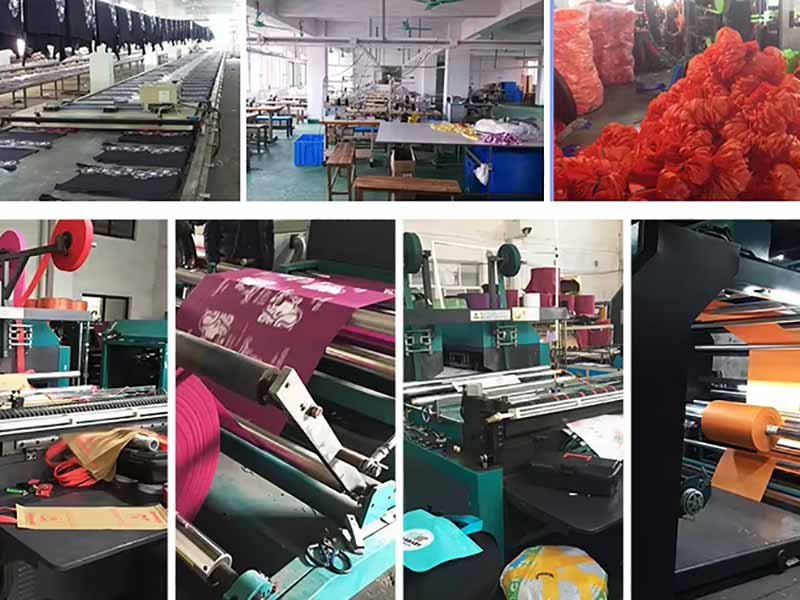
A weak factory rarely fails at the first email. It usually fails later, after the sample fee has been paid, after the deposit has been transferred, after the launch calendar is already tight, and after the buyer realizes the beautiful sample cannot be repeated in bulk. That is why factory verification is not paperwork for cautious people. It is commercial protection. A custom bag project involves materials, webbing, lining, foam, zippers, hardware, printing, embroidery, stitching, reinforcement, packaging, cartons, labels, and shipment planning. One missing link can turn a profitable product into delayed inventory, customer complaints, or an expensive supplier switch. The goal is not to distrust every factory. The goal is to verify the right evidence before money, time, and brand reputation are at risk.
To verify a custom bag factory, check its legal identity, factory evidence, production capability, sampling process, material control, quality system, communication behavior, and sample-to-bulk consistency before committing to bulk production. A reliable factory should provide clear documents, technical answers, realistic timelines, approved samples, QC checkpoints, and transparent production standards.
Think of factory verification like checking the foundation before building a store. The storefront may look polished, the catalog may look complete, and the quotation may look attractive. But if the foundation is weak, every next step becomes risky. The smart move is to verify the factory layer by layer, so your project can move from idea to sample, then from sample to repeatable bulk production with fewer surprises.
What Does a Verified Bag Factory Mean?

A verified bag factory is not just a supplier with a website, catalog, or attractive quotation. It is a manufacturing partner whose identity, product capability, sampling process, material control, quality system, and delivery workflow can be checked through documents, samples, technical answers, production evidence, and consistent communication before you commit to bulk production.
Factory verification is proof, not trust
In custom bag sourcing, trust is useful, but proof is safer. A verified factory should be able to show more than finished product photos. It should be able to explain how a design becomes a sample, how the sample becomes a bulk production standard, and how the production team keeps fabric, stitching, logo, packing, and size consistent across the order.
Many sourcing mistakes happen because the buyer verifies only one layer. They check a business license but do not check production capability. They see workshop photos but do not check whether that factory can make their exact bag type. They receive a sample but do not ask whether the material can be sourced again for bulk production.
A serious verification process looks at the full chain: legal identity, product category fit, material knowledge, pattern making, sampling records, BOM control, quality checkpoints, inspection reports, packing method, shipment preparation, and after-sales response. If one part is weak, the whole project becomes risky.
Factory, trader, or managed production system?
Not every supplier that serves custom bag orders works in the same way. Some own a complete sewing workshop. Some manage in-house sampling and outsource certain production steps. Some are trading companies. Some combine their own development team, QC team, material resources, and selected production partners.
The model itself is not the problem. The risk appears when the supplier cannot explain the model clearly. A reliable partner should tell you what is handled internally, what is supported by partner workshops, and who is responsible for quality control.
For bags, this matters because one product may involve fabric sourcing, cutting, sewing, embroidery, printing, webbing customization, metal hardware, silicone patches, labels, retail packaging, and export shipment. A supplier that controls the project well can still be valuable even if not every single process happens under one roof. But it must control the standard, timing, quality, and communication.
Verification should match your product risk
A simple cotton tote bag does not require the same verification depth as a waterproof backpack, cooler bag, tactical bag, tool bag, or medical bag. The more functional the product, the more verification you need.
A tote bag may mainly require fabric weight, stitching strength, logo accuracy, color control, and packing. A cooler bag needs insulation material, lining sealing, zipper performance, capacity test, and temperature-retention expectations. A tool bag needs load-bearing design, reinforced stitching, hardware durability, and abrasion-resistant fabric. A pet carrier may involve ventilation, structure, comfort, and market compliance expectations.
Verification should not become paperwork for its own sake. It should answer one practical question: can this factory produce your bag repeatedly, at the required quality level, within your delivery plan, without creating hidden risks?
| Verification Layer | What It Checks | Useful Evidence | Risk If Ignored |
|---|---|---|---|
| Legal identity | Company existence and payment safety | Registration, invoice details, bank name | Payment to wrong or unclear entity |
| Factory role | Real production responsibility | Workshop photos, videos, process explanation | Hidden trader or uncontrolled outsourcing |
| Product fit | Ability to make your bag type | Similar samples, material suggestions | Factory can make bags, but not your bag |
| Sampling control | Ability to create production-ready sample | Pattern, BOM, revision records | Sample looks good but cannot be repeated |
| QC system | Ability to reduce defects | Inspection checklist, AQL report, photos | Bulk quality inconsistency |
| Delivery workflow | Ability to ship correctly | Packing list, carton marks, shipping terms | Delays, label errors, channel problems |
The best factories explain limitations
One of the strongest signs of a reliable factory is not that it says “yes” to everything. It is that it explains limits clearly. A good factory may say a certain material has a high MOQ, a certain logo process may not work well on rough fabric, a certain structure may need reinforcement, or a very short lead time may increase defect risk.
That kind of answer protects the buyer. In real production, every decision has trade-offs. Thicker fabric may improve structure but increase cost and carton weight. A lower-cost zipper may reduce price but affect user experience. A complex pocket layout may improve function but increase sewing time and inspection difficulty.
A verified factory behaves like a technical partner. It helps you see the risk before the order starts, not after the goods are packed.
How Do You Check Factory Identity?
Check factory identity by comparing the company name, address, contact details, registration documents, quotation, invoice, bank beneficiary, certificates, email domain, and production evidence. These details should be consistent or clearly explained. If names, addresses, payment details, or certificates do not match, pause before paying sample fees or deposits.
Start with name consistency
The first step is simple: check whether the supplier’s identity is consistent across all documents. The company name on the quotation should match the invoice. The bank beneficiary should match the company or an officially explained related export entity. The certificate holder should match the factory or production site being presented. The email signature should not show a completely unrelated company.
In international sourcing, some suppliers use one company for production and another for export. That can be legitimate. But it must be explained before payment. A professional supplier should be comfortable providing written clarification. If the response is vague, rushed, or defensive, treat it as a warning sign.
Buyers should not be shy about asking these questions. Large brands, retailers, distributors, and Amazon sellers all need clear supplier records for internal approval. A factory that wants long-term business should understand that identity verification is part of professional sourcing.
Check the factory address carefully
A factory address is more than a location. It helps you understand whether the supplier has real manufacturing operations, an office only, a showroom, or a shared industrial site. Ask for the office address and the production address if they are different.
Photos and videos can help, but they should be specific. General workshop videos are easy to reuse. Ask for a short video showing the entrance sign, production floor, sample room, cutting area, sewing area, packing area, or the type of bag currently being made. For higher-value orders, a third-party audit or video meeting from the workshop can provide stronger evidence.
If the supplier refuses any reasonable factory evidence while asking for a large deposit, that is not normal. Confidentiality can explain why it cannot show certain client products, but it does not explain why it cannot show basic production capability.
Review documents by relevance
Not every project needs every certificate. A normal promotional tote order, a recycled material tote, a baby product, a medical bag, and an outdoor waterproof bag may require different evidence. What matters is whether the document is relevant to your product and sales market.
For example, if you are buying recycled fabric bags, you may care about material traceability. If you are buying children-related bags, you may need safety or restricted substance testing. If you are buying for retail chains, you may need social compliance audit documents. If you are buying insulated food delivery bags, you may need food-contact material considerations depending on the market and product contact surface.
A certificate should be checked for four things: company name, factory address, expiry date, and scope. A certificate that belongs to another factory, expired years ago, or covers an unrelated process should not be treated as strong proof.
| Document or Detail | What to Check | Normal Buyer Action |
|---|---|---|
| Business registration | Company name, validity, business scope | Compare with quotation and invoice |
| Proforma invoice | Seller name, address, payment terms | Confirm before sample fee or deposit |
| Bank details | Beneficiary name and country | Ask for explanation if name differs |
| Certificates | Holder, address, expiry, scope | Verify if required by your market |
| Factory photos/videos | Real workshop, not only showroom | Ask for product-category evidence |
| Contact information | Email domain, phone, WhatsApp | Match with official website or profile |
| Export records/docs | Shipping ability and documentation | Useful for larger or repeat orders |
Payment details deserve extra caution
Payment is where weak verification becomes expensive. Before paying, make sure the receiving entity is clear. If the quotation is from one company but payment goes to another, ask why. If the supplier says the bank account belongs to a “friend,” “boss,” or “agent” without formal explanation, do not proceed.
For a sample fee, buyers sometimes move quickly. That is understandable, but still check the basics. For a bulk deposit, identity checks should be stricter. Confirm seller name, bank beneficiary, invoice number, product description, quantity, sample or bulk terms, delivery terms, and refund or revision conditions where applicable.
A good factory will not rush you through this step. It will understand that clear payment documents protect both sides.
Which Production Capabilities Matter?

The most important production capabilities are product-category experience, material sourcing, pattern making, cutting accuracy, sewing control, reinforcement, logo application, packaging, inspection, and shipment preparation. A factory must prove it can make your specific bag type, not just show that it has produced some bags before.
Product category experience matters
A bag factory can be experienced but still not suitable for your project. Custom bag manufacturing includes many different product types: tote bags, backpacks, travel bags, cosmetic bags, cooler bags, tool bags, outdoor bags, medical bags, tactical bags, waterproof bags, sports bags, pet bags, and soft cases. Each category has different technical risks.
A tote bag may look simple, but buyers still need to check fabric weight, handle strength, print quality, seam finishing, and packing. A backpack requires shoulder strap structure, foam, lining, zipper durability, compartment layout, and back-panel comfort. A cooler bag involves insulation material, lining, leakage resistance, zipper quality, and folding or carton packing. A tool bag needs stronger fabric, bartack reinforcement, load-bearing handles, and hardware durability.
When verifying a factory, ask for similar work, not just general product photos. If your project is a 600D polyester tool bag, a cotton tote case is not enough proof. If your project is a retail cosmetic pouch with precise logo placement, a simple drawstring bag does not prove the same ability.
Material knowledge separates strong factories
The right material decision can prevent many problems before production begins. Fabric weight, yarn density, coating, hand feel, stiffness, abrasion resistance, waterproof performance, color fastness, print compatibility, and cost all affect the final bag.
A good factory will not only ask “What material do you want?” It will ask how the bag will be used. Will it carry heavy tools? Will it be folded into e-commerce packaging? Will it be used outdoors? Does it need structure or softness? Is the logo printed, embroidered, patched, or woven? Is the target market retail, Amazon, corporate gifting, travel, outdoor, or professional use?
These answers guide material selection. Canvas may work well for lifestyle totes, while polyester Oxford may be better for backpacks, cooler bags, and utility bags. Neoprene may work for soft protective items and drink sleeves. PU leather may suit cosmetic bags or fashion-focused products. TPU or coated fabrics may be considered for certain waterproof or outdoor applications, depending on structure and seam design.
| Bag Type | Common Material Range | Key Capability to Verify | Practical Risk |
|---|---|---|---|
| Cotton tote | 8-16 oz cotton canvas | Printing, handle stitching, shrinkage | Weak handles or poor print clarity |
| Backpack | 300D-900D polyester/nylon | Structure, foam, zipper, lining | Shape collapse or zipper complaints |
| Cooler bag | Oxford, PEVA, aluminum film, foam | Insulation, lining, leakage control | Poor cooling performance |
| Tool bag | 600D-1680D polyester/nylon | Reinforcement, bartack, load-bearing | Handle tearing under weight |
| Cosmetic bag | PU, PVC, nylon, polyester, velvet | Logo, lining, shape, finishing | Wrinkles, odor, rough stitching |
| Waterproof bag | TPU/PVC-coated fabric | Sealing, structure, closure | Water claim not matching real use |
Pattern and cutting control
Pattern making is one of the least visible but most important parts of custom bag production. A poor pattern can make a bag look uneven, collapse after use, waste material, or create sewing difficulty. In bulk production, a small pattern error can multiply across hundreds or thousands of units.
Ask how the factory creates and confirms patterns. Does it develop from a drawing, physical sample, tech pack, or reference image? Does it record pattern versions? Does it measure the sample against the spec sheet? Does it adjust seam allowance, corners, curves, pockets, and reinforcement points before bulk?
Cutting accuracy also matters. If panels are cut poorly, sewing operators have to “force” the bag into shape. That leads to twisting, uneven seams, mismatched panels, and inconsistent dimensions. For multi-SKU or multi-color orders, cutting control also prevents mixed colors, wrong lining, or incorrect component matching.
Sewing and reinforcement ability
A custom bag lives or dies at stress points. Handles, shoulder straps, zipper ends, side seams, bottom panels, pocket openings, D-rings, buckles, and webbing joints need proper reinforcement. A product may look good in photos but fail after real use if these areas are weak.
Ask what reinforcement methods the factory recommends. Common methods include bartack stitching, box stitching, cross stitching, binding, double stitching, rivets, extra fabric layers, webbing reinforcement, and bottom support panels. The right choice depends on product use and cost target.
Strong factories do not use the same sewing method for every bag. They adjust stitch type, thread, seam allowance, binding, and reinforcement according to load, material thickness, appearance requirement, and production efficiency. That is the difference between simply sewing fabric and engineering a commercial bag.
How Do You Verify Sampling Ability?
Verify sampling ability by checking whether the factory can understand your drawing, tech pack, physical sample, or reference image, then turn it into patterns, material choices, BOM records, sample revisions, and an approved sample that can guide bulk production. A good sample is not only attractive; it must be repeatable.
A good sample begins with good questions
A capable factory does not rush straight into sampling. It first asks questions that affect production. What is the target size? What is the carrying weight? Which market will it sell in? Does it need to stand upright? What logo effect do you want? Will the product be packed flat or shaped? What is the target order quantity? Are there certification or testing requirements?
These questions are not delays. They prevent wrong assumptions. If a buyer sends only one product photo and the factory immediately says, “No problem, sample ready in 3 days,” that may sound efficient, but it often means the factory has not reviewed structure, material, or cost properly.
For custom bags, sampling should confirm dimensions, material, color, lining, foam, webbing, zipper, hardware, logo process, stitching, reinforcement, packaging, and estimated bulk feasibility. The factory should also tell you which details are uncertain and need confirmation.
Tech packs must become production language
A buyer may describe a bag visually. A factory must translate that idea into production language: pattern pieces, material codes, stitching methods, component specifications, logo process, packaging, and QC standards.
If you provide a tech pack, the factory should review whether the specifications are complete. If you provide a physical sample, the factory should measure it, analyze the structure, identify materials, and suggest improvements if needed. If you provide only reference images, the factory should explain what can be estimated and what cannot be confirmed until sampling.
For example, a reference photo rarely reveals fabric weight, foam thickness, lining type, zipper grade, or exact dimensions. A professional factory will not pretend these details are certain. It will propose a reasonable development path and confirm details step by step.
Sample revisions need records
Many custom bag projects require more than one sample round. That is normal. The problem is not revision. The problem is unmanaged revision. If changes are only discussed in messages and never recorded properly, the final approved sample may not match the buyer’s expectation.
A clear sample revision system should record what changed, why it changed, and which version is approved. For example, Sample V1 may confirm size and structure, V2 may adjust logo position and handle length, and V3 may confirm final material and packing. Each change should update the BOM or production notes.
Useful sample records include sample version number, revision date, changed dimensions, changed material, logo position update, hardware change, packaging update, buyer approval record, photos or videos, and final sealed sample status. These records become the bridge between sampling and bulk production.
| Sampling Stage | Buyer Should Confirm | Factory Should Provide | Typical Risk If Skipped |
|---|---|---|---|
| Project review | Size, use, market, quantity | Feasibility comments | Wrong structure from the start |
| Material selection | Fabric, lining, foam, webbing | Material options and trade-offs | Sample cannot be repeated in bulk |
| First sample | Shape, function, main structure | Photos, measurements, notes | Buyer approves only appearance |
| Revision | Changes and priority details | Updated record and version | Old details enter bulk production |
| Final approval | Golden sample and BOM | Approved sample standard | Sample-to-bulk inconsistency |
Bulk feasibility must be checked
A sample that looks good once is not enough. Before approval, ask whether the same material, logo process, hardware, webbing, and packaging can be repeated at bulk quantity. Sometimes a sample uses available material from the sample room, but bulk production requires a new fabric order. That may affect color, MOQ, cost, and lead time.
Bulk feasibility also includes sewing difficulty. Some sample details may require too much handwork, slow down production, or create inconsistent results. A good factory should tell you if a detail is beautiful but risky. For commercial production, consistency matters more than a one-time perfect sample.
Before approving the sample, confirm the final BOM, pattern, size tolerance, logo standard, packaging method, carton packing, and inspection criteria. This turns the sample into a production standard rather than a nice reference piece.
How Is Quality Controlled?

Quality is controlled through a step-by-step system: material inspection, component checking, cutting inspection, first-piece approval, in-line production inspection, sewing inspection, logo inspection, dimension measurement, functional testing, packing inspection, final AQL inspection, and shipment documentation. Good QC starts before bulk production, not after defects appear.
Quality starts with incoming materials
Many bag defects begin before sewing. Fabric may arrive with color variation, coating marks, unstable hand feel, wrong weight, poor smell, uneven width, or surface defects. Webbing may be too soft, too thin, or inconsistent in color. Zippers may not run smoothly. Hardware may have scratches, plating issues, or weak spring parts.
A factory with serious QC checks incoming materials before cutting. This usually includes fabric color comparison, material width, weight or thickness check where relevant, surface defect inspection, lining confirmation, webbing width, zipper model, hardware quantity, and logo material confirmation.
If materials are not checked early, the factory may discover problems after cutting or sewing, when replacement becomes much more expensive. For buyers, this is why a very low quotation can be dangerous. If the factory saves time by skipping material inspection, the risk moves to your product.
First-piece approval prevents batch mistakes
Before full production, a good factory should make and inspect a first production piece. This is different from the sample. The first production piece uses bulk materials and real production methods. It checks whether the production team understands the approved sample and whether the actual materials perform as expected.
The first-piece check should include dimensions, stitching, logo position, reinforcement, lining, zipper, pocket layout, label, packaging, and overall appearance. If the first piece is wrong, the factory can correct the issue before hundreds or thousands of units are made.
This step is especially important for custom bags with multiple colors, multiple SKUs, custom logo processes, special pockets, foam panels, or tight retail requirements. Skipping first-piece approval may save a few hours but create days of rework later.
In-line inspection is more useful than final panic
Final inspection is necessary, but in-line inspection is often more useful. Once all bags are finished and packed, fixing defects becomes slow and expensive. In-line inspection catches problems while production is still moving.
For example, if stitch tension is wrong, it can be adjusted early. If a logo is slightly off-position, the printing or embroidery team can correct the fixture. If a pocket is sewn to the wrong side, the line can stop before the same mistake spreads. If carton labels are wrong, the packing team can fix the process before shipment.
A practical QC system should include checkpoints at material arrival, cutting, logo process, sewing, semi-finished stage, final product, and packing. Buyers do not need to control every detail personally, but they should ask the factory where these checks happen and how problems are recorded.
| QC Stage | Common Checkpoints | Practical Tolerance or Method |
|---|---|---|
| Material inspection | Color, surface, width, weight, smell | Compare to approved swatch or spec |
| Cutting inspection | Panel size, direction, quantity | Check against pattern and size chart |
| Logo inspection | Position, color, adhesion, clarity | Check against artwork and approved sample |
| Sewing inspection | Stitch density, seam alignment, reinforcement | Visual and pull-check on stress points |
| Dimension check | Length, width, height, pocket size | Tolerance depends on product structure |
| Packing inspection | Polybag, label, carton mark, SKU mix | Match packing list and channel rules |
| Final inspection | Appearance, function, quantity, carton | AQL or buyer-defined standard |
Final inspection should be documented
Final inspection should produce evidence. At minimum, buyers should expect photos or videos of finished goods, packing, carton marks, and key product details. For larger orders, an AQL inspection or third-party inspection may be appropriate.
Documentation matters because it creates accountability. If there is a dispute after delivery, written records help both sides understand whether the issue came from material, production, packing, shipment, or handling after arrival. It also helps repeat orders. A factory that saves approved samples, QC notes, BOM records, and packing standards can reproduce the order more efficiently next time.
Quality control is not about claiming zero defects. In real manufacturing, the goal is controlled risk, early correction, clear standards, and continuous improvement. That is what professional buyers should look for.
What Red Flags Should You Avoid?

Avoid factories that hide identity details, avoid technical questions, give unrealistic prices or lead times, push fast payment, cannot explain sampling or QC, provide mismatched certificates, refuse production evidence, or quote without understanding your product. A reliable factory is usually clear, practical, and specific before payment.
Vague answers are early warnings
A weak supplier often sounds friendly but unclear. It may answer every technical question with “yes,” “no problem,” or “we have good quality.” These answers are not enough for custom bag production.
Ask specific questions and watch the quality of the response. Which fabric would you recommend for this use? What zipper size is suitable? Where should we reinforce the handle? Is this logo better as embroidery, screen print, woven label, rubber patch, or heat transfer? What is the expected sample process? What could affect the final price?
A capable factory may not answer everything instantly, but it will investigate and respond logically. A weak supplier avoids details because it does not control them.
Unrealistic price usually hides something
A very low price may mean the factory is efficient, but it may also mean something important is missing. The material may be thinner. The lining may be cheaper. The zipper may be weaker. The logo process may be simplified. Reinforcement may be reduced. Packing may be basic. Inspection may be minimal.
Buyers should compare quotations line by line. Does each quote include the same fabric, lining, zipper, webbing, logo process, label, packaging, carton, and shipping term? If not, the lowest quote may not be the best quote.
The same applies to lead time. Custom bag production needs time for material preparation, sample approval, cutting, logo process, sewing, QC, packing, and shipment. If one supplier promises a much shorter timeline than everyone else, ask what steps are being skipped.
Payment pressure is a serious signal
A professional supplier wants to move the project forward, but it should not pressure you to pay before basic details are clear. If a factory pushes immediate payment while avoiding identity checks, technical questions, or written confirmation, be careful.
Before sample payment, confirm the product scope, sample cost, sample timeline, revision terms, shipping method, and payment receiver. Before bulk deposit, confirm final sample approval, PI details, quantity, unit price, materials, logo, packaging, delivery term, lead time, QC requirements, and payment schedule.
Good suppliers make payment easier by reducing uncertainty. Risky suppliers make payment urgent before answering the hard questions.
Poor records create repeat-order problems
Some suppliers can finish one order but struggle with repeat orders. This often happens when they do not keep pattern records, BOM files, approved material details, logo files, packing standards, or QC notes. The next order then starts again from memory, and small differences appear.
For brand customers, repeat consistency is important. A tote bag reordered three months later should not suddenly have different fabric stiffness, handle length, logo position, or carton packing. A backpack should not change pocket size or zipper feel without approval. A cosmetic bag should not shift color between batches without explanation.
Ask the factory how it manages repeat orders. Does it keep approved samples? Does it save BOM versions? Does it record pattern changes? Does it track packaging files? Does it review customer feedback before the next order? The best factories do not only complete one shipment. They help buyers build a stable product line.
Ready to Verify Your Custom Bag Project with Lovrix?
Verifying a custom bag factory is not about creating obstacles. It is about protecting the product you want to build. Before sampling or bulk production, check identity, factory structure, material knowledge, production capability, sampling records, quality control, certificates, communication, and red flags. The stronger the evidence chain, the safer your custom bag project becomes.
Lovrix is based in Shenzhen, Guangdong, China, within a mature supply chain for custom bags, textile materials, webbing, sewing products, packaging, export services, and international logistics. With 18+ years of experience in custom bags, textile fabrics, webbing, OEM/ODM manufacturing, and engineered soft goods development, Lovrix supports material selection, structure development, sampling, private label branding, production, quality control, packaging, and global delivery.
For brands, importers, retailers, Amazon sellers, Shopify and DTC brands, outdoor brands, travel brands, cosmetic brands, tool brands, medical product teams, and commercial purchasing teams, the right factory should not only make a bag. It should help reduce development risk, control bulk consistency, improve product details, and build a product line that can be reordered with confidence.
Send your drawing, tech pack, reference image, sample photo, material idea, target quantity, packaging requirement, and delivery plan to Lovrix. The team can review your project from material options, structure, MOQ, sampling time, production cost, quality control, packaging, and shipment planning before giving you a clear OEM/ODM proposal.


