 Skip to content
Choosing between Polyester Oxford and Nylon Oxford sounds like a small material decision, but for a commercial bag project, it can decide cost, durability, customer reviews, and whether the same product can be reordered smoothly six months later. A backpack that looks strong in a product photo may still fail if the fabric stretches, fades, tears at stress points, or cannot hold its coating after daily use. A tool bag may need abrasion resistance more than softness. A promotional tote may need clean logo display and cost control more than extreme tensile strength. That is why professional custom bag development starts before cutting and sewing. It starts with material logic.
Polyester Oxford is usually better for cost-controlled, UV-exposed, promotional, travel, and everyday bags. Nylon Oxford is usually better for high-abrasion, high-load, premium, tactical, and heavy-duty bags. The best choice depends on denier, coating, structure, lining, reinforcement, sewing method, target price, and real use environment – not only the fiber name.
In real manufacturing, the winning material is rarely the one that sounds strongest on paper. It is the one that fits the product promise. Imagine two brands launching similar travel bags: one chooses fabric only by unit price, while the other tests fabric, coating, handle load, zipper stress, bottom wear, and carton packing before approving a sample. Their bags may look similar on launch day. After months of airport floors, car trunks, customer returns, and repeat orders, the difference becomes obvious.
What Is Oxford Fabric?

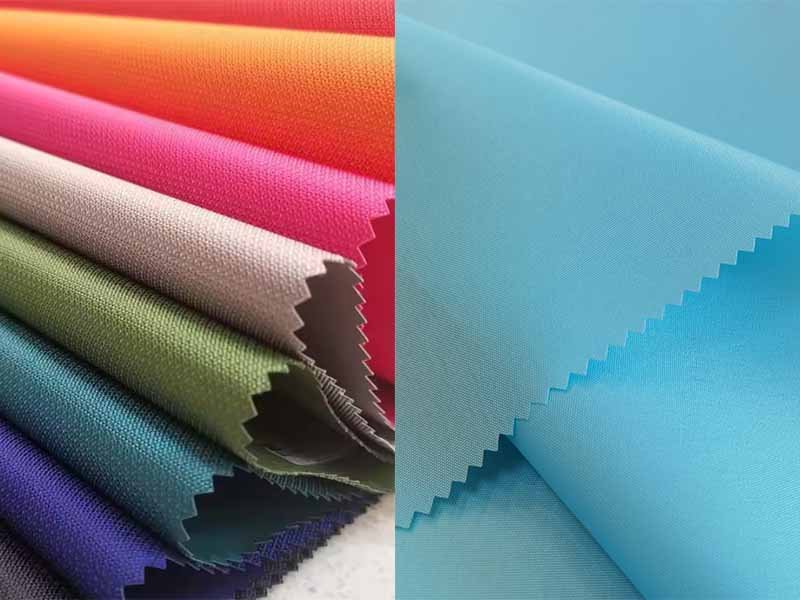
Oxford fabric is a woven textile structure, not one single material. In custom bags, it is commonly made from polyester or nylon yarns and finished with PU, PVC, TPU, PE, or other coatings. Its final performance depends on fiber type, denier, weave density, coating, backing, lining, and how the finished bag is engineered.
Oxford Is a Construction
Oxford fabric is often misunderstood because many people treat it like a raw material. In reality, “Oxford” mainly describes the woven construction. The fiber can be polyester, nylon, recycled polyester, or another synthetic yarn. That is why “Oxford fabric” alone is not enough for product development. A buyer may ask for Oxford fabric, but a factory still needs to know the fiber, denier, coating, weight, color, backing, and target use.
A serious specification sounds more like 600D polyester Oxford with PU coating, 420D nylon Oxford with TPU lamination, or 1680D nylon Oxford with PVC backing. These details help the manufacturer judge how the material will cut, fold, sew, resist abrasion, hold color, accept branding, and behave in bulk production. Without those details, two suppliers may quote very different fabrics under the same general name.
For custom bags, Oxford fabric is popular because it offers a practical balance between strength, price, texture, coating compatibility, and production stability. It can be used for backpacks, tote bags, tool bags, travel bags, cooler bags, outdoor bags, storage cases, medical bags, tactical pouches, and many other sewn soft goods.
Polyester Oxford Basics
Polyester Oxford is widely used because it is cost-efficient, stable, easy to color, and suitable for many commercial bag categories. It appears in school backpacks, shopping totes, promotional bags, travel organizers, cooler bags, cosmetic bags, storage products, sports bags, and many private label bag programs. For brands that need multiple colors, repeat orders, and predictable pricing, polyester is often the practical starting point.
One of polyester’s biggest advantages is dimensional stability. It usually stretches less than nylon and keeps its shape well during cutting, sewing, packing, and daily use. Polyester also performs well in color control and sunlight exposure compared with many nylon options, which is useful for outdoor-facing bags, event bags, retail programs, and multi-color product lines.
The trade-off is that polyester usually does not offer the same toughness or abrasion recovery as nylon in demanding use. For moderate loads and daily-use products, that is often acceptable. For rough industrial, tactical, or outdoor use, the design may need reinforcement, a higher denier polyester, or a stronger nylon option.
Nylon Oxford Basics
Nylon Oxford is usually selected when toughness, flexibility, tear resistance, and abrasion performance are more important than the lowest material cost. It is often used for tactical bags, premium backpacks, outdoor gear bags, heavy-duty travel bags, motorcycle bags, tool bags, camera bags, and technical pouches.
Nylon has a more resilient hand feel and generally handles repeated flexing and rubbing better than polyester at comparable fabric levels. This matters when the product may be dragged, compressed, overloaded, rubbed against hard surfaces, or used in professional environments. It also helps when a bag needs a stronger technical image in the retail market.
However, nylon is not automatically the best choice for every bag. It can cost more, may absorb slightly more moisture, and may require more careful color and coating control depending on the project. For a simple corporate gift bag or value-positioned travel pouch, nylon may be unnecessary. For a serious outdoor, tactical, or heavy-load bag, it may be worth the upgrade.
Common Oxford Specs
| Oxford Fabric Spec | Common Bag Use | Typical Role | Practical Note |
|---|---|---|---|
| 210D Polyester Oxford | Linings, pouches, drawstring bags | Lightweight fabric | Good for low-load products or inner compartments |
| 300D Polyester Oxford | Light organizers, simple totes | Light outer shell | Better body than 210D, still not for heavy loads |
| 420D Nylon Oxford | Outdoor bags, technical pouches | Mid-light technical fabric | Good strength-to-weight balance |
| 600D Polyester Oxford | Backpacks, totes, cooler bags, tool organizers | Main commercial fabric | One of the most common bag fabrics |
| 900D Polyester Oxford | Structured bags, heavier utility bags | Heavier polyester option | Stronger hand feel and better body |
| 1000D Nylon Oxford | Tactical bags, outdoor bags, professional pouches | Heavy-duty shell | Better for abrasion and load-bearing use |
| 1680D Nylon Oxford | Premium luggage, tool bags, heavy-duty products | High-strength outer fabric | Strong appearance, higher cost, heavier build |
Which Fabric Is Stronger?

Nylon Oxford is generally stronger and tougher than Polyester Oxford at comparable fabric levels, especially in tear resistance and repeated stress. Polyester Oxford is still strong enough for many everyday and commercial bags when the correct denier, coating, lining, stitching, and reinforcement are used. Strength should be judged by the whole bag structure, not only the fabric name.
Strength Is Not One Number
When people ask which fabric is stronger, they often expect one simple answer. In real production, strength has several meanings. Tensile strength, tear strength, seam strength, abrasion resistance, puncture resistance, coating adhesion, and load-bearing structure can all affect how long a bag lasts.
A fabric can be strong on a lab sheet but still fail in a finished bag if the sewing construction is weak. For example, a heavy nylon shell will not protect a backpack if the shoulder strap is attached to only one thin fabric layer. A strong polyester panel may still tear if the seam allowance is too narrow or if the handle is not reinforced with webbing.
For commercial bag development, strength should be evaluated through use conditions. Will the bag carry clothing, tools, laptops, bottles, samples, sports gear, or outdoor equipment? Will users lift it by hand, wear it on shoulders, drag it on the ground, or store it in a vehicle? These questions matter more than simply choosing the “strongest” fabric.
Nylon Has Better Toughness
Nylon Oxford usually has better toughness because nylon fibers can stretch and recover more than polyester fibers. This helps when the bag is pulled, twisted, rubbed, loaded, or compressed repeatedly. That is why nylon is often preferred for tactical backpacks, heavy travel bags, professional tool bags, outdoor pouches, and technical gear cases.
In field use, toughness is especially important around high-stress areas: shoulder strap anchors, handle attachments, bottom corners, zipper ends, pocket openings, and side panels. These areas receive repeated force. If the product is used every day or carries heavy items, nylon often gives a safer performance margin.
That said, nylon should not be treated as a magic solution. If a bag uses poor thread, weak webbing, small zippers, thin lining, or no bartack reinforcement, nylon alone will not prevent failure. The material gives the product a stronger base, but the engineering must complete the job.
Polyester Can Be Enough
Polyester Oxford is strong enough for many bag projects, especially when the use is moderate and the structure is properly designed. A 600D polyester Oxford backpack can perform very well for daily commuting, school use, corporate gifts, travel accessories, sports bags, and general retail products. For many brands, polyester gives the best balance between cost, color range, durability, and production stability.
The mistake is not choosing polyester. The mistake is choosing the wrong grade of polyester for the wrong use. A 210D or 300D polyester Oxford may be fine for a lightweight pouch, but it should not be used as the main shell of a heavy tool bag. A 600D or 900D polyester Oxford with proper backing, lining, and reinforcement can serve many mid-duty products reliably.
Polyester also works well when a project needs consistent colors across multiple SKUs. For brands building a product line, that stability can matter as much as raw strength. If a product is expected to be reordered several times a year, predictable material supply and color repeatability become part of the strength decision.
Practical Strength Comparison
| Material Choice | Strength Level | Best Fit | Caution |
|---|---|---|---|
| 300D Polyester Oxford | Light to medium | Drawstring bags, light organizers, low-load totes | Not ideal for heavy daily use |
| 600D Polyester Oxford | Medium | Backpacks, cooler bags, promotional bags, travel pouches | Needs reinforcement for stress points |
| 900D Polyester Oxford | Medium to heavy | Utility bags, structured travel bags, stronger totes | Heavier and less soft than 600D |
| 420D Nylon Oxford | Medium technical | Outdoor pouches, pack panels, lightweight gear bags | Cost may be higher than polyester |
| 1000D Nylon Oxford | Heavy-duty | Tactical bags, tool bags, outdoor bags | Can be overbuilt for simple bags |
| 1680D Nylon Oxford | Very heavy-duty | Premium luggage, tool storage, rugged travel products | Higher cost, heavier hand feel |
Which Fabric Resists Wear Better?

Nylon Oxford usually resists wear better than Polyester Oxford in rough and high-friction environments. It handles repeated rubbing, bending, dragging, and heavy use more confidently. Polyester Oxford can still perform well in daily-use bags, especially with suitable denier, coating, lining, bottom reinforcement, and smart panel design.
Abrasion Comes From Real Use
Wear resistance is not only about what happens in a lab. It comes from daily movement: a backpack rubbing against a jacket, a travel bag sliding in a car trunk, a tool bag sitting on concrete, a cooler bag being dragged across outdoor ground, or a pouch rubbing against metal accessories inside a larger case.
Nylon Oxford generally handles this kind of repeated friction better. It tends to flex and recover more effectively, which makes it useful for products that meet rough surfaces often. This is why heavy-duty and technical bag categories often lean toward nylon.
Polyester Oxford is still more than acceptable for many normal-use products. A school backpack, retail tote, gym bag, storage bag, or branded event bag does not always need nylon. But if the product will carry sharp, heavy, dirty, or rough items, polyester should be chosen carefully and supported with reinforcement.
High-Wear Zones
Most bags do not wear evenly. They wear out first at predictable zones. These include the bottom panel, lower corners, handle roots, shoulder strap anchors, zipper corners, pocket openings, front panel edges, and areas where the bag rubs against the body, floor, vehicle, shelf, or ground.
A professional bag design should place stronger materials or reinforcements in these zones. For example, a travel duffel may use 600D polyester Oxford for the main body but add a stronger bottom panel. A tool bag may use nylon Oxford for the outer shell and add double-layer panels where tools create pressure. A backpack may use reinforced fabric at the base while keeping the upper panels lighter.
This approach is often better than making the entire bag heavier. It controls cost and weight while improving durability exactly where the product needs it. A good product is not always overbuilt everywhere. It is reinforced intelligently.
Heavy Load Changes Everything
A fabric that works well for light items may not work once the product carries 10-20 kg. Load increases seam stress, fabric tension, zipper pressure, handle strain, and bottom deformation. This is where many low-cost bags fail.
For heavy-load bags, the key question is not only “polyester or nylon?” It is “how does the load travel through the bag?” A strong bag spreads force through webbing, reinforced panels, bartacks, stronger thread, and wider stress distribution. The handle should not depend only on the outer fabric. Shoulder straps should connect into reinforced areas. Bottom panels should resist sagging and abrasion.
Nylon Oxford often gives better safety for heavy-use products, but it still needs proper construction. Polyester Oxford can work for moderate loads if the structure is honest and well reinforced. For brands, the right choice should match the product claim. If the product is sold as heavy-duty, the material and construction must prove it.
Wear Risk by Bag Type
| Bag Type | Common Wear Risk | Lower-Risk Fabric Direction | Extra Reinforcement Needed |
|---|---|---|---|
| Daily backpack | Bottom corners, shoulder strap roots | 600D polyester or 420D nylon | Bartacks, padded strap anchors, stronger bottom |
| Tool bag | Bottom abrasion, sharp tool pressure | 1000D or 1680D nylon | Double bottom, webbing wrap, pocket bartacks |
| Travel duffel | Handle pull, zipper stress, trunk friction | 600D/900D polyester or nylon | Bottom panel, handle reinforcement, zipper ends |
| Cooler bag | Coating wear, seam stress, moisture exposure | Coated polyester Oxford | Lining seal, foam support, reinforced handles |
| Promotional tote | Handle roots, logo surface wear | 300D/600D polyester | Handle stitching, print durability check |
| Tactical pouch | Edge abrasion, MOLLE stress | Nylon Oxford | Binding, bartacks, reinforced attachment points |
Which Fabric Handles Water Better?

Neither Polyester Oxford nor Nylon Oxford is automatically waterproof. Both can become water-resistant through PU, PVC, TPU, PE, or other coatings. Water performance depends on coating quality, fabric density, seam construction, zipper choice, and whether stitch holes are sealed. A coated fabric can still leak if the bag structure is not designed for water resistance.
Water-Resistant Is Not Waterproof
Many clients use the word “waterproof” when they actually need “water-resistant.” These are not the same. A water-resistant bag can handle light rain, splashes, or short exposure. A waterproof bag should prevent water from entering under more demanding conditions, which usually requires more than ordinary sewing.
A standard Oxford bag with PU coating may resist light rain on the fabric surface, but water can still enter through seams, zipper teeth, needle holes, corners, or openings. This is especially important for laptop backpacks, outdoor bags, cooler bags, fishing bags, motorcycle bags, and travel bags.
If a product must protect electronics, food, tools, documents, or outdoor gear, the required water level should be clearly defined before sampling. A vague request such as “make it waterproof” can lead to wrong material choices, wrong quotation, and disappointed end users.
Polyester and Water
Polyester Oxford is commonly used for water-resistant bags because it works well with PU, PVC, PE, and other coatings. It usually has good dimensional stability, which helps during coating, cutting, and sewing. Polyester also tends to dry quickly and is widely available in many colors and denier levels.
For commuter backpacks, cooler bags, storage bags, promotional bags, travel organizers, and outdoor leisure products, coated polyester Oxford is often a practical choice. It keeps cost under control while offering enough protection for normal splashes or light rain.
However, polyester Oxford still needs the right construction. If the seams are not protected, water may enter through stitch holes. If the zipper is standard, rain can pass through the zipper tape or teeth. If the coating is too light or poorly bonded, it may wear or peel after use. The coating and construction must match the product promise.
Nylon and Water
Nylon Oxford can also be coated or laminated for water resistance. It is often used when the product needs both toughness and technical performance. Outdoor pouches, tactical bags, adventure backpacks, motorcycle gear bags, and premium travel bags may use nylon Oxford with stronger coating systems.
Nylon can absorb more moisture than polyester, so coating choice and finishing quality matter. In some projects, nylon’s toughness is the reason for choosing it, while the coating system handles water resistance. This is common when a bag must resist both abrasion and weather exposure.
The key is not to assume that nylon is automatically more waterproof. A nylon Oxford without suitable coating may not protect better than a properly coated polyester Oxford. For water-related products, coating type, seam treatment, zipper selection, and bag closure design matter more than fiber name alone.
Coating Options
| Coating / Finish | Common Use | Main Benefit | Practical Limitation |
|---|---|---|---|
| PU Coating | Backpacks, totes, travel bags, pouches | Flexible, common, cost-effective water resistance | Not enough for full waterproof claims without seam control |
| PVC Coating | Cooler bags, utility bags, waterproof-style products | Stronger body, heavier water resistance | Adds weight and stiffness |
| TPU Lamination | Outdoor bags, dry-style soft goods, technical products | Better waterproof potential and flexibility | Higher cost, needs careful production |
| PE Coating | Low to mid-range bags, simple water-resistant products | Economical surface protection | Lower premium feel |
| Water-Repellent Finish | Light rain products, outdoor casual bags | Improves surface beading | Can weaken over time with abrasion |
| Seam Sealing | Waterproof-oriented bags | Reduces leakage through stitch holes | Adds process cost and requires compatible construction |
Which Fabric Fits Your Bag Type?

Polyester Oxford fits cost-controlled, colorful, scalable, and daily-use bag projects. Nylon Oxford fits stronger, heavier, more technical, or premium products where abrasion, load, and toughness matter. The best choice depends on the bag category, user behavior, target retail position, coating needs, branding method, and repeat order plan.
Backpacks
For everyday backpacks, 600D polyester Oxford is one of the most practical starting points. It gives a good balance of cost, durability, color availability, and production efficiency. It is suitable for school backpacks, promotional backpacks, commuter bags, sports backpacks, and many online retail products.
For more technical backpacks, nylon Oxford becomes more attractive. Outdoor backpacks, tactical backpacks, camera backpacks, laptop backpacks, and premium travel backpacks often need stronger tear resistance, better abrasion handling, and a more durable hand feel. In these categories, the material is part of the product’s market promise.
The final choice should match the expected load. A lightweight daypack does not need the same material as a tactical pack. A laptop backpack needs fabric strength, but it also needs padding, lining, zipper quality, strap comfort, and bottom protection. The whole structure should be designed around how users carry the bag.
Tool Bags
Tool bags are one of the clearest categories where nylon Oxford can make sense. Tools are heavy, hard, sharp, and often dirty. The bag may sit on concrete, metal shelves, work trucks, outdoor ground, or construction sites. In this environment, abrasion and load-bearing performance matter more than small material savings.
For professional tool bags, 1000D or 1680D nylon Oxford is often a stronger direction. The bottom may need double-layer reinforcement, plastic board, rubber feet, or heavy webbing support. Pockets need bartacks. Handles should be supported by webbing that runs deep into the body, not only sewn onto the top edge.
Polyester Oxford can still work for light-duty tool organizers, home repair kits, gardening bags, promotional tool bags, or retail storage bags. But the use case should be honest. If the bag is marketed as heavy-duty, the material and structure must support that claim.
Travel Bags
Travel bags can use either polyester or nylon Oxford depending on positioning. Polyester Oxford is useful for foldable travel bags, packing cubes, lightweight duffels, luggage organizers, weekend bags, and value-focused retail products. It keeps cost and weight reasonable while still allowing good branding.
Nylon Oxford fits premium duffels, outdoor travel bags, motorcycle bags, heavy weekenders, and products exposed to airport handling, vehicle trunks, rough floors, or heavy packing. It creates a stronger durability story and can improve performance in high-wear use.
For travel bags, fabric is only part of the decision. Zipper size, puller strength, handle reinforcement, shoulder strap hardware, bottom panel support, and carton packing all affect customer experience. A travel bag may look strong but fail if the zipper end is weak or the handle attachment is too narrow.
Promotional Bags
Promotional bags usually favor Polyester Oxford. Most event, corporate gift, retail giveaway, and campaign bags need good logo display, stable color, acceptable durability, fast production, and controlled cost. Polyester Oxford handles these needs well.
Nylon Oxford may be suitable for premium promotional gifts, outdoor event bags, or branded gear where durability is part of the message. But for basic giveaways, it may push cost too high without creating enough extra value.
The branding method also affects fabric choice. Screen printing, heat transfer, embroidery patches, rubber badges, woven labels, and silicone patches all interact differently with fabric surface and coating. A smooth polyester Oxford may be better for certain logo processes, while a heavier nylon Oxford may fit patch-based branding better.
How Should Brands Choose?
Brands should choose between Polyester Oxford and Nylon Oxford by matching material to the product’s real use, target price, load level, durability promise, coating needs, and production plan. The best fabric is not always the strongest one. It is the one that makes the finished bag reliable, sellable, repeatable, and suitable for its market.
Start With Use
The first question should be: how will the bag actually be used? A corporate tote, a school backpack, a professional tool bag, a premium travel duffel, and an outdoor gear pouch all need different material logic.
If the product will carry light items, stay mostly indoors, and rely heavily on branding, Polyester Oxford is often enough. If the product will carry heavy tools, outdoor equipment, electronics, or professional gear, Nylon Oxford may provide a better safety margin.
Use conditions should include load weight, frequency of use, surface contact, weather exposure, user handling, sales channel, and customer expectations. A bag sold through premium outdoor retail cannot use the same material logic as a low-cost event giveaway. The fabric must match the story the brand is telling.
Match Cost and Positioning
Material choice affects more than durability. It affects unit cost, MOQ, sample cost, production lead time, color availability, freight weight, and final retail positioning. Polyester Oxford usually gives better cost control and broader commercial flexibility. Nylon Oxford usually increases material cost but may support a stronger product claim.
For brands, the goal is not to reduce cost blindly. The goal is to avoid paying for strength the customer does not need, while also avoiding underbuilt products that create complaints. A value-positioned travel pouch may not need nylon. A professional tool bag should not be built like a giveaway tote.
A balanced material decision protects both margin and reputation. If the product is overbuilt, it becomes expensive and heavy. If it is underbuilt, it may fail in use. The right choice sits between these two mistakes.
Test Before Bulk
A fabric swatch is useful, but it cannot show how the finished bag behaves. Sampling reveals folding, seam bulk, zipper movement, logo appearance, handle strength, shape stability, coating behavior, and user comfort. This is especially important when comparing Polyester Oxford and Nylon Oxford because the same bag pattern may feel different in each material.
A good sample review should check material hand feel and thickness, coating flexibility at folded areas, stitch quality and seam strength, handle and strap pull performance, bottom support, corner wear risk, logo clarity, lining compatibility, zipper smoothness, packing shape after compression, and estimated production consistency.
If the sample is approved, the fabric specification, color code, coating, lining, trims, thread, webbing, logo method, and packaging method should be recorded clearly. This protects future repeat orders and reduces communication errors.
Give Clear Project Details
A manufacturer can recommend better materials when the project information is complete. Instead of asking only “Which fabric is better?” provide the product type, size, expected load, use environment, target quantity, target price, logo method, packaging needs, and reference samples if available.
For an OEM project, send drawings, tech packs, BOM files, measurements, and material requirements. For an ODM project, send reference images, target market, product purpose, price range, and expected features. The more context the factory has, the more accurate the fabric recommendation will be.
A clear material decision saves time during sampling and reduces the risk of changing direction halfway through development. It also helps the factory judge whether stock fabric is enough, whether custom dyeing is needed, whether coating needs lead time, and whether the material can support future repeat orders.
Build Your Custom Oxford Bag with Lovrix
Polyester Oxford and Nylon Oxford are both useful materials, but they solve different business problems. Polyester Oxford is usually the smarter starting point when your project needs practical durability, strong color options, controlled cost, and scalable production. Nylon Oxford becomes more attractive when your bag must handle heavier loads, rougher surfaces, stronger abrasion, or a more technical market position.
The right answer depends on the whole product: denier, coating, lining, webbing, zipper, reinforcement, stitching, packaging, target price, and real use environment. A fabric that is perfect for a promotional tote may be wrong for a tool bag. A material that makes sense for a tactical backpack may be unnecessary for a cosmetic pouch. Professional product development is not about choosing the most expensive material. It is about choosing the material that makes the product reliable, sellable, repeatable, and suitable for your market.
Lovrix helps global brands and commercial clients evaluate custom bag projects from material selection, sampling, cost structure, production feasibility, quality control, branding details, packaging, and worldwide shipment. Send your drawing, product sample, reference image, size requirement, material idea, logo file, target quantity, and delivery plan to Lovrix. The team can help you compare Polyester Oxford, Nylon Oxford, coatings, structure options, and production paths before your project moves into sampling and bulk manufacturing.


