 Skip to content
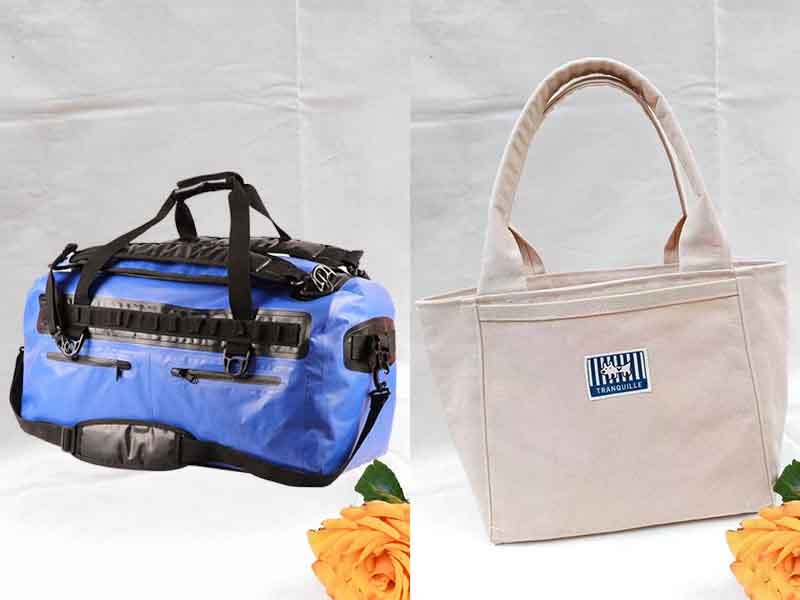
A waterproof bag can look perfectly engineered on a showroom table and still fail during its first serious rainstorm. The face fabric may have a high hydrostatic-head rating, the zipper may come from a reputable supplier, and the coating may appear flawless. Yet every panel eventually meets another panel, and those connection points often determine whether water stays outside or finds a path into the bag.
Buyers frequently compare denier, coating thickness, hardware, buckles, and fabric weight while treating seams as a secondary production detail. In reality, seam construction affects waterproof performance, load distribution, product shape, repairability, production cost, and long-term consistency.
Welded seams generally provide better liquid sealing because compatible thermoplastic surfaces are fused without conventional needle holes. Sewn seams provide greater flexibility for complex shapes, mixed materials, reinforcements, pockets, foam, webbing, and load-bearing components. The better option depends on the waterproof claim, material system, product structure, expected use, repair needs, production volume, and target cost.
Imagine two nearly identical outdoor duffel bags. One has welded TPU-coated panels. The other uses sewn Oxford fabric with taped seams. Both may survive rain, but they may behave very differently when placed in standing water, compressed inside a vehicle, dragged across a wet boat deck, or repeatedly folded for storage. The important question is not which seam sounds more advanced. It is which construction still performs after the product leaves the factory.
What Are Welded and Sewn Seams?

Welded seams fuse compatible thermoplastic layers into a continuous joint, while sewn seams connect materials with thread passing through the fabric. Welding reduces conventional needle-hole leakage and is useful for sealed products. Sewing offers greater freedom for curves, pockets, webbing, foam, linings, and mixed materials. Sewn seams may also be taped or coated when additional water resistance is required.
Welded Seam Construction
A welded seam is formed when two compatible material surfaces are overlapped and fused through controlled energy and pressure. Depending on the product and material, factories may use radio-frequency welding, high-frequency welding, hot-air welding, hot-wedge welding, ultrasonic welding, or controlled heat pressing.
PVC-coated polyester is frequently processed with radio-frequency welding because PVC responds well to high-frequency electromagnetic energy. TPU films and TPU-laminated fabrics can also be welded, but the process depends heavily on the exact TPU formulation, coating thickness, lamination method, and base textile.
A welded seam is not simply material that has been melted together. The process requires careful control of temperature, pressure, speed, dwell time, cooling time, surface condition, and overlap width. Too little energy may leave partially bonded areas that peel apart. Too much energy can thin the coating, distort the base fabric, create brittle edges, or leave visible burn marks.
For many bag applications, development trials may begin with overlap widths of approximately 15–25 mm. This range is only a practical starting point. A final overlap should be confirmed through mechanical testing and finished-product trials using the intended production material.
The welding process must also account for production repeatability. A sample made slowly by a skilled technician may look excellent, while bulk production can expose inconsistent pressure, panel movement, machine-temperature drift, or operator variation. For that reason, approved welding parameters should be recorded and transferred into production instructions.
Sewn Seam Construction
A sewn seam mechanically joins panels by passing thread through the material. The final result depends on the whole sewing system rather than the thread alone. Needle size, thread type, stitch pattern, stitch density, seam allowance, fabric construction, coating behavior, and reinforcement method all influence performance.
Lockstitch is widely used in bag manufacturing because it creates a stable and visually clean seam. Double-needle stitching may improve appearance and distribute load across a wider area. Bartacks, box stitches, cross stitches, reinforcement patches, folded seams, binding, and internal tapes may be added at stress points.
Many medium-weight bag fabrics are sewn at approximately 6–10 stitches per inch. A higher stitch density is not always stronger. Closely spaced needle holes can weaken coated or lightly woven fabrics by creating a perforated tear line. Very low stitch density may concentrate force on individual stitches and reduce seam stability.
Seam allowance is equally important. A narrow allowance may pull out under tension, especially on loosely woven fabric. A wider allowance, folded edge, binding, or reinforcement panel helps spread the load and improve production consistency.
Structural zones should be designed separately from ordinary panel seams. Handle roots, shoulder-strap anchors, compression straps, D-rings, side-release buckles, and heavy webbing attachments require stronger load distribution than decorative or low-stress seams.
Sewn-and-Taped Seams
A sewn-and-taped seam combines mechanical stitching with a secondary sealing operation. The panels are sewn first, and a compatible seam tape is then applied over the stitch line using controlled heat and pressure. The tape covers the needle holes and reduces water penetration through the seam.
Seam-tape widths for technical soft goods commonly fall around 18–25 mm, although actual width depends on seam shape, fabric coating, tape formulation, and the amount of layer buildup. Narrow curves and bulky intersections may need different tape widths or specially shaped sealing patches.
Compatibility is critical. A tape that bonds well to one TPU laminate may not adhere reliably to another PU-coated polyester. Surface treatments, print layers, dust, oil, moisture, release agents, and coating inconsistencies can reduce adhesion.
The quality of the sewing underneath the tape also matters. Uneven seam allowances, thread knots, skipped stitches, puckering, sharp corners, and stacked seam intersections can prevent the tape from lying flat. The tape may appear secure while leaving a hidden channel beside a raised area.
A reliable taped seam begins with pattern engineering. Seam paths need to remain accessible to the taping machine, layer buildup should be minimized, and corners should avoid unnecessary thickness. Tape adhesion should be checked after folding, conditioning, and realistic product use rather than judged only immediately after application.
How the Methods Compare
| Construction | How It Is Joined | Common Materials | Main Advantage | Main Limitation |
|---|---|---|---|---|
| Welded seam | Thermoplastic layers are fused | PVC, TPU, weldable coated fabrics | Continuous liquid barrier without normal stitch holes | Requires compatible materials and specialized equipment |
| Sewn seam | Panels are joined with thread | Nylon, polyester, canvas, leather, mesh, foam laminates | Flexible for complex structures and attachments | Needle holes can create water paths |
| Sewn-and-taped seam | Stitching followed by thermal seam tape | Selected PU- and TPU-coated fabrics | Combines structural sewing with improved sealing | Tape compatibility and seam bulk must be controlled |
| Hybrid construction | Welding and sewing are used in separate zones | Mixed-material systems | Each process is assigned to the function it handles best | Transition points require careful engineering |
Which Seam Is More Waterproof?

Welded seams usually provide better liquid sealing because they avoid conventional needle holes and create a continuous fused joint. Sewn seams can perform well in rain when protected by seam tape, coatings, flaps, or waterproof liners. However, the complete bag is only as waterproof as its weakest zipper, closure, corner, attachment point, seam intersection, or material transition.
Needle Holes and Water Paths
A sewing needle penetrates both the textile and its coating. Thread occupies much of the resulting opening, but it does not always create a watertight plug. Water can travel through small gaps around the thread, wick along the thread itself, or enter when repeated movement enlarges the original hole.
The exposure condition makes a major difference. A stitched seam beneath a protective flap may perform adequately during light rain. The same seam may leak when water pools against it, when the product is compressed, or when the seam remains wet for a long period.
Pressure also changes performance. A bag placed on a wet deck, squeezed between other luggage, or filled with heavy contents can force water through openings that would not leak during a quick spray demonstration.
Needle selection must balance sewing reliability and perforation risk. A large needle creates a larger hole. A needle that is too small may bend, overheat, damage the thread, or cause skipped stitches. Anti-wicking thread may reduce capillary movement, but it does not remove the physical punctures in the coating.
An untreated sewn seam should therefore normally be described as water-resistant rather than waterproof unless the entire finished construction has passed an appropriate test.
How Seam Tape Changes Performance
Seam tape improves water resistance by creating a continuous bonded layer over the stitch line. When tape chemistry, fabric coating, temperature, pressure, and application speed are correctly matched, the needle holes are covered and the thread is protected from direct water exposure.
Initial appearance can be misleading. A tape may look secure immediately after production but begin lifting after repeated folding, temperature changes, prolonged storage, or contact with oils and cleaning agents.
Surface preparation is essential. Dust, moisture, silicone treatments, release coatings, uneven lamination, or printed areas may interfere with adhesion. The bond should be evaluated on the exact material and color intended for production.
Seam intersections are among the most difficult areas. When three or four seams meet, stacked allowances create a raised point. Tape may seal the top while bridging over a lower channel beside the buildup.
Factories can reduce this risk by grading seam allowances, adjusting the assembly sequence, flattening bulky zones, using shaped patches, or redesigning the corner geometry.
Taped seams are practical for rainproof backpacks, outdoor pouches, luggage, covers, and technical apparel-inspired products. They are less suitable for holding liquid under continuous pressure unless the complete structure has been specifically developed and tested for that purpose.
Why Welded Does Not Mean Leakproof
A properly formed weld can provide a highly effective liquid barrier, but a welded bag can still leak. The seam is only one component of the waterproof system.
Conventional zippers, roll-top closures, valves, drain plugs, stitched handle anchors, unsealed logo applications, and transitions between materials may become the true entry points.
Corners are particularly sensitive. Straight welds are relatively easy to control, while tight curves and intersections can wrinkle, thin, trap air, or receive uneven pressure. A smooth exterior does not always prove that the entire overlap is fully bonded.
A roll-top dry bag may have perfect welded side seams and still allow water through the opening if the closure is not folded correctly. A welded cooler liner may hold water while standing upright but leak when squeezed or tipped.
The waterproof claim must therefore be defined before development. Protection from splashing, heavy rain, brief accidental immersion, and prolonged submersion are not the same requirement.
A useful product specification should define:
- Water depth or pressure
- Exposure time
- Product orientation
- Internal load
- Closure condition
- Permitted leakage
- Test temperature
- Whether the bag is flexed or compressed
Without these details, “waterproof” remains too broad to guide design, production, or quality control.
Waterproof Claims Need Testing
A single demonstration cannot prove every aspect of waterproof performance. Filling a bag with water may reveal internal liner leakage, but it does not reproduce outside rain pressure. A spray test evaluates exposed surfaces but may not challenge the product under compression. Hydrostatic testing can quantify material resistance, but it may not represent zippers, corners, and closures.
Material testing and finished-product testing should be treated separately. A fabric with a strong hydrostatic-head result does not guarantee that a sewn bag made from it will stay dry. A strong welded test strip does not prove that a complete three-dimensional bag has no channels at corners or transitions.
A practical validation program may include:
- Visual weld and tape inspection
- Internal water-hold testing
- Rain or spray exposure
- Seam peel testing
- Repeated folding
- Compression testing
- Abrasion at corners
- A second leak test after conditioning
- Closure-use simulation
- Loaded carrying tests
The most valuable waterproof claim is not the most dramatic wording. It is the claim that can be produced consistently, tested objectively, and communicated honestly to the end user.
Which Materials Work With Each Seam?

Welding works best with materials that contain a compatible thermoplastic coating or film, such as PVC and many TPU laminates. Sewing works with a wider range, including nylon, polyester, Oxford fabric, canvas, cotton, leather, mesh, foam, and linings. A fabric being water-resistant does not automatically mean it can be reliably welded.
Weldable Fabrics
PVC tarpaulin, PVC-coated polyester, TPU film, and selected TPU-laminated nylon or polyester are commonly used for welded bag construction. Their thermoplastic surfaces can soften and fuse under suitable processing conditions.
Material identification must go beyond a commercial name. Engineers need to understand:
- Base textile construction
- Coating polymer
- Coating weight
- Total material thickness
- Lamination method
- Coating side
- Surface texture
- Top treatments
- Print layers
- Intended welding method
Two materials both sold as TPU-coated nylon can behave very differently during welding. Their coating thickness, lamination adhesive, base textile, and surface treatment may not be the same.
The base textile carries much of the mechanical load. A strong weld over a weak textile can remain bonded while the fabric tears beside it. This means the seam itself may look strong even though the assembly is poorly balanced.
Matte finishes, anti-blocking agents, release coatings, printed graphics, or surface contamination can also interfere with fusion. Clear PVC and TPU require additional visual control because trapped air, whitening, scratches, distortion, and uneven edges are easy to see.
Every production material should be tested on the intended equipment. A successful weld on one batch should not automatically be assumed to work on an unverified replacement material.
TPU and PVC Differences
PVC is widely used in welded dry bags, waterproof totes, cooler liners, protective covers, and marine products. It is available in many weights and finishes and is often cost-effective for medium- and heavy-duty constructions.
PVC can feel firmer and heavier than TPU, particularly when the coating is thick. Depending on its formulation, it may also have more noticeable odor and less flexibility in cold temperatures.
Chemical compliance should be evaluated based on the intended market. Buyers should not rely only on the generic name PVC. Plasticizer composition, restricted substances, testing requirements, and end-market regulations may influence material selection.
TPU is often chosen for premium or lightweight products. It can provide a softer hand, better flexibility, cleaner appearance, strong abrasion performance, and better cold-weather behavior when the correct grade is used.
TPU-laminated nylon is frequently used for technical outdoor products where weight, packability, and flexibility matter. However, TPU generally costs more and may require a narrower processing window.
Thin TPU layers can be stretched, overheated, or separated from the base textile if machine settings are unstable. Material consistency and welding control become especially important during bulk production.
Neither material is universally better. The decision should consider product life, weight, touch, compliance, cold-temperature performance, abrasion, brand positioning, welding technology, repair strategy, and budget.
Sewn Material Systems
Sewing remains the most versatile method for traditional bag materials. Polyester Oxford, nylon, canvas, cotton, leather, PU leather, spacer mesh, lining fabrics, fleece, neoprene, foam laminates, and webbing can all be assembled through controlled stitching.
Many of these materials are either not thermoplastic or do not have a suitable weldable surface. A PU-coated Oxford fabric may resist rain well but still fail to form a stable direct weld.
Sewing is also more practical when a product combines different material types. A backpack may contain:
- Woven outer fabric
- Foam back panels
- Air mesh
- Lining
- Zipper tape
- Elastic
- Binding
- Webbing
- Hook-and-loop material
- Plastic buckles
- Metal hardware
No single welding method can conveniently replace all these connections.
The main challenge with sewn materials is controlling water paths and edge durability. Coated woven materials may require carefully selected needles, appropriate stitch density, seam tape, binding, storm flaps, or a separate waterproof liner.
Uncoated textiles may need internal barriers or laminated compartments when the product carries a weather-protection claim.
Material Selection Guide
| Material | Welding Potential | Sewing Potential | Common Applications | Key Risk |
|---|---|---|---|---|
| PVC tarpaulin | High with suitable equipment | Good, but holes require sealing | Dry bags, marine bags, covers | Weight, odor, cold flexibility |
| TPU-laminated nylon | High when properly formulated | Good with controlled needle selection | Premium dry bags, cycling bags, technical pouches | Lamination strength and heat sensitivity |
| TPU film | High | Limited without reinforcement | Waterproof inserts, pouches, liners | Stretching, puncture, handling damage |
| PU-coated Oxford | Variable and often unsuitable for direct welding | High | Backpacks, travel bags, covers | Seam leakage and tape compatibility |
| Uncoated nylon or polyester | Low without added film | High | Lightweight bags, linings, packing products | Fraying, seam slippage, moisture absorption |
| Canvas or cotton | Normally unsuitable | High | Tote bags, casual bags, utility products | Shrinkage, edge finishing, moisture retention |
| PU leather | Construction-dependent | High | Fashion bags, cases, accessories | Coating cracking and needle marks |
| Neoprene laminate | Process-dependent | High | Sleeves, sports products, protective cases | Compression, bulk, delamination |
Are Welded Seams Stronger and More Durable?

Neither seam type is always stronger. Welded seams perform well when force is distributed across a stable overlap and the coating is securely bonded. Sewn seams handle complex loads and reinforced attachments effectively. Welds may fail through peeling or delamination, while stitched seams may fail through thread breakage, seam slippage, enlarged holes, or fabric tearing.
Load Direction Matters
A seam may experience shear, peel, tensile, impact, abrasion, and cyclic loads. The same joint can perform well in one direction and poorly in another.
Welded overlaps usually handle shear efficiently because the load is distributed across a broad bonded area. They can be more vulnerable to peel forces that lift one edge away from the other.
Product geometry should therefore reduce repeated peeling at the edge of the weld. Rounded transitions, wider overlaps, folded edges, reinforcement patches, and careful panel orientation can help spread the force.
A welded dry-bag body may perform well because pressure is distributed through the shell. A shoulder strap welded directly onto a thin coated panel may create a concentrated load that exceeds the coating or lamination strength.
Sewn seams provide more ways to redirect load. Webbing can extend around the bag body, reinforcement panels can spread force, and bartacks or box stitches can secure stress points.
However, stitch holes also create stress concentrations. Excessive stitch density may cause the fabric to tear along the needle line. Insufficient density can place too much load on individual stitches.
Strength should be judged by how the complete assembly fails, not only by whether the thread or welded area remains intact.
Common Weld Failures
Weld failures often come from incompatible materials, unstable machine settings, poor surface preparation, narrow overlaps, or difficult seam geometry.
A weak weld may separate cleanly at the interface. This often indicates insufficient energy, poor pressure, contamination, or incompatible surfaces.
If the coating pulls away from the base textile, the weld may be stronger than the lamination. If the textile tears beside the weld, the bonded joint may be strong but the base material or load distribution may be inadequate.
Excessive heat can create:
- Thinned coating
- Distorted panels
- Brittle weld edges
- Surface gloss changes
- Burn marks
- Lamination damage
- Reduced flex durability
Production settings must remain repeatable. Important variables include temperature, RF power, pressure, welding speed, dwell time, cooling, nozzle alignment, panel tension, and operator handling.
Visual inspection should check weld width, straightness, wrinkles, trapped air, edge thinning, incomplete bonding, and discoloration. Mechanical tests and leakage tests are still necessary because some internal defects are not visible.
Parameters should be reconfirmed when material thickness, coating formula, color, supplier, production machine, or environmental conditions change.
Common Stitch Failures
Stitched seams can fail through thread breakage, skipped stitches, seam slippage, seam opening, uneven tension, inadequate reinforcement, or tearing beside the stitch line.
Thread breakage may result from excessive tension, an incorrect needle, poor-quality thread, abrasive hardware, heat buildup, or loads beyond the design limit.
Skipped stitches frequently occur where thick layers, binding, foam, and reinforcement materials meet. Needle deflection can prevent the hook from forming a consistent stitch.
Seam slippage is different from thread failure. The thread remains intact while yarns in the fabric move apart, opening the seam. This is more common in loosely woven materials or seams with inadequate allowance.
Handle and shoulder-strap failures often begin outside the visible stitches. The webbing may end too close to the seam, the reinforcement patch may be too small, or the load may be concentrated into one thin panel.
Inspection should therefore include hidden structural details:
- Seam allowance
- Stitch density
- Thread tension
- Bartack position
- Reinforcement dimensions
- Webbing insertion length
- Reverse stitching
- Internal edge finishing
- Alignment between layers
A clean exterior seam does not guarantee that the load-bearing construction underneath has been assembled correctly.
Failure and Test Reference
| Failure Mode | Common Cause | Practical Verification | Acceptable Direction |
|---|---|---|---|
| Weld separates cleanly | Insufficient energy, pressure, or surface preparation | Peel test and failure-surface review | Stable bond without easy interface separation |
| Coating pulls from textile | Weak lamination or excessive seam stress | Peel and tensile testing | Balanced coating and substrate behavior |
| Weld cracks after folding | Overheating, brittle coating, unsuitable formulation | Repeated flexing followed by leak testing | No cracking, channel formation, or major strength loss |
| Stitch line leaks | Exposed needle holes or tape failure | Spray, water-hold, or pressure test | Leakage remains within agreed acceptance criteria |
| Seam slips open | Loose weave, narrow allowance, incorrect stitch setting | Seam-slippage or tensile test | Fabric yarns remain stable around the seam |
| Thread breaks | Wrong thread, tension, abrasion, or excessive load | Seam tensile and cyclic-load test | Thread and fabric withstand the required load |
| Handle tears from body | Poor reinforcement or load distribution | Strap pull and loaded-carry test | No progressive tearing or major deformation |
| Seam tape lifts | Poor compatibility, contamination, or excessive bulk | Peel check before and after conditioning | Tape remains bonded at edges and intersections |
How Do Cost and Design Differ?
Sewing usually has lower development entry costs and handles complex structures efficiently. Welding requires compatible materials, specialized equipment, process trials, and sometimes dedicated tooling. At suitable volumes, welding can reduce sewing and seam-taping operations. Total cost should include materials, labor, tooling, testing, defect risk, repair difficulty, warranty exposure, and production repeatability.
Development and Tooling Costs
Sewn samples can usually be developed with standard pattern-making, cutting, and sewing equipment. This makes sewing practical for complex prototypes, multiple SKUs, design changes, and products that combine many materials.
Welded products generally require more process validation. The factory may need to test:
- Temperature or RF power
- Welding speed
- Pressure
- Dwell time
- Cooling time
- Overlap width
- Fixture design
- Material orientation
- Corner construction
- Surface preparation
Straight hot-air seams may require limited dedicated tooling. Complex RF-welded shapes can require custom electrodes, fixtures, or molds.
If a product changes size or panel shape, existing tools may no longer fit. Tooling costs are easier to justify when a product is expected to repeat over several seasons or in large volumes.
Welding is not necessarily more expensive once the process is stable. Repeated straight seams can be produced efficiently, and welding may eliminate thread, binding, and seam-tape operations.
The commercial decision should compare the full product lifecycle. A higher development cost may reduce leakage claims, warranty costs, and rework. A highly technical welding specification may be unnecessary for a basic promotional product that only needs light rain resistance.
Shape and Construction Freedom
Sewing gives designers considerable freedom to create curved panels, gussets, darts, foam structures, zippered openings, linings, piping, pockets, elastic sections, webbing anchors, and internal dividers.
Operators can gradually assemble a three-dimensional product even when materials have different thicknesses and mechanical properties.
Welding is easiest when compatible surfaces can be positioned flat and pressed evenly. Straight overlaps and broad curves are generally easier to control than tight corners and recessed shapes.
Design challenges increase with:
- Deep three-dimensional forms
- Narrow channels
- Tight curves
- Multiple seam intersections
- Small access areas
- Large material thickness changes
- Integrated hardware
- Complex internal compartments
A bag designed for sewing cannot always be converted into a welded product by simply replacing the stitches. Panel geometry may need to change, corners may need larger radii, and attachment zones may need to be separated from the sealed chamber.
This is particularly relevant for backpacks and cooler bags. A welded liner can often be produced independently and inserted into a sewn outer shell. Trying to weld every decorative and structural component into one body may increase cost and reduce repairability without improving the product.
Production Efficiency
Sewing efficiency depends on operator skill, machine setup, operation breakdown, line balance, and material handling.
A complex bag may require many separate operations:
- Attaching pockets
- Sewing zippers
- Applying binding
- Installing foam
- Closing linings
- Reinforcing straps
- Attaching hardware
- Adding labels
- Finishing internal seams
Welding can reduce the number of operations on simple sealed products. A basic dry bag with a limited number of panels may be assembled through repeatable welded seams after the process is stabilized.
Material handling still affects output. Thin films may wrinkle or stretch. Heavy tarpaulin may be difficult to position. Large panels may pull against the seam area if the worktable is too small.
Quality failures can remove apparent production savings. A partially bonded weld may require discarding a complete panel or product because it cannot be cleanly opened and reworked.
Sewn seams are often easier to unpick and repair, although repeated needle holes can still damage coated materials.
Production costing should include realistic rejection rates, inspection time, rework possibilities, operator training, material consistency, and the likelihood that the same result can be maintained across future orders.
Repair and Product Life
Sewn products are generally easier to repair. Broken seams can often be opened, reinforced, and resewn. Zippers, binding, webbing, handles, and buckles may also be replaced when the internal structure remains accessible.
Welded repairs require compatible patches, adhesives, hot-air equipment, or controlled heat. Aged, contaminated, abraded, or wet material may not accept a repair as reliably as new production material.
Repair expectations should influence the original design. Commercial delivery bags, rental gear, marine equipment, and industrial covers may benefit from modular or replaceable components.
A removable welded liner can be replaced without discarding the sewn outer shell. A sewn harness can be repaired without disturbing the waterproof chamber.
Hybrid construction may cost more during initial development but reduce whole-product replacement later.
The lowest unit price is not always the lowest lifecycle cost. Buyers should also consider:
- Expected usage intensity
- Warranty period
- Repair access
- Replacement frequency
- Customer service expectations
- Environmental impact
- Long-term product positioning
Which Seam Should Your Bag Use?

Use welded seams when liquid sealing is the main requirement and the material, geometry, equipment, and budget support stable fusion. Use sewn seams for complex structures, mixed materials, heavy attachments, and easier repairs. Choose taped or hybrid construction when a bag needs structural sewing together with controlled water resistance. The final choice should be validated through production-material and finished-product testing.
Dry Bags and Waterproof Pouches
Roll-top dry bags, waterproof phone pouches, marine bags, and simple sealed compartments are strong candidates for welded construction.
These products usually contain relatively few panels and rely on a continuous shell. PVC tarpaulin, TPU film, and TPU-laminated woven materials are common options.
The closure remains critical. A welded body does not compensate for a poorly designed roll top, zipper, valve, or opening.
Roll-top dry bags usually require several correct folds and secure compression before they resist water effectively. They should not automatically be marketed for prolonged submersion unless the complete product has been tested for that condition.
Material weight should reflect actual use. A lightweight TPU laminate may suit an internal dry sack or cycling pouch. A heavier PVC tarpaulin may be more appropriate for marine or industrial products exposed to dragging and rough surfaces.
Attachment points require separate engineering. Sewing through the sealed chamber creates punctures, while welding a narrow webbing tab directly to thin coated fabric can concentrate force.
Reinforcement patches, external harnesses, isolated attachment zones, or bonded anchor panels can improve reliability.
Testing should include seam peel, closure leakage, repeated folding, abrasion, and finished-product water exposure.
Backpacks and Cooler Bags
Most backpacks are better suited to sewn construction because they contain harnesses, foam, linings, pockets, zippers, webbing, compression straps, back panels, and internal organizers.
Seam taping can improve rain resistance in selected areas, but it does not automatically seal every zipper, opening, or attachment point.
Fully welded backpacks are possible, but their panel shapes and attachment systems must be developed specifically for welding.
Cooler bags frequently benefit from hybrid construction. The outer shell may be sewn from Oxford fabric, polyester, tarpaulin, or another durable decorative material. Foam provides insulation, while an internal PEVA, PVC, or TPU liner controls liquid leakage.
The meaning of “leakproof cooler” should be defined carefully. A liner may hold water while stationary but leak when the product is squeezed, tipped, carried, or loaded with sharp containers.
Performance is influenced by:
- Liner thickness
- Corner geometry
- Zipper height
- Drain features
- Foam pressure
- Liner attachment method
- Container movement
- Cleaning process
A removable liner may improve serviceability and cleaning. A fixed liner can provide a cleaner appearance and more controlled assembly. The right option depends on the product’s market position, use pattern, and target price.
Hybrid Product Structures
Hybrid construction is often the most practical solution for technical bags because each seam method is assigned to the function it performs best.
Welding controls water or liquid in selected zones. Sewing handles load, shape, padding, hardware, branding, and repairable attachments.
Common examples include:
- A sewn backpack with a removable welded dry-bag insert
- A cooler with a sewn insulated shell and sealed liner
- A travel duffel with a welded lower compartment
- A cosmetic case with a wipe-clean welded insert
- A bicycle bag with welded main panels and sewn mounting reinforcements
- A delivery bag with a replaceable waterproof inner chamber
Transition points require careful development. The welded part should not rub against rough seam allowances, exposed stitch ends, or sharp hardware.
The inserted component must have enough allowance to avoid stretching while remaining controlled enough to prevent bunching.
Hybrid construction can also reduce material cost. Premium TPU laminate can be used only where sealing is required, while woven fabrics provide economical structure elsewhere.
This is not necessarily a compromise. In many products, it creates a better-performing and more serviceable system than forcing one seam method to solve every requirement.
Selection and Validation
| Product Type | Recommended Starting Construction | Main Priority | Key Validation |
|---|---|---|---|
| Roll-top dry bag | Welded PVC or TPU body | Liquid barrier and simple geometry | Weld peel, closure leakage, flex, abrasion |
| Waterproof phone pouch | Welded film with tested closure | Compact sealing and visibility | Seal uniformity, closure pressure, puncture resistance |
| Technical backpack | Sewn shell with selective seam tape | Complex structure and weather resistance | Rain exposure, zipper leakage, strap pull, tape adhesion |
| Soft cooler bag | Sewn insulated shell with sealed liner | Thermal performance and internal leakage control | Water hold, compression, corners, cleaning |
| Waterproof cycling bag | Welded or hybrid construction | Weather protection and mounting stability | Mounting load, flex, abrasion, leakage |
| Travel duffel | Sewn or hybrid construction | Load capacity and repairability | Handle pull, zipper durability, base abrasion |
| Marine equipment bag | Welded fabric with reinforced attachments | Wet-environment durability | Splash or immersion exposure, weld strength, anchor load |
| Cosmetic pouch | Sewn, welded, or hybrid | Appearance, cleaning, spill containment | Liner leakage, zipper function, chemical resistance |
| Insulated delivery bag | Sewn body with sealed inner chamber | Repeated commercial use | Carry load, liner leakage, abrasion, cleaning |
| Tool bag | Reinforced sewn construction | Load-bearing and puncture resistance | Seam tensile, base wear, handle pull, hardware durability |
A final decision should be confirmed with production-material trials rather than made from a generic material description.
The sample should use the intended coating, thickness, thread, tape, overlap, zipper, reinforcement, closure, and branding process.
Testing must match the claim. Rain-resistant bags may require spray testing. Liquid-holding liners need internal water tests. Load-bearing products require seam-strength and strap-pull tests. Welded products should be retested after repeated flexing because some failures appear only after continued bending.
Once approved, the sample should become a measurable production standard. Important details may include:
- Weld width
- Overlap width
- Stitch density
- Seam allowance
- Tape position
- Reinforcement dimensions
- Corner construction
- Machine settings
- Visual acceptance limits
- Testing frequency
The right seam is not the one that sounds most technical. It is the one that delivers the required performance, fits the product structure, can be produced consistently, supports the target cost, and remains reliable during real use.
The best seam decision begins with a clear product claim rather than a preferred manufacturing method. “Water-resistant,” “waterproof,” and “leakproof” describe different expectations. The product team should first define how the bag will be used, what it must protect or contain, how long it will face water, what loads it will carry, how it should be repaired, and what price the target market will accept.
Welded seams are highly effective when compatible thermoplastic materials, suitable panel geometry, and controlled production parameters are available. Sewn seams remain essential for complex structures, load-bearing attachments, mixed materials, foam, linings, pockets, zippers, and repairable products. Taped and hybrid constructions often provide the most balanced result.
Lovrix supports custom bag projects from material selection and structural evaluation through sampling, process validation, bulk manufacturing, quality inspection, packaging, and international delivery. Projects can be developed from drawings, Tech Packs, reference samples, product images, performance requirements, and target-market information.
To evaluate a custom project accurately, provide the intended bag type, dimensions, target order quantity, preferred materials, waterproof claim, testing requirements, branding details, packaging needs, target market, and expected delivery schedule.
A structured development review can then determine whether the product should use welded seams, sewn seams, seam tape, a waterproof liner, or a hybrid construction—and turn that decision into a production-ready custom bag.


