 Skip to content
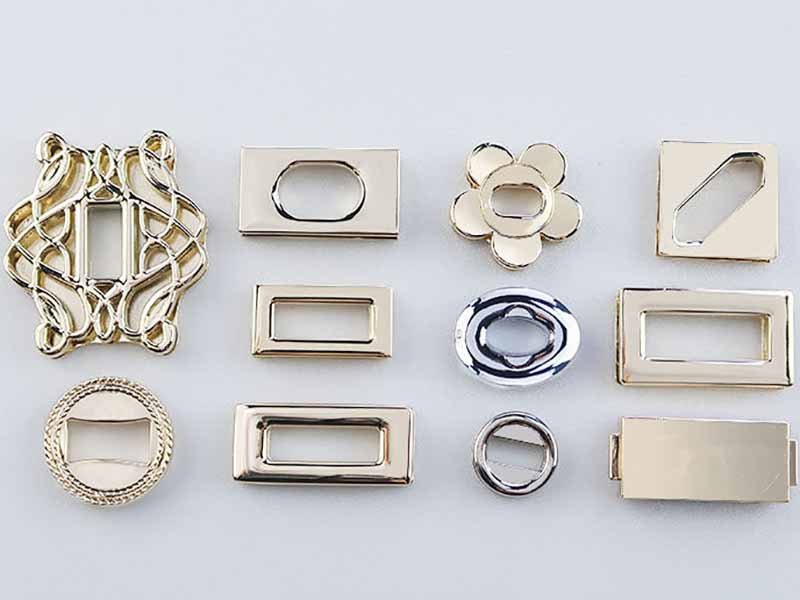
A bag can survive repeated load tests, thousands of zipper cycles, and careful factory inspection, yet still disappoint customers because its metal puller turns black, its D-ring develops red rust, or its magnetic closure stains the lining. Corrosion is often dismissed as a minor cosmetic issue, but for a brand, it can quickly become a warranty problem, a poor-review trigger, and evidence that the supplier did not control its hardware consistently.
Bag hardware corrosion resistance is tested by exposing representative components to a controlled corrosive environment, commonly through an ASTM B117 or ISO 9227 salt-spray method. The tested parts are then evaluated for red rust, white corrosion, tarnishing, pitting, blistering, peeling, staining, and functional deterioration. The test method controls the environment, while the buyer’s specification defines exposure time and pass/fail criteria.
The difficult part is not placing a buckle inside a chamber. The real work lies in deciding which components and production lots must be tested, whether loose and assembled parts behave differently, how visible and concealed defects should be judged, and what happens if only one part in a sample set fails.
A travel brand once approved a flawless gold zipper puller, only to find dark spots on the mass-production version after ocean shipment. The shape had not changed. The color looked almost identical. The problem was a different plating batch that had never been requalified.
What Is Hardware Corrosion Resistance?

Hardware corrosion resistance is the ability of a metal component and its surface finish to withstand moisture, salt, sweat, chemicals, humidity, and handling without developing rust, oxidation, discoloration, pitting, peeling, or functional damage. Its performance depends on the base metal, surface preparation, plating system, coating quality, component geometry, assembly method, and intended use environment.
Why Does Bag Hardware Corrode?
Corrosion begins when a metal surface reacts with moisture, oxygen, and an electrolyte. In everyday bag use, that electrolyte may come from seawater, perspiration, rainwater, road salt, pet saliva, cosmetic leakage, cleaning products, or chemical residues left by manufacturing and packaging.
The most visible part of a buckle is not always the most vulnerable. Corrosion frequently begins around sharp edges, casting pores, threaded sections, spring cavities, welds, hinges, recessed logos, and contact points between different materials. These locations are harder to polish, clean, plate, rinse, seal, and inspect evenly.
Mechanical movement creates another risk. A zipper pull repeatedly strikes the slider body. A swivel hook rotates under load. An adjuster rubs against webbing. A magnetic closure contacts its matching plate whenever the bag is opened or closed. This friction can gradually wear through a protective topcoat or create small scratches that expose the underlying metal.
Storage and transportation conditions also matter. A component may appear acceptable during final inspection but start corroding after several weeks inside a humid carton. Ocean freight can expose products to changing temperatures and elevated humidity. When warm, moist air cools, condensation may form on hardware or inside protective packaging.
This is why corrosion resistance should be treated as part of product engineering and supply-chain control, not merely as a decorative finishing concern.
How Do Base Metals Perform?
The base metal determines what happens when the protective coating becomes thin, porous, scratched, or damaged.
Stainless steel generally provides better inherent corrosion resistance than ordinary carbon steel. However, “stainless steel” is not one single material. Alloy grade, surface contamination, machining, welding, polishing, and environmental exposure can all affect performance. A lower-grade stainless component used near saltwater may still stain or pit.
Zinc alloy is widely used for zipper pullers, logo plates, hooks, buckles, and magnetic closures because it can be cast into detailed shapes. It offers a substantial feel and supports many decorative finishes. Its main risks include casting porosity, trapped residues, weak plating adhesion, and white corrosion when the protective system fails.
Brass offers a premium appearance and good machinability. It can perform well in fashion and leather goods, but untreated or lightly sealed brass naturally changes color. That patina may be desirable on an antique finish but unacceptable on a polished luxury fitting.
Steel and iron offer strength and cost efficiency. However, once their protective finish is damaged, exposed areas can develop red rust. Aluminum is lightweight and does not form red iron rust, but it may oxidize, pit, or develop white corrosion.
| Base Material | Main Advantages | Typical Corrosion Risks | Common Bag Applications |
|---|---|---|---|
| Stainless steel | Strong inherent resistance, good strength, clean appearance | Grade variation, tea staining, pitting, surface contamination | Outdoor hooks, rings, clips, premium fittings |
| Zinc alloy | Detailed casting, broad finish options, substantial feel | Porosity, white corrosion, plating separation | Pullers, buckles, logo plates, magnetic closures |
| Brass | Premium appearance, good machinability, durable feel | Tarnishing, patina, color change | Luxury fittings, snaps, rings, decorative parts |
| Carbon steel or iron | High strength, availability, lower cost | Red rust when the coating is damaged | Rivets, frames, rings, clips, reinforcement parts |
| Aluminum alloy | Lightweight, good strength-to-weight ratio | Pitting, white oxidation, finish scratches | Lightweight buckles, frames, specialty adjusters |
A useful hardware specification should not stop at “gold metal buckle” or “black zipper pull.” Those descriptions identify appearance, not engineering performance. The specification should identify the base material, finish system, approved color, expected function, test method, exposure duration, and acceptable defect level.
How Do Finishes Protect Hardware?
Most decorative bag hardware depends on a layered finishing system rather than one visible coating.
A typical process may include:
- Degreasing and cleaning
- Mechanical polishing
- Surface activation
- Intermediate metallic layers
- Decorative color plating
- Passivation or sealing
- Clear protective topcoat
- Controlled curing and drying
A visually attractive finish can still fail when the surface beneath it has not been prepared correctly. Oil, oxide, polishing compound, dust, and casting residue can reduce adhesion. Sharp corners and recessed areas may receive thinner coverage than broad flat surfaces. Poor rinsing can leave chemicals trapped inside holes, joints, and cavities.
Electroplating is commonly used for metallic colors such as nickel, gold, gunmetal, and antique finishes. Electrophoretic coating can create a relatively even organic layer over complex shapes. Powder coating produces a thicker protective film and is often used for matte or colored hardware. Anodizing is associated with aluminum, while passivation can improve the corrosion behavior of selected metals. Clear lacquer and topcoat systems help protect decorative finishes from moisture and handling.
No process is universally best. A coating that performs well on a flat logo plate may behave differently on a spring-loaded snap hook with internal cavities. Performance comes from the complete combination of substrate, geometry, preparation, coating thickness, curing, handling, and assembly.
Which Defects Matter Most?
Not all surface changes have the same cause or business impact.
Red rust usually indicates corrosion of an iron-containing substrate and is commonly treated as a serious defect. White corrosion may appear on zinc or zinc-containing surfaces. Tarnishing changes the surface tone but does not always create immediate structural weakness. Pitting forms localized cavities and can continue to worsen.
Blistering often indicates that corrosion or contamination has developed beneath the coating. Peeling and flaking reveal adhesion failure and expose the base metal. Black spots may result from oxidation, chemical reaction, trapped contamination, or breakdown of the finish. Loss of gloss may be an early cosmetic warning even before obvious rust develops.
Defect location is as important as defect size. A small spot inside a concealed cavity may have limited visual impact, but it becomes serious if it weakens a spring, produces sharp residue, or stains the lining. The same-sized mark in the center of a polished logo plate may make a premium product commercially unacceptable.
A proper evaluation records:
- Defect type
- Approximate size or affected area
- Exact location
- Time of first appearance
- Effect on appearance
- Effect on movement or strength
- Risk of staining adjacent materials
Which Bag Hardware Should Be Tested?

Metal parts should be prioritized for corrosion testing when they are visible, load-bearing, frequently handled, exposed to moisture, or capable of staining nearby fabric or leather. Common candidates include zipper sliders, pullers, hooks, D-rings, buckles, adjusters, magnetic closures, snaps, rivets, eyelets, chains, bag feet, frames, and metal logo plates.
Which Components Need Priority?
Testing priority should reflect both failure probability and commercial impact.
Zipper sliders and pullers require close attention because they combine movement, friction, narrow gaps, and frequent skin contact. Corrosion may begin inside the slider channel and cause rough movement before visible rust appears on the outer surface.
Snap hooks and swivel hooks contain springs, pins, and rotating joints. Moisture and salt deposits can remain trapped in these areas, making them harder to rinse and dry. A hook may look acceptable externally while corrosion inside the mechanism reduces spring return or rotation.
D-rings, O-rings, square rings, adjusters, and buckles deserve high priority when they support shoulder straps, handles, or removable accessories. Hardware failure in these areas can create both customer complaints and safety concerns.
Magnetic closures often combine several materials, including decorative shells, steel plates, magnets, and folded or riveted sections. Their visible surfaces may remain clean while corrosion begins around the hidden back plate.
Rivets and eyelets also require attention because installation pressure can deform or crack the finish. Bag feet are exposed to wet floors, abrasion, and cleaning products. Chains have many contact points where coating wear may occur.
Decorative components should not be ignored. Logo plates and badges may carry little load, but they have a strong effect on perceived product quality.
| Hardware Type | Main Exposure Risk | Main Failure Concern | Testing Priority |
|---|---|---|---|
| Zipper slider and puller | Sweat, friction, trapped moisture | Rough movement, color change, coating wear | High |
| Snap or swivel hook | Rain, salt, sweat, joint retention | Seized rotation, weak spring, internal rust | High |
| D-ring or strap ring | Load, webbing friction, outdoor exposure | Rust, coating wear, staining | High |
| Magnetic closure | Mixed materials, hand contact, hidden back plate | Edge rust, blackening, weak operation | High |
| Rivet or eyelet | Installation pressure, moisture around holes | Cracked coating, red rust, fabric staining | High |
| Logo plate or badge | Fingerprints, humidity, cosmetic exposure | Tarnishing, peeling, visible pitting | Medium to high |
| Chain | Multiple contact points and abrasion | Uneven wear, joint corrosion, color loss | Medium to high |
| Bag feet | Wet floors, abrasion, cleaners | Scratching, pitting, visible rust | Medium |
Which Products Face Greater Risk?
Corrosion requirements should reflect how and where the product will be used.
Beach bags, marine bags, fishing bags, waterproof packs, cooler bags, cycling bags, running belts, tactical equipment, sports bags, and pet products frequently encounter moisture, sweat, salt, mud, and outdoor dirt.
Travel bags face a different mix of conditions. They may move between air-conditioned buildings, hot vehicles, aircraft holds, wet streets, and humid hotel rooms. Temperature changes can create condensation on metal surfaces or inside packaging.
Cosmetic and toiletry bags are sometimes underestimated. Their hardware may contact perfume, alcohol, skincare liquids, creams, makeup remover, and cleaning agents. A finish that performs well against water may still react to another chemical.
Pet bags, treat pouches, carriers, collars, and walking accessories may encounter saliva, urine, cleaning sprays, soil, and rain. Medical and industrial bags may contact disinfectants, oils, lubricants, or workplace chemicals.
Product positioning matters as well. Customers may accept a controlled patina on intentionally aged brass, but they are unlikely to accept random black spots, peeling gold plating, or red rust on premium hardware.
Lovrix can coordinate material selection and relevant testing for outdoor and performance bags, including abrasion resistance, coating adhesion, zipper durability, hardware corrosion resistance, and load-bearing performance according to the product use and customer requirements.
Should Loose and Assembled Parts Be Tested?
Loose-component testing and assembled-product testing answer different questions.
A loose buckle reveals the basic quality of its substrate and finish. After installation, riveting, crimping, bending, screw tightening, sewing, and contact with webbing may damage the coating. A loose rivet can pass the test while the installed rivet fails because pressing has cracked the finish.
A strap ring may develop abrasion where thick webbing constantly rubs against one point. A buckle may contact coated fabric containing additives that affect its surface. Mixed metals can also create localized electrochemical conditions when moisture reaches the joint.
For important projects, testing can be divided into three levels:
- Loose finish samplesto compare substrates, colors, and coating systems.
- Installed development samplesto identify assembly damage and material interactions.
- Bulk-production samplesto confirm that approved performance continues in mass production.
Testing a complete bag is not always necessary or practical. An assembled test panel can reproduce the relevant construction using the actual fabric, webbing, rivets, zipper tape, lining, and attachment method.
This approach becomes especially valuable when a corrosion problem appears only after assembly even though the loose hardware previously passed.
How Many Samples Are Enough?
One sample provides weak evidence. It may come from the best area of a plating rack or simply avoid a defect that appears elsewhere in the batch.
For internal qualification, testing three to five pieces for each critical combination of hardware design, base metal, finish color, supplier, and plating batch is a practical starting point. This is not a universal rule, and retailer-controlled or high-risk projects may require a larger sample or a formal sampling plan.
Sample variation matters as much as sample quantity. Five pullers taken from one small package may reveal less than three pieces selected from different cartons or production positions.
Separate qualification should be considered when any of the following changes:
- Base metal
- Hardware supplier
- Plating factory
- Finish color
- Coating process
- Topcoat or sealer
- Component shape
- Production batch
- Assembly method
An approved silver finish should not automatically qualify black nickel, gunmetal, antique brass, matte black, or gold versions of the same buckle. Different colors may involve different process layers and different corrosion performance.
Which Corrosion Test Standards Apply?
ASTM B117 and ISO 9227 are widely used to create controlled salt-spray environments for metals and coated metals. They define test apparatus and operating procedures, but they do not provide every bag component with a universal exposure time or automatic pass/fail limit. Those requirements must come from the buyer’s specification, retailer protocol, or agreed quality standard.
What Does ASTM B117 Cover?
ASTM B117 is a standard practice for operating salt-spray or salt-fog apparatus. It describes how a controlled corrosive environment should be created and maintained for metals and coated metals.
The standard is frequently referenced in hardware test reports, but it does not independently determine which bag component must be tested, how long it must remain in the chamber, or which defects should be accepted.
A report stating only “tested according to ASTM B117” is incomplete. A useful report should also identify:
- Exact hardware item
- Base material
- Finish and color
- Supplier or production batch
- Number of samples
- Exposure duration
- Evaluation method
- Appearance after exposure
- Functional test result
- Final pass or fail decision
ASTM B117 is most useful for controlled comparisons, finish qualification, supplier evaluation, and production consistency. It should not be treated as proof that a buckle will remain corrosion-free for a specific number of months or years.
For repeat orders, the method can help determine whether later plating batches continue to perform against the same approved requirement.
What Does ISO 9227 Cover?
ISO 9227 specifies equipment, reagents, and procedures for several artificial salt-spray tests used on metallic materials with or without corrosion protection.
The standard covers three commonly referenced methods:
- Neutral Salt Spray, or NSS
- Acetic Acid Salt Spray, or AASS
- Copper-Accelerated Acetic Acid Salt Spray, or CASS
NSS is the most broadly relevant method for common bag hardware. It may be used for metallic coatings, conversion coatings, anodic oxide coatings, and organic coatings applied to metal.
AASS creates a more acidic test environment and may be specified for selected decorative finishes or product standards.
CASS is more aggressive and is generally associated with particular decorative coating systems. It should not be chosen merely because a more aggressive test sounds more professional.
ISO 9227 is particularly useful for detecting coating pores, discontinuities, surface damage, weak coverage, and production inconsistency. Like ASTM B117, it does not give every bag buckle, hook, or puller a universal duration and acceptance requirement.
Which Method Should Be Used?
The correct method depends on the base metal, coating system, product use, customer requirement, and relevant quality protocol.
NSS is often a reasonable starting point for bag hardware because it is broadly applicable. However, a customer may require AASS, CASS, or another method when evaluating a specific decorative finish.
The most aggressive test is not always the most meaningful. An unnecessarily severe method may reject an otherwise appropriate finish without providing a useful relationship to real product use. A test that is too mild may fail to identify weak plating or vulnerable edges.
The decision should consider:
- Substrate type
- Decorative or functional finish
- Product exposure environment
- Retailer or brand protocol
- Previous field performance
- Consequence of failure
- Laboratory capability
- Need for supplier comparison
| Standard or Method | Primary Purpose | What It Does Not Automatically Define |
|---|---|---|
| ASTM B117 | Operation of controlled salt-spray fog apparatus | Bag-specific duration and acceptance limits |
| ISO 9227 NSS | Neutral salt-spray exposure | Universal pass/fail rules for bag hardware |
| ISO 9227 AASS | Acidified salt-spray exposure | Whether the method is suitable for every finish |
| ISO 9227 CASS | Accelerated acidic exposure for selected systems | A universal quality grade for all metal parts |
| ISO 10289 | Rating metallic and inorganic coatings after exposure | Which exposure program the buyer should choose |
| Buyer protocol | Product-specific requirements | Applicability outside that buyer or product group |
Do Standards Define Pass or Fail?
The test standard and the product requirement perform different jobs.
The test standard tells the laboratory how to create and control the exposure environment. The product specification tells the laboratory:
- What component to test
- How many samples to test
- How long exposure should continue
- Which surfaces are critical
- Which defects are permitted
- How function should be evaluated
- What constitutes failure
A complete specification might require a particular zinc-alloy puller with an approved finish to complete a defined NSS exposure with:
- No red rust on visible surfaces
- No blistering or peeling
- No unacceptable color change
- No residue that stains the bag
- No loss of movement
- No separation from the slider
ISO 10289 provides a method for rating corrosion-tested metallic and inorganic coatings. It distinguishes protection of the substrate from deterioration of the coating’s appearance. This distinction is valuable because a finish may still protect the substrate while becoming cosmetically unacceptable.
The selected standard edition should be confirmed with the buyer, retailer, or testing laboratory before testing begins.
How Is a Salt Spray Test Performed?

A salt-spray test is performed by identifying representative specimens, documenting their original condition, exposing them in a controlled chamber for a specified period, and evaluating appearance and function afterward. Reliable results depend on sample traceability, correct positioning, stable chamber conditions, consistent post-test handling, and acceptance criteria established before exposure begins.
How Are Samples Prepared?
Every sample should be traceable before it enters the chamber.
The test record should include:
- Component name
- Drawing or item number
- Base metal
- Finish process
- Color
- Supplier
- Production or plating lot
- Sample quantity
- Loose or assembled condition
- Test date
Pre-test photographs should show all relevant surfaces under consistent lighting. Close-up images help record casting pores, polishing marks, scratches, shade differences, and other conditions that existed before exposure.
Samples should be handled with clean gloves. Fingerprints contain oils and salts that may influence local results. Unapproved polishing or chemical cleaning can also improve or damage the surface, making the test unrepresentative of normal production.
Unless the specification requires otherwise, finished bag hardware should be tested in its manufactured condition. This includes holes, threads, springs, hinges, welds, narrow gaps, and recessed areas.
When assembled parts are tested, the installation method should also be documented. Riveting pressure, crimping, screw tightening, folding, and contact with heavy webbing may damage the coating.
A retained control sample should remain outside the chamber so the exposed components can be compared with the original approved finish.
How Is the Chamber Controlled?
A salt-spray chamber does more than spray salty water directly onto components. It must create and maintain a controlled corrosive atmosphere according to the selected method.
Depending on the applicable standard, control may include:
- Salt-solution preparation
- Solution concentration
- pH
- Chamber temperature
- Fog collection
- Specimen angle
- Sample spacing
- Cabinet cleanliness
- Exposure continuity
- Environmental verification
Samples should not touch one another. Runoff from one part should not fall onto another because this can create uneven exposure or contamination.
Complex components such as hooks, zipper sliders, and magnetic closures should be positioned consistently. If one supplier’s hook faces upward and another faces downward, the comparison may become less meaningful.
When several candidate finishes are being compared, testing them during the same chamber cycle can reduce variation. Differences between equipment, chamber history, operating control, and timing may complicate comparisons made in separate laboratories.
Any interruption should be documented. Repeatedly opening the chamber to inspect parts can disturb the environment, so intermediate checks should be planned rather than performed casually.
How Long Should Testing Continue?
Exposure duration should be decided before testing begins.
Common commercial checkpoints may include:
- 24 hours
- 48 hours
- 72 hours
- 96 hours
- 120 hours
- Longer project-specific periods
These figures are not universal quality grades. A component tested for 96 hours is not automatically twice as durable as one tested for 48 hours. A 96-hour result also does not prove that the part will remain corrosion-free for a fixed number of real-world years.
Duration should reflect:
- Product use
- Target market
- Base metal
- Finish system
- Component geometry
- Buyer or retailer protocol
- Previous performance
- Consequence of failure
- Packaging and shipping conditions
A simple promotional pouch intended for indoor use may not need the same qualification program as a fishing bag, tactical pack, running belt, premium travel case, or product intended for coastal markets.
When no buyer standard exists, the manufacturer and buyer should establish a project-specific benchmark, test several possible finishes, and compare the results with prior production and field experience.
Selecting the longest available time without clear acceptance criteria produces an impressive number but not necessarily better quality control.
What Happens After Exposure?
Post-test handling can influence the result.
Salt deposits may hide the true surface condition. At the same time, aggressive brushing or polishing may remove corrosion products and make a failed part appear better than it is. The rinsing, drying, and conditioning method should therefore remain consistent.
Evaluation should take place under controlled lighting and, where appropriate, at a defined viewing distance. Photographs should use similar angles and lighting to the pre-test images.
Visible faces, concealed faces, sharp edges, joints, recesses, and attachment areas should be evaluated separately.
Hardware should also be operated after exposure. Practical checks may include:
- Moving a zipper slider through its normal travel
- Rotating a swivel hook
- Opening and closing a snap hook
- Engaging and releasing a buckle
- Checking spring return
- Testing magnetic alignment
- Inspecting rivet security
- Looking for sharp corrosion residue
- Checking for staining on fabric or webbing
The report should show individual sample results. One serious failure among five parts may reveal process inconsistency even if the remaining four look acceptable.
How Are Corrosion Test Results Evaluated?

Corrosion results are evaluated by identifying the defect type, affected area, location, severity, time of appearance, and effect on function. A practical assessment distinguishes substrate corrosion from coating deterioration and separates visible, concealed, functional, and safety-related defects. Pass/fail rules should be documented before testing and supported by photographs or approved limit samples.
Which Defects Should Be Recorded?
Reports should avoid vague descriptions such as “slight corrosion.”
Different defects indicate different causes and risks:
- **Red rust:**commonly indicates exposure of an iron-containing substrate.
- **White corrosion:**may occur on zinc or zinc-containing layers.
- **Tarnishing:**changes surface tone without always causing immediate structural damage.
- **Black spots:**may indicate oxidation, contamination, chemical reaction, or finish failure.
- **Pitting:**creates localized cavities in the surface.
- **Blistering:**suggests separation caused by contamination or corrosion beneath the coating.
- **Peeling or flaking:**reveals poor adhesion and exposes the substrate.
- **Cracking:**may result from forming, riveting, crimping, or bending.
- **Loss of gloss:**can make decorative hardware commercially unacceptable.
Each observation should record the approximate affected area, largest defect size, location, surface class, distribution, time first observed, and influence on adjacent materials or function.
Pre-existing casting marks, polishing lines, weld discoloration, and shade variation should be distinguished from damage caused by the test. This is why pre-test photographs are essential.
What Is a Practical Pass/Fail Rule?
Acceptance limits should reflect both functional risk and customer perception.
Many quality teams divide surfaces into visual classes:
- **Class A:**prominent surfaces seen during normal use
- **Class B:**secondary surfaces visible during handling
- **Class C:**concealed surfaces not normally visible
A premium Class A logo plate may require zero visible red rust, blistering, peeling, pitting, or unacceptable shade change. A minor amount of white corrosion on a concealed Class C surface might be treated differently, provided it does not spread, stain the bag, reduce strength, or interfere with movement.
Automatic rejection conditions may include:
- Red rust on a visible or functional surface
- Coating delamination
- Peeling or flaking
- Seized movement
- Weak spring return
- Permanent fabric staining
- Sharp corrosion residue
- Loss of attachment security
- Major inconsistency among tested pieces
| Evaluation Item | Example Acceptance Criterion | Typical Rejection Condition |
|---|---|---|
| Red rust | None on visible, load-bearing, or functional areas | Any visible substrate rust |
| White corrosion | None, or a defined limit on concealed surfaces | Spread to visible surfaces or moving joints |
| Blistering | Not permitted | Any lifting of the coating |
| Peeling or flaking | Not permitted | Any exposed substrate |
| Color change | Within approved appearance limit | Blackening, patchiness, or obvious shade shift |
| Pitting | None on cosmetic surfaces | Visible cavities or roughness |
| Staining | No transfer to fabric, leather, lining, or webbing | Permanent residue or discoloration |
| Function | Normal movement and engagement after testing | Jamming, seizure, weak spring, failed closure |
| Sample consistency | All critical specimens meet requirements | One or more critical failures in the sample set |
When finish appearance is highly subjective, an approved limit sample or photographic defect board can reduce disagreement between buyers, factories, inspectors, and laboratories.
Does the Hardware Still Function?
Appearance alone is not enough.
Many bag components contain moving parts, springs, magnets, pins, hinges, or sliding surfaces. Internal corrosion may reduce function before it becomes visually obvious.
A zipper slider should continue to travel smoothly without abnormal force. The puller should remain securely attached. A snap hook should open, close, and return under spring pressure. A swivel hook should rotate without seizure or excessive roughness.
Buckles and adjusters should engage correctly. Magnetic closures should align and hold as intended. Rivets and eyelets should remain tight, without splitting, lifting, or releasing corrosion residue around the installation hole.
Load-bearing hardware requires mechanical validation in addition to corrosion testing. A component may remain visually attractive but still have inadequate tensile strength. Conversely, a strong component may be rejected because its finish peels or stains the bag.
A stronger hardware qualification program may combine:
- Corrosion resistance
- Coating adhesion
- Abrasion resistance
- Opening and closing cycles
- Pull or tensile strength
- Assembly security
- Appearance after use
- Compatibility with fabric, leather, and webbing
Customers experience the complete component. They do not separate finish quality from movement, strength, or the effect of the hardware on the rest of the bag.
Do Test Hours Predict Service Life?
Salt-spray hours should not be directly converted into months or years of normal use.
Real bags experience changing conditions:
- Wet and dry cycles
- Temperature changes
- Ultraviolet exposure
- Abrasion
- Flexing
- Skin oils
- Sweat chemistry
- Pollution
- Cleaning products
- Intermittent moisture
- Storage and transportation
A continuous laboratory fog cannot reproduce every combination.
Salt-spray testing is still useful because it can reveal:
- Coating pores
- Weak surface preparation
- Thin edge coverage
- Inadequate sealing
- Assembly damage
- Plating-lot variation
- Vulnerable cavities
- Inconsistent supplier control
The defensible conclusion is not “96 hours equals two years.” A more accurate conclusion is that the tested specimens met a defined laboratory requirement under specified conditions.
Stronger confidence comes from combining corrosion testing with functional cycling, abrasion checks, coating adhesion, chemical compatibility, shipping evaluation, complaint data, and repeat-order performance.
The salt-spray chamber is a controlled screening tool, not a clock that predicts the exact day a component will begin to corrode.
How Do Buyers Control Corrosion Risk in Production?
Buyers control corrosion risk by defining the base metal, finish, test method, exposure duration, defect limits, and inspection stage in the product specification. Approved samples must be linked to the correct supplier and production lot, while incoming inspection, batch testing, assembly checks, and traceable reports prevent a successful development sample from becoming inconsistent bulk production.
What Belongs in the Tech Pack?
A hardware specification should contain enough information for a factory, inspector, or replacement supplier to understand exactly what has been approved.
“Black metal hook” is not sufficient.
For each critical component, the tech pack or BOM should identify:
- Component name and item number
- Drawing or approved photograph
- Dimensions and tolerances
- Base metal
- Finish process
- Color reference
- Surface texture
- Gloss level
- Approved supplier
- Load or functional requirement
- Attachment method
- Corrosion test method
- Exposure duration
- Pass/fail criteria
- Test stage
- Reporting requirement
Each finish should be listed separately. Matte black electrophoretic coating, black nickel plating, painted black, powder coating, and physical vapor deposition may look similar in a photograph but differ in thickness, feel, abrasion behavior, cost, and corrosion performance.
The specification should also state whether testing is required:
- During finish development
- Before sample approval
- Before mass production
- For every plating lot
- After installation
- After a supplier change
- After a process change
- During repeat orders
Responsibilities should be clear. The buyer and manufacturer should agree who selects the laboratory, who approves the result, what happens after failure, and whether reworked hardware must be tested again.
How Are Approved Samples Controlled?
An approved sample should represent the exact production construction, not merely a similar shape or color.
The approved part should be linked to:
- Hardware supplier
- Base material
- Finish system
- Component drawing
- Installation method
- Test report
- Product BOM
- Colorway
- Approval date
Factories should retain controlled references such as:
- Approved loose hardware
- Installed pre-production sample
- Color limit sample
- Signed hardware card
- Finish photographs
- Supplier item code
- BOM revision
- Test report
- Packaging requirement
Small process changes can affect performance. A plating facility may adjust polishing time, bath chemistry, current density, coating thickness, curing temperature, or topcoat. A hardware supplier may move casting to another source. A factory may substitute a visually similar part to meet a delivery deadline.
Any change in material, supplier, finish, geometry, plating source, or assembly method should trigger a review. Depending on the risk, new appearance approval, installation testing, or corrosion qualification may be necessary.
Long-term programs also need version control. When a product is reordered months later, the team should know which finish sample, specification, test requirement, and packaging method were originally approved.
How Is Bulk Hardware Inspected?
Incoming inspection should happen before hardware reaches the sewing and assembly lines.
Once thousands of fittings have been installed, replacement becomes slower, more expensive, and more likely to damage the bags.
Bulk inspection may compare production parts with the approved reference for:
- Color
- Gloss
- Texture
- Scratches
- Dents
- Casting pores
- Exposed edges
- Plating burns
- Black spots
- Coating buildup
- Joint movement
- Spring return
- Magnetic alignment
- Dimensions
- Assembly fit
Samples should be selected from different cartons, bags, trays, and packaging layers. Taking every inspection piece from one open box may fail to identify variation elsewhere in the lot.
Repeat corrosion testing may be appropriate when:
- The plating batch is new
- The supplier has changed
- The finish has failed previously
- The product faces demanding exposure
- A retailer requires batch testing
- The finish process has been modified
- The order is especially large or brand-sensitive
Production-line inspection should also check for damage caused by riveting, crimping, screw tightening, pressing, or webbing friction.
Finished-bag inspection should confirm appearance, movement, attachment security, and absence of residue transfer. Hardware quality is not complete until the part has been installed successfully and works in the final product.
What Happens When a Lot Fails?
A failed lot should first be contained.
The affected hardware should be identified, separated, and prevented from entering further production. Bags already assembled with that lot should be traced and held until the risk has been evaluated.
The investigation should determine whether the problem comes from:
- Base-metal substitution
- Casting porosity
- Inadequate polishing
- Poor cleaning
- Thin plating
- Incomplete coverage
- Weak topcoat
- Insufficient curing
- Assembly damage
- Mixed-metal contact
- Chemical interaction
- Packaging humidity
- Test or handling error
Corrective action should address the root cause rather than polishing visible rust or applying temporary oil.
Reworked hardware should be rechecked to confirm that the new process has restored appearance, adhesion, and corrosion resistance.
A useful corrective-action record includes:
- Failed sample identification
- Production or plating lot
- Photographs
- Defect location
- Test conditions
- Suspected root cause
- Immediate containment
- Corrective process
- Retest result
- Preventive action
The commercial response should reflect the stage of production. Replacing loose hardware may be straightforward. Removing hardware from completed bags can damage fabric, lining, rivet holes, coating, or leather.
Consistent corrosion control must therefore begin during product development and continue through supplier qualification, sampling, production, inspection, packaging, shipment, and repeat-order management.
Build Corrosion Requirements Into Your Custom Bag Project
Hardware corrosion resistance cannot be guaranteed by selecting a metallic color from a catalog or testing one perfect development sample. Reliable performance comes from matching the correct base metal and finish to the product’s environment, documenting the approved construction, checking representative samples, controlling plating lots, and evaluating both appearance and function.
Lovrix supports global brands and commercial buyers with material evaluation, hardware selection, sample development, BOM control, production planning, quality inspection, packaging coordination, and customer-specified testing support. Its project approach is intended to turn approved samples into repeatable production standards rather than treating them as isolated presentation pieces.
For project evaluation, send your design drawings, physical sample, Tech Pack, BOM, hardware photographs, target market, expected quantity, finish requirements, and required test protocol to email.
For urgent material, sampling, hardware, or OEM/ODM discussions, contact Lovrix through WhatsApp.


