 Skip to content
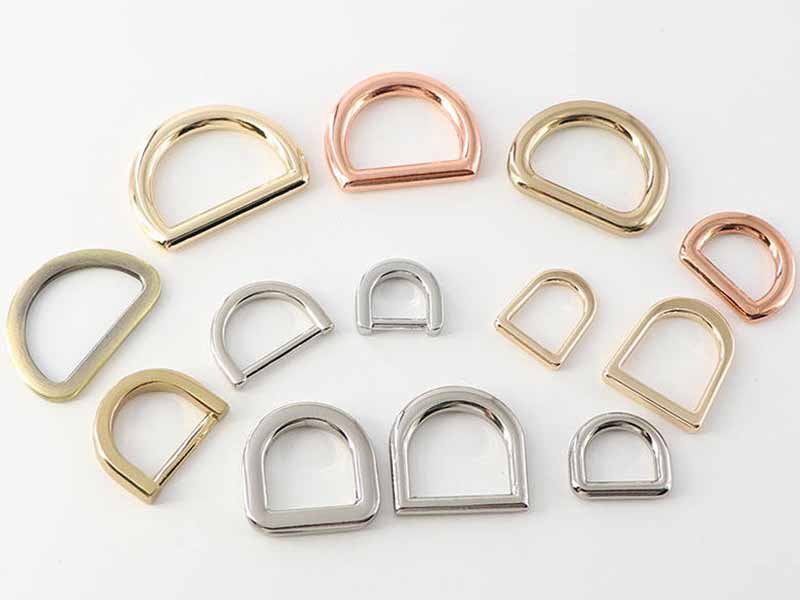
A D-ring may be one of the smallest components on a bag, but it can create one of the most visible and expensive product failures. When a shoulder strap detaches, customers rarely describe the issue as an incorrect hardware specification. They simply say that the bag broke. That complaint can lead to returns, negative reviews, retailer deductions, replacement costs, and doubts about the quality of the entire product.
Choose a D-ring by matching its usable inner width to the strap or attachment tab, then evaluate its material, section thickness, construction, finish, expected load, hook compatibility, and operating environment. The final choice must be tested as part of the complete attachment system, including the ring, webbing, stitching, reinforcement, bag panel, and mating hook—not as an isolated component.
This system-based approach is important because the strongest ring cannot compensate for weak fabric, poor stitching, inadequate reinforcement, or an attachment point positioned in the wrong direction. In one development project, replacing the ring with a thicker model did not solve repeated strap failures. The problem disappeared only after the webbing anchor, stitch pattern, internal reinforcement, seam position, and hardware were redesigned together.
What Does a D-Ring Do on a Bag?

A D-ring creates a controlled connection between the bag body and a strap, handle, hook, accessory, or restraint point. It must transfer force into the bag structure while allowing the required movement. A well-selected D-ring limits twisting, abrasion, unwanted sliding, deformation, and hardware noise without compromising the product’s appearance or carrying comfort.
Functional Connections
Most people associate D-rings with removable shoulder straps, but their role extends far beyond a single connection. They appear on handbags, backpacks, sports bags, laptop bags, camera bags, cooler bags, travel bags, pet carriers, medical bags, tool bags, and outdoor equipment.
A D-ring may connect:
- A detachable shoulder strap to the side of a bag
- A carrying handle to a reinforced panel
- A compression strap to an outdoor backpack
- A key leash inside a tote or travel bag
- A safety tether inside a pet carrier
- A removable pouch to modular equipment
- A luggage strap to a travel case
- A chain, charm, or decorative strap to a handbag
These applications may look similar, but they place very different demands on the hardware. An internal ring used for keys may carry only a few hundred grams. A pair of side-mounted rings on a large duffel may repeatedly support 10–20 kg while the user walks, lifts, swings, and sets the bag down.
The ring’s purpose must therefore be defined before its material, thickness, or finish is selected. The product team should establish whether it is a primary load-bearing point, a secondary functional attachment, or a decorative component.
| D-Ring Role | Primary Requirement | Typical Applications | Main Risk |
|---|---|---|---|
| Primary load-bearing | Strength and secure force transfer | Shoulder straps, handles, travel bags | Ring or attachment failure |
| Secondary functional | Controlled movement and convenience | Key straps, compression straps, pouches | Wear, twisting, poor accessibility |
| Decorative-functional | Appearance plus moderate performance | Fashion chains, removable accessories | Finish wear or unintended overloading |
| Decorative only | Proportion, color and surface quality | Fashion trim and visual details | Users treating it as load-bearing |
A decorative ring should not quietly become structural during product development. If customers are likely to attach a shoulder strap to it, the safer approach is to reinforce the component or redesign it so that its intended function is obvious.
The Complete Load Path
A D-ring never carries a bag independently. It operates inside a load path that may include the shoulder strap, snap hook, ring body, webbing or leather tab, stitch pattern, reinforcement patch, exterior material, lining, and structural seam.
When the bag is lifted, the force passes through every part of this system. If one element is weaker than the rest, the complete connection can fail even though the ring itself remains intact.
For example:
- A thick metal ring may survive while the exterior fabric tears beside the seam.
- Strong webbing may remain intact while the stitches pull out.
- A reinforced tab may hold while an unwelded ring gradually opens.
- A ring may remain closed while the snap-hook gate bends.
- The hardware may pass a loose-component test while the side panel distorts in the finished bag.
A practical engineering review should follow the force from the shoulder strap into the bag body. It should examine the direction of pull, the number of load points, the tab dimensions, the reinforcement area, the stitch position, and the distance from the attachment to a structural seam.
The most reliable design spreads the load across a larger area instead of concentrating it around a small tab or a few dense stitches. For heavier products, the webbing anchor may need to extend into a side seam, back panel, base panel, or continuous internal reinforcement.
This is why hardware selection should happen alongside pattern development rather than after the bag construction has already been finalized.
Movement and Carrying Angle
The curved upper section of a D-ring allows a hook or strap to move as the carrying angle changes. That movement can improve comfort, particularly on shoulder bags and crossbody bags where the strap position shifts while the user walks.
However, excessive movement can create instability.
If the ring is too wide for the hook or attachment tab, the connection may slide sharply from side to side. The bag can lean, the hardware can knock together, and the plated surfaces may wear at repeated contact points. If the ring is too narrow, the hook may sit at an angle and place uneven pressure on the ring, tab, or hook gate.
The position of the D-ring on the bag also affects carrying balance. A ring placed too far toward the front can make the bag tilt backward. A ring positioned too far toward the rear can pull the opening toward the user. On soft bags, a small reinforcement patch may allow the entire side panel to fold inward.
During sample evaluation, the bag should be packed to a realistic weight and carried in several ways. The development team should observe:
- Whether the shoulder strap remains centered
- Whether the ring twists inside the attachment tab
- Whether the hook rotates freely
- Whether the bag hangs level
- Whether the side panel collapses
- Whether the hardware produces excessive noise
- Whether the ring rubs against the zipper, piping, or body fabric
An empty sample lying on a table may appear perfectly balanced. Many carrying problems become visible only after the bag is loaded and moved.
Functional or Decorative
Fashion bags often use D-rings as visible design features. The hardware may support a chain, charm, detachable strap, or branded accessory while contributing to the overall visual identity of the product.
This creates a design challenge. The ring must look refined without becoming too thin, weak, or difficult to manufacture consistently. A slim polished ring may suit a small handbag, but it may look under-engineered on a large tote. A heavy industrial ring may provide strength but make a lightweight fashion bag feel unbalanced.
A decorative D-ring is mainly selected for:
- Proportion
- Shape
- Color
- Surface finish
- Brand consistency
- Visual compatibility with other hardware
A structural D-ring must also be selected for:
- Base material
- Section thickness
- Joint construction
- Deformation resistance
- Attachment strength
- Corrosion performance
- Repeated-load durability
The best result does not come from choosing the strongest or most expensive ring. It comes from selecting hardware that looks intentional, performs reliably, and fits the complete product.
How Do You Choose the Right Size?

Choose D-ring size by matching the usable inner width to the finished width and thickness of the webbing, leather tab, or attachment loop. The material should sit flat without bunching, but the ring should not be so wide that it slides excessively. Overall height, section thickness, hook clearance, and installation space must also be confirmed on the physical sample.
Measuring the Ring
D-rings are commonly sold according to the internal width of the straight bar. A product described as a “25 mm D-ring” generally has approximately 25 mm of usable internal width, not an overall external width of 25 mm.
That description is useful for initial sourcing, but it is not detailed enough for controlled production.
A complete hardware drawing should identify:
- Internal straight-bar width
- Internal height
- Overall external width
- Overall external height
- Wire diameter or cast-section thickness
- Flat-section width, when applicable
- Corner radius
- Joint or weld position
- Opening gap, when relevant
- Piece weight
- Dimensional tolerance
Two rings with the same nominal inner width may have completely different proportions. One may be tall and narrow, another shallow and wide. One may use 3 mm round wire, while another uses a 5 mm flat cast section. Their appearance, weight, hook movement, load distribution, and cost will not be the same.
The safest production practice is to approve a physical component together with a dimensioned drawing. Descriptions such as “medium gold D-ring” or “standard 25 mm metal ring” leave too much room for substitution.
A reference sample is particularly important for repeat orders. Without it, a new purchasing team may choose a ring that looks similar in a photograph but differs in section thickness, overall height, base material, or joint construction.
Matching Strap Width
The D-ring’s usable inner width should normally be close to the finished width of the webbing or leather attachment tab.
The figures below are practical development starting points rather than universal engineering limits.
| Finished Strap or Tab Width | Suggested Starting Inner Width | Typical Applications | Important Fit Check |
|---|---|---|---|
| 15 mm | 15–16 mm | Mini bags, internal attachments | Small-hook opening |
| 20 mm | 20–21 mm | Compact crossbody bags | Folded leather thickness |
| 25 mm | 25–26 mm | Handbags, shoulder bags | Side clearance and centering |
| 30–32 mm | 30–33 mm | Backpacks, laptop bags | Webbing stiffness |
| 38 mm | 38–40 mm | Duffel and sports bags | Ring section strength |
| 50 mm | 50–52 mm | Tool and equipment bags | Full assembly pull testing |
Nominal webbing width is only one part of the fit. Thickness, weave density, edge finishing, coatings, folding, and stitching all affect how the attachment sits inside the ring.
A nominal 25 mm webbing may measure slightly narrower when tightly woven or slightly wider after finishing. A folded leather tab can be considerably thicker than a single webbing layer. The production-intent material should therefore be inserted into the actual ring before approval.
The attachment should sit flat across the straight bar. It should not be forced into the curved corners, and it should not have enough lateral clearance to slide visibly during normal use.
For leather tabs, the product team should also check whether the internal width remains suitable after the leather is folded, edge-painted, skived, glued, and stitched.
Section and Hook Clearance
The ring’s section diameter or thickness influences four important factors:
- Strength
- Component weight
- Visual proportion
- Compatibility with the snap hook
A thicker ring may appear stronger and more premium, but it may not fit through a small hook opening. In some cases, the hook can be placed over the ring while open, but the gate cannot close fully once the ring enters the body of the hook.
Before approval, check whether:
- The hook opens fully around the ring.
- The gate closes without resistance.
- The hook rotates without jamming.
- The ring avoids the hook’s spring mechanism.
- The hardware remains aligned during movement.
- The ring leaves enough space for the attachment tab.
- The complete assembly looks proportionate to the bag.
Round wire creates a relatively narrow contact area against webbing or leather. This can increase local pressure, especially on soft materials. A broad flat cast section may distribute pressure more evenly, but poorly finished cast edges can cut or polish the webbing.
Internal height matters as well. A taller D-ring gives the snap hook more room to rotate but may create greater visual movement. A shallow ring keeps the connection compact but can restrict a large hook.
The correct geometry should be confirmed with the actual production hook, not a visually similar substitute.
Problems Caused by Poor Fit
An undersized ring compresses the attachment material. Webbing may curl, bunch, or ride up the curved sides. Leather can develop creases, edge damage, cracked paint, or permanent pressure marks.
This compression also reduces the effective load-bearing width. Instead of distributing force across the entire tab, the load may become concentrated at the edges or corners.
An oversized ring creates a different set of problems. The attachment tab may slide laterally, the hook may move sharply from side to side, and the bag may hang unevenly. Repeated movement can accelerate plating wear and create clicking noises.
Common warning signs include:
- Webbing curling inside the ring
- Leather edges contacting the curved corners
- The ring rotating inside the attachment loop
- The hook sliding from one side to the other
- A large visible gap between the tab and ring
- The bag tilting when carried
- Hardware striking nearby components
- Scratches appearing after a short use test
- The hook gate rubbing against the ring
A proper fit cannot be confirmed from a drawing alone. The ring, webbing, hook, reinforcement, and bag panel should be assembled and evaluated under a realistic packed load.
Which D-Ring Material Is Best?

The best D-ring material depends on load, environment, product weight, appearance, cost, and expected service life. Zinc alloy offers design freedom, steel provides practical strength, stainless steel improves corrosion resistance, brass supports a premium heritage appearance, and engineering plastics reduce weight and rust concerns. Material names alone do not guarantee performance; the actual geometry and construction must also be tested.
Zinc Alloy and Steel
Zinc alloy is widely used in handbags, fashion bags, cosmetic bags, and lifestyle accessories because it can be die-cast into detailed shapes. It supports rounded profiles, recessed logos, decorative geometry, and a broad range of plated finishes.
Its common advantages include:
- Good shape consistency
- Detailed casting possibilities
- Smooth decorative surfaces
- Wide finish selection
- Custom logo potential
- Competitive volume-production cost
Its limitations are usually connected to casting quality and geometry. Internal porosity, thin sections, sharp transitions, and inconsistent alloy control can reduce performance. A large zinc-alloy ring is not automatically strong. If the design includes a thin area near the straight bar, that point may crack or deform first.
Steel rings are commonly formed from wire and may be welded closed. They can provide practical strength and economical production for backpacks, travel bags, sports bags, utility bags, and promotional products.
The main concern with ordinary steel is corrosion. The ring normally relies on plating, coating, or paint for protection. Weld areas, sharp edges, and hook-contact zones require particular attention because thin or damaged coating can expose the base metal.
A practical selection approach is:
- Use zinc alloy where detailed shape and decorative appearance are priorities.
- Consider formed steel where simple geometry and practical strength are more important.
- Specify the finish and corrosion requirement according to the end-use environment.
- Inspect casting pores, weld quality, edge smoothness, plating coverage, and deformation.
- Do not allow base-material substitution without approval.
“Metal D-ring” is not a complete BOM description. The base material, section, finish, construction, dimensions, and approved supplier item should all be recorded.
Stainless Steel and Brass
Stainless steel is often considered for outdoor, travel, marine-adjacent, pet, medical, and utility products. It can provide better corrosion resistance than ordinary plated steel and may retain a clean technical appearance without depending entirely on decorative plating.
It is particularly useful when:
- The bag may be exposed to rain or salt
- Frequent cleaning is expected
- A silver technical appearance is acceptable
- Long-term outdoor use is likely
- Peeling decorative plating would be unacceptable
- The product may remain damp for extended periods
The stainless grade and finish should still be defined. “Stainless steel” does not identify every performance characteristic. Different grades may respond differently to salt exposure, chemicals, polishing, and forming.
Stainless hardware can also increase cost and product weight. It may be difficult to match with zipper pullers, sliders, and logo plates manufactured from zinc alloy or other metals.
Solid brass is frequently chosen for premium leather bags, heritage travel goods, canvas products, and accessories intended to develop character over time. It provides substantial weight and a warm appearance.
The brand should decide whether natural patina is acceptable. Some customers view gradual darkening as part of the product’s character, while others consider it discoloration.
Solid brass must also be distinguished from brass-plated zinc alloy or steel. These components may look similar when new but differ in weight, wear pattern, corrosion behavior, and cost.
Engineering Plastics
Plastic D-rings are practical for lightweight, sports, outdoor, travel, children’s, medical, organizational, and water-related bags. They do not create red rust and normally weigh much less than metal hardware.
Common advantages include:
- Low component weight
- Quiet movement
- Molded color options
- Comfortable surface contact
- Suitability around water
- Reduced risk of scratching devices
- Metal-free product possibilities
The word “plastic” is not a sufficient engineering specification. Acetal, nylon, polypropylene, recycled polymers, and reinforced compounds behave differently in stiffness, impact resistance, UV stability, moisture response, and temperature performance.
Acetal is often selected when rigidity and dimensional stability are important. Nylon can provide toughness but may absorb moisture depending on the formulation. Polypropylene may be economical and lightweight, but it is not automatically suitable for heavy load-bearing applications.
Plastic hardware should be tested under the expected operating conditions. A ring that performs well at room temperature may become more brittle in cold conditions or soften under prolonged heat.
Applications involving heavy tools, sudden pulling, pet restraint, or safety-sensitive equipment require special caution. A lightweight molded ring should not be used simply because it is rust-free or inexpensive.
Comparing the Options
| Material | Main Advantages | Main Limitations | Typical Applications |
|---|---|---|---|
| Zinc alloy | Detailed shapes, decorative finishes, logo options | Porosity and thin-section cracking can occur | Handbags, cosmetic bags, fashion accessories |
| Plated steel | Practical strength, simple production, controlled cost | Requires dependable corrosion protection | Backpacks, sports bags, travel bags |
| Stainless steel | Strong corrosion resistance, technical appearance | Higher cost and weight | Outdoor, marine, pet, medical products |
| Solid brass | Premium feel, heritage appearance, natural aging | Cost, weight, possible patina | Leather bags, premium travel goods |
| Acetal or nylon | Lightweight, quiet, rust-free | Performance varies by resin and temperature | Sports, outdoor, lightweight bags |
| Polypropylene | Economical, light, molded color | Lower stiffness or strength in some designs | Light-duty bags and accessories |
Material should be selected only after the product’s real requirements have been defined.
Using stainless steel for every product can add unnecessary cost. Choosing zinc alloy only because it looks premium may make a lightweight bag feel heavy. Selecting plastic only to reduce price may introduce unacceptable deformation or fatigue risks.
The final decision should combine material, geometry, section thickness, joint design, finish, hook compatibility, attachment structure, and available production consistency.
How Strong Should a D-Ring Be?

A D-ring must support the intended packed weight plus the additional forces caused by lifting, walking, swinging, pulling, dropping, and uneven loading. Strength should be defined for the complete attachment assembly rather than the loose ring. The target depends on the bag category, user behavior, number of load points, consequences of failure, and the buyer-approved test method.
Define the Real Load
The product team should begin by estimating a realistic packed-weight range. Designing only around the empty bag is a common mistake because users often carry more than expected.
The following values are useful for early planning, but they are not universal capacity ratings and should not replace product-specific testing.
| Bag Category | Common Planning Load | Main Load Risks |
|---|---|---|
| Mini or cosmetic bag | 1–3 kg | Narrow tabs and small hardware |
| Fashion shoulder bag | 3–6 kg | Uneven one-shoulder movement |
| Laptop or work bag | 5–10 kg | Dense, concentrated device weight |
| Backpack | 8–15 kg | Repeated walking and strap movement |
| Duffel or sports bag | 10–20 kg | Swinging and one-side lifting |
| Tool or equipment bag | 15–30 kg | Dense contents and shock loading |
Actual requirements can fall outside these ranges. A compact tool bag may be considerably heavier than a large travel bag. A pet carrier may experience sudden movement that creates higher forces than its static packed weight suggests.
The number of rings also affects the calculation. A shoulder strap connected to two side rings may appear to divide the load equally, but real use is rarely balanced. When the user lifts the bag from one side, one attachment may temporarily carry most of the weight.
The development team should consider:
- Intended packed weight
- Possible overpacking
- One-handed lifting
- One-side lifting
- Walking and running
- Repeated daily use
- Sudden pulling
- Drops while holding the strap
- Consequences if the attachment fails
A published webbing tensile value should not be used as the bag’s final capacity rating. The finished structure may be limited by the ring, hook, stitching, reinforcement, seam, or fabric tear strength.
Static and Dynamic Forces
Static weight is only the starting point. A stationary bag hanging from a hook places a relatively stable load on the hardware. Real users create dynamic forces.
When a bag is lifted quickly, swung into a vehicle, dropped while the user still holds the strap, or pulled from an overhead compartment, the attachment experiences a short increase in force.
Repeated lower loads can also produce fatigue. The ring may slowly open, the weld may develop a crack, the webbing may polish one contact area, or the stitch holes may gradually enlarge.
Relevant use conditions include:
- Rapid lifting from the floor
- Walking or running
- Climbing stairs
- Pulling the bag from a luggage rack
- Catching the strap on another object
- Carrying from one side
- Dropping a loaded bag while holding the strap
- A pet moving suddenly inside a carrier
- Tools shifting inside a utility bag
This is why a ring that holds a static test weight may still fail after weeks or months of use.
Testing should include a combination of static proof loading, repeated loading, and realistic packed-bag handling where appropriate. The product team should agree on the method, load, duration, cycle count, sample quantity, and failure criteria before testing begins.
The Attachment System
The D-ring is often stronger than the material holding it. The connection tab, stitching, reinforcement, and surrounding panel deserve equal attention.
Common reinforcement methods include:
- Box-X stitching
- Multiple bartacks
- Folded webbing anchors
- Internal woven reinforcement
- Double-layer exterior fabric
- Extended reinforcement into a side seam
- Rivet-and-stitch combinations
- Backing washers in leather construction
- Webbing extended toward the bag base
- Larger seam allowances around load points
More stitching is not automatically better. Excessive needle holes in a small area can weaken coated fabric, leather, or thin synthetic material. A dense bartack placed directly at the edge of a reinforcement patch may create a tear line.
The force should be spread gradually from the ring into a larger structural area.
A short webbing tab sewn only to the outer fabric may be adequate for a small handbag. It may be unsuitable for a loaded duffel, laptop bag, tool bag, or travel bag. In heavier applications, the anchor may need to extend into a structural seam or connect to an internal reinforcement system.
Rivets can improve appearance and provide secondary mechanical support, but they do not replace proper structural design. A rivet installed through soft material without a backing layer or washer can pull through under load.
The sample should be inspected from both the exterior and interior to confirm where the load actually travels.
Typical Failure Modes
A meaningful test should record more than whether the ring broke. The complete assembly may become unacceptable before total separation occurs.
Typical failure modes include:
- The ring opening at the joint
- Permanent stretching or distortion
- Cast metal cracking
- Plastic whitening or splitting
- The hook gate deforming
- Webbing cutting, slipping, or fraying
- Stitches pulling out
- Fabric tearing beside the reinforcement
- Leather splitting around a rivet
- Internal reinforcement delaminating
- The side panel permanently distorting
- Plating flaking from contact points
The acceptance criteria should be defined before the test. A ring may remain attached but deform enough to make the bag unsafe, unstable, or visually unacceptable.
After testing, the team should:
- Measure the ring again.
- Inspect the joint or weld.
- Examine the hook-contact area.
- Check webbing elongation.
- Inspect stitch movement.
- Review the reinforcement from inside.
- Compare the side-panel shape with the approved sample.
- Record the location and type of first damage.
This information is more useful than a simple pass-or-fail result because it shows where the next design improvement should be made.
Which Shape and Finish Should You Choose?
Choose the ring shape according to strap movement and load direction, then select the finish according to brand appearance, abrasion, corrosion exposure, and hardware consistency. D-rings allow hooks to rotate and often move toward the center, while rectangular rings keep wider straps flatter. The finish must remain acceptable after handling, rubbing, moisture exposure, packaging, and transport.
D-Ring or Rectangular Ring
The curved upper part of a D-ring gives a snap hook room to rotate. It can also guide the hook toward the center, which is useful when the strap angle changes as the user moves.
A rectangular ring behaves differently. Its straight upper and lower bars keep webbing flatter and reduce natural centering. This makes it suitable for fixed webbing connections, tote handles, backpack straps, and products where alignment must remain controlled across the full strap width.
A D-ring is often appropriate when:
- A removable shoulder strap is used
- The hook needs to rotate
- Natural centering is helpful
- The carrying angle changes frequently
- A classic handbag appearance is preferred
A rectangular ring may be more suitable when:
- Wide webbing should remain flat
- Side movement must be limited
- The connection is mostly fixed
- The product uses geometric hardware
- Strap alignment is more important than hook rotation
Triangular rings guide the hook toward a narrower upper point. O-rings allow movement in several directions. These alternatives can be useful, but they change the load distribution, appearance, and hardware movement.
The choice should not be based only on fashion. The actual hook should be assembled with the candidate ring and tested on the loaded sample. A large hook may crowd a shallow D-ring, while a small hook may move excessively inside a tall ring.
Finish and Color
Hardware color names are not reliable production standards. “Gold,” “light gold,” “gunmetal,” “black nickel,” and “antique brass” can vary significantly between suppliers, base materials, and plating batches.
A professional hardware approval board should include:
- D-rings
- Snap hooks
- Sliders
- Buckles
- Rivets
- Zipper pullers
- Logo plates
- Bag feet
The complete set should be reviewed under neutral lighting because a ring that looks acceptable by itself may appear too warm, dark, bright, or reflective beside the other components.
Important finish variables include:
- Hue
- Brightness
- Gloss level
- Surface texture
- Brushing direction
- Antique effect
- Reflectivity
- Coating thickness
- Acceptable color variation
Highly polished finishes tend to show scratches and fingerprints quickly. Matte and antique finishes can disguise minor handling marks, but they still require consistent production control.
The surrounding material also changes the visual impression. Bright nickel may suit black technical nylon but feel too industrial beside soft brown leather. Warm brass can complement canvas and leather while conflicting with a cool gray textile.
Physical samples provide a more dependable approval reference than photographs because camera settings, lighting, reflections, and screen calibration alter metallic colors.
Abrasion and Corrosion
Most finish failures begin at contact points. The snap hook rubs against the curved section of the ring, the webbing moves along the straight bar, and nearby hardware may contact the ring during production, packaging, or transport.
Common risk areas include:
- Weld joints
- Sharp corners
- Hook-contact zones
- Engraved logos
- Recessed cast areas
- Thinly coated edges
- Surfaces trapped against wet webbing
- Hardware packed without protection
For an indoor fashion handbag, visual consistency and rubbing resistance may be more important than severe corrosion exposure. For beach bags, pet products, outdoor backpacks, travel bags, delivery bags, and equipment cases, moisture, sweat, cleaning agents, and salt exposure become more important.
A description such as “salt-spray tested” is incomplete unless it includes:
- Test method
- Exposure duration
- Sample preparation
- Evaluation area
- Acceptance criteria
- Treatment of scratches or contact zones
- Post-test appearance requirements
Accelerated corrosion testing is useful for comparing coating systems and identifying defects, but it should not be presented as an exact prediction of real-world service life. Actual use involves abrasion, changing temperature, pollution, cleaning, sweat, and repeated wet-dry cycles.
A practical finish-validation plan may include dry rubbing, wet rubbing, hook-to-ring abrasion, humidity exposure, and a project-specific corrosion test.
Matching the Whole Product
Hardware should match not only in color but also in scale, section thickness, design language, and perceived quality.
A heavy cast D-ring paired with a thin stamped slider can make the product feel inconsistent. A delicate ring on a wide heavy-duty strap can look weak even if it passes a basic test.
The complete hardware system should be reviewed for:
- Similar section proportions
- Coordinated edge shapes
- Matching gloss level
- Comparable color tone
- Consistent logo treatment
- Compatible mechanical performance
- Similar aging behavior
- Balanced component weight
Custom colors, engraved logos, and exclusive cast shapes can strengthen brand identity, but they may require tooling, higher minimum quantities, longer development time, and more demanding inspection.
Custom hardware should also be reviewed for future repeatability. A highly specialized finish may be difficult to reproduce across later orders or across different component suppliers.
For many products, a carefully selected standard D-ring with a controlled custom finish offers a better balance of cost, reliability, development speed, and repeat-order consistency than a completely new molded design.
How Do You Test D-Rings Before Production?
Test the production-intent D-ring inside the completed attachment system. Validation should cover dimensions, edges, fit, static loading, repeated loading, deformation, finish durability, corrosion where relevant, and the condition of the webbing, stitching, reinforcement, hook, and bag panel. The approved sample, drawing, BOM, test criteria, and physical finish reference should become the standard for mass production.
Fit and Visual Inspection
Testing should begin with a detailed inspection before load or destructive testing. Basic defects are easier and less expensive to correct before the hardware enters production.
Inspect the component for:
- Sharp edges
- Burrs
- Cracks
- Casting pores
- Uneven polishing
- Open joints
- Inconsistent welds
- Plating bubbles
- Peeling
- Exposed base metal
- Color variation
- Bent or twisted geometry
- Oil or production residue
Measure the internal width, internal height, overall dimensions, section thickness, and joint gap. Compare these measurements with the approved drawing.
The ring should then be tested with the real production webbing and snap hook. This combined fit check is essential because components can meet their separate dimensional tolerances and still fail to work together.
For example, a ring near the upper thickness tolerance and a hook near the lower opening tolerance may jam even though both components individually pass inspection.
The attachment tab should sit flat. The hook gate should open and close completely. The hook should rotate without rubbing against its own spring mechanism, and the webbing should not be forced into the curved corners.
The ring should also be checked after installation because sewing tools, metal fixtures, handling, and transport between production stations can scratch or deform the hardware.
Load and Fatigue Tests
A practical validation plan may include several test stages:
- **Static loading:**Apply a controlled load to the completed attachment.
- **Proof loading:**Hold the assembly at an agreed force for a defined time.
- **Repeated loading:**Cycle the strap to evaluate fatigue and gradual movement.
- **Packed-bag carrying:**Use realistic contents and normal carrying motions.
- **One-side lifting:**Check uneven loading on bags with two attachment points.
- **Shock evaluation:**Apply sudden loading where drops or pulling are foreseeable.
- **Post-test measurement:**Check permanent changes in ring width, gap, or alignment.
The test should record where damage begins rather than only the final failure point.
Early warning signs include:
- Stitch movement
- Enlarged needle holes
- Fabric whitening
- Webbing elongation
- Ring opening
- Weld cracking
- Hook-gate deformation
- Permanent panel distortion
- Finish loss at contact points
A fashion handbag, laptop bag, duffel bag, tool bag, and pet carrier do not need the same test plan. The buyer and manufacturer should agree on the target load, test duration, cycle count, sample quantity, and acceptable result according to the product’s intended use and risk level.
The final production-intent construction should be tested. A development sample using substitute webbing, temporary hardware, or extra hand-added reinforcement may not represent the mass-production product accurately.
Finish Testing
Finish performance should reflect the product’s real market and use environment.
Possible evaluations include:
- Dry-cloth rubbing
- Wet-cloth rubbing
- Hook-to-ring abrasion
- Coating adhesion screening
- Artificial perspiration exposure
- Humidity conditioning
- Cleaning-agent contact
- Project-specific salt-spray testing
- Packaging rub simulation
Inspect both the visible surface and the contact area hidden under the snap hook. A ring may retain a good appearance on the outer face while losing its plating where the hook moves repeatedly.
That hidden wear may later expose the base material, create corrosion, or produce a rough surface that damages the hook or strap.
Packaging should also be included in the finish review. Hardware pieces can rub together inside a flattened bag during shipping. Tissue wrapping, protective film, paper separators, or controlled hardware positioning may be needed for highly polished finishes.
Physical finish samples should be retained after approval. Written descriptions cannot fully capture metallic tone, gloss, brushing, texture, and acceptable variation.
BOM and Bulk Control
A useful BOM must identify the ring precisely enough that purchasing, production, quality control, and repeat-order teams can source the same component.
The hardware specification should record:
- Component name and function
- Internal width
- Overall dimensions
- Section diameter or profile
- Base material
- Construction method
- Finish and physical color reference
- Surface gloss or texture
- Edge-quality requirement
- Approved mating hook
- Approved webbing or leather tab
- Supplier item code
- Drawing number
- Test requirement
- Golden-sample reference
- BOM revision date
Writing only “25 mm black metal D-ring” leaves too much room for substitution.
Incoming inspection should verify quantity, dimensions, appearance, finish, construction, and compatibility with the bulk webbing and hooks.
During production, inspectors should confirm:
- Correct ring size and finish
- Correct installation direction
- Required reinforcement layers
- Attachment position
- Stitch pattern
- Webbing alignment
- Seam allowance
- Damage from tools or handling
Final inspection should review the D-ring after the bag has been completely assembled, cleaned, packed, and prepared for shipment.
For repeat orders, the approved BOM, hardware board, supplier record, drawing, golden sample, test requirement, and revision history should be preserved. A visually similar replacement may use a different base metal, thinner section, weaker weld, or less durable finish.
Choose D-Rings as Part of the Complete Bag
The best D-ring is not automatically the thickest, heaviest, most expensive, or most decorative option. It is the component that fits the strap correctly, supports the intended load, works with the hook, matches the product’s appearance, survives the expected environment, and can be sourced consistently for mass production.
Before approving a D-ring, confirm five areas:
- **Fit:**Does the inner width match the actual webbing or leather tab?
- **Function:**Does the shape support the required movement and load direction?
- **Material:**Is the base material appropriate for weight, cost, and environment?
- **Construction:**Do the ring, attachment tab, stitching, and reinforcement work together?
- **Validation:**Has the production-intent assembly passed the agreed tests?
For custom bag projects, Lovrix reviews the D-ring as part of the complete product system rather than as an isolated accessory. The project team can evaluate webbing width, hook compatibility, attachment construction, reinforcement, materials, sampling feasibility, bulk quality requirements, packaging, and expected use before production.
Lovrix is a material-driven OEM/ODM manufacturer based in Shenzhen, Guangdong, China, supporting global brands and commercial buyers with custom bags, fabric products, webbing, and engineered soft goods. Its standard MOQ for custom bag projects is generally 500 pieces, although the final requirement may vary according to materials, custom hardware, tooling, logo processes, packaging, and project complexity.
To request a project evaluation, send your drawing, Tech Pack, reference sample, or product images together with the expected packed weight, strap width, preferred hardware material, finish, target quantity, market, packaging requirements, and testing expectations.
The Lovrix team will review the material selection, D-ring specification, strap attachment, reinforcement, sewing construction, sample-development plan, production feasibility, and quality-control requirements before preparing a structured custom manufacturing proposal.


