 Skip to content
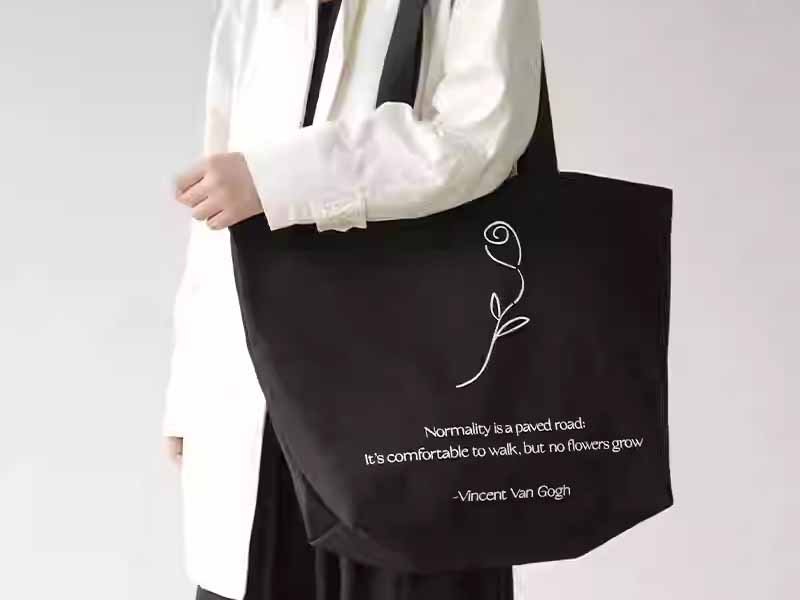
A logo may cover less than five percent of a bag’s visible surface, yet it can determine almost the entire first impression. Buyers notice whether it looks sharp, sits straight, matches the brand color, suits the product material, and remains intact after months of use. That is why choosing a logo method is not simply a final decoration decision. It affects product positioning, sample cost, production risk, durability, retail presentation, and repeat-order consistency.
The best logo methods for custom bags include screen printing, heat transfer, digital printing, sublimation, embroidery, woven labels, jacquard webbing, leather patches, rubber or silicone patches, metal plates, embossing, debossing, foil stamping, and laser engraving. The right option depends on the bag material, logo complexity, required texture, order quantity, durability expectations, placement, cost target, and brand positioning.
A promotional cotton tote and a premium PU cosmetic bag may carry the same artwork, but they should rarely use the same branding process. One may need an economical one-color screen print, while the other may require a recessed logo, metallic foil, or custom metal plate.
Many costly branding failures begin when a process is selected from an attractive reference photo rather than tested on the actual production material. A transfer that looks perfect on standard polyester may peel from coated nylon. A finely detailed logo may become unreadable when embroidered. A metal badge may look luxurious but pull through an unsupported panel.
The following guide explains how experienced bag developers compare logo processes, materials, costs, durability, placement, sampling, and bulk-production controls before approving a branding method.
What Are the Best Logo Methods for Custom Bags?

The best logo methods fall into four practical groups: printed logos, stitched logos, attached labels or patches, and integrated premium branding. Screen printing and heat transfer cover many commercial projects, while embroidery adds texture. Woven labels, molded patches, metal plates, embossing, foil stamping, and branded webbing create stronger product identity when the material, quantity, and target market justify them.
Printed Logo Methods
Screen printing remains one of the most practical methods for tote bags, drawstring bags, cooler bags, storage bags, promotional bags, and fabric accessories. Ink is pushed through a prepared mesh screen onto a flat material panel. It performs particularly well with bold artwork, solid colors, and designs that do not rely heavily on gradients or photographic detail.
For commercial production, one to four spot colors are common. Each color normally requires a separate screen, ink preparation, printing pass, and registration check. A one-color logo is therefore easier and less expensive to control than a four-color logo with tightly aligned elements.
The material surface has a direct effect on print quality. Smooth cotton and tightly woven polyester usually allow cleaner edges. Coarse canvas, open-weave fabrics, and textured Oxford materials can interrupt fine lines and small lettering. A line that appears sharp on a monitor may look broken once ink is deposited over an uneven weave.
Heat transfer is more suitable for multicolor graphics, gradients, photographs, fine text, and designs containing many small elements. The artwork is prepared on transfer material and bonded to the bag panel using controlled temperature, pressure, and dwell time.
The result can be sharp and colorful, but the transfer system must match the actual fabric. Excessive heat can flatten a textured surface, leave gloss marks, shrink synthetic panels, damage PU coatings, distort clear PVC, or activate dye migration in dark polyester.
Digital printing provides even greater freedom for detailed illustrations, photographic designs, seasonal artwork, and products requiring several graphic variations. However, its performance depends on the ink technology, fabric pretreatment, surface coating, curing process, and intended use.
Sublimation is especially effective for white or light-colored polyester. The dye becomes part of the fiber rather than sitting as a thick layer on top. It is suitable for full-color graphics, all-over patterns, sports bags, drawstring bags, and printed cosmetic bag panels. It is generally unsuitable for cotton, dark fabrics, and materials that cannot tolerate the required heat.
Stitched Logo Methods
Embroidery uses thread to create depth, texture, and a more physical brand presence. It is frequently used on backpacks, sports bags, duffel bags, golf bags, canvas totes, tool bags, and structured travel products.
Embroidery cost is influenced more by stitch count than by the number of printed colors. Logo dimensions, fill density, thread changes, underlay, backing material, and machine time all affect the final cost.
Small lettering is one of the most common embroidery challenges. As a practical starting point, capital letters below approximately 5–7 mm in height may become difficult to reproduce clearly, particularly when the font is narrow or highly decorative. This is not a universal limit, but it is a useful early warning during artwork review.
Fine outlines may need to be widened, tightly spaced letters may need more separation, and gradients normally need to be simplified into solid thread colors. A print-ready logo should not automatically be treated as embroidery-ready artwork.
Dense embroidery can also change the behavior of the bag panel. It may create puckering on lightweight polyester, visible backing inside an unlined product, stiffness on foam-laminated fabric, or distortion around curved panels.
Needle penetration can reduce water resistance on coated fabric. For that reason, an embroidered logo on a waterproof material should not automatically be assumed to retain the original waterproof performance.
The best embroidery result usually comes from adapting the logo specifically for thread. The embroidery file should control stitch direction, density, sequence, underlay, pull compensation, thread type, and backing requirements.
Labels, Patches, and Webbing
Woven labels are among the most versatile branding solutions because they can be sewn onto cotton, canvas, polyester, nylon, lining, mesh, webbing, PU panels, and many other materials.
They are suitable for brand names, small icons, care information, country-of-origin details, authenticity marks, and consistent branding across a multi-SKU product range.
Label construction affects both appearance and attachment. Common formats include:
- Straight-cut labels
- Center-fold labels
- End-fold labels
- Loop-fold labels
- Side-fold labels
- Book-fold labels
A front woven badge creates a visible brand statement, while a small side-seam flag label is more discreet. Interior labels can carry care information, product identity, or brand storytelling without competing with the exterior design.
Leather, PU, rubber, PVC, and silicone patches create greater visual and physical weight. Genuine leather patches suit heritage, outdoor, workwear, and lifestyle products. PU patches offer more predictable grain, thickness, and color.
Rubber and silicone patches are common on sports, technical, tactical, outdoor, pet, and youth products. They can include raised lettering, recessed backgrounds, layered colors, transparent sections, or custom shapes.
These patches may require molds. Thin raised lines can tear during production, narrow channels may fill unevenly, and excessive thickness can make the patch heavy or difficult to sew.
Jacquard webbing integrates the brand directly into a handle or strap. It is particularly effective for shoulder straps, carry handles, pet leashes, reinforcement bands, luggage straps, and decorative trim.
The artwork must suit the available webbing width and weaving structure. Very small lettering or excessive detail may not remain clear after weaving. The logo repeat should also be calculated against the finished strap length so partial words or awkwardly cut graphics do not appear near attachment points.
Premium Integrated Branding
Metal plates, custom zipper pullers, embossing, debossing, foil stamping, and laser engraving are used when the brand wants a more integrated or premium appearance.
Metal logos are common on handbags, cosmetic bags, business bags, travel accessories, gift products, and fashion-oriented collections. The specification should define:
- Alloy or base material
- Logo dimensions
- Component thickness
- Edge radius
- Surface finish
- Plating color
- Logo depth
- Attachment method
- Corrosion expectations
A metal plate may be attached using prongs, rivets, screws, backing plates, or a sewn frame. Soft fabric or thin PU normally needs internal reinforcement to prevent the component from pulling through the panel.
Embossing creates a raised logo, while debossing presses the artwork into the surface. Both methods work well on leather, PU, and suitable patches. The result depends on grain, material thickness, die depth, heat, pressure, dwell time, and the recovery characteristics of the material.
Foil stamping adds a metallic, glossy, matte, holographic, or colored film to the pressed area. It is popular for beauty, jewelry, fashion, gift, and luxury-positioned products. Adhesion and flexibility must be checked because foil can crack when the panel is repeatedly bent.
Laser engraving can create precise marks on leather, metal, wood components, and selected synthetic materials. Some synthetic surfaces may melt, discolor, or produce irregular residue, so the actual material must be tested before production.
| Logo Method | Best Artwork Type | Typical Brand Effect | Main Production Risk |
|---|---|---|---|
| Screen printing | Bold shapes and solid colors | Clean and commercial | Poor registration or ink adhesion |
| Heat transfer | Detailed multicolor graphics | Sharp and modern | Peeling, gloss marks or dye migration |
| Digital printing | Photographs and gradients | Graphic and expressive | Ink compatibility and abrasion |
| Embroidery | Simplified logos and lettering | Textured and durable | Puckering or lost detail |
| Woven label | Small marks and repeated identity | Consistent and versatile | Poor placement or attachment |
| Rubber patch | Raised separated colors | Technical and distinctive | Mold-detail limitations |
| Metal plate | Simple premium marks | Refined and permanent | Plating or attachment failure |
| Embossing | Bold low-detail artwork | Subtle and premium | Weak definition on textured material |
Which Logo Method Fits Each Bag Material?

The correct logo method must suit the material’s texture, coating, thickness, flexibility, and heat tolerance. Cotton and canvas accept many printing and sewing methods, while coated nylon may require careful adhesion trials. PU and leather often suit embossing or metal branding. PVC, TPU, neoprene, and mesh need process-specific testing because heat, solvents, pressure, and needle holes may damage them.
Cotton and Canvas
Cotton and canvas are generally easy to brand because they accept ink, tolerate stitching, and provide enough stability for labels and patches.
Screen printing is commonly selected for tote bags, drawstring bags, shopping bags, and promotional products. Smooth cotton allows cleaner detail, while coarse canvas may require thicker artwork lines and heavier color coverage.
Fabric weight also matters. Lightweight cotton can stretch or move during printing, especially if it has not been stabilized correctly. Heavy canvas may have a prominent weave that breaks up fine text or thin outlines.
Dark canvas often needs an opaque ink or underbase beneath light-colored artwork. Without sufficient opacity, the base material may show through the logo. Excessive ink coverage should also be avoided because it can create a stiff surface that cracks when the fabric folds.
Embroidery can add perceived value, but lightweight cotton usually requires backing. Without sufficient support, the material may gather around dense stitch areas.
A large filled embroidery design can make a soft tote panel feel rigid. In some cases, reducing fill areas or changing part of the logo to an outline stitch creates a more balanced result.
Woven labels and leather patches are useful when one consistent logo solution is needed across cotton, canvas, polyester, and other materials. Instead of adjusting printing ink for every fabric, an approved label or patch can be used throughout the collection.
The attachment method must be considered during pattern development. The patch or label should not overlap a pocket seam, folded edge, reinforcement area, or lining attachment point.
Polyester, Nylon, and Oxford Fabric
Polyester and nylon are widely used for backpacks, travel bags, sports bags, cooler bags, pet carriers, tool bags, medical bags, tactical products, and outdoor equipment.
These materials are often described only by fiber and denier, but logo performance is strongly affected by surface treatment. Important variables include:
- Water-repellent finishes
- PU coating
- PVC backing
- TPU lamination
- Calendaring
- Surface texture
- Fabric color
- Heat sensitivity
A 600D polyester Oxford fabric with PU backing behaves differently from smooth 210D polyester lining. Ink that adheres well to one material may perform poorly on the other.
Heat transfer settings that work on untreated polyester may cause coating marks, shrinkage, discoloration, or surface flattening on laminated fabric.
Dye migration is a particular concern with dark polyester. Under heat, disperse dyes can move from the base fabric into a pale transfer. A white logo may gradually become pink, blue, gray, or another contaminated shade.
Low-temperature transfer films and migration-blocking layers can reduce this risk, but the result should be confirmed on the actual fabric color and production lot.
Embroidery works on many structured polyester and nylon panels. Dense stitching should be used cautiously on lightweight fabric, and reinforcement may be required behind the logo area.
Needle holes can reduce the water resistance of coated fabrics. A sewn rubber patch can create the same issue, although sealing or internal backing may reduce water penetration depending on the construction.
Rubber patches, silicone badges, woven labels, and metal logos are useful alternatives when direct printing is difficult. The attachment method should reflect the real use of the product rather than appearance alone.
PU and Genuine Leather
PU leather and genuine leather often respond best to branding methods that respect the material’s surface character.
Common options include:
- Embossing
- Debossing
- Foil stamping
- Laser engraving
- Metal logo plates
- Screen printing
- Separate leather patches
Embossing and debossing usually work best with relatively simple artwork. Large filled shapes, bold letters, and open negative spaces produce more reliable definition than very thin lines or tiny text.
Grain depth affects visibility. A logo that appears sharp on smooth PU may become less distinct on heavily pebbled material.
Heat and pressure must be controlled carefully. Too little pressure produces a weak impression. Too much pressure may flatten the surrounding grain, damage the backing, create a permanent outline around the die, or distort the panel.
Some PU coatings soften, become glossy, or change color under heat. A trial on the exact production material is therefore essential.
Foil stamping adds contrast but requires compatible adhesive chemistry. The stamped panel should be bent after application to check whether the foil cracks, flakes, or separates from the surface.
Metal badges offer a stronger premium signal but add weight and need secure reinforcement. Their internal attachment should be covered so prongs, screws, or backing plates do not scratch the lining.
Direct embroidery on leather is possible, but it permanently perforates the surface and can weaken thin material. A separate embroidered or woven patch is often safer when a stitched appearance is required.
PVC, TPU, Neoprene, and Mesh
PVC and TPU require careful logo trials because they can be sensitive to heat, solvents, pressure, and plasticizer movement.
Clear PVC can become cloudy, marked, or distorted under excessive heat. Adhesives can react with plasticizers, causing transfer edges to lift or become sticky after storage.
Printing inks, transfer films, and adhesive systems should therefore be tested for longer-term compatibility rather than judged only by their appearance immediately after application.
Neoprene is flexible and compressible. It can accept screen printing, heat transfer, sublimation on polyester-faced constructions, and rubber patches.
Dense embroidery may compress the foam unevenly or create a distorted area around the logo. Sewing also leaves visible needle channels and may change the stretch behavior of the panel.
Mesh presents a different challenge because much of the surface is open space. Fine direct printing is rarely suitable for open mesh. A better solution is often:
- A sewn woven label
- A molded patch
- An embroidered reinforced panel
- A printed solid fabric insert
- A branded webbing strip
| Bag Material | Strong Starting Options | Main Caution |
|---|---|---|
| Cotton | Screen print, embroidery, woven label | Fabric movement and shrinkage |
| Heavy canvas | Screen print, leather patch, embroidery | Coarse texture reduces detail |
| Polyester Oxford | Transfer, print, embroidery, patches | Dye migration and coating marks |
| Nylon Oxford | Print, woven label, molded patch | Heat and adhesion sensitivity |
| PU leather | Embossing, foil, metal badge | Surface damage from heat or pressure |
| Genuine leather | Debossing, engraving, metal | Natural variation between hides |
| PVC or TPU | Selected print or attached badge | Deformation and plasticizer reaction |
| Neoprene | Sublimation, print, rubber patch | Compression and distortion |
| Mesh | Sewn label or reinforced patch | Limited direct-printing surface |
How Do Popular Logo Methods Compare?
Popular logo methods should be compared through artwork capability, material compatibility, setup cost, unit cost, production speed, durability, and repeatability. Screen printing is efficient for simple volume orders, heat transfer handles complex graphics, embroidery adds texture, digital printing reproduces detail, and sublimation performs well on light polyester. The lowest sample price is not always the lowest-risk choice for bulk production.
Screen Printing vs. Heat Transfer
Screen printing is usually the stronger choice when a design contains a limited number of solid colors and will be repeated across a medium or large production order.
Once the screens, ink colors, print position, curing temperature, and registration settings are approved, the method can deliver consistent results.
Its main disadvantage is setup. Each color normally needs a separate screen and printing pass. A four-color logo requires more preparation and alignment control than a one-color design.
Closely registered colors may shift slightly during production if the material moves, stretches, or is not positioned accurately. This is particularly relevant for lightweight fabric and large print areas.
Heat transfer is more flexible for gradients, photographs, small lettering, complex illustrations, and designs containing many colors. The image is created separately and then transferred to the panel.
This can simplify artwork reproduction, but it introduces a different set of risks. Large transfers can create a film-like hand feel. The transfer may be visibly glossier than the surrounding fabric, especially on matte Oxford material.
Incorrect temperature, pressure, or dwell time can lead to:
- Edge lifting
- Incomplete adhesion
- Surface shine
- Coating damage
- Panel shrinkage
- Dye migration
- Transfer cracking
For larger repeat orders, the decision should consider total production economics. Screen printing may have higher initial setup but a more attractive unit cost at volume. Heat transfer may need less conventional setup but retain a similar per-piece material cost across different quantities.
Embroidery vs. Printing
Embroidery creates visible depth and often feels more permanent than a surface print. It is well suited to corporate backpacks, golf bags, sports bags, work bags, travel bags, and lifestyle products where texture supports the design.
Printing provides greater graphic freedom. It can reproduce gradients, fine outlines, large color fields, illustrations, and photographic elements without adding thousands of stitches.
Embroidery cannot reproduce every printed logo accurately. Fine scripts, small text, shadows, and tightly spaced elements often need to be simplified.
Stitch count is a key cost factor. Two logos with the same external dimensions can have very different production costs if one uses open outlines and the other contains a dense filled background.
Large fill areas increase machine time, thread consumption, stiffness, and the risk of puckering. A dense logo on a lightweight drawstring bag may look less professional than a clean one-color print.
Fabric stability must also be considered. A structured backpack panel normally supports embroidery better than thin lining fabric or lightweight polyester.
Coated waterproof materials present another trade-off. Embroidery may be durable on the surface but can compromise water resistance through repeated needle penetration.
Neither process is automatically more premium. A poorly digitized embroidered logo may look cheaper than a well-executed print. The best process is the one that translates the artwork cleanly and fits the product’s intended identity.
Digital Printing vs. Sublimation
Digital printing and sublimation both support detailed multicolor artwork, but they rely on different relationships between the ink and the material.
Digital printing places ink onto or into a prepared surface, depending on the print technology. It is useful for photographs, detailed illustrations, personalized graphics, and seasonal designs.
Its performance depends on:
- Fabric fiber
- Surface coating
- Pretreatment
- Ink chemistry
- Curing conditions
- Abrasion requirements
- Water exposure
On absorbent fabric, very fine detail may spread. On coated fabric, adhesion may be weaker unless the surface and ink system are compatible.
Sublimation works by converting dye into gas under heat and bonding it to polyester fibers. Because the color becomes part of the material, it does not create a thick film that can peel away.
It is particularly suitable for sports bags, drawstring bags, printed cosmetic bags, and products with full-panel artwork.
Its main limitation is material color and composition. Sublimation works best on white or light polyester. It cannot print opaque white onto a dark base, and the original fabric color influences the final result.
Pale artwork printed on cream polyester will not look identical to the same artwork printed on bright white polyester.
Physical color approval is important for both methods. Computer screens use illuminated RGB color, while production uses pigments or dyes on a real surface. Printed results often appear less bright than digital previews.
Cost and Durability Comparison
A reliable cost comparison should separate setup cost from recurring unit cost.
Setup-related costs may include:
- Screen preparation
- Embroidery digitizing
- Mold development
- Printing plates
- Metal tooling
- Color matching
- Artwork adjustment
- Sample trials
Recurring costs may include:
- Ink
- Transfer film
- Thread
- Machine time
- Labor
- Patch components
- Metal materials
- Application time
- Inspection
| Method | Setup Level | Unit Cost Trend | Detail Capability | Typical Durability |
|---|---|---|---|---|
| Screen printing | Medium | Improves with volume | Moderate | Good with compatible ink |
| Heat transfer | Low to medium | Relatively stable per unit | High | Depends on film and application |
| Embroidery | Digitizing required | Driven by stitch count | Moderate | Usually strong |
| Digital printing | Low conventional setup | Depends on area and ink | Very high | Material-dependent |
| Sublimation | Artwork and print setup | Efficient for full color | Very high | Strong on suitable polyester |
| Woven label | Weaving setup | Improves with quantity | High for small marks | Strong |
| Molded patch | Mold required | Improves with volume | Moderate | Strong for active-use products |
| Metal badge | Tooling may apply | Material-dependent | Moderate | Strong if plating is controlled |
Durability should be linked to actual use. A logo on a promotional tote experiences different stress from one on a tool bag, pet carrier, golf bag, or outdoor backpack.
The relevant test is the one that reflects the most likely failure mode, not simply the test that is easiest to perform.
Which Premium Logo Methods Build Brand Value?

Premium branding builds value when the logo feels like part of the product rather than an image added at the end. Woven labels and jacquard webbing support consistent identity, leather and molded patches add texture, and metal logos create visual weight. Embossing, foil stamping, and laser engraving provide quieter refinement. Premium appearance comes from suitability and execution, not simply from higher cost.
Woven Labels and Jacquard Webbing
Woven labels are effective for brands managing several product categories because one approved label can appear across backpacks, totes, cosmetic bags, travel organizers, storage products, and interior linings.
This creates a recognizable identity and reduces the need to develop a completely different branding process for every material.
The weave density affects detail. Fine damask labels reproduce small lettering more effectively than coarse woven constructions, but every weaving method has practical limits.
Thin diagonal strokes, tiny enclosed spaces, and subtle gradients may need to be simplified.
The edge treatment affects both appearance and comfort. Heat-cut edges can feel firm, while woven or ultrasonic edges may feel smoother.
For an interior label that touches the user’s hand, edge comfort may matter. For an exterior badge, dimensional stability and weather resistance may be more important.
Jacquard webbing makes the brand more visible by incorporating it into the strap or handle. It can be used on:
- Backpack shoulder straps
- Tote handles
- Travel bag straps
- Pet leashes
- Luggage straps
- Tactical webbing systems
- Decorative bands
The artwork repeat should be calculated carefully. The production team should know where the webbing will be cut and sewn so the visible area does not contain incomplete lettering or a logo hidden beneath an adjuster.
Structural performance must remain the priority. A decorative weave should not create excessive edge curl, reduce tensile strength, or make the strap too thick for buckles and adjusters.
Leather and Molded Patches
Leather patches communicate heritage, craftsmanship, and durability. They are often used on canvas bags, tool bags, travel duffels, outdoor backpacks, workwear products, and lifestyle accessories.
Genuine leather provides natural surface variation and may develop character over time. PU leather offers greater consistency in color, grain, thickness, and cost.
A leather or PU patch can be:
- Embossed
- Debossed
- Printed
- Laser engraved
- Foil stamped
- Combined with metal hardware
Patch thickness should suit both the design and the attachment method. A thick patch can be difficult to sew neatly, while a thin patch may curl or lose its shape.
Rubber, PVC, and silicone patches create a more technical or contemporary appearance. They can contain raised lettering, recessed backgrounds, layered colors, matte surfaces, transparent sections, and custom outlines.
Mold design creates practical limitations. Thin raised lines can tear during demolding. Narrow recessed channels may fill irregularly. Small color areas may not remain clearly separated.
Slight simplification often produces a stronger result than attempting to reproduce every detail from a print logo.
Attachment should reflect the product’s use. Perimeter sewing is commonly reliable. Adhesive alone may be unsuitable for products exposed to heat, moisture, repeated bending, or abrasion.
Metal Logos and Custom Hardware
Metal logos can immediately change the perceived character of a bag. They are often used on handbags, cosmetic bags, business cases, travel accessories, jewelry packaging, and premium retail products.
The design should define:
- Base metal or alloy
- Width and height
- Thickness
- Surface finish
- Plating tone
- Logo relief
- Edge radius
- Weight
- Attachment structure
Common attachment systems include prongs, rivets, screws, backing plates, and metal frames.
A reinforcement layer is often required behind the logo. Without reinforcement, the component may pull through thin fabric, soft PU, or foam-laminated panels.
The internal side of the attachment should be covered to prevent scratches to the lining or stored products.
Plating consistency is also important. Gold, rose gold, nickel, gunmetal, and black finishes can vary between production lots. Retained physical samples are more reliable than verbal color descriptions for repeat orders.
Products intended for humid, coastal, outdoor, or high-perspiration environments may require additional corrosion consideration.
Custom zipper pullers, buckle components, metal tips, and decorative rings can extend the brand identity beyond the front logo. This creates a more complete product language but also adds tooling, inspection, replacement, and inventory requirements.
Embossing, Foil, and Laser Work
Embossing and debossing are effective when the brand prefers restrained recognition rather than high color contrast.
They work particularly well on leather, PU, cosmetic cases, business accessories, and separate brand patches.
The artwork must be bold enough to remain visible. Fine lines can disappear in textured material, and small enclosed spaces may close during pressing.
A trial die may be needed to find the right balance between visible depth and surface damage.
Foil stamping adds stronger contrast. Available effects may include:
- Gold
- Silver
- Rose gold
- Matte metallic
- Glossy color
- Holographic film
- Pigmented foil
Foil is popular in beauty, fashion, jewelry, and gift categories. The panel should be bent and rubbed after stamping to check adhesion and flexibility.
Laser engraving offers precise detail on genuine leather, selected PU materials, metal, wood, and some coated surfaces.
The reaction depends on the substrate. Leather may darken attractively, while some synthetic materials can melt, discolor, or leave rough residue.
The most effective premium design is often restrained. One carefully executed metal logo, embossed patch, or foil mark may create more value than several competing brand treatments on the same product.
Which Factors Determine the Right Logo Method?

The right logo method is determined by the complete product brief, not by appearance alone. Buyers should review artwork complexity, material behavior, logo size, placement, order quantity, setup cost, unit cost, likely wear, retail positioning, and repeat-order plans. A method may be technically possible yet commercially unsuitable if it increases failure risk, disrupts production, or conflicts with the intended product price.
Artwork and Size
Artwork should be evaluated at its actual production size. A design that appears simple at 250 mm wide may become difficult to reproduce at 35 mm.
Common problem areas include:
- Thin strokes
- Small counters inside letters
- Closely spaced text
- Fine outlines
- Gradients
- Drop shadows
- Tiny registered marks
- Complex negative space
Vector files such as AI, EPS, SVG, or editable PDF are preferred because they can be resized without losing edge quality.
Fonts should be converted to outlines, and approved colors should be identified clearly.
Different processes often require different artwork versions.
Screen printing may need separated spot colors. Embroidery needs a digitized stitch program. Molded patches require physical spacing between raised and recessed elements. Embossing works better with simplified shapes. Jacquard webbing requires a design suited to the strap width and repeat pattern.
As a practical starting point, embroidery lettering may need approximately 5–7 mm capital height for reliable clarity. Molded, woven, or embossed details may need wider lines than printed artwork.
These are not absolute limits. Font design, material texture, equipment, logo dimensions, and production technique all affect the result.
The final specification should identify:
- Logo width
- Logo height
- Process
- Color reference
- Orientation
- Placement dimensions
- Approved artwork version
“Logo on the front” is not a sufficient production instruction.
Quantity and Cost Structure
Order quantity affects whether tooling and setup are commercially reasonable.
Screen printing may require separate screens for each color. Embroidery requires digitizing. Rubber and silicone patches require molds. Metal logos may need stamping, engraving, casting, or plating tools. Jacquard webbing requires weaving setup and material production.
It is useful to separate three quantities:
- Minimum quantity for the finished bag
- Minimum quantity for the custom logo component
- Quantity at which the process becomes economically efficient
These numbers may be different.
A finished bag order may begin at 500 pieces, while a custom metal component or jacquard webbing supplier may require a higher material quantity.
Additional components can sometimes be stored for repeat production, but only when the brand expects the artwork, plating color, material, and dimensions to remain unchanged.
Cost should also be separated into development cost and recurring cost.
A mold may create a higher initial investment but become economical across repeat orders. A heat transfer may need limited tooling but retain a similar cost per unit regardless of order growth.
The best commercial option supports the current order while remaining practical for future production.
Placement and Construction
Logo placement affects both appearance and manufacturability.
Flat cut panels are easier to screen print, heat transfer, embroider, emboss, or stamp before assembly. Finished bags contain zippers, pockets, foam, seams, curves, linings, and hardware that may prevent machinery from reaching the required area.
For this reason, many logo processes are completed before the bag is sewn.
The pattern must reserve sufficient flat space around the logo. Important nearby details include:
- Seam allowances
- Pockets
- Piping
- Zippers
- Reinforcement panels
- Handles
- Fold lines
- Lining attachments
Placement measurements should use stable reference points such as a panel edge, center line, zipper seam, or pocket opening.
Soft goods naturally have more dimensional variation than rigid products. For many commercial sewn bags, a placement tolerance of approximately ±3–5 mm may be workable, although the final requirement depends on panel stability, logo size, positioning fixtures, and customer standards.
Visual centering is not always the same as mathematical centering. A logo placed at the geometric center may appear off-center if a pocket, handle, or asymmetrical seam changes the visual balance.
The complete sample should be reviewed both empty and filled. A logo that looks correctly positioned on a flat bag may shift visually once the product takes shape.
Durability and Market Position
Durability must be defined according to real use.
A promotional cotton tote may require basic rubbing resistance. A tool bag may face repeated abrasion. A cooler bag may encounter condensation and cleaning. A pet carrier may be scratched, bent, and exposed to moisture.
Relevant checks can include:
- Dry rubbing
- Wet rubbing
- Tape adhesion
- Repeated bending
- Scratch resistance
- Flex testing
- Cleaning simulation
- Pull testing
- Corrosion exposure
- Heat or cold cycling
The checks should target the most likely failure mode.
Brand positioning also influences the decision.
Promotional products often benefit from efficient screen printing. Sports and outdoor products may suit embroidery, rubber patches, or jacquard webbing. Fashion and beauty products may use foil stamping, metal plates, or subtle embossing. Technical bags may need branding that survives abrasion without interfering with performance.
The most expensive method is not automatically the most appropriate.
A heavy metal badge may feel wrong on an ultralight running bag. A low-cost transfer may weaken the appearance of a premium leather cosmetic case.
| Decision Factor | Questions to Confirm |
|---|---|
| Artwork | How many colors, gradients, thin lines and small letters are present? |
| Material | Is the surface textured, coated, elastic, transparent or heat-sensitive? |
| Quantity | Will setup or tooling be spread across 500, 5,000 or more units? |
| Placement | Is the logo on a flat panel, pocket, seam, strap, curve or finished bag? |
| Use | Will it face abrasion, moisture, cleaning, sunlight or repeated bending? |
| Brand tier | Is the product promotional, retail, outdoor, technical, fashion or luxury? |
| Repeat orders | Can the supplier reproduce the color, file, mold and position later? |
How Do Brands Approve Logo Quality Before Production?
Brands should approve logo quality through a controlled sequence: production-ready artwork, confirmed material, a physical logo trial, a complete bag sample, and first-piece approval during bulk production. Inspection should verify dimensions, position, color, attachment, surface condition, and likely durability. Digital mockups help plan the design, but they cannot replace a physical sample produced with the approved material and process.
Artwork and Color Approval
The approval process begins with one controlled master artwork file.
The file should identify:
- Approved logo version
- Final dimensions
- Color references
- Production process
- Placement
- Orientation
- Permitted variation
Color communication requires special care.
Pantone references are useful, but the same target will not look identical in printing ink, embroidery thread, molded rubber, woven yarn, plated metal, or foil.
Each material reflects and absorbs light differently.
Embroidery thread can appear lighter because of its sheen. Matte rubber can appear darker. Metal plating changes under different viewing angles. Printed ink may be influenced by the color and texture of the base fabric.
Brands should therefore determine which type of approval is required:
- Exact physical match to a retained sample
- Nearest available standard thread or material
- Coordinated appearance across different logo materials
- Visual approval within an agreed tolerance
Physical samples should be reviewed under consistent lighting. Neutral daylight or controlled indoor lighting is more reliable than colored retail lighting.
For critical colors, approval records should include the color code, supplier reference, material description, photograph, and retained physical sample.
Logo Trials and Complete Samples
A logo trial should be completed before building the entire bag sample when the material or process presents uncertainty.
A small production-material swatch can reveal:
- Weak ink adhesion
- Dye migration
- Blurred detail
- Heat damage
- Weak embossing
- Foil cracking
- Fabric puckering
- Transfer lifting
- Mold-detail limitations
The trial should answer three practical questions:
- Can the process reproduce the artwork clearly?
- Is it compatible with the confirmed material?
- Is it likely to survive the expected use?
The trial should be reviewed for edge definition, text readability, color coverage, gloss, texture, hand feel, distortion, adhesive overflow, loose threads, patch thickness, and material damage.
Once the process is approved, it should be applied to a complete bag sample.
The full product can reveal problems that a flat swatch cannot show. The logo may be too large for the panel, visually unbalanced beside a zipper, partly hidden by a handle, or distorted when the bag is filled.
The approved complete sample should become the visual standard for bulk production.
Photographs and written comments are useful, but a retained physical sample provides the clearest reference for material, color, texture, scale, placement, and workmanship.
Durability Checks
Logo durability should be tested according to product risk rather than through one universal checklist.
Printed logos may need rubbing and adhesion checks. Transfers may need edge-peel, flexing, and heat-exposure checks. Embroidery may need thread-security and distortion evaluation. Metal badges may require pull, rotation, scratch, and corrosion checks.
Common internal screening may include:
- Repeated dry rubbing
- Wet rubbing
- Tape adhesion on cured print
- Repeated panel folding
- Patch flexing
- Moderate pull testing
- Surface scratching
- Cleaning simulation
More formal projects may reference established textile, coating, abrasion, colorfastness, or hardware test methods.
The logo should also be inspected after packing simulation.
Metal plates may scratch neighboring products when units are stacked. Foil areas may rub against tissue paper or polybags. Transfers may block against another coated surface during warm storage.
Testing does not need to be excessive. It needs to reflect the most realistic risk.
A washable lunch bag should be assessed for cleaning. An outdoor backpack should be checked for abrasion and moisture. A cosmetic bag may need repeated bending and surface-rub checks.
First-Piece and Bulk Control
The first completed production unit is one of the most important approval points.
Bulk fabric lots, operators, machines, thread tension, ink batches, transfer temperatures, and positioning tools may differ from those used during sample development.
The first production piece should be compared directly with the approved sample for:
- Logo dimensions
- Position
- Orientation
- Color
- Surface finish
- Stitch or print quality
- Attachment strength
- Material damage
- Interaction with nearby construction
Once approved, inline inspection should check for process drift.
Screen-printing registration can shift. Heat-transfer pressure may become uneven. Embroidery tension can change. Patch placement may move if operators rely on visual judgment. Metal badges may rotate if punching fixtures are inaccurate.
Final inspection should compare sampled finished units with the approved reference and order specification.
Packing protection should also be reviewed. Metal, foil, glossy transfers, and raised patches may require tissue, protective film, individual bags, or controlled stacking.
For repeat orders, the manufacturing team should retain:
- Vector artwork
- Embroidery programs
- Mold references
- Metal tooling references
- Color records
- Placement dimensions
- Material specifications
- Approved samples
- Packing instructions
| Approval Stage | Key Check | Typical Record |
|---|---|---|
| Artwork review | Size, colors, line detail and process fit | Approved vector file |
| Material trial | Adhesion, definition, heat or pressure effect | Physical logo swatch |
| Complete sample | Scale, position and visual balance | Approved bag sample |
| First bulk piece | Production replication | First-piece inspection record |
| Inline inspection | Position drift, damage and consistency | Production inspection report |
| Final inspection | Overall quality and packing protection | Final QC record |
Choose a Logo Method That Can Scale With Your Brand
The best logo method is not necessarily the most colorful, expensive, or technically complicated. It is the method that represents the brand clearly, works with the selected bag material, survives the intended use, fits the target cost, and can be reproduced consistently from sample development through repeat production.
Lovrix is a material-driven OEM/ODM manufacturer based in Shenzhen, Guangdong, supporting custom bags, fabrics, webbing, branding details, and engineered soft goods.
Logo capabilities include screen printing, heat transfer, digital printing, sublimation, embroidery, woven labels, jacquard webbing, leather patches, rubber and silicone patches, metal plates, custom zipper pullers, embossing, debossing, foil stamping, laser engraving, and other private-label details.
The team evaluates branding as part of the complete bag rather than treating it as a final decoration. Material compatibility, placement, artwork detail, sample development, quantity, cost structure, production feasibility, durability, and bulk quality control should all be confirmed together.
Send your product drawing, reference images, target material, vector logo, order quantity, packaging needs, and delivery plan to email for a structured custom bag manufacturing proposal.


