 Skip to content
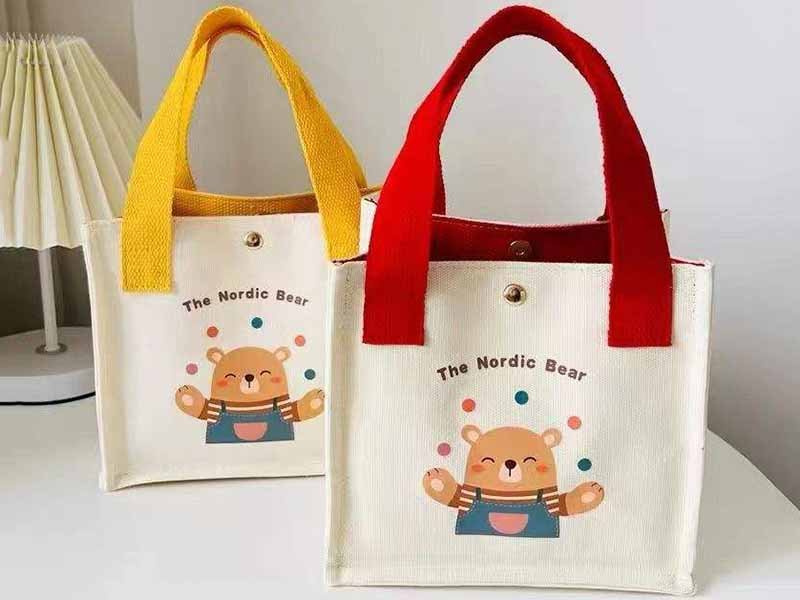
A printed logo can look perfect in a digital mockup and still fail on the finished bag. The color may shift, the transfer edge may lift, a coated fabric may develop a glossy pressure mark, or a full-panel pattern may lose its visual balance after cutting and sewing. That is why choosing between heat transfer and sublimation printing is not simply a graphic-design decision. It is a material, product-engineering, manufacturing, and commercial decision.
Heat transfer is generally better for localized, opaque graphics on a wider range of light or dark bag materials. Sublimation is generally better for white or light-colored polyester when the design requires a soft hand feel, photographic detail, gradients, repeating patterns, or full-panel coverage. The best process depends on fiber composition, coating, base color, artwork, abrasion exposure, order quantity, and production method.
For a brand buyer, the real question is not which printing process looks better on a presentation board. The real question is which method can remain consistent across 500, 3,000, or 10,000 finished products.
A sports brand may approve a bright white logo on an uncoated polyester swatch, then discover that the same transfer begins lifting when production moves to a water-resistant coated fabric. The artwork has not changed. The material beneath it has. That small detail explains why printing should always be evaluated as part of the complete bag rather than as an isolated decoration.
What Is Heat Transfer Printing?

Heat transfer printing uses controlled heat and pressure to bond a printed image, vinyl layer, adhesive ink system, or specialty film to the surface of a bag material. It works across a wider range of fabric colors and substrates than traditional sublimation, but its durability depends on the transfer type, coating, press settings, logo position, and end-use conditions.
How the Process Works
Heat transfer usually begins with finished artwork prepared at the exact production size. Vector files such as AI, EPS, SVG, or editable PDF are preferred for logos, lettering, icons, and flat-color designs because they preserve clean edges at different sizes. Photographic artwork may require a printable transfer film rather than cut vinyl.
The graphic is printed, cut, screen-produced, or otherwise prepared on a carrier. It is then positioned on a flat fabric panel and pressed under a controlled combination of temperature, time, and pressure.
Depending on the transfer chemistry and substrate, initial development trials may begin around 120–170°C for approximately 8–20 seconds. These figures should never be treated as universal production settings. A low-temperature nylon transfer, a standard polyester transfer, a silicone transfer, and a reflective film may each require different conditions.
Once pressing is complete, the carrier may be removed while hot, warm, or cold. The operator should check:
- Edge adhesion
- Surface gloss
- Fabric discoloration
- Distortion or shrinkage
- Film texture
- Logo alignment
- Incomplete bonding
- Pressure marks
- Dye migration
- Peeling after cooling
Printing on flat panels before sewing is normally more reliable than pressing a completed bag. Seams, foam, zippers, piping, pockets, buckles, and hardware can prevent the heat press from applying uniform pressure.
A finished backpack may appear flat from the outside, but its front panel can contain several hidden layers. Foam, lining, reinforcement, and pocket seams create pressure differences that may lead to weak adhesion in one area and excessive gloss in another.
A useful production record should include:
- Material name and code
- Fabric color
- Coating or finish
- Transfer type
- Press temperature
- Pressing time
- Pressure level
- Peel method
- Logo dimensions
- Logo position
- Approved sample reference
Without this information, repeat-order consistency becomes much harder to maintain.
Common Transfer Types
“Heat transfer” is a broad manufacturing category rather than one single printing method. Buyers should therefore ask a supplier to identify the actual transfer system rather than approving a quotation that simply says “heat transfer logo.”
Heat transfer vinyl is often used for names, numbers, simple logos, text, and solid-color shapes. It provides good opacity and can work on dark fabrics, but the surface normally has a noticeable film feel.
Printable heat transfer film supports multicolor logos, gradients, illustrations, and photographic images. It is practical when the artwork contains many colors or cannot be produced efficiently with cut vinyl.
DTF-style transfer systems typically use digitally printed inks, a white underbase, adhesive powder, and heat pressing. They can reproduce fine details on light and dark materials. However, the adhesive must still be tested on coated Oxford, nylon, recycled polyester, canvas, and water-repellent fabrics.
Screen-printed transfers are produced through screen printing and later applied using heat. They can be efficient for repeated bulk orders with stable artwork and controlled color requirements.
Specialty transfers include:
- Reflective film
- Metallic film
- Silicone transfer
- Raised transfer
- Flocked transfer
- Glow-in-the-dark effects
- High-stretch film
- Migration-blocking film
- Matte or glossy finishes
- Fluorescent colors
These finishes can strengthen product differentiation, but they may introduce higher setup costs, longer sampling, stricter positioning tolerances, and more complicated adhesion requirements.
Two manufacturers may both quote “heat transfer” while offering completely different film thicknesses, adhesive systems, colors, finishes, and performance levels. The process name alone is not enough to compare quality.
Strengths in Bag Manufacturing
The main strength of heat transfer is flexibility. It can support localized branding on a wide range of materials and fabric colors when a compatible transfer is selected.
Heat transfer is particularly useful when a brand needs an opaque white logo on black, navy, red, green, or another dark-colored material. Traditional sublimation cannot create an opaque white image on dark polyester because sublimation dye does not contain a white underbase.
It also works well when the graphic is limited to one specific area. A 50–80 mm logo on a front pocket does not require the entire fabric panel to be printed.
Common bag applications include:
- Front-panel brand logos
- Team names and player numbers
- Reflective safety marks
- Event graphics
- Promotional messages
- Private-label logos
- Product identification
- Limited-edition graphics
- Regional artwork variations
- Custom names for uniforms or clubs
Heat transfer can also make multi-SKU development easier. A buyer may use the same base bag while changing only the event name, campaign logo, regional identity, club number, or collection graphic.
This helps reduce the need to print and inventory a separate fabric lot for every small artwork variation.
Heat transfer is often a strong choice when the design requires:
- White ink
- High opacity
- Reflective details
- Metallic effects
- Small localized graphics
- Dark base materials
- Short-run artwork changes
- Individual names or numbers
- Raised or tactile branding
Limitations and Failure Risks
Heat transfer remains on the surface of the material, so it has its own thickness, edges, flexibility, and abrasion behavior.
A small transfer may feel subtle, while a large transfer can make lightweight fabric feel stiff. Thick films may crack along repeated fold lines. Sharp logo corners may begin lifting when adhesive contact is incomplete.
Dye migration is a common concern on dark polyester. Heat can reactivate disperse dyes in the fabric, allowing those dyes to move into the transfer.
A white logo applied to red polyester may gradually become pink. A white logo on dark blue fabric may develop a blue or gray cast. A migration-blocking transfer can reduce this risk, but it must still be tested on the actual production material.
Coated materials create additional challenges. PU coatings, waterproof finishes, silicone treatments, waxes, anti-stain chemicals, and other surface treatments can reduce adhesive bonding.
Increasing press temperature is not always a safe solution. Excessive heat can:
- Damage the coating
- Flatten the fabric texture
- Cause permanent gloss
- Shrink the panel
- Distort the weave
- Soften laminated layers
- Create discoloration
- Reduce water resistance
Abrasion must also be considered. A logo on the center of a promotional tote may experience little friction, while the same logo on the bottom corner of a tool bag may rub against floors, equipment, vehicles, or rough surfaces every day.
The correct question is not whether heat transfer is durable in general. The correct question is whether a specific transfer system is durable on a specific material, at a specific location, under a specific pattern of use.
What Is Sublimation Printing?

Sublimation printing uses heat to turn special dye into gas so it can bond with compatible polyester fibers. The color becomes part of the material rather than forming a separate surface film. It is best suited to white or light-colored polyester and performs particularly well for photographs, gradients, repeating patterns, and large or full-panel graphics.
How Sublimation Works
The artwork is first printed in reverse onto coated sublimation paper using dedicated dye-sublimation ink. The transfer paper is placed against polyester fabric and exposed to heat and pressure.
During heating, the dye changes from a solid state into a gas. The polyester structure becomes receptive to the dye, allowing the color to enter the fibers. As the material cools, the dye becomes trapped within the polyester.
For many polyester fabrics, development trials may begin around 180–205°C for approximately 30–60 seconds. The final production setting depends on:
- Fabric weight
- Fabric construction
- Coating
- Transfer paper
- Ink system
- Press type
- Moisture content
- Required color depth
- Recycled fiber content
- Surface texture
Sublimation may be carried out roll to roll or panel by panel.
Roll-to-roll sublimation is efficient for continuous prints, repeated patterns, printed lining fabrics, and larger-volume production.
Panel sublimation gives more control over image placement but requires accurate coordination between:
- Artwork dimensions
- Cutting patterns
- Seam allowances
- Bleed areas
- Pocket locations
- Zipper openings
- Gussets
- Handle attachment zones
- Panel direction
- Final sewing tolerances
The print file should never be treated as a simple rectangular picture when the finished bag contains curved seams, divided pockets, gussets, folds, piping, or reinforced sections.
A printed swatch confirms color and surface appearance. It does not confirm that the artwork will remain visually balanced after cutting and sewing. A complete sewn prototype is needed for designs that must align across several panels.
Why Polyester Content Matters
Traditional sublimation dye bonds most effectively with polyester.
A 100% polyester fabric normally produces stronger and cleaner color than a polyester-cotton blend. On blended fabric, the dye primarily bonds to the polyester portion.
For example, a 65% polyester and 35% cotton fabric may produce a softer or more vintage-looking print. This effect may be attractive for some lifestyle products, but it is not suitable when the buyer expects strong, saturated brand colors.
The word “polyester” does not define print performance by itself. Different polyester fabrics can behave very differently.
Common examples include:
- 190T polyester lining
- 210D Oxford
- 300D polyester
- 420D Oxford
- 600D polyester
- 900D polyester
- Polyester canvas
- Knitted polyester
- Brushed polyester
- Recycled polyester
- PU-coated polyester
- TPU-laminated polyester
A smooth polyester fabric can reproduce small details more clearly than coarse Oxford. Heavy material may retain heat longer. Coatings can soften or distort. Recycled polyester may have different whiteness or color behavior from virgin polyester.
Important variables include:
- Polyester percentage
- Yarn size
- Weave density
- Surface roughness
- Base whiteness
- Optical brighteners
- Recycled content
- Coating or lamination
- Fabric moisture
- Heat shrinkage
- Batch consistency
For color-sensitive projects, the sample should use the intended production fabric rather than a visually similar substitute.
Why Base Color Matters
Traditional sublimation does not provide an opaque white ink layer. The base fabric acts as the background of the printed design.
On white polyester, colors appear closest to the original artwork. On ivory, pale gray, cream, or light blue polyester, the fabric color influences the final appearance.
Yellow dye applied over pale blue fabric may appear greenish. Red printed on cream fabric may appear warmer or darker than expected.
On black or dark navy polyester, most sublimated colors become nearly invisible.
This creates several practical limitations:
- White artwork cannot be created conventionally.
- Dark fabric cannot be covered by a light print.
- Brand colors may shift on tinted fabric.
- Pale gradients may disappear on colored substrates.
- Exact Pantone-style matching becomes more difficult.
The actual production fabric should be used for color approval. A monitor is not an adequate approval reference because screens emit light while fabric reflects light.
A physical sample should be reviewed under agreed lighting. For color-sensitive projects, buyers may use a project-specific tolerance such as ΔE 2.0–3.0 as a practical starting reference, but the acceptable range should reflect the fabric texture, intended market, brand standard, and measurement method.
Strengths and Practical Limits
Sublimation is especially valuable for large-area graphics because it adds almost no separate surface thickness.
The fabric maintains more of its original softness, drape, flexibility, and texture. This is useful for lightweight products and designs that cover most of the panel.
Sublimation performs well for:
- Photographic images
- Watercolor artwork
- Smooth gradients
- Camouflage
- Geometric repeats
- Complex illustrations
- Printed linings
- Sports graphics
- Full-color drawstring bags
- Fashion patterns
- All-over prints
- Multicolor collections
Because there is no film edge, the image does not peel in the same way as a surface transfer. The color moves naturally with the fabric and is less likely to crack along folds.
However, sublimation does not eliminate every durability concern.
The material may still:
- Fade under long-term UV exposure
- Abrade on rough surfaces
- Shrink under excessive heat
- Develop color variation
- Show ghosting
- Lose detail on coarse fabric
- Reveal white fibers when stretched
- Distort after sewing
Ghosting occurs when the paper moves while the dye is still active. Uneven pressure may create pale areas. Excess moisture can cause blurring. Excessive heat can flatten the material texture or damage a coating.
Sublimation durability should therefore be evaluated as part of the entire fabric and product system, not as a stand-alone guarantee.
How Do Heat Transfer and Sublimation Differ?

Heat transfer places an opaque graphic layer on the material surface, while sublimation dyes compatible polyester fibers from within. Heat transfer provides more flexibility for dark colors, white artwork, and varied materials. Sublimation provides a softer feel and stronger full-surface graphics on light polyester. The better method depends on the material, artwork, product use, and manufacturing risks.
Print Structure and Hand Feel
The most important difference is where the printed color sits.
Heat transfer creates a separate physical layer. Even a thin film has a surface, edge, thickness, and flexibility that differs from the base material.
Sublimation does not create a separate film. The original fabric surface remains exposed because the color is inside the polyester fibers.
This difference becomes more noticeable as the printed area increases.
A 50 mm heat-transfer logo may feel completely acceptable on a backpack pocket. A transfer covering a 350 × 450 mm panel may make the same fabric feel heavier, stiffer, and less breathable.
Sublimation is normally more comfortable for large graphics because it does not create a continuous surface layer.
The difference also affects folding. A heat transfer positioned directly over a fold line or highly flexible corner experiences repeated mechanical stress. A sublimated image follows the fabric movement because it has no separate edge.
However, hand feel is not always a choice between “good” and “bad.”
Some brands intentionally want:
- Raised silicone logos
- Thick rubber-like finishes
- Reflective film
- Metallic surfaces
- Tactile badges
- Glossy decorative marks
A lightweight running bag may benefit from an integrated sublimated design. A structured outdoor product may look more appropriate with a raised silicone transfer or reflective logo.
The finish should support the intended customer experience and product positioning.
Color and Artwork Performance
Heat transfer has a clear advantage when the artwork requires opacity.
White, metallic, fluorescent, reflective, or pale graphics can be applied to dark material because the transfer carries its own color layer.
Sublimation has an advantage when the artwork contains continuous tones, photographs, smooth gradients, complex illustrations, or repeated patterns.
| Comparison Factor | Heat Transfer | Sublimation |
|---|---|---|
| Best base colors | Light or dark | White or light colors |
| White artwork | Usually available | Not conventionally available |
| Surface feel | Thin to raised film | Almost no added layer |
| Photographic detail | Good with printable film | Excellent on smooth polyester |
| Gradient quality | Good | Excellent |
| Metallic effects | Available | Generally unavailable |
| Reflective graphics | Available | Requires another process |
| Full-panel graphics | Possible but may feel heavy | Highly suitable |
| Fine text | Good on suitable surfaces | Good on smooth fabric |
| Visible edge | Possible | No film edge |
| Peeling risk | Possible if bonding fails | No film to peel |
| Dark-fabric printing | Strong with opaque transfer | Usually poor |
| Material range | Broad with testing | Mainly polyester-compatible |
| Personalized names | Practical | Possible with file control |
| Repeated patterns | Possible | Highly suitable |
Fabric texture also affects visual detail.
A high-resolution image cannot remain perfectly sharp on very coarse 900D Oxford. Fine lettering that appears clear on smooth lining fabric may close up on canvas or textured polyester.
Artwork should therefore be reviewed according to:
- Actual print size
- Fabric texture
- Viewing distance
- Line thickness
- Contrast
- Color separation
- Product scale
- Final sewing structure
A graphic that works on a flat digital screen may need adjustment before it works on a three-dimensional bag.
Durability and Use Conditions
Sublimation is often described as more durable because it does not peel, but this statement is incomplete.
Heat transfer durability depends on:
- Adhesive compatibility
- Edge bonding
- Transfer flexibility
- Surface abrasion
- Dye migration
- Cleaning exposure
- Heat exposure
- Print placement
Sublimation durability depends on:
- Dye fixation
- Fabric colorfastness
- UV resistance
- Fiber abrasion
- Cleaning method
- Heat stability
- Ink consistency
- Fabric quality
Heat transfer may fail through:
- Peeling
- Cracking
- Scratching
- Bubbling
- Edge lifting
- Color migration
- Pressure damage
Sublimation may fail through:
- Fading
- Ghosting
- Uneven color
- White spots
- Fiber damage
- Poor UV performance
- Panel color differences
Use conditions matter more than broad claims.
A cosmetic pouch stored indoors experiences different stress from an outdoor tool bag. A sports duffel may be folded, compressed, dragged, and cleaned more often than a retail gift tote.
Print placement also affects durability. Logos should be kept away from:
- Bottom corners
- Strap contact areas
- Hard fold lines
- High-friction zones
- Sharp structural edges
- Areas repeatedly rubbing against clothing
- Areas compressed by buckles or hardware
A practical development test may include:
- Dry rubbing
- Damp rubbing
- Repeated folding
- Scratch evaluation
- Tape adhesion
- Heat exposure
- Cleaning simulation
- Migration observation
- UV testing for outdoor use
- Inspection after 24–48 hours
Some problems appear only after the sample has cooled and rested. Immediate appearance is not enough.
Cost and Production Efficiency
Neither method is always less expensive.
Heat transfer cost may be influenced by:
- Logo size
- Film type
- White underbase
- Cutting
- Weeding
- Number of positions
- Pressing labor
- Peel method
- Repressing
- Inspection
- Rejected panels
Sublimation cost may be influenced by:
- Transfer paper consumption
- Ink coverage
- Fabric width
- Panel nesting
- Color profiling
- Artwork variation
- Cutting waste
- Panel alignment
- Sorting
- Shade inspection
A small localized logo normally favors heat transfer. A full-panel multicolor design often favors sublimation when the material is compatible.
Personalization also changes the calculation. Heat transfer is practical for player names, numbers, event titles, and regional variations. Sublimation can also support variable artwork, but stronger file management and panel sorting are required.
Production cost should include reject risk.
A process with a slightly lower unit print cost may result in:
- More rejected panels
- Slower sewing
- Additional sorting
- Repeated color correction
- More inspection
- Delayed delivery
- Greater complaint risk
Buyers should compare the total finished-product cost rather than only the decoration price.
Which Bag Materials Work Best?
White or light-colored polyester is the strongest candidate for sublimation. Heat transfer can be used on a broader range of polyester, cotton canvas, blends, and selected nylon materials when the adhesive and press conditions are compatible. Coatings, waterproof finishes, PU leather, PVC, neoprene, webbing, and textured fabrics require physical testing before bulk approval.
Polyester Fabrics
Polyester can support both processes, making it the most flexible material category.
White or light polyester is well suited to sublimation when the design requires:
- Full color
- Gradients
- Photographic images
- Repeated patterns
- Full-panel coverage
- Printed lining
- Lightweight flexibility
Heat transfer is generally more practical when:
- The polyester is dark.
- The artwork includes white.
- The logo is small or localized.
- Reflective effects are required.
- Metallic effects are required.
- Different names or graphics are needed.
- Strong opacity is important.
Polyester bag fabrics vary widely. Common constructions include:
- 190T lining
- 210D Oxford
- 300D polyester
- 420D Oxford
- 600D polyester
- 900D polyester
- Polyester canvas
- Knitted polyester
- Recycled polyester
- PU-coated polyester
- TPU-laminated polyester
A smooth material can reproduce fine detail more clearly than coarse Oxford. Heavy fabric may retain heat for longer. Dark disperse dyes may migrate into a transfer.
Coating is one of the most important variables.
A PU-coated 600D polyester may look almost identical to an uncoated 600D polyester from the face side, but the two can react differently during pressing.
The production sample should use the intended material specification. Approving a logo on an uncoated swatch and later switching to a water-resistant coated material creates unnecessary risk.
Nylon and Canvas
Nylon is generally more heat-sensitive than standard polyester and often contains water-repellent treatments.
Traditional polyester sublimation is usually not the first choice for ordinary nylon.
A specialized low-temperature transfer may work, but the supplier should check:
- Shrinkage
- Scorching
- Gloss marks
- Coating damage
- Adhesion
- Dye migration
- Width distortion
- Surface texture changes
A transfer that performs well on one nylon may fail on another because the dye, coating, fiber type, or finishing treatment has changed.
Canvas must be divided by fiber composition.
Cotton canvas is normally better suited to surface decoration methods such as:
- Heat transfer
- Screen printing
- Embroidery
- Woven labels
- Patches
Polyester canvas may support sublimation. Blended canvas may produce partial sublimation color based on its polyester content.
Coarse canvas creates a textured print surface. Bold logos usually reproduce more successfully than very small text, thin lines, or photographic detail.
| Material | Heat Transfer Suitability | Sublimation Suitability | Main Production Risk |
|---|---|---|---|
| White polyester | High | High | Heat shrinkage and shade variation |
| Dark polyester | High with suitable blocker | Low | Dye migration |
| PU-coated polyester | Testing required | Often limited | Pressure marks and coating damage |
| Recycled polyester | Suitable with testing | Suitable on light colors | Batch shade variation |
| Standard nylon | Specialized transfer required | Usually unsuitable | Heat damage and weak bonding |
| Cotton canvas | High with compatible transfer | Low | Texture and film feel |
| Polyester canvas | High | High on light colors | Loss of fine detail |
| Polyester-cotton blend | Moderate to high | Partial color strength | Uneven dye uptake |
| PU leather | Specialized low-temperature method | Low | Surface deformation |
| PVC | High-risk testing required | Low | Softening and discoloration |
| Neoprene composite | Testing required | Depends on face fabric | Compression marks |
| Polyester webbing | Moderate to high | High on light colors | Edge distortion |
| Nylon webbing | Specialized transfer | Low | Shrinkage and adhesion |
The question is not only whether a material can technically be printed. The more important question is whether the result supports the intended brand image, product use, and quality expectations.
Coatings and Laminations
Bag fabrics are often coated or laminated to improve water resistance, structure, cleanability, or durability.
These treatments can interfere with both heat transfer and sublimation.
Common finishes include:
- PU coating
- PVC backing
- TPU lamination
- Silicone treatment
- Water-repellent finish
- Wax coating
- Anti-stain treatment
- Fire-retardant treatment
- Acrylic coating
- Softening agents
Possible printing problems include:
- Weak adhesion
- Surface shine
- Coating softening
- Delamination
- Uneven color
- Pressure marks
- Bubbling
- Shrinkage
- Reduced waterproof performance
- Surface discoloration
A low-surface-energy treatment may repel adhesive. Increasing temperature is not always the right solution because the coating may soften or separate before adhesion improves.
Both the face and backing should be evaluated. Heat travels through the entire material construction.
A laminated backing can react even when the front surface looks stable.
For waterproof products, the printing process should also be coordinated with seam sealing. Large areas of heat exposure near a seam can affect the surface and may reduce the reliability of later sealing tape.
Testing should use the complete production material, including:
- Fiber composition
- Coating
- Lamination
- Color
- Thickness
- Finishing treatment
- Recycled content
- Surface texture
Testing only the base cloth does not provide enough evidence.
Webbing and Specialty Materials
Webbing can be branded using:
- Heat transfer
- Sublimation
- Screen printing
- Jacquard weaving
- Embroidery
- Sewn labels
Light polyester webbing is suitable for sublimated repeating patterns. It is commonly used for:
- Luggage straps
- Shoulder straps
- Bag handles
- Pet leads
- Sports straps
- Camera straps
- Promotional lanyards
Heat transfer is useful for localized text, reflective marks, safety information, and short-run graphics.
The transfer must remain flexible because webbing repeatedly bends around buckles, sliders, and hardware.
Nylon webbing requires material-specific and lower-temperature processing. Excessive pressing can shrink the webbing, distort its width, change its hand feel, or reduce flexibility.
Other specialty surfaces should be evaluated individually.
PU leather may discolor, wrinkle, or deform.
PVC may soften under heat.
Neoprene may develop compression marks.
Mesh offers limited contact area for adhesive.
Velvet can develop permanent pile marks.
Foam-backed panels can produce uneven pressure.
In some cases, a woven label, jacquard webbing, rubber patch, silicone badge, metal plate, embroidery, or debossed logo is more suitable than either heat transfer or sublimation.
Which Method Suits Different Bag Designs?

Heat transfer is normally better for localized logos, dark panels, white artwork, reflective graphics, and variable names or numbers. Sublimation is usually better for light-polyester products with photographs, gradients, repeated patterns, or full-panel graphics. Product shape, sewing sequence, print placement, abrasion zones, and panel alignment should guide the decision.
Tote and Drawstring Bags
Tote bags range from basic cotton shoppers to structured fashion bags, laminated retail totes, promotional bags, and lightweight polyester carriers.
Cotton canvas totes generally favor:
- Heat transfer
- Screen printing
- Embroidery
- Woven labels
- Patches
Heat transfer is practical for multicolor logos and smaller graphic variations because the material does not need to contain polyester.
Light-colored polyester totes can use either heat transfer or sublimation.
Heat transfer is useful for a front logo. Sublimation is stronger for all-over artwork, photographs, or repeated patterns.
Drawstring bags are often made from lightweight polyester, making them strong candidates for sublimation. A repeated pattern can cover the panel without adding stiffness.
Heat transfer may still be the better option when:
- The bag is black or dark.
- The artwork includes white.
- Team names or numbers are needed.
- Several campaign versions are required.
- A reflective logo is important.
The drawcord channel and side seams should be considered when placing artwork.
Important lettering should not sit inside the top fold. Central graphics should leave enough tolerance for sewing movement and side-seam variation.
For promotional products, low price is important, but a low-cost transfer that curls or lifts can cause more customer dissatisfaction than a slightly higher-cost tested process.
Backpacks and Sports Bags
Backpacks contain more structural interruptions than simple tote bags.
Front pockets, zippers, foam, mesh, piping, compression straps, buckles, curved seams, and reinforcement can divide the printable surface.
A localized heat-transfer logo works well on a flat front panel before assembly. It can provide white, metallic, reflective, or highly opaque branding on dark fabrics.
Sublimation is more suitable when the backpack is intentionally designed around printed polyester panels.
The artwork should be coordinated with the paper pattern so important visual elements do not disappear into:
- Seams
- Pockets
- Zipper openings
- Strap attachments
- Piping
- Reinforcement areas
Sports duffels often use polyester and can support either method.
Heat transfer is practical for:
- Player names
- Team numbers
- Sponsor logos
- Club names
- Regional variations
- Short-run event graphics
Sublimation is effective for:
- Gradients
- Club patterns
- Camouflage
- Photographs
- Full-color identity systems
- Large multicolor graphics
| Product Type | Typical Method | Main Reason | Critical Check |
|---|---|---|---|
| Cotton canvas tote | Heat transfer or screen print | Material compatibility | Texture and hand feel |
| Polyester tote | Either method | Flexible artwork options | Base fabric color |
| Full-print drawstring bag | Sublimation | Lightweight all-over design | Seam alignment |
| Dark backpack | Heat transfer | Opaque logo | Migration and abrasion |
| Printed sports duffel | Sublimation | Large multicolor graphics | Panel matching |
| Team equipment bag | Heat transfer | Names and numbers | Repeated flexing |
| Fashion backpack | Depends on material | Brand finish | Texture and placement |
| Outdoor backpack | Transfer, patch, or label | Functional material limits | Coating and UV exposure |
Artwork should always be reviewed at actual product scale.
A logo that looks balanced on a 500 mm duffel may look oversized on a compact 220 mm backpack.
Cosmetic and Travel Bags
Cosmetic bags commonly use:
- Polyester
- PU leather
- Velvet
- Cotton canvas
- Clear PVC
- Laminated materials
- Recycled fabric
- Quilted textile panels
Their panels are often small, curved, padded, or highly structured.
A small heat transfer can work well on a flat polyester panel when it is applied before sewing.
Sublimation is effective for:
- Repeated beauty patterns
- Printed lining
- Soft travel pouches
- Multicolor organizers
- Light-polyester cosmetic bags
- Full-panel fashion graphics
PU leather requires careful low-temperature testing. Excessive heat can create gloss, wrinkles, discoloration, texture changes, or surface separation.
Clear PVC is not suitable for traditional sublimation and may deform under heat. A printed insert, screen print, patch, sewn label, or metal logo may be more appropriate.
Cosmetic bags are handled frequently and may be exposed to:
- Oils
- Makeup residue
- Cleaning products
- Repeated squeezing
- Countertop abrasion
- Zipper friction
Large surface transfers may show scratches more clearly than sublimated patterns.
Logo placement should avoid:
- Zipper folds
- Bottom corners
- Highly curved edges
- Piping
- Compression points
- Areas repeatedly touched by hardware
A centered position in a digital mockup is not always the most stable production position.
Travel organizers and packing cubes often use lightweight polyester and mesh. Sublimation works well for repeated patterns, while heat transfer is useful for category labels, size identification, laundry symbols, or small logos.
Outdoor and Full-Print Bags
Outdoor products use some of the most challenging materials for printing.
Common materials include:
- Coated nylon
- High-denier polyester
- Laminated waterproof fabrics
- Abrasion-resistant panels
- Reflective materials
- Seam-sealed constructions
Heat transfer can provide strong visibility and reflective safety details, but it should not be placed in a high-abrasion area.
The bottom of a hiking backpack, the outer corner of a tool pouch, or the area beneath a compression strap may wear quickly.
Moving the logo 30–50 mm away from a high-contact point can improve durability in many designs, although the final position should be confirmed on the complete sample.
Sublimation eliminates film-edge peeling, but it requires a compatible polyester surface and does not automatically guarantee outdoor UV performance.
For full-print bags, sublimation is often the most natural option because the panels remain flexible.
The artwork must account for:
- Seam allowance
- Bleed
- Cutting tolerance
- Pocket placement
- Gusset transitions
- Handle attachment
- Zipper openings
- Panel direction
- Pattern matching
- Fabric shrinkage
A full-print sample should be fully sewn before approval.
A printed swatch confirms color. It does not confirm:
- Alignment
- Seam interruption
- Pocket coverage
- Gusset transitions
- Visual balance
- Hardware placement
- Final bag shape
A large flower, face, logo, or geometric line should not cross a seam unless the artwork intentionally allows interruption.
Exact pattern matching across curved panels may also increase fabric waste, cutting difficulty, sewing time, and reject risk.
How Should Brands Choose a Printing Method?
Brands should compare the exact material, base color, coating, artwork, print size, use conditions, quantity, and inspection requirements. A physical sample should confirm color, adhesion, hand feel, abrasion resistance, alignment, and heat effects. The cheapest print quote may become the most expensive option if it causes rejected panels, inconsistent production, or customer complaints.
Start with Material and Artwork
The production material should be selected before the printing process is finalized.
A practical review begins with these questions:
- What is the exact fiber composition?
- Is the fabric coated, laminated, or chemically treated?
- Is the material light or dark?
- How much heat can it tolerate?
- Does the artwork contain white?
- Is the design localized or full panel?
- Does it contain gradients or photographs?
- Will the printed area fold or rub?
- Must the design align across seams?
- Are metallic, reflective, or raised effects required?
Heat transfer is normally the stronger option when:
- The material is dark.
- White artwork is required.
- The logo is localized.
- Reflective effects are needed.
- Metallic effects are required.
- Personalization is important.
- A raised finish is preferred.
Sublimation is normally stronger when:
- The product uses light polyester.
- The print area is large.
- Photographic detail is important.
- Gradients are required.
- Repeating patterns are used.
- A soft hand feel is required.
- All-over artwork is planned.
The preferred graphic process should not be forced onto an unsuitable material.
A woven label may perform better than heat transfer on rough waxed canvas. Jacquard webbing may provide more durable strap branding than a surface print. A rubber badge may be more suitable for an outdoor product.
The best process is the one that supports the complete product rather than the one that only reproduces the artwork.
Compare Total Production Cost
Printing cost includes more than ink or transfer film.
Heat transfer cost may include:
- Artwork preparation
- Transfer production
- White underbase
- Cutting
- Weeding
- Positioning
- Pressing
- Peeling
- Repressing
- Inspection
- Rejected panels
Sublimation cost may include:
- Color profiling
- Transfer paper
- Ink coverage
- Fabric width
- Panel nesting
- Artwork variations
- Cutting waste
- Alignment
- Sorting
- Shade inspection
A 50 mm logo and a 350 mm full-panel image cannot be compared by process name alone.
A bag with four print positions requires more handling than a bag with one front logo.
Different graphics across every SKU increase:
- File management
- Panel sorting
- Production identification
- Inspection complexity
- Packing control
The lowest print price can create a higher total cost if the process slows sewing, creates more rejects, or requires repeated color corrections.
| Commercial Requirement | Heat Transfer Tendency | Sublimation Tendency |
|---|---|---|
| Small front logo | Strong | Possible but often unnecessary |
| Dark fabric | Strong | Weak |
| White artwork | Strong | Weak |
| Full-panel print | Moderate | Strong |
| Photographic image | Good | Excellent |
| Personalized names | Strong | Possible with file control |
| Soft hand feel | Moderate | Strong |
| Reflective effect | Strong | Weak |
| Metallic effect | Strong | Weak |
| Repeating pattern | Possible | Strong |
| High SKU count | Good with sorting | Good with file control |
| Coated material | Testing required | Often restricted |
| High-abrasion position | Placement review | Fabric review |
| Strict panel matching | Moderate | Requires accurate registration |
Quantity can also change the preferred process.
A smaller development order may favor a transfer process with limited setup. A large full-print program may favor sublimation when the material, color, and artwork remain stable.
For commercial production, buyers should compare:
- Unit decoration cost
- Sampling cost
- Setup cost
- Material waste
- Reject rate
- Production speed
- Inspection time
- Repeat-order consistency
- Complaint risk
Test Before Bulk Production
A production sample should use the exact intended:
- Fabric
- Color
- Coating
- Transfer system
- Print size
- Logo position
- Artwork version
- Product construction
For heat transfer, the evaluation should include:
- Edge adhesion
- Film flexibility
- Surface gloss
- Color migration
- Scratch resistance
- Folding resistance
- Fabric distortion
- Pressure marks
- Post-cooling appearance
For sublimation, testing should include:
- Color accuracy
- Ghosting
- White spots
- Paper movement
- Fabric shrinkage
- Uneven pressure
- Panel alignment
- Shade after cooling
- Panel-to-panel consistency
The sample should ideally be conditioned for at least 24 hours before final approval. Adhesive movement, dye migration, and color stabilization can continue after pressing.
A useful approval sequence includes:
- Artwork confirmation
- Material confirmation
- Print swatch
- Color approval
- Adhesion or colorfastness evaluation
- Complete sewn sample
- First bulk piece
- In-line inspection
- Final random inspection
- Repeat-order record
A print swatch is not a substitute for a complete bag sample.
The full sample reveals:
- Artwork alignment
- Seam interruption
- Fold behavior
- Zipper interference
- Pocket coverage
- Structural pressure
- Final visual balance
Set Measurable Approval Standards
Visual approval is necessary, but measurable requirements make bulk production easier to control.
Practical project references may include:
- Logo placement tolerance of approximately ±1.5–2.0 mm for small, flat applications
- A project-specific color tolerance measured against an approved physical sample
- No visible lifting around transfer edges
- No obvious pressure shine outside the approved print area
- No critical text entering a seam allowance
- No reversed, rotated, or mirrored graphics
- Consistent print direction across every unit
- No major shade difference between matching panels
- First-piece approval before uninterrupted production
- Approved artwork and material codes stored for repeat orders
These figures are not universal standards.
A premium retail bag, promotional tote, team sports bag, outdoor backpack, and industrial tool bag may require different tolerances and test methods.
The approved sample should become the working standard for production. Material codes, artwork versions, press settings, color records, and inspection notes should be retained for future orders.
The strongest decision is not simply “heat transfer” or “sublimation.” It is a documented combination of material, artwork, process, settings, placement, testing, and acceptance standards that can be repeated throughout bulk production.
Heat transfer is often the better choice for dark materials, localized logos, white graphics, personalization, reflective details, and specialty finishes.
Sublimation is often the better choice for white or light polyester, large graphics, gradients, photographs, repeated patterns, and all-over designs.
Some products perform better with neither method. Embroidery, screen printing, jacquard webbing, woven labels, rubber patches, silicone badges, metal logos, debossing, and other branding options may provide a more suitable appearance or stronger durability.
Lovrix supports global brands and commercial buyers with material selection, logo-process evaluation, sampling, bag structure development, OEM/ODM production, private-label customization, quality inspection, packaging, and worldwide delivery.
The printing method does not need to be finalized before the project begins. It can be selected after comparing the actual material, artwork, product structure, performance requirements, and commercial targets.
The best printed bag is not the one that looks strongest on a digital mockup. It is the one whose material, artwork, printing process, structure, and production controls continue to work together after the sample becomes a full commercial order.


